Applications are now open for round 9 of the Artist in Residence (AIR) programme operated by Linden Endowment for the Arts.
Twenty regions (LEA10 through LEA29), donated by Linden Lab and managed by the LEA, are offered under the AIR programme, and successful applicants will be given the use of one full region for a period of five months. The region may then be used on an individual or group basis for such diverse activities as:
Full sim exhibitions and / or immersive installations
Curated projects, especially those which have a connection to physical exhibitions and events (mixed reality).
Artists are asked to take no more than 3 months to execute their build, so that their installation is open to the public for at least the last 2 months of their grant. However, artists may also open their installation ahead of the three-month build deadline, and many artists in the past have used their land to have multiple exhibits.
The timeline for application as it currently stands is:
Application deadline: May 30th, 2015
Notification by: June 14th, 2015
Sim handover and public announcement: July 1st, 2015
End of round: December 31st, 2015.
AIR 8: Haveit Neox – City Inside Out, LEA 20; review
I first became enamoured of Frankx Lefavre’s work at the start of 2014, when he participated in the LEA’s “interim” series of installations, and I met him at the piece he’d built which he informally called “light and glass” (and about which you can read here). Since that time, I’ve reported on a number of his set pieces at the Linden Endowment for the Arts, and for the 8th round of the LEA’s Artist in Residence series, he is back once more, with arguably one of his most ambitious projects yet – and one which was bound to grab my attention.
Cocytus: the 9th Circle of Hell, now open at LEA 18, is a dramatic 3D representation of the ninth and lowest of the circles of hell Durante degli Alighieri wrote about in Inferno, the first cantica of his Divine Comedy. This is the resting place – if such a term might be used – of those who have committed treachery or acts of fraud, and within it are four “rounds” leading inwards, and through which Dante travels with his guide, Virgil. Within each round, and according to the form of their treachery, are the souls of the damned, buried in ice to varying degrees, from semi-submerged through to completely entombed.
The four rounds of Cocytus are described by Dane as, Caina (after Cain from the Bible), where can be found those who betray their blood relatives; Antenora (after Antenor), where can be found those who betray their county; Ptolomea (after Ptolemy, the governor of Jericho) where can be found those who betray their guests; and Judecca (after Judas Iscariot), where can be found those who betray their benefactors and masters. At the very centre of this round lies Satan, bound up to the waist in ice.
Visitors to Cocytus: the 9th Circle of Hell take something of Dante’s journey through the Cocytus of Inferno, starting with their arrival in a dramatic, desolate landscape dominated by a red-rimmed Sun which fixes them with a baleful stare. A slender wooden bridge directs people to a path which zig-zags down to the maw of a cavern, and the first of the rounds of of which Dante wrote.
The path through the installation is also a zig-zag, and the windlights should change progressively as you make your why through the four rounds – I’ve used different lighting in the images here for effect). They are atmospheric in tone, but you may need to pick your way with care to avoid blind turns or dead ends. There are some torches along the way to mark a part of the path, so keep an eye out for them, and a further wooden bridge will bring you to the innermost round.
While representing Dante’s work, in a vivid manner, Frankx also takes a couple of diversions as well – his Satan is not the three-faced beast Dante witnessed, for example – which is not to say it is any the less imposing. More particularly, where Dante saw Cocytus as a frozen lake, Frankx’s use of the path through the caverns and over the four icy rounds gives the impression one is following the course of a frozen river, albeit one broken by sections of hard stone. In this way, the ice here carries an echo of the original Cocytus, the river of lamentation (or wailing) in Greek mythology, and one of the five rivers surrounding Hades.
This is the second interpretation of Dante’s Inferno I’ve seen mounted at the LEA, the first being Rebeca Bashly’s Inferno in October 2011, which marked the inaugural AIR / LEA installation. Like that installation, Cocytus: the 9th Circle of Hell is an involved and beautifully executed representation of of Dante’s poem. It will be open through until the end of June, and a visit is recommended.
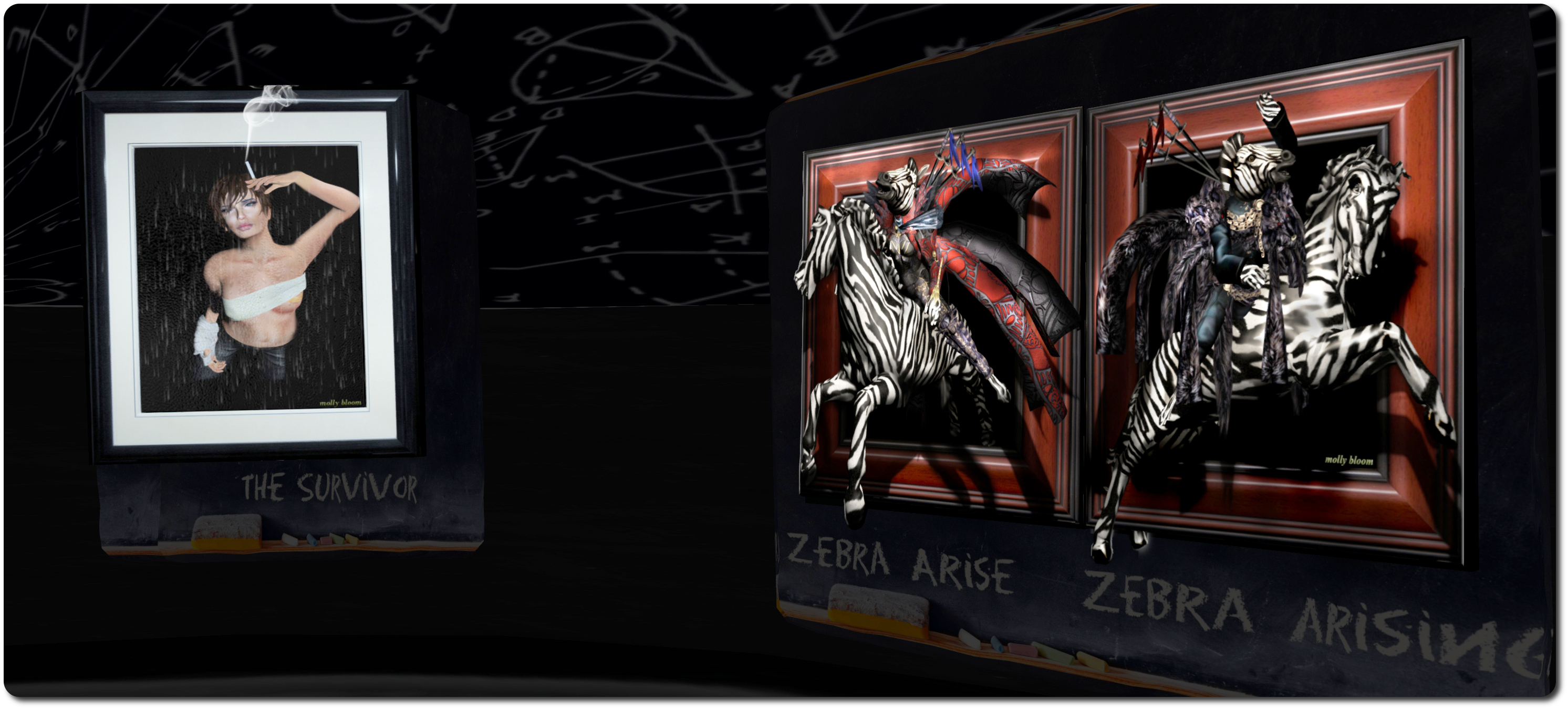
Now open at The Living Room, the art and music space curated and managed by Owl Dragonash and Daallee, is the latest exhibition of Molly Bloom’s remarkable 3D art.
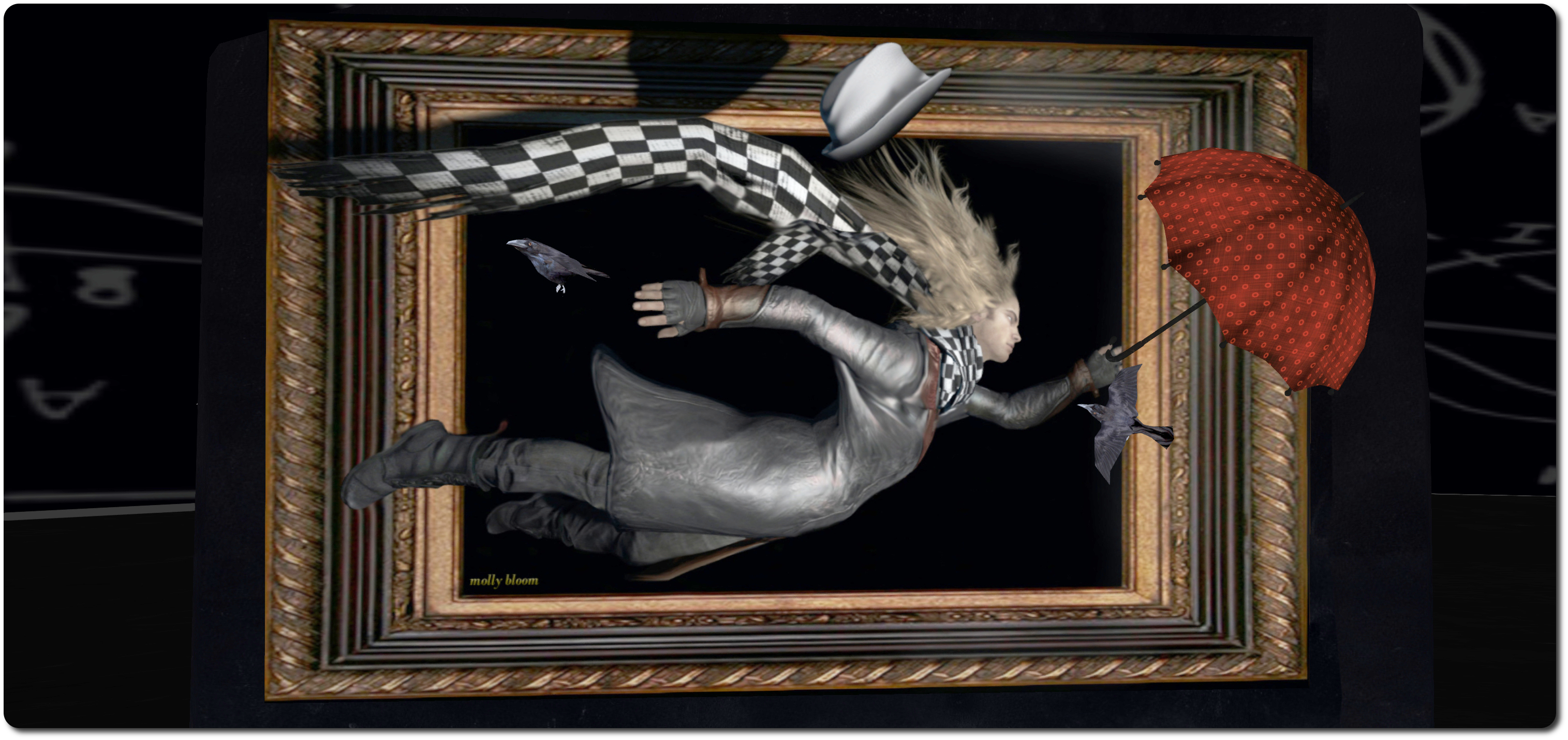
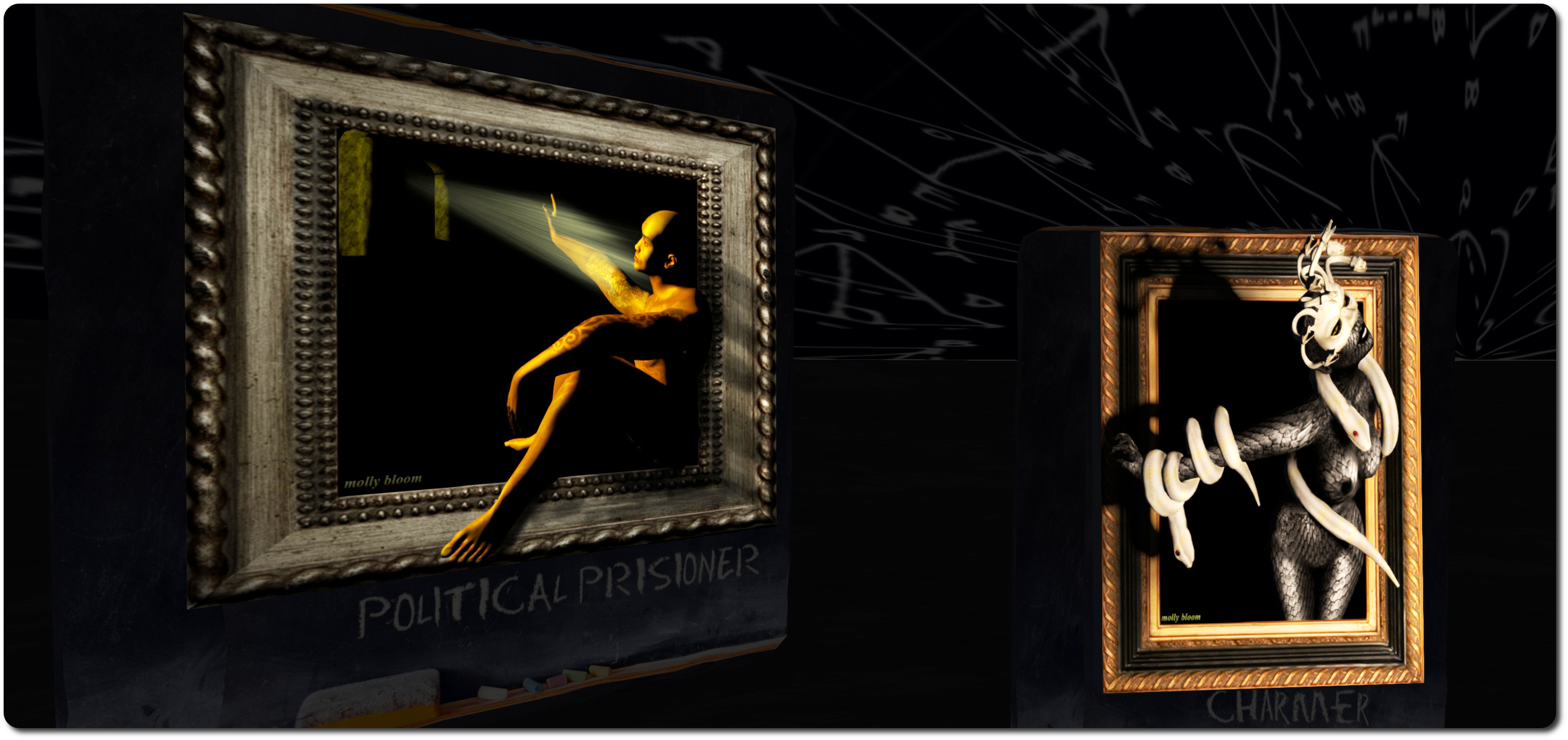
Created entirely within Second Life, with minimal additional post-processing, Molly’s work is beautifully intriguing because with it, she plays with our perception of depth. For Brain-Gasm, The Living Room’s gallery space has been dressed as a schoolroom, which Molly uses to frame an invitation for people to share in her special moments of creation.
“Brain-gasms come from everywhere, a visual, a smell, the sound of a song or an emotion. Sometimes the effect is fleeting, and sometimes you find yourself with the overwhelming need to express,” Molly notes in discussing the exhibit. “Creativity flows, and not just in the traditional arts, but maybe cooking an extraordinary meal, creating an astounding business deal, or the perfect computer program. If you are lucky to have a fulfilling outlet, your expression becomes tangible.
“Often an artist expresses themselves in a much deeper raw form than the onlooker can even understand, drawing you into their ‘gasm’,” she continues, “trying to turn you on as much as they were. Each and every gasm is not only a personal learning experience but also invites onlookers to learn about the artist.”
The pieces represent a mix of individual and paired works (Molly often creates duet and triple pieces); and I was delighted to see Cops and Robbers among those selected for this exhibition. This captivated me when I first saw it in 2014, and it was the springboard for my appreciation of her work. Also at Brain-Gasm, I was strongly drawn to Political Prisoner (below, left), and the deeply compelling The Survivor (seen in the image at the top of this piece).
As I’ve said in the past, and will doubtless say so again in the future, Molly Bloom is one of the most engaging and engrossing artists working in the photographic medium in Second Life. If you’ve not seen her work before, Brain-Gasm offers you the chance for an introduction, and shouldn’t be missed.
Erotic photography can be a difficult subject to present; there’s a tipping point where such work ceases to be purely erotic and slips into the pornographic. The problem is, bring any cross-section of a community together to view erotic art, and you’re bound to get clear differences of opinion as to where the tipping point resides.
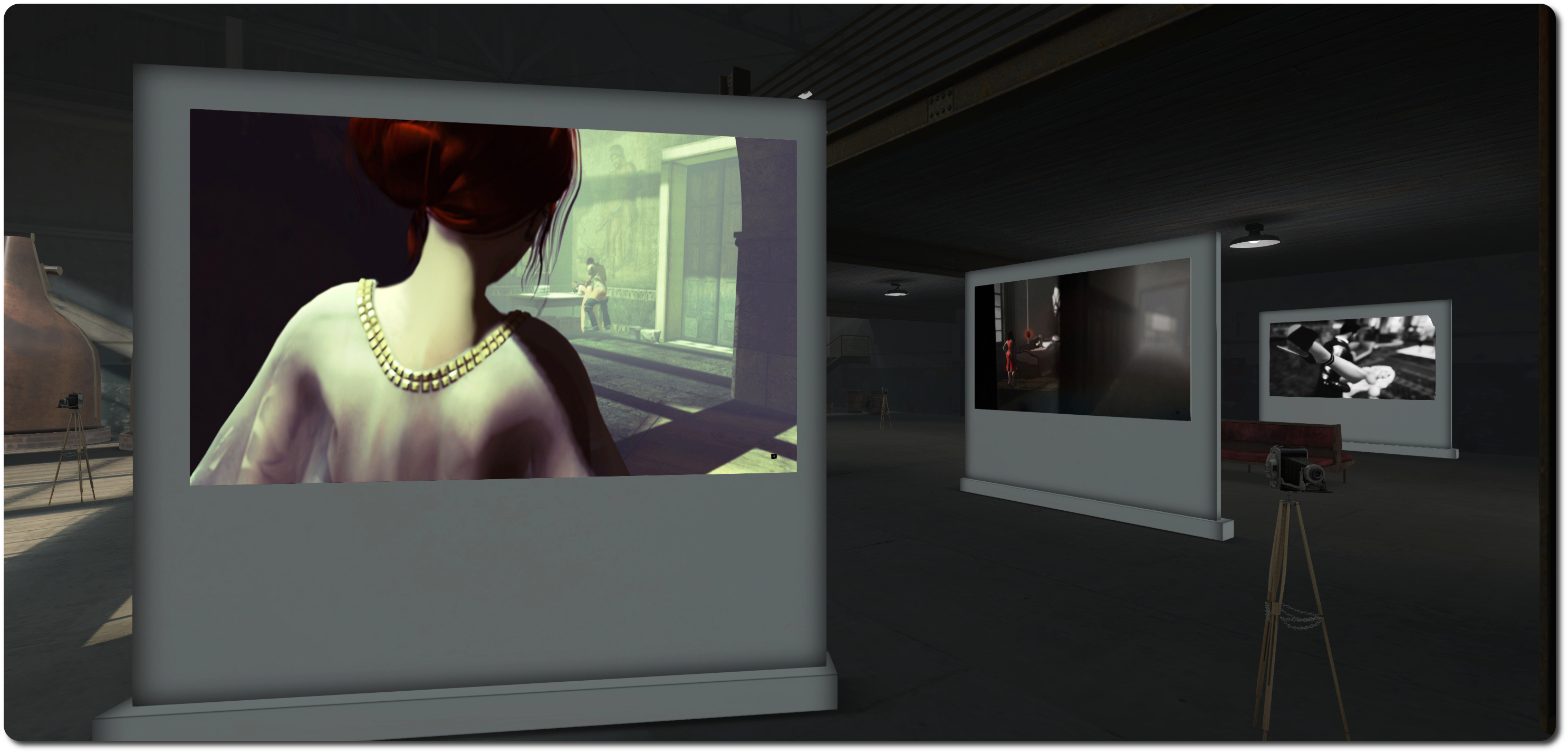
Given this, there are bound to be conflicting opinions on the latest exhibition Max Butoh is staging at his Dathúil gallery. Eyerotica, a series of images by Ash (Ashratum), is definitely NSFW, focusing (no pun intended) as it does on the issue of voyeurism; although it does so with a subtle twist.
“Voyeurs are often seen as male in cinema and photography,” Ash notes. “While females are frequently the observed subjects. My gendered and embodied point of view, a feminine point of view, is my small contribution for this “other side” of the power of looking.”
The result is a charged but nevertheless fascinating series of images covering the wide variety of sexual encounters we might experience in life (physical or virtual), in which both the voyeur plays as much a role as the scenes which captured their attention and some of the many different aspects of voyeurism are touched upon.
There is for example, the study of the accidental voyeur, the individual happening upon a situation perhaps entirely unexpectedly; then there is a the voyeur-as-a-participant, a witness to unfolding activities, perhaps even for their arousal; and there is the voyeur unseen, chancing upon a situation through security cameras or while processing a roll of film, these and more are uniquely offered, the angle of the shot, the deliberate use of light and shadow, the blurring of subjects all serving to draw us into the tableaux we see before us.
And herein lies the power of these pictures: yes, they are erotic, yes some may well tip into waters pornographic; but each of them also has a story to tell. There is a depth of execution within these images that demands we frame a story around each one. At the same time the vibrancy each contains underscores Ash’s fascination with the subject, and she sees herself in such situations. “The keyhole, even though it is a frequent metaphor for voyeurism, doesn’t describe my personal spectatorial desire,” she states. “I’m more like a voyeur participant, a body whose presence simultaneously sees and is seen, someone who takes part and affects what she observes.”
Visitors to the exhibit can further share in the experience of the photographer – be it as a voyeur or the capturer of erotic images. Just stand at one of the cameras scattered through the gallery and click Peek in the dialogue box that’s displayed (you may need to tap the ESC key to free your viewer’s camera and see what the in-world lens is willing to reveal).
Let it be known that the Moon heads towards Earth! Long range telescopes have detected there might be art on the moon. Be aware that Bad Astronomy calculated the impact for Thursday, May 7, 2015, 1.01 PM SLT time! Engineers have constructed the Moonrezzer to transport people to see this unique phenomenon, and a cadre of journalists will lift off on Monday May 4th to send early reports! Stay tuned!
Thus reads – in part – the announcement that Art Blue’s latest art installation / retrospective The Art Walk on the Moon, which official opens on LEA 14 at 13:00 SLT on Thursday, May 7th, and which has a special press preview on Monday, 4th May, also at 13:00 SLT (the tour is limited, numbers-wise, so a screening area has been set-up on neighbouring LEA 16 for late arrivals).
For those unfamiliar with Art Blue, he is a collector and curator; a futurist and historian. Over the years he has taken it upon himself to collect art created in virtual worlds and preserve it, offering for people to view through special presentations such has this, and his Ferrisquito exhibitions (the Bryn Oh retrospective of which I covered in September 2014. Part of his work also involves purchasing art pieces from their creators so that they can be preserved and exhibited on OpenSim.
Art Walk on the Moon – LEA14
The Art Walk on the Moon is an ambitious, immersive and interactive installation presenting a broad range of art pieces created over the years by many artists working in both Second Life and OpenSim, including (and not limited to) Molly Bloom, Feathers Boa, Brenda Geissen, Giovanna Cerise, JadeYu Fhang, Cherry Manga, Yooma Mayo. Fuschia Nightfire, Bryn Oh, Maya Paris, Gem Preiz, Nexuno Thespian, and Renn Yifu.
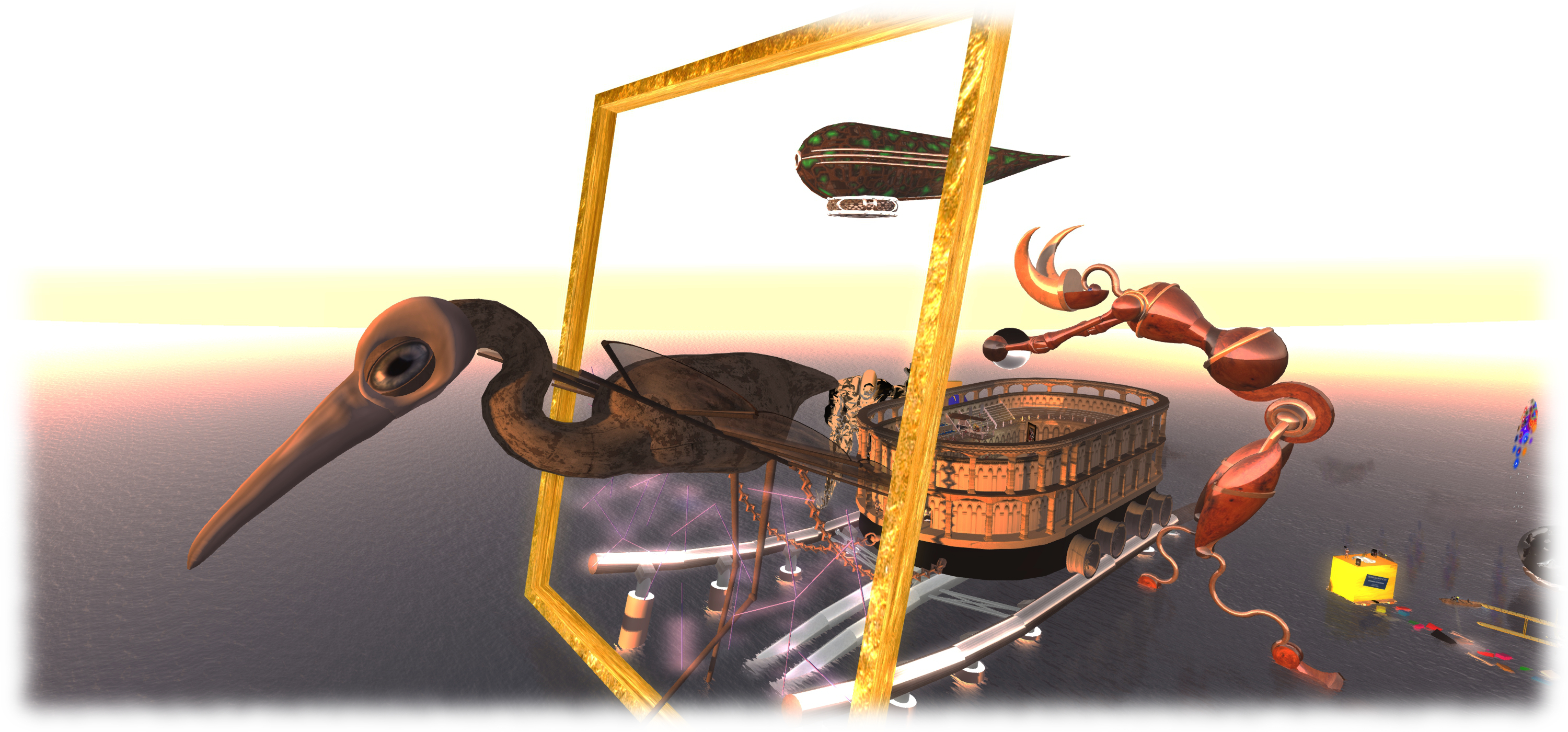
The installation actually comprises a number of set pieces which are both separate to one another, while in some cases sharing links with one another. For example, the art displayed in the lower exhibition space can be seen via a flycam tour located in the Moonrezzer Amphitheatre, while some of the pieces displayed can be reached via the teleport boards, or visitors can fly around them.
From the start-point – an airship which is itself an OpenSim creation floating over the the lower exhibition space – one can use the teleport boards to move around the installation. Before you do so, do make sure sounds and media are enabled, and that you’ve collected the introductory note card, and had a good look around. In particular, do note the blue “Creators Link” cubes; these can be found throughout the installation and when clicked will take you to a web page of information on a particular artist / object associated with them.
Art Walk on the Moon – LEA14
When starting your explorations, I’d recommend taking the teleport to the Moonrezzer Amphitheatre. Here you can take a flycam tour of the exhibits in and around the amphitheatre. Simply sit on one of the blue chairs, click on Wells’ time machine under the awning and tap ESC a couple of times to free your camera. After a few seconds, the flycam tour should initiate, taking you around the pieces on display and providing information about them in local chat.
Another launch-point for reaching exhibit spaces is the Moonrezzer Springfield Bet, which acts as a gateway to both the The Soulrezzer and The Moonrezzer installations (the latter of which can also be reached directly via the teleport boards). Make sure you obtain a code for claiming your gift at The Soulrezzer before you teleport up to it.
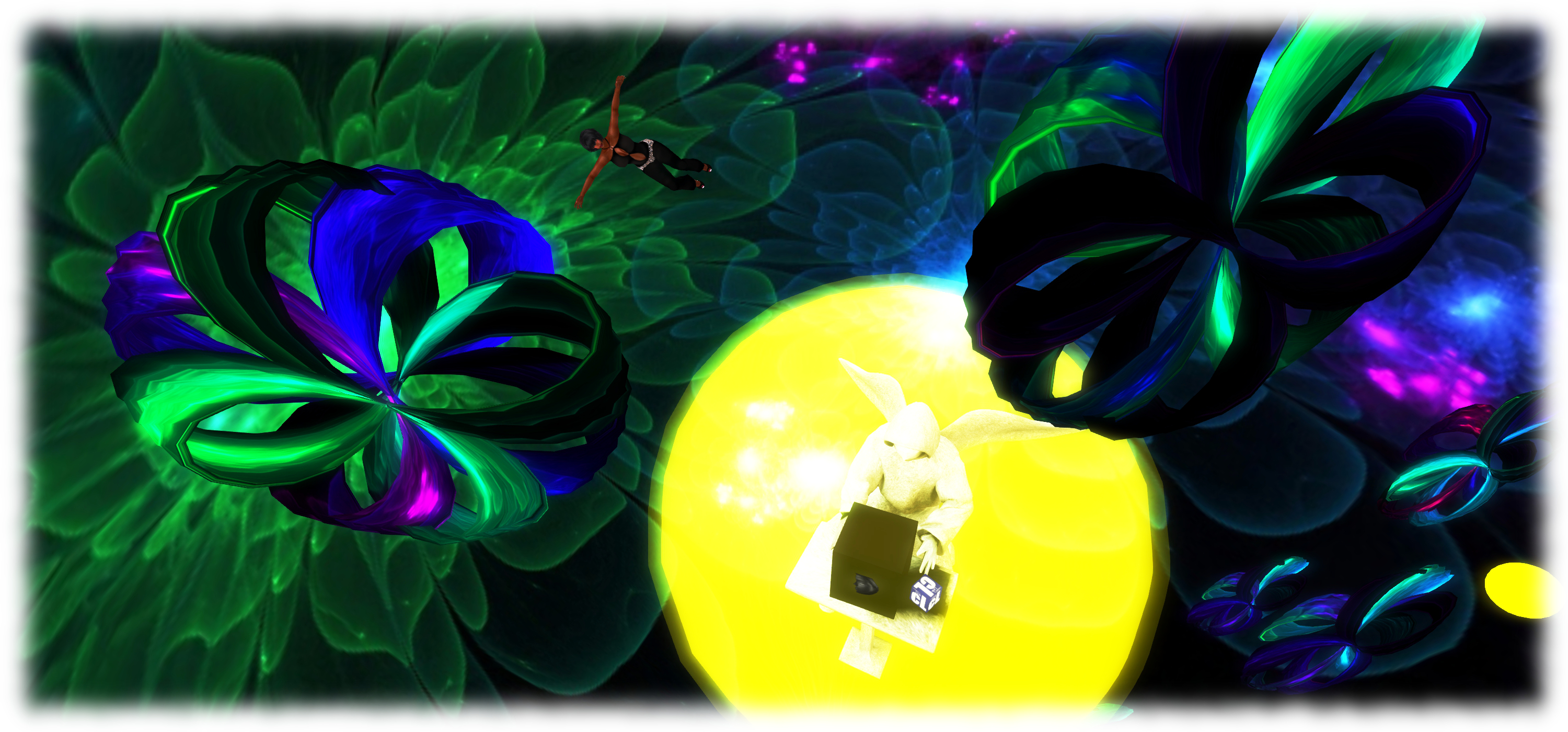
The Soulrezzer is a skyborne installation featuring fractal art by Aurora Mycano. Click on the yellow poseballs to drift with the art to the rather heavy beat of The Soultaker by Blutengel (see the image towards the bottom of this article). At the centre of the piece sits The Soultaker, guarding a box. Touch the box and enter the code you received at Springfield Bet on channel /1 to open it and claim your gift. An information display in the lower part of the sphere containing The Soulrezzer includes a teleport circle which will return you to the ground – or you can simply step outside and fly down.
The Moonrezzer forms the nexus of the installation. Here you can opt to walk on a blue moon either under scripted control (click on the blue spheres being offered by one of the helpers), or under your own power using a pair of moon boots by Gem Preiz (take the boots from the large box, wear them, and then click on the green spheres being presented by a helper).
Scattered across this moon are twelve assistants who hold aloft various items of art – although you may have to cam out a way to be able to see them. To make things a little easier, a yellow teleport portal at The Moonrezzer’s arrival point will take you to a ship floating over the moon, where you can sit and watch the unfolding display of art below you – simply tap ESC after sitting to auto-focus your camera, or cam around freely yourself.
As well as teleporting around and the teleport boards have a number of additional destinations not covered here), you’re also free to fly / walk / swim around the various areas, and there are lots of small details to be found through careful exploration, and there are various Easter eggs to be discovered – sit at the chessboard at The Moonrezzer and see the king or queen appear on the board, inviting you to touch it, for example.
Art Walk on the Moon – LEA14
Utilising shared media (including videos by Wizardoz Chrome), streaming music, and supported through on-line information pages and Rez Magazine, The Art Walk on the Moon is an installation that does require time to be explored and appreciated fully and which can lead you in several directions. It is also, Art tells me, to be his last major installation in Second Life, and it’s closure on June 30th will be marked by a special performance at which, he says, “the Soulrezzer reveals the secrets of your soul, and the life of Art Blue ends in space as CODE64 will take him away.”
If you are interested in previewing the installation and blogging about it ahead of the opening, be sure to be at LEA 14 by 13:00 SLT SLT on Monday, May 4th. Otherwise, as noted, The Art Walk on the Moon officially opens at 13:00 SLT on Thursday, May 7th.
My thanks to Art Blue for his invitation to tour Art Walk on the Moon ahead of the press opening.
Now open at Holtwaye ArtSpace is a exhibition of recent work with a distinctly musical theme by Molly Bloom, entitled Rock’n’Roll.
Molly’s art is beautifully intriguing because with it, she often plays with our perception of depth: figures and elements of her images are unconstrained by the picture frame in which they sit, but frequently extend beyond it. Individuals often appear as if they’re about to completely step out of the picture or are at least leaning out of the frame, while props and accessories often extend beyond the picture, or sit on the floor in front of it.
This approach gives Molly’s images a fresh and involving appearance which draws the observer into them, to almost become a part of the story each picture is telling. This is something which itself is given further dimension by some of the pieces forming duet and triptych-style groupings, with two or three pieces coming together to present a narrative flow.
An artist primarily known for her work in glass in the physical world, Molly regards herself as something of a “purist” in Second Life, by which she means her pieces are almost entirely created in-world. “Part of the challenge of making good art,” she says of her work, “is the joy of building and problem solving.” What minimal post-processing is used is restricted to correcting minor defects in images; any attempt as image enhancement and refinement through more extensive use of tools such as Photoshop are strictly avoided.
While the title of the exhibition might give the impression that the focus is purely on rock’n’roll, this is not the case. While various forms of rock are featured, including glam rock and blues rock (love the cover of the cover of Blind Faith’s album), so too are other genres portrayed, including classical and a good, old-fashioned hoe-down; even the mythical is beautifully touched upon in a stunning image of a demoness playing a lute, which also has faint echoes of a play on Pan and his pipes about it.
All told, another excellent selection of art from an artist who always piques my imagination with her work. If you’re like me, and enjoy Molly’s art, then this is not one to miss. If you’ve not encountered Molly’s work before, then thing exhibition is an opportunity to get introduced to it; you might also want to check Molly’s new gallery space afterwards as well.
 Applications are now open for round 9 of the Artist in Residence (AIR) programme operated by Linden Endowment for the Arts.