Return to a City Inside Out in Second Life

City Inside Out Phase II: "Stories"
City Inside Out Phase II: “Stories” – LEA 20

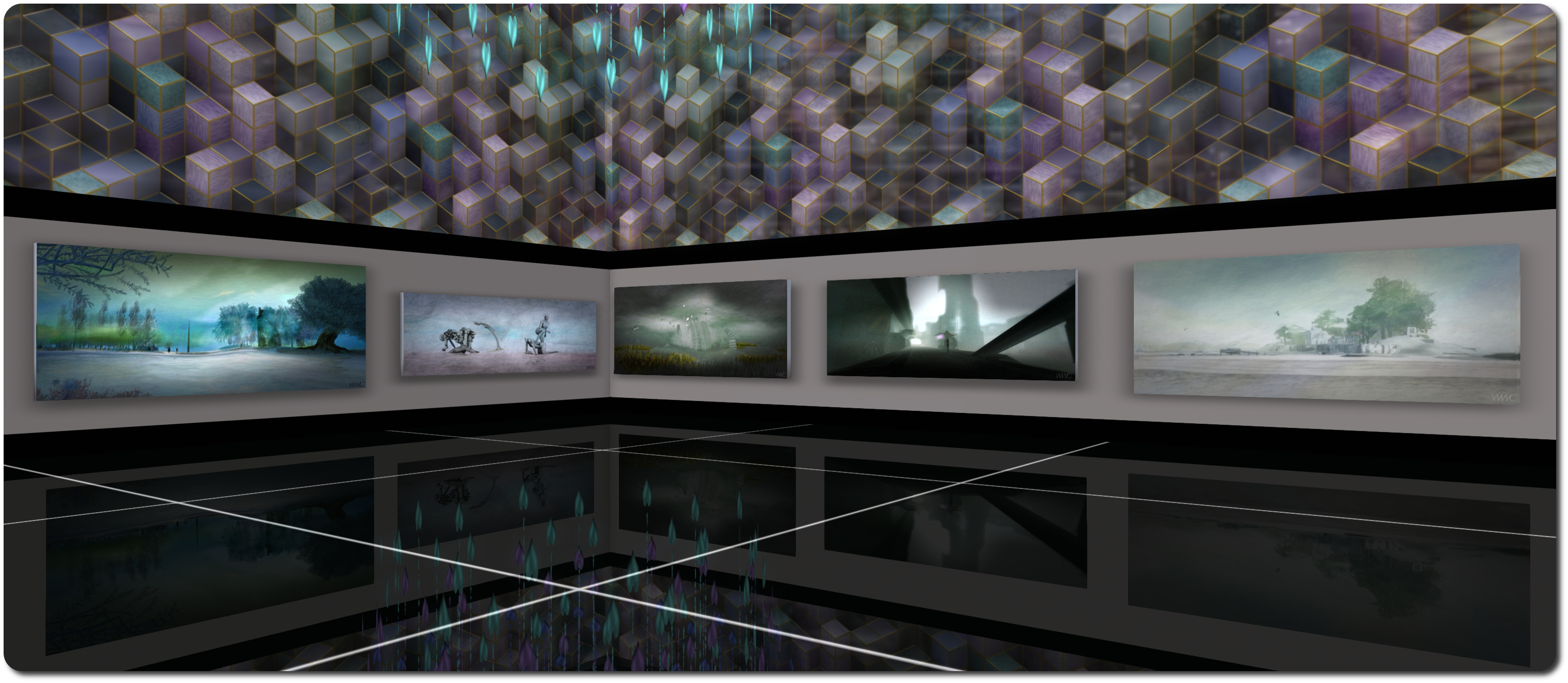
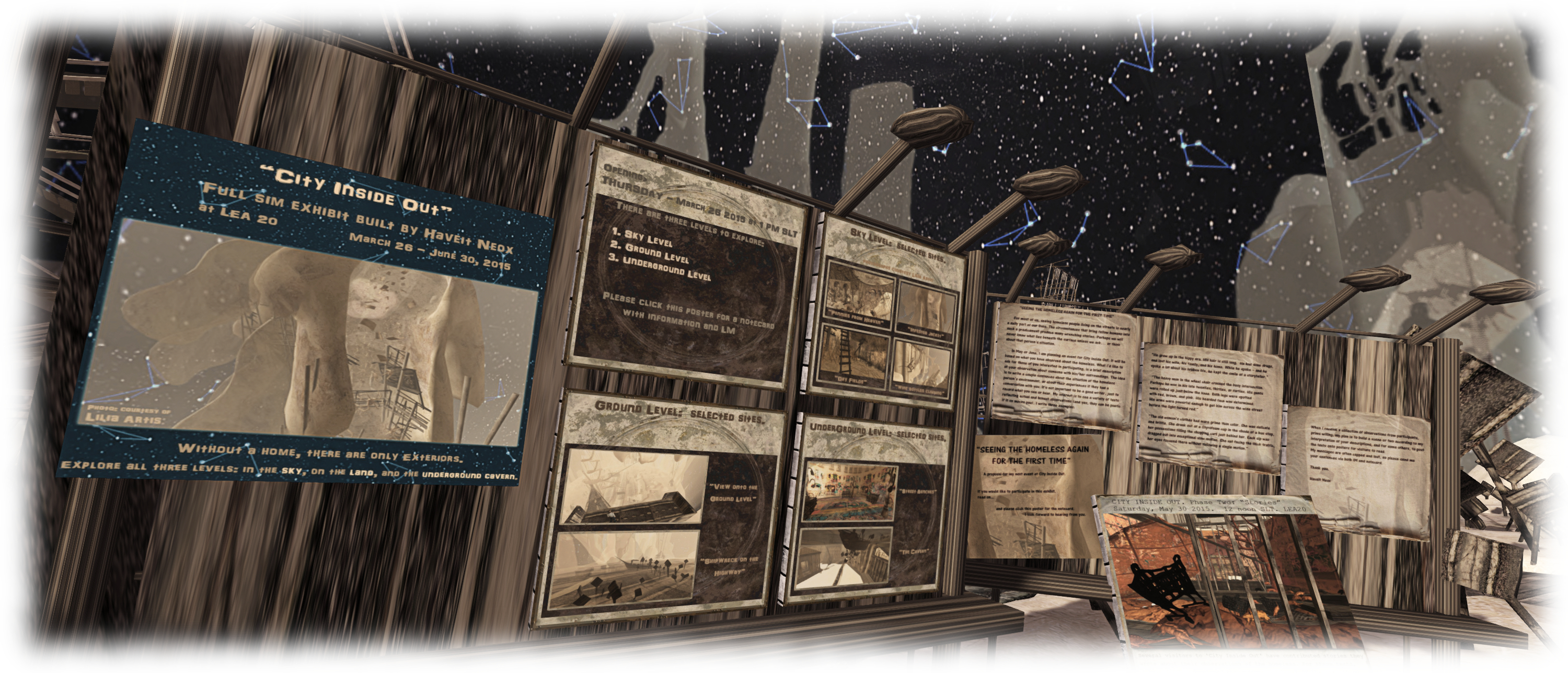
In March I wrote about Haveit Neox’s visually stunning City Inside Out, a full-region installation at LEA 20, which is displayed as a part of the 8th round of the Artist In Residence series.

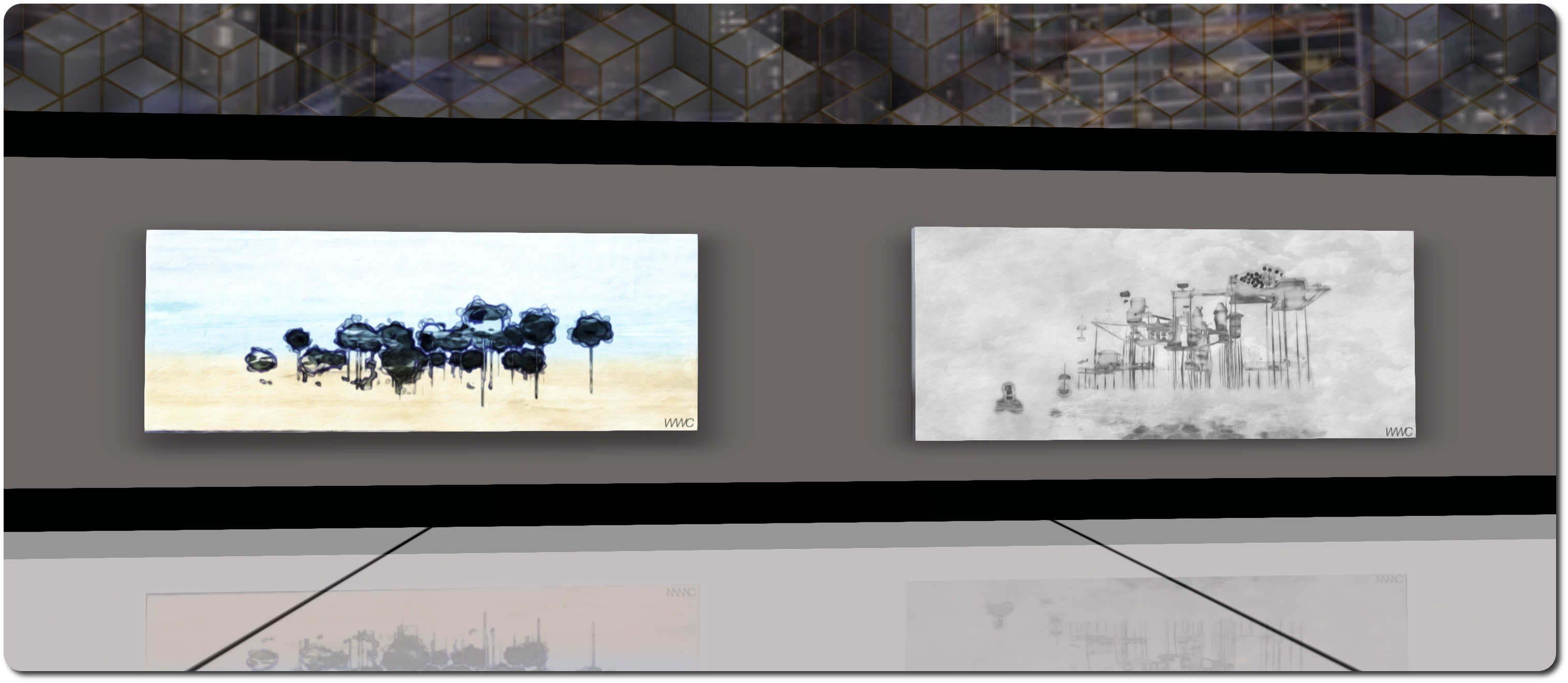
On Saturday, May 30th, a new element in the installation, City Inside Out Phase II: “Stories” opened, and takes the visitor down under Haveit’s remarkable cityscape, where stories await.
City Inside Out Phase II: "Stories"
City Inside Out Phase II: “Stories” – LEA 20

To briefly recap on the original build, as per my initial post about it:

This is a city we’re asked to see through the eyes of the homeless, the dispossessed; those who have nowhere to be, nowhere to go. For these people, the city is a very different place to the one we know. It’s a place where everything is strange, alien, and threatening. A place bad enough in daylight, but as Haevit further explains, becomes much, much worse at night…

As I noted at the time, this premise of seeing a city somewhat in reverse, as a homeless person, makes for a remarkable  – and is some places uncomfortable – place, where nothing is quite as it seems, be it the had offering money or the man walking his dog; threats real or imagined and spurred by fears and a sense of separation, can be found everywhere…

City Inside Out Phase II: "Stories"
City Inside Out Phase II: “Stories” – LEA 20

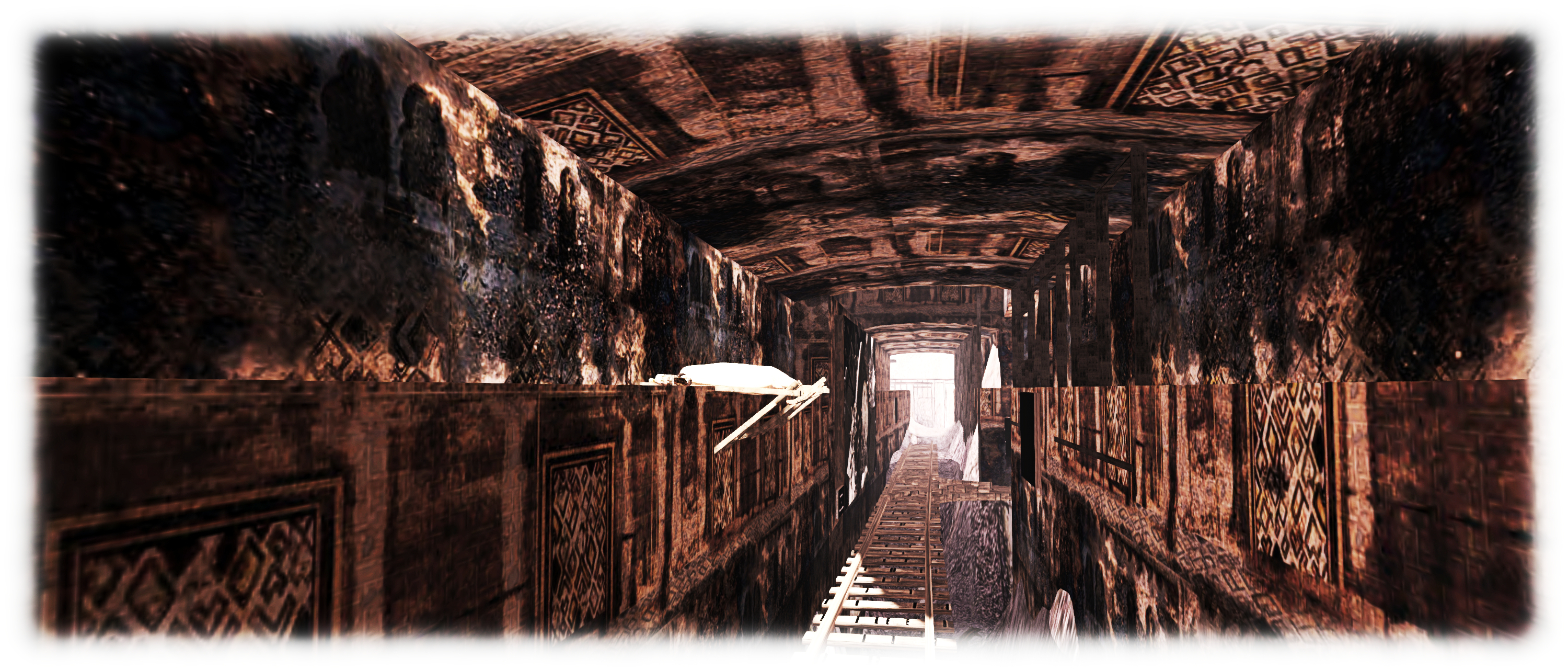
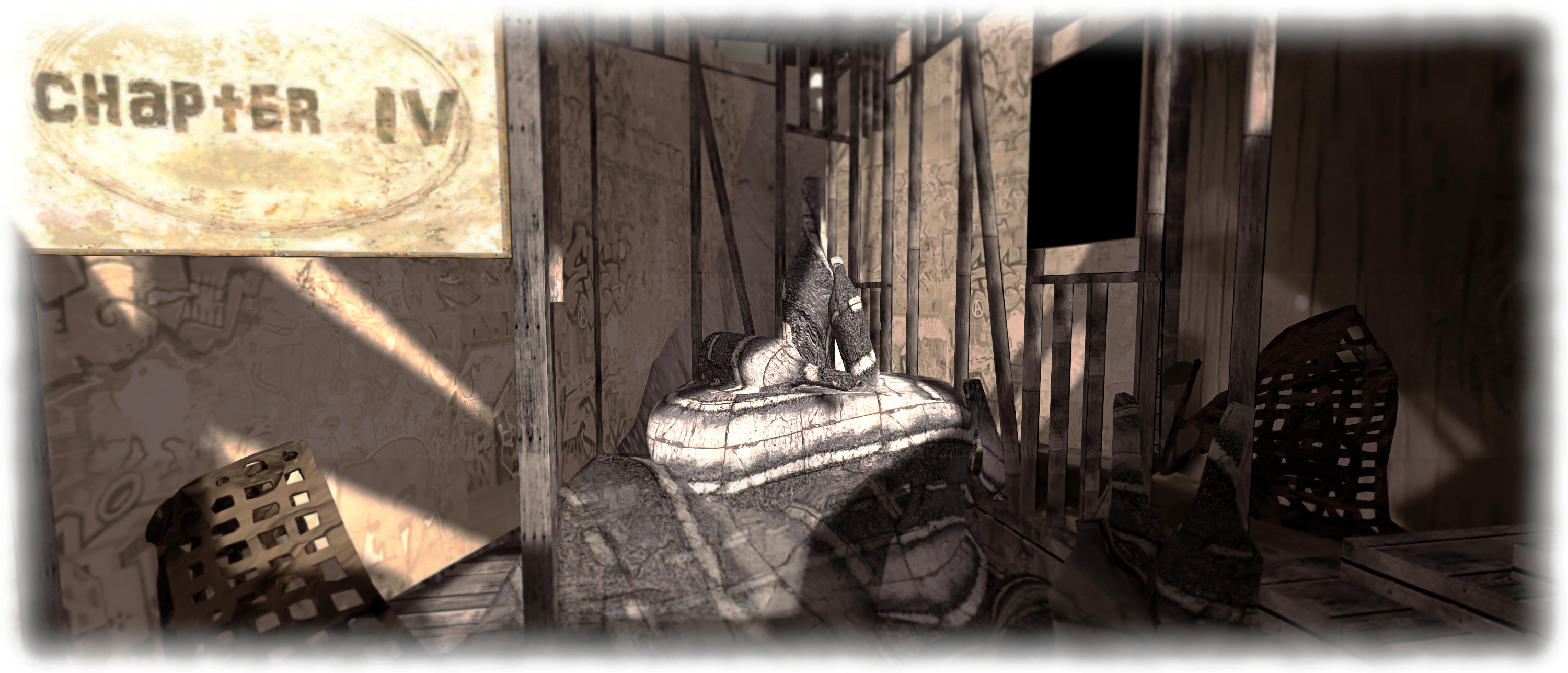
With Phase 2 of the build Haveit incorporates a series of short stories written by other Second Life residents on the subject of homelessness in the physical world as they perceive it. These  are laid-out in an underground labyrinth sitting beneath the lowest level of the main build, and are arranged as a series of seven chapters reached by following subterranean paths.

There are a number of different entry points to these paths – simply walk onto one of the moving roadways and follow it, and you will drop into the underground world. However, to follow the chapters roughly in order, the best point to start is to walk to the dual carriageway that lies just behind the landing point information boards, and follow it eastwards. It ends in a slice in the ground that will lead you down to Chapter 1, which sits directly under the roads. Do note, however, that the route through the chapters from 1 to 2 to 3, etc., isn’t necessarily linear; spurs and turns can lead you through the middle chapters in different ways, depending on the route you take.
City Inside Out Phase II: Stories
City Inside Out Phase II: Stories – LEA 20

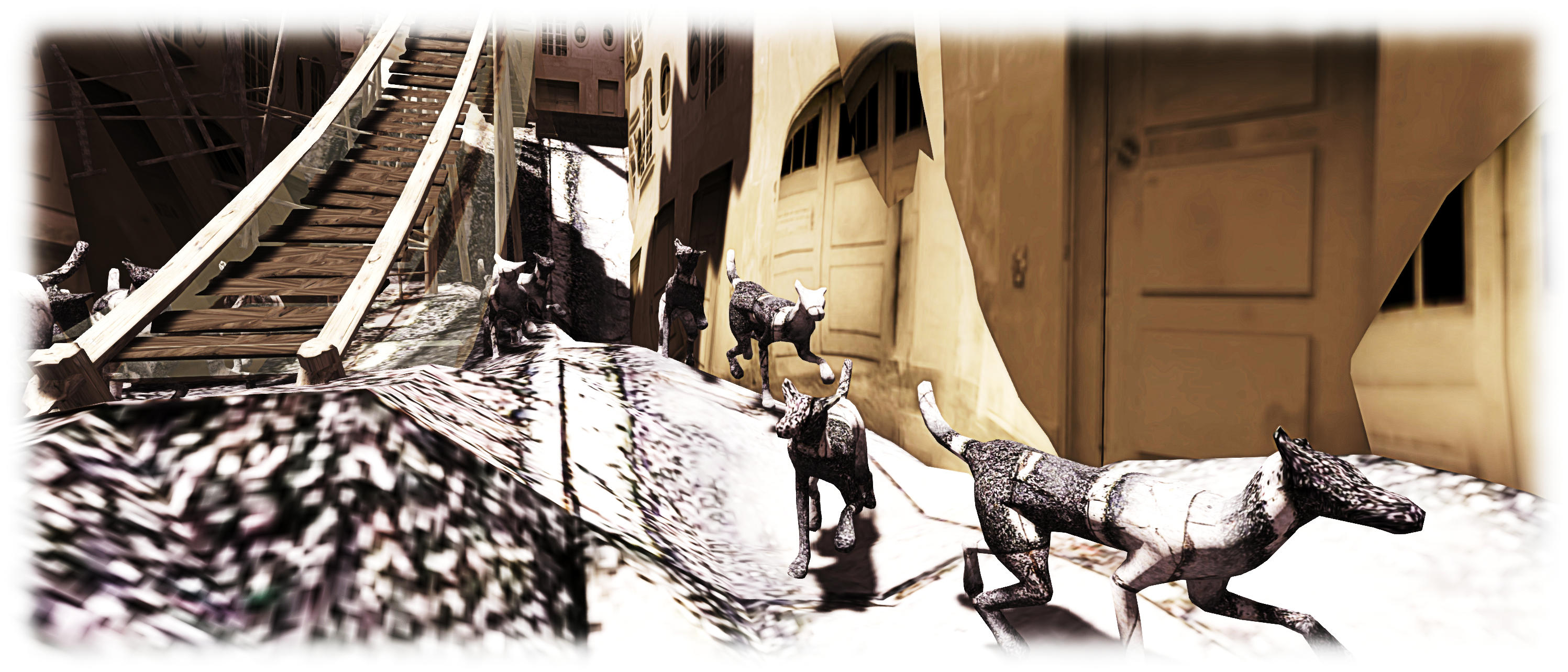
The paths also provide a hint of narrative as well the the story boards located along them. As you walk through them they change from a trench-like cutting to what could be long-abandoned mine workings or the underground vital intestines that keep a city alive,  through to vast subterranean chambers suggestive of a city that has built over itself time and again, burying or hiding its past from view – just as we so easily can blot the homeless around us from our view.

This is a fascinating addition to what was already a brilliant installation, both in terms of the build and the stories it contains. It is also one in which you can play a role; Haveit is still accepting pieces on the subject of homelessness, and will add them to boards throughout the underground world as they are submitted. Simply send him your words via note card together with an IM notifying him you have sent something. Additions to the narrative will continue through until June 25th, and both phases of City Inside Out will remain open until June 30th.

If you haven’t already visited, I urge you to do so; and if you have been before, do make sure of a return visit and walk the underground paths.
City Inside Out
City Inside Out Phase II “Stories” – LEA 20

SLurl Details

Ego as art in Second Life

Ego - Being Your Own Muse
Ego – Being Your Own Muse

Saturday, May 23rd, saw the opening of a new exhibition at the CBK Art Gallery, operated by Ceakay (CK) Ballyhoo. I was sadly unable to attend the event due to other commitments, so hopped over at the start of the week to have a look at the exhibition.

Ego – Being Your Own Muse features the work of a number of SL artists, who were all challenged to offer images featuring themselves as the models / subjects – hence the title of the exhibit. The participating artists are Whimsical Aristocrat, Seductive Dreamscape, AngelinaKnox, Coober Galicia, Daallee and Owl Dragonash of The Living Room fame, and CK herself.

Ego - Being Your Own Muse - Coober Gallicia
Ego – Being Your Own Muse – Coober Galicia

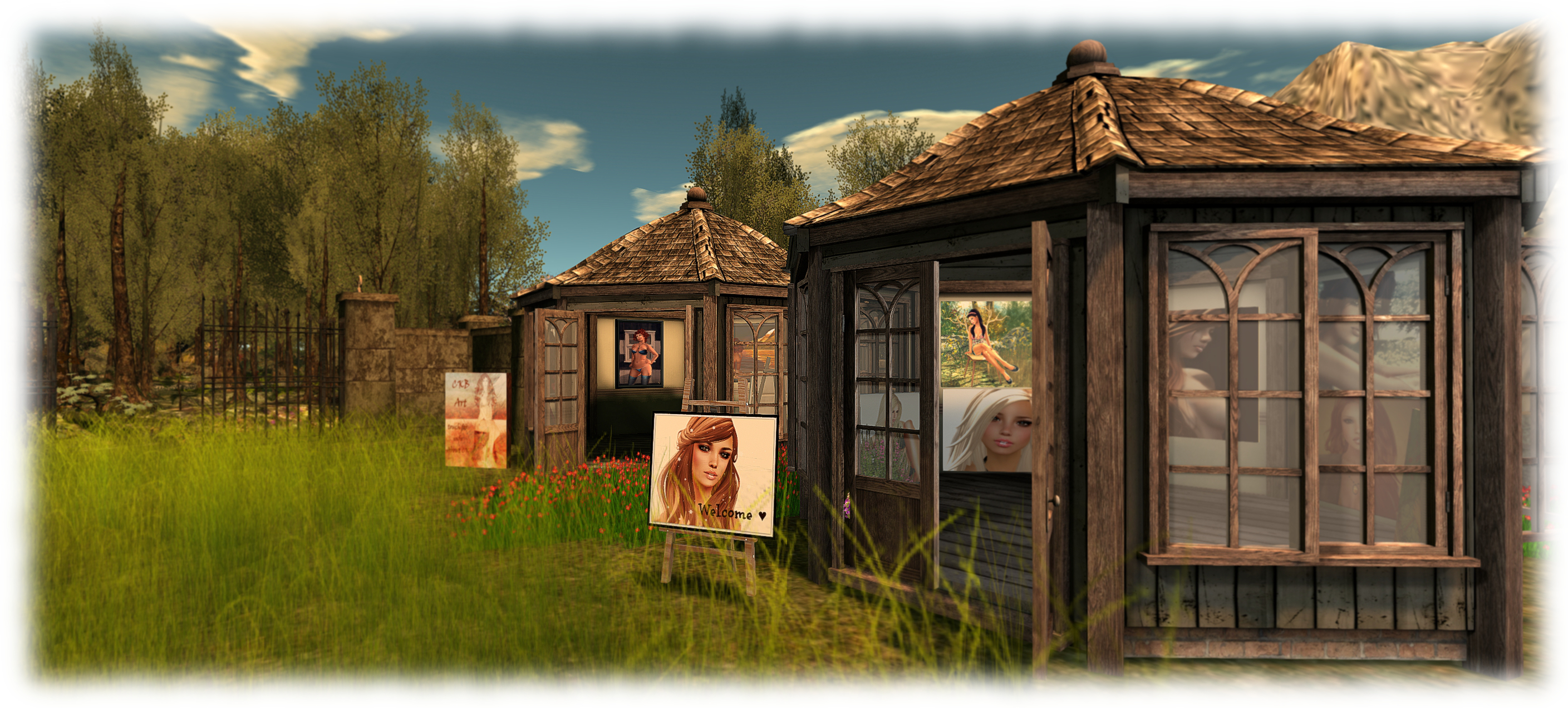
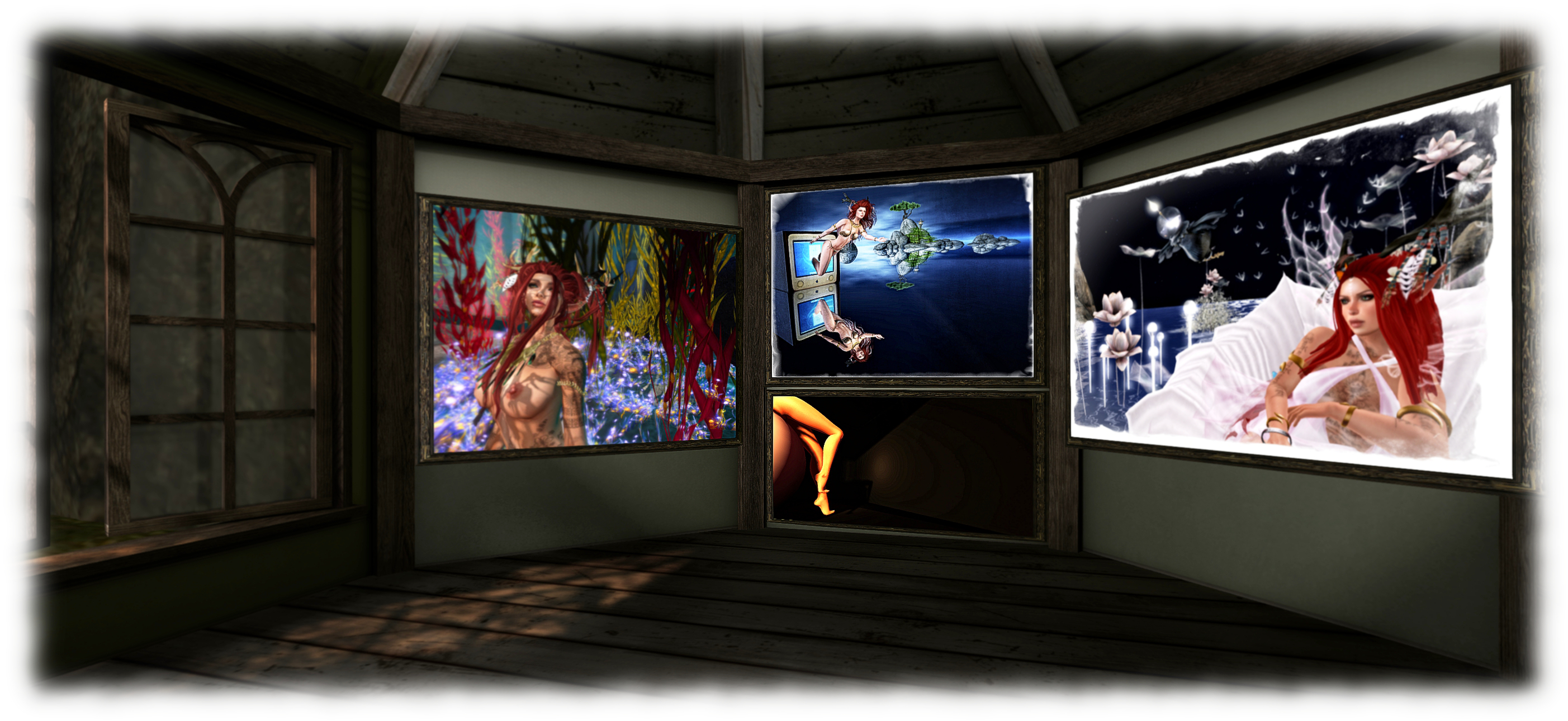
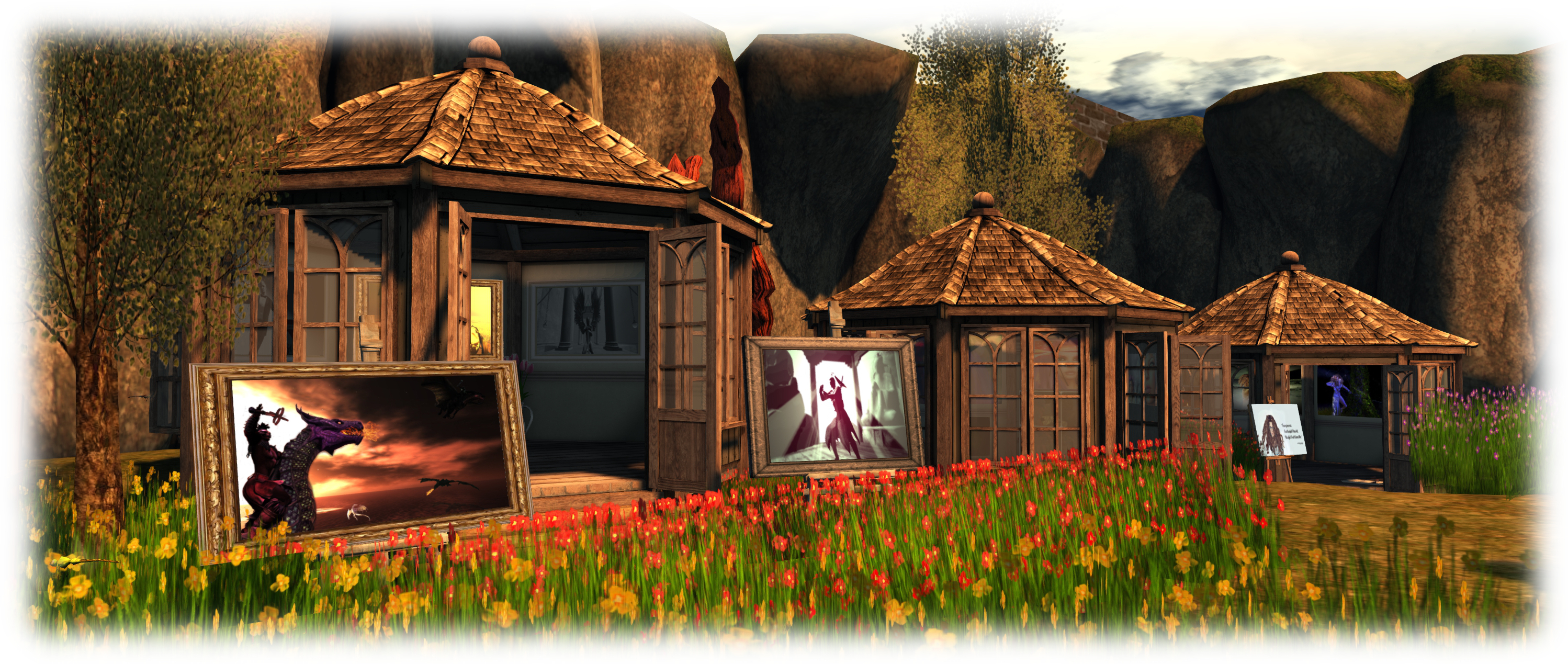
The resulting works are all offered for display in a garden-like environment, with each artist having his or her own summer house in which their pictures are displayed. This not only gives an inviting and relaxed environment for the exhibition as one wanders through the garden under a suitable windlight setting, it also means that each artist’s works can be studied without the temptation to directly compare one artist with another by checking back and forth and getting caught up in technique, approach, etc.

As a result of this, the visitor is free to focus on how each artists views their own avatar; and it is surprising as to just how much can be revealed through the images that are offered. While little in the way of criteria was offered, other than asking the artists to use themselves as their model / inspirations, it is interesting as to the number of nude / semi-nude pictures are are offered (which make this exhibit perhaps a little NSFW, although all the pieces are very artistic in nature).

Ego - Being Your Own Muse - Owl Dragonash
Ego – Being Your Own Muse – Owl Dragonash

I commented on this to CK, who replied, “Well, I think most people in here like the way they have shaped their own bodies, and they’re best to be viewed naked. I myself am very keen on how my ass looks for example!”

That is a fair and accurate assessment. In many respects our avatars can be a huge statement of self and self-image, and we often do invest considerable time, effort and money in how they look, so why not show them at nature’s best. There’s also something strongly emotional about nude and semi-nude images which can express far more than might be the case were the model to be fully clothed, and this is also captured within the images on display here.

Ego - Being Your Own Muse
Ego – Being Your Own Muse

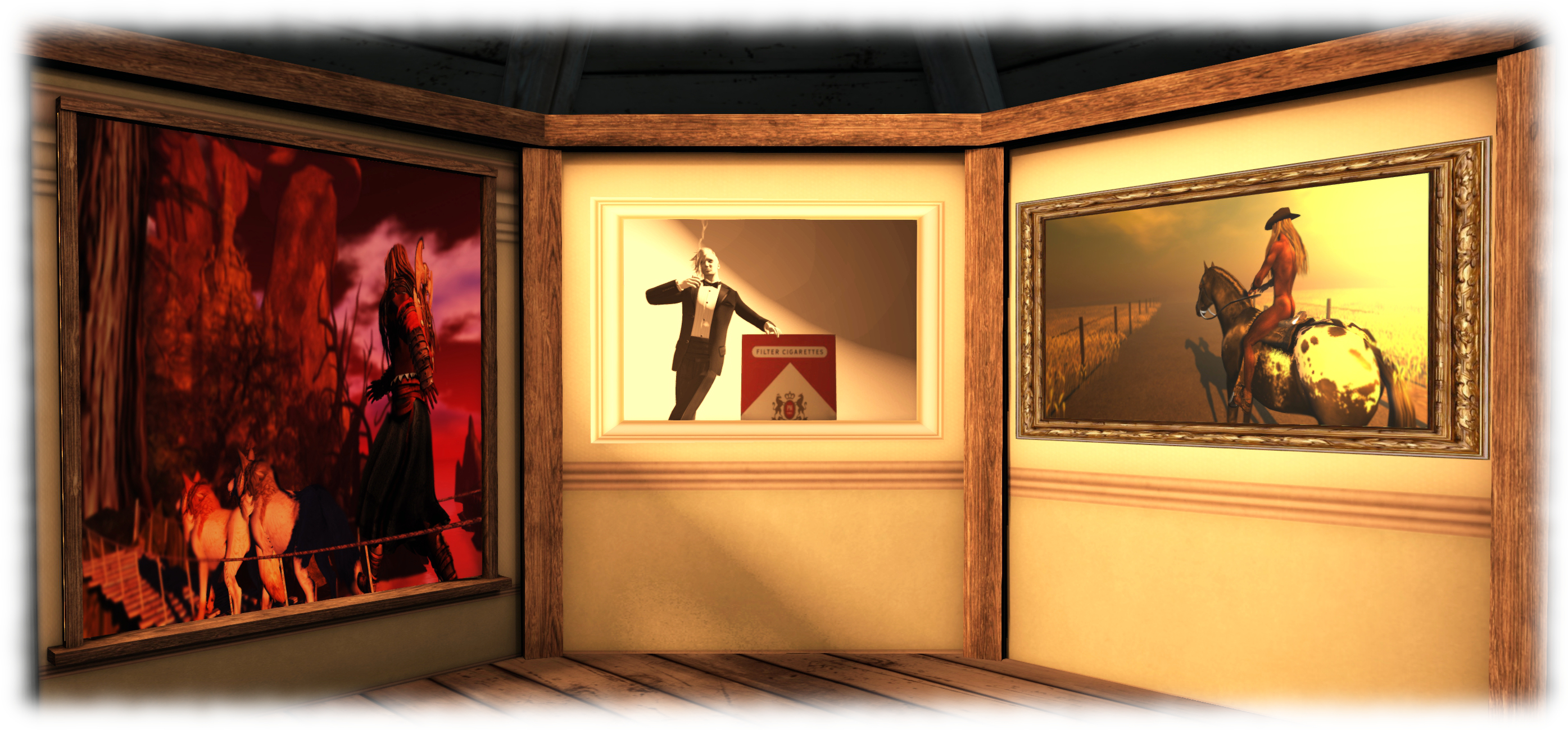
Which is not to say all the pictures figure nudes; far from it. Coober Galicia, the only male artist in the exhibition, for example, presents a series of powerful, character-driven images (even if one is admittedly sitting nude in the saddle 🙂 ), which I found myself especially drawn to; while Owl’s images display her delightful whimsy and outgoing nature.

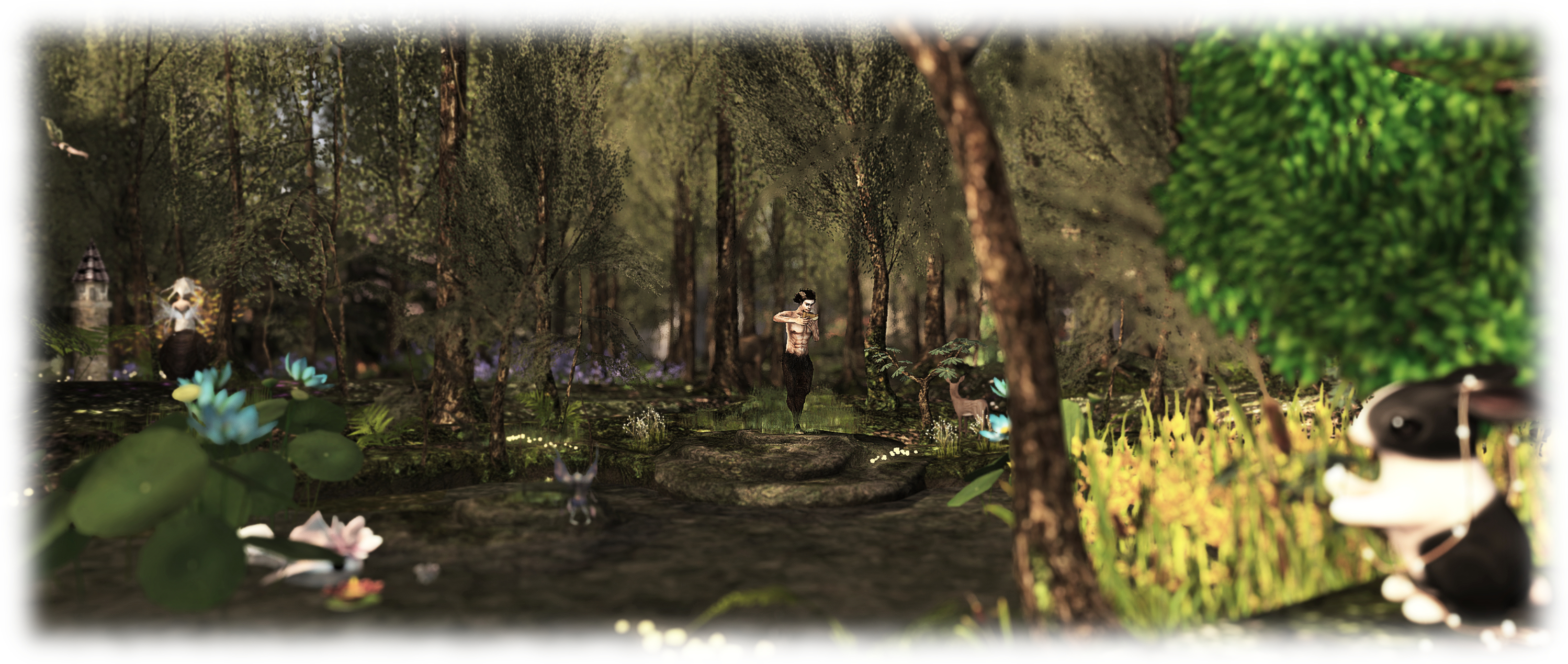
All told, a charming and worth seeing exhibition that will be open through until the end of June. When visiting, do remember to take a walk through the gates on one side of the gallery area and explore the wonderful Mistwood Isle woods CK has created, or take a ride on a floating dandelion seed!

Additional Links

Mistwood Isle woods
Mistwood Isle woods – through the gates from the gallery space

Art and Obedience in Berlin and Second Life

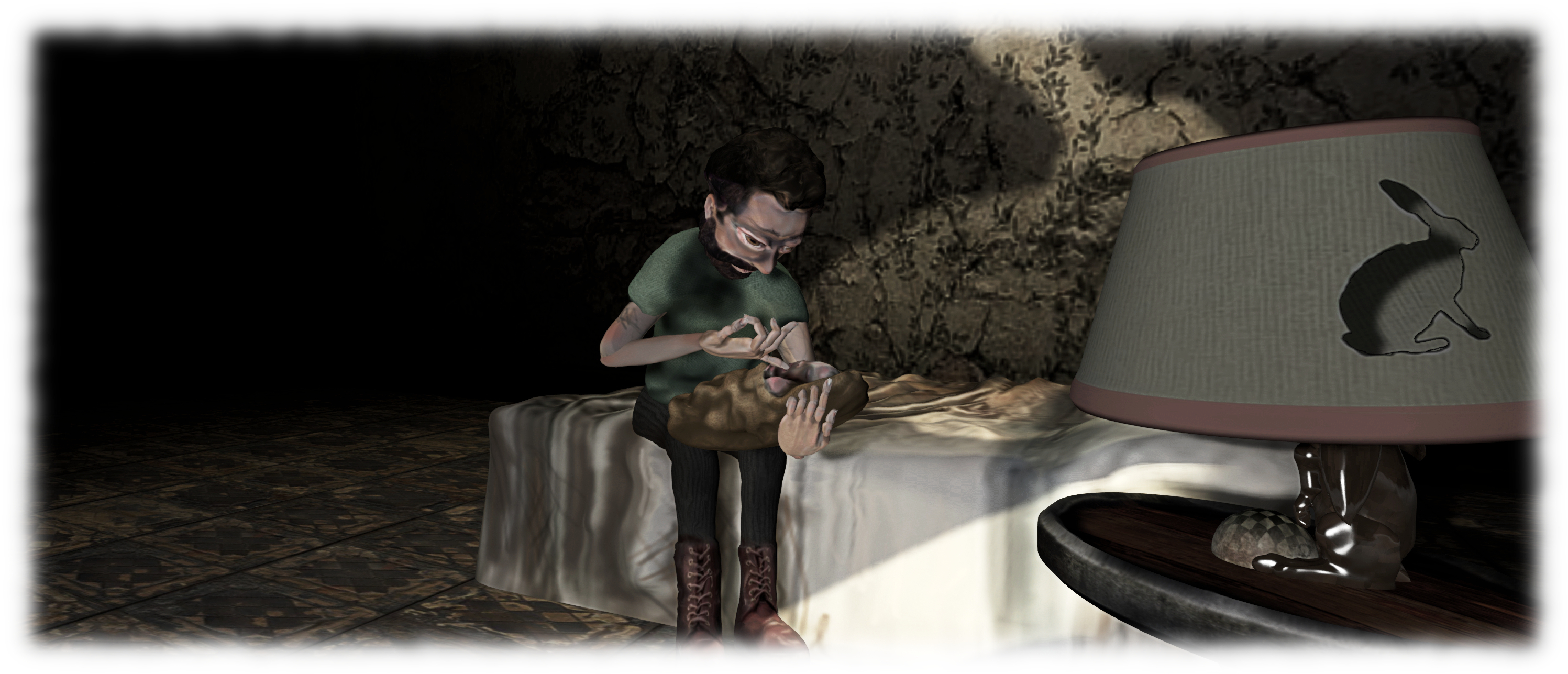
Obedience at LEA 1: Abraham dotes on baby Isaac
Obedience, LEA 1: Abraham dotes on baby Isaac

Obedience is a new, mixed-media installation at the Jüdisches Museum, Berlin, created by Saskia Boddeke (Rose Borchovski in Second Life) and Peter Greenaway, which has an interesting cross-over with our virtual world.

The installation takes as its theme the story of Abraham and Isaac; a story which raises questions which are addressed differently by the three major religions – Jewish, Islamic and Christian – in which it can be found.

As the tale goes, Abraham is commanded by God to offer his son in sacrifice as proof of his devotion. Thus, the first question is framed: which is the stronger – devotion to the will of God, or the love of a father for his son? Within this sits a second question, one which holds relevance to us all today regardless of our religious leanings: which is the more important to us – obedience or trust, and where can the balance between the two be found?

Obedience seeks to explore these issues by leading the visitor through fifteen rooms in which Boddeke and Greenaway retell the sorry using a variety of mediums and approaches. In doing so, they offer a means of taking the narrative apart, creating emotionally charged scenes and vignettes which focus the visitor’s eye and thoughts.

The cross-over with Second Life comes via a special installation created by Bryn Oh and Jo Ellesmere at LEA 1, also entitled Obedience.

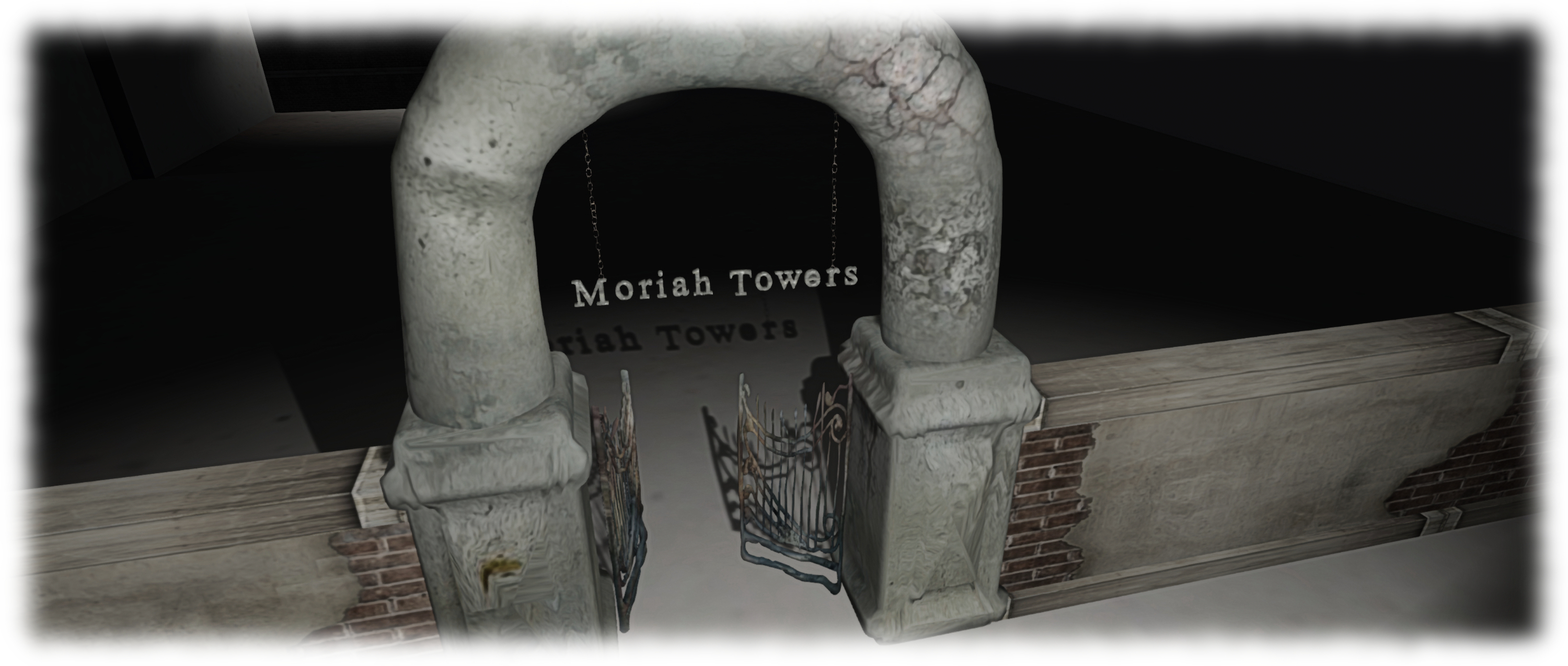
As with the exhibit at the Jüdisches Museum, visitors to the LEA 1 installation are encouraged to explore a series of “rooms” in which the story of Abraham and Isaac is presented through a set of distinct vignettes, all of which are given a contemporary turn – Abraham, see initially as a doting father, appears to hear the Voice of God through his television, for example, while the mountain range of Moriah from the Book of Genesis becomes a series of tall buildings called Moriah Towers.

Obedience at LEA 1: Abraham obeys the Voice of God, taking his young son out...
Obedience, LEA 1: Abraham obeys the Voice of God, taking his young son out…

“This is a very important exhibition in that it is a high profile use of Second Life as an artistic medium and its mere presence within a museum of this calibre legitimises the virtual space as an art medium for some, who before now may not have associated it in this way,” Bryn states in her own introduction to the LEA 1 installation and its link to the Berlin work. “Credit for this should be given to both Saskia and Peter who are staunch supporters and believers in this medium, they could easily have created the work without using the virtual space yet pushed the idea on the Museum directors and have them interested as well. ”

The link comes not only in the presentation of the Abraham and Isaac story individually in the physical and virtual spaces, but also in fact that the virtual environment we can explore at LEA 1 is being shown on monitors within the Museum, and visitors there have the opportunity to to join us in-world and explore the installation here; through the use of two avatars, isaak001 and ishmael001. So if you see either of them wandering through the LEA 1 space, do keep in mind they are visitors to Second life from the Jüdisches Museum.

Obedience, LEA 1
Obedience, LEA 1

The story of Abraham and Isaac is not an easy read, and by bringing the story into a modern setting, Bryn underlines some of the more uncomfortable elements within it, whilst also drawing attention to the broader question of obedience and trust. It also raises an further uncomfortable questions, which I’ll come to anon. In terms of obedience and trust, the contemporary approach taken here offers potentially broader interpretations than the purely Biblical.

Take Abraham’s hearing the voice of God through his television. Here there seems to be a question lurking as to our relationship with the media upon which we rely; just how far can it be trusted? And what if it – say, as a state apparatus – demanded obedience? There are other possible subtleties here as well, such as the Lovecraftian nature of the chair in which Abraham sits, which seems to open doors into other lines of thought.

Nor does Bryn doesn’t stop short on showing Abraham’s willingness to sacrifice his son, either. This scene takes place atop of the aforementioned Moriah Towers,s and is brutal in its and terrifying in its vivid portrayal, despite God’s intervention, Abraham’s faith and trust having been demonstrated.

However, this is not the most powerful and poignant scene in the series. That comes last of all – providing you take the time to locate the teleport to reach it. Bryn carries the story forward in what, to me, is the most poignant scene of all. Here we see the aftermath of events. Abraham may well have proven his faith in God, but he has betrayed the trust of his son, who cowers against a wall, terrified. “What happens once Gods presence has withdrawn after testing Abraham’s faith?” Bryn asks, “How might the moments go when Abraham and Isaac are now alone and words are needed to explain?”

Continue reading “Art and Obedience in Berlin and Second Life” →

Noble people and beautiful places remembered in Second Life

Nico Vichan: American Nobility - Sabra Art Gallery, May 2015
Nico Vichan: American Nobility – Sabra Art Gallery, May 2015

I’ve long admired and enjoyed the art and photography of both Nino Vichan and WuWai Chun. so given both currently have exhibitions being hosted at the Sabra Art Gallery, operated and curated by Kylie Sabra, I took the opportunity to hop over and tour both.

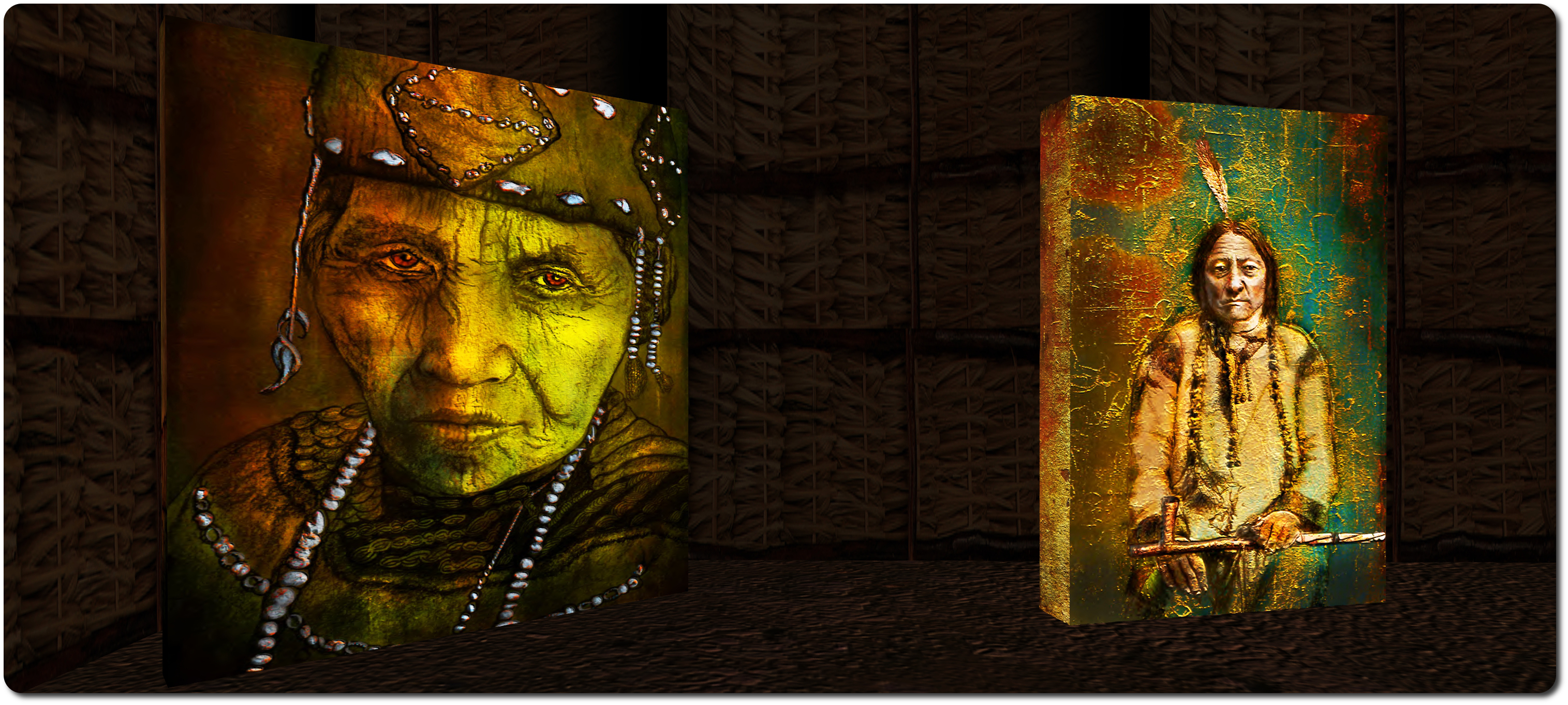
American Nobility, Nino’s exhibit, is a beautiful and powerful series of images of Native Americans, offering both a homage to their history and something of a reminder of their harsh treatment.

Nico Vichan: American Nobility - Sabra Art Gallery, May 2015
Nico Vichan: American Nobility – Sabra Art Gallery, May 2015

Walk through the two chambers displaying Nino’s work, and you’ll meet proud and dignified individuals, previously captured in images from a bygone era, and here given a new lease of life by Nino. Some you may recognise, such as Sitting Bull, in a familiar pose with his peace pipe in one hand. Other may not be so familiar, such as Running Rabbit, immortalised in a 1900 black-and-white postcard for the edification of “civilised” people. All have, however, been captured in images  – mostly monochrome or sepia, and have here been given new life through Nino’s eyes and hands.

“This exhibition,” Nino states, “presents the contrast between the dignity and spirituality of the indigenous people of the North American continent and the genocide of these and other indigenous people throughout the world.”

Nico Vichan: American Nobility - Sabra Art Gallery, May 2015
Nico Vichan: American Nobility – Sabra Art Gallery, May 2015

All of these images are striking in their own way; but the all have one thing very much in common: the look in their eyes.

It is often said the the eyes are the windows of the soul; and in these images, Nino has powerfully captured this There is a deep dignity evident in the eyes of his subjects – very powerfully so. In fact, Nino told him it was the eyes of his subjects, as captured in images by others, which drew him to portray them himself.

Such is the life Nino has breathed into these images that it is almost impossible not to find yourself drawn to the eyes as well; there is very definitely a sense of nobility and wisdom to be found within them. I challenge anyone not to stand before his interpretation of Wife of Madoc Henry – Klamath (seen in the image headlining this article) and not be captivated by her eyes. And when you’ve done so, go back and look again at each of the paintings in turn.

And don’t be surprised if you hear the distant whisperings of the Great Spirit.

WuWai Chun: Places - Sabra Art Gallery, May 2015
WuWai Chun: Places – Sabra Art Gallery, May 2015

Places is WuWai Chun’s latest collection of images captured from around Second Life and presented in her own unique and utterly captivating style.

“There are many beautiful places in second life,” WuWai says. “Some of the places in the pictures no longer exist, others have changed. The pictures are an expression of my perspective and mood of the places. Just as art is in the eye of the beholder, the creations of the SL-builders can be perceived from a personal and own point of view. I did this with the help of the windlight settings in the Firestorm viewer as well as the possibilities of image processing.”

WuWai Chun: Places - Sabra Art Gallery, May 2015
WuWai Chun: Places – Sabra Art Gallery, May 2015

The result is a beautiful series of images that capture some famous (and perhaps not-so-famous) sites from within Second Life, offered in a remarkable range of styles and finishes – so much so, that one could be forgiven for thinking the exhibit features the work of more than one artist.

These are images that evoke strong feelings of wanting and longing – wanting to visit those we’ve not previously witnessed and are still available, and longing to see again those we have visited in the past, but which are now no more.

Proceeds from the sale of any copies of WuWai’s images will be donated to Feed A Smile, the in-world charity arm of Live and Learn in Kenya (LLK), making this exhibit doubly worthwhile visiting. And don’t forget you can also find WuWai’s work on her Flickr feed.

WuWai Chun: Places - Sabra Art Gallery, May 2015
WuWai Chun: Places – Sabra Art Gallery, May 2015

And while there, do please visit the other sections of the Sabra Art Gallery, all are very worthwhile seeing; and consider making a donation to help towards meeting on-going running costs.

Related Links


Caught in Eternal Suspense

The Eternal Suspense, Giovanna Cerise - LEA 21
The Eternal Suspense, Giovanna Cerise – LEA 21

The Eternal Suspense is the title of Giovanna Cecise’s latest full region installation now open at the Linden endowment for the Arts, as a part of the 8th round of the Artist in Residence programme.

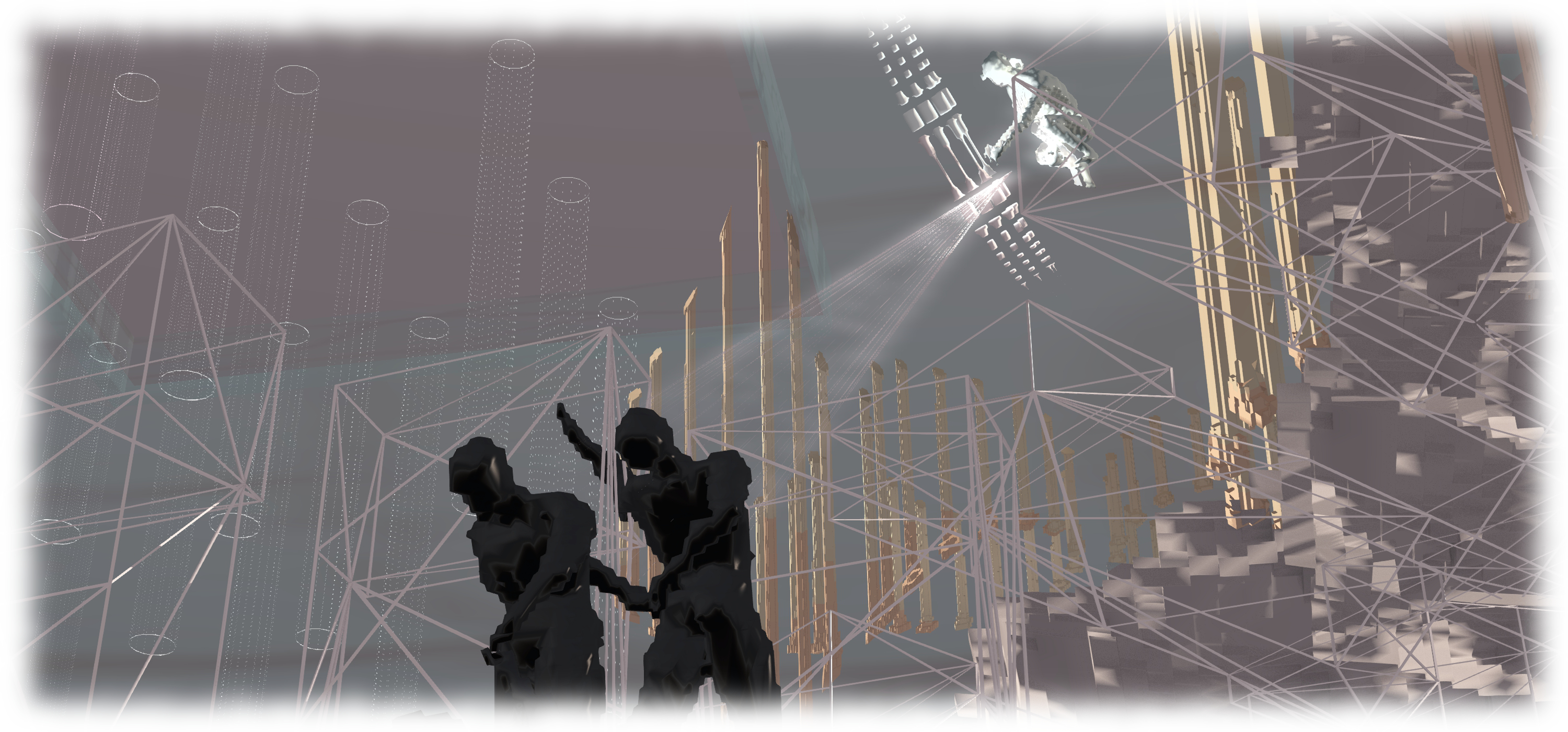
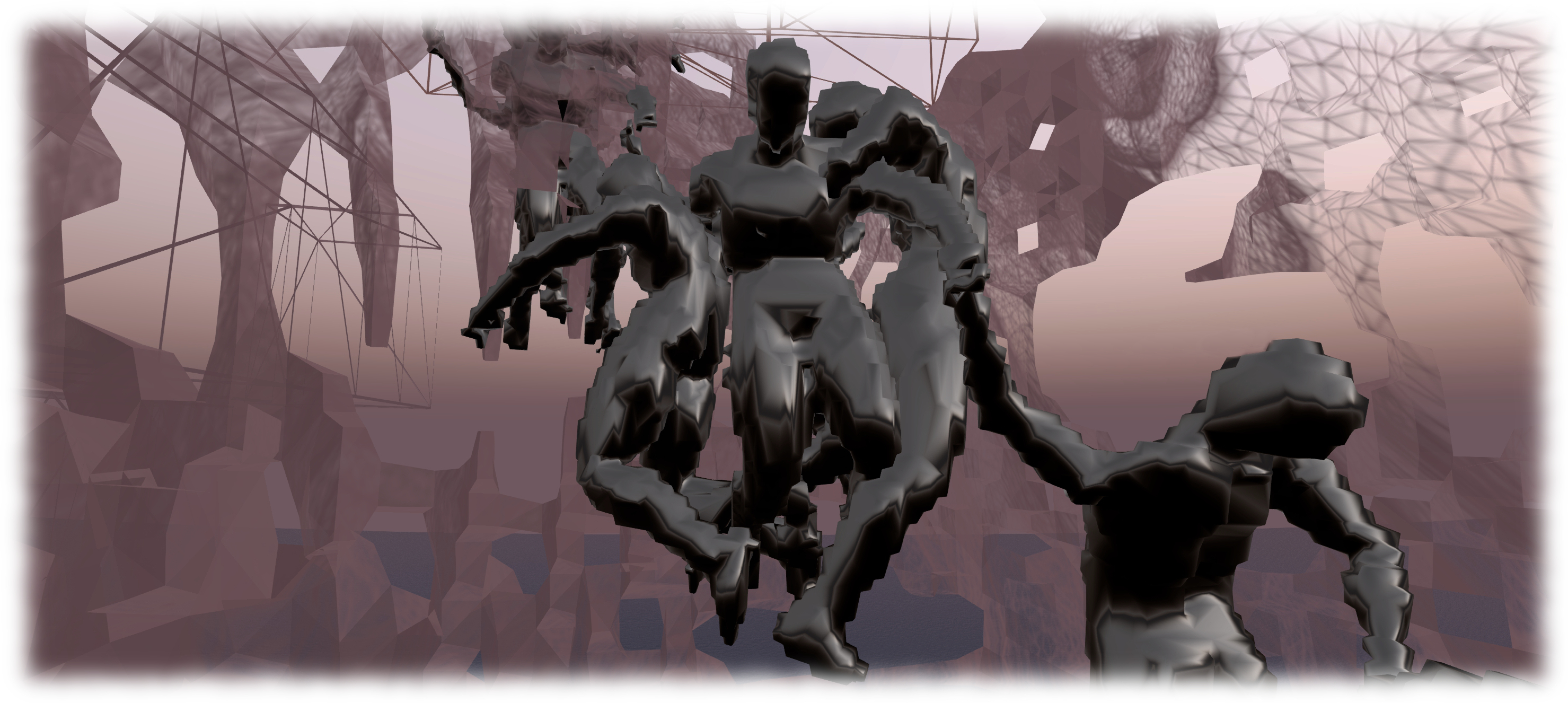
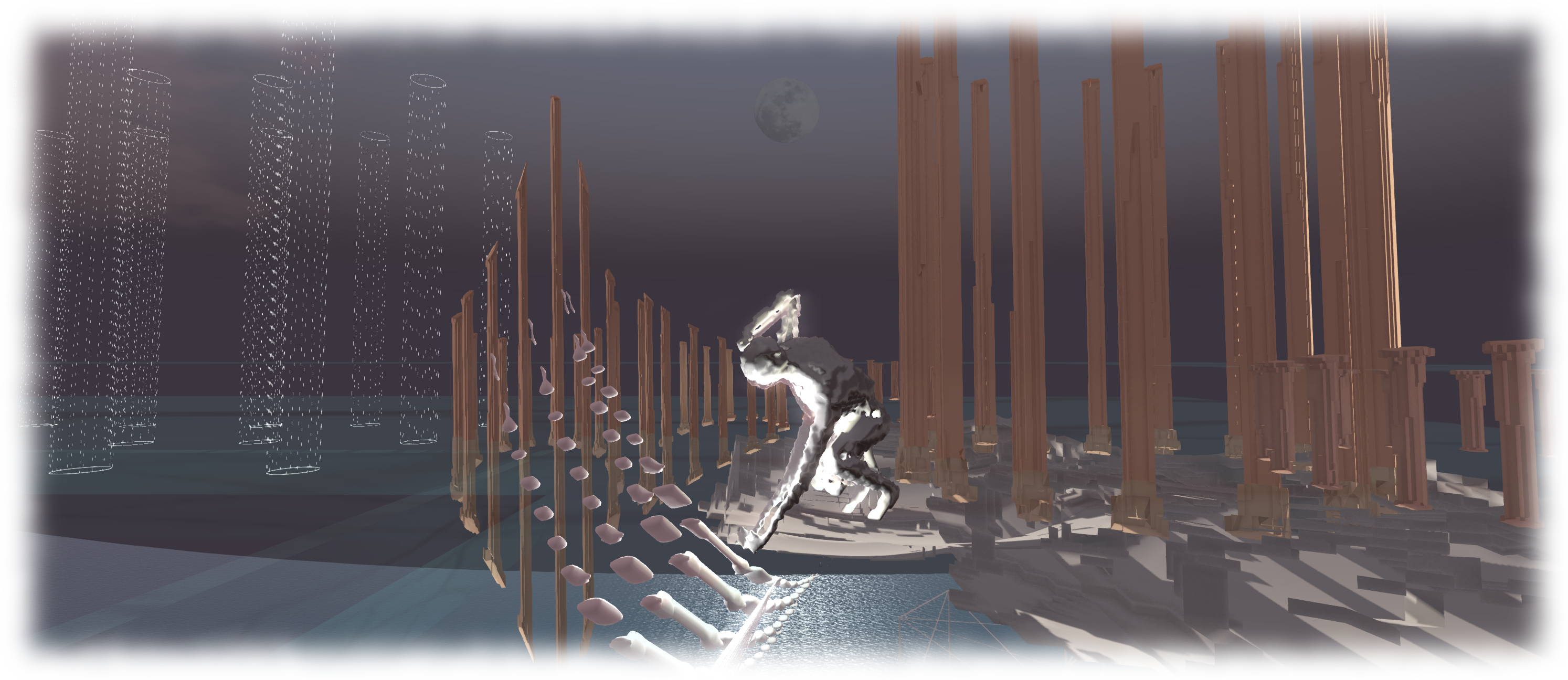
A complex piece mixing geometrical forms with human elements, the installation extends several hundred metres into the air, encompassing a number of distinct levels. Within the lattices and sphere which give a sense of order to the the build, there is also an element of disorder: human figures rising from the lowest platform, climbing the lattices upwards into the sky, stretching up towards a white figure crouched at the highest level.

The Eternal Suspense, Giovanna Cerise - LEA 21
The Eternal Suspense, Giovanna Cerise – LEA 21

Giovanna has taken as her theme the Apollonian and Dionysian philosophical dichotomy, perhaps most famously expounded within Friedrich Nietzsche in his 1871 study, The Birth of Tragedy. in which he examines the nature of Greek Tragedy before going on to use the Greek model to understand the state of modern culture.

The central concept of the Apollonian and Dionysian dichotomy is that Apollo is the god of reason and the rational, while Dionysus is the god of the irrational and chaos; therefore the core of all great tragedy grows out of the interplay between the differing world views they represent.

The Eternal Suspense, Giovanna Cerise - LEA 21
The Eternal Suspense, Giovanna Cerise – LEA 21

Within The Eternal Suspense Giovanna embodies and interprets this concept artistically. “Man is poised between two or more emotions, he is always in a delicate step,” she states, “in a hazardous environment. Its location is never easy, he is a tightrope imprisoned in constant tension between his Dionysian side and the Apollonian one. But [do] you have really to choose? Or you have really to find a balance?”

Thus, this interplay is defined between the lattice (ordered and rational) and the mass of figures climbing it (disorder, chaotic). But it also runs deeper. The figures themselves are rising from a scene somewhat chaotic in nature, with what appears to be roiling waves (or perhaps flames) mixed with revelry; but while their ascent up through the lattice may seem chaotic, it is both purposeful (rational) and encompasses cooperation (order), the figures all assisting one another. Thus the tension we can experience in trying to find a balance between our Apollonian and Dionysian “sides” is embodied in their form and efforts.

The Eternal Suspense, Giovanna Cerise - LEA 21
The Eternal Suspense, Giovanna Cerise – LEA 21

To get around the work, you can either fly, or use the teleport spinning tops (the first is located at the landing point). Right click on them and select TELEPORT, and they take you up through each level. Giovanna recommends a sunset windlight for the piece; I’d actually suggest something more towards a dusk level of lighting.

The Eternal Suspense will be open through until the end of June 2015.

Living in a Bowl

Living in a Bowl
Living in a Bowl – Cica Ghost

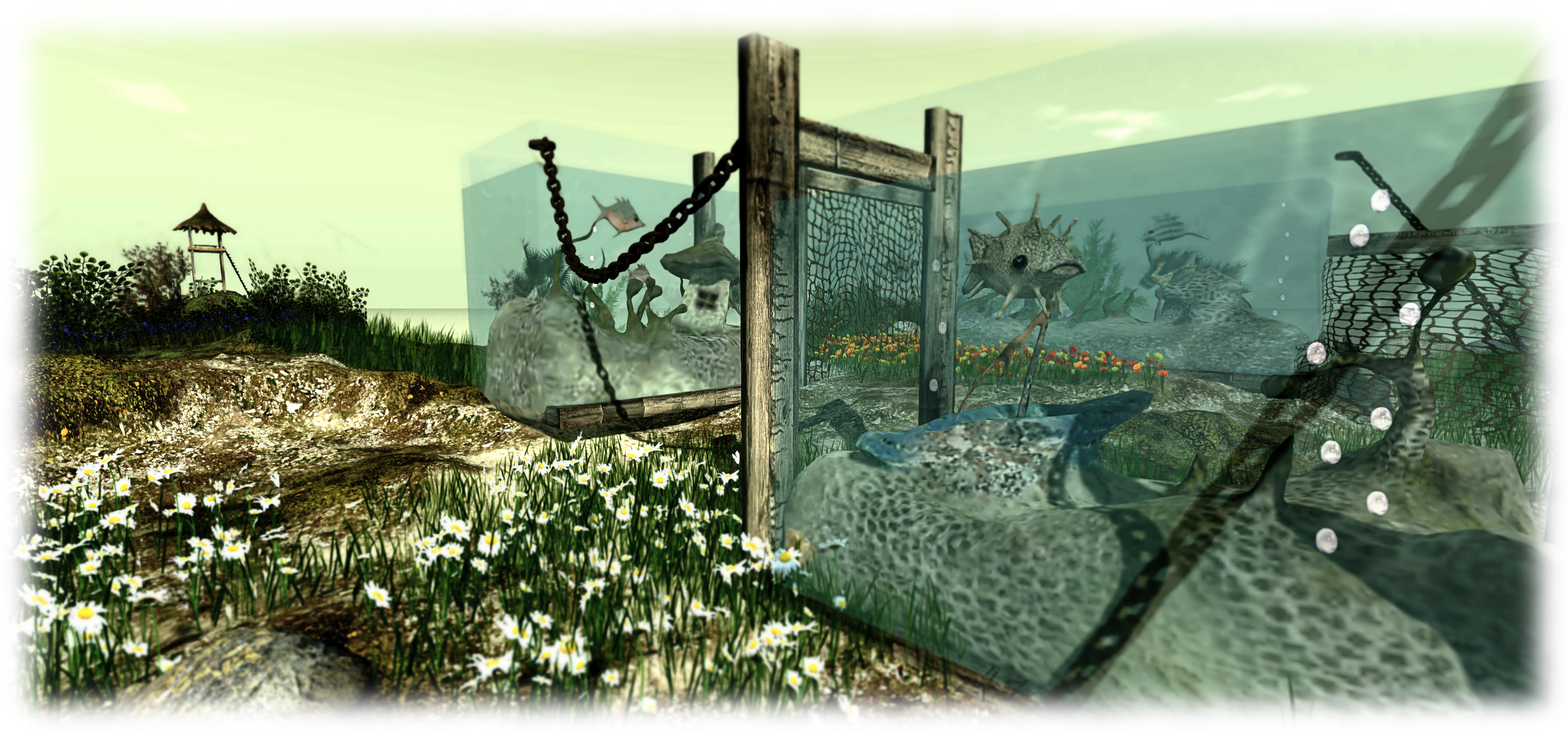
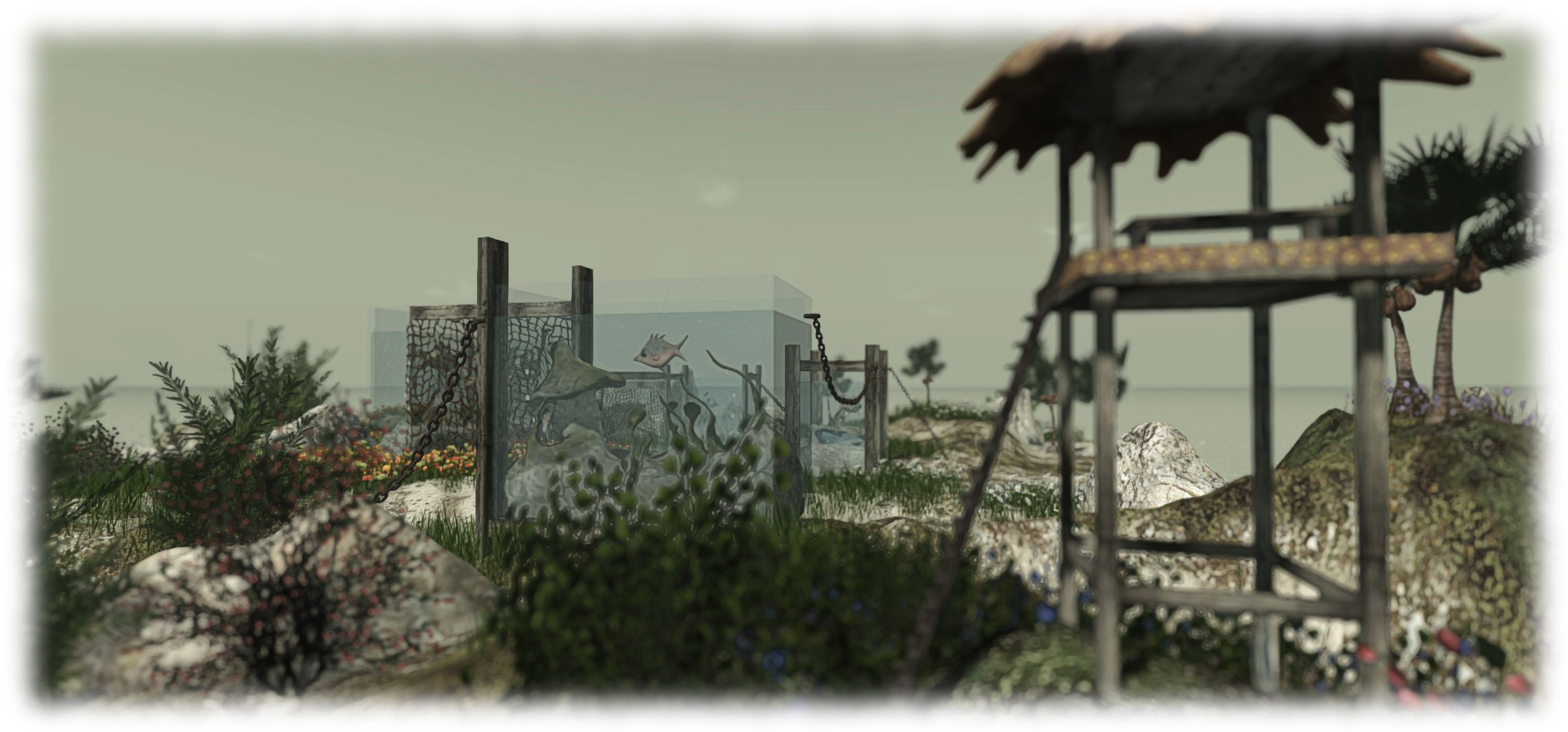
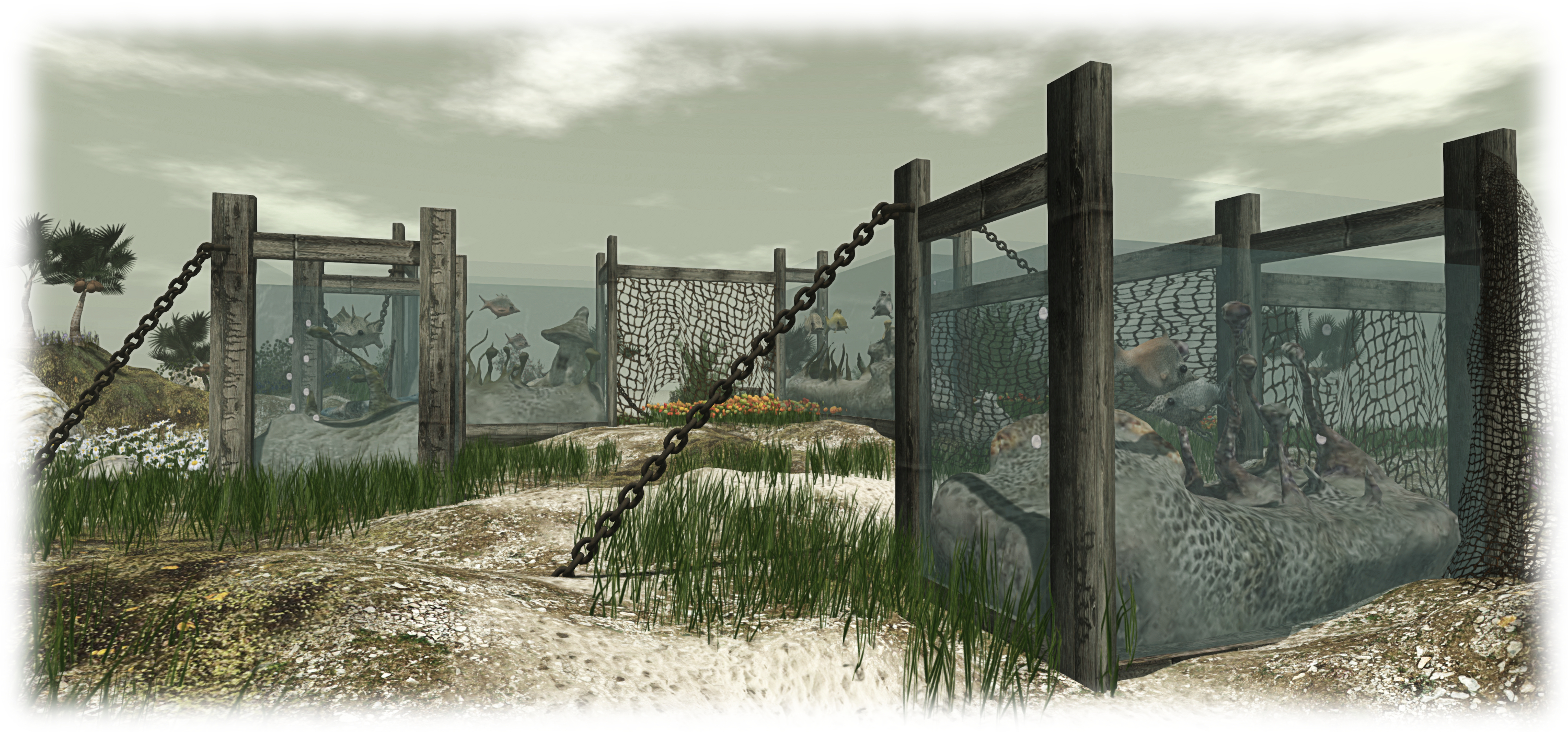
Living In A Bowl is the title of Cica Ghost’s latest installation, which opened on May 10th. It presents the visitor with a tropical island where almost everything is on a gigantic scale: flowers stand taller than an avatar, their delicate heads large enough to offer shade from the sun; coconuts the size of a man hang from palms and gigantic wooden-framed tanks and enormous fish bowls tower over the landscape, holding huge fish and seahorses within their watery confines.

At first, this might seem some giant’s idea of cruelty to fish; the tanks are all placed within view of the oceans from whence these curious fish may have come, almost as though to taunt them. Indeed, the huge glass bowl with its seahorses appears to have been intentionally placed on a rise in one corner of the island, as if daring its captives to perhaps try and unseat it and so gain their freedom in the open waters below.

Living in a Bowl
Living in a Bowl

But are these fish even aware of their circumstance? They drift in their tanks and bowls, in ones and twos, seemingly completely unperturbed by their situation, their movements languid and almost hypnotic as they float over and between the ornaments placed in their tanks – some of which would pass for a modest house for you and I.

Are they the observed, or the observers? There is a serenity about them which suggests that perhaps they know more than we might imagine – or equally, that they are content in their ignorance. And what of their fossilised brethren scattered across the sandy landscape?  What do they say to us – or to the fish drifting in their tanks?

Living in a Bowl
Living in a Bowl

If all this sounds disturbing – it’s not. Quite the reverse in fact; the sound of the waves lapping on the shore, the gentle song of birds in their air together with the odd plaintive call of a gull, all combine with the gentle undulations of the glass-encased fish and soft swaying of the palms in the wind, to created a soothing feeling. The entire effect is, frankly, tranquil and further enhanced by the audio stream, a beautiful selection of music that had me exploring the island to a gentle, lyrical piano and then to soft a cappela Georgian chanting. Little wonder that those on the region with me all appeared to be rooted in contemplation and lost in the music and the motion of the fish.

Such is the peace offered in this strange, other-worldly environment, that I found myself drawn to the watchtower sitting on a little hill in the north-east corner of the island, and there sit down and watch the fish, the music washing over me.

Living In A Bowl will be open for the next few weeks, and is well worth a visit.

Related Links