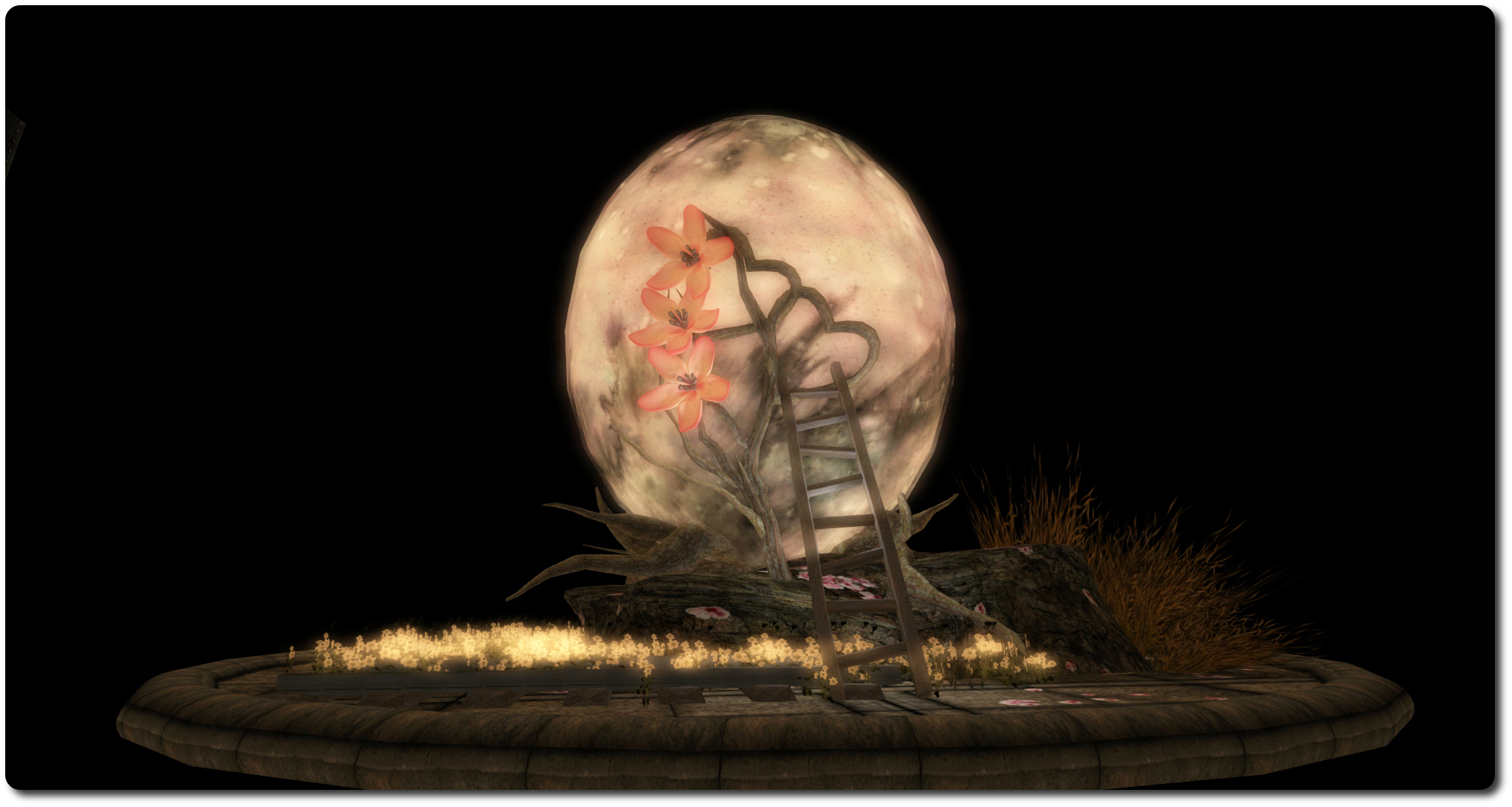
Now open at LEA 4 is Seasons of Life by John (Johannes1977 Resident), a Second Life photographer who has been rightfully gaining a respected reputation in-world for his photographic studies, which straddle the virtual and the physical worlds. As a serving member of the US Marines, for example, he shot a series of photographs showing military life whilst on deployment to Afghanistan, and these were recently featured in an exhibition at The Rose Gallery, Angel Manor.
Seasons Of Life is focused squarely on John’s work as an in-world artist, and is his first exhibition at the LEA. In his words, it represents “a person’s life cycle combined with the scientific seasons of the Earth”.
It sees the region, which is largely flooded at ground level, divided into five areas. Four of these are devoted to the four seasons – Winter, Spring Summer and Autumn, each presided over by portraits of its Guardian, as modelled by Draakje Dailey (Spring), Eleseren Brianna (Summer), Emma Portilo (Winter) and Issy Flatley (Autumn). The fifth area is given over to the Guardian of the Night, modelled by Seashell Dench.
The portraits are individually and collectively fascinating, presented in a variety of styles which offer strong contrasts to one another, while at the same time complimenting their individual seasonal theme,
For example, the Winter Guardian is presented in two monochrome / grey-scale images, providing a subtle emphasis of the cold grip winters holds. However, where one has a bold, charcoal-like thrust to it, the other offers a more gentle, light-handed pencil feel to it. Thus they contrast with one another while at the same time complementing the scene they present – the stark boldness of the darker image emphasising the Guardian’s power as she towers over the landscape, arms raised and outstretched as if in invocation.
Similarly, Autumn uses a more painting-like finish to each of the images (both watercolour and oil), allowing colours to be over-emphasised, echoing the rich natural hues of nature at that time of the year.
Clever use is also made of animated gifs in places which again adds depth to the images concerned. The Guardians seem to shimmer into existence as you cam onto the portraits, for example, while in an Autumn images, the waters are the Guardian’s feet ripples gently. The animations can take a number of seconds to fully work given the rain, show and lightning effects in the installation, but the end result is certainly eye-catching.
All told, an intriguing installation which will be open through until the end of October, I believe – but do take care when walking around. Step off the walkways, and you might find the water a tad bit deeper in some places than in others 🙂 .
Saturday, August 8th, 2015 at 13:00 SLT marks the formal opening on the Windlight Gallery, featuring an exhibition of works by the first round of Windlight Artist Fellowship Programme awardees.
The gallery is owned and operated by Windlight Magazine, the newest monthly magazine celebrating and supporting the art and photography world in Second Life,
Launched on July 1st, the magazine is owned and operated by John (Johannes1977 Resident) and features the writing and photography talents of luminaries Emma Portilo, Shakti Adored, Kara Trapdoor, Jessii2009 Warrhol, Vee Tamas, and Soairse Heart. I’m both honoured and pleased to be a part of the Windlight team as a contributing writer.
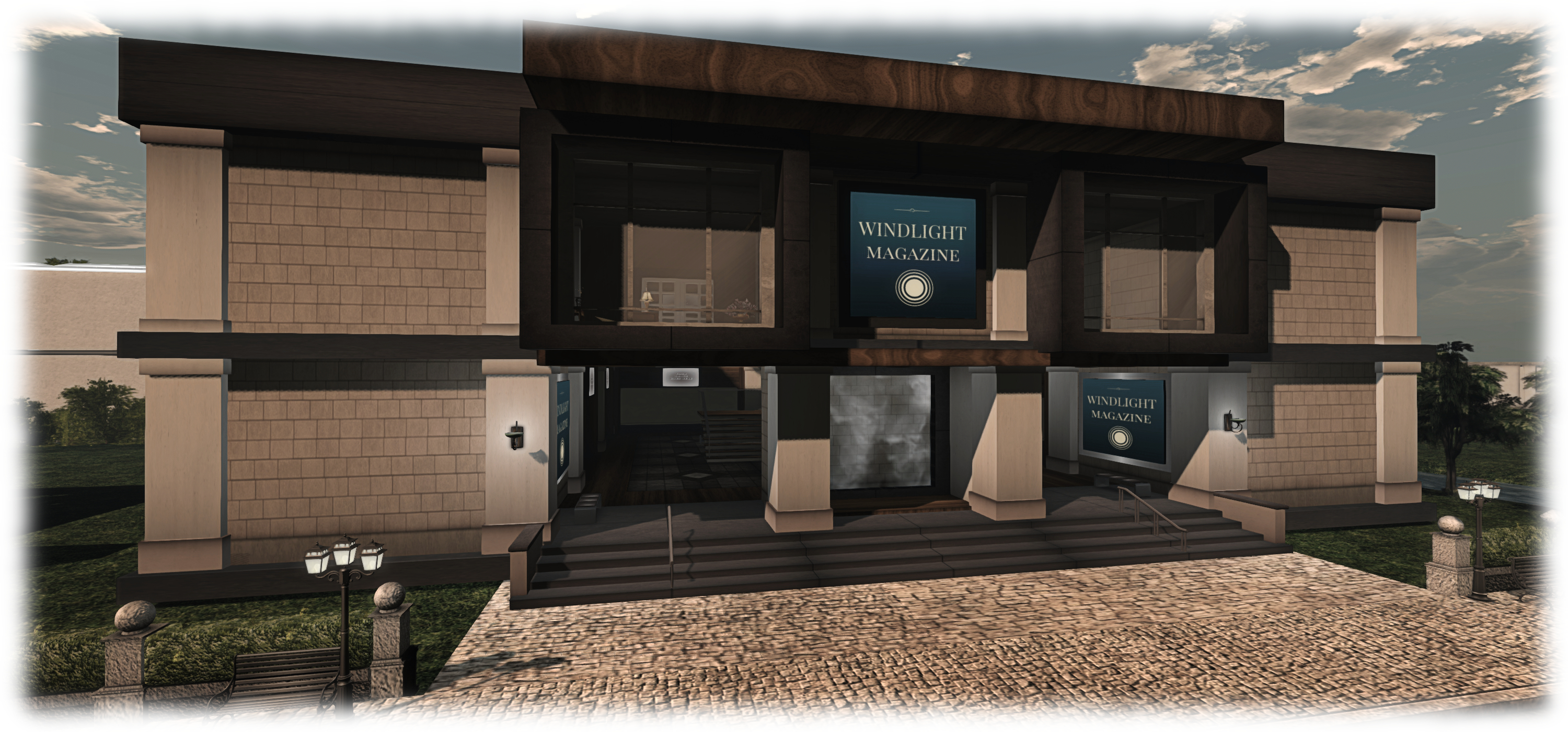
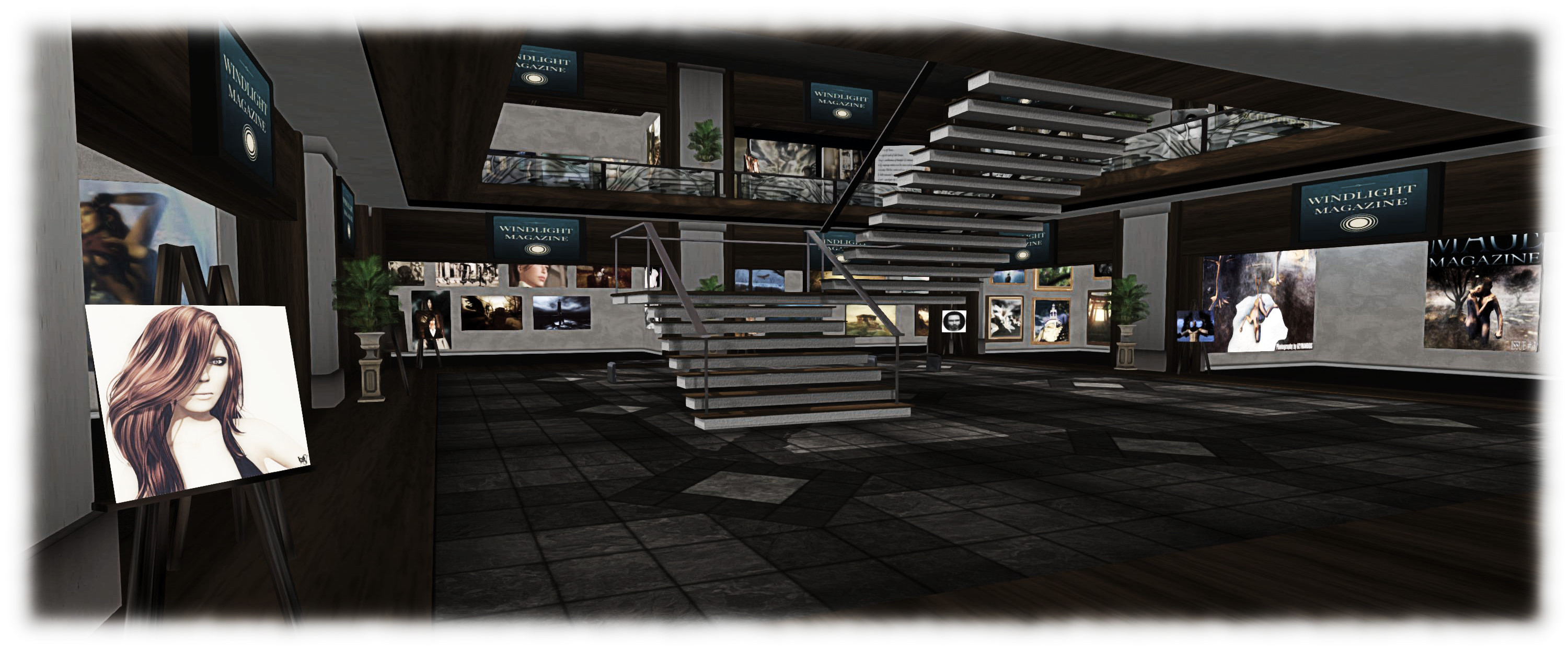
The Windlight Gallery is the magazine’s practical outreach to support artists and photographers. Occupying a large, modern building designed by Doctor Zimberman, it offers a series of individual display spaces spread across two floors, all gathered around a central full-height foyer area. It is home to the Windlight Artist Fellowship Programme, and the display spaces are reserved for those artists selected each month as Fellowship awardees.
The Windlight Gallery: home to the Windlight Artists Fellowship Programme
The goal of the Fellowship Programme is to provide promotional and artistic resources to artists in Second Life, and is open to both new and established artists. Space with the Windlight Gallery is provided free of charge for a period of 30 days. Applications for space can be made on-line, via the Fellowship application form, which includes all applicable terms for the use of space in the gallery.
The official opening will take place in and around the gallery starting a 13:00 SLT on Saturday, August 8th, 2015, and will feature music by Anek Fuchs. A formal dress code will apply.
There will also be a closing reception for the August Fellowship awardees on Saturday, August 23rd, 2015 from 15:00 SLT. This will again be formal dress, and will also feature music from Anek Fuchs.
So, do please come along, and hopefully, I’ll see you there!
Tuesday, August 4th saw the opening of the latest art exhibition at The Living Room, the music and arts venue operated by Owl Dragonash and Daallee. This month, the venue features the work of Jewell Wirefly, who offers a series of images from her travels around Second Life.
Jewell says of her work, “I have been in SL now for almost 9 years and have been taking pictures for nearly 6 years, and I still enjoy it as much as the very first shot. My art is nearly always inspired by a song and sometimes a quote or a poem. However, the one thing they all have in common is that they express my emotions. I like to take a variety of pics, including a lot of fantasy ones, and not keep to any particular type or style. ”
The images displayed at The Living Room reflect this approach to her work; having mostly been captured out and about in Second Life, each with its own particular style and emotive content. However, while she has tended to mostly eschewed the use of studio shots for her work, she does admit to more recently to building her own sets to capture some of the images that come to mind, and this side of her work is reflected here as well.
While there is a narrative and emotional content in all the images, I found myself most strongly drawn to four in particular (seen at the top of this article). I’ve no idea if their relatively close placement was intentional, but individually and collectively, I found them to be very evocative in terms of mood, narrative and image.
All told, another welcome, and personal display from an SL artist which will remain open to visitors through until August 25th, 2015, when there will be a special party to mark the end of the exhibition featuring the music of Laralette Lane, starting at noon SLT.
August also brings with it another night of live music at The Living Room, with August 13th seeing Billy Thunders on stage at 17:00 SLT, followed by The Vinnie Show at 18:00 SLT.
Now open at Max Butoh’s marvellous Dathúil gallery, beautifully curated by Lυcy (LucyDiam0nd), is the August exhibition. Lovegasm features the combined work of Mr and Mrs. S – otherwise known as Saka Infinity and Laura (LauraLar). It is one which continues to mark this venue as one of the more fascinating in Second Life for the range and depth of art displayed within its walls.
The easiest way to describe the exhibition is to quote from the opening of the introductory note which can be obtained at the gallery’s entrance:
What happens when two picture lovers meet? When art meets love, when love inspires each other, it drives them to Lovegasm.
The result is a series of his-and-her images reflecting the relationship between the two, and sometimes as it intersects with others. All of the images are caught as personal moments in time; many apparently without the aid of specific poses, thus increasing the intimacy apparent in each of them.
The tone and approach of the images can also be gained from the introductory notes, which inform us that she is “a surprise package in the kink department” with an eye for colour composition and angle, while he has “a quest to find the soul hidden behind each avatar”, his particular muse being Laura.
Thus it is that we have an exhibit which offers insight into the lives or the artists which is deeply personal, while also encompassing eroticism, sexuality and a touch of kink / D/s; yet all of them contain a richly intimate feel. However, there’s something else here as well, a very subtle play that further adds to the depth of involvement for the observer.
Unlike earlier exhibits at Dathúil, the images in Lovegasm are displayed from a series of overhead screens. These flip every three minutes (ish) between images by Mr. S and images by Mrs. S (who have each selected the works of the other for the exhibit), or which can be manually changed using the selector on the floor of the gallery next to the middle mezzanine floor pillar. More to the point, and in reference to the visitor’s sense of involvement: the screens seem to hint that one is perhaps watching scenes unfolding elsewhere; thus casting us into the role of voyeur on the intimate and the erotic, which adds an illicit frisson entirely in keeping with the overall theme.
Also on the mezzanine itself is the couple’s “kinky shed” – a prop often used in their photography, and which they invite other photographers to use – the theme for the shed will be changing weekly during the exhibition, which will be open through until the end of August.
Another simply superb exhibition for Dathúil, and one which – as with the entire series to date – should not be missed.
Update, August 6th: As reported by Ziki Questi, Kylie has made a return to Second Life, dispelling the major concerns about her welfare. “I am alive and well for the time being, and my intention is to keep The Trace going,” she told Ziki, before going on to express her thanks to all those who stepped forward in her absence to support The Trace Too. She also said the current auction to benefit ACS will continue. See Ziki’s post for more.
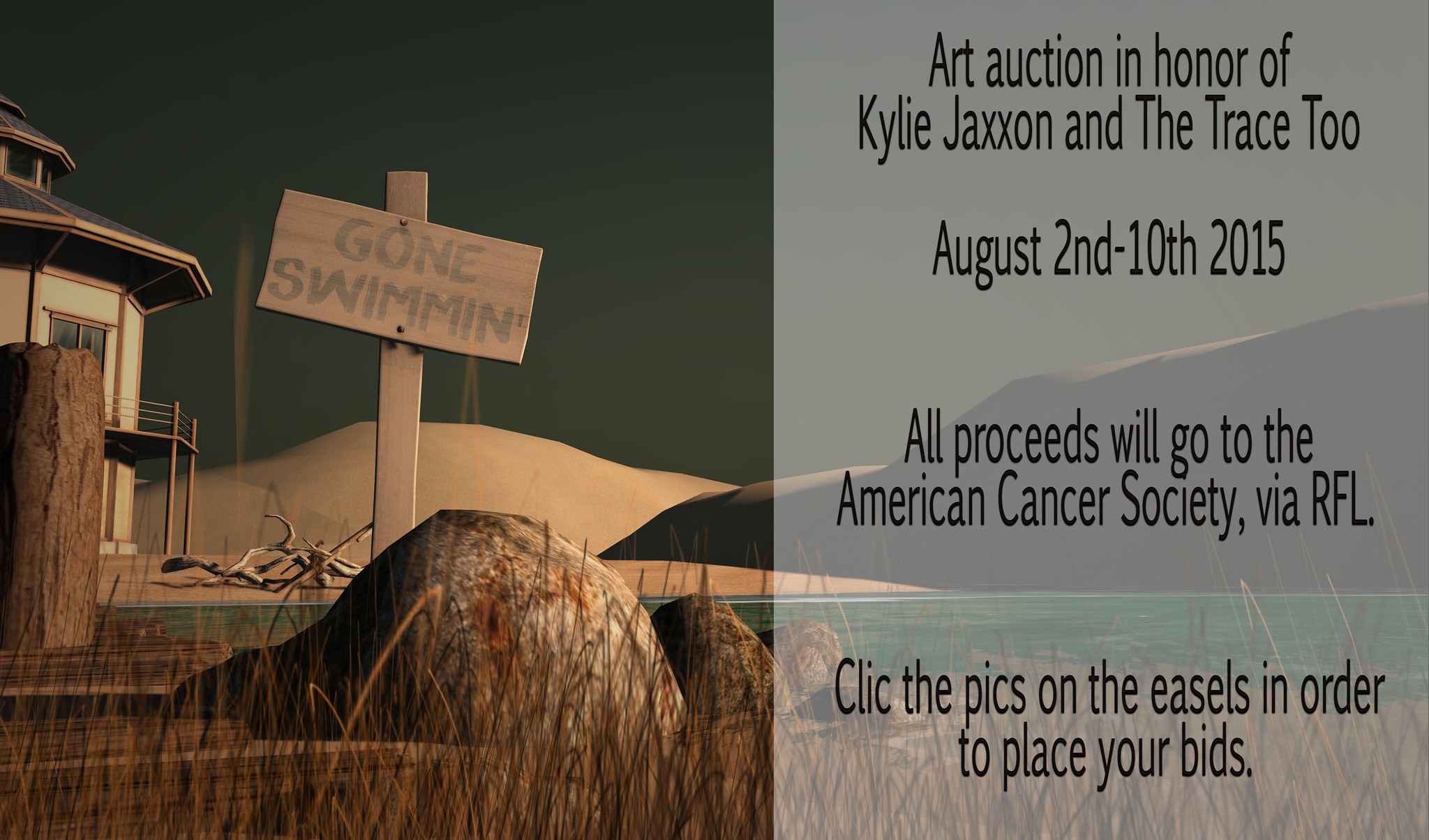
Now open, and running through until Monday, August 10th at The Trace Too, is a special art auction in honour of Kylie Jaxxon, with all proceeds going to the American Cancer Society via RFL of SL.
Kylie has been known to many as a friend, blogger, photographer and owner of two of the most beautiful regions in Second Life: The Trace (see my article from April 2014) and, more recently, The Trace Too (see my article from March 2015).
In 2014, Kylie was diagnosed with leukaemia, forcing her to withdraw for a time from Second Life and focus on her health and treatment. The Trace Too came about as a result of her positive response to that treatment, and her return to activities Second Life.
Images by Gidgette Adaggio, part of the auction to honour Kylie Jaxxon at The Trace Too – proceeds to RFL of SL / ACS
More recently, however, Kylie sparked concerns as to her well-being among close friends when she suddenly departed Second Life, with the closure of her account and her blog. As a result, a group of friends, led by Hippie Bowman, Lenni Foxtrot and Trinity Yazimoto, stepped forward to organise a special art auction, the focus of which is explained in a note posted to Trinity’s Flickr stream:
In honour of Kylie and her gorgeous work that has touched the Second Life community, there is an art auction at her sim to celebrate her talent, and wish Kylie a fabulous and final farewell:
The auction was originally intended to raise funds to keep her beautiful sim, The Trace, open until the end of August. Due to people’s generosity this goal has already been achieved, what an amazing result!
With this in mind, all proceeds from the art auction will now go to Relay for Life in Kylie’s honour.
Image by Lizz Avon, part of the auction to honour Kylie Jaxxon at The Trace Too – proceeds to RFL of SL / ACS
Artists from across Second Life have donated images of The Trace Too, including Chrysterox, Hillara, Lumiette, Pinkrayne, ScarlettElizabet, SereneDean, Skinninylla, Gidgette Adaggio, Kaelyn Alecto, Lizz Avon, Bamboo Barnes, Terravive, Becca, Leonorah Beverly, Lo Coeur, Maxie Daviau, Seraphiel Galaxy, Coober Galicia, Pearl Grey, Eddie Haskell, Rosy Highwater, Sabastian Melmoth, Masquerade Snowbear and Tripp Nitely.
Each artist has contributed one or more pieces, which can be found alongside the locations where they were taken, Bids can be placed against pictures by clicking on them and stating the bid amount in local chat.
If you have enjoyed Kylie’s creativity in, and contributions to, Second Life through her work at The Trace and The Trace Too, and through her blog, please do hop over to The Trace Too for a final explore and consider bidding on the art items displayed there.
Thank you Trinity, Hippie and all involved in the work to keep The Trace Too open just that little longer, and in bringing this auction together. And a very special thank you to Kylie for sharing her talent, vision and creativity with us all, and her generosity in allowing us to enjoy her landscapes.
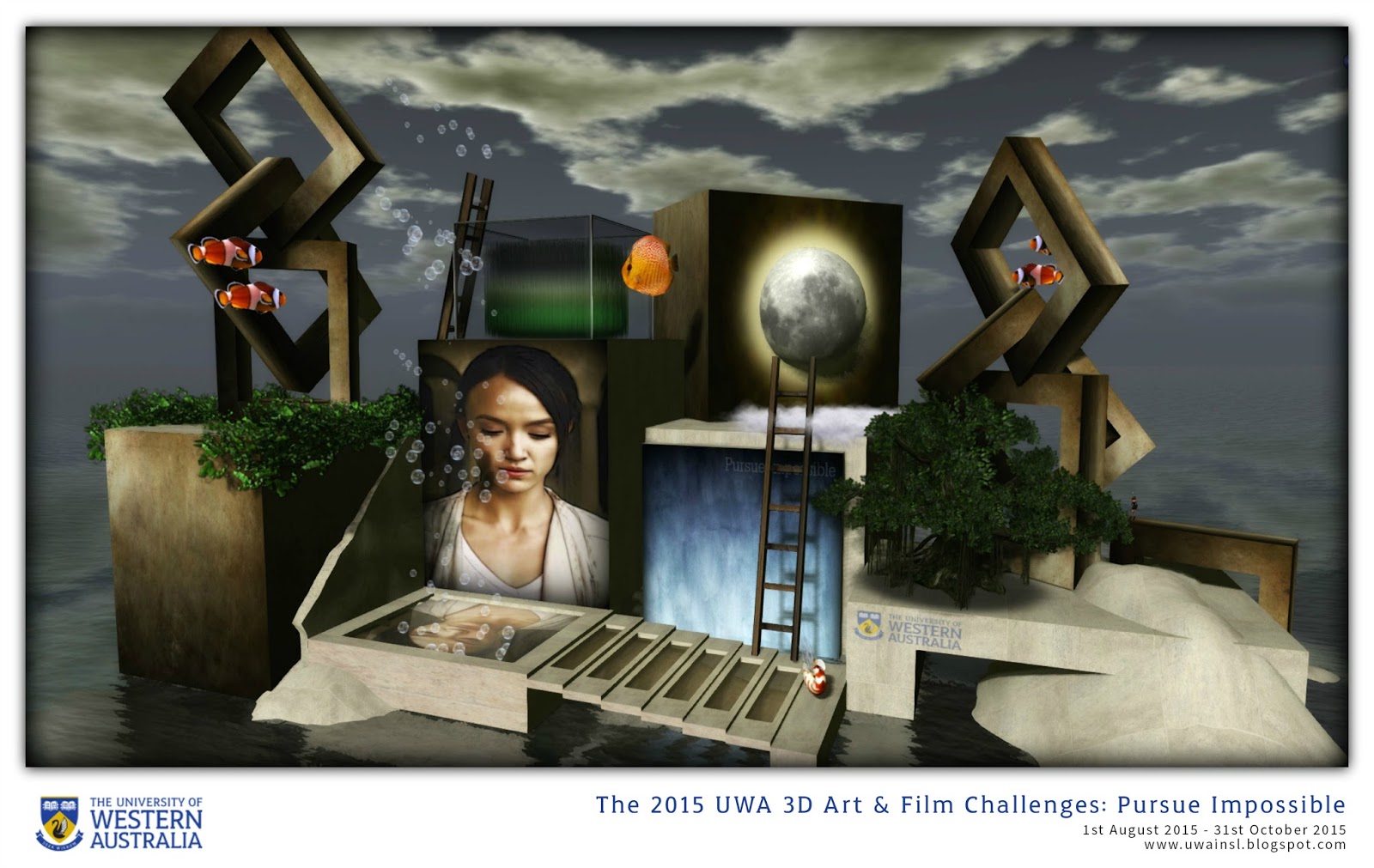
On Saturday August 1st, 2015, the University of Western Australia (UWA) announced the opening of their 2015 Grand Art and MachinimUWA Challenges. Jointly entitled Pursue Impossible, between them, they feature an opening prize pool in excess of L$400,000.
The Challenges are sponsored by Tom Papas & SciFi Film Festival, Reign Congrejo & BOSL, LaPiscean Liberty & SL Artist, AviewTV, Pixel Bits, Virtlantis, Phillip Vought, Carolyn Steele & York University (Canada), Taralyn Gravois, UWA Marketing & Communications, as well as the UWA Virtual Worlds Project.
Pursue Impossible invites entrants to consider what their “impossible” might be. Is it the goal they have achieved or which they’ve seen achieved by their loved ones, friends, family or heroes achieved and which has sought to inspire them? What have they overcome which they once thought to be impossible? How do virtual environments empower people to visualise, create and push the boundaries of the possible? What are those things we deem to be impossible, but which we may still pursue and conquer as individuals or collectively? What are the impossibilities of the mind or heart or soul? Do we see the seemingly impossible and try to overcome it, or do we allow it to overpower us?
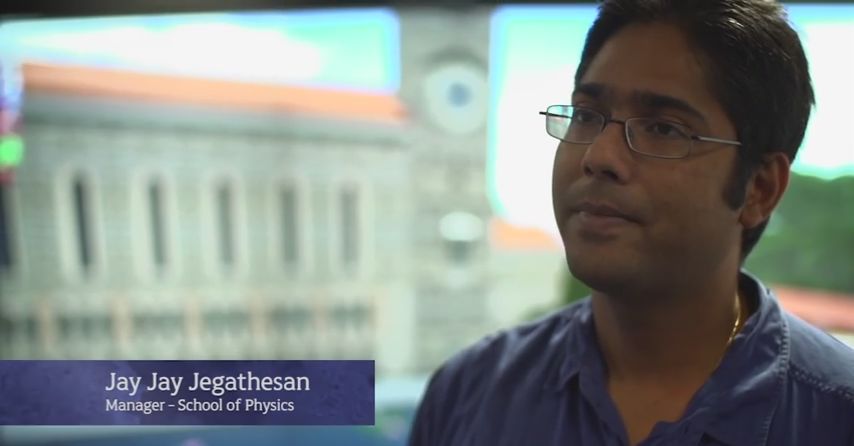
Jay Jay Jegathesan (Jayjay Zifanwee in SL), discusses Second Life and the achievements it has brought in a special video marking the launch of the UWA’s new brand, which is reflected in the new Grand Art and Machinima Challenge
“Those who pursue what may at first seem impossible are the ones who keep the world turning,” UWA’s Jayjay Zifanwe, Manager of the School of Physics at the university states of the theme. “What if Ghandhi did not believe he could overcome the impossible for his country? What if Dr Fiona Wood did not believe in second skin for burn victims? What if Professor Barry Marshall did not believe in himself and use himself as a human guinea pig for the benefit of mankind?”
The theme is also a reflection of a new brand launched by UWA in May 2015, which featured Jayjay’s work in developing a UWA presence in Second Life, and which is promoted by the university in video which may help get entrants to the Challenge thinking as well.
Please refer to the official UWA blog post for the major rules and considerations in entering the Challenge, and to find out about the prizes in the art and machinima categories. However, in summary:
Each category (art and machinima) currently has a prize pool of L$195,000, with a L$50,000 first place prize, and 11 prizes overall
Entrants are free to submit entries to either the art or the machinima categories, or to both if they wish
Art entry notes:
Art entries are limited to one per entrant, should preferably by submitted with COPY permissions, and must not exceed 150 LI, and must be free from any copyright issues – if third-party content is used in an entry, permission must and been sought and granted from the creator for its inclusion in the Challenge
Sounds, lighting, particle effects, etc., should be scripted to turn off when not in use. You may be asked to provide a revised entry if it is too intrusive or interferes with the display of other works
Exceptionally large or complex builds will be placed on platforms above the gallery with a teleport (TP) device and poster on the gallery floor and a return TP on the platform. You may provide a TP object and/or poster (no more than 2 LI) or we can place one for you. TP objects should be set to copy/mod and given to FreeWee Ling to add scripts and to place
Machinima entry notes:
There is no limit to the number of machinima pieces an entrant might submit; and while not a “hard” rule, machinima entries should preferably be no more than 4 minutes and 30 seconds in length, although this is not a “hard” rule
All submitted machinima must be made specifically for this challenge, and must include “For The University of Western Australia’s MachinimUWA VIII: Pursue Impossible” in the opening credits
Machinima entries do not have to be filmed within the UWA’s Second Life regions, but there will be a special prize available for a film which starts at the Winthrop Clock Tower and Reflection Pond, the starting pond for the UWA’s own Pursue Impossible video (above)
All entries to the challenge should be able to be interpreted by the casual viewer as representative of the theme.If the link is difficult to ascertain within a piece of art, it should be referenced in a note card accompanying the work; if it is difficult to ascertain in a video, it should be referenced in the notes accompanying the film on the web.
Never Say Never – Love Transcends Borders, by Sharni Azalee, the arts category Grand Prize winner in the 2014 Grand Art and MachinimUWA Challenge – will you be this year’s winner?
Art submissions should be made via the art entry receiver at the UWA Art Challenge Platform in Second Life, accompanied by a note card which includes your name, city, name of artwork and a description of artwork.
Machinima entries should be uploaded to any publicly accessible location, preferably YouTube or Vimeo, and the details of the entry (name, creator, location, etc.) supplied to Jayjay Zifanwe and LaPiscean Liberty in-world or by e-mailing the details to Jayjay (jayjayaustralia@hotmail.com).
The closing date for entries is midnight SLT, on October 31st, 2015. Winners will be announced in December 2015.
When entering, do please note that as with all the UWA’s public programmes, an entry may not be accepted if it is deemed to be excessively abusive, violent, offensive, bullying, harmful, insulting, or contains inappropriate material or excessively foul language. Depictions of explicit sexual activity, as well as material deemed offensive based on race, religion, gender, or sexual orientation are not appropriate for the Challenge, and may be rejected. Final decisions in these matters will be made by the UWA Cultural Precinct.
As with the UWA’s Grand Challenges, there will also be a set of audience participation prizes available. The pool for this currently stands at L$15,000 apiece for the two categories (art and machinima), and I’ll have more details on how you can enter this aspect of the challenge in due course.
Above: Tutsy Navarathna’s Grand prize winner in the Machinima category 2014 Grand Art and MachinimUWA Challenge
Over the last few years, it has been a delight and pleasure for me, through these pages, to help showcase the UWA’s work benefiting the arts in Second Life. Entries to their Challenges a special arts programmes have always been of an incredible standard, and I’ve enjoyed viewing them as a both a member of the public and more recently as a member of the judging panel. It is in this latter capacity that I’m looking forward to seeing the diversity of entries submitted in both categories this year, and would like to offer all those who do enter, the very best of luck!