SL project updates 43/2: Content Creation User Group

A rally of (Animesh) raptors on Aditi!

The following notes are taken from the Content Creation User Group meeting, held on  Thursday, October 26th, 2017 at 13:00 SLT. For the purposes of Animesh testing, the meetings have relocated to the Animesh4 region on Aditi, the beta grid – look for the seating area towards the middle of the region. The meeting is chaired by Vir Linden, and agenda notes, etc, are usually available on the Content Creation User Group wiki page.

Audio extracts are provided to provide additional content. Note that some of the audio extracts have been gathered from various points in the meeting and presented here as a concatenated whole by subject heading for ease of reference.

Animesh (Animated Mesh)

“I like the name ‘animated objects’ because I think it’s unambiguous, but it takes a long time to type!” – Vir Linden joking about the name “Animesh”.

Project Summary

The goal of this project is to provide a means of animating rigged mesh objects using the avatar skeleton, in whole or in part, to provide things like independently moveable pets / creatures, and animated scenery features via scripted animation. It involves both viewer and server-side changes.

In short, an Animesh object:

  • Can be any object (generally rigged / skinned mesh) which and contains the necessary animations and controlling scripts in its own inventory  (Contents tab of the Build floater) required for it to animate itself.
  • Can be a single mesh object or a linkset of objects (link them first, then set them to Animated Mesh via the Build floater > Features).
  • Has been flagged as and Animesh object in the project viewer, and so has an avatar skeleton associated with it.
  • Can use many existing animations.

However Animated objects will not (initially):

  • Have an avatar shape associated with them
  • Make use of an avatar-like inventory (although individual parts can contain their own inventory such as animations and scripts)
  • Make use of the server-side locomotion graph for walking, etc., and so will not use an AO
  • Use the avatar baking service
  • Will not support its own attachments in the initial release.

These are considered options for follow-on work, possibly starting with the notion of a body shape (to help with more fully-formed NPCs).

General Status

  • The project viewer is now available, and testing can be carried out on  5 regions (4 Moderate + 1 Adult) on Aditi: Animesh1, Animesh2, Animesh3, Animesh4 and Animesh Adult.
  • Feedback can be offered through the Animesh forum thread, while specific issues, bugs, and / or feature requests related to the project should be made via JIRA.
  • A filter for raised JIRA reports is available.

Root Prim Object

There have been a number of requests to allow Animesh objects to have a non-rigged mesh (e.g. a prim) as the root object. Vir has been working to make this possible. He’s also looking at the issue of non-rigged mesh links in an Animesh object becoming invisible when the Animesh flag is set.

Limits

As has been mentioned numerous times in these updates, Animesh will have some constraints / limits placed upon it in the interests of the capability not unduly impacting performance. For the purposes of test, these have been set at 200LI and a maximum of 20K tri maximum per Animesh object, and only one Animesh can be attached to an avatar at a time. As data is gathered on performance, etc., it is hoped these can be relaxed; however, some creators are requesting limits such as the tri count be raised sooner rather than later. Vir, understandably, would rather wait until more data has been gathered, rather than randomly changing constraints.

There has been a proposal for an alternative method of account put forward with regards to Animesh – BUG-139203.  Vir also reiterated the likelihood that the Animesh limits, once finalised, will have a smaller emphasis on constants such as land impact or the cost of having one attached, and a greater emphasis on the complexity of the Animesh itself (tri count).

Linksets / Permissions Issues

See also Piscine Mackenzie’s forum post on this.

As currently defined, Animesh does not allow for any avatar-like attachment  / detachment of objects (e.g., allowing a pet cat to wear a hat sometimes); the approach is more along the lines that everything that is intended to form the Animesh is attached as the time to object (/linkset) is flagged as Animesh.

This is because adding an avatar-like means of supporting attaching / detaching objects was seen as too high an overhead in terms of development time frames and complexity – although it is not entirely ruled out as a possible future capability.

In the meantime, scripted means to attach / detach items from an Animesh object is possible, but this requires the base Animesh to be modifiable. As detailed in Piscine’s post, and highlighted in the following post from Medhue Simoni, this opens the door to potential exploits / threat vectors (e.g. compromising a supporting ecosystem for pets / breedables to the potential for launching DDOS attacks against the external servers managing pets and breedables).

Vir recognises the issue, and has stated he’ll look into the in more detail. One possible solution has been suggested via feature request BUG-139168, and a possible scripted workaround has also been suggested – although it potentially has its own problems.

An offshoot of this is that it could lead to people including multiple accessories within the Animesh linkset. The problems here being a) doing so would immediately require much higher tri counts per object even after the current 20K limit is raised; b) it will require alpha swapping to hide / reveal different accessories, creating performance hits; c) it will limit the ability for new accessories to be easily added to creations.

Sitting Animesh Objects

Will it be easy to have Animesh sit on other objects (e.g. to have Animesh “mannequins” which could be used with demos of furniture so couples poses could be checked by just one person, etc)? Short answer: not easily. Sitting on objects is avatar-specific, which, among other things, involves re-parenting the avatar to the object it is sitting on, and there is no means to replicate this when trying to “sit” an Animesh (which the server sees and just another in-world object) on another object.

In Brief

  • Lack of Shadows with Animesh objects: this is a know bug, thought to reside within the rendering pipeline, which has yet to be tracked down.
  • Dropping mesh: as noted in my previous CCUG update, by default, mesh attachments cannot be dropped in-world. This means that the only way to currently “pick up” and “put down” an Animesh pet which can roam in-world / be held, is via inventory. Vir has been looking at this, and it is not any easy fix, requiring server-side work (including with physics handling to ensure things land correctly – such as pet on its feet rather than on its side / head) which may preclude it being dealt within the immediate future.


Medhue examines Animesh. Via Medhue Simoni

Bakes on Mesh

Project Summary

Extending the current avatar baking service to allow wearable textures (skins, tattoos, clothing) to be applied directly to mesh bodies as well as system avatars. This involves server-side changes, including updating the baking service to support 1024×1024 textures, and may in time lead to a reduction in the complexity of mesh avatar bodies and heads. The project is in two phases:

  • The current work to update the baking service to support 1024×1024 textures.
  • An intended follow-on project to actually support baking textures onto mesh surfaces. This has yet to fully defined in terms of implementation and when it might be slotted into SL development time frames.

This work does not include normal or specular map support, as these are not part of the existing baking service.

Current Progress

Load testing with the updated server using 1024×1024 textures is in progress. The next phase is liable to be comparing the load test data with that of an existing baking server using 512×512 textures.

Bakes on Mesh and Animesh

Because of the complexities involved with Bakes on Mesh, it is not seen as a dependency for Animesh, as doing so would greatly extended the time frame for delivering Animesh. The Lab would rather implement both incrementally, rather than try to run everything into one huge project.

Environment Enhancement Project (EEP)

Project Summary

A set of environmental enhancements, including the ability to define the environment (sky, sun, moon, clouds) at the parcel level; a new environment asset type that can be stored in inventory and traded through the Marketplace / exchanged with others; scripted, experience-based environment functions, an extended day cycle and extended environmental parameters. This work involves both a viewer updates (with a project viewer coming soon) and server-side updates.

Current Status

No major change from my previous work. Rider has been working on a simhost issue unrelated to EEP for much of the time.

Final Notes

  • Those requiring access to the JIRA to comment on files issues / request, can send an e-mail request to LetMeIn-at-LindenLab.com.
  • There is no CCUG meeting on Thursday, November 2nd, 2017. The next meeting will be Thursday, November 9th.
 

Dementophilia in Second Life

The Vordun: Dementophilia

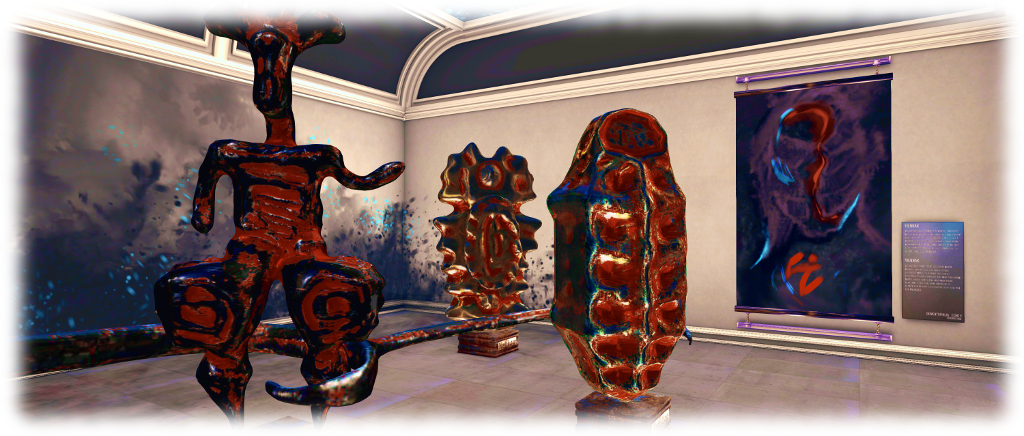
“We are chased by evil throughout our lives.” Federico Sosa (TheBDKX) states in introducing Dementophilia, his new exhibition at The Vordun Museum and Gallery. “Devils we try to hide, and slowly eat us up from inside, draining our strength. The worst of all evils. Ourselves.”

Dementophilia is described as “an abnormal, obsessive attraction towards insanity, and it is the perfect title for this exhibition. Located in the rear hall of The Vordun, it features eight paintings and eight sculptures, together with a large central mixed 2D and 3D element – the Vortex. Together they personify the darker imaginings from the depths of the mind

The Vordun: Dementophilia

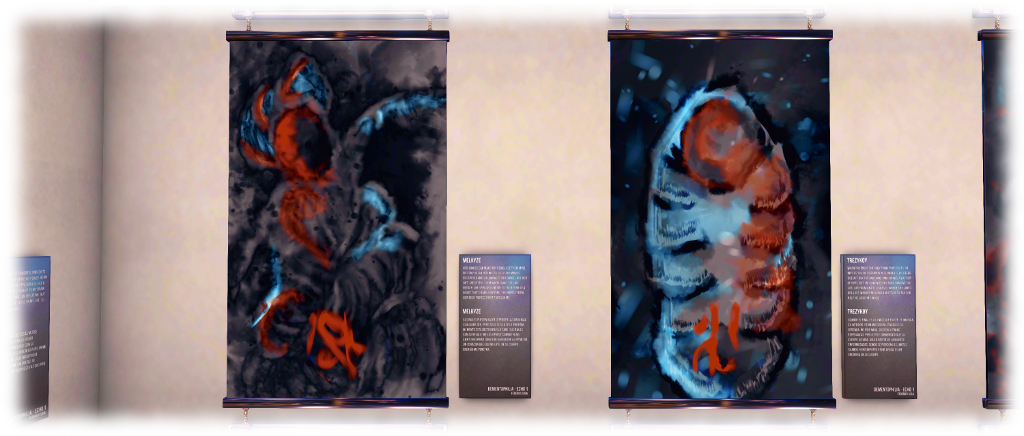
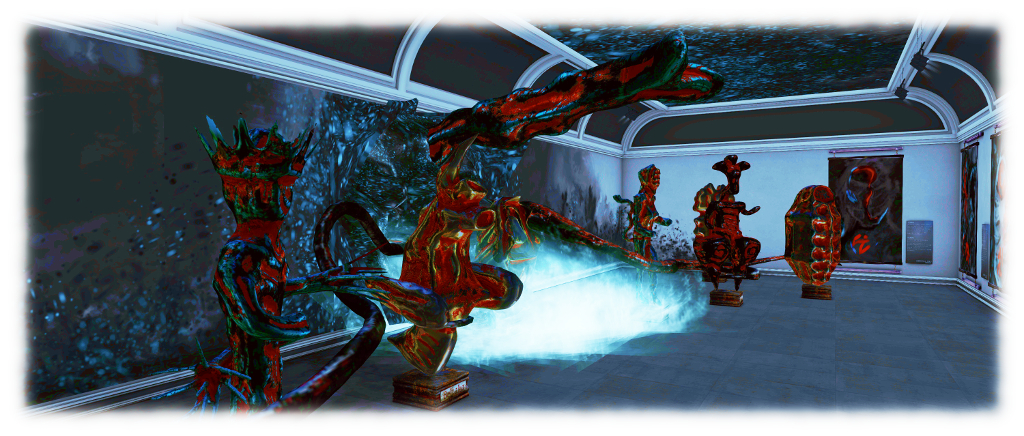
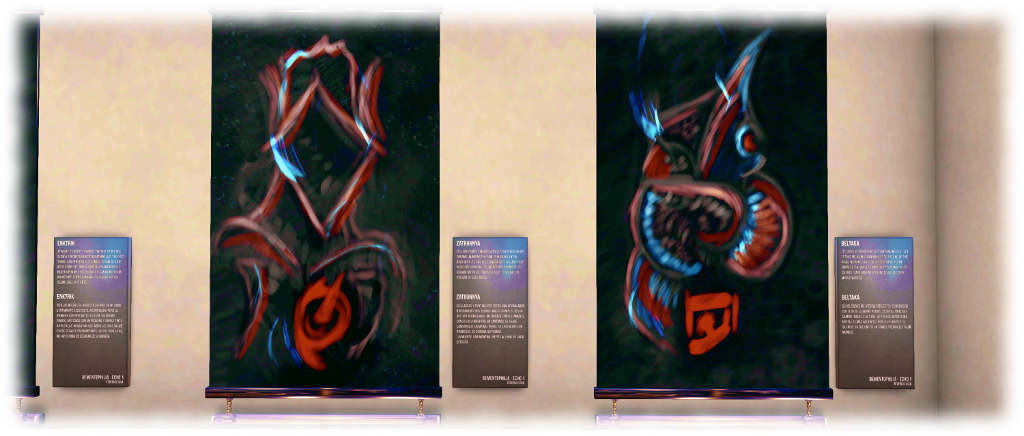
The eight images and eight statues are paired, the statues physical manifestations of the paintings, brought forth by the vortex bursting forth from the rear wall of the hall. Each painting / statue represents a creature – or is that an elemental aspect, a beast if you will, of our psyche? In addition, each painting is partnered with a description of the demon it represents:  Enktrik, Zatrunnya, Beltaka, Fenniaq; Nelikaw, Trezykoy, Melkyze, Yiennak; each description reads as the writings of an unsettled mind – and what mind wouldn’t be unsettled seeing creatures such as these rising from the subconscious.

Thus, entering the hall is akin to entering those thoughts beneath our reasoned consciousness; a place where our personal devils reside; parts of our being alien and terrible – yet playing a vital role in forming our personality, again as Federico notes: “Locked inside, they can heal our wounds. Out in the open they reign. Beasts from within. Beasts of love and Pain. Beasts that are on the loose, fighting against the external consciousness.”

The Vordun: Dementophilia

Within this exhibition, these beasts have been named, their nature understood, suggesting their keeper is long familiar with them. Their presence speaks to that battle with an “external” consciousness, a mind acutely aware of their existence. A mind willing to make them manifest – or, perhaps, a mind succumbing to their dominance. It is down to us to decide which.

Dementophilia is intriguing in both its concept and interpretation. As manifestations of darker thoughts and desires, they capture the unreality of the subconscious. As pieces of art, they offer an abstract hint of demons from the realms of Hieronymous Bosch.

The Vordun: Dementophilia

I did find myself wondering how much deeper the impact of the exhibit might be if presented in a more tailored environment / setting and with an appropriate Windlight, but nevertheless, it still makes for a thought-provoking visit.

SLurl Details

In the Press: Ars Technica returns to Second Life

Khodovarikha; Inara Pey, October 2017, on Flickr Follow Your Bliss, Second Life

Writing for Ars Technica on Monday, October 23rd, Samuel Axon, the Senior Reviews Editor, tells of his time Returning to Second Life. It’s a lengthy, involved piece, and perhaps one of the most broadly integrated write-ups on Second Life to have appeared in a good while.

Mr. Axon is no stranger to SL, having been dipping in and out over a number of years up until around 2012. As such, he brings to the piece first-hand experience based on more than just random exposure to the platform. In addition, he spoke directly with Peter Grey, the Lab’s Global Director of Communications, and Bjørn Laurin, Vice President of Platform – who has responsibility for both Second Life and Sansar. But that’s not all, he also sought out a number of Second Life creators to gain their insights as well.

The opening paragraphs encapsulate Second Life on a number of levels: the early hype around it being the “Internet 2.0”, the media hysteria of 2006/7, and an attempt to explain, as quickly as possible, was SL “is” for those who might view it as some kind of MMORPG.

From there, the article weaves a fairly comprehensive tapestry of several aspects of Second Life: commerce, creativity (and their relationship), social interactions and the changing face of discovery in SL, and more.

Samuel Axon, writing for Ars Technica

For example, with commerce and creativity, he brings together several threads: how both have given rise to what might be regarded as “unusual” (to the outside world) markets – such as breedables; how creativity has changed thanks to mesh and (for many) the move away from prims to external tools; the influence this has had with commerce, the rise of the Marketplace, and its impact on land in in-world stores.

The article also doesn’t shy away from issues. It delves into the question of why Second Life failed to become as all-encompassing as the early days seemed to promised. Here the finger is pointed squarely at social media being a major reason (outside of the overall hype surrounding SL), and I wouldn’t dispute it’s validity. Back when SL was at the height of its hype (2006-early 2008), Twitter was just starting out, as was the iPhone, Android had yet to arrive, and even Facebook had yet to start its meteoric rise in user numbers (2008 onwards). Thus, there wasn’t really anything out there by which SL’s real potential could be measured and the hype around it countered.

Sex in Second Life is also dealt with head-on, with a very tidily written sidebar to the main article. In it, Mr. Axon offers one of the most considered and well-balanced ripostes to those who insist Second Life is, to its larger extent, “all (/just) about sex”.

There are one or two elements in the article which might have been tackled a little differently. The changing face of discovery – where to go and what to do in Second Life  – is examined, with a degree of lamentation that the kind of exploration possible when SL was more mainland / very large private estate oriented (i.e. pre Homestead) no longer seems to be the case, with the bias now towards “siloed” activities on isolated private islands or “big public” calendared events, with information on them effectively coming through word-of-mouth.

However, rather than lamenting the change, I’d perhaps liked to have seen it examined more along the lines of how we tend to imprint our physical world activities on Second Life. It’s fair to say our social activities in the latter are “siloed” between our homes and public venues / calendared events. We visit family and friends via the most direct means possible, rarely taking time to explore what lay between; we rely on specific “word of mouth” to get news on events of interest – websites, social media, clubs / organisations, etc. So is it really that surprising social activities have evolved in a similar manner in SL, particularly as some of the tools – like Groups – naturally lean in that direction, and are very effective in their reach?

Later in the article, Sansar enters the equation – as might be expected, given there is much concern about how it might impact Second Life. Here, those concerns are confined more to the technical / fiscal:  that Sansar will draw off resources / investment from Second Life to its detriment.

While these – and other – concerns are valid, right now none of them are coming into play. On the technical / fiscal front, for example, we know the Lab is still recruiting skills specific to Second Life, and we’re still seeing user-visible capabilities added to the platform, Animesh being the most recent (albeit on a test basis), with things like the Environmental Enhancement Project and Bakes on Mesh (see my CCUG updates) following it down the pipe. The Lab is also continuing its overhaul of the infrastructure underpinning Second Life, up to and including an attempt to move SL services to the cloud.  If nothing else, and providing other factors don’t come into play, all of this work should help towards SL’s continued longevity.

I could go into greater lengths, but really, suffice it to say that in Returning to Second Life we have an informed, balanced piece on the platform, which reasonably attempts to reconcile past with present and offer honest insight into why, fourteen years after its public opening, the platform still has appeal, as well as offering viewpoints from both the Lab’s and users’ perspectives. As such, it is more than worth a read in its own right, and if you haven’t done so already, I urge you to do so.

Purple, Imani and Juris at DiXmiX in Second Life

DiXmiX Gallery – Purple Leonis ONeill

DixMix Gallery, curated by Dixmix Source, has another triple exhibition, this one featuring the work of Purple Leonis ONeill (Nel4481), Juris Bergmanis (JurisJo) and Imani Nayar. All three are very different in terms of their tone and style, making exhibition an interesting visit.

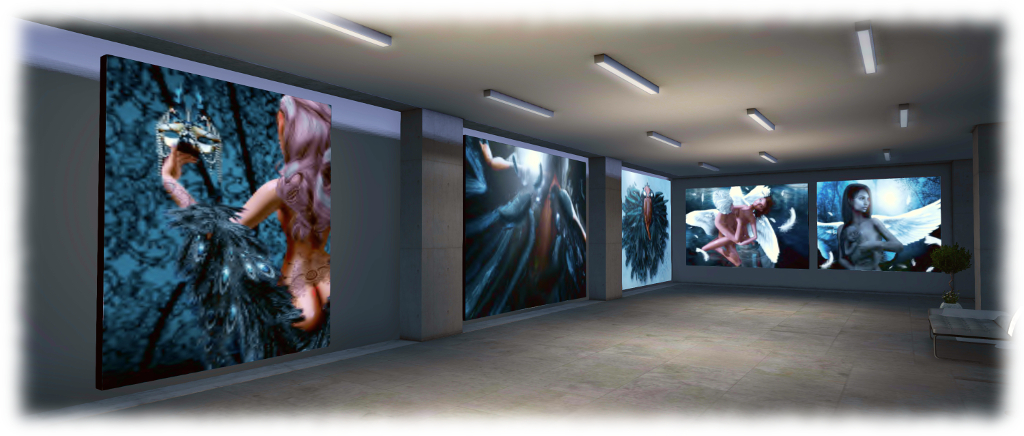
Purple’s work is located in the Grey hall of the gallery, just inside the main entrance. she presents thirteen images spilt between the gallery’s two levels. – two in a very large format, and all in rich, vibrant colours. Entitled Fantasme, there is a strong avian / fantasy theme running through the series, offering a unique set of avatar studies which are – in a word – entrancing.

DiXmiX Gallery – Imani Nayar

Within the Black hall, Imani Nayar also presents thirteen black and white images under the collective title Exposed. All are avatar studies, and as the title of the exhibit might suggest, some of them should be considered NSFW.

Above the Black hall is the White gallery space, where  Juris Bergmanis is displaying eleven quite stunning landscape images captured from around Second Life; and when I say stunning, I mean just that. They all share a common theme of sky and colour, suggesting they are intended to celebrate autumn.

DiXmiX Gallery – Juris Bergmanis

It’s a shame that, again, no biographical information is provided on the artists for those unfamiliar with them, as I’ve mentioned before. However, it is fair to say that such is the diversity of the three styles on display here, the lack of background information doesn’t detract from appreciating the pieces which are offered within each of the three exhibits.

SLurl Details

SL project updates 43/1: server, viewer, exploits

La Vie; Inara Pey, October 2017, on FlickrLa Vie – blog post

Server Deployments for Week #43

As always, please refer to the server release thread for updates and the latest news.

  • There was no deployment or restart for the Main (SLS) channel on Tuesday, October 24th, leaving it on package #17.10.06.509394.
  • On Wednesday, October 25th, the RC channels should be updated with a sideways roll to server maintenance package, #17.10.06.509394, comprising internal fixes, cuerrently deployed to the Main (SLS) channel.

SL Viewer

On Tuesday, October 24th, the current Maintenance RC viewer updated to version 5.0.9.329650. All other viewers in the current pipelines remain as per the end of week #42:

  • Current Release version 5.0.8.329115, dated September 22, promoted October 13 – formerly the “Moonshine” Maintenance RC.
  • Release channel cohorts:
    • Wolfpack RC viewer,version 5.0.9.329478, dated October 20 – this viewer is functionally identical to the release viewer, but includes additional back-end logging “to help catch some squirrelly issues”.
    • Alex Ivy 64-bit viewer, version 5.1.0.508209, dated September 5.
    • Voice RC viewer, version 5.0.8.329552, dated September 1.
  • Project viewers:
  • Obsolete platform viewer version 3.7.28.300847, dated May 8, 2015 – provided for users on Windows XP and OS X versions below 10.7.

Exploits Update: No Copy Items

One area of concern / upset for content creators has been the use of server exploits to generate copies of No-Copy items. These have been frequently used to fold the Market with illicit copies of gacha items. The Lab has been aware of this, and some of the recent server-side updates (which are now grid-wide on Agni) have been to address these problems, as Simon Linden explained, relaying Mazidox Linden’s comments made at the Server Beta Group meeting on Thursday, 19th October:

Some of our recent internal fixes included changes to our back-end systems which will no longer allow certain exploits used for duplicating no-copy content, and make it easier for us identify when anyone uses similar techniques in the future. We haven’t solved all the problems outright, but we’re making good strides.

Simon went on to add, “There is more work to be done, and we want to do it.”

Obviously, the Lab is always interested in learning about potential exploits within the platform. Anyone identifying such an exploit – such as a means to deliberately crash a simulator – is asked to file a SEC (non public) JIRA detailing the exploit. There is a new region on Aditi (the beta grid), called Crash Me, which can be used to test  / demonstrate ways the simulator might be crashed.

If a creator notices that there are endless amounts of their items on marketplace, and they suspect their items have been exploited, and JIRA Bug report should be raised.


Khodovarikha’s lonely beauty in Second Life

Khodovarikha; Inara Pey, October 2017, on Flickr Khodovarikha – click any image for full size

Serene Footman, the man behind Furillen, (see here, here and here for more) and La Digue du Braek (see here) opened a further region in August 2017. Once again it is an atmospheric setting based on a location in the physical world.

Khodovarikha, a Homestead region, is modelled after the spit of land going by the same name which projects eastwards into the Pechora Sea off the coast of north-west Russia. As you might expect from this description, it is a lonely and desolate place – and such places hold an appeal with Serene. In 2015, the area was the focus of a Russian Television documentary, Arctic Limbo, and this appears to have served as Serene’s inspiration in designing the region.

Khodovarikha; Inara Pey, October 2017, on Flickr Khodovarikha

Serene’s vision of Khodovarikha captures the desolate isolation of the area perfectly – and provides a magnificent  reproduction of its most notable landmark: the great wooden lighthouse. This ceased operation in 1996, but played an important role in guiding the convoys bringing supplies and munitions to Russia during World War Two. Within Serene’s setting, the lighthouse is both operational and truly dominates the landscape, but otherwise closely resembles the original right down to a hole in the tower’s base.

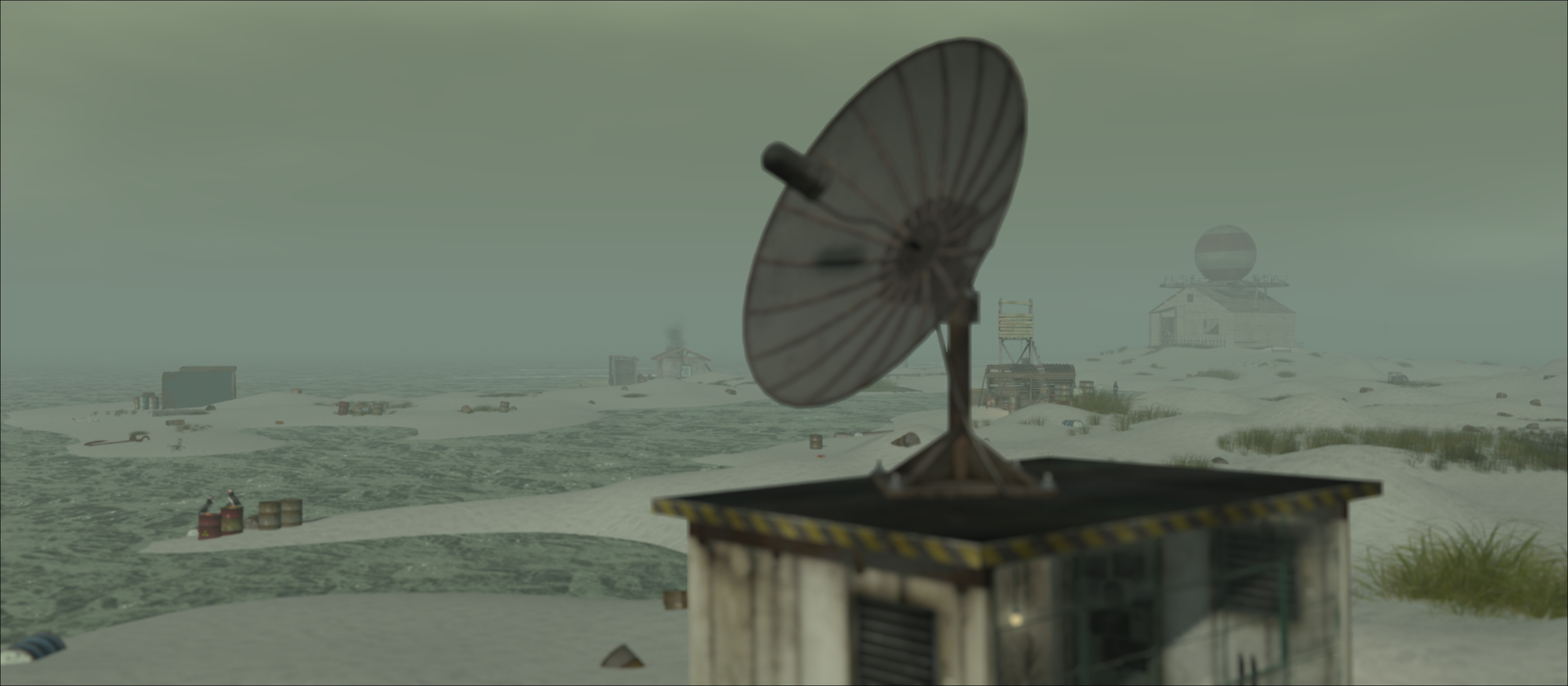
The region itself is split into two, with a slender finger running west-to-east to the north, a narrow channel of water separating it from the larger land mass to the south, where the lighthouse resides. The landing point is towards the western end of the northern finger of land, and the easiest route around the island is clockwise, following the rough wooden board walk pointing east from the landing point. This leads visitors over sand and past ageing buildings to where a large wooden warehouse-like structure topped by the dome of a Doppler radar system faces the lighthouse across the neck of water, an old wooden bridge linking the two.

Khodovarikha; Inara Pey, October 2017, on Flickr Khodovarikha

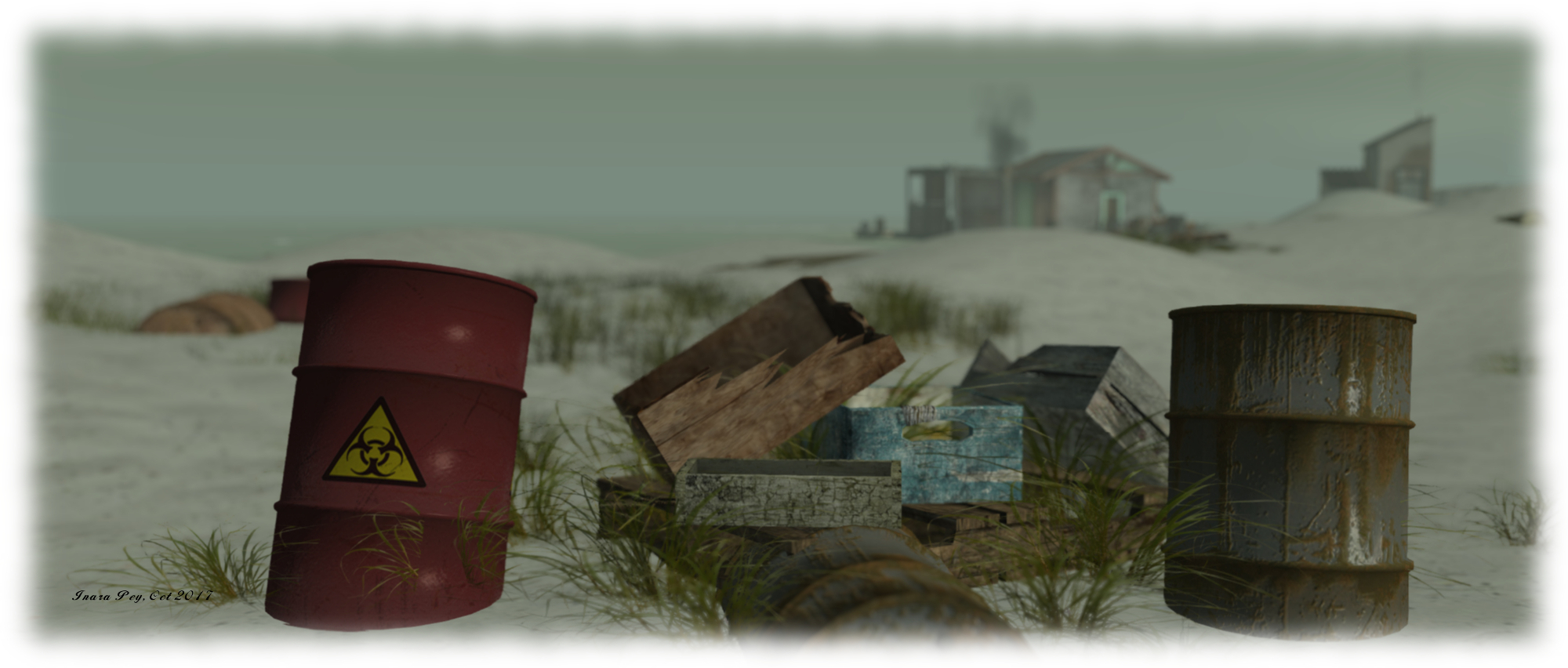
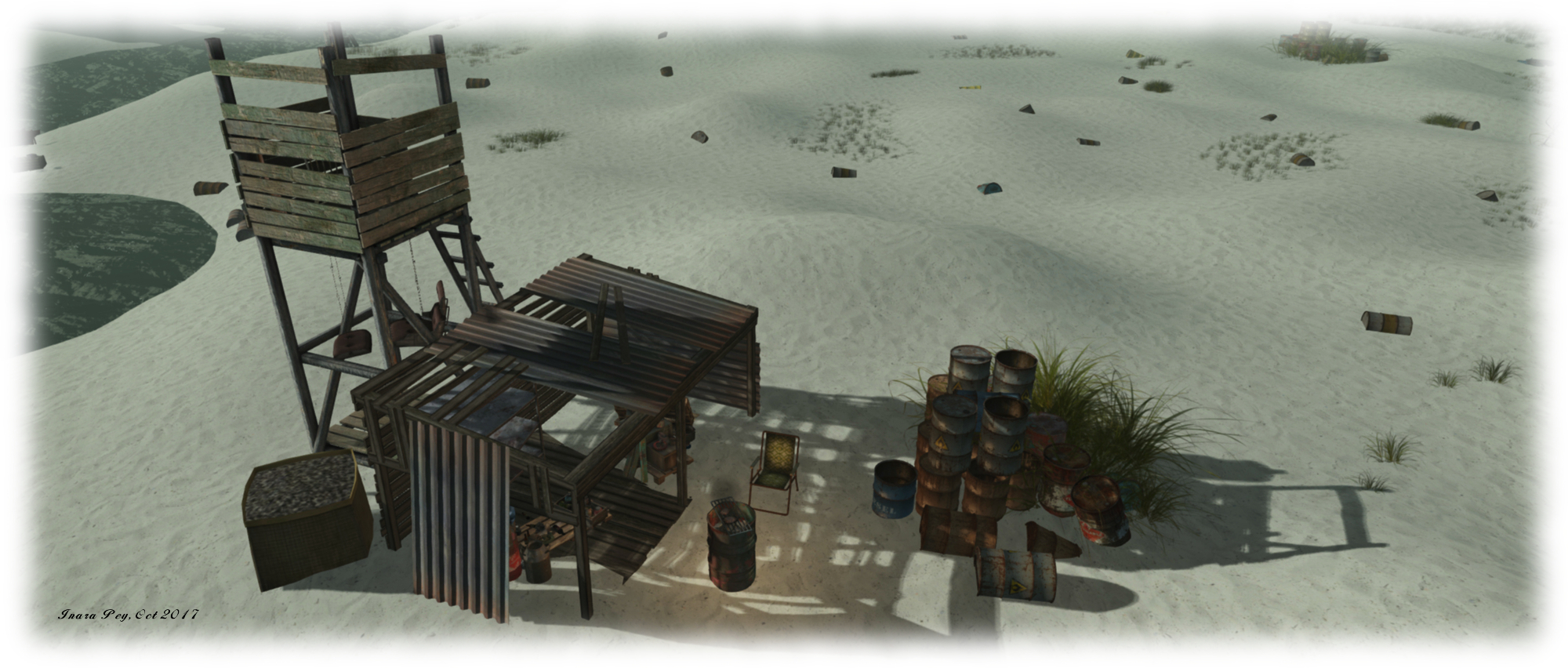
The loneliness of the island is encapsulate in the spread of the building and their generally dilapidated state. The detritus of human living – oil barrels scattered across the sand, sanding in untidy groups or part-buried, sacks of rubbish left to freeze outdoors, and the spoils of collapsed walls and bonfires – all add to the sense of isolation. This is not a place where appearance and neatness matter.

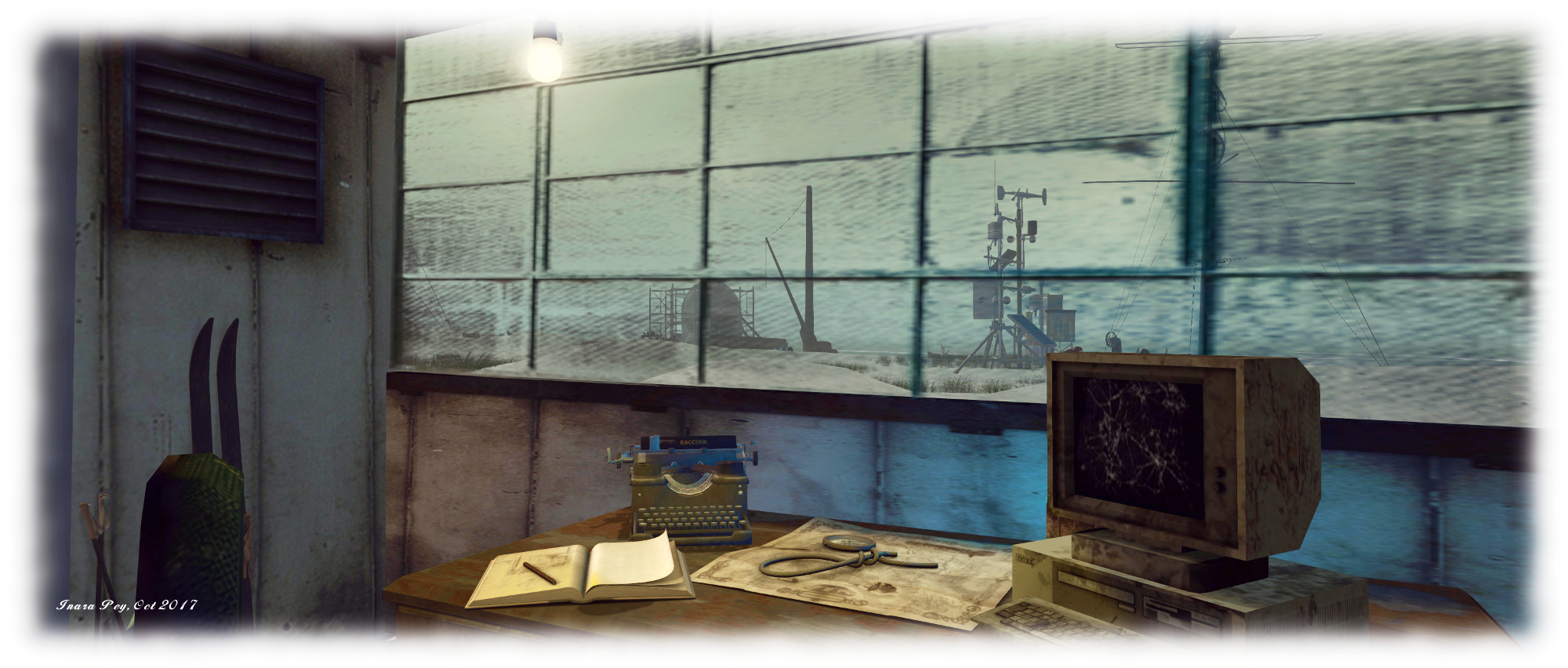
There is also a wealth of detail to be found here that further adds to the remoteness of the setting, particularly inside several of the buildings, where care has been taken to reflect the lonely lifestyle of Khodovarikha’s one full-time inhabitant, Slava, and the work involved in keeping things running – if that’s the right term. The air of untidiness around some of these work spaces perhaps offers a subtle suggestion of  Slava’s one-time assistant, Ustin, moving listlessly around the scattered buildings, carrying out assigned tasks during his year-long stay, missing his family and home.

Khodovarikha; Inara Pey, October 2017, on Flickr Khodovarikha

There is a gentle beauty always present in Serene’s builds, and this is certainly the case here. The overcast sky fading to a distant horizon haze, softens the setting and adds to the mystery. Looking out towards that distant horizon, it’s not too difficult to imagine the research vessel  Mikhail Somov looming out of the mists on its annual visit to deliver supplies to Slava. Or, for the more imaginative mind, to see the faint, distant shadows of the wartime convoys slipping past in the distance, ghostly shadows within the grey-blue haze.

Khodovarikha is a magnificent build, reflecting its physical world namesake almost perfectly. It is hauntingly beautiful rendering of desolation and loneliness, richly echoing the RT documentary. It is a perfect destination for those who – like Slava – wish to escape the world (at least for a while). And for those who do, there are plenty of opportunities not just for exploration, but for sitting and pondering or talking, indoors and out – some of which are quite imaginatively placed for the keen-eyed.

Khodovarikha; Inara Pey, October 2017, on Flickr Khodovarikha

This is a place most definitely deserving of a visit, and you can find out more on the background of the build and on Khodovarikha in general by reading Serene’s own blog post on his inspiration in designing the region, which delves into things like the meaning behind the big building with its striped radar dome and the inclusion of a half-finished Rawin Dome on the south side of the island, all of which adds further depth and context to the build.

SLurl Details