A long-time resident of Second Life, Barry is well-known for both his 2D and 3D art and his forward, future-thinking outlook. The new gallery space combines all of these in an environment that reflects Barry’s futuristic outlook and offers a unique setting for both his 3D and 3D artwork.
Located in the sky, the gallery is a place of two halves. Contained within a skybox with a cityscape backdrop that suggests it exists within a modern setting, it offers a central arrival point bordered by the gallery buildings proper: primarily 2D art to one side, and primarily 3D sculptures on the other, each unit comprising multiple levels.
The 2D gallery presents Barry’s digital paintings, beautiful fractal pieces so intricate in form and design, they might so easily be mistaken for photographs of physical 3D objects presented against velvet backdrops. Others appear more abstract in nature, swirls and dishes, curls and splashes; images that through their very abstract form are suggestive of dense nebulae – albeit, perhaps, without the familiar depth of colour as the pieces here tend to focus on fairly fixed palettes, although this in no way detracts from their beauty.
The 3D section offers a rich mix of Barry’s sculptures, most with its own story to tell. Movement between the levels is achieved by teleport disks (the 2D gallery space offering stairs as well), and the art structured in such a way that some levels are almost a mini-gallery of itself – particularly where the 3D work shares space with more of Barry’s fractal images. At the same time, one of the levels forms an installation in is own right, a rich blending of colour and animated pieces surrounding a sculpture Barry first presented at the University of Western Australia in Second Life.
In this latter regard, the gallery also offers a mini-retrospective of Barry work: those familiar with his past presentations will doubtless recognise some of the sculptures and designs presented here.
Considered, balanced and visually captivating, Alphalune Creations Gallerie offers the perfect insight into the art of Barry Richez, and should be a destination for all lovers of art in Second Life.
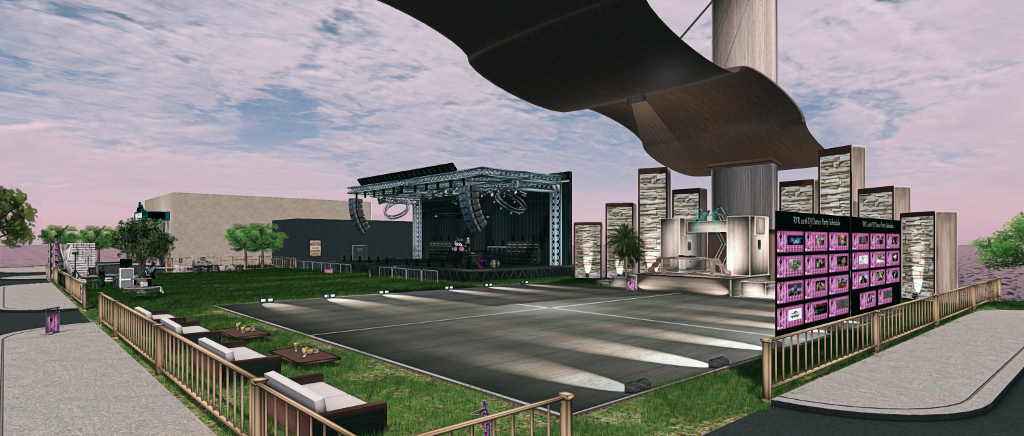
Rock Your Rack is the annual fund-raiser for the National Breast Cancer Foundation (NBCF) opened its doors September 29th, 2018, and remains in full swing through until Sunday, October 13th, 2018, offering shopping, music, fashion shows, entertainment and art.
Some 1.7 million women – and men – were diagnosed with breast cancer in 2012, the year in which Rock Your Rack was founded by Jamee Sandalwood and the team at Models Giving Back. Today, the figure still stands at around 1.6 million world-wide. NBCF’s mission is to help women in the United States by providing help and inspiring hope to those affected by breast cancer through early detection, education and support services. NBCF is also joining hands with organisations around the globe to provide breast cancer education. Rock Your Rack aims to raise funds to support all of these activities.
Located on a single region, the event is sponsored by {ACD} Anam Cara Designs, Digital Farm System (DFS), Evolve, Heartsdale Jewellery, and MOZ Designs, with a further 60+ designers taking part – see the full list on the Rock Your Rack website.
As with previous years, supporting designers have been asked to provide a limited edition item, of which 100% of all proceeds of sales go towards Rock Your Rack. In addition, and to encourage visits to the event, designers have been asked to offer an exclusive item their customers can only purchase via Rock Your Rack. You can find out more about the limited edition and exclusive offers at the event here.
The theme for the event is Music Through The Decades, and reflection of this, the Rock Your Rack Art show has taken on a distinctly 50’s Rock’n’Roll diner look.
Sponsored by Kultivate magazine, the Art show presents work by CybeleMoon (Hana Hoobinoo), Sheba Blitz, Eleseren Brianna, John Brianna (johannes1977), Eucalyptus Carroll, Ilyra Chardin, StorieS Helendale (GlitterPrincess Destiny), Vee Tammas Shocker (Veruca Tammas), JolieElle Parfort, Pipit Peacedream (retroye), jamee Sandalwood, Vee Tammas Shocker (Veruca Tammas), FreeDom Voix and Myra Wildmist.
Full details on the entertainment – music, fashions shows and more – at the event can be found on the Rock Your Rack calendar, which I’ve taken the liberty of embedding below for ease of reference here – you can also see it on the Rock Your Rack website, together with a list of performers and performances. All times at SLT.
A part of the NBCF’s work is that of breast cancer education. This is something I strongly support having learned through my own experience just how important it is to be aware of the risks cancer presents, and the need for early identification and treatment. Caught early enough, it can be dealt with, as my own experience shows. As such, I encourage everyone to visit and support Rock Your Rack over the next two weeks and contribute to the NBCF’s work.
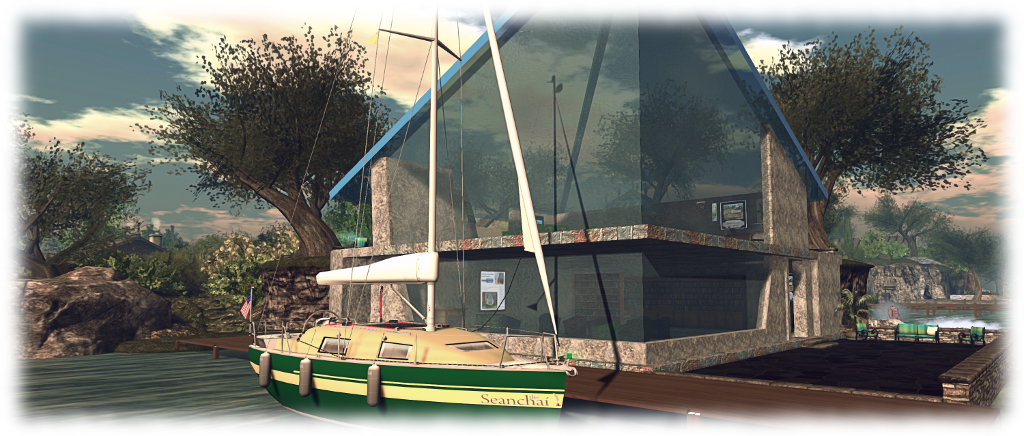
It’s time to highlight another week of storytelling in Voice by the staff and volunteers at the Seanchai Library. As always, all times SLT, and events are held at the Library’s home at Holly Kai Park, unless otherwise indicated.
Sunday, September 30th 13:30: Tea-time at Baker Street
The third full-length novel written about Sherlock Holmes, The Hound of the Baskervilles is likely to be the one Holmesian story which – at least in outline – known to most, whether or not they have actually read any of Holmes’ adventures.
But how many of us know the story as it was originally written? Over the decades it has been adapted for film and television more than 20 times, starting as early as 1914/15 with the 4-part series, Der Hund von Baskerville, and continuing on through to Paul McGuigan’s The Hounds of Baskerville, featured in the BBC’s brilliant Sherlock series.
All of these adaptations have offered their own take on the tale. Some – such as McGuigan’s, have simply taken the title of the story and used it to weave a unique tale of their own; others have stayed true to the basics of the story whilst also adding their own twists and turns quite outside of Conan Doyle’s plot in order to keep their offering fresh and exciting to an audience.
So why not join Cale, David, Corwyn and Kayden as they read from the 1902 original, and discover just how Sir Arthur Conan Doyle unfolded this apparently supernatural tale of giant hounds and murder, and the pivotal role played by John Watson himself?
Monday, October 1st 19:00: Murder is Bliss
Gyro Muggins reads the first volume in the Jasper Stone series by Ellen Anthony.
In the year 2179, police lieutenant Jasper Stone finds himself called upon to solve the high-profile murder of Elizabeth West. The case appears to revolve around a valuable house – and the leading suspect is West’s disabled son.
But then the son is murdered – and the evidence points towards West’s grand-daughter, Jewell. Only she appears to have a rock-solid alibi for West’s murder. So is there more than one crime, or will Jewell be the next victim?
The more he investigates, the more Stone finds himself entangled in a complicated web of motives and a situation involving not just murder, but drug smuggling and blackmail. And the more he investigates, the more he might just be protecting the woman behind it all.
Tuesday, October 2nd 19:00: The House with a Clock in it’s Walls
Faerie Maven-Pralou reads the first in John Bellairs’ Lewis Barnavelt series, originally published in the 1970s.
In the mid-west United States in the 1950s, 11-year-old, orphaned Lewis Barnavelt arrives at the home of his Uncle Jonathan, who has been appointed his guardian. Overweight, shunned by other children, he finds himself in his uncle’s the ramshackle mansion where the ominous ticking of a clock can be heard coming from within the walls.
Lewis soon discovers his uncle is a witch, as is his eccentric neighbour, Mrs. Zimmerman – who is obsessed with the colour purple and anything with “Z” on it – are witches. Fortunately, they are witches of the “good” kind, and they are engaged in a literal race against time.
The ticking coming from within the mansion’s walls belongs to a doomsday clock, and if Uncle Jonathan, Mrs. Zimmerman – and now Lewis – must work out where the bewitched clock has been hidden by the warlocks who once owned the house.
Wednesday, October 3rd, 19:00: Tiny and the Monster
Ktadhn Vesuvino reads Theodore Sturgeon’s 1947 short story.
Thursday, October 4th
19:00: Wake Not the Dead
With Shandon Loring. Also presented in Kitelyhop://grid.kitely.com:8002/Seanchai/144/129/29.
21:00 Seanchai Late Night
Contemporary Sci-Fi with Finn Zeddmore.
Please check with the Seanchai Library’s blog for updates and for additions or changes to the week’s schedule.
Earlier in September 2018, Megan Prumier posted images of Deadpool Reborn, with a note that the design she and Xjetx Chrome first opened back in 2013 (and about which you can read about here) would soon be opening. I’d al but forgotten seeing the notice, but fortunately, Shakespeare dropped me the new landmark.
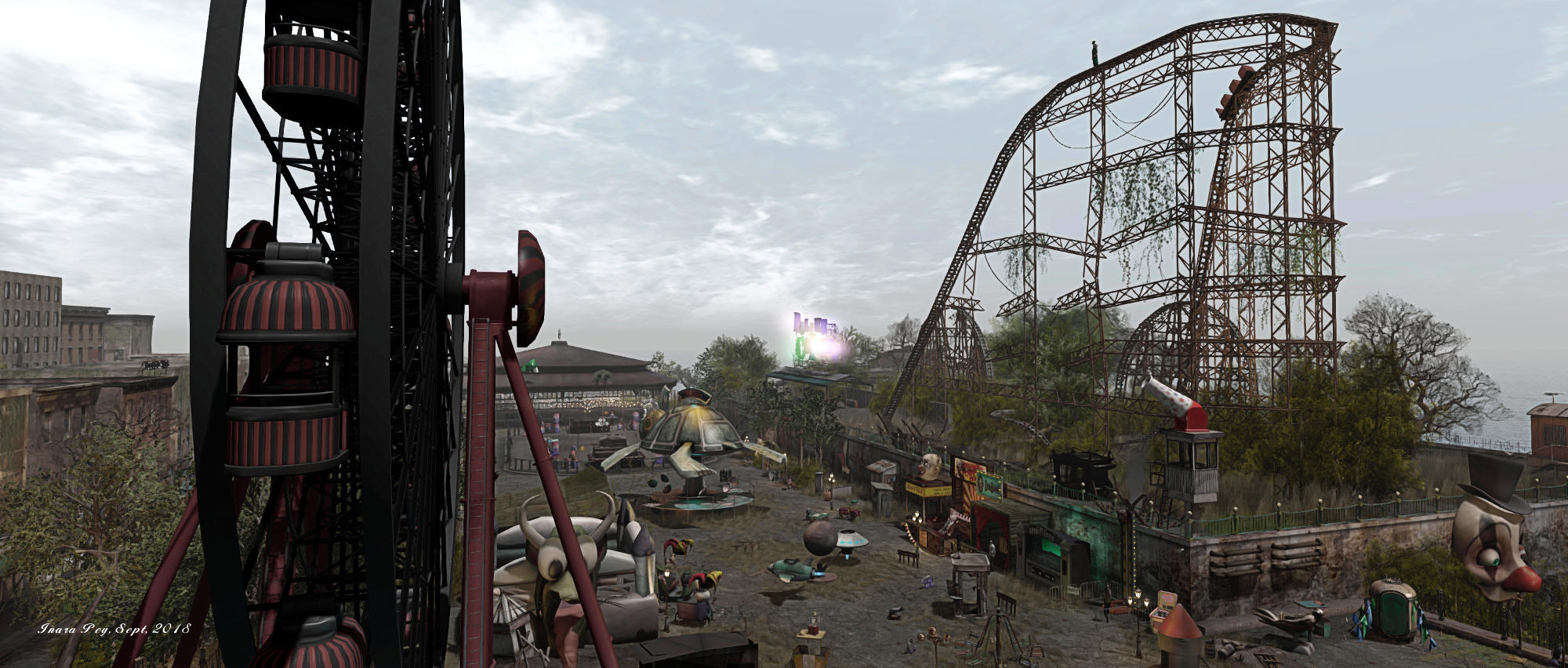
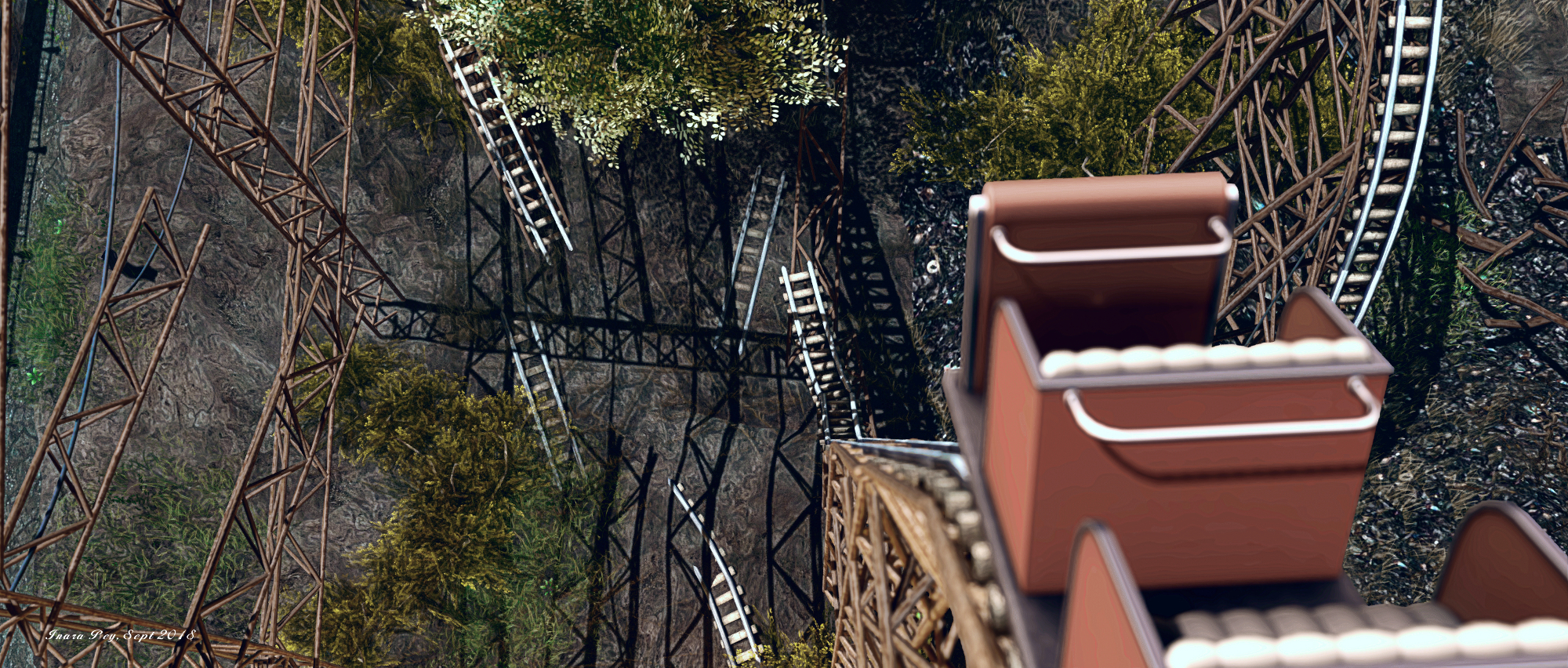
Like the original, Deadpool Reborn is in part focused on a run-down carnival that is not quite all it seems. For those who remember the original, there are several elements here that should ring the bells of memory: the great red Ferris wheel, the broken roller coaster and so on. However, as something I don’t recall from the original, the carcass of a city sits beyond the boundary of the carnival, adding its own ominous air to the setting.
This is not a place for enjoying all the fun of the fair or holidaying in the city; again like its namesake, Deadpool Reborn is – for those so inclined – about hunting clowns and zombies as they wander the streets. To assist in this, weapons can be obtained from a large case just outside of the carnival grounds, alongside the landing point.
Within the fairgrounds, the decaying rides offer both atmosphere and backdrop for photography, while the clowns and scurrying mechanical spiders with their broken doll heads present an obviously malevolent edge to things – although they are by no means alone.
A stage area sits to one side of the carnival’s cracked asphalt, a board revealing it is a place of entertainment and given the season that’s approaching it will no doubt some Halloween themed parties to come. Nor are the sideshows entire static as well; for those willing to explore, there is a little non-zombie killing fun to be had, in a slightly macabre manner.
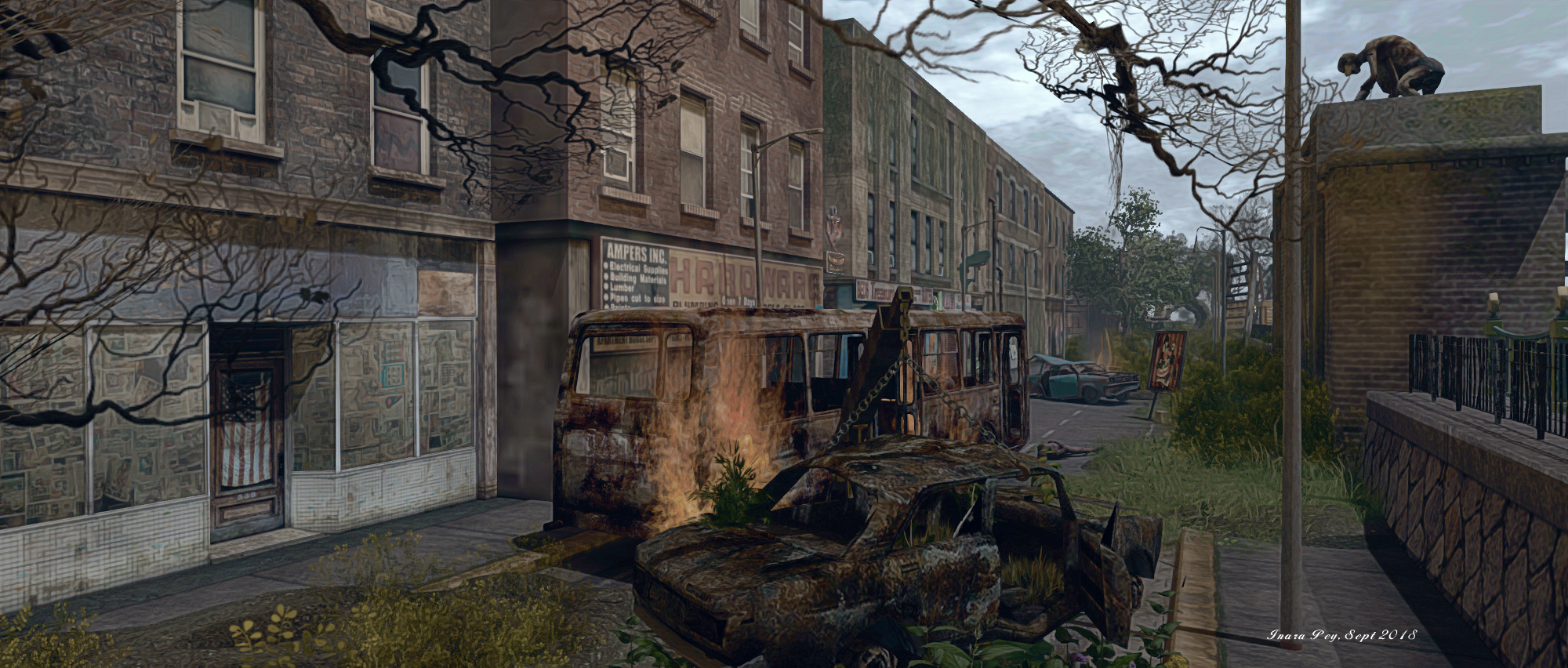
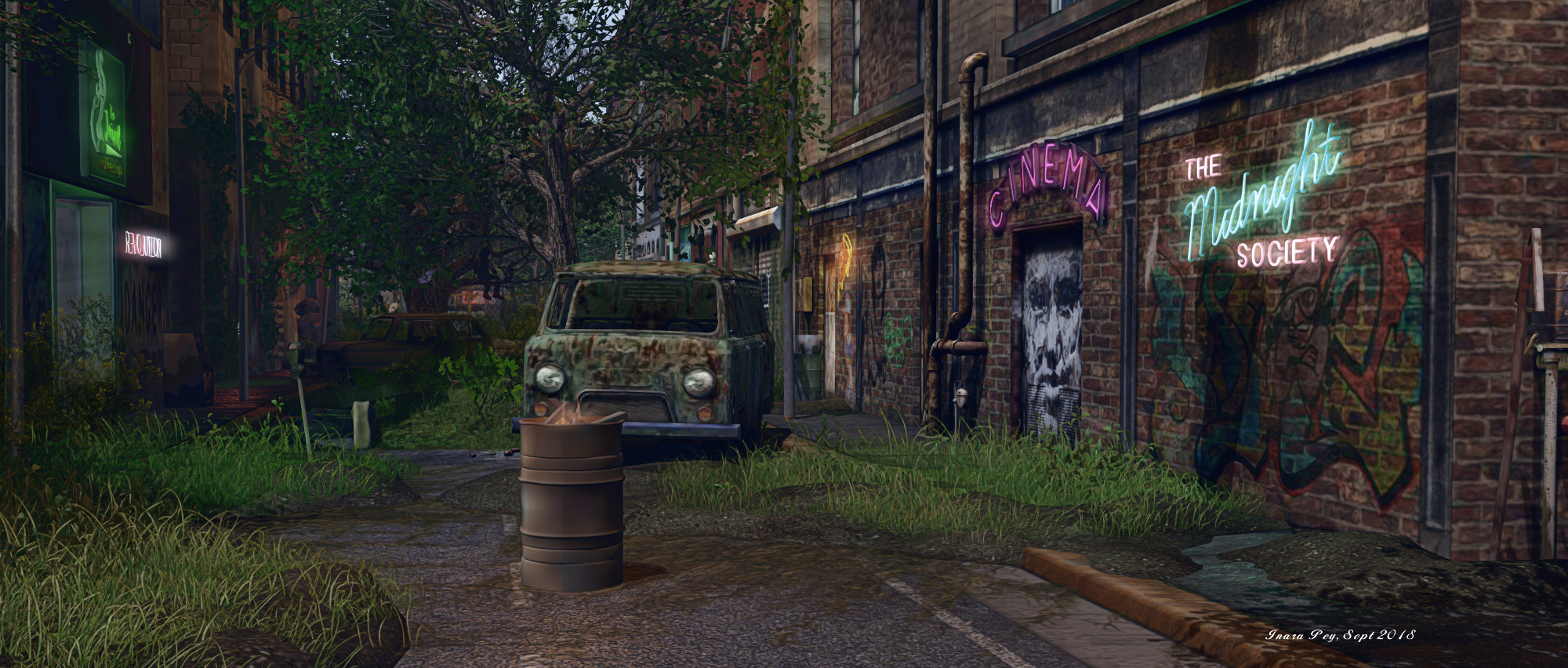
In terms of the city, one can only guess at what may have befallen it; natural disaster, plague or some terrible experiment gone wrong. Whatever it was shows signs have having struck fast, and was certainly enough to bring down one elevated road with traffic still upon it; but it did not happen recently. The streets are now well overgrown; the building shattered and slowly falling apart – and yet, oddly, there is still power available to light street lamps and lurid neon signs.
As noted above, this is the place where the clowns and zombies roam for those who fancy going hunting – although I confess that, after Hell’s Crossing, the zombies here are pretty tame, both easy to locate and easy to dispatch, either with the supplied weapons or your own. This tends to limit the appeal the region might have as a shoot-em-up.
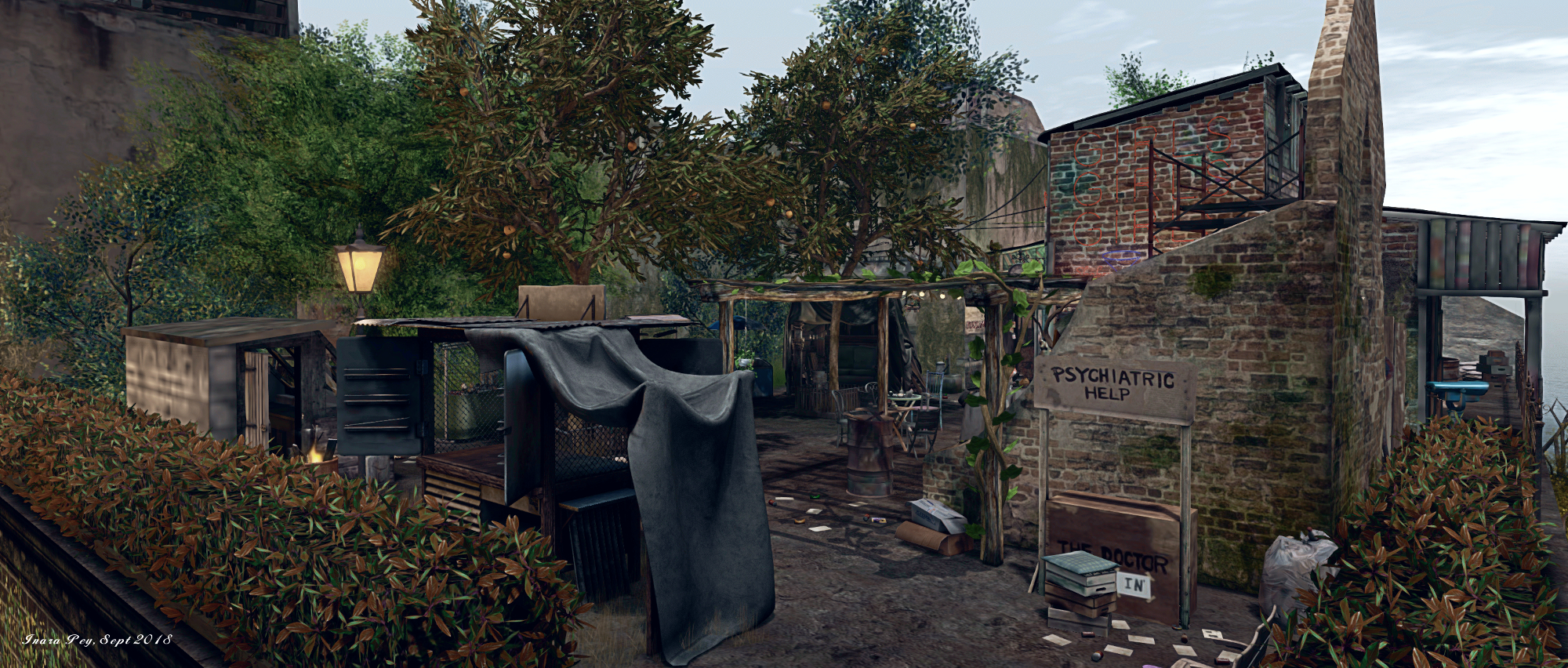
The carnival isn’t the only echo of past builds; within the city are elements reflecting another of Megan’s designs: A Little Bit of Soul. While this is now gone from Second Life, you can read about it here, and recapture aspects of it in the split-level design of Deadpool Reborn’s city, notably the overgrown motel building, and the nearby backstreet market area.
Which is not to say this area of the region is merely derivative: there is enough here to make it unique in its own right, and offer plenty of opportunity for photography. There’s also some nice touches in menace through the positioning of static NPCs (look up for some of them).
So, if you’re looking for somewhere a little more unusual to explore, why not celebrate Deadpool Reborn? When doing so – keep an eye out for the cavern system!
Despite receiving an e-mail invitation, I regret I was unable to attend the official opening of David “DC” Spensley’s towering – in a literal sense – art retrospective on September 22nd, 2018. However, as soon as time allowed, I did take the opportunity to jump over and immerse myself within it.
Known in-world as Dancoyote Antonelli, DC is one of the pioneers of visual arts in virtual worlds, working independently and in collaboration with other early pioneers to create 3D art that were considered ground-breaking at the time. In the United States, his work has been referenced in mainstream press, including The New York Times, Reuters, Step by Step Design, and Fibreculture Journal.
In 2006, DC also founded the world’s first virtual, aerial dance company – the ZEROG SkyDancers. On seeing the troupe perform, former Linden Lab alumni John “Pathfinder” Lester compared their work as genre-expanding as the Cirque Du Soleil. More recently, in 2014, DC and the ZEROG Skydancers again pushed the boundaries of performance art and dance, with Avant Garden. This mixed reality performance featured dancer Kathleen Moore performing on stage at the Little Boxes Theatre in San Francisco, a rear protection screen allowing her to interact with the troupe as they performed within Second Life.
Kathleen Moore performs on stage at the Little Boxes Theatre in San Francisco, August 2014, interacting with members of the ZEROG Skydancers performing in Second Life.
For this retrospective, DC presents many elements of his work (and notable elements by other artists) in which is likely to be the tallest structure yet built within Second Life: rising 4,000 metres from its water level base, the Tower of Light. The art is presented on a total of 40 levels extending from the tower, with a number being interactive either by touch (control panels and media boards) or physical avatar collision. Information plinths are placed on each level to deliver contextual notes and insights on each of the elements being presented, making this an informative, as well as visual installation.
Movement between the levels is achieved via a teleport HUD available from the landing point, or by sitting on a tour cushion,. The latter also allows for direct transfer to a desired level within the two (by means of a smooth vertical ascent rather than a TP), or can take riders on a “grand tour”, visiting each of the levels in turn. All three option are valid means of travel, delivering the visitor to each level alongside its associated information plinth, although I enjoyed the “grand tour” the most.
In a considered touch, the “tour cushions” will not simply poof should a visitor stand at any given level. Instead, they remain rezzed for long enough to get up, inspect the art, try any supplied controls or watching any associated video (if trying them / watching while seated proves inconvenient) before sitting once more in order to resume a journey to other levels.
Exploring the Tower of light is also both an exploration of DC’s thinking and his approach to art and of something of the history of visual arts in SL as a whole – although it should be noted this is not a chronological journey through DC’s art. Rather it is a thematic voyage, enfolding within it his concept of “hyperformalism”, exploring the nature of “native” art produced within a virtual world.
Rather, the historical aspect is born out of the majority of these pieces either being created before the advent of true mesh capabilities in Second Life, or which eschew the use of mesh in keeping with the aim of hyperformalism. Thus, these are primitive art, a term I use in reflection of their construction, not as a suggestion of any lack of sophistication they might otherwise contain; rather the reverse in fact: the nature of primitives actually requires these pieces to be sophisticated in design and scripting (and examples of all the scripts can be found in the relevant information note cards provided by DC).
It is also the information cards that offer insight into DC’s thinking and ideas around hyperformalism, with some also acting as a glimpse of part of the platform’s history. Of those who, like me, have been active in SL for the last decade, some of the names mentioned are liable to set memories tumbling: Qarl Fizz, Dekka Raymaker (who only returned to SL in August 2017 after a 6-year hiatus), and Nomasha Syaka to name but three (Nomasha’s sculpted horse was a decorative mainstay in many of my early SL homes, and is still to be found within the Library section of inventory).
When visiting, I would suggest allowing sufficient time to visit all 40 levels within the Tower, rather than breaking a tour up over two or more visits, as this offers the fullest potential to appreciate both the art and the concepts involved in DC’s work. And as a purely subjective opinion, I would suggest using the viewer’s default midnight setting when travelling through the installation. This removes the distraction of the surrounding clouds, and more particularly adds a tangible depth to the colours within the Tower and the art it presents, giving a greater sense of presence whilst touring.
“All these worlds are yours….” An alien sky by Cube Republic, using the EEP test viewer
The majority of the following notes are taken from the Content Creation User Group (CCUG) meeting, held on Thursday, September 27th, 2018 at 13:00 SLT. These meetings are chaired by Vir Linden, and agenda notes, meeting SLurl, etc, are usually available on the Content Creation User Group wiki page.
SL Viewer Update
The Rakomelo Maintenance RC, version 5.1.9.519298, dated September 5th, was promoted to de facto release status on Wednesday, September 26th. This means all other viewers currently in the pipelines will be merged with this code and updated in the coming days.
Environment Enhancement Project (EEP)
Project Summary
A set of environmental enhancements, including:
The ability for region / parcel owners to define the environment (sky, sun, moon, clouds, water settings) at the parcel level.
New environment asset types (Sky, Water, Day that can be stored in inventory and traded through the Marketplace / exchanged with others.
Day assets can include four Sky “tracks” defined by height: ground level (which includes altitudes up to 1,000m) and (optionally) 1,000m and above; 2,000m and above and 3,000m and above, plus a Water “track”.
Experience-based environment functions
An extended day cycle (e.g a 24/7 cycle) and extended environmental parameters.
There are no EEP parameters for manipulating the SL wind.
EPP will also include some rendering enhancements and new shaders as well (being developed by Graham Linden), which will allow for effects such as crepuscular rays (“God rays”)
These will be an atmospheric effect, not any kind of object or asset or XML handler.
The new LSL functions for finding the time of day according to the position of the windlight Sun or Moon have been completed, and are more accurate than the current options.
EEP will not include things like rain or snow.
It will still be possible to set windlight local to your own viewer.
There will be a formal LL blog post on EEP testing at the start of week #40, which will include links to the current versions of the test viewer and also the SLurl for Aditi testing. I’ll be updating this summary with the details once officially made public. These will include the latest iteration of the viewer
Those who have been fortunate enough to attend the CCUG meetings have been able to get some advanced testing done, and there have been a number of additional bug reports and feature requests raised – use the EEP Jira filter to review all raised issues / ideas.
The latest version of the test viewer (made available at the meeting) will result in visible changes to cloud speeds. This will cause clouds in settings created using the initial version of the test viewer to travel much faster and to the north-east.
Another simple EEP demo showing how different textures used on the Sun or Moon within individual sky settings can be blended together when creating a day cycle & some of the motion effects – in this case the Sun (as Mars and Jupiter zig-zagging gently up and down). Oblateness is due to manual recording ratio, and is not representative of the texture shapes when seen in-world.
Cliff Notes on EEP
Graham Linden’s shader work has yet to be added to the viewer (so no crepuscular (God) rays, etc., as yet).
Firestorm uses a broader range of setting for atmospheric / water effects (haze, density, etc.) than the official viewer. This has led to windlights imported into EEP settings not displaying correctly (see BUG-225537) Rider had increased the settings range in EEP to match Firestorm.
Rider and Graham are discussing how procedural texturing might work in EEP(!)
EEP does not support the ability for anyone to create a new EEP settings object simply by saving the one they are viewing ( as can currently be done with legacy windlight settings). However, existing windlight settings stored locally in the viewer can be imported to EEP and converted.
EEP will break RLV controls on windlight.
The EEP test viewer can be used as an ordinary viewer on Agni (the main grid), but EEP settings cannot as yet be applied, and it may lead to a duplication of the EEP Settings folder when switching back to the test region on Aditi.
Cloud Perturbation
Rider hopes to be able to add a means to provide a degree of perturbation when non-seamless cloud textures are used, so that they don’t appear so tiled when viewed in-world.