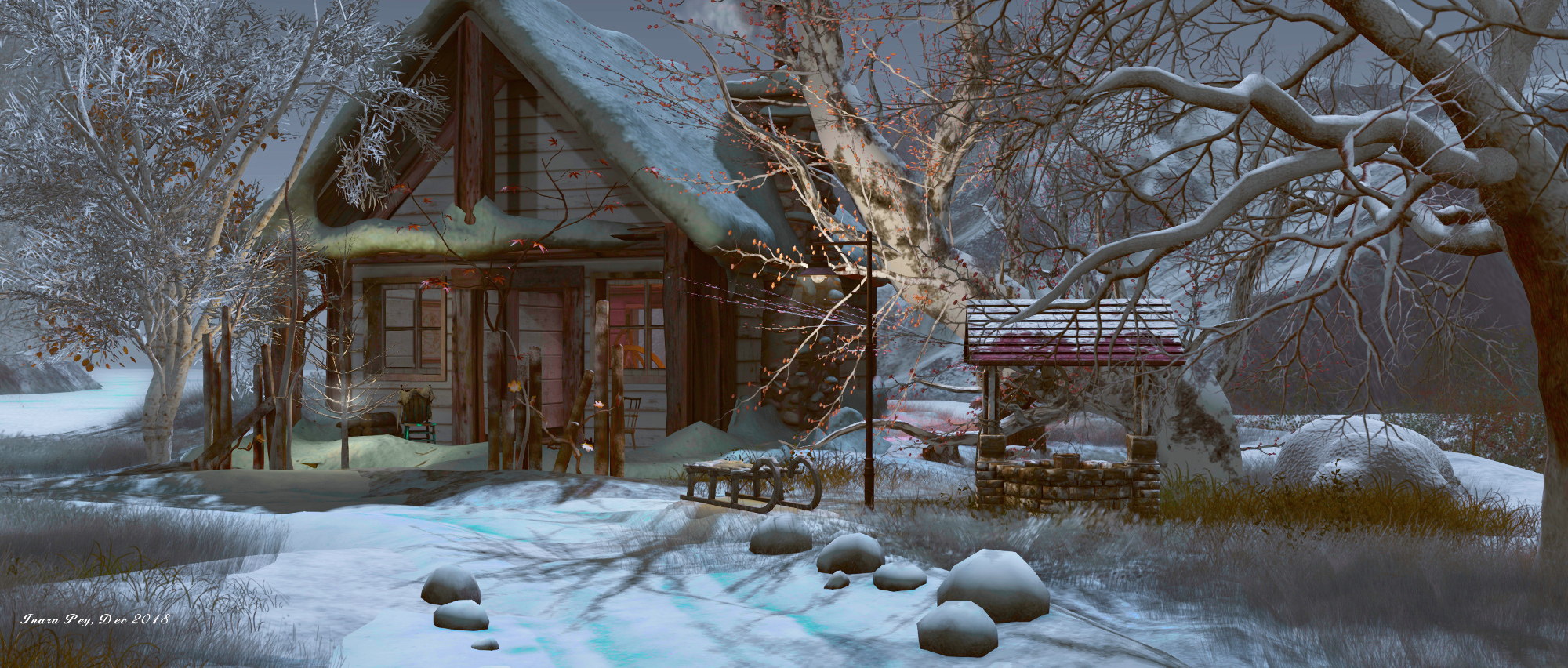
Currently open through until the end of the month at the Lin C Art Gallery is an extensive exhibition of art by Barbara Borromeo (barbaraborromeo), an artist I have admired for her work and style for some time now.
On display are around 27 images by Barbara, some of which have appeared at previous exhibitions (see Barbara Borromeo at Serena Arts, for example), while others appear to be newer pieces – or at least pieces I’ve personally not seen previously. Together, they offer an engrossing display of Babara’s visual styles, from portraiture through fantasy to pieces that offer abstract art or which feature a blending of physical and digital images.
There are so many aspects of Barbara’s work that makes it so captivating that singling out an individual piece from her portfolio can be counter productive; he images need to be seen as appreciated individually to fully understand the breath of her work and the canvas of her imagination.
That said, there are some elements of Barbara’s work that are beautifully exemplified in this exhibition, such as her collage pieces that blend together a number of elements into a single image: a portrait, a background (something themed), as with Enchanted Forest LN, Alter, and Cosmic Woman, which can so often weave a story in the mind.
But even her more “normal” (in terms of capturing a scene) images such as Tuscany Byker OK, present such a rich depth and narrative, its is hard not to become completely bound up in them. I was also pleased to see Words Never Said, a piece I first encountered in August 2018, which is magnificently powerful in its emotional content.
If you have not witnessed Barbara’s work first-hand, then I strongly urge you to go along to the Lin C Art Gallery and witness the power of her work for yourself; I guarantee you will not be disappointed. Awed, yes; but not disappointed.
April 11th, 2019 is World Parkinson’s Day, intended to raise awareness of Parkinson’s disease, promoting a greater understanding of this condition and how it can affect a person. To mark it, many countries are marking April as Parkinson’s Disease Awareness Month. In Canada and the United States, this is being supported by the Parkinson Society Canada and American Parkinson Disease Association. Other countries around the world are holding more focus events. In the UK, for example, there will be a Parkinson’s Awareness Week (April 10-16th), supported by Parkinson’s UK.
Within Second Life, Creations For Parkinson’s/Events For Parkinson’s have partnered with Miss Globe Universal Charity Foundation to also mark Parkinson’s Awareness Month, with The Oasis, a special event running from April 1st through April 21st, 2019 inclusive.
Right now, through until February 25th, they are seeking merchants and bloggers to support the event, which is described thus:
We plan to provide a beautiful Egyptian themed region for invited brands, bloggers, and guests for a fun shopping experience, music, theatre entertainment, twice the hunts and much more during the wonderful time of the Spring season in the era of Ancient Egypt. We also want to raise more awareness for this amazing charity through education for guests. Lending your support to The Michael J. Fox Foundation for Parkinson’s Research, we are forever grateful.
Merchants wishing to participate in the Oasis event are asked to register their interest in participating in the event by completing the Merchant’s Application Form. Note that details of the four merchant packages and their prices are available on the second page of the application form.
Bloggers wishing to cover the event are asked to complete the Blogger Application Form. Applicants are required to write a minimum of 2 posts covering the event, and posts must be recorded using the event’s blog management reporting system.
Media sponsors wishing to support the event are asked to contact DjRoseAthena, either in-world or via Facebook. If she is not available for those preferring in-world contact, interested parties are asked to contact the event’s co-coordinator, Nola Hellershanks.
About Parkinson’s Disease
Parkinson’s disease is a neurodegenerative condition. In Europe, approximately 1.2 million people have their lives impacted by the disease, and in the United States it is the second most common neuorlogical disorder after Alzheimer’s.
“Neurodegnerative” is a term referring to a progressive loss of nerve cells (neurons) and/or their function. Neurodegeneration from Parkinson’s disease can give rise to a wide spectrum of symptoms which vary among sufferers depending on the severity of the disease’s impact, what’s more symptoms can be unpredictable and can vary on a time scale as short as one minute. As the disease progresses, symptoms can worsen; for example, over time a person may not be able to move, speak or swallow. This can often arise 4-8 years after the initial onset of Parkinson’s disease.
The cause of the disease is unknown, and there are no known successful treatments which can delay or stop its progression. To further complicate matters, because of the broad range of symptoms, Parkinson’s may be initially misdiagnosed. In addition, while it is most often seen as a disease affecting people of 50 or older, a form of Parkinson’s disease can strike people at a much younger age, and one in twenty of the 8 million Parkinson’s sufferers worldwide is below the age of 40. Known as Young Onset Parkinson’s Disease (YOPD), this differers from older onset Parkinson’s, both because genetics appears to play a stronger role in it, and the symptoms may differ, as does response to medication.
Parkinson’s Disease Awareness Month is intended to raise public awareness of the disease, its impact, and to encourage people to help support those affected by Parkinson’s by encouagring them to donate to organisations carrying out research into finding a cure or adequate treatment for the disease. As noted above, these organisations include the likes of the Parkinson Society Canada, the American Parkinson Disease Association, and Parkinson’s UK.
Updated, February 16th: the suggestion to make suitable mipmaps available to users when uploading textures (see the end of this summary) has been translated into a feature request by Beq Janus, allowing users to select multiple image resolutions when uploading a texture – see BUG-226352.
The majority of following notes are taken from the Content Creation User Group (CCUG) meeting, held on Thursday, February 14th, 2019 at 13:00 SLT. These meetings are chaired by Vir Linden, and agenda notes, meeting SLurl, etc, are usually available on the Content Creation User Group wiki page.
SL Viewer Updates
The Bugsplat RC viewer updated to Wednesday, February 13th, to version 6.1.0.524348.
Bakes On Mesh
Project Summary
Extending the current avatar baking service to allow wearable textures (skins, tattoos, clothing) to be applied directly to mesh bodies as well as system avatars. This involves viewer and server-side changes, including updating the baking service to support 1024×1024 textures, but does not include normal or specular map support, as these are not part of the existing Bake Service, nor are they recognised as system wearables. Adding materials support may be considered in the future.
Anchor Linden has pinned down a couple of further bugs.
The hope is that BoM will progress to viewer release candidate (RC) status in the near future, although this is down to internal testing at the Lab.
Environment Enhancement Project
Project Summary
A set of environmental enhancements allowing the environment (sky, sun, moon, clouds, water settings) to be set region or parcel level, with support for up to 7 days per cycle and sky environments set by altitude. It uses a new set of inventory assets (Sky, Water, Day), and includes the ability to use custom Sun, Moon and cloud textures. The assets can be stored in inventory and traded through the Marketplace / exchanged with others, and can additionally be used in experiences.
Due to performance issues, the initial implementation of EEP will not include certain atmospherics such as crepuscular rays (“God rays”).
On the simulator side, EEP is now on the BlueSteel and LeTigre channels (representing roughly 20% of the main grid).
There is “one last” major issue with the current viewer code to be resolved. This is related to experiences, and Rider Linden believes he has a fix for the problem.
It is therefore hoped the EEP viewer will move to RC status very soon.
The next update to the viewer should include fixes for BUG-226249.
There have been some changes to the data returns by llGetenvironment, and further changes will be made in the coming week. These changes will be reflected in the wiki documentation.
There is also a bug that can cause avatar tags to be corrupted in certain EEP environments, as demonstrated by Whirly Fizzle (below).
Whirly Fizzle demonstrates the corrupt avatar tags that can occur under certain EEP environments. Credit: Whirly Fizzle
This pass of EEP will not, as previously reported, include Godrays at this point in time. It is hoped these will be added in the future – although when in the future is not clear.
Animesh Follow-On
Vir has some prototype hooks in the code that allow body parts in the inventory of an Animesh to be used to customise the skeleton of the Animesh. This doesn’t (as yet) include any communications from the viewer to the simulator, which s the next thing Vir will be examining.
This next part of the work may possibly hampered by the fact there is an “embarrassingly large” number of ways to transmitting object information between the viewer and the simulator. None of them are particularly comprehensive, making it harder to determine how best to add messaging specific to Animesh.
As a result Vir is also looking at a means of rationalising things to make it easier to add object information communications to the system beyond Animesh.
There have been requests to provide a means to obtain things like the tri count for Animesh. Vir believes it might be easier to add the means to obtain streaming cost, etc., (as this information is already supplied for in-world objects), and / or to give a more straightforward means of indicating whether something can be linked into an Aminesh object or not.
Tri counts are being required so creators can check whether or not linking objects together for an Animesh will take them over the tri count limit for Animesh.
A problem here is that the simulator doesn’t have the full tri count information for any mesh object, only an estimate to assist in making LI calculations; so using LSL to extract the information could require more in the way of back-end work to expose the required information obtained from the viewer.
There is also a risk that as time goes on, the rules regarding what is allowed for Animesh might change – including the tri count. Any such change could therefore invalidate the accuracy of scripts with a hard-coded tri count limit.
A request as also been made to enable / disable Animesh via LSL. This is currently not on the cards, unless a compelling use-case can be defined.
A suggestion has been that using LSL to disable Animesh could help reduce LI when Animesh objects don’t need to be animated. However, due to the fact Animesh is rendered differently to static objects, this would likely not work in the way people imagine.
Vir still hopes to re-work Reset Skeleton a system command so that anyone triggering a reset of their avatar skeleton when they see it deformed can send that update to all other viewers in the scene perform a reset for that skeleton, rather than users having to manually select and reset the affected avatar.
If this is done, it is unlikely to include any LSL support, due to the risk of it being over-used in scripts, with the potential for performance hits.
Another request is to have a viewer-side option to reset Animesh skeletons. This is viewed as a good idea, as there is already a debug setting (DebugAnimatedObject – set to True) for this, which could be better exposed, although it doesn’t work with Animesh objects attached to avatars.
As Beq correctly points out, there is no “magic” debug setting to improve the resolution or quality of all textures, and Second Life cannot displayed textures with a resolution greater than 1024×1024.
What Beq did confirm is (as per their descriptions) the referenced debugs can be used to upload textures much larger than 1024×1024 Second Life. However, such textures will be resampled to 1024×1024. The particularly interesting thing here is that in resizing such images, the viewer uses bilinear resampling which – contrary to perceived wisdom pointing to bicubic resampling – can actually result in far better quality in the finished 1024×1024 texture.
Beq’s forum post and (particularly) her blog post explains what appears to be happening – and how direct resizing very high-resolution images using bilinear resampling to 1024×1204 prior to upload will also result in better quality textures with viewed in-world.
Does this mean that the upload texture size limit should be increased? Well, no. The crucial part of this is that the different is only seen with 1024×1024 textures – which have issues in terms of the amount of memory they eat, and in the fact they are already drastically over-used. As such, increasing the allowed upload resolution prior to resampling might further elevate the use of 1024×1024 textures.
In the meantime, the forum post has triggered some interesting discussion around bilinear and bicubic resampling, and where each might be preferable to use, and how bilinear could benefit the production of seamless normal maps.
A further suggestion resulting from these discussions (or the resurgence of a suggestion) is to make all the mipmaps for an uploaded textures available, rather than the just the level selected at upload (so, for a 1024×1024, the 512×512, 256×26 and 128×128 mipmaps are also made available to the user, allowing them to experiment and see how the different resolutions work on surfaces. A feature request Jira has been requested for this idea.
Angelhaven is an artists’ concept of the natural wheel of change, beautifully expressing the seasons around us and within us. A haven for angels, winged and unwinged, and those searching for romance, peaceful prayer, and the things that comfort and remind us we are only human. Happy or sad, lonely or in good company, love and loss, life and death, there is a time and a season for all things.
So reads the description for the Full region of Angelhaven,designed and held by Vangel (VanderGalaeth). As the description suggests, this is a place for reflection, a natural setting that encompasses the beauty of nature and the realm of fantasy. It is also a place that exists on multiple levels, starting with the landing point 1,000 metres above ground level.
Here, visitors will find the rules for visiting the region – all of which are straightforward and understandable. Also available by touching the rules board, is a note card outlining all the major destinations within the region, each with its own land mark enclosed. However, these can also be reached via the teleport disk located at the end of the short hall leading off the main arrivals hall.
Several of the locations can be found on the ground – including the Ballroom, the Café, the four seasons and the Swamp. Others are located on their own islands in the sky, such as the Lunar House, the Angel House, and the Solar House. Given the fantasy nature of the region, the windlight offers an ethereal look and theme: a pervasive orange glow surrounding the land and sky islands.
Those locations on the ground are linked one to another by paths making exploration possible without necessarily resorting to teleporting. Walking also reveals all the little spots to be found for sitting, cuddling and simply resting.
The sky locations offer a nice feeling of further privacy and separation, while the similar nature of their appearance also helps give a sense of commonality between them, and thus a feeling of continuity as you travel one to the next, or between them and locations on the ground.
Finished with a fitting ambient sound scape, Angelhaven makes for a restful visit; a place where myth and fantasy mix gently with one anther to offer an environment open to being enjoyed and where tension can slip away. As noted, there are plenty of places to be found for couples to enjoy, as well as places to be appreciated in solitude.
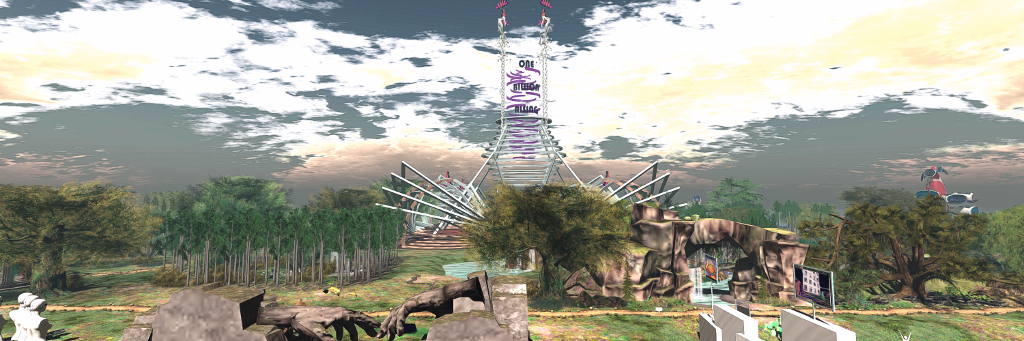
One Billion Rising in Second Life will once again be taking place in Second Life on Thursday, February 14th, 2019, with the event officially commencing at just after midnight SLT on the 13th/14th February, with DJ Kess Crystal launching things. Activities will then run right through the 24 hours of the day with music, dancing, art and events.
When launched on Valentine’s Day 2012, One Billion Rising (OBR) was the biggest mass action in human history; a call to action based on the staggering statistic that 1 in 3 women on the planet will be beaten or raped during her lifetime. With the world population at 7 billion, this adds up to more than one billion women and girls who are at risk. OBR aims to bring people together, raise greater awareness of the plight of those at risk the world over, and bring about a fundamental change in how vulnerable and defenceless women and girls are treated.
One Billion Rising 2019
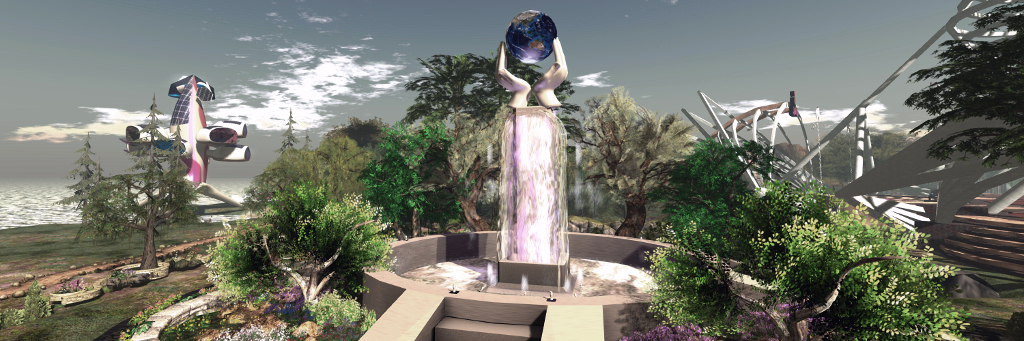
This year’s event follows past OBR events in Second Life, with four regions laid out to offer a central music / dance arena, around which sets and sessions will move throughout the 24 hours of the event. In the surrounding park lands, and linked to the central stages and one another by trails and paths, are art exhibits, gardens, and additional event areas, such as the Poetry and Prose area.
Also to be found within the regions is the pavilion honouring the work and courage of the joint Nobel Peace Prize winners in 2018, Denis Mukwege and Nadia Murad “for their efforts to end the use of sexual violence as a weapon of war and armed conflict,” according to the Norwegian Nobel Committee announcement on October 5th, 2018 in Oslo, Norway.
One Billion Rising 2019
The art installations this year include work by the team at 2Lei, Storm Septimus, Krystal Rabini, iSkye Silverweb, Slatan Dryke, Darkstone Aeon, FionaFei, Isadora Alaya (Otcoc), and Marcel Mosswood. The full event schedule is available via the OBR in SL website.
The Rose Challenge
Once again, gifts will be available to those attending One Billion Rising, and there will be a further Rose Challenge.
On offer is a beautiful pink-tipped rose, designed by Kilik Lekvoda, as a mark of both the event and to salute Nobel Peace Prize winners Murad and Mukwege.
The pin can be obtained by travelling around the One Billion Rising regions and counting the number of white rose bushes (kindly provided by Lilith Heart of Heart Botanicals) which are scattered around the four regions of the event, including between (but not a part of) the art installations and in the corner parks.
When you think you have the number (of bushes, remember – not individual flowers). Go to one of the four OBR landing zones and use the mail box there to post your total – your name will be automatically recorded with your total.
Why Dance?
A critique sometimes levelled at OBR / OBR in SL is that the issues it raises cannot be solved by dance. Well, that’s absolutely true, just as marching through the streets carrying placards and banners is unlikely to have a lasting impact on whatever it is people might be marching about.
However, like marches and protests, dance and music does serve to draw attention to matters. It provides a means by which people are encouraged to stop and think, and for information and ideas disseminated. What’s also important is that it’s a lot harder to see dancing as a threat than might be the case with an organised march or protest – something to take into consideration with countries in which the right to march or protest freely does not exist. Hence why, as well, OBR in Second Life is marked each year with a dance video to the event’s theme song.
Practical Support
OBR in SL is not itself a fund-raising event, but exists as a means of raising awareness of violence against women and girls. If you’d like to show your support for organisations that work tirelessly throughout the year to bring about change, please visit the OBR in Second Life Non-Profits page for a short list of organisations.
On Tuesday, February 12th, there was no deployment to the SLS (Main) channel, leaving it on server maintenance package 19#19.01.25.523656; nor was there a restart.
The planned deployment was cancelled due to a last-minute bug.
On Wednesday, February 13th, 2019 the RCs are likely to be updated as follows:
BlueSteel and LeTigre should receive EEP update server maintenance package 19#19.02.08.524296.
Magnum should receive server maintenance package 19#19.02.11.524360, comprising further internal fixes.
EEP Update
The EEP server update to be deployed to BlueSteel and LeTigre comprises:
BUG-226246 [EEP] llGetEnvironment() reports SKY_LIGHT fade_colour as a rotation instead of a vector.
BUG-226250 [EEP] Changing Blue Horizon value causes llGetEnvironment() to report many other parameters changing then reverting.
For llGetEnvironment/llSetAgentEnvironment the values set/returned using the SKY_GLOW as two floats (size and focus)
BugSplat RC viewer, version 6.1.0.523335, January 23rd. This viewer is functionally identical to the current release viewer, but uses BugSplat for crash reporting, rather than the Lab’s own Breakpad based crash reporting tools.
Estate Access Management (EAM) RC viewer, version 6.1.0.523351, January 23rd.
Love Me Render RC viewer, version 6.0.2.523177, January 16th.
Project viewers:
Environmental Enhancement Project (EEP) viewer, version 6.0.2.524123, February 6th.
Bakes on Mesh project viewer, version 6.0.1.522127, December 7th.
Linux Spur viewer, version 5.0.9.329906, dated November 17th, 2017 and promoted to release status 29th November, 2017 – offered pending a Linux version of the Alex Ivy viewer code.
Obsolete platform viewer, version 3.7.28.300847, May 8th, 2015 – provided for users on Windows XP and OS X versions below 10.7.
In Brief
Viewer disconnects / crashes: some people on “older” hardware have been reporting what appear to be viewer disconnects / crashes of late after only being logged-on for around 15-30 minutes (see: this forum thread). This has been noted by the Lab, and a potential fix is being tested on Aditi. The problem here is that forum posts don’t always give the level of detail required for LL to really diagnose matters. Jira is always the preferred method of logging issues – and it is important to use the official viewer when doing so.
Name Change Issue: as reported in my last SUG meeting summary, a creator preparing for the upcoming Last Names / name changing capability encountered an unusual situation: the Lab had changed a user’s account name. However, when sending information to an external HTTP request (object UUID, object name, owner name of the object, etc.), to the creator’s customer database, a HUD used by the user was sending their original account name not their revised name. The issue is now believed to be a stale cache issues, as noted last time.