Oz Linden announces his forthcoming departure from Linden Lab

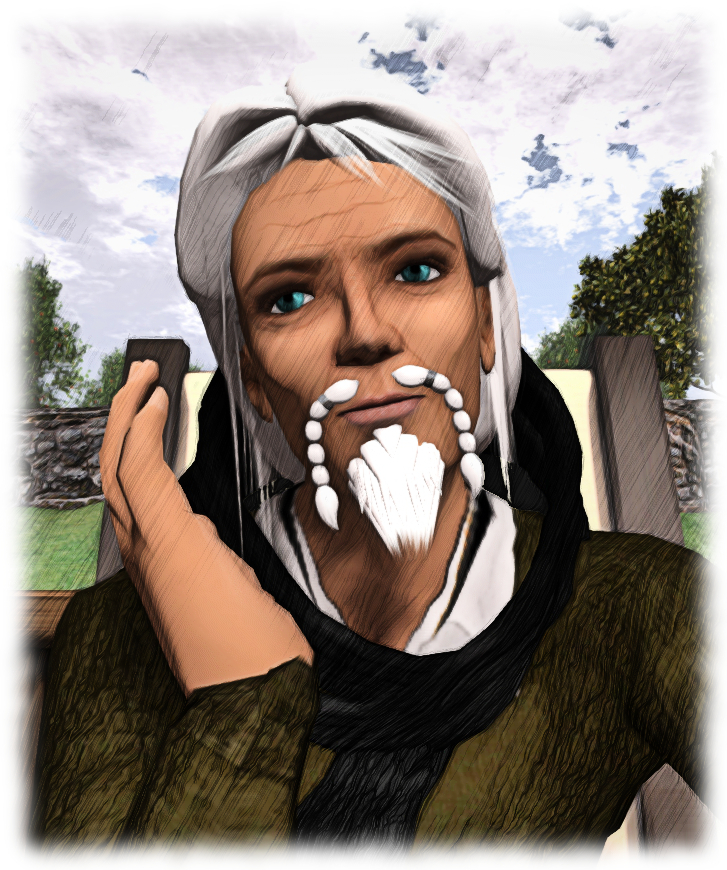
Oz Linden, circa 2014

On Tuesday, February 16th, 2021, and in a surprise to Second Life users, Linden Lab’s Vice President of Engineering, Oz Linden (aka Scott Lawrence in the physical world) announced his forthcoming departure from the Lab.

Oz joined Linden Lab in 2010, taking on the role of Director of Open Development. At that time, the viewer was in something of a state of flux; the “new” Viewer 2 had not long been launched, the development of which had largely excluded the user community and, particularly, developers who had long been associated with viewer development through the submission of code contributions.

As a result of this and other factors, users and developers alike were at the time feeling alienated and disenfranchised – facts that Oz immediately recognised and sought to address.

In the first instance this was done by replacing the open-source viewer Snowglobe project with a new Snowstorm project, intended to bring as much of the viewer development out into the open as possible – an approach Oz continued to push for throughout his time at the Lab, thus bringing order and surety out of a time that might be best described as having been “chaotic”.

The most obvious areas in which this was demonstrated was his adoption of weekly Open Source Meetings, initially held on Mondays before moving to their current Wednesday slot. These meetings continued alongside other technical in-world meetings such as the Server and Scripter meeting(now the weekly Simulator User Group), which took place even during the drought of other office hours meetings. He also implement the fortnightly Third Party Viewer Development meetings, allow Third Party Viewer developers to discuss all matters relating to the viewer directly with him and members of the Lab’s viewer engineering team.

In 2013, Oz oversaw the complete overhaul of the Lab’s internal viewer develop process, officially called the Viewer Integration and Release Process, which greatly simplified viewer update and viewer feature development. This project also brought me into my first direct contact with Oz when I offered a summary of the new process.  It marked the start of a long and informative acquaintance that I’ve continued to appreciate over the years.

As well as direct contributions to the viewer, Oz also helped open the door to user-led projects aimed at providing broader capabilities for the viewer. While constraints on what could / could not be accepted would always have to be enforced, this approach nevertheless resulted in the adoption of materials in Second Life, and helped to encourage project-based contributions to the viewer that have included capabilities such as the hover height slider, and graphics and camera presets. This approach also included major lab-led projects such as Project Bento also encompass direct user involvement pretty much from their outset.

While it has always been the Lab’s policy to try to recruit personnel from the ranks of users as and when there is a suitable “fit”, in his time at the Lab, Oz has become perhaps one of the most enthusiastic proponents of this approach, frequently seeking – and often succeeding – to recruit qualified users into technical positions under his management.

Oz in his human form. Credit: Linden Lab

As the Lab opted to start work on Project Sansar, Oz decided to pro-actively campaign to take on the work in continuing to develop Second Life, drawing to him those within the Lab who also wished to stay engaged in working on the platform. It is not unfair to say this resulted in one of the most intense periods of Second Life development we have seen, interrupted only be the need to focus on the work of transitioning all of Second Life and its services to run on AWS.

In 2019, Oz – together with Grumpity and Patch Linden – officially joined the Lab’s management team, taking on the role of Vice President of Engineering and putting an official seal on what Grumpity refers to as the Troika: the three of them being largely responsible for determining much of the product and feature direction for Second Life.

In announcing his departure, which sees his last day with the Lab being Friday, February 26th, 2021, Oz states that it has been something he’s been considering for a while:

Some time ago, I reached the point that I could afford to think about retiring but decided to stay to finish moving SL to its new cloud platform. I can’t imagine a better last act in my working life than ensuring that Second Life has this better platform for its future growth. Now that project is done (well, except for a few loose ends), and it’s time for me to move on to the next phase of my life.

He also emphasises – hopefully to prevent the rumour mill turning its wheels – that his decision to leave the Lab is not in any way connected to the company recently being acquired by new investors:

I want to emphasise in the strongest possible terms: my decision has nothing at all to do with the change in ownership of the Lab; the timing really is a coincidence. If anything, I regret that I have overlapped with them for only a few weeks; in that time (and in the time leading up to the change) I have come to respect and appreciate the skills and energy they bring to the company.

For my part, I cannot claim to know Oz as well as I would like to – but I’ve always found find his enthusiasm for Second Life never to be anything less than totally honest and infectious, and his high regard for users utterly genuine and sincere.

As such – and while his actual departure from the Lab is still more than a week away,  – I’d like to take this opportunity to offer him a personal and public “thank you” for all the times he’s provided me with insight and / or encouraged me to get involved in various projects, all of it has been greatly appreciated. I am, and will be, genuinely saddened to see him leave the Lab; we are all losing something in his departure, and the void left will not be easy for the management team to fill.

Skrunda-2 an atmospheric slice of Soviet history in Second Life

Skrunda-2, February 2021

Skrunda-2 is a Full region design that has – and quite rightly -been receiving a lot of attention since it opened. Held and designed by Titus Palmira with the assistance of Sofie Janic and Megan Prumier, the build is a representation of what was once a top secret Soviet facility that throughout the cold War era was never acknowledged to exist, but which today is now a most unusual tourist attraction.

The original Skrunda is a small and fairly unremarkable town in western Latvia, with a population of some 3,000 people, and granted “city” status in 1996. However, five kilometres to the north lies Skrunda-1, and it is this enigmatic place that is the focus of the design by Titus, Sofie and Megan.

Skrunda-2, February 2021

In brief, Skrunda-1 was established in 1963 as a radar surveillance and early warning centre intended to track incoming ICBMs using two Soviet Dnepr (NATO code-name “Hen House” on account of the two enclosed arms of the array resembling two lines of chicken coops). As a military garrison, the base was essentially a self-sustaining town, a home to an estimated 5,000 personnel and their families when at its peak, and with all the facilities and amenities one might expect of such a town: its own power and water supplies, 10 large apartment blocks to house families, a school, gymnasium, theatre, swimming pool, and of course all the facilities required to support the base itself – workshops, administration offices, an officer’s club and so on.

During the late 1980 / early 1990s, attempts were made to update the base with three installations of Russia’s latest phased array radar early warning systems. However, the collapse of the Soviet Union means this work was never finished, although the Russian Federation continued to use the base and the Dnepr radar until 1998, when they withdrew after negotiations to continue to lease the base to the start of the 2000s, fell through.

Skrunda-2, February 2021

In leaving, the Russians took with them all sensitive material and equipment, but left the 60 buildings of the town as something for the Latvian government to deal with – and they pretty much left the structures to rot where they stood. It is in this decaying, deserted stated that Skrunda-2 in Second Life presents the town – and does so very impressively.

Titus notes that the build was “inspired” by Skrunda-1, suggesting that it uses the original as a foundation before striking off on its own. however, while there is some artistic licence (Skrunda-2 appears somewhat coastal, whilst the original is more inland), the overall attention to detail and care taken in design means the Skrunda-2 is actually very reflective of the overall look and feel of its namesake.

Skrunda-2, February 2021

Take, for example, the landing point at the town’s main gates. It is marked by two aged block houses and iron gates with a road barrier beyond. They perfectly echo the original entrance to the Skrunda-1 base as can be seen in numerous Internet photos of the ageing town.

And while the hulking, featureless forms of the apartment blocks here may only number four rather than 10, they more than reflect the great white blocks of Skrunda-1 as they sit in lines facing one another across overgrown lawns and broken roads. Meanwhile, beyond the apartments sits a low-slung bunker that, while it lacks the out-flung “chicken coops” of the radar arrays, is an easy stand-in for their central block house command centre.

Skrunda-2, February 2021

After twelve years of neglect, the Latvian authorities decided to auction Skrunda-1 as a development site in 2010. It did not go well: bids started at just US $290,000 for the entire site, rising to U$ 3.1 million – only for the winning bidder and the runner-up to then pull out of any deal. A second auction was hastily arranged, with the town selling for just US $333,000 – but it remained abandoned for a further five more years.

In 2015, the Skrunda municipality purchased the site for just over US 14,500, ceding half of it to the Latvian army for training purposes and with the idea of redeveloping the other half. However, during this time the town started to attract tourists, drawn by its Soviet-era mystique (perhaps the rumours that it once being a centre for mind control experiments gave its allure an extra edge. While plans are apparently in-hand for the demolition and replacement of some of the buildings, the local government has acknowledged this interest  – by charging admission to the town at US $5.00 per head.

Skrunda-2, February 2021

Skrunda-2 perhaps represents the original not too long after its abandonment: old vehicles are still to be found in parking bays close to the apartment blocks, rubbish bags are still piled in some places, and so on, all of which adds to the location’s atmosphere. indeed, there is something to capture the eye literally at every turn, making the setting a photographic delight. And there are also little gems and secrets awaiting discovery – such as the inner workings of a bunker to one side of the town, or the Soviet-era posters and paintings, and the post-Soviet era graffiti and wall paintings that give Skrunda-2 its own unique sense of place.

But for me, the most fascinating little gem awaiting discovery is the one that might be so easily missed. It sits within one of the apartment blocks: a set of rooms still occupied – perhaps the home of the last inhabitant of the town, who departed towards the end of 1999. It’s a quite wonderful setting, that conjures mental images of someone perhaps elderly and clinging to a way of life that has now passed.

Skrunda-2, February 2021

Feeling a lot larger than a single region, Skrunda-2 is a tour-de-force in design and presentation; a place that really does carry within it a sense of history, offering insight into a past era that encourages one to go diving into the Internet to seek out more information on this strange town. At the same time, it offers the visitor and the photographer alike a grand amount to take in and appreciate.

Kudos again to Titus, Sofie and Megan for a superb design.

Skrunda-2, February 2021

SLurl and Details

2021 viewer release summaries week #6

Logos representative only and should not be seen as an endorsement / preference / recommendation

Updates for the week ending Sunday, February 14th

This summary is generally published every Monday, and is a list of SL viewer / client releases (official and TPV) made during the previous week. When reading it, please note:

  • It is based on my Current Viewer Releases Page, a list of all Second Life viewers and clients that are in popular use (and of which I am aware), and which are recognised as adhering to the TPV Policy. This page includes comprehensive links to download pages, blog notes, release notes, etc., as well as links to any / all reviews of specific viewers / clients made within this blog.
  • By its nature, this summary presented here will always be in arrears, please refer to the Current Viewer Release Page for more up-to-date information.
  • Note that for purposes of length, TPV test viewers, preview / beta viewers / nightly builds are generally not recorded in these summaries.

Official LL Viewers

  • Current release viewer Dawa Maintenance RC Viewer, version 6.4.12.555248, dated January 25, 2021, promoted February 1st, 2021 – No change.
  • Release channel cohorts:
    • No updates.
  • Project viewers:
    • No updates.

LL Viewer Resources

Third-party Viewers

V6-style

V1-style

Mobile / Other Clients

Additional TPV Resources

Related Links

Immergence: a voyage of the eye and mind in Second Life

Immergence, February 2021

Djehuti-Anpu (Thoth Jantzen – TJ to those who know him) is an artist specialising in immersive,  interactive audio-visual presentations within virtual spaces. His work is a captivating mix of light, colour, sound, and interaction that many have likely seen at various venues across Second Life, including several SL Birthday events, where he has frequently presented microcosms of his work as featured artist at those events.

On Saturday February 13th, he opened Immergence, an installation featuring music, sound, light and colour that is made up of a series of experiences joined together through a common hub.

Immergence: The Mind Melter

The very title of the piece is itself an interesting fusion, given that the two words  can be taken as opposites: “immersion” tends to suggest being subsumed into something, confined by it, whilst “emergence” might be said to be moving out of something, to be free of its constraints.

However, when put together like this, they suggest the act of opening oneself to experience, thought, stimulation and ideas through the act of immersing oneself into a single medium – in this case, a series of interconnected virtual environments, each with its own form and purpose, but all of which combine to present a contiguous, provocative and evocative experience.

Immergence: floating through the Hippycampus

Before visiting the installation, there are a number of settings that should be enabled within your viewer:

  • Advanced Lighting Model (ALM) – must be enabled (Preferences → Graphics → ensure Advanced Lighting Model is checked)
    • Note that you do not need to enable shadows as well if rendering these places a significant strain on your computer’s rendering capabilities.
  • Ensure you have set the following media requirements (Preferences → Sound and Media → Media):
    • Media auto-play = ON / checked.
    • Allow in-world scripts to play media = ON / checked.
    • Play media on other avatars = OFF / unchecked.
    • Media Filter (TPVs only, if part of the viewer) = OFF / unchecked.
  • Ensure your viewer is set to Use Shared Environment (menus → World → Environment → make sure Use Shared Environment is checked).

Do note as well, that those sensitive to moving or flashing light or who may be particularly motion sensitive may find elements of Immergence unsettling.

Immergence: The Gauntlet

The landing point offers information on the installation – presented by the HAL-like THJ-900 computer, together with a series of teleport portals that lead to the surrounding experiences, some of which can also be found at TJ’s New Khemmenu spaces at Ars Simulacra NMC’s SL Artist’s Showcase Island.

There is no set order of portals to take, so just choose those that pique your curiosity and step through. Similar portals within each of the environments can be used to return you to the landing point:

  • Khemennu University: immerse yourself in one (or more) of a number of discussions on a range of topics – ethics, philosophy, physicalism, memetics, and more, and test your own knowledge.
  • Marbles: float and / or dance amidst the dancing marbles as they capture and reflect the lights and patterns of the sphere that encloses you.
  • Mothership: take to a purple pod and lose yourself in music as the camera reveals the many environments within Immergence – just tap the ESC key a couple of times once folded into your pod.
  • Ramalama: I think this is about using a canon to shoot yourself into a tunnel of light, but I confess (possibly because of a shortcoming with my Bluetooth keyboard) I could not get the canon to work.
  • The Gauntlet – embark on a walk through space, light, time and more; best appreciated if you can manage it in Mouselook.
  • The Hippycampus: float through the brain, Superman-style.
  • The Mind Melter: wander halls of colour and reflection in what appears to be an endless space.

The two remaining portals – the large stargate and the Starburst portal – access event spaces that I gather will be used for special events.

In addition a green diamond formed by a pair of pyramids at the landing point will allow you to rez a little flying car (and companion) and zoom around the installation, whilst a second platform reached via a semi-transparent bridge, is home to a further series of portals connecting to other arts environments, including Ars Simulacra, mentioned above.

Immergence: dancing as light in the QFT event space

Obviously intended to be experienced rather than written about, Immergence is fascinating in its presentation, offering visitors an immersive, visually and aurally stimulating opportunity to both escape and, should you so wish, have your grey matter informed and exercised.

SLurl Details

Tales from around the world and from far, far away

Seanchai Library

It’s time to highlight another week of storytelling in Voice by the staff and volunteers at the Seanchai Library. As always, all times SLT, and events are held at the Library’s home in Nowhereville, unless otherwise indicated. Note that the schedule below may be subject to change during the week, please refer to the Seanchai Library website for the latest information through the week.

Sunday, February 14th, 15:00 Seanchai Library at One Billion Rising

Aoife Lorefield, Dubhna Rhiadra, Gloriana Maertens, and Caledonia Skytower share an hour of short prose and poetry to celebrate and honour women.

Monday, February 15th, 19:00: Into the Green

The harp was a gift from Jacky Lanter’s fey kin, as was the music Angharad pulled from its strings. She used it in her journeys through the kingdoms of Green Isles, to wake the magic of the Summerblood where it lay sleeping in folk who had never known they had it.

Harping, she knew, was on third of a bard’s spells. Harping, and poetry, and the road that led – to….?

Charles de Lint takes us into lands infused and transformed by magic. Magic that grows in the roots of old oaks and dances by moonlight among standing stones. Magic that sleeps in an old soldier’s eyes and glows in the gaze of a phantom stag. Magic that pumps through the heart and the veins of those born to the Summerblood-to be stolen at knife point, burned, destroyed, in danger of fading back into the green and disappearing forever from the world.

Join Gyro Muggins for more!

Tuesday, February 16th

12:00 Noon: Russell Eponym, Live in the Glen

Music, poetry, and stories in a popular weekly session.

19:00: Ursuala Le Guin’s Gifts

Scattered among poor, desolate farms, the clans of the Uplands possess gifts. Wondrous gifts: the ability—with a glance, a gesture, a word—to summon animals, bring forth fire, move the land. Fearsome gifts: They can twist a limb, chain a mind, inflict a wasting illness.

The Uplanders live in constant fear that one family might unleash its gift against another. Two young people, friends since childhood, decide not to use their gifts. One, a girl, refuses to bring animals to their death in the hunt. The other, a boy, wears a blindfold lest his eyes and his anger kill.

In this beautifully crafted story, Ursula K. Le Guin writes of the proud cruelty of power, of how hard it is to grow up, and of how much harder still it is to find, in the world’s darkness, gifts of light.

With Willow Moonfire.

Wednesday, February 17th, 19:00: The Guns of Avalon

Across the worlds of Shadow, Corwin, prince of blood royal, heir to the throne of Amber, gathers his forces for an assault that will yield up to him the crown that is rightfully his. But, a growing darkness of his own doing threatens his plans, an evil that stretches to the heart of the perfect kingdom itself where the demonic forces of Chaos mass to annihilate Amber and all who would rule there.

One of the most revered names in sf and fantasy, the incomparable Roger Zelazny was honoured with numerous prizes—including six Hugo and three Nebula Awards—over the course of his legendary career. Among his more than fifty books, arguably Zelazny’s most popular literary creations were his extraordinary Amber novels. The Guns of Avalon is the second book of The Chronicles of Amber.

With Corwyn Allen.

Thursday, February 18th, 19:00: Star Wars a New Hope

The story that started a saga with the immortal words:

A long time ago, in a galaxy far, far, away…

Join Sandon Loring and Caledonia Skytower as they bring us the story of Luke, Leia, Han, Chewbacca and two certain ‘droids as they fight for the Rebellion against the tyranny of the Galactic Empire.

Also in Kitely! Find teleport from the main Seanchai World grid.kitely.com:8002:SEANCHAI.


The haunting beauty of Golgothica in Second Life

Golgothica, February 2021
Golgothica’s story has yet to be written … The detailed, rich mysterious, Gothic landscape will hopefully inspire those who come here to discover with others what it’s story is and why things are as they are. It is an open book, the first chapter is a simple description of the place and the locations. But who lives here, what they do, and why, is in the creative minds of those who come to dwell here?

So reads, in part the introduction to Golgothica, the latest region-wide setting that has sprung forth from the eye and imagination of Hera (Zee9). Sharing the same Full region as the latest iteration of her famous Drune cyberpunk environment (which sits high in the sky overhead), Golgothica is – and I say this without any hyperbole – a simply magnificent build.

Golgothica, February 2021

Located on the ground level of the region and reached via the main landing point that also offers a way to the current iteration of Drune, the setting is presented as a medieval style coastal town or village, with a small wharf, numerous houses and places of commerce, a church that at first glance appears to perhaps be under repair, and with outlying farmlands, woods and roads that cross the countryside while the high walls and towers of what might at first be taken as a mighty castle rise to the west, dominating the skyline.

Golgothica, February 2021

It all looks typically Middle Ages on being seen for the first time – it is only as visitors explore, that the darker side of the place, caught in the growing shadows of twilight, starts to reveal itself. The local inn, for example, carries the name The Slaughtered Lamb and has hanging over its door the image of a severed wolf’s head on a pike; thus neither name nor sign are particularly welcoming – although inside, all is undoubtedly cosy.

And what is one to make of the Romany camp  at the edge of town, the caravans carefully arranged around a stone pentagram lain within the ground, or the riverside statue seeming to celebrate the blood lust of werewolves? What sinister rites might be performed out at the henge where fires burn – one within the rune-inscribed round stone at the centre of the henge, and the other at the feet of the great wicker man watching over the ancient stones, apparently awaiting someone to occupy its woven form…

A walk in the opposite direction to the henge raises further questions: what has happened to the local church?  A visit to it will reveal that rather than being in a state of repair, it has in fact been left to ruin, with nature slowly claiming it as a place of her own, all former signs of devotion long removed saved a single statue – and even that is far from saintly.

Across the waters of the local stream, the woodlands add to the mystery, strange lights illuminating the tree trunks, casting haunting light across glades that offer the unexpected, from statutes to shrines that hint towards unnatural acts.

Golgothica, February 2021

Then, beyond this all sits the castle that is in fact a monastery – at least according to the map that can be obtained at the main landing point, or which is automatically delivered as visitors land aboard the vessel moored at the village quayside, and which marks the start of all journeys through the setting. With its foreboding walls and towers and great gates, it has all the look of a fortification designed to keep people out, rather than welcoming them in for worship, whilst the shape of the many watchtowers that line its walls imply something of a far eastern influence.

Caught against the setting Sun in the default environment for the setting, this great complex is no home to the chanting of your usual monks, Gregorian or Buddhist, however; although it is clearly the seat of some form of learning, given the Maester’s library on the upper level of the southern keep-like structure.

Golgothica, February 2021

Instead, this appears to be a place where deities of a more forbidden kind are paid homage, as can be witnessed by the Bosch-like murals in the sleeping cells of those who reside here and through the design of the main chapel. And what of the dungeons lying below that chapel, what do they say of those who might occupy them – and the fate that might awaited them?

Two interlinked elements are always apparently within Hera’s builds that makes them ideal for visitors and role-players alike. The first is narrative: all of Hera’s builds from the 2019-XS pre-Drune, through Drune (covered numerous times in these pages) to the likes of Venesha and on to Golgothica carry within them threads of narrative and imagine just waiting for those coming into the region to pick them up and follow them or weave them together.

Gologothica, February 2021

The second is attention to detail that both helps to strengthen these threads and gives the more casual visitor touches to be appreciated. Take, for example the beehives behind the mead house; a small detail they might be – but an important one. After all, what is mead without honey, other than water with some added fruit for taste? Add to this the fact that the major structures within Hera’s builds are of her own design, thus making each setting genuinely unique in form and character.

I have yet to be disappointed in any of Hera’s designs; they never fail to to engage, surprise and enamour. However, with Golgothica I cannot help but feel she has created something very special, perhaps her most engaging, immersive design to date. I’ve no idea how long Hera intends to keep Golgothica open – I suppose that very much depends on her creative spark – but it is quite genuinely not a setting to be missed. or avoided.

SLurl Details