Hippotropolis Theatre: home of the OSD/TPVD meeting
The following notes were taken from:
Pantera’s video (embedded at the end of this article) and my chat log of the Open-Source Developer (OSD) meeting held on Friday, March 20th, 2026, together with my chat log of that meeting.
Please note that this is not a full transcript of the meeting but a summary of key topics.
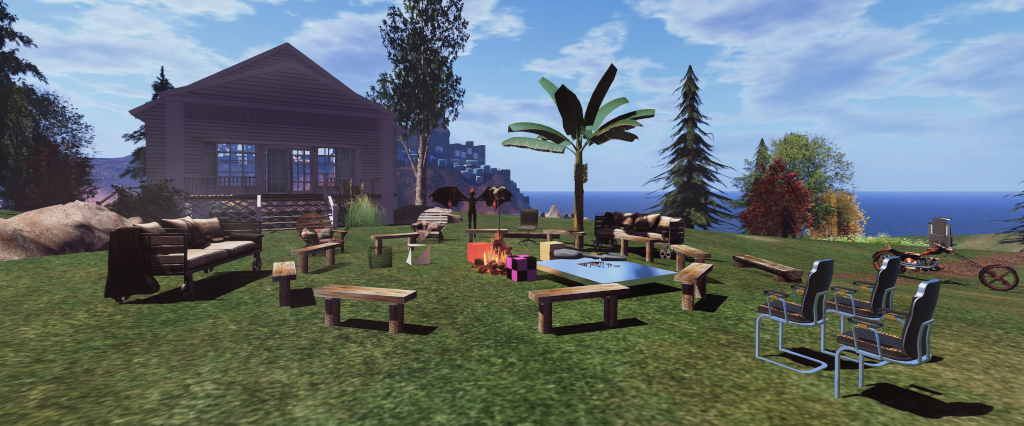
The OSD meeting is a combining of the former Third Party Viewer Developer meeting and the Open Source Development meeting. It is open discussion of Second Life development, including but not limited to open source contributions, third-party viewer development and policy, and current open source programs.
This meeting is generally held twice a month on a Friday, at 13:00 SLT at the Hippotropolis Theatre and is generally text chat only.
Second Life One Click Install viewer 26.1.0.21295806042, January 26 – one-click viewer installation.
Second Life Voice Moderation viewer 26.1.0.20139269477, December 12, 2025 – Introduces the ability to moderate spatial voice chat in regions configured to use webRTC voice.
Remains the current viewer development focus, with a beta (RC) update targeting a potential availability in week #13 (week commencing Monday, March 23rd). Actual promotion to release status depends on how long the viewer may ned to remain at RC status.
There is one major blocker to promotion, which is being worked on, but otherwise, it is “very close” to being a candidate for release, user feedback allowing.
Geenz Linden noted that the repo for the viewer is getting updates to more easily ship updates for those TPVs opting to adopt Velopack as their updater.
Velopack benefits:
The move to Velopack allows LL and TPVs to move off from VVM with the exception of cohort management, and allows LL to discontinue the old SLVersionChecker all of which should streamline the viewer install and update processes as experienced by users.
Velopack also opens the door to partial viewer updates – although LL are still in internal discussions on when to actually start doing this.
A side effect of this viewer, when generally available, is that it will not automatically uninstall versions of the viewer using the old install / update processes, and there will be no requirement to manually uninstall such versions (although users can if they wish). The reason for this latter point is a concern that inexperienced users will simply click YES when asked if they wish to remove all their settings, etc., and thus lose them.
Testing of this viewer against incoming new users to SL saw a “not insignificant” increase in day 1 user retention..
Viewer 2026.02 – “Flat” UI and Splash Screen Refresh
An alpha version (see viewer status, above) was released on Friday, March 20th, but without the log-in splash screen updates. These will be in an upcoming update.
This viewer includes the “flat” UI design, font updates and WebRTC voice moderation capabilities to help align viewer-side WebRTC updates more with the server-side.
Example of the upcoming flat UI. Via: Geenz Linden / Github #4681/2
Viewer 2026.03 – Maintenance Release
2026.03 will now see the return of official viewer maintenance releases, with the initial focus on viewer performance improvements, together with a focus on top crashers and regressions, up to a certain limit, so they can be kept as relatively small releases rolled out on a reasonably fast basis.
2026.03 should see (partial list):
A backporting of the texture streaming changes at the very least, with Geenz particularly focused on getting lower RAM usage in general.
Geenz also hopes to get some work done on lightening the main thread burden in the viewer – which is potentially more difficult, and may take longer.
A hope with this cycle of maintenance releases is to put a reasonable dent in some of the debt we’ve accumulated with PBR’s release.
Viewer 2024.04 – SLVP or LUA (TBD)
The 2026.04 viewer release is liable to be either the Second Life Visual Polish (SLVP) release (containing all of the SSR, PBR Specular, and HDR EEP parameters work), or a SLua release.
Work on improving mirrors for SLVP is currently on hold whilst 2026.01.01 and 2026.02 is on the table.
SLVP is liable to spend a long time at alpha status (which may be why SLua moves ahead of it in the order of things).
WebRTC Deployment
This commenced on Wednesday, March 18th, with a deployment to the BlueSteel RC channel covering approximately 3.4% of the grid.
This early release allows us to verify performance, stability, and compatibility in real-world conditions before expanding further.
Users in the release candidate channel may experience:
Failure of peer-to-peer (P2) Voice calls between regions on WebRTC and the rest of the grid. These will not be fully resolved until WebRTC is grid-wide.
Differences in audio quality depending on being in or out of the release candidate channel.
Ongoing tuning and iteration as we gather feedback.
The next, larger deployment is currently scheduled for week #14 (commencing Monday, March 30th). However, a smaller deployment might be made in week #13.
There are thoughts being given to next steps for WebRTC: transcription, the ability in-preferences to hear how you sound, etc. (a replacement for echo canyon), but these are subject to other priorities.
The existing Vivox Voice service is liable to be shut down “a few months” after the WebRTC deployment has been completed. However, no target date has as yet been decided.
During the deployment phase, Vivox, users on the latter will not have spatial Voice when in WebRTC regions, although they should have p2p/conference/group voice with others on Vivox regions.
General Discussion
Mesh Convex Hulls:
The new physics choice for mesh uploads is currently available on ARM Macs, and on the “to do” list for other viewers.
Geenz’s first choice for the role choked on a lot of content for SL, so VHACD is the choice of libraries.
As has been previously mentioned, the aim is to remove the Havok sub-libraries from the viewer entirely – but this a process several steps down the line.
There was a general discussion on performance, lightening the load on the viewer’s main processing thread (some noted above).
The following notes were taken from the Tuesday, March 3ed, 2026 Simulator User Group (SUG) meeting. These notes form a summary of the items discussed, and are not intended to be a full transcript. They were taken from the video recording by Pantera, embedded at the end of this summary – my thanks to Pantera for providing it.
Meeting Overview
The Simulator User Group (also referred to by its older name of Server User Group) exists to provide an opportunity for discussion about simulator technology, bugs, and feature ideas is held every other Tuesday at 12:00 noon, SLT (holidays, etc., allowing), per the Second Life Public Calendar.
The “SUG Leviathan Hour” meetings are held on the Tuesdays which do not have a formal SUG meeting, and are chaired by Leviathan Linden. They are more brainstorming / general discussion sessions.
Meetings are held in text in-world, at this location.
Simulator Deployments
No deployments are planned for the week, channels will be restarted.
WebRTC deployment is now planned to commence on Wednesday, March 18th with a deployment to the BlueSteel RC channel. Progression from there will likely be subject to how it settles, issues arising, etc.
In Brief
Rider Linden:
Has some Lua work waiting on him to add support for script information to inventory and the viewer. Basically, scripts will have an inventory subtype that can be either LSL or Lua and it will also have some meta data which is the VM that the script was compiled for (LSO, Mono, Luau).
This week he is taking care of a long standing issue with mesh uploading costs, and the fix should hopefully surface in the 2026.02 viewer release.
Leviathan Linden:
Has been working on is to try to improve login/teleport/region-cross success rate. The idea is to improve the reliability of the UDP packets that are used for viewer<–>simulator connections.
He has a Pull Request for this up against the viewer, although he’s not sure the core of the issue lies within the viewer. Rather he believes similar changes server-side will probably make a bigger difference.
Currently this work is largely complete and going through validation.
Once released, it will not “fix all region crossings” – as there are multiple issues with them that need to be tackled – it his work should hopefully be a further step towards improving things.
In addition, Leviathan has been attempting to better understand a fix proposed by Cool VL Viewer’s Henri Beauchamp to reduce the time avatars with attachments spend being a cloud. He believes the fix is the right way to go – asking the server to re-send attachment details (which currently doesn’t happen) along with texture data (which is resent when an avatar has issues “de-clouding”). He hopes to have the simulator updates for this ready for deployment after WebRTC has gone out.
Harold Linden (SLua):
Has been working to refactor some of the common Lua standard library functions that currently lead to “failed to perform mandatory yield” errors in user scripts. As a result, he hopes such errors will be fixed with the next SLua deployment.
He is also working on a refactor of lljson to make it easier to convert things back to proper Lua types when serialize / deserialize your data with the JSON serializer
Working on meta problems, such as identifying Voice issues.
The next viewer-side update could be in “the next two weeks”.
Further work on SLua is dependent on the continued feedback of those using it.
It was noted generally that the is further work to be forthcoming (e.g. sim caps for slua_default.d.luau).
Harold also confirmed the Lua scripting system runs on a single thread.
General Discussion
Please refer to the video below as well.
SLua warning: as per my previous CCUG summary, the next Lua deployment will have breaking changes. At a minimum scripts will need to recompiling, as they otherwise will not run.
A general discussion on Voice roll-off for WebRTC and general voice tethering to prevent eavesdropping. When moving your avatar / camera away from others who are speak, Voice so decrease down to nothing at 60 metres. However, it has been reported that simply zooming the camera out from the current position does not result in Voice roll-off.
This discussion also wrapped around the limitations of Bluetooth headsets / microphones which can affect Voice quality.
User Tapple Gao has put forward a feature request for improved animations without resorting to a “heavy” project like puppetry. This is currently being tracked by the Lab.
The are issues around logging in and capability granting which can result in non-graceful disconnects and log-in failures due to capabilities failing to create.
Some of these issues had been fixed, but the lab acknowledged there are potential more issues that can cause the same outcome.
Monty noted that L and firestorm have recently been jointly poking at the problems.
A suggested recommendation for those experiencing disconnects / log-outs of this nature is to either wait 2 minutes before a re-try, or to try logging-in to a non-neighbouring region to the one being used at the time of the crash.
A general discussion on scripts and scripting and future Lua development work took-up most of the second half of the meeting.
Date of Next Meetings
Leviathan Linden: Tuesday, March 24th, 2026.
Formal SUG meeting: Tuesday, March 31st, 2026.
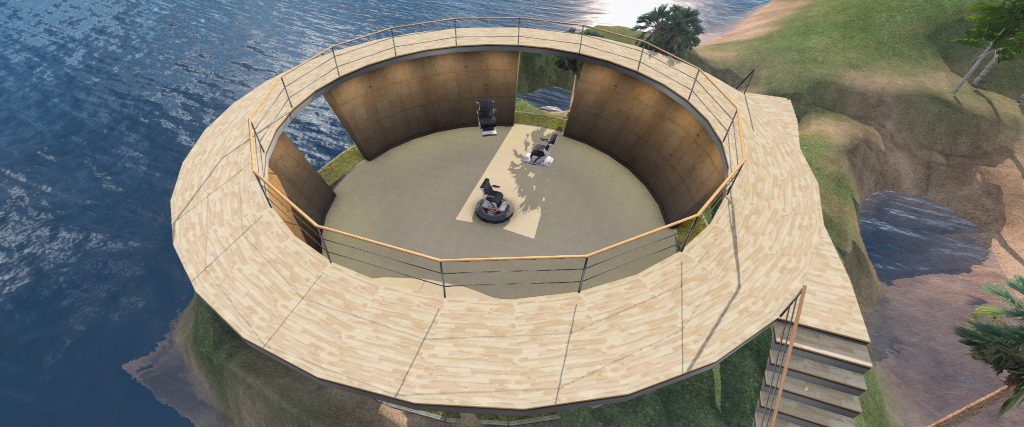
† The header images included in these summaries are not intended to represent anything discussed at the meetings; they are simply here to avoid a repeated image of a rooftop of people every week. They are taken from my list of region visits, with a link to the post for those interested.
Logos representative only and should not be seen as an endorsement / preference / recommendation
Updates from the week through to Sunday, March 15th, 2026
This summary is generally published every Monday, and is a list of SL viewer / client releases (official and TPV) made during the previous week. When reading it, please note:
It is based on my Current Viewer Releases Page, a list of all Second Life viewers and clients that are in popular use (and of which I am aware), and which are recognised as adhering to the TPV Policy.
This page includes comprehensive links to download pages, blog notes, release notes, etc., as well as links to any / all reviews of specific viewers / clients made within this blog.
By its nature, this summary presented here will always be in arrears, please refer to the Current Viewer Release Page for more up-to-date information.
Outside of the Official viewer, and as a rule, alpha / beta / nightly or release candidate viewer builds are not included; although on occasions, exceptions might be made.
Official LL Viewers
This list reflects those viewers available via the first four links in the LL Viewer Resources section, below.
Default viewer – Legacy search; WebRTC improvements; QoL improvements – 26.1.0.22641522367 – March 12 – NEW
The CCUG meeting is for discussion of work related to content creation in Second Life, including current and upcoming LL projects, and encompasses requests or comments from the community, together with related viewer development work.
This meeting is generally held on alternate Thursdays at Hippotropolis and is held in a mix of Voice and text chat.
Introduces the ability to moderate spatial voice chat in regions configured to use webRTC voice.
Second Life One Click Install viewer 26.1.0.21295806042, January 26, 2026 – one-click viewer installation.
Viewer Notes
Viewer 2026.01
Promoted to default release ahead of the meeting – see above.
Viewer 2026.01.o1
The next viewer targeting promotion to default status.
Comprises the one-click installer / updater.
It is hoped promotion of this viewer is “weeks away” rather than “months”.
Viewer 2026.02
2026.02 remains on track for the “Flat” UI and font updates + plus a possible refresh of the log-in splash screen.
It now also includes the WebRTC voice moderation capabilities (as seen in the project viewer) to help align viewer-side WebRTC updates more with the hoped-for server-side deployment.
Example of the upcoming flat UI. Via: Geenz Linden / Github #4681/2
Viewer 2026.03
Some changes on this – originally defined as the SLVP – Second Life Visual Polish viewer, the status has changed such that 2026.03 is liable to one of the following:
The SLUA viewer update, or
The Visual Polish viewer, including the long awaited SSR improvements. PBR specular for residents who are more familiar with the old Blinn-Phong work flow + HDR controls in EEP so residents can decide how bright or dark things should be, or
A new performance improvements viewer option.
It is possible that further water improvements might find their way to this SLVP viewer, and also that as some of the updates require sever-side changes, the promotion of SLVP might be subject to delay once available, to allow time for the server changes to be slotted into the simulator release schedule.
It is also possible some of the above might be combined into a single viewer release under the 2026.03 banner.
The potential for making monthly promotions to get all the current inflight viewers up to release status is also being discussed at the Lab.
Viewer Performance Discussion
Better performance is obviously always a benefit to using SL, and currently there is an internal discussion at the Lab overtrying to make some further performance improvements ahead of any release of the SLVP viewer, to enable the latter to better leverage them (e.g. by “shaving off” some VRAM usage).
VRAM is particularly problematic for performance as many SL creates will try to crank the texture resolution for every single material slot to the maximum, whether it is visually beneficial to do so or not. The 2K white emissive texture is an example of this.
Geenz Linden has been making changes to introduce “texture channels”. That is, to more intelligently stream specific maps – diffuse, normal, emissive,, specular, etc., at different resolutions to more intelligently manage VRAM usage with little reduction by way of a scene’s visual fidelity, particularly in scenes with a lot of high resolution textures for every material / material slot.
It has been noted that for this to work, there must be a means for users to make adjustments to suit their visual needs. These might take the form of a texture quality drop-down in the viewer’s Graphics settings.
The texture discussion led to musings on how best to identify texture size / resolution, and the complexities involved (e.g. the asset system doesn’t know – or need to know the specific resolution of a texture, it doesn’t entirely make sense for the logical to determine a texture’s resolution and how to manage it o sit within the server, which leaves the viewer – which requires the texture to be downloaded anyway – and such controls can be ignored by specific viewers simply by not adopting the code, so proactively handling texture resolutions is complicated.
Other work on performance might see changes to the avatar render cost calculations because, ironically, these appear to impact performance.
General Discussions
SLua:
There is a “breaking change” coming to SLua “in the next couple of weeks” which is apparently not deemed worthy of a blog post, so notification will be via Discord and social media – because “communications”.
It will require every current SLua script to be recompiled and restarted.
A discussion on using GPU texture compression to help with performance – something that would require work on LL’s part, but not out of the question for consideration.
HDRI support for environments – again, not out of the question. The major question is how are they to be encoded:
Creating a new asset type specifically for them is not seen as “super practical”.
While the JPEG2000 specification supports HDRI, it is “probably not the most effective application for SL’s specific use for HDRIs.
There needs to be a means of encoding them that is GPU memory friendly, as HDRIs are memory heavy (whilst HDRIs are already used in the rendering pipeline, LL uses them as sparingly as possible for this reason.
EEP would also require updates to fully support them.
None of the above is seen as particularly impossible to overcome, it does require further discussion among all the relevant stakeholders0.
It is hoped that tweaks to the EEP ambient sky settings will help make environments using PBR to “pop” more and will help improve the current Mainland ambient lighting issues.
A number of general discussions on WIBNis (“wouldn’t it be nice if….”), none of which are currently in development..
Falling Tide, March 2026 – click any image for full size
I came across Falling Tide in the Destination Guide recently, where the description pricked my curiosity, so off I hopped to take a look.
Falling Tide is a weathered coastal town where old songs, faded lights and quiet stories linger in the salt air. Wander the docks, paths and streets, find hidden markers, listen, remember. Take your time, explore, let the place get under your skin.
– Falling Tide description
Falling Tide, March 2026
A part of the Winchester estate operated by Clara Winchester (clarabellwinters) and Daniel Winchester, Falling Tide occupies a Full region located between, but not connected to, two other of the estate’s regions. Several of the other regions in the estate also have their own public areas, although for this article I’m focussing solely on Falling Tide.
The Landing Point for the region as given by the Destination Guide, sits within the centre of the little town occupying half the setting. A second Landing Point (neither is strictly enforced) is located on the north-west coast of the region, atop a deck built out over the water. This appears to be favoured by the teleport HUD and boards.
Falling Tide, March 2026
The town Landing Point has a giver for the Winchester Group HUD, which can be used to access other public areas in the estate, whilst equally close to the Landing Point is a teleport board which does much the same. Both are Experience driven, so do be sure to accept it if prompted.
The coastal Landing Point, reached via the TP HUD or whilst exploring, has two notecard givers in the form of empty crates. One offers the opportunity to find stories about Falling Tide scattered around the region (six in all), the other offers visitors the chance to join The Lost Playlist Hunt, which comes with its own back-story.
Falling Tide, March 2026
The town is very much as its description states: somewhat rundown and past its prime but still marching forward and offering various attractions – notably the art gallery – with the old motel offering visitors opportunities to stay a while. At the southern end of the town and extending eastwards is a row of six modestly-size cabins available for rent, so please be aware of this when exploring so as to avoid trespass into rented units.
Water forms a good part of the setting, with a large bay separating it from the region to the east, and the land breaking into a couple of islands to the north-east, reached via a tarmac road surface. However, it appears these two islands have been recently formed as a result of tidal incursion, despite the setting’s name, which has washed away parts of the road in separating the islands from the rest of the land, leaving the locals to place a couple plank bridges to cross the new channels.
Falling Tide, March 2026
It is this outer landscape to the east and north of the town which really brings home the tired beauty of the setting. The buildings, from the lighthouse to the boat repair shop all carry a sense of age and of slipping gently into retirement. Where once tourists might have roamed, birds and waterfowl prevail, notwithstanding the presence of a tramp steamer sitting just off the northern coast.
This quiet sense of age, coupled with the dour grey sky actually makes Falling Tide very photogenic – although some tidying-up of footpath / road prims around the town is in order to remove overlaps and the resultant texture flickering. The outlying islands certain offer plenty of opportunities for photography, and more can be found in following the outlying roads and trails.
Falling Tide, March 2026
Serene in its gentle aging, quietly linked to the wider Winchester estate and even with opportunities for a bit of boating on the waters, Falling Tide makes for an unhurried visit.
Logos representative only and should not be seen as an endorsement / preference / recommendation
Updates from the week through to Sunday, March 8th, 2026
This summary is generally published every Monday, and is a list of SL viewer / client releases (official and TPV) made during the previous week. When reading it, please note:
It is based on my Current Viewer Releases Page, a list of all Second Life viewers and clients that are in popular use (and of which I am aware), and which are recognised as adhering to the TPV Policy.
This page includes comprehensive links to download pages, blog notes, release notes, etc., as well as links to any / all reviews of specific viewers / clients made within this blog.
By its nature, this summary presented here will always be in arrears, please refer to the Current Viewer Release Page for more up-to-date information.
Outside of the Official viewer, and as a rule, alpha / beta / nightly or release candidate viewer builds are not included; although on occasions, exceptions might be made.
Official LL Viewers
Default viewer 2025.08 – 7.2.3.19375695301 – maintenance update with bug fixes and quality of life improvements – December 2.
Notable addition: new VHACD-based convex decomposition library for mesh uploads.
Second Life Release Candidate viewer 2026.01 – 26.1.0.22641522367, March 5 – NEW
Legacy search; WebRTC improvements; QoL improvements.




 Inara Pey: Living in a Modemworld