Watch Mon Métaverse, reflections on Second Life, Meta and more

Courtesy of Tutsy Navarathna
Following the creation of Meta accompanied by the grandiose announcements by the media singing the praises of future metaverses, we can rightly ask ourselves, which metaverses and what future are we talking about? … My friend, Yann Minh, a fellow explorer of cyberspace shares with us his thoughts and fears.

– From the introduction of Mon Métaverse by Tutsy Navarathna

With these words, Tutsy Navarathna leads us into his latest video, one that among his most thought-provoking (which is saying something, given the depth of content and ideas that are always embraced by his work).

Yann Minh

Published on his You Tube channel on January 16th, Mon Métaverse (“My Metaverse”) offers thoughts and reflections on the futures of “the metaverse” from both Tutsy and cyberspace explorer Yann Minh, who has been active within, and considering, virtual spaces for over 20 years.

Running to just a touch over 5 minutes, the video is a fascinating dissection of the current hype around “the metaverse”. Within it we are invited to consider what we have had up until now, and the choices we may face in the future. Do we hold on to we have thus far had: a digital life of almost limitless horizons and infinite diversity in which freedom of expression and creativity are embraced; or are we going to allow ourselves to be herded into sanitised corporate-defined spaces where expression and creativity run second to the surrender of personal data to feed the corporate revenue machine, and activities are governed by fake corporate morals.

When I thought twenty years ago that we were heading towards a more flexible, versatile and mature future, in fact the opposite is happening. We are clearly heading towards an infantizing, paternalistic future similar to the time when religious morals massively imposed their absurd rules on individuals.

Yann Minh, Mon Métaverse

This is a subject that can be debated at a length that will easily exceed the 5 minutes of the video. However, the beauty of Mon Métaverse is that Yann encapsulates these concerns eloquently and concisely, challenging us to think about our digital future without belabouring the message. In doing so, he positions things perfectly for Tutsy to present a – frankly – marvellous and honest look at the richness we have within Second Life, perfectly illustrating what “the metaverse” should really be about: the creativity of individuals, built without the data-hungry maw of algorithm and data collation sitting beneath it.

Beyond this, and on a personal level, I couldn’t help but see a possible broader context within the video; a more subtle questioning / challenge. It comes both in Yann’s comments around Facebook / Meta as the tip of an iceberg and the follow-on statement regarding religious censorship. We already know Facebook is responsible for the spread of disinformation – a practice it is unwilling to stop, and which has assisted the open growth of authoritarian politics that are, to no small extent, founded on a fake moralistic and divisive organised religion. As it turns out, this was in fact something that both Yann and Tutsy had also been considering in developing the concept of the video, as Tutsy informed me.

We are faced with a system that’s increasingly dominated by normalising algorithms in the service of a radical, conservative, authoritarian right unchallenged by most of the media. Within digital spaces, Meta is just the tip of the iceberg which as Yann Minh puts it, “leads us to a paternalistic, infantilizing future”; it seems high time we express our opposition to the way our freedoms and democracy are being so challenged least, as Yann notes, we see the absurd rules of the religious conservatives imposed on all of us within virtual spaces as well.

– Tutsy Navarathna

Thus, Mon Métaverse folds into itself a broader narrative that is not entirely out-of-place, and which adds further depth to its message for those who like to ponder such matters.

But, leaving messages and narratives aside, Mon Métaverse stands as a superb promotional piece for Second Life, both within the broader context of “the metaverse” and as a means of offering insight into the platforms power to attract, engage and retain users. This makes it more than worth the time take to watch it, and I encourage you to do so, either by viewing it below or clicking on the link within the video panel and watching it directly on Tutsy’s You Tube channel.
2022 ALS Awareness Week: a call to artists

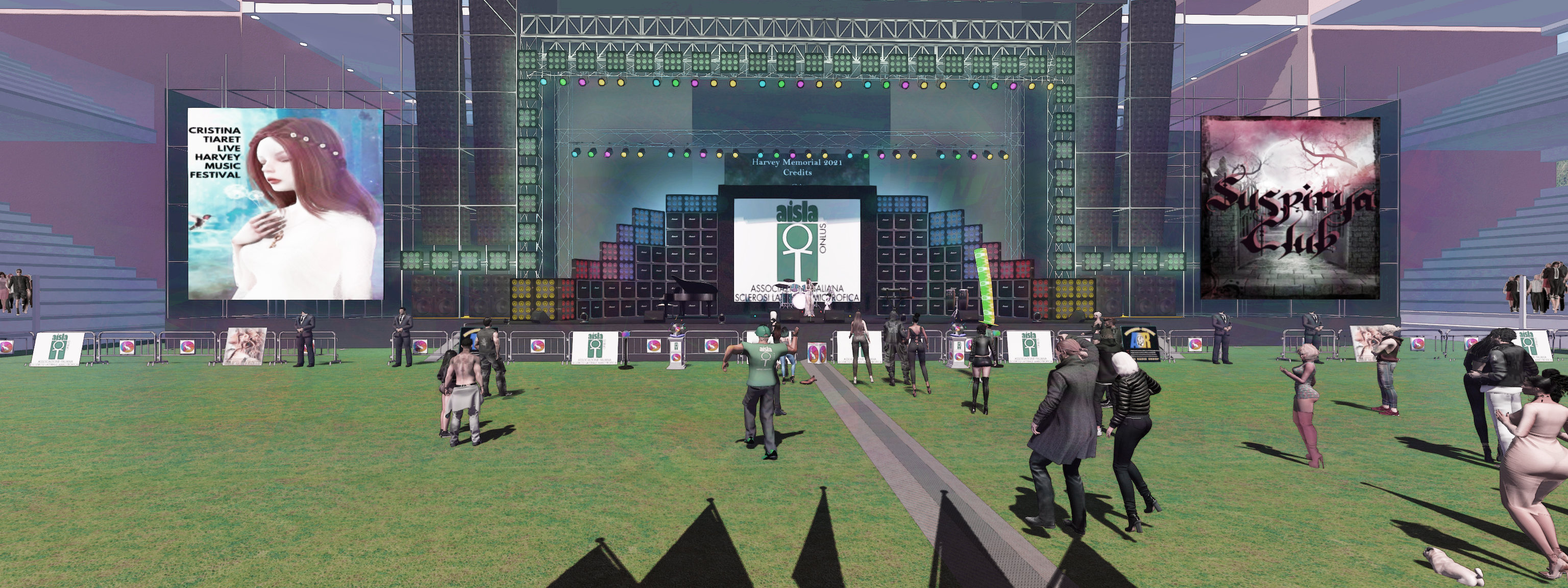
Music stage, Harvey Memorial ALS Awareness Week, 2021

Every year the Italian community in Second Life comes together to host the Harvey Memorial Ensemble ALS Awareness Week, a festival of music and art dedicated to raising funds for AISLA, the Associazone Italiana Sclerosi Laterale Amiotrofica for research into, and treatment of, Amyotrophic lateral sclerosis (ALS), in memory of Second Life resident Harvey22 Albatros, who passed away from the disease.

First held in 2015, the festival has raised over L$2.8 million (roughly €9,000 / US $10,267), and this year it will take place from 13:00 SLT on Sunday, February 20th and run through until 17:00 SLT Sunday February 27th, 2022.

A 2D artist display area for The Harvey Memorial Festival 2022. Credit: Sniper Siemens

As noted above, the Festival offers a mix of music entertainment and art, and this year, event organisers, Sniper Siemens and the Supporto Italiano group, want to expand the latter by presenting an art auction / exhibition. To this end, they’ve  asked me to help spread the word.

In short, they are seeking donations of art for the auction / exhibition from both 2D and 3D artists in Second Life, with the requirements summarised below:

  • 3D artists:
    • Artists will have a 10m x 10m area in which to place their art.
    • Each artist can use a maximum of 300 LI for their art.
    • A maximum of 8 display spaces are available.
  • 2D artists:
    • Artists can donate up to 3 pieces of art.
    • Art should be suitable for display on an easel (see example image)
    • Easel can be supplied, if required.
    • 1024 resolution recommended for submissions.
    • 8 display spaces are currently available.

In addition:

  • Art must be submitted to Sniper Siemens no later than 3 days prior to the festival’s opening, and will be placed on display by the organisers.
  • All art will be displayed through the week of the festival in a display area directly adjacent to and surrounding three sides of the main music and entertainment area, where it can be easily viewed by those attending the event.
  • Bidding will open on February 20th, and close on the afternoon of February 27th, when the highest bidder for each piece of art will be charged for, and receive, the art.

All questions / enquires about the art auction should be directed to Sniper Siemens.

3D art from the Harvey Memorial ALS Awareness Week, 2020 (Solkide Auer (l) and Cica Ghost (r)) 

About ALS

Sometimes also referred to as motor neurone disease (MND) or by the synonyms Lou Gehrig’s disease and Charcot disease, Amyotrophic lateral sclerosis (ALS) is a specific disorder that involves the death of neurons that control voluntary muscles. For about 90-95% of all diagnosed cases, the precise cause of the disease is unknown; for the remaining 5-10% of diagnosed cases, it is inherited from the sufferer’s parents. There is no known cure, and symptoms generally first become apparent around the age of 60 (or 50 in inherited cases). The average survival from onset to death is three to four years. In Europe and the United States, the disease affects about 2 people per 100,000 per year.

About AISLA

AISLA Onlus was founded in 1983 with the aim of becoming the Italian national reference centre for the protection, assistance and treatment of ALS patients, promoting information on the disease and stimulating the competent structures to take adequate and qualified care of the sick.

Headquartered in both Rome and Milan, the Association is recognised by the Italian Ministry of Health, and currently operates 64 centres in 19 regions across Italy working with the support for local doctors, psychologists, physiatrists and consultants to provide support for ALS victims and their families (medical support, information, and general assistance). In addition, the Association supports research into the causes of ALS, and provides training in helping and caring for victims of the disease.

2022 viewer release summaries week #2

Logos representative only and should not be seen as an endorsement / preference / recommendation

Updates from the week ending Sunday, January 16th, 2022

This summary is generally published every Monday, and is a list of SL viewer / client releases (official and TPV) made during the previous week. When reading it, please note:

  • It is based on my Current Viewer Releases Page, a list of all Second Life viewers and clients that are in popular use (and of which I am aware), and which are recognised as adhering to the TPV Policy. This page includes comprehensive links to download pages, blog notes, release notes, etc., as well as links to any / all reviews of specific viewers / clients made within this blog.
  • By its nature, this summary presented here will always be in arrears, please refer to the Current Viewer Release Page for more up-to-date information.
  • Note that for purposes of length, TPV test viewers, preview / beta viewers / nightly builds are generally not recorded in these summaries.

Official LL Viewers

  • Release viewer: Mac Voice hotfix viewer 6.5.2.567427, dated January 13 – NEW.
  • Release channel cohorts:
    • No updates.
  • Project viewers:
    • Mesh Optimizer updated to version 6.5.2.566858, dated January 5 (issued some time after January 10).

LL Viewer Resources

Third-party Viewers

V6-style

  • Kokua updated to versions 6.5.2.48218 (non-RLV) and 6.5.2.51484 (RLV variants) on January 15 – release notes.

V1-style

Mobile / Other Clients

Additional TPV Resources

Related Links

Hi-Fi and the Lab: in the press, & further speculation from me

Logos via Linden Lab and High Fidelity respectively

Following the announcement that High Fidelity, the company co-founded by Philip Rosedale in 2013 and after his departure form Linden Lab, has invested money, patents and staff into the latter, the news hit a lot of on-line tech publications and even the Wall Street Journal – creating a buzz around Second Life that has so far, if we’re honest, somewhat eluded the Lab in the wake of all the broader “metaverse” chatter that has been going on.

Of these articles, the most detailed came via GamesBeat / VentureBeat (by the ever-informative Dean Takahashi), c|net and The Wall Street Journal (the latter via Archive to avoid the paywall)¹ that added butter to the bread of the original announcement, which I’ve summarised below, and which gave me further pause for thought.

To deal with the bullet point takeaways first:

  • The patents transfer from Hi Fi is for distributed computing, and include “moderation in a decentralised environment patents.”
  • In all some 7 members of the Hi Fi team will be moving to work alongside the Second Life engineering team, effectively increasing it by around 20%.
  • The move will mean that around 165 people will be working on Second Life and Tilia.
  • Two elements of the work Hi Fi staff will be involved in are:
    • SL’s “social aspects”, given as “avatars and digital marketplace”. I assume the former is a reference to things like “avatar expressiveness”, on which more below.  And the latter potentially greater accessibility to SL’s Marketplace by users using mobile options, etc.
    • Oberwager also indicated that Hi Fi’s work will be to assist LL in developing “the tools to make virtual economies work” and a concept for “underpinning FinTech to metaverse” – which I assume is a reference to involvement in Tilia, per my original speculations on the investment.
  • Separate to its involvement with LL, High Fidelity will continue to develop its spatial audio capabilities, which have already been licensed by a number of other companies.
  • In terms of SL itself:
    • 2020 still seems to be the platform’s most robust year, with the economy put in terms of a US $650 million GDP, with 345 million annual transactions (virtual goods, real estate, and services) and US $80 million cashed-out.
    • The platform boasts more than 1.6 million transactions per day and generates 1.8 billion messages (presumably user-to-user and Group IMs) per month.
    • Second Life won’t be moved to support VR headsets any time soon, simply because the latter need much more time to mature, both in terms of their technology and their market reach; something Rosedale believes (and I’d agree, for whatever that is worth) is unlikely to be reached in the next 5 years. However, once SL itself is more performant and better placed to naturally leverage VR hardware.
Philip Rosedale and Brad Oberwager, via VentureBeat / GamesBeat. Credit: Linden Lab

In terms of my own speculation, this primarily arise – and rather belatedly, given my own previous coverage of High Fidelity in this blog – as a result of a comment from Philip Rosedale in the piece by Dean Takahashi:

The tech changes are all about communication,” Rosedale said. “I don’t think it’s about pixels. I don’t think it’s about radical richness. I don’t even think it’s all about 3D. I think the problem and the opportunity is communicating with people in a naturalistic way where I can interview you.

– Philip Rosedale, speaking to Dean Takahashi

We already know from Linden Lab’s own review of 2021, which includes a bullet list of deliverables planned for 2022 – that “avatar expressiveness” to Second Life that will bring “camera-based gestures and movement to your avatar for a whole new level of interaction and connectedness”. This is something that marries up to Rosedale’s comments above. More particularly, it is something High Fidelity started to develop back in 2014, when the company was working on its own decentralised virtual spaces – even producing an informal video that helped demonstrate that early work – and which I’ve embedded below.

Yes, the avatars are someone cartoonish is looks, but this work was carried out in Hi Fi early days and before their avatars developed into something SL users might find more appealing, so don’t get too hung up on that fact.

What’s important is to note that how the avatars (faces and hand movements) reflect those of the people behind them. Take, for example, Emily’s face as she emotionally responds to the lyrics she is singing, and the way Ryan’s avatar (with the beard) makes eye contact with viewers as it looks directly out of the screen, and they way his eyes / head naturally move as he also addresses Chris and Emily who are sharing the same office space with him – plus the capture of his real-time hand-clapping at the end of the song! (And as a total aside specific to SL “old timers”, not that the guy providing the backing vocals is none other than Andrew Meadows (once (and again….?) aka Andrew Linden.)

If this capability could be brought into Second Life – and again, I have no idea how much further down the road Hi Fi got in developing / enhancing it and am aware that SL presents a range of its own technical challenges (range of mesh heads, rigging /weighting, etc.) – then clearly, it could offer considerable depth to avatar interactions for those who would care to leverage them. Take the SL live music scene, for example, and the potential for performers to add gestures to their music and (like Emily) have the emotions in singing transferred to their avatars. (I’ve also submitted a question on this subject for consideration in the upcoming Lab Gab session with Brad Oberwager and Philip Rosedale.)

There is a lot more that might be unpacked from these articles – such as the idea of a “decentralised environment” and what that might mean for thing like SL and mobile device access, and a lot to chew on regarding SL’s approach to virtual spaces and how it stands apart from the recent headline-grabbers like Facebook / Meta. Some of these comments should give comfort to those concerned about matters of privacy and the like, and Rosedale at least has carried his view on things beyond talking to journalists, embodying them in some of his tweets.

Philip Rosedale via Twitter,, January 15th, 2022

Given what is available for consumption between the three articles, I would recommend a reading of all three rather than having me drone on further here, or dilute the core speculation I wanted to put forward as a possibility. As such, I’ll leave you to peruse them in your own time, if you’ve not already done so.

Related Links


  1. While there were other articles on the announcement, most were either baseline reproductions of the original press release (with a sprinkling of commentary in some cases) or re-treads of one of these three pieces.

The Eskol Photo Contest in review in Second Life

Eskol Gallery: Eskol Photo Contest

In December 2021, I wrote about Eskol, Morlita Quan’s art and event space in Second Life (see: Eskol: music, art and sound (& a photo contest) in Second Life). Within that piece, and as referenced in its title, the review also included information on the Eskol Photo Contest Morlita was running through December to the start of January.

On offer was a single prize of L$5.000 to be awarded to a single winner, as judged by a panel of three judges – Morlita, Lanjran Choche and myself. To enter, photographers could submit up to two images taking using one of the six photo booths Morlita had set-up specifically for the contest.

Eskol Gallery: Eskol Photo Contest – one of the 6 photo booths

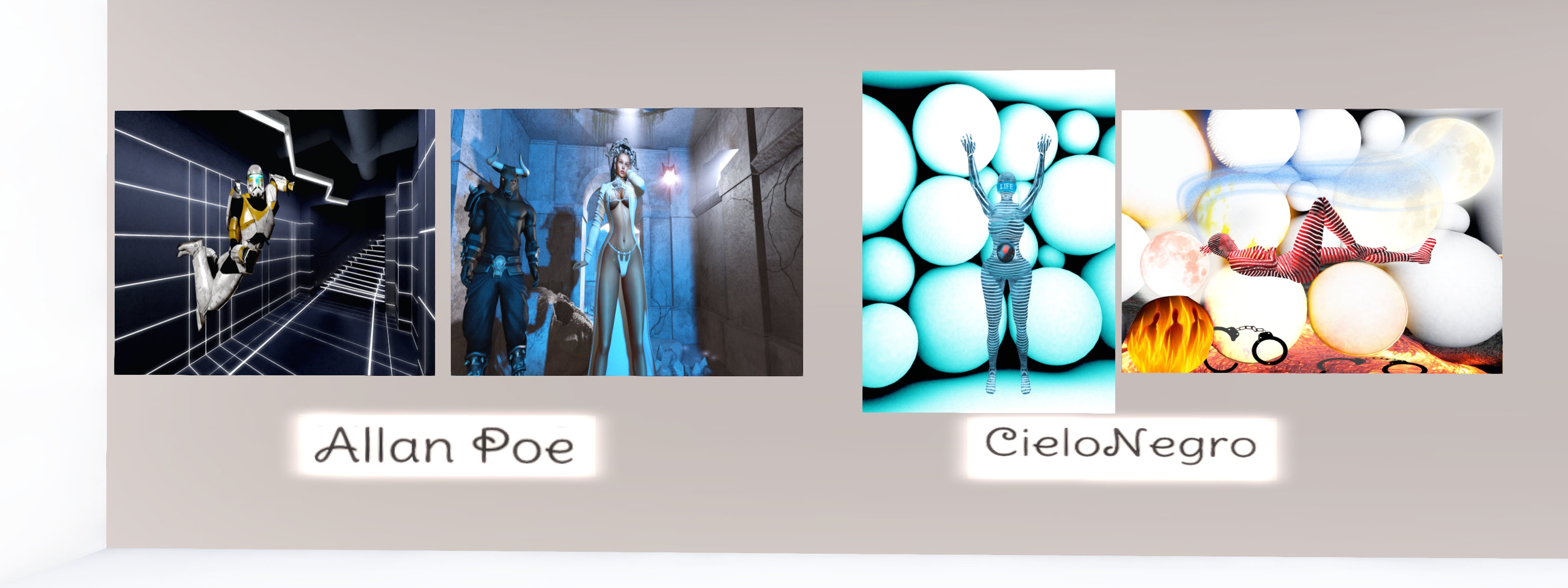
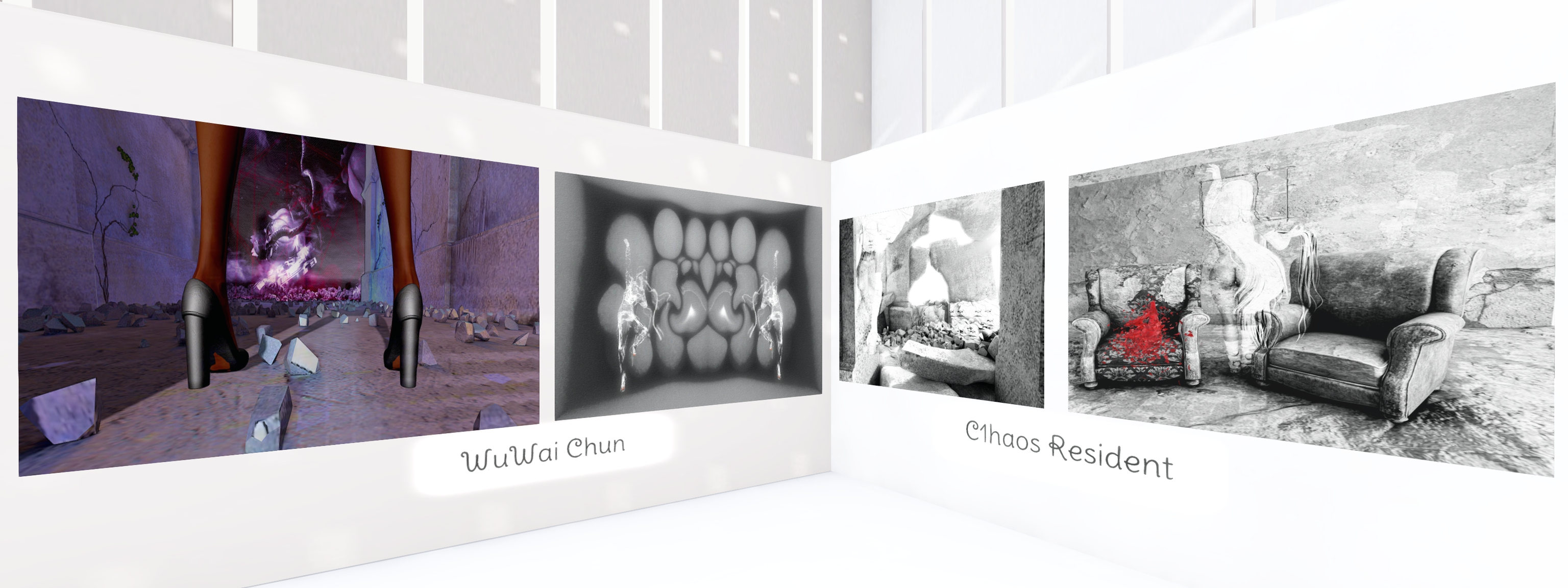
In all 12 photographers submitted entries, comprising Mo Trill (1 image), Mystera Bloodbane-Ragnarok (Mysteria0402 – 2 images), Lucid (Photodoll77 – 2 images), Rya Santana (2 images), 4pril Resident (1 image), WuWai Chun (2 images), 04Noir (C1haos Resident- 2 images), 01NoirA Resident (1 images), Allanpoee Resident (2 images), Cielo Negro (Cielonegro Avril – 2 images), Néstor (NestorXX Resident – 1 image), and Iono Allen (1 image).

Each of the six booths offered its own setting in which pictures could be set and framed, and photographers could dress them as desired, and entrants submitting two photos could either take them in one of the booths or use two booths.

 Eskol Gallery: Eskol Photo Contest – Allan Poe and Cielo Negro

Unsurprisingly, most of the photographers opted to concentrate avatar-centric studies for their entries, with only a couple avoiding avatars entirely. Not that focusing on avatars lessened any of the entries; rather the reverse in fact: several presented very unique uses of the avatar and / or unique perspectives on a particular booth and avatar (as is the case with WuWai Chun’s Eskol 1 entry). whilst Iono Allen chose to offer a moment from a certain iconic 1969 motion picture (or as the director referred to it, “the proverbial good science fiction movie”).

While I cannot speak for the other members of the panel, I approached judging the submitted pieces on a set of criteria I’d settled upon before seeing any of them: composition (use of space, colour, lighting), framing, originality and narrative. However, given we all three each came up with a selection of seven initial finalists that were somewhat similar, I’d say we all used similar criteria. And certainly, the winning entry, C1haos Resident’s Eskol 2 was a piece we would all agree on as being a worthy winner.

 Eskol Gallery: Eskol Photo Contest – WuWia Chun and C1haos Resident

Currently, all of the entries are on display at Morlita’s main Eskol Gallery, and will be until early February, so why not pop along and judge them for yourself?

SLurl Details

Lost in time, emperor cats and a story of Poe in Second Life

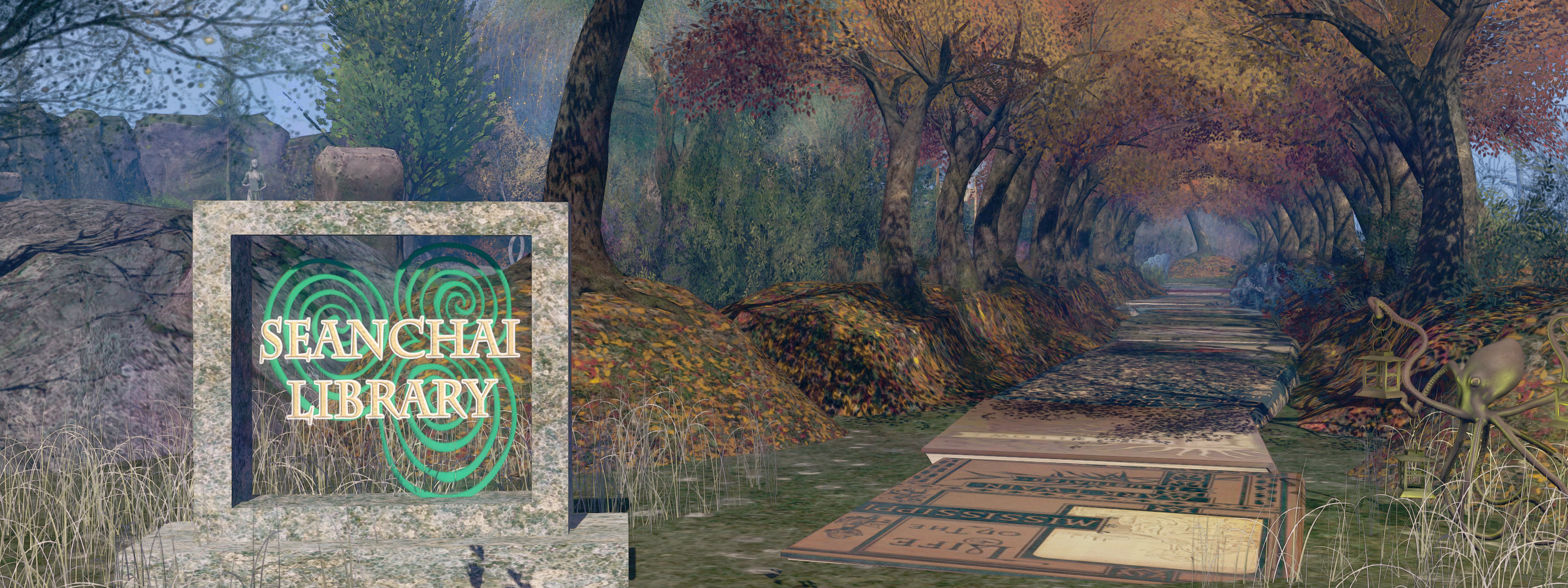
Seanchai Library

It’s time to highlight another week of storytelling in Voice by the staff and volunteers at the Seanchai Library. As always, all times SLT, and events are held at the Library’s home in Nowhereville, unless otherwise indicated. Note that the schedule below may be subject to change during the week, please refer to the Seanchai Library website for the latest information through the week.

January 17th, 19:00: A World Out of Time

After being cryogenically frozen in the 1970s to await a cure for his (then) incurable cancer, Jaybee Corbell awakes after more than 200 years – to find his own body destroyed and his mind and memories transferred into the “mindwiped” body of a criminal. And that’s is not all that has changed: the Earth is now overseen by an oppressive, totalitarian global government called “The State”, and Corbell’s existence is to be determined by a “checker”; if he is found wanting, he will be discarded.

However, Peerssa, the checker, recommends Corbell as ideal fodder in The State’s attempts to seek out exoplanets suitable for terraforming – whether he wants to join the programme or not. Disgusted by his treatment, Corbell works out a way to take control of his one-person ship on its otherwise one-way mission, and heads toward the galactic core. Entering suspended animation, he is unaware his vessel skims close enough to the super-massive black hole at the centre of the galaxy to experience time dilation.

Emerging from his suspended state, and believing only 150 years have passed, Corbell returns to the solar system to find it again vastly changed: more than three million years have passed, and the Sun has become a bloated red giant, and Earth – well, Earth appears to have been relocated to an orbit around Jupiter, whilst humanity itself had endured extensive changes; and Corbell must face an entirely new set of challenges if he is to survive.

Join Gyro Muggins as he reads the 1976 novel (and originally a short story) by Larry Niven.

Tuesday, January 18th

12:00 Noon: Russell Eponym

With music, and poetry in Ceiluradh Glen.

19:00: Klawde: Evil Alien Warlord Cat

Klawde had everything. Sharp claws. Fine fur. And, being the High Commander of the planet Lyttyrboks (think about it if you need to!), an entire world of warlike cats at his command. But then he is stripped of his feline throne and sentenced to the worst possible punishment: exile to a small green-blue planet that is, as they say, “far out in the uncharted backwaters of the unfashionable end of the western spiral arm of the galaxy”, known to its dominant bipedal race as “Earth”.

On that planet, Raj is a young man who had everything: a cool apartment in Brooklyn New York, his three best friends living in the same apartment block and comics and pizza always within easy reach. Then, courtesy of his mother taking a job on the other side of the country, he finds himself exiled to the community of Elba, Oregon.

These two lost souls, one seeking friendship (and, hopefully, pizza and comics) but forced to join a nature camp, the other a cunning, brilliant feline emperor, both exiled and seemingly lost, are destined to meet. And when they do – whether Klawde likes it or not – the emperor cat will find his plans for revenge on those who would oust him from his empire running somewhat secondary to becoming Raj’s new Best Friend as the two of them become bound by a series of new and hilarious adventures.

With Caledonia Skytower.

Wednesday, January 19th: Poe Special

The Library opens for a special to mark the anniversary of Edgar Allan Poe’s birth on January 19th, 1809 – by presenting a story about the time shortly before his death.

On October 3rd, 1849, Poe was found delirious on the streets of Baltimore, “in great distress, and… in need of immediate assistance”. He was taken to the Washington Medical College, where he died in the early hours of the morning of Sunday, October 7th, 1849. Throughout his time at the hospital Poe remained too incoherent to explain how he came to be in his dire condition and wearing clothes that were not his own, although he was said to have repeatedly called out the name “Reynolds” on the night before his death. But to whom he may have been referring remains unknown.

In Beyond Porch and Portal E. Catherine Tobler, offers an unusual but interesting explanation of why Poe was found, and what had led him to that point of distress. Join Shandon Loring to find out more!

Thursday, December 20th 19:00: The Adventures of Young Indiana Jones

Join Shandon Loring as he recounts the early adventures of a young Henry Walton Jones, Jr., who would one day become the famous Indiana Jones.