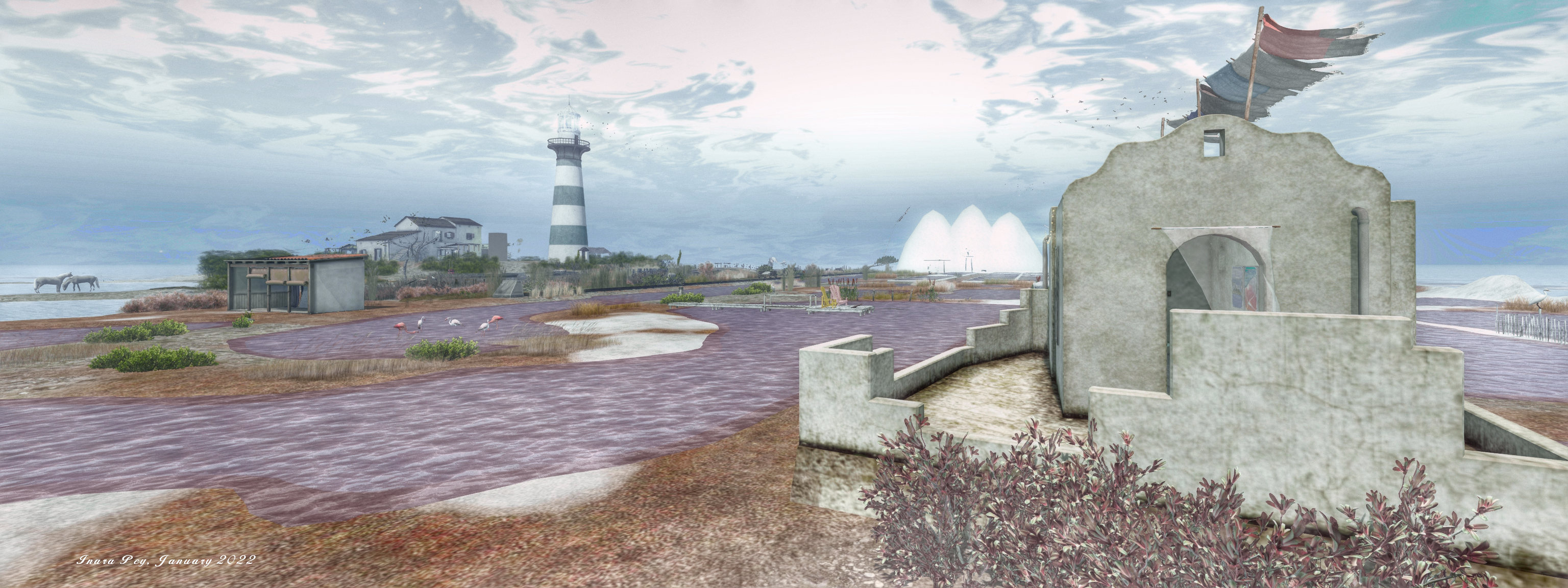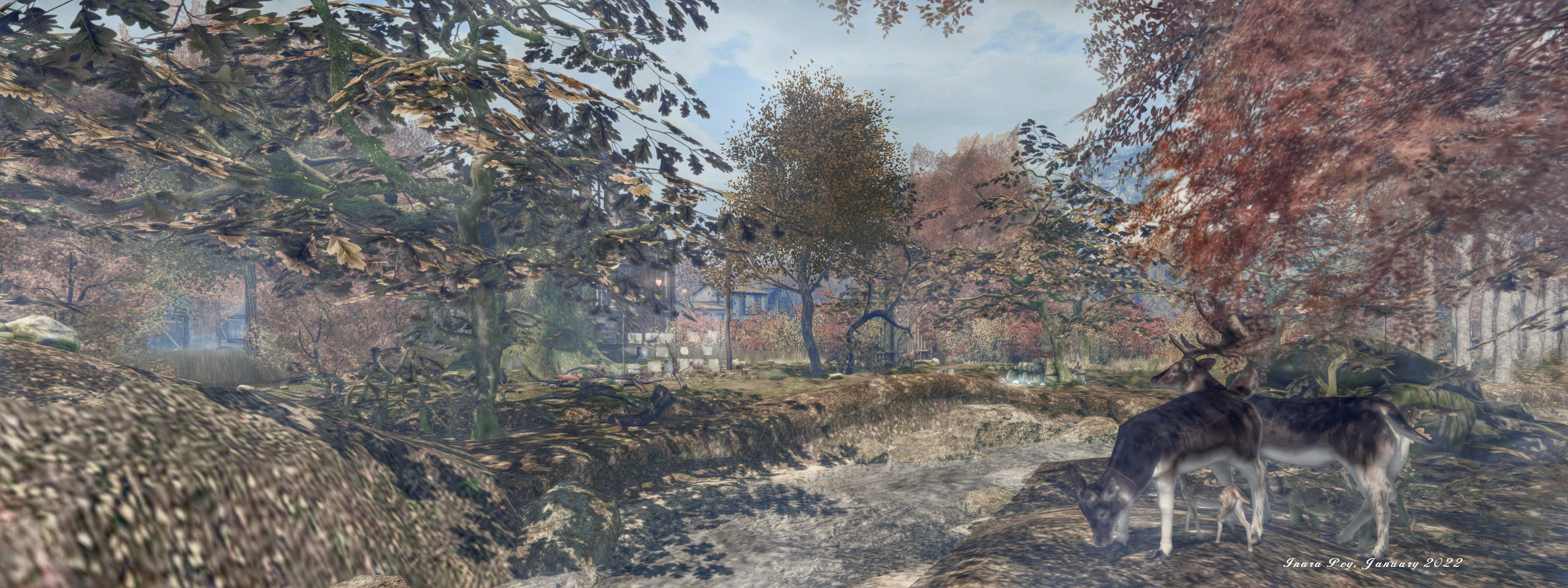
Visiting Longing Melody in Second Life

Longing Melody, January 2022 – click any image for full size

Bambi (NorahBrent) is the owner of the Oh Deer brand and is also is well-regarded among Second Life bloggers for her Missing Melody region designs – I’ve reviewed several iterations of that region myself in these pages. However, in 2021, she launched a new region setting – Longing Melody – which I finally managed to visit at the start of 2022.

Utilising a Full region rather than a Homestead as seen with Missing Melody, Longing Melody presents three different but interconnected seasons / settings that offer little hints of England and the British Isles and plenty to see and appreciate.
Longing Melody, January 2022

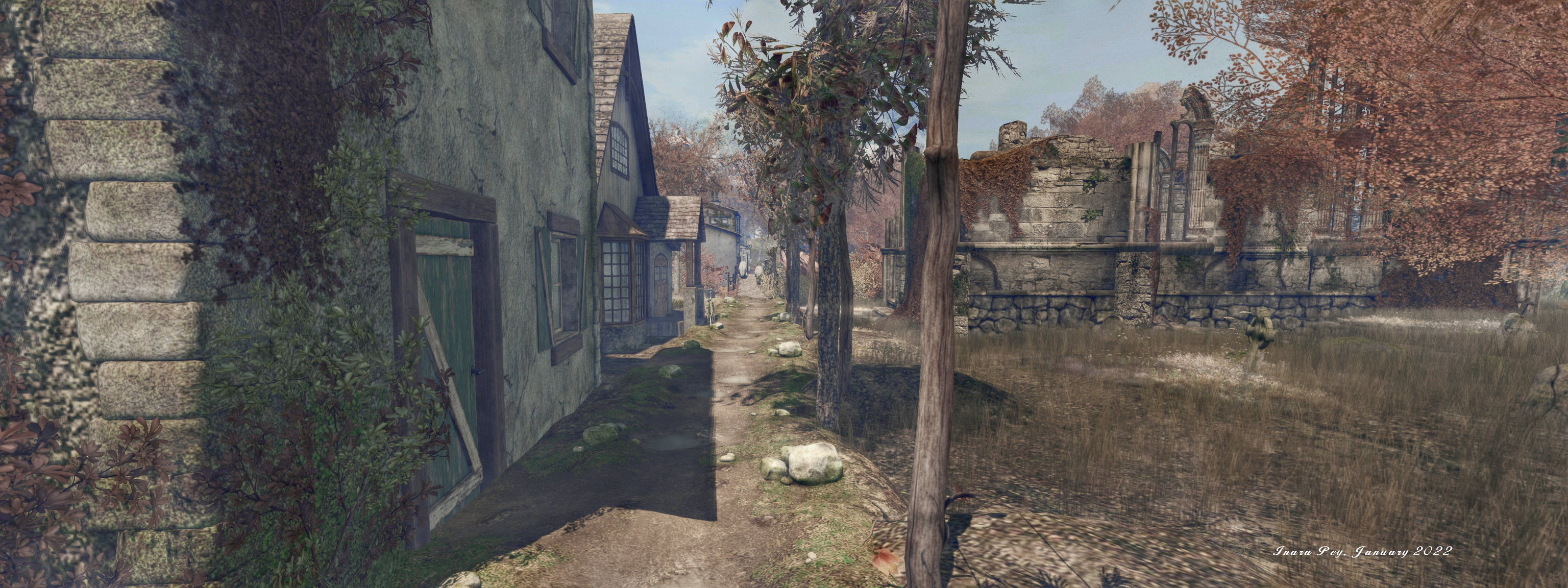
Visits start at the Longing Town train station, where a train with a decidedly continental lean sits at the platform to form the landing point. Exiting the train places new arrival on the platform (no surprises there), where two maps on the London underground are mounted on the platform walls. One of these is likely to be very familiar to users of the Tube, the other somewhat older and offers a more “natural” look to how London’s underground lines actually sit under the city’s roads and reaches. On a second wall is what might appear to be a further Tube map but is in fact a stylised map of the region that offers clues to a form of homage Bambi presents in the design. Alongside of this map in an information giver for the Second Life Nature Collective club.

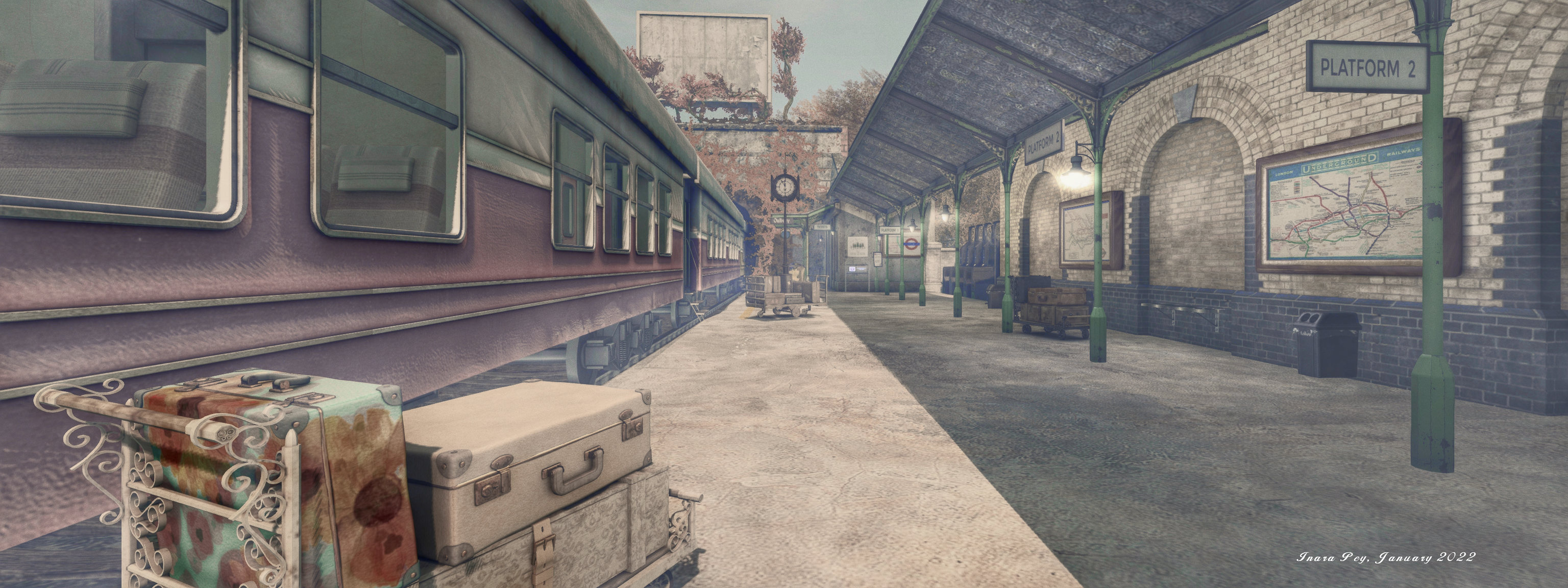
Beyond the turnstiles for the station sits Longing Town itself, there the homage mentioned above is largely located, taken the form of links to Liverpool’s Fab Four. The road leading from / to the station for example, is called Abbey Road, home of a certain recording studio and also the title of the group’s eleventh album with its iconic (and much imitated) cover photo – which is also reproduced in the forms of silhouettes of John, Ringo, Paul and George filing across the road.
Longing Melody, January 2022

Before reaching the silhouettes, the road also passes Penny Lane, an alley leading in to courtyard behind the houses lining the road. Beyond the four silhouettes, the road makes a 90º turn to the right continuing to to a waterside promenade called The Globe. This in turn might be a reference to The Globe Theatre, Stockton on Tees in the north-east of England, famous for being the venue for two Beatles concerts that effectively bracketed their “breaking into” the US market after a lot of resistance from US record moguls (and the first of which took place shortly after John F. Kennedy had been shot in Dallas, Texas).

Outside of the town proper, and reached via an arched passage, is a further reference to the Beatles, in the the form of Strawberry Fields, a broad concrete path runs north to reach the second element of the region. Here, beyond the gardens of some of the houses is a more rural setting, a place of meadows, sheep, a bubbling stream, rough footpaths and ruins. And where the town might be thought of as being caught  in a late summer, this northern rural area sits more in autumn, a place where the trees are turning a golden brown and sheep and deer roam free.
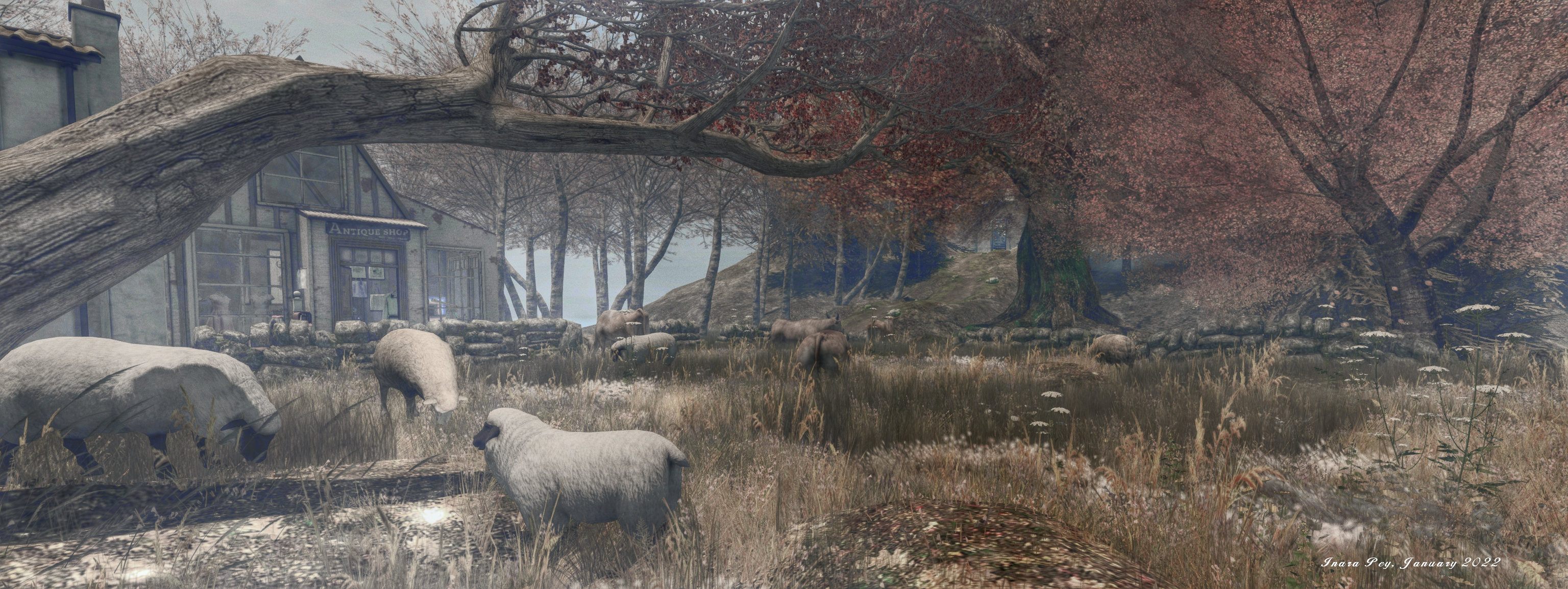
Longing Melody, January 2022

A canal cuts through this rural area; deeper than the local stream, it is crossed by a single hump backed bridge. The path beyond this continues eastwards, passing between more farm buildings and a large field guarded by drystone walls and home to sheep and cows. Once past these, the path starts a gentle climb to where a high brick wall bars the way, except for the open wooden door set within it.

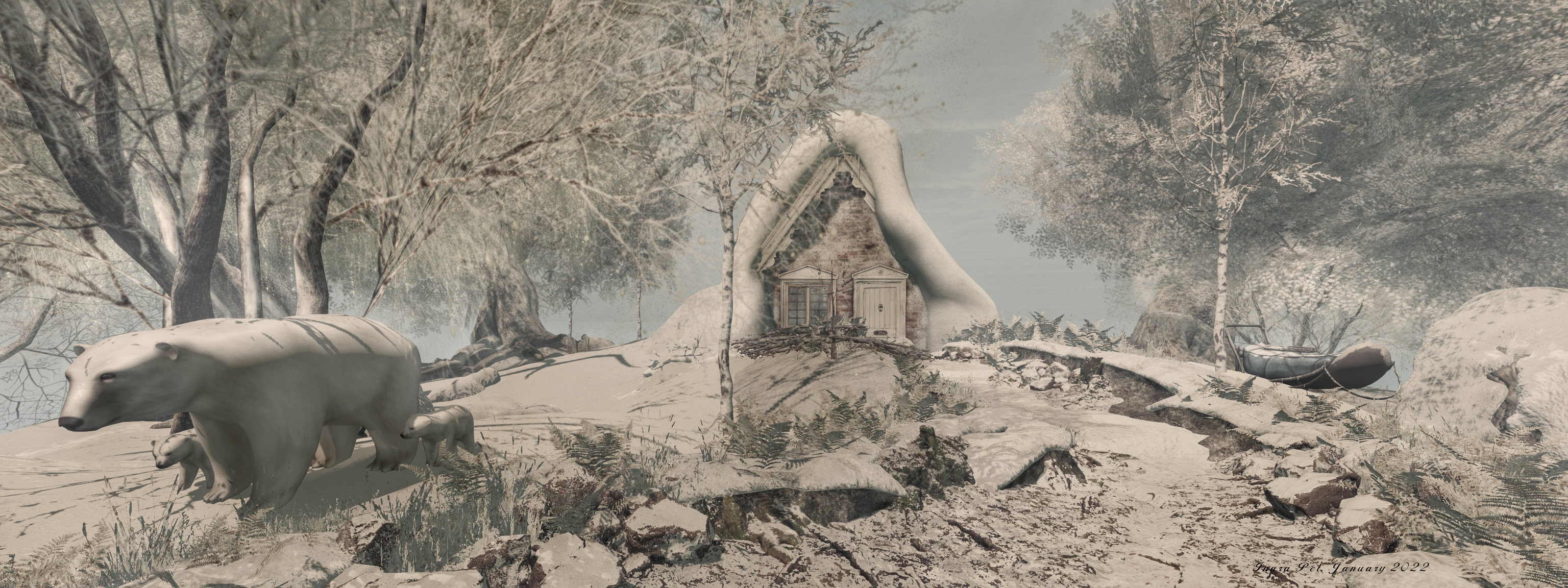
This wall marks the point where the third of the region’s seasons commences, the hills beyond the wall being blanketed in winter. Snow cover the land, a narrow path winding up between the hills. Here the trees are either fir or denuded of there leaves, all equally frosted by the snow.
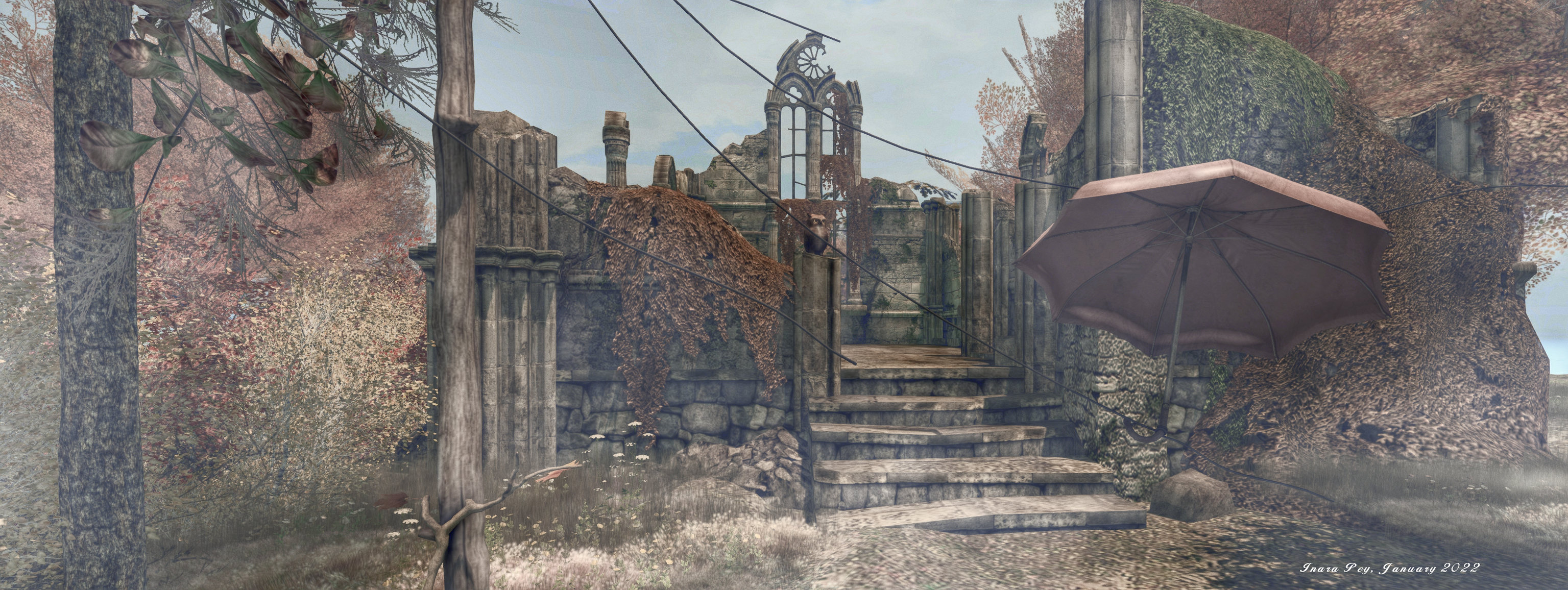
Longing Melody, January 2022

Cottages and more can be found on the shoulder and crown of the hill; one of the former cosily furnished, the other a shell. Watched over by foxes, snowmen and polar bears, this winter area offers further places to sit and pass the time and further opportunities for photography.

All of the above just scratches the surface of things. In the town, many of the buildings are simple façades, other have interiors that can be viewed through windows or entered and explored. Similarly, the gardens, the promenade, the rural spaces, all offer places to sit and relax. and needles to say, the region in rich in opportunities for photography.
Longing Melody, January 2022

Sharing a spiritual design with many of the settings that have surfaced within Missing Melody, Bambi’s Longing Melody offers visitors its own richness and diversity that should be savoured during a visit.

SLurl Details

Invisible beauty: more art of the microscopic in Second Life

Desiderartum Gallery: Guille – Invisible Beauty

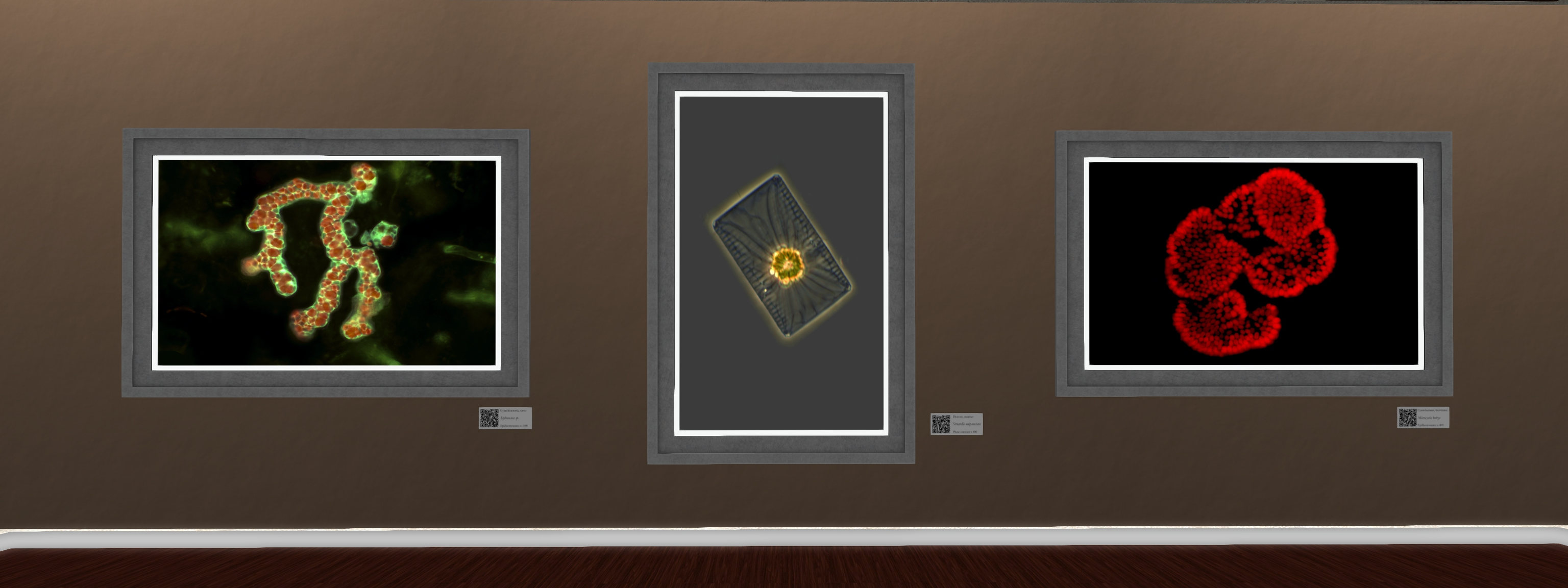
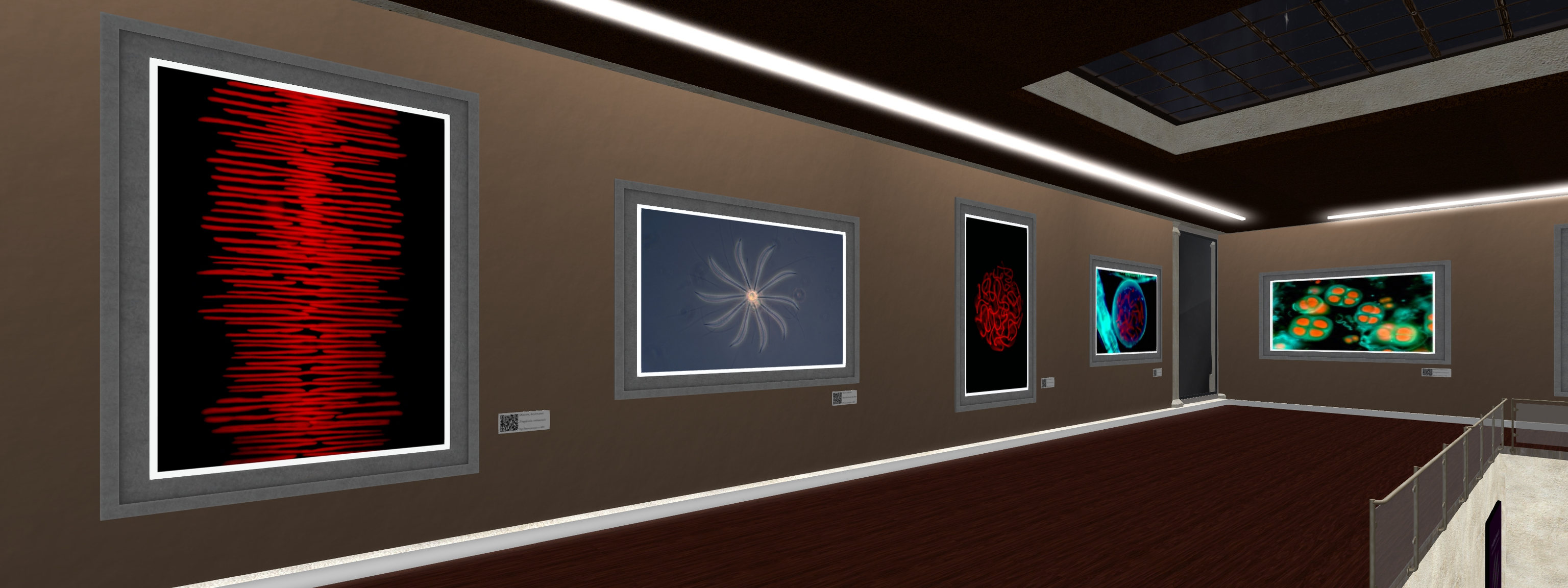
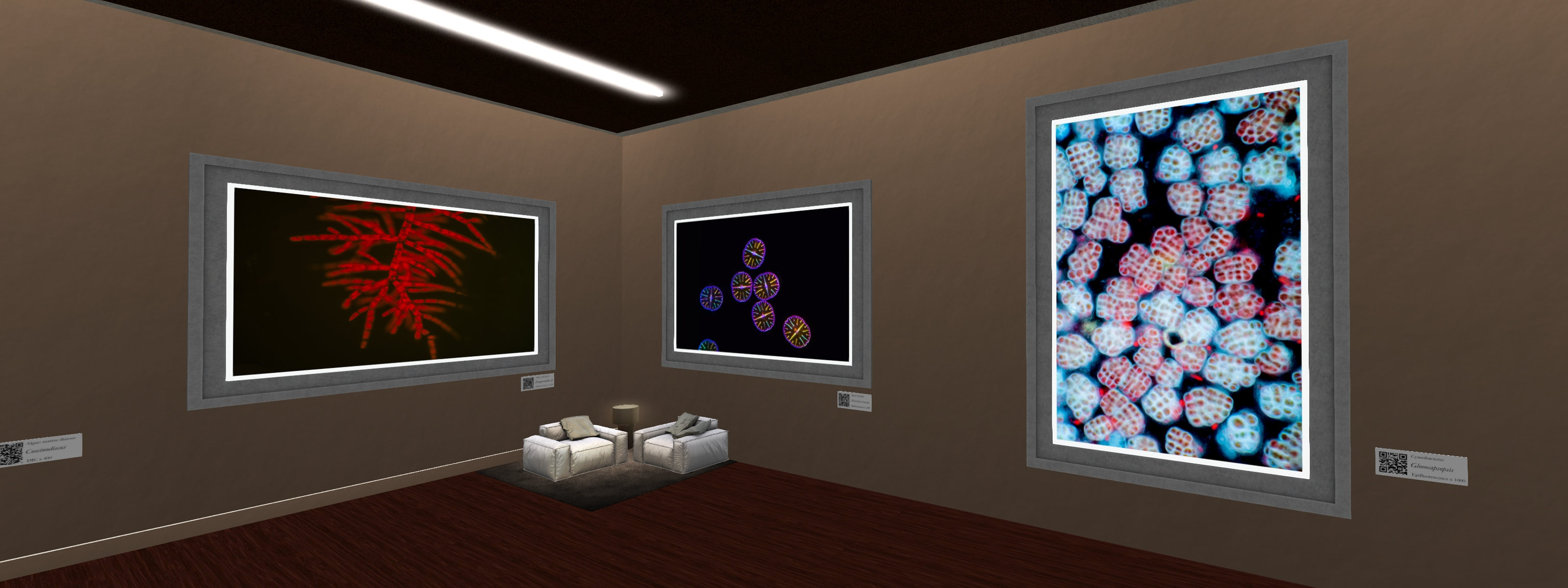
In November 2011, I wrote about an intriguing exhibition of images by Guille (Antoronta) entitled Unseen Beauty, held at the Annexe of the Limoncello gallery. It was one of the the most unusual, engaging and informative exhibitions of photographic art I’d witnessed during the year, taking us as it did on a journey into the world of the microscopic (see: The art and beauty of the microscopic in Second Life).

While (at the time of writing) that exhibition is still open), I’ll delighted to say that the Desiderartum Gallery, managed by Peru Venom is hosting what might be regarded as the “part two” of a display of Guille’s work, in the form of Invisible Beauty, which formally opened on January 10th, 2022 (and my apologies to Guille for not being able to attend the opening in person).

Desiderartum Gallery: Guille – Invisible Beauty

The virtual incarnation of Antonio Guillén, Guille is a doctor in Biology and professor of Natural Sciences, whose background is as fascinating as his art, given his research projects span the environment, microbiology and astrobiology. He also has a refreshing – almost holistic, one might say – perspective on art and science in which the two interact with one another sans borders, informing one another and helping to jointly educate students and the public at large.

In particular, and given his professional focus on the microscopic, he has become a noted photographer-artist who captures the tiny worlds of micro-organisms – bacteria, fungi, archaea and protists – in all their exquisite beauty. And by “noted”, I mean precisely that not only has his photography been exhibited across his native Spain – including the National Museum of Natural Sciences, Madrid -, it has also garnered awards such as Spain’s National Prize for Scientific Photography and the Giner de los Ríos Prize, the country’s most prestigious educational award. In addition, his project The Hidden Life of Water received the first world award at a Google Science Fair (2012).

Desiderartum Gallery: Guille – Invisible Beauty

As I noted in November 2021, Guille’s work doesn’t just present images of these incredible, tiny and diverse living organisms, it takes us on a journey into their worlds, the images revealing them individually or collectively in the the most amazing detail, while the texts he has supplied to go with the images (obtained by clicking the title card either below or to the right of each image) reveal more of the realities of these micro-organisms – and not in in dry, scientific terms that are starved of emotion. Rather, Guille’s descriptions are wonderfully fluid, descriptive and in places poetic. It thus offers further life to the tiny creations his microscope has captured in still form, whiles also underscoring his belief that art and science should freely interact.

Like most of the algae of the desmids family “Euastrum” it seems to look at itself in a mirror creating a pair of green Siamese joined by the same heart in a game of symmetry in which survival today and that of the future are bathed of this simple and intense beauty.
A thick transparent layer, adorned with winding valleys, spines or sculpted buttons and made with cellulose and pectin protects the body from these beautiful algae and helps them to float and move slowly both floating and on the bottoms where they live.

Guille’s sparkling description of the supernova-like Euastrum Verrucosum

Desiderartum Gallery: Guille – Invisible Beauty – Euastrum Verrucosum

Split across the two levels of the gallery building, Invisible Beauty mixes some of the images seen within Unseen Beauty with those specific to this exhibition, providing a natural overlap between the two, and making a visit to both a natural experience.

In addition to the  journeys into the worlds of prokaryotes and eukaryotes presented by Unseen Beauty and Invisible Beauty, more of Guille’s work can be found on his Flickr stream, whilst in-world, his has – with the support and assistance of Kimika Ying – created El Universo en una Gota de Agua (“The Universe in a Drop of Water”). There, visitors can see more of Guille’s photography as well as learning about the history of the microscope and about the study of micro-organisms – and even enter their world, where a human hair offered at a scale to represent its magnification by a factor of 10,000 helps put all of this tiny life into perspective.

Universo en una Gota de Agua

SLurl Details

January 2022 Web User Group summary: Premium Plus, Search

The Web User Group meeting venue, Denby

The following notes cover the key points from the Web User Group (WUG) meeting, held on Wednesday, January 12th, 2022.

These meetings are generally held on the first Wednesday of the month, with dates and venue details available via the SL public calendar. A video of the meeting, courtesy of Pantera, can be found embedded at the end of this article (my thanks to her as always!). Again, the following is a summary of key topics / discussions, not a full transcript of everything mentioned.

2022 “Roadmap”

In the 2021 year-end review blog post the Lab issued in December 2021, several projects for 2022 were mentioned, some of which fall wholly or in part under the Web team’s responsibility. Reed Linden used this meeting to discuss some of them, as summarised below.

Premium Plus

  • The Lab has a full list of features and options they would like to include in Premium Plus. However, what is actually delivered (and I assume when / how it is delivered) is still subject to a number of factors.
  • Because of the above, Reed could not offer definitive statements on what “will” be included, only hints to what might be present when the option is rolled out, such as:
    • The potential for a higher amount of free tier than Premium’s 1024 sq m.
    • The potential for specific Marketplace options to the available to Premium Plus subscribers.
    • The potential for reduced upload and other fees (Name Changes?) for Premium Plus.
    • The potential for a high-than-the-current Premium weekly stipend.
  • Also, because the final list of what is to be released is potentially still subject to change, final pricing has yet to be agreed, although it will be higher than the current Premium subscription fees.
    • The current plan is to introduce Premium Plus as “single level” offering at a set fee level (presumably monthly, quarterly, and annual, as per the current Premium). However, functionality has been provided to allow the Lab to offer further levels of “Premium” options, should this prove to be wanted.
    • However, Reed also indicated that Premium offerings might and in an unspecified future become à la carte, allowing users to pick and pay for the options they want.
  • The introduction of Premium Plus will not see any “downgrading” of current Premium subscription benefits or any changes to the current Premium subscription fees.
  • A major question still to be answered by the Lab is how are upgrades / down grades handled (e.g. a user goes from Premium with grandfathered stipend (L$500) to Premium Plus then back down to Premium; does their stipend revert to the current L$300 a week, or go back to the grandfathered amount?).

Search Improvements

  • The “next few quarters” will be focused on an overhaul of Second Life Search, with the aim of “making it work “the way we expect it to work, with all the little features we all as good Internet residents have come to expect from a robust and well rounded search engine”. This includes, but is not limited to:
    • Making the search filters more universal and offering more options for searching for things (e.g. such as being able to search for a region through Search → Places in addition to via the World Map).
    • Improving both the relevancy and the ranking of Search results.
  • To achieve this, the Lab has hired in specific experts in Search systems to carry out the work.
  • Specifics on precisely how changes will be made and implemented are currently unclear, as a lot is dependent on further metrics gathering on the way Search objectively functions and then working with the incoming expects to recognise where and how things can be improved.

Marketplace Variants and Performance

  • Described as the “big ticket item” for the Marketplace in 2022, is listing variants
    • This will introduce the ability to have variants (e.g. different colours of an article of clothing) within a single listing – perhaps the single longest-running request for Marketplace functionality, reaching back to beyond the days of Pink Linden.
    • The focus for Quarter 1 2022 (January through the end of March) is on putting in place the back-end support for this, including ensuring all of the required infrastructure is in place to support the functionality.
    • Work will then switch to build-out the user-facing aspects of the capability, with the expectations that new features could start surfacing for users in late spring / early summer, with work then continuing.
  • It has been noted that Marketplace performance can be very variable, depending on overall usage at any given time, and it is hoped that time in 2022 can be allotted to making some performance improvements.

In Brief

  • Another aspect of work that will be continuing through 2022 is the revamp of SL web properties to bring them more into line with the flat design seen within the web search pages, splash and log-in pages, etc.
  • Opening grid-wide experience capabilities to users is still under consideration, as is allowing larger script sizes – although technically, neither of these capabilities are the remit of the Web Team.
  • Marketplace:
    • There appears to be some confusion over the current status of commenting on reviews left on the Marketplace after recent changes. It keep things before, at present, only the seller of an item can leave a comment (reply) to a review of their item; all other changes were rolled back.
    • Marketplace Q&A option: as noted in a couple of past meeting summaries, it has been suggested LL provide a facility where questions concerning products on the MP can be asked and responded to by the seller or those who have purchased the item (similar to the “Customer Questions and Answers” section of many Amazon listing pages).  Precisely how this should look and be managed is to be a topic for discussion at the next WUG meeting.
  • Events (including searching events and how they are presented on the Event page) is also something that has been earmarked for possible work during 2022.
  • Date of next meeting: Wednesday, February 2nd, 2022, starting at 14:00 SLT.

High Fidelity, Linden Lab, and the return of Philip Rosedale – updated

Logos via Linden Lab and High Fidelity respectively

Update: January 26th: this piece contains speculation (emphasis intentional) about High Fidelity’s spatial audio capabilities playing a future role in Second Life. Commenting on this at the Concierge and Land meeting, Wendi, Izzy and Vix Linden commented that they are unaware of any plans to move in this direction (or discussions on the same), and that for at least the foreseeable future, voice audio within SL will remain with Vivox. Comments can be found on this video (direct timestamp).

On Thursday, January 13th, Linden Lab officially announced that High Fidelity Incorporated was now an official investor in the company.

For the few who may not be familiar with High Fidelity, it is a company co-founded in 2013 by Philip Rosedale, one of the co-founders of Linden Research (Linden Lab), and who had initially departed Linden Lab in a hands-on leadership capacity in 2008, prior to severing all ties (management and board) in 2010.

The news came via an official press release from both parties, and also via blog post from the Lab to users – of which more at the end of this article.

Originally founded to build a distributed, VR-centric virtual worlds / virtual environments platform, High Fidelity was an interesting concept that attracted considerable inward investment (rounding-out at some US $73 million), and provided numerous innovative and unique features and capabilities. However, despite that investment, the support of luminaries such as Tony Parisi, the co-creator of the VRML and X3D ISO standards for networked 3D graphics, and numerous efforts to encourage the use of it (such as a US $15,000 “STEM VR Challenge”), the platform developed by High Fidelity failed to gain broad traction, Thus, in mid-2019, the company announced it would be pivoting its business to focus on a virtual workstation / environment that would allow people to work collaboratively whilst geographically separate (see: High Fidelity Changes Direction: the Reality of VR Worlds Today (& Tomorrow) and High Fidelity Changes Direction (2)).

Then, in December 2019, the company indicated a further change of direction to focus on a (then) unnamed new project, which was eventually revealed to be a new immersive spatial audio capability, which appears to form a part of the structure of High Fidelity’s investment in Linden Lab, as the official press release notes:

 The deal includes a cash investment and distributed computing patents. Members of High Fidelity’s metaverse team are joining the company, and Philip Rosedale, who is a founder of both companies, is also rejoining Second Life as a strategic advisor.
Philip Rosedale: inwards investment to LL via High Fidelity and a Strategic Advisor role with LL

It’s interesting to note that the press release does not indicate any potential board / direct management role for Rosedale – although I’ll be watching the Lab’s management page to see if it is updated subsequent to this announcement.

Certainly, that he, and other members of the High Fidelity team are joining Linden Lab might suggest High Fidelity’s audio capabilities could be playing a role in SL’s future – and it cannot be denied that a rich, immersive spatial voice audio could help SL better serve existing audiences – such as those in the educational sector – and potentially increase the platform’s appeal among potential audiences. I’m also curious as to whether such a capability might be used in overhauling SL’s other audio capabilities, such as through the introduction of audio materials and surfaces. Perhaps time will tell on that.

Another aspect of High Fidelity that might be of relevance – although this is again highly speculative on my part – is whether or not the work and IP the company put into developing their own commerce and micro-transaction system might have a bearing on SL and (more specifically) Tilia Pay.

Obviously, given his work in establishing and running Second Life – a decade of being away not withstanding – and in formulating and developing High Fidelity both initially as a content platform  / virtual spaces environment and more latterly as a potential business tool, Philip Rosedale potentially has a broad enough view of digital spaces, coupled with a direct hands-on approach with software development that could be of significant benefit to Second Life as a it does seek to grow its audience(s).

Outside of what this means directly for SL / Tilia (and for the longer-terms futures of Linden lab and High Fidelity as a whole – e.g. future merger, allowing for respective investors?), this announcement is interesting for a handful of minor points.

The first is that When High Fidelity was being established, Linden Research was one of its early investors, albeit it (according to Ebbe Altberg) on a relatively small scale. The second is that Linden Lab’s Executive Chairman, Brad Oberwager, has been friends with Philip Rosedale for a long time (he has described Rosedale’s wife as one of his closest friends), and they appear to have like minds and approaches to things. Thus, Rosedale’s return in the role of a “strategic advisor” would seem to be a natural fit in helping to leverage  / define SL’s development and potential future directions.

Finally, the announcement that Rosedale will be joining Linden Lab as a “strategic advisor” (note: not as the “new CEO” as I’ve already seen flying around in one in-world group) actually marks his second “return” to a hands-on role at the Lab. In 2008, he handed the CEO reins over to Mark Kingdon (“M Linden”) – although for a while he retained had Board position albeit while working on other business ideas such as Coffee and Power – but then returned to the role on an interim basis for several months in 2010 following Kindgon’s departure and pending the arrival of Rod Humble as the de facto CEO at the end of that year.

Lab Gab Special

To mark Rosedale’s return to the Lab, and hopefully discuss more of what his and High Fidelity’s involvement with Linden Lab means for Second Life, etc., the Lab will be running a special edition of Lab Gab towards the end of January 2022, and – as per the official blog post – the event will be open to questions from Second Life users.

The show will feature both the Lab’s Executive Chairman, Brad Oberwager (Oberwolf Linden) and Philip Rosedale, and questions can be submitted via this form, prior to midnight (SL time) on January 16th, 2022.

Related Links

Grauland’s tropical beauty in Second Life

Grauland, January 2022 – click any image for full size
It was back to JimGarand’s Homestead region of Grauland for me to mark the start of the year. As regulars to this blog know, I’ve tended to drop into the region two or three times a year to witness Jim’s designs and work. In fact, my last came in October 2021, a couple of months after Jim had decided to move things away from Mobile – leaving it as the home of his SL business – and give his region designs a little more room in terms of land capacity.

That design for Grauland was something of a departure from the designs we have tended to associate with Grauland, offering as it did an examination of lighting in Second Life using an urban setting. However, with this current iteration, Jim returns to his more familiar island themes in which he folds art and landscape into a unified whole.

Grauland, January 2022

The landing point sits to the north-west of the island, tucked into the cover of a large concrete-and-wood structure of the kind that can so often be a feature of of the region. This faces a line of jet skis sitting on the water across the beach that are available for riding around the island’s shallows. But if you opt to do so, take note that these waters form a narrow ribbon along the north and west sides of the island, so careful navigation is required to avoid bouncing off the region boundary (there’s more room to the south and east).

Those who prefer can walk around the beach to the west side of the island, passing by one of Jim’s little touches that always make visits interesting: a telephone kiosk that sits on the sands under the single light of a street lamp.

Grauland, January 2022

The southern end of the beach provides access to the island’s most prominent natural feature: a sandstone headland. This is a place where time has allowed the sea to sculpt it into a series of large caverns, the eroded rocks in turn ground down to form a broad expanse of sand below that that now helps prevent the sea from washing way the narrow towers and walls of rock that support the high ceilings of most of the cavern spaces – although a part of these have actually collapsed to form an open ring of stone.

Follow the sand through the caverns and it is clear the sea is still shaping them on their east side, where a table of rock extends out into a large bay, leaving their top supported by broad legs of rock, although a blow-hole has been blasted through a part of the table, forming another ring of stone.

Grauland, January 2022

The easiest way to see this high ground is to climb the steps at the back of the landing point structure or take the stone steps rising from the beach close by to reach a cutting and path through the rock. Both of these routes offer their own attractions, with the staircase in the building allowing visitors to climb to the roof and thence to a path the heads south over the top of the west cliffs to where a zen garden awaits – something that helps link this design with past iterations of Grauland.

Alternatively, prior to climbing all the way to the roof of the landing point, visitors can opt to walk along a roofless corridor  that offers an echo of the previous version of Grauland, lit as it is by a series of coloured lighting strips. Beyond this sits a an artificial depression that forms part of an artistic statement, the second part of which is to be found beyond the zen garden, itself connected to the depression by a set of steps.  Beyond the zen garden a further path winds to where concrete columns rise from the grass and rock over the top of the southern caverns.

Grauland, January 2022

To the east of the island, paths run between its uneven surface, one from the stone steps and path running up from the beach, the other from the concrete depression. Both point the way to the island’s main house as it overlooks the sweep of the island’s southern bay and eastern and southern beaches – the later of which forms a broad finger of sand.  With its deck and pool and split-level nature, the house is open to the public and offers a cosy retreat. To the north of it, along a loosely paved footpath sits a further little hideaway for those seeking a little privacy

As a personal note, I’ll admit that I did find the sound scape – designed to represent the echoing sound of the sea within the caverns – a little overwhelming whilst wandering. Nevertheless, with places to sit throughout, including out on the water to the south (brave souls, given what lies beneath!) – so jet ski users be aware that others might be relaxing on the water – Grauland again offers an engaging and rich environment in which to spend time, together with (need it be said?) plenty of opportunities for photography.

Grauland, January 2022

SLurl Details

2022 SUG meeting week #2 summary

Florence, January 2022 – blog post

The following notes were taken from the Tuesday, January 11th, 2022 Simulator User Group (SUG) meeting. The meeting was recorded by Pantera Północy, and the video is embedded at the end of this summary. Note this summary focuses on the key points of the meeting; where there is something to report, the video should be referred to should full details of the meeting wish to be reviewed.

Server Deployments

Please refer to the server deployment thread for the latest updates and information.

  • The planned update to the SLS Main channel (comprising the simulator version deployed to the RC channels prior to the end-of-year break) has been pushed by to week #3. Instead, simhosts on the SLS channel were therefore restated without any deployment.
  • Wednesday, January 12th should see all simhosts on the RC channels updated to a new simulator release built – 566406 – using the updated toolset.

Available Viewers

There have been no updates to the current crop of official SL viewers, leaving them as follows:

  • Release viewer: version version 6.5.1.566335, formerly the Cache+ 360 Capture viewer, dated December 7, promoted December 15 – No change
  • Release channel cohorts (please see my notes on manually installing RC viewer versions if you wish to install any release candidate(s) yourself).
    • The Jenever Maintenance RC viewer, version 6.5.2.566860, issued on December 17.
    • The Koaliang Maintenance 2 RC viewer, version 6.5.2.566879, issued on December 17.
    • The Tracy Integration RC viewer version 6.4.23.563771 (dated Friday, November 5) issued Tuesday, November 9.
  • Project viewers:
    • Performance Improvements project viewer version 6.5.2.566967, dated December 17.
    • Performance Floater project viewer, version 6.4.23.562625, issued September 2.
    • Mesh Optimizer project viewer, version 6.4.23.562614, issued September 1.
    • Legacy Profiles viewer, version 6.4.11.550519, dated October 26, 2020.
    • Copy / Paste viewer, version 6.3.5.533365, dated December 9, 2019.

In Brief

  • Bug-225288 “llStopAnimation is stopping all animations on detach instead of only the one specified” has by an issue for more than three years, but user Lucia Nightfire has made an interesting discovery.
  • A core part of the meeting involved LSL / HTTP error returns – please refer to BUG-231657 and the video for details.
  • The second half of the meeting includes a discussion of the Map API and llRequestSimulatorData returning region grid coordinates, per BUG-231443. Again, please refer to the video for further information.
  • The last part of the meeting largely revolves around speculation / opinions on the “avatar expressiveness” feature said to be coming in 2022. However, as the Lab is not in a position to discuss this feature further, I’ll again leave it to the video to cover.