Lab: get grandfathered tier in 6-month buy-down offer

On Monday, April 4th, the Lab took a step to help those who are leasing a region (full or homestead) directly from the Lab with the opportunity to reduce their tier payments, by paying a one-off fee.

The blog post announcing the offer – which runs for a six-month period from April 4th through October 4th, 2016 – reads in part:

From today until October 4th, 2016, you can “buy-down” your Full Islands and/or Homesteads to the grandfathered maintenance rates. By paying a one-time fee up front, you’ll be entitled to lower tier rates on your land for as long as you hold it (and remember, we now also allow transferring grandfathered land).

The pricing for this offer is as follows:

  • Full Island:
    • One-time buy-down fee: $600
    • Grandfathered maintenance fee: $195/month (regularly $295/month)
  • Homestead:
    • One-time buy-down fee: $180
    • Grandfathered maintenance fee: $95/month (regularly $125/month)

If you plan to hold onto your land for longer than 6 months, this is a great deal for you!

To take advantage of this offer, you’ll need to submit a Support Case using the Land & Region -> Region Buy Down case type. In that case you can provide us with the names of the regions you would like to buy down, and we will assess the appropriate buy-down fee per region.

There are some caveats to the offer: it cannot be combined with Education and Non-Profit discounts, nor can it be applied to Skill Gaming Regions. The quoted prices are also exclusive of VAT, if applicable.

Coming on top of the recent changes to region set-up fees, which is also referred to in the blog post, this is an interesting move by the Lab, indicating that they are trying to mix things up a little in an attempt to try to help with the issue of tier.

The 6-month period of the offer means those who take immediate advantage of it will effectively break even on the one-time fee cost, and will continue to enjoy the grandfathered tier status for as long as they hold the land. And, of course, grandfathered regions can now be transferred – although this does incur a further up-front fee (US $600 for a full region, $225 for a Homestead, for example).  At the same time, it potentially offers the Lab something of a cash injection, making it almost a best of both worlds offer.

Tier will remain a contentious issue within Second Life, but the Lab is hoist by its own petard  when it comes to taking broader steps with tier and possible tier reduction; there is only so much the company can do without risking hurting itself. As such, this is something of a welcome move, although it will be interesting to see how far down it reaches.

Xiola Linden says, “share your Second Life video tutorials!”

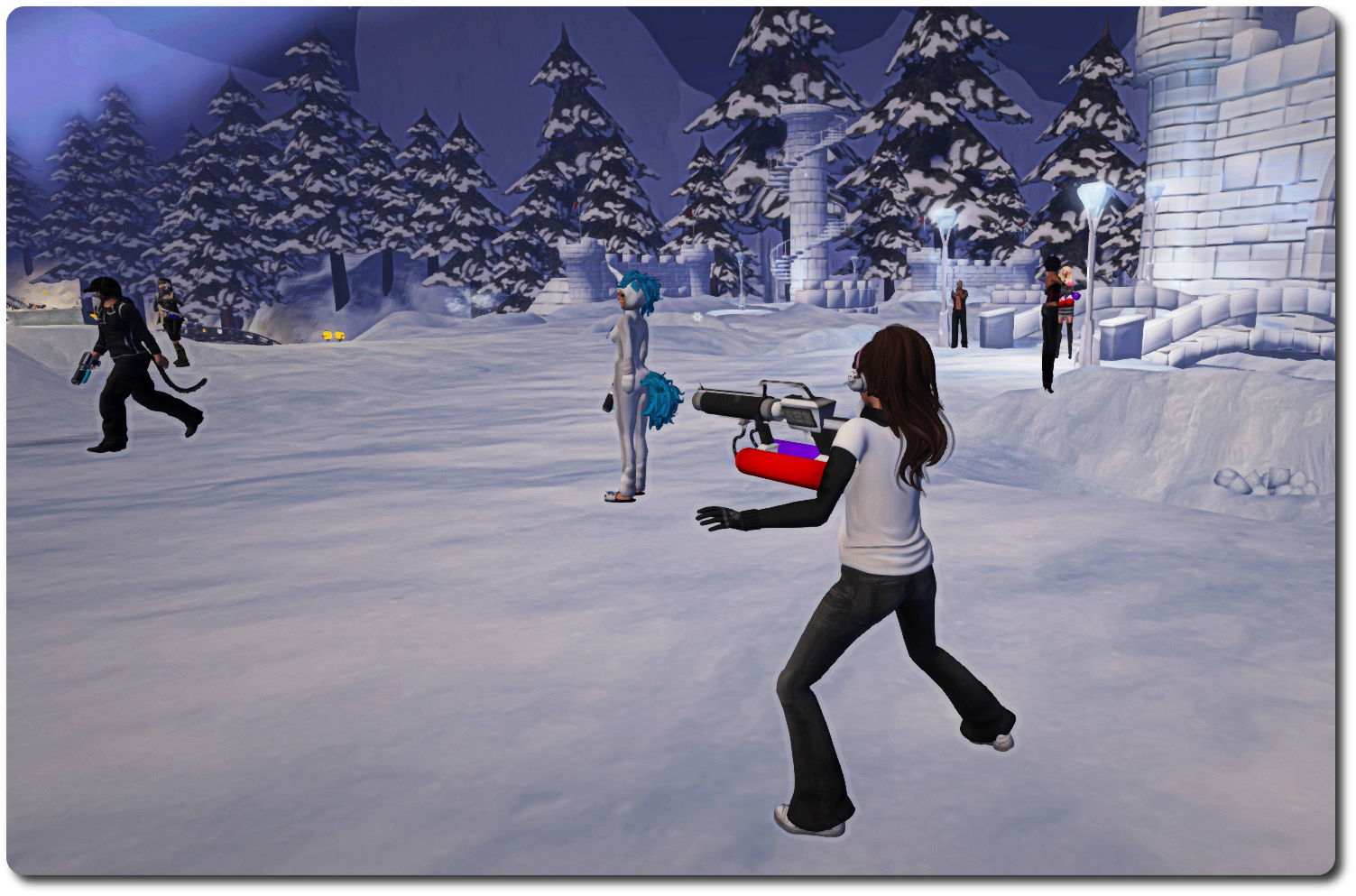
Xiola "show us your video tutorials!" (image by Strawberry Singh)
Xiola “show us your video tutorials!” (image by Strawberry Singh)

On Wednesday, March 9th, I blogged about a new Tips and Tricks blog post which appeared on the official SL blogs, with the general title of Tips and Tricks from the Community.

In writing my article, I pondered if the Lab’s post marked a one-off or the start of a new regular or semi-regular series from the Lab.

In response to my musings, Xiola Linden dropped me an e-mail on the matter:

Hello Inara,

I wanted to let you know that we would appreciate if anyone spots a particular tutorial they found helpful that they consider sharing it with us for consideration.

I’d love to revive that section of our blogs and highlight the wonderful Resident generated content available and yet to be created.

So, if you do have video tutorials you’re like to have shared with other Second Life residents, get in contact with either Xiola or Torley and let them know where they can find your work. They’ll take a look at it for possible inclusion in a future Tips and Tricks from the Community post.

You can reach either Xiola or Torley on Plurk, or via the Second Life Official Twitter account, or you can leave a message for them on the Second Life Facebook page. However you make contact, make sure you let them know where to find your tutorial videos!

In addition, Xiola went on to say:

We have, in addition to bringing back the blog, started a playlist on our YouTube channel specifically for Resident tutorials that we’d like to continue to curate with more. There is a modest few there now, but it will grow as we identify more of the great content out there and hope the Second Life community will help us in doing so!

So, even if you don’t have (or know of) any tutorial videos which could be of interest to other Second Life users, you can still keep an eye on the Second Life You Tube channel and the tutorial playlist and keep abreast of resident’s own tips, tricks and teachings!

Phishing: Lab issues reminder on account security

There has recently been another round of phishing attempts to get second Life Users to try to provide their account credentials.

As a result of these attempts, on Friday March 11th 2016, Linden lab issued a reminder to users on the subject of account security in the form of a blog post.

In keeping with the request from the Lab to share the information,  I’m reproducing the blog post in full below:

As with any online service, Second Life Residents may from time to time be targeted with phishing attempts, which try to trick users into providing personal information and account credentials.

These attempts may include messages – including in-world IMs and emails trying to appear as if they were sent from Linden Lab – that prompt you to click on a link and/or provide personal information.

To help keep yourself safe from these tricks, remember: 

  • If you receive a suspicious email, forward it to phishing@secondlife.com and delete it.
  • If you receive a suspicious IM, file an abuse report against the sender even if the sender looks like your friend. After stealing an account, a fraudster often tries to trick the victim’s friends.
  • If you feel your account has been compromised, contact Second Life Billing through the Support Portal right away. (Better yet, call us at the number provided on the Support Portal)
  • Keep your anti virus software up-to-date and scan for viruses regularly.
  • You can change your account password; do so frequently to keep your account secure. If you suspect you’ve already clicked a phishing link, change your password immediately.
  • If you have multiple accounts, use a different password for each account.
  • Never reuse your Second Life password for your email account or any other website.
  • Your password should be easy for you to remember, but hard for others to guess.
  • If you think you entered your credit card information into a fake email or website, contact your bank immediately!

For more info, check out this page on the wiki.

Help your fellow Second Life Residents keep their accounts secure by sharing this post with them. Bookmark it, and the next time you see phishing attempts in group chat, share this post to help educate others. You can help put phishers out of business.


Community Gateways: of APIs and verticals

The Firestorm Gateway incorporates their viewer orientation island and includes social areas for users
The Community Gateway Programme is still coming

I first wrote about the Lab’s new Community Gateway trial programme back in September 2015. At the time, it seemed as if the programme was reasonably close to being launched, potentially with up to 20 groups involved, one of them being the Firestorm team, who subsequently soft launched their gateway at the end of October 2015.

However, other than this, there hasn’t been a lot on the programme. So what is going on? Well, there have been one or two problems which are still being ironed out.

One of them is the user registration API by which new users establish their Second Life accounts,and which was initially supplied to groups enrolling in the new gateway trial programme doesn’t have any hooks into the current sign-up process used for Second Life. This means that users signing-up through it will not be able to pick one of the starter avatars offered by the registration process, but instead will initially arrive in-world using the male or female default Character Test avatars which (a long while ago now) replaced the infamous “Ruth” avatar.

As the gateway has to use the "old" SL registration API, users do not get to select the gender of their avatar until after they log-in (left), and are then defaulted to either the female or male Character Test avatar
And issue with deploying the Community Gateway trial programme has been that the user registration API doesn’t have any hooks into the avatar selection process as a part of user sign-up, so those coming through it initially have to use the default Character Test avatars

Obviously, this is far from ideal. First impressions count, and many people seeing their avatar for the first time and comparing it to the glossy images on the landing pages could end up feeling a tad bit aggrieved or disappointed and might even simply log off. This being the case, the Lab has been working on an updated API which will both address the avatar issue and apparently offer some other options as well. This was revealed by Ebbe Altberg during his session at the 2016 Virtual Worlds Best Practice in Education conference, on Wednesday, March 9th:

We also have a lot of interesting things coming in the pipeline. An improved registration API, so that it will be easier for institutions to bring on their customers or clients or students in a more pre-configured way: choosing what avatars they can select from, getting them set-up in the proper groups, and taking them through a whole custom on-board experience.

Another issue has been has been a matter of compliance and ensuring the correct safeguards are in place with regards who can collect what data – an important consideration when users will be signing-up to Second Life via gateways hosted on non-Lab servers. On this, Ebbe informed the VWBPE audience:

The Community Gateway programme is very much proceeding. I don’t have like a final ship date for it; it goes very much hand-in-hand with the registration API work we have to do. We had to spend some more time on that than we originally thought, again for compliance; because who can collect what information in what context is something we had to solve for.

However, he indicated that things are now very much on track and a launch of the programme could be “just around the corner”. In addition, he also indicated that in order to help attract very specific audiences / market verticals to second Life – such as educators and education institutions and groups – the Lab is considering establishing its own gateways as well:

But once we get some community gateways going, we might even do some community gateways ourselves that are more vertically specific and make it more obvious to educators how to get on the platform, how to discover educationally relevant content, etc. That’s something we would like to do for a number of different verticals. It just remains to be seen which of those gateways we might operate versus which ones are better managed by in-world groups or teams or companies.

This aspect of dedicated gateways could be particularly pertinent to encouraging more specialised verticals into Second Life. If nothing else, having the gateways run directly by Linden Lab instils a level for trust which might be harder to establish between client and gateway where the latter is being run by a small group (albeit very dedicated) Second Life users who may not necessarily have any legal or other affiliation with the client or the platform. For another,  the Lab can probably market such gateways to their prospective audience a lot more energetically then might otherwise be the case, simply because they have the budget to do so.

So. The Community Gateway programme is still on its way, and it will be interesting to see which communities are directly involved, and how Linden Lab go about offering their own vertically specific gateways.

Lab: Faster Credit Processing & Upcoming Changes to Fees

On Monday, March 6th, Linden Lab has published a blog post on faster credit processing and pay-out, together with changes to fee structure for processing credit and paying real money to users’ PayPal and Skrill accounts, and on the fees charged for purchasing L$ on the LindeX. both of these fee changes coming into effect as from Tuesday, April 5th, 2016.

This is an important notification, and one which should be read in full. However, the core changes the Lab are making are quoted below:

Faster Credit Processing

We’re happy to announce that we will significantly improve how quickly we’re able to process a majority of credit requests.

Based on current data, we estimate that the upgrades we’ve made will allow approximately 75% of process credit requests to be completed within 2 business days.

For a minority of requests, the process may still take 5 business days. Because we’re dealing with sending real money to users around the world, we may require additional information and perform other processes that could impact the time needed. A good rule of thumb is that the better we know you as a customer, the more likely it is we’ll be able to quickly process your credit requests.

Changes to the Fee Structure

In addition to taking time, processing credit and paying real money to users’ PayPal and Skrill accounts incurs costs to Linden Lab. Each transaction actually costs us more than the $1 (USD) fee we have been charging. To address that and in light of the significant investments we’ve made to improve the related systems and processes, we will be making some adjustments to the fee structure, beginning next month.

As of April 5, 2016, instead of charging a flat fee of $1 (USD) per transaction, we will charge a fee of 1.5% of the transaction value, with a minimum fee of $3 (USD) and a maximum of $15 (USD). Additionally, the fee for purchasing L$ on the LindeX will increase 10¢, from $0.30 (USD) to $0.40 (USD) per transaction.

Compliance and improved processing has been one of the core focus areas for Linden Lab over the course of that past 12+ months. Work which has involved, among other things, the formation of a subsidiary company, and which is intended to support both Second Life and Project Sansar.  As such, the post from the Lab would seem to indicate the major part of this effort is now complete, and that, as promised through various discussions such as Lab Chat, users will be able to enjoy faster payouts, albeit it with increased fees.

Remembering Latif Khalifa

Latif's profile, March 4th, 2016, as updated by his SL partner Kr
Latif’s profile, March 4th, 2016, as updated by his SL partner Krintina Deschanel

I’ve received word through Thoys Pan and Dahlia Trimble that Latif Khalifa has passed away after losing his battle against a long illness.

A software engineer by profession and known in Second Life and OpenSimulator as an enthusiastic technologist, content creator, and viewer developer, he was responsible for the popular Radegast open metaverse lightweight client, as well as contributing to third-party viewer development, notably through Singularity, from which he forked his own viewer, Replex, in 2014.

I first got to know Latif as a result of my growing interest in the viewer ecosystem within Second Life. In fact, it was partially through his encouragement and the conversations we had, that I started blogging about viewers in greater and more informed detail. We became better acquainted in 2011 as he was enhancing Radegast and preparing for the release of Radegast 2.0, and I was privileged to be able to preview the work on several occasions. We also enjoyed many discussions on a range of subjects inside and outside of Second Life, something which led Latif into inviting me to join his Advanced Worlds Group in SL.

Occasionally irascible in the heat of impassioned discussion, Latif more than compensated for this with a generous heart and supporting nature, always willing to offer a helping hand, words of encouragement and friendship.

Commenting on Google+ after hearing the news, Dahlia Trimble said:

I’m very sad to hear that we lost Latif Kalifa

Latif was a good friend and collaborator. He was very helpful when I was implementing mesh physics, materials support, and particle system enhancements in OpenSimulator and also contributed many other fixes and enhancements He was the primary maintainer for libopenmetaverse for the last several years. He was the primary developer of the Radegast viewer which, among other features, had many features for the visually impaired. He was also a major contributor to PHP. His passing is a huge loss to me and I’m sure it is for the field of virtual worlds as well.

Doubtless, many within the metaverse community, including myself, will feel the same way on hearing the news. My condolences to his family, Kristina and all those closest to him at this time.