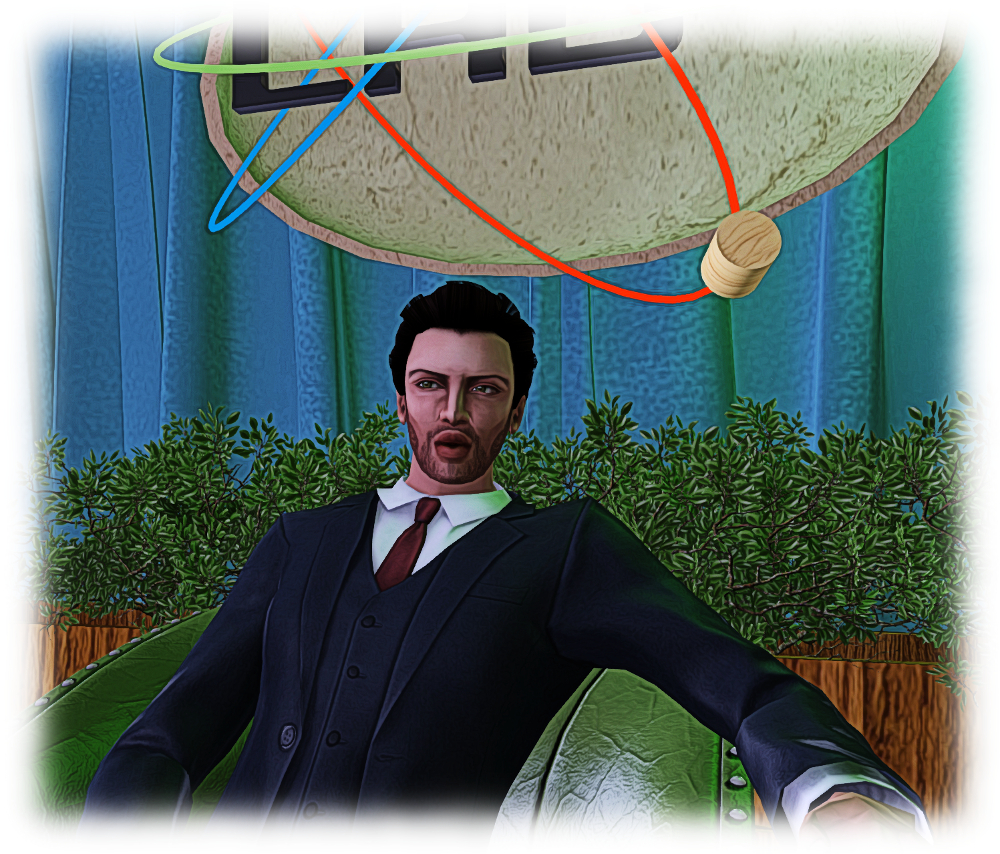
With Valentine’s Day roughly a month away, the Lab is inviting residents to share what that special day means to them by means of a photograph – and gain the opportunity to be a part of the Lab’s advertising campaigns for Second Life.
Valentine’s Day is just on the horizon and will be here before you can get through a handful of heart candies! We’re looking for some great Second Life pictures from the community to feature in upcoming email and banner campaigns – with credit to the photographer – of course!
In a snapshot, let us know what Valentine’s Day means to you in Second Life.
Share your story in a picture and on our Official Flickr Page with the tag “SLVday2016” so that we can see all of your amazing works. You may submit as many as you like between now and January 29, 2016.
We’ll showcase the chosen image(s) in an email to Residents, as well as in some banner campaigns. We’ll let the chosen image creators know via Flickr and ask for an avatar name for the credits.
The submission guidelines are fairly straightforward:
Images must be at least 2048×1207 in size
Avatars must be shown in-world,and suitably lit so they can be seen
All images must be free of additional text or logos, and must be appropriate for all audiences.
Images that tell a story are going to make an impression.
As noted in the Lab’s blog post text, the closing date for submissions is Friday, January 29th, 2016.
We’re all used to Second Life misbehaving itself at the weekend, but it with rezzing or rendering or region crossings and so on. However, Saturday, January 9th, and Sunday January 10th proved to be a lot rougher than most weekend in recent memory, with Sunday in particular affecting a lot of SL users.
When situations like this arise, it’s easy to shake a verbal fist at “the Lab” and bemoan the situation whilst forgetting we’re not the only one being impacted. Issues and outages bring disruption to the Lab as well, and often aren’t as easy to resolve as we might think. Hence why it is always good to hear back from the Lab when things do go topsy-turvy – and such is the case with the weekend of the 9th / 10th January.
Posting to the Tools and Technology blog on Monday, January 11th, April Linden, a member of the Operations Team (although she calls herself a “gridbun” on account of her purple bunny avatar), offered a concise explanation as to what happened from the perspective of someone at the sharp end of things.
April starts her account with a description of the first issue to hit the platform:
Shortly after midnight Pacific time on January 9th (Saturday) we had the master node of one of the central databases crash. The central database that happened to go down was one the most used databases in Second Life. Without it Residents are unable to log in, or do, well, a lot of important things.
While the Lab is prepared for such issues, it does take time to deal with them (in this case around 90 minutes), with services having to be shut-down and then restarted in a controlled manner so as not to overwhelm the affected database. Hence why, when things like this do happen, we often see notices on the Grid Status Page warning us then log-ins may be suspended and / or to avoid carrying out certain activities.
Sadly, this wasn’t the end of matters; on Sunday an issue with one of the Lab’s providers had a major impact on in-world asset loading (while April doesn’t specifically point at which provider, I’m assuming from her description it may have been one of the CDN providers). While the Lab is versed in working with their providers to analyse the root cause of problems and rectify them, this particular issue appears to have had a knock-on effect in a quite unexpected way, impacting the avatar baking service.
This is the mechanism by which avatar appearances are managed and shared (and is also known as Sever-Side Appearance and / or Server-Side Baking). Designed to overcome limitations with using the viewer / simulator to handle the process, it was cautiously deployed in 2013 after very extensive testing, and it has largely operated pretty reliably since its introduction. As such, the fact that it was so negatively impacted at the weekend appears to have caught the Lab off-guard, with April noting:
One of the things I like about my job is that Second Life is a totally unique and fun environment! (The infrastructure of a virtual world is amazing to me!) This is both good and bad. It’s good because we’re often challenged to come up with a solution to a problem that’s new and unique, but the flip side of this is that sometimes things can break in unexpected ways because we’re doing things that no one else does.
Taking this to be the case, it doubtless took the Lab a while to figure-out how best to deal with the situation, which likely also contributed to the time taken for things to be rectified to the point where people weren’t being so massively impacted. Hopefully, what did occur at the weekend will help the Lab better assess circumstances where such problems – unique as they may be – occur, and determine courses of action to mitigate them in the future.
In the meantime, April’s post, like Landon Linden’s update on the extended issues of May 2014, help remind us of just what a hugely complex beast of systems and services Second Life is, and that how even after 13 years of operations, it can still go wrong in ways that not only frustrate users, but also take the Lab by surprise, despite their best efforts. Kudos to April for presenting the explanation and for apologising for the situation. I hope she, together with all involved, have had time to catch-up on your sleep!
On Wednesday, January 6th, and as I reported, Oculus VR announced the price of the first generation Oculus Rift VR headset as being US $599 (€699 in Europe and £499 in the UK) + shipping at applicable taxes, with the unit available for pre-order.
The price has caused some consternation around the globe, even though Palmer Luckey had, since September 2015, been indicating the headset would be more than the assumed price of US $350, as my colleague Ben Lang over at The Road to VR quoted Luckey saying at the time.
As it is, the Oculus Rift is apparently heavily subsidised by Facebook; had it not been so, then the price might have been north of the US $1,000 mark . Further, and like it or not, the HTC / Valve Vive is likely to have a price point somewhat more than the Rift – although it will include hand controllers and room sensors, which the Rift does not. In addition, the latest version of the Vive sports a “chaperone system”: a front-mounted camera which allows the user to overlay their VR environment with images of the room around them, making for easier physical movement when using the headset.
Elsewhere, there has been speculation about the possible price of Sony’s PlayStation VR (PSVR), particularly after Forbesreported Amazon Canada had it listed at CAN $1,125 (roughly US $800). The listing price was later removed, with Sony stating it was an error and that the final price of the PSVR has yet to be determined – but it has left people wondering.
And while the Oculus Rift price may seem steep, it might be worth pointing out that the Vuzix iWear, an OSVR-based headset initially aimed at the immersive film experience, but capable of supporting VR games and applications, is currently available for pre-order at US $499, and comes with a specification somewhat below that of the Rift.
Sony PSVR – Amazon Canada quoted a price of US $800, quickly countered by Sony – but some speculate it might be accurate or at least close to the truth (image: Sony Computer Entertainment)
So does this mean the US $599 price tag for the Oculus Rift is justified? Given that the first pre-order batch apparently sold-out within minutes, one might be tempted to say “yes”. However, the initial rush could be deceptive; while there are undoubtedly a lot of early adopters out there willing to pay a premium for the hardware, they aren’t likely to be in the majority.
And here is where consumer-focused VR could end-up being hoist by its own petard, and in a number of ways, some of which are pointed to by Chris Kohler, writing at Wired.
The first is that VR as a term is already being badly abused.Much is made of 360-degree video (already a thing through Google Cardboard systems), but it really isn’t VR as many would accept it.
The second is there is already a rising tide of headsets offering “VR experiences”. Most of these are (again) Cardboard-based and utilised a mobile ‘phone. The problem here is that inevitably, the quality of the experience isn’t all it could be. What’s more, it often hooks back into the idea that VR is pretty much stuff like 360-degree video.
Samsung’s Gear VR sits at the top of the mobile VR pyramid, and could be said to be indicative of where Oculus VR would like to go: a self-contained, lightweight system which doesn’t necessarily tether the user to their computer (image: Samsung)
The issue here is that despite these factors, these low-end headsets and units such as Samsung’s Gear VR, are presenting VR as something that’s easily affordable (given most people are liable to have a suitable ‘phone to use with them). The experience may not be terribly clever when compared to the Rift or the Vive – but it is there, and it is coupled with a possible perception that VR is about 360 film / sports experiences.
Thus, unless the Rift and the Vive et al can convince the greater populace they offer a truly unique, high-end, head-and shoulders-above-the-rest type of VR experience that instantly compels people to shell out the readies for them, there is a risk that they could be seen a “just another headset”, and passed by in favour of the cheaper albeit less capable headsets, at least until the price point is seen to come down – and that could put something of a pin in the side of the VR bubble, if only in the short-term.
Lab Chat is the name of the new series aimed at providing Second Life users with the opportunity to have their questions put to Lab management and personnel.
The first such event, which was recorded and made available as a three-part video, took place on Thursday, November 19th, with guest Ebbe Altberg, CEO of Linden Lab. I have a full transcript of that event available, complete with audio of both the questions asked and Ebbe’s replies.
Ebbe Altberg, in his alter ego of Ebbe Linden, will again be facing questions on Linden Lab, Second Life and “Project Sansar” as put forward by SL users
Once again, the guest under the spotlight will be the Lab’s CEO, Ebbe Altberg.
As with the first event, people are being invited to submit questions via a Lab Chat forum thread they’d like to see asked during the show for consideration. The deadline for such questions is Friday, January 15th
Questions to be asked will be selected by members of the Lab Chat production team (of which I’m listed, although my role is focused on producing written transcripts of recordings, rather than being hands-on with the actual production). Those submitting selected questions will be invited to attend the recording of the session, and put their question directly to Ebbe in voice if they wish; otherwise questions will be asked the Lab Chat hosts, Saffia Widdershins and Jo Yardley.
As per the first Lab Chat, I will (hopefully) be recording the event, and will certainly be providing a full transcript a few days after it has taken place.
Tom Boellstorff and his digital alter ego, Tom Bukowski (image: Steve Zylius / UCI)
There are probably few Second Life residents who keep an eye on blogs and the more well researched media reports on Second Life who are unaware of Fran Seranade’s story. Now 88 years old, Fran is a keen Second Life resident, who spends time in-world with her daughter and son, enjoying much of what the platform can offer: dancing, Tai Chi, swimming, horseback riding, walking, exploring. All far removed from the physical world, where she suffers from Parkinson’s Disease, which deeply affects her ability to do many of the things we take for granted: such as simply getting out of a chair and walking to the next room.
Fran Swenson (Fran Seranade in Second Life), seen with her avatar and friends in Second Life
It is now also the story used to introduce an article appearing in UCI News, the on-line newsletter of the University of California, Irvine, which explores the work of Tom Boellstorff, a professor of anthropology at the university.
InA (virtual) world without Parkinson’s, Heather Ashbach talks to Tom about his ongoing work with Fran and other Parkinson’s Disease sufferers using Second Life, which is now part of a US $276,900 National Science Foundation study that began in July 2015, and will run through until June 2018, examining how on-line environments affect social interaction and self-understanding as well as physical-world experiences of disability.
Tom’s work has also been more broadly covered through The Drax Files World Makers episode #31, which I covered here
Tom’s work as an anthropologist studying our digital interactions with ourselves and others has already given rise to two books, Coming of Age in Second Life: An Anthropologist Explores the Virtually Human,and Ethnography and Virtual Worlds: A Handbook of Method. With this study, he hopes to build on the knowledge he’s acquired over the last several yeas of study, and also learn which aspects of on-line social interaction are linked to specific disabilities and how differing platforms and devices are utilised.
“Billions of people now participate in on-line environments – social networking sites like Facebook, games, virtual worlds,” he notes in the article. “Since some early human first picked up a stick to use as a cane, persons with disabilities have been at the forefront of technology innovation, so it’s natural that they would be doing creative things in virtual worlds too.”
His examination of Parkinson’s and the effect Second Life has had on those suffering from it is not limited to Fran; the article specifically touches on the lives of Solas NaGealai, who founded the original Team Fox presence in Second Life (and whose story I covered in August 2014), and architect DB Bailey, and they are two among many Tom has talked to within Second Life.
Second Life has provided Solas NaGealai to continue her love of fashion and design, and provided her with the means to directly support MJFF through Team Fox SL.
Solas was diagnosed with a particular form of Parkinson’s Disease known as Young Onset Parkinson’s Disease (YOPD) – the same form of the disease which struck Michael J. Fox.
When first diagnosed, Solas was a full-time fashion designer. However, as the illness progressed, she was forced to leave that career behind. Fortunately, her discovery of Second Life allowed her a way to re-engage in her passion for design, and she founded her own fashion label at Blue Moon Enterprise.
Prior to his diagnosis, DB Bailey was a noted architect who, among other projects, collaborated on the design of Los Angeles’ Walt Disney Concert Hall. Since the disease has forced him to step back from that career, he’s been able to use Second Life as his creative outlet as an architect and artist.
Tom’s work, which has involved in-world and face-to-face interviews and studies, has also touched upon the possible physical benefits some of those with disabilities report as a result of their use of Second Life. In Fran’s case, for example, she his indicated an improvement in her sense of balance and co-ordination as a result of using the platform. This is something Tom has suggested might be down to what is called “mirror neurons“, with Fran’s brain responding positively to the visual stimulus she receives as a result of her in-world activities. However, examining such potential benefits does not form a part of the current study, primarily because Tom is not a medical doctor; but he is of the opinion that they are worth future examination.
The psychological and sociological benefits of using platforms like Second Life in matters of healthcare are clear, and have been the subject of many studies. With the promise of more immersive VR experiences and opportunities now on the horizon, a better understanding of how different platforms and mediums assist those with disabilities enjoy a richer, fuller life is liable to be of enormous benefit, and also offers an opportunity for broader public discussion on matters of disability and the use of technology.
As Tom himself notes in closing the interview with Heather Ashbach, “disability is a fascinating category of human experience because anyone can enter it at any moment – we’re all just a car accident away. And even if we avoid it, if we live long enough, age will present us with obstacles that limit our ability to function as we currently do. Studying how people adapt through the use of technology helps advance the public conversation on disability and digital technology.”
Altogether, an excellent read, and one thoroughly recommended.
The UK Blog Awards, sponsored by Odeon Cinemas, Debenhams department stores, and Hills Balfour PR agency, was founded in 2014 “to recognise true viral style and creative excellence across a variety of 16 UK industries, as well as awarding 2 sub-categories: Best Storyteller and Most Innovative award.”
“For what may seem like a lifetime, company employees and private individuals have been found Blogging about opinions, facts and sharing good practice with viewers of the worldwide web since the early 1990s,” the organisers note. “So, here at UKBA we thought it was about time that individual Bloggers and companies received recognition for all your well-earned innovative opinions and content!”
Nominations for the 2015 UK Blog Awards were held over November / December 2015, and one of the blogs nominated for a possible award has been Second Life’s own Windlight Magazine, for which I’m privileged to be a Contributing Writer.
Since its inception in July 2015, Windlight has become perhaps the premier arts magazine in Second Life, featuring a team of highly talented writers (and I’m not simply saying that because I do contribute!), and an outstanding editor / founder in the form of John (Johannes1977 Resident).
During the months following its inaugural issue, Windlight Magazine has provided superb coverage of the arts in Second Life, and has gradually encompassed broader elements of the platform – travel, fashion, etc.
At the same time, the Magazine has sought to promote the arts through the Windlight Fellowships, has supported notable charity activities, and has most recently stepped in to sponsor the UWA art gallery.
During this same period, the Windlight blog has become a go-to resource by which people can discover the arts in Second Life, learn how to improve their SL photography, find advice on art, photography and writing, read reviews of places to visit in-world, and more. As such, it is a worthy nominee for a UK Blog Award.
But it needs your help.
Public voting on blogs nominated for the 2015 Awards commenced on Monday, January 4th and will run through until the end of February. The top 10 most popular blog from the various categories in the nominations will then be shortlisted for judging by an adjudicating panel of experts, with the winners being announced at a special awards evening which will in London ion Friday, April 29th, 2016 (full details TBA).
To help ensure Windlight Magazine might be one of those finalists, please click on the image immediately above right, and place your vote.
Doing so might not only help Windlight Magazine reach the finals and possibly receive and award, but it will also help promote Second Life and Second Life arts to the rest of the world.
 With Valentine’s Day roughly a month away, the Lab is inviting residents to share what that special day means to them by means of a photograph – and gain the opportunity to be a part of the Lab’s advertising campaigns for Second Life.