While reading the transcript of the Simulator User Group meeting of Tuesday 25th September as a part of preparing my last SL projects update, I came across an interesting exchange on the subject of large regions – megaregions in OpenSim parlance – which gives some insight into the broad level of thinking about the platform that goes on within the Lab.
For those unfamiliar with the concept, a megaregion is essentially a number of standard 256×256 metre regions stitched together to present what appears to be a single large region. These are generally presented in terms of areas equivalent to 2×2 regions (i.e. 4 region in total) or 3×3 (equivalent to nine regions) and so on.
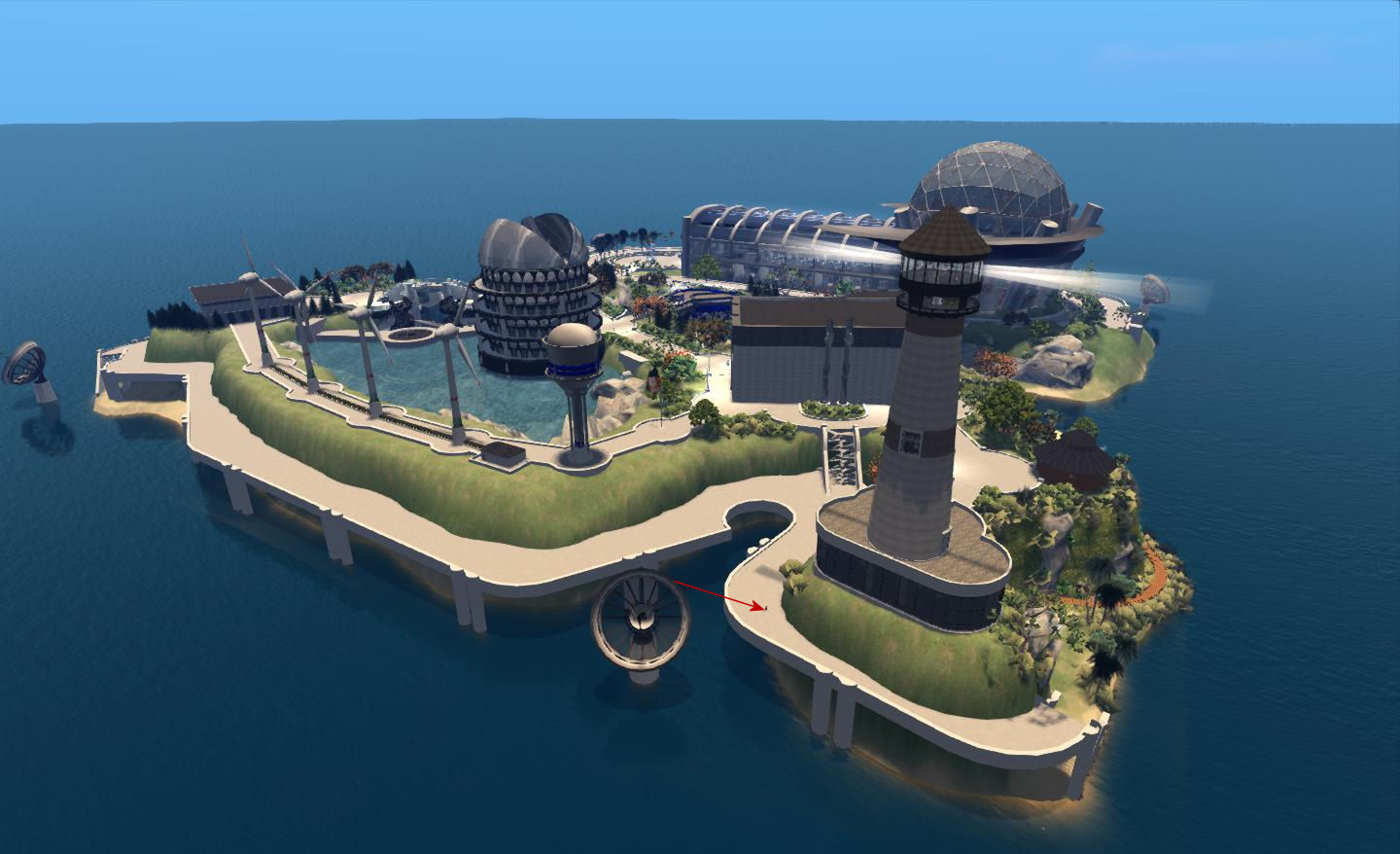
Megaregions have been available within the OpenSim environment for the last few years, and are seen as means of providing far more space free from the terrors of region crossings, greatly facilitating a range of activities – flying, sailing, vehicle racing, etc., – although there are some limitations with them at present, which can make working with them difficult (parcel media tends to be restricted to the South-west corner “region” of a megaregion, for example, and elements such as terrain textures cannot currently be easily edited).
Second Life is very much geared to the 256×256 metre region, so it was surprising to come across a discussion on large regions in SL – and to learn that Linden Lab have in fact looked at them in some detail. The revelation came in a comment from Simon Linden, “Yeah, big regions have been a pet project of mine … unfortunately it’s an incredible hassle to get right,” he goes on to say, a short time later:
“I’ve spent some serious time looking at large regions … it’s a huge project to do it right, involving a bunch of messaging changes to the viewer (like layer data, object positions, etc), region-to-region communication (all the neighbours) our back-end (the grid layout itself) … it touches almost everything in some way, which is why we’re where we are today 😛
Simon also indicated that he felt an ideal size for large regions – were they ever to happen – would be to a scale of 1 km on a side, rather than 1024m on a side (as would be the case if large regions were somehow “scaled up” from the current region size, as with OpenSim). However, this would mean breaking away from the current power of 2 approach to building Second Life, and might lead to position translation issues (as in translating the position known in one region to the relative position in a neighboring region), although Andrew Linden felt this might actually be easier to handle this in 1k blocks between neighbouring regions, rather than relaying on power of 2. When asked as to what would happen to the 24 metres per side which would be lost in scaling to 1000x1000m, rather than 1024×1024, Andrew suggested (semi-jokingly) that they’d be lost “To … boundary conditions.”
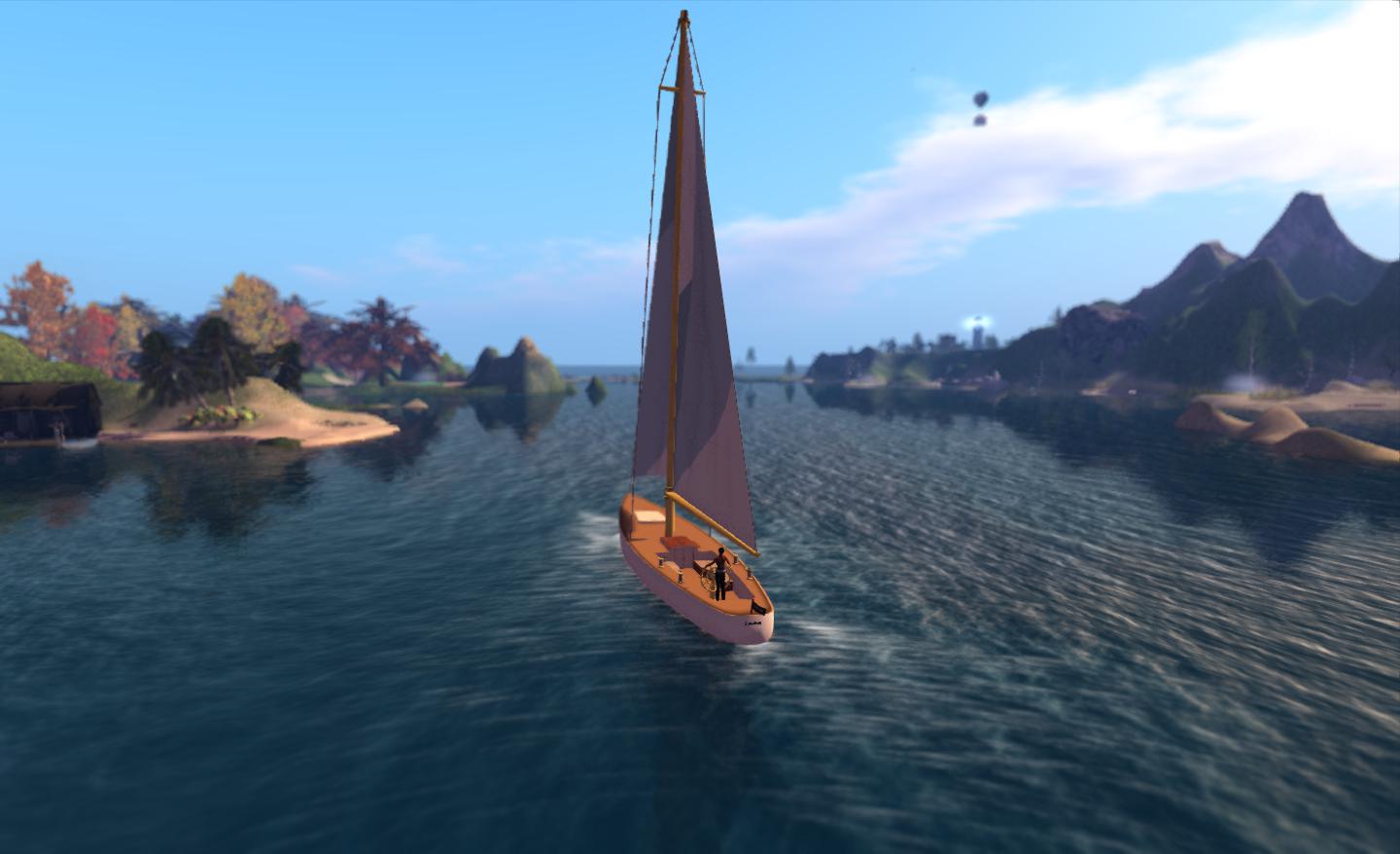
Were any change in region sizes to be undertaken, they would not be limited to just the simulator / server-side of things. The viewer itself is predicated on the power of 2 approach, being specifically geared to handling regions of 256m on a side (hence why megaregions in OpenSim have some limitations in terms of editing, etc.). So for large regions to work properly, it is likely that substantial changes would have to be made to the viewer – which even with the best will in the world, isn’t something which is going to happen any time soon, even were LL pondering looking beyond the theoreticals of large regions.
Nevertheless, the fact that the matter has been – and might still be – something some in Linden Lab are actively looking at, even at only the conceptual level, is interesting, and does tend to demonstrate that LL do think about the platform in somewhat radical ways.

 Inara Pey: Living in a Modemworld