Sansar: news and updates from the media and from the Lab

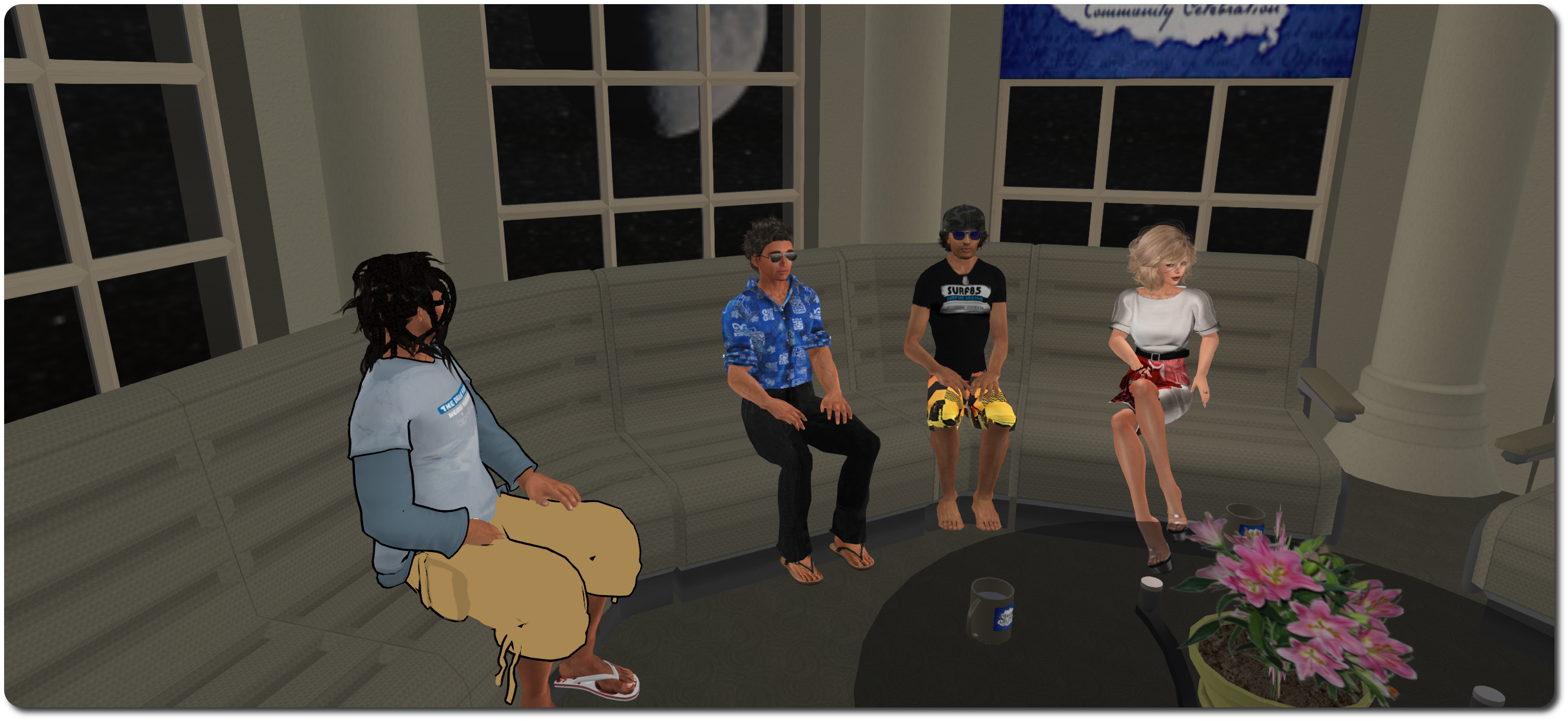
Danger Linden (centre left) and Troy Linden (centre right) discuss Second Life and Project Sansar with Draxtor Despres and Saffia Widdershins at SL12B

Linden Lab’s next generation virtual worlds platform, code-named Project Sansar made the news in Second Life and in the media on Thursday, June 25th.

In the media, Bernadette Tansley, writing in Xconomy covers how Second Life Creator Linden Lab Prepares To Test Parallel VR Universe, delving into the forthcoming closed alpha testing for the new platform, which we know to be code-named Sansar.

In terms of Sansar news, the article specifies:

  • It can already run at 75 frames per second
  • The Lab plans to accelerate the platform to 90 frames per second to sync with specifications expected for the Oculus Rift and other headsets
  • The initial closed alpha, involving a limited number of creators experienced in the use of Maya, will commence in July 2015
  • If all goes according to plan, the programme will gradually be expanded to a more public beta testing phase around the first half of 2016
  • A “version 1.0” of the platform might be ready by the end of 2016.

Outside of LL and Sansar, the article is interesting in that it suggests Cloud Party, which was acquired by Yahoo in 2014, is still in the running to develop a virtual world that can be operated with the upcoming new range of VR headsets, etc.,  alongside the Lab, Philip Rosedale’s High Fidelity and new start-up AltspaceVR.

You can read the entire piece by following the Xconomy link given above.
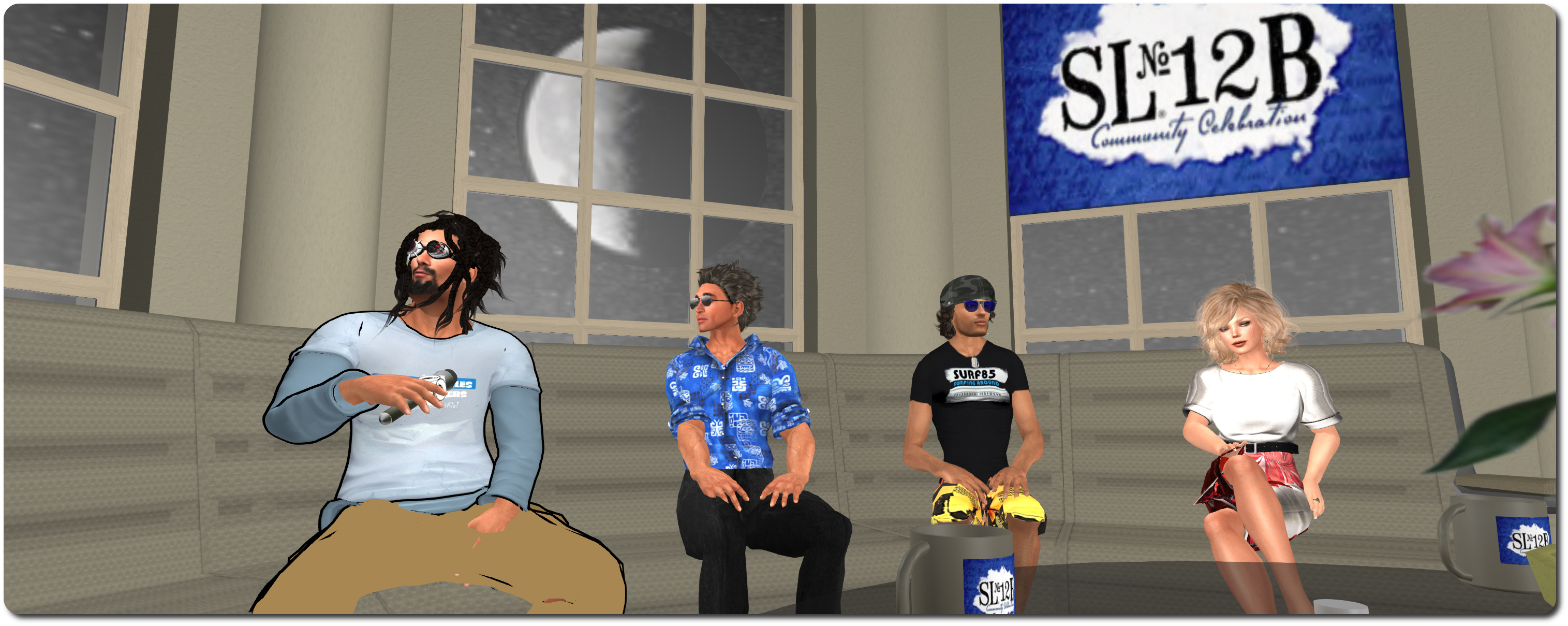
Drax, Danger Linden, Troy Linden and Saffia at the Meet the Lindens at SL12B

During an interview with Danger Linden, Sr. Director, Product, Virtual Worlds and Troy Linden, Senior Producer, held as a part of the SL12B Meet the Lindens series of conversations, the subject matter inevitably came around to Project Sansar, and the following tidbits of information were given.

Further confirmations of Known Basics

  • SL users will be able to use there SL identities with Project Sansar if they wish
  • Linden dollars will be the transaction currency / tokens on Project Sansar
  • Both voice and text will be supported in Sansar for chatting / communications.

However, neither of the above mean you’ll be able to teleport directly from SL to Sansar or vice-versa; both are separate entities.

“Master” Accounts

Users will be able to have a “master account”, under which they can then have multiple avatar accounts they can use.

  • The “master account” will be known only to the user and Linden Lab, and will use an e-mail address as the main form of authentication
  • Users can create multiple avatar accounts (or “persona names” as Danger Linden referred to them) under this “master” account, which they can use to access Sansar, and will be known to other users only by the avatar account they are using
  • Inventory and account balances will apparently be associated with the “master account”, allowing them to be shared between the avatar accounts under the master account
  • It is not clear what format avatar / persona names will take, and whether it will be a first name, last name format.

(The idea of having a “master account” with this kind of flexibility has long been on users’ wish lists for Second Life for a long time – see JIRA SVC-6212 and my own article from 2011 on the subject. As such, this is liable to be a popular move among those SL users interested in trying Second Life.)

Anonymity and Trust

Sansar users will be able to have as much anonymity as they wish. However, the more information that users provide to Linden Lab – be it wallet identity, a verified e-mail address or payment information – the more capabilities they’ll have in-world.

The idea here is to try to address the issue of griefing while still maintaining a relatively low barrier to entry – obviously, the easier it is to access the platform, the easier it is for muppets to run amok. So, the idea is that as more information is provided, the greater the level of trust established between user and Lab, allowing people to “do more” in-world and participate more. However, the exact relationship between platform capabilities awarded, and the information users will be asked to provide in order to access them, is still being determined.

Obviously, the content of the information you provide to the Lab remains private and confidential (i.e. if you supply a verified e-mail address, that e-mail address is not revealed to any other users). However, if a verified e-mail is required to, say, publish a Sansar “world”, then the fact that you have published that world will tell other users you have a verified e-mail with the Lab.

Mesh, Terrain and Building Tools

  • Sansar content will obviously be focused on mesh – but not necessarily exclusively mesh
  • The terrain will be voxels
  • Subject to further confirmation, it should be possible to also build in-world objects using voxels
  • Maya is the tool that is being used purely to assist with testing when the closed alpha commences. It will not be the only tool, and it will not be the sole tool for content creation (see Ebbe Altberg’s comments on alpha access and tools from the Virtual Worlds Best Practice in Education, March 2015)
  • A goal for Project Sansar is for people to be able to build in-world and to share in collaborative building
  • Sansar will include a full “professional” (in terms of its capabilities not in the need for people to have to be professional animators in order to use it) animation system, which will be based on Havoc animations (Havoc being the SL physical system),  overlaid with additional capabilities  / code directly from the Lab
  • All objects in Sansar will be fully scriptable and animated; it is not clear whether on-the-fly modifications to mesh items in-world will be possible
  • It is acknowledged that content creation tools can be a barrier to adoption / use; it is therefore a goal with Sansar to “make it easier to make things in Sansar than it is in Second Life”

Continue reading “Sansar: news and updates from the media and from the Lab”

Ebbe Altberg talks Second Life, Sansar and VR to Bloomberg

A promotional image for Project SANSAR

On June 15th 2015, Ebbe Altberg participated in a Bloomberg Advantage podcast with hosts Cory Johnson and Carol Massar, discussing what is going on with Linden Lab in the run-up to the Second Life 12th anniversary celebrations.

The interview, which is some eight minutes long, unsurprisingly focused more on VR and its pcoming consumer focused headsets, together withe the Lab’s Next Generation Platform (codenamed Sansar) more than it did on Second Life, but what is said makes for interesting listening.

I’ve embedded an MP3 of the interview below, together with a transcript of the core discussion for those who prefer to read than listen. The transcript picks -up from the 28 second point into the interview, following general introductions. Breaks in the transcript, indicated by “…” are where the conversation includes asides or comments outside of immediate interest.


Cory Johnson (CJ): I want to talk about what’s going on with one of the kings of virtual reality, Second Life.

Ebbe Altberg (EA): Yeah. Second Life is still doing very well. It’s this month having its 12th birthday…

Carol Massar (CM): OK for those who might not know what Second Life is, those from the East Coast (laughter) I’m raising my hand for everyone on radio. Just for other folks out there who might not know.

Bloomberg's Carol Massar and Cory Johnson talk VR, SL and Sansar with Ebbe Altberg
Bloomberg’s Carol Massar and Cory Johnson talk VR, SL and Sansar with Ebbe Altberg

EA: So, Second Life is a virtual world that we created, but all the content and all the experiences in it are created by the users. so it’s a little like the real world … So you have a huge range of experiences in their ranging from role-playing to education, to health to art, and music. Just like in real life, people like to have all sorts of things in their world, and users have created all these things inside of Second Life.

And there’s a virtual economy where users can buy and sell digital goods and services to each other, and last year alone, creators of content and experiences in Second Life cashed out $60 million dollars. So a lot of people make a living creating and playing in Second Life.

CM: Where do you want to take it?

EA: We’re like the pioneers in this area, and the world around us is starting to catch-up a little bit …

CM: Competition out there?

EA: Yeah, a little bit of competition, but also with all these virtual reality headsets, these HMDs from Oculus, etc., is going to allow us and many others to take it to the next level. So we’re really excited about what’s happening right now, and we’re been hard at work for well over a year, investing heavily in a new platform  from the ground up that will take advantage of virtual reality hardware as it comes out later this year and early next year.  So we want to make sure we remain in a leading position when it comes to virtual reality experiences.

CJ: Well let’s talk about this a little bit. So Oculus sort-of has mind share, at least. When people talk about virtual reality now, then tend to think of these goggle-like experiences from Oculus. [But] there’s been academic work, particularly out of Stanford, suggesting that game-play might not be the thing; that it’s so immersive that it’s exhausting. That people can sit in front of their Xbox or PlayStation for 4, 6, or eight hours, but that you can’t do that with Oculus. What do you think?

EA: I think you will be able to. Part of why people say that is because the quality quality of the experience hasn’t quite got there yet.

CJ: So you’re looking at an image where your mind and your eye have to do so much more work, that it’s physically exhausting.

EA: No … when you see the latest generation of these things coming out now, it is not that exhausting any more; it’s actually quite relaxing.  You put these things on, an you’re wherever you want to be; you can be anybody you want to be and anywhere you want to be. And it’s it’s going to be comfortable …

CJ: The thing about when you put an Oculus goggles set on … first of all, the software right now is kind-of boring. The stuff that I’ve seen isn’t really gripping. It’s like, “Oh, this is cool. Imagine what you could do with it…”

EA: Did you try the Crescent Bay and the demos that came with it?

CJ: I haven’t done that.

EA: OK, so [with] the latest generation … you’ll forget about the hardware, you’ll forget about these pixels in front of you. You’re just there.

CJ: What is the experience you’re experiencing with that?

EA:  They’re still passive; they’re still basically playing things for you, that you watched. And you will have video-like experiences, but in 360; so you’re inside the video, rather than looking at the video, all the way to like what we do, which is social interaction and doing things like we’re doing right now in the studio, just hanging-out, meeting with people.

CM: Well, let me ask you Ebbe, I’ve been at Caterpillar and I’ve done their 3D world, or virtual reality world, where you pretend you’re in one of their big pieces of equipment to see how it worked and if the tools were in the right place. That’s my experience with it.  what about in a practical world? Are there applications that you guys are looking at?

A part of the interactive learning environment operated by Wendy Keeney-Kennicutt as part of the Texas A&M chemistry studies in SL
A part of the interactive learning environment operated by Wendy Keeney-Kennicutt as part of the Texas A&M chemistry studies in SL, and referred to in the interview (read more here)

EA: Absolutely, and they’re happening already today. Texas A&M is teaching chemistry in Second Life, and there are a lot of educational opportunities to teach …

CJ: How so? Is it, “pour this file into this beaker, but if it blows up, you’ll blow somebody up”? Or is it, you’re seeing the DNA or molecules?

EA: It’s a combination of actually doing lab experiments and pouring liquids and seeing what happens, as well as being able to interact with molecules, and you can sit on them, and you can do anything you want. So the ability to visualise information is way more powerful than reading it from a text book or watching it from a video.

CM: Is that potentially a big market there for you guys? Or Healthcare? We’ve just briefly toured around Seagull, and they’ve got a whole idea about what you’ve just called about; virtual reality and doing surgery, and having virtual reality to help a surgeon in that process.

EA: Yeah, it can can be for training, or it can help people with both mental and physical disabilities of all kinds. In Second Life already we have this older woman who has Parkinson’s; and because of Second Life she can run around, swim, fly, and exercise her brain. And because of that, she’s found that she has an easier way of moving in real life. So it can have a lot of really powerful impact on treatment or all kinds of phobias. I mean, right now here in our Lab, you can be on top of the golden Gate bridge and just get a sense of height …

In the interview, Ebbe Altberg indicates that one of the test VR experiences the Lab has developed for Project Sansar puts people on top of the Golden Gate bridge in San Francisco (view via wdievisionpans.com)
In the interview, Ebbe Altberg indicates that one of the test VR experiences the Lab has developed for Project Sansar puts people on top of the Golden Gate bridge in San Francisco (note: the above is not from Sansar, it is an image courtesy of wdievisionpans.com)

CJ: So, specifically, how do you manage the game play of Second Life? If you were to describe something that is the “common” Second Life experience now, and then what it would be like in this more augmented, 3D world of Oculus or whatever?

EA: Well, it’s taking immersion to a whole other level, where the brain starts not being able to tell the difference between what’s virtual and what’s real. And we take people through experiences in this next generation platform we’re working on – we’re calling it “Project Sansar” right now, it doesn’t have a final name. But you have people that are afraid of heights, for example, just getting really freaked out by being in the virtual space.

For example, Jeremy Bailenson of [the Virtual Human Interaction Lab at] Stanford … When he removes the floor underneath you in his Lab and tells you to walk this plank over this abyss, 30% of the people doing that in his lab cannot cannot walk the plank, it feels that real.

CM: I was thinking about the rides in Disney World or whatever; they can use this stuff.

EA: Oh yeah, they will!

CM: Cool stuff!

At his point the interview quickly wound down with the end of the podcast.

Again, not much is given away about the Lab’s Next generation Platform, and little is said in detail about Second Life. However, both Nassar and Johnson exhibit genuine interest in the subject of virtual environments and virtual reality, and to their credit don’t fall into the clichéd trap we’re all (or most of us at least) are so tired of hearing.

What is interesting to me is the the framing of the commentary around Sansar and the Golden Gate demonstration. This suggests that the Lab is creating something where the content potentially has a far higher level of fidelity than can perhaps be achieved with Second Life when placed within the immersive context of something like the Oculus Rift.

The message that Linden Lab is attempting to position itself as a major player in the emerging VR market does seem to be getting out. A recent report in Investor’s Business Daily, which estimates the potential market for VR / AR devices, etc., could hit US $62 billion by 2025, lists Linden Lab alongside of Valve, Magic Leap, Next VR, Jaunt VR and others as one of the private companies looking to carve itself a share of that market.

Altas Obscura offers a clear-eyed image of Second Life

Second Life has been enjoying something of a positive resurgence in the media in recent months, and with May now passing us by, and June and SL’s 12th anniversary  sitting just over the horizon, it is inevitable that there will be more media coverage forthcoming on SL as the Lab’s media team crank things up.

Eric Grundhauser: touring Second Life with Ziki Questi

One of the first out of the gate in this regard is an article in Altas Obscura, which describes itself as the definitive guide to the world’s wondrous and curious places. Penned by Eric Grundhauser, Forgotten Wonders of the Digital World offers a positive insight on SL with a novel twist.

Rather than asking a few questions of the Lab or relying on images grabbed from Flickr and cobbled together with a little staggering around in-world, Eric Grundhauser is, with the assistance of the Lab, able to gain none other than Ziki Questi, photographer and blogger (together with her partner Kinn), to act as his guide to all that is, and can be found, in-world.

The result is an engaging and informed piece which neatly encapsulates SL’s history, presents an assured view of the platform devoid of the usual clichés and asides, and which focuses on the rich tapestry of content which can be found in-world – role-play, art, personal spaces, with even the broader uses of the platform touched upon, such as the US Army’s use of SL (and OpenSim) to help service personnel deal with PTSD. What’s more, with some of the images supplied by Ziki, the article looks good as well (Mr. Grundhauser’s own snaps aren’t too bad, and kudos to him for taking them, rather than seeking to raid an archive from 2008 or so!).

Ziki and I are a lot alike in terms of taste, so for me it was good to see RocheA Petrovsky Flux and Haveit Neox’s City Inside Out referenced in the article, with Insilico, Kowloon and The Far Away – which Ziki herself rescued from oblivion and now curates – also getting a mention (and photographs).

Roche, a favourite of mine, and featured in the Atlas Obscura article

Such is the impact of his time in Second Life exploring with Ziki and Kinn, Mr. Grundhauser willingly re-evaluates his thinking about the world, while remaining open and honest:

To be honest, when I decided to delve into Second Life, I half-expected to find a dying world of outsiders and bronies gleefully recreating pornographic impossibilities. But that simply doesn’t seem to be true. What I found, and mind you, I was only able to visit a strikingly miniscule portion of the available spaces, was that Second Life is still a fascinating and vital world that is constantly changing and pushing the boundaries of what a virtual space can be…

More telling I think, is the somewhat widespread perception that Second Life is no longer an active digital playground. The Grid is still a vital and evolving space that hundreds of thousands of users create and evolve each day.

Nor is “the sex thing” shied away from – kudos again to Ziki for being open on that subject as well, and the fact that – just as in the physical world and the Internet as a whole – there is an awful lot of it in SL. But as Eric Grundhauser demonstrates very ably – with or without established guides – just because there is a lot of sex in-world, it doesn’t bean it’s the be-all and end-all of the platform. As he notes when describing the diversity of activities and those using SL:

Doctors, universities, hobbyists, sci-fi fans, artists, and inexplicable curiosities can all be found operating in SL, by those willing to look.

Well done to him for making the effort to delve into SL and spend time exploring and getting to know at least a couple of residents, rather than simply taking the hoary old trail of slapping a few outdated headlines (and images) together in an attempt to underline a preconception.

All told, a good, light read.

Related Links

With thanks to Ziki Questi for the advanced notification that this article was upcoming.

A perspective on avatars and identity

Veronica Sidwell in Second Life (image: Veronica Sidwell, as used by VICE)

On Wednesday, April 15th, Xiola Linden Tweeted about an article that appeared in the Motherboard section of the VICE web magazine which makes for an interesting read.

Avatar IRL is a piece  by Cecilia D’Anastasio focusing on the question of avatar identity, and how it can work both ways – not only does it allow us to create and project an identity into virtual mediums, be they immersive worlds like Second Life, MMORPGs or through “traditional” text-only chat forums, it can sometimes be that the impact of engaging in such environments can often have an impact back on our real-world selves; shaping and influencing who we are in the physical world in what is broadly termed “identity tourism”.

Cecilia D'Anastasio: writing on identity in the digital age
Cecilia D’Anastasio: writing on identity in the digital age (image via Twitter)

The term has it roots in the 1980s, when it was used to “examine the ways in which tourism intersects with the (re-)formation and revision of various forms of identity, particularly ethnic and cultural identities”.

In the 1990s, Lisa Nakamura, who gets a fair mention in the article, broadened the term to encompass the way in which on-line activities – notably MMORGs – were encouraging more and more people to experiment with matters of identity and self-definition. It is her work which appears to have given D’Anastasio the idea for Avatar IRL.

The article is a part of a wider series within Motherboard entitled Goodbye Meatbags, which focuses on “the waning relevance of the human physical form”.

In order to frame the piece, D’Anastasio placed a request in the SL forums asking if people would be willing to share their own stories on the issue of identity tourism. At the time, the request provoked a mix response (indeed the article itself has provoked much the same). From the responses she received, D’Anastasio selected the story of Veronica Sidwell, a male-to-female transsexual, to serve as the introduction and initial examination of self-identity and the deep sense of identification many have with their avatar – and how that identification can loop back into their physical lives; in this case, allowing Veronica to seek to transition her physical self, adopting the name of her avatar in the process, in recognition of the role she feels it played in allowing her to do so.

Veronica’s story is related with respect, and serves to springboard the article into its wider discussion which, as mentioned above, reviews Lisa Nakamura’s initial studies into matters of identity (which also delved into aspects of stereotyping and negative reinforcement which did – and still can – occur), before moving on to look at the work of Nick Yee and Tom Boellstorff, and their ongoing studies into the myriad questions of identity and self-definition which arise from our increasing ability to interact through a wide range of digital mediums and the levels of anonymity that often afford when doing so.

Nick Yee (l) and Tom Boellstorff

Both of these names will hopefully be familiar to regular readers of these pages. I covered Nick Yee’s work back in January 2014, and his book  The Proteus Paradox: How Online Games and Virtual Worlds Change Us– and How They Don’t, is a recommended read for anyone interested in the increasingly complex matters of identity and our relationships with our digital selves and how we relate to the digital identities of those around us. For those not enticed by his book directly, I’d recommend at least reading Virtual worlds Are Real, a piece he wrote for Slate magazine from January 2014, and which served as the springboard for my article on his work.

I’ve similarly made mention of Tom Boellstorff in the past. His research has covered many aspects of identity and the question of self in the digital arena, and he has written two books on the subject directly focused on Second Life, Coming of Age in Second Life: An Anthropologist Explores the Virtually Human, (Princeton University Press, 2008), and Ethnography and Virtual Worlds: A Handbook of Method (Princeton University Press, 2012, co-authored with Bonnie Nardi, Celia Pearce & T. L. Taylor), and he is also known for his involvement in the story of Fran Seranade / Fran Swenson. Tom also featured in a Drax Files Radio Hour interview which, if you haven’t heard it before, I do recommend.

D’Anastasio covers both Yee’s and Boellstorff’s work as a means of illustrating the osmotic process which can work both ways: that as much as we seek to build and define our digital identity, so the experiences we gain, the interactions we have through those digital projections can also seep back into the flesh and bone, influencing us and further shaping our self-identity.

Avatar IRL has been critiqued for focusing on matters of “sexuality” rather than “identity” – D’Anastasio also relates the experience of Dale, a male-to-female transsexual engaged in World of Warcraft. I’m less than convinced such critiques are valid given the overall context of the article. More to the point, what is a person’s quest to explore, understand and ultimately to be their desired gender, if not a matter of identity?

While there are no ground-breaking revelations in the article – at least for those of us already engaged in environments like Second Life and World of Warcraft, etc. But the piece does provide a good opening for those who might be curious about identity in the digital age, and who might want to delve a little deeper into the subject.

Second Life is [in] Good today

Nalates Urriah pointed me to an article in Good magazine in which freelance writer Mark Hay discusses Second Life.

Now, before you start groaning, the piece is actually pretty good. Unlike wannabe writers of the Marlon McDonald ilk (whom I rebutted last year), Mark Hay has actually – shock, horror! – researched his subject prior to putting fingers to keyboard.  Not only that, he’s actually taken the time to comb through Flickr and found images that both reflect how Second Life actually looks today – so double kudos to him from the outset.

Don't be fooled by the look: Mark E. Hay offers a perceptive take on Second Life (image: Mark E. Hay)
Don’t be fooled by the look: Mark E. Hay offers a perceptive take on Second Life (image: Mark E. Hay)

What’s more, while at a little under 1500 words in length, Second Life is Staying Alive may not be a in-depth piece of analysis, but it is a considered and balanced peace which offers a largely impartial and fairly accurate examination of the platform – and a thought-provoking one at that, and in a number of ways.

For my own part, what makes this article particularly interesting is the social bent it takes. That it does is not precisely the interesting point, after all, Mr. Hay has something of a background in sociology by education. Rather it is the views he offers up which may not only be eye-opening for those who have heard about, but not really looked at, but which also offer food for thought on a number of levels even for those of us already engaged in the platform.

Some of the latter may not be immediately obvious, and may require a second reading in order for them to fall into place. As such, they may not even have been intended at the time of writing, although I suspect some of the examples he cites are far from mere happenstance when one looks at the wider context in which SL is at times held within the media.

This really kicks-in after he gives a very short potted history of some of the platform’s highs and lows and the apparent loss of interest in it that occurred within the wider world. Here he points out that despite all the claims otherwise, the platform does continue to enjoy widespread use around the globe with average monthly log-ins not that far below those enjoyed during its “peak” popularity. from this, he offers his own explanation to why this is the case: the ability to socialise and create / join communities in which those who are otherwise globally dispersed to engage with one another and create environments for that interaction which go beyond anything achievable through other mediums.

Give Us a Kiss, Dear, by Serena Snowfield on Flickr Not only does Mr. Hay offer an interesting and thought-provoking take on SL, he also takes the time to search through Flickr and locate images for his article that offer a fairer indication as to how the platform can look, such as with this image called “Give Us a Kiss, Dear”, by Serena Snowfield on Flickr

OK, so for those of us within SL this may generate something of a “no s*** Sherlock,” reaction; we are, after all, seeing this on a daily basis, either directly through our own involvement in the platform, or as a result of our travels within the platform.  However, other than the “fnar, fnar” finger-pointing or feigned outrage  at “the porn”, the ability for SL to provide a means to generate such societal interactions and ties seems to be something that has gone right over the heads of most of those willing to comment on the platform. Thus, Mr. Hay’s view is a timely, and welcome counterpoint to the frequent negatively which accompanies public mention of Second Life.

But this isn’t the sole thrust of his thinking. as he points out, the ability for SL to generate such social and sub-cultural networks and groupings isn’t actually new; it’s actually pretty much the way in which the Internet as a whole has grown. What does make SL unique, however, again as he identifies, is in the manner of the depth of creation and tangible persistence it offers all these various groups and sub-cultures, something what hasn’t previously been found within digital mediums and which has thus become the reason why many of us keep coming back to SL.

In this – and while he doesn’t point to it directly, but rather references it obliquely in mentioning attempts to bring the likes of the Oculus Rift into SL – his piece also highlights another potential within Second Life. Because it it can and does present the means for the creation, growth and sustained use of sub-cultures and societal interactions and structure which might not otherwise exist, it stands as the precursor for things to come in the promised VR revolution over the course of the next decade. Hence, his reference to Tom Boellstorff‘s seminal Coming of Age in Second Life: An Anthropologist Explores the Virtually Human, although offered in a broader context, is both unsurprising and entirely appropriate.

But even without all of this deeper ponderings, which as Mr. Hay correctly states, are all part of the future, his article neatly encapsulates why Second Life has endured and will likely continue to endure for the foreseeable future, as he points out in his closing statement:

For now all we can say is that Second Life is not as dead as many think. It just wasn’t the world we thought it was half a dozen years ago. Rather than a place that would reinvent everyday life for the masses, it became a place for the gathering, manifestation, and expression of societies and ideas that might not otherwise get to exist. And as long as it fulfils that purpose, it will most likely not fade away any time soon.

If you haven’t done so already, go read what Mr. Hay says about Second Life, and if you like what you’ve read, Tweet him. Better yet, get your SL-dubious friends to give him a read, they might just change some of their perceptions.

Related Links

A rebuttal to one-dimensional writing

Sarawak by Loverdag on Flickr, one of the images used in my rebuttal to Marlon McDonald's article on SLSarawak by Loverdag on Flickr, one of the images used in my rebuttal to Marlon McDonald’s article on SL

On Friday, November 14th, erstwhile contributor to Moviepilot,com Marlon McDonald wrote an article about Second Life which, is to say the least, predictably one-dimensional.

The item in question, entitled These Strange Stories Prove Second Life Isn’t The Dreamworld You Believed… takes as its rather predictable focus, the subject of pornography in Second Life. It’s lead to a fair level of upset among SL users – and rightly so; Mr. McDonald goes to considerable lengths to make his case by apparently passing on the opportunity to try the platform for himself, and instead dig through Google searches for articles that are anything up to seven years old (and none more recently written than three years ago).

Marlon McDonald: one-dimensional article

There is much that is wrong with the piece; not only does it present a one-side view of SL, it’s clearly intended as clickbait – if not for Moviepilot.com directly (although it doesn’t hurt them!), then certainly for Mr. McDonald himself, a regular contributor there, Most of what is wrong is easy to spot and cane be said through a comment on the piece. However, I opted to present a more direct rebuttal to the article through Moviepilot’s own pages, in the hopes of also reaching Mr. McDonald’s intended audience and perhaps persuading them to look on SL differently.

You can read the article over on Moviepilot.com.

I don’t usually ask for page views – but in this case, I am. Not for myself, but to help the article get right up there alongside Mr. McDonald’s piece and truly give Moviepilot users an alternative point of view on SL. So please, if you wouldn’t mind, follow the link and have a read, Or if you’re tired of my writing – just follow the link and go make yourself a cup of tea / coffee!