Journeying through The Looking Glass in Second Life

The Looking Glass; Inara Pey, June 2016, on Flickr The Looking Glass – click any image for full size

One of the most eye-catching fantasy realms in Second Life has always been The Looking Glass, by Marcus Inkpen and Sharni Azalee. The home to their store, the region has always offered a warm welcome to guests, and an opportunity to explore and discover. Hence why I have a habit of hopping back to it and re-visiting (although the last time I actually blogged on it was back in 2013).

Recently Marcus and Sharni completely redesigned the region, and what was once something stunning to the eye and wonderful to explore has become something absolutely enchanting.
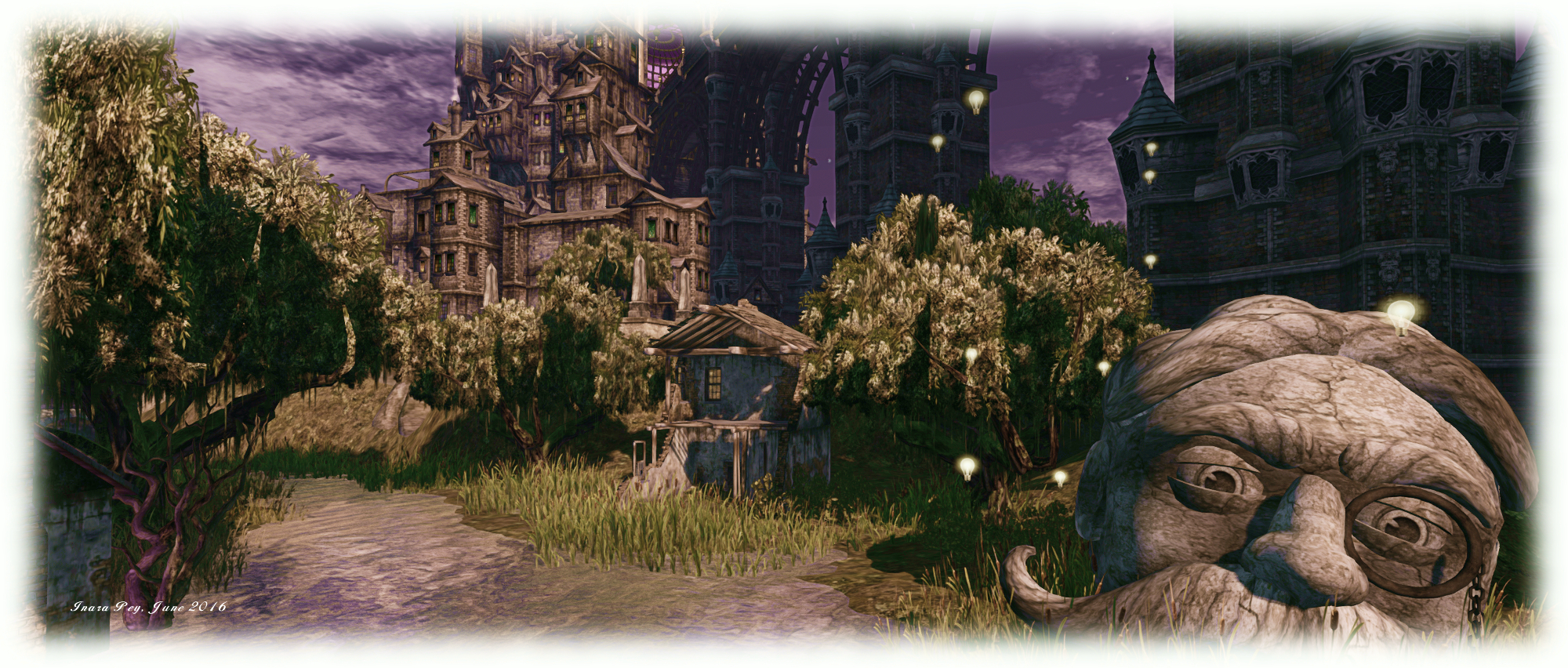
The Looking Glass; Inara Pey, June 2016, on Flickr The Looking Glass

The new build retains many echoes of the old, whilst also being entirely original and distinct, carrying within it many reflections of the marvellous builds Sharni and Marcus have provided for recent Fantasy Faire events. The great bridge is still there, for example, with huge arches spanning the landscape below and reaching out across the region. Only now it has been made whole, and its once heavy stone pillars re-wrought in iron and stone. Nearby, islands still float serenely in the sky, offering sanctuaries of solitude for visitors.

On the ground, the land looks as if it has been shaken as if it were a blanket, falling into new wrinkles and folds through which waters meander. The old town with its modern stores and wider streets is gone. Instead, and reached via a stony path across bridges and through trees, which leads the visitor to it from the dockside landing, sits a smaller town. This is really a gateway, wrapping about itself echoes of Lucentia (Fantasy Faire 2016), as it climbs upwards to merge into the Great Tower, which in turn ascends into the sky, dominating the landscape like a benevolent Barad-dûr.
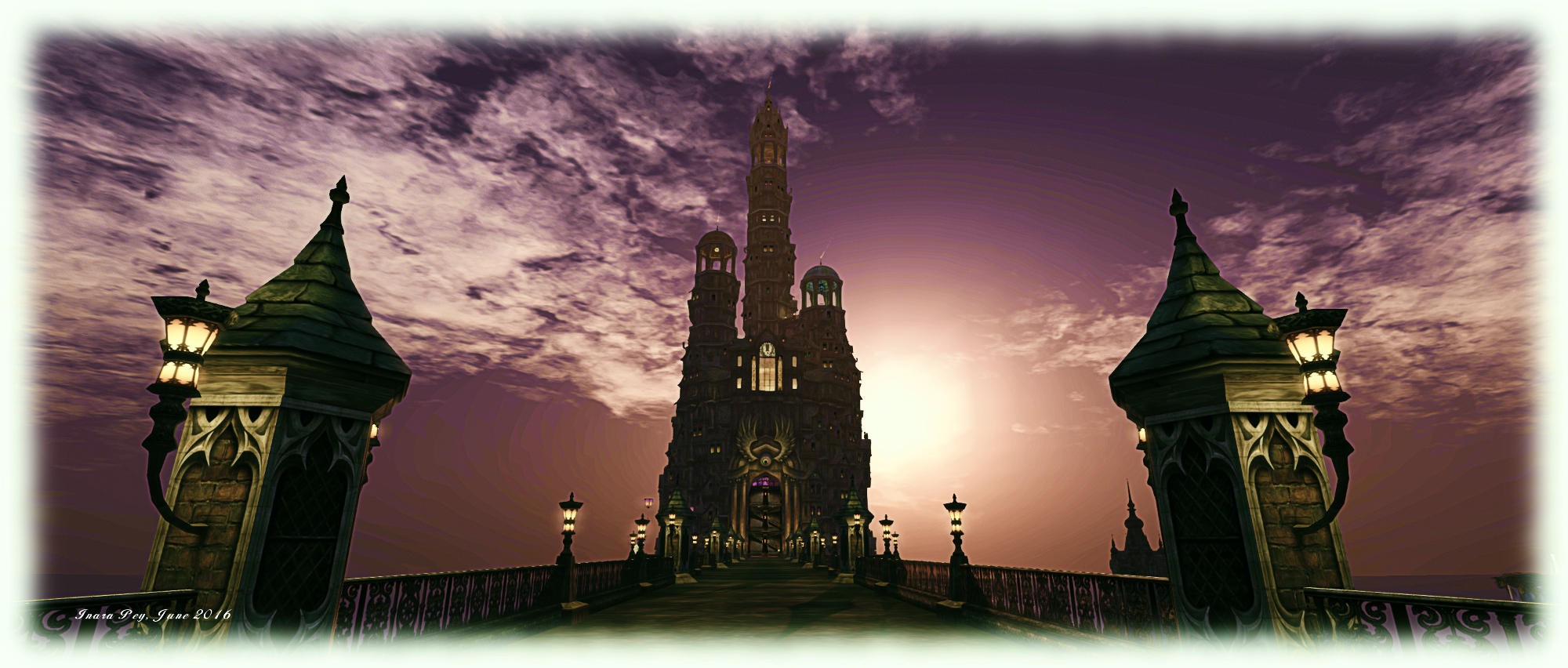
The Looking Glass; Inara Pey, June 2016, on Flickr The Looking Glass

Within this mighty tower can be found the Looking Glass store, and above it, the magnificent Flying Eye Gallery, with all the memories of Fantasy Faire as captured by Alisaundra Andel. Also hidden within its lofty heights lay the Library and its courtyard, a bedroom / workplace and eyrie-like perches  where people might sit and cuddle.

Remain outside of the tower, and you might find your way to the ground-level ballroom, within which sits the memory of Ichi-Go, Ichi-E (Fantasy Faire 2015). Across the water from this, and nestled beneath the great tower lies the familiar sweep and rise of The Dark Tower, one of the commercial buildings offered for sale by The looking Glass. It sits perfectly within the new landscape, and in doing so it also harkens back to the previous incarnation of the region, where it also once stood. Close by sits a house which in turn carries a reminder of Blackwater Glenn (Fantasy Faire 2014), further giving the region that feeling of familiarity – and perhaps a smile – to the seasoned explorer.
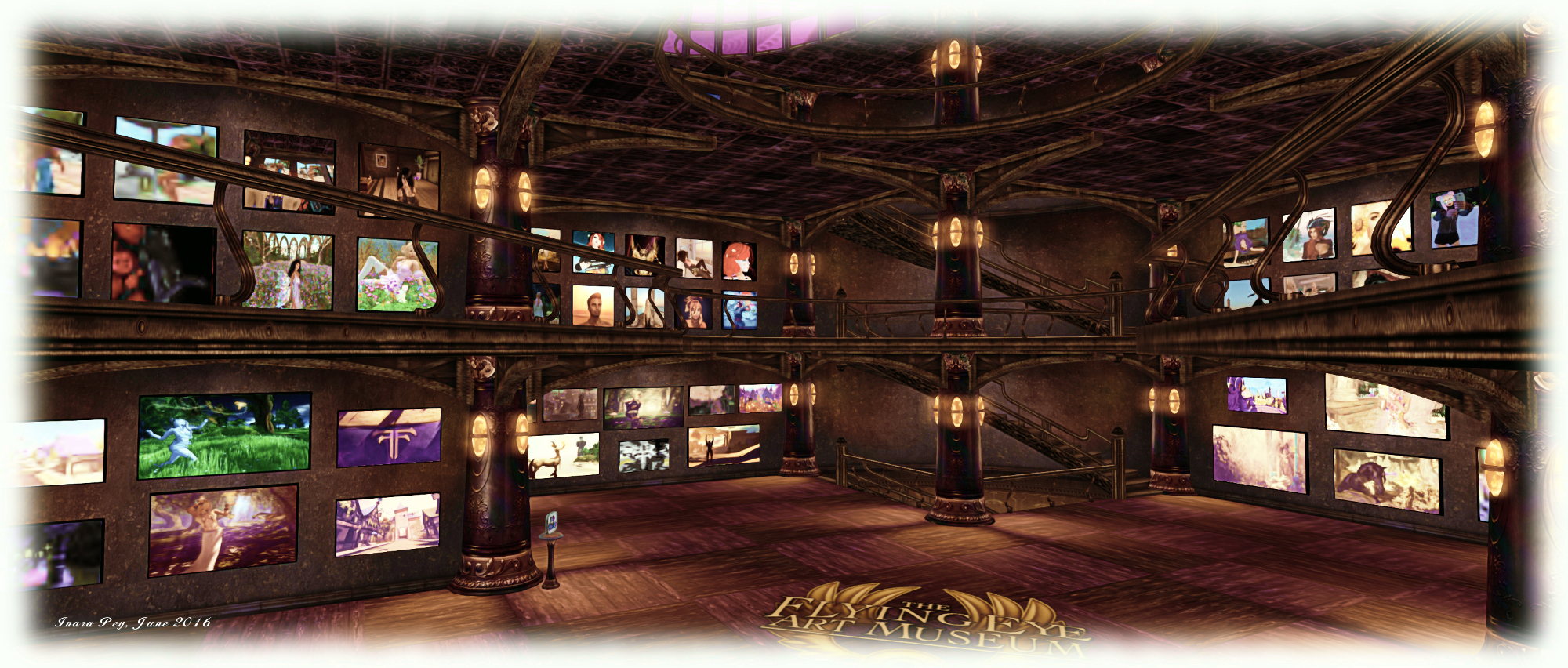
The Looking Glass; Inara Pey, June 2016, on Flickr The Looking Glass

To help visitors get around, there is a system of teleport boards which highlight the major locations in the region. But exploring The looking Glass really is best done on foot, with the odd bit of flying. I did this by following the path from the docks to the great tower, then up through the tower to cross the great span of the bridge, and thence back to ground level.

This route has the virtue of keeping your feet dry and minimising flying, while offering some superb views out over the region. It also brings the floating islands within easy reach, as well as directing the visitor on their way to the little coves along the coast with their secluded beaches, and also towards the open-air ballroom. The loop can then be completed up winding path and back to the town clustered at the foot of the great tower, then around and through the streets there.
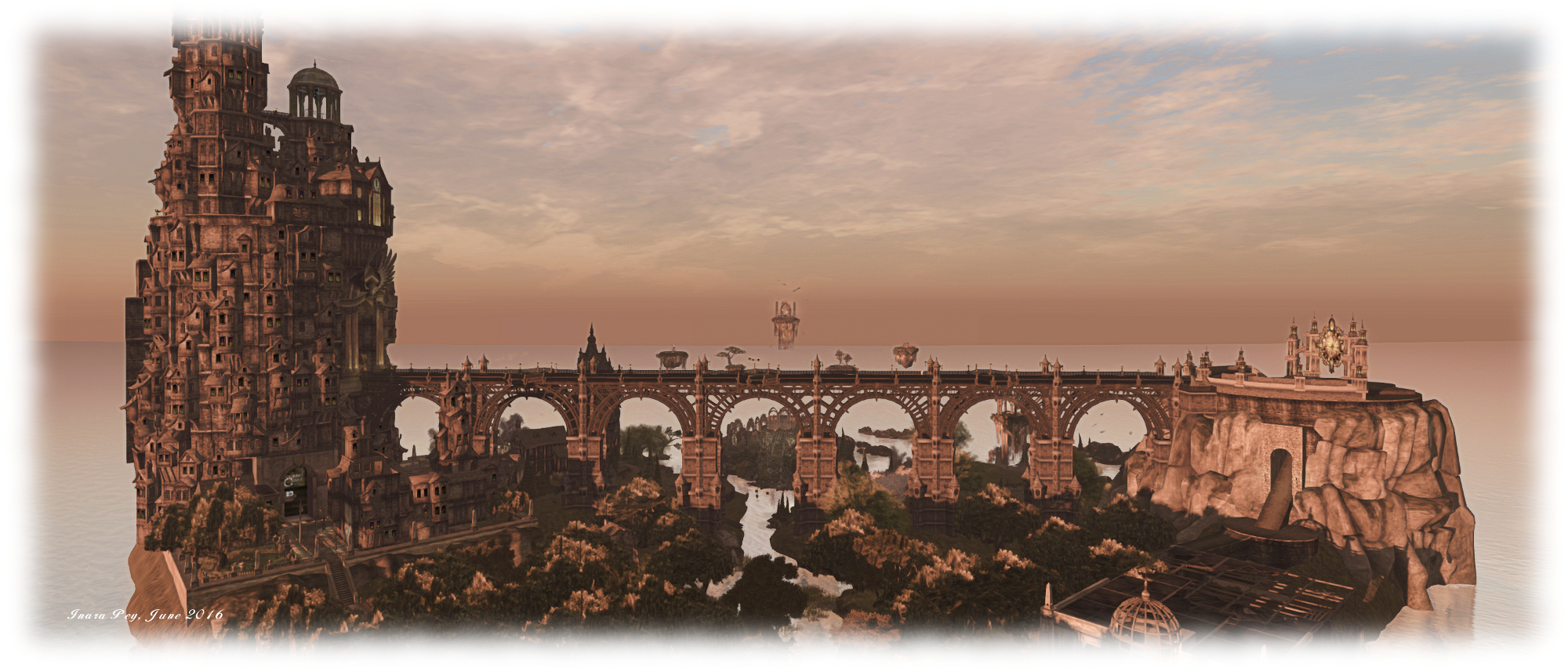
The Looking Glass; Inara Pey, June 2016, on Flickr The Looking Glass

The Looking Glass has always been a marvellous place to visit, full of visual riches and a special hint of magic. This new design for the region beautifully enhances everything which has always made it a place to visit and re-visit, and added to it a depth of memory for anyone who has loved Sharni’s and Macus’ designs for Fantasy Faire which makes it simply irresistible.

SLurl Details

Visiting an eternal corner of Second Life

Khaled; Inara Pey, June 2016, on Flickr Khaled – click any image for full size

Not so long ago – March 2016 to be precise – I wrote about my visit to [G]aio, the charming homestead region designed by cambiamento Radikal which beautifully lived up to its name (“cheerful”).

Now Cambiamento is finishing a new region to showcase – Khaled (Arabic for “eternal”) – and he graciously invited me to hop over and take a look. “For me, it’s better that [G]aio!” he informed me as we chatted about the new region, and I have to say, there is an elegance and rugged beauty to Khaled which does make it as memorable as [G]aio – although I would suggest the landing point needs slight adjustment! 🙂 .

Khaled; Inara Pey, June 2016, on Flickr Khaled

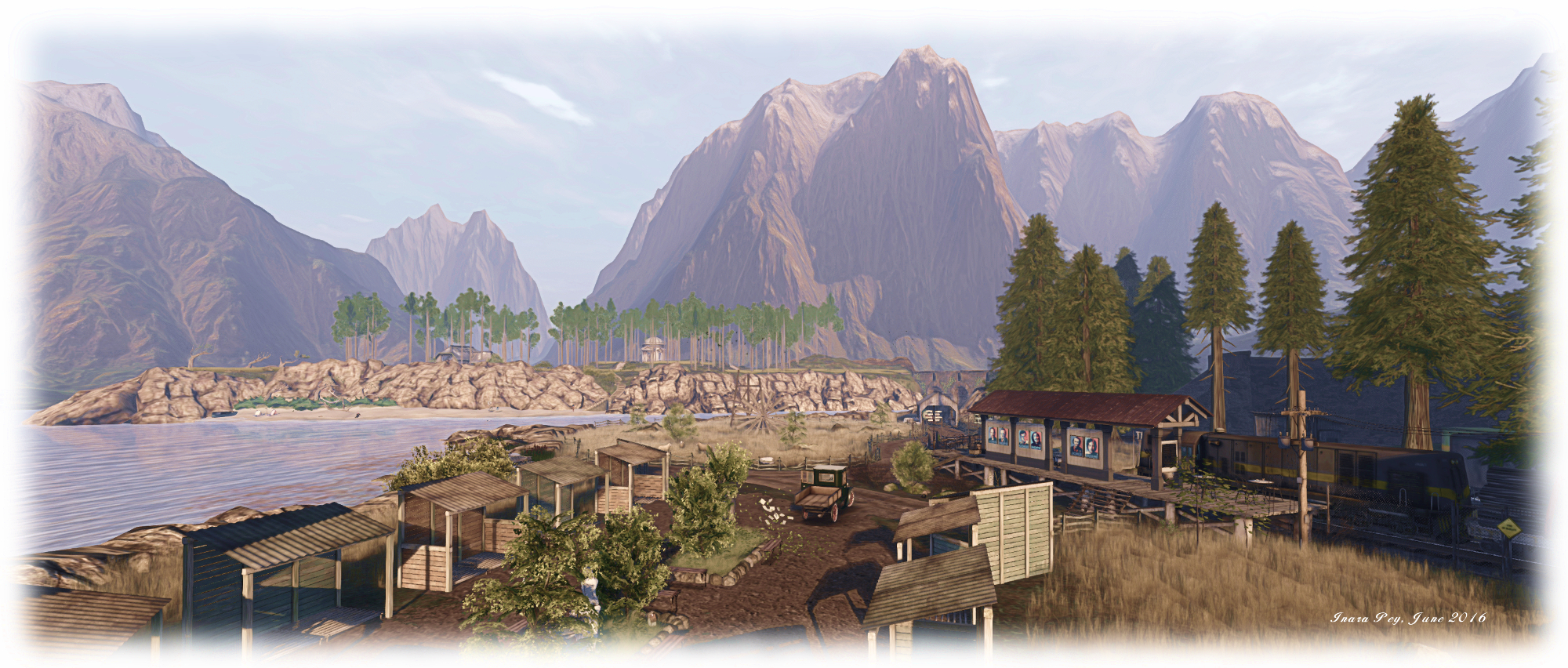
Surrounded by tall, steep peaks partially hidden in the misty windlight, Khaled is broadly split into two. The landing point places new arrivals towards (or perhaps on, if the landing point is adjusted!) a rugged tongue of an island.

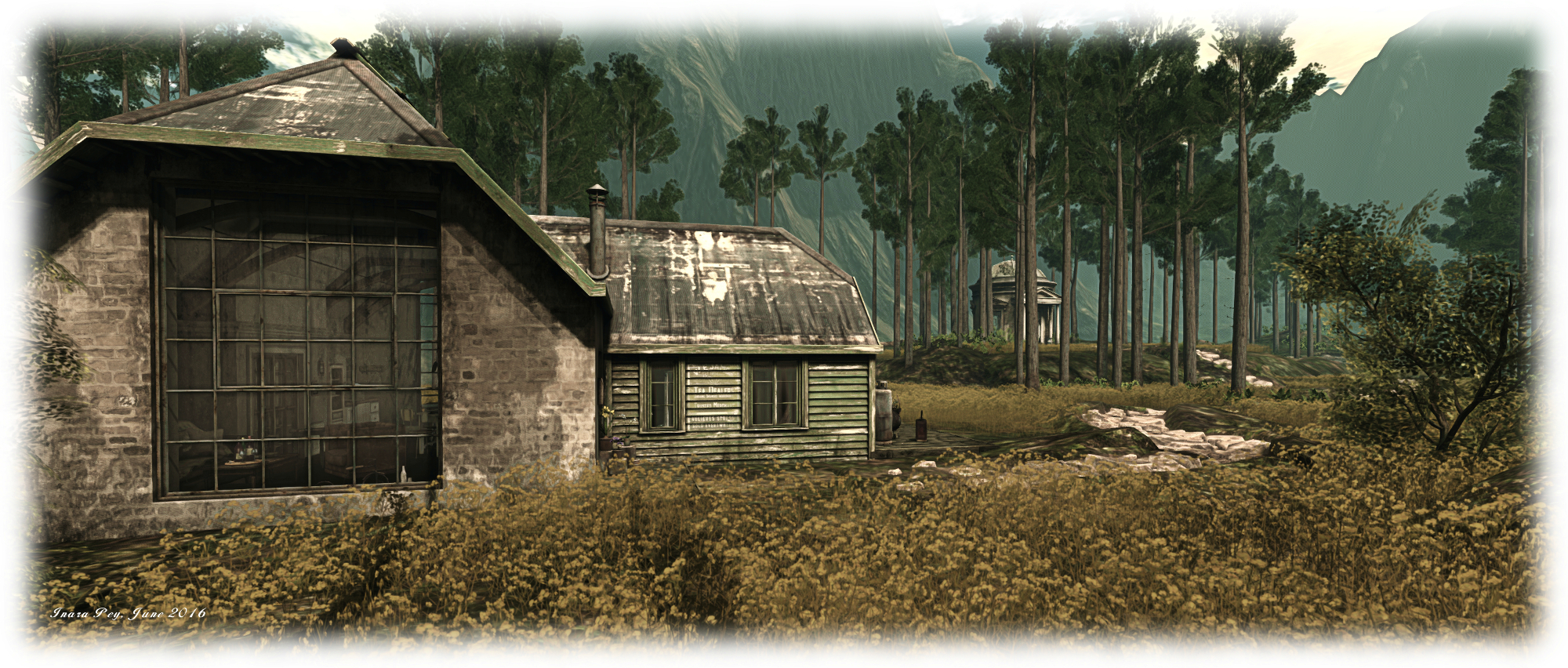
A single ribbon of beach on one side of the island faces the rest of the region, a curved set of stone steps providing a gentle ascent up the rocky shoulder of the isle to its flat top. Here, a sandy, rugged path cuts west to eat, connecting a small cabin house close to one end of the island with a sturdy stone bridge at the other. Tall and slender Scots pines point skyward across the island, and surround the old Victorian folly standing on the highest point of the island – just a scant couple of metes about the main track.

Khaled; Inara Pey, June 2016, on Flickr Khaled

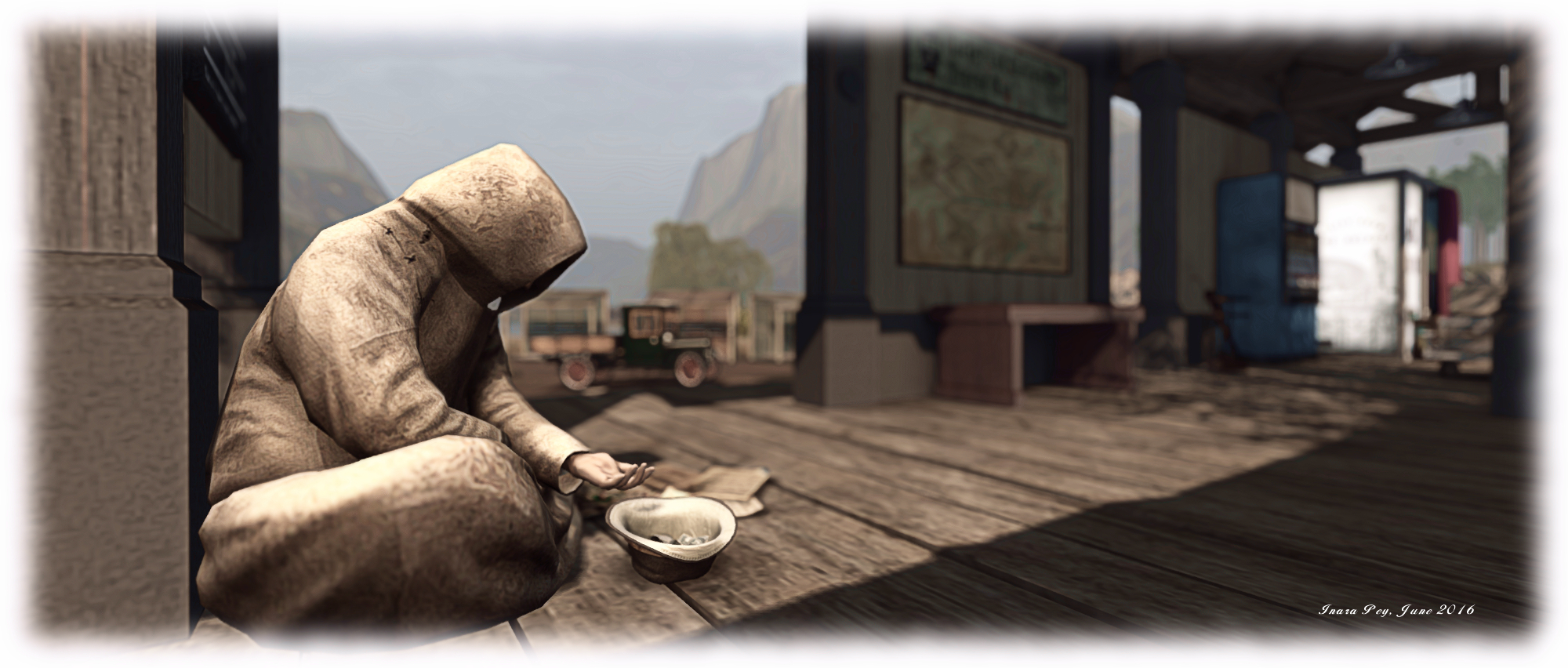
Across the bridge, the landscape is seamlessly blended with the region surround to present a low-lowing headland thrusting gently out into the water of a lake. This is the home of a small farmstead and a rural railway station. A freight train is passing through, emerging briefly from one tunnel before dipping into the next as it makes its way through the tall mountains. Facing the station, at the water’s edge, sits a landing stage, a rideable motor boat alongside. The dirt road between landing stage and station passes an oval of market stalls.

Rural and serene, with a perfect ambient sound scape, Khaled is also a place with a secret – one that might easily be missed without proper exploration. I’m not going to say too much more on this, as it’s worth discovering for yourself. All I will do is offer a photo and say a trip out on the water is required to reveal it.

Khaled; Inara Pey, June 2016, on Flickr Khaled

I visited Khaled at a time when Cambiamento was still working on the region; he was considering adding further Wildlife and one or two other nips and tucks in order to finish things off.  Event so, at the time of my visit, the region was already eye-catching and suited to a wide range of Windlight settings. I can definitely say that anyone who enjoyed visiting [G]aio is bound to enjoy and appreciate Khaled. Should you do so, please consider making a donation towards the upkeep of the region so that others might enjoy it also.

My thanks to Cambiamento for inviting me to visit 🙂 .

Khaled; Inara Pey, June 2016, on Flickr Khaled

SLurl Details

Standing in the Gates of Melancholy in Second Life

Gates of Melancholy; Inara Pey, June 2016, on Flickr Gates of Melancholy – click any image for full size

Newly opened as of Saturday, June 4th, is Gates of Melancholy, the latest regions design by photographer shelly70, and a further piece in her Gates series (see my article on Gates of Memories for a sample of her work cloaked in winter). And like her previous designs, Gates of Melancholy is a visual feast.

“This sim which is based on and inspired from the life and work of the famous American painter Andrew Wyeth,” Shelly says of the design, “is created to emulate and elicit the feel in [his] watercolour paintings.”

Gates of Melancholy; Inara Pey, June 2016, on Flickr Gates of Melancholy

A realist painter, Wyeth (July 12, 1917 – January 16, 2009) predominantly focused on his local landscape and the people within it, presenting America and the world with a grim, flinty, and often starchily sentimental view of New England. His was a world of empty beaches, windswept, desiccated fields, wooden buildings grey with age, their frames like brittle parchment, and locals with faces as craggy as many a coastal cliff, couple with evocative studies of families and friends. There is, as Shelly states in her introductory notes, a stark nostalgia and melancholy evident in his work, and she has striven to recreate that feeling with the look and feel of the region.

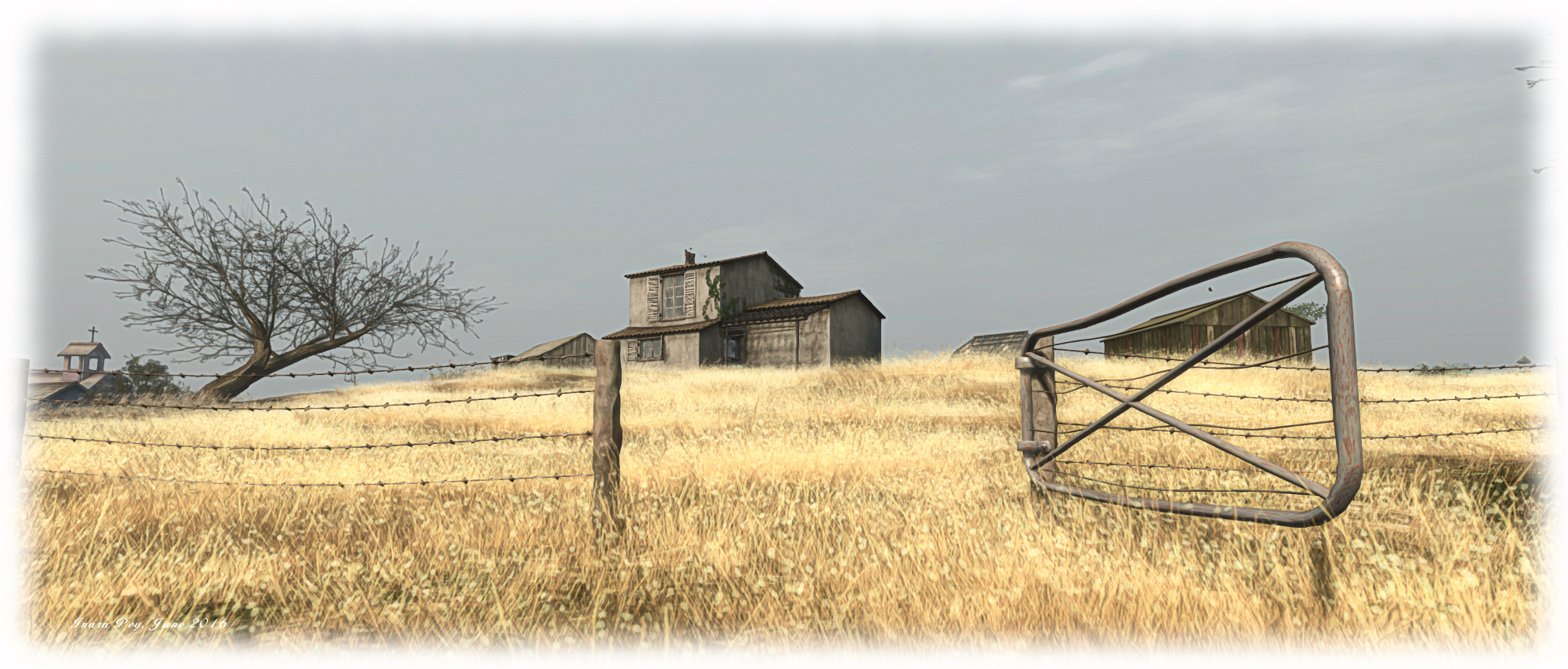
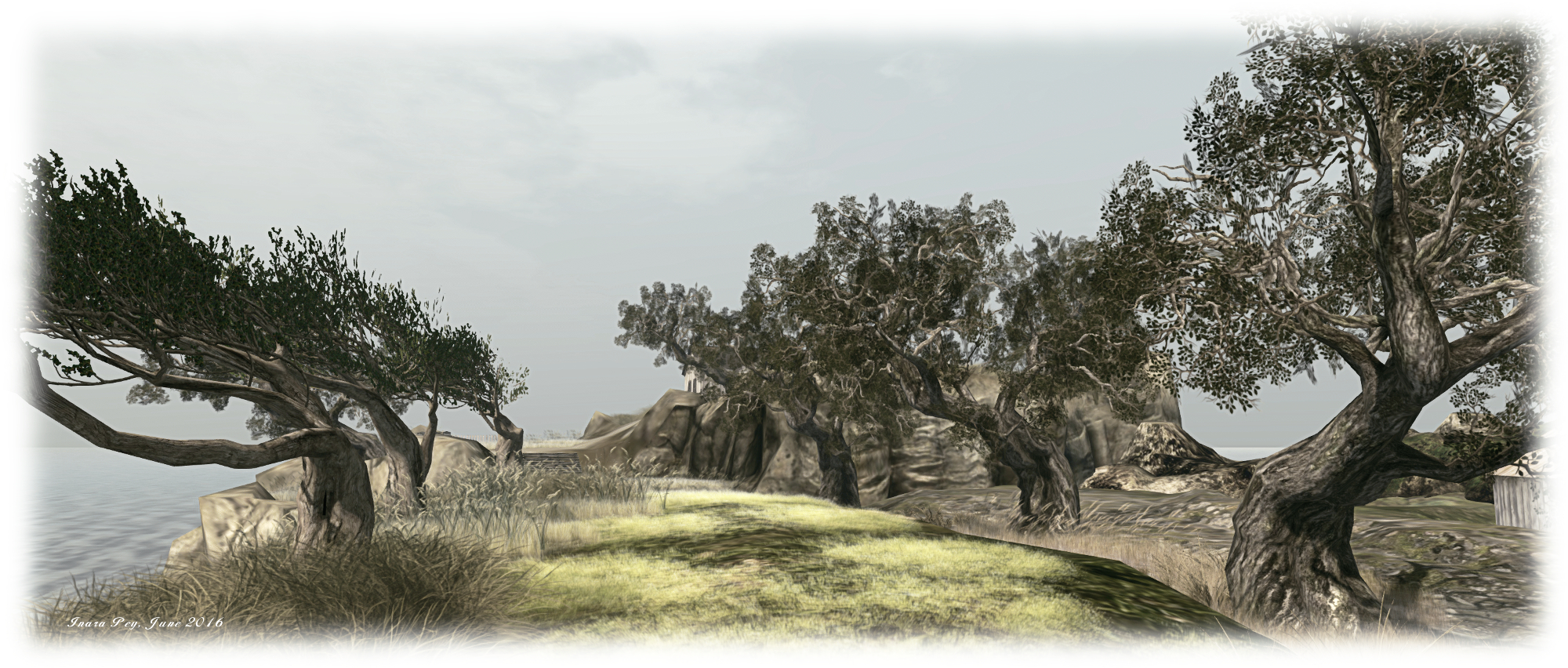
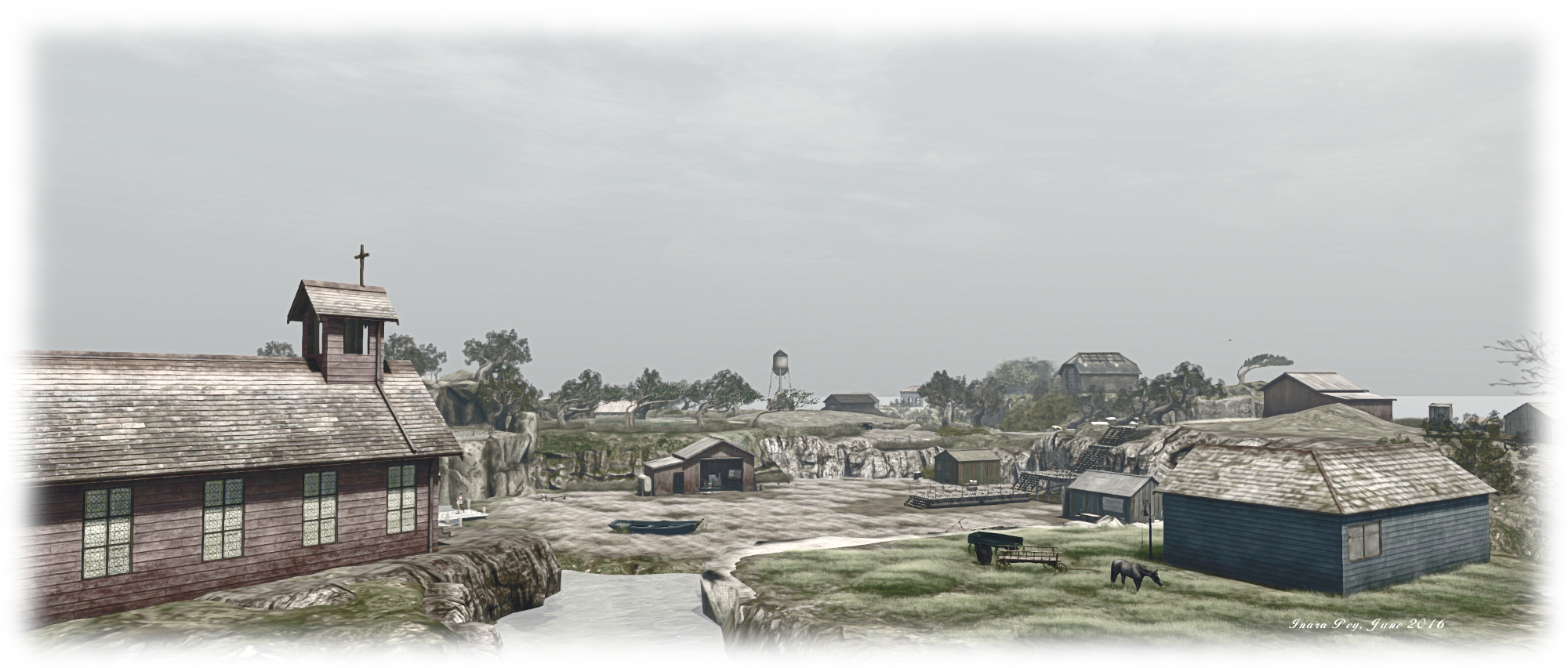
This is a rugged, coastal landscape from which wood-framed outbuildings and chapels rise, wood parched and faded under the unrelenting influence of coastal weather, and where the farmhouses carry a careworn look. The lands around them is a mix of open fields, craggy scarps and rises, where the trees are often bent and crooked as with great age, shapes borne of long years resisting the prevailing winds. The grass is mostly short and tufted, often with the bald, rocky land beneath it showing through here and there before the land abrupt falls way by scarp or cliff. Over all of this, an ochre sun hands in an ochre sky, casting the landscape into a sombre twilight.

Gates of Melancholy; Inara Pey, June 2016, on Flickr Gates of Melancholy

It is, quite simply, breath-taking – although I admittedly opted for an alternative Windlight when capturing the images shown here; there is so much that is evocative of Wyeth’s work. Two examples of this came to me in the form of a view up a grassy slope towards distance farm buildings which immediately suggested Christina’s World, albeit without the central character, whilst a rowing boat draw up onto the grass immediately put me in mind of Teel’s Island, Maine.

Nor is this any empty landscape – there are signs of life everywhere, within the barns, in the houses, and outside under the awnings of little market-like stalls, all offering views and scenes ready to capture the eye and camera. Many of the the building offer the opportunity to sit and snuggle or chat, adding to the desire to visit and tarry.

Gates of Melancholy; Inara Pey, June 2016, on Flickr Gates of Melancholy

Complemented by an audio stream Shelly has taken pains to put together, as well as ambient local sounds, Gates of Melancholy, like Wyeth’s paintings, is not something simply to be seen; it is a place to be experienced and savoured for all of its stark beauty and realism. It is a place, I’ve little doubt, that were his spirit ever to visit, it would recognise and approve.

SLurl Details

A Snuggles Forest in Second Life

Snuggles Forest
Snuggles Forest

Just over the water from her Snuggles brand stores in Second Life, Teagan Parnas has created a little park open to the public to enjoy. Snuggles Forest, occupying a Homestead region, offers the chance for visitors to roam an undulating landscape and dance, sit, share time on the beaches, explore and – as them name might suggest – snuggle.

“Forest” is perhaps too broad a term for the region – there are trees for sure, but these are more woodland in nature and placement, rather than “forest”. So there is no need to fear you’ll be fighting through undergrowth and struggling to see things; the paths are all well-marked, and the sunshine falls as much on open spaces as it does on leafy canopies.

Snuggles Forest
Snuggles Forest

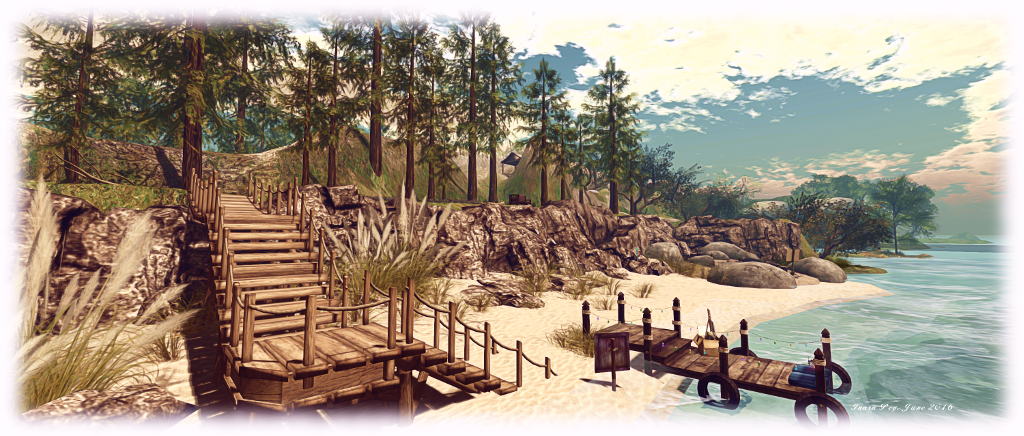
For those wishing to get to places quickly, the landing point offers a TP board – but setting out on shank’s pony is by far the best option. From the landing point on the north side of the region, visitors can head east or west to the Sunrise or Sunset Beach, or head inland and up the central hills, where there are places to sit or enjoy yoga.

The paths themselves lead right around the island, so whether you head east or west, you’ll find your way to most points, and there are plenty of diversions along the way, including the odd curio or two – such as the rock house nestled between the hunched shoulders of the humpbacked hills.  There’s even a Norman church sitting in one corner of the region which, in a bit of a Las Vegas twist, offers automated weddings, complete with personalised certificates, for those who want the efficiency of a DIY ceremony!

Snuggles Forest
Snuggles Forest

For those seeking a place to wander for a while, with lots of little open and secluded places to sit, snuggle and / or dance, Snuggles Forest offers a pleasing location for exploration and relaxation, and a fair few points for photography.

SLurl Details

A trip to the Countryside in Second Life

Countryside, Habitat Springs; Inara Pey, May 2016, on Flickr Countryside, Habitat Springs – click any image for full size

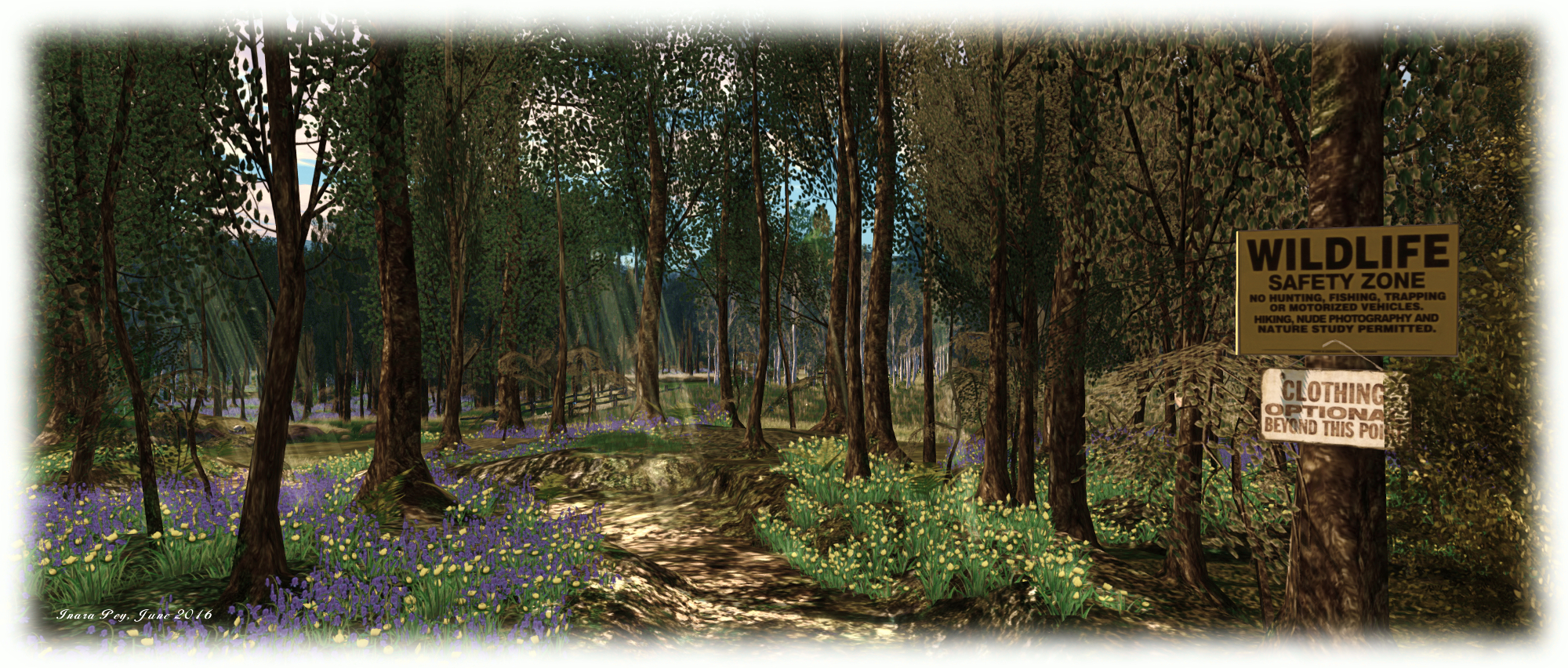
In November 2014 I wrote about a Mainland location called The Back 40, designed by Dicky (Dick Spad). At the time, I was enchanted by that discovery; so you can imagine my absolute delight in discovering Dicky has a full region as well, also open to the public (aside from the corner where he has his private residence).

Countryside is every bit as enchanting as The Back 40, offering a fabulous outdoors environment which can be enjoyed through solo exploration or – more ideally – in the company of a friend / someone close to you.

Countryside, Habitat Springs; Inara Pey, May 2016, on Flickr Countryside, Habitat Springs

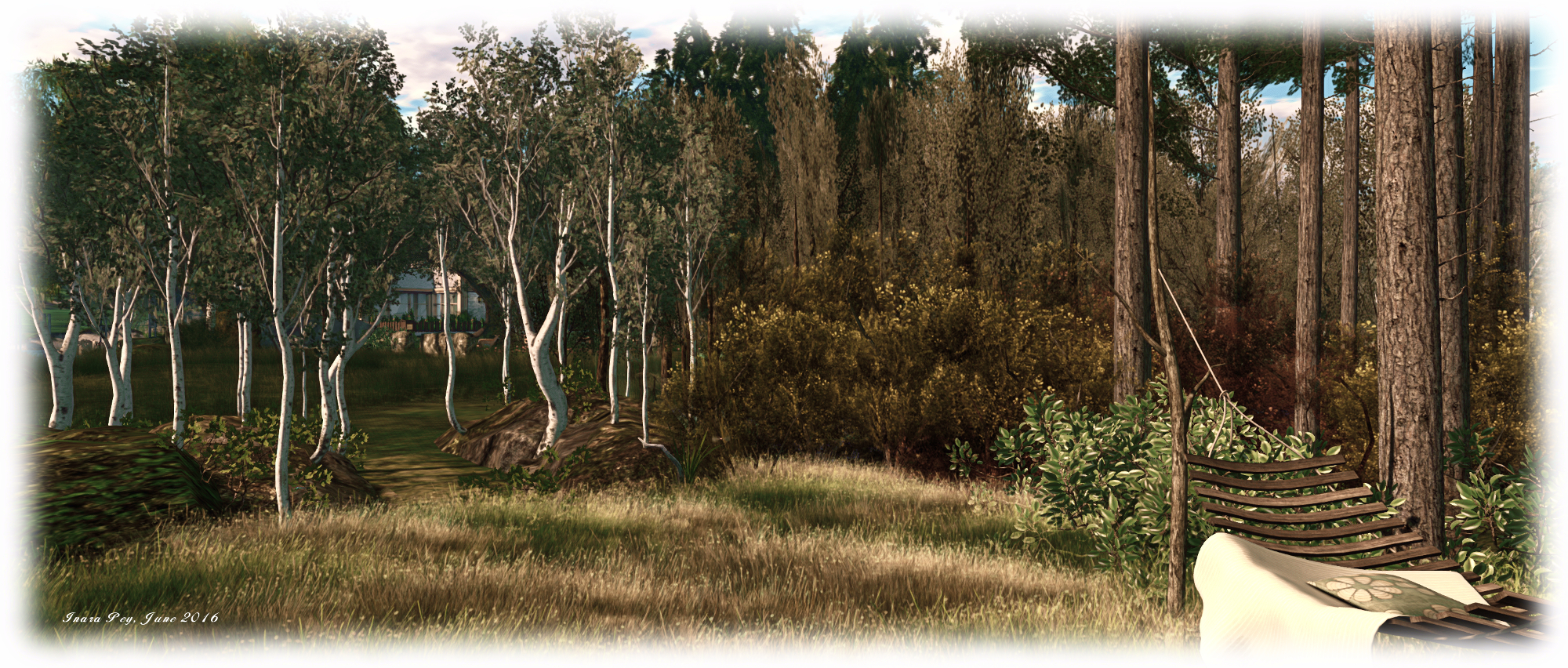
Surrounded by a rolling landscape created by the use of region surrounds, it’s hard to tell where the region ends and “beyond” begins, which helps give this region a feeling of being far bigger than the 256 metres on a side we’re allowed. Largely flat, the land is naturally divided into a series of areas by the river flowing through the region and the use of broad greenswards, very strongly suggestive of fire breaks to be found in heavy areas prone to forest fires.

From the landing point in the south-east corner of the region, one can strike out north or west, the greenswards offering a choice of routes through the groupings of trees. Head north, and you’ll pass woods and meadow, a fire watch tower and reach grasslands stretching up to the river, on the other side of which sits Dicky’s private residence.

Countryside, Habitat Springs; Inara Pey, May 2016, on Flickr Countryside, Habitat Springs

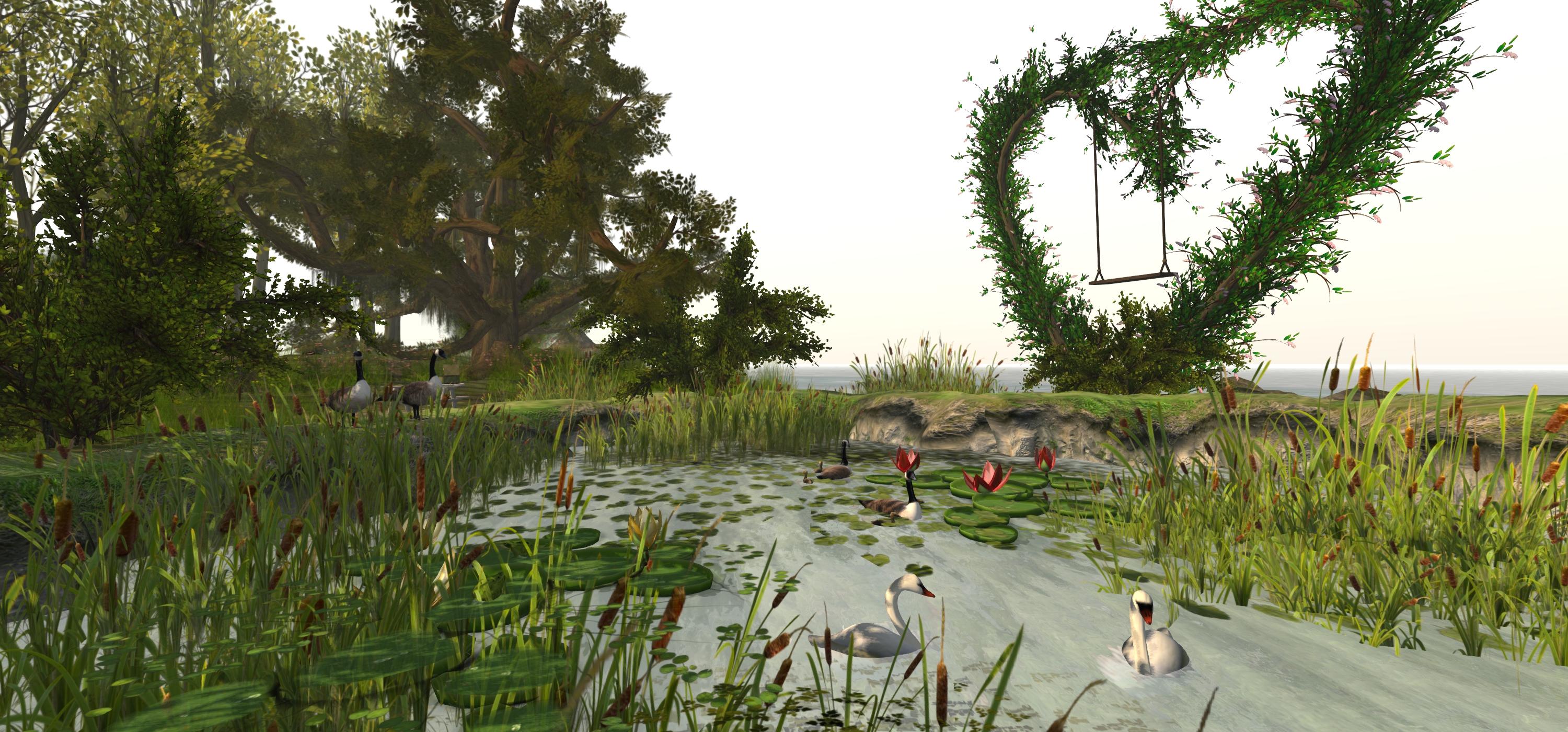
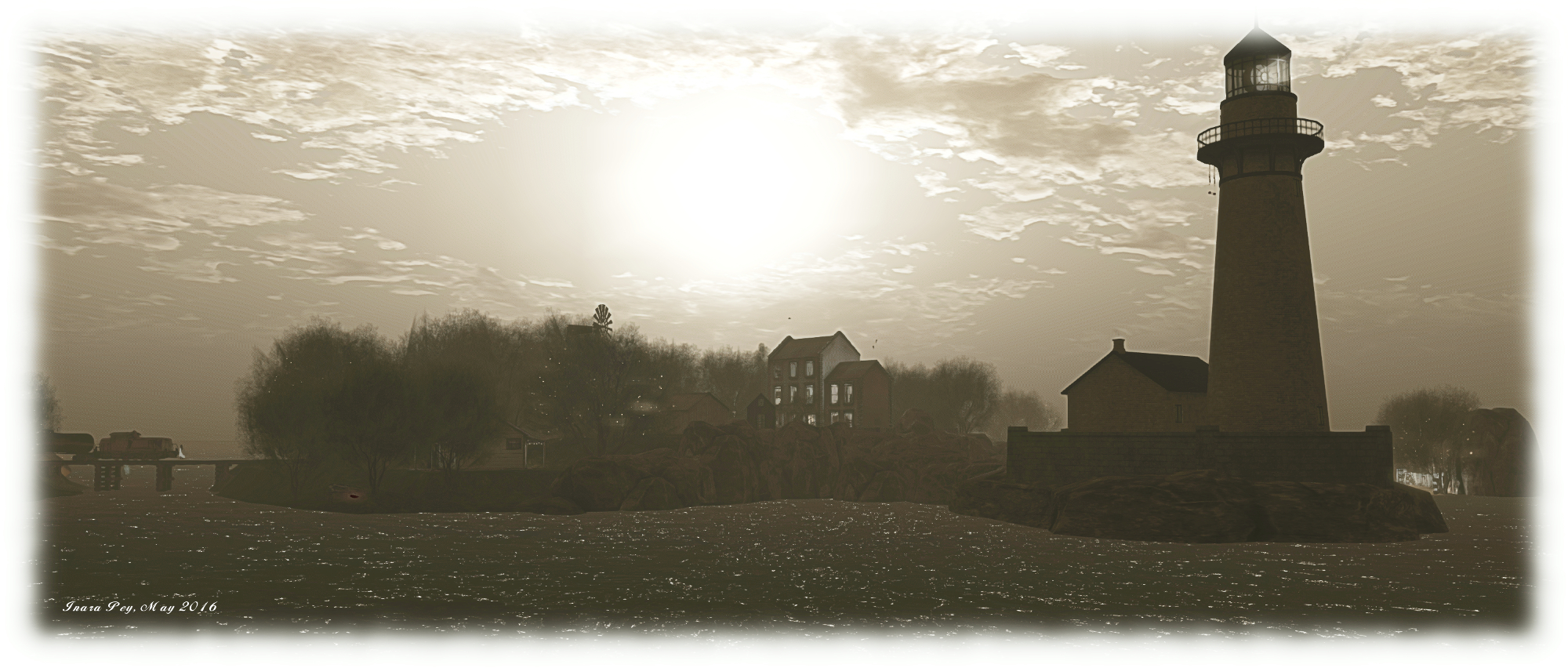
Head west from the landing point and you’ll again come to the head of the river: a large pool of water fed by a waterfall, where bears fish and beavers are constructing a lodge. Cross the river via with little wooden bridge, and the landscape gradually changes, edging away from the open wilds to a more rural environment with neatly laid crops, fenced  fields and meadows, and a small farm fed by a dirt track, the sidings of a railway spur close by.

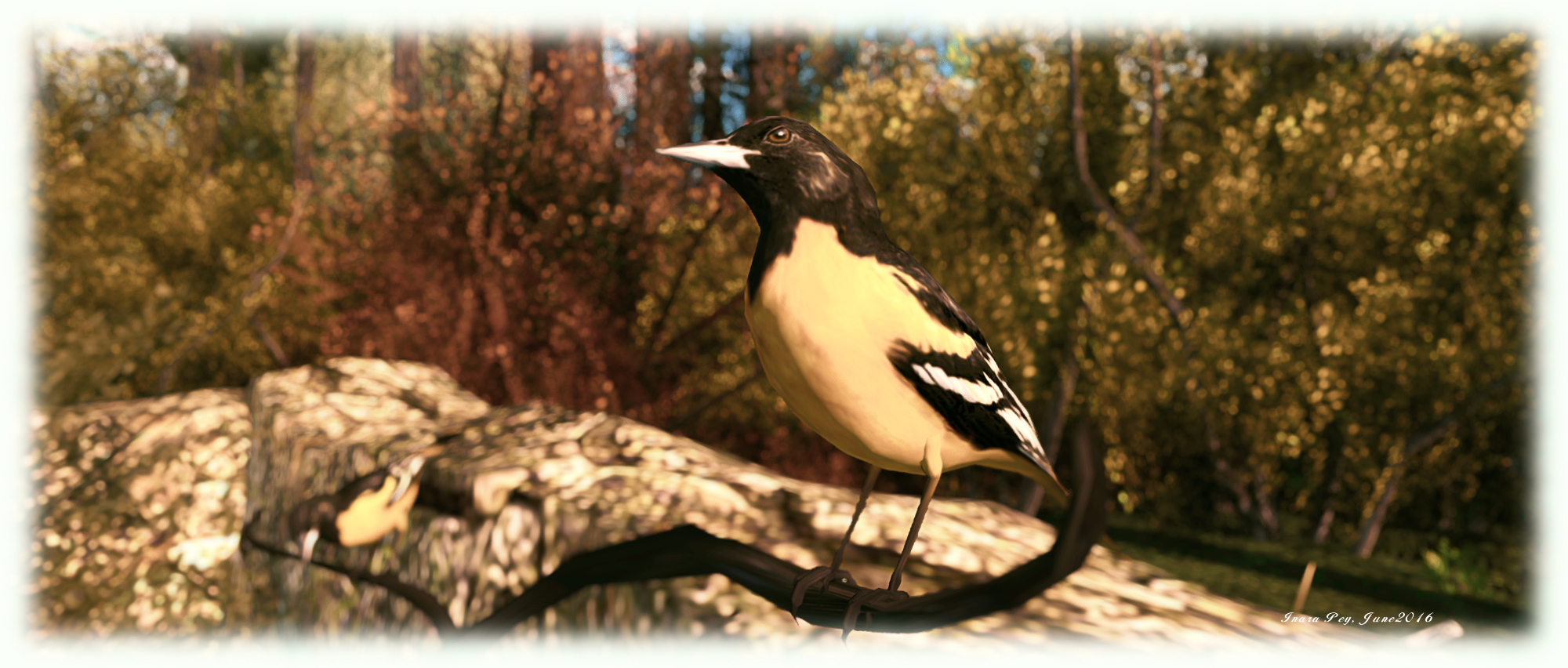
It is, in a word, quite beautiful. And that’s really just the start; it’s possible to wander for what seems miles around the region and still come across something new – be it more wildlife, another little snuggle place or a further vantage point ideal for photographs. Do keep an eye out for Morgan Garret’s marvellous little birds, which I also blogged about far back in the mists of time – or December 2013, to be exact. We have a number of them scattered around the island home, and they really are quite fantastic and life-like.

Countryside, Habitat Springs; Inara Pey, May 2016, on Flickr Countryside, Habitat Springs

Back in November 2014 I noted how Dicky’s work at The Back 40 demonstrates you don’t necessarily need a full-sized regions to create something memorable. With Countryside, it is fair to say that Dicky shows us just what can be done when you do have a full-sized region at your disposal, and are prepared to put the time into developing it and its surroundings.

I’ve visited many regions over the years I’ve been exploring Second Life, and all of them have been fabulous in their own unique ways; but I don’t think I’ve been to a region that is quite so natural-looking and well-blended as Countryside.

Very highly recommended – and you can still visit The Back 40 as well!

Countryside, Habitat Springs

SLurl Details

A Beautiful Suicide in Second Life

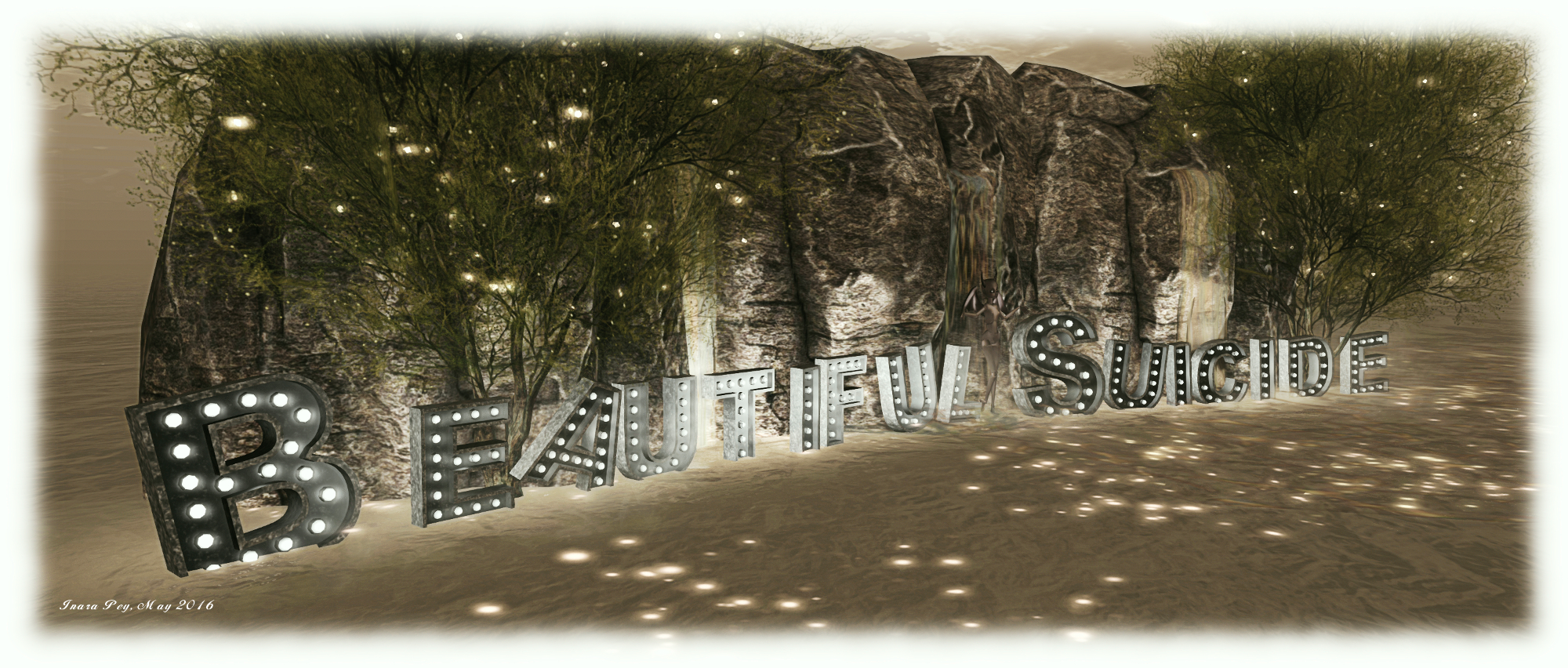
Beautiful Suicide; Inara Pey, May 2016, on Flickr Beautiful Suicide – click any image for full size

Beautiful Suicide is an enigmatic region designed by Jaidens Rancid (Jaidens) which has been featured in the Destination Guide for the last couple of weeks, thus attracting my attention.

“Embrace yourself,” the Destination Guide entry reads, “for something has happened here.”  Quite what that something might be, is left to our imaginations to conjure: and there is certainly enough here to get the thoughts ticking over. Cast into a perpetual dusk under the default windlight, this is a place of dark mystery, offering some interesting photo opportunities.

Beautiful Suicide; Inara Pey, May 2016, on Flickr Beautiful Suicide

Everything seems normal enough on arrival; there is even a hint of romance about the landing point. This is a bridge on the west side of the largest of three main islands, softly light by lanterns and fairy lights draped over the branches of the tree on either side of the water it spans. There’s even a hint of mist to add to the atmosphere. But look again, and see how the posts from which the lanterns hang have a hint of the gallows about them; the first sign that things here aren’t always as they appear.

That this is the case can further be found under the bridge, where a great troll stands knee-deep in water. And here too, is something of a conflict: on the one hand, we tend to associate trolls with dark and bad things; but this one holds a gem within its cupped hands, as if offering it to us in friendship.

Beautiful Suicide; Inara Pey, May 2016, on Flickr Beautiful Suicide

This juxtaposition of the safe and friendly with the dark and dangerous echoes throughout the region. On the east side of the main island, for example, sits a private house. within it sit all the signs of a  comfortable home; in the conservatory, a table is laid for a dinner party. It all seems so normal – until one looks up on the roof.

And whilst the nearby ruin of another house might suggest an opportunity for snuggles or a quiet escape from the world, A look behind the stairs or a glance up on to the upper floor reveals this place also has a certain macabre edge, reminding us of the question posed by the region’s Destination Guide entry Where did all the people go?

Beautiful Suicide; Inara Pey, May 2016, on Flickr Beautiful Suicide

But it is not all darkness; the region is, as I’ve noted, quite photogenic, and there are places to be found where time can be spent in idle thought on in the company of a loved one: down on the pier of the inlet, or sitting at the pool terrace alongside the main house, etc. There are even opportunities for a little fun in the form of flying saucer and boat rezzers, allowing visitors to zip through the sky or across the water surrounding the islands.

If you like your visits and / or romance edged with a darker touch, tinted with a drop of the macabre and a drizzled suggestion of black magic, Beautiful Suicide offers a more unusual destination you might enjoy taking a look at. Should you enjoy your visit, as I did, please consider making a donation towards the region’s upkeep so that other might also enjoy it.

SLurl Details