Discovering 1920s New York in Second Life

1920s New York Project

“I’d been considering doing a 1920’s New York Project for a long time, wanted to make sure I had the time and resources for a project this big,” Jogi Schultz (yogijo) – “Mr. S” to the folk in his neighbourhood – told me as we emerged from the subway station into the world of New York in the mid-1920s, as modelled by his 1920s New York Project.

As we stood at the roadside, a few cars parked at the kerb, he continued, “New York City has been my favourite city since I was a kid.  There is so much history here, even in the buildings themselves.  And it’s so diverse in what it has to offer.”

I’d first come across the project via Annie Brightstar. Her article was enough to pique my curiosity and encourage me to hop over to take a look – and that encouraged me to contact Jogi to find out more.
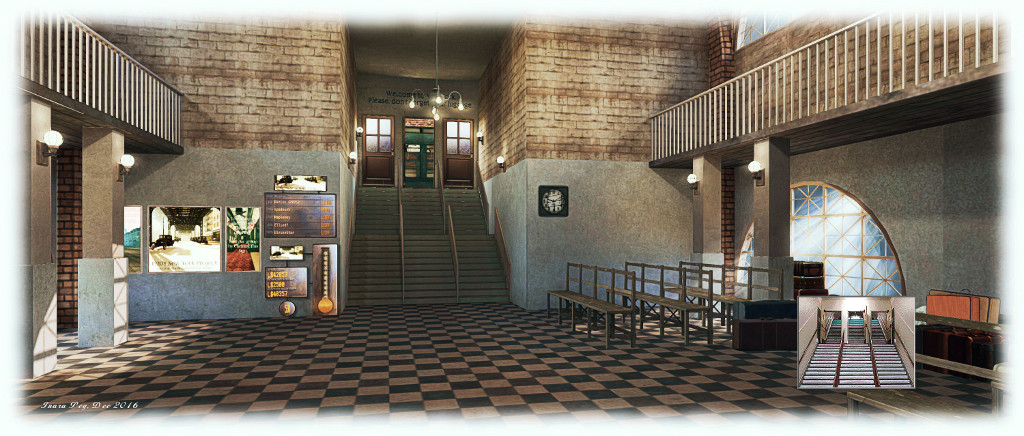
1920s New York Project: the landing point, model on the Detention Hall, Ellis Island, complete with the Stairway of Separation (and the real thing, inset)

“I started back in September,” he told me as we stood chatting. “I’m doing everything by hand; none of the builds are intended for sale to others. It’s all for the project.” And by ‘everything’, he means just that: buildings, roads, sidewalks, street lamps, the elevated rail line, the ornate iron subway stair copulas – even the period cars parked at the kerb side – everything has come from Jogi’s research, and been carefully designed and constructed.  “We’re at a quarter region now, and I’m just starting on the next quarter, in time the project will extend over a full.”

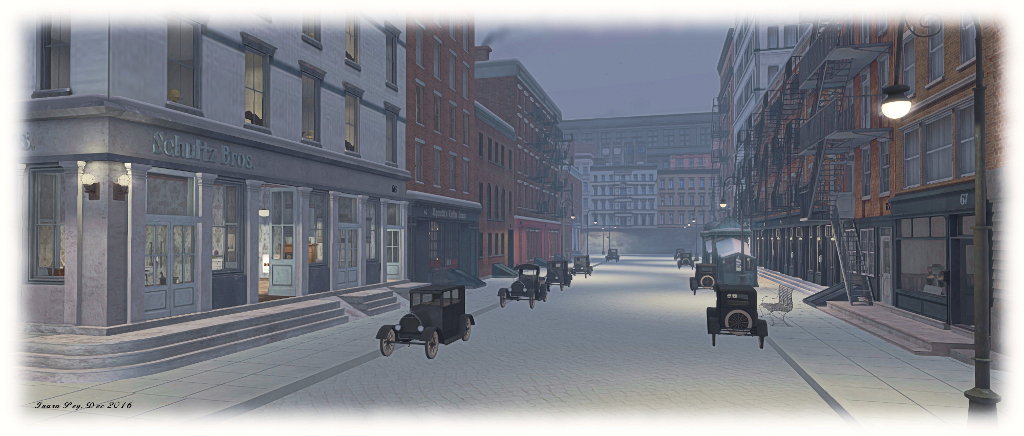
The work completed so far is impressive. Jogi has taken extraordinary care to recreate buildings from the period which actually existed (some of which still do today) along streets such as Pearl St and Water St in lower Manhattan. At street level, stores and boutiques line the sidewalks, with brick-faced and concrete apartment blocks rising 3, 4 or 5 stories above them, fronts often hung with the wrought iron railings and stairs of fire escapes, great ladders ready to drop to street level should they ever be needed.

Nor are these simply empty structures. “The aim here is authentic role-play,” Jogi told me. “We have around 50 rentals in total. Already all the available apartments have been rented, and the stores are filling up. When we formally open, a dress code will be in place, and visitors will be encouraged to dress the part on arriving. We’ll be requesting all open chat is kept in character, and everything else, questions and things,  are kept to IM.”
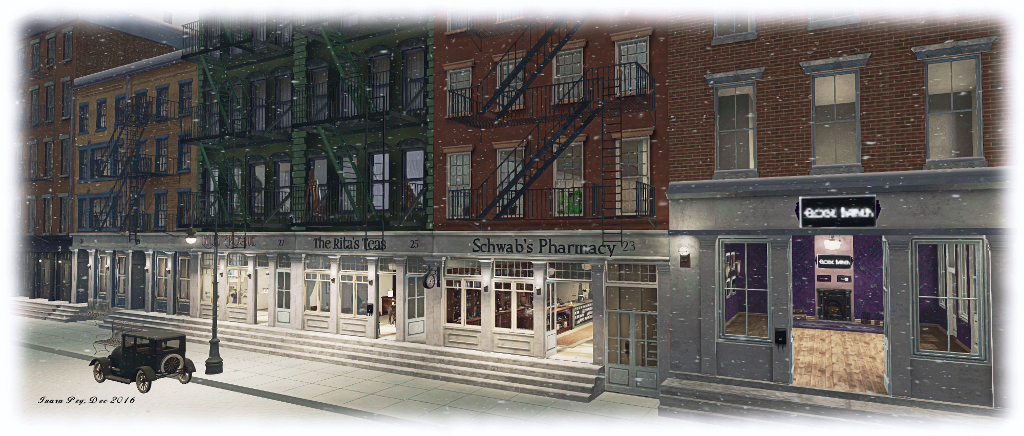
19920s New York Project: Water Street businesses
1920s New York Project: Water Street businesses – click on any image for full size

As if to echo this, one of the local tenants came by, a bonnet protecting her head and hair from the cold, heavy coat falling to her knees. “afternoon Mistah S,” she greeted, with a nod and a smile to Jogi.

“Afternoon, Matilde,” Jogi replied, lifting a finger to touch the brim of his fedora in a polite salute.

Visitors to 1920’s New York Project arrive below a subway station in a large hall, on one side of which is a broad stairway leading up to the station’s platform. “It is actually modelled on the detention area at Ellis Island, New York”, Jogi told me. “And the stairs are the Stairs of Separation. When immigrants came to New York by ship, they’d arrive at Ellis island and checked. Some would be detained due to illness or other concerns, and get directed down the stairs to the detention area, where they might face deportation.”

It’s a sobering start to a visit to the project – but one not entirely out-of-context in a way. 1920s New York Project, as noted, is intended to be a period environment, and so the hall acts as a point at which arriving visitors can read the rules, understand things like the period dress code. Then, they can either pick up a suitable period outfit from the free vendors or, if they feel it is not for them, they can “deport” themselves by teleporting home or elsewhere.

Those taking the stairs up from the hall will pass by way of the station’s platform and ticket hall to street level. “Obviously, there isn’t a real subway platform connected to the Ellis Island hall,” Jogi said, “but it all seemed to fit together visually here. At street level, the station is actually a couple of blocks over from where we’re standing, but after seeing the original, I thought one would really complete the picture I was going for. In fact, I actually started the entire project with the subway.”
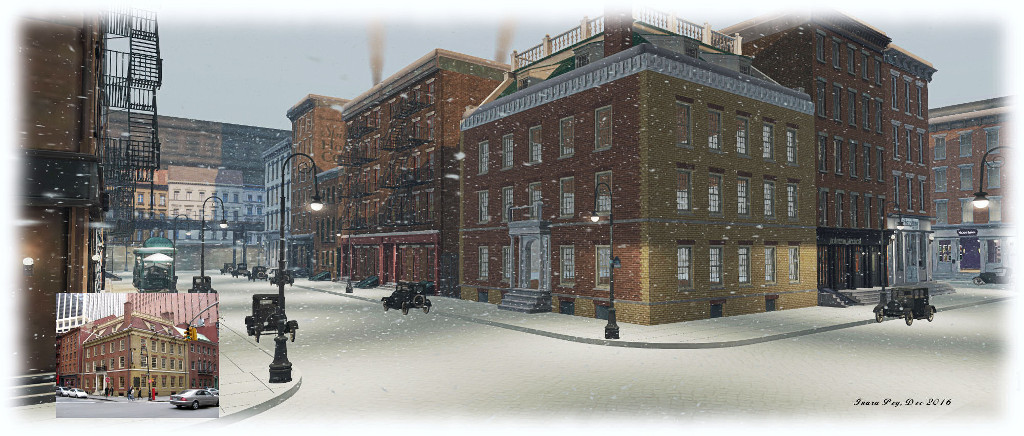
1920s New Tork Project: Fraunces Tavern in Second Life, and inset - how is looks today
1920s New York Project: Fraunces Tavern in Second Life, and inset – how is looks today

Jogi indicates a building across the street from the stations entrance.  “That’s one of the oldest blocks in New York; still in existence today, actually. When picking an area, I really wanted something typical New York, but which offers things like a park, a waterfront, the elevated subway, and something like Fraunces Tavern and its history.”

The current build is centred on a one-block area of lower Manhattan, running from Broad Street up to Coenties Slip, and from Water Street across to Pearl Street, not far from either the East River or Battery Park. The second block, occupying a further quarter region area, is currently under construction, but even without this, the opportunities for role-play are clear. The apartments offer room for tenants to establish themselves (all who rent are aware the entire build will be re-locating in the future), while there are a number of businesses set-up specifically for the purposes of role-play.

Take the men’s barber’s shop on Water Street, for example, and remember that the 1920s were the era of Prohibition. Following the sign for the restrooms, you’ll come across a back room speakeasy, where the booze flows in secret (I’ve heard it’s run by Mr. S himself, but I cannot confirm or deny the rumour). While there, make sure you try the slot machines and games on the counter: they’re exquisitely made by Jogi, and all of them work.
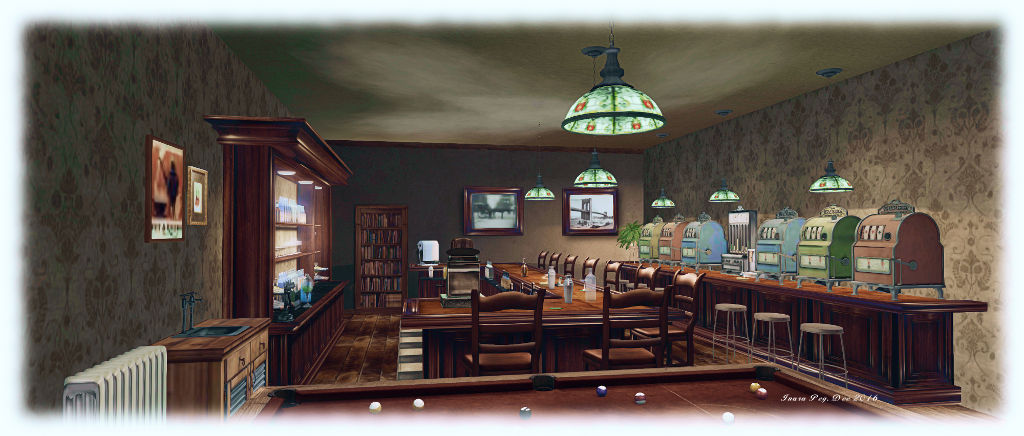
1920s New York Project: The speakeasy under the barber's
1920s New York Project: The speakeasy under the barber’s

“That’s one of the reasons I chose this era,” Jogi replied when I asked him about prohibition and the boom / bust cycle of the 1920s. “That, and the 1920 and 1930s have always been one of my favourite periods of history. So much changed in that time for better and for worse.  New York offered so many Americans the chance at a new life.

“But the 1920’s weren’t just a decade of happy times. This city was tough, and to make it here took a lot of effort & major sacrifices.  My goal is to help people learn about that, and experience it themselves.”

I wondered if the name of the environment was a reflection on a certain other recreation of the period in Second Life. Jogi laughed. “I’m a fan of the Berlin Project; always have been. It helped me realise what could be achieved in Second Life. Jo [Yardley] likes my sim and I enjoy hers. Originally, this was going to be just 1920’s New York, but that name was already taken; and since this is a project & work in progress, we added ‘Project’ to the end.”

1920s New York Project: under the elevated railway track running over Coenties Slip

Given all that has already been achieved,1920s New York Project is already a fascinating build and I look forward to witnessing it grow. The amount of effort already poured into it is amazing, and with all of the apartments already rented, the streets are starting to come live with local residents and characters. During our explorations, Caitlyn and I bumped into several and received a warm welcome each time. We both look forward to return trips to see how things grow.

SLurl and Links

With thanks to Jogi for putting aside time for me while preparing for the official opening of the project.

Boarding the Arctic Express in Second Life

DRD Arctic Express
DRD Arctic Express

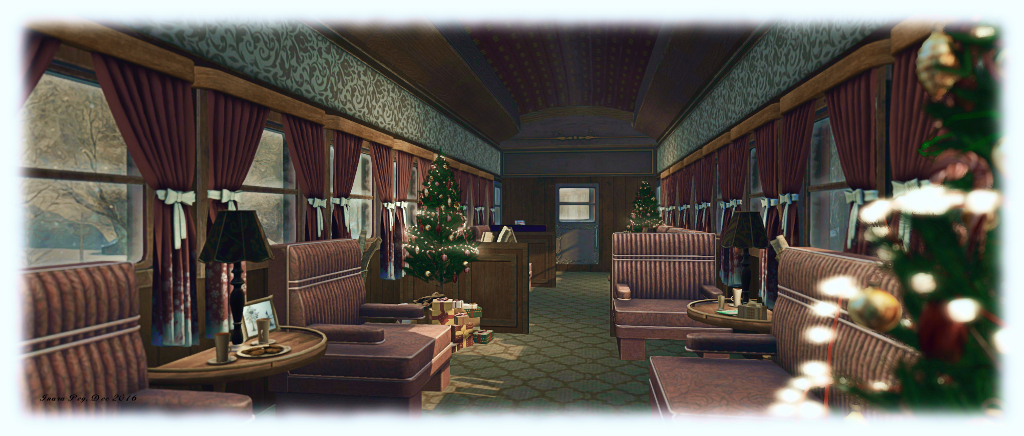
Inspired by the 1985 children’s classic, The Polar Express, written and illustrated by Chris Van Allsburg, the DRD Arctic Express, built by sisters Jaimy Hancroft and Ewoyn Swords, is currently being showcased in its own region for the holiday season. As the region is a venue for the Lab’s Jolly Holiday Crawl, and DRD is the subject of segment #42 of the Drax Files World Makers; (see my review here), Caitlyn and I took time out on a Friday afternoon to pay it a visit.

The express sits to one side of a snow-bound landscape under an overcast sky, patiently awaiting passengers to climb the steps and board the carriages. Those who do will find there’s considerable comfort to be had within. For example, the First Class saloon located immediately behind the engine and its tender, provides soft sofas and armchairs in which to relax, with decorated Christmas trees offering a seasonal sparkle, while cookies and hot chocolate are on hand to ward off the cold.

Travel in style
Travel in style

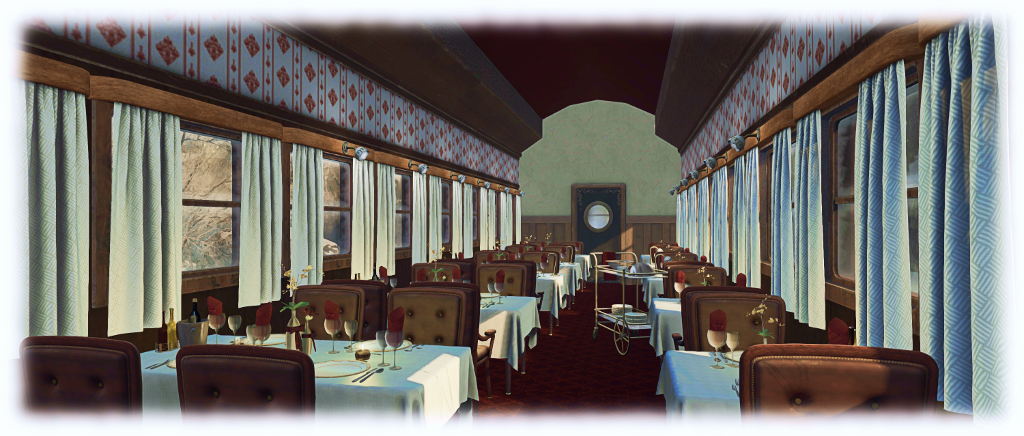
Behind this sits the dining car, where the tables are set for those seeking a filling repast – just take a seat and discover for yourself!  Travel further back through the train, and the first class carriage awaits, and behind it, the club car. The latter offers a range of alcoholic beverages for those seeking something with a little more edge than hot chocolate to help them recover from the cold air outside. Bringing up the rear of the train are the standard and third class carriages.

Hauling all of this – so Google informs me – is a mighty 4-6-6 locomotive modelled after the Berkshire 2-8-4 engine from the book (and its cinematic counterpart). This is beautifully detailed on the outside (and the cab number includes a special significance for Jaimy and Eowyn, being three of the digits from their late father’s birth date). While the cab might appear a little plain, there is fun to be had  – simply touch the boiler and select Sit to find out more!

Enjoy a meal and a glass of wine

Across the snow from the train, for those who feel a need to stretch their legs, is a little DRD outpost where those joining in with the Lab’s Jolly Holiday Crawl on December 19th will be able to claim some special DRD gacha items.

Perfectly showcased, DRD’s Arctic Express makes for a pleasant visit and an ideal location for photography.  I’m not sure how long it will remain available for visits, but it’s definitely not one to be missed, either on its own, or as a part of the Jolly Holiday Crawl.

DRD Arctic Express
DRD Arctic Express

SLurl Details

A trip to Alki’s North Pole in Second Life

North Pole at Alki, Alki; Inara Pey, December 2016, on FlickrNorth Pole at Alki, Alki – click any image for full size

“Just for fun, Zoidyn and I have built a light-hearted north pole area over Alki,” Alana Onyett informed me whilst chatting recently. “We had a little dance there, so the elves are a little busy cleaning up, poor things! But we hope you and Caitlyn can come over in your leisure time and relax. We’ll have the build up until the end of December.”

Alki is Alana and Zoidyn’s Full region which offers a lot for people to see and do. Focused on music in Second Life, it presents visitors with a rich mix of music venues, activities, a photogenic public park to wander through, rides, amusements, and much, much more (see here for notes on my last visit). It’s a place always well worth a visit, and the idea that Alana and Zoidyn were having a little seasonal fun as well have Caitlyn and I donning our woolies and jumping over to see.

North Pole at Alki, Alki; Inara Pey, December 2016, on Flickr “Hand over your coal and carrots, and no funny moves. This hair dryer is plugged in, and I know how to use it!” North Pole at Alki, Alki

Sitting at 1500 metres above the region, the north pole area can either be reached via a teleport portal just a few metres away from the main landing point (link above) and here is also another up on the Z&A Plateau, outside the Coffee House; or visitors can use a direct landmark. Whichever route you take, you’ll be delivered to Santa’s North Pole Headquarters, a delightful mix of the quaint and the high-tech (it would seem Santa has moved into the 21st century!).

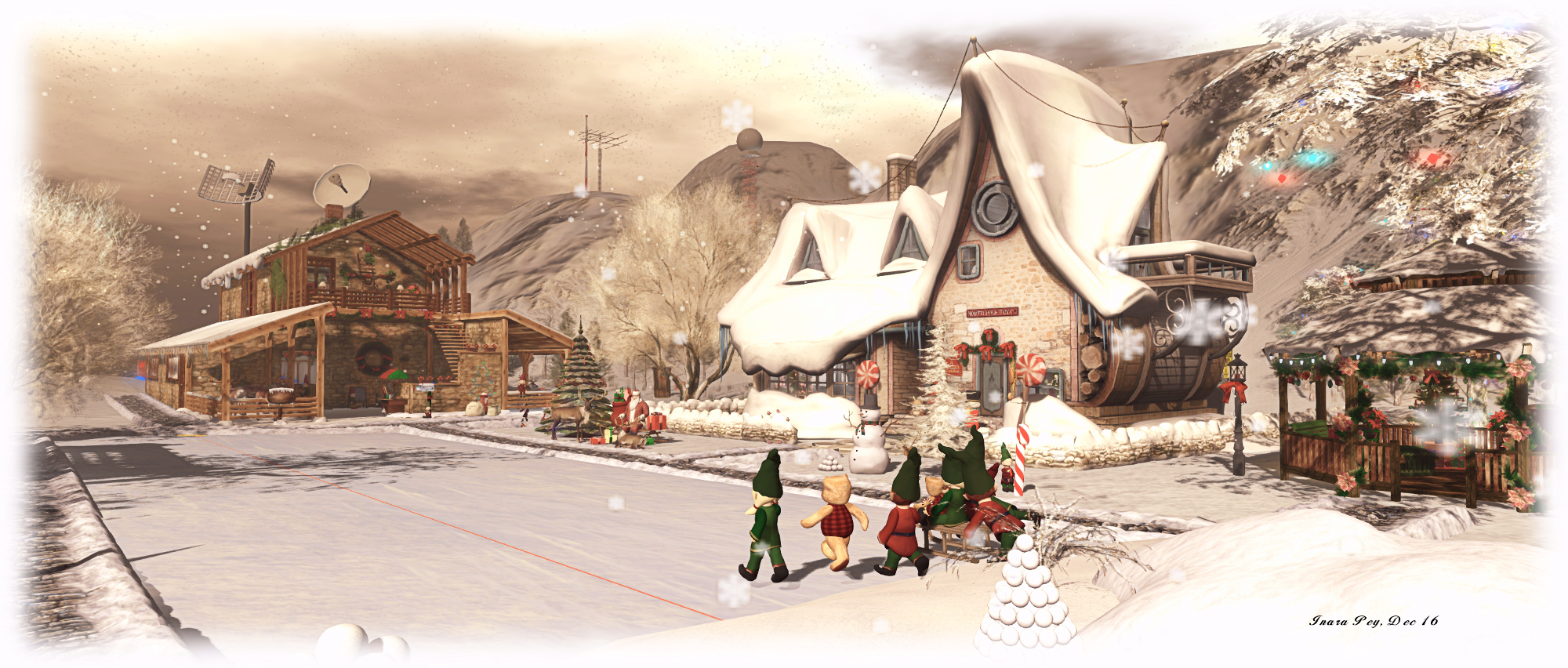
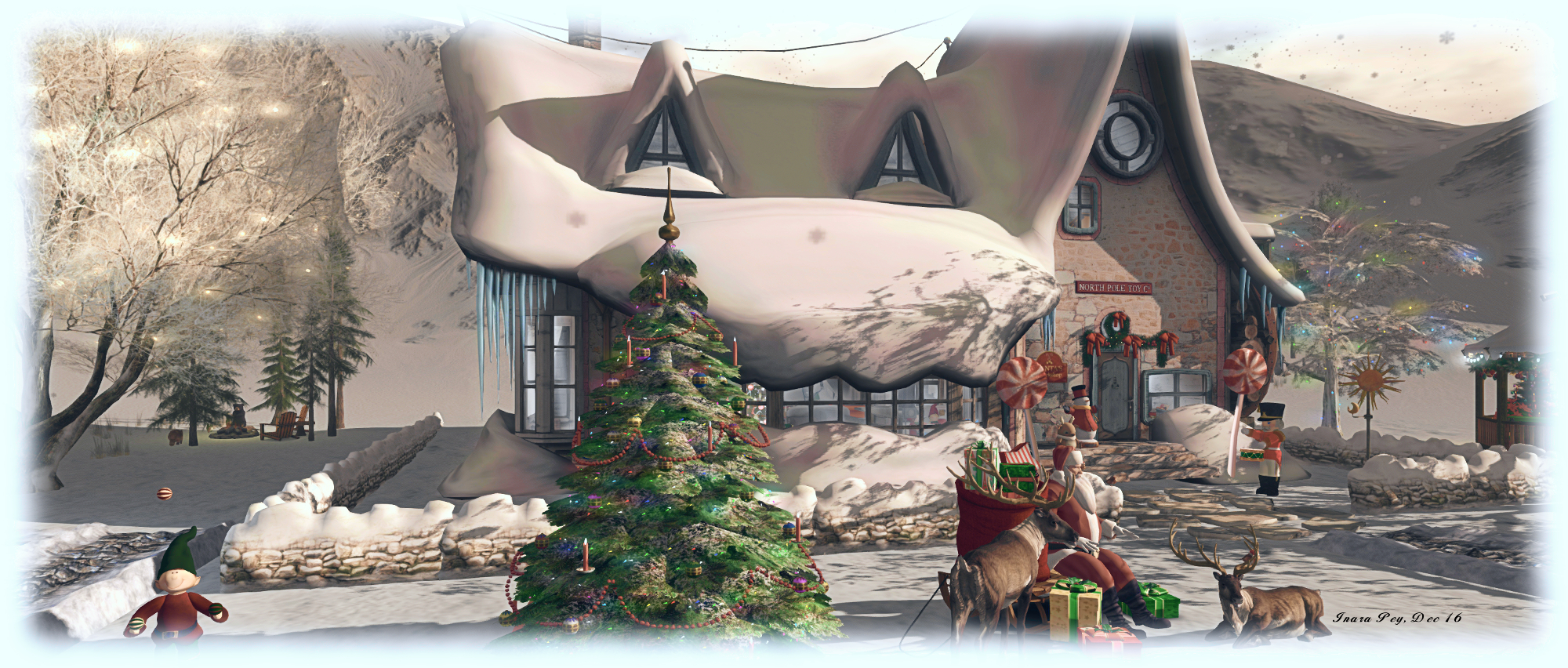
Of course there is Santa’s toy factory – housed, as one might expect, in a snow-capped cottage, complete with bay windows, sagging roof, stone walls and all. But don’t be fooled; inside things are pretty well automated, production monitored via computer. This means that most of Santa’s Little Helpers (or subordinate clauses, as I call them) can get on with more enjoyable tasks, such as putting up the decorations, baking, and, “product testing” (spelt p-l-a-y-i-n-g).

North Pole at Alki, Alki; Inara Pey, December 2016, on Flickr North Pole at Alki, Alki

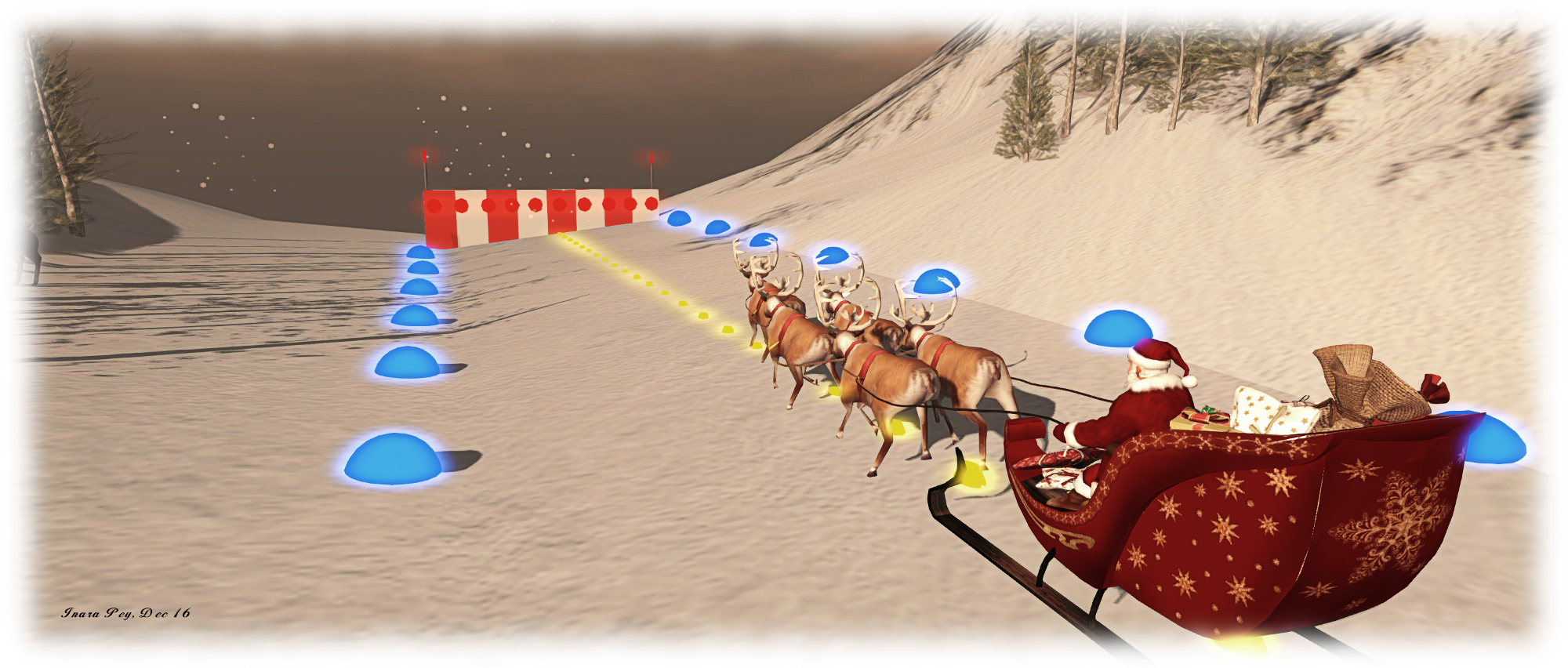
Along a cobbled footpath carefully cleared of snow, elf and safety first, after all (OK, I promise that’s the last of the elf puns), sits the rest of Santa’s operation: a sturdy 2-storey stone-and wood-building offering stables for the reindeer (and a sleigh prepping area), with the staff lounge and kitchen above. Further evidence of the high-tech nature of this operation can be seen in the form of the radar dishes on the roof, and the precisely laid-out sleigh runway on the far side of the building. There’s even a weather and communications station up in the hills!

Follow the footpath away from Santa’s operations and through the trees, and you’ll find the elves have been having fun within the circle of a little railway and penguins – presumably up on vacation from Antarctic – are also enjoying themselves.

North Pole at Alki, Alki; Inara Pey, December 2016, on Flickr “Wait. Only five reindeer? With an overloaded sleigh and an overweight, jolly pilot? Are you sure that runway is long enough?” North Pole at Alki, Alki

Fun really is the theme of this build, and Zoidyn and Alana have included a lot of little details which make exploring it carefully well worth the time (not all of them are immediately obvious). Fun can also be had by visitors, be it sledding (with an elf or alone), snowboarding, ice skating or dancing. If quieter pursuits are more your thing, there are plenty of places to sit, snuggle, relax and chat.

And when you feel you’ve seen enough of Santa’s corner of Alki, why not take the portal down to ground level? As noted towards the top of this piece, there’s a lot to be discovered – and a few things added overhead as well since our last visit – just look for the teleporters! When you visit, do please consider a donation towards the region’s upkeep.

SLurl Details

Exploring Mineral Ridge in Second Life

Mineral Ridge; Inara Pey, December 2016, on Flickral Ridge – click any image for full size

Update: January 16th: Mineral Ridge has unfortunately closed.

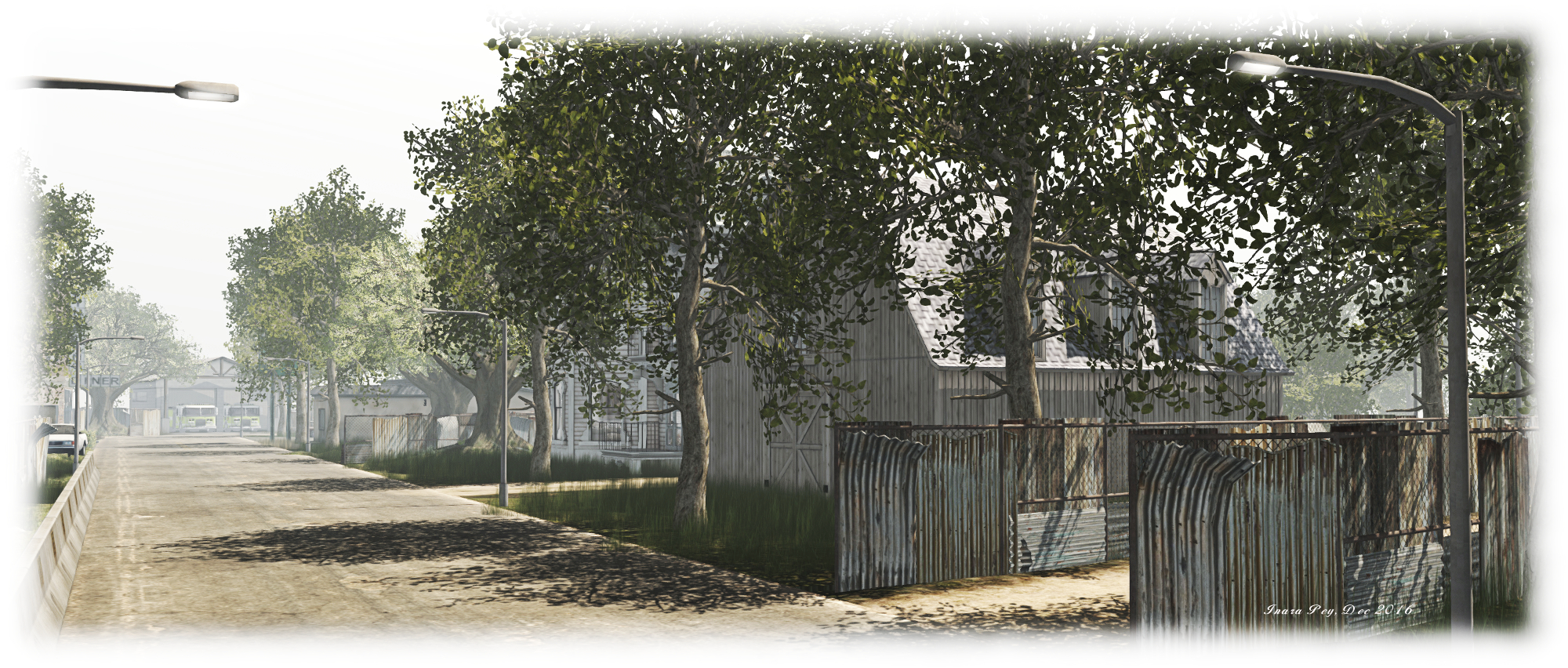
In the 1930s, Mineral Ridge was once a wealthy, booming mining town, its fortune drawn from the precious secrets hidden within the rocks of the high plateaus on which it sits. But, as the saying goes, nothing lasts forever. Today Mineral Ridge sits as a place well past its heyday, fading and rusting under the sun, a curio for tourists to come and visit, and a place where the dispossessed and – maybe – those on the wrong side of the law – can find a place where they can settle or hide.

Or that’s how you might interpret the back story to this Full region, designed as a group effort principally by Norman Dobler, Aiden Cauldron, and thejunkyard. It’s a relatively new addition to Second Life, but one which is both atmospheric and which makes good use of the available space to create a scenic environment offers plenty of space for exploration as well as reflecting the theme of a once-wealthy mining town now well past its heyday.

Mineral Ridge; Inara Pey, December 2016, on FlickrMineral Ridge

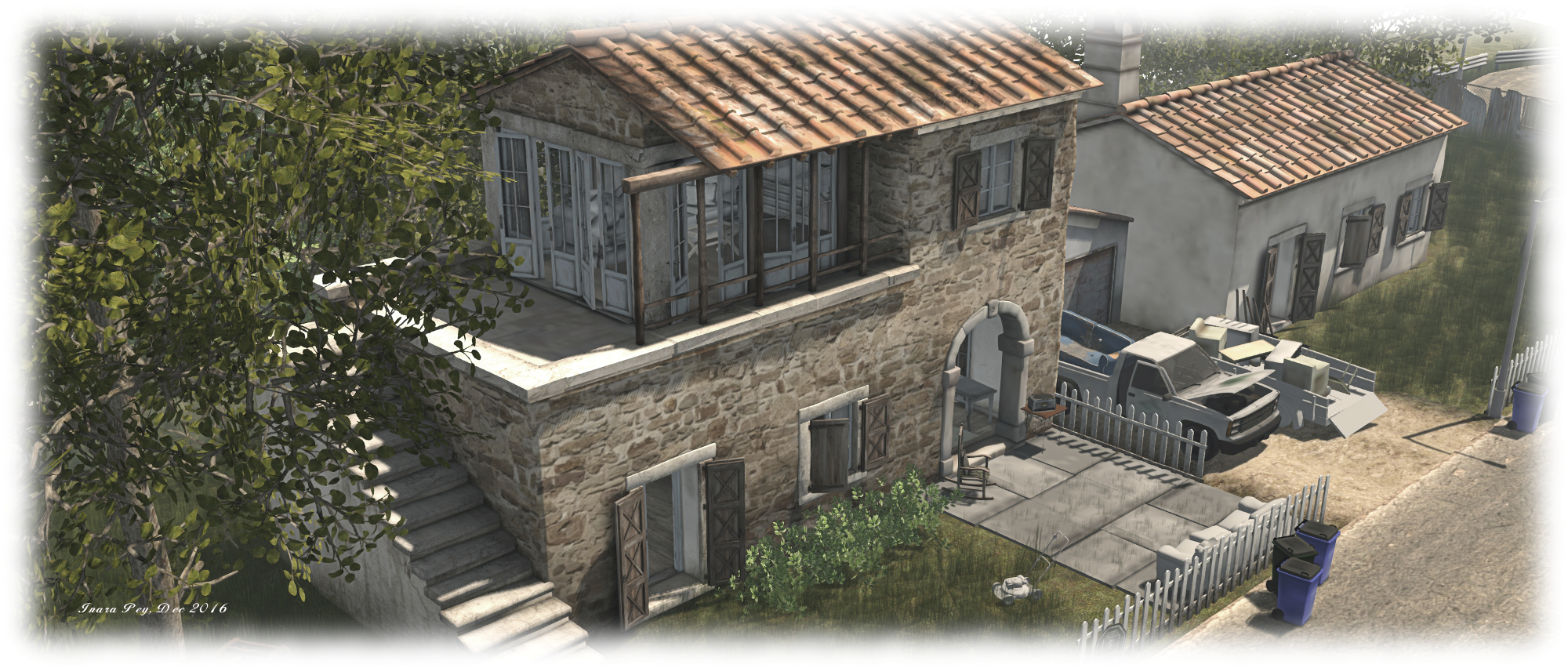
On the highest plateau of this rugged place, sits part of the town: grand houses  – including a villa of distinctly Tuscan looks – doubtless built by those who gained their fortune out of the mines below, but which have all seen better days. Some appear deserted, other still occupied – although whether by the original owners is perhaps open to question.

A road, cracked in places, loops around them, stables sitting between one or two, rough tracks now forming alleys between others. At one end of this road sits a more recent addition to the town – a motel. But even this has the same air of tiredness and age hanging around it as it faces a diner across the street, the offices above that long since abandoned and boarded-up. Only the emergency services building  and the Sheriff’s office around the corner from it, have a feel of upkeep about them.

Mineral Ridge; Inara Pey, December 2016, on Flickr Mineral Ridge

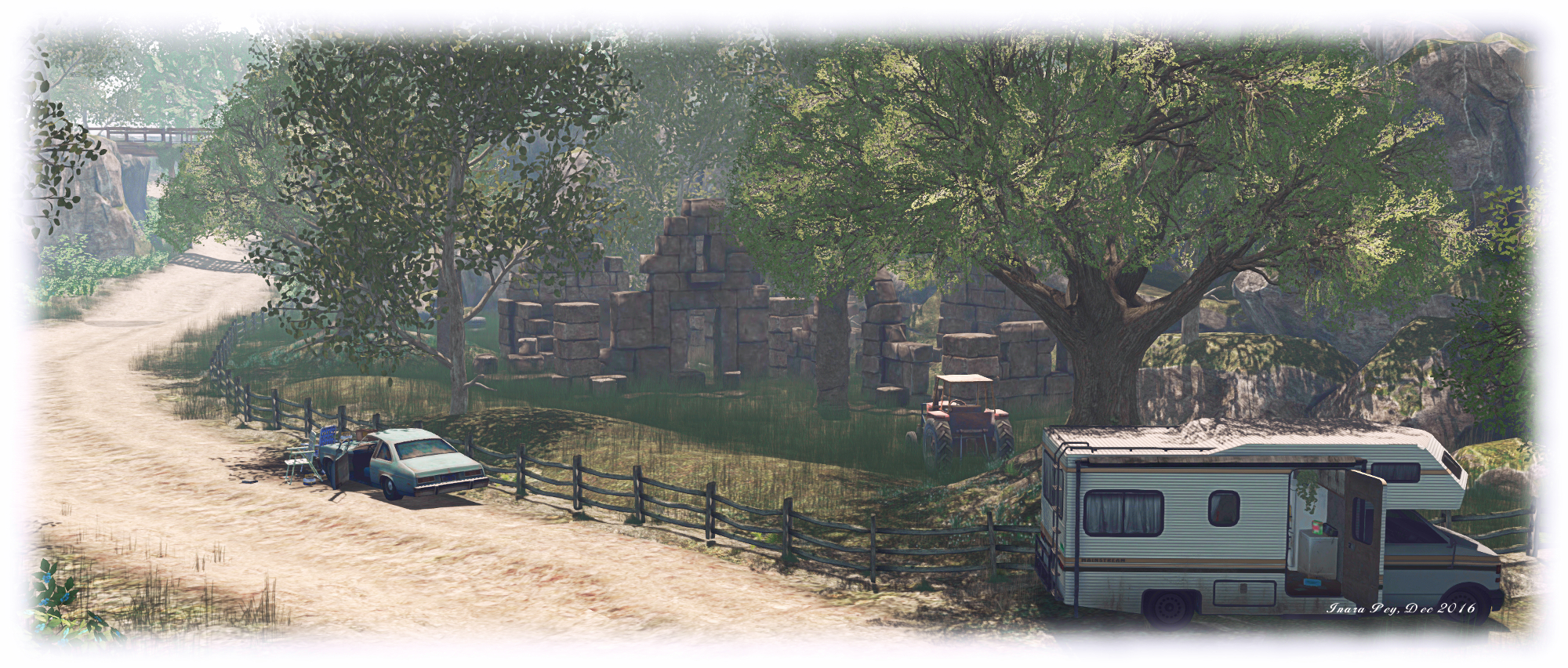
As the road twists a noose around the houses, a wide track drops away from it, winding its way down into a sheer sided canyon by way of an ageing farm before splitting under the gaze of an old radio tower, one part offering access to the west side of the region, the other running down into the canyon floor proper. Follow it down towards the latter, and if you keep your eye on the rocky wall beyond the trees and bushes lining the track, you might spot the hidden entrance to the old mines on which the town built its wealth, while down on the canyon floor sit ruins far older than the town.

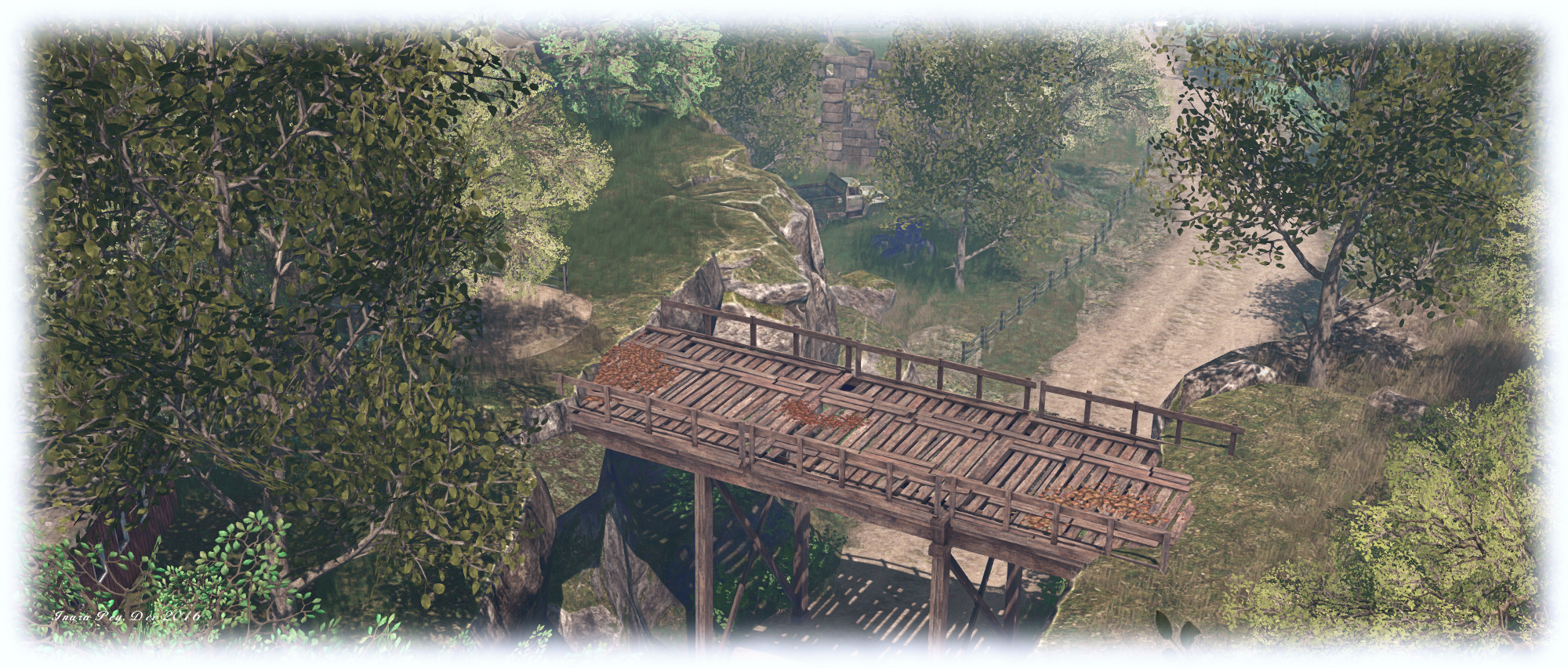
The west side of the region can be reached not only via the dirt track, but also over an old trestle bridge. This offers a convenient short-cut to the west ridge of the region, a gap in the wire fence, at some point faced with corrugated iron sheets as if it had been armoured, allowing it to once more join with the dusty track, presenting explorers with the choice of visiting a decrepit shack or making their way up to the the old radio tower.

Mineral Ridge; Inara Pey, December 2016, on Flickr Mineral Ridge

All told, Mineral Ridge is an interesting and considered design, sitting somewhere between a role-play environment and photogenic region with some little mysterious edges. Photographers looking for somewhere just that little different as a backdrop to their work, in particular may enjoy a visit to the town. Once again, many thanks to Shakepeare (SkinnyNilla) for passing over the LM!

SLurl Details

LHOOQ: coastal scenes in Second Life

L2 Studio & LHOOQ Gallery, LHOOQ; Inara Pey, December 2016, on Flickr L2 Studio & LHOOQ Gallery, LHOOQ – click any image for full size

I’ve been paying an annual visit to Lindini2 Lane’s home region and location for her store, L2 Studio, since 2012. She has always presented the region as a landscaped setting which changes with the seasons, open for people to explore and enjoy whether or not they are  seeking one of her house designs.

Previously located on a homestead region, Lindini2 has now expanded to a Full region, L2 Studio & LHOOQ Gallery, and for those seeking a break from the snowy scenes of winter now appearing across the grid, it could be just the ticket. The move has given Lindini the chance to really flex her creative muscle, displaying her designs in a coastal setting, beautifully landscaped, with a demo rezzing area for her buildings high overhead.

L2 Studio & LHOOQ Gallery, LHOOQ; Inara Pey, December 2016, on Flickr L2 Studio & LHOOQ Gallery, LHOOQ

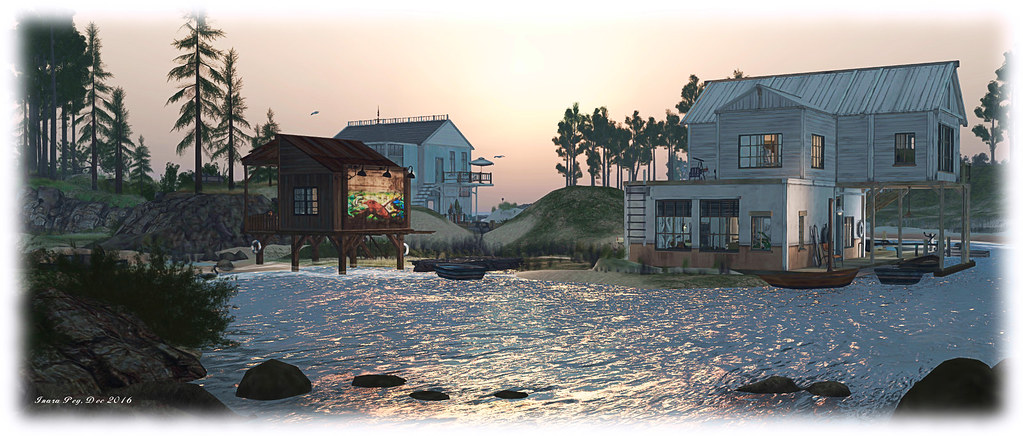
Visitors using the main landmark arrive in the L2 Studio store in the south-east corner of the region. Just across the water from this, a set of steps lead up to a major new feature for Lindini’s land: the LHOO art gallery, currently displaying work by Jessica Belmer. To the north and west of this, the landscape becomes more rugged. Pine trees occupy rocky land cut by deep inlets, stone steps offering a way up onto their fingers, before the land falls away to a curving beach and narrow channel separating a sandy island from the rest of the landscape.

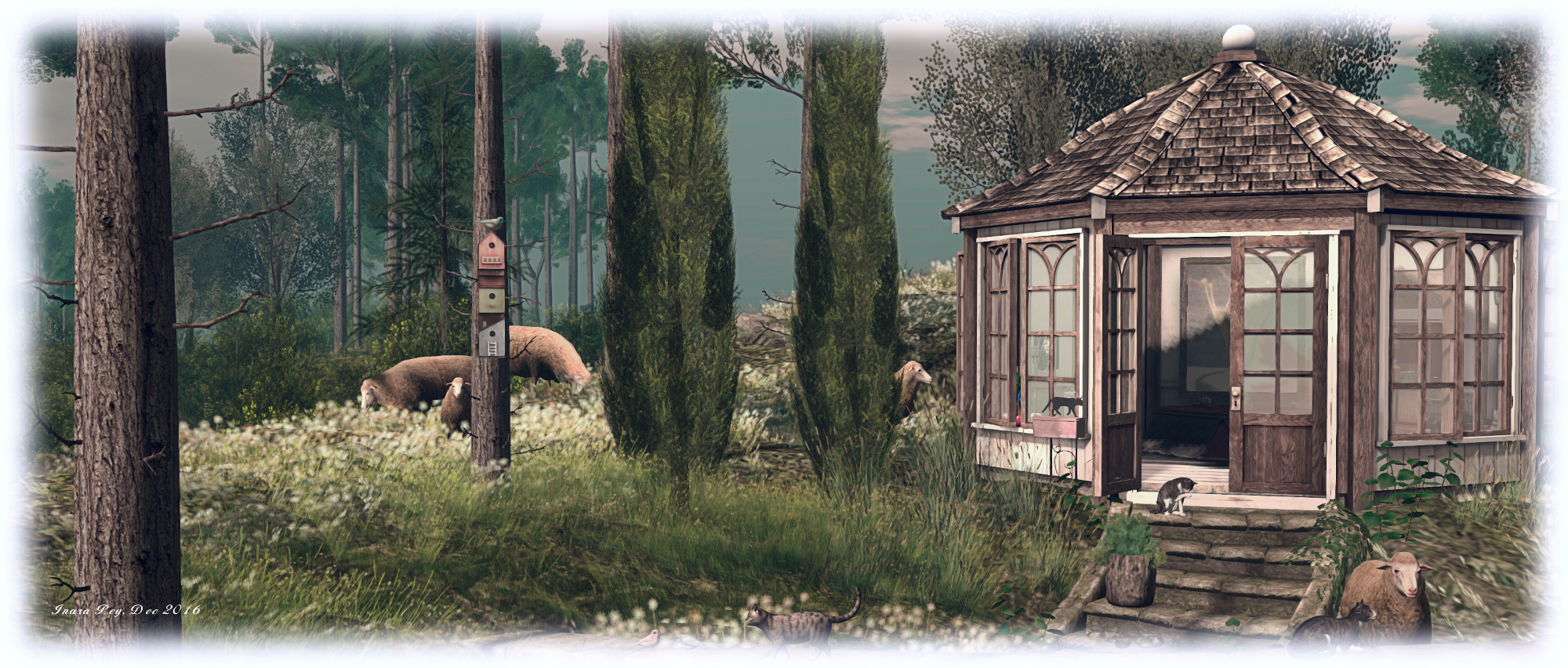
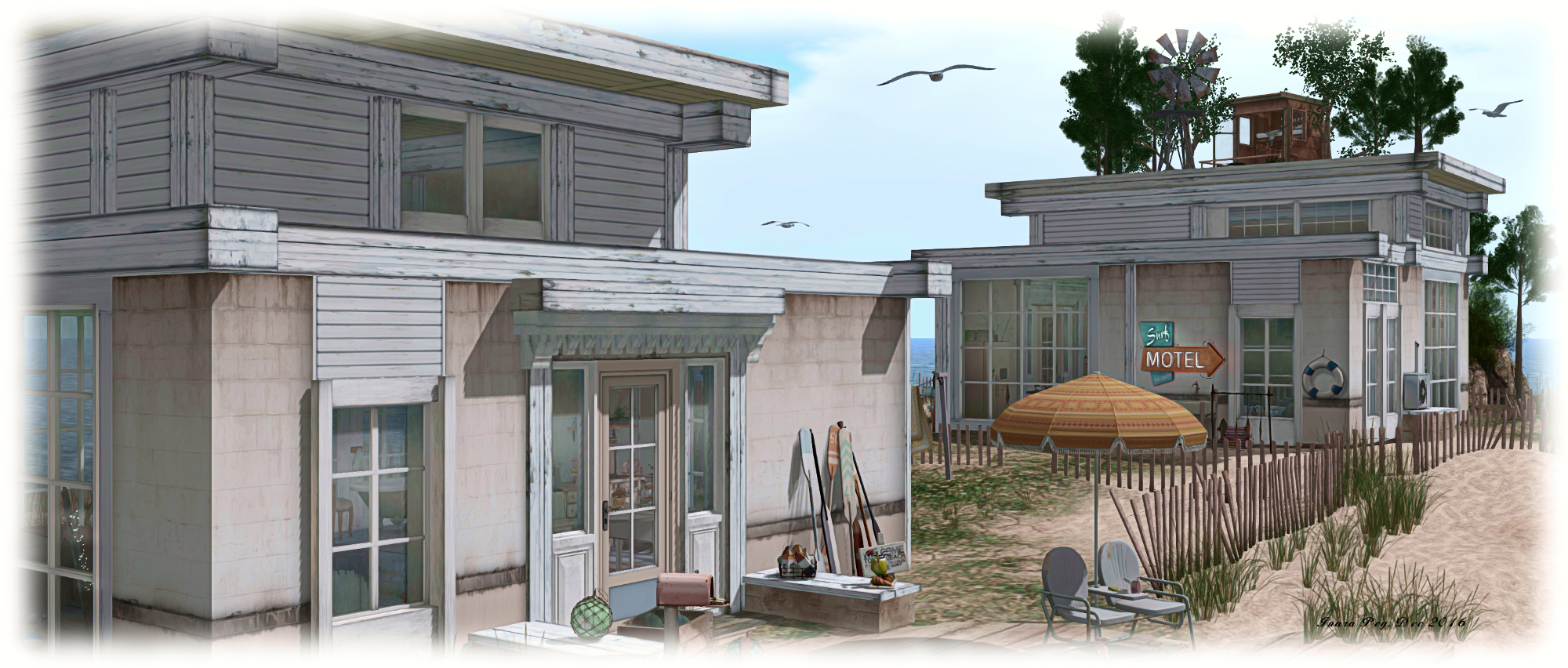
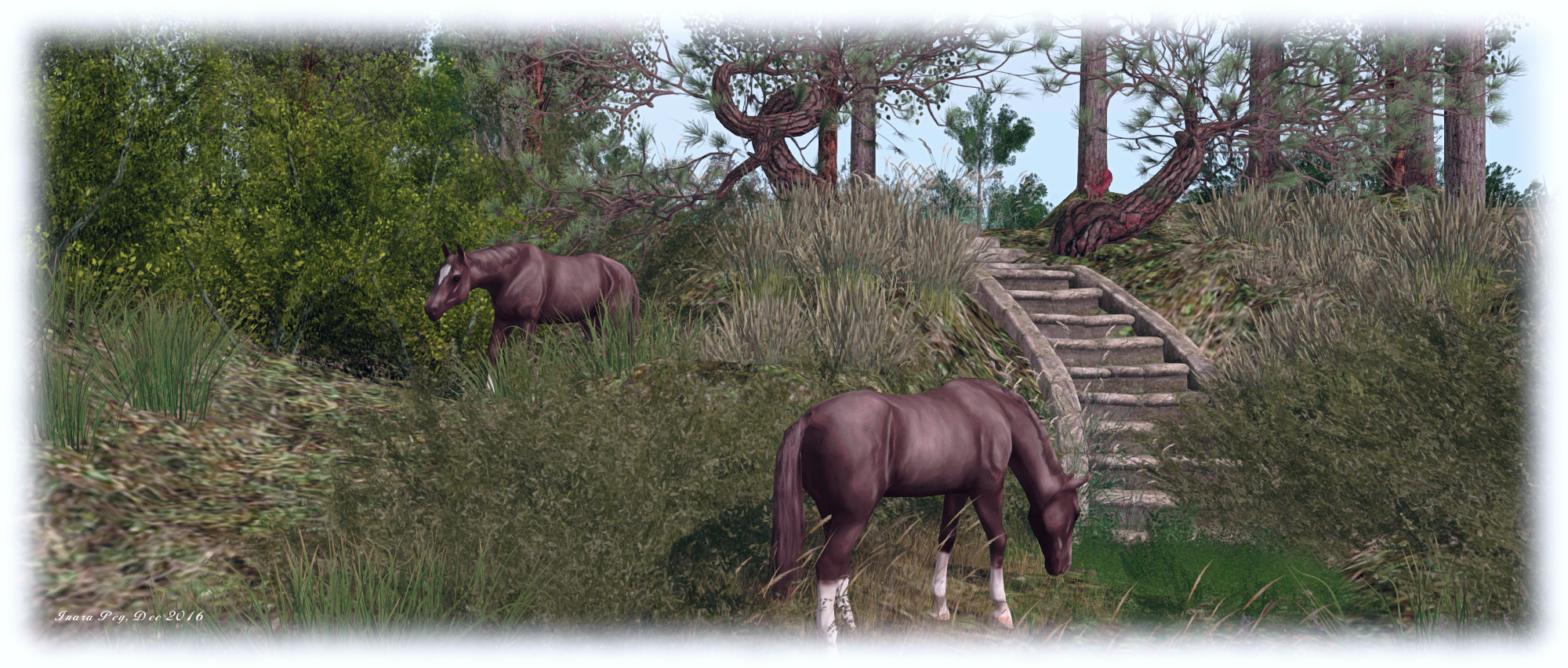
Within this setting can be found several of Lindini’s designs, set out in a manner suggestive of a small coastal community. Additional designs by Van Auster and others add to the natural feel to the setting, assisted by sheep grazing up on the craggy hills and horses wandering narrow trails, Cats can also be found here, keeping their eye on things, while a gentle, ambient soundscape completes the sense of immersion.

L2 Studio & LHOOQ Gallery, LHOOQ; Inara Pey, December 2016, on Flickr L2 Studio & LHOOQ Gallery, LHOOQ

The landscape is designed to encourage exploration – getting from A to B sometimes isn’t as straightforward as might first appear; diversions around inlets and across beaches are required. This further adds to the feeling of this is a place, rather than a showroom, as does the way all of the houses have been carefully furnished.

Throughout the region there are places to sit  – indoor and out , on the ground and in the trees – little places to discover and a lot to photograph and enjoy. If I have a quibble at all, it might be that there’s perhaps a little too much; at times my system struggled mightily with rendering.

L2 Studio & LHOOQ Gallery, LHOOQ; Inara Pey, December 2016, on FlickrL2 Studio & LHOOQ Gallery, LHOOQ

Nevertheless, L2 Studio and LHOOQ Gallery offers a pleasing and eye-catching break from the wintry destinations we might otherwise drop into;  the only wintertime concession can be found on the beach to the north-east – and even that is made of sand rather than snow 🙂 .

SLurl Details

Fris’ Land: a little treat in Second Life

Fris' Land, Liebe; Inara Pey, December 2016, on Flickr Fris’ Land, Liebe – click any image for full size

In 2014 I, like many other Second Life users, paid my first visit to Frisland, the region designed by Charlie Namiboo, Anna Barzane and Frislanda “Fris” Ferraris which was based on the phantom island that appeared on virtually all of the maps of the North Atlantic from the 1560s through the 1660s.

The region became an instant hit with visitors, changing its face to match the seasons, and drawing people back time and time again. So much so, that when it did finally come time to say goodbye, it was obvious many would miss it.

Fris' Land, Liebe; Inara Pey, December 2016, on Flickr Fris’ Land, Liebe

It seems that Charlie and Fris also found it hard to leave their beloved creation behind, because they’ve just opened up Fris’ Land. While in no any way intended to be a replica of their original vision, it nevertheless offers those of us who miss Frisland with the opportunity to recapture memories of its wintertime look.

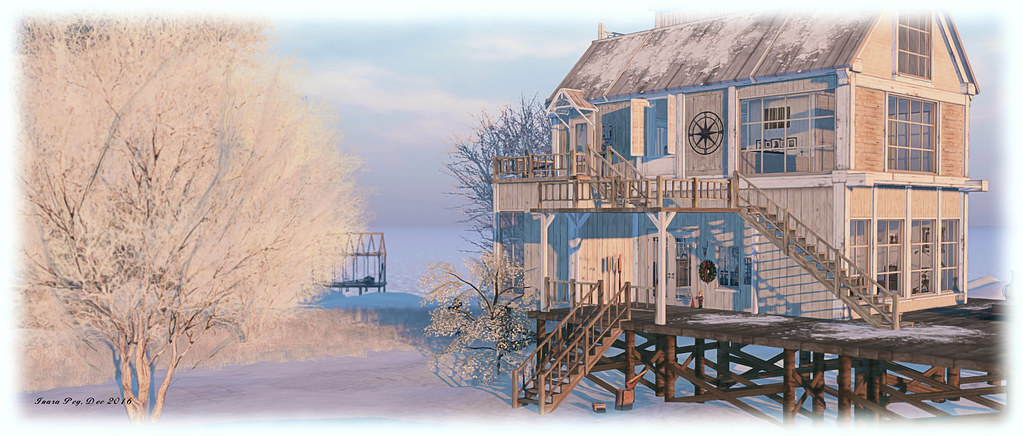
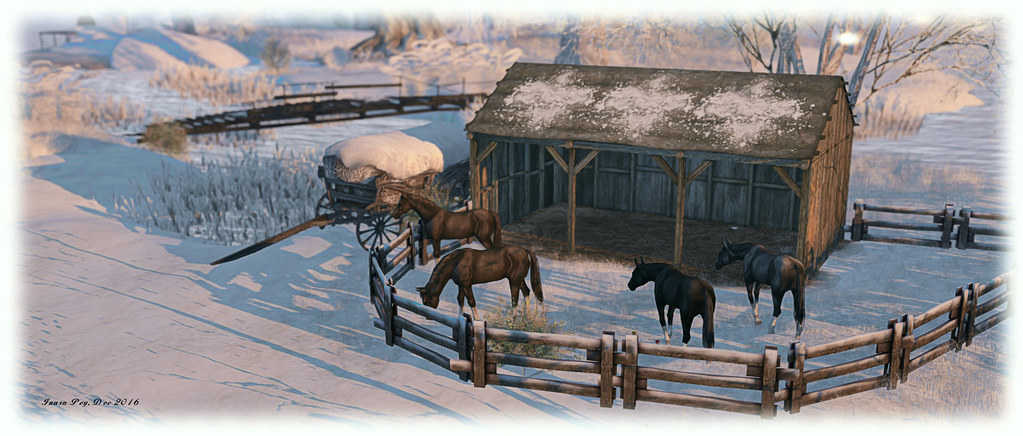
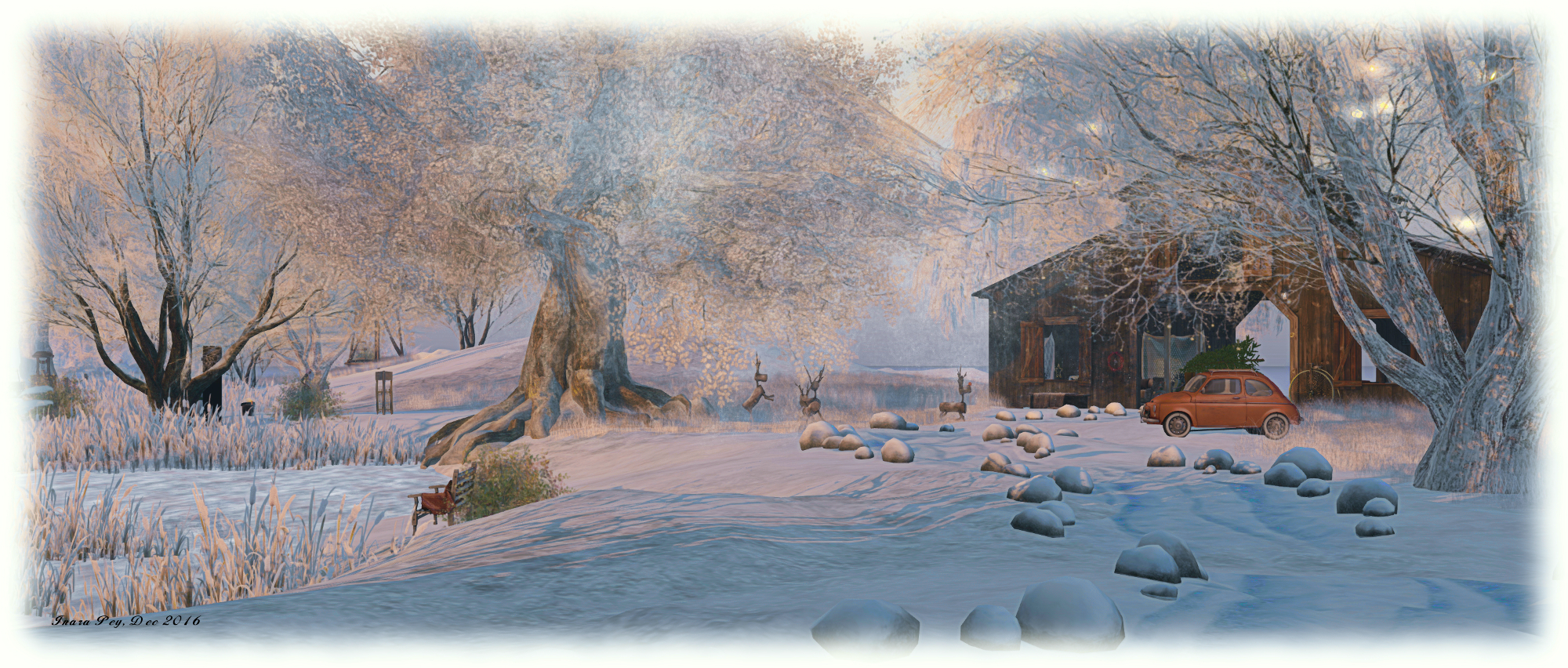
Occupying the eastern half of a Homestead region, Fris’ Land presents a snowbound landscape in which familiar pieces from Frisland – the little church, the horses and their little barn, the deck sitting over frigid water – sit alongside barns and houses not seen with the original, offering as new setting to explore and enjoy.

Fris' Land, Liebe; Inara Pey, December 2016, on Flickr Fris’ Land, Liebe

From the landing point, located near a large barn offering indoor seating, complete with pot-bellied stove and fireplace to ward off the cold, visitors can wander north or south across the snow, to where either the little red church sits at the north end of the region, or to where a large timber-frame house occupies a study wooden deck on the southern side.

Along the walk to the church, visitors will pass a small deck extending out over the waters between the islands, chairs arranged alongside another pot-bellied stove, just as they did in Frisland (do, as well, keep an eye out for the little black kitten on the deck – he’ll certainly be keeping both eyes on you!). When heading south, be sure follow the stone-line track which meanders past the horses and their hay shed.

Fris' Land, Liebe; Inara Pey, December 2016, on Flickr Fris’ Land, Liebe

Throughout the region, there are plenty of places to sit, indoors and out, including an old greenhouse frame sitting on a small dock behind the main barn. However, when exploring, and while there are bridges leading to them, do please keep in mind the island to the west are private residences, and not open to the public.

It’s a delight to see Fris and Charlie sharing their creativity again – and my thanks to Charlie for sending the invite for us to visit. Firs’ Land will remain open for “a couple of months” – so enjoy it while you have the chance!

SLurl Details