Ash Falls in Second Life

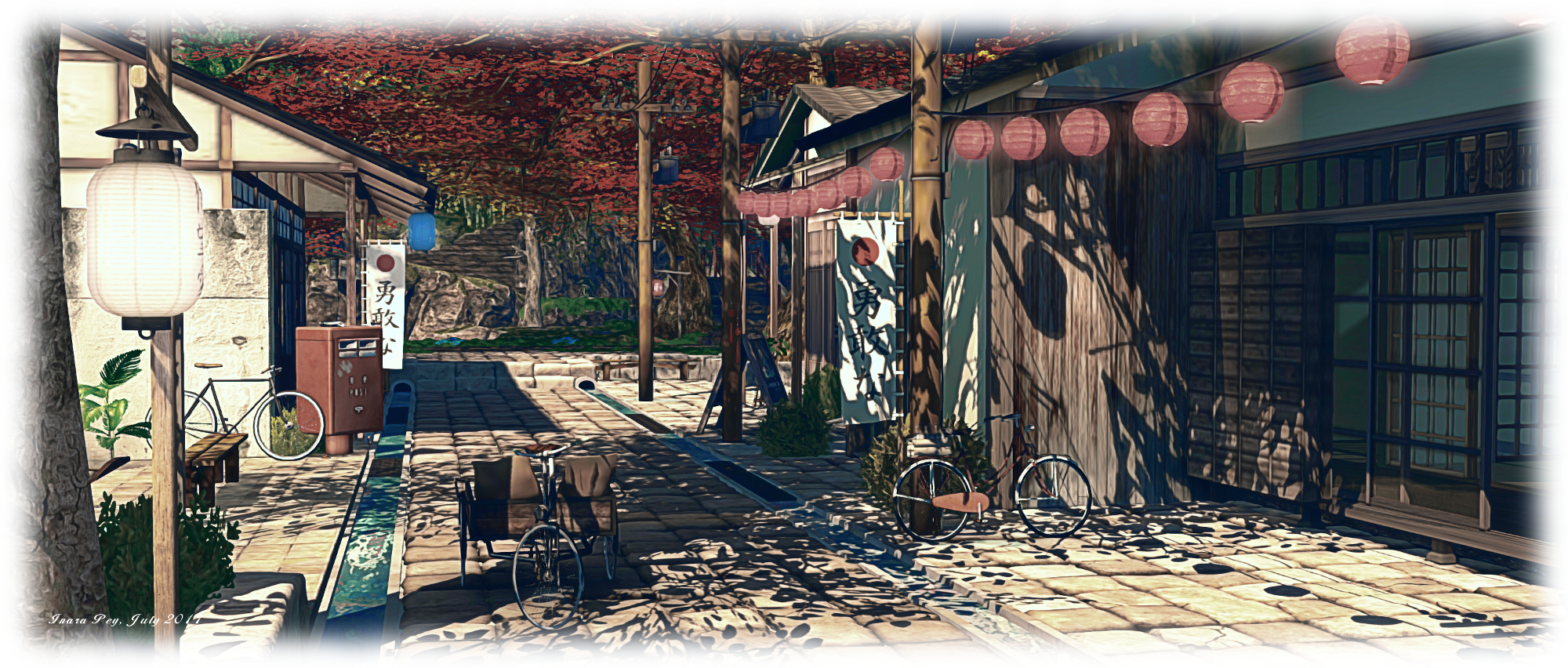
Ash Falls, Picture Perfect; Inara Pey, July 2017, on Flickr Ash Falls – click any image for full size

Updated, September 4th: As per the comment below, Ash Falls now requires the payment of a group joining fee in order to access the region.

Ash Falls is a homestead region build by Leaf and Birdy Moone, and it is an absolute delight to visit. Softly lit by the last rays of a lowering Sun, setting slowly to the south, such is the sheer beauty of the region it deserves to be seen both under its natural windlight (Bryn Oh’s Mayfly) and something a with a little more daylight.

A v-shaped island facing the south-east, cradles a broad, flat beach within its rocky, wooded arms. But this is not the familiar sandy beach so often seen throughout Second Life; it is a cinder beach, the sand dark and course, suggestive of having been created over the ages from the aftermath of many volcanic eruptions. Behind it to the north and east, the rugged backbone of the island offers paths and tracks to be followed, shaded cuddle nooks to be found  – and more besides.
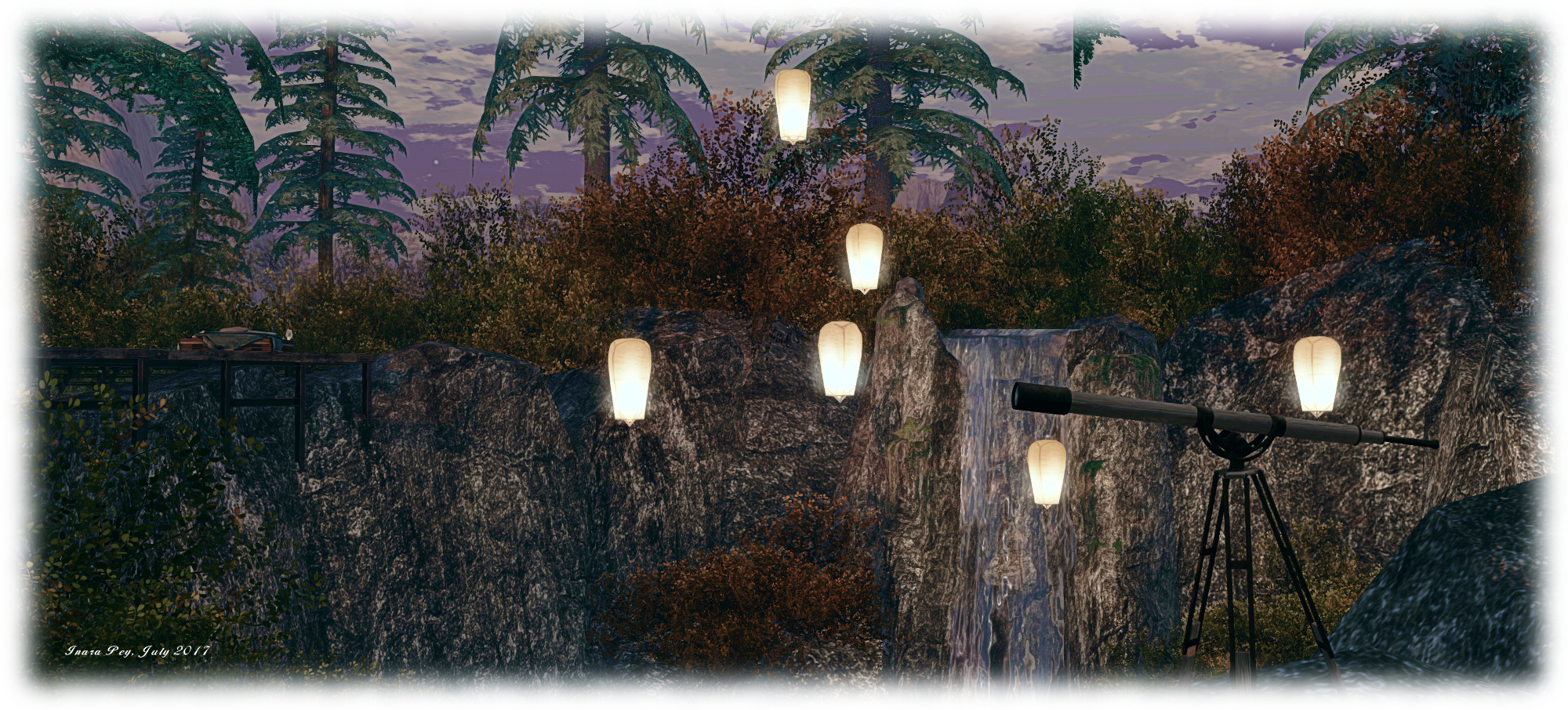
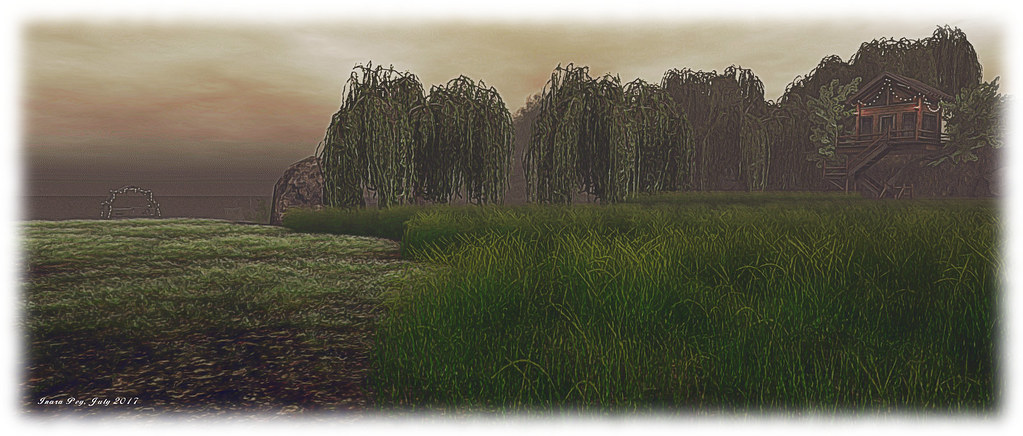
Ash Falls, Picture Perfect; Inara Pey, July 2017, on Flickr Ash Falls

The landing point sits at the end of the northern arm of the island’s rocky V, a stone terrace of some age, with walls partially bracketing it on two sides. A short walk from here in the evening’s light, are wrought iron gates offering access to a broader terrace, complete with parasolled seating, quiet water features and a splashing fountain.

A grassy avenue points the way eastwards, lit by tall lamps and bordered by thick bushes. A set of wooden steps just to the right at the start of this path presents a way down to the beach, while the end of the trail is marked by a wooden platform overlooking a deep, square quarry, long disused and now semi-flooded. Water drops free and clear from falls to one side of this square basin, while lanterns drift and turn on  eddies of air, floating over another platform built over the waters of the quarry.
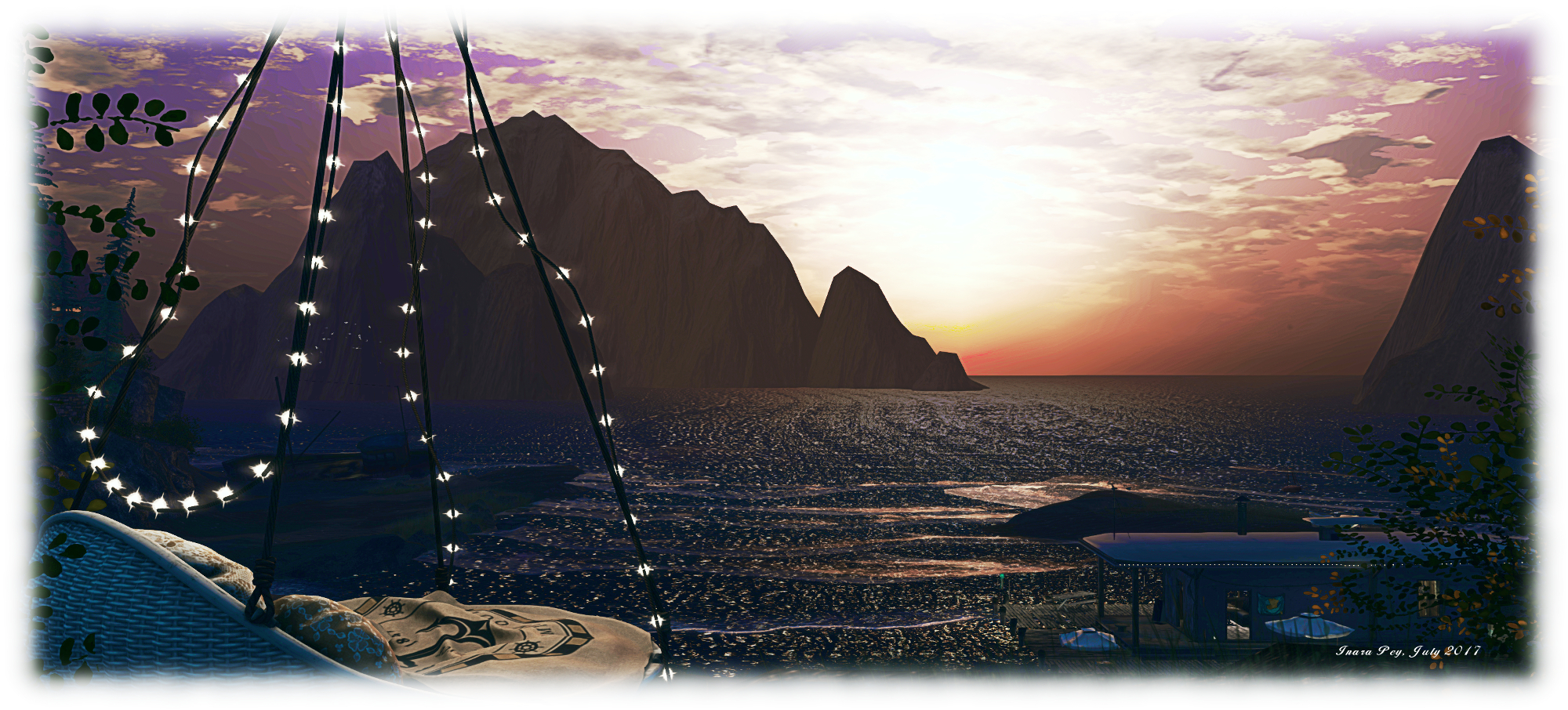
Ash Falls, Picture Perfect; Inara Pey, July 2017, on Flickr Ash Falls

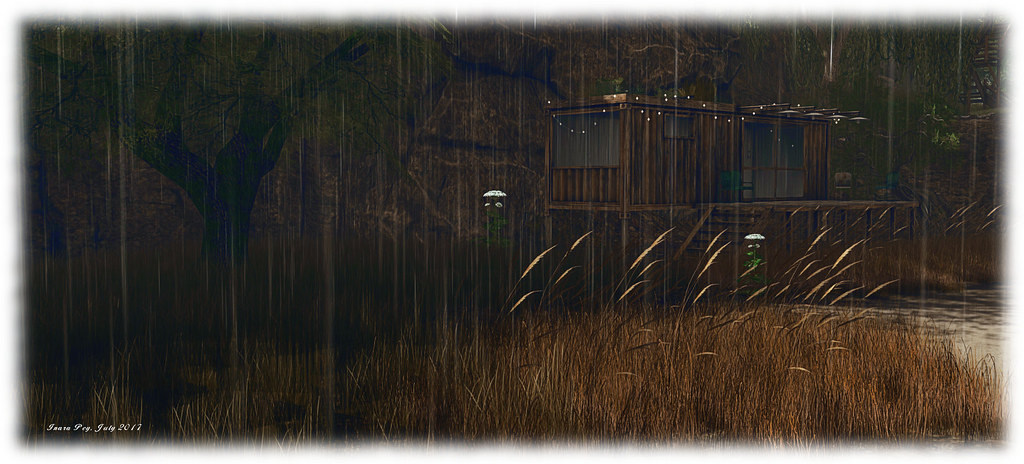
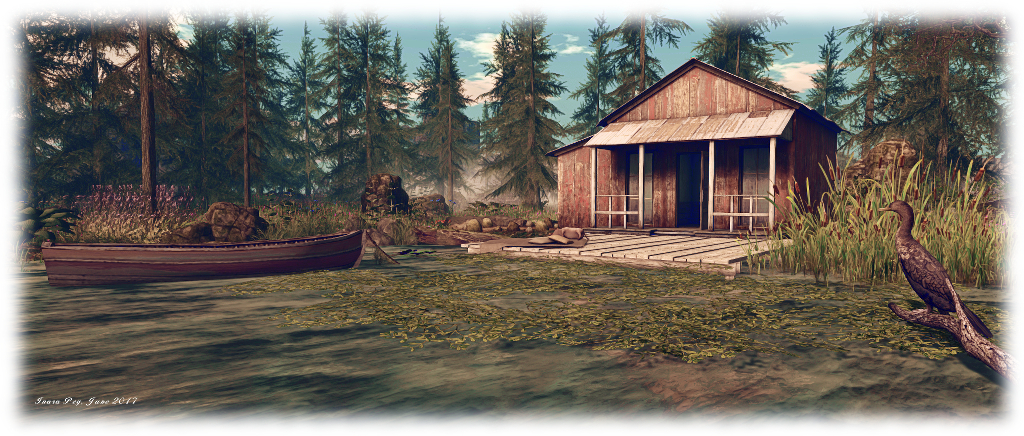
A coffee-house sits at the edge of the small inlet cutting into the beach, straddling sand and the gentle wash of the tide. It offers seating inside and out, and is watched over by cuddle spots further up the beach towards the rocky uplands. Head east along the beach, and you’ll pass a narrow opening cut through the rocks providing access to the old quarry. Not far from this is a slope leading up to an old shack and barn, perhaps once associated with the quarry, but now evidently a home to someone. Follow a grass path between tall fir trees from here, and you’ll discover another snuggle spot and steps leading down to a little cove caught in a very localised rain storm!

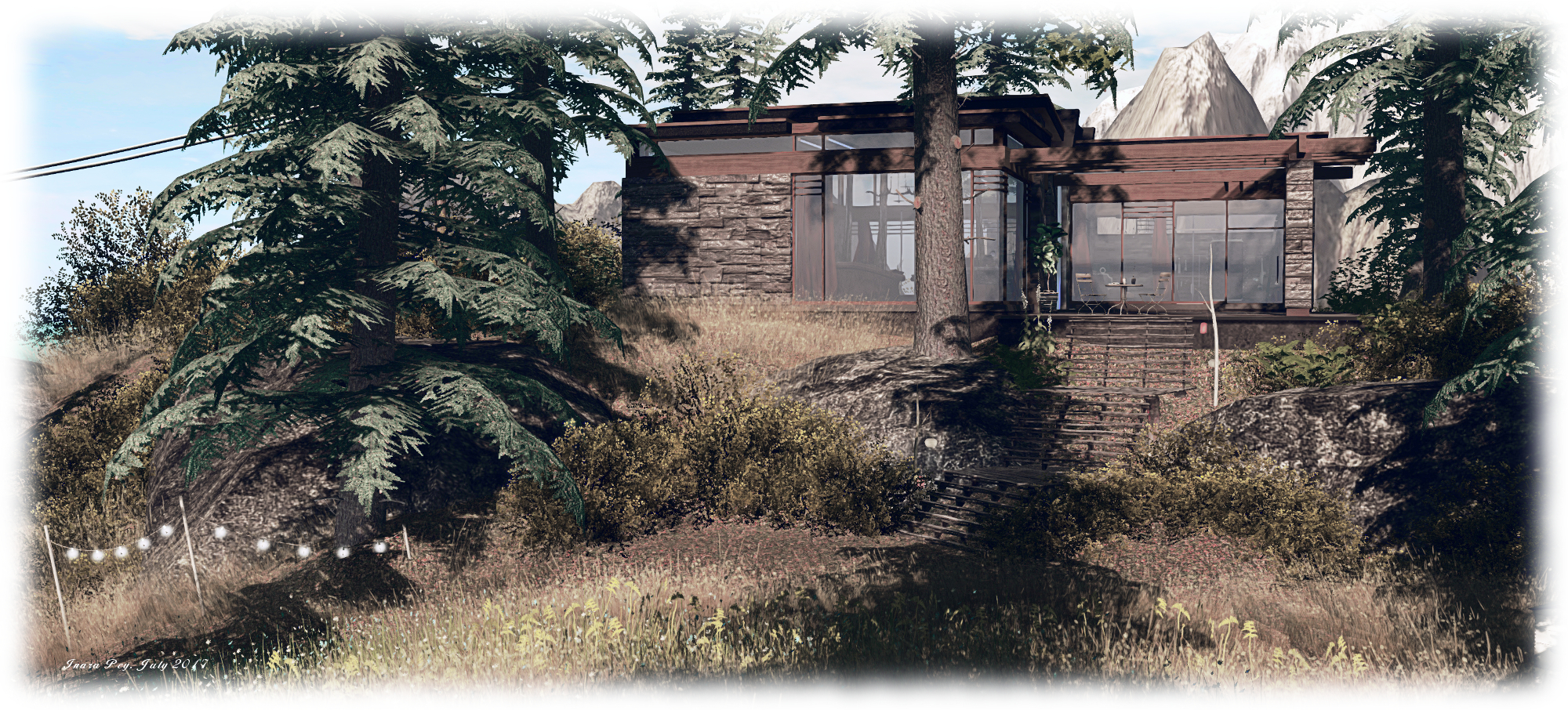
Further around the beach, east of the slope leading to the old shack, are wooden steps offering the way up to another path. This runs up between a line of rock on one side and a high-banked slope on the other to where a much grander house sits upon the eastern headland. Both this house and the shack are open to the public to explore, and a further trail curls away from the area in front of the house, leading the way to a cosy outdoor theatre, surrounded by trees and bushes.

Ash Falls is a beautifully scenic setting, perfect for photography, exploration, and simply wandering  / sitting. It’s perfect for a getaway, and ideal for resting the mind.

SLurl Details

  • Ash Falls (Picture Perfect, rated: Moderate)
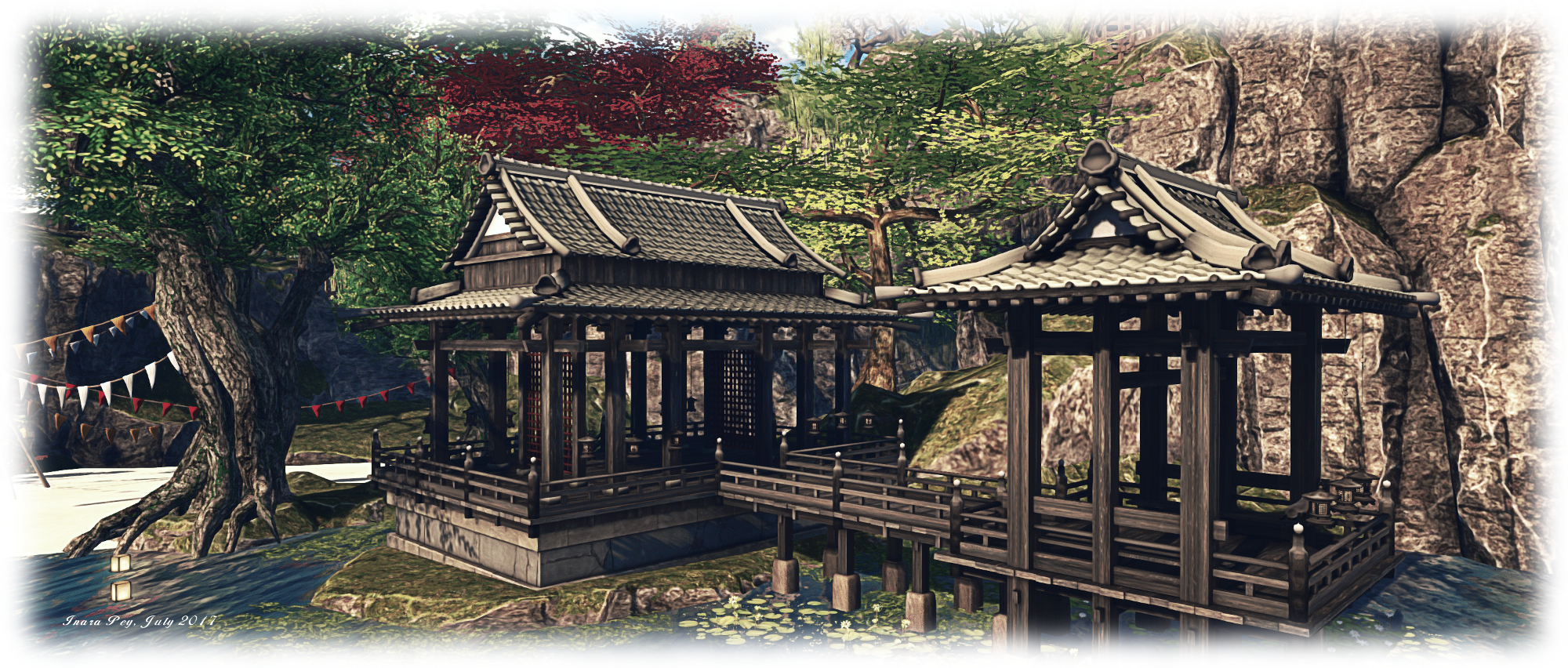
An oriental Collins Land in Second Life

Collins Land, Collins Land; Inara Pey, June 2017, on Flickr Collins Land – click any image for full size

I was stunned to realise that it has been almost four years since I last visited Collins Land, the home of Cerys Collins (Cerys Celestalis). In fact, it has been so long that in the intervening time, Cerys has moved from at Homestead to a Full region. The current build has been in progress since May 2017, with Cerys noting it is now “95% complete”.  Having learned of the Japanese-themed redesign by way of my favourite region hunters, Shakespeare and Max, Caitlyn and I had to leap over and have an explore.

Following the region landmark will deliver you to a shaded spot south and west of the region’s centre, and the grounds of a large traditional Japanese house, built over the cooling influence of a large pond. The latter is an indication that water plays a subtle but important role within the region – keep an eye out for how Cerys makes use of it throughout. The house is situated to one side of tiered gardens and grounds, all of which tend to form a good starting point for explorations.

Collins Land, Collins Land; Inara Pey, June 2017, on Flickr Collins Land

Wooden paths wind and fork their way through the grounds, offering a number of points of entry into the house as well as leading to other points of interest. Follow these board walks with care: just when you think you’ve found them all, the likelihood is you’ll find another leading you to a little scene, a part of the whole whilst also feeling entirely secluded. One route, for example, leads way to a little shaded summer-house to the south overlooking a beach; another route offers access to another little group of buildings in the south-west corner of the island, where a Koi house sits over another pool of water.

Close to the landing point lay stone steps climbing up into the region’s highlands. These are, like a number of the major paths around and through the region, marked by a torii gate. The steps wind their way up to a high plateau, where sits a Buddhist shrine protected by a moat and walls. Along the way, you’ll pass through bamboo groves and past a Machiya house. As well as offering a break from the climb, the gardens of the house offer a view west and north, emphasising the verdant nature of the region.

Collins Land, Collins Land; Inara Pey, June 2017, on Flickr Collins Land

The shrine isn’t the highest point on the island, however. That honour goes to the pagoda in whose shadow it might sometimes sit. This pagoda can be reached by scrambling over the rocks, but there is a fabulous climb via wooden walkways which winds its way up the side of the cliffs, after also starting from the gardens of the landing point. This route – its start denoted by another of the torii gates – should not be missed, and offers more views out over the surrounding mountains.

On the north side of the region, sitting under the massif, is a small village, reach by following yet another wooden footpath running northwards from the main house near the landing point and along the west side of the region – watch for the pleasing little detours off of this again along the way. This path gently climbs down the rocky shoulder of the island to reach the village by way of a bridge separating another inland pool from the waters surrounding the region. Built over cobbles and stones, the village appears to be devoted to farming and fishing, and visitors are welcome to try their hand at Greedy, Greedy if they so wish.

Collins Land, Collins Land; Inara Pey, June 2017, on Flickr Collins Land

The lowlands of the northern village are matched by the beach to the south, once again reached by steps leading down from the gardens and house at the landing point. Follow the stepping-stones here and you’ll uncover one of the region’s secrets. As noted, there are others awaiting discovery, as is a hidden place – although I’m not 100% certain that is intended to be open to the public.

I really cannot over-emphasize the beauty of this iteration of Collins Land. The colours are rich and vibrant, the landscaping beautifully and painstakingly done, the beauty spots numerous, the hidden places intimate, the use of space exquisite – as is the way the paths and climbs naturally follow the contours of the land. Keep an eye out for the little touches of humour to be found dotted about in the ground in the water. This humour offers a nod to the fact the work is still ongoing: a group of artisans working (and resting!) as they ready the final bits…

All told, an absolutely gem of a region – as is always the case with Cery’s designs. Click the image below and scroll around the landing point in 360o. If you’re a Flickr user and take shots of the region, please consider sharing them with the Collins Land Flickr group.

SLurl Details

Gale Storm Retreat in Second Life

Gale Storm Retreat, Aphrodisia Isle; Inara Pey, June 2017, on Flickr Gale Storm Retreat – click any image for full size

Gale Storm Retreat is a Homestead region designed by Chania Leuce (CheekiChica). It adjoins the full region of Aphrodisia, home to Chania’s store and which, at the time of writing, is listed as “under construction. The landing point sits at the northern end of Gale Storm Retreat, serving both regions; a gated path leads up to Aphrodisia, while wooden signs point the way to the more open areas of Gale Storm Retreat.

As the descriptions for the region found in the Destination Guide and in About Land state, this is a remote location, modelled after the US Pacific North-west, where a storm is brewing just off the coast. In fact, the rain has already made landfall – so you might want a brolly and raincoat when visiting!

Gale Storm Retreat, Aphrodisia Isle; Inara Pey, June 2017, on Flickr Gale Storm Retreat

Follow the signs east and south from the landing point, and you’ll pass under a great stone arch, watched over by a wooden windmill, and you’ll find yourself on a high plateau which quickly drops away to the south and west to a sandy coast, where the tide appears to be on the rise. To the east, the land falls sharply away as cliffs, their edge guarded by rocky walls and slender fences.

Walk beneath the line of these eastern rocky walls- avoiding a slim finger pointing inland  – and you’ll find your way southward past a large stone patio with pool and tiled roof, the latter protecting a fire offering warmth and respite from the rain,  and down to a  rocky headland where the revolving eye of a lighthouse watches over land and sea.

Gale Storm Retreat, Aphrodisia Isle; Inara Pey, June 2017, on Flickr Gale Storm Retreat

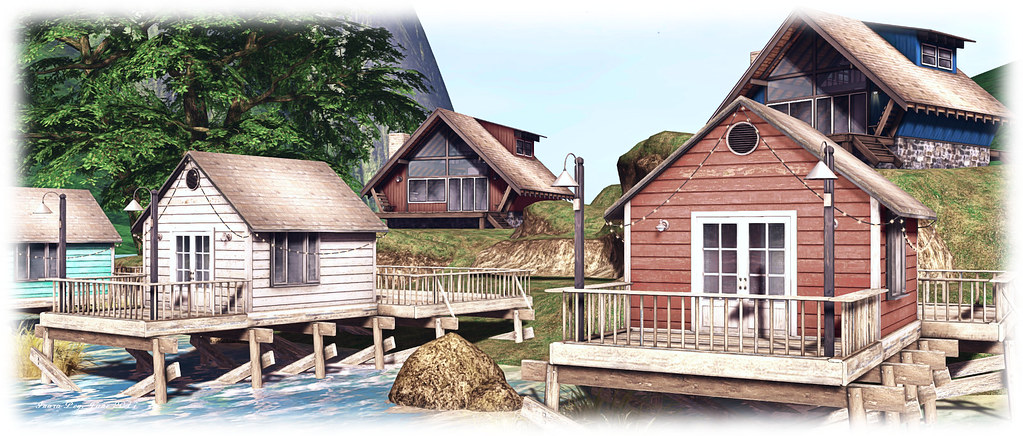
Below the lighthouse lay the beach and sandbars of the coast, straddled in part by wooden houses raised on stout wooden piles to avoid the ravages of a returning tide. Huts and tents sit further in from the sea, huddled on the sands above the high tide mark, but still looking vulnerable as rain lashes down and lightening forks and flashes its way across the sky.

Further to the west and north, above the lie of the beach, but lower than the main plateau, sits a grassy bluff, home to a stone and wood cottage with smoke rising invitingly from its tall chimney, suggesting another place where shelter from the rain can be found. The cottage sits close to another line of cliffs to the north and which march back eastwards, part of the divide between the coast and the town on the neighbouring region. And old shipping container, converted into a hideaway, sits within the shadow of the cliffs, watched over by the weeping willows lining their narrow tops.

Gale Storm Retreat, Aphrodisia Isle; Inara Pey, June 2017, on Flickr Gale Storm Retreat

This is an atmospheric region, designed for photography and which lovers of the sea and the rain will enjoy. There are plenty of places scattered across the landscape for couple to enjoy, indoors and out – including in at least one of the tree houses. A group joining fee of L$500 secures rezzing rights and the ability to claim the pose gifts on offer at the landing point. Chania also notes that it is a work-in-progress (as with the region to the north), so don’t be surprised if details have changed between reading this description and any visit you make.

And about that region to the north? Well, it may be the subject of a future article, once Chania and her friends have had the opportunity to finish building it. Time will tell on that!

SLurl Details

Stony Hill Vineyard in Second Life

Stony Hill Vineyard, Stony Hill; Inara Pey, June 2017, on Flickr Stony Hill Vineyard – click any image for full size

Update July 30th: Stony Hill appears to have closed. 

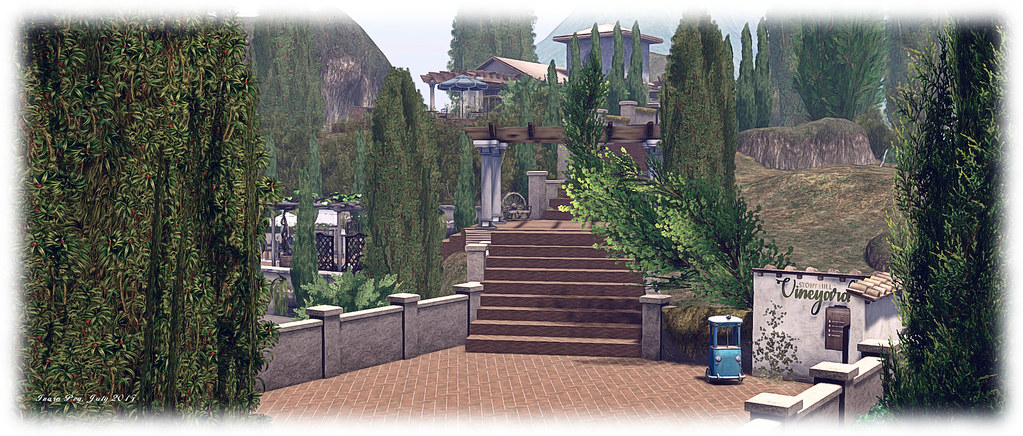
We were drawn to Ezra Locke’s Stony Hill Vineyard after catching it in the Destination Guide Highlights for Friday, June 30th. A homestead region, Stony Hill Vineyard offers a pleasing Mediterranean summer feel – or as Ezra puts it, “Spanish and Italian influences with a little hodgepodge” – a description as charming as the region.

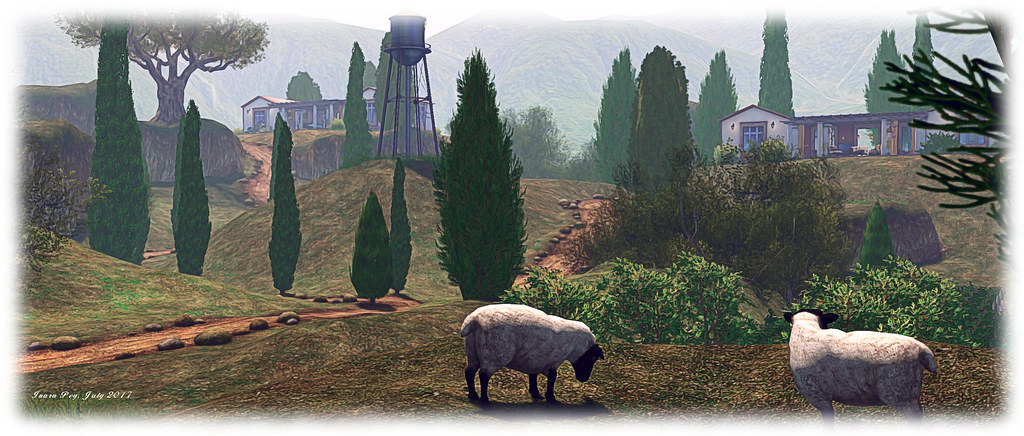
Surrounded by lush green hills, the region sits as within a verdant valley, a rural setting crossed by dirt tracks which wind over and around the low-set hills and escarpments which sit around the region edges and which offer – from a eye-level vantage point – the suggestion that this land and most of the hills beyond are one.

Stony Hill Vineyard, Stony Hill; Inara Pey, June 2017, on Flickr Stony Hill Vineyard

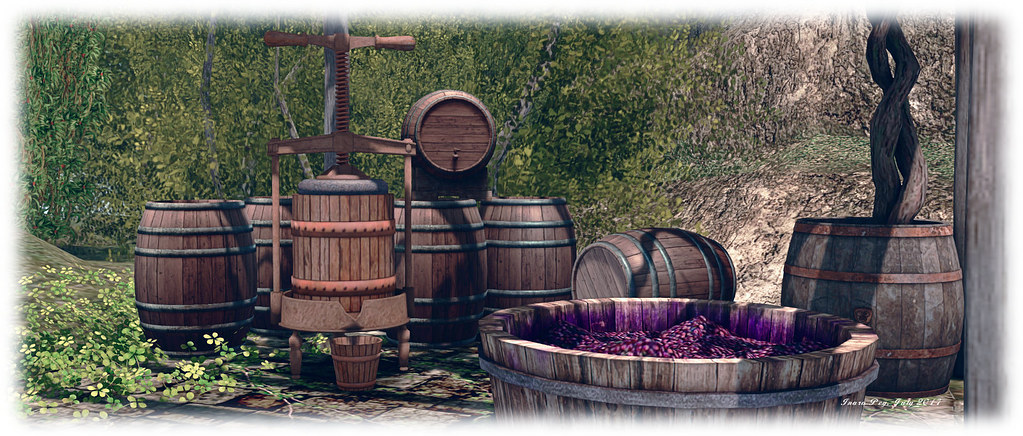
A large villa set back into some of these uplands dominates the north-east side of the region, large terraces stepping down from it to the lands to the west, their red brick flooring contrasting with whitewashed walls. To the west and south, guarding the villa and terraces, are ranks of grape-laden vines, some of which have already been harvested. These can be pressed and stomped under the partial shade of a wooden trellis close to the landing point – just please do remove footwear beforehand!

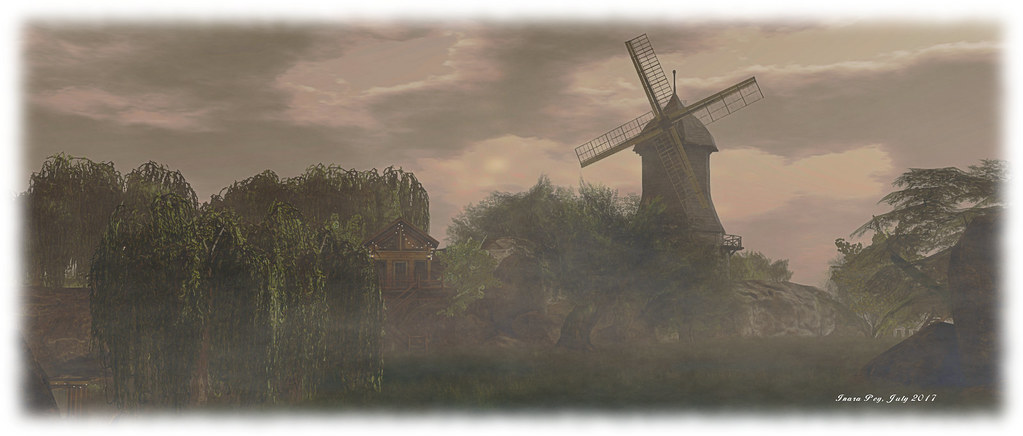
A windmill and equestrian centre sit at the foot of the slopes which fall gently southwards from the villa, while west and north across the region three modest single-storey villas still atop grassy slopes and bluff-faced escarpments. Presented as furnished holiday homes, these are available for rent to visitors wishing to extend their stay at Stony Hill – so if any of them do appear occupied, please respect the occupant’s privacy. The villas are available at L$285 per day (L$1995 per week), with a minimum 3-day stay.

Stony Hill Vineyard, Stony Hill; Inara Pey, June 2017, on Flickr Stony Hill Vineyard

Weddings can also be held within the region, as can private parties. However, these are by arrangement only, and those interested should contact Ezra. Should you wish to rez props for photography, you can do so by joining the local group for a fee of L$250. Additional information on the region – including the local weather and the wine of the month from the villa’s cellars! – can be obtained from the Stony Hill Vineyard website.

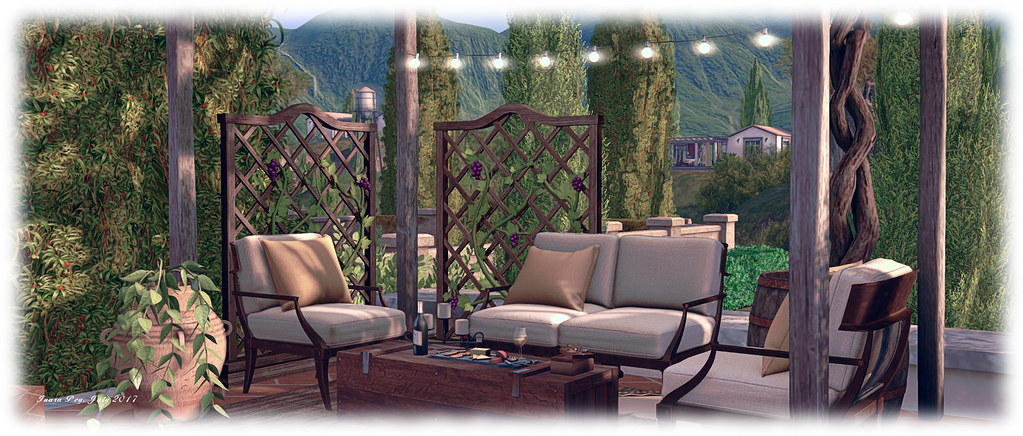
Stony Hill Vineyard is an elegant region design which effectively suggests a feeling of the Mediterranean and gives a sense of space whilst still fitting a lot in – the main villa, the rental villas, the equestrian area and even a little waterside market spot (neatly sitting between the villa and high rocky shoulders, giving the impression that the waters beyond are a river flowing between the vineyard and the more distant hills). There are plenty of opportunities for photography, while the villa’s upper terrace offers places to sit and relax – and enjoy the local wine.

Stony Hill Vineyard, Stony Hill; Inara Pey, June 2017, on Flickr Stony Hill Vineyard

SLurl Details

Au Petit Jour in Second Life

Au Petit Jour, Hrodas Fen; Inara Pey, June 2017, on Flickr Au Petit Jour – click any image for full size

Au Petit Jour is the latest Homestead region design by Elyjia (Elyjia Baxton) and Brayan Friller (Brayan26 Friller) – who you may remember as being the couple behind The Heart of the Sea, which Caitlyn and I visited back in March 2017, and found to be a beautiful, tranquil location.

Those who remember The Heart of the Sea may notices that Au Petit Jour (“At Daybreak”) has much in common with that former build, whilst also being an entirely unique design.   There are two primary islands, for example, one of which includes the landing point, and a number of smaller offshore islets. As with Heart of the Sea, and as its name would suggest, Au Petit Jour is caught in the rays of an early morning sun, whilst the land presents a similar mix of lowlands and rocky, grass-covered bluffs and mesas.

Au Petit Jour, Hrodas Fen; Inara Pey, June 2017, on Flickr Au Petit Jour

But where Heart of the Sea rose from open waters, Au Petit Jour sits surrounded by other islands with tall green slopes and grassy shores which, to the east almost stretch out far enough to make part of this landscape a headland, rather than an island. To the north, between the rounded shoulders of these mighty hills, lies the open sea, a silver-grey Moon dipping slowly towards it, facing another open channel and the sea beyond, to the south.

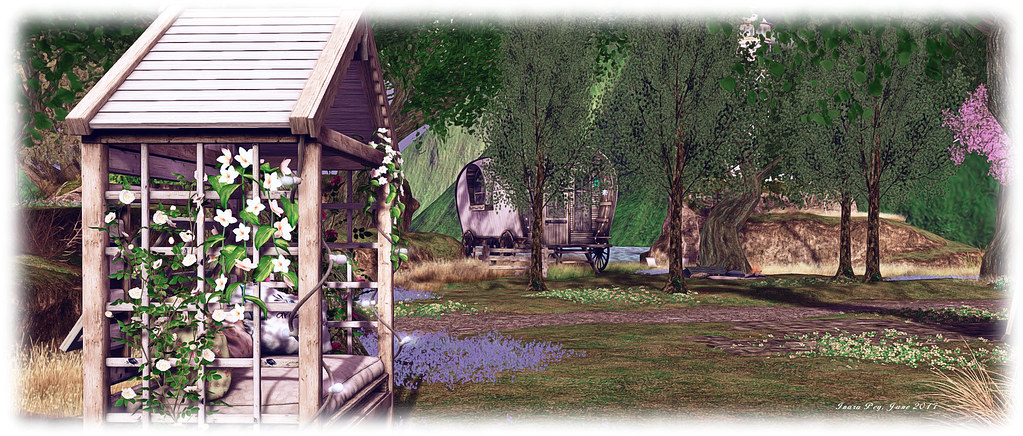
The landing point is located on the north side of the largest island, under the shade of two tall trees with trunks gently bowed from age, bluebells blossoming around the feet. Birds perch on fences greeting the morning in song, and a cinder track cuts across the grass east-to-west, separating a shaded arbor from a nearby Romany camp, beyond which a light house is perched upon a rocky outcrop rising from reeded waters.  Follow the track eastwards, over an old stone bridge, and you’ll reach the second of the two large islands.

Au Petit Jour, Hrodas Fen; Inara Pey, June 2017, on Flickr Au Petit Jour

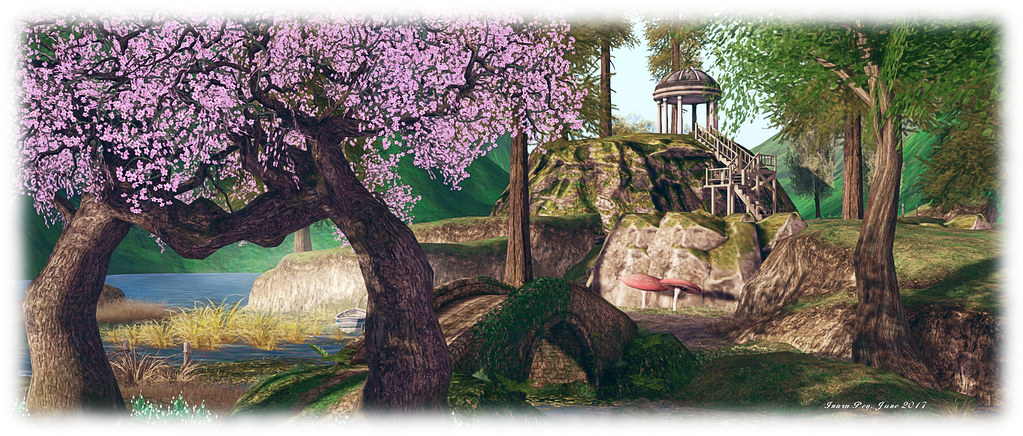
This throws a rugged face towards the tall hills to the east, crowned by an old folly (where dances can be enjoyed). The cinder path splits before reaching this flat-topped cast of rock, one arm leading to the steps that offer a way up to the folly, the other cutting between rocky faces to arrive at a low-lying area, shaded by trees and looking south over a cinder beach and across the inlet to the other islets in the group.

Go west along the track from the landing point, up a small flight of tone steps, and you have a choice of going south (left) or north (right). The southern path leads past more steps offering access up to a windmill seated on the island’s highest point, to a cove-like sandy beach presenting another vantage point looking towards the largest of the remaining islands. This is home to stilted beach houses built out over the water, with  cabins for rent on the low hill above them.

Au Petit Jour, Hrodas Fen; Inara Pey, June 2017, on Flickr Au Petit Jour

Northwards, the land remains flat and low, forming a hook to enclose a small bay into which waters tumble in falls down the side of the windmill’s table of rock. The hook offers a small place for music and dancing, while a raft anchored in the little bay presents another place for sitting and cuddling.

Beautifully laid out, with places to sit, places to cuddle and places to dance – as well as plenty to see, Au Petit Jour  offers much for the Second Life traveller to enjoy. When visiting, do keep in mind that the small island to the south-east, with the little cabins on the rocks and the little white boat dock, is a private area and not open to the public. Should you enjoy your visit, please do consider a donation towards the upkeep of the region.

SLurl Details

With thanks to Shakespeare (Skinnynilla) for the LM.

Simbelmyne and a Love Story in Second Life

Simbelmyne

Simbelmynë, also called Evermind, has its roots in Tolkien’s tales of Middle Earth. It was a white flower that grew in Rohan; now, in Second Life, it is the name given to one half of the homestead region of Isle of Love.

Designed by L E S (Lestat Heninga) with assistance from Arol Lightfoot, Simbelmyne in Second Life presents a beautifully wild landscape carrying echoes of Tolkien’s Middle Earth without intending the be representative of Middle Earth.  Covering the northern half of the region, it is entirely open to the public with the exception of the beach house in the north-west corner of the land, which is a private residence.

Simbelmyne

The SLurl will deliver visitors across the region from the beach house, in the north-east corner, where they’ll immediately see the Tolkienesque influence. An ancient ruin stands atop a set of worn stone steps and runs southwards over a series of arches spanning a shallow inlet, to arrive at an old fortification, itself in ruin. Headless and armless winged figures stand guard over the steps, and across the bridge-like arches a stone robed figure stares blankly westwards.

A mist drifts slow inland from the arches, sharing the space between tall fir trees with ferns and white flowers which could so easily be simbelmyne, to where more walls, these intricately carved, sit within a small copse. Beyond them the land opens out, pointing the way towards the beach house on the horizon, allowing the view of it to remind visitors it is a private residence.

Simbelmyne

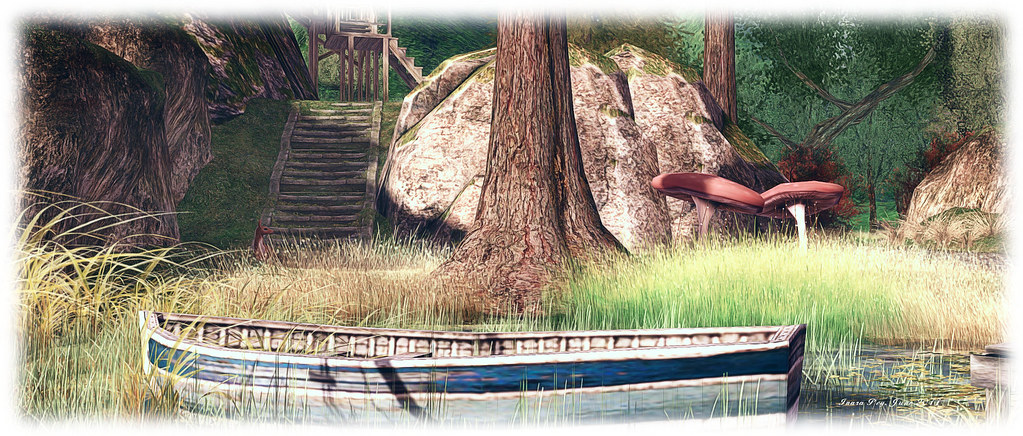
Further south, the trees give way to a small lake fed by a waterfall. An old wooden shack sits on the bank of the lake, bracketed by a moored rowing boat on one side and a small camp on the other, across the neck of a reedy channel that points eastwards to the sea.  A track meanders by the lake, heading west to the beach (open to the public), the ground carpeted in ferns and flowers which slowly give way to grass as the sands on the beach are reached.

Across the curtain of cliffs dividing the land is Love Story – Lost at Sea, by Lauren (Daisy Kwon). This is a coastal setting with a story of its own concerning lost love, hopes, the passing of time, and a love that encompasses a lifetime. The best way to enjoy this story is to read it for yourself from the note card that#’s presents to all arrivals to the land, and I’m not going to repeat it here.

Love Story – Lost at Sea

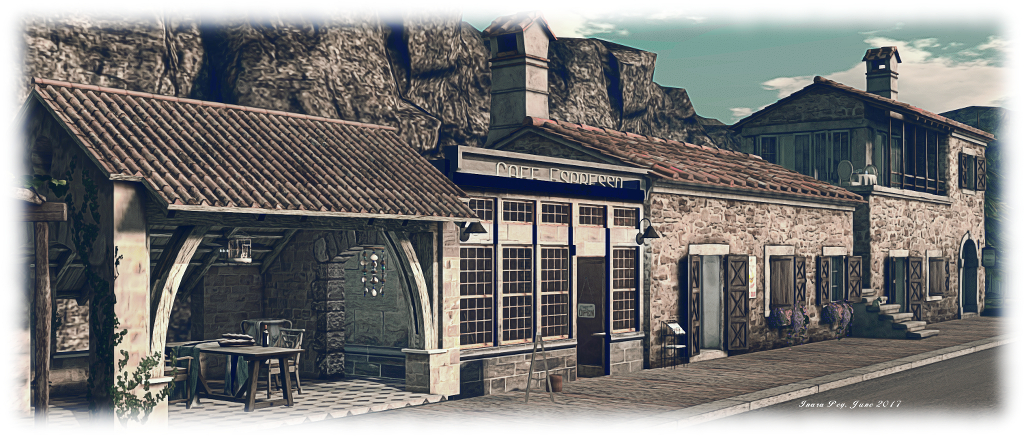
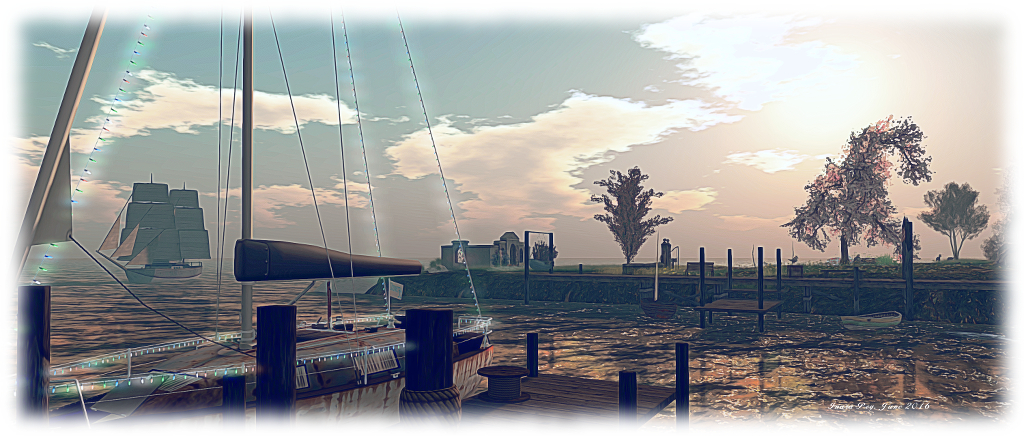
Hemmed to the north and east by high cliffs, but open to the sea to the west and south, the land presents itself as a coastal village or hamlet – where is not important, although the buildings running along the single street suggest this is somewhere along the European coastline of the Mediterranean. These buildings – a tavern, a bakery and a coffee-house – look out over a small, square harbour where sailing boats are tied alongside old wooden piers, watched over by a squat lighthouse. The latter seems needed, given the wreck brought up against the rocks to one side of the harbour entrance.

An old shack sits in the shadow of the lighthouse. It occupies a small space of flat land between lighthouse and rows of grape vines which step their way down a gentle slope. The shack forms a part of the story to the region, as does the gravestone close by. Looking out over the harbour, the shack is the perfect vantage point for sea views, perhaps only matched by the ruins of the old pavilion on the far side of the harbour, a place now devoted to dancing.

Love Story – Lost at Sea

Set beneath a setting sun, both Simbelmyne and Love Story – Lost at Sea offer romantic locations ripe for visiting. Each has a number of spots where sitting and cuddling can take place, and both are very photogenic.

SLurl Details

Isle of Love is rated Moderate