Lab Chat #2: Ebbe Altberg – transcript and audio

Lab Chat #2, January 21st, 2016 - Jo Yardley, Ebbe Altberg and Saffia Widdershins
Lab Chat #2, January 21st, 2016 – Jo Yardley, Ebbe Altberg and Saffia Widdershins

Update Wednesday, January 27th: The official Lab Chat #2 video is now on-line, and is embedded at the end of this article.

Thursday, January 21st saw the  second in a series of discussions called Lab Chat, billed as “an opportunity for you to ask Lindens your questions during a live taping that will be recorded and archived for everyone to view.”

As with the first show, the session featured the Lab’s CEO, Ebbe Altberg in his alter ego of Ebbe Linden. In preparation for the recording, Second Life users were invited to ask questions about the Lab, Second Life, “Project Sansar”, etc on a forum thread.

Over 80 questions were asked, all of which were reviewed by the Lab Chat production team, and from which the list of question to put to Ebbe was drawn. The questions select were those the production team thought would be of most interest to the attending audience, or represented those questions which were asked multiple times by different people.

The following pages offer a transcript of the show’s recording session, which has been split into three parts:

  • Those questions and answers those related to Second Life
  • Those focused more on Project Sansar
  • Additional questions & audience Q&A.

The first two sections are presented in chronological order – as the questions were asked during the recording of the show. The additional questions have been grouped together (where possible) by subject matter, for ease of reference.

The Quick Links below will take you directly to each of these three sections, or to any of the individual discussion points within them. Each question / answer includes an audio extract of that question and response for those who wish to listen rather than read.

Quick Links

Concerning Second Life

Concerning Sansar

Additional Questions

Closing Comments

Note: this is not a transcript of the entire recording session. The focus is on the questions asked and responses given. Also, the audio extracts are from a recording which was cleaned-up following the show to remove repetitions, pauses, trailing comments which otherwise break the flow / context of replies. However, no attempt has been made to editorialise or in any way alter the context of any response given to questions.


Wareable examines Project Sansar

"Project Sansar" promotional image via linden Lab
Project Sansar promotional image via Linden Lab

In Virtual worlds reborn: Can Second Life’s second life democratise VR? Sophie Charara, features editor at Wareable, examines Project Sansar, using in part Ebbe’s comments from an on-stage discussion they had, together with Ken Bretschneider of The Void during the December 2015 Web Summit. I’ve embedded the video of that discussion at the end of this article.

While the piece in Wearable doesn’t offer much that’s new to those who have been following the Lab’s conversations to the press and SL users about their hopes for the new platform, the article does offer some interesting insights to what the Lab is doing and some of their thinking behind Sansar.

Sophie Charara
Sophie Charara

Starting out with what we already know – the Lab is pitching the platform as “WordPress for VR”: an environment where people can come in and create virtual environments without the need to be a software engineer, coder, etc. – the article covers a lot of ground, with comparisons to Second Life, references to other pioneers in VR (Chris Milk, Nonny de la Pena and Jeremy Bailenson) and a further look at hoped-for time frames with “Sansar”.

The Lab has, on numerous occasions, indicated that initially, Sansar is being targeted at some very specific verticals where immersive VR has practical application. Education, healthcare, simulation, business, design and architecture have all be very specifically mentioned in this regard. So a point of interest for me was reading the specific example cited by Ebbe as to how Sansar is already been used, albeit on a test basis, by an architect:

An architect named Diego, who works for a big firm that is completing a major medical centre project, built the entire building in Sansar as an experiment.

“When he experienced it in virtual reality for the first time, he walked into the lobby and said ‘Damn, it’s too big,'” said Altberg. “It took him one second to realise that something was off and he’d been working on this project for a long time. That had value instantly.”

In this instance, the power of virtual realisation is clear, and having a platform which allows companies and individuals easily leverage this kind of visualisation, connect with other and have them shared in such visualisations / experiences / models is clear. In the example above, it is only a short step from Diego witnessing the flaws in his design (and being able to correct them as a result) to him being able to invite his clients into the model, so they can witness first-hand what his company’s vision for the project is. It also potentially allows his company to retain the model as a part of a virtual portfolio of projects they can showcase to future clients.

That the Lab had identified architecture as a suitable environment where Sansar could offer significant value for clients can also be ssen in the fact that the first public demonstration of the new platform took place San Francisco’s month-long Architecture and the City Festival in September 2015.

VR capabilities have a huge potential for various vertical markets, such as architecture and design, and these are markets the Lab have indicated they are targeting (image archvertical.com)
In 2014, Jon Brouchoud demonstrated the potential of architectural visualisation using the Oculus Rift and Unity 3D (image archvertical.com)

Hence why “Sansar” could, potentially, be a very powerful platform with the sectors the Lab has identified, particularly if it really does allow clients the freedom to create environments which can be standalone or interconnected, and / or which can be accessed directly through a closed Intranet, or open to all via direct web portal, according to individual needs.

Picture, for example, a university using Sansar to build a virtual teaching environment, access through its own Intranet and using it’s exiting log-in and authentication process so students and staff can seamlessly move into and out of the virtual space. They could then open a public portal to elements of that space, and / or link-up with other education institutions, enabling students to share in their virtual learning spaces, building-up their own “world” of connected experiences.

Second Life has proven itself and the value of virtual environments in education. "Project Sansar" could present opportunities to significantly build on the foundations laid by SL
Second Life has proven itself and the value of virtual environments in education. “Project Sansar” could present opportunities to significantly build on the foundations laid by SL

Not that Sansar is purely about these niche environments. The potential social power of virtual spaces and virtual opportunities has long been established by Second Life, and the article does make it clear that as things progress, the Lab does see Sansar as potentially being able to replicate a lot of what Second Life can already do and offering it to an audience as a much more accessible medium.

This obviously is something of a worry for those of us deeply rooted in Second Life – much has already been made of the potential for the “cannibalisation effect” Sansar might have on the current Second Life user base. It’s actually a valid concern, and something we should perhaps be prepared for at some point down the road, if Sansar proves to be a success and starts to pull SL users away from this platform. But frankly, it’s not something which should be held up as a reason for the Lab not to press ahead with Project Sansar.

Continue reading “Wareable examines Project Sansar”

“Project Sansar”: an Amazon ECS case study

Most of us are curious as to how “Project Sansar” will / won’t / might / might not work (with some already going to far as to pretty much write it off before even seeing it, which to me seems a tad premature).

In her own digging around, reader Persephone came across an interesting piece of information, and was kind enough to pass me a link to a case study from Amazon concerning the Lab’s use of Amazon’s EC2 Container Service (ECS) and Docker technology within Project Sansar.

Amazon’s ECS is a “scalable, high-performance container management service that provides cluster management and container orchestration”, which Linden Lab uses to run “the containerized web applications and back-end services of Project Sansar”.

Docker is an open-source technology that allows a developer (e.g. Linden Lab)to build, test, deploy and run distributed applications –  all the code, runtime elements, system tools and libraries, etc, – within a “container”, a method of operating system virtualisation. The upshot being it allows an application to be presented as a standardised package for rapid and consistent deployment, regardless of the environment in which it is to be used.

Precisely what “back-end” services for “Project Sansar” are being deployed in this manner isn’t clear; I’m certainly no technical expert and so am open to correction / other ideas.

However, we do know that a key element of “Sansar” is the ability for customers to build and deploy their own gateways (e.g. websites / web portals) to draw their own audiences into the experiences. So, is the use of ECS a means of achieving this? Presenting customers with a packaged environment in which they can build and deploy their own “Sansar” gateways? Or might it be the mechanism the Lab are looking to use to handle the management and scaling of support systems such as the chat, asset and other services  – many of which do appear to be of monolithic design with Second Life, and which sometimes don’t scale particularly well.

The Lab's diagram for using Amazon ECS for instancing
The Lab’s diagram for using Amazon ECS (images Linden Lab / Amazon) – click for full size

Could it be that the mechanism might actually be for more than just “back-end” services – such as the actual packaging and presentation of “Sansar” experiences themselves? We know that the Lab are wrestling with the issue of optimising “Sansar” experiences and their content so that they present a performant experience across a range of client platforms.  We also know the Lab intend to provide a means by which experiences can be rapidly deployed when needed (e.g. the WordPress  / You Tube analogy of build and then push a button to deploy) or rapidly scaled via instancing to meet the demands of large audience numbers.

Both of these requirement would seem – to my untutored eyes at least – to fit with the model being presented, although both would tend to suggest the use of ECS beyond the support of “back-end” services.

As it is, we do know the Lab already use Amazon’s services for presenting some of their SL-related services – so developing an existing relationship with the company for the benefit of “Project Sansar” would appear to make sense. At the very least, the case study offers the potential for further “Sansar” questions to be asked at the next Lab Chat.

Lab Chat #1: Ebbe Altberg – transcript and audio

Lab Chat LogoThursday, November 19th saw the launch of what is hoped will become a new series of monthly discussions. Lab Chat is billed as “an opportunity for you to ask Lindens your questions during a live taping that will be recorded and archived for everyone to view.”

The first show featured the Lab’s CEO, Ebbe Altberg in his alter ego of Ebbe Linden. In preparation for the recording, Second Life users were invited to ask questions about the Lab, Second Life, “Project Sansar”, etc on a forum thread.

Over 40 questions were asked, and members of the production crew selected seven questions they thought would be of most interest to the attending audience, to be asked during the show, whist also leaving time for further questions from the audience itself.  Discussions are under way with the Lab to try to ensure those questions from the forum thread which weren’t asked as a part of the recording do get addressed in some manner.

The following pages present a transcript of Ebbe Altberg’s replies to both the seven core questions selected by the Lab Chat team, together with any additional follow-ups or observations from show hosts Saffia Widdershins (SW) and Jo Yardley (JY), and the answers given to those questions raised during the open Q&A session.

Note that this is not a full transcript of the entire recording, the focus is very much on the answers given to questions and any relevant comments. For ease of reference, the transcript is split into three parts, each with its own navigation and links, and links to all of the questions:

  • Those questions and answers those related to Second Life
  • Those focused more on Project Sansar
  • The general Q&A session.

Each question / answer includes an audio extract of that question and answer for those who wish to listen rather than read, or in addition to reading, the transcript text.

The Quick Links section below will take you directly to each of these three sections, or to any of the individual discussion points within them.

Those wishing to watch the official video, can see the three parts here, here, and here.

Quick Links

Right-to-left: Saffia Widdershin, Ebbe Linden and Jo Yardley during the first Lab Chat recording
Right-to-left: Saffia Widdershins, Ebbe Linden and Jo Yardley during the first Lab Chat recording

“Created Reality”- possible contender for Project Sansar’s name?

Is Porject Sansar to be called Created Reality?
Is there a Link between Project Sansar and “Created Reality”?

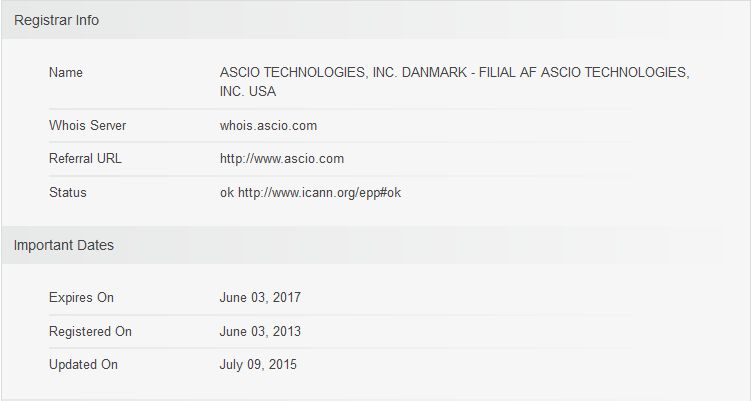
Ciaran Laval and I have been using Twitter to further ponder a domain registration in the name of “createdreality.com”. It was originally taken out in June 2013, which under the usual two-year registration policy means it possibly expired around June 3rd, 2015. However, on July 9th, 2015, it was renewed through Ascio Technologies, the company used to register the projectsansar.com domain.

The domain registration renewal followed a trademark registration submitted to the USPTO by the Lab for the name “Created Reality”. This occurred on May 22nd and is summarised here.

The timing of both is possibly interesting, given the domain name had been allowed to lapse (although this could simply have been admin oversight), and the trademark filing came 2 weeks after Lab had confirmed “Project Sansar” to be the new platform’s code-name, thus ruling out “Created Reality” as simply being an alternative code-name for the platform.

The domain createdreality.com was registered through the same servie used to register the projectsansar.com domain
The domain createdreality.com was registered through the same service used to register the projectsansar.com domain

The trademark application also contains pretty much the same descriptive wording as used within the “Project Sansar” and “Sansar” filings made in April 2015.

So, does this mean “Created Reality” is the new name for the Lab’s Next Generation platform? Well, maybe – but maybe not.

On the one hand, it is interesting that the Trademark filing came after the code-name for the platform had been decided. However, this isn’t necessarily indicative of anything; the Lab could simply be covering the bases as they consider various names for the new platform.

More to the point, while the name “Created Reality” may doubtless describe the platform’s function in presenting spaces where people can create their own virtual realities, it does actually read rather, well, bland.

The createdreality.com domain administrator: Linden Research (Linden Lab)

Countering this, however, is the idea that the new platform is apparently geared towards being a “white label” service in which in which creators can build their own branded spaces, and then promote  / market them directly to their potential audience, complete with sign-up portal, etc.

As such, the users of the environments created on the platform are perhaps more likely to know the environments by their various names, rather than collectively by the name of the platform on which they run. Thus, the platform’s name might be less front-and-centre than is the case with something like Second Life. Although that said, I’d personally like to see something a little more dynamic by which to know the platform.

Right now, the Lab is saying little on the subject of “Sansar” or “Created Reality”, with Peter Gray only informing me that the platform’s name is still “being determined”.

However, if we place the “Created Reality” trademark alongside the one for “Sansar”  – the latter being quite distinct from the trademark filed for “Project Sansar” – it would seem we have a couple of the names the Lab have been ruminating on for the platform’s eventual title. Could there be more lurking out there in the form of trademarks and / or domain names?

Lab announces Sansar’s closed alpha officially under-way

Th obligatory Sansar promo image :) (please can we have some new ones?) - Linden Lab
Th obligatory Sansar promo image 🙂 (please can we have some new ones?) – Linden Lab

On Tuesday, August 18th, and running a couple of weeks behind schedule – such is the way with new projects – the Lab has officially announced they’ve invited a small number of content creators to try-out their Next Generation Platform for virtual experiences, currently code-named Project Sansar.

The announcement, which appears a press release on the Lab’s corporate pages, reads in part:

Slated for general availability in 2016, Project Sansar will democratize virtual reality as a creative medium. It will empower people to easily create, share, and monetize their own multi-user, interactive virtual experiences, without requiring engineering resources. The platform will enable professional-level quality and performance with exceptional visual fidelity, 3D audio, and physics simulation. Experiences created with Project Sansar will be optimized for VR headsets like the Oculus Rift, but also accessible via PCs and (at consumer launch) mobile devices. Users can explore and socialize within Project Sansar experiences through advanced expressive avatars, using text and voice chat.

Drawing on more than 12 years of unique experience running Second Life, the largest-ever user-created virtual world, Linden Lab will make it fun and easy for Project Sansar users to create social VR experiences, eliminating the complicated challenges that today limit the medium to professional developers with significant resources. Project Sansar will allow creators at all levels to focus on realizing their creative visions, without having to worry about issues such as hosting and distribution, multi-user access and communication systems, virtual currency and regulatory compliance, and other challenges associated with creating, sharing, and monetizing virtual experiences today.

As has been widely reported, the initial testing will be focused on Autodesk’s Maya® software for content creation and upload to Sansar, although the Lab have also announced that they intend the platform to operate with a wide range of content creation tools such as such as 3D Max, Sketchup, and Blender, with file format support for OBJ and FBX, and others.

Sansar alpha testing is focused exclusively on Maya - however, the Lab intend the platform to support a wide range of 3D content creation tools as work progresses
Sansar alpha testing is focused exclusively on Maya – however, the Lab intend the platform to support a wide range of 3D content creation tools as work progresses

During the alpha, the invited creators will be encouraged to “use each other’s games and other invented environments, trade feedback, and tweak their own work.” They’ll also have to be patient, with Ebbe Altberg having previously warned they may face having content deleted, removed or otherwise altered as the Lab continued to adjust, change, tweak (and bash?) what is still a very new platform that has a good way to go before it reaches something ready to have a lot of people pile on to it and play with it.

That said, if all goes according to plan, the alpha will slowly be opened out over time to include more creators, the Lab’s own announce noting:

In the coming months, Linden Lab will welcome additional creators and content partners to Project Sansar as new features are added to the platform and testing expands.

The emphasis on “content partners” is mine, as I do wonder precisely what it means for the direction Sansar will be taking, particularly given the differentiation given the term from “creators”.  More thoughts on that to come.

In the meantime, The Verge has been quick off the press in following-up on the Lab’s announcement, with a short piece entitled The VR successor to Second Life is inviting its first testers, which is in some ways an unfortunate title, as it does carry a certain implication that Second Life is perhaps no more. This view is perhaps further enhanced by the use of the past tense when referring to the platform, even though there is a nod to the fact that Sansar will run “alongside” SL.

VentureBeat, to name one other following-up on the Lab’s press release, has a similarly brief article in its GamesBeat section, Second Life creator Linden Lab starts testing its virtual-reality world: Project Sansar, which focuses on the core points of the press release.

For those wishing to catch-up on what I believe to be the core statements and information around Sansar, as gathered from cited sources, please refer to my July Sansar Summary.

Also, be sure to take a look at uploadVR’s very excellent conversation between Nick Ochoa and Ebbe Altberg on Sansar, which I reviewed at the start of August, and am embedding here again for reference.