The Sansar Summary – August 2016

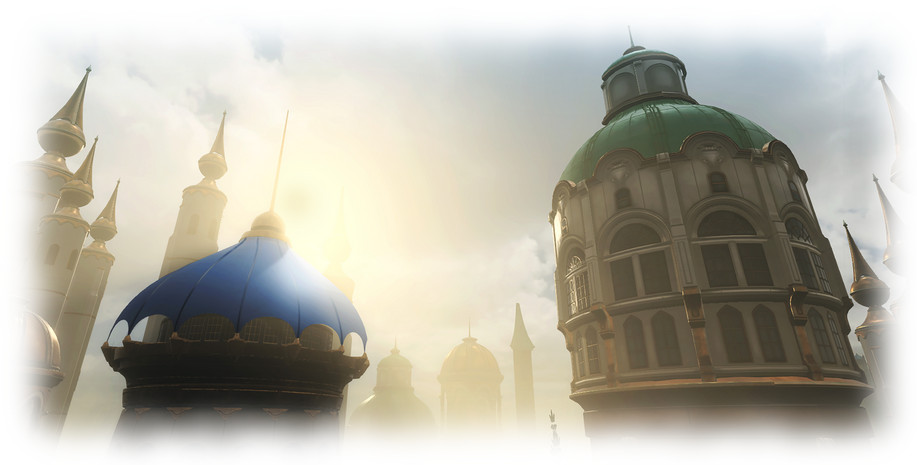
Project Sansar image via Linden Lab

In July 2015, I produced the first in a (possibly) semi-regular series intended to summarise what has actually been stated / revealed about Linden Lab’s next generation virtual experiences platform, Project Sansar.

Since then, more information has been released, both to the press and more particularly via in-world sessions such as the annual VWBPE conference (April 2016), the Lab Chat meetings (November 2015, January 2016, May 2016)  and the recent SL13B celebration Ebbe linden Q&A (June 2016).

This article is an attempt to pull relevant core information from those sessions and assorted press / media reports into a summary of what has been said thus far about Project Sansar, citing references for anyone wishing to follow-up. I don’t claim to have covered everything that has been said, but I have attempted to include the most relevant points of interest.

Citations are given in the format [number (article / publisher, month year)] where “number” indicates it is a unique reference (citations to the same reference use the same number); “article / publisher£ indicates if it is a transcript (e.g. LC1 = Lab chat 1) or a media publication (e.g. “Wareable” = Wareable on-line) and “month year” is self-explanatory. Thus, for example:

  • [1 (LL Apr 16)] = 1st citation, a statement from Linden Lab, April 2016
  • [36 (LC2, Jan 16)] = 36th citation, from Lab Chat 2, January 2016.

Citations to Lab Chat, etc., transcripts provided in this blog reference the relevant part of the transcript; podcast /video citations include a time stamp, if relevant; external media citations are to the article.

Time Frames: Creator Preview and Extending Access

  • The Lab launched the “Creator Preview” application process on April 26th 2016 [1 ( LL  Apr 16)]. The application form is still available at the time of writing
  • Access is limited to content creators willing to work with the Lab, provide feedback, etc., [2 (VWBPE  Apr 16)], and accept the risk that changes to the platform may break their content [3 (LC2 Jan 16)]
  • This followed closed alpha testing which commenced in August 2015 [4 (LL Aug 15)], which included invitations to those in markets which the Lab are targeting for Sansar [5 (Wareable Jan 16)]
  • Further creators are to start gaining access from August 2016 [6 (Podcast  Aug 16 – 37:19)]
  • Those simply wanting to look around Sansar will not be accepted [7 (LC3 May 16)]
  • Around Q3 2016 they hope to start publicly revealing more about the platform, more images, possibly videos, possibly information on specifications, etc [8  (VWBPE Apr 16)]
  • It is hoped that full public access is expected to commence in January 2017 [6 (Podcast, Aug 16 – 38:09)]
  • When first opened to the public, Sansar will not be as feature-rich as Second Life, and will take time to mature [9 (VWBPE Apr 16)].

Content Creation Tools /  Capabilities

  • As the year progresses, the Lab will expand Sansar support to other content creation tools beyond Maya  (e.g. to include Sketch-up, Blender, 3D Max, etc) [10  (VWBPE Apr 16)]
  • Notably, Sansar will offer .FBX file import capabilities to support a broader range of content creation tools [11 (LC2 May 16)]
  • There will be built-in tools for terrain building and layout management, which have been focus for the Lab [12 (LC2 May 16)]. These land tools should allow for creating caves, overhangs, etc., and offer some means of auto-generation of some vegetation and present more in the way of volumetric liquids (so you will eventually be able to eventually fill a beaker with liquid). HOWEVER – these are not all “Day 1” capabilities  [13 (Drax Files, Apr 16 ]
  • Internal tools for original content creation (e,g, using prims or voxels), together with mesh editing capabilities, may come in time, but these are not currently a priority focus [10 (VWBPE Apr 16)], [11 (LC2, May 16]], [13 (Drax Files, Apr 16 05:32)]
  • Scripting will be C# and over time capabilities to better support external tools, IDEs, etc., will be added [14 (LC2 Jan 16)]
  • Sansar is being built more a “design-centric” view, focusing on ease-of use to present a virtual environment for people to access and use [6 (Podcast, Aug 16 (24:24)]
  • The term “creator” in Sansar is not restricted to those who build actual mesh models, accessories, etc., it applies equally to those who design spaces inside the platform using items purchased from others [6 (Podcast, Aug 16 (26:32)]

Separate Editing and Runtime Environments

  • Sansar will have separate editing and run-time environments, which is not the case with Second Life (where you can walk down the street as see someone manipulating prims to build a house, for example). This is necessary to ensure Sansar can support the required frame rates for VR  [15 (VWBPE, Apr 16)]
  • Experiences will be built and content added / positioned within the editing environment and then “published” via optimisation (aka baking)  to the runtime environment where it is accessed by users – hence the comparisons between Sansar and platform like YouTube and WordPress [16 (Fortune, Nov 15)]
Sansar's separate editing mode helps ensure that the runtime system isn't impacted by real-time editing of content, thus helping to optimise performance. However, it does create issues in providing users with the means to customise personal spaces when those spaces are part of a larger scene used by multiple users
Sansar’s separate editing mode helps ensure that the runtime system isn’t impacted by real-time editing of content, thus helping to optimise performance. However, it does create issues in providing users with the means to customise personal spaces when those spaces are part of a larger scene used by multiple users. Images via the Linden Lab Sansar preview video
  • This editing environment is currently single user only, but the Lab hope that by the end of 2016, it will support multiple people editing / creating collaboratively on a single project [13 Drax Files, Apr 16 04:30)].

Avatars, Personas, Avatar Inventory

  • People will be able to create their own avatar identities, with existing user names for Second Life residents already reserved [17 (LC3, May 16]
  • Rather than running multiple accounts, users will be able to have multiple “personas” under a single account. However, it is not clear if a user will be able to have multiple “personas” logged-in to the platform simultaneously [18 (LC1, Nov 15)]
  • User will be able to customise their avatar look and appearance in time. However, experience creators will have more power to dictate the appearance of visitors to their environments if they so wish, in order to preserve any required immersiveness. This may even include forcing visitors into a first-person view during a visit [19 (LC2, Jan 16)]
  • Avatar editing will initially be limited when Sansar first opens (be will improve over time). It may be limited to “skin tone, maybe a couple of hairstyles, a couple of pre-defined outfits”; however, the overall aim as Sansar develops is to present a fair easier means to manage an avatar’s appearance than is the case with SL [20 (SL13B, Jun 16)]
  • Overall, clothing should be easier to manage and fit, but inventory may be dependent upon experience, rather than being central to the avatar (e.g. if you only need gun Y for Experience Y, it will only be available to you whilst in that experience [21, (LC1, Nov 15)]
  • Avatar controls / use will be different in Sansar, due to the added dimension of VR support (controller, need to see hands, etc [22, (SL13B, Jun 16)].


Continue reading “The Sansar Summary – August 2016”

Techcrunch and THE examine Project Sansar

Project Sansar: increasingly in the tech media's media's eye
Project Sansar: increasingly in the tech media’s eye. Credit: Linden Lab

It appears that, in keeping with their word, the Lab is starting to allow journalists into Project Sansar. At the start of July, Ed Baig got a look inside Sansar for USA Today, as I reported here and here (with Ed’s own article here). now it is the turn of Techcrunch and, earlier in the month, Times Higher Education (THE), with pieces appearing in Russian, Polish and Brazilian outlets.

In Second Life creators look to revamp reality once again, this time in VR. Techcrunch’s Lucas Matney steps inside Project Sansar at the invitation of Ebbe Altberg, and his guide is the Lab’s VP of Product Bjorn Laurin (Born Linden). As with most articles we seen of late, nothing intrinsically “new” is added to what has so far been revealed about Sansar in terms of capabilities, approach or screen shots, but  there are some interesting tidbits, all the same. For example, early on he notes:

Traversing the worlds of Sansar and chatting with my guide, Linden Lab VP of Product Bjorn Laurin, was a mostly seamless experience but still an oddly unsettling one. It’s not that anything was particularly creepy about the place I was viewing through an Oculus Rift headset. Sansar is visually placid and often beautiful, but it’s also startlingly scalable and boundless. Scale is something that’s often taken for granted in an age of video game epics like Skyrim and GTAV, but when every horizon you see through your own point-of-view is conquerable, you’re left to either feel very bold or very lost.

Lucas Matney considers Project Sansar for Techcrunch

The two things that are interesting here are the comment about the “mostly seamless” experience of moving between “Sansar worlds” (“worlds” here, I assume, means Sansar “scenes” which have been “stitched together”  – to use the Lab’s terminology – to create an “experience”). This appears to imply that whatever mechanism is in place to move avatars between different connected scenes (teleporting?) is pretty smooth and that there may not be too much in the way of any interruption when moving between scenes. It’ll be interesting to discover if / how this might extend to vehicles at some point down the road as Sansar develops.

The second interesting part of the comment is the apparently limitless size Sansar presents to users, suggesting that as with Second Life, Sansar will convey a sense of massive spaces which might reach beyond their physical limits – so will people be looking out onto open “water” as with SL, or will the “land” appear to stretch off into the far horizon – or is it simply that the available Sansar scenes all make use of the upper bounding size (previously reported to be around 4 km / 16 SL regions on a side)? Either way, it may well be that environments in Sansar aren’t quite as “enclosed” – at least visually – as people might be fearing.

A further point of interest in the article takes the form of an astute observation perhaps overlooked when discussing Sansar’s potential for success:

Like Second Life, Project Sansar is not an experience that needs to be perfect at its initial launch or see a certain number of first week user numbers to be a hit. It just has to stay consistent, evolve with the hardware/interface trends of modern VR and steadily push boundaries as it updates.

Hence why the Lab isn’t trying to cross all the “T”s and dot all the “I”s with Sansar from day one, and why they do repeatedly warn SL users it is not going to necessarily be to their taste when the doors first open. VR is going to take time to mature – not just in terms of user conviction, but the very hardware and software itself. Things will change within the industry, probably quite rapidly (look at the pace of change of other “disruptive” technologies, such as the mobile ‘phone), thus it’s important for Sansar to be in a position to demonstrate it can meet user cases and needs – but also remain flexible and responsive to emerging technology and the new needs / opportunities arising from it.

In a time when we’re perhaps becoming inured (so to speak) with the comparisons to Sansar with the likes of WordPress and YouTube for content creation, it’s perhaps refreshing to have someone put their finger on the button of LL’s monetisation focus for Sansar, with Matney observing the company plans to essentially build “an app store for VR creative properties”. This is not only a neat way to encapsulate Sansar’s approach to monetisation, it also neatly folds back into the idea that “creator” in Sansar encompasses a broader cross-section of users than perhaps we consider to be the case in Second Life – as I mentioned in covering Ed Baig’s USA Today piece.

Alice Bonasio: looking at Sansar and VR for THE

One of the several target markets the Lab is looking towards for Sansar is that of education, and it is from this perspective that Alice Bonasio, writing for Times Higher Education, considered Project Sansar back at the start of July 2016.

Starting with a look at the success Second Life has enjoyed within education, Virtual reality really is heading to a university near you more generically considers the role of VR in education, and the manner in which Sansar might be a part of an education revolution – not just in terms of providing immersive teaching environments, but in the ability for universities and colleges, etc., to potentially monetise their environments.

It’s an interesting line to take, but what is perhaps of greater interest, in terms of gaining further understanding as to why Linden Lab felt they needed to push ahead with Project Sansar, is in the vision for education presented through the piece. In this, Alice Bonasio doesn’t just examine the Lab’s hopes for Sansar, she frames them in terms of experiments conducted by Jeremy Bailenson, founding director of Stanford University’s Virtual Human Interaction Lab. These experiments demonstrated some very real benefits of using VR / augmented capabilities can bring to the basic  tutor / student relationship, quite aside from all the deeply immersive potential offer by the technology.

Again, neither article offers anything specifically “new” in terms of how Sansar will look when the door opens or what the baseline capabilities will be when that happens in early 2017. However, they do both provide individual insights into the platform which make them both a worthwhile read, with Techcrunch’s Matney in particular ending with further food for thought, noting that while Sansar might not  require a huge audience from the get-go, it does nevertheless need to succeed in its central aim of providing a platform for “social VR” – and that’s no easy thing, because “social VR” isn’t really an understood medium right now (we can only guess at what it might be like and – equally importantly – how people might react to it). But as he notes in closing:

The early beta shows great promise and while a wide release of its desktop and VR versions is still likely months away, it’s clear that Linden Lab understands the daunting magnitude of both Project Sansar’s challenges and its potential.

USA Today’s further look at Project Sansar and Social VR

Project Sansar promotional image via Linden Lab

On July 4th, I noted USA Today’s video short on Project Sansar and the Lab. At the time, I indicated that there didn’t appear to be a related article to go with the video. However, that’s now changed, and Ed Baig, USA Today’s tech reporter, has indeed written an article to sit alongside the video, which appeared on July 6th under the title Second Life’s creators try for a third — in virtual reality.

“Third”? You may wonder. “What third?” The answer is something of a play on words – Linden Lab’s “first life” is (like the rest of us) firmly rooted in the physical world, where it sits as a corporate entity employing over 200 staff, 75-ish of whom are focused on Project Sansar (the rest doubtless made up of those managing Second Life, running Blocksworld, taking care of the company’s administration and management and (potentially) working with Tilia Inc.). Their “second life” is, obviously, Second Life itself, thus leaving Project Sansar as the company’s nascent “third life”.

Ed Baig: looking further inside Sansar and Social VR for USA Today

As with the video, the article doesn’t reveal much that is new about Project Sansar itself per se, however, it does delve more into the concept of “social VR” – the term that Linden Lab and the likes of High Fidelity,AltSpace VR (both of whom are also mentioned in the article) and Facebook are increasingly using to define their new platforms.

In the case of Sansar, this “social” element is not just about people together who are already engaged in the virtual domain, but in allowing the creators of the environments hosted by Project Sansar to directly attract their own audiences to the experiences they build.

At this point, it’s probably worth diverting slightly and stating something that by now I would hope would be straight out of the British Guide to Stating the Bleedin’ Obvious, particularly for those who have been following Project Sansar’s development, but is worthwhile repeating just in case.

And it’s this: as with various other aspects of discussing Project Sansar, “creator” actually has a wider context than perhaps it does within Second Life. In the latter, by-and-large, we tend to regard “creators” as the folk who design and make the goods we use to dress our avatars and furnish our land. Outside of lip service, it’s perhaps not a term closely linked with those who obtain land and regions in SL and use these goods to create and environment. However, with Project Sansar, it is pretty clear “creator” is intended to encompass both: it applies to both those who can build and model with the tools supported by the platform, and those with the desire to “build” an environment they can share with others, even if “build” refers more to shaping the land and obtaining content designed, made and supplied by others.

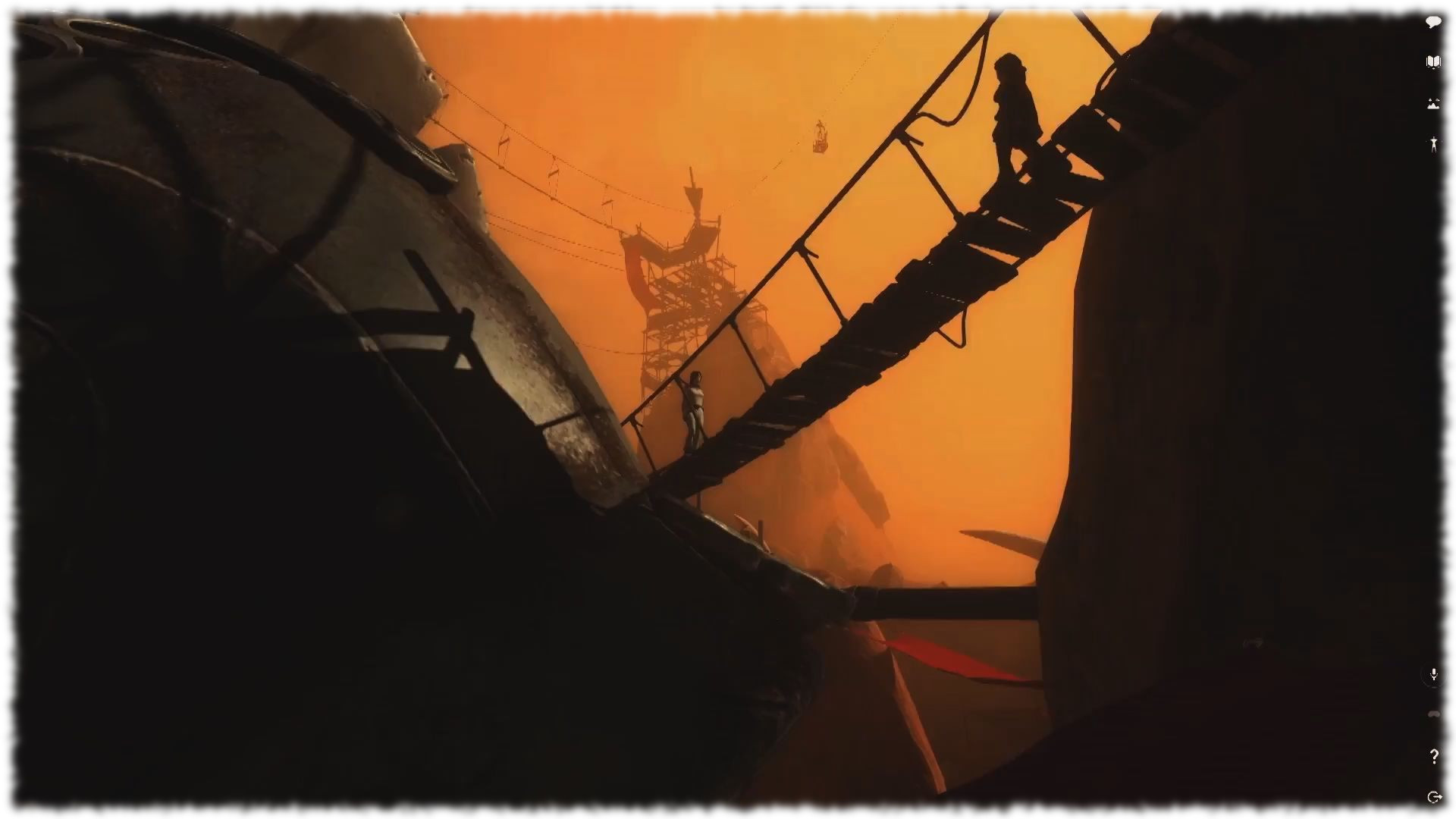
Ed Baig was able to explore Mars within Sansar, using one of the Lab's early experience set pieces
Ed Baig was able to explore Mars within Sansar, using one of the Lab’s early experience set pieces

In his article, Ed Baig illustrates this, together with the concept of “social VR” and the ability for experience creators to be able to attract their own audience by quoting the idea of learning the French language:

If you search Google for “I want to learn French” you might find in the search results a virtual reality experience in Sansar where you can actually “go to virtual places in France, meet French people and have French dialogue at the boulangerie,” Altberg says.

This actually brings up another point – and one I really must remember to ask the Lab about next time I have the opportunity to do so. And that’s the idea of Project Sansar as a “white label” environment. This was first mentioned back in early 2015, and hinted at in interviews since. If it is still a central aim for the platform, then it could be a powerful aspect to Project Sansar, allowing experience creatorsattract audiences through gateways they define and in a manner such that the audience isn’t even aware they are entering an environment hosted by Linden Lab or is something of a relative of Second Life.

But I digress; Sansar as a white label platform is a topic for another article (and one long overdue to appear in these pages!). In terms of the USA Today piece, the social aspect is further touched upon with the idea that in the future, people from geographically disparate locations will be able to meet and work together far more easily in virtual spaces than up to now has been possible (thanks largely to the work in facial and body tracking, which allow avatars to be a lot more nuanced and expression in their reactions to others).

Elsewhere, the idea of the potential “cannibalisation” of Second Life by Project Sansar is touched upon.  This has been a controversial statement when raised in the past. However, while it is true that Second life thus far in its history faced serious competition, the times really are now changing, and just because SL hasn’t yet faced a competitor capable of luring its user base away doesn’t mean that at some point in the medium-term future it won’t.  As such, references to the risk of “cannibalisation” shouldn’t be taken as a sign the Lab is in any way willing to “sacrifice” Second Life on the alter of Sansar, but rather that it is a pragmatic acknowledgement that the risk actually now does exist for Second Life to be supplanted in people’s hearts and minds, and thus, for the sake of the Lab’s own survival, better it came from within than from without.

Like the video before it – which is included at the head of the article,  there’s nothing here that’s particularly revelatory about Project Sansar for anyone who has been keeping abreast with developments on that platform. However, the overview of the “social VR” approach is worth a read in and of itself. While for anyone who has not thus far dipped a toe into the waters of Project Sansar, Ed’s piece offers a pretty good starting point in understanding what it is about.

Project Sansar’s video spot with USA Today

Project Sansar promotional image via linden Lab
Project Sansar promotional image via Linden Lab

Update July 6th: Ed Baig  published a follow-up article today on Sansar, the Lab and Social VR. You can read my thoughts on it here.

Wurfi directed me to this short video from USA Today which features Project Sansar and Second Life (perhaps helping to answer the question put to Pete Linden during the SL13B Meet the Lindens series about the risk of promoting Sansar being to the possible detriment of SL).

The video, just under a minute-and-a-half long, doesn’t reveal anything new about Project Sansar, but it does offer a little bit of a tease.

Ed Baig: looking inside Sansar for USA Today

At the 0:30 mark in the video, journalist Ed Baig states, “Linden Lab CEO Ebbe Altberg won’t show much, but he did treat me to an early demo…”

His comments are followed by tantalising footage of Ed with Oculus Rift headset and controllers, stating he got to visit Mars and an ancient Egyptian tomb (both of which have been revealed in video from the Lab, as I reported by in May) “among other places” – but the camera remained focused on Ed as he waved the Oculus Touch controllers around, rather than showing anything of Sansar itself.

Second Life is represented in the video. At the start, we’re treated with a short burst from one of the Lab’s own promotional videos of Second Life, while at the end, Ed notes that while Sansar is just starting the process of opening up through the Creator Preview, “Second Life will remain”.

Along with familiar images of Sansar, there’s a soundbite from Ebbe Altberg which encapsulates the core thrust for the platform.

Sadly, there’s no follow-up article within USA Today online, just the video itself; but then at this point, there’s not actually a lot to write about that perhaps hasn’t already be seen vis Sansar. However, that will change in the near future. Alongside of opening Sansar to more creators between now and the end of the year, Linden Lab has also indicated that they’ll gradually start revealing more about the platform as the rest of the year passes and as they move towards “V1” access, probably in early 2017.

In the meantime, here’s Ed’s video.

Ebbe Altberg talks Sansar at Augmented World

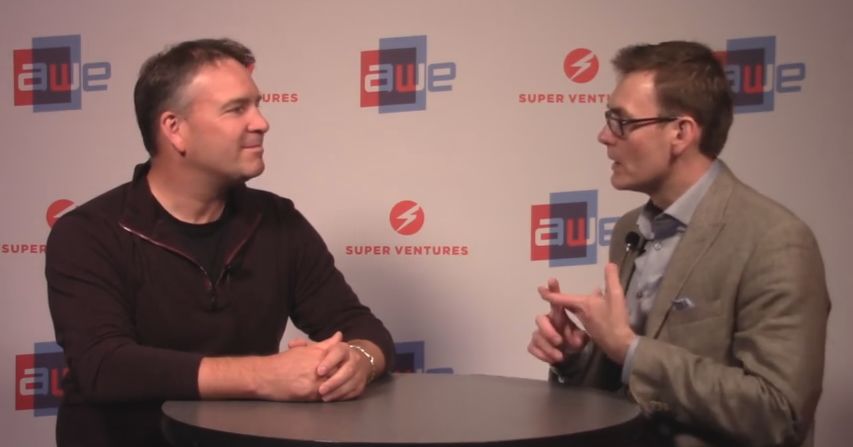
Ebbe Altberg discusses Project Sansar Mark Piszczor of Occipital at AWE, June 2nd

June 1st-2nd saw the 7th annual Augmented World Expo take place in Santa Clara, California. Billed as “the largest event dedicated to AR, VR and Wearable Technology”. Among the 200 speakers appearing at the event was one Ebbe Altberg, who sat down with Mark Piszczor of Occipital to chat about Project Sansar.

The interview, embedded below, doesn’t touch on anything significantly new for those of us who have been following the Sansar news. Time frames remain unchanged since the last Lab Chat event. The creator preview will open its doors to applicants in August; there have been “thousands” of applicants (and I’m still itching to know the ratio of Second life creator / users to non-SL creator / users in that number); public access so start around the end of 2016 / early 2017, etc. That said there were various points of interest for me.

Early on, we get a somewhat familiar discussion on the “social” approach being taken with Sansar, and the drive to (initially at least) address various markets where there is liable to be a real take-up in the use of VR. In this case, education and training are specifically mentioned at relative length.

At the 6;55 mark, while discussing Ready Player One, Ebbe touches on how Sansar is a platform on which many experiences put together by many different organisations, companies, groups and individuals can be hosted, some of which may be interconnected. This again got me wondering as to how much Sansar will be a white label environment for clients to use, and whether it is still planned to let those who wish use their own user authentication processes to control access to their Sansar experiences is still on the cards. This was initially mentioned way back in the 2015 VWBPE Q&A session with Ebbe, but hasn’t been remarked upon since.

Also in terms of interconnecting different experiences, it was interesting to hear the term “teleport amongst” experiences being used (07:12), rather than the more customary reference to experiences being “stitched together”. Whether this is indicative of whether movement between connected Sansar experiences might be somewhat analogous to moving between separate private islands in SL, or whether it was a slip of the tongue isn’t clear – so it will be interesting to see if “teleport” is used elsewhere when discussing Sansar.

From 08:30 onwards, there is a discussion of where Sansar might be in a year’s time. This again is interesting, as Ebbe’s reply suggests that while the Lab may well have a development roadmap for the platform, they are very open to building upon the feedback and lessons gained from their core users (or quite possibly “content partners”), rather than simply ploughing ahead with their own plans. Quite how this works in practice will have to be seen, but having an ear to users’ wants and needs is no bad thing.

All told, an interesting interview and well worth the 10 minutes required to watch it.

Lab Chat #3: transcript and audio

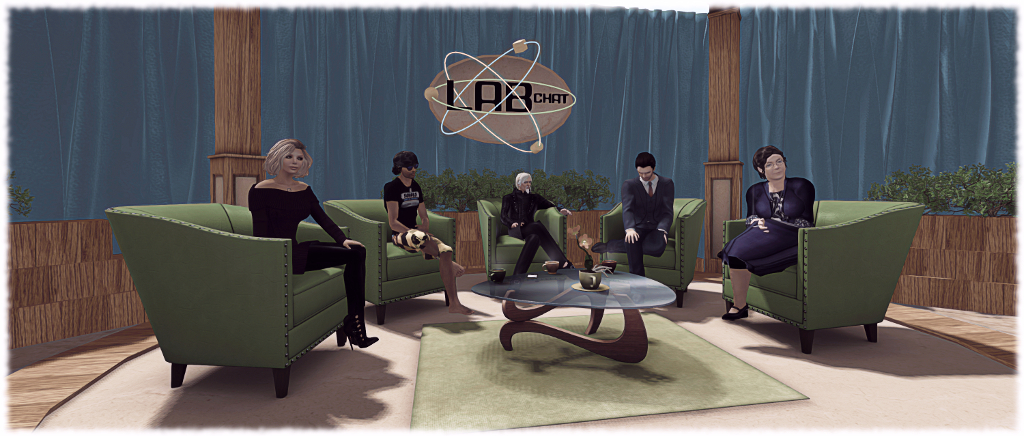
Lab Chat #3: Saffia, Troy, Oz, Ebbe and Jo

Friday, May 6th saw the third in the Lab Chat series take place in-world, featuring guests Oz Linden, the Director of Second Life Engineering, Troy Linden, a Senior Producer of Second Life and of course, Linden Lab CEO, Ebbe Altberg, in his alter-ego of Ebbe Linden.

The session focused on a mix of questions submitted to an official forum thread ahead of the event, and questions taken directly from the audience, and this transcripts offers a breakdown of the questions asked and answers given.

Please note that in places the audio presented has been edited to remove asides, repetition or removed inaudible elements, and so may differ in length and content to the official recordings made of the session. However, no attempt has been made to alter the content or context of the answers supplied by Ebbe, Oz and Troy.

For ease of reference, the session has been split into two parts, and the following Quick links will take readers to any specific topics of interest to them, and further topics can be navigated to by either returning to this page, or using the Quick Links summaries provided within the Bento / Second Life and Project Sansar pages.