Sansar Beta: observations, one year on

LOOT Interactive NASA Apollo Museum: one of the first public experiences I visited in Sansar, and from the start, one of the ones that clearly demonstrations the potential for Sansar’s immersive educational reach when and if VR really gains a foothold in education. It also demonstrate the power of VR to visit physical world events and places that might otherwise be closed to us

July 31st, 2018 marked the first anniversary of Sansar’s public Beta, Linden Lab having thrown the doors wide to the world at large to come in and have a look, back at the end of July 2017.

The move came with a lot of forewarning that those familiar with the capabilities of a (then) 14-year-old platform such as Second Life would likely find a lot of things lacking in Sansar, but even so, in a lot of quarters Sansar was negatively leapt upon for this very reason. And while some of that criticism may have been and still be valid, it is worth pointing out that Second Life didn’t burst forth on the world in June of 2006 fully formed and ready to go with all the capabilities we take for granted today (and so perhaps expect Sansar to have from “day 1”).

That said, there were  – and remain – certain aspects of Sansar which perhaps could have done with more development time before opening the doors to “everyone” (quotes deliberate, given the emphasis of the public Creator Beta was very much on people where a creative / content crafting mindset and abilities, rather than on consumer / creator users). Interaction, for example was almost entirely VR HMD-centric; non-headset users were restricted to walking into / over things and initially had no means to more directly interact with objects. Scripting for object interaction was also somewhat limited. Sansar additionally lacked a permissions system at the time of the public Creator Beta – indeed, a year on, we’ve still yet to see it – although may well be making its first appearance in the coming month.

Hover Derby is one of a number of individual / team games that have arrived on Sansar in the course of the 12 months since the Public Beta launched, and has proven popular enough to spawn its own social area

While not a major drawback in terms of overall commerce (Sansar was always going to take time to build a consumer audience), this has limited areas of creativity – such as working collaboratively. The lack of the permissions / supply chain / licensing system has also limited convenience in selling items between creators, as the ability to sell “multi-part items” is very bound up with it, leaving a creator wishing to sell an object with several components having to sell the various parts individually.

At the time of the opening, I noted that given the Lab had reportedly received more than 10,000 closed Creator Beta applicants, and given the lack of scripting support, avatar  customisation (another area of limited capability), lack of permissions / supply chain / licensing system, etc.,  I did question why they didn’t just extend that programme by, say, another year. In terms of take-up, the outcome would perhaps have been the same. Certainly, in terms of encouraging interest on the part of existing virtual world users, a “launch” of Sansar now, with all the added capabilities from the last year might have resulted in something of a more positive reaction.

Voyages Live: Egypt: offers Sansar users the opportunity to visit three Egyptian sites of antiquity, and has been the focus of a tour with Egyptologist and archaeologist Dr. Philippe Martinez, one of the people who helped with the creation of the experiences (and the format of environment and guided tours has recently been replicated in another VR-centric environment!)

Certainly, given that VR itself is going to take a good few years yet to come into its own as a household product, the leeway for the Lab to do more under the hood tinkering with Sansar, get more feedback from their existing pool of creators and partners, etc., and be in a position to offer something of a more rounded product to the public was certainly there. But again, this also brings drawbacks.

Take, for example, the misunderstanding that Sansar was to be a “replacement” for Second Life – an idea that took root and flourished despite Ebbe Altberg stating numerous times in 2016 / 2017 (VWBPE addresses, Lab Chat sessions, and Meet the Linden events) that this wasn’t the case. How might the flames of rumour and “the end” od Second Life been fanned had a more “SL-like” Sansar popped up?

From the start, Sansar’s graphics fidelity has been attention-grabbing, allowing creators to offer attractive, photogenic environments to explore; what was missing the early days was the ability to really do anything in them – even sit down

As it is, for the last 12 months, Sansar has been able to plod away, receiving broadly positive responses from the tech media while those of us immersed in Second Life have been able to if not breathe a sigh of relief, then at least accept LL’s word that they are going to continue to invest in and develop Second Life, up to an including the major (and continuing) work to shift that platform to a cloud-based infrastructure.

And Sansar has come a fair way over the course of a year. Yes, there is still much more to be done, make no mistake, but Sansar today is something of a different beast to a year ago. Performance on mid-range desktops has been improved, load times tidied, the Atlas made far more user-friendly, the client has seen a host of improvements, a veritable boatload of new capabilities have been delivered  – Desktop interaction, better scripting capabilities, and so on. And thus experiences have started to get more involved and interactive. There are individual / team games like Hover Derby and Paintball; rudimentary combat, as seen in The Secret of Mount Shasta, is possible. Storytelling capabilities have grown, while the platform has demonstrated is ability to be fully capable of presenting art through the virtual medium through the likes of the Hollywood Art Musuem project.

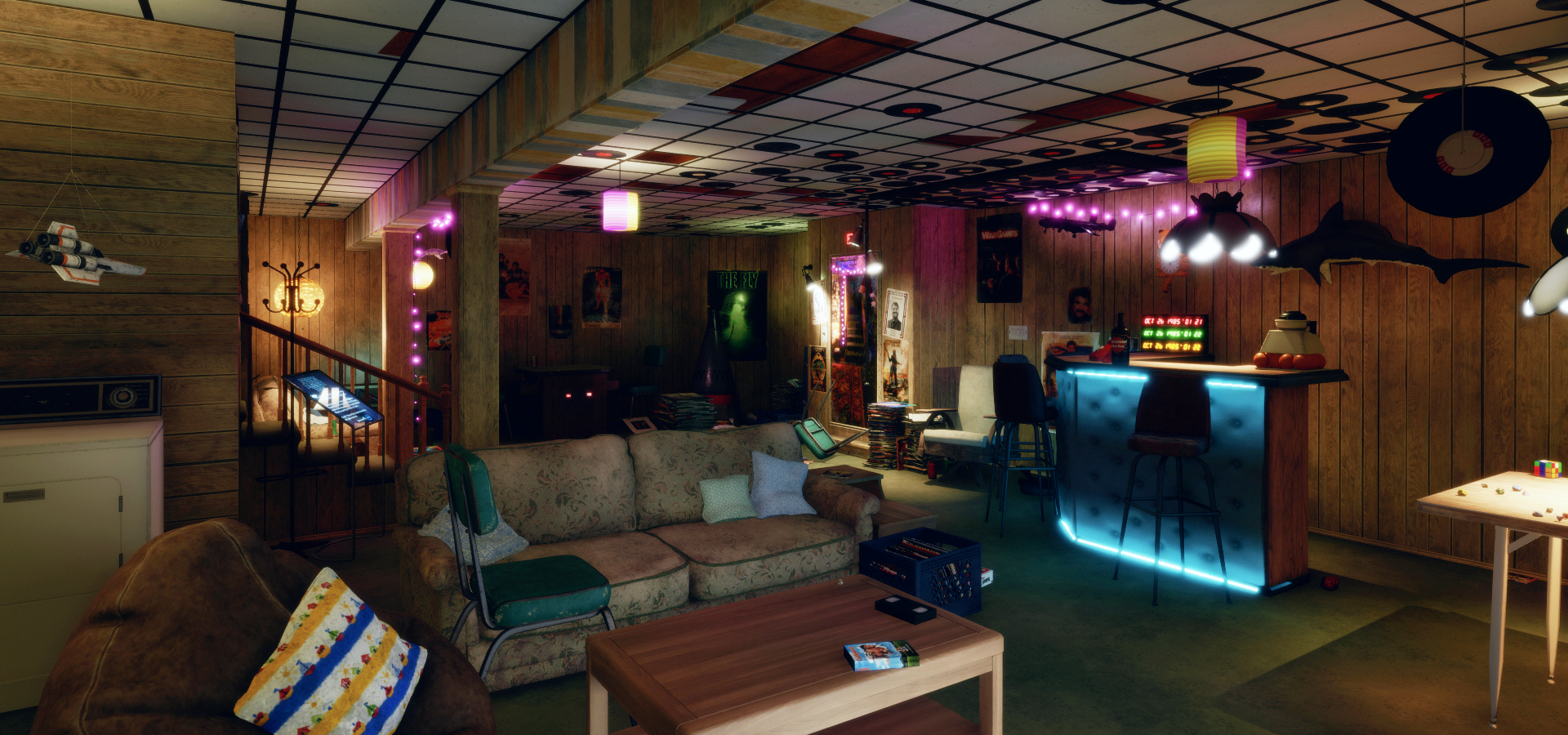
More particularly, Linden Lab has been able to flex its muscle and establish partnerships whilst also building a reputation as a design studio as well. Most visibly this has been done through the likes of the Ready Player One tie-in of Aech’s Garage and Aech’s Basement and which saw LL via Sansar Studios working with the likes of Intel, Amblin Entertainment and Warner Entertainment to recreate scenes from the film in VR.

Truth is Beauty, by Marco Cochrane, part of No Spectators: The Art of Burning Man in Sansar, where it forms part of an experience  arising out of linden Lab’s ongoing relationship with Intel, and the latter’s work with the Smithsonian Museum

Continue reading “Sansar Beta: observations, one year on”

The Smithsonian American Art Museum in Sansar

No Spectators: The Art of Burning Man – Truth is Beauty, by Marco Cochrane

Monday, July 23rd saw the launch of the latest joint venture Sansar experience developed by Linden Lab’s Sansar Studios and Intel, who this time are working with The Smithsonian American Art Museum (SAAM) to present No Spectators: The Art of Burning Man, an intriguing experience that helps demonstrate the potential of VR in bringing art and culture from the physical world to those not readily in a position to visit them first-hand.

No Spectators: The Art of Burning Man is also the title of a physical world exhibition at SAAM’s Renwick Gallery in Washington DC, that runs through until January 21st, 2019 and which serves as the inspiration for the Sansar experience.

As the name implies, the exhibition is a celebration of art from Burning Man, the annual experiment in community and art, influenced by ten main principles, held in the Black Rock Desert of north-west Nevada (and which will be very familiar to many Second Life users). The Sansar experience offers a faithful reproduction of the exhibition in a space modelled directly on the interior of the Renwick Gallery itself.

No Spectators: The Art of Burning Man – Tin Pan Dragon by Duane Flatmo

The physical world exhibition is a collaboration between SAAM, through its Lloyd Herman Curator of Craft, Nora Atkinson, and the Burning Man Project, the non-profit organisation responsible for producing the annual Burning Man event in Black Rock City, and takes its name from a saying common among those who attend the Playa the area in which Burning Man is held.

“‘No Spectators’ is a long-standing saying on Playa. You are encouraged to fully participate. It’s all about being there, being fully present, and not just observing. Two of the ten principles of Burning Man are radical participation and radical inclusivity, meaning that there are no outsiders. Everyone is part of the experience.”

– Nora Atkinson, Lloyd Herman Curator of Craft, Smithsonian American Art Museum

Nora Atkinson has also been instrumental in bringing the exhibition to Sansar. The Smithsonian has a mission to reach a billion people globally with its art, and VR is one of the means the museum has identified as allowing them to achieve that goal – although the idea to use Sansar as a medium originated with Intel.

No Spectators: The Art of Burning Man – Paper Arch by Michael Garlington and Natalia Bertotti, with the version at the Renwick inset

Over the course of the last year, the technology giant has been building a relationship with Linden Lab and Sansar. In January 2018 for example, Intel’s entire Consumer Electronics Show (CES) booth was reproduced within Sansar, together with a walk-through model of the Intel 8th generation CPU core. Nor was that all, Intel introduced the Sansar Ready Player One experience, Aech’s Garage (and reviewed here) to the world through CES, featuring it and Sansar in a keynote address at CES given by Intel’s CEO, Brian Krzanich.

Nor has that been all, Sansar later went on tour (so to speak) with Intel, turning up at places like the 2018 Sundance Film Festival, where Sansar has again be on demonstration under the hashtag of #FutureofStorytelling, which has been strongly associated with VR.

Intel has also worked in the past the the Smithsonian, producing Beyond the Walls, a room-sized VR experience, developed for the HTC Vive system. It reproduced a garden that American writer Henry Adams, created, featuring a sculpture by Augustus Saint-Gaudens, in memory of his late wife, Marian Hooper “Clover” Adams. That experience was so successful, Intel sought to work with the Smithsonian again, and the Renwick exhibition and Sansar came across as a perfect match.

We had an idea that VR would be a compelling medium to take people to places they haven’t gone to, or will never go to, and produce really meaningful experiences.

– Raj Puran, Intel’s Director of Business Development

No Spectators: The Art of Burning Man – Evotrope by Richard Wilks with Michael Conn and Victor Rodarte. The archway to the left is the teleport to the Playa experience

Within Sansar, No Spectators: The Art of Burning Man is home to reproductions of some of the iconic pieces from the Renwick’s physical world exhibition, including the towering Truth is Beauty, by Marco Cochrane, and the beautifully intricate Paper Arch by Michael Garlington and Natalia Bertotti. The latter has been especially reproduced by the artists for the Smithsonian exhibition, given the original was actually burned at Burning Man.

The startling thing with all of the pieces on display is the level of detail within them. Within VR / first person, it is akin to getting right up close and personal with the “real thing” on a 1:1 scale that is truly unlike many other art environments. Get right in close to Truth is Beauty, for example, and the extraordinary intricacy of the original’s design is revealed.

Currently, the Sansar team, working with the Smithsonian and Intel, have reproduced the ground floor exhibition spaces at the Renwick – the first floor halls are part of a project to be unveiled soon. Intel have also produced a video (below) which intriguingly shows a holographic approach to displaying some of the art: an open space where avatars can select and rez additional works. I’m uncertain if this is meant to be part of the actual Sansar experience, the pieces seen in the video are actually displayed in the “Playa” – an “outdoor” space reached by passing through an arch (and experience teleporter) at the back of the ground-floor exhibition halls – perhaps it’ll appear in the future.

As noted above, No Spectators: The Art of Burning Man is part of an extensive project between Intel and the Smithsonian to digitise more of the museum’s 157 million objects and present them through the virtual medium as transformative and engaging educational / cultural experiences – although it’s not at this time clear how extensive Sansar’s role will be within this broader project.

As a part of the work, Intel has indicated that Beyond the Walls will be re-released in 2018, featuring the art of Saint-Gaudens, together with that of sculptor Hiram Powers, painter Frederic Edwin Church and contemporary media artist Alex Prager.

The Playa is an outdoor exhibit annexed to No Spectators: The Art of Burning Man. This is a little more of a disappointment, coming over as a haphazard display without any real context for the Burning Man Playa. Given the Renwick’s own exhibition spills over into outside spaces, it would perhaps have been nice to see this experience reflect that. But perhaps there is more to come here as well; or perhaps it is simply a holding space for art to be added to the next phase of the No Spectators experience …

As someone who has a passion for real and virtual art, I can honestly say I’m looking forward to seeing how experiences like this ground within Sansar as the capabilities of the platform continue to be built out and allow for more imaginative ways by which visitors to such exhibits can interact with, and learn about, the art they present.

With Sansar, we hope not only to make the museum experience more accessible, but to also empower people to curate experiences of their own and share their unique perspectives with the world. We’re thrilled to be supporting this transformation of art and education, and we’re excited to find forward-thinking partners in Intel and the Smithsonian.

– Jason Gholston, Head of Sansar Studios

Experience URL and Related Links


2018 Sansar Product Meeting week #29: avatars, permissions system, roadmap

Aech's Basement, Sansar; Inara Pey, March 2018, on FlickrSansar: Aech’s Basementblog post

The following notes are taken from the Sansar Product Meeting held on Friday, July 20th. These weekly Product Meetings are open to anyone to attend, are a mix of voice (primarily) and text chat. Check the Events calendar for dates and times for future meeting.

The focus for this meeting was initially on the increase in allowed experiences (see here for my thoughts) and on the July Express Yourself release, which I reviewed here.

Experience Increases and Sansar Subscriptions

The news that Linden Lab have increased the number of allowed experiences under each membership tier (Free – 20; Creator (US $9.99 per month) – 25; Super-Creator (US $29.99 per month) – 30; Professional ($99.99 per month) – 40) raised two core questions during the meeting:

  • Will this move see the Lab increase transaction fees?
  • What value is there for people on paid subscriptions to keep those subscriptions given the massive increase in allowed experiences for Free account holders?

In addressing the fees issue, Landon from the Sansar Product team indicated that the Lab does not intend to make any changes to transactions fees as a result of this change – but that future possible changes could not be ruled out as Sansar continues to develop. Eliot, the Sansar Community Manager also made it clear the increases to allowed experiences are not part of any bigger plan to increase fees or anything else.

In terms of maintaining the value of Sansar paid subscription options, Landon indicated the plan will most likely be to make them more attractive by adding further practical benefits and perks in addition to the current Marvelous Designer free trial and subscription discounts.

A side question to this was whether the limit on the number of items Free accounts can list on the Sansar Store might be re-introduced, in order to make subscription accounts more appealing. Landon indicated he would prefer not to take steps like this, that might be seen as limiting creativity, but rather work to deliver more value to subscription accounts.

Express Yourself Update

Custom Avatars

The new custom avatars option has been well received, with a number of creators making avatars for their personal use, with some also being offered on the Sansar Store.

The first Custom Avatars are now available on the Sansar Store. They can be viewed by clicking Explore in the Store’s top menu and selecting Avatars from the drop-down list, or by clicking on All and then selecting Avatars from the categories drop-down (shown above).

Note that custom avatars are a single piece wearable – they cannot be combined with other Sansar clothing or avatar accessories.

Once obtained from the Store, custom avatars are stored in the Look Book inventory and can be worn via the appearance editor panel in Look Book, as explained in the image below.

Wearing a custom avatar via the Look Book: click Customise to open the appearance editor. Click the avatar tab (arrowed at the top of the appearance editor) if it is not already open. Click on the avatar button (circled, top right. Click on one of the the avatar wearables in your inventory, which will be applied to your avatar. Click Done.   

Other points from the custom avatar discussion:

  • Blender custom avatar export issues: some people have reported problems in exporting custom avatars from Blender into Sansar. To help with this, Jeremy Linden has produced a new knowledge base article to hopefully address these problems:
  • Dynamic bones for custom avatars: this is being thought about at the Lab, but is not something that will be seen for at least a couple of months.
  • Avatars as NPCs: there are currently no plans to allow custom avatars to be used as non-player characters (NPCs) within Sansar.
    • An alternative suggestion is to allow existing avatars to be used as NPCs (presumably through additional scripting support). This is something Landon and Cara from the product team have agreed to look into.
  • Clothing on custom avatars: as noted above, it is not possible to use Sansar clothing and accessories on custom avatars. Some creators have already expressed a preference for this remaining the case, as it will eliminate the need to provide multiple sizes of clothing to fit different avatars, and the work that can involved with rigging.

Multiple Object Select / Property Application

Following on from the introduction of object multi-select, a request has been made to take this a stage further and allow the creation of an empty container into which other elements can be placed. This is something that will be coming, and will have the ability to hold tangible and non-tangible objects (such as scripts) and make them available in a scene.

Interaction Physics

Express Yourself sees many of the physics related to avatar / object interactions moved client-side. On the one hand, this should allow for more accurate interactions, such as bouncing a ball off of a bat. On the other, its has resulted in some functional breakages within experiences where scripts expert the server to run physics interactions in a specific order, which can no longer be guaranteed with running some of them on the client.

Continue reading “2018 Sansar Product Meeting week #29: avatars, permissions system, roadmap”

Sansar: experience counts increased for creators

Courtesy of Linden Lab

In something of a (to me, at least) surprising move, Linden Lab has announced across-the-board increases in the number of experiences each subscription level of users can have published.

The new limits come into immediate effect and are as follows:

  • Free users: Increased from 3 to 20 experiences.
  • Creator (US $9.99 per month): Increased from 5 to 25 experiences.
  • Super-Creator (US $29.99 per month): Increased from 10 to 30 experiences.
  • Professional ($99.99 per month): Increased from 20 to 40 experiences.

The major surprise in the announcement is its sheer scale, with free accounts seeing the limit on the number of allowed experiences increase almost 600% – huge by any standard (the others being 400%, 200% and 100% respectively).

Give the scale of the increases, during the July 20th, 2018 Sansar Product Meeting, questions were asked about whether the Lab was looking to increase transaction fees off the back or these changes, and what will be done to maintain the attractiveness of the paid subscription levels, given the 20 experiences available with free accounts will likely meet the needs of most active creators.

In addressing the fees issue, Landon from the Sansar Product team indicated that it is not the intent to make any alternations to other fees being charged by the Lab as a result of these changes, although he could rule out future possible changes as Sansar continues to develop. Eliot, the Sansar Community Manager also made it clear the increases to allowed experiences are not part of any bigger plan to increase fees or anything else.

In terms of maintaining the value of Sansar paid subscription options, Landon indicated the plan will most likely be to make them more attractive by adding further practical benefits and perks in addition to the current Marvelous Designer free trial and subscription discounts.

The initial response to the announcement among those actively engaged in Sansar has been positive. However, and from more of an “outsiders” perspective, I found myself considering both the strengths and the possible weaknesses of the move.

The Secret Of Mount Shasta; Inara Pey, July 2018, on FlickrQuality experiences within Sansar – such as The Secret Of Mount Shasta – are a major means of encouraging engagement in the platform. The increased limited on published experiences could encourage a new push in experiences – perhaps more multi-part / linked experiences for games or learning

On the strength side, it could well – and the Lab hopes – up the ante for creativity in Sansar. More experiences means the opportunity to be more creative – and potentially more adventurous. How about something like a true multi-chapter (experience) quest or adventure (capabilities and functionality, of course, allowing).

On the minus side the Atlas – still the main gateway into Sansar experiences –  is dogged by the fact that of the 1,000+ experiences within it, only a couple of dozen might be regarded as actually engaging to an audience. Also, with just the first 8 or 10 in the list tending to show people in them, scrolling through the Atlas tends to suggest that Sansar is actually a very empty / lonely place. Simply having people add more experiences to the list  – especially things like testing environments, sandboxes, etc., could actually both further “hide” then worthwhile experiences and increase the feeling that Sansar is “empty” when browsing the Atlas.

1,017 public experiences with just 8 apparently having visitors  – if the increase in published experiences causes a further upswing in the total count of experiences in the Atlas, it could make Sansar appear even “emptier”

But, growing something like Sansar is difficult, particularly when many core capabilities  – a permissions system that would enable commence on the platform, for example – seem no closer today than they did when the Public Creator Beta launched a year ago. But while such observations might reinforce the case for Sansar perhaps having been launched prematurely, the fact is it is here, and efforts need to be made to try to grow the level of interest in the platform – and offering a greater range of experiences might be one way to do this.

However, even if it doesn’t encourage people to come take a look at Sansar (and my feeling is that any growth in platform usage requires a far more concerted campaign on the part of Linden Lab), offering more experiences to creators is meeting a long-standing request. As such, it’ll be interesting to see how people opt to make use of the increase in the coming weeks / months.

Sansar: Express Yourself release

Courtesy of Linden Lab

Wednesday, July 18th saw the release of the the Sansar Express Yourself update. As per my preview, this brings a lot of new capabilities to Sansar, including the ability for creators to upload custom (and pre-dressed) avatars, user interface improvements, script updates, and more.

This article highlights some of the more visible new features and updates with the release. As always, full details of the updates in the new release are available in the release notes.

Initial Notes

  • As with the majority of Sansar deployments, this update requires the automatic download and installation of a client update.
  • Updates in this release mean that on logging-in for the first time following the update, users will be placed in the Look Book (Avatar App).

Avatar Updates

Custom Avatars

Sansar now permits the uploading of custom avatars, although there are some caveats / things to note:

  • Custom avatars have a maximum tri limit of 40K (compared to 16K for the default avatars).
  • It will not be possible to clothe custom avatars or add attachments, etc., via the Look Book – they must be outfitted prior to upload, hence the higher tri limit compared to the default avatars.
    • The option to change outfits on custom avatars through Look Book might be added in the future.
    • The base tri count limit is seen by the Lab as being for testing purposes, and a balance between allowed custom avatars to be pre-dressed and potentially allow for future outfitting of avatars through Look Book without have to adjust the tri count downwards in order to do so.
  • Custom avatars must use the .FBX file format and be developed using the male or female skeleton provided by Sansar, available via the Sansar skeleton and skinning details knowledge base article
  • If custom avatars are to be sold, they must adhere to the Sansar Store listing guidelines and must also include a thumbnail asset upon import and which itself adheres to the Sansar Store image guidelines.
  • All new avatars must comply with the Sansar Avatar Guidelines, which include no nude avatars and no use of avatars / characters that infringe on the Intellectual Property rights of others.

Uploading custom avatars is handled through Sansar’s Look Book, as shown below.

Custom avatars are uploaded via Look Book via the Customise button and the Avatar Tab in the appearance editing panel, which has a new Add Avatar button that opens the upload panel (shown on the left). The Browse buttons in this panel can be used to select the avatar .FBX file (1) and  the associated thumbnail image (2). The name field (3) set the inventory name for the avatar – if left blank, this will default to the uploaded file name. The optional Materials settings button (ringed in the upload panel) can be used to choose specific shaders and textures for the avatar model. Upload will upload the model

Once imported to Look Book, custom avatars can be worn from the avatar panel and / or listed in the Sansar Store (right-click the thumbnail for the avatar and select List).

Custom Avatar Competition

To mark the launch of custom avatars, Linden Lab is running a Sansar Custom Avatar contest with a first prize of US $50 (approx. S$5,000). See the competition page for more.

New Avatar Looks

A series of new outfits / looks have been added to Sansar with this release:

  • Female:
    • Lolita outfit: clothing, hair and shoes.
    • Punk outfit: clothing and shoes (shown on the right, with Lolita hair and wearing system sandals rather than outfit footwear).
  • Male:
    • Goth outfit: clothing and shoes.
    • Adventurer outfit: clothing and shoes. (shown on the right).

These are available directly from the avatar panel’s outfit and hair tabs in Look Book.


Improved Avatar IK – VR Mode

Ikenema has been improved to improve avatar movement in VR. These updates include improved handling of forearm twist bones, better clavicle motion and less droopiness in clavicles, and better constraint handling in shoulders.

Scripting Updates

The Express Yourself release has two core sets of scripting updates: HTTP support, Simple Scripts and .FBX animation support. All of these options are covered in-depth in the Script API updates notes available in the Sansar knowledge base, and which include links to detailed HTTP documentation in the case of the HTTP API.

HTTP API

The HTTP API allows objects within experiences to communicate with external services. This is a two-way communications capability – meaning data from experiences can be exported a stored externally (as might be the case for game / adventure progress); and data from the physical world can be used to drive what happens within a scene (so an experience can reflect the weather in a physical world location, for example).

The addition of the API means that certain personal data can be exported from Sansar (just as it can from Second Life):

  • Avatar name and the user’s unique avatar identifier.
  • When an avatar enters or leaves an experience.
  • Where within experience avatar exists whilst visiting.
  • Public chat of avatars whilst in the experience.

Simple Scripts

This is a set of 14 basic scripts intended to make it easier for non-scripters to add functionality to their scenes and experiences. They have been automatically added to the Exit Mode inventory.

The new simple scripts library

Some examples of how these scripts might be used include:

  • SimpleInteraction: allows direct interaction with any object in a scene, can be used with buttons, switches, etc., so turn lights on/off, etc.
  • SimpleMover: moving objects from point-to-point, changing their specified position and/or orientation, such as moving platforms, opening / closing doors, etc.
  • SimpleSound: trigger a sound effect heard with other interactions.

The scripts can be “stacked” together for more complex interactions, so SimpleInteraction might be used for a button to call an elevator that is moved by SimpleMover, and SimpleSound pays a sound as the elevator arrives.

.FBX Animation Support

.FBX files containing multiple animation clips can be imported and then manipulated via scripts.

Continue reading “Sansar: Express Yourself release”

2018 Sansar product meetings week #28: July release preview

The Art of Drew Struzan: The Studio Experience blog post

It’s been a while since my last Sansar product update. This has been in part due to the fact that for a time they seemed to vanish from the Sansar events listing (they’re back, but under the more generic title of “Community meet-ups”). However, the following is a summary of the meeting held on Thursday, July 12th, 2018, which was particularly focused on many of the features and updates in the upcoming July Sansar release, due in week #29 (commencing Monday, July 16th).

July Release

Custom Avatars

It will be possible to upload custom avatars to Sansar, with skeletons and avatar meshes available through the knowledge base.

  • Custom avatars have a maximum tri limit of 40K (compared to 16K for the default avatars).
  • It will not be possible to clothe custom avatars or add attachments, etc., via the LookBook – they must be outfits prior to upload, hence the higher tri limit compared to the default avatars.
    • The option to change outfits on custom avatars through LookBook might be added in the future.
  • The base tri count limit is seen by the Lab as being for testing purposes, and to potentially allow custom avatars to be dressed, etc., using the LookBook and clothing from the Sansar Store in the future, hopefully without their overall tri count becoming exorbitantly high.

As a part of the overall work on avatars – but not part of the July release – the Lab is trying to improve face deformations, etc., to allow for more realistic facial moments when mimicking mouth movements, etc., when speaking.

Experience Interactions Changes

The July release should enable experience creators to define smoother interactions with objects in their scenes.

  • Dynamic objects / bodies will be completely responsive to physics; however, if multiple avatars are interacting with the same object  / body, it might vacillate between them.
  • With scripting, physics will be immediately applied in the client, so there may be an increase in perceived lag, as interactions make the client-server-client round trip.
  • These changes will be iterated upon and improved in future releases.

Scene Editor Updates

  • Selecting an object within the scene editor will display the triangle count for the object in a display similar to the diagnostics tool.
    • This may eventually be expanded to display further information – creator, etc.
  • The Scene Settings panel should no longer conflict with the Properties Panel.
  • It will be possible to select multiple objects in the scene editor, and apply something like an audio material across all of them, rather than having to apply it individually to each one.

Auto Decimation Changes

The June release included automatic decimation, which was later disabled. With the July release, it will be re-introduced, but made optional.

  • By default, any scene object (static or dynamic) being imported into Sansar will be set to auto decimate.
  • This can be disabled via a drop-down panel option.
  • The auto decimation will not apply to clothing or avatar attachments.

Script Updates

  • New scripts added to inventory: further scripts will be available in inventory by default (exact scripts TBA). Some of these will be packaged with the client, other may only be in specific folders (e.g. the Script API folder).
  • “Simple script examples”: a small library of approximately a dozen script examples designed for use by non-scripters to allow them to achieve object interactions, etc., and which can be stacked together within objects to achieve combined results.
    • These include things like a mover script (for opening / closing doors, moving platforms, etc.), a switch script (for light switches, etc.), a sound management script, etc.
    • They will be in the drop-down menu of an object-properties.
  • HTTP API: an http: API will be included in the July release. This will mean that data such as avatar name, avatar UUID, an avatar’s location within an experience, will be shareable with external databases.
  • .FBX animation imports: .FBX files with multiple animations can be imported and have scripts applied to them.

In Brief

  • Avatar comfort zones: The July release will include comfort zones, allowing people to define how close other avatars can come to their own avatar, depending on whether or not the other avatar is a friend or not.
  • People Search Update: the ability to search for other avatars within the People app is currently limited to using the Avatar ID. With the July release, this will be expanded to allow searches by avatar name, and using partial avatar IDs.
  • Copy chat: it should be possible to copy text from the chat window with the July release.
  • Panel positioning persistence: the client should remember the placement of any re-positioned panels between sessions, and re-open them at the “last used” position, rather than at their default screen location.
  • Bug fixes: the release will of course include a range of bug fixes.

Other Items

The following were discussed at the meeting, but are not part of the July update.

  • Hand Controller / Keyboard Mapping: further work is to be carried on custom keyboard mapping, which will hopefully encompass headset hand controllers, allowing experience creators to define custom operations to keys and buttons (e.g. for use in games, etc.).
  • Events: there will at some point be an update (or updates) to Events to add many of the requested functions to events management (e.g. set recurring events, etc.).
  • Permissions system: this is still being worked on, with the Lab getting “closer” to having something ready to present, but no time frame on when it will appear.
  • User-to-user S$ transfers: this is also being worked on, and it is hoped to will appear “pretty soon”.
  • Aspirational roadmap: it’s been suggested that Linden Lab might follow the example of other platforms and provide an “aspirational roadmap” – a guide to what they’d like to achieve with Sansar’s capabilities over a broad range of periods (e.g. “short term”, “medium term” and “longer term”) which are tied to specific date ranges / time frames. This idea is being taken back the Sansar marketing and product teams for discussion.

Sansar Dollar Bundles

A relatively recent (I believe) update is the addition of purchasable Sansar dollar bundles, available at fixed prices, and which will be immediately delivered to your account on payment, rather than waiting for Sandex orders to be filled.

Sansar dollar bundles are available for purchase by those who do not wish to use the Sandex. This list of available bundles can be access by clicking on your account balance when logged-in to the Sansar website (arrowed, top right).
  • Click on your account balance (top right of the Sansar web pages when you are logged-in) to display a list of available bundles.
  • Click on the relevant red payment button to buy  a bundle – if you don’t have a payment method on file, you’ll be asked to provide one.
  • Note that the prices for bundles are not necessarily as competitive as buying through the Sandex, as the bundle prices are static.
  • A link at the bottom of the list of available bundles will take you to the Sandex (which is no longer listed in the website’s top menu).