Looking at Second Life updates in 2019 and ahead to 2020

Each year through this blog I attempt to track news about, and changes to, Second Life, as driven by Linden Lab. On the technical side, this is do through my weekly SL project summaries, whilst news and general updates are drawn from sources such as Lab comments on the official forums and official blog posts or as a result of attending public meetings and Q&A sessions, etc.

As a lot can happen during the course of the year, so in this article I’ve tried to summarise the more notable updates to occur during the course of 2019.

Land

Mainland Auctions

In March 2019, Linden Lab introduced Mainland user-to-user land auctions. The auction system leveraged Second Life Place Pages as the medium for presenting land for auction and for placing bids, together with a “cover page” listing available parcels up for auction available at https://places.secondlife.com/auctions. At the time of the launch, Linden Lab provided a Land Auctions Walkthrough.

Unfortunately, these auctions had to be suspended in October / November 2019 due to unspecified “abuse” by users. The system is to be revised, but there is currently no indication of when the auctions will be re-enabled.

Premium Homes

The first styles of the new Premium Homes were unveiled at the annual Home and Garden Expo in March 2019 in a single “preview” region that provided both the four types of Traditional homes and four types of Houseboat that would be the first  of the Premium Homes themes that would be issued.

The Homes themselves launched on April 15th, 2019, with the opening of the new Bellisseria continent and a mass release of both Houseboats and Traditional homes.  As with the original Linden Homes, they are available through Premium member’s Land Homes page, accessed through their secondlife.com dashboard.

The new Linden Homes are available to Premium members through the existing Linden Homes registration page

The first mass release of houses and houseboats had been snatched up within 48 hours of the release, with the houseboats proving particularly popular – so much so, that the Lab immediately started planning a 709-parcel add-on to Bellisseria specifically to meet the demand. In the meantime, one of the points noted about the new region was its lack of airstrips and this was addressed with the opening of the continent’s first airstrip in late April 2019.

The new bolt-on for the houseboats opened on May 15th, 2019 – and were all gone within 27 minutes of the release. Then in June 2019, Patch Linden announced that releases would shift to a smaller-scale rolling basis with regions of new houses generally being made available on Mondays, Wednesdays and Fridays.

Also in June, the Lab previewed the next major theme for Linden Homes, the Trailers and Campers, which were introduced in September. In December 2019, the Lab previewed and then released the Victorian theme of Premium Homes.

Fees and Account Changes

Fee Changes

2019 saw the introduction of significant fee changes for Second Life.

From June 2rd, 2019 Private region tiers changed as follows:

  • Full regions were reduced from L$249 a month to US $229.
  • Homestead private regions were reduced from US $195 to US $179.
The changes to Premium fees, announced in June 2019. Source: Linden Lab

These changes were exclusive of VAT, where applicable, and did not apply to Skilled Gaming region; however, Education / Non-profit (EDU/NP) discounted Full islands were be re-priced to maintain their 50% discount off the regularly priced Full island fees.

From June 24th, 2019, Premium fees were increased for the first time in their history:

  • The monthly fee increased from US $9.50 to US $11.99 (an annual increase of 26.21% from US $114 pa to US $143.88 pa)
  • The quarterly subscription increased from US $22.50 to US $32.97 (an annual increase of 46.53% a year from US $90 pa to US $131.88 pa). This fee was to be discontinued to users upgrading to Premium after July 24th, 2019, but a later decision saw it continued on a “temporary” basis that means it is still currently available.
  • The annual fee increased from US $72 to US $99 (an annual increase of 37.5%).
  • In addition, both existing quarterly and monthly subscriptions would again be subject to VAT.

Note: included with the announcement were proposed changes to Basic account users available off-line IMs and total group allowance. However, after receiving wide-ranging feedback (such as this letter from myself), the decision was made to not implement the group changes.

To help sweeten the Premium fees increase, between June 3rd through June 24th, Premium users were offered the chance to “lock-in” their Premium fee for an additional period commensurate to their subscription period from the end of their existing period. In addition, existing annual Premium subscription members were offered the chance to renew their subscription for an additional year from their next renewal date at the Winter Premium discounted rate (10% off).

There was also the 5% increase in Marketplace commission fees which caused some consternation. While the reason for the increase is understandable when put in the proper perspective, it could have been framed a little better.

Account Changes

In July Linden Lab announced that as from August 1st., their subsidiary company, Tilia Inc., would be taking over all responsibility for managing SL user’s USD denominated accounts. In short, this meant that anyone with a US dollar balance on their account would have to agree to the Tilia Terms of Service and Privacy Policy, and in order to process USD amounts out of Second Life, might have to supply personal information to Tilia. See:

Technical Updates

Teleport Disconnects

The early part of 2019 was marked by users experiencing a significant number of teleport disconnects. These proved problematic for the Lab as well,with assorted causes from EEP deployments to server OS updates being suggested as a possible cause. A series of user-involved stress tests on the best (Aditi) grid to help with investigations, allowing adjustments to be made on the simulator side. These helped point towards a race condition, with LL implementing changes and updated monitoring to counter the issue.

Script Processing Changes

Over the course of the year,  number of script-related issues have surfaced:

As a result, LL has worked to improve script handling – such as adjusting how idle scripts are handled to reduce the overhead with place on CPU cycles – and these changes and adjustments have helped to eliminate some, but not all, of the problems encountered through the year.

Marketplace

Release Notes

In May 2019, the Lab introduced new web-based release notes for the official viewer, together with a index page for said release notes. There were some initial teething problems with the system for those who track official viewer releases (sometimes a viewer update would appear on the index page, sometimes on the new Alternate Viewers page, sometimes on both that took a while to smooth out.

Server release notes made a similar move to web pages in September. After this, LL stopped breaking down simulator updates by release channel (e.g. BlueSteel, Magnum and LeTigre), listing all releases as “Second Life Server”, regardless of the actual channel used for a release.

iOS Client

In January, evidence surfaced that Linden Lab are working on a Second Life iOS. After enquiring with the Lab, I received confirmation the app was being actively worked on. As the year progressed, more details were revealed about the app, including: the app should work on both the iPhone and iPad, and will initially be more of a communicator / companion app than a fully-rounded client; it will provide a log-in option, and chat options (e.g. chat, group chat), but will not present users with an in-world location, or rez and avatar in-world. Over time it will be enhanced – but additional capabilities are still TBD. See my mid-year update for more.

Cloud Transition

Work – most of it transparent to users – has continued on the migration of Second Life to the cloud. Most of this work has been on the back-end services, notably the web services. Currently, no public-facing simulators have been transitioned to AWS provisioning. All of this work has been achieved without any significant disruption to services or – more particularly – without users actually being aware the services had been moved, and the Lab reports that the migrated services have been able to achieve almost 100% up time.

Continue reading “Looking at Second Life updates in 2019 and ahead to 2020”

Linden Lab highlights GDPR – coming into force on May 25th 2018

On May 25th, 2018 the European Union’s General Data Protection Regulation (GDPR) comes into force. While an EU regulation, the GDPR not only applies to organisations located within the EU but it will also apply to organisations located outside of the EU if they offer goods or services to, or monitor the behaviour of, EU data subjects.

The GDPR applies to all companies processing and holding the personal data of data subjects residing in the European Union, regardless of the company’s location. As such, it not  only Linden Lab, who hold data on Second Life and Sansar users in the European Union, it can also impact those operating a business through Second Life and who collect data on customers which is stored outside of the servers operated by Linden Lab.

In preparation for the enforcement of the GDPR, on May 9th, 2018, Linden Lab issued a preliminary blog post on their compliance with the GDPR, which covers both Second Life or Sansar.

GDPR, in a nutshell.

Put simply, the GDPR puts in place new requirements for the collection, maintenance, and use of personal data for residents of the European Union (EU) and European Economic Area (EEA). It’s an important evolution in privacy practices, and one we’ve already started to account for: if you notice, our existing Privacy Policy already discloses the type of personal data we collect from you, how we use and limit any sharing of your data, and your rights to control our use of your personal data.

What you can expect.

In coming weeks, we’ll provide more information on how EU residents in Second Life can best exercise their rights under GDPR. In some cases, you may take actions through your account dashboard (to modify your personal data, for instance). In others, it may be necessary to file a support ticket and verify your identity (to better protect your privacy).

– Linden Lab May 9th blog post on the upcoming GDPR

The GDPR defines personal data as, “any information related to a natural person or ‘Data Subject’, that can be used to directly or indirectly identify the person.” This includes, but is not limited to: IP addresses, on-line identifiers (including avatar names), e-mail addresses, photographs, as well as the more usual name, address, bank details, medical data, etc.

In addition to defining requirements for how such data should be managed and protected by organisations gathering it, the GDPR also specifies a number of rights to Data Subjects who have their personal information stored by companies and other entities. These include, but are not limited to:

  • The right to be informed: Data Subjects have the right to know what data is being collected, how it’s being used, how long it will be kept and whether it will be shared with any third parties.
  • The right to access: generally speaking, organisations are required, within one month of receipt of a formal request, to provide a copy of any personal data concerning the requesting Data Subject.
  • The right to rectification: a Data Subject can formally request that inaccurate or incomplete information relating to them is updated, and the update must be made within one month (exceptions can apply).
  • The right to be forgotten: a Data Subject can request the erasure of all personal data relating to them in certain circumstances (e.g. it is no longer necessary to hold it; if the data was unlawfully processed or it no longer meets the lawful ground for which it was collected). However, there are certain exceptions to this.

(In addition, the GDPR defines: The right to object (to data being gathered); The right to restrict processing; The right to data portability; and Rights related to automated decision making including profiling.)

For those running businesses through Second Life or Sansar which use services  – web sites, computers, etc.,  – outside of Second Life for the collection and storage of personal information on their EU Second Life  / Sansar customers, the GDPR might have significant import – and exposure to the risk of fines. For such businesses, the Lab’s advice is clear and straightforward:

If you collect or process personal data of EU residents on a website associated with Second Life or Sansar, or create or make use of programs that retain information about Second Life or Sansar users or their computers, you may also have obligations under the GDPR. You should consult with your legal counsel for advice regarding your site(s) or program(s).

– Linden Lab May 9th blog post on the upcoming GDPR

To help people get to grips with GDPR, if they haven’t been aware of its arrival, the Lab offer a series of links to articles and FAQs. To these I would add:

The following is a brief video outlining the GDPR in under a minute.

QuickTime for Windows: “uninstall today”

Apple has deprecated QuickTime for Windows, but critical vulnerabilities remain unpatched

On April 14th news broke via Trend Micro security that Apple is deprecating support for QuickTime for Windows, despite the fact there are two critical vulnerabilities affecting the package, both of which were identified by Trend Micro under their Zero Day Initiative (ZDI), which will not be patched by Apple despite the fact information on both vulnerabilities, as specified in Trend Micro advisories ZDI-16-241 and  ZDI-16-242 being passed to Apple in November 2015.

As a result of these vulnerabilities, which could leave Windows systems vulnerable to hijacking – although Trend Micro stress that there is no evidence so far of either being actively exploited – is to uninstall QuickTime for Windows (QuickTime for OSX is not affected).

The advice on uninstalling has most notably come from Trend Mirco, with the call being repeated across other on-line tech media, such as eWeek and The Register.  Apple apparently opted to take the route of deprecating in March 2016 – but hasn’t really gone out of its way to really tell QuickTime for Windows users it is doing so, as ExtremeTech points out: the QuickTime for Windows landing page doesn’t reflect the status of the software, but simply references the “more secure” January update, while the Apple software update tool still pushed QuickTime at Windows users.

QuickTimeis still widely used in Second Life for the shared viewing of streamed media, notably in cinemas across the grid
QuickTime is still widely used in Second Life for the shared viewing of streamed media, notably in cinemas across the grid (credit: Crap Mariner)

Obviously, the advisory is something all Windows users should heed. With or without the current ZDI vulnerabilities, the application has reached the end of its supported life. However, as Crap Mariner has been pointing out, there are still media systems which utilise QuickTime for streaming into Second Life, many within public cinemas across the grid. While it might be argued has to how widely such facilities are used, the Trend Micro advisory does heighten the need for in-world systems reliant on QuickTime to be updated  / replaced.

Amazon Lumberyard

Image source: Amazon

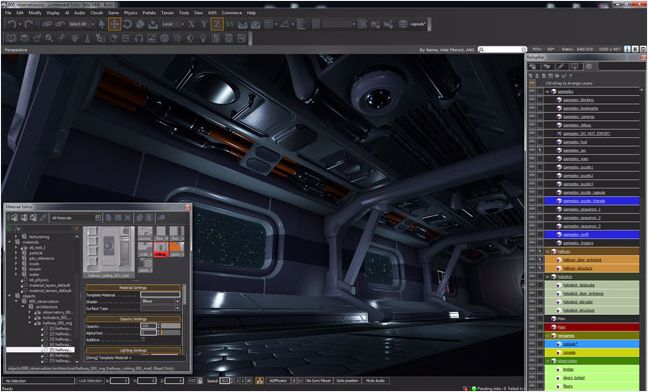
Lumberyard is the name of Amazon’s new game engine, released on Tuesday, February 9th. Based on Crytek’s CryEngine, which Amazon licensed in 2015, Lumberyard will apparently be developed in its own direction, independently of CryEngine and is being provided as a free-to-download tool (with optional asset packs) which can be used to develop games for PCs and consoles on a “no seat fees, subscription fees, or requirements to share revenue” basis.

Instead, Amazon will monetise Lumberyard through the use of AWS cloud computing. If you use the game engine for your own game and opt to run it on your own server, then that’s it: no fees. But if you want to distribute through a third-party provider, you can only use Amazon’s services, via either GameLift, a managed service for deploying, operating, and scaling server-based on-line games using AWS at a cost of $1.50 per 1,000 daily active users.Or, if you prefer you can use AWS directly, at normal AWS service rates.

Lumberyard (image: Amazon)
Lumberyard includes a customisable drag-and-drop UI (image: Amazon)

As well as AWS integration and the development of new low-latency networking code to support it, and native C++ access to its service, Lumberyard has deep, built-in support for Twitch (purchased by Amazon in 2014 for $970 million), including “Twitch play”-style chat commands and a function called JoinIn, which allows viewers to leap directly into on-line games alongside Twitch broadcasters as they stream. The aim here, according to Mike Frazzini, vice president of Amazon Games, when talking to Gamasutra, is “creating experiences that embrace the notion of a player, broadcaster, and viewer all joining together.”

Described as a triple-A games development engine, Lumberyard has already seen many of the CryEngine systems upgraded or replaced, including the implementation of an entirely new asset pipeline and processor and low-latency networking code – hence why Lumberyard will diverge from CryEngine’s core development.  And Amazon is promising more to come, including a new component system and particle editor and  CloudCanvas, which will allow developers to set up server-based in-game events in AWS using visual scripting.

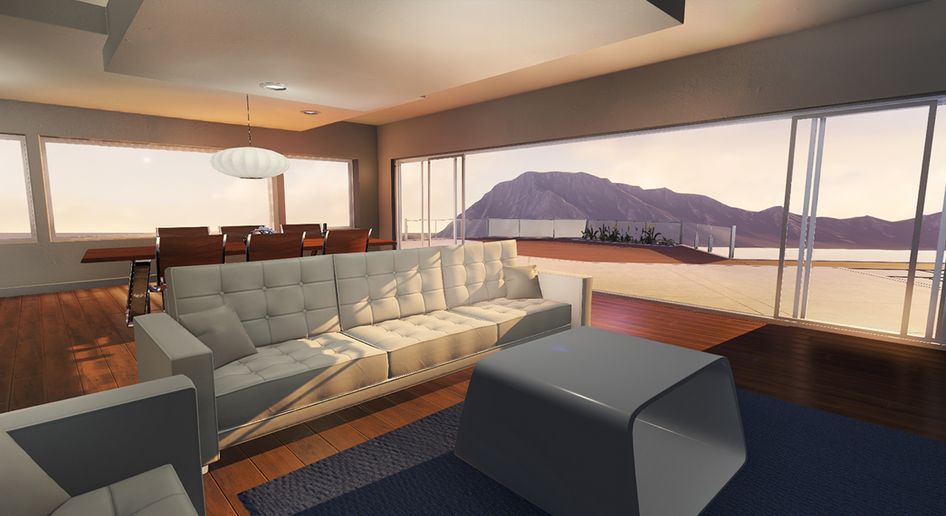
"Alien Abode" a game scene rendered in Lumberjack (:image: Amazon)
“Alien Abode” a game scene rendered in Lumberyard (:image: Amazon)

All of which adds-up to a very powerful games development environment – although Amazon are clear that right now, it is only in beta. This means that things are liable to undergo tweaking, etc., and that some capabilities – such as Oculus Rift support – haven’t been enabled for the current version of the engine.However, VR support is there, with Amazon noting:

We have been actively working on VR within Lumberyard for some time now, and it looks great. We are currently upgrading our Oculus VR support to Rift SDK 1.0, which was released by Oculus in late December. We wanted to finish upgrading to Rift SDK 1.0 before releasing the first public version of VR support within Lumberyard, which will be included in a future release soon.

Further, Amazon has already signed official tools deals with Microsoft and Sony, which means game developers licensed to develop games for the Xbox One and PlayStation 4 can immediately start using Lumberyard to develop games for those platforms.

There are – for some – a few initial downsides to Lumberyard where independent game developers are concerned. At launch, the engine only supports models created in Maya and 3D Max, although this may change – Blender support is promised for the future, for example.  There is also no support for Mac or Linux, although Amazon have indicated that these will be come, along with iOS and Android support.

Use of the engine includes the right to redistribute it and pieces of the development environment within games, and allows game developers to any companion products developed for a game using Lumberyard with allow end users to modify and create derivative works of that game.

The CryEngine SDK is one of the Asset Packs available for download for use with Lumberyard (image: Amazon)

As noted above, the company has already started supplying asset packs developers can include in their games, Three packs are available at launch, including the CryEngine GameSDK,  which contains everything required for a first-person shooter game, including complex animated characters, vehicles and game AI, and which includes a sample level.

Amazon clearly have major plans for Lumberyard, and some in the gaming media are already wondering what it might do to the current development environment, which is largely dominated by the likes of  Unity, Unreal Engine, or even CryEngine itself, but which all require either a license fee or a royalty fee.

Is Lumberyard competition for the Lab’s Project Sansar? The engine certainly has the ability to create immersive environments, and Lumberyard will support VR HMDs as it moves forward, as noted.

However, everything about Lumberyard points to it being pitched as a professional games development environment with a dedicated distribution service through Amazon’s cloud services available for use with it. Hence, again, why Twitch is deeply integrated into Lumberyard – Amazon appear to be a lot more interested in building an entire gaming ecosystem. Amazon’s marketing is also geared towards gaming, as their promotional video (below) shows.

Which is not to say that it couldn’t be attractive to markets outside of gaming. As such, it will be interesting to see over time just who does take an interest in it – and how Amazon might support them.

With thanks to John for the pointer to Amazon.

Sources

Microsoft acquires Havok, the Second Life physics engine

Haovk: acquired by Microsoft

News has been spreading about Microsoft’s acquisition of the Havok physics engine from Intel for an undisclosed sum.

Ciaran Laval was perhaps the first SL blogger to report the news, which has been featured on the likes of the IGN website, Engadget, Venture Beat’s Gamesbeat, and other on-line tech news outlets.

For those unfamiliar with Havok, it is it the physics engine that drives a vast number of computer and console games. It allows these games to simulate effects such as gravity, friction, collisions between objects and other natural forces, without the need for them to be individually coded and accounted for on a per-game basis.

Within Second Life, Havok is used for the purposes of physics simulation, and Havok sub-libraries licensed by the Lab are also used in such aspects of the platform as pathfinding (remember that?) and the official mesh uploader.

As well as being used for in-world physics, Havok libraires are also used within the official viewer (and TPVs which have signed a sub-licence agreement) to handle aspects of pathfinding and mesh uploads (shown here)
As well as being used for in-world physics, Havok libraries are also used within the official viewer (and TPVs which have signed a sub-licence agreement) to handle aspects of pathfinding and mesh uploads (shown here)

Microsoft has been a Havok partner for a number of years, and as a part of the acquisition has promised to allow developers elsewhere to continue to use it, stating:

Havok is an amazing technology supplier in the games industry and the leading real-time physics creator. We saw an opportunity to acquire Havok to deliver great experiences for our fans. Throughout the company’s history, they’ve partnered with Activision, EA, Ubisoft, Nintendo, Sony, Microsoft and many others to create more than 600 games including Halo, Assassin’s Creed, Call of Duty, Destiny, Dark Souls and The Elder Scrolls.

Microsoft’s acquisition of Havok continues our tradition of empowering developers by providing them with the tools to unleash their creativity to the world.   We will continue to innovate for the benefit of development partners.

But, if a long-term partner with Havok, why take the step of purchasing it outright? Jeff Grubb, over at Gamesbeat takes a lead from a part of Microsoft’s announcement of the acquisition, to suggest the company are looking a the potential for cloud-based physics capabilities within multi-player games, as recently demonstrated in the upcoming Crackdown 3 sandbox-style third-person shooter title:

For that open-world crime game’s multiplayer mode, Microsoft is enabling players to go in and destroy skyscrapers and everything else in the world. That mode is only possible through the power of Azure, which means Crackdown 3 developers Sumo Digital and Cloudgine are building a cloud-based destruction engine that probably runs on Havok. Once that’s built, and now that Microsoft owns Havok, it could potentially license that destruction engine out to other developers.

In August, IGN had a demonstration of these capabilities within Crackdown 3, and the results are impressive:

It’s unlikely the Microsoft’s acquisition of Havok will have any immediate or medium-term inpact on Second Life. As it is, the platform currently uses the Havok  2011.2, and so far as has been indicated at various in-world meetings, there are no public plans to update the engine at the moment. Longer-term, it will be interesting to see if / how any new / additional capabilities brought to the engine might come to be deployed in Second Life and / or “Project Sansar” (assuming Havok might be the physics engine used with that platform, something that the Lab has not as yet revealed).

Got a question about the VR metaverse? Put it to the experts!

SVVR

The first Silicon Valley VR (SVVR) Conference and Expo will take place on Monday 19th May and Tuesday 20th May 2014, at the Computer History Museum, Mountain View, California.

The conference will bring together a host of experts in the VR and in virtual environments, including the likes of Palmer Luckey (Oculus VR), Philip Rosedale, Ebbe Altberg, David Holtz (Leap Motion), Ben Lang (Road to VR), Jan Goetgeluk (Virtuix) and many more – see the list of speakers and panelists on the conference website – as well as including exhibits and demos from some of the top names in the field.

Both the Drax Files Radio Hour and New World Notes have secured discounts of $100 per person on the two-day registration for those who are able to attend. Simply enter either code “drax2014″ or “nwn2014” when registering to claim your discount.

But even if you can’t attend, you can still be involved. Here’s how.

As a part of the conference events, Draxtor Despres of The Drax Files fame will be moderating a special panel, Creating the VR Metaverse. featuring Ebbe Altberg (Linden Lab), Philip Rosedale (High Fidelity), Stefano Corazza (Mixamo), Tony Parisi (Vizi).

Creating the VR metaverse
(l to r): Ebbe Altberg, Philip Rosedale, Stefano Corazza and Tony Parisi. Ready to answer questions on “Creating the VR Metaverse”.

Together, they’ll be considering topics such as:

  • One global metaverse or many?
  • Identity and privacy
  • Virtual World Governance: democracies, the greek god model, or benevolent dictators
  • Intellectual property and legal jurisdictions
  • Avatar portability and standards

If you have a question you’d like to put to this panel during the course of the proceedings, then please leave it in the comments following this article, and it may be selected by Drax to be asked during the course of the discussion.

Perhaps your question relates to one of the topics listed above, or perhaps you’re wondering if the idea of a just a “VR metaverse” is too narrow, and any future metaverse should also embrace augmented reality (AR) as well; or perhaps you’re wondering why and how any new metaverse might enjoy wider adoption in the world at large than we’ve seen with the likes of SL and OpenSim; or perhaps … Well, you get the idea.

Panel moderator: Draxtor Drepres
Panel moderator: Draxtor Despres

You can address your question to an individual member of the panel or to all of them or any combination in between. All that’s required is that your question is pertinent to the panel’s theme, creating the VR  metaverse, is polite, and is suitable for the forum in which it is to be asked.

Obviously, and depending upon the number received, not every question submitted will necessarily be asked (as questions will also be taken from the live audience) – but if your question is liable to get the panel thinking or generate some interesting / thought-provoking replies, then it may well get selected. Just make sure you have provided it in the comments below no later than 20:00 on Monday May 19th.

Related Links