On the edge of a (yellow)knife

CuriosityAs generally happens in long-duration space missions, media attention around Curiosity is waning somewhat as the initial gee-whiz factor wears off and the reality of this potentially being a multi-year mission kicks-in and journos start seeking the next gee-whiz headline. As such, the next time Curiosity really hits the headlines, it’ll likely be for one of three reasons: Something Big has happened science-wise; someone has sensationalised upcoming news a-la Joe Palca; or something on the rover has broken. Indeed, a combination of the second two points is already occurring.

But that’s the nature of news cycles. Once the glamour and the wow has worn off, the interest fades and it is only the sensational (or titillating, in some circumstances) which does get reported. It’s why news and feature editors aren’t really interested in hearing about Second Life (“Second Life? You show me a million people a day are signing-up to it, and I’ll run it. Otherwise all you have is yesterday’s news…”).

In the meantime, Curiosity rolls onward towards “Mount Sharp” is what is still only the prelude to its mission on Mars; a prelude which has already yielded remarkable results in just four short months.

Choreographing a Self-portrait

Ever tried to take a picture of yourself? It’s not easy unless you have some frame of reference to guide you – such as an LED screen on your camera / device on which you can actually see how the shot will look prior to taking it. “Great photo, other than the fluffy bunny apparently trying to climb out of your right ear….”

Imagine how much harder it is to do the same remotely over a distance of more than 90 million kilometres (56 million miles). Yet on Sols 84 and 85 (October 31st / November 1st), that’s precisely what Curiosity did, producing a beautiful high-resolution composite image of itself quickly seen the world over.
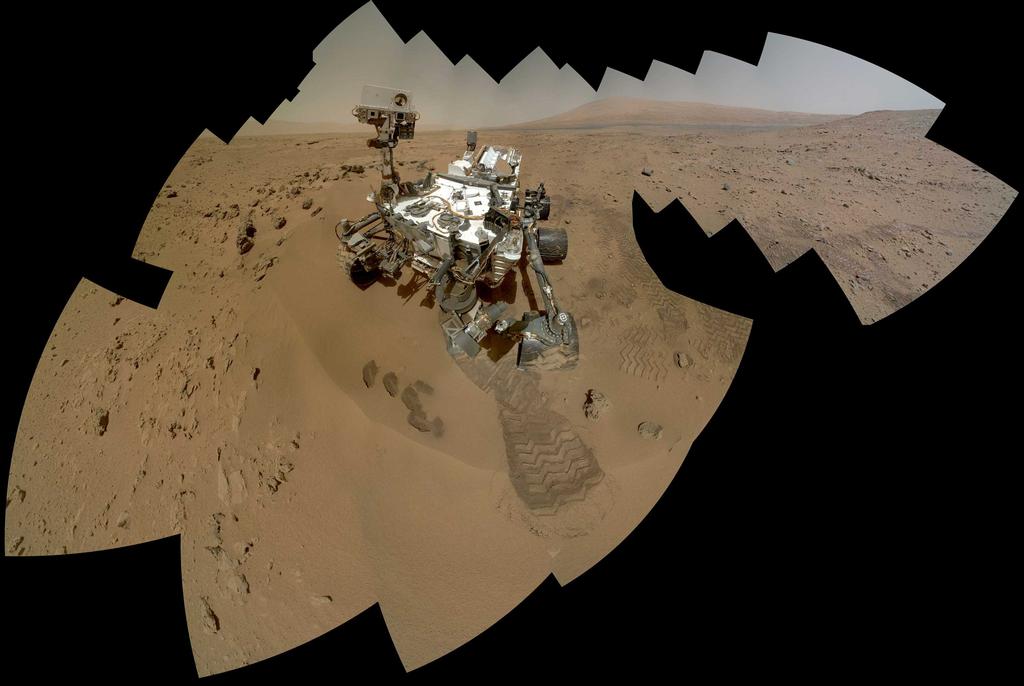
The big picture: the full extent of Curiosity’s self-portrait captured between October 31st and November 1st. Note the absence of the robot arm in the image, a result of the picture having been put together from images captured by the Mars Hand Lens Imager (MAHLI) mounted on the arm itself, and the arm being positioned out-of-shot in the images / image portions used to create the mosaic (click to enlarge)

The portrait was put together using dozens of high-resolution images captured using the rover’s Mars Hand Lens Imager (MAHLI), located on the turret at the end of Curiosity’s robot arm in a complex series of manoeuvres. But this wasn’t just a case of point-and-click and hope for the best, then go back and try again. Everything had to be planned well in advance earth-side prior to the rover being told to “get on with it”.

But how do you choreograph something over a distance of 90 million kilometres? Phoning home in brief bursts isn’t going to cut it.

Enter Curiosity’s earth-based “twin”, another of the unsung heroes of the MSL mission. Located at the Jet Propulsion Laboratory in Pasadena, California, the VSTB – Vehicle System Test Bed – is the closest thing NASA have to a “second Curiosity“. It comprises all of Curiosity’s major elements – wheels, chassis, bodywork, drive system, electrical system, mast, camera systems, robot arm, turret systems and so on (all minus the nuclear “battery” powering the real MSL rover) – and it forms a critical element of the overall mission. Using the VSTB engineers can troubleshoot any issues which may occur with the rover’s major systems and mission planners can map complex manoeuvres using things like the robot arm, allowing them to build up a precise set of commands required to perform a given task prior to uploading them to Curiosity on Mars and allowing the rover to carry them out.

The Vehicle System Test Bed, Curiosity’s Earth-bound “stunt double”, used for a range of mission planning activities, shown here in a self-portrait put together to allow mission planners obtain the precise commands needed to allow Curiosity to do exactly the same thing over 90 million kilometres away (click to enlarge)

Please use the page numbers below to continue reading this article

The sky at night will be a little bit darker…

His name may not be known to many outside of either the UK or the field of astronomy, but Sir Patrick Moore was one of the all-time greats. His knowledge as an astronomer was prolific, his enthusiasm as a writer / broadcaster infectious, and his reputation as something of a monocle-toting eccentric in the great British tradition of the word, legendary.

Patrick Moore first presented The Sky at Night in April 1957

A Fellow of the Royal Society and of the Royal Astronomical Society, he was best known for his monthly BBC astronomy programme The Sky at Night, which in April 2012 celebrated 55 years of broadcasting, making it the longest-running television programme with the same broadcaster in history.  Through the programme, his also responsible in spurring-on many to develop an interest in astronomy, celebrities included, as well as  many to become scientists and astronomers.

His own passion for astronomy started at an early age, and by the age of 11 he was already a member of the British Astronomical Association and by fourteen he was running the local observatory. War interrupted his career – as it did so many – and saw him lie about his age to join the RAF (he was 16 at the time and already wearing his trademark monocle to counter a problem in his right eye), in which he served as a navigator in Bomber Command. After the war, he used his government demob grant to attend Cambridge University, and wrote his first book Guide to the Moon in 1952 using the 1908 typewriter one which he went on to  write every one of his subsequent books.

As a BBC presenter, Sir Patrick covered the Apollo missions in the 1960 and 1970s and he was on first-name terms with many of those unique men who first walked on the surface of the Moon.

As well as astronomy – which he pursued as a writer and broadcaster and through his own observatories in the garden of his home – Sir Patrick was a keen cricketer in his younger years, and revelled in his reputation for wearing a monocle and playing the xylophone – both of which he did with great aplomb and both of which tended to turn-up on television when he was being  – quite lovingly for the most part, it has to be said – impersonated.

He was truly a British institution.

I was lucky enough to meet Sir Patrick once while in my teens when Dad took Mum and I to a reception in London to mark the 21st Anniversary of Apollo 11. The special guest at the event was Edwin “Buzz” Aldrin. The event wasn’t that large, being organised by a society of which Dad is a member, but it still surprised me when Patrick Moore himself (whom I knew more by reputation and the aforementioned impersonations than actually having watched his show) came and talked to me while I was contemplating the buffet laid out.

I remember it being a little awkward, as my knowledge of astronomy and space was limited at best then, and I wasn’t really sure as to how to deal with thing Great Personality From Television (Patrick Moore was always physically imposing, even leaving aside the monocle and tufted eyebrows which always seemed to have a life of their own). I have no idea if he sensed my discomfiture – but I do remember that as we both stepped away from the buffet with loaded plates (most of the food on mine happily suggested by Patrick Moore himself), we were chatting about music and cricket (the latter being a subject of which I knew even less about than astronomy, and which he had just been forced to give up  – at the age of 68!).

It is the memory of that time, which now seems to have lasted hours but in truth was perhaps only ten or so minutes in length, which sits most vividly with me now. Sir Patrick Moore, FRS, FRAS, CBE, passed away today. As a result, the sky at night will be just a little bit darker from now on.

Sir Patrick Moore 4 March 1923 – 9 December 2012

The Blue Marble turns beautifully black

Since we first ventured into space, there have been a number of images returned to us with show both the beauty and the fragility of the place we call home – the Earth, with perhaps two of the most iconic being Earthrise and The Blue Marble.

Earthrise was taken by William Anders aboard Apollo 8 on December 24th, 1968 as he, mission Commander Frank Borman and colleague Jim Lovell became the first men to travel around the Moon and back to Earth. While there has been some dispute over the years as to who took the image, Borman and Lovell both having grabbed the camera on which the original was taken to capture shots of their own, it remains perhaps one of the most famous images of modern history.

1990 – “Earthrise” (click to enlarge)

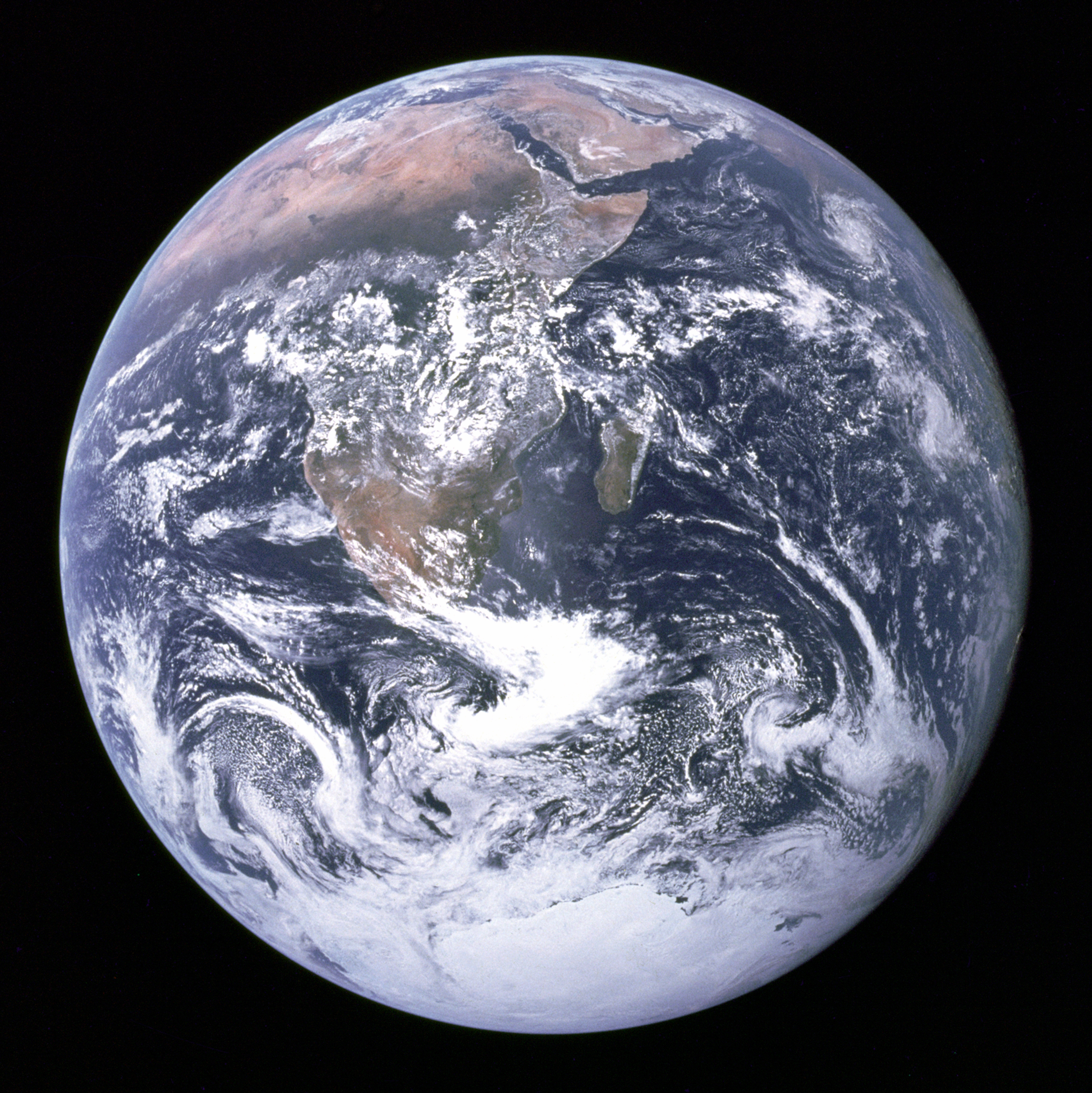
In 1972 came The Blue Marble, an image captured from Apollo 17 on December 17th, 1972 from a distance of 45,000 kilometres (28,000 miles). While the term has been subsequently applied by NASA to a wide range of images of Earth returned from orbiting satellites, the original Apollo 17 photograph remains the most famous.

1972: The Blue Marble (click to enlarge)

On December 6th, 2012, NASA released three composite high-definition pictures of images captured by the Suomi NPP meteorological satellite using its VIIRS (Visible Infrared Imaging Radiometer Suite) instrument. Part of a series of images captured by the satellite which reveal the Earth at night in stunning detail, the three images are “whole Earth” pictures showing views from over Africa, the Americas and Australia and Asia.

All three are amazing views of the planet, but I have to confess that of them all, it is the picture  showing Africa and Europe which is for me the most stunning. Not because I’m from the UK, which can just be seen in the image, but because the picture says so much about our place on Earth. Just look at the lights of our cities spread across Europe, and the seemingly tiny sprinkling of lights around Africa.

2012: The Black Marble (click to enlarge) – via the BBC

All of these images deserve to become as iconic as Earthrise, The Blue Marble and other famous images such as 1990’s Pale Blue Dot, taken from a distance of 6 billion kilometres (3.7 billion miles) by the Voyager 1 spacecraft revealing the Earth as a tiny pinpoint of reflected sunlight hanging in space.

Together, all of these images remind us that in all the vastness of space, we only have one place to call home. It belongs to us all, and we’re all responsible for it. Let’s make sure we take care of it.

Related Links

All images reproduced courtesy of NASA

The end of speculation, the beginning of something new

CuriosityOn Monday 3rd December, NASA provided an update on the Mars Science Laboratory’s (MSL) most recent findings in analysing soil samples gathered from the “Rocknest” region of Gale Crater on Mars.

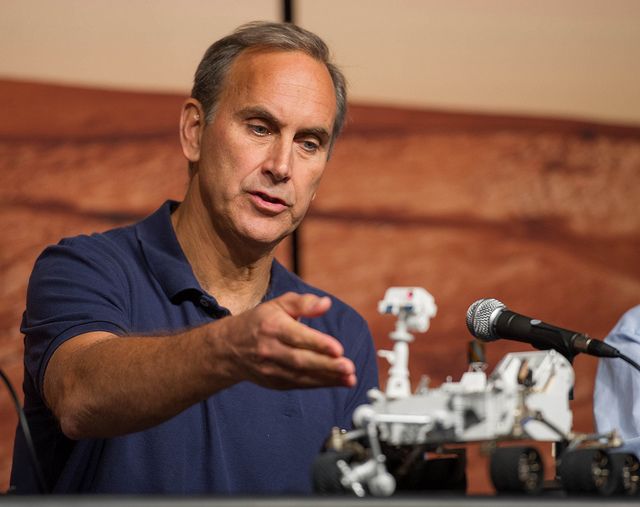
As reported last time, the findings had been the subject of intense media speculation for almost two weeks after radio reporter Joe Palca over-egged relatively innocent comments made by MSL’s Principal Investigator John Grotzinger concerning the initial soil analysis results received from the SAm Analysis at Mars suite of instruments while the reporter was setting-up and testing his recording equipment for an interview on November 20th. In his subsequent broadcast, Palca was unable to resist couching Grotzinger’s comments in terms of something “earth-shaking” having been found.

Had Curiosity found evidence of organics in just its first soil sample? Had Curiosity found evidence of past life on Mars? Had Curiosity found life on Mars? The questions and speculation seemed to grow with each passing day. Not even a firm, but low-key statement put out by NASA on the 26th November stopped the speculation growing, forcing them to issue a very strongly worded press release on the matter on November 29th and use Curiosity’s “Twitter personality” team to underline the fact that no organics had been found in a series of tweets the same day.

MSL Principal Investigator John Grotzinger

The rumour-mill had been fuelled in part by the fact that NASA planned to give an update on the first four months of the MSL mission at the fall meeting of the American Geophysical Union (AGU), with some believing the space agency would only do so if they had something “major” to announce about the mission. The fact that NASA has regularly attended AGU meetings in the past to provide updates on missions  – including Curiosity’s predecessors, the Mars Exploration Rovers, seemed to escape people’s notice…

And the Findings Are….

An update was given at the AGU on Monday December 3rd, with NASA summarising them in a press briefing for those unable to attend the live meeting. While the results are not “earth-shaking”, they are nevertheless interesting.

Edgett-2-pia16469-br2
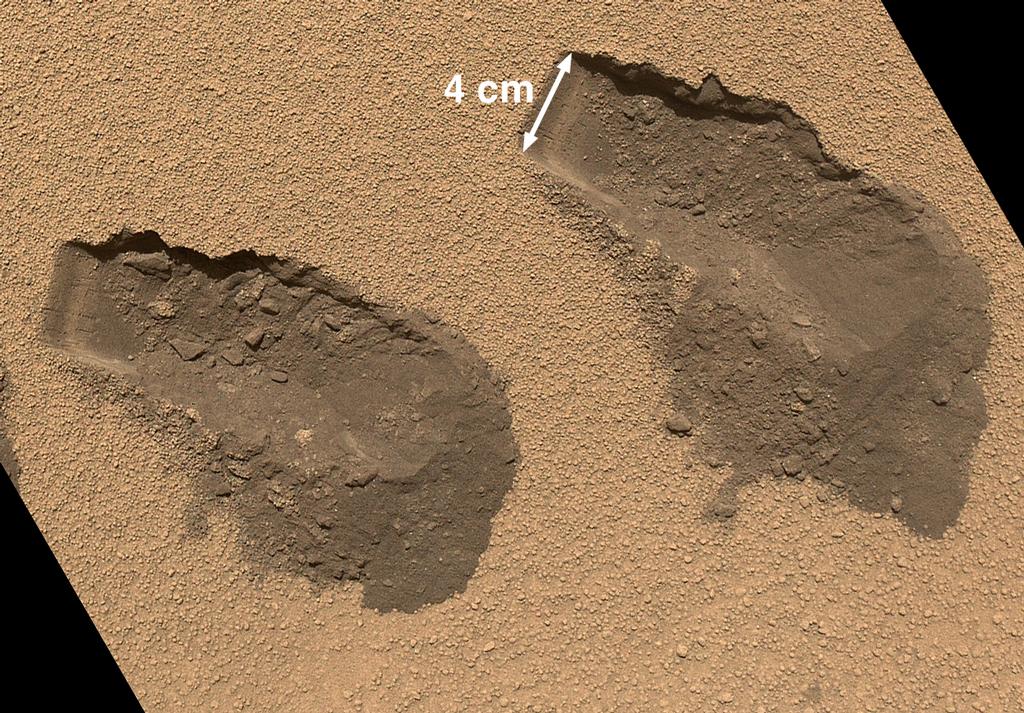
A Mars Hand Lens Imager (MAHLI) image of the third (left) and fourth (right) trenches made by Curiosity’s 4 cm-wide scoop. Acquired on Sol 84 (Oct. 31, 2012) the image shows details of the properties of the “Rocknest” sand dune. The upper surface is covered by crust of coarse sand grains approx. 0.5 to 1.5 mm, mantled with fine dust, giving it a light brown/red colour. The crust is about 0.5 cm thick and beneath it is finer, darker sand. The left end of each trough wall shows alternating light and dark bands, indicating that the sand inside the drift is not completely uniform. This might be due to different amounts of infiltrated dust, chemical alteration or deposition of sands of slightly different colour.

Please use the page numbers below to continue reading this article
Of thanksgiving drives and the rumour mill

It’s been a curious week or so where Curiosity is concerned, primarily because of speculation over exactly what SAM may – or may not – have found. In my last update, I covered recent activities with MSL, including the fact that a soil sample had, after weeks of preparation, been delivered to the SAM (Sample Analysis at Mars) suite of instruments. Since then, the media has been agog with rumours that something “earth-shaking” may have been discovered.

But before I get to that, a quick catch-up on activities since my last report.

On the 16th November, the rover’s 100th Sol on Mars, Curiosity finally made a move from the small sand dune it had been studying in an area dubbed Rocknest. It didn’t actually initially go very far – just 1.9 metres (6.2 feet), but it was enough for the rover to be able to deploy its robot arm in what was called a “touch and go” examination of an interesting rock, initially dubbed “Rocknest 3”, using the Alpha Particle X-Ray Spectrometer (APXS) in two 10-minute examinations of the rock in order to gain readings of data about its chemical elements. The rock had previously been the subject of examination by Curiosity when on Sol 57 (October 3rd) the ChemCam laser system and telescope were used to gather initial data.

An image of “Rocknest 3” captures by the micro-imager camera of ChemCam and showing the laser hit points created during initial analysis of the rock. In all some 15,000 laser pulses were directed at the rock, which was some 3.7 metres (12 feet) from the laser system. This image and the associated data wer subsequently downlinked to Earth using Europe’s Mars Express orbiter in order to demonstrate the ability to use that vehicle as a back-up communications relay should Mars Odyssey or the Mars Reconnaissance Orbiter be unavailable.

Afterwards, the arm was stowed and Curiosity travelled a further 25 metres (83 feet) eastward to a further target called “Point Lake”, which overlooks a lower-lying area leading into the area dubbed Glenelg.

“We have done touches before, and we’ve done goes before, but this is our first ‘touch-and-go’ on the same day,” said Curiosity Mission Manager Michael Watkins of NASA’s Jet Propulsion Laboratory, Pasadena, Calif. “It is a good sign that the rover team is getting comfortable with more complex operational planning, which will serve us well in the weeks ahead.”

Prior to departing Rocknest, Curiosity took a set of panoramic images of the area ahead of it, including “Point Lake”, where work will commence in finding a suitable target for the rover’s drill mechanism on the robot arm’s turret for the very first time.

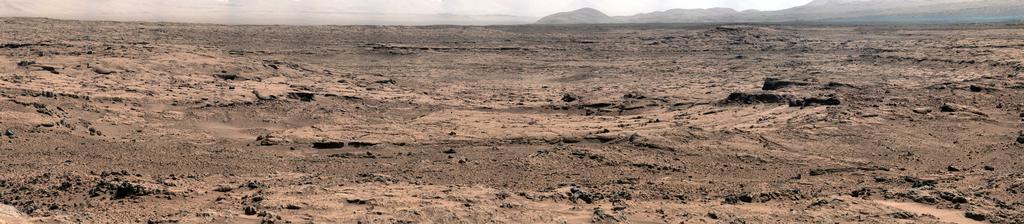
This panorama is a mosaic of images taken by the Mast Camera (Mastcam) on the NASA Mars rover Curiosity while the rover was working at a site called “Rocknest” in October and November 2012. The centre of the scene, looking eastward, includes the “Point Lake” area, where the rover spent the Thanksgiving period capturing further images for analysis in preparation for the final leg of the journey to Glenelg.

Please use the page number below to continue reading this article

Getting RADical about REMs while Odyssey flips

The recent focus on the NASA / JPL Mars Science Laboratory mission has been on Curiosity’s soil sampling activities in the region of Gale Crater scientists have called “Rocknest”.  However, this is not all that the rover has been up to. Through the sample gathering operations, two other instruments have been hard at work, measuring and monitoring the environmental conditions around the rover. These are the The Radiation Assessment Detector (RAD) and the Rover Environmental Monitoring Systems (REMS) – each of which has been working away day and night since Curiosity first arrived on Mars.

RAD is particularly focused on the amount of radiation, both from the sun (solar radiation) and in the form of cosmic rays, reaching the surface of Mars. While Mars has an atmosphere, it is extremely thin and tenuous in comparison to that of Earth – at ground level it is about as dense as Earth’s atmosphere at an altitude of several miles. The Martian atmosphere is primarily carbon dioxide and it does not have any ozone layer. This, coupled with the lack of a strong magnetic field means that the surface of Mars is subjected to far higher levels of both solar and cosmic radiation than are experienced on Earth.

However, even though the atmosphere around Mars is tenuous, it is still enough to have an effect on incoming radiation, and RAD is designed to measure the levels of radiation common to the surface of Mars and, working with REMS, help give further insight into the processes which go into altering that radiation as it passes through the atmosphere. Both of these studies will in turn help scientists understand the impact incoming radiation is having on the local environment and increase out understanding of surface conditions on Mars in preparation for human missions there in the future.

Curiosity: increasing our understanding of the Martian surface environment for future human missions

REMS is the rover’s meteorological station, comprising instruments mounted both on the body of the rover and on the forward mast. It is responsible for monitoring wind, pressure, humidity and temperature, and is being used to establish a track record of atmospheric conditions and changes experienced by Curiosity. Despite the wind measurement instrument on the rover’s mast being damaged during the landing phase of the mission – mostly likely due to a stone being thrown up by the Descent Stage engines and striking the instrument – REMS has been returning huge amounts of data about the Martian atmosphere, helping scientists develop a clearer understanding of the complex mechanics at work in the Martian atmosphere.

As mentioned about, the Martian atmosphere is largely carbon dioxide and very tenuous. Both of these points factor into large seasonal variances in the Martian atmosphere. Due to the tenuous nature of the atmosphere, temperatures are extremely low. During the colder winter months, these low temperatures cause a significant amount of the atmosphere to “freeze out” into the polar ice caps (most notably the southern polar cap, which is predominantly carbon dioxide ice).  In the southern hemisphere, the warmer temperatures, while still low by Earth terms, are enough for much of this carbon dioxide to sublimate into the atmosphere with the result that season changes can cause the Martian atmosphere to shrink / grow by some 30% through the course of a year.

These thermal processes also operate on a day/night cycle, and also affect the radiation signature being recorded by Curiosity’s RAD instrument. Essentially, what is happening is this: during daylight hours, the atmosphere heats up rapidly and expands, causing the atmosphere to “bulge out”. Convection currents cause the atmosphere to flow outwards from this bulge to equalise the pressure either side of it. This leaves the atmosphere below the bulge at a lower pressure than the air on the night side of the planet. As the day passes and the sun sets, the atmosphere cools and the bulge contracts increasing the surface air pressure beneath it.

The daily thermal cycle on Mars: by day, as the planet rotates, the atmosphere warms and expands. Air flows out from the heated “bulge” in order to equalise the pressure with the atmosphere around it, with the result that while the bulge causes a “thicker” atmosphere, it is one that is less dense and at a lower pressure than the air on the “night side” of the planet

Overall, this daily fluctuation can amount to a 10% variation in air pressure over the day / night cycle as measured by REMS. Taken alongside the RAD measurements, this has revealed an interesting correlation with the amount of radiation being measured around the rover. As the air temperature increases through the day and the atmosphere expands to lower the local air pressure, so to does the amount of radiation being measured by RAD increase. Then, as the temperature drops during the evening into night, so to does the atmospheric density and pressure increase – and surface level radiation doses fall, with between a 3% and 5% variation in radiation levels being recorded by REMS during a single day / night period.

A 5-Sol chart showing the relationship between radiation and air pressure during the day / night cycle. As the air is warmed during each day, so the air pressure drops (blue) and the amount of radiation being recorded (red) increases. As night draws is, so the blue line increases, indicating an increase in atmospheric pressure – and radiation levels drop

Please use the page numbers below to continue reading this article