Space Sunday: FRAM2, private missions, asteroids

Crew Dragon Resilience splashes down of the coast of California at the end of the 4-day FRAM2 mission. Credit: SpaceX

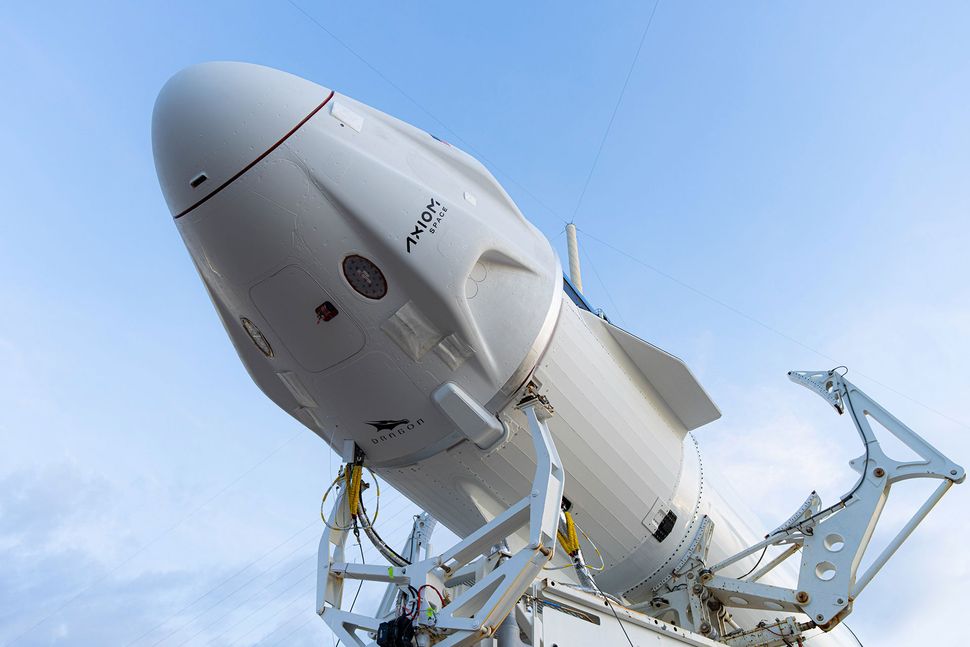
Previewed in my previous Space Sunday update, the FRAM2 mission lifted-off almost precisely on time from Kennedy Space Centre’s Launch Complex 39A at 01:46:50 UTC on April 1st, carrying the first humans to ever orbit the Earth in a low-Earth polar orbit.

The ascent to orbit, travelling south from the space centre, proceeded smoothly, the SpaceX Crew Dragon capsule and service module (“Trunk” in SpaceX parlance) entering a low Earth orbit with an apogee of 413 km and a perigee of 202 km some eight minutes after launch. The orbit, referred to as a polar retrograde, due to the fact the vehicle travelled first over the South Pole then around and over the North Pole, lay at an inclination of 90.01°, breaking the previous high inclination orbit record for a crewed space vehicle set by Vostok 6 in 1963.

Aboard the vehicle were Chinese-born, but Maltese citizen and crypto currency entrepreneur Chung Wang, who will be the mission’s commander and is a co-bankroller of the flight; Jannicke Mikkelsen, a Scottish-born Norwegian cinematographer and a pioneer of VR cinematography, 3D animation and augmented reality, who is the other co-bankroller for the flight; Eric Philips, a 62-year-old noted Australian polar explorer, who will be the first “fully” Australian national to fly in space, and Rabea Rogge, a German electrical engineer and robotic expert.

The 4-day mission comprised an extensive science programme, focusing on human health in space, growing food supplements on-orbit (oyster mushrooms) and investigating the Phenomena known as STEVE (see my last Space Sunday update) from orbit. The mission also included educational broadcasts to schools and a lot of social media-posted videos.

A video of Antarctica recorded by the FRAM2 crew. Seen in the footage is videographer Jannicke Mikkelsen, and the voice-over is from Eric Philips

To assist in observations and measurements, Resilience was fitted with the transparent Copula to replace the outer  airlock hatch and docking mechanism within the forward end of the capsule, affording the crew near-360º views of Earth once the vehicle’s protective nose cone had been opened.

The launch itself required a complete update of the Crew Dragon navigation software, originally written for lower 51º inclination orbits. This included a complete overhaul of the launch abort software for both capsule and launch vehicle. The latter was made necessary by the fact the ascent to orbit carried the vehicle over parts of South America, so any abort situation had to ensure that both booster and capsule would not return to Earth over land, and the capsule would be able to splashdown safely with the crew.

What really marked this mission, however, was the sheer transparency of operations; nothing in the video logs was pre-scripted or rehearsed; camera were rolling with conversations going on in the background – including conversations between crew members and SpaceX mission control about “known issue” with the space vehicle (not sure how significant – but being told that there is a “known issue” with a vehicle when you’re sitting in it in space might not be the most comforting thing to hear!), informal chit-chat during observations and an introduction to the fifth “crew member”, Tyler.

A compilation video of the mission, including shot through the inner hatch of the airlock showing Earth beyond the Copula. Note the inner hatch could also be opened to allow crew to enter the forward are and look out of the Cupola

While the mission had a lot of science goals – including testing a portable MRI unit, carrying out x-rays of the human body, studies into blood and bone health and glucose regulation in the body in micro-gravity – it has not stopped criticism being levelled at it, with some scientists stating the period spent in space being too short to yield practical results in some areas, and other aspects of the mission being labelled “a notch above a gimmick”.

For Chung, Mikkelsen and Philips in particular, however, the mission was as much personal as scientific: they have spent fair portions of their adult lives exploring the Polar regions, carrying out studies and research (the four all actually met during an expedition to Svalbard (leading them to nickname the mission “Svalbard 1”).

The first ever x-ray of a human hand taken in space (right) during tests of a small x-ray unit aboard the FRAM2 mission. The hand (with ring) was used in homage to the first ever x-ray of a human, captured by Wilhelm Conrad Röntgen (of his wife’s hand) in 1895 (l). Credits: Wilhelm Conrad Röntgen; FRAM2 / SpaceX

FRAM2 came to an end on April 4th, 2025, when, following an extended de-orbit, the combined vehicle re-entered the atmosphere and headed for a splashdown off the California coast where the SpaceX recovery ship was waiting for the vehicle. This marked the first splashdown for Crew Dragon off the west coast of the USA – although more will be following.

SpaceX has been criticised for the fact that during several missions returning crews from the International Space Station, the “Trunk” service module has in part survived re-entry, with elements coming down very close to populated areas. To avoid this, the company is moving crewed splashdowns to the west coast of the USA in order to ensure that should any parts of the Trunk survive re-entry they will splashdown in the Pacific Ocean.

As a test of this, the module used by Resilience remained attached to the vehicle for longer during the initial re-entry operations, in order to ensure that if any part of it did survive the heat of re-entry, the debris would fall to Earth over Point Nemo – the remotest part of the Pacific Ocean relative to human habitation, and referred to as the “spacecraft graveyard”.

A re-entry seared Resilience is lifted aboard the SpaceX recovery vessel in preparation for crew egress. Credit: SpaceX

Splashdown occurred at 19:28 UTC on April 4th, with the capsule and crew safely recovered to the SpaceX recovery vehicle for transport to the port of Los Angeles.

NASA Opens-Out Requirements for Private Missions to the ISS

NASA has announced it is seeking proposal for two further private astronaut missions (PAMs) to be conducted to the ISS – and for the first time, the requirement that such missions must be commanded by former NASA astronaut has been removed.

The agency is planning to pivot away from the International Space Station (ISS) operations as it nears its end-of-life (some of the Russian elements of the station are already well outside their “warranty” – that is, their intended lifespan), with the hope that the private sector will take over low-Earth orbit research and station operations. Currently, there are a number of proposals for doing so – perhaps most notably Axiom Space and the orbital Reef consortium led by Blue Origin and Sierra Space.

Axiom Space already has a contract with NASA to add its own modules to the ISS, starting in 2027 with the launch of the PPTM – Power, Propulsion and Transfer Module. This will then be joined by at least a second module, Hab-1, prior to the decommissioning of the ISS. These modules will then be detached from the ISS to become a free-floating hub to which Axiom will add further modules.

An artist’s impression of the Axiom space station as it will look when completed and free-flying. Credit: Axiom Space

To prepare for this, Axiom signed an agreement with NASA to fly four missions to the ISS between 2022 and 2025, with the option on a fifth. Three of these form the only fully private missions yet flown to the ISS, and all have been commanded by former NASA astronauts – Michael López-Alegría (Axiom AX-1 and Ax-3) and Peggy Whitson (Ax-2), with Whitson also set to command AX-4, currently targeting a May 2025 launch.

Under the new NASA PAM requirements, private missions are now required to be commanded by any astronaut who has served as a long-duration ISS crewmember (defined as 30 days or more in the ISS) and who has been involved in ISS operations in the last five years or else shows evidence of “current, active participation in similar, relevant spaceflight operations”. This therefore opens the door for missions to be commanded by Canadian, French, German, English, Japanese, etc., astronauts meeting the requirements to command missions by commercial providers.

The move to relax the requirements is to help remove the reliance on purely NASA-based experience to lead private sector missions into orbit and allow companies like Axiom, Blue Origin and – most notably, perhaps – Vast Space, who have a MOU with SpaceX to fly two PAM missions to the ISS but have yet to meet NASA’s requirements to do so, to start formulating their own requirements, gain expertise and build partnership and processes to assist in their efforts to establish on-orbit facilities.

The Blue Origin / Sierra Space-led Orbital Reef space station design, which will utilise the Boeing CST-100 Starliner for crew transfers, and the Sierra Space Dreamer Chaser spaceplane for cargo transfers. Credit: Blue Origin / Sierra Space / Boeing

The announcement by NASA is of potential import to the UK: Axiom have an agreement in place with SpaceX to fly a total of five Ax missions to the ISS. However, the fifth – provisionally aiming for 2026 – has yet to be crewed, and there have been discussion between Axiom and UK officials about the mission being an “all British” crew, comprising Tim Peake as mission commander, who flew the Expedition 46/47 rotations on the ISS, together with fellow UK European Astronaut Corps members  Meganne ChristianRosemary Coogan and Paralympic sprinter (and surgeon)  John McFall.

New Glenn Mishap Investigation Completed

The Federal Aviation Administration announced March 31st, 2025 that it has accepted the findings of an investigation led by Blue Origin following the loss of the first stage of the company’s New Glenn heavy lift launch vehicle during its maiden flight on January 16th, 2025 (see: Space Sunday: NG-1 and IFT-7).

While the overall goals of that mission were met, a secondary goal – recovering the rocket’s large first stage by landing it at sea board a landing vessel – failed, the booster stage falling back into the Atlantic Ocean. Whilst no debris was strewn across flight corridors or fell on populated areas (unlike recent SpaceX Starship launch attempts), the failure of the planned booster recovery, whilst always rated by Blue Origin as having a minimal chance of success on the very first flight of the rocket, meant the vehicle’s launch license was correctly suspended by the Federal Aviation Authority (FAA) until a full Mishap Investigation into the cause of the loss had been carried out by Blue Origin and the FAA had accepted the findings and remedial actions taken.

The investigation report was duly supplied in March 2025, and identified the booster’s inability to re-ignite its motors during descent as the cause of the loss. Whilst no precise cause(s) for this failure have been openly published, Blue Origin has indicated seven areas where remedial work has been undertaken on the vehicle’s flight systems, and the FAA now consider the investigation closed. As a result – subject to a final inspection of the changes made – the license suspension should be lifted before the end of April. In the meantime, Blue Origin has been given the all-clear to resume preparations for the next New Glenn launch.

The maiden flight of Blue Origin’s New Glenn rocket lifts-off from Launch Complex 36 at Cape Canaveral Space Force Station on January 16th, 2025. Credit: Blue Origin / USSF

All of this is in stark contrast to the handling of the last two SpaceX Starship launches (IFT-7 and IFT-8). Both resulted in the complete loss of the Starship upper stages well within Earth’s atmosphere, resulting in debris falling over the Greater Antilles (and some of it striking close to populated areas on the Turks and Caicos islands) together with a degree of disruption to commercial flights in the region. However, in the case of IFT-7, the FAA cleared the launch of IFT-8 before the Mishap Investigation was closed, and appears to be on course to do so in the case of IFT-8, with SpaceX already ramping-up for the next test article flight.

In the meantime, assuming the New Glenn license is renewed in April, the next launch for the vehicle could come as soon as “late spring 2025” (end of May). However, no payload for the flight has been specified, only that it will include a further attempt to return the first stage to an at-sea landing aboard Landing Platform Vessel 1 Jacklyn.

Some reports had suggested this next launch could comprise the Blue Moon Mark 1 lander – an automated vehicle capable of delivering up to 3 tonnes of payload to the surface of the Moon and intended to demonstrate / test technologies to be used in the company’s much larger Blue Moon Mark 2 lander, designed to deliver crews to the surface of the Moon. However, in discussing the launch path for New Glenn, Blue Origin CEO David Limp indicated that a launch of Blue Moon Mark 1 is unlikely to occur before late summer 2025 at the earliest.

2024 YR4 Seen At Last

As I noted in February 2025, 2024 YR4 is an Earth-crossing Apollo-type asteroid discovered on December 27th, 2024. It caused a bit of stir at the time, as there was a non-zero chance that as it pursued its own orbit around the Sun, in 2032 it could end up trying to occupy the space volume of space as taken-up by or own planet, with potentially disastrous and deadly results for anyone and anything caught directly under / within the air blast that would likely result from its destruction as it tore into our atmosphere.

Fortunately, continued observations of the asteroid – which passes across Earth’s orbit roughly once every 4 years – have shown the threat of any impact in 2032 are now very close to zero (although it does still exist on the tiniest of scales, together with a smaller chance of it hitting the Moon).

At the time of its discovery, 2024 YR4 was classified as a stony S-type or L-type asteroid, somewhere in the region of 50-60 metres across (roughly the same size as the fragment which caused the 1908 Tunguska event). That size estimate has now been confirmed, and what’s more, we now have our first (and admittedly fuzzy) images of the fragment, courtesy of the James Webb Space Telescope (JWST), and they reveal it to be a strange little bugger.

2024 YR4 imaged by JWST’s NIRCam on 8 March 2025. Credit: NASA/ESA

Imaged and scanned by the US Near-InfraRed Camera (NIRCam) and British-led European Mid-InfraRed Instrument (MIRI), 2024 YR4 is indeed some 60 metres across at its widest. It is also somewhat unlike similar asteroids in its spectral type, in that it has a high spin rate as it tumbles around the Sun and appears to be more a conglomeration rocks banded together, rather than a single chunk of rock.

Observations are continuing to ensure the 2032 rick of impact is completely eliminated and also to provide data to calculate impact risks beyond 2032, whilst the data obtained by JWST – which mark 2024 YR4 as the smallest object the observatory has every imaged from its L2 HALO orbit – are being used to help scientists to better characterise NEOs of a similar size and spectral type and more fully understand how they might react were one to strike our atmosphere.

Space Sunday: launches, mission and exoplanets

The Fram2 crew (l to r): Eric Philips, Rabea Rogge,Jannicke Mikkelsen and Chung Wang

If all goes according to schedule, a SpaceX Falcon 9 / Crew Dragon combination is due to lift-off from Kennedy Space Centre’s LC-39A on March 31st, 2025, carrying four private citizens into space for a 4-5 day mission.

Aboard Crew Dragon Resilience will be Chinese-born, but Maltese citizen and crypto currency entrepreneur Chung Wang, who will be the mission’s commander and is a co-bankroller of the flight; Jannicke Mikkelsen, a Scottish-born Norwegian cinematographer and a pioneer of VR cinematography, 3D animation and augmented reality, who is the other co-bankroller for the flight; Eric Philips, a 62-year-old noted Australian polar explorer, who will be the first “fully” Australian national to fly in space, and Rabea Rogge, a German electrical engineer and robotic expert.

What is particularly notable about this flight is that it will be the first time any human space mission will be launched into a high-inclination (90º) polar orbit at an altitude of some 420-425 km (giving it a 93-minute orbital period). The aim of the flight is to carry out research on the Earth’s poles and their space environment, hence its name: Fram2. This celebrates the ship used by (among other Norwegian polar explorers), Roald Amundsen. In fact, in a further tie to polar exploration, mission was originally due to be flown aboard Crew Dragon Endurance, named for Ernest Shackleton’s vessel, until scheduling issues meant the mission has to switch to using Resilience.

A STEVE over Little Bow Resort, Alberta, in August 2015. Credit: Elfiehall via Wikipedia

Given the time of year of the mission, flights over the North Pole and arctic will be carried out in daylight, allowing for direct observations of Arctic ice melt, whilst passage over Antarctica and the South Pole will be in darkness, during which times the crew hope to be able to more clearly study the phenomena known as STEVE.

According to data gathered by the European Space Agency (ESA), STEVEs are caused by a 25 km wide ribbon of hot plasma at an altitude of 450 km, with a temperature of 3,000 °C flowing at a speed of 6 km/s  (compared to 10 m/s outside the ribbon). They appear as a very narrow arc extending for hundreds or thousands of kilometres, aligned east–west, and  generally last for twenty minutes to an hour. STEVEs can appear in both southern and northern skies, and are a phenomenon with a quaintly curious history.

As an observable event, records on STEVEs go back at least as far at 1705 – but throughout that time, they have had always largely been dismissed as an off-shot of aurora because (until October 2024) one had never been observed in the absence of any aurora. However, this changed in 2016 thanks in part (and possibly inevitably) to social media.

It was in that year that a group of amateur aurora photographers in Alberta, Canada noticed the appearance of a nightly whilst observing aurora, and they started taking photographs of the events and posting them to Facebook, with one of them referring to the ribbon in his photos as “Steve”, in reference to the comic series (and film) Over the Hedge. The photographs rapidly went viral and sparked a lot of discussion as to what the ribbon might be.

In particular, the photos and discussions drew the attention of a couple of planetary physicists, one of whom connected the photos to the data gathered on the phenomenon by ESA, leading another – Robert Lysak – to come up with the backronym of STEVE, for Strong Thermal Emission Velocity Enhancement, which is the term now used to reference the ribbon scientifically. It is now hoped that that physical observations from orbit of STEVE events by the Fram2 crew will help further our understanding of the phenomenon.

In addition to this, the mission’s science programme includes the first attempt to grow mushrooms in space in an effort to further research into the ability to provide sustainable nutrition on space missions – something seen as key to missions to Mars.

The vacuum-packed oyster mushroom substrate that will be flown of Fram2 in an attempt to cultivate it into mushrooms. Credit: FOODiQ Global

While there have been successful efforts to grow foodstuffs on the International Space Station (ISS) such as red Russian kale, chilli peppers, dragoon lettuce, dwarf wheat, mustard, they have not been without their drawbacks. For one thing, even relatively small amounts of food cultivation require space and other resources quite out of keeping with the results: while a cubic metre of  growing space can generate a small crop of food in just 30-35 days, the amount produced tends to only be enough to help supplement a single meal (or perhaps two) for 7-8 people.

Mushrooms – in this case oyster mushrooms – potentially offer a more viable means of dietary supplement. They grow at a rapid pace (doubling in size every day), do not require an enormous amount of space, they have a rich nutrient profile and – when grown under UV lighting (as these will), they can produce the daily dose of vitamin D required by astronauts. They can also grow in inedible plant waste, do not require intensive cultivation in order to grow.

For Fram2, the plan is for the crew to prepare an oyster substrate in orbit, and then study its growth and fruiting process and then monitor the rate of the developing mushrooms, record their growth characteristics in microgravity and monitor for any unusual contamination. The fungi will then be returned to Earth for further studies, including whether or not the mushrooms are still safely edible and can deliver on their nutritional promise.

With a battery of human science objectives set for the mission – including testing a portable MRI unit, carrying out x-rays of the human body, studies into blood and bone health, and glucose regulation in the body in micro-gravity – Fram2 is set to be one of the most science-intensive short-during human space flight missions yet undertaken.

ISAR Spectrum Maiden Flight Ends with a Ka-Boom

Europe’s commercial launch companies are not having a lot of success.  In 2024, German company Rocket Factory Augsburg (RFA) hoped to be the first European commercial launcher to get a rocket to orbit from European soil (excluding Russia) with its RFA One vehicle. However, that hope ended in August 2024, when the first stage of the vehicle was lost after it exploded during a static fire engine test at the UK’s SaxaVord Spaceport (see: Commercial activities and a fly-by).

The Isar Spectrum rocket falling back towards Earth 30+ seconds after launch. Credit: Isar Aerospace

That loss in turn came on top of the 2023 failure of a (now defunct) Virgin Galactic airborne launch of the company’s LauncherOne from their carrier aircraft, Cosmic Girl, flying out of Spaceport Cornwall (aka Newquay Airport) – see: Space Sunday: Exoplanets and updates. Now, a further company has added to the list.

Thus, Germany’s Isar Aerospace had – with finger’s crossed – hoped to claim the crown by reaching orbit from the Andøya Spaceport in northern Norway, and albeit using a vehicle without any payload. The aim of the launch was intended to be a fully integrated test of the company’s two-stage Spectrum rocket and launch and flight systems to determine the vehicle’s readiness to commence payload carrying operations. Given this, the company did indicate actually reaching orbit would be a bonus.

Spectrum is designed to operate from multiple launch sites –notably Andøya, targeting Sun-synchronous (SSO) and polar orbits, and Guiana Space Centre (Spaceport Europe) for equatorial and medium inclination orbits. It is capable of lifting up to a metric tonne to low-Earth Orbit (LEO) and up to 700 kg to SSO. The first operational flight is expected to be out of the Guiana Space Centre, carrying seven small satellites, later in 2025.

The Spectrum rocket on the launch pad at Andøya, March 26th, 2025. Credit:  Isar Aerospace

The test flight – calling Going Full Spectrum – out of Andøya on March 30th, appeared to start off smoothly enough. The vehicle lifted-off cleanly at 10:30 UTC, the rocket and climbed away from the launch pad. But as the rocket commenced its programmed ascent roll at 18-seconds in the flight, attitude control was lost, the rocket pitching over onto its side.

At this point the webcast video froze, but the sound continued to play, and the rocket was heard exploding. Initial reports stated that the vehicle’s flight termination system (FTS) had been triggered. However, separate footage recorded from a cell phone and posted by Norwegian publication VG, showed the rocket falling horizontally to strike the waters close to the launch facilities and explode. Later video of the released to various organisations euphemistically referred to the vehicle’s fall and explosion as being in “a controlled manner”. That said, the flight did yield data.

Two more Spectrum rockets are currently being fabricated, but the company has yet to indicate whether either of these will be used for a further flight test or whether they will seek to go ahead with a payload launch.

China’s Planetary Exploration Roadmap

As I’ve noted in numerous past Space Sunday pieces, China is developing a multi-faceted robotic and human space exploration programme, with the latter focusing on Earth-orbital activities using the Tiangong space station (soon to be joined by a new crew-carrying space vehicle), then missions to the lunar South Polar Region commencing in the early 2030s, prior to progressing to human-to-Mars flights some time thereafter.

On the robotic front, China has already achieved a lot re: the Moon and Mars, and on March 26th, 2025, the country’s Deep Space Exploration Laboratory (DSEL), part of the China National Space Administration (CNSA), unveiled what appears to be a roadmap of upcoming missions, to the general public.  In a slide offered during a presentation, DSEL highlighted a number of goals, commencing with the already in-development Tianwen-3 Mars sample return mission. In all, the slide disclosed the following mission ideas:

  • ~2028 (launch): Tianwen-3 Mars Sample Return.
  • ~2029 (launch) Tianwen-4 Jupiter / Callisto orbiter mission investigating the potential habitability of the latter.
  • ~2030: Earth-based platform for simulating planetary environments and their habitability.
  • ~2033 (launch): Venus atmospheric sample return mission (utilising aerodynamic space vehicle).
  • ~2038 (launch): untended, automated Mars science outpost for long-term biology and environmental research (precursor to human missions).
  • ~2039 (launch): Neptune / Triton mission to investigate habitability of outer planets and water worlds.
The DSEL slide showing China’s roadmap for robotic / Earth-based missions. Credit: DSEL / CNSA

Also mentioned in the presentation was the Earth 2.0 Exoplanet Investigator – a TESS-like observatory for studying exoplanets, particularly those referred to a “exo-Earths” – planets of a size and location around their parent stars considered suitable for the potential development of life. Earth 2.0 (referred to as “ET” – geddit?) is currently due for a 2028 launch to operate at the Sun-Earth Lagrange point 2 (the same gravitationally-stable region of space on the far side of the Earth relative to the Sun in which the James Webb Space Telescope operates). Once there, it will attempt to continuously monitor 2 million stars within the Kepler mission star field in an attempt to locate more exoplanets.

To achieve this, ET will use a set of 6 28-cm aperture telescopes working in unison. Due to its location and optical capabilities, ET will be able to study large areas of our galaxy for extended periods, increasing its ability to both locate more planets and to do so across wider areas. In this respect, ET will not only try to detect “exo-Earths” but also characterise them – determine their size, atmospheric composition, potential for bearing liquid water, etc., working in collaboration with ground-based and other facilities. It further hoped that these studies will increase our understanding of the mechanisms at work in the formation of exoplanets, particularly given that the mechanisms observed without our own solar system do not necessarily seem to apply to all other planetary systems.

A conceptual diagram of China’s Earth-2, and how it will use both optical means in an attempt to locate and characterised “exo-Earths” and gravitational lensing to location rogue planets. Credit: CAS

In addition, ET is to be equipped with a 35 cm microlensing telescope it will use in an attempt to locate “rogue” (aka “wandering”) planets. These are planetary bodies no longer tied to orbiting a particular star, but instead wander freely in interstellar space.

As such planets do not lend themselves to detection via the transit method – regularly passing between the observer and their parent star, causing the brightness of the latter to dip relative to the observer – ET will focus its 35-cm telescope on around 30 million stars within the galactic bulge in an attempt to detect gravitational lensing effects caused by the passage of rogue planets somewhere between the observatory and the “cloud” of background stars.

In all, ET is slated for a 4-year primary mission once launched and operational – although clearly, it could run for much longer than this. It is also the only high-volume, in-depth mission with a specific focus on worlds with potential habitability slated for launch in the near future; whilst NASA is developing the Habitable Worlds Observatory (HWO), this is still very much at the conceptual stage, and unlikely to be ready for launch within the next 15-20 years.

Space Sunday: home again, a “good night”, and seeking biosigns

Crew Dragon Freedom splashes down off the Florida coast March 18th to conclude the Crew-9 mission. Credit: NASA/Keegan Barber

On Tuesday, March, 18th, 2025, A SpaceX Crew Dragon – mission Crew-9 – made a safe splashdown off the Florida coast prior to being successfully brought aboard the waiting recovery vehicle. This brought to an end what has been perhaps the most mis-reported human space mission thus far.

This is because the vehicle which carried NASA astronauts Barry “Butch” Wilmore and Sunita “Suni” Williams into space back in June 2024 was the much-troubled Boeing CST-100 Starliner. Whilst the vehicle reached orbit successfully, it suffered further problems with it primary propulsion system – located on the vehicle’s expendable service module. As a result, and exercising an understandable over-abundance of caution, NASA opted to leave Wilmore and Williams on the ISS until an alternate means of bringing them home could be scheduled.

However, at no time did this ever mean Williams and Wilmore were “stranded” on the ISS: just because NASA did not want to bring the astronauts back to Earth in an emergency did not ever equate to the agency being unable to do so. This was proven in July 2024 when, following the disintegration of a Russian satellite led to a short-term threat of possible debris impact with the ISS. As a result the station’s crew were ordered by NASA and Roscosmos to “shelter in place” aboard their respective space vehicles – including Wilmore and Williams aboard the CST-100 – in case an emergency departure and return to Earth was required if the debris could showed signs of intersecting the ISS in orbit.

Sunita “Sunni” Williams (l) and Barry “Butch” Wilmore (r), pose aboard the docked Crew Dragon Freedom shortly after it arrived in September 2024, bringing Aleksandr Gorbunov and Nick Hick (sandwiched respectively between Williams and Wilmore) to the ISS. Credit: NASA

In fact, one of the reasons Starliner remained at the ISS even after the decision had been made to return Williams and Wilmore to Earth via other means was as much about providing them with a “lifeboat” return to Earth for as long as possible, as it was about carrying out further tests on the vehicle.

As it was, Starliner did eventually undock from the ISS in September 2024 ahead of the launch of the Crew 9 mission, with the crew capsule Calypso successfully landing on Earth at the end of a fully automated flight and despite two further system hiccups.  Meanwhile, the Crew-9 mission also arrived at the ISS in September 2024 to become NASA Expedition 72, with Williams and Wilmore slotting into the two Expedition 72 crew slots vacated for them, in order to see out the mission’s 170-day rotation on the station.

The rotation came to an end on Tuesday, March 18th, 2025 when Crew 9 – Williams and Wilmore together with mission commander Nick Hague and cosmonaut Aleksandr Gorbunov undocked from the ISS at 0505 UTC, their places having been taken by the Crew 10 / Expedition 73 crew, who arrived at the ISS two days previously.

A composite image showing astronauts Butch Wilmore (l) and Suni Williams (second from right), with Aleksandr Gorbunov (second from left) and Nick Hague being greeted by fellow astronauts and family members at Ellington Field, Houston after their flight from Florida. Credit: NASA

And while much has been made of Williams and Wilmore’s extended stay on the ISS, overall, the 286 days they spent on the station is not exactly record-breaking or that unusual. Among NASA’s astronauts, five others have spent longer periods of time on a single ISS crew rotation (even if their time was planned from the outset to be so), whilst four cosmonauts have spent in excess of 330 days each (437 in the case of Valeri Polyakov) on either the Soviet / Russian Mir station or the ISS. That said, Williams has now accumulated the second highest number of continuous days in space by a US astronaut – 608 days – slotting in behind Peggy Whitson who accumulated 675 days in space with NASA and a further 9 days as a private citizen astronaut on the Axiom Ax-2 mission.

What of Starliner?

Whilst Wilmore and Williams may not have been stranded in space, the Starliner programme does have issues, notably with the design of the four propulsion pods – dubbed “doghouses” because of their appearance – mounted on the Starliner’s service module, and which have yet to be fully resolved.

The CST-100 Starliner comprising the capsule Calypso and its service module slowly back away from the ISS following undocking in September 2024. Two of the problematic “doghouse” thruster pods are visible on the cylinder of the service module. Credit: NASA

The pods, each of which mounts five “large” orbital manoeuvring and control (OMAC) thrusters as a “primary” means of propulsion and seven smaller reaction control system (RCS) thrusters used for very precise manoeuvring and control, have been something of a bane to Starliner for the last several years. During preparations for the second uncrewed flight of the CST-100 system (itself the result of an embarrassing cock-up in integrating the timing systems between the launch vehicle and the Starliner craft in the first orbital test flight), it was found that a large number of the values within the thrusters had jammed, delaying the launch by several months, only for a number of the thrusters to have issues during the flight.

During the first Crew Test Flight with Williams and Wilmore, no fewer than five of the RCS thrusters failed during initial docking attempts at the ISS, although four were brought back on-line and the docking completed. This failure, coupled with the discovery that the issue was related to overheating within the “doghouse” units which had not been picked up during the development and testing of the units, then led to something of an embarrassing public spat between Boeing, as the main vehicle contractor, and Aerojet Rocketdyne, makers of the propulsion units, prior to NASA banging some heads together.

Since then, work on rectifying the propulsion unit issues has continued in near-silence. However, the return of the two astronauts to Earth inevitably caused some of the spotlight to swing back towards Boeing and Starliner and if / when / whether it night fly again. There is little doubt that NASA does want Starliner to continue: having all of their eggs in the Crew Dragon / Falcon 9 basket is far from ideal despite that successes of those systems thus far. This was something noted by Steve Stich, NASA’s Commercial Crew Programme Manager, following the Crew 9 splashdown.

We really need to get Boeing into a crewed rotation. Butch and Suni’s return on Dragon, to me, shows how important it is to have two different crew transportation systems, the importance of Starliner and the redundancy that we’re building into human spaceflight for our low Earth orbit economy.

– Steve Stich, NASA Commercial Crew Programme Manager

The Boeing CST-100 Starliner: A: Crew capsule (reusable) 1: Nosecone protecting the docking system during launch (expended) 2: Parachute cover (ejected during landing) 3: Crew access hatch 4: capsule RCS thrusters (x25) 5: Airbags (x6) 6: Heat shield (ejected during landing) 7: NASA Docking System port 8: Parachutes (x3) 9: Window (x3) B: Service module (expended) 10: Power umbilical connecting the command and service modules 11: Radiators (x4) 12: “Doghouse” thruster pods (x4) 13: Propellant tanks 14: Roll control thruster on “Doghouse” 15: Launch abort motors (x4) 16: Solar panels. Credit: NASA

While progress has been made on mitigating the overheating issue by means of changing the operating parameters of the thrusters software system so as to avoid the need for any excessive redesign of the “doghouse” systems, these changes will need to be tested at some point through an actual flight test – and the same is true of the more minor, but still required, alterations to the helium purge systems within the propulsion systems.  This raises another issue: should such a test be carried out via a crewed or uncrewed mission.

The final decision on this lies with NASA, although in their rare comments on the work, Boeing has been somewhat bullish, pushing for the flight to be crewed. For its part, the space agency will not be drawn on what form any additional test flight should take – only that the vehicle used should be “mission ready”, with Boeing in a position to rapidly pivot from completion of a test flight to flying a full crew rotation afterwards.

Even if we were to fly the vehicle without a crew in the return, we want that to be crew-capable. So, we want it to have all the systems in place that that we could fly a crew with. What we’d like to do is that one flight and then get into a crew rotation flight. So, the next flight up would really test all the changes we’re making to the vehicle, and then the next fight beyond that, we really need to get Boeing into a crew rotation. So, that’s the strategy.

– Steve Stich, NASA Commercial Crew Programme Manager

As to when any such flight might take place remains an open-ended question. NASA continues to signal it would like at least the test flight to occur in 2025, but the overall mission schedule for the ISS this year – crew rotation flights, resupply missions (including the demonstration flight of the Dream Chaser resupply vehicle) – mean that docking opportunities for any Starliner test flight are not that numerous in the near-to-medium term.

Blue Ghost says “Night-night” with Stunning Images

In my previous Space Sunday update, I wrote about the private Blue Ghost lander by Firefly Aerospace, which successfully touched-down on the Moon on March 2nd, 2025, marking the company as the first to carry out a “fully successful” (e.g. without rolling or toppling over) commercial lunar landing.

The Earth as captured by Blue Ghost from the surface of the Moon. Credit: Firefly Aerospace / NASA

Over the next lunar daylight period (14 terrestrial days), the vehicle carried out its assigned surface science work, with only the drill system – called LISTER (for Lunar Instrumentation for Subsurface Thermal Exploration with Rapidity rather than having any reference to a character from Red Dwarf) failing to operate as hoped, only reaching a depth of around 1 metre than the hoped-for 3 metres.

However, on Sunday, March 16th, the lander went quiet as the lunar night took hold, denying it the sunlight it needed to convert into electrical power and heat, and temperatures plummeted.

The “diamond ring” is a famous feature of solar eclipses seen from Earth. However, its one is the result of the Earth eclipsing the Sun, as seen from the Moon. Credit: Firefly Aerospace / NASA

While there is a chance residual energy stored in the lander’s batteries might be sufficient to keep its essential electronics functioning, the Firefly team are not expecting to be able to re-establish contact when daylight returns on the vehicle in April.

Rather than simply bid farewell to their plucky little lander, however, on March 18th, Firefly Aerospace, via NASA – the mission being part of NASA’s Commercial Lunar Payload Services (CLPS) programme – released some images captured during the mission to highlight its success. Taken in high definition, they are regarded as some of the best ever taken from the surface of the Moon, and I’ve reproduced some of them here for your appreciation.

As the Sun sets against the lunar horizon, its reflected light turn Earth into another “star” as seen from Blue Ghost, as Venus also appears a bright dot above and to the right of the Sun. Credit: Firefly Aerospace / NASA

Discovering Biosigns on Other Worlds Just Go Easier. Sort-of

So far, we’ve discovered in excess of 4,000 planets orbiting stars beyond our own, and while many are unlikely to support life of any kind, much less life as we know it, there are equally many that just might. The trick is actually recognising the fact they do across the vast interstellar distances involved.

Thus far, the common technique used to try to determine whether or not an exoplanet might harbour life is to look for biosignatures – the by-products of life processes – when analysing the composition of its atmosphere. However, there are a number of problems with this approach, including the fact that many biological interactions can be similarly produced through purely abiotic means such as inorganic chemical reactions, and determining one from the other over interstellar distances in next to impossible.

Might the study of hycean worlds help determine the presence of life beyond our own solar system?

To combat this, researchers from University of California, Riverside, have suggested that astronomers looking for potential signs of life examine the atmospheres of potentially habitable worlds for concentrations of methyl halides. These are gases combining a methyl group with a halogen atom – and they are only produced via organic means by anything from bacteria through to plants. Ergo, if they can be detected in the atmosphere of a planet, they would potentially point to some form of organic process at work on that world.

Clever, right? Well, yes, but there is a hitch. Even here on Earth, atmospheric concentrations of methyl halide are low and prone to being broken-up and “lost” within the general atmospheric “noise”, thus making them hard to detect – and this would likely be true for many potentially life-bearing worlds orbiting other stars. Fortunately, the researchers have an answered for that: look for methyl halides in the atmospheres of hycean worlds.

These are planets which have been shown to have hydrogen-rich atmospheres and are believed to have liquid water surfaces (“hycean” being a portmanteau of “hydrogen” and “ocean”). Generally, speaking, these worlds exist within the “Goldilocks zone” around their parent star: the region wherein all the “right” conditions come together to potentially give life the “kick start” it needs. Further, such are their general atmospheric composition and character, they could support far higher – and more detectable – concentrations of methyl halides.

In this, the researchers are supported by the fact that one biosignature appears to have been detected within the atmosphere of an exoplanet – dimethyl sulphide. This was reported as being discovered within the atmosphere of K2-18b, a hycean world, in 2023. And even while the overall number of hycean worlds thus far discovered is small, finding traces of methyl halides in the atmosphere of just one would be ground-breaking news.

Might the study of the water vapours ejected by Enceladus (seen here in false colour to highlight its surface structure) and Europa reveal the presence of methyl halides?

Another potential area where the detection of methyl halides might work is in the study of the water vapours expelled from the likes of Europa and Enceladus in our own solar system. Both of these moons give off plumes of water vapour through geysers, which in the case of Enceladus, is sufficient to actually help renew the otherwise unstable E- ring around Saturn. Were methyl halides to be found within these vapours (assuming they could survive in the tumult), it could dramatically increase the potential for one of these moons to be harbouring microbial life in its waters.

Space Sunday: A landing, a topple, a return and another failure

The Earth, brightly reflecting sunlight, sits above the horizon over Mare Crisium, the shadow of Firefly Aerospace’s Blue Ghost capturing the fact the lander was on the Moon. Credit: Firefly Aerospace

I’ve covered the US-led Project Artemis quite a lot in recent Space Sunday pieces, largely as a result of all the speculation about NASA’s Space Launch System (SLS) and Orion vehicle facing potential cancellation (for the tl;dr folk, whilst SLS is perceived as being “too expensive” the practicalities are that, like it or not, there is no launch capability available which could be easily “slotted-in” to Artemis to replace it any time soon). However, another reason for doing so, is the support work and missions related to Artemis are busily ramping up.

Back in January, Firefly Aerospace saw the launch of their Blue Ghost lunar lander on a shared ride to the Moon atop a SpaceX Falcon 9 rocket, its companion being the Japanese private-venture Hakuto-R Mission 2 lander Resilience. Whilst built and operated by Firefly Aerospace, Blue Ghost Mission 1 – which also has the mission title Ghost Riders in the Sky, named for the 1948 song of the same name – has been developed under NASA’s Commercial Lunar Payload Services (CLPS) programme, and thus has the official NASA designation (just to confuse things further) of CLPS TO 19D.

After a gentle cruise out to the Moon by steadily increasing its orbit distance from Earth until it could transfer to a distant lunar orbit and then slowly close on the Moon from there – thus requiring minimal propellant payload – the Blue Ghost vehicle touched-down on the Moon on March 2nd, 2025, becoming the first commercial lunar lander to reach the surface of the Moon and commence operations.

Another image from the Blue Ghose Lander, again showing the Earth above the horizon and reflected in the surface of one of the lander’s solar arrays. Credit: Blue Ghost

The vehicle is intended to have an operational lifespan of 14 days (one lunar day), and carries 10 experiments which utilise the lander’s solar power generation system. Roughly the size of a small car, the vehicle landed not in the southern polar regions of the Moon – the target area for Artemis missions – but within Mare Crisium, a 556 km basin to the north-east of Mare Tranquillitatis, the region in which Apollo 11 landed in 1969.

Despite this more northerly landing location, the mission’s objectives remain in line with Artemis, being intended to gather additional data on the properties of lunar regolith, together with its geophysical characteristics, as well as measuring the interactions between Earth magnetic field and the solar wind – all of which will help in the preparations for the long-term human exploration of the Moon and “routine” travel between Earth and cislunar space.

The location of Mare Crisium on the Moon, to the north-east of Mare Tranquillitatis where Apollo 11 landed in 1969. Credit: NASA

And if you’re wondering about Blue Ghost’s companion during the launch for Earth, Japan’s Resilience, which also carries a lunar rover, is taking the “scenic” route to the Moon, arriving there in early June 2025, at which point I’ll hopefully have an update on that mission.

However, Blue Ghost was not intended to be the only US lander reaching the Moon in early 2025. Also a part of NASA’s CLPS programme, the Athena lander, built and operated by Intuitive Machines, had been slated to arrive on the Moon and commence operations on March 6th, having also been launched on its way to the Moon atop a SpaceX Falcon 9 on February 27th, 2025.

Officially designated IM-2 / CLPS-3, the lander – christened Athena and classified by the company as a Nova-C lander – was the second lunar lander mission undertaken within the CLPS programme by Intuitive Machines, their first having been launched to, and reaching, the Moon in February 2024. However, that lander, called Odysseus, toppled over on landing (see: Space Sunday: Lunar topples, space drugs and wooden satellites), effectively ending that mission.

A artist’s impression of the MAPP rover driving away from the Athena lander. Credit: Intuitive Machines / Lunar Outpost

Like Odysseus, the IM-2 mission was targeting the Lunar South Polar Region for a landing, in this case the tallest mountain on the Moon to be given its own name (in 2022): Mons Mouton, named for Melba Roy Mouton, a pioneering African-American mathematician at NASA during the 1960s, the peak having previously been regarded as part of the broader Leibnitz plateau. In addition to its own science mission, the lander also carried a trio on small-scale landers – Grace, a hopper-style mini-rover also made by Intuitive Machines and massing just 1 kg; the Mobile Autonomous Prospecting Platform (MAPP), a 5-10 kg rover with a 15 kg payload built and operated by a consortium; and AstroAnt, a matchbox-size micro rover from MIT, which would have trundled around the back of MAPP using magnetic wheels taking measurements on the amount of heat absorption and heat radiation to help determine the thermal regulation requirements on future rovers operating within the temperature regimes of the lunar South Polar Region.

Both Athena and Odysseus share the same overall design, being very tall, slim vehicles with elevated centres of mass.  With Odysseus, this appeared to combine with a horizontal drift of the vehicle during its landing attempt (the vehicle’s telemetry indicated it was crabbing sideways at around 3.2 km/h at touch-down, rather than descending vertically), to cause it to topple over.

An AstroAnt “swarm rover” as developed by MIT. Credit: MIT

On March 6th, 2025, Athena appeared to suffer a similar fate: as the vehicle neared the surface of Mons Mouton, its motors kicked-up a plume of dust which prevented the vehicle’s lasers and rangefinders from guiding the spacecraft. While data was received to indicate Athena had landed, it also indicated the loss of one of the lander’s two communications antennas and that power was being generated by the vehicle’s solar arrays well below nominal levels.

Subsequent to the landing, the mission team placed Athena into a “safe” mode to conserve power. However, images taken by both the lander and from NASA’s Lunar Reconnaissance Orbiter (LRO) as it passed over the landing site confirmed Athena had toppled over on touch-down and to be laying in a small, shallow crater, either as a result of sideways drift in the final phase of landing or as a result of one of more landing legs overhanging the edge of the crater at touch-down.

An image returned by Intuitive Machine’s Athena lander, showing it lying on its side on the Moon following its March 6th, 2025 attempted landing. Credit: Intuitive Machines

Despite the fall, Intuitive Machines regard the mission as a “success” inasmuch as the vehicle returned data all the way up to the point of landing, and was able to briefly power-up some of the on-board instruments despite falling into the crater. However, given this is the second incident wherein a tall, slim lander with a high centre of mass has toppled over when landing in what is acknowledged to be one of the toughest and mostly unknown regions of the Moon to reach, it could  call into question the suitability of the SpaceX 50-metre tall human landing system (HLS) to successfully make similar landings within the environment.

X-37B Returns Home

Released in February 2025, this image from the USSF’s X-37B spaceplane was captured in October 2024, during the 7th mission of the OTV programme. Credit: United States Space Force

The US Space Force’s highly-secretive X-37B space plane returned to Earth on Friday, March 7th (UTC), marking the end of a 434-day mission in orbit. The 9-metre long automated vehicle – one of two currently operated by the USSF – originally lifted-off from Kennedy Space Centre’s Lunch Complex 39A (LC-39A) atop a SpaceX Falcon Heavy booster in December 2023, on the seventh overall flight of the Orbital Test Vehicle mission (OTV-7).

As with the previous six missions in the programme, much of OTV-7 was completed in a blanket of secrecy; however, unlike them, the mission did not continue to push the envelope of flight duration. Whereas the 2nd through 6th OTV flights repeatedly increased the number of days one of the vehicles could spend in orbit (from 224 days in the case of the first mission to just under 3 hours shy of 909 days in the case of OTV-6), this seventh flight was the second shortest to date.

Which is not so say it was without precedent; whilst the previous missions had been confined to the sphere of low-Earth orbit operations, OTV-7 saw the spacecraft placed into a highly elliptical orbit (HEO0, with a perigee of just 323 km, and an apogee of 38,838 km. This orbit not only illustrated the vehicle’s ability to operate at significant distances from Earth, but also allowed it to demonstrate its ability to using aerobraking – dipping into the upper reaches of Earth’s denser atmosphere as a means to both decelerate a space vehicle and / or to alter its orbit. Whilst often used by robotic missions to Mars and Venus, the aerobraking by OTV-7 marked a first for a US winged space vehicle, giving the X-37B an additional operational capability, such as detection avoidance by altering both orbital inclination and altitude during such a manoeuvre, a capability which could be extended to future generations of US military satellites.

In another departure from previous missions, in February 2025, the US Department of Defense (DoD) released images taken from the X-37B while in space – the first time any such pictures of the vehicle on-orbit have entered the public domain.

Following a de-orbit burn of its main propulsion system, the X-37B vehicle successfully re-entered the Earth’s atmosphere and glided to a landing on Vandenberg Runway 12, wheels touching down at 07:22 UTVC on Friday, March 7th, 2025. There is obviously no word on when one of the vehicles might next be placed into orbit.

Starship Blows It – Again

On March 6th, 2025, and less than two months after their previous attempt, SpaceX tried to deliver one of their Starship vehicles onto a sub-orbital flight. Called Integrated Flight Test 8 (IFT-8), the flight was intended to be something of a repeat of January’s IFT-7 – and it turned to be almost a direct carbon copy of that flight in more ways than intended.

The primary goals of the mission were to:

  • Launch the combined vehicle and recover the booster at the launch site.
  • Deliver a Starship “block 2” vehicle incorporating numerous design changes into a sub-orbital track and deploy a series of dummy Starlink satellites & carry out an on-orbit re-light of some of the vehicle’s engines to simulate a de-orbit burn.
  • Starship re-entry and possible splashdown, testing new thermal projection system tiles and the function of the redesigned forward aerodynamic flaps.

What was not on the cards was an almost to-the-minute loss of the Starship vehicle in what appears to have been very similar circumstances to the last flight – and with an initially similar aftermath.

The catcher is ready: the Super Heavy booster used in IFT-8 decelerates on three engines as it closes on the launch tower at Boca Chica in readiness for a perfect “catch”. Credit: SpaceX

The first goal of the mission was carried out successfully: the 123-metre tall stack of Super Heavy vehicle and Starship vehicle departed the launch facility at Boca Chica, Texas, at 23:30 UTC, with the booster pushing the Starship up to the assigned “hot staging” altitude. At this point, the vehicles separated, and the booster completed the necessary “boost back” operations to return to the launch site and be “caught” by the “chopstick” arms on the launch tower 7 minutes and one second after its initial departure.

However, and echoing the events of January’s IFT-7, the Starship vehicle encountered what appear to again be engine / engine bay related issues. At 7 minutes 45 seconds into the flight, images from inside the vehicle’s engine skirt showed both clouds of propellant gases streaming around the exhaust bells of the inner three sea-level Raptor engines, together with signs of some form of burn-through on the engine bell of one of the outer large vacuum Raptor engines (referred to as “Rvacs”). The images were followed at 8:04 into the flight by the premature shut-down of an Rvac motor, followed in rapid succession by all three sea-level engines.

First indications: on the left, signs of a fire burning through part of an Rvac exhaust bell can be seen circled, while right-of centre, a plume of propellant gas can be seen passing over one of the three sea-level engine bells prior to entering the exhaust flow. Credit: SpaceX

With just two fixed Rvac motors running, the vehicle entered an uncontrolled tumble and likely started to break-up somewhere between 9:19 and 9:30 into the flight. Shortly after this, observers in parts of the Caribbean, from the Dominican Republic to the Bahamas, and as far north as Florida’s Space Coast, reported seeing the vehicle explode and debris falling. As a result, and as with IFT-7, the FAA implemented a number of debris response areas along the vehicle’s flight path over the Greater Antilles, closing off airspace. This resulted in some flights either being placed in holding patterns outside the threat areas, or being diverted to other airports or being held on the ground.

Following the loss of the vehicle, the FAA once again suspended the Starship launch license and announced a mishap investigation to be led by SpaceX. This is common practice – the operator leading the investigation into the loss of their vehicle, with FAA having oversight and a final say in allowing the resumption of flights. However, what is far from usual is that the launch operator takes it upon itself to unilaterally declare the issues surrounding the vehicle loss had been investigated and resolved, and launches would therefore be resuming. However, this is precisely what happened in the case of IFT-7 on February 24th, 2025, with the FAA (now very much under the thumb of the SpaceX CEO in his “special appointment” role within the Trump administration) releasing the license to allow Starship operations to resume whilst leaving their investigation open.

As such, there are significant question to be asked in relation to both what actually happened following IFT-7 in terms of issue rectification, whether the loss of IFT-8 might indicate a significant design flaw in the Starship “block 2” vehicle, and whether or not the FAA’s ability to properly manage oversight of commercial space companies – or at least SpaceX – may have been compromised given the SpaceX CEO’s new position of authority within the Trump administration (although getting an answer to this question is highly unlikely).

Space Sunday: debris and the Kessler syndrome; more Artemis

Space debris: defunct satellites, rocket stages, launch vehicle elements like payload fairings, complete or fragmented, has increasingly cluttered the space around Earth since the birth of the space age and now poses multiple threats. Credit: ESA

I’ve written about the issues of orbital space debris several times in these pages. It is estimated that there are 150 million pieces of space junk surrounding Earth. The vast majority of this debris is too small to be readily detected – minute pieces smaller than a centimetre; still large enough to do mischief to a satellite or other orbital vehicle, particularly if a cloud of them happen to strike – but of no significant threat to those of us on Earth or flying through the sky.

However, there are between 25,857 and 56,450 large object orbiting the Earth; of these, between 10,000 and 12,500 are operational satellites (the numbers vary based on the collective orbital regions studied), and the rest defunct satellites, rocket stages, payload fairing and other debris large enough to pose a range of issues. These present a range of problems, some of which are obvious, others perhaps less so.

For example, satellites and rocket stages in low-Earth orbit (LEO) can be directed to re-enter the atmosphere so that any parts surviving re-entry “safely” fall into the Pacific Ocean at “Point Nemo” (officially called the oceanic pole of inaccessibility), the furthest point from land in any ocean or sea, and a place 400 km from the nearest air or marine route. However, as “safe” as this is, as I recently noted – they result in an increase in high-altitude pollutants such as aluminium oxides that is on the increase (as I noted in that article, SpaceX’s Starlink is now responsible for some 40% of debris burning-up in the upper atmosphere and creating up to 5 tonnes of (mostly) aluminium oxide dumped in the mesosphere and stratosphere per day).

The Japanese ispace Hakuto-R 2 lunar lander mission, launched on January 15th, 2025, captured this image of Earth on January 31st, 2025. It is looking directly down on Point Nemo – the “spacecraft graveyard”. Credit: ispace

There are others who are less considerate in what happens to their satellites and the expended stages of their rockets. Russia, for example, has a habit of taking pot-shots at its own satellites, blowing them up (and thus increasing the amount of fast-moving debris and adding to the general confusion, whilst China just tends to leave rocket stages to make an uncontrolled re-entry which, whilst pointing in the general direction of Point Nemo, could equally result in debris striking populated areas.

Even SpaceX has been a little cavalier; three of their service modules – or “Trunks” – from Crew Dragon missions have survived re-entry to come down near populated areas. The first was largely glossed over (it fell on Australia); the next two came down in America – one within a glamping centre, the other actually striking a house in Florida (fortunately without loss of life or injury). These two were enough to persuade NASA and SpaceX to move Crew Dragon splashdowns from the Atlantic to the Pacific Ocean, so the vehicles would not be re-entering the atmosphere over the continental United States.

A piece of debris linked to the Crew-7 Dragon trunk that landed within a glamping site in North Carolina in May 2024. Credit: Future/Brett Tingley

However, this is just the tip of the iceberg. Not only is there a vast amount of debris occupying the various orbital planes – low Earth orbit (LEO), medium Earth orbit (MEO), Geostationary orbit (GEO), Sun synchronous orbit  (SSO) – over the years all of the smaller debris previously mentioned has come to be spread more broadly around the Earth and across different altitudes. And the amount of potential junk we’re casually lobbing up in the form of smallsats viewed as “no bother” as even in an uncontrolled re-entry at the end of their useful life, they will completely burn up, together with the rocket stages used to get them there, is now accelerating. In 2024, for example, there were 263 launches world-wide, most of them delivering multiple satellites to various orbits and leaving upper stages in what are called “superspreader orbits” – orbit beyond those occupied by satellites, so as to minimise collision risks between them. Taken together, all of this increases the risk of collisions – and not just between a couple of objects; there is a very real risk of one or more collisions leading to an event referenced under the term Kessler syndrome.

Also called collisional cascading, the Kessler syndrome envisages a  single collision between two fast-moving orbital objects generating debris which goes on to strike other orbital objects, shattering them, causing more debris, and so on through a cascading set of collisions that could destroy entire networks of satellites – and orbital facilities like space stations together with orbiting crewed space vehicles.  If you’ve seen the 2013 film Gravity starring and Sandra Bullock and George Clooney, you’ll have seen a visualisation of a Kessler syndrome event.

Kessler syndrome is particularly relevant to the crowded domain of low Earth orbit which is currently getting packed out thanks to the arrival of megaconstellations such as Starlink (currently 7,000 active and inactive, with a plan for 12,000 potentially rising to 40,000 in both LEO and MEO, together with China’s planned 14,000 strong Qianfan (“Thousand Sails”). Because of these and the overall increase of commercial activities in LEO, the risk of a Kessler syndrome event occurring is seen as being on the rise – as is its potential range of impact (no pun intended).

A 2023 axonometric view of Earth showing the space debris situation in different kinds of orbits around Earth. Credit: Pablo Carlos Budassi

In particular, a study conducted by a team from the University of British Columbia (UBC) and published in Scientific Reports noted that a widespread collisional cascade could result in multiple large-scale debris elements entering the atmosphere to rain down fragments across wides areas, not only putting lives on the ground at risk but also causing potential disruptions to air travel and airspace closures, even when there is no direct threat to people on the ground.

In this latter regard, the report additionally notes that even without a Kessler syndrome event, particularly busy concentrations of air routes – like southern Europe, the Mediterranean Sea and Middle East; the Caribbean and Central America; south-east Asia through the Philippines and around the South China Sea – now have a 1 in 4 risk of suffering significant disruption as a result of orbital debris falling through them, and this could rise to 1 in 3 in the next few years (although the chances of an individual aircraft actually being struck by debris will remain around 1 in 430,000).

The report also notes that this potential for disruption is not limited to just space debris re-entering the atmosphere; the increasing number of launches around the world could see something of an increase in vehicle losses at high altitudes during ascent, also causing short-term airspace restrictions and aircraft diversions. In this, the report references the loss of the Starship vehicle during the January 16th, 2025 IFT-7 sub-orbital flight by SpaceX.  The vehicle in question exploded at an attitude of 124 km, with wreckage falling over the airspace of the Caribbean and Greater Antilles, resulting in aircraft being diverted and airspace being temporary restricted to avoid the risk of aircraft passing through clouds of small debris which could be ingested by their engines with unwanted results. Also, and as a by-the-by, this mishap resulted in 85.5 tonnes of pollutants in the form of metal oxides and nitrogen oxides oxides dumped into the upper atmosphere – that’s 1/3 of the annual levels of such pollutants dumped on us from meteorites burning up in the atmosphere.


A video captured from an airliner flying over the Greater Antilles showing the break-up of the SpaceX Starship on January 16th, 2025

All of which underlines the fact that whilst space companies point towards their use of more environmentally-friendly propellants for the launch vehicles – notably with the move away from using kerosene – this is actually a very small step in tackling increasingly complex problems resulting from spaceflight.

Boeing Warn of SLS Layoffs

Following my last piece concerning NASA Project Artemis and – particularly – the Space Launch System (SLS) and Orion crew vehicle – Boeing has formally notified employees working on the SLS programme that there could be lay-offs coming.

To align with revisions to the Artemis program and cost expectations, today we informed our Space Launch Systems team of the potential for approximately 400 fewer positions by April 2025. This will require 60-day notices of involuntary layoff be issued to impacted employees in coming weeks, in accordance with the Worker Adjustment and Retraining Notification Act.

– Boeing Statement in the possible layoffs notification

SLS Core stage engine sections, 2022. Artemis 3 (l) being fitted with its four RS-25 motors; Artemis 4 (r) awaiting the same. Credit: NASA

The notification is seen as evidence that the Trump administration is moving towards an immediate cancellation of SLS – and possibly Orion. However, the wording of the Boeing statement might indicate otherwise. The company and its partners in Artemis, Lockheed-Martin and ULA have been under pressure from NASA to reduce costs, and have agreed to do so. With the SLS production line maturing the notification might by in line with that goal, Boeing having the confidence they can reduce the SLS workforce without impacting the programme. As it is, the vehicles  – both SLS and Orion – due to be used in the next three Artemis missions (2 through 4) are already well advanced: 

  • The Artemis 2 SLS is being stacked at Kennedy Space Centre, and the Orion vehicle for that mission is awaiting final testing.
  • Construction of the core stages for the SLS vehicles to be used with Artemis 3 and Artemis 4 have been under construction in parallel by Boeing at NASA’s Michoud Assembly Facility, and work has commenced on the Artemis 5 rocket’s core stage.
  • The Orion vehicles for Artemis 3 and Artemis 4 are at Kennedy space centre, undergoing assembly and integration.
  • The European Service Module (ESM) for Artemis 3 was shipped to Kennedy Space Centre from Germany in August / September 2024 while the ESM for Artemis 4 is currently under construction in Bremen, Germany.

However, if the Boeing notice has been issued over concerns about cancellation, then as I pointed out last time out, it would likely only serve to severely delay Artemis, because there just isn’t anything available to readily replace SLS or SLS + Orion. Also, there is an argument to be made that whilst Artemis in its current form with the fully expendable SLS is unsustainable, continuing with it for the time being might actually help move the programme towards any SLS replacement without the need to completely disrupt the entire Artemis programme.

Right now, only Artemis mission 2 through 5 are funded to any degree; 6 through 10 have yet to receive serious budget allocations – although this will have to start soon. As such, it would seem to make more sense to continue with Artemis 2 preparations and the development of the Artemis 3-5 flight hardware whilst redirecting funds that would otherwise go into the vehicles required for Artemis 6 onwards into the development of a more cost-effective architecture, such as modifications to New Glenn and the Orion launch Abort System to allow the one to launch the other, and the development of a means for Orion to dock with ULA’s Centaur upper stage whilst on-orbit (required to get Orion to cislunar space, New Glenn being unable to do so on its own).

February 2023: Artemis 2 Orion (r) during system integration work; Artemis 3 Orion (l) on a work stand and Artemis 4 Orion pressure module (c). Credit: NASA

Such an approach would both allow Artemis to meet current goals – and even provide a buffer if mission dates have to again slip – whilst the alternate hardware is modified, tested, rated, and called for flight. Thus, by the time Artemis 6 rolls around, the new architecture could be ready to make its debut in place of SLS, and no significant ground has been lost in moving Artemis forward. Additionally, the specific use of New Glenn / Centaur would both fit with the current Lunar Gateway architecture (possibly the one thing NASA really should abandon but likely won’t) and avoid the need to cancel and squander Orion.

However, this is pure conjecture. Whether the Boeing notification was issued in expectation of SLS cancellation or not, is something that is likely to become clear within the next month or two.

Space Sunday: of Artemis and Asteroids

NASA’s SLS, Blue Origin’s New Glenn and SpaceX’s Starship / Super Heavy. Credit: NASA, Blue Origin and SpaceX

NASA’s Project Artemis, which plans to return humans to the Moon, is being increasingly strained under the weight of multiple opinions and as a result of on-going delays.

In December, NASA confirmed it is pushing back the next mission in the programme, Artemis 2 – intended to fly a crew of 4 around the Moon and back to Earth – back to April 2026, with the first lunar landing now not occurring until at least mid-2027 (see:  Space Sunday: of Artemis and Administrators). More recently, the agency has attempted to walk back on the Artemis 2 mission date by saying April 2026 is the “at the latest” target, but efforts are focused on trying to offer a “work to” date which could be somewhat sooner.

In the interim, here have been calls from several different points on the compass calling for the abandonment of the current technology route for Artemis – the Space Launch System and Orion – and replace them with “something better”. Others are calling for “alternatives” to be used in place of the Space Launch System, which is regarded as the most crippling element of the Artemis programme on the basis of costs – critics citing its US $4 billion per launch cost and thus pointing to “cheaper” alternatives.

For example, claims have been made that Artemis 2 could still go ahead “simply” by substituting Blue Origin’s New Glenn as the Orion launch vehicle, and having Orion rendezvous and mate with a ULA Centaur upper stage placed in orbit by that company’s Vulcan launch vehicle (Centaur being the Vulcan upper stage), and using the Centaur to boost Orion on its way to the Moon. However, such a claim simply does not stand up to any reasonable examination due to the number and extend of changes that would be required, including:

  • Significant alterations to New Glenn’s upper stage to handle Orion’s larger diameter, including an entirely new vehicle mount and new fairings to enclose Orion’s European Service Module (ESM).
  • Alterations to the vehicles aerodynamics as a result of the above modifications in order to maintain stability during launch and ascent.
  • A complete re-working of the Orion launch abort system (LAS), which has been designed specifically to work with SLS.
  • Significant upgrades and alterations to the New Glenn launch facilities at Space Launch Complex 36, Canaveral Space Force Station, in order to support Orion and its systems while on the pad.
  • As New Glenn is designed to have its payload integrated horizontally, and Orion is designed to be integrated into SLS vertically, it is likely significant changes would have to be made to either Blue Origin’s payload integration workflow / systems and / or Orion to accommodate mating both on a horizontal basis.
Among other things, Blue Origin’s New Glenn is designed for horizontal vehicle integration and transport to the launch pad; NASA’s Orion is designed for vertical integration / transport to the launch pad. Credit: Blue Origin

None of these issues are insurmountable, but the idea that they could be implemented in a manner that would allow Artemis 2 to go ahead in anything like the current time scales NASA is looking at, or without delaying Artemis as a whole, is frankly ludicrous. Nor do the problems end there.

With a combined mass of 26.5 tonnes, Orion and its ESM are too heavy for New Glenn to boost directly to the Moon – hence the suggested use of the Vulcan Centaur upper stage. However, this would require on-orbit rendezvous and docking between Orion and Centaur, something for which neither is designed – so the idea simply added another level of complexity to missions, which in turn will require even more expenditure (with NASA undoubtedly footing the bill) and additional delays while the vehicles are modified and tested.

Finally, and in the case of Artemis 2, the fact remains that the delay to that mission doesn’t lie with SLS – it is because of concerns over Orion’s heat shield, with NASA wanting to delay the mission so that additional studies can be carried out around optimising the capsule’s re-entry profile to minimise the kind of excessive ablation (aka “char loss”) seen in the initial SLS / Orion flight.

As to “replacing” the entire hardware roster – something the SpaceX CEO has called for – the answer has to be – with what? People will point to that company’s Starship / Super Heavy, but the fact is, that system has yet to achieve a single orbit of Earth – and is a very long way for being certified for (or capable of) carrying humans. A more viable solution might be to utilise Dragon XL and Falcon Heavy; NASA already see this combination as viable for resupply missions to the proposed Lunar Gateway station. But Dragon XL isn’t designed to carry humans and Falcon Heavy isn’t certified for crewed launches; so again, a switch could lead to protracted delays to Artemis and even more expenditure – which might well benefit SpaceX financially, but on its own will do little to move Artemis forward.

Dragon XL: an uncrewed cargo vehicle NASA has requested from SpaceX to deliver cargo to to the Lunar Gateway station. Credit: SpaceX

Hence why the Companies involved in the current Artemis lunar exploration campaign are urging the new administration and their prospective new NASA Administrator not to rock the boat, arguing the current architecture still offers the fastest way of getting humans back to the Moon from the United States. The simple fact is, that while there is nothing wrong with developing alternatives to SLS / Orion for future use; if NASA (and more importantly, the US government) want to reach the Moon without becoming serious stalled for years beyond the current delays, SLS / Orion remains, at this point in time, the most practical path to doing so.

2024 YR4Sparks Planetary Defence Response – But There’s No Need to Panic

Estimated to be somewhere in the region of 50-60 metres across, 2024 YR4 is an Earth-crossing Apollo-type asteroid discovered on December 27th, 2024 and which – as of February 2nd, 2025 has a 1 in 71 (1.4%) chance of entering Earth’ atmosphere in December 2032.

A stony S-type or L-type asteroid was spotted just two days after it has passed just 828,000 km from Earth. It is now moving away from Earth and will make its next close approach in June 2028. The overall threat of the asteroid striking Earth is subject to further refinement. However, on January 29th, 2025, the International Asteroid Warning Network (IAWN) issued a warning that if the asteroid does impact Earth, possible impact sites include over the eastern Pacific Ocean, northern South America, the Atlantic Ocean, Africa, the Arabian Sea, and South Asia.

Asteroid 2024 YR4 imaged by an Earth-based observatory on January 27th, 2025, illustrating the difficulty in observing it – even with a large telescope, the asteroid is almost indistinguishable from far more distant star unless its motion on successive observations is recorded. Credit: NASA

However, it is highly likely that as more observations are made utilising both ground- and space-based observatories and capabilities, the risk of impact will decline, not increase: hence the IAWN issuing a “first step” planetary defence response; they want as many eyes on the asteroid as it retreats from Earth so that the asteroid’s orbit around the Sun and how it might be influenced over time can be more precisely calculated.  In this it is also estimated that rather than impacting in 2032, the asteroid will come to within approx. 277,000 km of Earth – which is still closer than the orbit of the Moon.

Were the asteroid to impact, it would do so at a 17.32 kilometres per second. Given its size and composition (both similar to the asteroid which likely caused the Tunguska event of 1908), any such impact would most likely result in an air burst of between 7 and 8 megatons rather than the asteroid actually striking the surface of the planet, likely resulting in a radius of destruction of some 50 km.

The project corridor of impact were asteroid 2024 YR4 to impact Earth in 2032 

With the asteroid retreating from Earth, opportunities for gathering detailed data are limited, but will improve once more during the 2028 close approach, when the risk of impact in 2032 can be more accurately refined. Should the risk of impact then or in a further close approach remain, then a DART-style mission could be sent to prevent the impact.

“Life Here Began Out There”

Battlestar Galactica fans may well recognise the above quote, but the question as to whether life on Earth may have had a kick-start from beyond the planet has long been a tantalising one. In 2016, NASA launched OSIRIS-REx, a mission to recover samples from the asteroid 101955 Bennu.  As I’ve previously covered, those samples were returned to Earth in September 2023 and have been undergoing study.

Two teams studying the samples have found that not only do the pristine building blocks for life, they also contain the salty remains of an ancient water world. In particular the sodium-rich minerals contain amino acids, nitrogen in the form of ammonia and even parts of the genetic code. Meanwhile, the salts found within the examined samples are very similar to those found within the ancient lakebeds of the Mojave and Sahara deserts.

This image provided by NASA shows a top-down view of the OSIRIS-REx Touch-and-Go-Sample-Acquisition-Mechanism (TAGSAM) head with the lid removed, revealing the remainder of the asteroid sample inside. Credit: NASA

Combining the ingredients of life – the minerals with their amino acids, etc., – with and environment of sodium-rich water, as suggested by the salty deposits in the sample, is regarded as “the pathway to life”, and the organic materials also found within the sample appear to support this. They further lend credence to the idea that Bennu was once a part of a much larger body which contained liquid water within it, but which was shattered through impacts, evaporating the liquids and leaving remnants like Bennu containing evidence of the basic building blocks of life. If this happened with Bennu’s parent object, it potentially happened with other bodies in the early solar system, and it is possible that fragments from those incidents found their way to Earth to help kick-start life.

Most of the Bennu sample is being preserved for comparison with samples with future missions, but the published result from these studies have led to a renewal of calls for a mission to collect samples from the icy dwarf planet of Ceres, visited by NASA’s Dawn mission, entering orbit there in March 2015, and where it remains, inoperative, to this day. During its study of Ceres, the mission’s spacecraft revealed the dwarf has a surface of hydrated minerals on its surface and likely has channels of brine flowing through its mantle which could hold further clues on the origins of life.

Starliner Update

NASA’s Aerospace Safety Advisory Panel (ASAP) provided something of an update on the status of investigations into the reported issues affecting Boeing’s CST-100 Starliner vehicle, following the problems experience with the propulsion units on the vehicle’s service module during the Crew Flight Test in mid-2024.

Although largely successful, the latter left significant question marks over the reliability of the vehicle’s thruster systems, and saw NASA exercise significant caution in not allowing the test crew of Barry Wilmore and Sunita Williams to return to Earth aboard the vehicle, although the Calypso capsule did ultimately return to Earth safely in September 2024.

The Boeing Starliner, comprising capsule Calypso and an expendable service module (the propulsion units of which lead to problems) docked at the ISS during the Crew Flight Test, June, 2024

Most notably, the ASAP update indicated that the capsule has been cleared, and a number of issues reports relating to the service module have now been closed. However, it also indicated the issues related to the service module’s thrusters – the primary cause of problems during the crew test flight – remain open and subject to both further testing campaigns. In this, the update was frustrating, in that beyond general statements of progress, specifics were not provided, and both NASA and Boeing have remained tight-lipped on the subject of the propulsion system since the Crew Flight Test.

As a result – whilst positive for the Starliner capsule units, the update does little to update on how or when the system will next fly; in October 2024, NASA indicated it was keeping the door open to a possible Starliner launch in 2025 – although whether or not this will be another test flight (either crewed or uncrewed) or an all-up 6-month crew rotation flight has yet to be finalised, and following the ASAP update, NASA indicated a possible flight was still on the cards, although it is not clear how any such flight would slot into the current ISS launch manifest.