Space Sunday: of moons and Mars

The Artemis 2 mission profile. Credit: Canadian Space Agency (CSA)

NASA has announced that Artemis 2 – the first mission of the programme to send a crew to cislunar space – is now targeting a launch for the period between February 5th, 2026 and the end of April 2026.

The 10-day mission will carry a crew of four – three Americans and one Canadian – to the vicinity of the Moon and then back to Earth aboard an Orion Multi-Purpose Crew Vehicle (MPCV) in what will be the final test of that vehicle and its systems, together with the second flight of NASA’s Block 1 Space Launch System (SLS) rocket. The latter – SLS – is currently undergoing the final steps in its assembly process. Earlier this year the core and upper stages of the rocket were stacked at Kennedy Space Centre’s Vehicle Assembly Building (VAB), where the two solid rocket boosters also stacked within the VAB were then attached to either side of the rocket’s core stage.

Meanwhile, and as I noted in August 2025, the Orion vehicle for the mission, together with its European-built Service Module, moved from NASA’s Multi-Payload Processing Facility (MPPF) to the Launch Abort System Facility (LASF), where it is being mated with its launch abort system tower. Once completed, the combination of Orion and launch abort system will be transferred to the VAB for installation on the SLS vehicle.

Two images of NASA engineers installing the Orion Stage Adapter  (just visible, top left) onto the the top of the mission’s SLS launch vehicle, inside the High Bay of the Vehicle Assembly building (VAB), Kennedy Space Centre, September 2025. Credit: NASA

To this end, at the end of September 2025, NASA integrated the Artemis 2 Orion Stage Adapter with the rest of the SLS system. As its name suggests, the Orion Stage Adapter is the element required to mate Orion to the launch vehicle. In addition, the adapter will be used to deploy four CubeSats containing science and technology experiments into a high Earth orbit after Orion has separated from the SLS upper stage and is en route to the Moon.

Also at the end of September, the four crew due to fly the mission – Reid Wiseman (mission commander), Victor Glover, and Christina Koch all from NASA, and Canada’s Jeremy Hansen – revealed the name they had chosen for their Orion capsule: Integrity.

A couple months ago, we thought, as a crew, we need to name this spacecraft. We need to have a name for the Orion spacecraft that we’re going to ride this magical mission on. And so we got the four of us together and our backups, Jenny Gibbons from the Canadian Space Agency and Andre Douglas from NASA, and we went over to the quarantine facility here, and we basically locked ourselves in there until we came up with a name.

– Artemis 2 mission commander, Reid Wiseman

The Artemis 2 crew (l to r: Canadian Space Agency astronaut Jeremy Hansen and NASA astronauts Christina Koch, Victor Glover, and Reid Wiseman) outside the Astronaut Crew Quarters inside the Neil Armstrong Operations and Checkout Building during an integrated ground systems test at Kennedy Space Centre, September 20th, 2023. Credit: Kim Shiflett

Integrity will be the second Orion capsule to join NASA’s operational fleet, the first being the still unnamed craft flown during the uncrewed Artemis 1 mission in 2022. That mission revealed an issue with the initial design of the vehicle’s re-entry heat shield, which received more and deeper damage than had been anticipated (see: Space Sunday: New Glenn, Voyager and Orion). This delayed Artemis 2 in order for investigations into the cause to take place and solutions determined.

In short: a return from the Moon involves far higher velocities than a return from Earth orbit (entering the atmosphere at 40,000 km/h compared to 28,000 km/h), resulting in far higher temperatures being experienced as the atmosphere around the vehicle is super-heated by the friction of the vehicle’s passage through it, further leading to increased ablation of the heat shield. This could be offset by using a very substantial and heavy heat shield, but as Orion is also intended to be launched on vehicles other than SLS and for other purposes (e.g. just flying to / from low Earth orbit), it is somewhat mass-critical and in need of a more lightweight heat shield.

As a result, rather than making a single plunge back into Earth’s atmosphere at the end of lunar missions, Orion was supposed to perform a series of initial “skips” or “dips” in and out of the denser atmosphere. These would allow the vehicle bleed-off velocity ahead of a “full” re-entry whilst also reducing the amount of plasma heating to which the ablative material of the heat shield would be exposed.

However, post-flight analysis of the heat shield used in the Artemis 1 mission of 2022, it was found that the heat shield had suffered extensive and worryingly deep material loss – referred to as “char loss”, resulting in a series of deep pits within the heat shield. Investigation revealed the cause of this being the initial “skips” the vehicle made into and out of the denser atmosphere.

While these “skips” did indeed reduce the load on the outer layers of the heat shield, they also had the unintended impact of heating-up gases trapped inside the ablative layers of the heat shield during its construction, causing the underlying layer of the material in the heat shield to expand and contract and start to crack and break. They, when the capsule entered its final plunge through the atmosphere prior to splashdown, the material over these damaged areas ablated away as intended, exposing the damaged material, which then quickly broke-up to leave the pits and holes.

Two of the official NASA images showing the severe pitting and damage caused to the Orion heat shield following re-entry into Earth’s atmosphere at the end of the uncrewed Artemis 1 mission, December 11th, 2022. Credit: NASA / NASA OIG

To mitigate this, Artemis 3 and 4 will fly with a redesigned heat shield attached to their Orion capsules. However, Artemis 2 will fly with the same design as used in Artemis 1, but its re-entry profile has been substantially altered so it will carry out fewer “skips” in and out of the atmosphere before the final entry, and will do so at angles that will reduce the amount of internal heating within the heat shield layers.

Ahead of its launch, the complete Artemis 2 launch vehicle and payload should be rolled-out from the VAB to the launch pad early in 2026. It will then go through a series of pre-flight demonstration tests, up to and including a full “wet dress rehearsal”, wherein the rocket will be fully fuelled with propellants and go through a full countdown and lunch operation, stopping just short of actually igniting the engines. These test will then clear the way for the crewed launch.

Flying over Mars with Mars Express

When it comes to exploring Mars, NASA understandably tends to get the lion’s share of attention, simply by volume of its operational missions on and around the Red Planet. However, they are far from alone; Mars is very much an international destination, so to speak. One of the longest continuous missions to operate around Mars, for example, is Europe’s Mars Express mission, an orbiter which has been studying Mars for more than 22 years, marking it as the second-longest running such mission after NASA’s Mars Odyssey mission (now in its 24th year since launch).

During its time in orbit, Mars Express has provided the most complete map of the Martian atmosphere and its chemical composition currently available; produced thousands of high-definition images of the planet’s surface, revealing many of its unique features whilst also helping scientists understand the role of liquid water in the formation of the ancient Martian landscape; acted as a communications relay between other Mars missions and Earth, and it has even studied the innermost of Mars’ two captive moons, Phobos.

An infographic released by the European Space Agency in 2023 to celebrate 20 years of continuous operations by Mars Express around Mars. Credit: ESA

It is through the high-definition images returned by the orbiter that ESA has at times promoted the mission to the general public, notably through the release of galleries of images and the production of detailed “flyover” videos of the planet, revealing its unique terrain to audiences through the likes of You Tube. At the start of October 2025, ESA released the latest of these movies featuring the remarkable Xanthe Terra (“golden-yellow land”). Located just north of the Martian equator and to the south of Chryse Planitia where Viking Lander 1 touched-down on July 20th, 1976, and a place noted for its many indications that water played a major role in its formation.

The images used in the film were gathered using the orbiter’s High Resolution Stereo Camera (HRSC) during a single orbit of the planet. Following their transmission to Earth, these were combined with topography data gathered in the same pass to create a three-dimensional view of a part of the region centred on Shalbatana Vallis, a 1300 km-long outflow channel running from the southern highlands into the northern lowlands on the edge of Chryse Planitia. The film also includes passage over Da Vinci crater. Some 100 km across, this crater is intriguing as it contains a smaller, more recent impact crater within it, complete with debris field.

Uranian Moon Ariel the Latest Moon to have an Ocean?

Jupiter’s Galilean moons of Europa, Ganymede and Callisto, together with Saturn’s Enceladus and Titan are all thought to have (or had) oceans of icy slush or liquid water under their surfaces. In the case of the Galilean moons, the evidence is so strong, Both NASA and ESA are currently sending probes to Jupiter to study them and their interiors. Similarly, the evidence for Enceladus – as I’ve covered numerous times in these pages – having a liquid water ocean under its ice is so powerful that calls for a mission to visit it are equally as strong.

Now Uranus is getting in on the act of having moons with what could be (or could have been) liquid water oceans under their surfaces, the latest contender being Ariel, the planet’s fourth largest and second closest of Uranus’s moons in hydrostatic equilibrium (i.e. largely globular in shape) to the planet, after Miranda.

Measuring just 1,160 km in diameter, Ariel is a comparatively tiny moon and not too much is known about it, other than it its density suggests it is made up of a mix of rock and ice, with a lean towards the latter. It orbits and rotates in Uranus’s equatorial plane, which is almost perpendicular to the planet’s orbit, giving the moon an extreme seasonal cycle. But the most remarkable aspect of  Ariel is its extreme mix of geological structures: massive surface fractures, ridges and grabens – part of the moon’s crust that have dropped lower than its surroundings—at scales larger than almost anywhere else in the solar system.

The southern hemisphere of Ariel as imaged be NASA’s Voyager 2 in 1986, showing some of the extreme surfaces features – graben – along the line of the terminator. Credit: NASA; post-processing clean-up by Kevin M. Gill.

Only one space mission has come close to visiting Ariel. NASA’s Voyager 2 zipped by the moon in 1986 at a distance of 127,000 km. This allowed the probe’s camera system to gather images of around 35% of the moon’s surface that were of sufficient spatial resolution (approx. 2 km) so as to be useful for geological mapping. It has been these images which have allowed a team of researchers led by the Planetary Science Institute and Johns Hopkins University Applied Physics Laboratory to embark on an effort to understand Ariel’s likely interior structure and how its dramatic surface features might have been produced.

First, we mapped out the larger structures that we see on the surface, then we used a computer program to model the tidal stresses on the surface, which result from distortion of Ariel from soccer ball-shaped to slight football-shaped and back as it moves closer and farther from Uranus during its orbit. By combining the model with what we see on the surface, we can make inferences about Ariel’s past eccentricity and how thick the ocean might have been.

– Study co-author  Alex Patthoff, Planetary Science Institute

Captured on July 26th, 2006 by the Hubble Space Telescope, this infrared image of Uranus showing tiny Ariel making a rare visible-from-Earth transit of its parent planet and casting a shadow on Uranus’ upper atmosphere. Credit: NASA / Space Telescope Science Institute

The movement of the moon towards and away from Uranus – its orbital eccentricity –is important, because it represents how much the moon is being affected by different gravitational forces from Uranus and the other four globular moons dancing around the planet. Forces which can causes stresses within the moon which might act as engines for generating the kinds of surface features imaged by Voyager 2.

Overall the team calculate that in the distant past, Ariel’s eccentricity was likely around 0.04. This doesn’t sound much, but it is actually 40 times greater that Ariel’s current eccentricity, suggesting that its orbit around Uranus was once more elliptical than we see today, but over the aeons it has gradually moved toward becoming more circular.

However, and more particularly, an eccentricity of 0.04 is actually four times greater than that of Jupiter’s Europa – a moon in an almost constant state of flux thanks to the gravitational influences of Jupiter and the other Galilean moons that it may well have a deep subsurface liquid ocean kept warm by geothermal venting powered by similar gravitational forces that may have been / are affecting Ariel.

Thus, if Ariel conforms to the Europan model, the team suggest that it could potentially harbour a liquid or semi-liquid water ocean, and that at one time, during the period of greatest orbital stresses, this ocean could have been entirely liquid in nature and some 170 kilometres deep. Such an ocean, the modelling revealed, would be fully capable of helping to produce surface features on Ariel of the same nature as those seen by Voyager 2, thanks to the internal stresses and movement of such a volume of water.

This same team carried out a similar study of tiny (just 470 km in diameter) Miranda. It also has curious surface features, a density suggesting it likely has an icy interior and a position where it is subject to contrasting gravitational forces courtesy of Uranus and the other moons. Applying their modelling to the available images data of Miranda also taken by Voyager 2, the team concluded there is a strong potential that at some point in the past, it may have had a subsurface liquid water ocean, although this may have long since become partially or fully frozen.

The highest-resolution Voyager 2 colour image of Ariel, captured in 1986. Canyons with floors covered by smooth plains – their smoothness believed to be the result of cryovolcanism – are visible at lower right. The bright crater Laica is at lower left. Credit: NASA/JPL

Whether or not either of these tiny moon does have any remaining subsurface liquid water, or whether their interiors have long since frozen, is obviously unknown. The team also admit that their work is entirely based on data gathered by Voyager 2 on the southern hemispheres of Miranda and Ariel; the nature of their northern hemispheres being entirely unknown. As such, a future study on both northern hemispheres might reveal factors and features that could dramatically change our understanding of both moons and their possible formation, and thus change the findings in both studies.

But for the meantime, two more potentially subsurface hycean moons in the solar system can be added to the list of such bodies.

Space Sunday: Mars and Enceladus – questions of life

NASA’s Perseverance Mars rover took this selfie on July 23rd, 2024 (sol 1,218 of the mission). The “arrowhead” rock dubbed “Cheyava Falls” is centred in the image. The white spot on surface of “Cheyava Falls” is one of two points “cleaned” of surface dust so the rover could examine the composition of the rock’s surface directly. The second spot was created by the rover’s drilling mechanism in obtaining a core sample of the rock, the hole for which as be seen just below the abrasion patch. Credit: NASA/JPL / MSSS

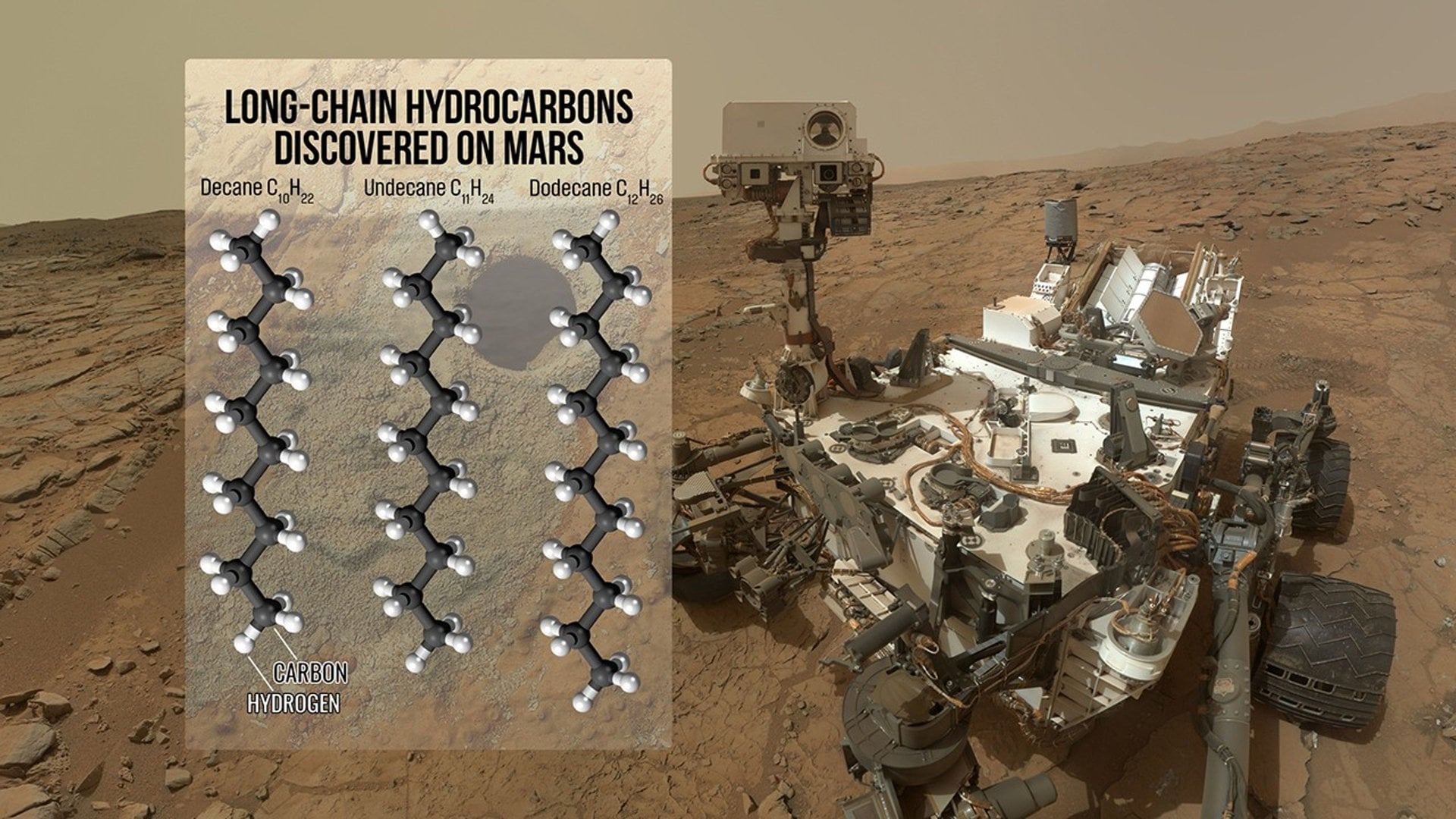
A little over a year ago, NASA released a statement on a find made by the Mars 2020 rover Perseverance as it continued to explore an ancient river outflow delta within Jezero Crater on Mars. It related to an unusual arrowhead-like rock NASA dubbed “Cheyava Falls”, and which showed both white veins of calcium sulphate – minerals that precipitate out of water – running across it, and tiny mineral “leopard spots”, whitish splotches ringed by black material.

These spots, together with black marks referred to as ”poppy seeds”, are common on Earth rocks when organic molecules react with hematite, or rusted iron, creating compounds that can power microbial life. “Cheyava Falls” was the first time such formations had been located and imaged on Mars, and marked the rock, roughly a metre in length and half a metre wide to become the target for more detailed study before the rover eventually moved on.

This study resulted in more discoveries hinting at the potential for organic processes to have perhaps once been at work within the rock, as I noted in Space Sunday: Mars Rocks and Space Taxis. However, the matter was complicated both because “leopard spots” can also be the result of an abiotic chemical reaction rather than the result of any organic interaction, and the further examination of the rock revealed the presence of olivine mineral.

These images provide details on the route taken by Perseverance as it investigated the outflow plain in Jezero Crater in mid-2024 and highlighting the location of “Cheyava Falls” within “Bright Angel”, together with other locations investigated by the rover. Credit: NASA/JPL / ASU / MSSS

The latter is no friend to organics, as it generally forms within magma at temperatures deadly to organic material. This suggest it and the phosphates and other organic-friendly minerals within the rock may have been deposited at temperatures which would have killed off any organics present long before they could have resulted in the “leopard spots” forming, leaving the latter’s formation purely a matter of inorganic reactions.

But the matter is complicated, and for all of its capabilities, the science laboratory aboard Perseverance is limited in how much it can do. What is really required is for the samples gathered from “Cheyava Falls” to be returned to Earth and subject to far more extensive study – something which in the current political climate in the United States, isn’t going to happen in the near-term.

Considerable caution needs to be taken when discussing matters of microbial life on Mars. The planet is a highly complex environment, and while there are many indicators that it may have once been a far warmer, wetter and cosier environment which may have formed a cradle for the basics of life, that period might also have been extremely brief in terms of the Mars’ very early history. And therein lies another twist with “Cheyava Falls”; the rock appears to have formed some time after that period in the planet’s history.

Captured on July 18th, 2024 (sol 1212 of the mission) using the WATSON imager aboard the NASA rover Perseverance, this image of the rock dubbed “Cheyava Falls” show to of the large white calcium sulphate veins running across the rock, and between them bands of material whose reddish colour indicates the presence of hematite, covered in millimetre-sized light patches surrounded by a thin ring of dark material, and referred to as “leopard spots”. Similar spots can form on sedimentary terrestrial rocks and are frequently an energy source for microbes. Also annotated is one of a number of nodules of pale green olivine. Credit: NASA/JPL / MSSS

If nothing else, the likes of ALH84001 – the meteorite fragment discovered in the Allen Hills of Antarctica in 1984 and shown to have originated on Mars – encourage a lot of caution is required when it comes to trying to determine whether or not something is indicative of organic interactions having once been present on Mars.

In that particular case, the team studying the fragment in 1996 reported they may have found trace evidence of past microscopic life from Mars. Unfortunately, their findings were over-amplified by an excited press to the point where even in the face of increasingly strong evidence that what they had discovered – what appeared to be tiny fossilised microbes embedded in the rock – was actually the result of entirely inorganic processes, members of the science team involved in the ALH84001 study became increasingly adamant they had for evidence of long-dead Martian microbes. It wasn’t until around 2022 that the debate over this piece of rock was apparently settled (see: Space Sunday: pebbles, ALH84001 and a supernova).

With this in mind, an international team set out to subject the data and images gathered from “Cheyava Falls” and its immediate surroundings, referred to as “Bright Angel”, and where other samples were taken for analysis by the rover, in an attempt to try to identify the processes at work which may have resulted in the formation of the “leopard spots” and “poppy seeds”. They published their findings on September 10th, 2025 – and those findings are potentially eyebrow-raising.

An artist’s rendering of the Mars 2020 rover Perseverance exploring and studying Jerzero Crater. Credit: NASA/JPL

On Earth, all living organisms obtain energy through oxidation-reduction (redox) reactions, the transfer of electron particles from chemicals known as reductants to compounds named oxidants. An example of this is mitochondria found in animal cells which transfer electrons from glucose (a reductant) to oxygen (an oxidant). Some rock dwelling bacteria use other kinds of organic compound instead of glucose, and ferric iron instead of oxygen.

Ferric iron can be similarly reduced, resulting in water-soluble ferrous iron, which can be leached away or reacts to form new, lighter-coloured minerals, resulting in the “leopard spot” deposits very similar to those found on “Cheyava Falls”. In particular, these latter reactions can result in two iron-rich minerals, vivianite (hydrated iron phosphate) and greigite (iron sulphide). Again, on Earth the formation both of these minerals can involve organic interactions with microbes – and both vivianite and greigite appear to be present within the “Cheyava Falls” samples analysed by Perseverance.

However, as noted, above “leopard spots” – and by extension vivianite and greigite – can be formed through purely aboitic reactions. The most common means for this occurs when rock containing them is formed, due to the transfer of electrons from any organic matter (which is not necessarily living organisms) trapped in the rock to ferric iron and sulphate. But this process requires very high temperatures in order to occur – and given the age of “Cheyava Falls”, the required temperatures were unlikely to have played a role in its formation. However, the presence of living microbes in the rock could result in the spots and the phosphate and sulphide minerals found within them.

Given this, the research team focused on trying to find non-biological interactions which might produce the minerals in question – and they were unable to do so.

The combination of these minerals, which appear to have formed by electron-transfer reactions between the sediment and organic matter, is a potential fingerprint for microbial life, which would use these reactions to produce energy for growth.

– NASA statement of the mineral composition found within samples of the “Cheyava Falls” rock

So, does this mean evidence of ancient microbes having once existed on Mars? Well – not necessarily; nor do the research team suggest it is. As they note in their paper, while no entirely satisfying non-biological explanation accounts for the full suite of observations made by Perseverance, it doesn’t mean that there isn’t one; it’s just that while the rover’s on-board analysis capabilities are extensive, they are also limited. In this case, those limits prevent the kind of in-depth examination and analysis of the “Cheyava Falls” rock sample which might definitively determine whether or not microbial interaction or some currently unidentified inorganic process is responsible for the deposits.

The only way either of these options might be identified is for the samples to be returned to Earth so they can be subjected to in-depth investigation. But again, as noted, that’s unlikely to happen any time soon. A major flaw with the Mars 2020 mission has always been that the samples it gathers can only be returned by a separate Mars Sample Return (MSR) mission. This has proven hard to put together thanks to the complexities of the mission being such that its design has cycled through several iterations and suffered spiralling costs, reaching US $11 billion by 2024 – with the timescales constantly being pushed back to the period 2035-40.

 The Rocket Lab Mars Sample Return mission concept would utilise three craft and require the Mars 2020 rover to deliver the samples directly to the lander / return vehicle – although the rover has already cached numerous sample tubes on the surface of Mars, possibly complicating sample selections. Credit: Rocket Lab

More recently, there have been more modest proposals put forward for the MSR mission, such as that from Peter Beck’s Rocket Lab, which offered a simplified approach to collecting the Perseverance samples in 2030/31 at  a cost capped at US $4 billion. However, that is currently off the table as the entire idea of any MSR project is currently facing cancellation under the Trump Administration’s proposed cuts to NASA’s 2026 budget. Whether it remains so has yet to be seen.

Following the publication of the new “Cheyava Falls” study, NASA acting Administrator, Sean Duffy, has voiced a belief MSR could be carried out “better” and “faster” than current proposals – but failed to offer examples of how. Further, it’s not clear if his comment was a genuine desire to retrieve the Perseverance samples or bluster in response to China’s Tianwen 3 mission. Slated for launch in 2028, this is intended to obtain its own samples from Mars and return them to Earth by 2031.

New Study Complicates Search for Life on Enceladus

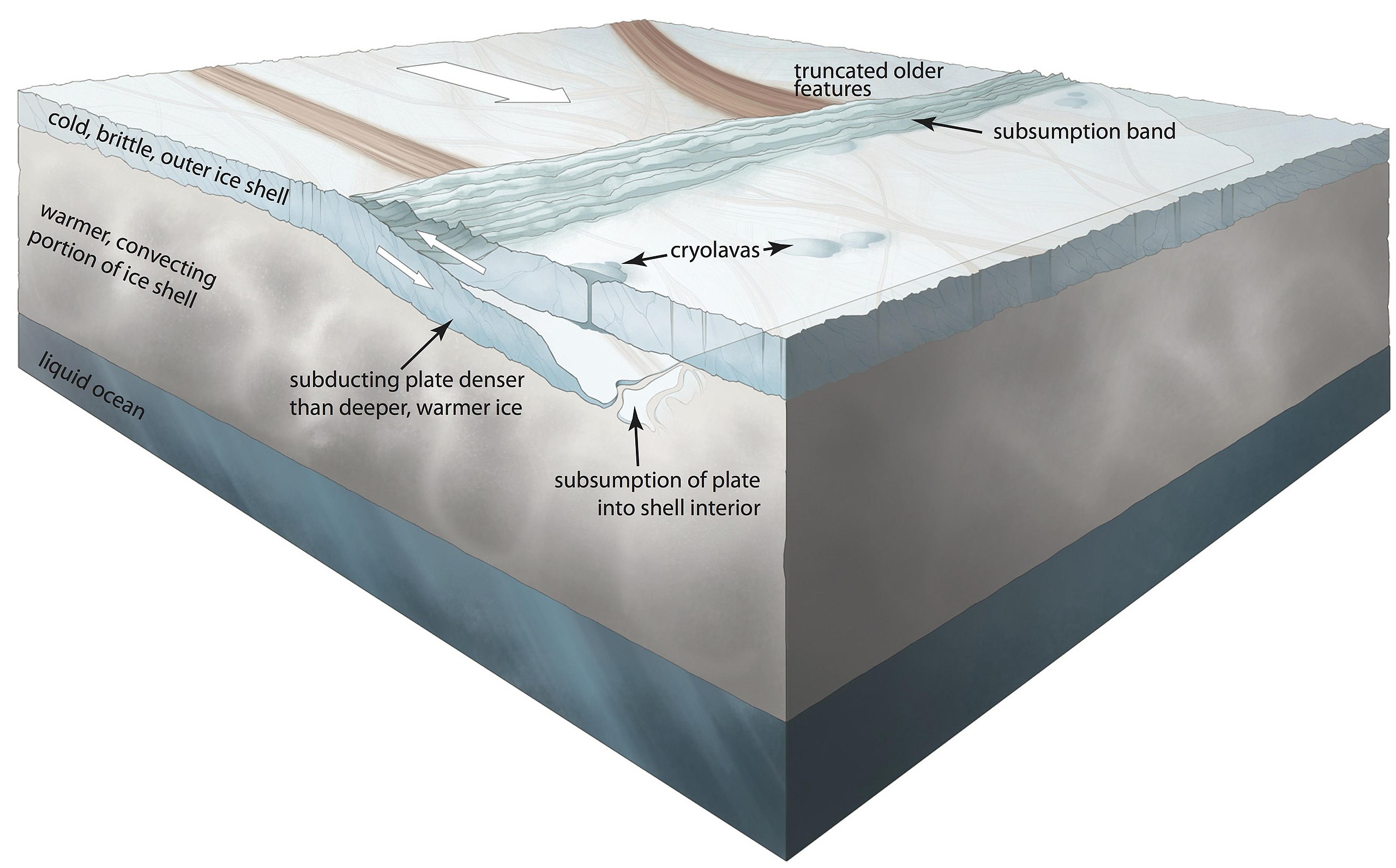
Enceladus, may be a small icy moon orbiting Saturn and just 500 km in diameter, but it has been the subject of intense speculation over the years as a potential location for life beyond Earth. Like Jupiter’s larger moon Europa, Enceladus has been imaged by space probes giving off plumes of water vapour through geysers, suggesting that under its icy surface it might have a liquid or semi-liquid ocean, warmed by tidal forces created by Saturn and its other moons.

These geysers have been shown to contain organic molecules, suggesting that the moon’s ocean might be habitable. However, new research presented during a planetary science conference hosted by Finland provides strong evidence for many of the organic molecules detected in the geysers are actually formed by interactions between radiation from Saturn’s magnetic field and the moon’s surface icy surface.

Specifically, a team based at Italy’s National Institute for Astrophysics recreated conditions on the surface of Enceladus in miniature using an ice chamber and freezing samples of water, carbon dioxide, methane and ammonia – all constituents found within the ice covering Enceladus – down to -253ºC. Each sample was then bombarded with high-energy “water-group ions,” the same charged particles trapped around Saturn that constantly irradiate Enceladus, with the interaction monitored using infra-red spectroscopy.

A dramatic plume sprays water ice and vapor from the south polar region of Saturn's moon Enceladus. Cassini's first hint of this plume came during the spacecraft's first close flyby of the icy moon on February 17, 2005. Credit: NASA/JPL / Space Science Institute
A dramatic chain of plumes sprays water ice and vapour from the south polar region of Saturn’s moon Enceladus. Credit: NASA/JPL / Space Science Institute

In all five cases, the samples outgassed carbon monoxide, cyanate, and ammonium in varying amounts. These are the exactly the same core compounds as detected within the water plumes of Enceladus as detected by NASA’s Cassini spacecraft in the early 2000s. Further, the five experiments all additionally produced more complex organics – carbamic acid, ammonium carbamate and potential amino acid precursors including methanol and ethanol, as well as molecules like acetylene, acetaldehyde and formamide – all of which were also detected in small quantities within the plumes escaping Enceladus, but which have never been recorded on the moon’s surface.

That all five samples produced broadly similar results in both basic and complex compounds can be taken as a strong indicator that the presence of those compounds within the Enceladus geysers could be as much due to the interaction of radiation from Saturn with the surface of the moon as much as anything organic that might be occurring in any ocean under the moon’s ice.

Although this doesn’t rule out the possibility that Enceladus’ ocean may be habitable, it does mean we need to be cautious in making that assumption just because of the composition of the plumes. [While] many of these products have not previously been detected on Enceladus’ surface, some have been detected in Enceladus’ plumes. This leads to questions about whether plume material is formed within the radiation-rich space environment or whether it originates in the subsurface ocean.

– Grace Richards, Enceladus study lead for EPSC-DPS2025.

The study also notes a further complication: the timescales necessary for radiation to drive these chemical reactions are comparable to how long ice remains exposed on Enceladus’ surface or in its plumes. This further blurs any ability to differentiate between any actual ocean-sourced organics with Enceladus’ plumes (if present) from those produced by the demonstrated surface-born interactions.

As with the “Cheyava Falls” rock samples, potentially the only way of really determining whether or not some of the organics in the geysers on Enceladus have a sub-surface / oceanic source is to go and collect samples. Again, this is not going to happen any time soon.

Currently, NASA has no current plans for a robotic surface mission to Enceladus;  while the European Space Agency has outlined a complex mission to explore several of Saturn’s moons – Titan, Rhea, Dione, Tethys, Enceladus and Mimas, and which will release a lander vehicle to the south polar region of Enceladus in order to study the geysers and collect samples for in-situ analysis. However, if approved, this mission will not take place until the 2050s. The same goes for a three-part mission outlined by China’s Deep Space Exploration Laboratory (DSEL) to specifically map the surface of Enceladus and use a lander / robot drilling system in an attempt to drill down 5 km through the moon’s ice and directly sample the moon’s ocean at the ice-ocean boundary and seek out potential biosignatures. As such, any answers on the potential habitability (or otherwise) of any potential ocean within Enceladus are going to be a long time coming.

Space Sunday: a test flight and a telescope

Starship IFT-10: the moment before splashdown, as seen from the buoy-mounted remote camera. Credit: SpaceX

On Wednesday, August 26th, 2025, SpaceX undertook the 10th integrated flight test (IFT) of its Starship / Super Heavy combination. Overall, the flight achieved all of its stated goals, which should be taken as a step forward – to a degree.

Those goals were broadly the same as the previous failed launches: place a Starship vehicle into a sub-orbital trajectory, carry out a deployment of eight Starlink satellite simulators, attempt a brief restart of one the vehicle’s Raptor engines and test a number of different materials for possible use as future heat shield elements to help protect a Starship vehicle through atmospheric (re-)entry.

The launch itself came at 23:30 UTC on August 26th, some two days later than planned, and following two scrubbed attempts. The first of these was due to an unspecified issue with ground systems, which prevented the original planned launch on August 24th. The second scrub came on August 25th, the result of poor weather around the Boca Chica launch facility and along the route of initial ascent.

While not a hindrance to this particular flight, both of these issues illustrated a weakness in the entire idea of “rapid reusability” for the Starship / Super Heavy, in which boosters and Starship craft are supposed to be turned around on the pad within hours following a flight, and then re-launched – an idea utterly dependent upon ground systems (and those on the vehicles) not having significant issues and the weather cooperating with the launch schedule 100% of the time.

Starship IFT-10 lift-off, August 26th, 2025. Credit: SpaceX

Anyway, on August 27th, everything came together and the stack of booster and ship lifted-off more-or less on time at 23:30 UTC. The initial ascent through Max-Q was largely smooth, although one of the booster’s 33 Raptor motors did fail a minute and a half into the flight – an event which did not impact the booster’s performance.

At 2 minutes 36 seconds, MECO (most engines cut-off) was reached, the two rings of Raptor engines on the booster shutting down, leaving only the gimballed three central motors running. Two seconds later, the six motors on the Starship ignited, and a hot-staging occurred, the Starship separating from the booster, the latter immediately vectoring away from the Starship in it “boost-back” burn. This is normally required to put the booster on a descent back towards the launch facility for capture by the launch tower. As no such capture was planned for this flight, the boost-back instead put the booster into a free-fall, engine-first drop back towards the Gulf of Mexico and a planned splashdown.

At 6 minutes 20 seconds after launch the booster performed a final landing burn. This comprised an initial firing of the inner 13 motors of of the booster before quickly cutting back to three motors. Normally, this would be the 3 centre engines on the booster, which can be gimballed to provide directional thrust.

IFT-10: the Super Heavy booster shuts down the last of its Raptor engines after hovering above the waters of the Gulf of Mexico. Credit: NASASpaceflight (not affiliated with NASA)

However, for this flight only two of the gimballed motors were used, together with one of the motors on the inner ring of 10 fixed engines. This was to test the booster’s ability to hold station and steer itself in the event of one of the three central motors being out-of-use during the final descent during an actual post-launch capture attempt. As a result, this final burn offered an impressive demonstration of the booster’s hover capability, as it came to a halt at around twice its length above the surface of the Gulf of Mexico. The motors were then shut down, leaving the booster to drop unpowered into the water, exploding on impact.

Following separation, the Starship vehicle continued on into its sub-orbital trajectory. Just under 19 minutes after launch, the payload slot designed specifically for Starlink deployments and of no use for anything else, cranked open successfully, allowing the deployment of the eight Starlink simulators to commence. The entire deployment of the 4 pairs of satellite simulators took some 7 minutes to complete from initial slot opening to slot closure.

IFT-10: Starlink v3 simulator deployment, showing a satellite simulator being ejected through the Starship’s payload slot (arrowed). Credit: SpaceX

The final element of the sub-orbital part of the flight was the re-lighting of a single Raptor motor. This was literally just a re-ignition and shutdown, shortly before the vehicle commenced it atmospheric re-entry. The latter utilised a much higher angle of attack that has been seen with previous flights. In part, this was to test whether such an approach would decrease the plasma flow over the forward aerodynamic flaps, which on previous flights have suffered major issues of burn-through and failure.

This, coupled with alterations made to the positioning of the forward flaps for the “Block 2” vehicle design, appeared to work; the forward flaps survived the re-entry period pretty much unscathed. However, the choice angle of attack exposed the stern of the vehicle – the engine skirt and stern flaps – to greater dynamic forces and plasma flow, and as re-entry proper commenced, there was a sudden energetic event within the engine bay. The exact cause of the event is unclear at the time of writing, but it resulted in part of the engine skirt being blown out and the port side aft aerodynamic flap suffering damage.

IFT-10: the moment of the energetic event within the Starship vehicle’s engine skirt. Credit: SpaceX

As a result, the affected flap suffered a degree of burn-through that might not otherwise have occurred. Fortunately, this did not result in a complete failure with the flap, or affect the vehicle’s control, but the overall event could be indicative of potential vulnerabilities related to high angle of attack re-entry profiles and the need for SpaceX to further refine re-entry parameters to avoid excessive damage at either end of the ship.

That said, the vehicle did go on to complete its descent through the atmosphere, the aerodynamic flaps fully able to maintain the vehicle’s attitude and pitch through to the final kilometre of the descent. At this point the flaps folded back against the vehicle’s hull as the centre motors were re-lit and the vehicle performed a “flip up” manoeuvre, pointing its motors towards the sea as it performed a powered splashdown, prior to toppling over and exploding.

A view of the disturbed plasma flow at the back of the port-side aft aerodynamic flap and the start of burn-through on the flap. Credit: Space Zone, utilising a video capture of IFT-10 from SpaceX

These final moments of the flight were captured from a remotely operated camera mounted on a buoy deployed by SpaceX at the target landing site – the Starship vehicle actually coming down within metres of its intended splashdown point. This footage revealed strange discolouring across the vehicle’s heat shield: white around the nose and payload bay and vivid orange around the cylinder of the propellant tanks. SpaceX later indicated that both were the result of testing different materials or possible future heat shield use.

In the case of the white decolourisation, it was stated that some of the alternate material tiles had failed to prevent the insulation between them and the hull of the vehicle form becoming  heated to the point where it melted and flowed out over the heat shield. The orange was later blamed on a single metal tile fitted high on the vehicle’s main cylinder, which was super-heated by the nearby re-entry plasma, spreading oxidised metal particles over the heat shield.

Whilst the flight did meet all of its primary goals, IFT-10 is, in reality, something of a qualified success, further demonstrating the continued prioritisation of SpaceX goals – developing a system for deploying Starlink satellites over meeting contracted obligations for NASA: namely developing and prototyping the Human Landing System (HLS) required by the Artemis programme and moving forward with the not insignificant issue of large-scale cryogenic propellants between orbiting Starship vehicles, again a vital requirement for Artemis 3 and Artemis 4. Of the latter, the SpaceX CEO will only commit to stating the company will solve this “eventually” – despite the fact the company is expected to have HLS flight-tested and ready for Artemis 3 and to have solved the propellant transfer issue within the next two years if NASA is to avoid further delays to Artemis.

Nancy Grace Roman Passes Test Deployments

NASA’s latest space telescope – the infra-red Nancy Grace Roman Space Telescope (shortened as the Roman Space Telescope or RST) took two more significant steps forward in early August when the Solar Array Sun Shield (SASS) that will both provide the telescope with power and shield its electronics and instruments from excess solar heat, together with the Deployable Aperture Cover (DAC), which both protects the telescope primary optics aperture during launch and then shade the aperture for receiving too much sunlight and spoiling observations.

The tests were carried out on August 7th, and 8th, respectively at NASA’s Goddard Space Centre, where the telescope has been undergoing integration and testing. They were carried out using a rig able to simulate the microgravity conditions the telescope will be in during an actual deployment.

The first test was to confirm four of the telescopes six solar panels would fold out from their stowed launch positions on either side of telescope’s body. Spring-loaded, each panel unfolded over a 30-second period after being triggered by non-explosive actuators. To help dampen the effect of each panel’s deployment, there was a 30-second pause between each deployment, after which, the panels were examined by engineers to confirm the panels had correctly deployed and ready for operation.

The four outer panels of the Roman Space Telescope’s Solar Array Sun Shield (SASS) fully deployed alongside the centre two panels mounted along  the back of the telescope. Credit: NASA Goddard / Sophia Roberts and Scott Wiessinger

Following this, the DAC’s deployment mechanism was successfully tested, the cover successfully unfolding to provide the noted shadow protection over the optic’s aperture to prevent sunlight entering it, and must do so without itself snagging or blocking the telescope’s field of view.

Intended to operate in a halo orbit around the Sun-Earth L2 position, the 4-tonne telescope has a stated primary mission encompassing a search for extra-solar planets using gravitational microlensing;  probing the chronology of the universe and growth of cosmic structure with the end goals of measuring the effects of dark energy, the consistency of general relativity, and the curvature of space-time.

A further aspect of RST’s mission will be as part of a growing network of ground and space-based observatories tracking and understanding potentially dangerous asteroids and comets that could threaten our planet. From its Sun-Earth L2 halo orbit, the telescope will use its sensitive near infrared vision to study near Earth objects (NEOs), the asteroids and comets whose orbits bring them close to our planet. Not only will RST be able to identify NEO for tracking by other telescopes and observatories, it will be able to determine their size, shape, composition and exact orbital paths, allowing the potential for a possible collision with Earth and the likely results to be fully assessed. This aspect of the mission will particularly see the RST work in collaboration with another new facility – the Earth-based Vera C. Rubin Observatory in Chile, which has also featured in these pages.


Space Sunday: Moon missions and interstellar visitors

The Lanyue lunar lander test article undergoing a test of its propulsion systems whilst suspended from a special rig. Credit: CNSA

While the US-led Project Artemis programme is suffering continued delays in its attempt to return humans to the Moon – the Artemis 2 lunar orbital mission originally set for late 2024 being delayed until April 2026, while Artemis 3, the first mission to land on the Moon appears increasingly unlikely to meet its planned mid-2027 launch date due a number of reasons, perhaps most notably the current non-existence of the SpaceX lunar landing vehicle and much of the technology required for it to actually work – China’s project to deliver humans to the Moon and establish an operational base there is continues to roll along at a pace suggesting it will be more than ready to meet its initial goal of delivering two taikonauts to the surface of the Moon by 2030.

As I’ve previously covered in this column, China’s route to the Moon – managed by the China National Space Agency (CNSA) – is a lot less technically complicated than Artemis. In some ways it harkens back to NASA’s own Project Apollo of the 1960s and 1970s; at its core, it relies on sending two pairs of vehicles directly to the Moon. The first is the Mengzhou (“Dream Vessel”) crew vehicle, China’s “next generation” vehicle intended to both ferry crews to and from the Tiangong space station (up to 6 at a time) and to and from the Moon (3 at a time). Supported by a service module, Mengzhou is at an advanced stage of development and testing, and could start crewed flights to orbit in 2027.

The other half of the equation is the lunar lander. Called Lanyue (“embracing the Moon”) takes its cues from the Apollo Lunar Module. Designed to carry a crew of two to and from the lunar surface, Lanyue is a two-stage vehicle comprising the actual lander together with a propulsion module.

Models of the Mengzhou crewed vehicle and its service module with its solar panels folded (l), and the Lanyue lunar lander sitting atop of the propulsion module module intended to propel the lander to the Moon and help it during its initial descent to the lunar surface, after which it will be jettisoned and allowed to crash on the Moon. Credit: CNSA

For lunar missions both Mengzhou and Lanyue are designed to be launched separately and directly to the Moon by China’s in-development Long March 10 booster, with the two craft docking in lunar orbit to allow the transfer of two of the crew to the lander, which will then be assisted in its lunar descent by the propulsion module used to power it to the Moon, before the lander separates to make its powered landing.

This week CNSA took a further significant step towards the goal of a human landing on the Moon by 2030 with the first powered test of Lanyue’s descent motors using a full-scale structural test article of the lander. Whilst only 30 seconds in length, the tethered test successfully demonstrated the integration and performance of key systems, simulating descent, guidance, control and engine shutdown, all of which are critical to undertaking a successful lunar landing.

The full sized test article was hoisted into the air within a special test stand which then lowered the vehicle at a rate consistent with a fall towards the Moon, the test article firing its primary braking / propulsion motors and using its attitude control thrusters, allowing engineers to assess the effectiveness of both systems in maintaining vehicle control. The test concluded with a verification of the craft’s landing and take-off systems and lunar surface contact propulsion shutdown procedures.

For our manned space missions, we must ensure that astronauts land on the lunar surface very smoothly, which necessitates high standards for the lander’s cushioning and performance. Every bit of weight has to play a role in several functions, so we have to achieve ultimate in integrated design and lightweight construction.

– Huang Zhen China National Space Agency (CNSA)

Lanyue still has a multitude of tests to undergo, but given the relatively short development time frame and with several test articles and prototypes already undergoing  tests, including simulations of launch vibrations and stresses on the craft, investigations into the craft’s response to the thermal environment of cislunar space, it is not unfair to say its overall development is fairly advanced, potentially putting that “by 2030” deadline well within reach.

Artemis 2 Update

Despite its delays in terms of its original timescales as noted above, Artemis 2 is making progress. The Orion Multi-Purpose Crew Vehicle (MPCV), mated to its European-built Service Module (ESM) was transferred from NASA’s Multi-Payload Processing Facility (MPPF) to the Launch Abort System Facility (LASF).

Whilst at the MPPF, Orion and its Service Module were loaded with propellants, high-pressure gases, coolant and other essential fuels for its upcoming flight. In addition, the crew for Artemis 2 – NASA astronauts Reid Wiseman, Victor Glover and Christina Koch and Canadian Space Agency (CSA) astronaut Jeremy Hansen – carried out the first on-board tests of their flight pressure suits (aka the Orion Crew Survival System suits) with Orion’s life support and communications systems for a variety of simulated ground and flight conditions.

The Artemis 2 Orion vehicle and its European Service Module atop a test rig within NASA’s MPPF at Kennedy Space Centre. Credit: NASA / Anthony Leone

Now it is at the LASF, Orion will be mated to its 13.4-metre launch abort system tower. This is the system which tops the SLS and Orion stack during launch and the initial ascent to orbit. It is designed to propel the crew capsule away from the launch vehicle in the event of an emergency, and steer the capsule from any potential danger, allowing the crew to return to Earth under the Orion’s parachute system.

Once the installation of the Launch Abort System is complete, Orion will be moved to the Vehicle Assembly Building (VAB), where it will be stacked atop its Space Launch System (SLS) launch vehicle. The rocket itself is currently going through its final assembly within the VAB. Once Orion is mated to it, the two vehicles will go through a series of final integration tests in readiness for their launch.

The Artemis 2 Orion vehicle and its ESM, both now shrouded in their launch shrouds, arrive at NASA’s LASF where the vehicles launch abort system will be installed. Credit: NASA

The Artemis 2 mission is currently scheduled for a no later than April 2026 launch date, and will comprise six key phases:

  • Launch to a Low-Earth orbit for initial vehicle check-out on arrival in orbit prior to an orbital boost.
  • 24-hour eccentric orbit with an apogee above that of typical communications satellites, where further vehicle check-outs are performed and proximity operations with the (detached) upper stage of the SLS launch vehicle.
  • TLI (trans-lunar injection) – firing the service module’s main engines to put it on a course for a Moon rendezvous.
  • Lunar fly-by – passing around the Moon with a closest approach of around 7,400 km, during which the crew will continue to monitor and test Orion’s systems.
  • Earth return trajectory – Orion will use the Moon’s gravity to swing it into a free-return trajectory to Earth.
  • Re-entry and splashdown in the Pacific Ocean.

In all, the mission is expected to last some 10 days.

Hubble Images 3I/ATLAS – and guess what? It is a Comet

A couple of Space Sundays back, I wrote about 3I/ATLAS, the third known interstellar traveller to pass through our solar system, and the (frankly silly) idea that that it is an alien probe, possibly sent here on a spy mission.

In that piece (see: Space Sunday: daft alien theories and a space shuttle) I noted that some of the claims about the object being “alien technology” were due to the fact that as an interstellar comet (as initial analysis suggested was the case), it “had no tail”; this despite the fact the object was already developing a gaseous cloud of ejected dust as it started to get warmed by the Sun.

Well, guess what? As it continues to close on Sun in is inward journey through the solar system, 3I/ATLAS has started to develop a tail – and it has been imaged by the Hubble Space Telescope. Given the images were captured at a time when 3I/ATLAS was 3.8 AU from the Sun – some four times the average distance between Earth and the Sun – the fact that it is starting to evidence a tail indicates it is rapidly becoming active under the Sun’s influence.

Tails generally form on comets as they close on the Sun, when the heat and energy of the latter directly affects the surface of the latter, causing it to outgas volatiles – dust, water vapour, etc., – in sufficient quantities that they are caught in the solar wind to form a trail of matter pointing away from the Sun.

Given 3I/ATLAS is still a long way from the Sun, to see it start to form a tail of outgassed material – even if relatively weak in visual terms – would suggest that it has a lot of volatile materials within it which are already being dramatically affected by the Sun’s energy. What’s more, it is entirely possible that this tail will become more pronounced as the object continues to approach the Sun and reaches perihelion.

Image of 3I/ATLAS captured by the Hubble Space Telescope’s Wide Field Camera on July21st, 2025. The interplanetary comet is enshrouded by dust, making it highly reflective, the tail can be seen to the right. Credit: NASA/ESA

However, not only does the appearance of this tail on 3I/ATLAS further undermine claims that it is “alien technology”, it offers a means for astronomers to better understand its composition and likely size. Using Hubble’s exceptional resolution, a research team from UCLA led by David Jewitt has been able to estimate how much material 3I/ATLAS is losing now, putting the amount at between 6 and 60 kilos per second at its current distance from the Sun – or roughly the amount of a small car even few minutes – a not significant amount.

The team also attempted to estimate the likely size of the nucleus of the object; no easy task, given the surrounding cloud of outgassed dust. To achieve this, they instead analysed the brightness distribution of the surrounding dust cloud (coma), and concluded 3I/ATLAS has a likely less than 2.8 km across, assuming it reflects only 4% of the light that hits it (similar to charcoal), but unlikely to be less than 0.32 km in diameter.

This size constraint is crucial because it helps astronomers understand the object’s composition and history. Different materials require different amounts of solar heating to begin sublimating, so by observing when and how vigorously 3I/ATLAS becomes active, it’s possible to make educated guesses about what it’s made of. Further, through this analysis of the Hubble images and data, it is possible for astronomers to gain insight into the nature of 3I/ATLAS, and by extension, the stellar system from which it originated, as objects like 3I/ATLAS carry with them the chemical signatures and physical characteristics shaped by alien environments billions of kilometres away – although sadly, it will be extremely difficult to determine where the object actually originated.

Space Sunday: In memory of James A. Lovell

Jim Lovell in a cropped version of his 1969 official NASA portrait

On Friday, August 8th, NASA confirmed the passing of James A. Lovell, who alongside the crew of Apollo 11, could well be the most famous of the Apollo astronauts. During his career at NASA he flew into space fours times and to the Moon twice – although he was destined to never set foot on the latter, despite being a mission commander.

Born in Cleveland, Ohio on March 25th, 1928, James Arthur Lovell Jr., was the only child of James Lovell Snr., a Canadian expatriate, and Blanche Lovell (née Masek), who was of Czech descent. Following the death of his father in a car accident in 1933, James and his mother moved to Milwaukee, Wisconsin, where he developed an interest in aircraft and rocketry as a teenager. After graduating high school, Lovell enrolled in the US Navy’s “Flying Midshipman” programme, which enabled him to attend the University of Wisconsin and study engineering – something he could not otherwise have been able to afford. As his Navy stipend was fairly meagre, he supplemented his income working a local restaurant as a busboy and wishing dishes.

In 1948, Lovell’s hoped-for career as a potential naval aviator almost came to an end when the Navy announced it was cutting back on the number of students being accepted through the “Flying Midshipman” programme. However, with the aid of local Congressman John C. Brophy, Lovell was able to turn this downturn in his career into a positive, by being accepted into the United States Naval Academy, Annapolis, where he was able to both continue his studies and secure himself a US Navy commission upon his graduation.

This happened in 1952, with Lovell gaining a Bachelor of Science degree and a US Navy commission as an ensign. He was then selected for aviation training. However, prior to commencing flight training, he married his long-term sweetheart, Marilyn Lillie Gerlach, who had transferred to George Washington University in Washington, D.C., so she could be near him while he was at Annapolis.

Jim and Marilyn Lovell, circa 1965. Credit: unknown

In February 1954, Lovell completed his flight training and was assigned as a night fighter pilot operating out of Virginia, prior to being moved to the aircraft carrier USS Shangri-La during her third commissioning as US Navy fleet carrier. Sailing in the western Pacific and completing 107 carrier sorties, Lovell was again reassigned in 1956, this time to provide transition training for pilots moving over to the new generation of Navy jets entering service.

This work qualified Lovell for selection as a trainee test pilot in 1958, and he joined a class with included future fellow astronauts Walter “Wally” Schirra Jr and Charles “Pete” Conrad Jr. After six months of training, Lovell graduated at the top of the class – which should have assured him a role as a test pilot. Instead, he found himself pushed into Electronics Testing, and assigned to work on airborne radar systems.

This prompted him to join Schirra and Conrad in applying to join NASA’s first astronaut intake, the three being part of a batch of 110 test pilots initially selected for consideration as potential astronauts. Ultimately, Schirra was the only one of the three to be selected to become one of the Group One Mercury Seven astronauts; Conrad blew his chances by rebelling against a number of the psychological tests, finding them objectionable, whilst Lovell missed out when a temporarily high bilirubin count stopped his selection.

Returning to naval duties, Lovell became the Navy’s McDonnell Douglas F-4 Phantom II programme manager, followed by a stint as a flight instructor and a safety engineering officer. Then in 1962, NASA started the selection process for the Group Two astronaut intake (the so-called “New Nine”, as the media would eventually dub the nine selected by NASA). Both Lovell and Conrad re-applied, the latter a lot more contrite this time around, together with John Young, who had served under Lovell on the F-4 Phantom 2 programme.

Lovell was informed he has been selected as one of the “New Nine” in September 1962. The following month, he and his family moved to the Clear Lake City area near Houston, Texas, where the new Manned Spaceflight Centre was being built.

NASA’s “New Nine” (officially the Group Two astronaut intake) in 1962, with Jim Lovell in the centre of the standing row. Flanking Lovell to the left and right respectively (and from the left) are: Elliott M. See, James A. McDivitt, Edward H. White II and Thomas P. Stafford. In the front row (left to right) are: Charles Conrad, Jr, Frank Borman, Neil Armstrong and John Young. Credit: NASA

Following initial training, carried out alongside the original Mercury Seven, Lovell was selected as backup pilot for the Gemini 4 mission, with Frank Borman, another of the “New Nine” selected as backup commander. This placed Borman and Lovell in line to fly the Gemini 7 mission as the prime crew.

Gemini 7 launched on December 4th, 1965, and would become the longest space mission undertaken until Soyuz 9 in 1970. In all, Gemini 7 lasted 14 days and completed 206 orbits of Earth. It was primarily intended to solve some of the problems of long-duration space flight, such as stowage of waste and testing a new lightweight spacesuit which might be used for both Gemini and Apollo, but which both men found to be impractical.

One significant “late change” to the mission came in the last two months prior to launch. Gemini 6, with “Wally” Schirra and Thomas Stafford, had been planned to take place in October 1965. The goal of that mission was to perform a series of dockings with an Agena target vehicle. However the mission was scrubbed when the Agena for the mission suffered a catastrophic failure following separation from its launch booster, destroying itself. As a result, Gemini 6 was initially cancelled.

Gemini 7, with Lovell and Borman aboard, as seen from Gemini 6A, and the later closes to a distance of some 7 metres. Credit: NASA (digitally enhanced to remove light reflection from the cockpit window of Gemini 6A)

However, such was the importance of on-orbit rendezvous and docking to the Apollo programme, the decision was made to re-designate Gemini 6 as Gemini 6A, and launch it eight days after Gemini 7. This allowed Schirra and Stafford to perform an on-orbit rendezvous (but no docking) with Gemini 7, that latter remaining a passive target for Gemini 6A whilst Schirra and Stafford manoeuvred their vehicle.

Following their launch, Borman Lovell performed their own rendezvous manoeuvre: following separation from their Titan II launch vehicle, Borman turned their craft around and flew in formation with the expended Titan II for fifteen minutes before moving away to start their mission proper. This included each man having the opportunity to doff his spacesuit and test working in shirt sleeves in the vehicle, and then donning it in a space little bigger than the front seat of a car. These tests greatly contributed to Apollo crews being able to fly to the Moon and back in their shirt sleeves, only wearing their pressure suits during critical phases of the mission, Lovell and Borman finding the revised Gemini spacesuit cumbersome, and long-term work inside a spacecraft whilst wearing a pressure suit too restrictive and uncomfortable.

Another view of Gemini 7 from Gemini 6A, at a distance of around four metres, as the two craft perform a station-keeping exercise. Credit: NASA

The rendezvous with Gemini 6A took place on December 15th, 1965, same day as Gemini 6A launched. At the time, Gemini 7 was “parked” in a circular 300 km orbit, allowing Gemini 6A to “chase” it, with Schirra allowing his vehicle’s autopilot to carry out some of the manoeuvring before taking over and bringing Gemini 6A to some 40 metres separation from Gemini 7. For the next 270 minutes Gemini 6A performed a series of rendezvous manoeuvres with Borman and Lovell, sometimes coming as close as 30 centimetres (1 foot) of Gemini 7. Station keeping between the two craft was so good that during one such manoeuvre, Gemini 6A was able to remain in place alongside  Gemini 7 for 20 minutes with any need for control inputs.

Following completion of these tests, Gemini 6A returned to Earth the day after its launch. Gemini 7, meanwhile, continued on what Borman and Lovell would later describe as the “boring” part of the mission, prior to re-entry, splashdown and recovery on December 18th.

Gemini 7 set Lovell up to command the final Gemini mission in the programme, Gemini 12, with one Edwin E “Buzz” Aldrin Jr., as his pilot. Lovell would later describe the mission as being a means to “catch all those items that were not caught on previous flights.”  One of these was to need to carry out a series of EVA tests – with Aldrin, as pilot, selected to leave the confines of the vehicle’s cramped cabin and carry them out.

Similar EVAs had been attempted in other Gemini flights, but none had really succeeded for a variety of reasons. For Gemini 12, equipment – notably tethering restraints on the Gemini vehicle – had been greatly improved, and a new underwater training capability had been introduced, allowing Aldrin to gain familiarity with being weightless through neutral buoyancy ahead of the mission – something which would go on to be a staple of human spaceflight training at NASA.

A shorter 4-day duration mission, Gemini 12 lifted-off on November 11th, 1966. The following day Lovell and Aldrin completed a rendezvous and docking with the Agena target vehicle, launched just 1 hour and 39 minutes ahead of them. Aldrin completed a 2 hour 20 minute EVA whilst the Gemini spacecraft was docked with its Agena target vehicle, successfully meeting all of his objectives, and the two men carried out a series 14 scientific experiments prior to returning to Earth on November 16th, 1966.

“Buzz” Aldrin (left, with cap) and Jim Lovell celebrate the end of their Gemini 12 mission aboard the recovery vessel, USS Wasp. Credit: unknown

Following the tragedy of the Apollo 1 fire, the Apollo Command Module went through a significant re-design, including the hatch mechanism which had effectively trapped the Apollo 1 crew in their burning vehicle, leading to their deaths. As a result, the updated vehicle had to go through a series of ground-based qualification tests. One of these tests formed Lovell’s next “mission” – spending 48 hours bobbing around the Gulf of Mexico in Command Module test article CM-007A along with Stuart Roosa and Charles Duke Jr , testing its seaworthiness, the efficiency of its floatation devices and dealing with any potential small leaks of seawater entering the vehicle.

With the Apollo programme attempting to get back on track after Apollo 1, Lovell was assigned as back-up Command Module Pilot (CMP) for Apollo 9. He was then promoted to the prime crew when Michael Collins had to be removed as prime CMP so he could receive surgery for a spinal bone spur. This move reunited Lovell with Frank Borman, Apollo 9’s commander.

Apollo 9 was intended to be the second half of a pair of missions designed the test the the Apollo Lunar Module (LM), Apollo 8 doing so in a low Earth orbit, and Apollo 9 in a high-perigee orbit. However, with work on the Lunar Module running well behind schedule, the decision was made to scrap the high-perigee test mission, and instead carry out one low orbit test flight of the Lunar Module. To achieve this, the Apollo 8 and Apollo 9 crews were swapped. The Apollo 9 crew would now fly the LM tests, delayed to allow time for the Lunar Module to be completed;  Borman and his crew, as Apollo 8, would fly a mission to and around the Moon as a part of a final check-out of the Command and Service modules on long duration flights.
Lovell (right) poses with Frank Borman (left) and William Anders at the hatch  of their Apollo 8 Command Module, ahead of that mission. Credit: NASA

Launched on December 21st, 1968, Apollo 8 was a landmark mission in a number of respects:

  • The first crewed flight of the Saturn V launch system.
  • The first crewed mission to ever leave low Earth orbit and enter he gravitational sphere of influence of another celestial body.
  • The first crewed mission to enter lunar orbit.
  • The first humans to be entirely cut off from Earth as their vehicle passed around the Moon.
  • The first humans ever to witness “earthrise” – the Earth rising over the limb of the Moon, something almost impossible to see from the surface of the Moon where the Earth is either above or below the horizon.

The “earthrise” phenomenon was first witnessed as Apollo 8 came around from behind the Moon at the end of its fourth orbit. All three men were busy with various observations, with Anders taking black and white photos of the lunar surface when he happened to look up, and gasp in surprise.

Oh my God, look at that picture over there! There’s the Earth coming up. Wow, is that pretty! … You got a colour film, Jim? Hand me a roll of colour, quick, would you?

– William Anders, Apollo 8, on witnessing “Earthrise” for the first time

Taking a colour film cassette from Lovell, Ander loaded it into his camera and took the picture destined to become famous the world over, later selected by Life magazine as one of its hundred photos of the 20th century.

Earthrise: the shot that enraptured the world. Credit: William Anders / NASA

Entering lunar orbit, and after checking the status of the spacecraft following the orbital insertion burn of the Service Module’s main engine, Lovell provided the very first close-up description of the lunar surface as seen with unaided human eyes.

The Moon is essentially grey, no colour; looks like plaster of Paris or sort of a greyish beach sand. We can see quite a bit of detail. The Sea of Fertility doesn’t stand out as well here as it does back on Earth. There’s not as much contrast between that and the surrounding craters. The craters are all rounded off. There’s quite a few of them, some of them are newer. Many of them look like—especially the round ones—look like hit by meteorites or projectiles of some sort. Langrenus is quite a huge crater; it’s got a central cone to it. The walls of the crater are terraced, about six or seven different terraces on the way down.

–  Jim Lovell, Apollo 8, offering the first close-up description of the Moon

As they rounded the Moon for the ninth of ten times, on Christmas Day 1968, the crew of Apollo 8 made a second television broadcast to Earth. It concluded with each of the three men reading verses from the Book of Genesis describing the creation of the Earth; given what they had witnessed with “earthrise” the passages seemed particularly fitting.

During their trip home, the crew were informed they had presents hidden aware in their vehicle, courtesy of Chief of the Astronaut Office, Donald “Deke” Slayton: a Christmas dinner with all the trimmings, all specially packed together with a miniature bottle of brandy for each man. Borman ordered the bottles to remain sealed until after splashdown to avoid any risk of alcoholic impairment during re-entry and splashdown – all of which occurred without incident on December 27th, 1968. However, no warning was required: all three men kept the bottles unopened as keepsakes for years.

As prime crew for Apollo 8, Lovell was automatically selected as commander on the back-up crew for Apollo 11. Under the crew rotation rules established by “Deke” Slayton, this assignment in turn meant Lovell would command Apollo 14.

However, fate again intervened, as it had in so many ways during Lovell’s career. Apollo 13 was to have been commanded by Alan Shepard, marking his return to flight status after being grounded for several years. However, Slayton’s boss, George Mueller, Director of Manned Space Flight, refused to sign-off on Shepard’s selection for the mission, believing Shepard had not had sufficient training. Because of this, Slayton asked Lovell if he and his crew of Thomas Kenneth “Ken” Mattingly (who would later be replaced by John “Jack” L. Swigert Jr.) and Fred Haise Jr., would be willing to swap seats with Shepard and his crew, to give the latter more training time.

Lovell’s response to the request was to become one of the greatest unintentional understatements of the 20th Century: “Sure, why not? What could possibly be the difference between Apollo 13 and Apollo 14?”

As well all know now, Apollo 13 was to have quite a lot of difference between it and Apollo 14 – and any other Apollo mission NASA flew, becoming as it did potentially the most famous Apollo lunar mission alongside that of Apollo 11, but for very different reasons.

“We have a problem here.” – CMP  Jack Swigert.
“This is Houston, say again please,” – CapCom Jack Lousma.
“Houston, we’ve had a problem,”- CDR Jim  Lovell.

– From the communications between the Apollo 13 command module and Mission Control, immediately following the explosion within the oxygen tanks of Apollo 13’s Service Module

The wreck of the service module after it had been jettisoned. The blown-out panel and extensive damage to the fuel cell rack and oxygen tank shelf below then can be seen. Credit: NASA

The safe recovery of the Apollo 13 crew following an explosion within the Service Module’s oxygen tank 2 is the stuff of legend so much so, that rather than dwelling on it here, I’ll refer readers to my article on the occasion of its 50th anniversary –Space Sunday: Apollo 13, 50 years on.

Apollo 13’s flight trajectory would result in Lovell, Haise, and Swigert gaining the record for the farthest distance that humans have ever travelled from Earth to date. It also made Lovell one of only three Apollo astronauts, along with John Young and Eugene Cernan, to fly to the Moon twice – although unlike Cernan and Young, he was never destined to set foot on its surface. In all, he accrued 715 hours and 5 minutes in space flights on his Gemini and Apollo flights, a personal record that stood until the Skylab 3 mission in 1973.

Jim Lovell, in a cameo role and US Navy whites, greets “himself” (in the form of Tom Hanks) after the recovery of the Apollo 13 crew by the USS Yorktown in Ron Howards 1995 film, Apollo 13. Credit: Universal Studios

Following his retirement from NASA in 1973, Lovell had a successful business career, taking on both CEO and President positions for a number  of corporations, and serving on the board of directors of several more. In 1999, he and his family opened Lovell’s of Lake Forest, a restaurant in Lake Forest, Illinois, where the family settled. The head chef was James “Jay” Lovell, his oldest son, who took over the business in 2006, and ran it through until in closed in 2014.

Lovell and his wife Marilyn remained married through until her passing in August 2023 at the age of 93. Mount Marilyn in the Montes Secchi  was named in her honour by Lovell in during the Apollo 8 mission, with the name later officially adopted. Lovell has a small crater on the lunar farside named for him.

Lovell passed away at the age of 97 at his home in Lake Forest, Illinois. He is survived by his four children, Barbara, “Jay”, Susan, and Jeffrey.

Space Sunday: daft alien theories and a space shuttle

A “overhead” view of the Milky Way galaxy showing the estimated orbits of both our Sun (yellow dots) and the 3I/ATLAS comet (red dots) as both orbit around the galaxy’s centre. Credit: M. Hopkins, Ōtautahi-University of Oxford team

Well, that didn’t take long. A couple of weeks back I reported on 3I/ATLAS, the latest interstellar wanderer to be located passing through the solar system after 1I/ʻOumuamua (discovered in October 2017) and 2I/Borisov (discovered in August 2019), and as with both of those events, theories are surfacing that 3I/ATLAS is actually alien technology.

Most of this speculation around is easy to ignore as it has bubbled up within the morass of conspiracy theories and bots-gone-wild vacuum once called “Twitter”. These “ideas” include notions that the alien intelligences behind these “probes” are actually trying to study / bombard Mars, simply because two out of the three objects (2I/Borisov and 3I/ATLAS) happen to (have) pass(ed) somewhat close to Mars). There’s also the claim that the object “must” be of alien origin because it “comes unusually close to Venus, Mars and Jupiter”.

An animation of the hyperbolic trajectory of 3I/ATLAS (blue) through the Solar System, with orbits of planets shown. Credit: Catalina Sky Survey.

Similarly, the idea that it is a comet fragment has been pooh-poohed by the conspiracy theorists on the grounds “it has no tail” – despite the fact that the even in the blurred images thus far captured of the object indicate it is surrounded by a cloud of outgassed material, albeit it one without major volatiles – as yet.

However, the reason most of the claims are now being made about 3I/ATLAS relate to a paper co-authored by “noted Harvard astronomer” Avi Loeb, and which appeared on the (non-peer reviewed) preprint server arXiv. In it, Loeb and his co-authors claim – without substantive evidence – that it could be alien tech on a potentially hostile mission to spy on Earth.

An image of 3I/ATLAS show the bright nucleus and surround haze of gas and dusty. Credit: International Gemini Observatory/NOIRLab/NSF/AURA/K. Meech with image processing by NSF NOIRLab

This is not the first time Loeb has made such claims: he did pretty much the same when 1I/ʻOumuamua passed through the solar system. He also led a 2023 expedition to the Pacific Ocean that claimed to have recovered pieces of possible alien technology left by an unconfirmed “interstellar meteorite” – claims which have been largely debunked since.

One of the biggest issues with this theory – outside of the fact that Loeb and his colleagues offer no substantive evidence for their claims other than speculation worthy of science fiction – is that if 3I/ATLAS is intended to spy on Earth, it’s doing so in an odd way: at perihelion, for example, Earth is pretty much on the opposite side of the Sun to the object, meaning that while it will be brightly lit, that same sunlight will practically blind any instruments on the object from making meaningful optical observations of Earth across the majority of the light spectrum when 3I/ATLAS is at its closest to Earth.

An artist’s impression of 1I/’Oumuamua, which passed through the solar system in 2017, and which was also postulated as an alien probe by Avi Loeb.

In a blog post following the appearance of the paper on arXiv, Loeb’s responded to this critique by proposing that passing on the opposite side of the Sun relative to Earth is intentional on the part of the “probe’s” builders, as it allows them to deposit “gadgets” around Venus, Mars and Jupiter “unseen” from Earth, and these gadgets could then make their way to Earth undetected, and carry out their planned missions.

Most of the scientific community has responded to these claims in an appropriate manner: with a loud collective raspberry; a response which has caused to Loeb, again in his blog post to concede that, “By far, the most likely outcome will be that 3I/ATLAS is a completely natural interstellar object, probably a comet”, thereby largely deflating the “theories” put forward in his own paper.

Astronomers all around the world have been thrilled at the arrival of 3I/ATLAS, collaborating to use advanced telescopes to learn about this visitor. Any suggestion that it’s artificial is nonsense on stilts, and is an insult to the exciting work going on to understand this object.

– Chris Lintott, Professor of Astrophysics, University of Oxford,
co-researcher into the origins of 3I/ATLAS

Smithsonian Pushes Back Against Proposed Shuttle Move

OV-103 Discovery on display in the James S. McDonnell Space Hangar at the National Air and Space Museum Steven F. Udvar-Hazy Centre in Chantilly, Virginia. Credit: Smithsonian Institution/Dane Penland

The so-called One Big Beautiful Bill Act (OBBBA) from the Trump administration contains hundreds of provisions, many of which might best be described as controversial and damaging – such as causing 10.9 million middle Americans to lose health insurance coverage, increasing the US budget deficit by US $2.8 trillion and further exacerbate inequality among the American population by creating the largest upward transfer of wealth to the rich in US history.

Given all this, it seems trivial that the OBBBA is stirring up a potential fight between the Smithsonian Institution on one side, and Congress and the White House on the other. But that’s precisely what is now unfolding.

The Discovery orbiter tribute which hangs in Firing Room 4 of the Launch Control Centre at NASA’s Kennedy Space Centre in Florida, celebrating all of the vehicle’s missions and many accomplishments. Credit: NASA/Amy Lombardo

At the heart of the issue is the space shuttle Discovery, OV-103. The third of NASA’s former fleet of shuttles, Discovery is perhaps the most famous, having flown 39 times in a career spanning more than 27 years and aggregating more spaceflights than any other spacecraft as of the end of 2024.

Following the Columbia tragedy of February 1st, 2003, the decision was made to retire the three remaining operational orbiter vehicles – Discovery, Atlantis and Endeavour – in 2011 and offer them up to institutions interested in displaying them as a part of America’s heritage. As a part of the arrangement it was agreed that those institutions awarded one of the vehicles would house their vehicle in a suitable climate-controlled indoor display space built at their own expense, and meet the US $28.8 million cost of decontaminating one of the vehicles and preparing it for both transportation to, and display within, said space.

In March 2011, NASA announced the Smithsonian Institute had been selected to receive Discovery, which would be displayed at its Steven F. Udvar-Hazy Centre alongside Washington’s Dulles International Airport. Later that year NASA confirmed that Atlantis would remain with NASA and and installed within a purpose-built facility at the Kennedy Space Centre Visitor Complex, whilst Endeavour would be transferred to the California Science Centre in Los Angeles.

Discovery “facing off” with the test article vehicle OV-101 Enterprise outside to the Smithsonian’s Udvar-Hazy Centre, Dulles Airport. Discovery replaced Enterprise as the Smithsonian’s shuttle exhibit in 2012, with Enterprise transferred to the ownership of the Intrepid Museum in New York City. Credit: Autopilot via Wikipedia

During the entire competition, NASA’s Johnson Space Centre (JSC), Houston, Texas, demonstrated little interest in obtaining any of the vehicles, and nor did any major museum institution within Texas. Now, Texas senators Ted Cruz and John Cornyn want to change that in what they see as a vote-gaining (for Cornyn) and populist move to wrest Discovery from the Smithsonian and plonk it down at the  Space Centre Houston Museum adjacent to the Johnson Space Centre.

The two launched their effort in April 2025 with their wildly misnamed Bring the Space Shuttle Home Act in April 2025 (if anywhere is “home” for a shuttle orbiter, it is either Kennedy Space Centre – which, as noted, already has Atlantis – or possibly Palmdale, just north of Los Angeles, California where the orbiters were built – and again, Los Angeles has the Endeavour). So popular was the bill in the Senate that it practically vanished without a trace, until the Trump administration kindly folded it into a provision within the OBBBA for reasons unknown.

Under the OBBBA provision, US $85 million is set aside for the transfer of a “space vehicle” to Texas, with Acting NASA Administrator Sean Duffy ordered to nominate which vehicle no later that August 4th, 2025, with the transfer to be completed by January 2027. Whilst Discovery is not specifically named in the provision, there is little doubt at the Smithsonian or elsewhere that it is the “space vehicle” in question.

Discovery on display in the James S. McDonnell Space Hangar at the National Air and Space Museum Steven F. Udvar-Hazy Centre. Credit: Elliott Wolf, via Wikipedia

For its part, the management at the Smithsonian Institute noted that under the agreements to display the orbiter vehicles, NASA ceded all rights, title, interests and ownership for the vehicles to the institutions responsible for their future care. Ergo, they state, Sean Duffy has no legal mandate to arbitrarily reclaim and transfer any of the vehicles – a position supported by the Congressional Research Service (CRS), a nonpartisan arm of the U.S. Library of Congress. And while the Smithsonian is partially funded via Congressional appropriations, it sits as distinct from all federal agencies, allowing it to operate independently and without congressional intervention, a long-standing legal precedent having established that artefacts donated to the Institution are not federal property, even if they were originally government funded.

However, legal precedent has been shown to mean little to the Trump Administration. Nor does the Smithsonian’s management have a final say in matters. That resides with the 17-strong Board of Regents. This comprises the Chief Justice of the Supreme Court (John Roberts), the Vice President of the United States, and three political appointments from the Senate and the House, and nine so-called citizen regents (appointed by the President). Given the political weight within the Board of Regents leans towards the Republican side of things (five to three), the nine citizen regents are seen as having the final say in whether or not the Smithsonian accedes to any demand to give up Discovery for relocation, or is willing to go to court over the matter.

At the time of writing, it was unknown as to which way the Board will go. However, there are some significant challenges facing any potential move of the orbiter, some of which could put it at risk of sever damage or require extensive (and potentially costly) logistics.

First is the problem of actually physically moving Discovery from Washington to Houston. During their service life, shuttle orbiters were moved across large distances using a pair of heavily modified 747 airliners called Shuttle Carrier Aircraft (SCA). However, both of these aircraft were retired in 2012. The first, N905NA is no longer flightworthy, and has spent 13 years as part of a static display with the orbiter mock-up Independence on its back, outside the Visitor Centre at JSC. The second, N911NA, a 747-100SR, was initially transferred to NASA’s Dryden Flight Centre, where it provided spare parts for NASA’s airborne Stratospheric Observatory for Infrared Astronomy (SOFIA), with the shell of the aircraft later given on long-term loan to the Joe Davies Heritage Airpark in Palmdale, California.

NASA’s Shuttle Carrier Aircraft (SCA) N905NA (foreground) and N911NA captured in a rare formation flight over Edwards Air Force Base, California in 2011. Credit: NASA/Carla Thomas

Thus, in order to move Discovery by air, one of these aircraft would have to be fully refurbished, flight-tested and re-certified – which is not going to be a short-term or low-cost undertaking. As an alternative, it has been suggested that Discovery could be transferred by sea.

However, this introduces multiple issues. Even the coastal waters of the North Atlantic are hardly noted for the gentleness of their weather, so Discovery would require the use of a special barge with a suitable (and purpose-built) structure to protect the orbiter from the elements. No suitable commercial barge currently exists within US, and while the US military does have one barge that is large enough, it would require extensive modifications in order to carry Discovery safely. The CRS estimates that the cost of this could amount to some US $50 million.

On top of this are the uses of getting Discovery from Dulles International Airport to a suitable barge embarkation point, and again from the debarkation point in Texas to JSC. This would have to be done by road – and is no trivial matter. When Endeavour was moved just 19 kilometres by road from Los Angeles International Airport to the California Science Centre in 2012, the move took over a year to plan and six days to execute at a cost of US $14 million in today’s terms.

By contrast, moving Discovery from Dulles to a suitable barge embarkation point would require a road journey of between 48 and 160 kilometres, depending on which embarkation point would prove the most feasible for the use of said barge, potentially adding between US $30 to $110 million to the transport costs. Assuming the barge could be brought to the Baywater Container Terminal, Houston, and Discovery safely off-loaded there, a further road journey of some 14 km would then be required to get it to JSC.

Finally, none of this includes the cost of actually constructing a suitable building in which to display Discovery, which CRS estimates is liable to cost the US taxpayer at least US $325 million. All of which adds up to spending a lot to essentially appease a couple of political egos by an administration that is allegedly trying to reduce government fiscal expenditure; particularly when Discovery already has a more than adequate home.