NASA has released images returned to Earth by the Curiosity rover of what appears to be an ancient stream bed, together with images showing further evidence of liquid water once having flowed freely within Gale Crater.
The images have been captured at separate locations on the route to Glenelg, with the first images being captured on Sol 27 (September 2nd), with additional images of another location being captured on Sol 39 (September 14th).
The Link outcrop images on Sol 27 using the 100mm Mastcam
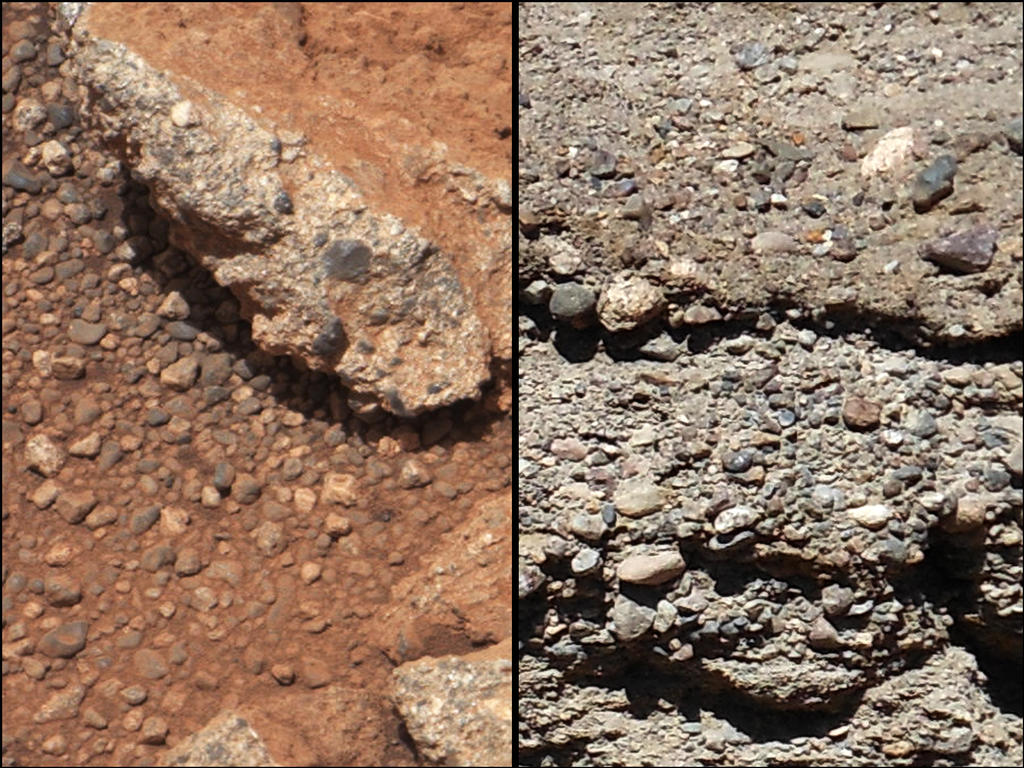
The first set of these images were of an outcrop of rock dubbed Link, and showed rounded gravel fragments, called clasts, up to a few centimetres in size within the rock outcrop. Too large to have been moved as a result of wind action, these clasts have been deemed to be consistent with a sedimentary conglomerate, or a rock that was formed by the deposition of water and is composed of many smaller rounded rocks cemented together.
A close-up of Link (l) compared with similar rocks seen on Earth (r). Erosion of the outcrop on Mars has resulted in gravel clasts which have fallen onto the ground, creating the gravel pile. The outcrop characteristics are consistent with a sedimentary conglomerate, or a rock that was formed by the deposition of water
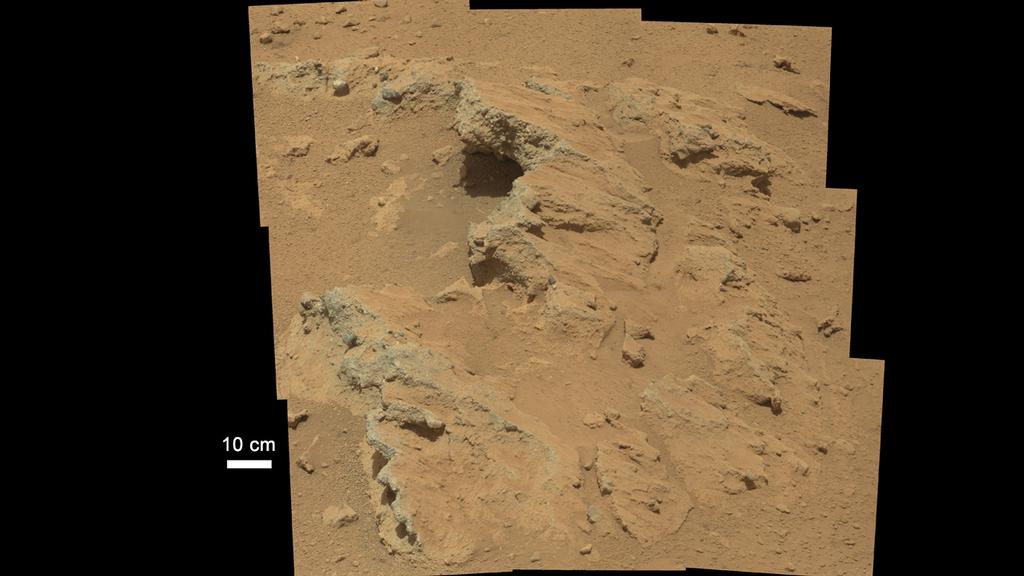
On Sol 39, Curiosity imaged a more remarkable outcrop, dubbed Hottah after Hottah Lake in Canada’s Northwest Territories. The exposed bedrock in the images, again captured with the 100mm Mastcam, is made up of smaller fragments cemented together to again form sedimentary conglomerate.
The location of the stream bed lies between the north rim of Gale Crater and the base of “Mount Sharp”, the mound towards the centre of the crater which Curiosity will explore later in the mission. Imaging of the region from orbit shows an alluvial fan of material washed down from the rim, streaked by many apparent channels, sitting uphill of the new finds, further evidence that water was once free-flowing in the region, probably over a reasonably long period of time in Mars’ ancient past. The images of the outcrops themselves show what are referred to as “classic conglomerates”, rocks that are made up of gravels and sand which have been cemented together. The sizes and shapes of stones offer clues to the speed and distance of the ancient stream’s flow.
“From the size of gravels it carried, we can interpret the water was moving about 3 feet [1 metre] per second, with a depth somewhere between ankle and hip deep,” William Deitrich, an MSL science co-investigator said, reviewing the images.
The Hottah outcropping of bedrock – evidence of an ancient stream bed imaged by Curiosity
Use the page numbers below left to continue reading this article
Over the course of the last week Curiosity has been busy. Sols 39 through 41 (September 14th through 17th) were driving days in which the rover continued on its traverse towards the area dubbed Glenelg. On Sol 39, Curiosity logged 22 metres (72 feet), and covered a further 37 metres (121 feet) on Sol 40.
Sol 41 saw the rover cover 27 metres (89 feet), during which the Dynamic Albedo of Neutrons (DAN) instrument was incorporated into the rover’s drive sequence. In its active mode, DAN can detect sub-surface minerals associated with water. The instrument has a high sensitivity for finding any hydrogen to a depth of about 50 cm (20 inches) directly beneath the rover. Use of the DAN experiment requires the rover to travel 10 metres (33 feet) before stopping to operate the DAN instrument for 2 minutes, then rolling forward another 10 metres and again operating the DAN instrument, and so on.
On Sol 42, Curiosity travelled a further 32 metres (105 ft), bringing the mission’s total driving distance to about 259 metres (850 ft), reaching the half-way point in the drive to Glenelg. DAN was used at two stops during the drive to check for hydrogen in the soil beneath the rover. During the drive, the rover also paused to take further images of both Phobos and Deimos as they passed in front of the Sun.
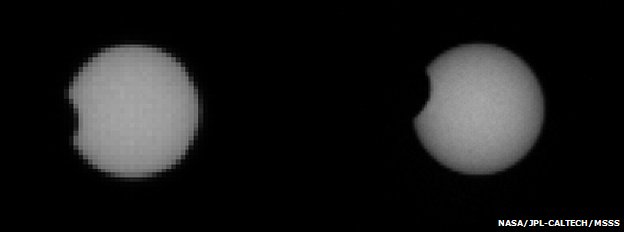
Transit of Phobos: had Curiosity been at the top of “Mount Sharp”, this would have been an annular eclipse; Phobos would have been entirely within the disk of the Sun (images from Sol 37 Phobos transit)
Imaging these transits provides accurate data on the orbits of the two moons; although both Phobos and Deimos are very small objects compared with the planet, they still exert a tidal influence on Mars. Having accurate information on their orbits assists scientists in understanding how this tidal influence affects Mars, giving additional clues as to its internal structure. Similarly, the data can also be used in helping to understand the internal structures of the two moons. In addition, measuring the orbits of the two tiny moons helps scientist determine the rate of decay within Phobos’ orbit (Phobos is very gradually slowing down in its orbit and will, at some point in the distant future, break-up and fall onto Mars), and the rate at which Deimos is accelerating in its orbit.
Because so much information can be gathered that can help scientists gain greater insight into Mars and its moons, observing transits by both Phobos and Deimos have previously been a regular activity for NASA’s MER rovers. In fact, Opportunity (as the one remaining operational MER vehicle on Mars) conducted transit observations from its location almost in parallel with Curiosity.
On Sol 43, an unusual rock was identified as a potential target for further tests of the rover’s arm-mounted science instruments – particularly MAHLI, the Mars Hand Lens Imager and APXS, the Alpha Particle X-Ray Spectrometer. During something of an abbreviated day due to the timing of downlink relays on Sol 44, Curiosity took a more detailed look at this rock, as well as observing the early morning atmospheric conditions in Gale Crater and capturing additional images of the instruments mounted on the turret of the robot arm.
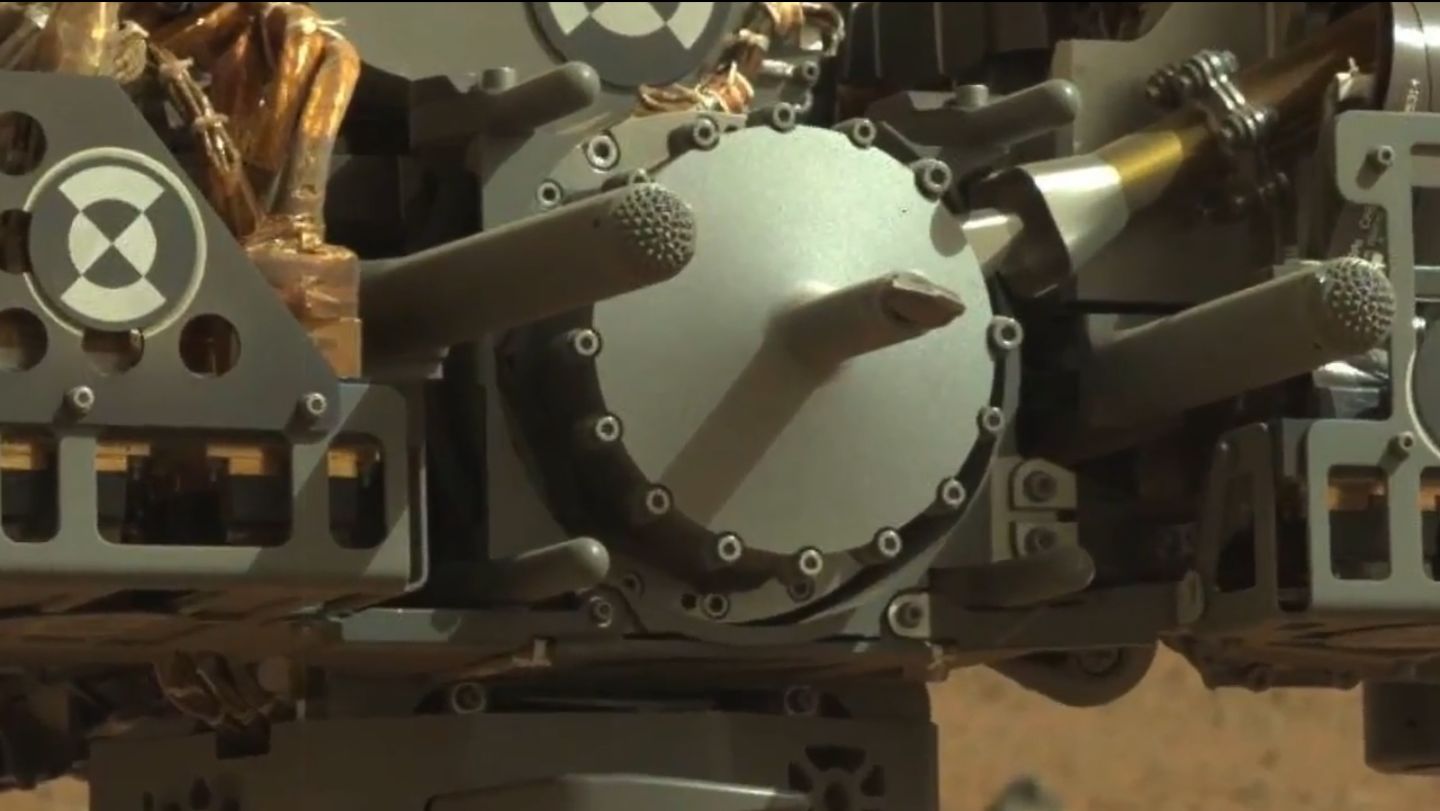
A close-in view of the sample acquisition system mounted on the turret at the end of the robot arm
The target rock, roughly the size of a football, was christened Jake Matijevic, in honour of Jacob Matijevic, MSL’s Surface Team Chief Engineer, who passed away shortly after Curiosity arrived on Mars. Matijevic had worked on all three generations of NASA’s Mars rovers, from the tiny Sojourner-class mini-rovers of the 1990s, through the MERs to Curiosity.
Jacob Matijevic, 1947-2012
Please use the page numbers below left to continue reading
Rollin’, rollin’, rollin,
Though the plains are dusty
Keep that rover movin’
NASA. Rocks and wind and cold nights Crossing that ol’ crater On your way to Glenelg now, in style. All things you’re doin’, Sampling, scraping, dating Will help our understanding of Mars.
(With apologies to Ned Washington!)
Over the course of the last several days, NASA has completed initial calibration and characterisation of Curiosity’s robot arm and initial testing of several of the turret-mounted scientific instruments.
These tests have included discovering the arm’s range and accuracy of movement in the low Martian gravity and temperature environs, as well as commissioning the turret-mounted Mars Hand Lens Imager (MAHLI) camera and the Alpha Particle X-Ray Spectrometer (APXS) which is designed to determine the elemental composition of a target rock. Both are now all but cleared for science operations, although some further tests are planned.
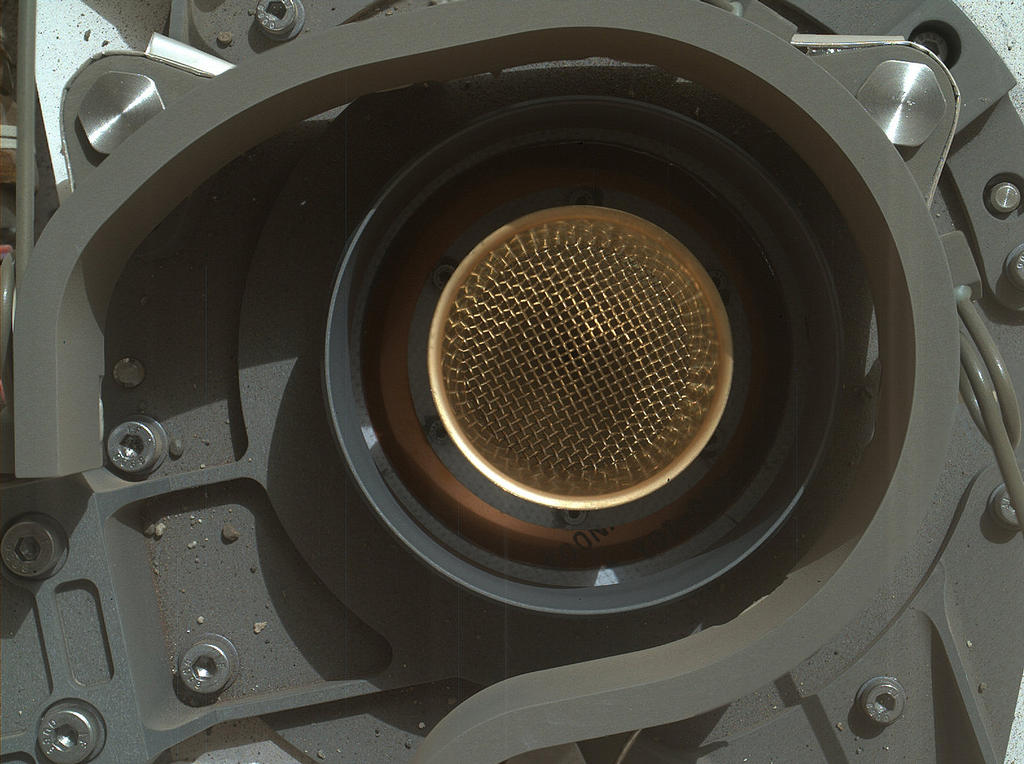
On September 11th, Sol 36, the arm went through a series of “reach tests” using MAHLI to ensure that the arm can accurately position equipment over inlet ports on the rover’s body for the transfer of materials gathered from the surface of Mars.
Open wide! The CheMin sample inlet port, imaged by MAHLI on Sol 36. The 3.5cm (1.4 in) diameter mesh-covered funnel will be used to supply Martian “fines” to the CheMin spectrometers for analysis
The Canadian-made APXS has previously been used to gather atmospheric readings, but the tests performed on September 10th, Sol 35, marked its first use on a solid target, using a calibration target mounted on the rover. The results showed APXS to be in excellent health. “The spectrum peaks are so narrow, we’re getting excellent resolution, just as good as we saw in tests on Earth under ideal conditions,” Ralf Gellert, the principal investigator for APXS reported. “The good news is that we can now make high-resolution measurements even at high noon to support quick decisions about whether a sample is worthwhile for further investigations.” This latter point is important, as X-ray detectors best work cold, and so was thought that APXS might find the midday periods of a Martian Sol a little too warm to produce reliable results.
APXS imaged by the 34mm Navcam on Sol 32 (September 7th), during initial visual check-outs of the arm and turret systems. This image confirmed APXS was not caked with dust blown up by the Descent Stage motors during Curiosity’s arrival on Mars.
After its initial check-outs, MAHLI was further tested in its ability to produce 3D images of surface objects, again using the calibration target mounted on the front of the rover. MAHLI is the second imaging system Curiosity carries that is capable of producing colour 3D images, the other being the Mastcam system, which was tested prior to the rover departing Bradbury Landing. Both systems produce 3D images through accurate positioning of the cameras, either by manoeuvring the robot arm (for MAHLI) or the entire rover (for Mastcam).
Transit of Phobos
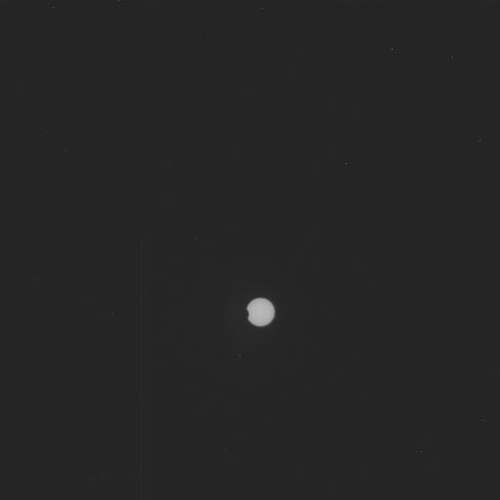
Earlier this year, I covered the Transit of Venus, an astronomical event only visible from Earth every 105 or 121 years. Mars has similar events, which include transits of the Earth across the face of the Sun and, more particularly, transits of its own small moons, Phobos and Deimos. Transits of Phobos occur twice every Martian year, and on Sol 37 (September 12th), Curiosity’s Mastcam was used to capture images of a Phobos transit. The full-resolution images from this are liable to take a few days to download and be processed, but the plan is to produce a movie of the transit from the images captured.
A raw (unprocessed) low-resolution image of the transit of Phobos – the 11km wide moon, some 6,000km above the surface of the planet can just be seen on the edge of the solar disk
Next Stop: Glenelg – or a rock
With the arm characterisation tests now all but complete, Curiosity was ordered to resume its drive towards Glenelg, an area of Gale Crater some 400 metres from Bradbury Landing. The drive commenced on Sol 38 (September 13th), when the rover completed a drive of 32 metres, a further increment in the daily distance covered as confidence is gained in Curiosity’s autonomous driving capabilities. Even so, it will still be another few weeks before the rover arrives at Glenelg, and the drive may again be interrupted if a suitable rock candidate is identified for direct in situ testing of APXS and MAHLI. If deemed suitable, the rock may also be used to test the rover’s turret-mounted drill, although testing of this may be held-over until Glenelg is reached towards the middle of October.
David Oh from the MSL team provides a superb summary for the week, and insight into working as a part of the Curiosity team.
September 7th through 9th saw the robot arm systems go through a range of “reach tests” which also allowed Curiosity it complete another series of “firsts” from Mars as the Mars Hand Lens Imager (MAHLI) was used to capture a range of images of the rover to help with calibrating the system and to check-out Curiosity’s condition. All of these images were taken with the protective cover on MAHLI’s lens in the open position, and revealed the clarity with which the system can capture images.
There was a slight delay in progress on Sol 31 (Sept 6th), after a temperature reading from the arm caused Earthside concerns and the cancellation of planned activities while the matter was investigated and successfully resolved. Sol 32 (Sept 7th) saw the tests planned for the 6th Sept successfully completed, which included the capture of the images of the rover’s mast and the turret on the end of the robot arm I’ve previously reproduced here. A series of vibration tests were also carried out, designed to characterise the function of the sample processing device in the turret (the vibrations will cause the system to act like a sieve, separating-out very fine Martian surface material out from the rougher samples prior to delivery to the on-board science systems, CheMin and SAM).
The reach tests for the robot arm are designed to test the arm based on a range of calibration motions carried out on Earth intended to approximate how the arm should work on Mars. The tests are important because the arm, with the mass of the turret on the end, has only been operated in Earth’s gravity and engineers need to confirm that the arm is actually functioning as anticipated in the lower Martian gravity environment and after both an 8-month cruise through interplanetary space and the rough dynamics of the EDL phase of the mission. Adjustments carried out as a result of the reach tests will allow the arm and turret to be operated with the degree of precision required for the forthcoming science elements of the mission.
The Trivia Report I Forgot
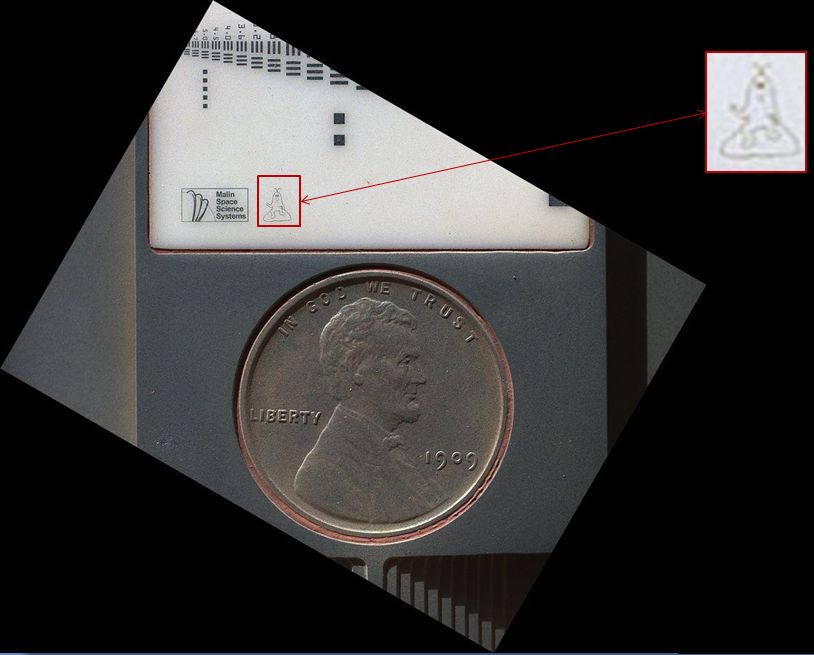
On some of these MSL reports, I’ve published a small piece of trivia about the mission. One that I had lined-up, but then missed Pressing, was that fact that among all the science hardware on Curiosity there is … a 1909 Lincoln VOB penny.
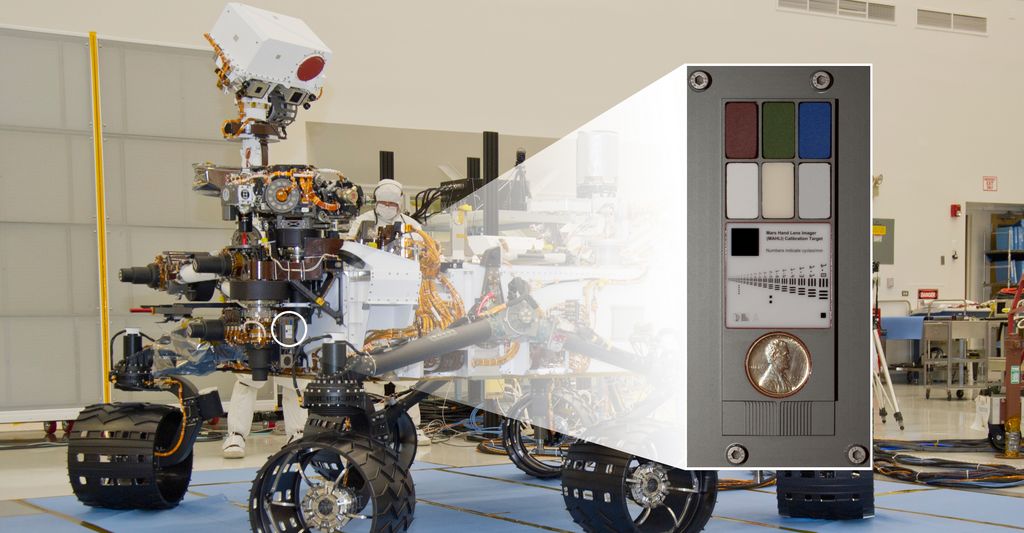
MAHLI calibration target, complete with the first coin on Mars, a 1909 Lincoln penny
The penny is part of the calibration target for MAHLI, which is mounted on the front of the rover’s body. The target also includes colour chips, a metric standardised bar graphic, and (just below the penny) a stair-step pattern for depth calibration.
The penny itself is a nod to geologists’ tradition of placing a coin or other object of known scale as a size reference in close-up photographs of rocks, and it gives the public a familiar object for perceiving size easily when it will be viewed by MAHLI on Mars. The coin was supplied by MAHLI’s principal investigator, Ken Edgett, and was minted to mark the centennial of Abraham Lincoln’s birth.
The Lincoln penny seen on Mars by MAHLI; note the fine film of Martian dust on the coin. “Joe the Martian” can be seen above the penny & inset. The main image was captured with MAHLI some 5cm (2 inches) from the target, and on a low resolution setting
Also on the calibration target is an image of “Joe the Martian”. This is also from Ken Edgett, and is actually his own creation, first drawn when he was nine years old when the NASA Viking missions in the 1970s inspired him to want to become a planetary researcher. The character was later used in a children’s science periodical, Red Planet Connection when Edgett directed the Mars outreach program at Arizona State University in the 1990s.
Both the penny and the character are designed to engage public interest in the mission, and both will be imaged throughout Curiosity’s operations on Mars, allowing people to see how weathered they become over time due to exposure to the Martian environment.
Taking a Look Underneath
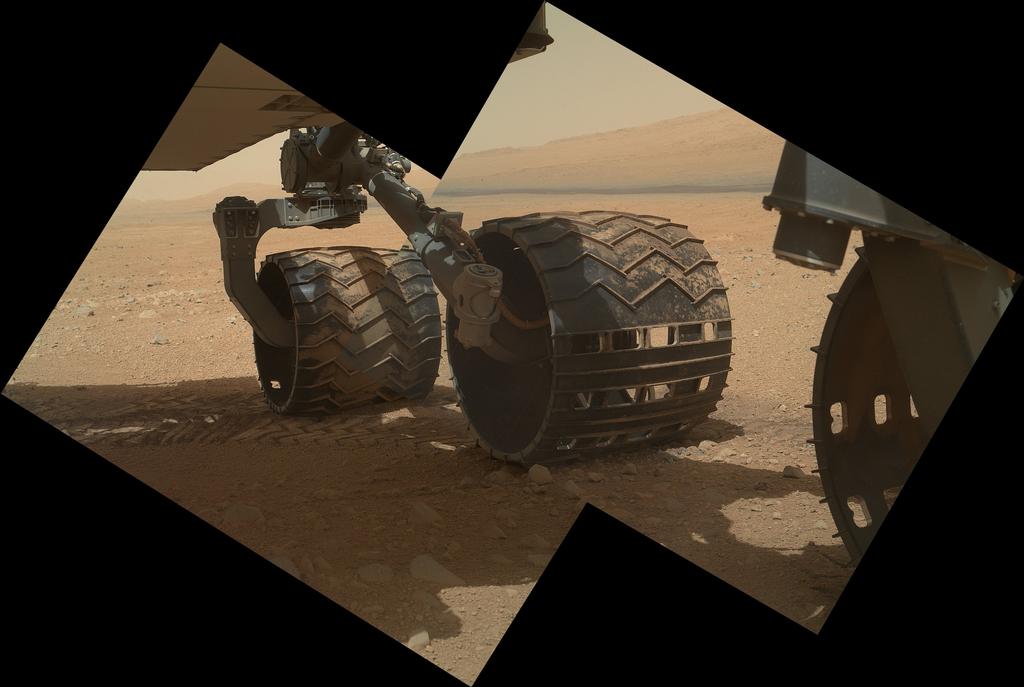
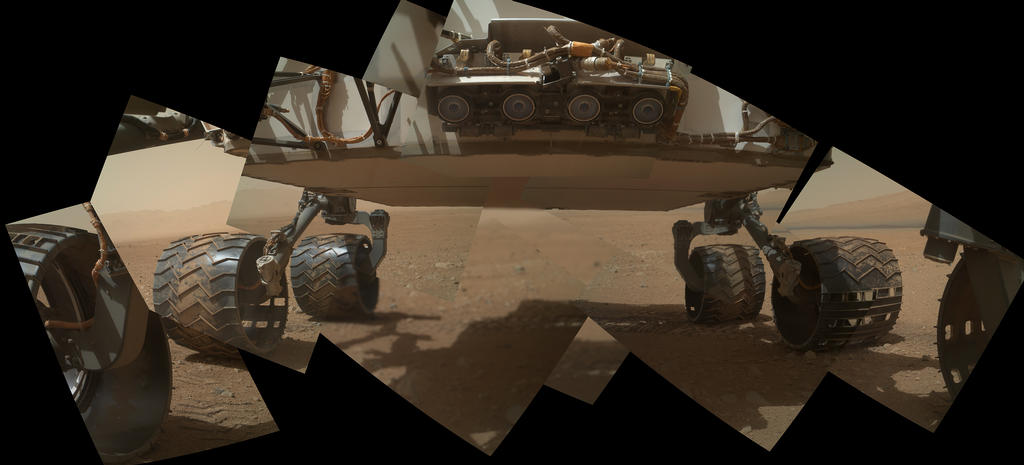
On Sol 34 (Sept 9) MAHLI was used to take a series of images looking underneath the rover’s belly, allowing engineers to take a first-hand look at the overall condition of the wheels and underside of the vehicle and confirm there is no hidden damage which might cause problems later.
Curiosity’s wheels – note the Morse code JPL cut-outs – with “Mount Sharp” as a backdrop
These images also help demonstrate the extreme flexibility of MAHLI, which can image objects from as close as 2.1 cm (just under an inch) right out to infinity, allowing it to be used for close-in precise work related to surface science, and for producing more general images which can be used in a range of activities from confirming the rover’s status through to helping to plan for the drive to “Mount Sharp”.
Taken together, the MAHLI images are remarkable because no other planetary or robotic mission has been able to image itself so comprehensively. Being able to do so not only assists engineers in assessing the rover’s condition throughout the mission, it helps to further engage public interest in what Curiosity is doing by “personalising” the images it can return from Mars.
MAHLI mosaic of Curiosity’s underside. The four “eyes” at the top centre are the rover’s forward Hazcams, used in vehicle navigation, looking to the front and to the left / right of the rover’s path
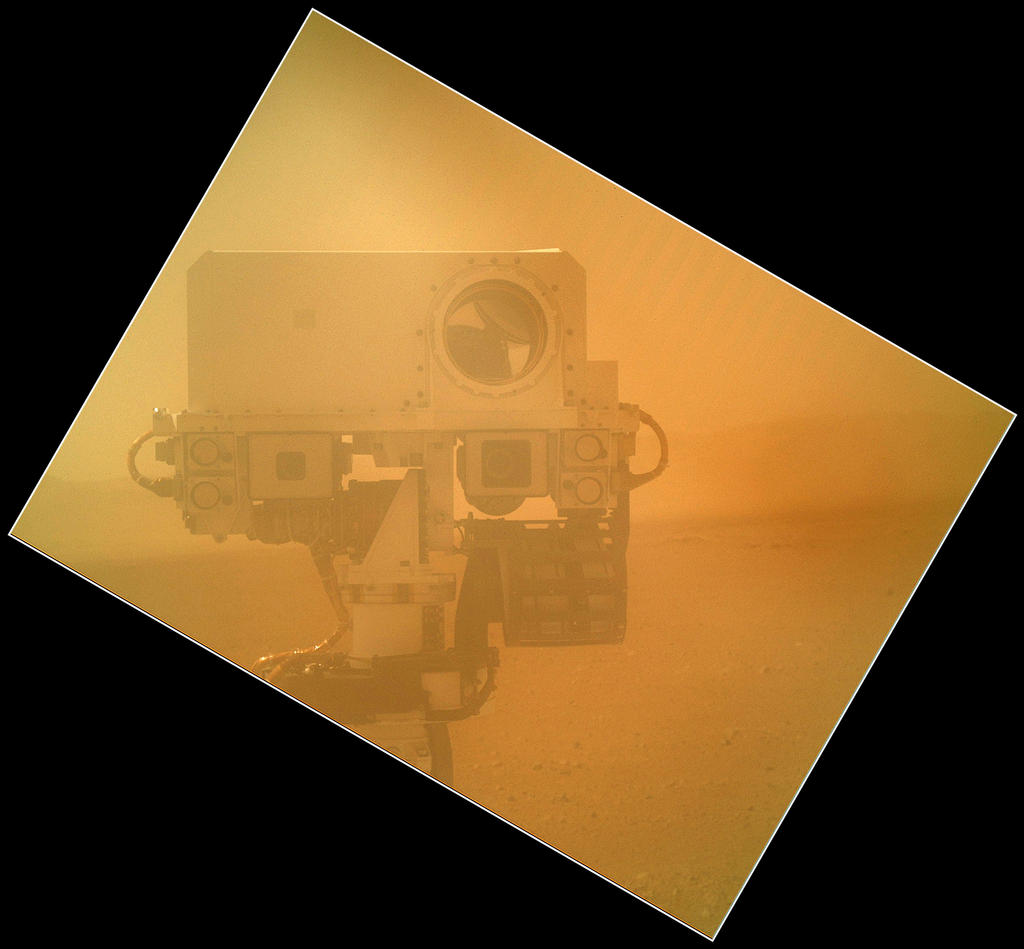
In my last round-up on news from the Mars Science Laboratory briefings, only Pressed earlier today, I made mention of Curiosity testing the Mars Hand Lens Imager (MAHLI), mounted on the science systems turret at the end of the robot arm, and taking some self-portraits during the initial 6-day calibration and check-out period for the robot arm and the science instruments.
Little did I realise the first such picture had actually already been taken!
The first self-portrait from Curiosity: MAHLI snaps the rover’s “face” of the mast-top array comprising the ChemCam, Mastcam and Navcam systems
The image was captured as the Mastcam took pictures of Curiosity’s turret on Sol 29, and captured a shot of MAHLI in order to check the dust cover over MAHLI’s sensitive lens, and ascertain the amount of dust on it and whether the dust would post a problem when the cover is finally opened.
The MAHLI image was taken at around the same time, and is hazy due to the protective cover, which is in place at the time the image was taken, being covered by a thin film of dust thrown-up during the landing phase of the mission covering it.
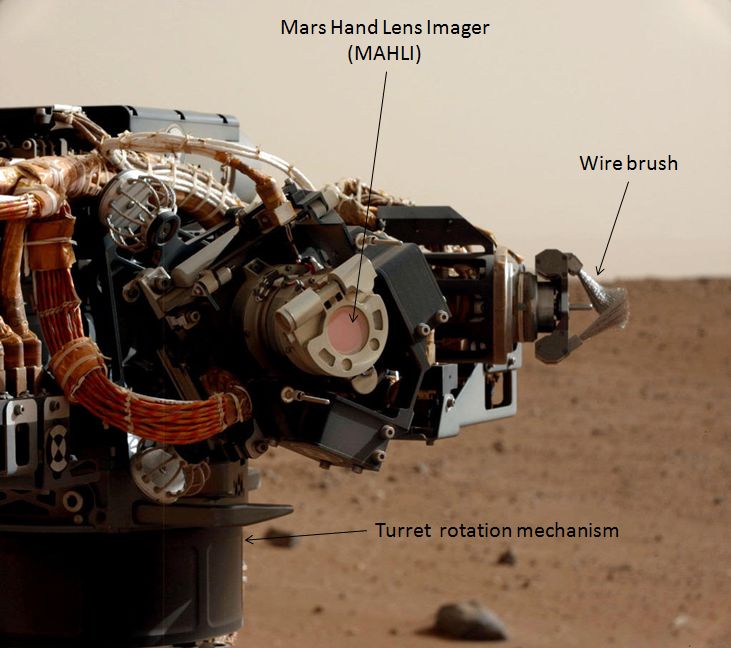
The image of the turret and MAHLI taken by the 34mm lens of Mastcam. The pink colouration on MAHLI is light catching the “glue” used in the imager’s lens system
This is liable to be the first of a series of remarkable and unique series of images from Curiosity.
This last week marked Curiosity’s first month on Mars. It’s been a remarkable period, with the rover undergoing an extensive commissioning period (which will continue into next month, most likely), and returning some of the most amazing images from the surface of Mars we’ve ever seen.
Now the trek has begun, and Curiosity is well and truly on her way to Glenelg, a journey of some 400 metres (1300ft) which should be completed in October.
The trek to Glenelg began in earnest on Sol 24, with Curiosity travelling 21 metres (70 feet) – its longest single drive at that time – heading eastward away from Bradbury Landing. The following day, Sol 25 (August 31st), the rover had a “day off” from driving, which was spent gathering environmental data and sky images using the Navcam system. Mastcam was also used to capture a 360-degree panorama of its new location.
A mosaic of Navcam images from Curiosity, captured on Aug 30th, showing the rover’s tracks back towards Bradbury Landing
Over the next few days, the rover continued to trek eastward, covering 30 metres (98 feet) on September 1st, in a drive to test its “visual odometry” in using images captured by the Navcam system to analyse the distance it has travelled. The day included further tests of CheMin system, while SAM took samples of the Martian air overnight on the 2nd/3rd Sept (Sol 27/28). The drive then resumed, with Curiosity covering over 30 metres (100ft) on Sol 29, including a manoeuvre to skirt sand.
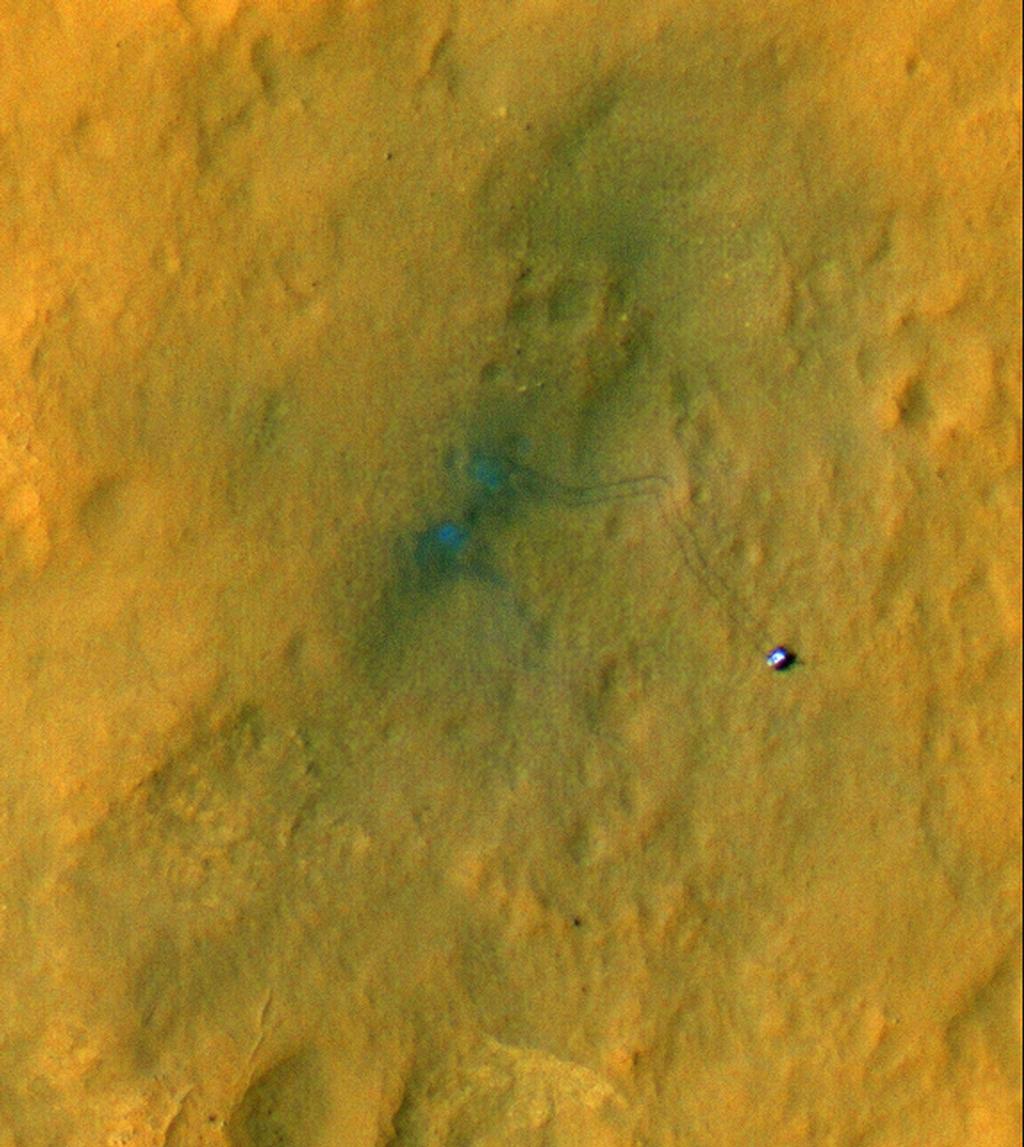
Making tracks: a remarkable image captured by the HiRISE camera on the Mars Reconnaissance Orbiter (MRO) showing the discolouration of Bradbury Landing and Curiosity as it heads out from the landing zone to explore Gale Crater
Arm Flexing
Having travelled a little under the quarter of the distance to Glenelg, Curiosity halted progress to commence the first six of ten planned consecutive days checking-out the robot arm and its turret of equipment. These will see the arm extensively tested through a series of “teach points” established during testing on Earth, and will include activities such as moving the turret to the inlet ports on the rover’s body to simulate the delivery of sample material to the on-board analytical instruments. The purpose of the tests is for mission engineers to get a better understanding for how the arm functions after the long cruise to Mars and in the different temperature and gravity environments of Mars when compared to the calibration testing carried out on Earth.
These operations – which form part of the overall arc of “characterisation tests” designed to check-out the rover and its range of science equipment and capabilities – were sequenced into the drive to Glenelg following the rover’s arrival on Mars. They require that Curiosity be parked at a specific angle relative to the sun, and on flat ground, which it reached on its Sol 29 drive.
The turret seen from the Matcam. In this image the Turret has been raised level with the 34mm lens of Mastcam and inverted. The pink colouration seen on the MAHLI instrument is the result of the “glue” used in the camera lens bonding process, which turns the inside of the lens pink-red under certain lighting. The wire brush is a dust removal tool which will clean rock surfaces prior to drilling
During the calibration tests, the Mars Hand Lens Imager (MAHLI), a camera mounted on the turret, will be tested and calibrated, as will the Alpha X-ray Spectrometer. The arm’s ability to place instruments against rock samples will also be tested as the first steps in preparing the turret for drilling and soil sample collection activities as a part of its science mission.
Use the page numbers below left to continue reading
 NASA has released images returned to Earth by the Curiosity rover of what appears to be an ancient stream bed, together with images showing further evidence of liquid water once having flowed freely within Gale Crater.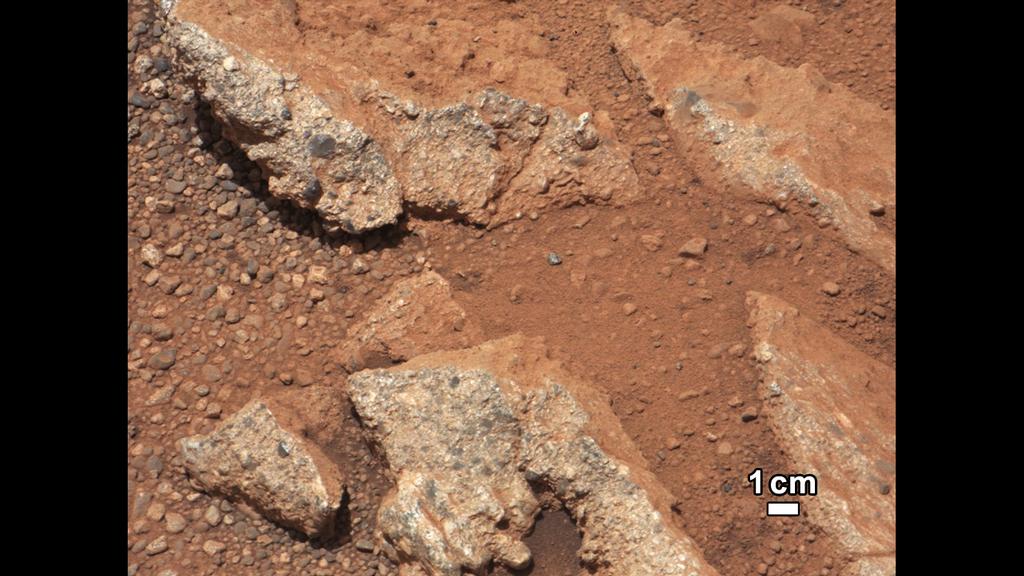




 Inara Pey: Living in a Modemworld