Google have released their first foray in to the world of immersive VR. They’re calling it Cardboard, because the do-it-yourself headset is made of … well, cardboard.
“Construct a VR viewer from everyday items you can find in your garage, online or at your local hardware store,” is the headline on the Google Cardboard website, complete with a picture of the necessary components.
Google Cardboard: build your own VR headset from cardboard, magnifying lens and a few other bits, and use it with your Android smartphone
And before you laugh yourself silly thinking this is another little joke from those pranksers who brought us GMail Blue in April 2013, it’s not. The heart of the system is a VR App designed to run on smartphones which can be mounted into the home-made headset.
Cardboard was unveiled at the Google I/O Developers Conference in San Francisco. the app takes advantage of a smartphone’s built-in accelerometers and gyroscopes to provide head tracking, and demonstration environments include a Hall of Mirrors and the opportunity to travel through Chicago. Users can also watch YouTube videos as if sitting in a movie theatre and explore 360-degree panoramic photos or run a series of VR experiments using Google Chrome on their ‘phones. There’s also a software development kit which allows users to code their own immersive experiences.
“David Coz and Damien Henry at the Google Cultural Institute in Paris built a cardboard smartphone housing to prototype VR experiences as part of a 20% project. The results elicited so many oohs and ahs that they inspired a larger group to work on an experimental SDK,” the website explains, providing the “why” of the effort.
The finished headset with ‘phone ready to be fitted
Nor is the headset entirely low-tech. Although a phone is almost completely encased in the headset, the instructions provide a guide to making a trigger with a metal ring and a magnet and which uses the ‘phone’s magnetometer. Flicking the ring downward as items come into view allows you to select them.
VR headsets for smartphones aren’t exactly a new idea. We’ve had Kickstarter campaigns for the likes of Altergaze, and there are items like Durovis Dive. But Google Cardboard offers fun approach to things – the company noting that it can be worn with glasses, but that “you may want to cut flaps into both sides of the viewer. There’s a fold line pre-cut into both sides of the viewer to make this easier.”
For those who don’t want to be bothered with gathering all the bits and cutting cardboard to create their own headset, and just want to put the thing together and start enjoying VR on their smartphone, a pre-cut kit with all the necessary parts can be purchased from Dodocase!
Now all we need is SL Go with the Oculus Rift viewer code 😉 .
Monday June 23rd was notable in two worlds as a special occasion.
For the virtual world of Second Life, it marked the 11th anniversary of opening the doors to the public. On Mars, it marked the completion of Curiosity’s first Martian year on the planet (687 days).
To mark the event, NASA released a “selfie” of the rover as it sat next to a rock called “Windjana”, which was the site of the rover’s third drilling / sample gathering operation, in the region dubbed “The Kimberley”.
The images used in the picture were captured using the Mars Hand Lens Imager (MAHLI), located on the turret mounted on the rover’s robot arm, were captured on 613th Martian day, or Sol, of Curiosity’s work on Mars (April 27th, 2014, PDT) and Sol 627 (May 12th, 2014, PDT). Combined, they show the rover in a parked configuration together with the sample gathering hole cut into “Windjana”, the drilling operation having taken place on Sol 621 (Monday May 5th, 2014, PDT).
Curiosity’s selfie: all of the rover except the robot arm is visible in this composite image made up of shots taken before and after the “Windjana” sample drilling – the hole from which is visible, lower left
Since that time, the rover has resumed the drive down towards “Murray Buttes”, the point where it is hoped Curiosity will be able to bypass a line of sand dunes and make its way onto the lower slopes of “Mount Sharp”, more properly called Aeolis Mons, the large mound occupying the central area of Gale Crater and the missions’ primary target for investigation.
Curiosity is now over half-way to “Murray Buttes”, with no further major waypoints to be examined on the route. however, due to the wear-and-tear on the rover’s wheels while traversing a part of “The Kimberley” and “Cooperstown” before it, the route southwards has been revised somewhat to offer smoother driving terrain for the rover.
The added wear-and-tear of the wheel first became something of a concern in February of this year, and later prompted a revision to in the planned route to reach the desired waypoint at “The Kimberley” and also in the rover driving team perfecting new techniques for driving the rover – such as by taking it backwards over some terrain.
The (Martian) year to date: from Bradbury Landing in august 2012, through “Glenelg” and “Yellowknife Bay” and onwards to “The Kimberley”, Curiosity’s travels in Gale Crater and, in white, the planned route to “Murray Buttes”.
Following its departure from “The Kimberley” on Sol 630 (May 15th, 2014, PDT), the rover drove almost continuously for a month, covering a further 1.2 kilometres 0.75 miles), and is still continuing onwards.
Although Curiosity’s route will carry it past the majority of the sand dunes between it and “Mount Sharp”, it will have to traverse an area of sand in order to reach its major target. To help with this, the rover’s Earthbound “stunt double”, dubbed the Scarecrow, was taken out to the Dumont Dunes in California’s Mojave Desert, near Death Valley, where it was put through a series of test drives over real and artificially constructed sand dunes and various terrains. This allowed engineers to examine the rover’s behaviour over softer terrain types, enabling them to better understand how the rover might react when encountering similar surfaces on Mars.
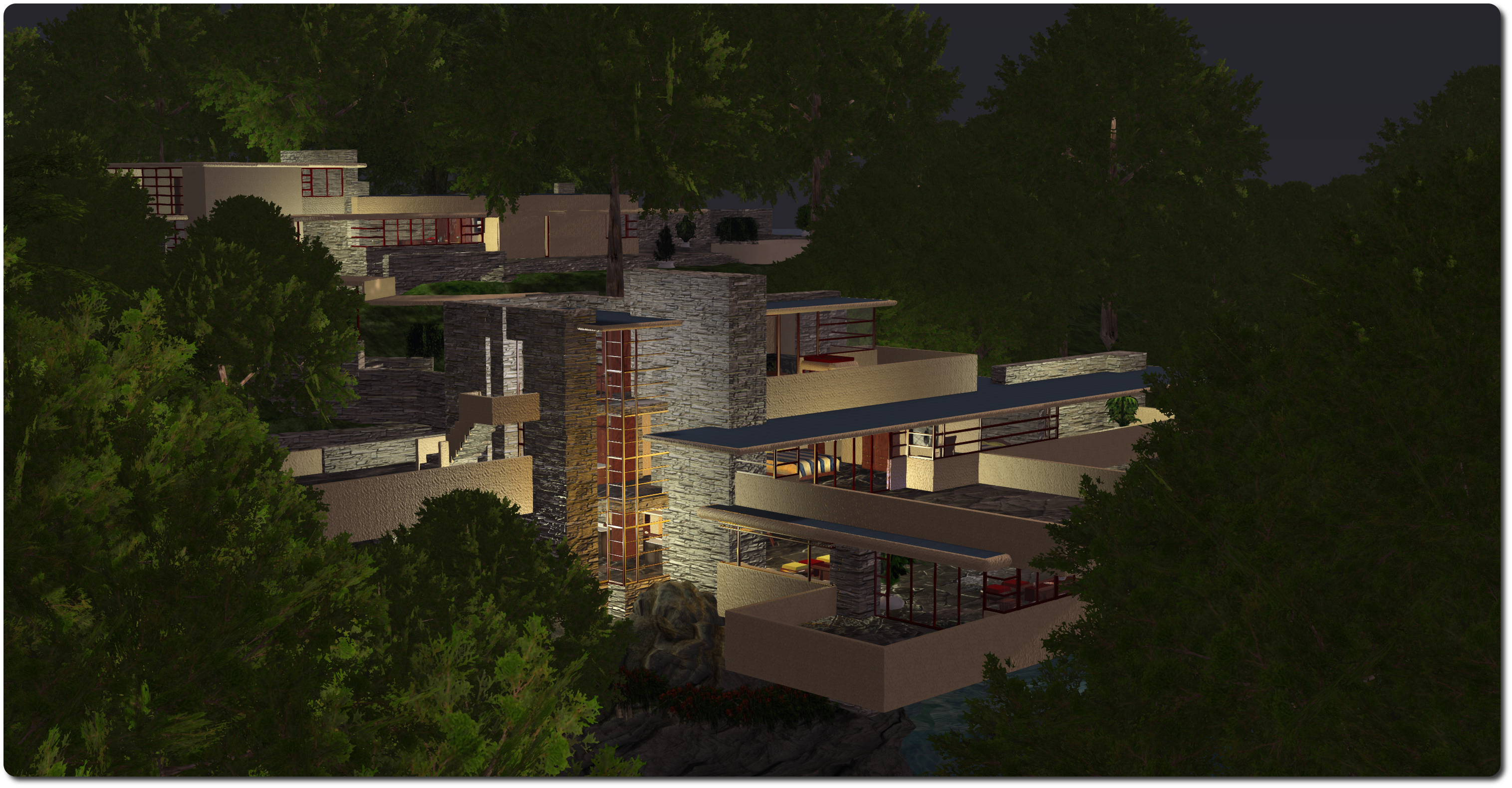
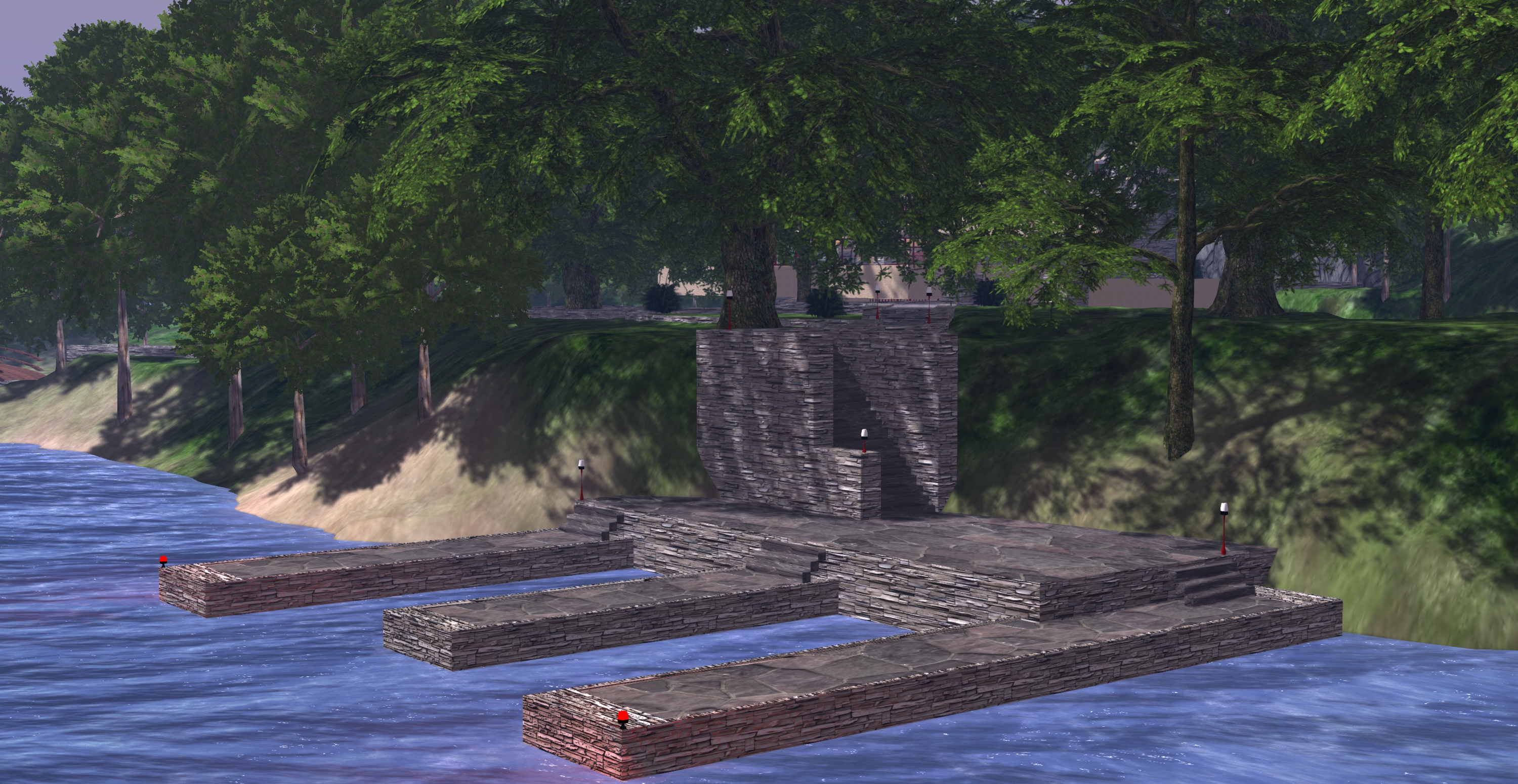
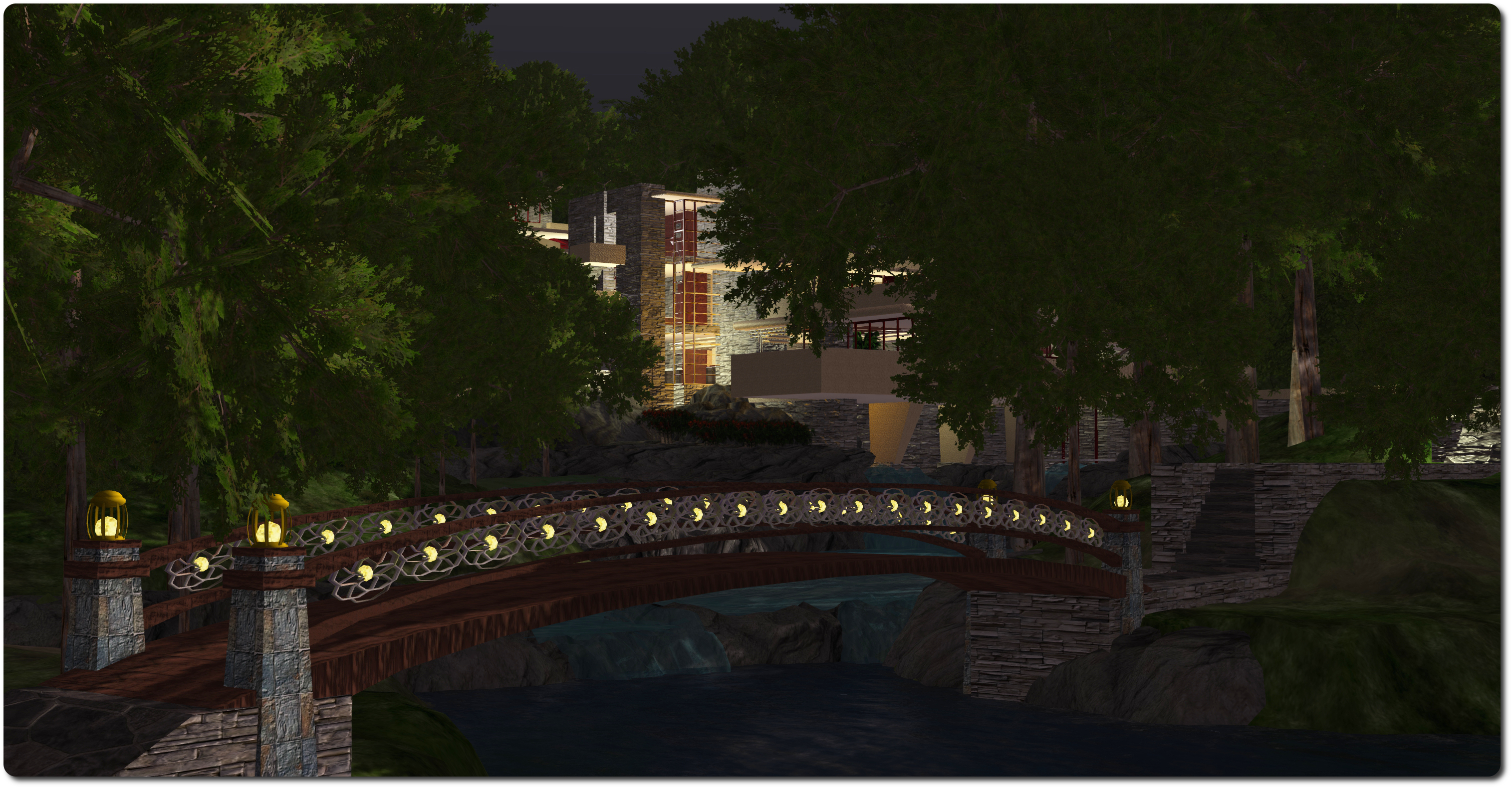
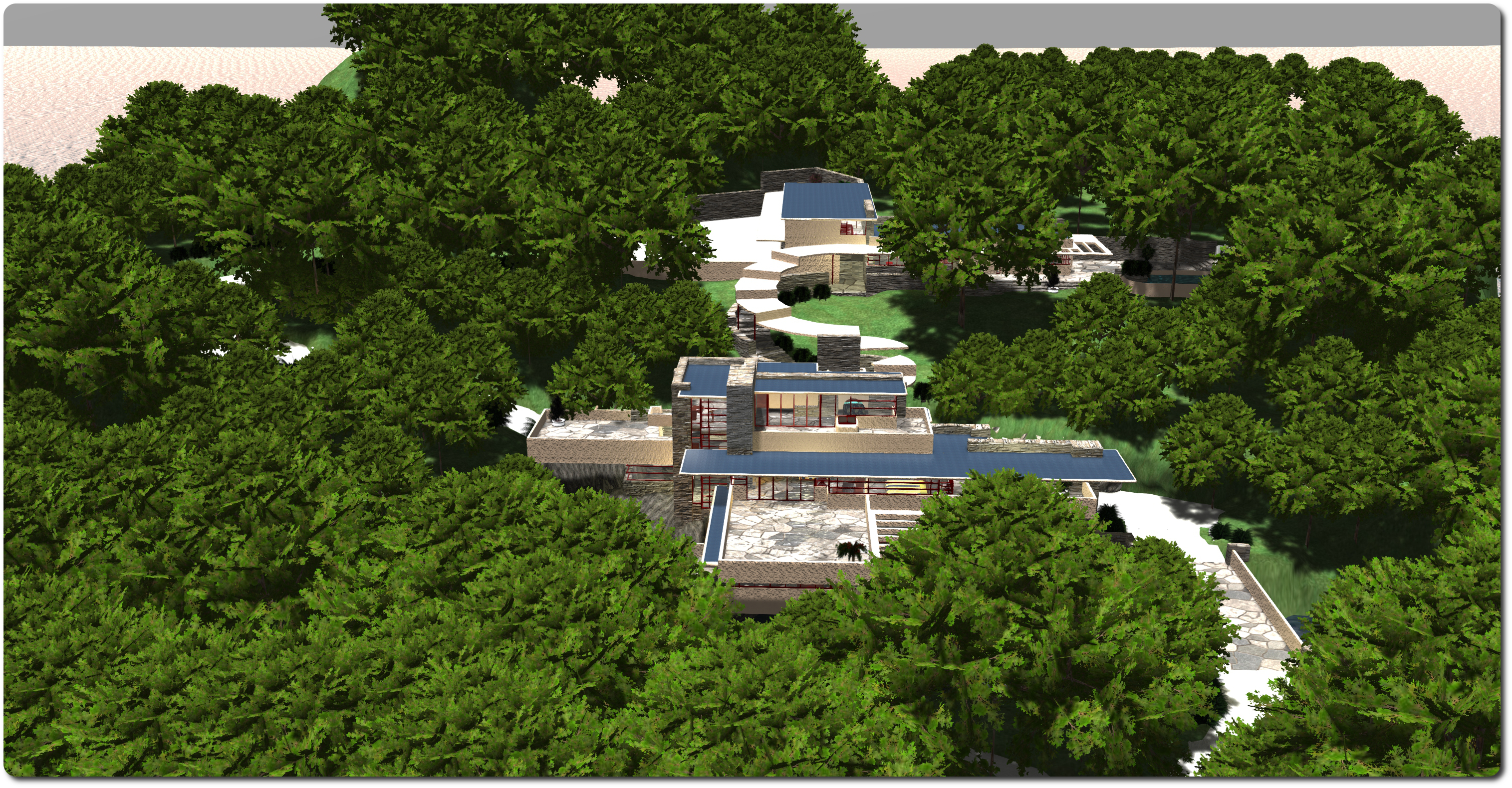
Fallingwater as it appeared as a standalone region on Kitely (click for full size)
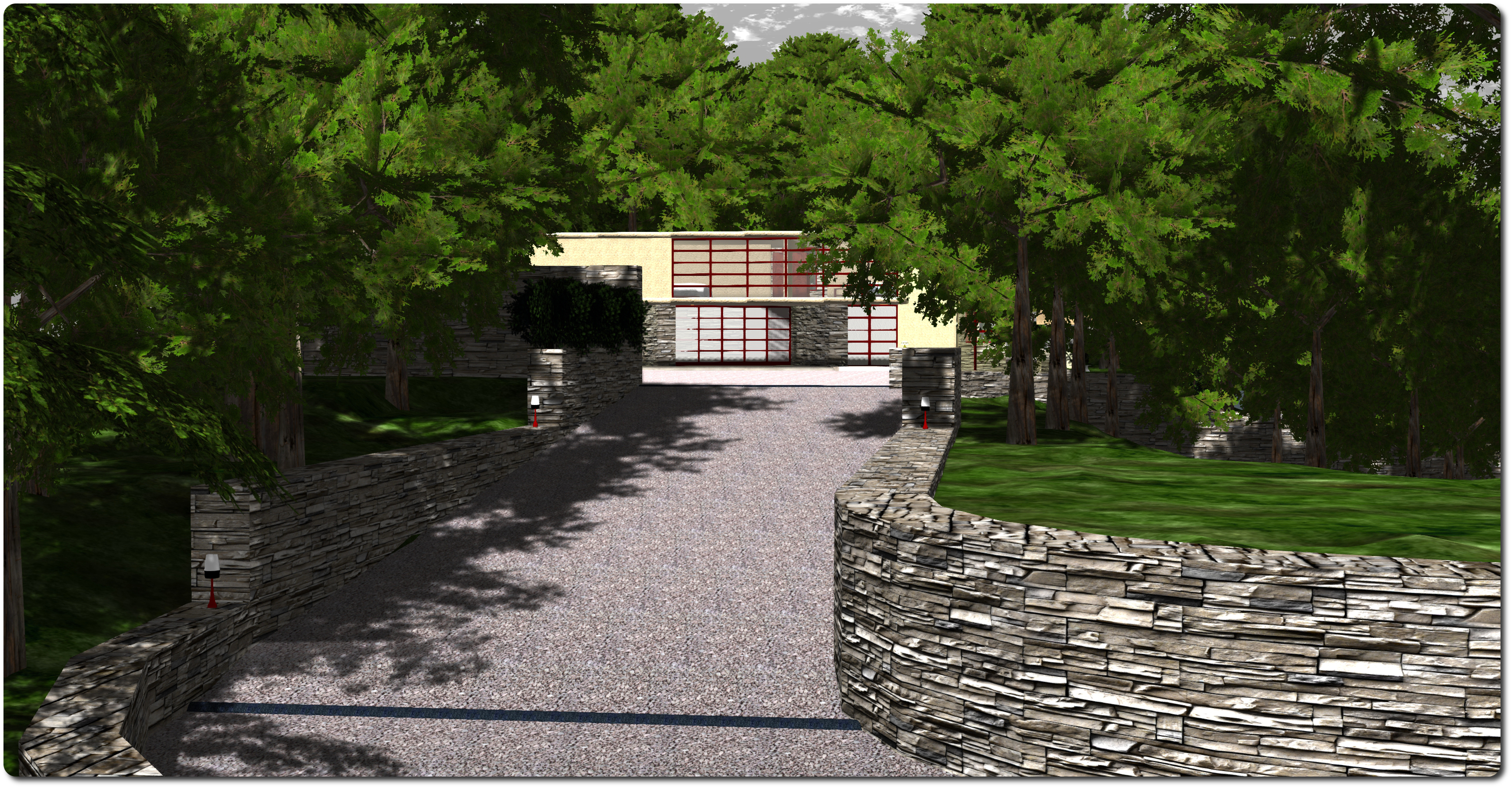
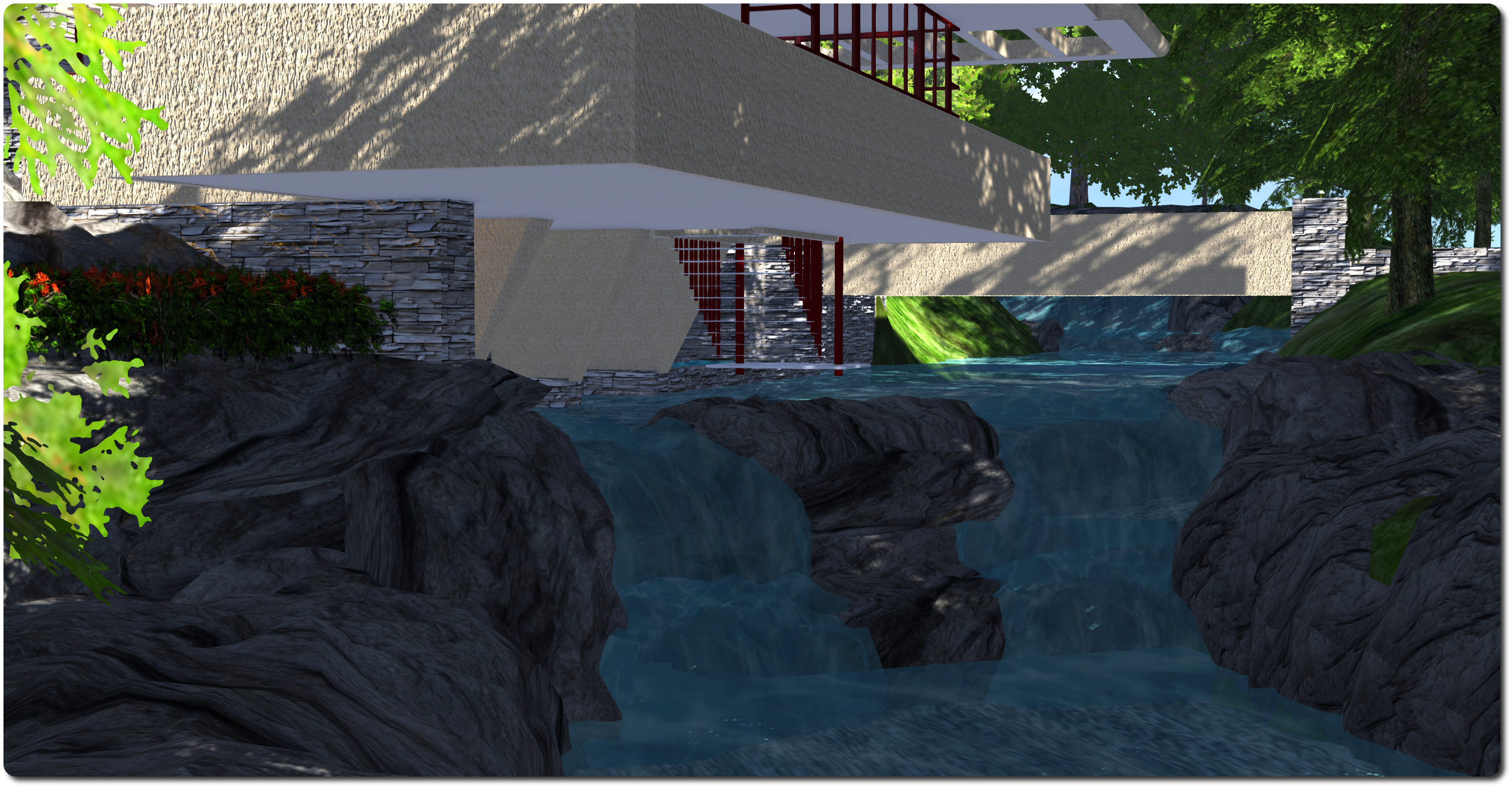
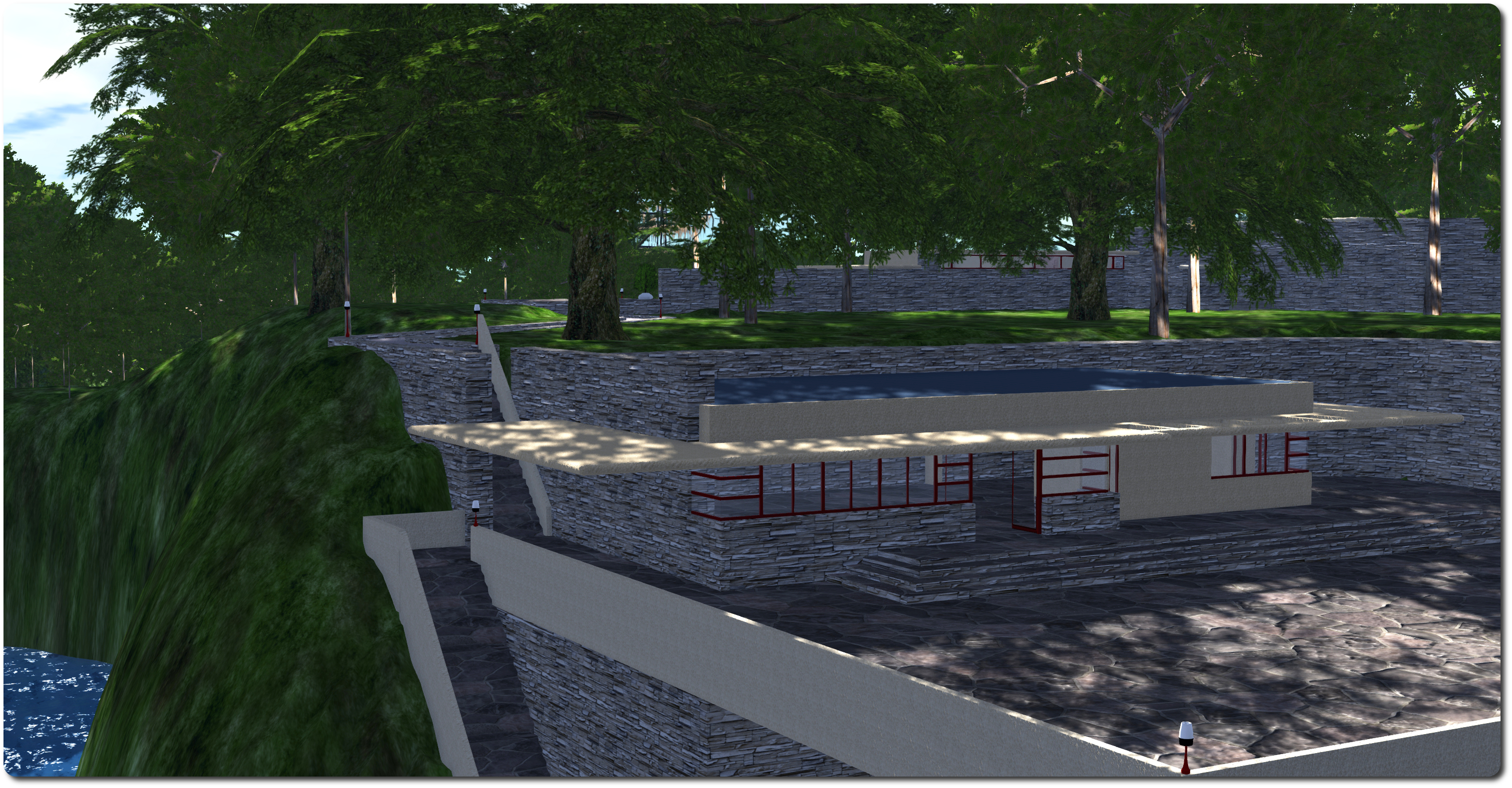
Regular readers here will be only too aware of my obsession with Frank Lloyd Wright’s building designs, and in particular that of Fallingwater, which I’ve used as a model for no fewer than three builds over the years: two in Second Life (both now gone, but one safely packed away) and one in Kitely, where it has had a full region to itself for the last two years.
As I’m rarely in Kitely nowadays, the model there hasn’t really seen that much use. So, to rectify this, and as a result of conversations between myself and Caledonia Skytower and Shandon Loring at Seanchai Library, Fallingwater (Kitely) has been relocated to the Seanchai core world, where it will be used as an additional set of venues for Seanchai’s storytelling in voice.
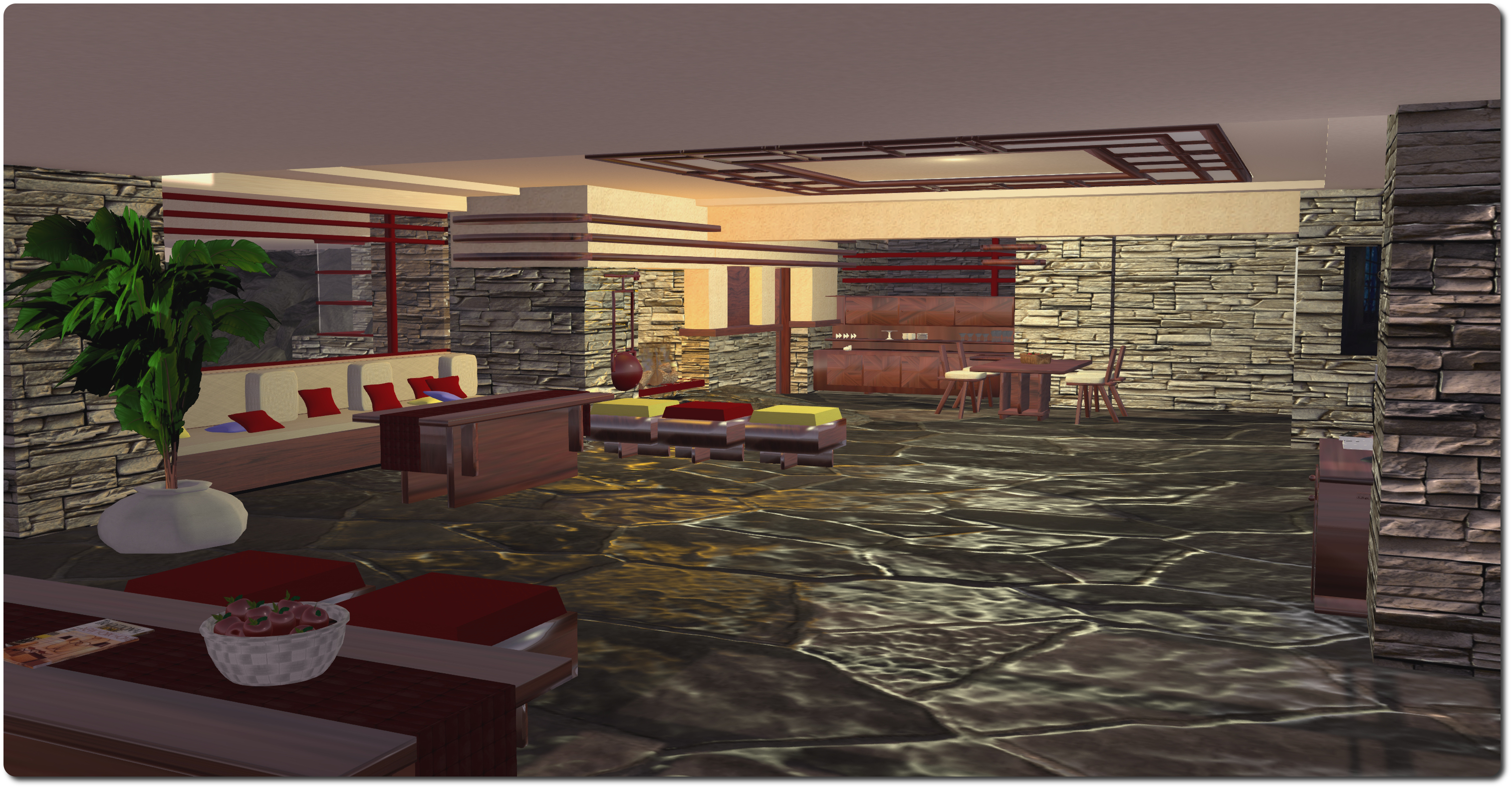
The Great Room at Fallingwater Kitely will soon be a venue for stories in voice!
The idea of relocating an entire region – buildings, furnishings, plants, tree, flowers and the rest on your own, and without having to pay for it to be done for you, is something liable to fill SL users with a feeling of foreboding. Fortunately, OpenSim users can make use of the OpenSim ARchive (OAR) capability to export and entire region / simulator’s contents to a local hard drive, subject to any permission protections used on their OpenSim grid.
A slight complication with Kitely is that it is not possible to target a single region within a group of regions – “world” as Kitely call them – without also overwriting the others. As our aim was to make Fallingwater a part of the 4-region core Seanchai “world”, simply exporting it to OAR and then importing it into the Seanchai world would leave the other three regions replaced by default flat terrain.
There is a way around this, but it requires a small amount of fiddling, and the use of something like New World Studio (NWS) or Sim-on-a-Stick (there are also user-offered services for those wishing to do something similar and who don’t have access to either). Using NWS (which ‘ve previously reviewed) made the work of combining Fallingwater with Seanchai a simple 6-step process.
Combining Fallingwater with Seanchai’s core 2×2 world on Kitely 1: my 2×2 region on my self-hosted New World Studio
First, I created a 4-region (2×2) set-up with New World Studio.
Second, using the OAR format, I exported Fallingwater from Kitely and Shandon exported the Seanchai 4-region world, which he passed to me as an OAR file
Third, I uploaded the Seanchai world to my 2×2 New World Studio set-up
Combining Fallingwater with Seanchai’s core 2×2 world on Kitely 2: importing Seanchai’s core 2×2 world in NWS
Fourth, I selected the region Fallingwater was to overwritten and imported Fallingwater
Fifth, I exported the updated 2×2 set-up to an OAR file and passed it back to Shandon
Finally, Shandon uploaded the revised OAR into Kitely.
Combining Fallingwater with Seanchai’s core 2×2 world on Kitely 3: replacing one of the Seanchai regions with Fallingwater
The entire process of creating the New World Studio environment, exporting the OARs, uploading and merging them and then exporting the updated world literally took around 5 minutes. Granted, Shandon had some additional work to sort-out some items in the Seanchai world which were non-exportable due to permissions, but overall, the longest time in the process was sharing the OAR files via Google docs!
So Fallingwater has a new home on Kitely. However, the work isn’t finished. As well as the house, the plan now is to incorporate additional venues for stories and to blend the Fallingwater region more smoothly in with the existing Seanchai regions. I’ll post images of this as the work progresses!
The first touchdown: human missions to the surface of Mars have long been dreamed about and planned for. Sometime in the next 30 years or less, they’ll become a reality. And VR, AR and virtual worlds are likely to play a role (image: SpaceX)
Sometime in the next thirty years, it is likely that humans will set foot on the surface of Mars. The mission that takes them there might be an international government-sponsored mission, or it might be the result of private endeavour. However it comes about, it will be the culmination of decades of planning, hopes and dreams stretching back beyond the birth of the space age.
There is much that a crew on such a mission will be taking with them in terms of hardware, equipment and technology. And it is very likely that when looking down the list of technologies they’ll take with them, one will be able to find virtual reality, virtual worlds and augmented reality – an in a variety of roles and uses.
Take the crew’s psychological health and well-being for example. A round-trip mission to Mars will take between two and 2.5 years to complete, depending upon the “class” of mission undertaken.
The two classes of Mars mission: opposition (l), which are launched when Earth and Mars are on the same side of the Sun, and conjunction class (r) are launched when the Earth and Mars are on opposite sides of the Sun both amount to a mission duration of 2 – 2.5 years
Throughout that entire time, they’ll be completely isolated from everything we take for granted here on Earth – the freedom to wander outdoors, the sight of a blue sky, green hills, rivers, the sea, cities, lakes, people; they’ll be confined to enclosed spaces which really don’t offer too much in the way of privacy. They’ll even be confined to meals from a menu set months in advance, with no real option to give into a whim for a particular delicacy if it isn’t on their vessel.
For the majority of the mission time, the only people they’ll be able to directly converse with are their fellow crew members – with a minimum round-trip time delay in communications between Earth and Mars of 8 minutes (and potentially as much as 40 minutes through parts of the mission), having real-time conversations with loved ones on Earth simply isn’t going to be possible; they’ll have to rely on pre-recorded messages and video and e-mail.
In these circumstances, stresses are bound to develop, both for the individual members of the crew and, potentially, between team members, no matter how carefully selected for compatibility ahead of the mission or how well-trained. One way of potentially dealing with them is through the use of VR and virtual environments, as NASA and other organisations have been investigating for much of the last decade.
It’s not hard to imagine, for example, a crew going to Mars with a library of pre-filmed environments and events which they can then explore and enjoy individually or together through the use of personal headsets – or for such a library to be updated with new items beamed via something like OPALS to their craft. Such environments and activities could provide psychological relief from the confines of the space vehicle.
In June 2014, NASA’s OPALS system beamed the high-definition, 36-second movie “Hello, World” from the International Space Station (travelling at 28,000 kilometres an hour (17,500 mph) to a receiver on Earth in just 3.5 seconds (compared to the 10-12 minutes radio communications would have required. Systems like OPAL offer the key to providing very high bandwidth communications capabilities between Earth and Mars, allowing much more data to be passed back and forth (image: NASA)
Similarly, high fidelity virtual world environments which support direct interaction, such as through haptic feedback mechanisms, might provide the means by which crew members can “remove” themselves from the confines of their vehicle and enjoy a variety of activities, including something we take for granted in VWs today – the ability to create and build.
ANSIBLE (A Network of Social Interactions for Bilateral Life Enhancement) was an initial attempt by NASA, working with SIFT and All These Worlds, to explore how virtual worlds might be leveraged to provide astronauts with environments which could be shared or used individually, and which might offer a range of AI interactions as well.
A screen capture of the main ANSIBLE environment. While OpenSim likely won’t be the VW of choice for a Mission to Mars, the ANSIBLE environment is perhaps the first step towards assessing how virtual world environments could ease the psychological pressures face by a confined crew on a long duration space mission (image: SIFT / All These Worlds)
An intriguing element with ANSIBLE was the exploration of the idea that virtual world environments could be asynchronously “shared” between crew members and their friends and family on Earth, allowing them to engage in shared content creation activities, for example, through the swapping back and forth of OAR files, the ability to engage in “shared” immersive games and so on. ANSIBLE researchers even suggested that used in this way, a personal virtual world space could enable an astronaut and their family “share” special occasions more personally than could be done via e-mail, radio or video.
Commenting on the used of immersive environments and haptic technologies in Moving to Mars: There and Back Again (Journal of Cosmology, 2010, Vol 12), Sheryl L. Bishop, Ph.D, noted, “Telepresence and full fidelity audio/video/3-D communication replay capability will provide for more effective psychological support and interaction for crew members and to families and friends back on Earth.”
In terms of crew welfare, virtual reality has another potential use: assisting in matters of fitness. Most current mission scenarios involve the crew travelling to and / or from Mars in a “weightless” environment. Such an environment can be detrimental to many aspects of human physiology – muscles, bones, heart, lungs, etc. It is therefore essential long exposure to weightlessness is countered by routine exercise of up to two hours every day.
Exercise is an essential part of life in micro-gravity, where muscles can easily atrophy, bones suffer calcium loss, the cardiovascular system weaken, etc., away from the pull of Earths gravity. VR could help make such exercise more interesting and help space crews “escape” to more Earth-like environments (image: NASA)
In the confines of a space vehicle, the opportunities for exercise tend to be limited and potentially boring. How much more pleasant it might be for an astronaut who, after lugubriously strapping themselves into a treadmill harness and making all the required tension adjustments ready for 30 or so minutes of going nowhere while staring at a bulkhead, could slip on a VR headset, and go for a run through a woodland park or along a beach, the sounds of nature or the waves in their ears?
Episode #23 of The Drax Files Radio Hour was posted on Friday June 13th. With the “live” podcasts currently on hiatus until August 2014, this is the second of a series of more in-depth interviews with people from across the metaverse and beyond.
As usual, and as well as being available on the show’s website and on Stitcher, episode #23 is also on YouTube, and embedded at the end of this article.
The featured interview with this show is with none other than interactive fiction writer, narrative design consultant, co-founder of Little Text People, co-developer of Inform 7, the interactive fiction system, co-developer of Versu – I could go on and on, such is my admiration for her – Emily Short!
Given the above, you might be able to guess that this is an interview I’ve been looking forward to, and while time wasn’t the best, I tried to assist Drax in getting ready for it (although even then, some of the planning went out the window as we were overtaken by events!), so my thanks to Drax for the shout-out at the start of the show,
Emily Short on the IF panel, PAX East, 2010
The interview, which commences at the 3:44 mark, is extremely wide-ranging, covering topics such as the creation of Little Text People, the time Emily and her LTP colleague, Richard Evans spent at Linden Lab, the nurturing of Versu, Emily’s own background and how she came to be interested in interactive fiction (IF) via the work of games design pioneer Scott Adams (not to be confused with the creator of Dilbert!) and moving forward from there.
Since the announcement that Versu – albeit is a slightly different Versu to the one initially marketed by the Lab – would be able to continue under its own banner, there have been musings as to the deal struck between Linden Lab and the Versu team. Had the IP been fully released by the Lab? Had an agreement on revenue sharing been achieved? Were there other strings attached?
Obviously, such questions may not be the easiest to answer; commercial arrangements between companies tend to be saddled with NDAs and the like, and the Versu / Linden Lab arrangement is certainly one of those. As such Emily has to be circumspect when answering such questions. However, she does indicate that there may potential for some of the titles from the “app version” of Versu to reappear, such as the Office Politics titles by Deirdra Kiai. Whether these will be direct ports or will see anything added to them, should it come to pass, remains to be seen.
The Office Politics titles, by Deirdra Kiai, were written for the original Versu app, and which might appear with the new Versu in the future
It’s important to note that the Versu we see with Blood & Laurels is somewhat different from the Versu which first appeared under the Lab’s banner. As Emily notes, the “first” Versu was more an app into which IF games could be plugged. Versu as we see it now is geared more towards developing self-contained titles – as Blood & Laurels is, and just as Bramble House will be. Packaging titles in this way offers the ability to build much more involved games – as has been noted, Blood & Laurels has some 240,000 words of interactive content, only 7% of which is liable to be encountered in a single play.
With the original Versu, much was made of the potential for people to create their own IF games for use on the platform. Whether this is still the case is unclear. The system itself would apparently need more work to support this, and the agreement with the Lab may limit what can be achieved in this area. Currently, story development remains confined to the Versu team and select other authors such as Bramble House’s Jake T. Forbes (himself a Linden as well as an author in his own right) and, possibly as noted, Deirdra Kiai.
An interesting aspect of Versu’s modularity is that it needn’t necessarily be limited to a text-based front-end. but could be embedded into something else or skinned by an alternative front-end. This means it could, for example, potentially be used in other game types or in business training or in education. These latter areas were somewhat upon in May 2013, when Versu co-creator Richard Evans presented his paper Versu: A Simulationist Interactive Drama, at the Games and Media Event at the Imperial College London, which prompted Douglas Heaven to write AI makes social game characters all too human for New Scientist Online, and which I wrote about at the time.
Whether this flexibility with the Versu components means it might see use in support of better AI-driven NPCs within Second Life, as many have speculated in the past, remains to be seen. This is another area Emily is not in a position to comment upon – which shouldn’t necessarily be taken to mean something is being worked on.
Another interesting aspect with Versu is the potential for it to be used in a multi-player format. While there are no plans for it to be used in this way at present, Emily offers some intriguing speculation on the matter:
The Versu engine is capable, under the hood, of doing multi-player as well as AI characters. And something that we talked about a long time ago, in the early days of the project … you would be able to play in the multi-player, and you would actually be able to add new content to the story. So if you got to the point where you were playing with somebody and you wanted to say something that wasn’t already coded into that scenario, you would actually be able to, right at that moment, write a new piece of content…
It’ll be interesting to see if this does come to pass down the road, as the team hopefully develop the resources they need to enhance and develop Versu, and as opportunities of perhaps working with third parties arises.
There is so much more to this interview than can be covered here. Where AI may go in the future; cautionary notes on how governments or private organisations might employ AI technologies alongside the huge amounts of data (social and otherwise) we’re allowing to be accrued on ourselves; caveats about tests used to determine whether or not the conditions of the Turing Test really have been met; have been met; even dreams of holodeck-style IF are explored!
All of which makes this a fascinating conversation, one well worth taking the time to sit down and listen to, whether or not you’re directly interest in interactive fiction (and you likely will be by the end of it!).
Following the announcement that a deal had been reached which allows Versu, the interactive fiction engine, to continue after Linden Lab had discontinued it in February, comes the news that, as promised, the much-anticipated Blood & Laurels is now available.
As I noted in my report on Versu’s return, Blood & Laurels is the first title to be released under the new Versu banner, and will be followed in the near future by Bramble House by Jake T. Forbes.
New Versu titles will, for the forseeable future only be available on the iOS operating system and focused on the iPad. As the Versu team has noted, while they would like to have an Android version, resources are such that right now that it just isn’t possible.
So what is Blood and Laurels about? The slip notes provide an overview:
It’s the eight hundred and twenty-first year of the city of Rome, a year of bad omens and unrest. The Emperor is bloodthirsty and watches keenly for anyone who might be trying to overthrow him. The grain dole is running out and the people are going hungry. Romans are beginning to put their faith in foreign cults, as their old gods seem indifferent.
In this dangerous environment, Marcus is concerned with two things: his poetry, and keeping his patron Artus happy. But when Artus sends him to ask a secret question of an oracle, Marcus is forced to get involved, with conspiracies, politics, and a woman he is trying to forget.
Blood & Laurels offers dozens of outcomes for Marcus, his friends, his enemies, and Rome itself. The choices you make for him will decide not only how he ends up, but what kind of man he is when he reaches the end.
Blood & Laurels might best be described as a piece of theatre; play is heavily influenced by the evolving conversations as much as by the actions of the protagonist, Marcus the Cowardly (that’s you, by the way, should play the game). As Marcus, you have to steer your way through the complex situations which develop around you, some of which are a direct result of your actions and words, while others may be the result of things you perhaps didn’t do or say earlier in the game. Your interactions with other characters (and their interactions with each other) can be reflected in the changing expressions on their little portraits. In keeping with most intrigue in life, few things go unnoticed and repercussions can be positive or negative.
The complexity of Blood & Laurels is staggering: 240,000 words of interactive content, a branched, two-part storyline and a large cast of dynamic characters. All of this adds up to a piece in which a player is only likely to encounter around 7% of the content in any given play through.
Alongside of the launch, the Versu team also issued a teaser video of movie-like quality and presence.
Blood & Laurels can be purchased from the App Store for $2.99 / £1.99.
Note that Emily Short of the Versu team, and the creator of Blood & Laurels, will be featured in a Drax Files Radio Hour interview on Friday June 13th. Also, coverage of the “new” Versu and Versu titles in this blog can now be found under the Versu category or via the menus: Pey’s Travelogues > Other Worlds > Versu.