Second Life land set-up fees reduced

Land costs in Second Life are one of the most controversial issues to discuss. While it is often claimed that “the tier is too damned high”, the Lab has always been somewhat hoist by its own petard in having virtual land fees as the mainstream of its income. As I explained at length in January 2013, this actually limits how much the Lab can actually do with regards tier without potentially hurting its ability to function.

However, one area that has always seemed unaccountably high is the one-time set-up fees charged for private regions. These have stood at US $1,000 for a standard full region and $375 for a standard Homestead region (both inclusive of the first month’s tier, and ex-VAT where applicable) for many years, which has always come across as an exorbitant  amount to charge. There have been numerous calls over the years for these fee to be reduced; in my 2013 article linked to above, I went so far as to suggest a reduction in set-up fees coupled with a modest reduction in tier might be a way forward for the Lab.

The Lab, though, seemed steadfast in its approach. Tier would always be difficult to adjust, and they appeared reticent to play with the set-up fees. But on Tuesday, November 17th, that latter point changed.
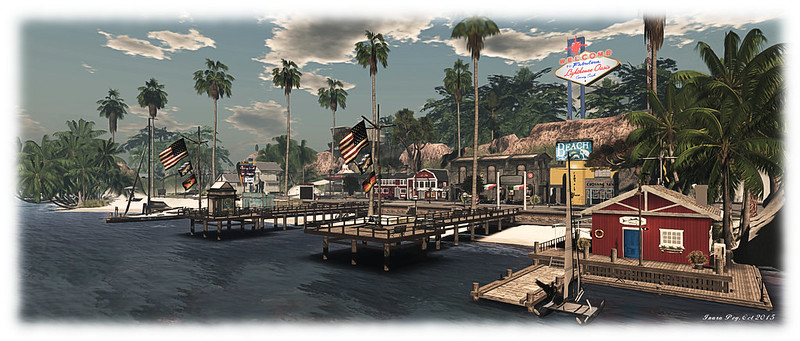
Crossing Sands; Inara Pey, October 2015, on Flickr With immediate effect, set-up fees for all private island products (unthemed and themed) in Second Life have been reduced by 40% (image: Crossing Sands MarinaFlickr)

As announced in a an official blog post, the Lab has confirmed that with immediate effect set-up fees across all private island products (Full, Homestead and OpenSpace, both developed and undeveloped), have been reduced by 40%. This means that the set-up fees for all classes of private island product are now (ex-VAT, where applicable):

  • Full Private Island US $600
  • Themed private island US $629
  • Homestead region US $225
  • Themed Homestead region $250
  • OpenSpace region US $150

What’s more, anyone who has paid a region set-up fee in the past 14 days will receive the difference in fees back as a credit(in US Dollars to their account balance.

This is undoubtedly a step in the right direction – although how much of an impact on land usage it has will be interesting to monitor. In October 2011, the Lab abolished all set-up fees for a period of one month in a “land sale”, which saw  689 added to the grid, a net growth of some 508 regions for the month. Unfortunately, such was the situation then that, as the realities of tier kicked-in, the increase in regions was all but negated in a few months as the heavy decline in region numbers continued through 2012.

As it stands, it is fair to say the global economic situation has improved since 2012, and people have again found themselves with more in the way of disposable income in their pockets they can put towards tier. This has likely to have been a contributing  (but not the only) factor in the slow-down in regions losses seen in 2013 / 2014. But will a cut in set-up fees be sufficient to fuel a further sustained slow-down in grid shrinkage which has accelerated slightly in 2015? That’s something only time will tell, although I’m admittedly sceptical.

Which is not to negate the move by the Lab in any way – rather the reverse, it is most welcome, if perhaps a little overdue.
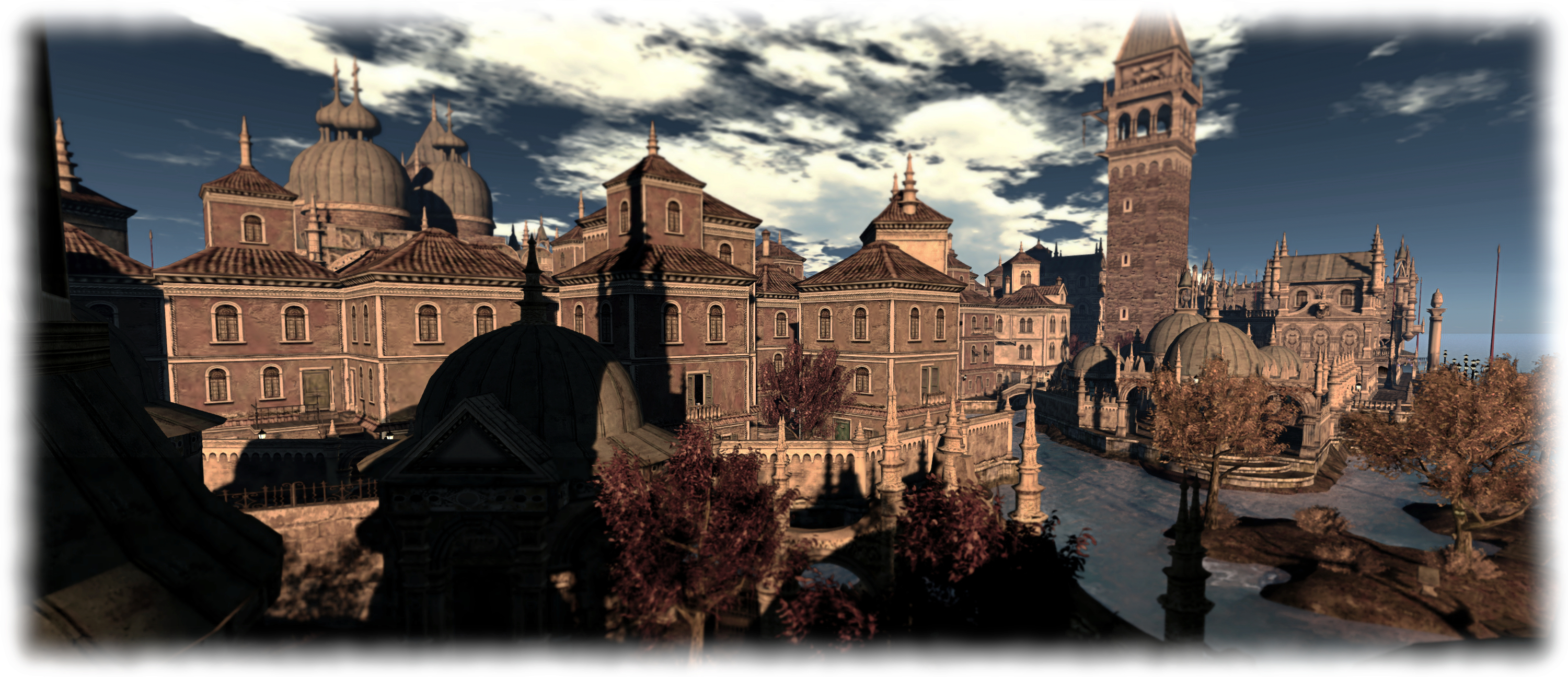
Venexia; Inara Pey, June 2015, on Flickr Tier has been a significant contributor to the loss of regions in SL, including places such as Venexia (above) and its sister region, Goatswood.  Whether the reduction in set-up fees will help slow this situation down is an open question.

Changes to Transferring Regions

Alongside the set-up fees reduction for private regions, the Lab has also announced changes to transferring regions with grandfathered pricing, with the blog post stating;

Previously, Private Islands with grandfathered pricing would lose that status and revert to the usual schedule of land maintenance fees when the regions were transferred to a new owner. Today, we are changing that policy to make it easier for these regions to remain on the grid if and when they are sold to new owners.

Effective immediately, both Grandfathered Full Private Island regions ($195/month) and Grandfathered Homestead Private Island regions ($95/month) may be transferred to new owners without losing the discounted pricing.

However, this news come with a caveat: the one-time transfer fees for grandfathered regions are increased, with grandfathered full regions costing US $600 to transfer and maintain the grandfathered tier, and homestead regions US $300 (both fees per region, and exclusive of VAT where applicable),


Lab announces Marketplace search beta

On Wednesday, November 11th, the Lab announced the trial of a new Marketplace search. In particular, the Lab states they’ve been working on infrastructure changes to improve the relevance of search results and have made changes for search to scale better as more content and categories are added to the Marketplace.

Search has always been one of the large issues with the Marketplace over the years, as likely most who have used it will be able to attest. There have been attempts to improve / tweak / amend search over the years, but none have really seemed to hit the nail on the head in terms of generating appreciable improvements, which has potentially been the biggest annoyance faced by anyone using the Marketplace.; so it will be interesting to see how the new updates fare.

The updates can be tested using a special beta search Marketplace  – note they are not yet a part of the main Marketplace, so don’t expect to see changes there just yet -, with the Lab noting that further work is still in hand for boolean searches (or at least, excluding keywords from searches).

When testing the updated search capabilities, make sure your using the beta search marketplace, not the "main" marketplace
When testing the updated search capabilities, make sure your using the beta search Marketplace, not the “main” marketplace

Users are invited to use the beta Marketplace “to perform all your regular Marketplace activities”, and to report and specific issues via a JIRA bug report with the SLM Beta Search component.

In addition, there is a forum thread available for general discussion on the new search capabilities, which currently offers some mixed feedback, with ChinRey in particular (at the time of writing) offering considered feedback on some of the pluses and minuses she has observed / can see. There is also an interesting note from Grumpity Linden on why the beta search might appear to be a lot slower than the “main” MP, which is worth keeping in mind when trying it, because it is currently very slow in responding.

Again, if you do give the search beta a good try, and want to leave feedback,  make sure you use the Lab’s forum thread to do so. Comments left here aren’t likely to be read by the relevant staff at the Lab.

Announcing Lab Chat – a new Q&A show in Second Life

Lab Chat LogoOn Tuesday, November 10th, the Lab announced the forthcoming launch of Lab Chat,  “an opportunity for you to ask Lindens your questions during a live taping that will be recorded and archived for everyone to view.”

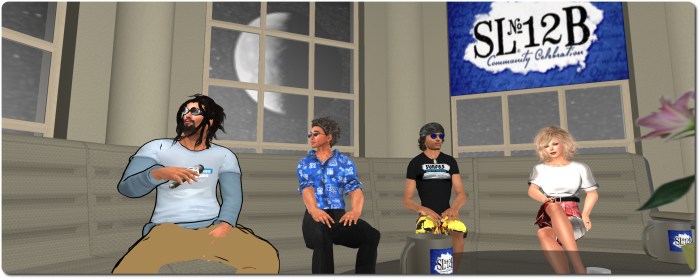
The new show has been in planning ever since SL12B and the successful Meet the Linden chat sessions hosted by Prim Perfect and which featured opportunities to meet Linden Lab staff such as Pete Linden (Peter Gray), the Lab’s Director of Global Communications; Xiola Linden from the Community Team; Patch and Keira Linden; Product Manager Troy Linden and Senior Director of Product, Virtual Worlds, Danger Linden (Don Laabs), and which featured a Q&A session with CEO Ebbe Linden (Ebbe Altberg).

Draxtor Despres, Danger Linden, Troy Linden and Saffia Widdershin at the Meet the Lindens at SL12B, the series which acted as a precursor to Lab Chat

The blog post announcing the new series, reads in part:

The first Lab Chat will be Thursday, November 19th, at 10:30am SLT at the Linden Endowment for the Arts Theatre – with guest Ebbe Altberg, CEO of Linden Lab.

Residents from the Lab Chat production team – Draxtor Despres, Gentle Heron, Elrik Merlin, Petlove Petshop, Inara Pey, Aisling Sinclair, Devin Vaughan, Saffia Widdershins, and Jo Yardley – will pick questions to ask Ebbe from this forum thread  – so be sure to get your questions into the thread no later than Friday November 13th, 2015. Authors of selected questions will be invited to ask their question live at the in-world show. Time permitting – additional questions from the audience will be answered.

If you are unable to attend the live show, a recording will be available shortly after the first Lab Chat wraps, so no one will miss out!

We’ll see you on November 19th at 10:30am SLT. Don’t forget to add your questions to the forum thread and mark your calendars to join us!

My own role in this series is relatively minor – I’ll be producing transcripts of each Lab Chat session, which will be available, possibly with audio extracts, on these pages most likely on a forthcoming Lab Chat website.

If all goes well, it is hoped that Lab Chat will go on to become a monthly series. So if you do have questions you’d like the opportunity to perhaps ask your questions directly to Ebbe Altberg, hop over to the forum thread and leave them there, as noted in the Lab’s announcement.

In the Press: discussing Sansar and Second Life with TNW

Second Life: "almost as diverse as the physical world we live in" - Ebbe Altberg
Second Life: “almost as diverse as the physical world we live in” – Ebbe Altberg

Martin Bryant, Editor-at-Large at The Next Web caught up with Linden Lab’s CEO, Ebbe Altberg, in Dublin at the start of November, where they had both been attending the 2015 Web summit conference.

During a 10-minute audio interview, Mr. Bryant offers a series of questions which, while they may not reveal anything new to those engaged in Second Life or following the unfolding news about “Project Sansar”, nevertheless cover interesting ground and offer food for thought on a number of fronts.

Martin Bryant, Editor-at-large for The Next Web, discusses SL and "Project Sansar" with Ebbe Altberg
Martin Bryant, Editor-at-large for The Next Web

The recording is prefaced with a series of useful bullet points under the title Think Second Life died? It has a higher GDP than some countries, itself is an eye-catching title, which help put some perspective on just what Second Life has actually managed to achieve over 12 years, and sets the stage for the broader discussion.

The interview starts from the position that the media have tended to get Second Life wrong, noting that far from having failed or gone away, it is still operating, still engaged some 900,000 active users every month, just 200,000 a month down from when it hit a peak of around 1.1 million 7+ years ago. Not only do these figures tend to highlight Second Life’s (albeit very niche) ability to attract and hold an audience, they also put oft-repeated claims that people are somehow leaving Second Life en masse into perspective. The outward trickle of active users is there, but it’s hardly a the deluge all too often portrayed. And those who remain are still capable of powering an economy with a GDP of some US $500 million.

From here, the conversations travels by way of the kind of virtual goods on offer inside Second Life to arrive at a question about the “typical” Second Life user, which generates a well-rounded reply.

Well, it’s a huge variety … there’s no typical about it. It’s like asking, “what’s a typical person from Ireland?” There are educators, there are students, there are health professionals, there are patients, there are fashion fashionistas, there’s partiers, gamers, role-players. People just socialise around pretty much anything you can think of. It’s almost as diverse as the physical world we live in.

Further into the conversation, there is a re-emphasis that even with “Project Sansar” coming along, there are no plans on the part of the Lab to discontinue Second Life, with Ebbe again demonstrating a pragmatic view on the amount of investment users of Second Life have made in the platform.

Second Life will continue. We have no plans to shut down Second life or forcibly migrate users from one to the other. So users can ultimate choose where they want to spend their time. And there are probably so users that have spent so much time creating incredible communities around all kinds of interesting subject matter that might just fine it too much effort to do it all over again on a new platform. so they can stay in Second Life, that’s fine.

Obviously, if the vast majority of users in Second Life opt to make a full transition to “Project Sansar”, then it will call into question how long SL can remain a commercially viable platform – but is this likely to happen overnight? Probably not  (which is not to say it won’t, at some point happen) over time). The transition is liable to be gradual, simply because it is going to take “Project Sansar” to grow to a level of sophistication offered by SL: as the Lab has made clear throughout 2015, everything isn’t simply going to be in place when the open alpha commences in early 2016 – that’s why they’re calling it an “alpha”.

An image from the Project Sansar: looking to the future of VR

The more detailed discussion of  “Project Sansar” starts with a reiteration that it is being specifically – but not exclusively – developed to operate with coming plethora of VR HMDs and other devices, and that it will be “consumable” (i.e. accessed via) computers (initially PCs) and mobile devices. It is here that mention is made of something that may have been missed in broader discussions about the new platform: there will be no “one-size-fits all” client / viewer.

Instead, client functionality will be determined by client device capability. If you’re on a PC platform, you’ll have access to the full range of capabilities to both “consume” (that is, access, use and participate in) “Project Sansar” experiences and you’ll have access to the tools to enable the creation of those experiences. If you’re using a mobile device, you’ll be able to “consume” experiences, but not the tools to build them. Which makes sense.

Ebbe Altberg: talking Second Life, "Project Sansar" and virtual currency compliance with TNW's Martin Bryant
Ebbe Altberg: offering a good perspective on LL, SL and “Project Sansar” for TNW readers / listeners

In discussing the likely impact of VR, Ebbe takes the pragmatic view that things aren’t going to happen overnight, just because the first generation of high-end headsets are going to appear in a few months; it’s going to take time for the market to grow, and there is still much more to be sorted out.

This is a view I hold myself, so no argument from me. However, where I do perhaps hold a differing view on things is to just how important avatar based virtual experiences are actually going to be outside of some very niche environments.

Even if VR isn’t overhauled by AR in terms of practical ease-of-use, widespread practical applications, convenience, and appeal, I also cannot help but feel consumer-focused VR might offer such incredible opportunities for immersion, entertainment, training, etc., that it will see the use of avatar focused virtual environments remain somewhat marginalised in terms of acceptance with the greater VR community, just as Second Life has been marginalised with the greater on-line social community.

Continue reading “In the Press: discussing Sansar and Second Life with TNW”

A look at the new “Classic” avatars for Second Life

Reader Besedka gave me a poke about the Lab releasing a new set of Classic avatars for Second Life on Friday, November 6th.

The release, which came with a blog post from the Lab, see the avatars which use the default avatar mesh and system layer clothing completely overhauled and replaced with a new set of very modern looking avatars (in terms of their dress and style).

In all there are 16 revamped avatars, which sees the set make use of fitted mesh items and presents them with looks many might find not only an improvement on the older “Classic” avatar looks, but also on the mesh versions launched in May 2014. That said, having tried several, I do feel some are perhaps oddly proportioned; “Shawna” in particular came over as a tad elongated when I tried her.

The new
The new “Classic” avatars, featuring mesh attachments, are available to new users signing-up for Second Life …

The avatars are available to those signing-up to Second Life on the avatar picker when setting-up their accounts, and from the Choose and Avatar option of the Me / Avatar menu option in v3 viewers. Once you’ve obtained one of them, it will appear in your Inventory under the Clothing folder and identified by the name assigned to the look.

Avatar Complexity reveals the avatars to be reasonably lightweight

A further update with these avatars is they dispense with the infamous duck walk, replacing it with something that works reasonably well, together with a series of male or female AO poses which appear to be “built-in rather than reliant upon a HUD. They work reasonably well, although I found the female one a little jerky in the transitions between some poses.  They also avoid the hiccup made when launching the fully mesh avatars: these new avatars are properly modifiable.

The Lab’s blog post refers to these avatars are being “more performant”. Checking some of them out against the Quick Graphics RC viewer’s Avatar Complexity capability revealed that have reasonably low ratings, so they shouldn’t offer any major hindrance to those viewing them on lower specification systems.

The demographic represented by the new set remains fairly typical – they all appear to be relatively youthful, perhaps no older than their mid-30s. However, given the general age range of new users signing-up to Second Life, which the Lab has in the past stated has moved more towards the 20-somethings in recent years, this isn’t that surprising. And while it may sound ageist, It also means the avatars have a level of attractiveness around them which is perhaps more enticing to people signing-up to SL that offering a much broader range of ages.

My “Crash Test Alt” finally gets a fresh look (left) – the “Shawna” avatar, with my skin and shape. Now actually looks more like my twin 🙂

All told, it’s good to see the “Classic” range of avatars updated in this way. The looks are fresh and clean, and – dare I say it – streets ahead of the mesh avatars in overall appearance, none of which I found particularly appealing in either looks or apparel.

These new avatars however, look pretty sharp (speaking as someone yet to swap to mesh bodies, etc). So much so, they they’ve finally encouraged me to give my Crash Test Alt a change of clothing after seven years! She’s now using the “Shawna” outfit and hair (but with her own shape and skin), and looks pretty good.

Project Sansar: in the news and marketplace thoughts

“Project Sansar” has been getting noticed again. In Dublin, at the 2015 Web Summit, Ebbe Altberg, the Lab’s CEO gave a presentation about  the new platform, the end of which included short video of the platform, which was captured by attendee Janne Juntunen. Following this, at least a couple of articles have appeared in on-line media outlets, with my colleague Ben Lang offering a brief write-up in Road to VR, while Fortune On-line, to which I was directed by Ciaran Laval, also carried a piece.

The Fortune article offers an enticing headline, How ‘Second Life’ Developer Hopes To Deliver The ‘YouTube For VR’, drawing on the Lab’s YouTube / WordPress analogy they’ve used in talking to the media over the last few months, but neither – beyond offering an image captured from “Project Sansar” and which can be seen on the Lab’s redesigned corporate website, has much that is new to those of us following “project Sansar” as closely we can.

An image from the Lab's redesigned corporate web site showing the Golden Gate Bridge model from "Project Sansar", complete with glying vehicles moving around it - a moving versions of which was show at the Dublin Web Summit 2015
An image from the Lab’s redesigned corporate website showing the Golden Gate Bridge model from “Project Sansar”, complete with flying vehicles moving around it – a moving versions of which was show at the Dublin Web Summit 2015

The YouTube  / WordPress analogy is fitting, given that “Project Sansar” is designed to be pretty much a white label environment where clients and customers can come into the platform, develop their virtual spaces and then market them to their users under a brand of their own choosing, complete with dedicated access from the web.

Given most of the statements made in both articles will be familiar to those following Sansar, I was drawn to one statement in particular made by Ebbe Altberg:

We want to make it less expensive and less difficult for creators to get started with Project Sansar, while at the same time enabling them to create higher quality, larger, and more immersive experiences, reach larger audiences,and create much larger business opportunities—whether selling virtual items or monetizing entire experiences. In addition to supporting our community of creators we’ll give them tools to create and support their own communities and serve their customers and audiences. [Emphasis mine.]

The first part of this comment again doesn’t really reveal anything new; however, I’ve highlighted the last past of it because it presents another opportunity for some speculation.

A further image from the Lindenlab.com home page showing a scene which formed a part of the Lab's Dublin Web Summit video
A further image from the Lindenlab.com home page showing a scene which formed a part of the Lab’s Dublin Web Summit video

Yesterday, and thanks to a huge amount of legwork by Vick Forcella, I wrote about the Lab’s subsidiary Tilia Inc, and the filing of a trademark for Tilia, a payment processing system.  Seeing Altberg’s comments about providing “project Sansar” customers / clients tools to … serve their customer and audiences”, I find myself wondering if “Tilia” might be intended to provide “Project Sansar” customers with a further white label environment in which they can build and brand their own marketplace presence and control the goods and services presented to their customers.

Thus, rather than sending their users to a generic “Project Sansar” marketplace where they might be confronted with a plethora of goods, including those from competitors or which might otherwise be unsuitable to their target audience, customers using Sansar could present their users with exactly the virtual good they wish them to see and use, a level of control which could be extremely attractive to the core vertical markets towards which “Project Sansar” seems to be being steered (e.g. education, training, simulation, architecture and business).

Ebbe Altberg presents a short video featuring footage shot from inside "Project Sansar" at the Dublin Web Summit 2015 (image via )
Ebbe Altberg presents a short video featuring footage shot from inside “Project Sansar” at the Dublin Web Summit 2015 (image via Janne Juntunen on Twitter)

In his Road to VR piece, Ben Lang focuses more on the technical aspects of the new platform, pointing-out that style and looks can be an integral part of a game or platform’s longevity, and that in his estimation  of these initial screen shots, “Project Sansar” is hitting the nail pretty much on the head.

It is in the Road to VR piece that we do get an interesting insight. It has been previously indicated that “Project Sansar” will offer ways and means to optimise content to improve performance, rather than just shoving everything down the pipe and little the viewer try to handle it all. In discussing things with Ben Lang, Ebbe Altberg gives some indicators as to how this will be achieved.

We’ll do a lot of things to help users understand how to create performant content. There’s a lot of work yet to do, but we have plans for things like automatic optimization of content, polygon reduction of content that preserves quality at the same time, including showing users that create content some sort of visual indication of how performant their content is going to be across various platforms [i.e. clients].

Both articles offer good light reading on “Project Sansar”, even if they don’t offer anything especially new, with the Fortune articles also underlining a few facts, good and bad, about Second Life.

I remain intrigued by the direction the Lab is taking with their new platform. While it is early days, and given the fact I  still tend to feel “Project Sansar” will end up  niche product  – albeit it a much larger niche than filled by the likes of Second Life and OpenSim today – I also tend to think that the Lab is far more one the right track in their thinking than those behind some of the other platforms currently in development out there.

Related Links

P.S. Ben, if you do read this, please check the e-mails, still awaiting a reply vis our discussions!)