VWBPE 2015: Ebbe Altberg – LL’s Next Generation platform

On Wednesday, March 18th, Ebbe Altberg gave the keynote presentation at the 8th annual Virtual Worlds Best Practice in Education (VWBPE) conference, which runs from March 18th through 21st inclusive, in both Second Life and OpenSimulator.
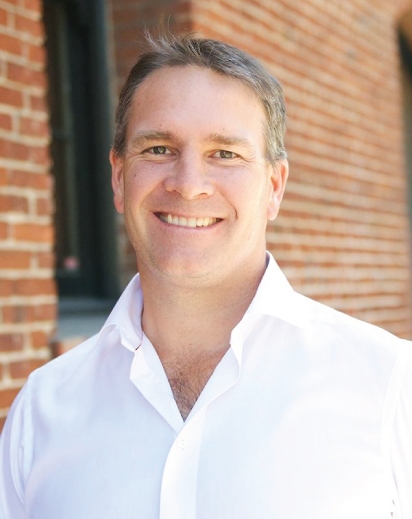
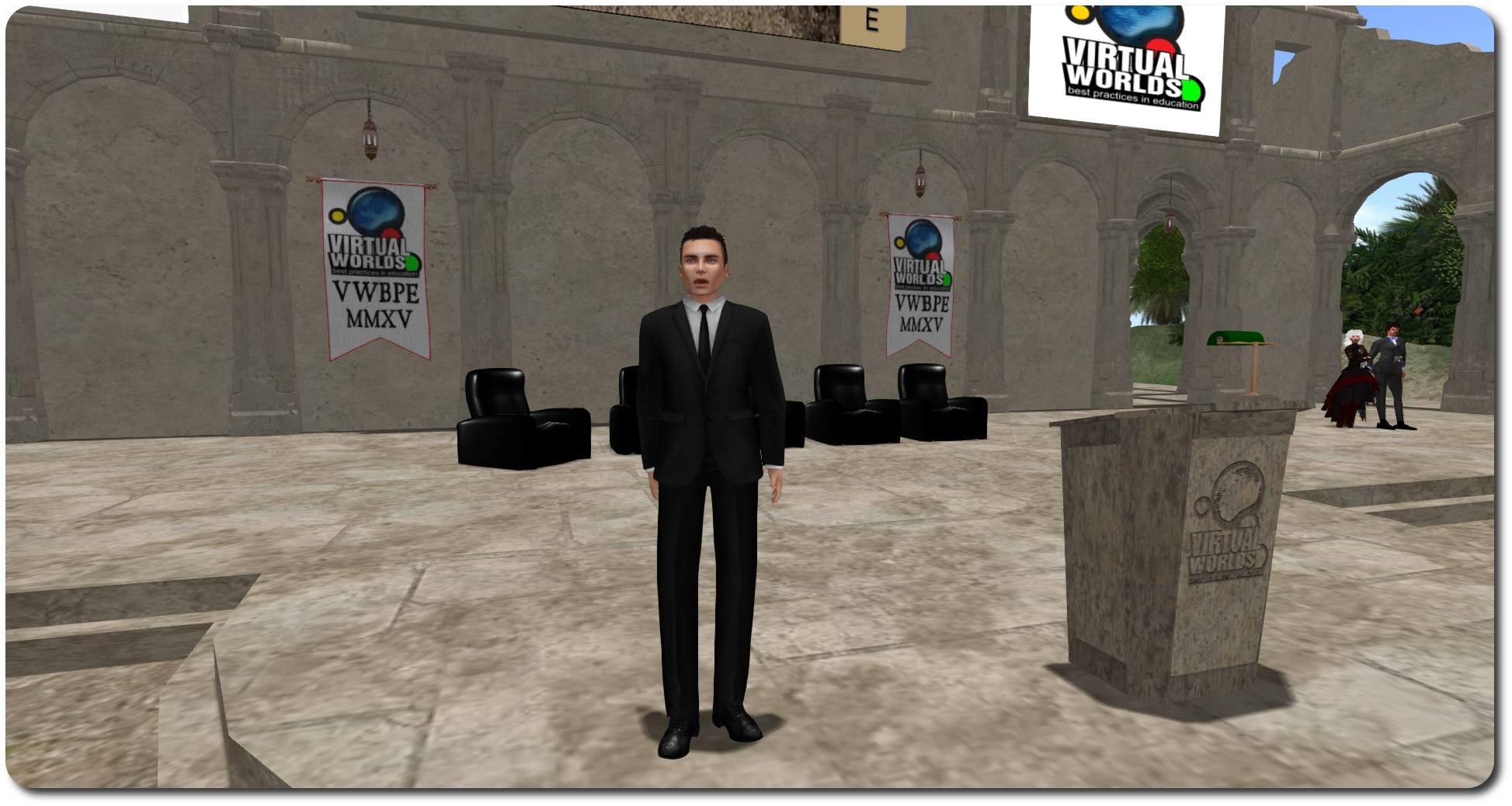
Ebbe Altberg: opening keynote at the 2015 Virtual worlds Best Practice in Education conference, March 18th

His key address lasted a little over an hour, in which he outlined the Lab’s approach to education and non-profits, provided some insight into what Lab’s future plans, and discussed further information on the Next Generation platform. Following this, he entered into a Q&A session, which ran beyond the main session time, switching from voice to text chat in the process.

The following is a transcript of his core comments on the Lab’s next generation platform. These commence at the 31:20 mark into the official video of the event, although obviously, mention is made of both in reference to education earlier on in his presentation, as Ebbe discusses education, issues of accessibility, etc. I’ve included audio excerpts here as well, for further ease of listening to his comments whilst reading. Time stamps to both the audio tracks and the video are supplied.

The Summary

Click the links below to go the relevant section.

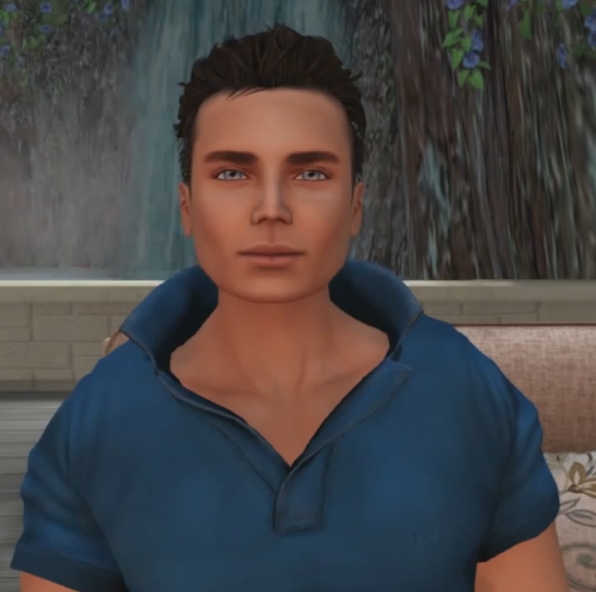
Ebbe Linden as he appeared in-world at the VWBPE 2015 conference

On the Name

[00:00 / 31:20] So, the future platform for virtual experiences. We’ve said that the next generation platform, we still don’t have a name for this thing; we have a code name internally, but we don’t want to leak that out or use that, because that could just be confusing and distracting, and it’s probably going to change soon anyway. So we just refer to it as “the next generation platform”.

[00:21 / 31:42] We do not refer to it as “SL 2.0”, because that might imply a little too much linearity, and we don’t want to necessarily constrain ourselves by the past; but we also want to obviously take advantage of, and leverage, our learnings from the past.

Progress to Date

[00:39 / 31:38] But the progress is going every well. I would say we’re about 8-9 months in on working on this; I would say the last six months have been absolute, full-on with a big crew. We’re talking close to 40 people or more; probably 30+ just engineers, and then obviously a bunch of product managers and designers working on this product.

New User Discovery and Experience

[01:12 / 33:33] And there’s a number of areas where we think about it quite differently from Second Life, and we did spend quite a lot of time thinking about why did Second Life hit the ceiling, if you will. You know, many years ago it peaked at 1.1 million monthly users and these days it’s around 900,000, so it’s not a huge difference from the highs and where we are today,

[01:38 / 32:59] But why didn’t it go to five million, ten million, 100 million?  And what can we do to  solve some of the things we thought caused it to sort-of max out there?

The Lab is hoping their next generation platform will bridge the gap between niche and mass adoption. This may prove easier said than done

[01:52 / 33:11] One area where we want to think quite differently is discovery; how do I discover an experience? Today you pretty much have to be inside Second Life to discover an experience, and we want to make it a lot easier for people to be able to discover an experience from the outside. So that you can create an experience, and [people can] much more easily find your experience and enter your experience without having to necessarily at that point being aware of the notion of this platform or what other types of things are available to them. They can discover those as they go along. Make it easier for you to bring your audience directly into your experiences.

Platform Accessibility

[02:36 / 33:55] Accessibility. Today, when you leave your PC, you pretty much leave Second Life behind, [so] what can we do to make sure it’s available on more platforms? It’s obviously getting more complicated now with all these VR platforms, so what used to be PC, windows and Mac, which we support today; and then mobile, which you can get access to today if you use a third-party service like SL Go or some other clients that support mobile.

[03:10 / 34:29] But we want to think about mobile as something we can support form the beginning; but again, the number of platforms across mobile, PCs and VR … [there’s] more and more of them. so it’s tough to keep up.  So we are building a next generation platform from the ground up to make possible for us to take advantage of all these different platforms.

Scalability and Creativity

[03:37 / 34:57] Scalability. This is a really important one; an event like this highlights it.  There’s a tremendous amount of effort that goes into putting on  a meeting like this with just a couple of hundred people in-world. We have to put together four corners and you have to do a lot of work, and it’s still creaking at the seams as we speak, to put something like this on.

[04:06 / 35:25] We want [with the] next generation platform to make the size of an event like this to be a trivial exercise, and then figure out how, with various techniques, to make it possible to do events like this for tens of thousands of people.

[04:26 / 35:46] That’s one way to think of scalability: how do you get more people in a region, how do you get more people to be able to participate in an event at the same time. but [there’s] also the scalability for creators. How do you make it possible for creators to not only be able to reach a larger audience, but also make more money, too.

[04:44 / 36:14] Take the classroom that Texas A&M put together for teaching kids chemistry. The developers of that experience of teaching chemistry, they probably did as a one-off, for some fee, job for Texas A&M to create that classroom. When the classroom is used by students at Texas A&M, you know, 20 students, whatever, then that experience is fully in use.

[05:22 / 36:41] What if that developer could have an unlimited number of copies of that experience to rent out or sell, and every institution could use that virtual classroom all at the same time? That makes for a much more appealing prospect for a creator of an experience, and gives them a greater opportunity to monetise their experience. And then we’ll get more high-quality content creators introduced into  the economy, and then everything sort-of heads upwards. So that’s something we think about a lot.

Quality and Ease of Use: Physics, Avatar Design, Shopping

[05:56 / 37:16] We also think about quality. Quality is a range of things: ease of use, quality of physics, lighting, basic performance of how smooth are things, how easy is it to do things, how natural an avatar can we make.

[06:21 / 37:41] The skeleton system in the new avatars we’re working on are way, way, way, more complex than what we have in Second Life.

[06:29 / 37:48] How can we make it easier for people to shop and get dressed and do these types of activities with much higher visual fidelity at the same time. So we think a lot about that.

Revenue Generation for the Lab

[06:46 / 38:05] And then monetisation – the way  we [Linden Lab] monetise. I’d say our business model is a little be strange in Second Life today. We charge you a lot for land, and then we charge you almost nothing for all of the transactions that happen in-world. So, I’ve said this before, but generally we think about how do we lower our property taxes by a lot and at the same time, we’ll have to raise sales taxes to make some of the difference.

[07:15 / 38:35] And then also how can we build a platform that [is] technically less demanding, so that it costs us less to operate all of this content that we’re running all of the time, so that we can have a lower barrier to entry, and make it possible for people to come it and create some really interesting things at very low cost. And so that’s a big focus for us. How can we make less money per user, almost, but have a lot more users, is kind-of the core of the puzzle we’re trying to solve for.

Continue reading “VWBPE 2015: Ebbe Altberg – LL’s Next Generation platform”

Mitch Kapor steps back from the Lab

LL logoAt the end of 2014, Mitch Kapor stepped back as an active member of Linden Lab’s board of directors.

While no formal announcement was made at the time, I recently noticed Mr. Kapor’s name and biography to be absent from the Leadership section of the Lab’s corporate website’s About page, and contacted Peter Gray, the Lab’s Director of Global Communications to enquire.

“Although he remains an investor in and supporter of Linden Lab,” Peter said in reply to my enquiry, “Mitch Kapor stepped back from his role as an active member of the board of directors at the end of 2014, allowing him to devote more of his focus to the mission of the Kapor Center for Social Impact.”

Mitch Kapor (via Twitter)

Mr Kapor, who  founded Lotus Development Corporation in 1982 and designed of Lotus 1-2-3, is also a co-founder of the Electronic Frontier Foundation, was one of the first investors in Linden Lab, and was the company’s very first Chairman of the board, taking on the role in April, 2003.

His decision leaves Dana L. Evan, Bill Gurley and Jed Smith listed as board members for the company.

Dana L Evan joined the board in 2008, bringing with her 20 years of of leadership experience in global finance and operations management, including 12 years as CFO of VeriSign, Inc., where she was a founding executive and a significant contributor to the company’s growth and profitability.

Mr. Gurley joined the board in late 2004, following  a financing round which raised $8 million for the company. The round was led by Benchmark Capital, where Mr. Gurley is a general partner, and with participation from Omidyar Network.

Jed Smith was, alongside Mitch Kapor, both one of the early investors in Linden Lab, and an initial member of the board, most recently serving in the capacity of the board’s Chair. In that role, he was largely responsible for identifying Ebbe Altberg as the right candidate for the Lab’s new CEO, following Rod Humble’s departure at the end of 2013, and was also largely responsible for persuading Mr. Altberg to make the move to the Lab.

The Lab's board (l-to-r): Bill Gurley, Dana L. Evan and Jed Smith
The Lab’s board (l-to-r): Bill Gurley, Dana L. Evan and Jed Smith

Ebbe Altberg talks Blocksworld, SL and the “next gen” platform

Dean Takahashi has a new article up at VentureBeat’s GamesBeat column, featuring a conversation with CEO Ebbe Altberg.

I admit to finding the title of the article, Linden Lab explores VR for its next-generation virtual world (interview), a little bit of a misnomer, given the article actually covers more ground than just the Lab’s new platform and VR. In fact, it’s fair to say that much of the focus of the piece is on Blocksworld, and not the new VW platform – which doesn’t make the piece any less interesting a read.

Ebbe Altberg discusses the Lab's next gen platform, Blocksworld and SL with VentureBeat
Ebbe Altberg discusses the Lab’s next gen platform, Blocksworld and SL with VentureBeat

The article starts out by noting the company’s longevity and the fact that it has been in something of a transitional state (as we all know), divesting itself of almost all its existing products save Blocksworld and SL, while at the same time announcing it is heading down the road of building a new virtual world platform.

Takahashi suggests the reason for the Lab divesting itself of products is down to some of the products failing to have the right mix of talent, traction and resources to make their mark.

This is perhaps debatable; while Creatorverse and dio were perhaps lame ducks in terms of appeal, it has to be pointed out that both Versu and Patterns had potential – the former has since gone on to stand on its own two feet, and the latter already had a reasonable user-base even whilst still in a pre-release status (and its termination drew no small amount of upset from Patterns user on Steam).

In fairness to Ebbe Altberg, he does acknowledge the fact that some of the Lab’s nascent  products didn’t really get a chance to grown their own legs, and that some of them might well have worked out for the good of the company. However, hard choices were required, the Lab really being too small to handle everything at once (and we know what happens when it grows beyond its means: remember, the June 2010 layoffs came after a sustained 18 months of recruiting that saw staffing numbers increase by 50% for no demonstrable increase in revenue).

Turning to the meat of the article, it has to be said the the recent sale of Desura had led to some questions over Blocksworld’s future. However, Altberg’s replies to Takahashi about that product should put paid to speculation:

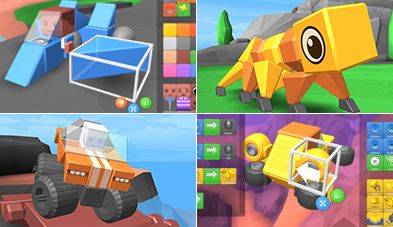
We’re also very excited about Blocksworld. I don’t know if you’ve had a chance to check that out before, but it’s a small up-and-comer. It’s one of the portfolio of non-Second Life products that we decided to stick with. We liked the user experience, the ease of creation, and the audience it targets: a much younger demographic than Second Life. Also, right now, it’s iPad only. It gets us into a lot of experience dealing with a younger audience. … You need to think about ease of use and simplicity but still enable them to create really powerful things, as well as working with the new medium of mobile. We’ve had good progress with this product. It’s still early, but we have good traction. The kids love it.
Block-3
Linden Lab are said to be “very pleased” with Blocksworld’s performance

In addition, and further into the interview, Altberg indicates that the game has around 400,000 monthly users. How this translates to revenue flow beyond the actual purchase of the game is hard to judge. While additional building sets and expansion packs are available as in-game “purchases”, these are paid for through “coins” which users can earn, rather than having to necessarily buy. Even so, buying coins is the easier option, particularly where the expansion packs are concerned (see the video below), so there’s a reasonable chance that Blocksworld is proving a “nice little earner” for the Lab, even if it is nowhere on the scale of SL.

Beyond this, it would seem clear that the Lab have further plans to enhance Blocksworld, including the development of an in-game user-to-user economy, which will allow the sale of creations and builds between users, somewhat a-la SL. Also, Altberg’s statement that, “right now it’s iPad only”, suggests that an Android version of the game is still under consideration.

One of the blocksworld expansion packs

Continue reading “Ebbe Altberg talks Blocksworld, SL and the “next gen” platform”

Lab divests itself of Desura

LL logoIn a press release made on Wednesday, November 5th, Linden Lab announced the sale of Desura, the on-line digital distribution service which they acquired under Rod Humble’s leadership in July 2013.

Desura has been sold to Bad Juju Games, the Indie Game and Middleware Tools Developer for the Mobile, Console and PC Gaming markets, and based in Aliso Viejo, California. In the brief press release, the Lab state:

As has just been announced, Bad Juju Games has acquired Desura from Linden Lab.

Bad Juju has taken over all day-to-day support, maintenance, and ongoing enhancements to the Desura website and service platform. The Bad Juju team will be reaching out directly to developers with games on Desura and are happy to respond to any questions they may have.

Transitioning Desura to a new owner is great for Linden Lab and our customers, as it allows us to further enhance our focus on creating the ambitious next-generation virtual world, while continuing to improve Second Life and growing Blocksworld.

Desura is a fantastic platform for game developers and players, and we look forward to seeing it continue to evolve and grow, now as part of Bad Juju Games.

Desura: just 16 months in the Lab's portfolio
Desura: just 16 months in the Lab’s portfolio

A press release from Bad Juju themselves indicates that negotiations over the future of Desura have been underway for some months:

Indie Game and Middleware Tools Developer Bad Juju Games®, today announced that it has officially acquired Desura™, a comprehensive digital distribution service for PC, Mac and Linux gamers from its former owner and operator Linden Lab®. The move comes after several months of coordinated planning by the companies to ensure uninterrupted operation of the Desura service as well as a comprehensive roadmap of new features that will significantly benefit both its users and game developers during the upcoming months and beyond.

It is unclear what the sale of Desura may mean for Scott Reismanis, if indeed it means anything at all. Reismanis, who founded the digital distribution service, and who joined Linden Lab as “Director of Digital” not long after the acquisition. With his experience in empowering creators to benefit from their digital content, Mr. Reismanis may already be involved in the development of the company’s “next generation” virtual worlds platform.

While this may sound a little like 20/20 hindsight, I confess to being unsurprised by the sale of Deura; I’ve actually been expecting news of this kind for the past couple of months, and particularly since the Designing Worlds interview with Ebbe Altberg. During that programme, Mr. Altberg referred to the Lab being in a process of cleaning up their product portfolio (some 3 minutes into the show), with the use of the present tense suggesting to me that the process was still going on, rather than him simply referring to the company’s removal of Versu, Creatoverse and dio from their portfolio. Given the statements of support that have been repeatedly given about Blocksworld, the comment in the DW show seemed to indicate something would be happening to Desura and / or Patterns.

To be totally honest, at the time I felt it more likely that Desura would be let-go than Patterns, as the latter at least seemed to fit with the Lab’s sandbox creativity philosophy, while Desura always seemed more of an awkward fit, and something more likely to generate a decent return if offered for sale. Of course, as it turned out, Patterns went first.

Confirmation also seemed to come when an enquiry on an unrelated matter led to a response from the Lab that all remaining advertising including Desura, would be removed from their remaining web properties (my.secondlife.com and search.secondlife.com). The reference to Desura chiming as odd, given it was ostensibly a Lab product.

I was broadly supportive of the Lab’s attempts to diversify their product portfolio, even iff the effort always did seem half-hearted. Companies with all their eggs in one basket tend to by very vulnerable to any number of circumstances not always of their own making – although equally, they can also sit very comfortably in a niche and enjoy a long life. Even with Blocksworld still on the books – and another repeated statement that the company will be standing beside that product – it now seems that for better or worse, the Lab has opted to keep only their golden egg, Second Life, and focus on perhaps producing another they can nurture alongside it.

Patterns: Lab seeks interested parties (adiós, little dorito man!)

LL logoLinden Lab has announced it is discontinuing development of Patterns, its sandbox game for the PC and Mac. In a press release issued on Thursday October 9th, the Lab state:

Recently, Linden Lab announced that we are working on an ambitious project to create the next-generation virtual world, while we continue to improve Second Life and grow Blocksworld. As we focus on these priorities, we have ceased development for Patterns, and we will be no longer offering the game for sale.

We at Linden Lab are extremely grateful for the adventurous early players who explored the Patterns genesis release. Those who purchased the Patterns genesis release will still be able to play their copies of the game, but features relying on server connections, such as world-sharing, will not be functional.

Patterns had early promise, and while Linden Lab focuses our efforts on our other offerings, we are still evaluating the future of the Patterns technology. Interested parties are welcome to contact us with proposals.

Patterns: development discontinued

Following the announcement, the Patterns website was taken down, and all links to it referred back to the Lab’s corporate website. However, the game itself remains accessible, as per the announcement, although the loss of server-side elements means that the Cosmos for world-sharing is no longer functional, limiting users to the worlds they created and save locally or to the default worlds supplied with the game. Also, as a result of the move, keys for the game will not longer be purchasable, although existing keys will remain redeemable for those who have them.

Patterns was another of the games which the Lab started developing (initially using a company called Free Range Software) under Rod Humble’s tenure. Despite never reaching a formal release status, the game had undergone continuous development right through until earlier this year (I covered a lot of the updates and additions to the game through this blog), with the last update introduing a new UI. It also established a quite loyal following of users both through Steam and, later Desura.

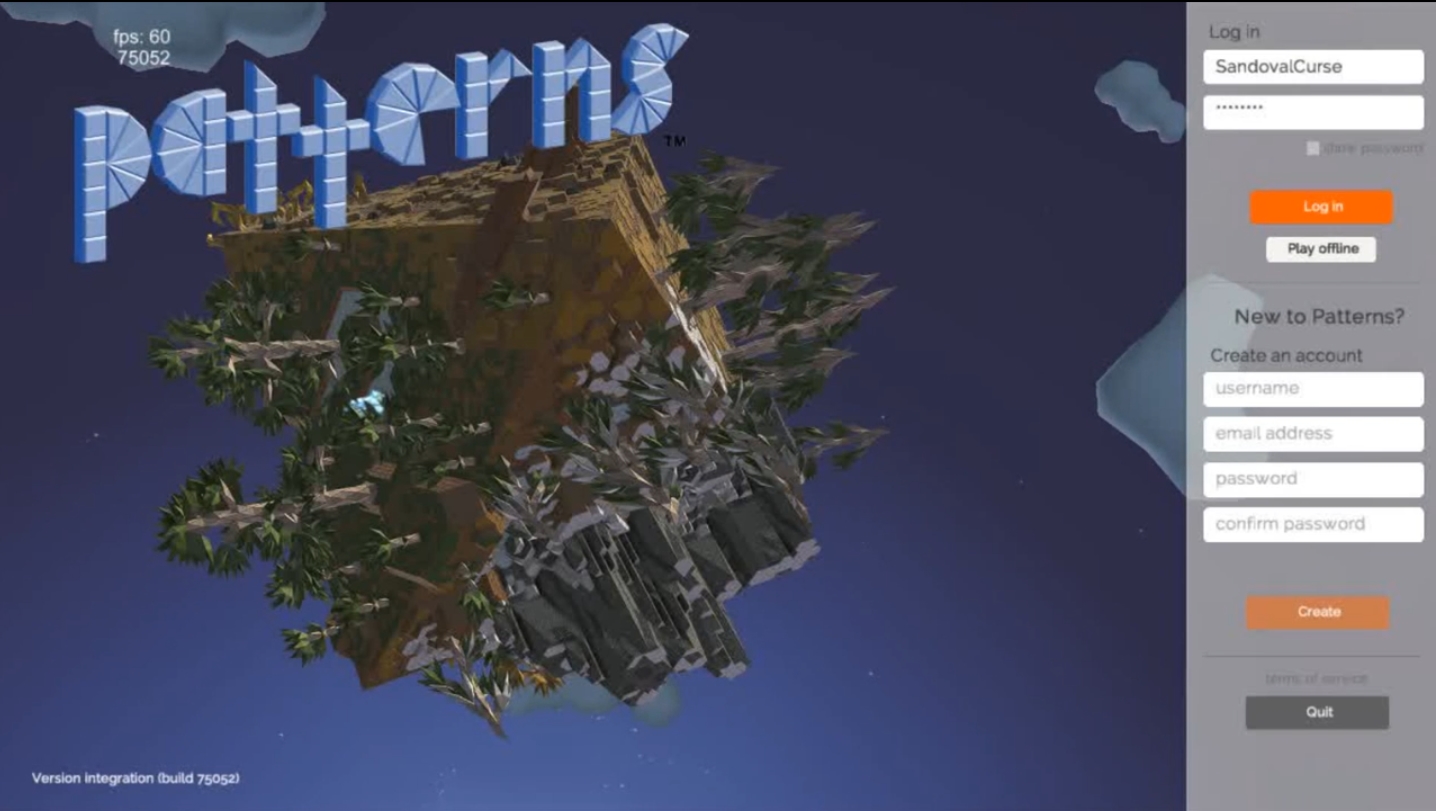
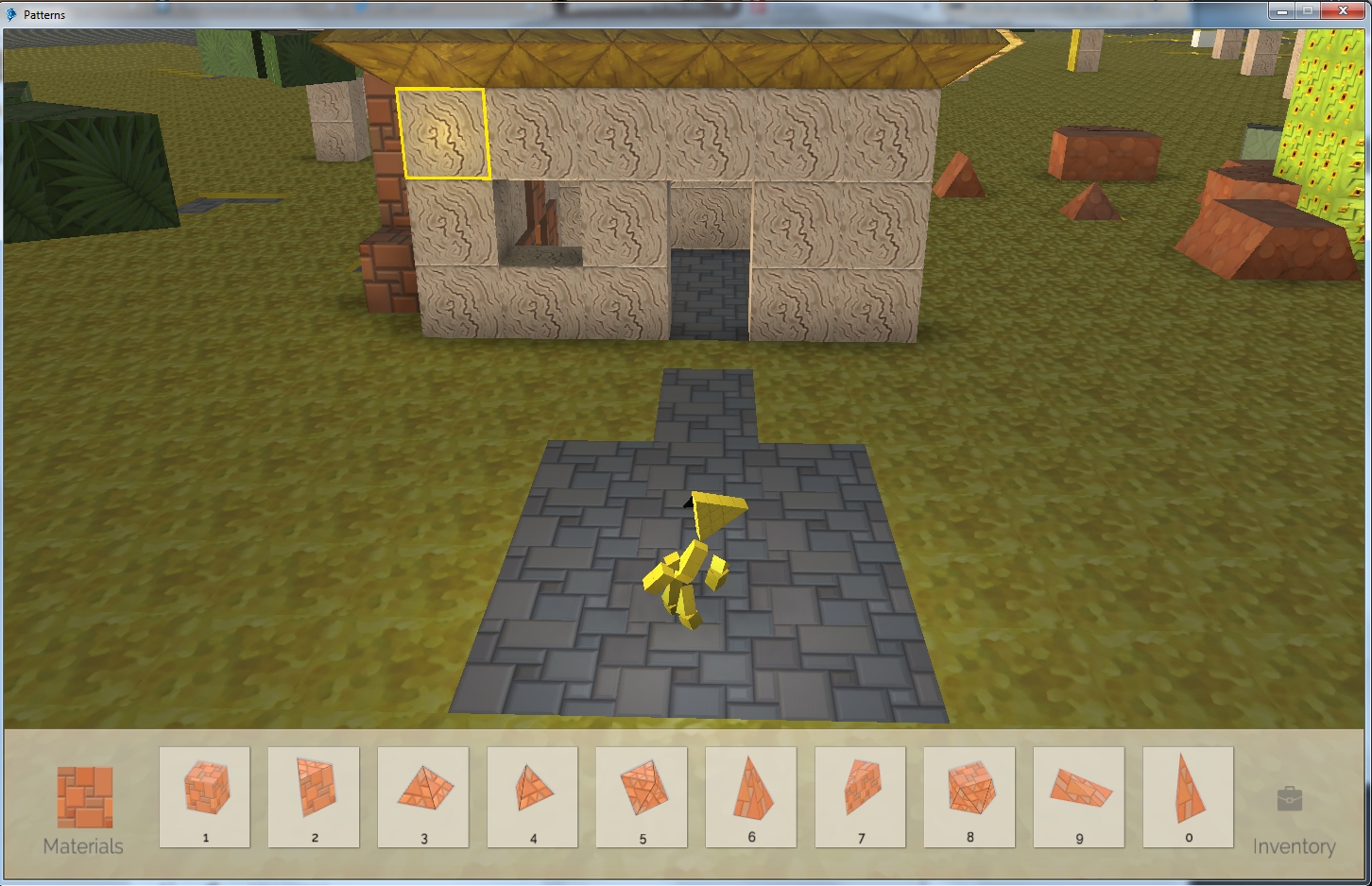
In tha last major update (May 2014) Patterns gained a revised UI
In its last major update (May 2014) Patterns gained a revised UI

As a game, Patterns was hard to judge; the sandbox capabilities were interesting, and these came to be a focus, with more and better tools being added, together with the likes of materials capabilities and so on. Over time, creatures were also introduced, and a multi-player capability was added which allowed up for four players to work together (or compete). However, outside of the sandbox element and creating new worlds, and the competitive “you build it up, I’ll knock it down” aspect, it was actually hard to see where Patterns would potentially gain a large enough following to make it viable.

The most interesting point of note with the announcement, however, is that the Lab appear to have taken on-board the Versu situation, and rather than simply closing the door, have indicated they’d be willing to hear from third parties who might be interested in taking Patterns on – albeit with the caveat that the company is still evaluating the technology used in Patterns at this time.

Regular readers here will recall that while the Lab initially closed the door on Versu and indicated that they weren’t interested in seeing its development move elsewhere, they did eventually reach an agreement with Emily Short, Richard Evans and Graham Nelsen which allowed them to take Versu forward under its own banner.

That further changes to the Lab’s product portfolio may be forthcoming was perhaps hinted at in the Designing Worlds interview. In discussing his thoughts on whether or not the Lab was what he was expecting, Ebbe Altberg commented (around the 3-4 minute mark), “some of the other products in Linden Lab’s portfolio were maybe a little bit surprising to me, but we’re getting that cleaned-up” [emphasis mine]. Hearing him use the present tense – given that Versu dio and Creatorverse went at the start of 2014 – seemed to suggest to me that one or more of the Lab’s other products might be under the microscope as far as continued support might be concerned.

Whether or not Free Range Software have retained any involvement in Patterns, and if so,  whether they (or indeed anyone else) would be willing to take it on, is unknown. For the moment, however, it would seem that the little Dorito Man is heading off into the sunset.

Will Dorito Man head into the sunset, or will he yet live on somewhere else?

Designing Worlds: Ebbe Altberg video and transcript

On Monday October 6th, Designing Worlds, hosted by Saffia Widdershins and Elrik Merlin, broadcast a special celebratory edition, marking the show’s 250th edition, both as Designing Worlds and its earlier incarnation, Meta Makeover. To mark the event, the show featured a very special guest: Linden Lab’s CEO, Ebbe Altberg.

The following is a transcript of the interview, produced for those who would prefer to read what was said, either independently of, or alongside, the video recording, which is embedded below. As with all such transcripts in this blog, when reading, please note that while every effort has been made to encompass the core discussion, to assist in readability and maintain the flow of conversation, not all asides, jokes, interruptions, etc., have been included in the text presented here. If there are any sizeable gaps in comments from a speaker which resulted from asides, repetition, or where a speaker started to make a comment and then re-phrased what they were saying, etc, these are indicated by the use of “…”

The transcript picks-up at the 02:25 minute mark, after the initial opening comments.

Ebbe Altberg, appearing on the 250th edition of Design Worlds via his alter-ego, Ebbe Linden

0:02:25 – Ebbe Altberg (EA): Hi, thank you. Thank you for having me on this very special occasion of yours, and ours. 250, that amazing! It’s incredible, incredible; I’m very honoured to be here.

Saffia Widdershins (SW): Well, we’re very honoured to have you here … Now, you’ve been in the job for around nine months now.

EA: Yes, since February, I think. Yeah.

0:02:59 SW: Is it what you were expecting, or how has it proved different?

EA: It’s fairly close to what I expected, because I’ve had a long history of knowing Second life, even from the beginning. So Second Life, the product, was not a mystery to me. Obviously, as you dig in and look under the hood, you see some things that you wouldn’t have expected; and some of the other products in Linden Lab’s portfolio were maybe a little bit surprising to me, but we’re getting that cleaned-up. But with regards to Second Life, it is not too much of a mystery, as I’ve been following it so closely since way back in the beginning … So it felt very natural and quite easy for me to come on-board and figure out where to take things.

0:03:59 – Erik Merlin (EM): And keeping this next question as general as possible: is there anything that’s been a pleasant or unpleasant surprise?

EA: Not that many unpleasant surprises; well, it was a little unpleasant how far we had managed to disconnect ourselves from the community and our customers and residents. So that was a bit shocking to me, because I had missed that part of the history. I remember the beginning of the history, where there was a very close, collaborative relationship between the Lindens and the residents. so that was a bit shocking to me, that … some effort had to be put in to try to restore some of those relations and some of the processes that had introduced here that we had to reverse. You know, the fact that Lindens couldn’t be in-world [using their Linden account] and stuff like that. So that was a little strange to me and unfortunate.

Positives? There are many. There are so many talented people here, so that’s been a lot of fun to get to know people here. some people have been here for a very long time; some absolutely incredible people have been here for over ten years working for Linden, so just getting to recognise what incredible talent we have here has been a positive … it was a little bit low-energy when I first came here, which was a little bit unfortunate, but I think we’ve come quite a bit further, and so the energy today in the office and amongst people working here has gone up quite a bit, so I’m very pleased with that.

0:06:03 SW: That’s brilliant. Have there been any stand-out “wow!” moments when you’ve come in-world and seen something and gone “wow!”?

EA: The “wows” for me may be less visual – I think we could do better with that in the future – but just the communities, and the types of creations and how people collaborate to make these things happen. the variety of subject matter and the variety of things that Second Life helps people to accomplish, whether it is games or education or art – its just incredible, the variety. And also the interactions with people are wild moments, where I can just drop-in somewhere and just start chatting with people, and that’s always a lot of fun and creates “wow!” experiences for me.

So the fact that this is all user-generated, in some ways that just wows me every day. It’s incredible that we can enable all these things to happen. But I’m certainly hoping we can get to a point where it’s more of a visual “wow!” in the future.

0:07:32 SW: I’ve been at the Home and Garden Expo this week … and there’s certainly some things there that are stunning examples of what creators are working on at the moment.

EA: Yeah. It’s taking everybody a while. A lot of new technologies have been introduced, and we’re still trying to make adjustments and fixes and improvement s in some of those things. But as more and more creators figure-out how to take advantage of these things, whether it’s mesh or experience keys and all kinds of stuff that just creating a new wave of different types of content and experiences, it’s fun to watch happen. It’s a lot of fun to be able to enable and empower people that way.

0:08:33 SW: We wanted to talk a little bit about the new user experience.

EM: Ah yes, and talking to different people working with new users, both English and Japanese speakers, interestingly enough, both have talked about problems with the new mesh avatars … One of the first things that people enjoy when they first come to Second Life is [to] customise their appearance, but the mesh avatars don’t really allow this, or they don’t allow it easily. Is there something that can be done about that?

One of the things the Lab is trying to solve is the "dead face" - the fixed facial expression - on current mesh avatars, as demonstrated in the blank look his own avatar wears through the interview
One of the things the Lab is trying to solve is the “dead face” – the fixed facial expression – on current mesh avatars, coincidentally demonstrated in the video by Ebbe’s (non-mesh) avatar

EA: I don’t have a specific list of good things there; the team is working on making improvements to the avatars, from little things that we might see as bugs, and also trying to solve the “dead face” , get some eyes and mouths [to] start moving. But some of the clothing issues is probably also issues with the complexity of understanding what things can I shop for that are going to be compatible with what types of avatars and all that. Some of it is hard to tell with how much of it is complications with the transition… or the fact that you have two different ways of doing things happening simultaneously; we’re sort-of in this transitional period where you can obviously still go back to using any of the previous avatars, those are still all there. But we wanted to push ahead with what we figure is where the future is going to take us, and there’s probably some growing pains in doing that; but other time, this is where it is going to go.

So we just have to try to understand the bugs and the complexities and react to is as fast as we can. but I don’t, off the top of my head, have a list of known issues that we’re fixing with regards to the complexities around avatars, other than the stuff with getting the face to wake up. but I can look into that for a follow-up later on, but right now I don’t have anything right off the top of my head.

0:10:50 SW: As someone who directs dramas like The Blackened Mirror, we’ve long said that we would give anything for the ability to raise a single eyebrow …

EA: Yeah … ultimately over time, as [real world] cameras improve, if you’re willing to be in front of a camera, there are things you can obviously do to really transmit your real-world facial expressions onto your avatar, and we’re going to look at that further out. That’s not something we’re actively working on right now; but there’s certainly other companies, including HiFi that are looking at that, and we know companies that have already proprieted the technology behind it that we could license and do some of those things.

But there are very few of those types of camera around, so even if you would do that kind of functionality, very few people would be able to take advantage of it, so it’s a little bit early to jump on that. We need more 3D cameras in the world. Otherwise, there’s some other techniques – it wouldn’t necessarily be facial expression – but there’s a company working on technology to be able to have your mouth … make the right movements based on the audio. That’s an interesting technology, but they haven’t figured out how to make it real-time yet.

What they’ve found is that regardless of language, if you make a sound, your mouth makes a very specific movement and a very specific shape, and they’ve constructed all of the internals of the mouth and know exactly what your tongue and your cheek bones are doing in order to make that sound. Right now, not in real-time, but they’re working to get there. so then we could get the mouths to actually react to the sounds that you are making through the microphone.

So over time, more and more of this will come, but today it would be difficult to do something that would auto-magically make it work for everybody.

Continue reading “Designing Worlds: Ebbe Altberg video and transcript”