
Author: Inara Pey
Eclectic virtual world blogger with a focus on Second Life, VR, virtual environments and technology.
Hera’s Steampunkian Whitechapel in Second Life

Just over a year ago, Hera (Zee9) revealed her take on Whitechapel, the district of East End London infamous for the predatory wandering of Jack the Ripper and, as a result, the influence for many a film and TV series – perhaps most recently that of BBC’s Ripper Street, with its mix of the fictional stories built around very real figures from the period (notably Edmund Reid, and to a lesser extent Frederick Abberline, although after Season 1 the series strayed much, much further from the story of Edmund Reid).
At the time, the build was fascinating (as Hera’s builds inevitably are) in weaving together her own vision for the district and its rich history together with and equally rich mix of fiction. At the time, the fictional elements included not only Ripper Street, noted by the presence of the H Division station, but also touches of Penny Dreadful, the Jekyll and Hyde and Frankenstein stories, and more – all of which I noted at the time in Hera’s Whitechapel in Second Life.

Well, as of mid-December(ish). Hera’s Whitechapel is back, together with another of her popular builds, that of Whitby – a setting I have twice covered in these pages, in October 2021 and again in April 2022. The two locations are reached via a common landing point, and each is accessed via teleport points at the posters alongside their respective trains, and both recreate the look and ambience of their previous iterations whilst also offering some new twists.
However, while I recommend Whitby to both Hera’s fans and to those who have not previously had the opportunity of seeing her unique take on the town and its links to Bram Stoker’s Dracula (with Hera augmenting this with a few additional fictional and real touches), I am here focusing on her Whitechapel build, as it offer a nice twist on the original iteration.

Unless you read the introductory note card available at the landing point, this twist might not initially be obvious on arrival within the setting – which remains the Whitechapel underground station. But climb the steps up to street level, and it starts to make its presence felt in a very subtle manner. Firstly, there are the street lights; hardly the typical gas lamp of late Victorian London (which, by the 1880s were starting to be converted to electric use within the City of London, if not its outlying districts), these are bulky units with pressure tanks, gauges and valves, suggesting stream is their medium for energy.
Similarly, whilst the early automobiles from the original build are present, several are now apparently steam-powered, adding to the sense that this version of Whitechapel has stepped sideways into Steampunk. This is further added to when one looks up to sky two great steam-powered airships overhead, one apparently following the line of a street towards its eventual destination, the other moored alongside a tall iron-built tower connected to a part of the elevated metal walkways that cling to the sides of many of the buildings and reached by the occasional stairs dropping to ground level.

Just across the road are the first hints of the fictional links waiting to be discovered: Sweeny Todd’s infamous barbershop has been transplanted from Fleet Street to Whitechapel’s Commercial Road, together with Mrs. Lovett’s pie shop. As with the original story, these two places of business are separated (courtesy of an intervening alleyway), but sadly no underground tunnel links the two for the transfer of victims.
Its an interesting place for the couple / partners in crime to go about their business, given they are located just across the street from the H Division headquarters building from which Edmund Reid and his men might instantly sally forth to solve a crime. Or if not a crime, then to make their way to the other end of Commercial Road and Spitalfields’s famous Ten Bells pub to sup a hard-earned pint at the end of a long shift (a pub that remains open to this day – so do be sure to step inside when visiting Hera’s Whitechapel!).

And speaking of Edmund Reid; the mixing of Steampunk with the fictional world of Reid and H Division is seen in Ripper Street actually has the strand of a link to the detective’s real life: in 1883, the Balloon Association of Great Britain awarded him a gold medal for his record-breaking ascent in the balloon Queen of the Meadow from London’s Crystal Palace – one of over 20 flights he made by balloon (and if that weren’t enough to earn him at least a documentary on his life – in 1877 he was the first person to make a descent by parachute from an altitude of 1,000 ft!).
This iteration of Whitechapel retains other element from the original. There is Hanbury Street, where both Florence Eleanor Soper, the daughter-in-law of General William Booth of The Salvation Army, established The Women’s Social Work in 1884, and the location of the yard in which Jack the Ripper’s second canonical victim, Annie Chapman, was found; then there’s Berner Street, Miller’s Court, Buck’s Row and Mitre Square, the locations of the Ripper’s other four canonical victims.

Whilst seeking these out, explorers might also happen across the office of Messrs. Scrooge & Marley (adding a nice Dickensian seasonal twist to the setting), and the apothecary of one Dr. H. Jekyll, together with H. Rider Haggard’s (et al) Allan Quartemain’s townhouse, and Dr. Frankenstein’s loft lab, all of which also carry forward from the original. New (I think) to this build is the Grand Guignol theatre, hopping across the channel from Paris, and – referencing both the seamier side of the East End and giving a slight Sherlockian twist to things – a slightly hidden opium den. A further location I don’t recall from the original (but am obviously open to correction on this) is the Freemason’s lodge.
So, whether you’re new to Hera’s Whitechapel or familiar with the earlier iteration, you’re in for a treat of discovery should you drop-in this time around. However, should you add it to your list of places to visit, might be best to do so sooner rather than later; Hera has tended to take down her recent builds within a couple of weeks or so of opening them.

My thanks to Shawn Shakespeare for the nudge on Whitby / Whitechapel returning to SL.
SLurl Details
- Whitechapel / Whitby landing point (Cloud Lake, rated Adult)
Milena’s 5th Season in Second Life
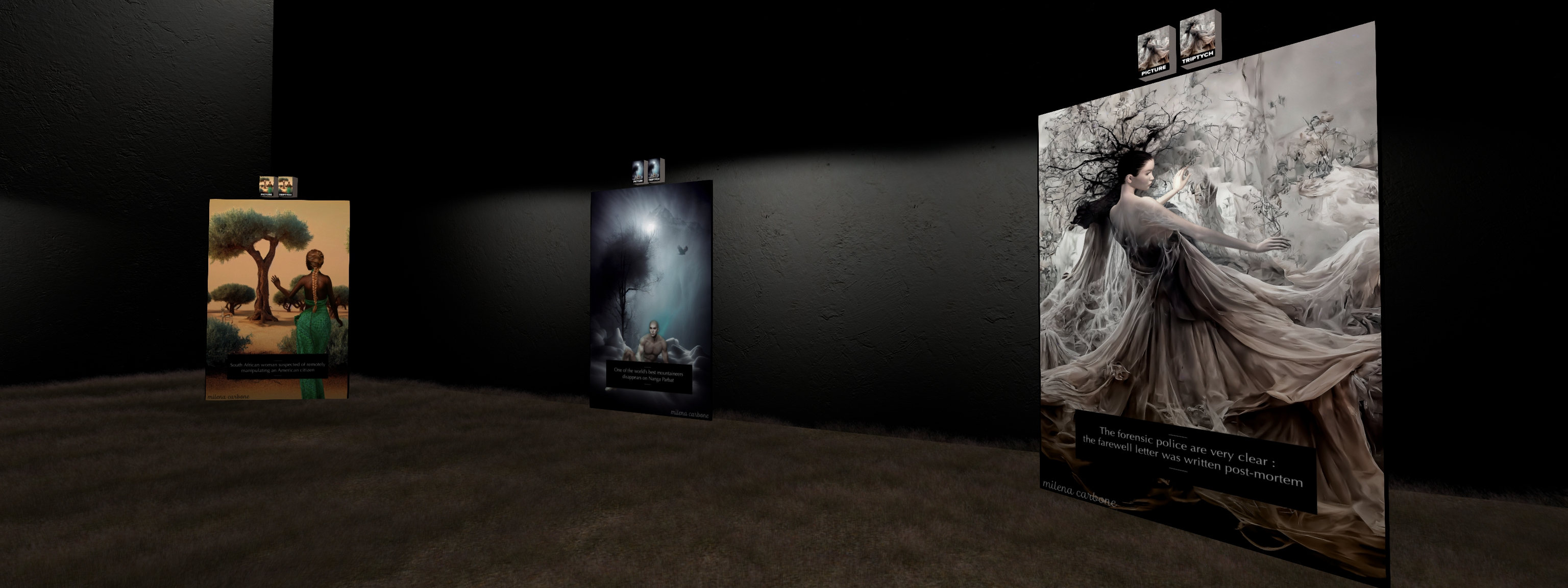
Now open at Frank Atisso’s Artsville, and seeing out 2022, is another provocative art installation by Milena Carbone entitled The 5th Season. Perhaps best described as a trilogy, it comprises three individual but inter-related exhibitions: Blind, Africa, and Heroes. Two of these offer a reflection of previous installations Milena has presented, and they should preferably be visited in the order given, although whether you opt to visit all three sequentially in a single tour, or visit them each as an individual visit (whilst keeping their linked themes in mind) is entirely down to you.
To define the core themes present through The 5th Season, it is perhaps best to start by quoting Milena directly:
The 5th Season … questions our tendency to follow a path of self-destruction. It is related to the imminent threat of dramatic consequences for all living species as a result of climate change. It tries to dig deeper into the roots of our denial.
The “fifth season”, is an imaginary season, which will replace the four seasons we have known. One season in a year, chaotic, devastating. A foul beast that humanity will have created.
– Milena Carbone

The important point to note within this description is the term “it is related to the imminent threat … of climate change” (my emphasis). I highlight this because, whilst climate change and our response (or lack thereof) to its existential threat does offer the foundational thread of theme linking all three parts of this installation, bound within two of them are references to a greater malaise that has affected humanity throughout time: wilful self-destructiveness – be it on the purely personal level or through religious and / or political indoctrination, or national / racial fervour.
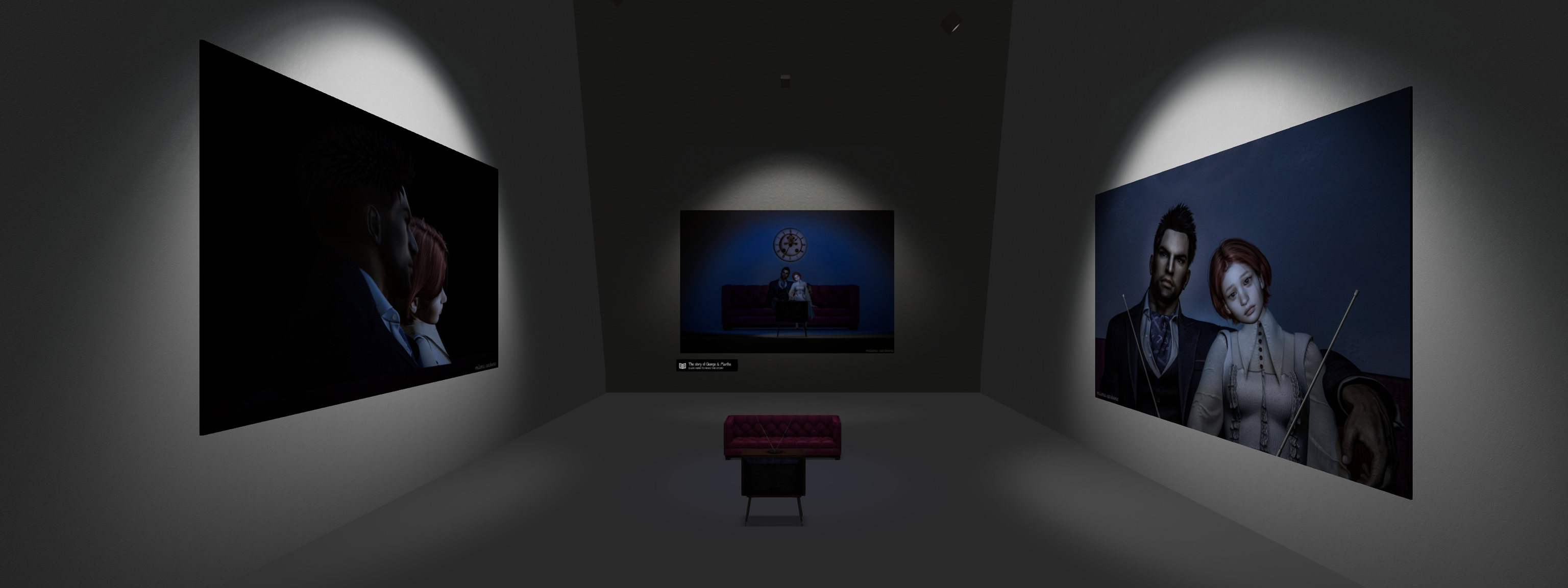
To achieve this, Milena uses the three elements of the installation to present images and stories to prompt us not so much on an emotional level, but rather intellectually, asking us to dissect what we are seeing and reading and look beyond. As such, these are stories and images that might be taken literally (e.g. George and Martha, and The story of Daphne (both found within Blind) – the first being a direct commentary on the destructiveness of the demands placed upon all of us to be “successful” and “happy” through acquisition and idealisation (such as through the insidious nature of television programmes ad ads) rather than by simply communicating with one another; the second a pointed reference to the artificial use of war and bloodshed in order to maintain the status quo of a decades-old corrupt regime).
Other stories are more metaphorical (e.g. The Story of Antigone (also in Blind) or the entirety of Africa); still others utilise elements of history or mythology. Some of the stories are reproduced on the walls of the three exhibition spaces, but most are accessed via links to Milena’s website – and I recommend reading all of them there, as several contain further links to help gain familiarity with the subjects offered (after all, how many of us are familiar with the myths surrounding Tiresias?).
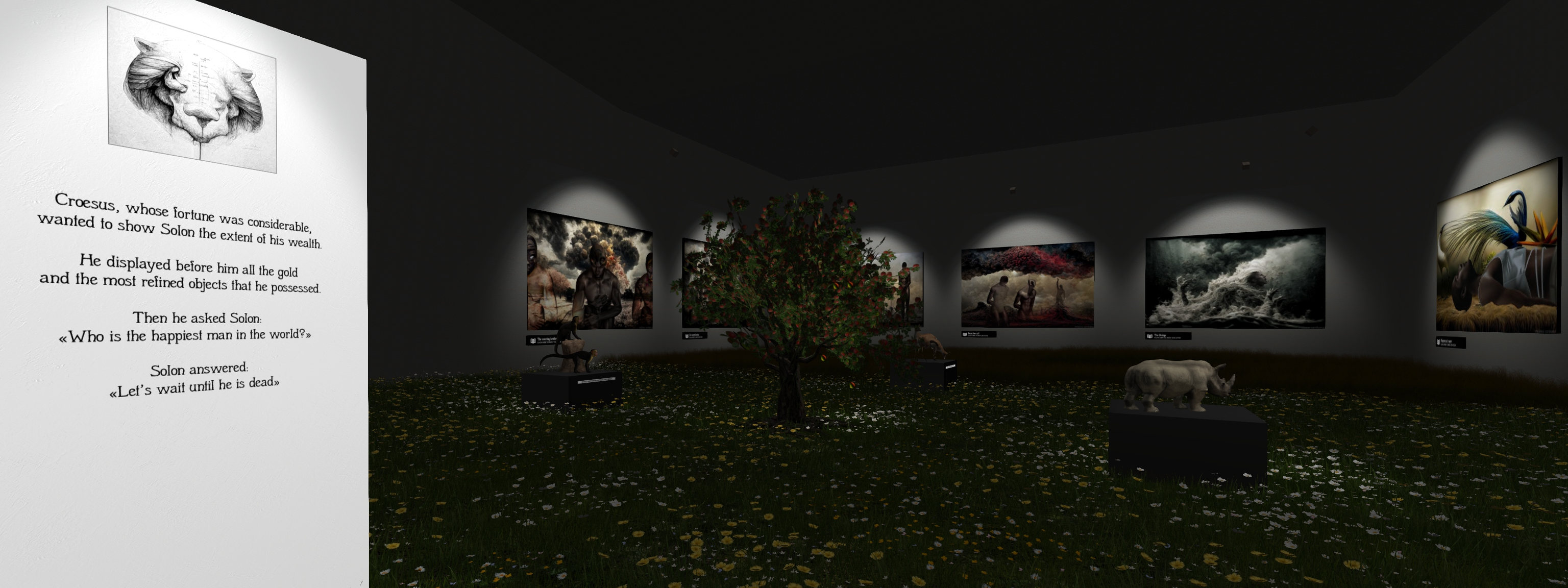
“A time is coming when men will go mad, and when they see someone who is not mad, they will attack him, saying, “you are mad, you are not like us.”
– From The Sayings Of The Desert Fathers, a quote which eloquently
encompasses the polarised nature of modern society, which Milena also touches upon
As the first element in the trilogy, Blind – I believe I’m correct in saying – originally appeared (at least in part) within an exhibition Milena presented in June / July 2022 (I admit to being hazy on this, as it is not an installation I managed to see). It’s core arch is that of our aforementioned denial – our blindness – to the realities of climate change; a blindness that exists, again as noted, as much among those who acknowledge the threat but who go on to do nothing, however small the move, to play their part in trying to lessen the impact, as it does among those who persist in denying it, despite the weight of evidence before them.
In this, I found the inclusion of Tiresias particularly fitting as a double-edged sword; his gift of foresight might be aligned with the the mountains of data gathered over the last 30-40 years relating to climate change. On the one hand, just as Tiresias offered help and counsel to Odysseus in his quest, so too might the data we have gathered offer us the means to avert the coming global crisis; on the other is that just as Tiresias was stuck blind by Hera due to his ability to divine the future and truth, so to are those who seek to raise greater awareness of the the threat of climate change all too often vilified by those unwilling to hear their message.
Within Africa – which Milena originally presented at Nitroglobus Roof Gallery in October (see: Milena Carbone’s Africa at Nitroglobus), the theme of climate change and its impact on the cradle of humanity is further explored through image and commentary. Here, in addition to the story elements are 3D models of various African animals; these should be approached directly to reveal further elements of this part of the installation. As with Blind, the stories and elements offered in Africa also contain broader themes, some of which (notably colonialism) link back to Blind and The story of Daphnie.
Heroes, the final part of the trilogy, offers a more hopeful chapter for viewing. As a race, we are too rooted in the past – up to and including the view climate change deniers have on the historical nature of this planet’s biosphere – claiming it is no more different to other periods of heating and cooling that have occurred in the planet’s long history. And while that may be true to a point, it nevertheless ignores two inconvenient truths: the first is that for the last 250 years, humanity has been pumping out increasingly huge amounts of greenhouse gasses into the atmosphere; and the second is that for the last 50 years, we’ve been busily decimating the natural means by which the Earth regulates its atmosphere to help purge it of those gases, such as the Amazon rain forest.

Thus, if we are to survive, we need to stop looking back; we need to focus on the future. And this not only includes how we husband this planet and its resources, but in how we look upon ourselves as a global society. As Milena notes, too much of our history and our “mythology” is rooted in the past in – dare I say it – a patriarchal, hunter-gatherer history.
If we are to mature as a race, we will need modern heroes, modern myths founded on respect, understanding and care, which foster the belief that we can all, regardless or creed, colour, gender or personal belief, aspire to do better, to be better. Through the presentation of the 12 modern-day fictional tales, complete with their tabloid-style headlines (be sure to sit in the chairs before each of them to see more), Milena challenges us to leave this exhibition with a willingness to do just that: look to the future and play our own role, howsoever small, to bring about the changes we as a people – as a world – need.
SLurl Details
- The 5th Season at Artsville (Caribbean Ocean, rated: Moderate)
Under the Northern Lights in Second Life

Under the Northern Lights is the title Carrie Lemon Rogstad (LemonPuss) has given to her winter-themed Homestead region, currently open to visitors this December 2022.
As the name suggests, this is a snowy setting, largely open to the public to explore, although it has twelve small rentals around its edge. Available at L$700 a week, these present is simple geodesic dome (the GeoDome by Ria Bazar, a unit I’ve used myself in laying out region designs), with basic furnishings of bed, fireplace and décor elements, all of which is set out on a deck with each of the units.

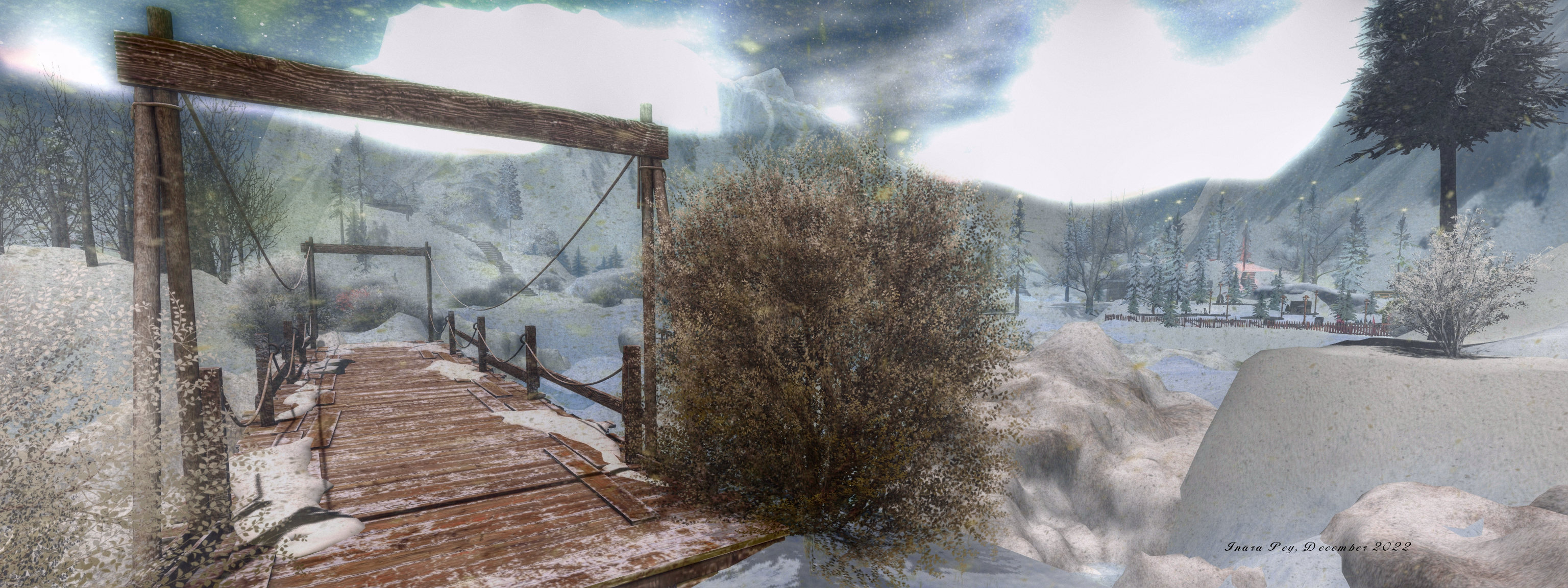
The landing point sits towards the middle of this snowy, icy setting, caught within the arms of the surrounding mountains. This mid-point sits over frozen water as they cut into the region. A rutted track, dusted in the snow – which is more-or-less constantly falling – offers a short walk to a miniature golf area, with many of the holes themselves dressed for the season.
Come explore a Northern Winter Wonderland underneath the Northern Lights! Dome rental, Madpea mini-golf, Santa … ice skating, sleds [and] hangout.
– Under the Northern Lights About Land

Follow the track in the other direction and it runs past and around the local skating rink to loop back to the landing point, passing by way of a mobile café offering plenty of hot drinks for those who need warming up. Beyond this, multiple bridges and a couple of paths provide access to the outer parts of the region and the little rentals. At the time of my visit, several of the latter were rented and so obviously off-limits to casual explorers, but three were still available for those looking for something a little different to rent for the holidays.
Two of the bridges lead to a further public area, a setting fully of seasonal cheer, from Santa awaiting visitors to a roaring fire in a hearth and cost seating to be enjoyed; and – for those in need of them, some essential winter supplies and the opportunity to purchase a Christmas tree. Walk down the snowy slopes on the north side of this little winter market setting and you’ll come to another café. Brick built and with an inviting interior, it is far more permanent than the one up by the skating rink.

With polar bears playing on the ice, and deer and horses scattered around, the setting keeps to the “Northern” in its name by only allowing penguins carved from snow to inhabit it.
Easy on the eye and presenting a gentle chance of exploration and multiple opportunities for photography, Under the Northern Lights makes for an easy-going visit.
SLurl Details
- Under the Northern Lights (Tesoro, rated Moderate)
2022 SUG meetings week #51 summary
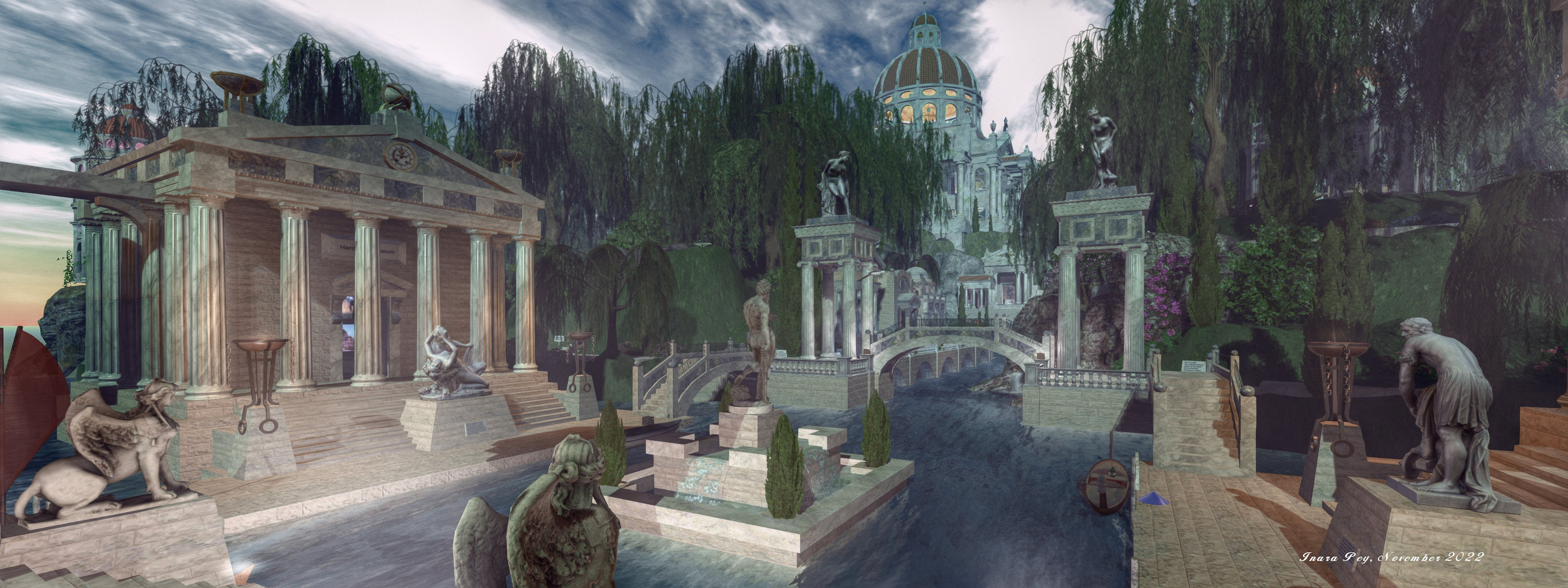
The following notes were taken from the Tuesday, December 20th, 2022 Simulator User Group (SUG) meeting. They form a summary of the items discussed and is not intended to be a full transcript. A video of the entire meeting is embedded at the end of the article for those wishing to review the meeting in full – my thanks to Pantera for recording it.
Note: this was a “Winter solstice Party” event, so not a lot to report. The core of any discussions in in the first hour of the video embedded below.
Server Deployments
- On Tuesday, December 20th, the simhosts on the Main SLS channel were restarted with no deployment, leaving them on simulator version 576542
- On Wednesday, December 21st, the simhosts on the RC channels should be restarted without any deployment or change to the current release.
Early 2023 Simulator Updates
AS per the previous SUG meeting:
- I believe the RC deployment from week #50 (with 3-second sound loop support) was rolled back. If so, this is liable to be one of the first simulator updates for 2023 (targeted for January 11th, 2023), and / or possibly an update comprising a number of HTTP updates, including the accounting for custom HTTP headers (total space for headers will increase to 4k and the limit on the number of headers will be dropped).
- Also early 2023 LSL will be updated with new cryptographic signing utilities: llHMAC (per BUG-233005) and llSignRSA and llVerifyRSA (per BUG-233009). These should be useful for script to script and script to external web service communications. These may be included in the above release.
- BUG-226463 “llRequestSecureURL() uses self-signed cert” is also “on the radar” but no target date for potential delivery / deployment.
- Further (unspecified) improvements will be coming to the Linkset Data (LSD) capabilities.
Available Official Viewers
This list reflects the current status of available official viewers at the start of the week:
- Release viewer: Maintenance P (Preferences, Position and Paste) RC viewer version 6.6.8.576863 Monday, December 12.
- Release channel cohorts:
- Maintenance (Q)uality RC viewer, version 6.6.9.577220, December 16.
- Performance Floater / Auto-FPS RC viewer, version 6.6.8.576737, November 28.
- VS 2022 RC viewer, version 6.6.8.576310, issued November 4 – utilises Visual Studio 2022 in the Windows build tool chain.
- Project viewers:
- PBR Materials project viewer, version 7.0.0.577157, December 14.
- This viewer will only function on the following Aditi (beta grid) regions: Materials1; Materials Adult and Rumpus Room 1 through 4.
- Puppetry project viewer, version 6.6.8.576972, December 8.
- Love Me Render (LMR) 6 graphics improvements project viewer 6.6.2.573263, July 21.
- PBR Materials project viewer, version 7.0.0.577157, December 14.
In Brief
Refer to the video below for more information on the following:
- BUG-227303 “collisions makes a script stop running and revert its mono status” has been filed and lead to further discussion on region crossings.
- LL is mulling an LSL call to allow the replacement of sub-strings in a string call (e.g. non-RegEx behaviour). If implemented, this might most likely be called either llStringReplace() or llReplaceSubString().
- The above lead to a more general discussion on LSL and LSL extensions / transpilers (helping to make LSD more accessible), etc.
3Ms – Mountains, Mandalas and Magic in Second Life
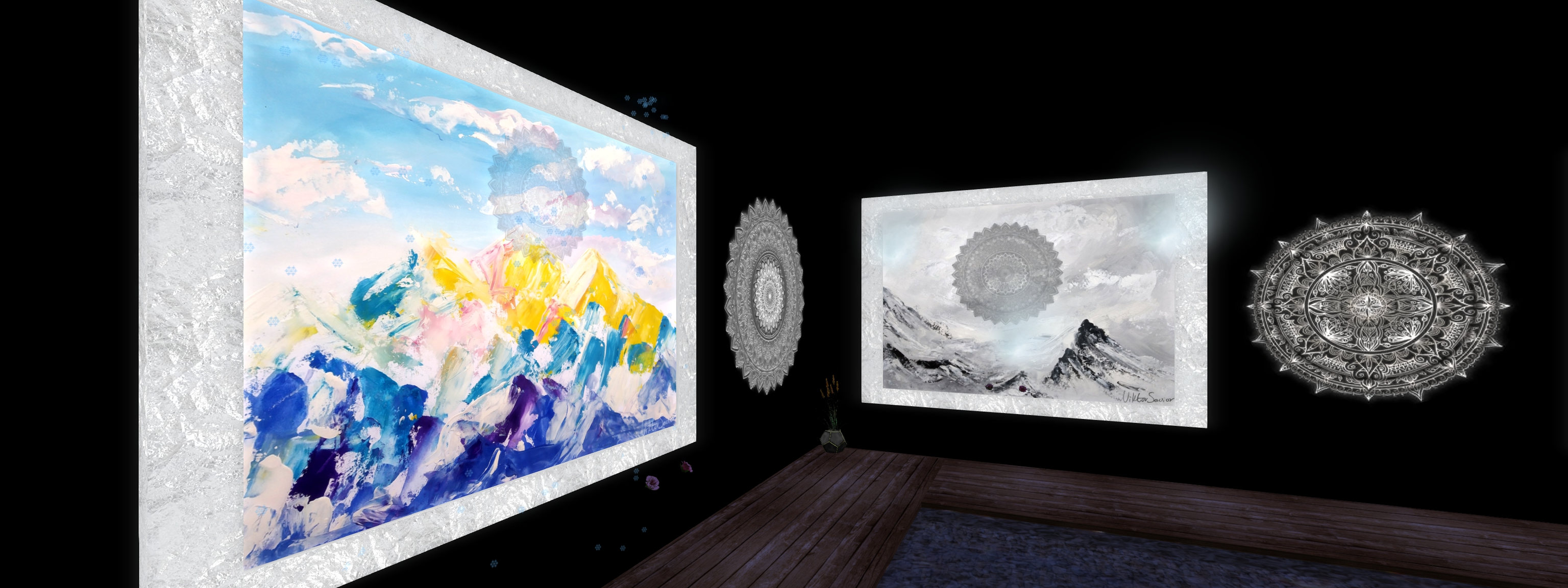
The idea behind this collaboration was to recreate the magic of nature that resonates with one spiritually and touches one either in the form of falling snow, gentle rain, or floating leaves. We hope you enjoy the creations as much as we did creating them.
– Introduction for Mountains, Mandalas and Magic, Third Eye gallery
Currently open at the Third Eye Gallery, curated by Jaz (Jessamine2108), is a collaborative exhibition by Viktor Savior, Orpheus Paxlapis and Jaz herself, which, as the description above notes, is intended to offer a spiritual reconnection with nature.
Mountains, Mandalas and Magic sees Vikor produce a series of paintings, the majority of them featuring mountain views (with one perhaps leaning more towards autumn leaves adrift on water, complete with what might be shadowy white Koi below the ripples), Orpheus a series of mandalas, some of which are animated, some of which are static and set within Viktor’s images, and Jaz the particle effects which accompany the paintings in reflection of them: falling leaves, the teardrops of rain, misty clouds and drifting snow…
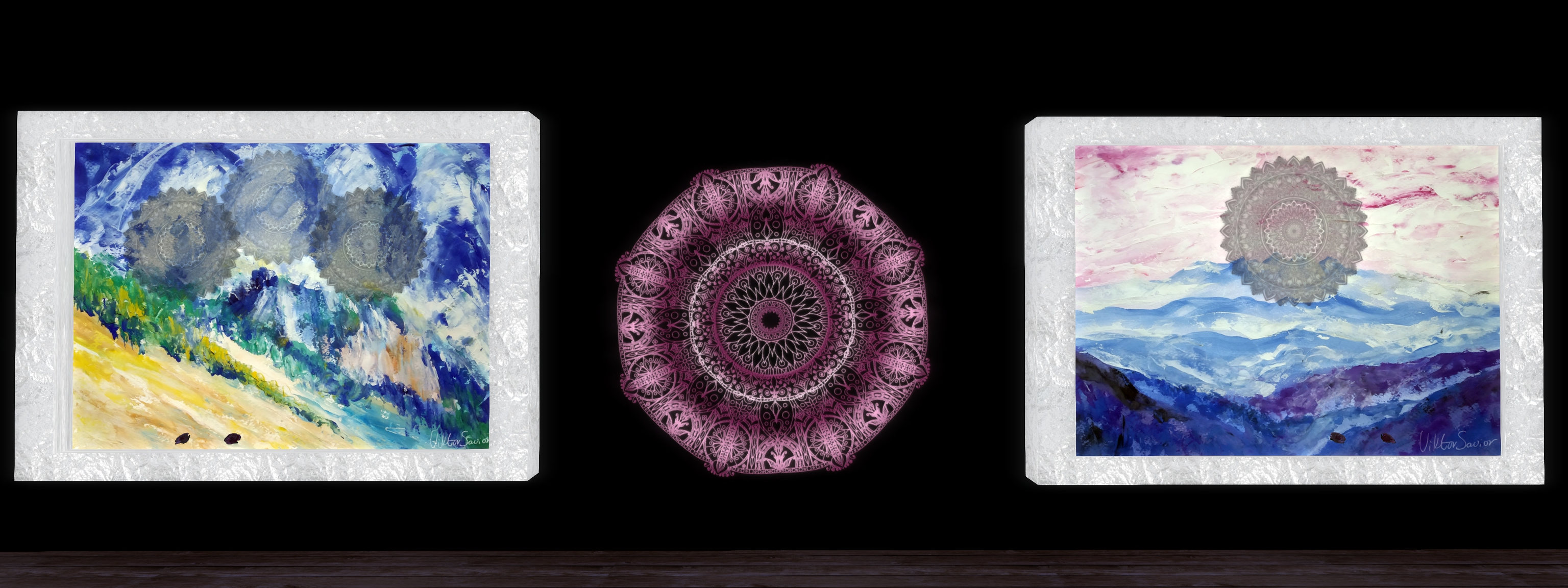
In addition, in front of the paintings are static poses – two per image – allowing visitors to take their own photograph before any of the paintings as a keepsake of the exhibition.
The combination of mandalas with mountains is appropriate; while mandalas are common to the Eastern religions of Buddhism, Hinduism, Shinto and Janism, they are perhaps most noted in the west through the growing popularity of Tibetan Buddhism (even though they started in India in around the 8th century), and Tibet offer some of the most stunning mountainous landscaped in the world.
Set around the water garden of Third Eye gallery, this is an engaging, easy to view exhibition with a spiritual content suitable for the time of year, if not entirely in keeping with the general theme of the yuletide time.

SLurl Details
- Mountains, Mandalas and Magic, Third Eye Gallery (Ravenglass, rated Moderate)

