Whilst I’ve been familiar with the photography of Alex Riverstone for a fair while and have covered his work in these pages, I hope he’ll forgive me for the fact I hadn’t twigged he’s now curating his own gallery space – Sugarfish Photography – which is currently home to a selection of his own work and a joint exhibition featuring both Alex and Harlo Jamison (HarlowJamison).
Located on a sky platform, Sugarfish Gallery featured four exhibition spaces gathered around a central terrace / event space for opening parties. It’s a simple, minimalist design which allows each of the gallery units to present the art it contains to the best advantage, naturally allowing works to be grouped by artist and / or theme as required, with each building a short walk from the last.
At the time of my visit, Sugarfish was mid-way through the joint exhibition by Harlo and Alex, entitled Shades of Erotica (set to end mid-July 2024). Occupying three of the four gallery spaces this is, as one might expect from its title, an exhibition leaning strongly into erotica and adult themes, with some of the images definitely in the not suitable for work (NSFW) category – so if you are of an overly sensitive disposition, please consider yourself warned. The remaining building is home to a cross-section of Alex’s landscape photography.
Sugarfish Photography, July 2024: Alex Riverstone
I’ve always appreciated Alex’s landscape photographs from around Second Life; he has a knack of capturing the essence of a location and / or presenting the core of an idea through pieces that are framed and cropped in a manner that is visually attractive. A further facet of Alex’s work is his use of style – colour, monochrome, black and white – in which to present a mood or sense of emotion. All of this is very much demonstrated in the selection of pieces displayed at Sugarfish, the pieces within the hall neatly grouped by theme or style.
Alex’s art also feature in two of the three halls given over to Shades of Erotica (with one of the halls also forming the Sugarfish gallery), with Harlo’s taking up the remaining hall.
Sugarfish Photography, July 2024: Shades of Erotica – Alex Riverstone
An exhibit of erotic and sensual Second Life photos … Join us for an exploration of sensuality, let the images speak to you, inspire you, and awaken your senses. Whether you’re a connoisseur of photography or simply seeking to be moved, this showcase promises something for everyone.
– Alex Riverstone on Shades of Erotica
Given the nature of Shades, these are avatar-centric photographs, with Alex’s pieces offering what might be regarded as sets built along interconnected themes and utilising (I believe) the same model. Outside of the use of nudity / semi-nudity, these are pieces touching upon common themes of erotica activities: clothing (boots, stockings, latex clothing, heels); activities (D/s games, bondage), and the the use of pose and focus to offer a feeling of sensual suggestion.
Sugarfish Photography, July 2024: Shades of Erotica – Alex Riverstone
With her pieces, Harlo explores similar avenues, whilst also offering pieces of a more narrative style in terms of how they might be interpreted, as well as enfolding elements of eroticism and sexuality drawn from a broader canvas (so to speak).
Whilst not the first piece within her gallery space, Red2 Shadows Him helps set the tone of Harlo’s pieces. It sits on the left wall of the hall relative to the entrance, and thus sits close to one of the rooms displaying Alex’s art. It features a model seated on a stool, front lit and casting a shadow. In this it follows on from a series of images from Alex on the same lines (Shy Model). Here, and unlike Alex’s pieces, the silhouette of a male figure dominates one side of the photo. Thus, Red2 Shadows Him offers both a narrative in its own right and also sense of continuity between the two artists’ work in both content and titles (Shadows him = follows Alex’s images).
Sugarfish Photography, July 2024: Shades of Erotica – Harlo Jamison
These dual-layer narrative can be found elsewhere in Harlo’s selection. Gentlemen & BadBoys, for example, both suggests the making of an erotic ménage à trois whilst also hinting at the issues of temptations which might be prevalent in relationships (the woman’s hand reaching back for the the man behind her even as she is hugged by her lover. Meanwhile, Ladies & Harlo’ts, only offers a tongue-in-cheek play on Harlo’s name, it offers both a tale of refined sensuality touching on three people, whilst the black and white finish and clothing carries is suggestion of harking back 100 years and a period when taboos started to be broken more openly, even if they weren’t entirely broken down for many more decades to come.
Elegant, explicit, sensual and sexual, Shades of Erotica is engaging through out.
Sugarfish Photography, July 2024: Shades of Erotica – Harlo Jamison
The following notes were taken from the Tuesday, July 2nd, 2024 Simulator User Group (SUG) meeting. They form a summary of the items discussed, and are not intended to be a full transcript, and were taken from my chat log and the video by Pantera – my thanks to her as always for providing it.
Meeting Overview
The Simulator User Group (also referred to by its older name of Server User Group) exists to provide an opportunity for discussion about simulator technology, bugs, and feature ideas.
Meetings are open to anyone with a concern / interest in the above topics, and form one of a series of regular / semi-regular User Group meetings conducted by Linden Lab.
Dates and times of all current meetings can be found on the Second Life Public Calendar, and descriptions of meetings are defined on the SL wiki.
Simulator Deployments
No deployments for the week, but all channels will be restart per usual schedule.
Coming up as the next simulator update is Summer Fun, which is currently with the Lab’s QA team. Following that will be Picnic, which among other things will include the following LSL functions:
llFindNotecardText
llFindNotecardTextSync)
SL Viewer Updates
The webRTC RC viewer updated to version 7.1.9.9688089989 on July 1st, 2024.
The rest of the current official viewers remain as:
Release viewer: version 7.1.8.9375512768, formerly the Graphics Featurettes RC viewer dated June 5 and promoted June 10th.
Release channel cohorts:
Atlasaurus RC (object take options; improved MOAP URL handling), version 7.1.9.9620320242, June 27.
Maintenance B RC (usability updates / imposter changes) 7.1.9.9555137545, June 21.
Maintenance C RC (reset skeleton in all viewers), version 7.1.9.9469671545, June 14.
Signal Linden is putting together a technical FAQ about lua with has more detailed answers about “why lua and not [insert option]” and “how is lua faster than mono” etc.
Pepper and Rider Linden confirmed part of the work planned will allow for shadow execution of scripts under the Luau and Mono VMs during testing, which will ensure that all output of functions are the same.
This shadowing will likely be only be visible to the Lab.
Once LL is convinced both behave the same, the switch to using the Luau VM. At that point, the anticipated memory and execution time improvements should become visible.
Finally LL will allow a switch to compile either LSL2 or Luau.
Signal further indicated:
That with the switch to lauau on the back-end, code can be written in either LSL2 or Luau.
That both the current Lua client-side project and the announced luau back-end work, whilst separate projects will both leverage Luau, not Lau.
Pepper Linden confirmed LSL functions will continue to be maintained, but using Lua will allow for the creation of versioned functions for Lua scripts, providing a more flexible means to update functions without the worry of breaking content.
This discussion took up most of the meeting – please refer to the video for more.
In Brief
Please refer to the video for the following and other topics discussed:
Leviathan Linden is hoping to provide an updated GameControl viewer download. It will contain no additional capabilities, but will be updated to the current viewer development branch. However, GameControl will now be behind a single UI setting which will need to be set in order to see its UI.
Monty Linden confirmed that the first batch of teleports / region crossings work will now likely surface in the Picnics simulator update.
† The header images included in these summaries are not intended to represent anything discussed at the meetings; they are simply here to avoid a repeated image of a rooftop of people every week. They are taken from my list of region visits, with a link to the post for those interested.
The Magic Hour, July 2024 – click any image for full size
This magic hour is cherished by photographers and filmmakers for the quality of the warm natural light that enhances images with a dreamy, nostalgic glow. It’s a fleeting moment that many visitors find inspiring, as it casts our world in a transient beauty that’s perfect for creating emotive imagery.
– The Magic Hour Destination Guide description
It’s taken me a couple of visits to The Magic Hour in order to write about it – the first being a brief hop in mid-June, and the second at the end of the month; ergo, I’m hoping this piece doesn’t arrive shortly before the region gets a make-over – if it does, my apologies to Six (SixDigital), the region’s creator, and to those visiting and expecting to find it as described here.
The Magic Hour, July 2024
Six – along with Justice Vought – is one of the talents behind the former Oxygen region designs, which I wrote about in 2019 and again in 2021, a place which had a deserved reputation for being thoroughly photogenic. The Magic Hour is in a similar vein in this regard, offering beach-front setting backed by tall hills up to which the landscape climbs, the entire setting rich in opportunities for avatar and landscape photography.
The landing point sits midway between the east and west limits of the region and is tucked back toward the northern foothills as the start their climb to the off-region mountain adjoining them. Taking the form of a small beach house facing south towards the open sea, the landing point sits close to a large pool of clear, fresh water, the home of koi carp watched over by red-crowned crane. Beyond the pool, within its little island reached by a tree trunk bridge is a small house. I believe this might is a private residence when occupied by Six, so please keep that in mind when visiting.
The Magic Hour, July 2024
The southern waterfront is a mixed affair, partly sandy, a little scrubby and partially rocky, its western extent a grassland headland partially ringed by a breakwater. It is home to a stripped lighthouse, the grass around it well suited to grazing. On the eastern side, a low sandbar points out into the sea, the home of the wooden frame of a summer house, the wall and roof shingles yet to be placed (if they ever will be), the dedicate folds of net drapes instead providing a mottled shade for the sofa, tables and planets within.
Between the sandbar and the lighthouse, four slender fingers of rock point outwards from the shore, thin breakwaters made from large stones worn thin by the sea so they now resemble rough-edged that have been loosely stacked out into the water like thin strands. between the last of these and the lighthouse headland, the shingle and rocks have built up into area of shallows, several large grey boulders rising from the water like petrified sealions.
The Magic Hour, July 2024
Inland from the lighthouse stands a small wood. It surrounds the ruins of a chapel which in turn contain their own secrets and sense of fantasy. Beyond them, a waterfall feeds the land where deer and fae folk might be found. A trail from here winds through the tress and down to where the grass rolls back towards the sands on which the landing point sits, presenting a pleasant walk between it and the chapel.
This is a simple, relaxing setting with multiple places where people can sit and contemplate or talk, or which lend themselves to photographs. As well as the deer, water birds and horses are to be found, while am ancient stone gazebo holds another little touch of fantasy and a further place to sit.
The Magic Hour, July 2024
Finished with a gentle soundscape and environmental settings in keeping with the ide of an early morning, The Magic Hours as a quiet, somewhat enchanting visit.
Logos representative only and should not be seen as an endorsement / preference / recommendation
Updates from the week through to Sunday, June 30th, 2024
This summary is generally published every Monday, and is a list of SL viewer / client releases (official and TPV) made during the previous week. When reading it, please note:
It is based on my Current Viewer Releases Page, a list of all Second Life viewers and clients that are in popular use (and of which I am aware), and which are recognised as adhering to the TPV Policy. This page includes comprehensive links to download pages, blog notes, release notes, etc., as well as links to any / all reviews of specific viewers / clients made within this blog.
By its nature, this summary presented here will always be in arrears, please refer to the Current Viewer Release Page for more up-to-date information.
Note that for purposes of length, TPV test viewers, preview / beta viewers / nightly builds are generally not recorded in these summaries.
Official LL Viewers
Release viewer: version 7.1.8.9375512768, formerly the Graphics Featurettes RC viewer dated June 5 and promoted June 10th.
Onceagain Gallery, July 2024: Summer Vibes – Scylla Rhiadra
On 30th June 2024, Summer Vibes opened at Onceagain Gallery curated by onceagain (manoji Yachvili). A celebration of summer time and all it might bring, the exhibition features art by six Second Life artist-photographers: Onceagain herself, Kian (random26356), Terrygold, Rita Glad, Deluna (Sophia Galewind), Scylla Rhiadra, Maddy (Magda Schmidtzau) and Moki Yuitza.
This is an exhibition where the setting plays a role as well as the images; Onceagain has redressed her region – which I wrote about in its own right in May – as a summertime beach / coastal setting. The sand rises and falls, water cuts its way into the landscape and across the beaches, dunes and rocks, stand various structures, many built out of shipping containers, which also form several bridges across the water channels cutting into the region.
Onceagain Gallery, July 2024: Summer Vibes – onceagian
The landing point sits alongside a collection of trailer homes stacked up in a manner a little mindful of Ready Player One, together with containers which shelter Onceagain’s images. These for a lovely collection of works linked by themes (or shades, if you prefer) of blue whilst presenting images of summer fun and activities at the beach or in or by the water.
Proceeding clockwise from here and over the sands and harder-packed ground will bring you to another shipping container in which lies a selection of pieces by Maddy. These feature a mix of images and the colours of summer, several of which I believe might be AI generated. From here, and passing by way of one of the container bridges, visitor come to a trio of gallery spaces.
Onceagain Gallery, July 2024: Summer Vibes – Terrygold
Sitting over the water is a pier with a multi-level structure at one end housing Terrygold’s work. Two of the level here are connected internally by step, whilst the uppermost must be reached from outside. All three house images and studies of summertime times and hints of the time of year offered in Terrygold’s inimitable and attractive style; individual pieces each with a story to tell in its own way, complete with hints of summer and / or summer activities.
At the top of the hill, Moki uses her space to present a series of genuinely minimalist studies focused on her avatar, together with a set of richly coloured pieces. The sets are effectively split between levels / “rooms” in the space, allowing etc grouping to be appreciated. The individual pieces are again strong in story – although I admit to being drawn to the elegant depth of the more minimal pieces – particularly Sand and Mirage.
Onceagain Gallery, July 2024: Summer Vibes – Moki Yuitza
Below Moki’s are is another container featuring Kain’s work. I’m not sure I’ve actually witnessed his photography before, but I have to say there is something very endearing about these pieces and the slightly tongue-in-cheek manner in which he presents memories of Regions Past in Second Life. These are genuinely delightful poster-type images with text that both point to their source location and offer a winking smile of humour from the artist. Kian’s Travel Agency is certainly a “business” worth visiting!
Another trip over water – this via wooden bridge – provides access to Rita Glad’s exhibition and Scylla’s. Rita is another artist with whose work I’m not familiar; I found her pieces here vibrant in their use of colour and also joyous, reflecting one of the major emotions experienced the the young and the young at heart when visiting the seaside.
Onceagain Gallery, July 2024: Summer Vibes – Scylla Rhiadra
Occupying a single-level building apparently build out of sun-bleached plywood, Scylla’s art once again engages and challenges. As I’ve oft mentioned, Scylla is a photographer-artist who truly understands the art of gentle suggestion; her images stand as single-frame stories such that even when joined by a central theme, each remains independent of its fellows as it whispers to us. but what that might be is entirely personal and subjective, the combination of image the the words Scylla has selected to go with it tweaking the imagination and forming ideas in ways that are unique to each of us.
I could happily wax lyrical about Scylla’s work; the use of visual and written metaphor, the subtle referencing through lines of text and composition of images. But I won’t here; suffice it to say the pieces displayed here are richly evocative, and I particularly enjoyed Lost In and the use of lines from Eliot’s The Dry Salvages. (The Four Quartets being one of my great loves). There is something quite marvellous in the back-and-forth play of metaphor and idea evident between the lines of the poem and the image itself, serving to underline the truth of Eliot’s commentary that, like it or not and no matter who we are or where we go, our connection to the natural world cannot be broken.
Onceagain Gallery, July 2024: Summer Vibes – Kian
Which leads me (by way of another container bridge) to Deluna’s selection of pieces. These form an intriguing set, on the one hand, each has a clear form and interpretation, one in part offered by its title. On the other, the presence of a poem by Carlo Betocchi brings to mind the subjective imagery of the hermetic poets wherein the sound of the words forming the poem are as important as the meaning of the words in bringing forth a personal understanding of the poem. The presence here of Betocchi’s work suggests that each of the images offered by Deluna has more to say to us through the its use of colour and individual elements as much as by its overall framing and cropping.
In all, an engaging and engrossing collection of art.
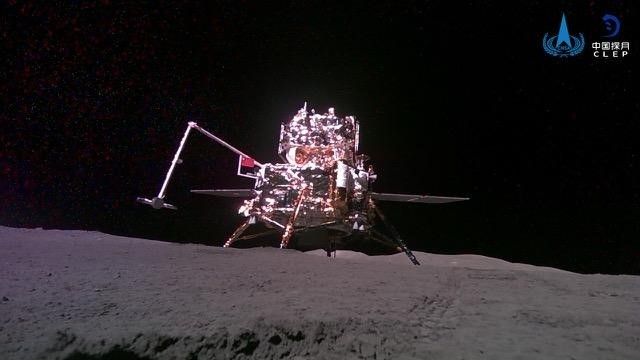
Chang’e 6 on the Moon’s far side, June 2nd, 2024, within the South Polar-Aitken (SPA) basin, as captured by the camera system on its deployed micro-rover. The sample gather mechanism and drill can be seen attached to the lander’s robot arm. Credit: CNSA/CLEP
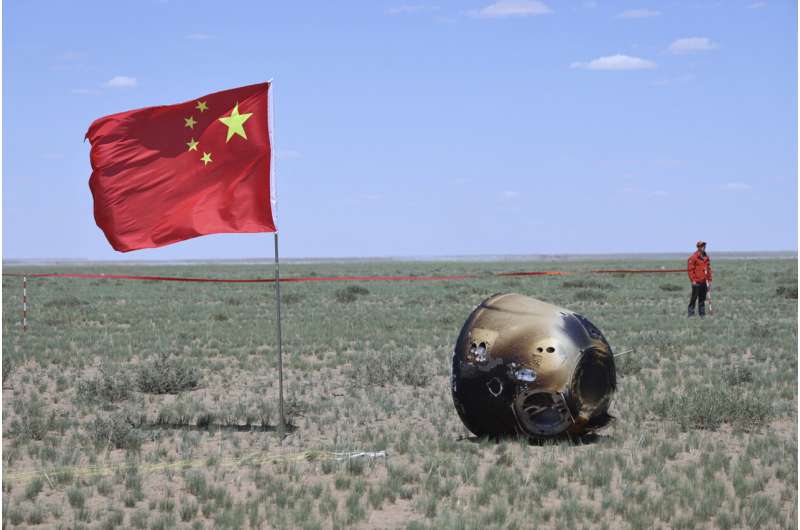
China became the first nation to successfully return samples gathered from the Moon’s far side to the Earth on June 25th, when the capsule carrying those samples made a successful soft-landing on the plains of Inner Mongolia.
The capsule had been launched to the Moon on May 3rd as part of the Chang’e 6 mission (see: Space Sunday: Starliners and samples), which targeted an area within the South Pole-Aitken (SPA) basin, where both the United States and China plan to lead separate international projects to establish permanent bases on the Moon. The craft initially entered a distant lunar orbit on May 8th, taking around 12 hours to complete a single pass around the Moon. The orbital was then gradually lowered of a period of several days prior to the mission settling into a period of observation of the landing site from an altitude of just over 200 km, allowing mission planners on Earth the opportunity to further confirm the proposed area of landing was suitable for the lander.
Then, on May 30th, the lander vehicle with is cargo of sample-gathering tools, ascent vehicle with sample canister and mini-rover detached from the orbiter / return craft and gently eased into its own obit some 200 km above the Moon, from which it could make its final descent.
I see you! Two images captured by NASA’s Lunar Reconnaissance Orbiter (LRO) combined to show a before-and-after animation of the Chang’e 6 landing zone, marking the arrival of the lander. Credit: NASA/GSFC/Arizona State University
Landing occurred 22:06 UTC, the vehicle using its on-board autonomous landing system to avoid any land minute hazards and bring itself down to just a couple of metres above the lunar surface. At this point, the decent motors were shut off in order to avoid their exhausts containing the surface material from which samples would be obtained, and the lander dropped into a landing, the shock of impact at 22:23 UTC absorbed by cushioning systems in its landing legs.
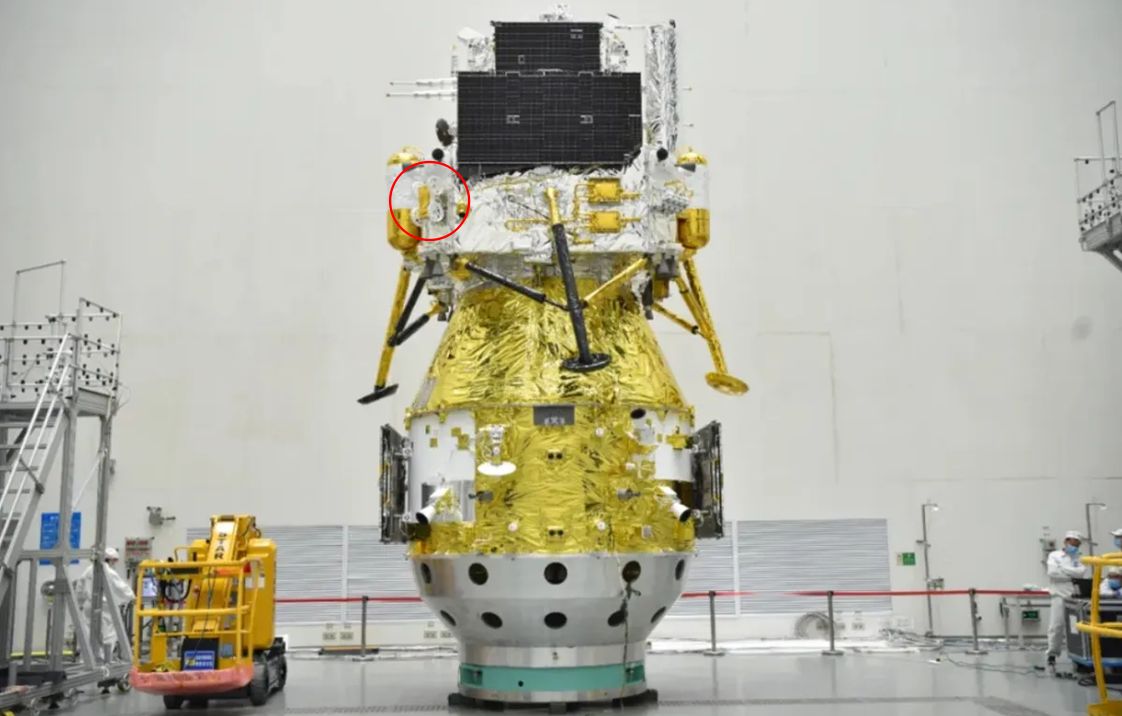
The surface mission then proceeded relatively rapidly thereafter. The mini-rover, was deployed not long after landing. Described as a “camera platform” rather than a fully-fledged mini-rover like the Yutu vehicles China has previously operated on the Moon. Once deploy, the rover trundled away from the lander to take a series of images to help ensure it was fit for purpose post-landing. The rover was also able to observe the deployment of the lander’s robot arm with its sample-gathering system, and make remote measurements of surface conditions around the lander.
Chang’e 6 stacked prior to being enclosed in its launch vehicle payload fairings. Note the mini-rover, circled. Original image credit: CAST
It’s not clear precisely when the samples were gathered, but at 23:38 UTC on June 3rd, the ascender vehicle with just under 2 kg of samples of both surface material and material cored by a drill from up to two metres below the surface, lifted-off from the back of the lander and successfully entered lunar orbit, rendezvousing and docking with the return vehicle at 06:48 UTC on June 6th. The transfer of the sample capsule to the return vehicle took place shortly thereafter, and the ascender was then jettisoned.
Throughout most of the rest of June, China remained largely quiet about the mission. However, based on orbital calculations and observations by amateurs, it appears likely the return vehicle fired its engines to break out of lunar orbit on June 21st, then fired them again to place itself into a trans-Earth injection (TEI) flight path, the vehicle closing on Earth on June 25th. As it did so, the 300 kg Earth Return unit separated and performed a non-ballistic “skip” re-entry.
This is a manoeuvre in which a spacecraft reduces the heating loads placed on it when entering the atmosphere by doing so twice; the fist manoeuvre see it skim just deep enough into the denser atmosphere to shed a good deal of its velocity before it rises back up again, cooling itself in sub-orbital ballistic cruise, at the end of which it drops back into the denser atmosphere for re-entry proper. Doing things in this way means that spacecraft returning from places like the Moon do not have to have hugely mass-intensive heat shields, making them more mass-efficient. For Chang’e 6, the skip was performed over the Atlantic, the ballistic cruise took place over northern Europe and Asia before it re-entered again over China and then dropped to parachute deployment height for a touchdown within the Siziwang Banner spacecraft landing area in Inner Mongolia, the traditional landing zone for Chinese missions returning from space.
Scorched by the heat of re-entry, the Chang’e 6 Earth return capsule lies marked by a post-landing flag planted by the ground recovery team as they await the arrival of the air-lift helicopter. Credit: Bei He/Xinhua via Associated Press
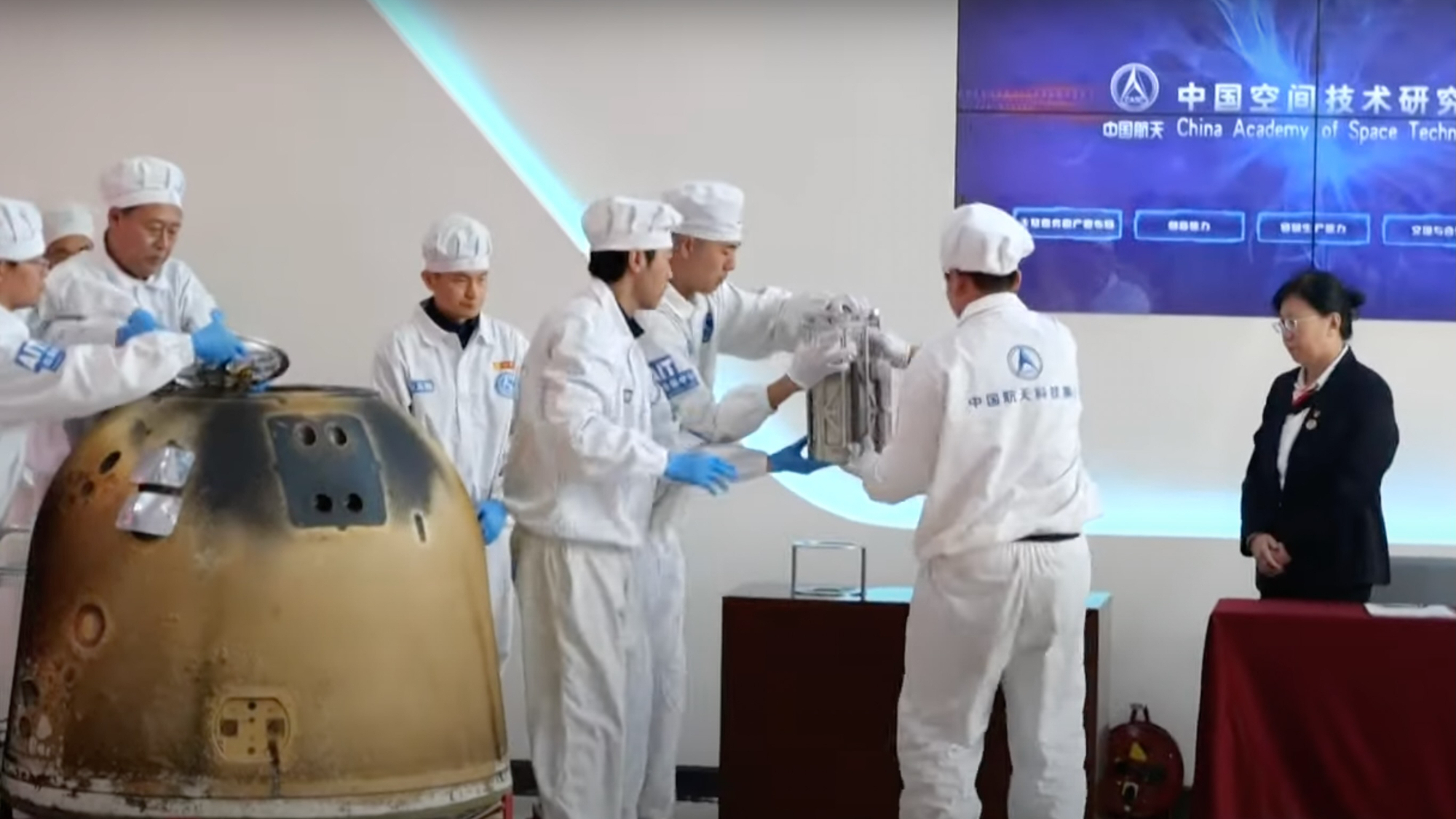
Following recovery, the capsule was airlifted to the China Academy of Space Technology (CAST) in Beijing. Then, on June 27th during a live television broadcast, the capsule was opened and sample canister very carefully removed so it could be transferred to a secure and sterile facility for future opening. Afterwards, Chinese officials responsible for the mission gave an international press briefing in which scientists, agencies and research centres from around the world were invited to request samples of the 1.935 kg of material gathered by the probe, the invitation made along much the same lines as made following the rear of the Chang’e 5 samples in 2020.
What makes these samples particularly enticing to scientists is that they are far a part of the Moon very different in terms of morphology and geology to that of the lunar near side, from where all sample of material have thus far been gathered. As such, the Chang’e 6 samples are of significant interest not only because of what they might reveal about the region where humans will – in theory – one day be living and working, but also for what they might reveal about what is currently a genuinely unknown geology and morphology on the Moon, as thus further reveal secrets about it’s formation.
Technicians remove the Change’6 sample canister from the Earth return capsule at a facility within the China Academy of Space Technology (CAST), Beijing, during a China state TV broadcast, June 27th. Credit: CCTV
However, one agency which may not directly benefit from China’s offer is NASA. The 2011 Wolf Amendment prohibits the US space agency and its research centres to use government funds or resources to engage in direct, bilateral cooperation with agencies of the government of the People’s Republic of China, or any affiliated organisations thereof, without the explicit authorisation from both the FBI and Congress. Such authorisation was not granted in the wake of the Chang’e 5 sample return mission, and so it seems unlikely it will be given for this mission, no matter what the scientific import of the samples.
That said, the Wolf amendment does not prevent non-NASA affiliated US scientists and organisations from being involved in studying samples from the mission. Following Chang’e 5, for example, US scientists joined with colleagues from the UK, Australia and Sweden in a consortium which obtained samples from that mission, allowing several US universities to be involved in studying them. This is something that could happen with regards to the Chang’e 6 samples, once they start being made available by China.
Russian Satellite Break-Up Prompt ISS Shelter In Place – Including Starliner
Despite efforts by NASA, much of the media incorrectly continues to present the idea that two NASA astronauts – Barry “Butch” Wilmore and Sunita “Suni” Williams are “stranded” on the International Space Station (ISS) due to issues with their Boeing CST-100 Starliner Calypso. However, as I noted in my previous Space Sunday article, this is simply not the case (see: Space Sunday: capsules, spaceplanes and missions). Yes, NASA is being cautious around the Starliner vehicle’s issues, but this does not mean the vehicle “cannot” return to Earth.
In fact, practical evidence of NASA’s confidence in the vehicle to make a safe return to Earth came on June 27th, when the entire crew of the ISS were ordered to prepare for s sudden evacuation of the station.
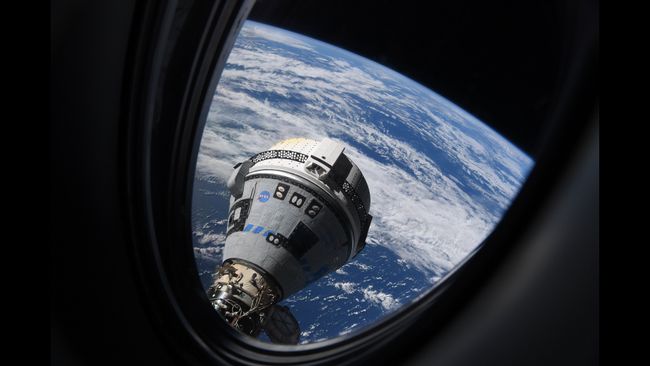
Boeing’s Starliner space capsule docked at the International Space Station. Credit: ESA
The emergency procedure – referred to as shelter in place – was triggered when the destruction of a decommissioned polar-orbiting Russia satellite was detected by debris-tracking organisation LeoLabs. Producing a cloud of around 180 trackable pieces of debris, the event was traced to the orbit of the 6.5 tonne Russian Resurs P1 spacecraft.
Orbiting at some 470 km, the orbit of the satellite periodically intersected that of the ISS. As the explosion had caused a new orbital track for the resultant debris, it was necessary for the US Space Command to re-assess the passage of both the ISS and the growing debris cloud to ensure there would be no “conjunction” (that’s “collision” to you and me). As a precaution against this being the case, at 02:00 UTC, the entire Expedition crew were ordered into their spacesuit and then into their vehicles and power them up ready for a rapid departure, but not actually seal hatches and undock – and this included Williams and Wilmore on the Starliner.
While all this sounds dramatic, it is not; shelter in place has been the order on a number of occasions when there has been the risk of a collision with debris. Perhaps the most famous up until now came in 2021, after some idiot in the Kremlin ordered an unannounced test of an anti-satellite (A-SAT) missile, resulting in the destruction of another decommissioned Russian polar-orbiting satellite, this one causing a debris cloud of almost 2,000 trackable fragments at an orbital altitude close to that of the ISS.
A model of a Resurs-P Earth resources satellite of the type which disintegrated in orbit, causing the ISS Expedition 71 crew and guests to shelter in place on their spacecraft whilst the risk of the ISS being struck by the debris cloud was assessed. Credit: Vitaly V. Kuzmin
As news broke of the June 27th event, there was some short-lived concern the same A-SAT foolishness had occurred with Resurs P1; however, this was quickly ruled out by the United States Space Command, as a review of data showed there was no evidence of any missile firing in the period ahead of the satellite disintegrating. After analysis of the debris cloud’s orbit and period aby both USSC and LeoLab, the New Zealand based debris tracking agency which initially reported the loss of Resurs P1, it was determined there was no threat to the ISS, and the crew were informed they could secure their spacecraft and return to the station after around an hour.
It is currently believed the destruction of the Russian satellite was due to it not undergoing “passivation” when it was decommissioned at the end of 2021. Whilst not mandatory or 100% effective, “passivation” has been common since the 1980s and involves the removal of any potentially energetic elements of a decommissioned satellite to reduce the risk of future break-up as a result of an explosion or similar. Typically, batteries are ejected so they will eventually burn-up in the atmosphere, whilst remaining propellants are vented into space.