Kondor Art Garden, November 2023: Lalie Sorbet – Carousels
Currently mid-way through its November / December 2023 run at the Kondor Art Garden, a part of the Kondor Art Centre operated and curated by Hermes Kondor, is Carousels, a collection of animated art pieces by photographer-artist Lalie Sorbet.
The exhibition comprises some 20 animated mobiles, each one richly organic in form, and all of them floating serenely along the gravel paths circling the gardens. Each piece is formed from two elements, each bearing an image which has been set to rotate gently, one element moving clockwise and the other counter-clockwise.
Some have their parts rotating more-or-less at the same speed, others have their parts rotating at different speeds to one another; thus the sense of life and vitality is deftly imbued. But no liner notes from the artist are provided, so how we might interpret them is a matter between the eyes and the imagination of the beholder. Might they be exotic plants caught on a cushion of air? Otherworldly life-forms drifting through the gardens on an examination of their own? Objects from the sea-s depths brought forth upon the land? Something else? That is entirely for you to decide as you visit.
Kondor Art Garden, November 2023: Lalie Sorbet – Carousels
What is evident within all of the pieces is the manner in which each of them appears both tactile and delicate. On the one hand, they seem to dare us to reach out and feel the touch of what might be a veined leaf or a ripple of hair-like fibres or a gossamer-thin sphere of silk as it slides across finger tips. On the other, there is a countering sense as to what just the lightest of caresses might do to these exquisite forms of light and colour were we to try and touch them; would they respond open and positively responsive to our fingertips, or might they recoil, contract and deny us further revelations as to their form and nature?
I also found myself wondering as to their creation; were they the result of a digital freestyle approach by the artist, or might they be a continuation of her explorations in using AI software to create their component forms prior to being brought together by eye and script to gain life? This is perhaps not important in the overall scheme of things – Carousel stands “as is” as an engaging and visual collection of pieces – but having recently witnessed Lalie’s work with AI tools (see: Art, AI and Totems in Second Life), I cannot help but wonder if if Carousels is a further aspect of her use of AI as a means to extend her natural artistry.
Kondor Art Garden, November 2023: Lalie Sorbet – Carousels
Vital, rich in colour, subtle in form – and perhaps carrying a hint of the hypnotic through the motion mere still images cannot convey – Carousels is a relaxing and engaging exhibition of animated art, with pieces available for purchase by those who would like to have a piece at home – floating in the garden, perhaps, as a peregrine visitor to their own garden.
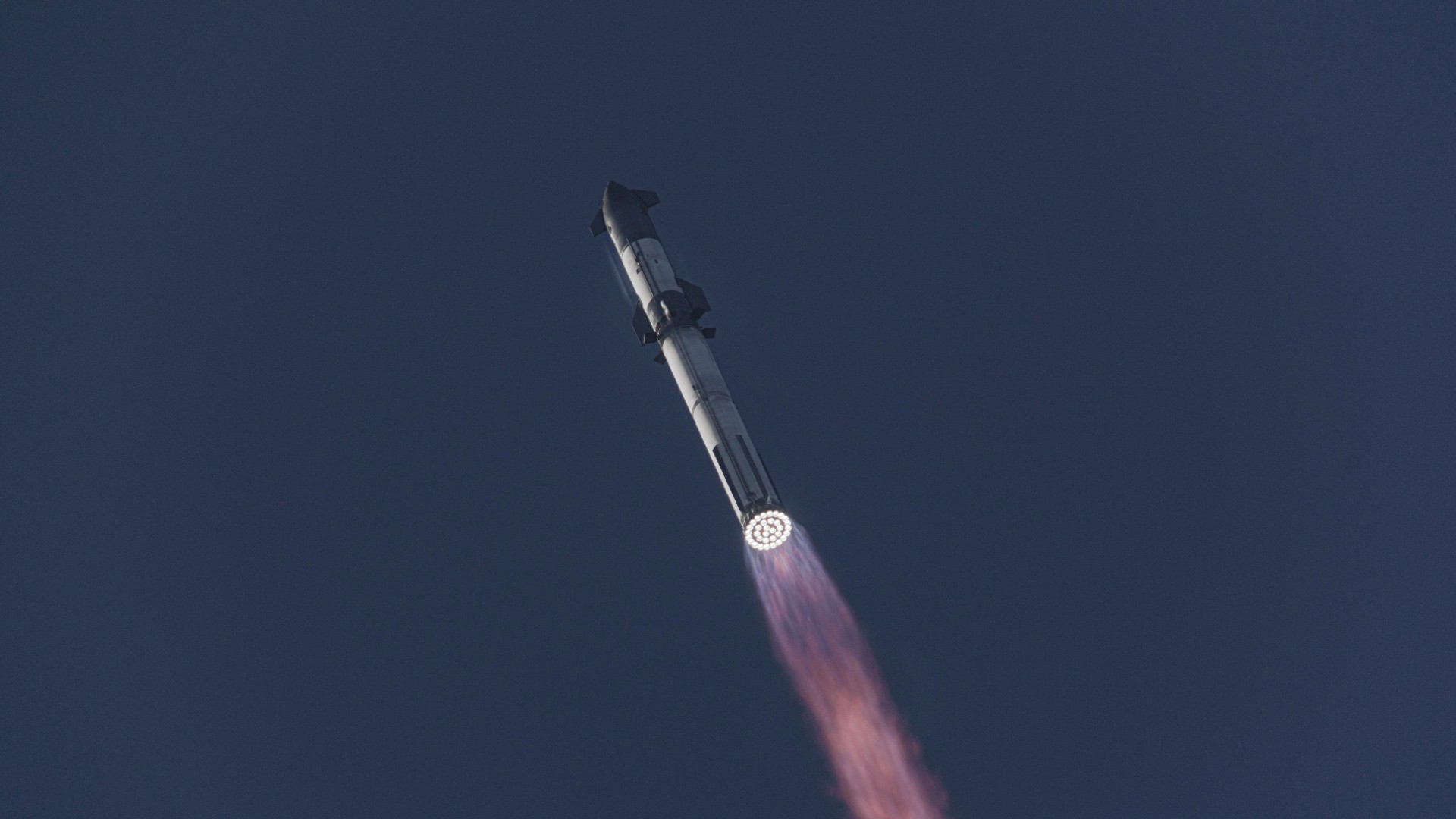
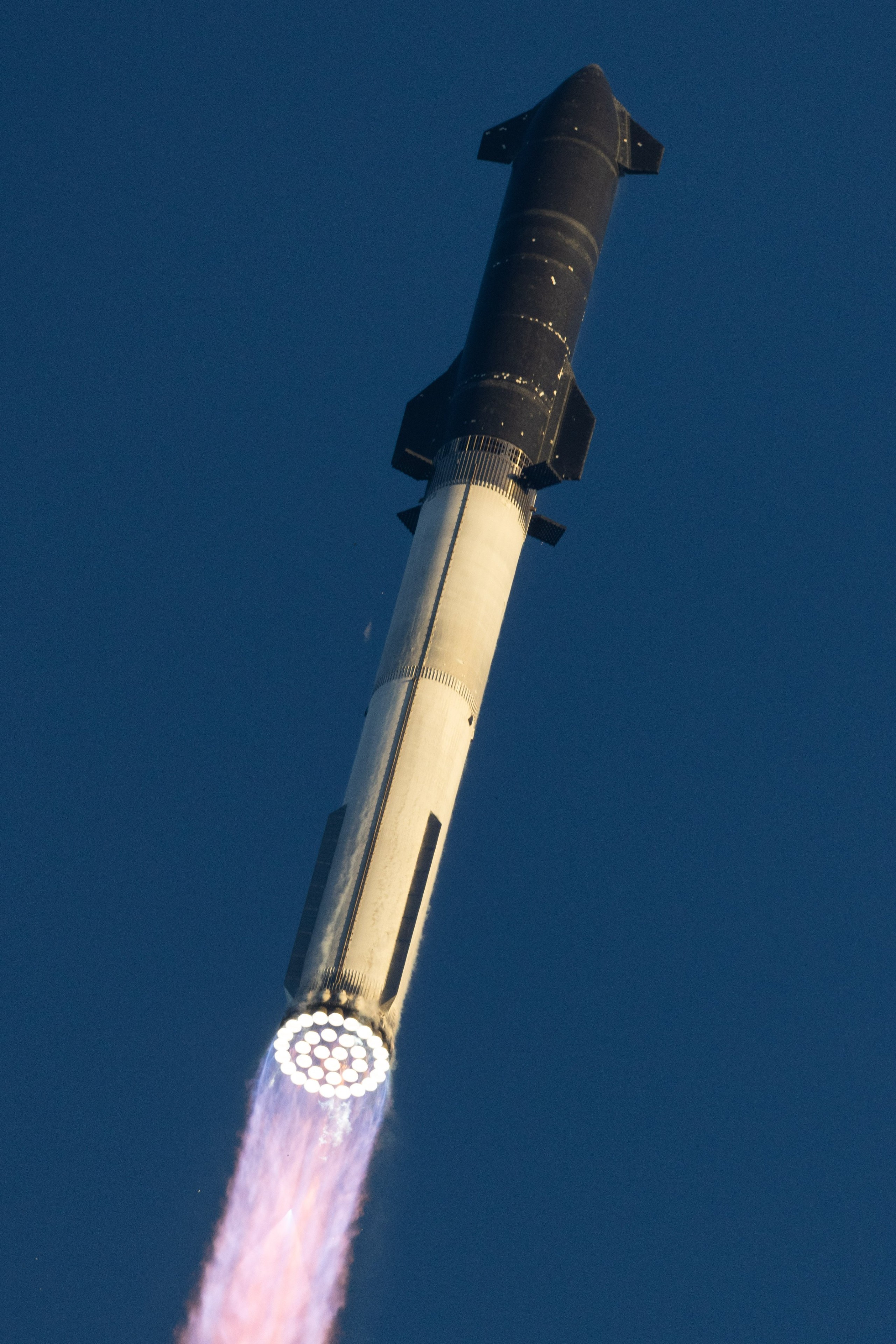
Lift off: 5 seconds after the ignition of its 33 Raptor engines, the SpaceX Integrated Flight Test (IFT-2) of a Starship / Super Heavy gets underway, December 18th, 2023. Credit: SpaceX
Saturday, November 18th, 2023 saw SpaceX attempt the second flight test of the Starship / Super Heavy behemoth out of their Starbase Boca Chica facility near Brownsville, Texas, in what is called the Integrated Flight Test 2 (IFT-2), featuring Booster 9 and Ship 25.
Regulars to the column will likely remember that the first such test of this launch combination on April 20th (and then called Orbital Flight Test 1), didn’t go that well; the launch stack was totally lost four minutes into the ascent, whilst the 31 operating engines on the booster spent the 5+ seconds between ignition and launch excavating the ground under the launch stand (see: Space Sunday: Starship orbital flight test).
The failure of that flight came as no surprise: the vehicle wasn’t fit for purpose (by Elon Musk’s own admission), and the launch infrastructure, as many (myself included) was not fit for purposes as long as it lacked a sound suppression system / water deluge system. In this regard, the April 20th attempt – which was more about boosting Musk’s ego on the so-called “Elon Musk Day” than anything practical – proved us right, the booster’s engines excavating the ground under the launch stand and throwing enough debris into themselves as to cripple the flight before it even left the launch stand.
So, how did the second flight go? Well – spoiler alert – both vehicles were again lost; the booster within the first 3.5 minutes of flight and the Starship around 4.5 minutes later. However, even this allows the flight to be recorded as a qualified success in that it will have yielded a fair amount of usable data and it did potentially succeed in meeting its two critical milestones.
Booter 9 / Ship 25 around a minute into the flight. Credit: Future / Josh Dinner
In all the flight might be summarised as:
T -02:00:00 hours: fast sequence propellant loading commenced, pumping around 4,536 tonnes into the tanks of both vehicles, less than the 4,800 tonnes full load required for an orbital flight.
T -00:00:05 seconds: the newly-installed and novel sound suppression system below the launch pad starts up, delivering a “cushion” of water under the launch stand in its first active launch test and the first critical milestone for the launch.
T-00:00:00: ignition of Booster 9’s 33 Raptor engines.
T +00:00:5 (approx 13:02:53 UTC): lift-off.
T +00:00:10 the vehicle stack clears the tower.
T +00:01:12 at 15km altitude and travelling at 1,500 km /h, the stack passes through Max Q, the period when it is exposed to the maximum dynamic pressure as it punches through the denser atmosphere.
T +00:02:40 main engine cut-off (MECO) commences, with the raptors on Booster 9 shutting down sequentially from the outer ring of 20 and progressing inwards to leave just three running.
A series of images showing the sequential shut-down of Booster 9’s engines, progressing from all 33 firing (l) through incremental shut-downs starting with the outer ring of 20 and commencing inwards, to leave just three firing (r). Credit: screen caps via the SpaceX live feed.
T + 00:02:48: Ship 25 ignites its engines in a “hot staging” process – second critical milestone for the flight.
T +00:02:49: Ship 25 separates from Booster 7, which fires upper and mid-point thrusters to tip itself away from Ship 25’s line of flight, using the thrust from its 3 remaining Raptor motors to increase its separation. Livestream graphic incorrectly shows 12 Raptors on the booster firing.
T +00:02:57: Booster 9 uses its small thrusters to flip itself over (so the top of the booster is pointing back towards the launch facility) ready to commence a “boost back” burn. Graphic continues to show incorrect number of engines firing.
T + 00:03:11: attempt to re-start the 10 motors of the inner ring to join the core 3 in firing for the “boost back” burn.
T +00:03:15: one or two engines flare briefly, following by attitude thrusters firing to correct, or some form of propellant venting.
T+00:03:17: further attempt at engine start-up, graphic now shows all 13 inner engines have shut down. Vehicle appears to be venting heavily from one side of the engine skirt.
T +00:03:20: one or more engines appear to explode. A fraction of a second late, the midsection explodes and vehicle is destroyed.
T +00:07:57: at an altitude between 140 and 148 km, and travelling at 23,350 km/h, Ship 25 appears to suffer an engine anomaly.
T +00:08:04: all flight telemetry seizes, showing the vehicle travelling at a flat trajectory at 149 km altitude.
T +00:08:08: Ship 25 is destroyed, – although mission control appear to be under the impression engine cut-off (scheduled for 8m 33s into the flight) had occurred prematurely and that the vehicle was still coasting in flight, publicly acknowledging it loss at 11m 23s after launch.
This image, taken within the first 90 seconds of launch, clearly shows the Starship vehicle to have lost numerous tiles from its thermal protection system (the white lines and dots on the black), making its ability to survive re-entry into the atmosphere – if it got that far – unlikely. Credit: SpaceX
Many were quick to hail the test as a huge win for SpaceX; others were equally quick to call it a further failure. The truth actually lies somewhere in between, as I noted earlier.
On the one hand, the flight was a success in that it clearly demonstrated the hot staging concept works, and the new sound suppression system may well protect vehicle and launch facilities at lift-off; the flight was also sufficiently long enough for a lot of data to be gathered.
On the other, the ways in which Booster 9 and Ship 25 were lost indicating there is a lot still to be done. Those claiming this flight to have failed also point to the fact that Ship 25 never got to coast on a sub-orbital hop to re-enter the atmosphere over the Pacific Ocean to splash-down near Hawaii.
However, while this was the supposed primary goal of April’s flight, for IFT-2, it was very much a tertiary objective; one a good distance behind hot staging and proving the sound suppression system. As such to call IFT-2 a failure based on this criteria is not entirely fair.
Of the two cited objectives, it is not unfair to say the jury is still out on the overall effectiveness of the sound suppression system. This is because – at the time of writing – we do not know its overall condition, as SpaceX has not released any post-launch images.
While there are various amateur videos of the launch stand and facilities post-flight, they are shot from a distance where it is impossible to judge the condition of the actual sound suppression system; therefore – and despite claims to the contrary made on their basis – we cannot tell how well it stood up to the blast from Booster 9’s engines.
All that can be positively determine from these videos is that the concrete on the launch stand withstood the blast considerably better than it did in April 2023, which show them to be in very good condition compared to the April 20th attempt, which might be indicative of the effectiveness of the sound suppression system – but that doesn’t mean it survived unscathed itself.
A further point here is that even if images do reveal the system to be relatively undamaged, that does not automatically mean it is fit for purpose; for one thing, this was an atypical launch: the stack was some 360 tonne lighter than it would be fully fuelled and with a payload – which likely reduced the degree of exposure the sound suppression system had to the fury of 33 Raptors operating at maximum thrust. Thus, it’s going to take a few more launches to really find out if the system is up to snuff or not.
Meanwhile, hot staging refers to igniting the motors of one stage of a rocket while it is still attached to a lower stage, rather than separating them first and then igniting the engine. When done right, it imparts an extra kick of velocity into the ascending stage which can be translated into a larger payload capability. Russia has been using hot staging in vehicles like Soyuz for decades, so the idea is not new; however, their rockets are built with it in mind; Super Heavy is effectively being retro-fitted with the capability, so there was a lot riding on this flight.
A diagram of the Soyuz FG variant, showing the hot staging structure between the core stage (called “Stage II” as the Russians refer to the strap-on boosters as “Stage I”) and the vehicle’s Stage III, allowing the motor on Stage III to fire before it separates from the core stage. Credit: as per the image
Blue Finch Frosty Hollow, November 2023 – click any image for full size
A full region leveraging the private region Land Capacity bonus, Blue Finch Frosty Hollow is a gorgeous winter-themed design by Grant Wade (GMi7) and Dianna Wade (DiaMi7) which has a lot within it to appreciate, do and photograph. Bringing together a number of what are now “traditional” staples of Second Life winter settings alongside of some touches perhaps more common within fantasy settings, this is a region which simply works for the eye and imagination.
The first of those SL traditional elements can be found at the landing point, taking the form of the DRD Arctic Express waiting at the local station. With its dining car dressed for a festive meal, it offers a cosy retreat from the outset, with one the passenger cars laid out as a lounge with sofa, Christmas decorations and both a brick-built fireplace with fire in the hearth and a wood burning stove!
Blue Finch Frosty Hollow, November 2023
Alongside the train, the local station presents a little café and pizza house for those seeking something to warm their insides, with a little gift wrapping shop rounding off the platform’s parade of shops. The café and pizza house might well be welcome, because the train is unlikely to be going anywhere soon (unless it is backwards), given the local reindeer appear to be engaged in a game of staring it down whilst occupying the lightly drifted snow lying across the tracks before it!
The landing point provides a summary of activities awaiting discovery within the region – a horse riding tour, ice skating, snowboarding and sledding. It also indicates that there will be a special Christmas Party within the setting at some point. The date and time were both TBA on my visit, so visitors might want to keep an eye out for that or join the local group via the sign at the LP to receive updates and notifications.
Blue Finch Frosty Hollow, November 2023
The horse tour can be found just south of the station and past the reindeer facing off against the train, where a sign board and horse sit close by the local (and again SL winter traditional) Hive Christmas Tree Farm. Sitting on the horse and clicking it will start the tour, which will proceed gently around the region along trails and paths, revealing places and locations to which visitors will doubtless wish to make a return. Lasting some 6 minutes, the ride will reveal the upland areas of the region as well, the route even allowing a for glimpse of Santa relaxing with a little skiing before the season gets really busy for him!
Skating can be found at the frozen lake occupying the southern central area of the region, with pre-choreographed single and couple skating pose balls awaiting people’s enjoyment. Those who prefer more freestyle skating and have skates in the inventories could doubtless slip them on and take to the ice as well.
Blue Finch Frosty Hollow, November 2023
Should the skating not warm the cockles of your soul, there are numerous little spots around the edge of the lake where warm food and drink can be had – roasted chestnuts, doughnuts and coffee, hot chocolate loaded with whipped cream… There are also various places where folk can just sit and watch the skaters go by; however, if the nippiness is still too much, then there is always the lakeside conservatory, where cosy armchairs await, espresso, hot chocolate and cakes are on hand – and most importantly, a roaring log fire keeps the air warm.
The uplands to the region lie mostly to the north and west and make very good use of space. On its northern side, high cliffs separate the region from its off-region surround, but in a manner which allows both region and off-region land elements to flow together to form a whole. These cliffs have a ribbon plateau running along their tops, reached via a snowy slope rising from the lowlands and presenting both an easy climb and a downhill run for sledding and snowboarding.
Blue Finch Frosty Hollow, November 2023
At the top of the slope, the plateau broadens to sit as the home of the fantasy-leaning element of the setting, providing as it does space for the Compulsion Elven House (a building I’ve oft been tempted by, but have managed – thus far – to resist purchasing!). Whilst intended more for fantasy / Middle-Earth themed settings, the house works very well here, forming a large retreat for people to enjoy, complete with a welcoming festive meal, music from a piano and places to sit.
To the south of the house is a second curtain of cliffs, reached via an elven style bridge topping a rocky arch. Dropping in a series of step-like levels as it runs close to the western edge of the region, this plateau is somewhat more rugged than its partner to the north, but offers its own points of interest, such as the tall towers clinging to the rocky bluffs as they rise from the lands below to be topped by stone-built pavilions (the excellent Trompe Loeil Amelie Pavilion I’ve frequently used myself) from where views across the entire region might be enjoyed.
Blue Finch Frosty Hollow, November 2023
Two other upland areas within the setting also await visitors. The first sits at the eastern end of the sledding / snowboarding slope, where a long finger of rock stretches forth as if to poke the lake below. At its northern end there stands a tall clock tower keeping SLT, a fenced path running south from it before switch-backing as it overlooks the lake, to descend down to the trails below.
The last highland area takes the form of a blocky mesa to the south-west, separated from the rest and reached by its own path. Water tumbles from its rocky flanks to feed an unfrozen pond which in turn feeds a fast-flowing stream as it runs down to the lake. Ruins sit on the top of this mesa, forming what appears to be an event space.
Blue Finch Frosty Hollow, November 2023
There is yet more to see within Blue Finch Frosty Hollow as the snow falls gently across it, but I’ve said enough here; this is a setting best appreciated first-hand and sans my gibbering. All I will add in closing is that do be sure to use the shared environment when you drop in to see for yourself, and have local sounds active. Otherwise – enjoy!
Le’eaf Forest Retreat, September 2023 – blog post †
The following notes were taken from my audio recording and chat log transcript of the Content Creators User Group (CCUG) meeting held on Thursday, November 16th, 2023.
The CCUG meeting is for discussion of work related to content creation in Second Life, including current and upcoming LL projects, and encompasses requests or comments from the community, together with viewer development work.
As a rule, these meetings are:
Held in-world and chaired by Vir Linden, in accordance with the dates and times given in the the SL Public Calendar, which also includes the location for the meetings.
Conducted in a mix of voice and text..
Open to all with an interest in content creation.
The notes herein are a summary of topics discussed and are not intended to be a full transcript.
Official Viewers Status
No updates for the latter part of the week, with the current crop of official viewers being:
Github Actions (GHA) RC viewer, version 6.6.16.6566955269, issued October 20 (with major CEF update and number version numbering) and promoted on October 25.
Release channel cohorts:
Maintenance X RC, version 6855926535, issued November 14 – usability improvements.
Maintenance Y, version 6.6.17.6855930358, issued November 14 – My Outfits folder improvements; ability to remove entries from landmark history.
glTF / PBR Materials viewer, version 7.0.1.6750600769, November 11.
Puppetry project viewer, version 6.6.12.579958, May 11.
General Notes
The PBR viewer now appears to be the no 1 on the runway for promotion to release status – see the notes below for more.
The next viewer LL is hoping to promote after PBR is the Emoji RC viewer.
As there are now four Maintenance RC viewer in the pipeline (V, W, X, and Y), it is likely some of them will be merged together to reduce the load on the release schedule.
glTF Materials and Reflection Probes
Project Summary
To provide support for PBR materials using the core glTF 2.0 specification Section 3.9 and using mikkTSpace tangents, including the ability to have PBR Materials assets which can be applied to surfaces and also traded / sold.
The overall goal for glTF as a whole is to provide as much support for the glTF 2.0 specification as possible.
Up to four texture maps are supported for PBR Materials: the base colour (which includes the alpha); normal; metallic / roughness; and emissive, each with independent scaling.
In the near-term, glTF materials assets are materials scenes that don’t have any nodes / geometry, they only have the materials array, and there is only one material in that array.
As a part of this work, PBR Materials will see the introduction of reflection probes which can be used to generate reflections (via cubemaps) on in-world surfaces. These will be a mix of automatically-place and manually place probes (with the ability to move either).
List of tools and libraries supporting glTF: https://github.khronos.org/glTF-Project-Explorer/ – note that Substance Painter is also used as a guiding principal for how PBR materials should look in Second Life.
Following a meeting this week, the current plan from the Lab is to deploy PBR Materials grid-wide on the simhosts during the first week after US Thanksgiving (so week commencing Monday, November 27th, 2023).
Currently, all RC simhost have been updated to the PBR simulator code which leaves only the SLS Main channel to go.
The plan is also to promote the PBR RC viewer to de facto release status that same week.
Note that these plans are subject to late-breaking issues or other requirements not getting in the way of things.
Recent Work
Fixes are progress for what are seen as to remaining notable issues:
One to correct the issue with normal maps uploaded via the glTF uploader always coming out square post-upload and with lossy compression.
One to correct the issue of not being able to revert an Alpha mode from blend or mask to opaque without having to save the material back to inventory after making the change in order for it to apply properly.
There are some additional bugs within the system, some of which do have fixes in the works, but these aren’t seen as having significant impact, and will be subject to release with the first maintenance update to PBR Materials.
That said, there some issues which have been identified, but will not be addressed until the first PBR maintenance viewer is issued. These include:
A “slim minority” of users with very, very large inventories and Friends lists may find some objects in a scene do not render when logging-in. Currently, the steps for correcting this are to a) re-log, and if that fails to resolve the problem, b) clear cache.
Some users on Macbooks and / or Apple Silicon systems may experience poor performance on the PBR viewer.
BUG-234235 “[PBR] alpha blend on water is acting a bit like invisiprim” – this is being worked on, and is seen as somewhat related to another change under consideration: environmental haze.
Currently, local lights are not affected by environmental haze. Runitai Linden is working on a change that will make local lights responsive to haze (e.g. if you are in a foggy environment, lights at an increasing distance from your camera position will appear fainter and fainter due to the influence of the fog).
This work will likely be surfaced in the first PBR viewer maintenance release.
The reason this is related to BUG-234235 is that it will also require an adjustment to water haze as well, and this should resolve the issue reported in the bug (haze will essentially get its own render pass, with a single shader being used for both atmospheric and water haze, rather than them requiring separate render passes).
Future work on glTF will allow for more greater control of lighting sources, such as lamps, etc., and provide for luminosity to be defined in terms such as lumens. However, this work will depend on glTF scene import, which will be worked on in the next tranche of work, together with HDRI import / export (which is not as yet on the glTF implementation roadmap).
A Materials folder is to be added to the system library and available through the Library section of inventory.
In Brief
A Feature Request has been filed to allow system-generated sounds to be overridden by Experiences to provide more immersive sounds (e.g. on entering a door and being teleported, the sound heard might be the creaking of the door opening, rather than the ding-sing-whoosh of the default teleport sound – which can only currently be disabled on a per viewer basis by the user). See (and Watch) BUG-234682 “Override UI sounds within the scope of experience keys” for more.
Next Meeting
13:00 SLT, Thursday, December 7th 2023, at the Hippotropolis Campsite (but check the public calendar).
† The header images included in these summaries are not intended to represent anything discussed at the meetings; they are simply here to avoid a repeated image of a gathering of people every week. They are taken from my list of region visits, with a link to the post for those interested.
Melusina Parkin: Secret Shores, Nitroglobus Roof Gallery, November 2023
This will be the second of two recent art reviews in these pages presenting a joint coverage of art exhibitions running through November / December 2023, although unlike my last (see: Artistic reflections on the human form and intimacy in Second Life), they are not connected by some subjective and potentially nebulous cooked up in side my little noggin; this time they are very much jointed at the hip, because by the same artist and encapsulating the same core theme. Coincidentally, one of these exhibitions is also taking place at Nitroglobus Roof Gallery, curated by Dido Haas, which was also the location for one of the two exhibitions reported on in the above-linked review.
The artist in question is Melusina Parkin, and the exhibitions are Silent Shores and Silent Landscapes, with the former presented within the main hall at Nitroglobus, and the latter within Melu’s own gallery space. In terms of total number of images, the larger of the two is Silent Landscapes, offering a total of 48 images, whilst Silent Shores presents 16 pieces in what might be called a subset of some of those found at Meulsina’s Place, but offered in a much large format, allowing us to be drawn more deeply into them.
Melusina Parkin: Silent Landscapes, Melusina’s Place, November 2023
Given they are connected, I’m going to cover both exhibitions as if they were a single whole; however, were I pushed pushed to give a suggestion as to the order in which they should be viewed, I would recommend visiting Silent Landscapes first. It is here that the complete collection can be seen together with Melu’s own thoughts on how the collection came into being. Silent Shores, with its use of large format images, then allows for that deeper sense of engagement mentioned above.
I’ve oft commented on Melu’s work in these pages, particularly noting her use of tight focus and angles within her photographs to concentrate the eye and mind on a specific item or element within an image, thereby limiting our frame of reference whilst simultaneously opening the image up in a manner which springboards the imagination into framing its own narrative around the piece, rather than restricting us to interpreting the story the artist wished to convey. It’s a technique I much admire, inviting as it generally does the mind to take free flight.
Melusina Parkin: Secret Shores, Nitroglobus Roof Gallery, November 2023
Here, Melu does much the same in terms of allow her audience to view each piece and formulate a narrative around it, if they so wish. However, in terms of style, she uses a reverse approach, pulling the camera back, as it were, from her more usual tight focus and closed angles to offer us – quite literally- broad horizons into which landscapes and costal settings flow and fade. Thus, we are presented with images with the suggestion of the infinite – and yet which are intimate and personal thanks to her use of soft tones, horizon haze and a deep sense of depth present within piece.
This sense of intimacy-without-open-spaces wraps within it a subtle yet deep sense of solitude enhanced by the fact that nary an image offers so much as a bird is the sky or creature on the ground. Even the man-made objects apparent in some of the pieces come across as natural elements within each setting, rather than something interjected into it.
Melusina Parkin: Silent Landscapes, Melusina’s Place, November 2023
The result of this is that each piece draws us into it in a very personal way; these are not images of places unknown, this are places reflective of mood and feeling; they exude a silence we all, at times, desire or have felt; times when Nature allows us to be true to ourselves in thought, and where we can accept the feelings we might otherwise repress – or at least lose in the daily hubbub of life. In this, silence can be a deep and calming friend.
Given this, these are also images that carry something personal to Melusina, as she notes in her introduction to Silent Landscapes whilst also noting the power of silence itself:
Silence isn’t only a matter of hearing; it can be depicted by an image. Lonely landscapes, fuzzy or faint images suggest [a] lack of noises or voices. Silence is absence; absence is peaceful, but can also be sad. I shot and collected dozens of images of solitary landscapes that show silences; their slight sadness and their relaxing mood match the inspiration of many of the thousands [of] photos I took in many years of SL Photography. So, I consider these pictures as a summary of the deepest feelings I wanted to express in my work.
– Melusina Parkin, Silent Landscapes
Melusina Parkin: Secret Shores, Nitroglobus Roof Gallery, November 2023Which, at the end of the day, is really what needed to be said. Evocative, personal – to those viewing them and to the artist, albeit in a myriad of different ways as they speak to each of us – Silent Landscapes and Silent Shores form an engaging and slime collection of SL photographic art which can speak to all who witness them.
The following notes were taken from the Tuesday, November 14th Simulator User Group (SUG) meeting. They form a summary of the items discussed, and is not intended to be a full transcript. A video of the meeting is embedded at the end of this summary, my thanks as always to Pantera for recording the meeting and providing it.
Apologies for the lateness of this summary, RL is not playing nice at the moment.
Meeting Overview
The Simulator User Group (also referred to by its older name of Server User Group) exists to provide an opportunity for discussion about simulator technology, bugs, and feature ideas.
They are open to anyone with a concern / interest in the above topics, and form one of a series of regular / semi-regular User Group meetings conducted by Linden Lab.
Dates and times of all current meetings can be found on the Second Life Public Calendar, and descriptions of meetings are defined on the SL wiki.
Server Deployments
No deployments for SLS Main channel, but the simhosts were restarted.
Wednesday, November 15th should have seen the deployment of the PBR Material simulator support to all RC channels.
Please remember: if you have anything that uses PBR materials and you rez that object (or wear it) on a non-PBR simulator, the PBR Materials will be stripped from the object and forgotten.
There are currently internal discussions on whether or not to deploy the simulator support for PBR before or after US Thanksgiving.
Viewer Updates
Two new Maintenance viewers were issued on Tuesday, November 14th:
Maintenance X, version 6855926535, comprising viewer usability improvements.
Maintenance Y, version 6.6.17.6855930358, comprising improvements to the My Outfits folder (display thumbnails on hover) and to remove entries from landmark history
The rest of the official remain unchanged at the start of the week:
Github Actions (GHA) RC viewer, version 6.6.16.6566955269, issued October 20 (with major CEF update and number version numbering) and promoted on October 25.
Release channel cohorts:
glTF / PBR Materials viewer, version 7.0.1.6750600769, November 11.
Puppetry project viewer, version 6.6.12.579958, May 11.
Game Controllers
The simulator code for the game controller support is now in the “Fall Colours” simulator RC update, which is currently scheduled as the first simulator RC deployment in December.
The viewer code needs further work, including: keyboard mapping to controller input channels; the ability to set the dead zone of various axes; support for “less common” controllers; additional UI to work alongside existing support options (e.g. SpaceNavigator).
In terms of the SpaceNavigator, the project will not include an update to support the latest 3dconnexion drivers, as it is felt this will break expected behaviour for the SpaceNav mouse in SL – the aim is to continue to support SpaceNav as is.
This work does not, as yet, include the ability to control avatar motion, although there was additional discussion around this.
Expansions to inputs have been filed in Feature Request BUG-234678.
There was also significant discussion on game controller / LSL interactions.
When available via the Alternate Viewers pages, the viewer will has a MacOS build as well. Meanwhile, documentation on the game controller work can be found on the SL wiki, and this includes Github link for downloading a pre-release version of the Windows viewer.
SL Combat
A further general discussion on updating SL’s support for combat gaming, most of which has been covered in recent SUG summaries here (e.g. adjusting the avatar bounding box and hit box when crouching / seating (so the form allows for crawling under object, for example, and the latter makes for a small target).
Camera control options:
A new request was for a native means to set the camera to follow remote objects (e.g. RC vehicles) rather than having to relay on “janky” scripts to achieve the capability.
There were also requests for offsetting mouselook view (see VWR-28745 for an example of such a request).
Rider suggested updates to the camera control mechanism and positioning might be better suited to an update to scripted camera capabilities he is considering (but not anywhere close to being in a position to discuss in terms of what might / can / cannot be done).
In Brief
A lot of requests for updates to SL terrain, including updating the textures and improving the resolution (which should hopefully be covered by the PBR terrain support Cosmic Linden is developing, which should also reduce texture stretching as the heightmap is morphed); full terrain painting (not currently on the books); a general smoothing terrain deformations to make movement, etc., smoother.
Region Crossing: following the most recent pile-on tests, Monty Linden is working on some updated code, which he is trying to get onto Aditi (the Beta grid) on server channel DRTSIM-565, however there is a bug he needs to hammer on first.
Monty is also working on “an EventQueueGet thing”, which he hopes to get on to Aditi on DRTSIM-577.
Further requests for a means of masking Linden Water from the interiors of object – see BUG-227965 as a reference for this.
There was a request to be able to adjust the centre of mass for a linkset (e.g. a vehicle). While this can be done to some degree via prim cutting, it is not so possible with mesh; how it would be handled is unclear, but Leviathan Linden indicated he would kick some ideas around.
somewhat/ sort-of related to the above, a Feature Request has been filed to allow control of where a vehicle rotates from without having to do prim hackery – see BUG-234649, an update to SVC-6619). It was noted this could be useful for objects other than vehicles alone.
† The header images included in these summaries are not intended to represent anything discussed at the meetings; they are simply here to avoid a repeated image of a rooftop of people every week. They are taken from my list of region visits, with a link to the post for those interested.





 Inara Pey: Living in a Modemworld