Nitroglobus Roof Gallery, January 2024: Morlita Quan – Cats and Dogs
It’s been over a decade since I first encountered Morlita Quan’s art in Second Life. At the time, she was one of the recipients in the Linden Endowment for the Arts 4th round of land grants to artists, and I was immediately struck by her work. Over the course of the next few years I encountered her art over and again at various festivals and collaborative art events, but it was not until 2016 that I was able to blog about it as a solo exhibition, when I visited Organic Geometry, presented at the Art Gallery the Eye under her physical world artistic name, MorlitaM. Since then, I’ve always been attracted to her exhibitions whenever presented, finding myself deeply attracted to her work, which often blends the use of geometric and organic forms in unique and captivating abstracted ways.
However, her latest exhibition – currently being hosted by Dido Haas at her Nitroglobus Roof Gallery – offers a glimpse of another side of Morlita’s life in addition to that of an artist and musician. Cats and Dogs is something of a challenge set by Dido – a long time friend of Morlita’s – to produce a themed exhibition. Dido tends to present these to folk every so often, and they are often particularly hard to fulfil, as Dido has a knack for both shining a light on a side of someone’s SL or physical life (or both) which is seldom seen, and easing them out of their established comfort zone (and I speak here from knowledge – Dido hand me such a challenge well over a year ago, and I still have yet to try and rise to it to a point where I have confidence in the results!).
Nitroglobus Roof Gallery, January 2024: Morlita Quan – Cats and Dogs
For Morlita, the challenge came in the form putting together an exhibition focused on her work in taking in and caring for abandoned and mistreated animals, notably dogs.
While this might sound easy, it’s not necessarily so. For a start, should the images be of animals taken in Morlita’s physical world life, and if so, how should they be shot? What needs to be done to eliminate too much personal information from accidentally slipping into an image? Which animals should be featured? Should these be individual or group shots? And if not images of actual animals she is caring for, that what should be offered? shots of random animals, perhaps caught on the street? or should the images be drawn from digital sources – SL and elsewhere? And so on. When you add the fact that Morlita works in the realms of the conceptual and abstract, the melding of ideas and thoughts, both in her art and in her music, then the task becomes even more of a challenge – how do such approaches mix with the practicalities of animal welfare and care?
Nitroglobus Roof Gallery, January 2024: Morlita Quan – Cats and Dogs
With Cats and Dogs the answer to that last question would appear to be quite eloquently. Cats and Dogs is at once both a collection of conceptual pieces, oft with abstractions of meaning, and of portraits and studies of cats and dogs which can be taken purely on that level, depending upon your outlook mood.
Some of the themes woven into the images will at once appear obvious to anyone what has owned a cat or a dog (perhaps most recognisably in Ego, while in others the layering of ideas might be more nuanced (as in the highlighting of the eyes in a on some, capturing the notions of intelligence and understanding within our furred friends). In others still, the potential for meaning / interpretation is even more nuanced, if one so wishes to make it so – such as GP_MorlitaM (9) – or can simply be seen as an image of an animal enjoying life (and splashing through water). These are pieces which also blend Morlita’s love of the animals with her love of geometry and organic forms, each piece bringing all of these aspects together in a unique expression of love and understanding.
Nitroglobus Roof Gallery, January 2024: Morlita Quan – Cats and Dogs
Supported by 3D elements by Adwehe, Cats and Dogs is something of a very different exhibition for Nitroglobus; one that is obviously very personal to the artist – but also one fully in keeping with Dido’s tenet of encouraging her artists to present something which engages the eye and the mind. My apologies to her and Morlita to getting to this blog post a little later than is normally the case with exhibitions at Nitroglobus – and also to Dido for the fact that I still haven’t met the challenge passed to me back in late 2022!
The following notes were taken from the Tuesday, January 16th, 2024 Simulator User Group (SUG) meeting. They form a summary of the items discussed, and are not intended to be a full transcript. A video of the meeting is embedded at the end of this summary, my thanks as always to Pantera for recording the meeting and providing it.
Meeting Overview
The Simulator User Group (also referred to by its older name of Server User Group) exists to provide an opportunity for discussion about simulator technology, bugs, and feature ideas.
They are open to anyone with a concern / interest in the above topics, and form one of a series of regular / semi-regular User Group meetings conducted by Linden Lab.
Dates and times of all current meetings can be found on the Second Life Public Calendar, and descriptions of meetings are defined on the SL wiki.
Simulator Deployments
No SLS Main channel deployment on Tuesday, January 16th, 2024; the simhosts were all just restarted.
Wednesday, January 17th should see the Falls Colours simulator update once more deployed to all of the RC channels. This includes:
If all goes well, week #4 should see Fall Colours deployed to the SLS Main channel and the Gingerbread simulator update deployed to at least some of the RC channels.
Viewer Updates
No changes at the start of the week, leaving the list of official viewers as:
Release viewer: version 7.1.2.7215179142, formerly the glTF PBR Materials Maintenance RC, issued December 15, promoted January 8, 2024 – numerous bug fixes and improvements.
Puppetry project viewer, version 6.6.12.579958, May 11.
Jira End-of-Road – Reminder
Linden Lab is ending its use of Atlassian Jira for the filing of bug reports and feature request, and is instead moving to Github / Canny. For specifics, please refer to the following:
Note that this is a work-in-progress (so things like additional ticket categories are being introduced, such as the recent Server Bug category), and both the new system and Jira remain open at this time (although the latter will shutdown in February 2024).
Game Control Update
The game_control event for using game controllers has been removed from the Gingerbread maintenance RC to become its own branch / channel (currently on Aditi (the Beta grid), where it can be found on the regions LeviathanLove and LeviathanLost.
As per the previous SUG meeting summary, the game_control event signature has changed in that the button_edges parameter is no longer provided to the event and must be computed by the scripter if still needed.
In Brief
Further discissions on Leviathan Linden’s LSL updates for camera control, due to be deployed in the Gingerbread update (see my previous SUG summary for details)
A general discussion on attachment points – such as reserving some for specific uses, or providing a separate pool of attachment points for HUDs / on-screen attachments (so that they are counted separately, rather than being part of the total limit of 38 attachments).
Concerns were raised over the fact the PBR now makes it harder to show / hide prims/object faces (e.g. alpha cuts in mesh bodies) using LSL to set the alpha visibility, with loops now being required to achieve what could previously be done via a single function call.
The problem is seen as exacerbated by the fact there appears to be no way for a script to determine if PBR materials is applied, making it necessary for creators to add to their script overheads.
It had been thought that a bug report had been raised on this issue, as it has been discussed at the Lab and is seen as a issue which needs to be fixed – although it might not be possible to change the semantics of the current Blinn-Phong alpha setters in LSL without breaking content.
llSetAlpha was not expanded to handle this out of concern over mixing semantics of setting legacy and PBR alpha values correctly.
This led to a general discussion on possible options to manage this issue, which continued through most of the rest of the meeting.
Please refer to the video for these items. and on TTAORAIMWEATCP (the throwing about of random acronyms in meetings without explanation and thus confusing people).
† The header images included in these summaries are not intended to represent anything discussed at the meetings; they are simply here to avoid a repeated image of a rooftop of people every week. They are taken from my list of region visits, with a link to the post for those interested.
Logos representative only and should not be seen as an endorsement / preference / recommendation
Updates from the week through to Sunday, January 14th, 2024
This summary is generally published every Monday, and is a list of SL viewer / client releases (official and TPV) made during the previous week. When reading it, please note:
It is based on my Current Viewer Releases Page, a list of all Second Life viewers and clients that are in popular use (and of which I am aware), and which are recognised as adhering to the TPV Policy. This page includes comprehensive links to download pages, blog notes, release notes, etc., as well as links to any / all reviews of specific viewers / clients made within this blog.
By its nature, this summary presented here will always be in arrears, please refer to the Current Viewer Release Page for more up-to-date information.
Note that for purposes of length, TPV test viewers, preview / beta viewers / nightly builds are generally not recorded in these summaries.
Official LL Viewers
Release viewer: version 7.1.2.7215179142, formerly the glTF PBR Materials Maintenance RC, issued December 15, promoted January 8th, 2024 – numerous bug fixes and improvements – NEW.
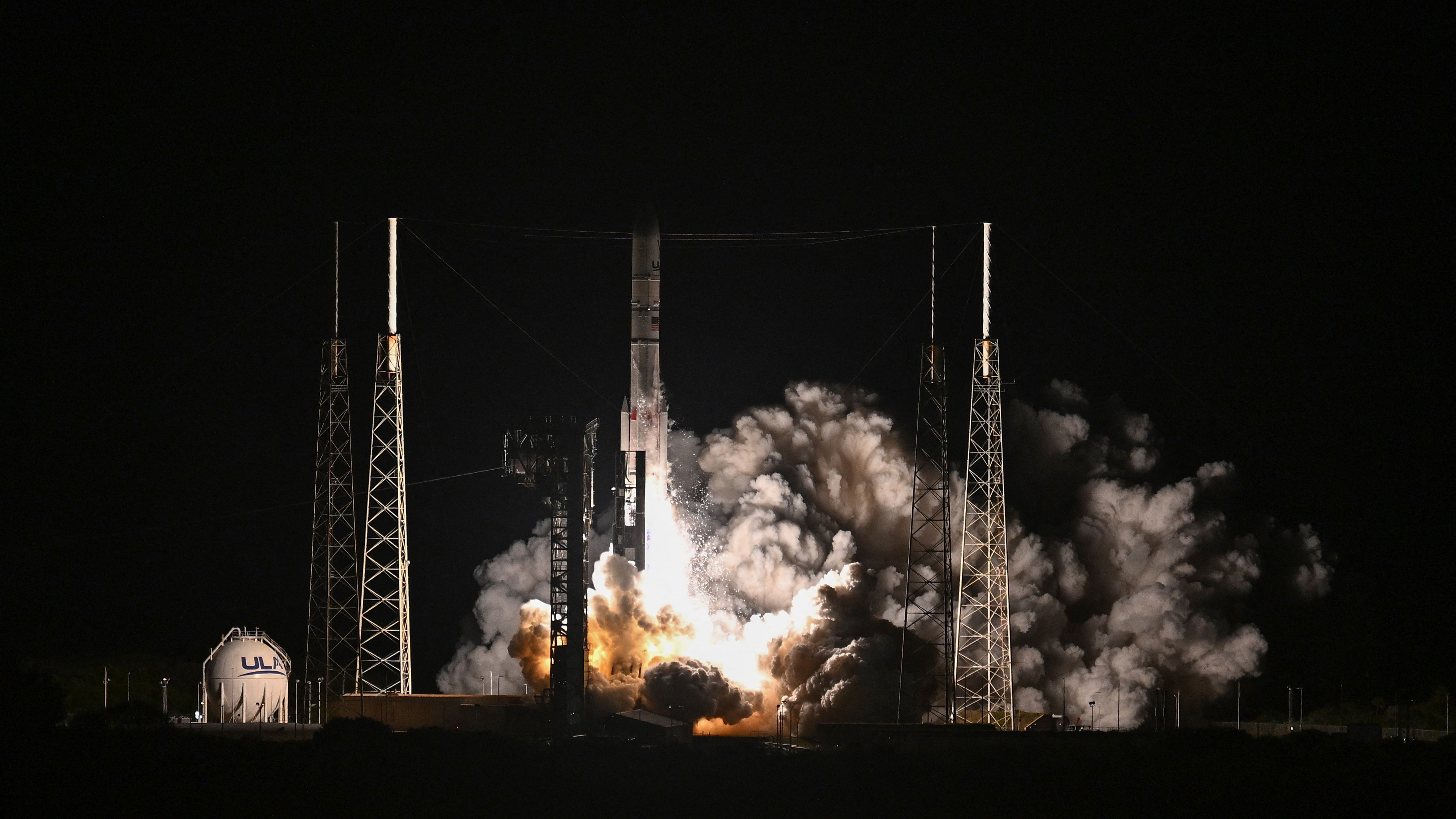
United Launch Alliance’s (ULA) Vulcan Centaur rocket lifts-off from Florida’s Cape Canaveral Space Force Station, Monday January 8th, 2024 at 07:18 UTC. Credit: CHANDAN KHANNA/AFP
On Monday January 8th, 2024 United Launch Alliance completed the maiden launch of their Vulcan Centaur rocket with complete success, silencing critics and demonstrating that the caution and most recent delays around the launch (outside of those coming from the payload side) were worth it.
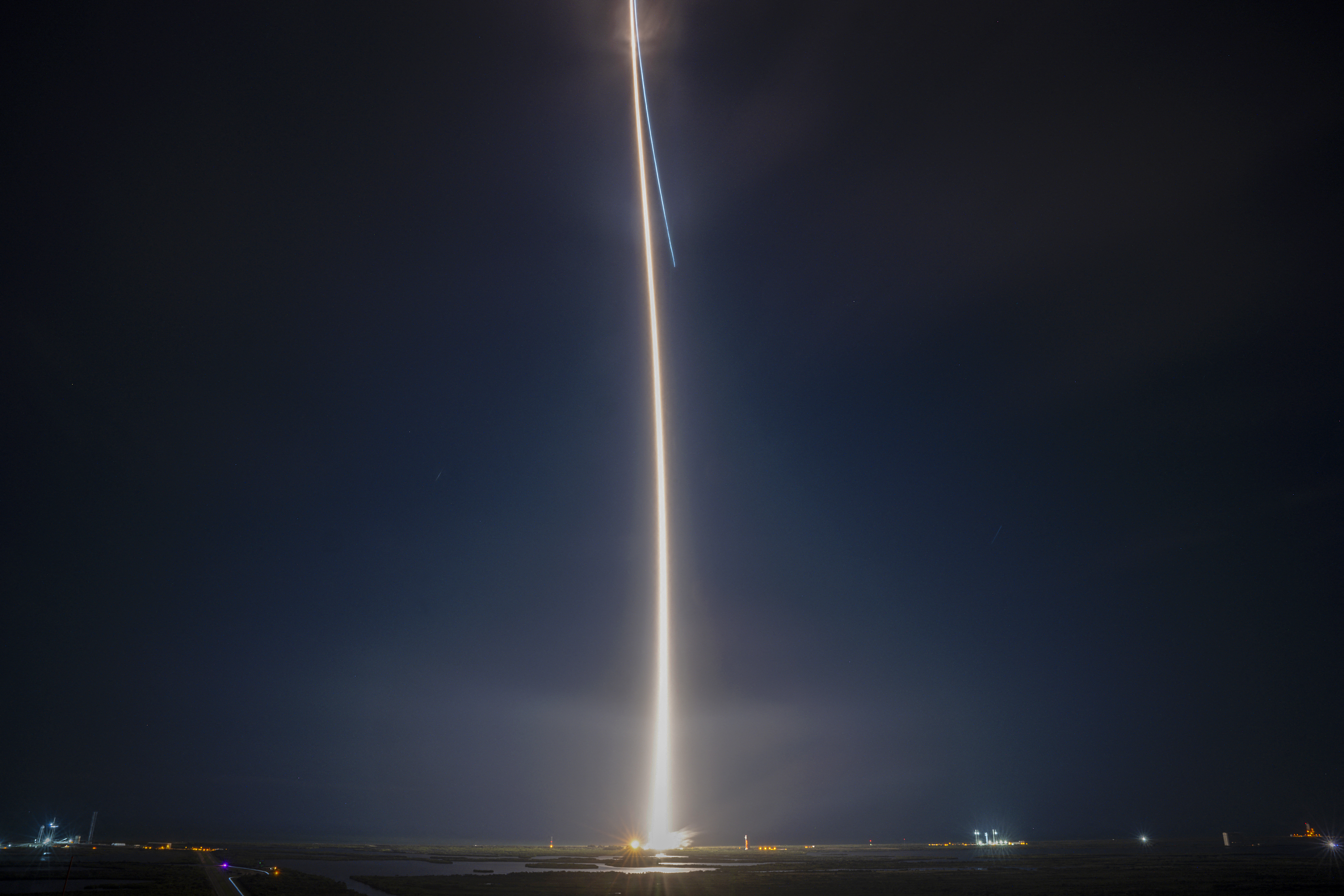
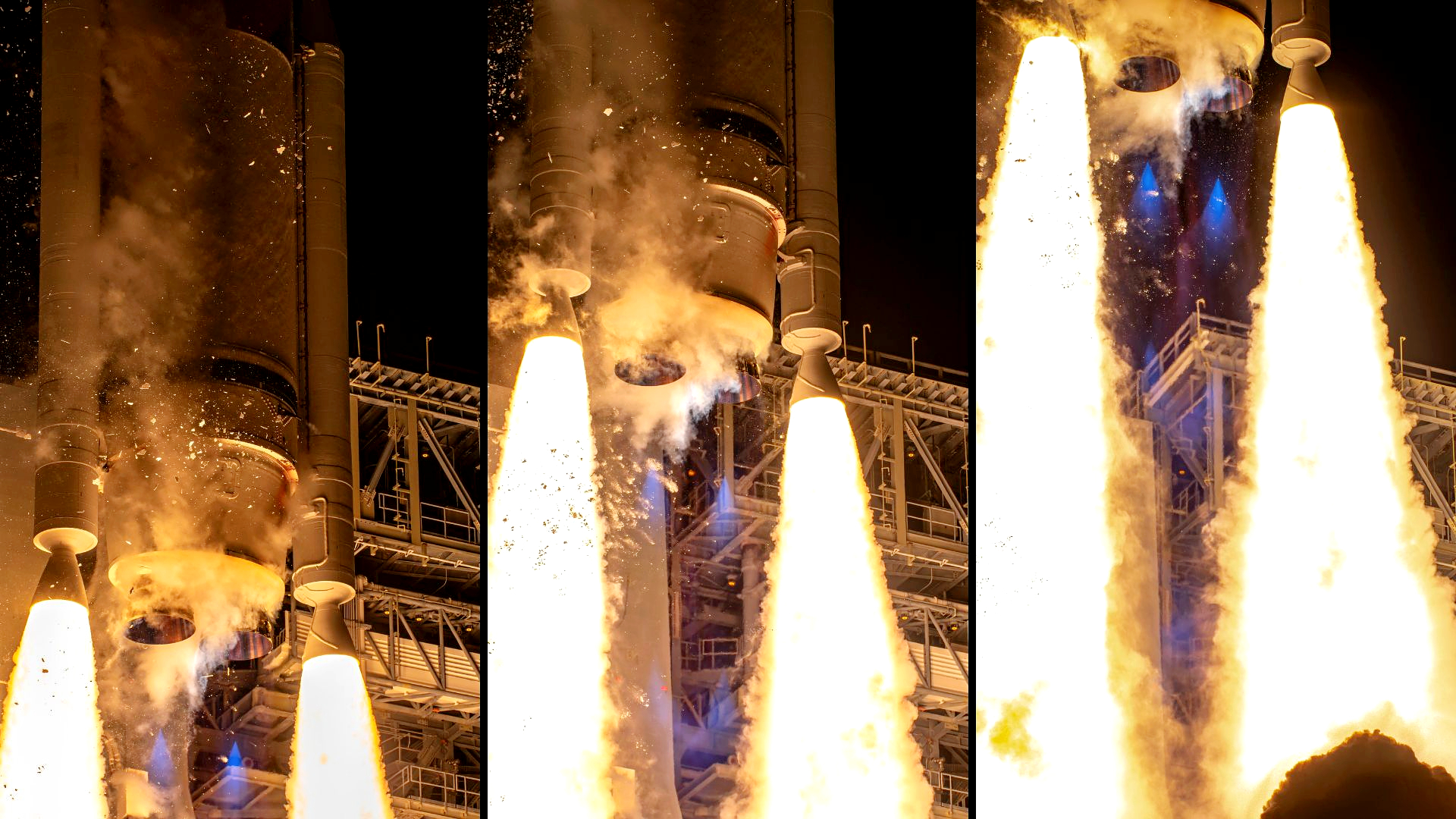
Lift-off came at 07:18 UTC as the two Blue Origin BE-4 motors of the 62-metre tall vehicle’s core stage ignited together with the two solid rocket boosters strapped on either side of it, lighting up the sky at Cape Canaveral Space Force station as the rocket climbed into a pitch-black sky. At 2 minutes into the flight, their job done, the solid rocket boosters shutdown and separated, leaving the rocket’s core to continue to power it upwards for a further three minutes before its liquid propellants were expended, and it separated to fall back into the Atlantic Ocean. The Centaur upper stage coasted for some 15 seconds before igniting it own pair of RL-10 motors in the first of three burns to place the vehicle and its payload into a trans-lunar injection (TLI) orbit and the first phase of what was hoped would be a looping trip to the lunar surface.
Lighting up the sky: a dramatic time-lapse image of the Vulcan Centaur rocket’s climb to orbit from Cape Canaveral Space Force Station. Credit: CHANDAN KHANNA/AFP
As I’ve previously noted, Vulcan Centaur is slated to replace ULA’s Atlas and Delta workhorses as a highly-capable, multi-mission mode payload launch vehicle in both the medium and heavy lift market places. Initially fully expendable, the vehicle may evolve into a semi-reusable form in the future, ULA having designed it such that the engine module of the core stage could in theory be recovered. It is also intended to become a human-rated launch vehicle. The Centaur upper stage is also designed with enhancement in mind, with ULA indicating that future variants might be capable of orbiting on an automated basis as space tugs or similar, once in orbit.
Whilst the vehicle carried a critical payload, the flight was actually regarded as a certification flight rather than an operational launch; one designed to gather critical performance and other data on the rocket which can be feed back into any improvements which might be required to make the vehicle even more efficient, etc.
A second certification flight is due to take place in April 2024, again with a critical payload – this one in the form of Sierra Space’s Dream Chaser cargo vehicle Tenacity, the first in a number of these fully reusable spacecraft which will help to keep the International Space Station (ISS) supplied with consumables and equipment, as well as helping in the removal of garbage from the station and the return of instruments and experiments to Earth.
Three incredible shots of the BE-4 engines and two strap-on boosters of ULA’s Vulcan Centaur, as the start to lift the vehicle away from the launch pad. Credit: Josh Dinner
While the launch of the Vulcan Centaur was a complete success – doing much too potentially boost ULA’s position as it seeks a buyer – the same cannot be said for its primary payload, which now looks set to make an unwanted return to Earth.
Peregrine Mission One (or simply Peregrine One), was to have been America’s first mission to land on the surface of the Moon since Apollo 17 in 1972. Financed in a large part via NASA’s Commercial Lunar Payload Services (CLPS) programme, this mission is nevertheless regarded as a private lunar mission, carrying some 20 experiments and instruments allowing it to operate in support of NASA’s broader lunar goals.
At first everything seemed to be going well with the mission. The lander rode the Vulcan Centaur to orbit before it powered-up its own flight systems and ‘phoned home to say it was in good shape. Then, some 50 minutes after launch, and the Centaur upper stage having completed its final burn to set the lander on its looping course to the Moon, Peregrine One separated from its carrier.
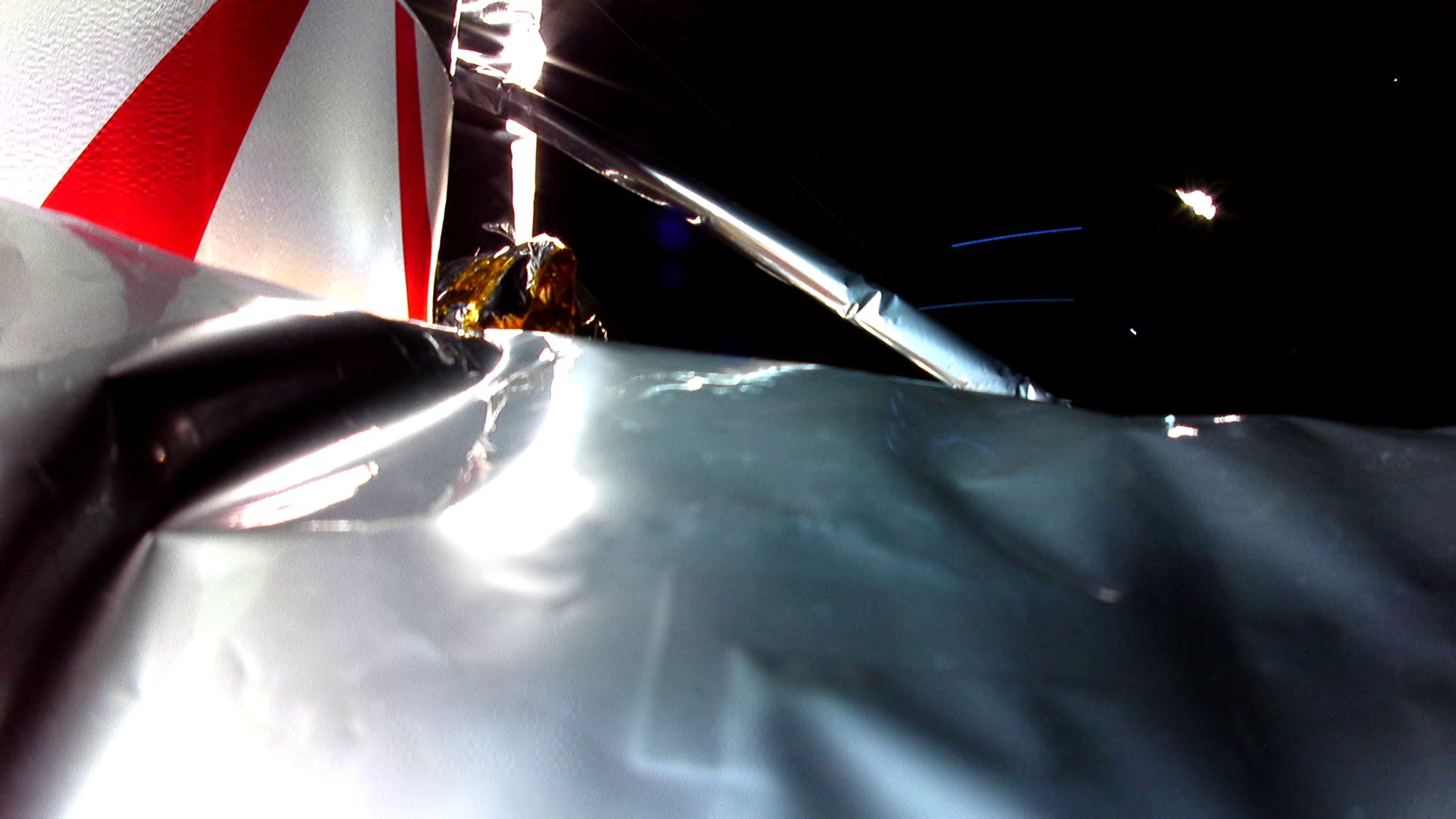
All appeared to go well in the hours immediately following separation, but following an attitude adjustment, telemetry started being received suggesting the craft was in difficulties and was unable to correctly orient itself. It was not initially clear what was wrong with the lander, and in an attempt to find out, Astrobotic – the company responsible for designing and building it – ordered camera mounted on the lander’s exterior to image its outer surfaces for signs of damage. The very first image returned showed an area of the craft’s insulation around the propulsion system – required to make the descent and soft-landing on the Moon – had suffered extensive damage, with propellants leaking into space from around it.
The first image returned from cameras on the Peregrine One lander revealed extensive damage to insulation material on the craft’s exterior and propellants venting into space. Credit: Astrobotic
This, coupled with the telemetry gathered from the lander caused Astrobotic to determine that one of the vehicle’s attitude control system (ACS) thrusters was still firing well beyond expected limits, most likely due to a failed / stuck valve, placing the vehicle in an uncontrollable tumble.
If the thrusters can continue to operate, we believe the spacecraft could continue in a stable sun-pointing state for approximately 40 hours, based on current fuel consumption. At this time, the goal is to get Peregrine as close to lunar distance as we can before it loses the ability to maintain its sun-pointing position and subsequently loses power.
– Astrobotic statement, Monday, January 8th
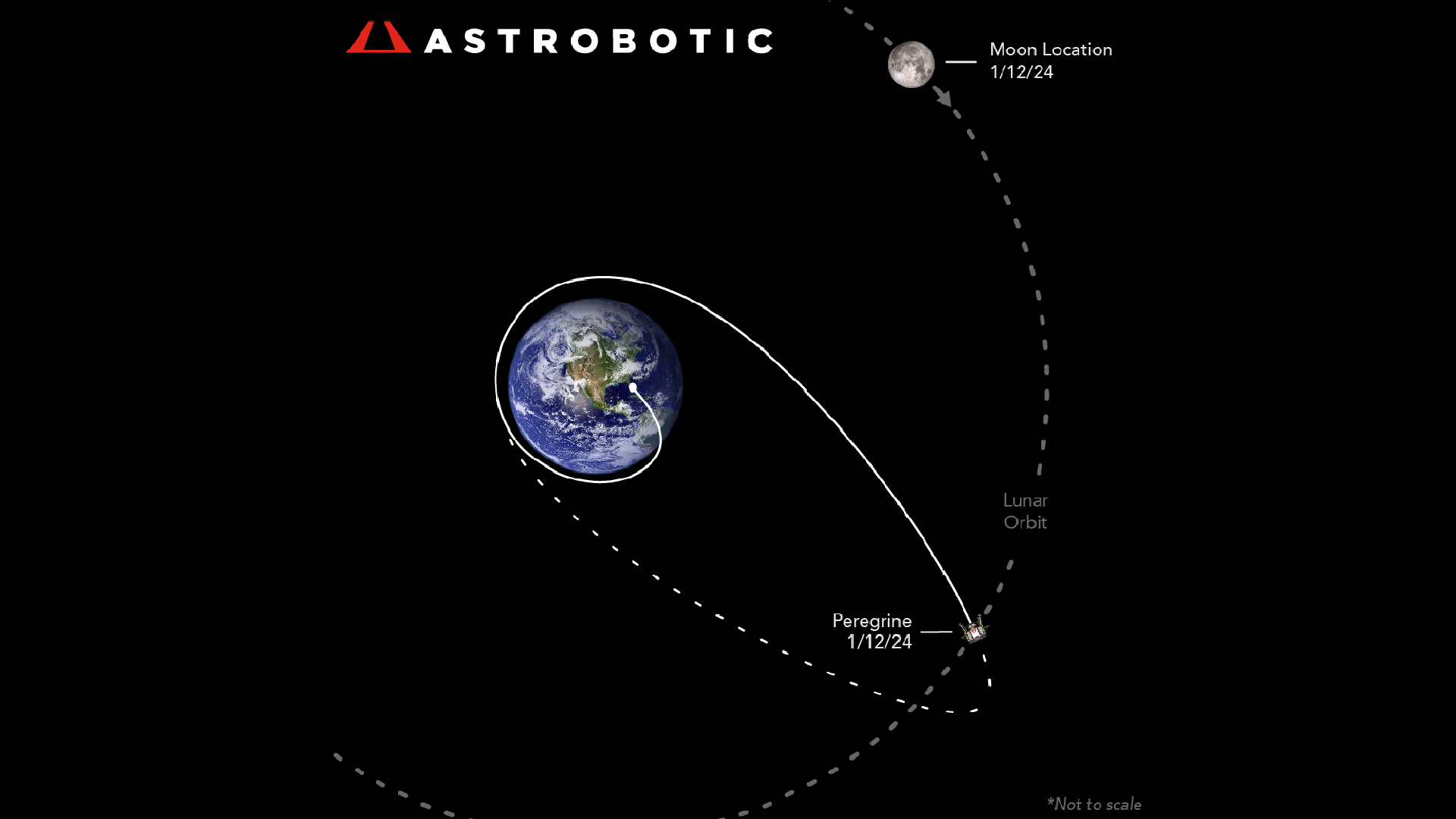
Initially, it had been hoped that the craft would still reach the Moon and make what is euphemistically called a “hard landing” (that is, crash into it) around the time of the planned landing date of February 23rd, engineers having calculated that by then, even if the rete of propellant loss slowed over several days and ceased, the craft would have insufficient reserves to make a controlled landing. However, by mid-week it was clear even this would not be the case; the leak had put Peregrine One on a much more direct path towards the Moon’s orbit than had been intended such that on January 12th, an status update from the company noted:
Peregrine remains operational about 238,000 miles from Earth, which means we have reached lunar distance! Unfortunately, the Moon is not where the spacecraft is now, as our original trajectory had us reaching this point 15 days after launch, when the Moon would have been at the same place.
– Astrobotic statement, Friday, January 12th
Peregrine One reached the distance of the Moon on Friday, January 12th, 2024 – much earlier than had been planned for the mission. As a result, the Moon was elsewhere in its orbit. Credit: Astrobotic
However, the one “good” piece of news through the week was that as time progressed, the propellant leak deceased, and some steps to help stabilise the vehicle – and maintain its orientation to the Sun such that its solar arrays could continue to received energy and power the vehicle’s systems – could be taken. These in turn allowed a number of the experiments on the lander to be powered-up. While they are not operating in their intended modes (or location), it is hoped that they will still be able to gather data on the radiation environment in interplanetary space around the Earth and the Moon.
The most recent projections from Astrobotic (January 14th) suggest that as the Lander has in sufficient velocity to complete escape Earth’s gravity well, it will likely start to “fall back” to Earth in the coming weeks, and orbital mechanics being what they area, most probably slam into the upper atmosphere and burn-up.
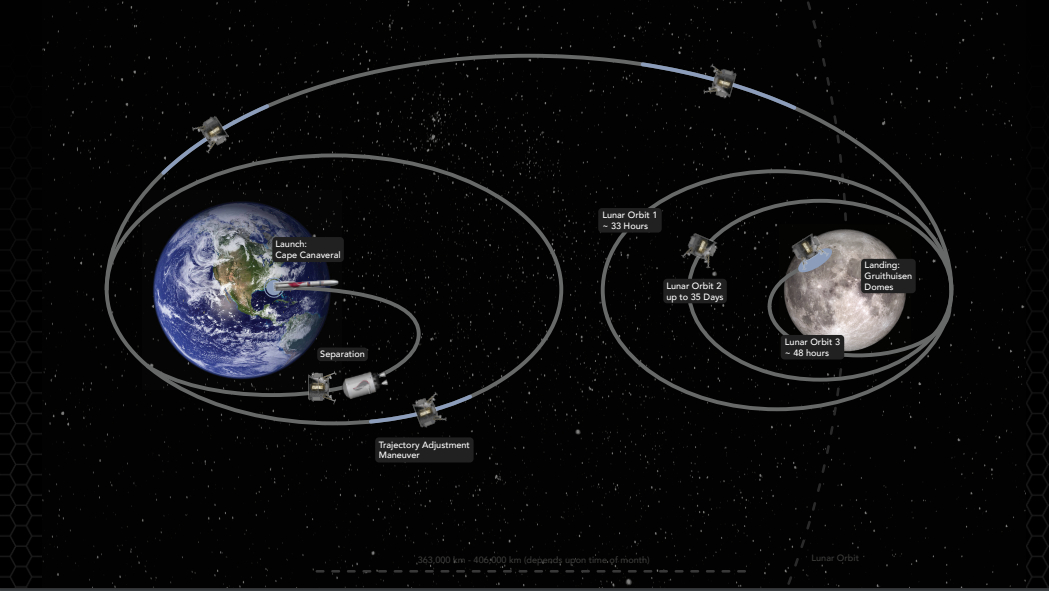
As it should have been: the intended flight place to get Peregrine One to the Moon. Credit: Astrobotic
Given Peregrine One’s involvement in the CLPS programme, NASA has been monitoring the Peregrine One situation closely, and on January 18th the agency and Astrobotic are due to convene a telecon in order to review Astrobotic’s efforts to recover the craft and what they have learned. In the meantime, agency officials have noted that the failure of Peregrine One to successfully achieve a lunar landing will not in any way impact CLPS.
Artemis 2 and 3 Slip
On January 9th, 2024, NASA announced America’s return to the Moon with crewed missions at the head of Project Artemis is to be further delayed.
In the announcement, made in part by NASA Administrator Bill Nelson, it was indicated that the upcoming Artemis 2 mission around the Moon and back, and intended to take place in November 2024, will now not take place before September 2025. Meanwhile, the first US crewed mission to the surface of the Moon will now occur no sooner than September 2026.
The reasons given for the delays relate most directly to Artemis 2. In particular, there are a number of new systems and capabilities in development as a part of the overall Artemis programme which are now far enough along that it makes sense to delay Artemis 2 to leverage them, as they offer increased safety at the pad and prior to launch – such as improved means for crew egress from the launch vehicle in an emergency, and faster propellant loading capabilities.
The overall plan for the Artemis 2 flight around the Moon, which will carry fours astronauts – three from the USA and one from Canada -, but which now not take place before September 2025. Credit: NASA
Another cause for the delay is on-going concerns about the performance of the ablative heat shield on the Orion Multi-Purpose Crew Vehicle (MCPV). Whiles the shield did its job and protected the unscrewed capsule of Artemis 1 during its passage back into the Earth’s atmosphere at the end of that mission in November 2022, it still showed signs that rather than charring in place, some of the material actually peeled away from the vehicle as it charred, which is not supposed to happen.
Finally, concerns have recently been raised about the electrical system managing the crew abort system rockets, designed to haul the Orion capsule and its crew clear of the SLS rocket if the latter suffers a serious failure during the initial ascent to orbit. As a result, further tests have been requested on that system.
I want to emphasize that safety is our number one priority. And as we prepare to send our friends and colleagues on this mission, we’re committed to launching as safely as possible. And we will launch, when we’re ready.
– Jim Free, NASA’s Associate Administrator
The announcement was, oddly, seen as a cause for vindication among some SpaceX fans – the private launch company has been cited as a potential reason for delaying the Artemis 3 programme, given they are still a long way from demonstrating they have the ability to supply NASA with an operational lunar landing vehicle and the means to get it to lunar orbit.
However, even the addition of a further 11 months to the Artemis schedule still leaves SpaceX with precious little time to achieve those goals in a manner which meets NASA’s safety requirements. As such, the concerns about SpaceX being able to meet current Artemis time faces, as highlighted (again) in 2023 by the US Government Accountability Office (which has an uncannily accurate eye for predicting programme slippages and their causes) still remain valid.
Kondor Art Square, January 2024: Mareea Farrasco – Obscured by Clouds
Obscured by Clouds is one of the more uncommon (and perhaps underrated) of Pink Floyd’s studio albums. Released in 1972, it features much shorter individual tracks than found on other albums – particularly Dark Side of the Moon, the recording of which was paused in order to make way for Obscured by Clouds – with the lyrics focused on life and love. It was written and produced as the soundtrack for the 1972 French film La Vallee (also known as Obscured by Clouds), the story of an accidental voyage of self-discovery embarked upon by a young woman.
I mention this because it might help illuminate why Mareea Farrasco selected the title Obscured by Clouds for her latest collection of art. This opened to visitors on January 11th, 2024 within the Art Square at the Kondor Art Centre, operated and curated by Hermes Kondor. Like the film, Mareea’s exhibition is something of a voyage of introspection, each image a short refrain – or perhaps stanza or verse might be a better description – on life in modern times.
Kondor Art Square, January 2024: Mareea Farrasco – Obscured by Clouds
As Mareea herself notes, we are living in a world of confusion; a place where the norms of social discourse are being torn asunder; where people’s right to think for themselves, to hold views of their own is disintegrating under the demands to conform in some manner – be it religious or a simple matter of skin colour, or something else; a place in which decency, humanity, caring and concern for social equality is more and more sneered upon and disparagingly labelled whilst coarseness, violence are lauded. It is a world of distorted realities, where it is all too easy to lose sight of simple truths – and even of oneself -, at a loss as to who we are and where we are trying to go.
All of this is hauntingly and beautifully reflected in Mareea’s images. Each one forms a single-frame statement on these confusions and distortions and our need to if not confront them, at least have the wherewithal to move through and beyond them and try to regain what has become obscured before we lose it entirely.
Kondor Art Square, January 2024: Mareea Farrasco – Obscured by Clouds
Collectively, the use of post-process clouding and misting effects adds a depth of feeling to them, evoking that idea of trying to pierce the confusion and find reality – and provocative in their message. These are each images which deserve not so much to be seen but to be contemplated; viewed both through the lens of the world today, and as a lens through which we might better see that same world and understand how we might both escape it and – more importantly – seek to rebalance it; to rediscover the really important things in life and discover who we are as individuals and – perhaps – as a race.
Saturday, January 13th will see the 2024 edition of Hippiestock take place in Second Life. A day-long music event, Hippiestock was established in 2011 by Hippie Bowman as a way to for him connect directly with friends he’d made through the Second Life forums.
Whilst intended as a “one-off”, such was the response to that first event in 2011, the Hippie agreed to consider making it an annual event -and 13 years later, we once again have the opportunity to come together with fun and music and to embrace the “hippie philosophy”, once described by Hippie himself as:
[A belief] in peace as the way to resolve differences among peoples, ideologies and religions. The way to peace is through love and tolerance. Loving means accepting others as they are, giving them freedom to express themselves and not judging them based on appearances. This is the core of the hippie philosophy.
– Hippie Bowman, January 2011
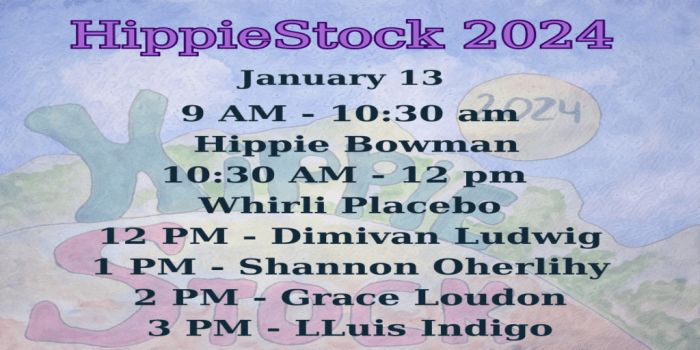
The event kicks-off at 09:00 SLT on Saturday January 13th, with the music line-up as follows:
The Hippiestock 2024 line-up
The venue has been designed to resemble the original Woodstock main stage, with a campground on the hills above it and a exhibition of art in keeping with the 1960s theme and presented by Ceakay Ballyhoo, who is also responsible for the overall build for the event.
So for some great music and the chance to peace out for the day, why not slip into something suitably flowing and emblematic of the period, put some flowers in your hair and join the fun?






 Inara Pey: Living in a Modemworld