| The following notes were taken from: |
Table of Contents |
Meeting Purpose
- The CCUG meeting is for discussion of work related to content creation in Second Life, including current and upcoming LL projects, and encompasses requests or comments from the community, together with related viewer development work.
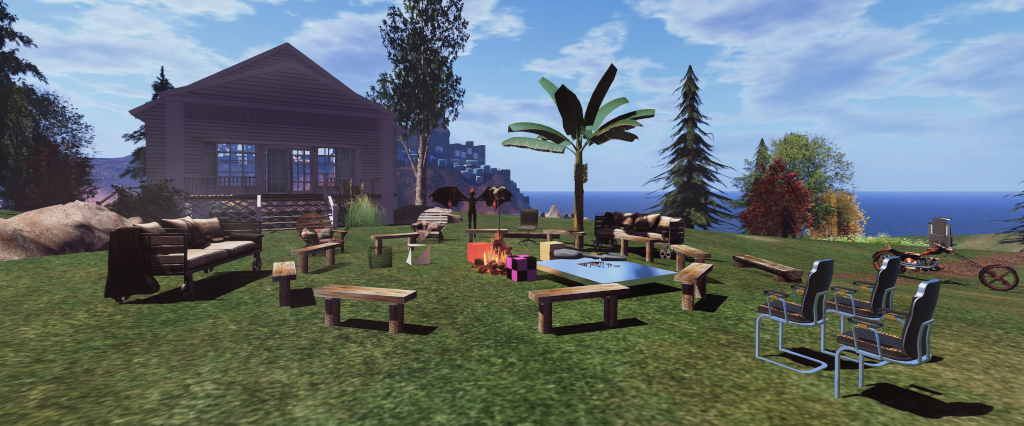
- This meeting is generally held on alternate Thursdays at Hippotropolis and is held in a mix of Voice and text chat.
- Dates and times of meetings are recorded in the SL Public Calendar.
Official Viewer Status
- Default viewer: Flat UI – 26.2.0.25386466510, April 29 -“flat” UI and font update.
- Second Life Lua Editor Alpha viewer 6.1.0.23768336784, April 29.
Viewer Notes
- 26.2.0 is now release, per the above. The code has also been merged into all viewers currently in development (such as the Lua Editor) with the exception of the Graphics Care Package (GCP) viewer.
- Viewer 26.3.0 is the performance improvements viewer, intended to be the next release viewer and which is currently awaiting being issued as an alpha or RC viewer. This viewer:
- Includes async inventory loading, which should further help with loading very large inventories; together with new texture streaming updates which should help those on SL minimum specification computers with constrained VRAM.
- Is viewer is reported as providing good performance across a range of systems and scenarios.
- As a part of the texture streaming updates mentioned above:
- The viewer will not have: “a proper” texture quality setting (Low to Ultra) or the current LOD resolution drop-down.
- The viewer will have a new texture resolution drop-down, which is more aggressive on its Low setting to optimise the use of VRAM on low-specification client systems; a Medium setting also doing more lower-resolution loading for textures at a distance from the camera (but high resolutions for those close-up); a High setting with resolutions slightly below their current levels; and an “Ultra” option that pretty much matches the current setting.
- The viewer will also have a new (around 5 metre) “camera bubble” that follows the camera round and tries to load high resolution textures as best the client computer can manage
- Lua Editor viewer:
- There are “a lot of asterisks around” this viewer, both in terms of client-side work and server-side work.
- This viewer may end up with numerous flags within it which can be toggled on / off depending on the status of server-side Lua support.
- The availability of an official Linux remains tied to this viewer.
- The Graphics Care Package Viewer (GCP) is effectively “on hold” as work continues on other viewers. However, when it does surface, it will likely include (but not necessarily be limited to) the following:
- EEP post-processing settings, easing the work of setting-up EEP environments.
- PBR specular support.
- Updated and more performant Screen Space Reflections (SSR), including the ability to adjust SSR rendering to better suit the capabilities of the client computer (e.g. cranked right up on a very capable modern computer & GPU, or dialled down so it doesn’t choke older hardware).
General Discussions
- It was asked if PBR (glTF) lighting is coming soon. Geenz noted that this requires server-side work, notably around the messaging service between the simulator and the viewer. Such work would need to be implemented before LL can fully commit to having largely glTF-compliant lighting. So, not in the immediate future.
- A question was asked about artefacts occurring in varying levels when a gradient (slope) is applied in the construction of metallic materials, and whether anything was being done to correct this.
- The question was related to gradients in normal maps, but was not total clear (i.e. was the gradient part of the normal map, or something added latter?). As such a canny report was requested on it.
- There is a known issue with gradients on the diffuse map, and this is being addressed with the GCP viewer.
- A request was made for PBR emissive map textures to load as the colour #000000 (up the receipt of the first discard level), as the current value – colour #808080 -, which causes objects that use emissive to glow while they load – see this issue / Github).
- Geenz Linden noted this could be so modified, but it would then cut across some of the texture loading work that has been going into the upcoming performance improvements viewer (26.3)
- As such any change is unlikely to be implemented as a part of that viewer.
- With the BonnieBots data collection system now banned from SL, a request was made for clarity on what is / is not permissible in gathering data from the grid, as there are a number of valid projects that require the use of specific data gathered from the grid via bots (e.g. in obtaining terrain heightmap data for use in producing 3D terrain maps). Geenz indicated:
- He would try to get some clarity on this from senior management.
- That including things like heightmap data into the map system is something the Lab is looking at, so as to make requesting this kind of data easier for those using it.
- That additionally, LL is considering the use of things like object imposters and mesh proxies where applicable – but there is nothing solid to report on any of this at the moment.
- It was asked if there are any further updates being planned for the avatar skeleton / avatar bones / blend shapes. Short answer: no; any work on the avatar / avatar skeleton would need to be relatively in-depth due to the risks of content breakage, etc., and so is something LL do not want to take on at present.
- A question was asked about LL’s strategy for on-boarding and retaining new users. As previously noted in these summaries (and others), LL is not pursuing any single goal for this; there are several inter-related strategies (such as the one-click install on the viewer – making it easier to obtain; & the upcoming graphics improvements – which should make running SL a smoother, more predictable experience).
- The subject of VR support was raised. The feedback from Geenz was that VR poses significant issues for SL, particularly in the area of being compelling enough to people already using VR headsets. For example:
- Implementing a means by which people can simply put on a VR headset and look around SL or even move around with their avatar is not technically that complex. However, neither of these approaches would necessarily be compelling to people coming into SL who are familiar with using VR on other platforms.
- By contrast, making SL interactive in a manner that is compelling to existing users of VR – e.g. being able to engage with, move, etc., in-world objects through hand arm / body movements and to have things like full facial tracking and representation and having all of that packaged and streamed to everyone else in a region – is a considerably more complex task, potentially touching on multiple areas of the platform. As such it is not actually something LL is directly focused on.
- The above led to a broader discussion at the end of the meeting on the Lab’s discontinued Puppetry project, its application in a possible VR project, together with alternate approaches, matters of IK, etc., all of which came down (again) to the view that providing a “good” and scalable VR solution in SL requires working on multiple moving parts / would have lengthy lead-times, and so is not something LL wishes to commit to in the near-term .
Next Meeting
- 13:00 SLT, Thursday, June 4th, 2026, at the Hippotropolis Campsite.

