
This coming week should see the launch of two rocket behemoths from very different parts of the world and with.
On Monday, October 31st, at approximately 07:30 UTC, Long March 5B (Y4) should depart the Wenchang Spacecraft Launch Site on the island of Hainan, off the south-east coast of the mainland, carrying aloft the ~20 tonne Mengtian laboratory module en route for a rendezvous with the Tiangong space station.
The massive Long March 5B, China’s most powerful launch vehicle, departed the vehicle integration facility at the launch complex on October 25th, carrying the space station module enclosed in its payload fairings, the combination sitting on their mobile launch platform.

At 17.9 metres in length and 4.2 metres in diameter, Mengtian – Chinese for ‘Dreaming of the Heavens” – is in many ways similar to the Wentian (“Quest for the Heavens”) module which launched and rendezvoused with the space station’s Tianhe core module in July 2022. In all, the module will provide three science experiment facilities:
- A pressurised environment for researchers to conduct science experiments.
- An unpressurised experiments / cargo module with doors that can be opened to space.
- A series of external experiment racks.
To reach the unpressurised elements, the module includes its own dedicated airlock, and has a single docking port for connecting to the Tinahe core module and two robotic arm, the first 5 metres in length and a smaller unit called an “indexing robot arm”. Mengtian will initially rendezvous with Tiangong “head-on” relative to Tianhe, allowing it to dock with the core module’s axial port on its main docking hub, minimising the risk of setting the entire station into an unwanted rotation.

The axial port was, up until the end of September 2022, occupied by Wentian, however this used its own “indexing robot arm” to move itself to the starboard docking adapter on Tianhe, temporarily giving the space station a lopsided “L” shape. Some time after initial docking, Mengtian will similarly use its own small but powerful indexing arm to disconnect from the axial port and swing around to connect with the hub’s portside docking ring, leaving the station in its final T-configuration.
Mengtian’s arrival at the space station will signal the end of Tiangong’s main construction phase, as there are currently no plans to add further modules permanently to the 60-tonne station. Instead, the fore and aft axial docking ports on Tinahe will be used primarily by crew-carrying vehicles and by Tianzhou automated re-supply vehicles.
However, China does plan to launch a free-flying space telescope called Xuntian (“Space Sentinel”) in December 2023. This will by roughly equivalent to the Hubble Space Telescope in size, but have a field of view 300–350 times larger, coupled to a 2.5 gigapixel imaging system. Xuntian will periodically dock with Tiangong to allow for servicing of its equipment and systems and to allow its propellant tanks to be topped-up.
The launch is also liable to result in controversy. By design, Long March 5B’s 21.6 tonne (unfuelled) core stage and engines are designed to reach orbit. However, China has thus far made no attempt to equip it with the means to make a controlled re-entry into the upper atmosphere so that any parts surviving that re-entry (such as the engines) do not strike any populated areas of Earth.

This cavalier attitude has caused consternation within the international community. In 2020, for example, debris from a Long March 5B core landed in Cote d’Ivoire, damaging several buildings; then in July of 2022, parts of the vehicle used to lift the Wentian module to orbit, came down uncomfortably close to populated areas in Indonesia and Malaysia. In this, China does itself no favours by refusing to share details regarding specific trajectory information related to these launches with the wider global community, even though doing so would allow a degree of forewarning in areas at risk from debris.
The second big launch for the week should then follow on November 1st, when A SpaceX Falcon Heavy – currently the world’s most powerful rocket vehicle – is due to depart Pad 39A at Kennedy Space Centre, Florida. It will mark the first Falcon Heavy launch in more than three years – and only the fourth overall for a vehicle which at one time was to have become the backbone of the SpaceX fleet (the company now intends for its Starship / Super Heavy combination to replace both Falcon 9 and Falcon Heavy).
The launch is the first US Department of Defense mission for Falcon Heavy. Designated USSF-44, it will deliver at least four satellites directly to geosynchronous orbit. In order to achieve this, the core of the vehicle – A Falcon 9 booster core – will be expended, rather than attempt a landing. The two booster segments – also Falcon 9 booster cores – will be return for an attempted simultaneous landings at Cape Canaveral Space Force Station, Florida.
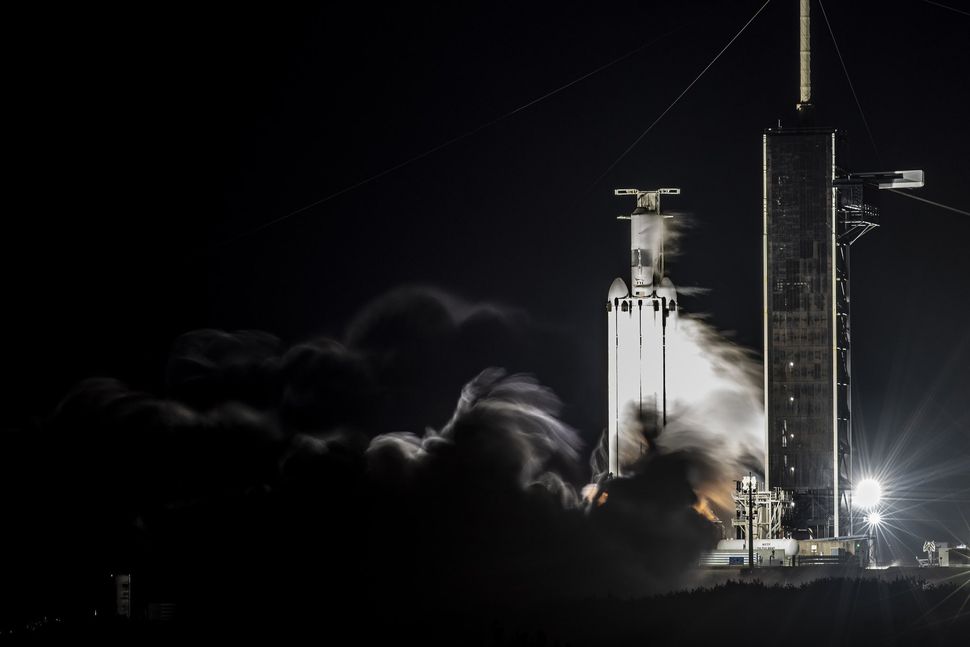
The lack of Falcon Heavy launches since 2019 illustrates a potential problem SpaceX may have with its plans for Starship / Super Heavy.
Simply put, with its ability to lob 63.8 tonnes to low-Earth orbit (LEO) and 26.7 tonnes to geosynchronous transfer orbit, Falcon Heavy was supposed to lower the cost of lifting payloads to orbit. However, in order to get close to this, it needs to launch relatively close to its payload capacity, and in an age of increasingly smaller and lighter satellites and payloads, its capabilities are seen as too excessive for most customers. Even in a rideshare capacity, where the costs can spread among multiple payload providers, the additional lead time involved in waiting for sufficient customers to sign-on to a Falcon Heavy launch have made it unattractive to potential customers, thus limiting its commercial viability; something that may prove to be the case with Starship / Super Heavy, with its much greater capacity.
Roc Shows off Stratolaunch’s Talon
Stratolaunch, builder of the world’s largest airplane, flew a prototype of its planned air-launched Talon hypersonic vehicle for the first time on Friday, October 28th, 2022, slung beneath the massive Roc aircraft, which uses two modified 747 fuselages, lifted the Talon-A TA-0 vehicle into the Mojave desert sky in captive/carry flight lasting over five hours and designed to pave the way for more extensive test flights.
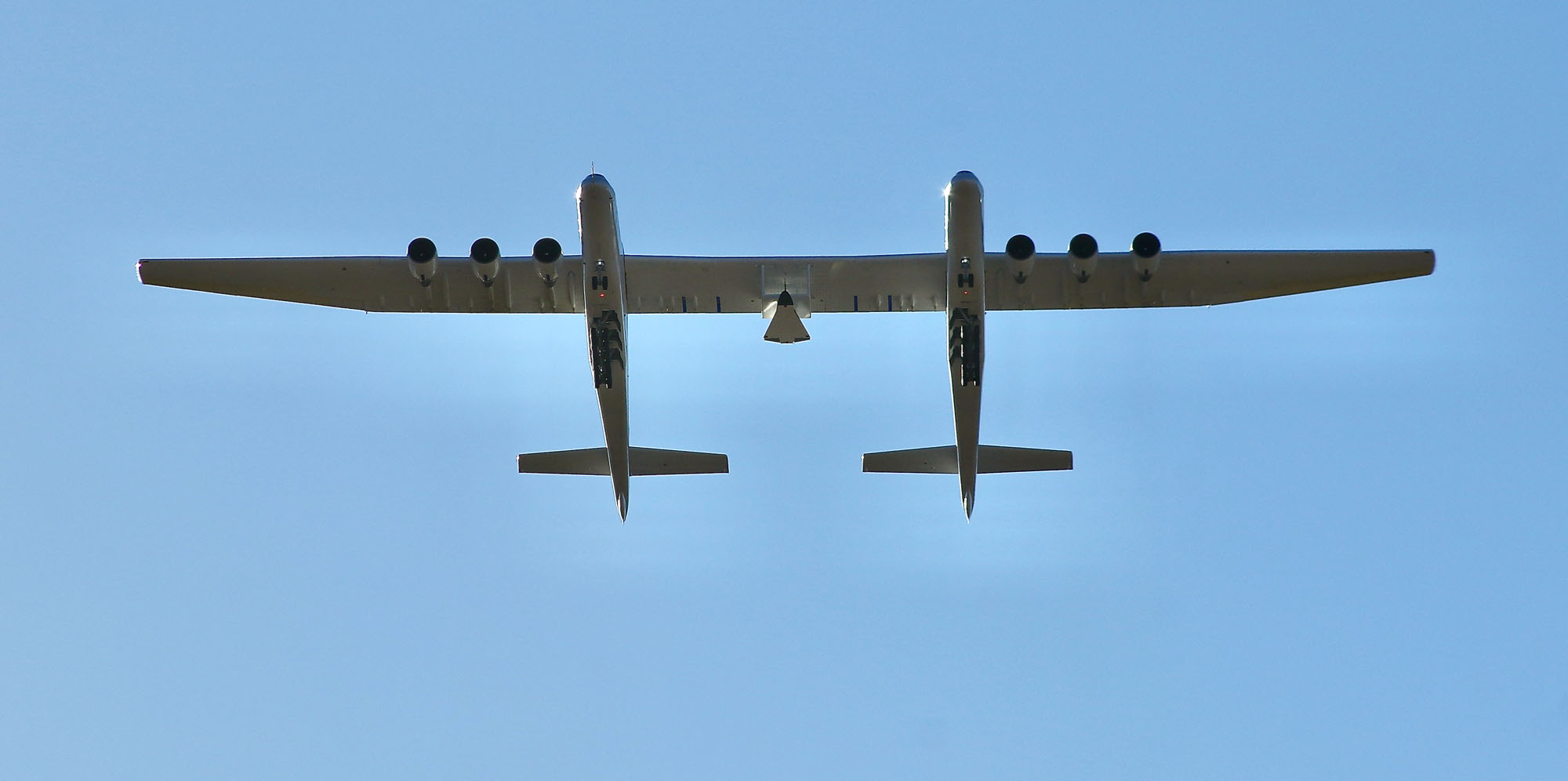
At 8.5 metres in length and weighing 3.7 tonnes, Talon-A is an air-launched, automated hypersonic aircraft capable of flying at speeds of Mach 5 through Mach 7 (6,100–8,600 km/h). Previously known as Hyper-A, the vehicle is designed to offer a reliable test-bed for hypersonic research and experiments. It is intended to be used by the US the government, the US Department of Defense, the commercial sector, and academia, and can carry both internal and external experiment payloads.
The massive Roc aircraft is designed to act as an aerial launch vehicle for a range of vehicles being developed by Stratolaunch, including the orbit-capable Talon+ (formerly Talon-Z) and even larger Stratolaunch spaceplane (previously called Black Ice), which is intended to deliver larger payloads – and possibly humans – to orbit in the future. In addition, Stratolaunch are in discussions with a number of potential customers to use the aircraft as a launch platform.

As it stands, the success of the captive / carry flight means the Stratolaunch will now likely move to a vehicle drop test – releasing the TA-0 test vehicle in flight so that it can glide to an automated landing – which may occur in December 2022. Assuming that flight is successful, testing will switch to the first Talon-A production model (TA-1), which will likely undertake the first powered flight test in early 2023. Providing flight testing with TA-1 is successful, Stratolaunch plan to start offering commercial, payload-carrying flights with fully reusable version of the vehicle designated TA-2 and TA-3 before the end of 2023.

 On All Hallows Eve, young Pipkin is due to meet his eight friends outside a haunted house on the edge of town. But as he runs through the gathering gloom, Something sweep him away.
 On All Hallows Eve, how better than to get in the mood than with some classic tales of horror and spookiness from literature?
 Inara Pey: Living in a Modemworld