Our departure from Elemaria was for me a mixture of sadness and joy. Sadness, because my heart wanted yet to stay among these people of nature, and wander through their gardens and woods and study their herb lore and ways within their great libraries. The joy that countered it was because our onward path would be shared with a company of elves who had also paused at Elemaria on their way back to their homes in Heliodor.
It has been many a long year since I had first looked upon elven folk. I had been so much younger then, and knew not what to expect as entered the fabled – and now long-hidden woods – of Evensong. Even so, their voices and song had long echoed in my thoughts and dreams ever since, so hearing such voices again, even amidst so many fine and fair voices of the people of Elemaria, set my heart soaring.
Fantasy Faire 2020: Heliodor
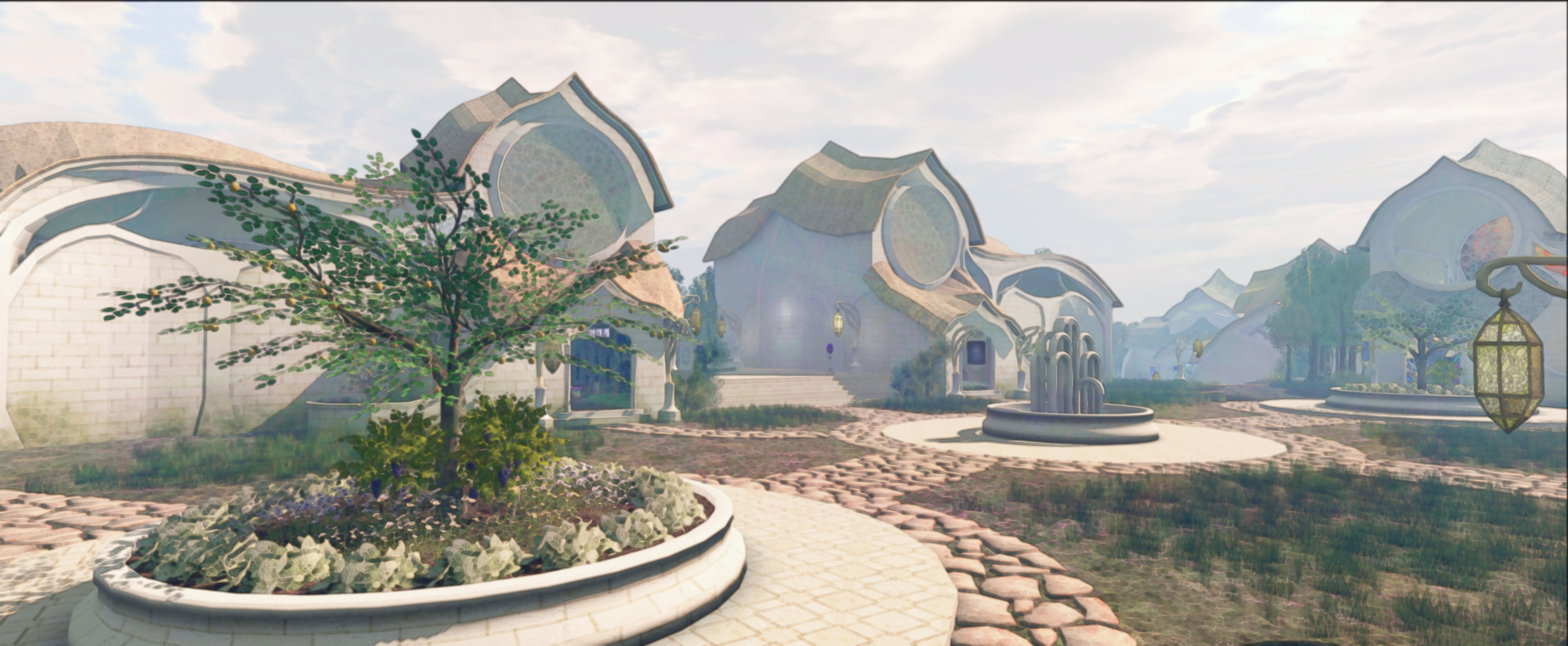
In truth, the elves of Heliodor are very different to their kinsfolk of the woods. Long ago they left the green halls of the forests and woods, their devotion to the ideals of creation and growth leading them to find a place where they could settle and create things of beauty and utility. And so they founded the city of Heliodor, the artisans and architects who lived there gaining fame throughout the known world for their skills and crafts.
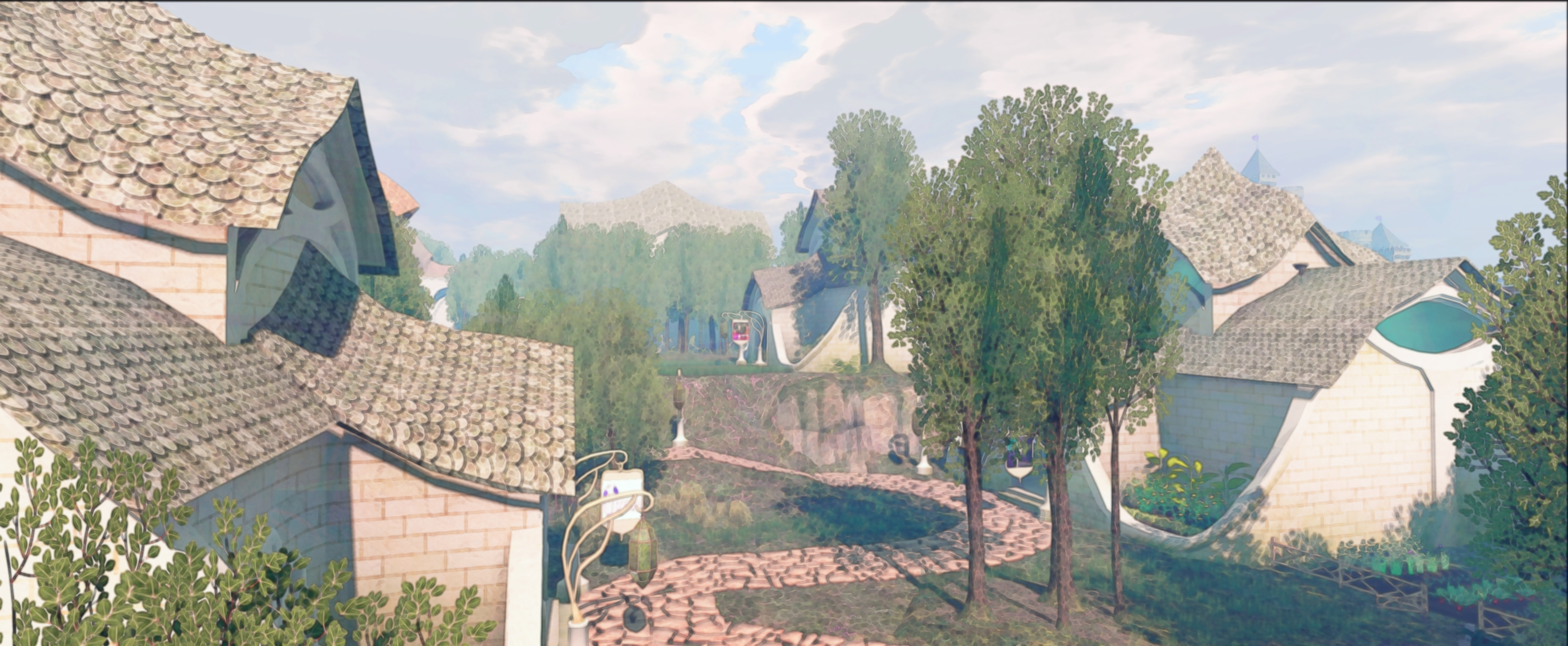
Those who have not walking along the winding, white cobbles roads of this fair place or looked upon the sweeping curves and curled roofs of their halls and houses can scarce imagine the beauty to be found within Heliodor! Far from their woodland homes these elves may have travelled, but their love of the ancient forests lives on with the great forms of their halls, the curled sloping roofs of which might be autumn leaves fallen from some giant Mallorn, the rise and branching of the stone pillars and arms that support those roofs suggesting trees with arms uplifted to the Sun.
Fantasy Faire 2020: Heliodor
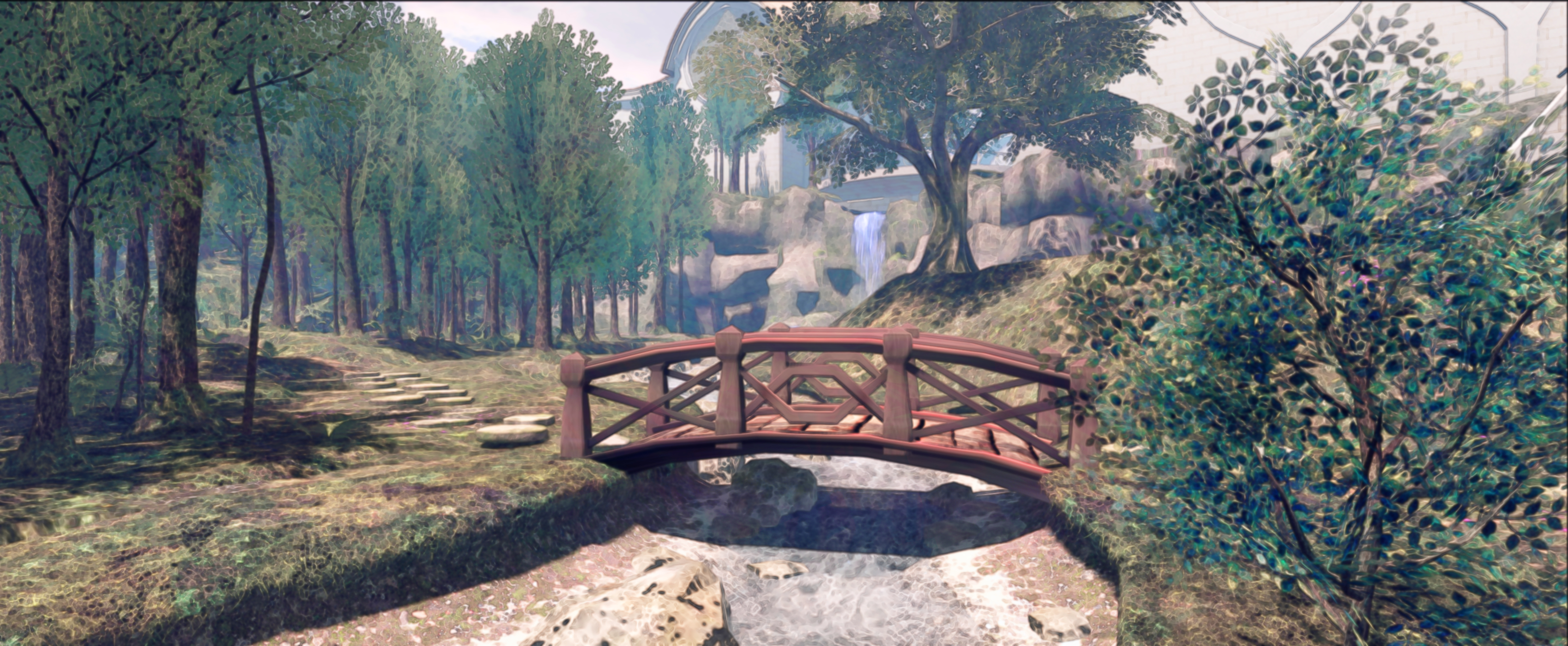
And oh! The sound of music and song! To walk through Heliodor is to hear nature’s soothing voice, as pleasing and gentle to the ear as the breeze through high, young branches and as pure as the soft bubbling of a brook newly raised from its founding spring. Again I found myself wanting to stay, to explore each of these wonderful halls, but our companions turned hosts encouraged us onwards through the winding streets, past well-tended gardens and orchards until we crossed a small bridge to where a wide field awaited.
Here had been set tables and root-stools with platters of fruit and flowers set for a noon time meal, goblets and pitchers of the finest carved glass catching and reflecting the light of the high Sun. As we stopped, my kinsmen tending to our mounts, so we were taken by hand and lead to the waiting feast, even as more elves emerged through the screen of trees, separating field from town, and the air filled with song. My own companion, fully two heads taller than I and yet not yet full grown, held my hand gently as he led me to a seat, his long cloak seeming to float over the long grass. His wide face, delicate yet strong, shone with an inner delight and he helping me to sit, a warm smile playing at his lips as if he sensed the urge I felt within to reach up and run my finger tips around one of his elegantly pointed ears.
And so, once more, I found myself in the company of elves, and I and my companions scarce worried at the passing of the day, for in Heliodor, urgency has no place, and all who visit know that everything will come at its appointed time.
Fantasy Faire 2020: Heliodor
Heliodor designed by Nix Marabana and sponsored by Jinx. Featuring stores by: [ae] Adam & Eve, Dragonsworn, Dreaming Thicket, Dreamscaped Designs, !!Firelight!!, Grey’s Mind Maze, Home Whimsy, Kumiho-J!NX, Old World, .:Partners in Crime:., Rainy Fey Creations, Scarlet Fey, Simply Shelby, Sweet Intoxication, ^TD^Tirrany Designs, [TF] – Tamiron Forge, The One Team Initiative: Meet the Teams, and XPOSEure & SE.
Total raised by the end of the Faire’s fifth day: L$5,242,493 (US $20,969).
Given that Vanity has been able to take over a number of smaller SL estates that have got into difficulties over the years and then turning them around (she took over Willowdale some two years ago when it was just 30 regions – today it comprises some 250 regions), I was only too happy to handle introductions and then get out of the way and let them discuss matters.
Discussing Second Norway’s future with Vanity (l) and Ey (r)
Those discussions have now led to a positive outcome, and I’m happy to be able to provide a further update on all that has happened / will be happening (although those reading Ey’s Bad Elf blog will already be aware of the situation 🙂 ).
In short, all regions in Second Norway will be continuing, but under the management of Vanity and the Luxory team, with Ey, Mialinn, SlaYeR joining them. Going forward, they will be managing the Second Norway Airport and the social community aspects of the estate.
I hope that before long Mialinn, SlaYeR and I can invite people to fun nights in the SN club with DJs, quizzes and general jibberish talk, just like in the old days.
– Ey Ren
To directly support the land management aspects of the estate, Vanity is bringing on a dedicated team of sales and support agents.
One of my experienced sales team members will be leading things. It takes around four weeks for new agents to get up to speed with our processes, so the new team will have time to learn while we’re redeveloping parts of the estate.
– Vanity Bonetto
For the present, the estate is to be split into two working parts. Note that this is not an actual physical divide in the regions, but rather a means to differentiate areas in terms of the work that will be taking place. Under it, the southern regions, which include places such as Bryggen, the stave church and Second Norway Airport (SNO) will initially remain largely unchanged, with the airport re-opening for business.
The development planMeanwhile, the northern regions will undergo an overhaul by Vanity’s landscaping team. This work will be extensive, and requires those residents in them to at least temporarily relocate. It’s a hard thing to do, but one seen as necessary; however, incentives will be offered to encourage people to return once the work has been done. The redevelopment also means that the estate’s regional express train tracks will be removed – but the system will return once the work has been completed.
It’s the only way to upload new terrain files – but we will extend special offers to all current and former residents so that it will pay out for them and make it worth to return to Second Norway in some weeks.
The island to the north will be updated, and over time we’ll offer more to the east and then progress south and demand requires. These island will be of different shapes and sizes. There will be multiple parcels close to the airport while the regions in the north, east and south will offer more privacy.
– Vanity Bonetto
To help with the transitioning, some of the current Second Norway residents have been shown the new designs for the regions that Vanity’s team have been putting together in the Luxory Estates “Lab regions”, and the feedback has been positive.
An example of the new Second Life regions under development at the Luxory lab regions. Note the tall columns are the rezzer systems for deploying each island’s features
A further benefit of the transfer of ownership is that the remaining 17 regions of Sailor’s Cove East can be retained, although not as they currently are. Rather than competing with the 24 regions Patrick agreed to take over, these regions will now be relocated to Second Norway and form a part of the redevelopment work.
As it is, the transfer of ownership from Ey to Vanity and Luxory estates was concluded on Friday, April 24th. The path is now clear for the work in overhauling the northern regions to commence, and for Ey and his team to start on a new chapter in the history of the Second Norway Airport and the social aspects of the estate.
I am relieved and happy that Vanity has agreed to take ownership of Second Norway … I would like to express my gratitude towards the residents who have been living in Second Norway for years and have been very good sports when it comes to these changes.
– Ey Ren
On my part, I’m happy to see the Second Norway / SCE situation resolved so positively, and I particularly look forward to further covering the work at Second Norway. My thanks to both Vanity and Ey for keeping me in the loop on matters, and for spending time with me on April 27th.
Sources
Conversation with Vanity Bonetto and Ey Ren, April 27th, 2020
Bryn Oh’s Hand first appeared in Second Life is 2016, located on her arts region of Immersiva. At the time, it proved a highly popular installation, likely thanks to its nuanced tale that straddled the light and the dark places of life and offered a commentary on the possible future relationship between physical and virtual life. More recently, Bryn rebuilt Hand entirely in mesh for Sansar, taking advantage of that platform’s particular capabilities, before porting the mesh build back to Second Life and her home region of Immersiva, giving it a new lease of life there, using SL’s particular presentation strengths.
As with much of Bryn’s work and such is her standing as an artist, Hand has been supported by a grant from the Ontario Arts Council – a part of which has required Bryn produce a machinima of the installation; and she is offering members of her Patreon group and readers of this blog an advanced viewing of the film, which you can find at the end of this article.
Hand is the story of a time when society transitioned to living and working in the virtual space. In this society people housed their bodies in inexpensive pods hooked up to food cannisters. They discarded their houses and furniture as they were no longer needed. They evolved past their physical bodies and lived digitally as the person they wanted to be. Overseeing all of this is a singularity AI named Milkdrop, first seen in the Singularity of Kumiko, though only now revealed to be an AI.
– Bryn Oh on Hand
Bryn Oh: Hand – Second Life, 2020
In this, Hand, whilst an accessible piece in and of itself, offers a deeply layered story that reaches beyond its own pages. At its core, it is the story of children who have been left out of the VR “nirvana” entered into by adults, and who must fend for themselves. largely surviving by “borrowing” the condensed food used to feed the VR “dreamers” in their pods. For these children, any understanding of life and the world around them comes purely through the ideas of fairy tales and ancient copies of Dick and Jane books. They believe that the dreamers, like Sleeping Beauty, will one day awake and rejoin them – but until that time, they must strive to maintain life and family through the simple, idealised writing found in Dick and Jane.
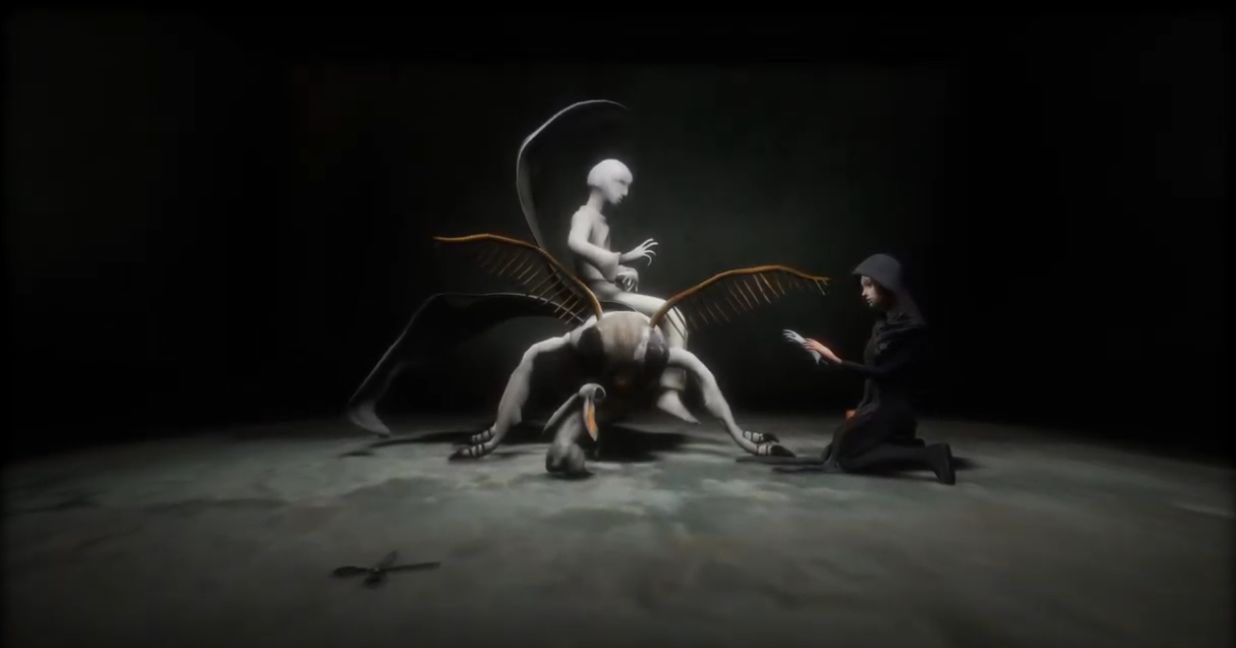
We follow this story through the character of Flutter, a young girl who yearns for the touch and companionship of a mother. She sates some of this need through the plastic hand of a shop window mannequin, holding on to it as though it were the hand of a mother figure with whom she converses. Through Flutter and her conversations, we are connected to the rest of this world – a place that is perhaps unpleasant to both the rational and the emotive mind, both which may recoil from the themes offered. But that’s intentional; Hand is not supposed to be black-and-white. Rather, and like all of Bryn’s work, it is intended to provide a narrative and to challenge perception and raise questions.
Bryn Oh – Hand, Second Life: Flutter and a sleeper. Credit: Bryn Oh
The layering evident in the tale is highly nuanced, some of it contained within the central story, other elements reaching beyond it. For example, within the story we have the subtle parallel of between “dreaming” adults and awake children. The former have escaped reality into a virtual existence, whilst the latter find a more acceptable order to their reality by framing it in terms of the fictional happy family ideal of Dick and Jane.
But beyond, this, Hand reaches into the rest of Bryn’s immersive universe. As she noted herself, the AI Milkdrop is actually first witnessed in The Singularity of Kumiko (2016). It is also, perhaps, the intelligence that assisted human scientists create the robots from 26 Tines (2017), while those same scientists constructed the Rabbicorn we see in The Daughter of Gears (first seen in 2011 and again 2019), whilst the laboratory they use harkens back to 2011’s Standby.
Thus is it possible to bring these stories together on a time line, one in which Hand takes place some 120 years after The Daughter of Gears was built by her grieving mother, but only 20 years after the Rabbicorn discovered her in her Standby, whilst little more than a decade has passed since the events of The Singularity of Kumiko.
With my work I build for different types of people. There are those who have followed my work and know how to search for the deeper layers; they are the “experts”. For them, the story and time line are important. But I also try to build for people who know nothing about the history of the world I have created. So I build in layers: the top layer is for people who know nothing of my work and they enjoy the story on its own; the next layer is the story and then concepts within the story and the final layers are where the story fits into the time line.
– Bryn Oh
This broader layering is also reflected in some of those we meet in Hand, such as Milkdrop. Then there is also the character of Juniper, hidden under her blankets, and whom Flutter stops to visit on her way home. She is the central character in Bryn’s 2013 poem and machinima of the same name, and who also forms a part of Imogen and the Pigeons. Thus, through Hand, we discover more about Juniper’s huddled existence and why, in so strange and lonely world, she finds such security and comfort under her hole-riddled blankets.
Bryn Oh – Hand, Second Life: Milkdrop the AI and Flutter. Credit: Bryn Oh
Whilst stories in their own right, all sharing a common universe, there is something more within each of Bryn’s installations and pieces which reflects her thoughts and feelings in an almost journal-like fashion.
My work is almost a type of diary. I take things from my life or observations on society and incorporate them into the ongoing narrative. The idea is to create a parallel society we can recognise, but use very personal or emotional aspects of my own life to connect to the viewer. So as an artist if I take something from my own life, something I understand deeply and personally, I can convey that emotion to the viewer better than an idea that I have not lived. The first hand experiences let me detect the nuances that may be lost if I were to attempt to create something that I had not experienced.
– Bryn Oh
Bryn Oh in Second Life, by Jamisson Burnstein
As immersive pieces, Bryn’s works are also somewhat experiential, in that they often involve a lot of activity on the part of visitors. This is again intentional, as Bryn noted to me: having to work for something results in a deeper attachment to an installation, a sense of achievement on gains success, together with a personal connection to the story through that achievement. It may not be something that appeals to everyone, but it is something that undoubtedly adds significantly to the ability of her work to keep people visiting and in making repeated visits.
When looking at Bryn’s work as a whole, it is not unfair to say that she has, over 13 years, become one of the world’s foremost virtual artists, and through her work in Second Life, Sansar and other virtual mediums and environments – including the use of machinima as seenat the end of this article -, she is very much a pioneer in shaping a new artistic movement.
We had the Cubists, Impressionists, Surrealists, Modernists and I see our movement as the Immersivists. I have believed in this idea a long time but now with virtual reality headsets such as Vive or Oculus, the immersion is less fragile. You don’t look at a computer screen and beyond its borders see a bill that needs to be paid or your cell phone rings… instead you are in the world I have created and firmly there. Unlike painting where you stand from a distance and look at a static scene or cinema where you are told a story as a passive observer, virtual reality artwork can offer the ability to be an active participant in the art.
– Bryn Oh
As a pioneer, Bryn herself faces many challenges, up to and including being able to finance her virtual work. In this, she is keen to note the on-going support of the Ontario Arts Council, which has been vital to Hand’s renewal in Sansar and Second Life, as well as supporting her in some of her other installations and work.
Hand took me almost a year to build; to undertake a project like this with potentially few prospects is, as you can imagine, unwise. So the financial support of the Ontario Arts Council helps enormously. But what is more important to me is the psychological support they provide through their belief in me as an artist. I work alone; few among my family and friends understand what I do, nor are they particularly curious … Recognition by, and support from, the OAC, is something that reinvigorates my confidence and says to keep going and striving in this art medium that I truly believe in. So I would like to thank again the OAC and the great work they do.
– Bryn Oh
A further reflection of the depth and importance of Bryn’s work also lies in the fact that professor Carolyn Steele of the Communication and Culture department at York University, Toronto, is putting together a new course on Bryn’s work that will be presented at the university in the near future.
For those of us unable to attend that course, we still have Hand to appreciate in Second Life and Sansar – and, doubtless, more stories to come out of Bryn’s universe. So for now I’ll leave you with the aforementioned video, as produced for OTC, and also offer my thanks to Bryn for all of her work in Second Life and Sansar, which means a lot to so many, and for giving me the time to answer questions and discuss her work in order to produce this article.
Logos representative only and should not be seen as an endorsement / preference / recommendation
Updates for the week ending Sunday, April 26th
This summary is generally published every Monday, and is a list of SL viewer / client releases (official and TPV) made during the previous week. When reading it, please note:
It is based on my Current Viewer Releases Page, a list of all Second Life viewers and clients that are in popular use (and of which I am aware), and which are recognised as adhering to the TPV Policy. This page includes comprehensive links to download pages, blog notes, release notes, etc., as well as links to any / all reviews of specific viewers / clients made within this blog.
By its nature, this summary presented here will always be in arrears, please refer to the Current Viewer Release Page for more up-to-date information.
Note that for purposes of length, TPV test viewers, preview / beta viewers / nightly builds are generally not recorded in these summaries.
Official LL Viewers
Current Release version version 6.4.0.540188, dated April 15th, promoted April 20th. Formerly the EEP RC viewer – NEW.
Hubble’s 30th anniversary image: a colour-enhanced view “Cosmic Reef” showing two nebulae – star forming regions – the blue NGC2020 (actually material ejected from a single, massive star 200,000 times brighter than our own), and the red NGC 2014. Both are part of the Large Magellanic Cloud, a satellite galaxy to ours, 163,000 light-years away. The clarity of the image reveals the star-forming region of HGC 2014 in stunning detail, and offers testament to the deep field imaging capabilities of the Hubble Space Telescope. Credit: NASA / ESA.
On April 24th, 1990, the Space Shuttle Discovery thundered into a spring Florida sky on one of the most important missions of the entire space shuttle programme: the launch of the Hubble Space Telescope (HST), one of the four great orbital observatories placed in orbit in the closing years of the 20th century.
At the time of its launch, the telescope probably didn’t surface to any great degree in the broader public consciousness, although in the 30 years it has been in operation it has become if not a household name, then certainly one most people will recognise, even when abbreviated down to just “Hubble”.
April 24th, 1990: space shuttle Discovery rises from Lunch Complex 39B at Kennedy Space Centre, carrying aloft the Hubble Space Telescope. In the foreground can be seen the external tank and a solid rocket booster attached to the shuttle Columbia, sitting on pad 39A, as it awaits its own launch date. Credit: NASA
As I noted when marking 25 years of HST operations, Hubble’s roots go well back in history – to 1946, in fact; while the whole idea of putting a telescope above the distorting effects of the Earth’s atmosphere can be traced back as far as the early 1920s. A joint NASA / European Space Agency operation, HST faced many challenges along the road to commencing operations: it’s low Earth orbit – vital for it to be within reach of servicing astronauts – meant it had to face bot extremes of temperature as it orbited the Earth, passing in and out of sunlight, and it would also have to contend with a slow but inexorable atmospheric draft, so would have to be periodically boosted in its altitude.
However, these issues paled into insignificance after HST was launched, when the commissioning process revealed something was badly wrong with the telescope’s optics, resulting in badly blurred images being returned to Earth. The problem was traced back to an error in the production of the 2.4m primary mirror – one side of which has been ground an etra 2.2 nanometres (a nanometre being one billionth of a metre) compared to the other, leaving it “out of shape”. Small as the error was, it was enough to prevent Hubble focusing correctly, leading to the blurred images – and the entire programme being seen as a huge white elephant around the world, despite HST completing some excellent science between 1990 and 1993.
Before and after: on the left, an image of the spiral galaxy M100 taken on on November 27th, 1993, without the corrective optics and camera system. On the right, M100 imaged by Hubble on December 31st, 1993, after the installation of the corrective optics and camera system
Again, as I reported five years ago, the optical error lead to a “Hubble rescue mission” in 1993, when the crew of the space shuttle Endeavour arrived to give HST corrective optics called COSTAR and an updated imaging system, the Wide Field and Planetary Camera (WF/PC). Together these effectively gave HST a corrective set of glasses that overcame the flaw in the primary mirror. In doing so, they assured Hubble’s place in history, as they allowed the telescope to exceed all expectations in its imaging capabilities, turning into into perhaps the most successful astronomical / science instrument of modern times.
When launched, HST could see both in the visible light and in the ultraviolet (the region in which it saw outstanding results even before the operation to correct its “eyesight”). In 1997, during another servicing mission which saw the Discovery return to the telescope it had launched and deployed, HST was given a set of infra-red eyes as well. These allowed it to see farther into space (and thus further back in time) than we’d been able to do previously, and they allowed Hubble to peer into the the dusty regions of the galaxy where stars are born, opening their secrets.
A HST image released on April 6th 2020 showing the barred spiral galaxy NGC 2273, some 95 million light years from our own. It is unusual because it comprises two arms extending from a central bar made up of densely-packed stars, gas, and dust, and which conceal a second set of spiral arms within them, giving the galaxy two pairs of curved arms. Credit: NASA / ESA
Together, Hubble’s various eyes and its science instruments – and the men and women supporting HST operations here on Earth – have given us the ability to look back towards the very faintest – and earliest – light in the cosmos, study star clusters, look for planetary systems around other stars, increase our understanding of our own galaxy, look upon and study our galactic neighbours, help to verify Einstein’s theories of the universe, and do so much more.
Before Hubble, we knew essentially nothing about galaxies in the first half of the life of the universe. That’s the first 7 billion years of the universe’s 13.8-billion-year life. Now Hubble, through remarkable surveys like HXDF [Hubble Extreme Deep Field] capability, has probed into the era of the first galaxies. Through this type of work, Hubble has discovered galaxies like GN-z11, the most distant discovered by Hubble. Just 400 million years after the Big Bang, Hubble is looking back through 97% of all time to see it, far outstripping what can be done with the biggest telescopes on the ground.
– Garth Illingworth, HST project scientist
The Hubble Space Telescope with the aperture door open to allow light into the optics, as seen from the space shuttle Columbia during the 2002 servicing mission
Hubble is a truly unique platform in this regard. Despite issues over the years such as with its various flywheels (the gyroscopes designed to hold it in place whilst it is capturing images), it can remain rock-steady for extended periods with no more than 0.007 arcseconds of deviation. To put this into context, that’s the equivalent to someone standing at the top of The Shard in London and keeping the beam of a laser pointer focused on a penny taped to the side of the Eiffel Tower in Paris, for 24 hours without wavering.
HST’s science mission is so broad, it occupies the working days of literally thousands of people around the globe. Dedicated teams manage the programme for both NASA and ESA, with the Space Telescope Science Institute (STScI) located at the Johns Hopkins University Homewood Campus in Baltimore being the primary operations centre, supported by the European Space Astronomy Centre (ESAC), Spain, both of which will manage operations with the James Web Space Telescope when it is launched. Beyond these teams, scientists and astronomers around the globe can request time using HST and its instruments for their projects and observations, all of which makes the telescope one of the most used globally.
A visible light image of Jupiter captured by Hubble composited with an ultraviolet image of the planet’s northern aurora. Credit: NASA / ESA
Many of those currently working with Hubble share a unique link to it: they have either grown up with it as a part of their lives, learning about it at school and through astronomy and science lessons, or they been with Hubble since its launch, and have lived their entire careers with it.
Hubble has changed the landscape of astronomy and astrophysics,. It has far exceeded its early goals — no other science facility has ever made such a range of fundamental discoveries. It’s been a privilege to be associated with this effort that has become embedded in the culture of our time.
– Colin Norman, HST manger and senior manager, STScI (1990-2020)
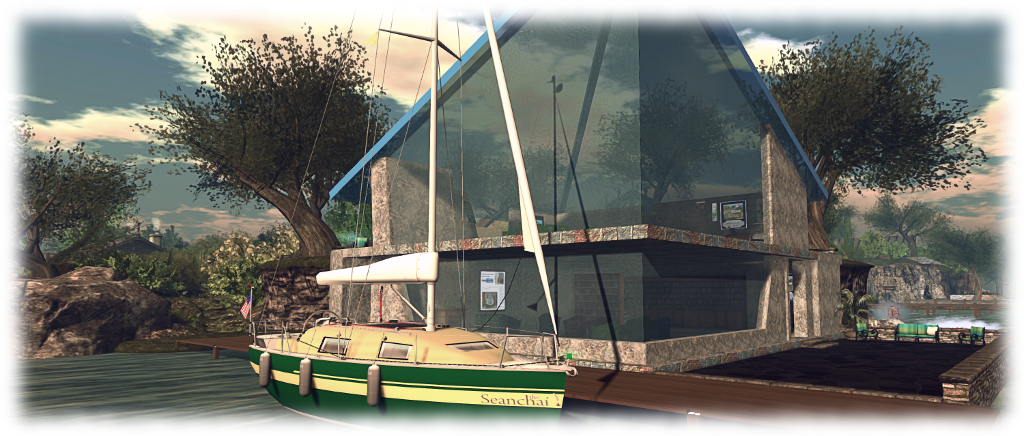
It’s time to highlight another week of storytelling in Voice by the staff and volunteers at the Seanchai Library. As always, all times SLT, and events are held at the Library’s home unless otherwise indicated. Note that the schedule below may be subject to change during the week, please refer to the Seanchai Library website for the latest information through the week.
Sunday, April 26th
14:00: Stories at Kultivate’s Spring Art Show
Kayden, Cale, Willow and Dubhna take the stage on Water Haven as part of Kultivate magazine’s Spring Art show with an hour of stories to amuse and delight. Live on Stream.
18:30: The Secret Garden
Caledonia Skytower continues this classic of children’s literature by Frances Hodgson Burnett, first published in 1911, at the Golden Horseshoe in Magicland Park.
Orphaned after losing her parents in a cholera epidemic, young Mary Lennox returns to England from India, entering the care of her uncle Archibald Craven, whom she has never met.
Up until this point, Mary’s childhood had not been happy; her parents were selfish and self-seeking, regarding her as a burden over which they were not obliged to hold much responsibility. Not overly healthy herself, she is as a result a temperamental, stubborn and unmistakably rude child – and her arrival at Misselthwaite Manor and the relative gloom of Yorkshire’s weather does little to improve her mein.
Her disposition also isn’t helped by her uncle, who is strict and uncompromising, leading to Mary despising him. But her uncle’s story is itself filled with tragedy, particularly the loss of his wife. As she learns more about her uncle’s past, so Mary learns about a walled garden Mrs. Craven once kept, separated from the rest of the grounds and which, since her passing has been kept locked by Mary’s uncle, the door leading to it kept locked, the key to it buried somewhere.
Finding the missing key and the now hidden door, Mary enters the garden, and her passage into it starts her on a journey of friendship and discovery, one that leads her to the thing she never really knew: family.
Monday, April 27th 19:00: The Higher Space
Gyro Muggins reads Jamil Nasir’s 1996 novella that mixes science and magic.
Bob Wilson is a lawyer with a house in the suburbs, a beautiful wife, and a predictable life. Then he agrees to represent a neighbourhood couple in what looks like an open-and-shut custody case.
But no sooner do the Wilsons take in fourteen-year-old Diana Esterbrook than Bob must ask himself some troubling questions. Is Diana a computer genius or a dangerously disturbed adolescent? Why is his house being bugged? Who is the mysterious man in black? And what about Diana’s birth mother, a convicted kidnapper just released from prison?
Wilson’s quest for answers will lead him to an enigmatic private detective, a meek professor with dreams of immortality, and finally to the secrets of a discipline called Thaumatomathematics a strange blend of magic and science where death becomes the key to beatific ecstasy.
Tuesday, April 28th:
12:00 Noon: Russell Eponym, Live in the Glen
Music, poetry, and stories in a popular weekly session at Ceiluradh Glen.
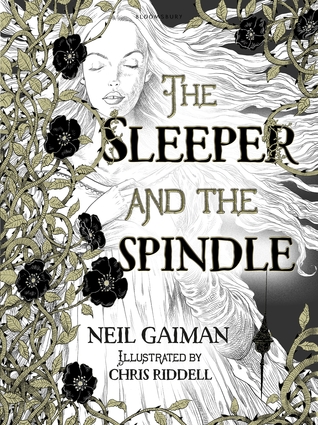
19:00: The The Sleeper and the Spindle
A thrillingly reimagined fairy tale weaving together a sort-of Snow White and an almost Sleeping Beauty with a thread of dark magic, which will hold readers spellbound from start to finish.
On the eve of her wedding, a young queen sets out to rescue a princess from an enchantment. She casts aside her fine wedding clothes, takes her chain mail and her sword and follows her brave dwarf retainers into the tunnels under the mountain towards the sleeping kingdom.
This queen will decide her own future – and the princess who needs rescuing is not quite what she seems. Twisting together the familiar and the new, this perfectly delicious, captivating and darkly funny tale shows its creators at the peak of their talents.
With Willow Moonfire.
Wednesday, April 29th, 19:00: A Nun in the Closet
What do two Benedictine nuns, a secretive man-on-the-run, a Tibetan monk, three hippies, members of the Mafia and children of migrant workers have in common? Why, A Nun in the Closet, of course.
When a cloistered monastic community of nuns inherit an old house with 150 acres in up-state New York courtesy of a mysterious benefactor, they are at a loss as to what to do. Sister John and Sister Hyacinthe are therefore dispatched to give the property the once-over and report back. A simple enough assignment, except neither Sister is entirely prepared to deal with all that they find.
From hippies on the lawn to suitcase stuffed with money sitting at the bottom of a well, disguised cocaine and a wounded man who has hidden himself in a closet to avoid Mafia hitmen, not to mention strange apparitions in the night, It might have been better had Sister John and Sister Hyacinthe remained cloistered in the abbey.
But it is amazing what two nuns can achieve armed only with their faith and boundless energy – up to and including a shocking revelation or two about ghosts, gangsters – and murder.
Join Caledonia Skytower as she reads Dorothy Gilman’s 1986 mystery.
Thursday, April 30th 19:00: Stone Angels – Stories of the Gothic South
With Shandon Loring. Also in Kitely – grid.kitely.com:8002:SEANCHAI).
Congratulations to Seanchai Library!
Beginning on March 8th, with the conclusion of their Death on the Nile series, Seanchai library has been accepting donations for Fantasy Faire to both sponsor a region in the Fairelands and to continue to support the matching fund for events. With the help of pledged matching funds from Gloriana Maertens (honoring the late Thea Dea) and Caledonia Skytower (honouring the late Jimmie Warnell) the Seanchai Community not only equalled the funds raised in 2019, but far surpassed it, raising a stunning L$165,000 in just a few weeks.
Fantasy Faire 2020: Isle of Shadows
That’s around US $600, every penny of which will be matched and multiplied – so it could easily become US $1200 – or more. It makes Seanchai Library among the highest paying individual sponsors in Fairelands History. So please be sure to take time yourself this week to visit both Fantasy Faire and the Isle of Shadows, sponsored by Seanchai Library There you will find entertainment and plenty of reasons for you to donate to Relay for Life of Second Life and the global work of the American Cancer Society.










 Inara Pey: Living in a Modemworld