Space Sunday: black holes, Falcons and moonshots

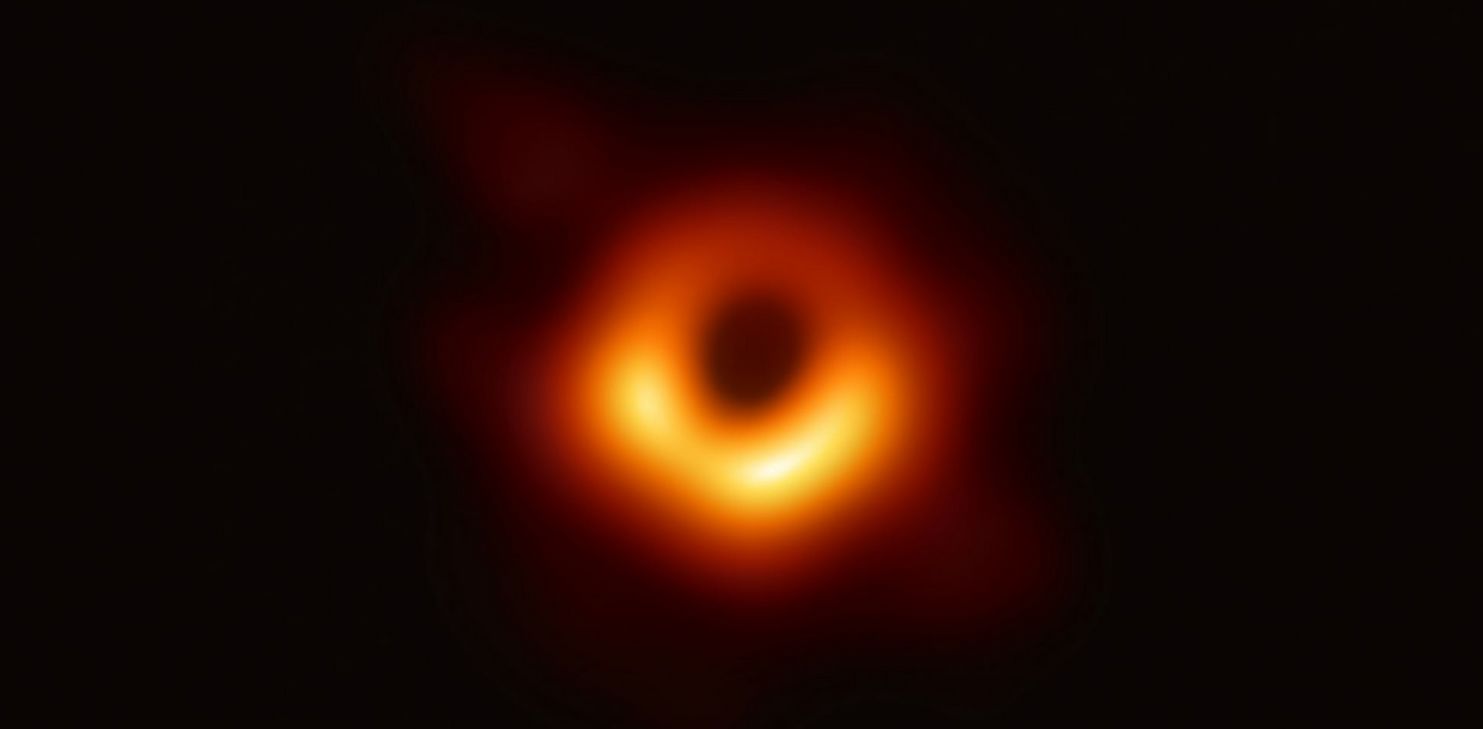
The first ever direct image of a black hole: M87* at the heart of the galaxy M87, 55 million light years from Earth, released on April 10th, 2019. Credit: the EHT Collaboration

The black hole in the above image resides at the centre of Messier 87 (M87), around 16.4 million parsecs (53 million light-years) from Earth, and part of the Virgo galactic cluster of about 12,000 galaxies. It marks the first time we have directly imaged a black hole – and it is a remarkable achievement for a number of reasons.

Thanks to Hollywood, we’re all very probably familiar with the idea of black holes: a point is space where matter is so compressed that it creates a gravity field from which not even light can escape. However, black holes come in a variety of forms, of which the most unusual might well be those that exist at the centre of many galaxies – including our own. Referred to as “supermassive black holes” on account of their extreme mass, they on a scale many times larger than your typical stellar black hole (which, despite being referred to as “massive” – a reference to their gravitational attraction.

Left: M87 in the Virgo cluster of galaxies, as imaged by the European Southern Observatory’s Very Large Telescope. Note the 5,000 light year-long jet of gas (arrowed) rising from the galaxy. Right: a closer view of M87 and the gas jet captures by the Hubble Space Telescope. Extending well beyond the galaxy, and move at relativistic speeds, the jet is believed to be generated by the black hole at the heart of the galaxy. Credits: ESO (l); J. A. Biretta et al., (STScI /AURA), NASA

We don’t actually understand how galactic black holes like the one at the heart of M87 – and called M87*) formed, but being able to examine them directly could answer some fundamental questions about the nature of the universe and physics, as well as helping us to understand the role they play in the evolution of galaxies. The problem is, actually directly imaging any black hole is actually very hard simply because they are – well, black, and thus not the easiest of things to see against the blackness of space.

Fortunately, there is a way around this problem: black holes are not alone. Their massive gravity means they attract dust and gas, which forms an accretion disk around the black hole, spinning around them at enormous speeds and producing radiation in a range of wavelengths including radio, optical and infra-red. Given given the right capabilities, we can image a black hole against the radiation from this accretion disk.
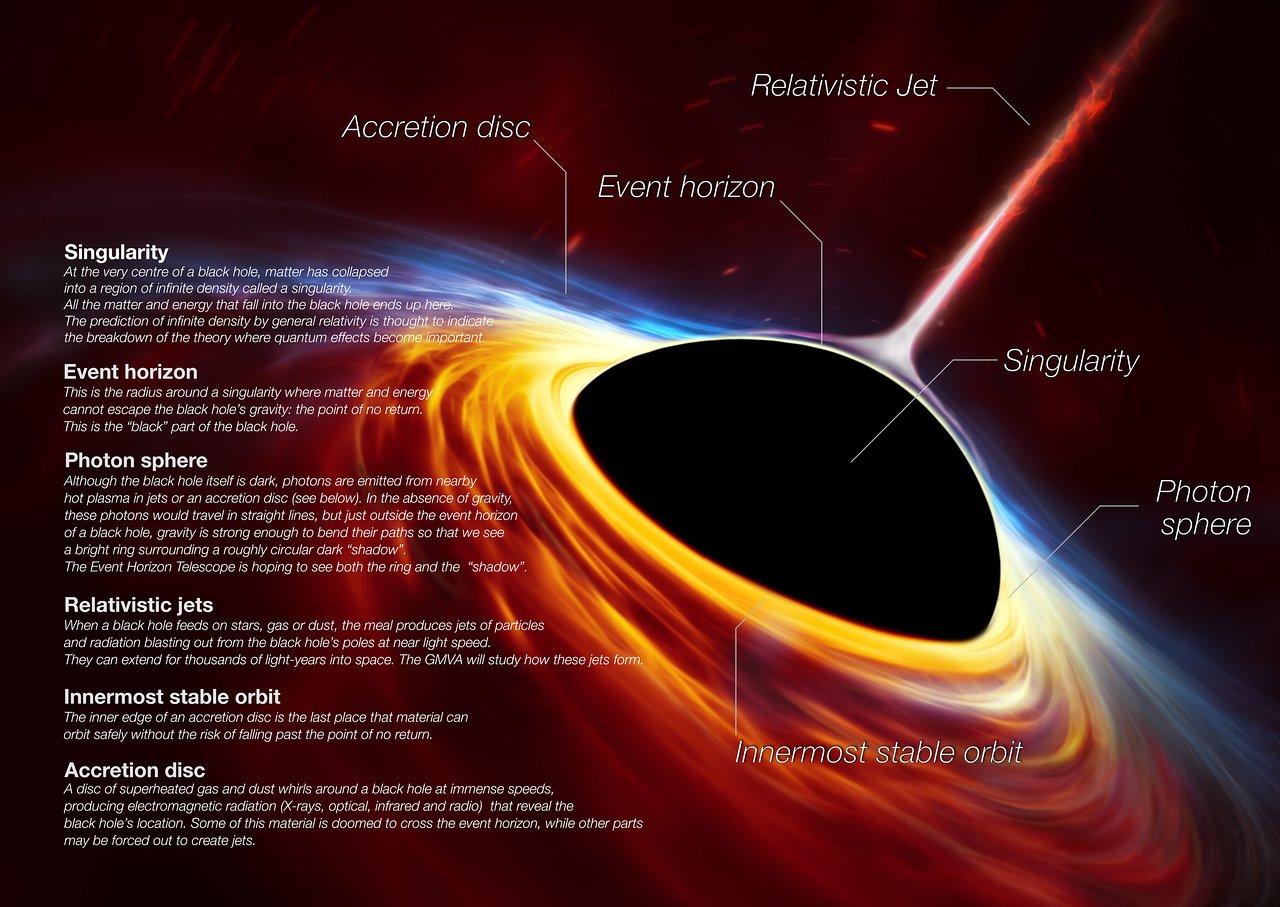
The composition of a black hole. Credit: ESO, ESA/Hubble, M. Kornmesser/N. Bartmann

But even with an accretion disk to shed light around a galactic black hole has its own set of issues. To image the one at the centre of our own galaxy, for example, is the equivalent of trying to stand in New York’s Times Square and being able to count the dimples on a golf ball 4,000 km (2,450 mi) away; and this despite the fact that the black hole at the centre of our galaxy is thought to be at least 60 million kilometres across.

Nor is trying to image them optically particularly helpful. They need to be imaged across a range of wavelengths – the problem here being that to do so, you need a radio telescope effectively the size of the Earth.

To achieve this, and following an idea first put forward 26 years ago by German radio-astronomer Heino Falcke, the idea of the Event Horizon Telescope (EHT) was developed. This involves linking numerous radio telescopes together so they can jointly examine a single target and gather data on it.

To image M87*, eight of the world’s most powerful radio telescopes and telescope arrays were linked together. Over a period of about a week in 2017, they were used to gather 4 petabytes of data about the light from M87* in the millimetre wavelength. The drives containing this data were then physically shipped from the observatories to the Haystack Observatory and the Max Planck Institute for Radio Astronomy, where they were plugged into a  grid computer made from about 800 CPUs linked through a 40 Gbit/s network, with the data processed by four independent teams using a series of tested algorithms to ascertain the reliability of the results. The final processing run was completed using the two most established algorithms to produce the image seen here.

This is in fact only the first galactic black hole image to b released. As well as studying M87*, the global EHT array has also gathered data on the black hole at the centre of our galaxy (and called Sagittarius A*), and at least two other supermassive black holes. However, imaging our own galactic black hole proved much harder, and delays in getting the physical hardware containing the data captured by the South Pole Telescope shipped from Antarctica to the Haystack Observatory has  meant that processing the data is still in progress.

According to theoretical physics – such as Einstein’s theory of relativity – scientists already knew what the image should look like: the aforementioned glowing accretion disk and the shadow of the black hole at its centre (so beloved of sci-fi films that feature black holes). However, simply seeing an image that matches what we believe we should be theoretically seeing helps further confirm Einstein’s theories about the nature of the universe around us.

Theoretical physics, such as Einstein’s general theory of relativity, had given scientists a means of simulating what an image of a black hole might look like, as with the above picture of M87*, released by the EHT team in April 2017 as they were about to commence their data gathering. Credit: Bronzwaer/Davelaar/Moscibrodzka/Falcke, Radboud University

From the actual image on M87*, scientists have already been able to confirm Einstein’s general theory of relativity under extreme conditions – notably the prediction of a dark shadow-like region, caused by gravitational bending and capture of light. They have also confirmed the shadow is consistent with expectations for that of a spinning Kerr black hole, which Einstein again predicted. Further, by combining the asymmetric nature of the accretion disk with the angle of the relativistic plasma jet created by M87* (not actually visible in the black hole image), astronomers believe M87* is spinning in a clockwise direction.

Further, the image has refined estimates of M87*’s size – 40 billion km across the event horizon (that’s 270 AU or 0.0042 light years; roughly 2.5 times smaller than the shadow circle shown in the image) – and its mass, estimated at 6.5 billion solar masses (± 0.7 billion).

We have taken the first picture of a black hole. This is an extraordinary scientific feat accomplished by a team of more than 200 researchers.

– Sheperd S. Doeleman, EHT project director

The image itself is shown in false colour to indicate the intensity of the emissions from the accretion disk. Yellow represents the most intense emissions, dropping to red as the lower intensity emissions, and black for little or no emissions. Were we able to see M87* with the naked eye, the colours would lightly be white, perhaps slightly tainted with blue or red. And while it has yet to be 100% confirmed, the colour bias towards yellow on the southern arc of the ring, together with its asymmetry, is thought to be the result of the gases in that region moving more in our general direction.

While this image has already revealed much, there are numerous questions we have yet to fathom. We may now know the nature of M87*, but we still don’t know how it was formed, or why so many galaxies have black holes at their centres. Nor do we as yet understand why some (like M87*) produce the great plumes of relativistic gas while others, such as the black hole at the centre of our galaxy do not.  So expect more to come as a result of studies arising from the work of EHT.

Continue reading “Space Sunday: black holes, Falcons and moonshots”
Empty rooms, chocolate factories and kaleidoscopes

Seanchai Library

It’s time to highlight another week of storytelling in Voice by the staff and volunteers at the Seanchai Library. As always, all times SLT, and events are held at the Library’s home at Holly Kai Park, unless otherwise indicated.

Sunday, April 14th:

13:30 Tea-Time with Sherlock Holmes’ Greatest Hits

Illustration by Sidney Paget, in The Strand Magazine

As voted for by Seanchai fans, followers and listeners. This week: The Adventure of the Empty Room, first published in The Strand magazine, and later the 13 stories from The Return of Sherlock Holmes.

Three years after the Death of Sherlock Holmes during his fight with Professor Moriarty at Reichenbach Falls, John Watson investigates the death of Ronald Adair. The young gentleman had been found shot to death in a closed room at his home in Park Lane, with no possible exit through the windows. A quiet young man, Adair’s only hobby was playing cards, and he had just had won £240 with his new partner, one Colonel Sebastian Moran.

As he examines the area around Adair’s house, Watson encounters an old man who eventually follows him to his office – and reveals himself to be Holmes himself. Explaining how he survived his encounter with Moriarty to a shocked Watson, he further reveals that Adair’s card partner, Sebastian Moran is – or was – actually Moriarity’s lieutenant. He further reveals that Moran is aware of Holmes’ survival, and plans to kill him.

But knowing of Moran’s plan, Holmes has one of his own. Not only does he plan to survive the attempt on his life, he plans to thwart Moran and bring him to justice.

With Da5id Abbot, Corwyn Allen, Savanah Blindside, and Kayden Oconnell in the Library’s Fireside Room.

18:00 Magicland Storytime: Charlie and the Chocolate Factory

Have you heard? Willie Wonka is releasing five golden tickets in candy bars! Charlie Bucket may have a chance to find one as Caledonia Skytower continues Roald Dahl’s classic.

Monday, April 15th 19:00: The World’s Best Science Fiction 1969

Gyro Muggins read from this anthology of science fiction short stories, edited by Donald A. Wollheim, featuring nineteen authors, including such names as Brian Aldiss, Poul Anderson, Samuel R. Delany, Fritz Leiber, Robert Silverberg, and Kurt Vonnegut, Jr.

This week, Dance of the Changer by Terry Carr. Are the aliens crazy or just alien? Is there a difference? ; and Fear Hound by Katherine MacLean. A detective novel, but this time it isn’t “elementary” it’s “psychic.”

Tuesday, April 16th 19:00: Kaleidoscope

When a brilliant young violinist dies in a horrific accident, Madame Karitska has only to hold the victim’s instrument in her hands to perceive the shocking truth. But when an insecure wife asks whether her husband will abandon her to join a sinister cult, Madame Karitska–as wise as she is lovely–chooses not to reveal all that she foresees. And when an attaché case is suddenly dropped into her lap by a man fleeing a crowded subway, she knows it’s time to consult her good friend Detective-Lieutenant Pruden.

A nine-year-old accused of murder, a man dying a slow death by witchcraft– for the hunted and the haunted, Madame Karitska’s shabby downtown apartment becomes a haven, where brilliant patterns of violence, greed, passion, and strange obsessions mix and disintegrate with stunning, kaleidoscopic beauty.

With Caledonia Skytower.

Wednesday, April 17th 19:00: TBA

Check the Seanchai Library website for information nearer the day.

Thursday, April 18th

19:00: Rogue One: A Star Wars Story Part 2

With Shandon Loring. (Also in Kitely grid.kitely.com:8002:SEANCHAI).

21:00: Seanchai Late Night

Contemporary Sci-Fi Fantasy with Finn Zeddmore.

Showing a little Flourish in Second Life

Copper River; Inara Pey, April 2019, on FlickrFlourish – click any image for full size

We recently received an invitation from Julz (Juliette Rainfall) to visit the latest region design she and her SL partner, Leaf (Peyton Darmoset) have put together. As the people responsible for creating the outstanding region designs of Cold Ash (read more here), Erebos Harbor (read more here) and Cloudbreak (read here), among others, we were keen to see their latest work.

Unlike most of their previous designs, Flourish is a commercial region, designed to be the home of the Flourish Studio and Salon S2 brands. However, this Full region is also very photogenic, as one would expect from one of Leaf’s designs.

Copper River; Inara Pey, April 2019, on FlickrFlourish

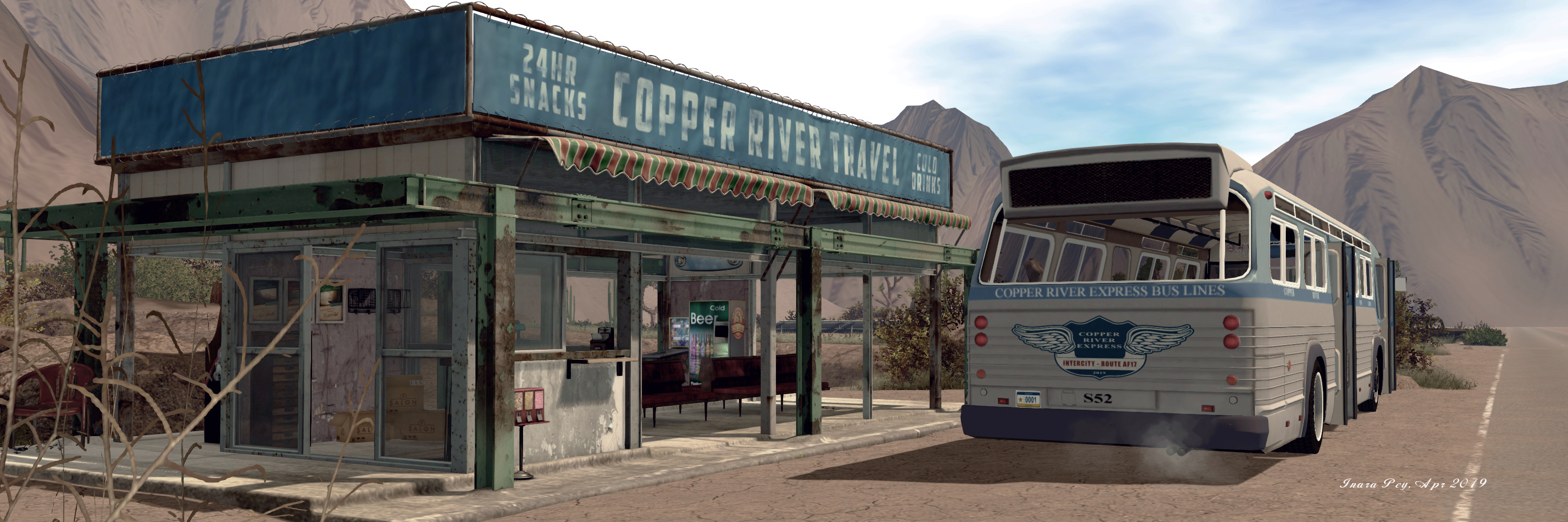
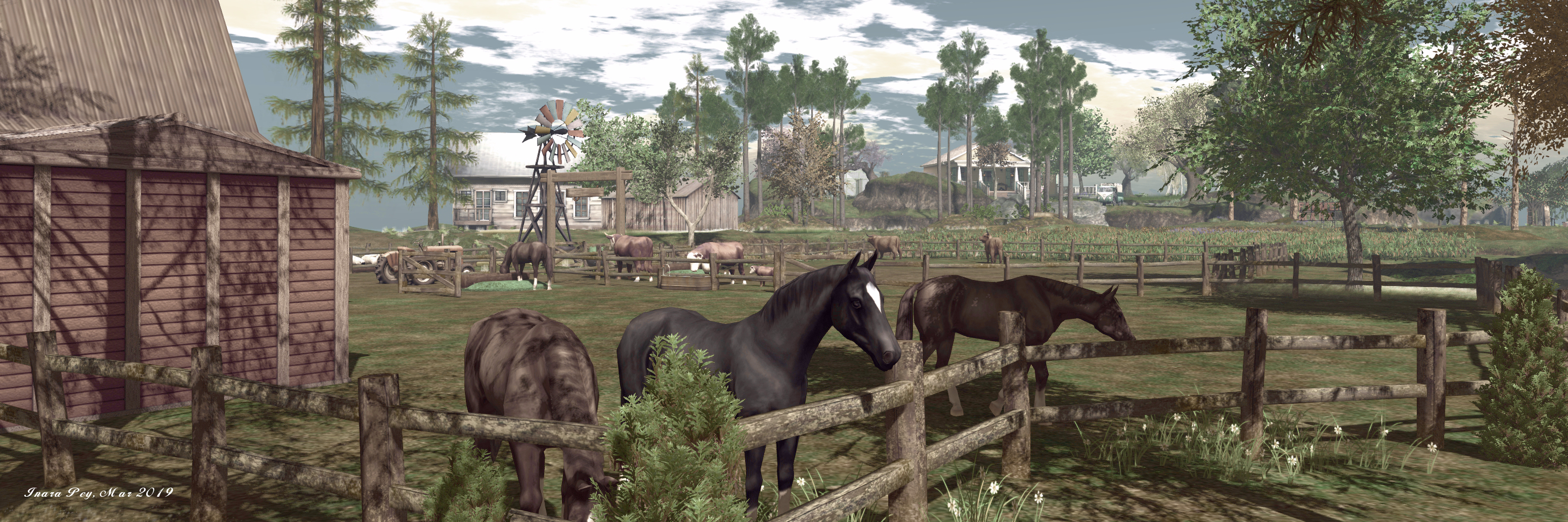
Surrounded by dusty hills and mountains, the region is presented as a rugged desert setting, centred on a deep-sided lake, its shores largely cliff-like walls. Roads appear to cut through the landscape, passing across region and sim surround alike. One of theses point “into” the region and to the grounds of Flourish Studio, the other winds its way up the southern foothills to the Salon S2 store (which at the time of our visit had yet to be outfitted).

Desert it might be, but there is a lot going on here. The stepped foothills on the southern side of the region offer space to climb and explore alongside the Salon S2 building, the landscape here a mix of bare rock, scrub grass, cacti, creosote bushes and wild shrubs. Within it sit a water run-off and evidence of some old workings of some description. Wooden steps offer a route up and down the tiered rocks of the hills, with a hole in the fence around Flourish Studio – designed to resemble an outdoor market – inviting explorers into the store at it sits in the north-east corner of the region.

Copper River; Inara Pey, April 2019, on FlickrFlourish

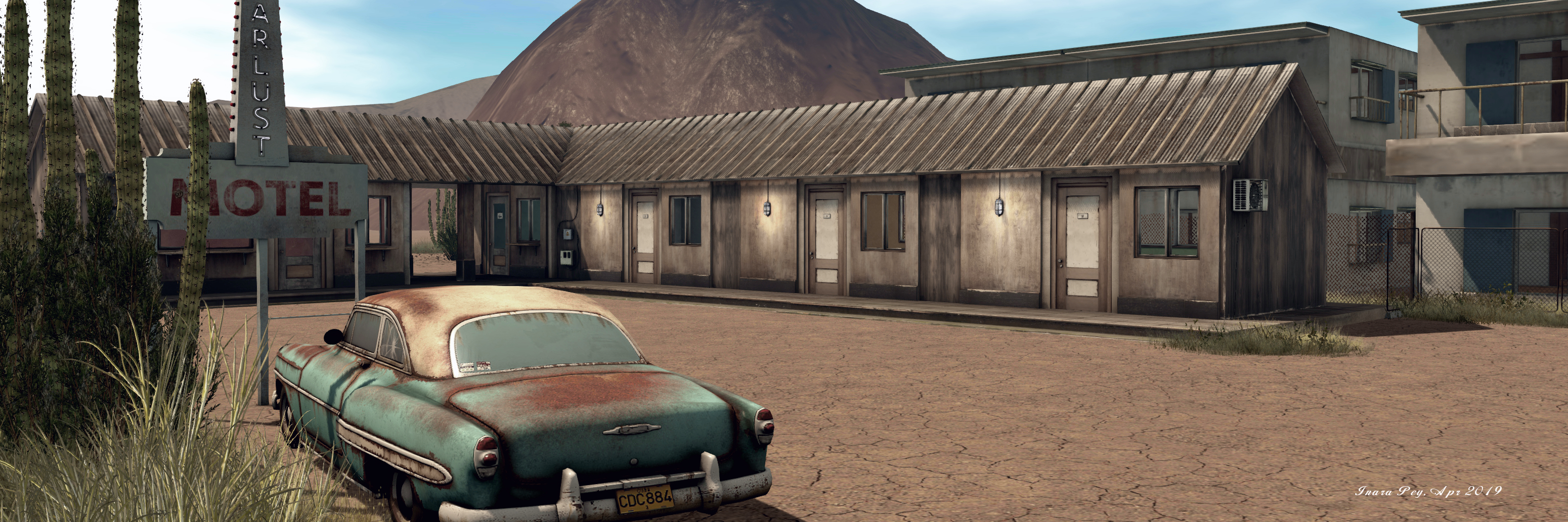
Follow the road west from here and it will lead you past a somewhat run-down motel, faced by a bus stop / fuelling point across the road, while away to the north the shadowy forms of high-rise buildings break the horizon, indicating the presence of a distant city. Might this be Reno or Las Vegas or somewhere else? That’s up to you to decide.

Alongside the bus stop is something of an artistic statement: an old outside broadcast van, its satellite dish pointing vacantly to the hills as it forms a backdrop to an array of old televisions, the screens of which have been painted with a variety of slogans, some of them with a lean perhaps towards political comments.

Copper River; Inara Pey, April 2019, on FlickrFlourish

Close to this statement, a sandy path leads away from the road and between the rocks and boulders to point the way yo the top of the cliffs of the lake. Here’s under a large canvas awning, sits an events stage, the flat rock between it and the waters below offering room to dance, and a wooden platform built out from the cliff edge a place to sit. The the lake is fed by a tumbling waterfall, while narrow ribbons or sun-baked sand seem t0 offer narrow waterside beaches north and south, each reached by a path of hard-packed and parched sand.

More art can be found off to the west, along the road winding up to the Salon S2 store. Here, next to neat lines of solar arrays as they capture the Sun’s like, stand three large female torsos, giant mannequins, on which have been painted the truism Life goes on.

Copper River; Inara Pey, April 2019, on FlickrFlourish

All of this presents a striking region with plenty of opportunities for exploration and photography, nicely rounded-off by an ambient soundscape.

SLurl Details

  • Flourish (Copper River, rated: Moderate)

Water and a Matrix: reflections on life by Akim Alonzo

Itakos Project: Akim Alonzo – Water

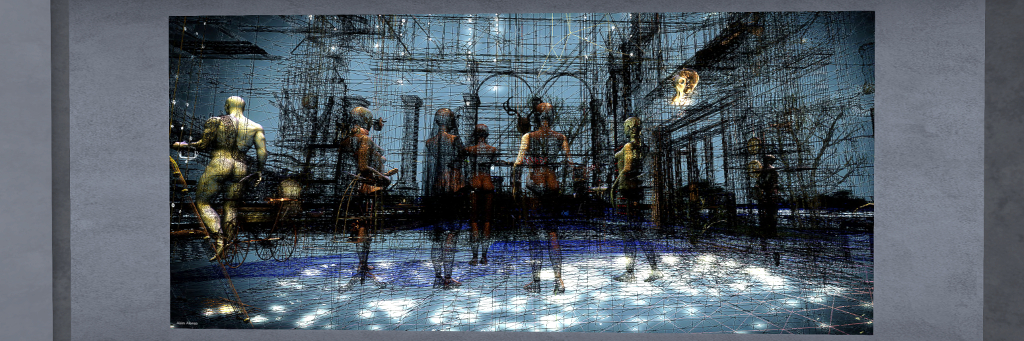
It may seem a little unfair presenting two reviews of exhibitions at the same gallery space in such short order, but the fact is the Itakos Project, curated by Akim Alonzo, is currently hosting exhibitions by Awesome Fallen and Akim himself which I personally feel should not be missed. Having covered Awesome’s Simply Dreaming just a day ago (see Awesome Fallen at the Itakos Project in Second Life), with this piece, I’m diving into the what might be referred to as “an exhibition of two halves”, both of which feature collections of Akim’s own work.

You don’t make a photograph just with a camera. You bring to the act of photography all the pictures you have seen, the books you have read, the music you have heard, the people you have loved.

Ansel Adams, The Camera, 1980

Ansel Adam’s words have been the foundation of Akim’s approach to photography, and of the Itakos Project as a whole – and this is clearly demonstrated in both of the displays of art he has on display within the gallery at the time of our visits.

Itakos Project: Akim Alonzo – Water

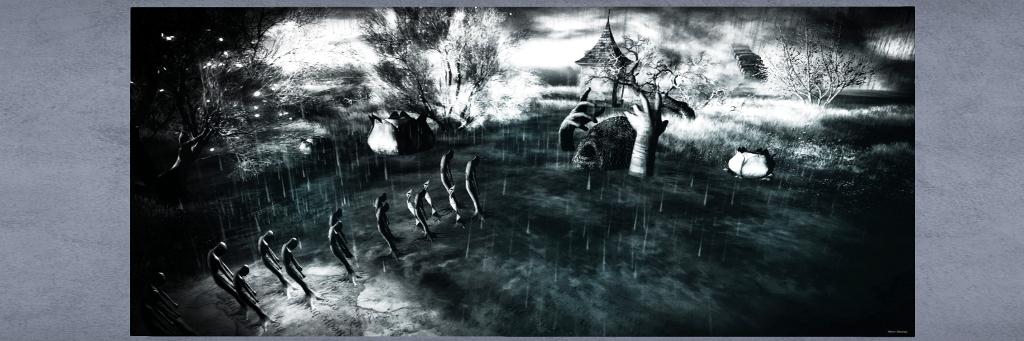
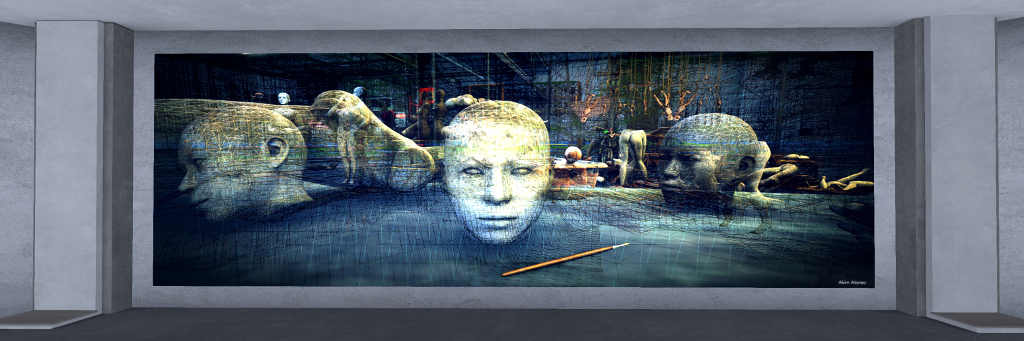
Split between the gallery’s entrance level and the floor above, and occupying the Black Pavilion area, Water is a collection of 12 images focused on the titular subject. However, these are not simply studies of seascapes, coasts or similar. Rather, they are examinations of our complex relationship with water. We are conceived into water, life came from water, we are water; it both defines us and stands as something of a metaphorical image of human life and relationships, all of which Akim sums up in his liner notes on the exhibition.

We are Water and we can not live without it. Sometimes we are like islands lost in the sea, or we float in lush archipelagos full of life. Water brings with it the meaning of survival, it is the immaterial substance of the flowing time, it is the depth of the human soul, of the vital emotions, of joy and fear, fury and tranquillity, of solitude and of love. Water moves me, I am Water.

Itakos Project: Akim Alonzo – Water

Thus, through this mix of monochrome and soft colour images we are offered the most stunning of image poems, each of which tells something of that complex relationship. These are pieces of such depth and narrative, they cannot be taken at a single glance; time is required to fully absorb their beauty and hear their myriad whispers. But that said, even looked a briefly, each speaks volumes about Akim’s eye and mind as a photographer; there is little doubting each piece has been influenced by the full breadth and depth of his artistry and all that has influenced it.

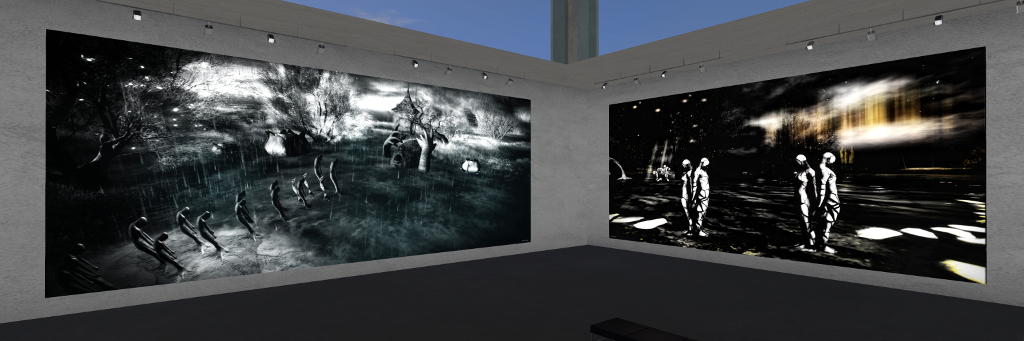
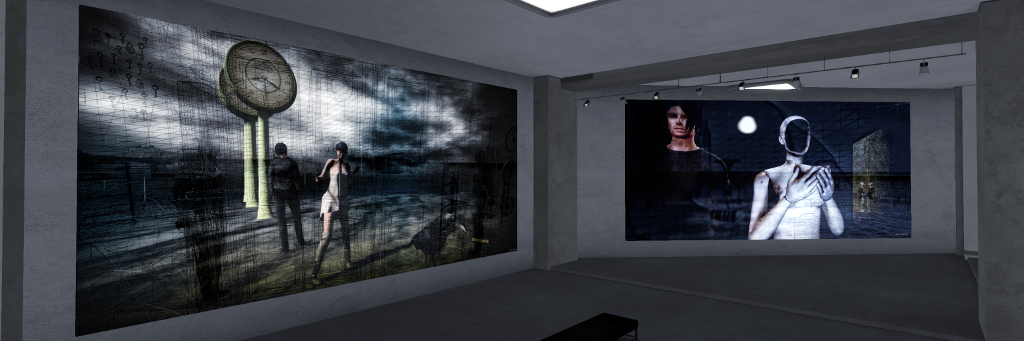
The Matrix, the second “half” of Akim’s overall exhibition on display, is located on the floor above the entrance level, within the Orange Pavilion. Its found influence is perhaps more obvious – that of the Matrix movie franchise; however, like Water, it is actually quite complex in foundation and presentation, as Akim again indicates in his liner notes:

These photos are loosely based on the cult movie The Matrix, which I loved a lot. A metaphor for a world of people trapped in a simulated, virtual reality that has many aspects in common with the Second Life world. So I imagined, listening to the Matrix soundtrack, avatars and life scenes in second life revealed in their intrinsic background network … of which we avatars do not realise.

Itakos Project: Akim Alonzo – Matrix

So it is that we are presented with nine images, again rich in metaphor and narrative. Framed by the ideas of the movies, as given form by the soundtracks, they also encompass an observer’s view of Second life coupled with a user’s innate understanding of the platform, with broader influences such as dream echoes and, stirred into the mix.

As with Water, these are pieces rich in story and interpretation. Within them lie questions of reality and identity, and the riddle of worlds within worlds – the Chinese Boxes to which Akim refers –  which not only extend inwards through the images, but also outwards to encompass each of us as we view them.

Itakos Project: Akim Alonzo – Matrix

In this, the reference to the Matrix is taken a stage further: not only are these images an interpretation of the films as layered within the virtual realm of Second Life – they actually reflect the central idea of the film: that were are all in fact unwittingly operating within a virtual realm. We are thus as much a part of each of these images, a further layer, if you will, that is observed from somewhere beyond us, as much as we are observers of each image.

However, there is something else here as well; a more innate statement on our relationship with Second Life itself. Within these pictures is a subtle reminder that, no matter how hard we might try to distance self from character within SL, no matter what the roles we play in-world, the backstories we build; the fact remains that facets of our own natures, our own identities, will be impinged on those characters. They are inevitably a projection of self into the virtual. What’s more, their daily encounters and experiences within the virtual realm equally reflect and inform upon our physical selves. Thus, we have a genuinely visceral intertwining between the “real” and the “virtual”.

Itakos Project: Akim Alonzo – Matrix

Together or individually, Water and The Matrix are two absorbing, evocative and engaging selections of art by a master photographer, artist and storyteller.

SLurl Details

BURN2: Burnal Equinox 2019

Burn2 Burnal Equinox 2019

The Burn2 Burnal Exquinox event, which will run through until Sunday, April 14th, is now open. This is the traditional Burn2 event held midway between the annual October “big Burn” events year-by-year. For 2019, the theme of the event is Eyes to the Skies. Tied in with the annual global Yuri’s Night event, it is a celebration of space, “the final frontier” (or “great beyond”) and all that goes with it – science, mysticism and more.

The weekend kicked-off on Friday, April 12th, courtesy of a live set of electronic music by Hao Zaytsev, and the marking of Yuri’s Night. This is an annual celebration of the first human flight in to space, completed by cosmonaut Yuri Alekseyevich Gagarin. He lifted-off from from Baikonur Cosmodrome atop his Vostok 1 booster on April 12th 1961 to become not only the first human to reach space, but the first to orbit the Earth in a flight lasting 108 minutes. On his return, he actually completely his flight via parachute, the mission calling for him to eject from the capsule prior to landing. Since 2011, the date of his flight has been celebrated as the “World’s Space Party”.

via Burn2.org

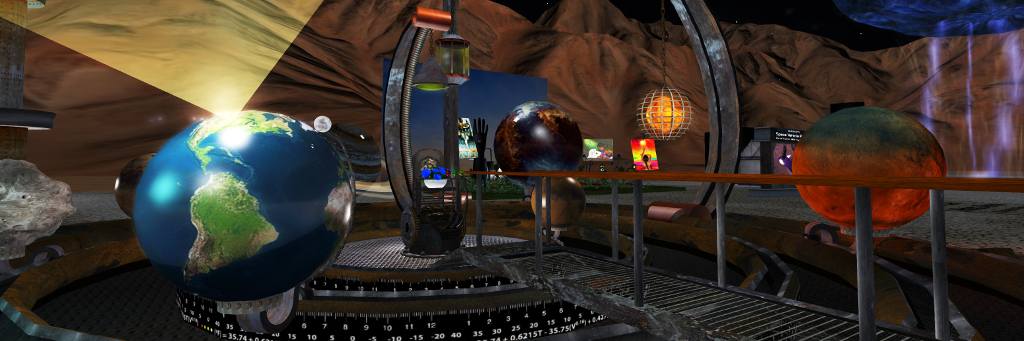
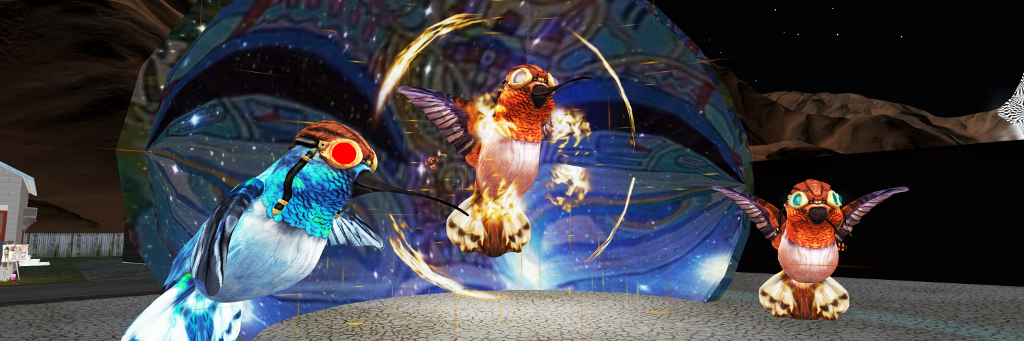
Gagarin’s flight is marked on the Playa by a model of his Vostok K rocket, steaming with vented gasses as if awaiting launch, the Vostok 1 capsule sitting within its launch shroud sitting atop the rocket. It is just one of a number of installations both on the ground and in the air directly over the Playa awaiting exploration, which celebrate space flight, astronomy, science fiction, extraterrestrials, and more.

The full schedule for the weekend available on the Burn2 website. Highlights include:

  • Changhigh Sisters Fireshow – Saturday, April 13th, noon SLT
  • Burn/Fire Dancers, Sunday, April 14th, 10:00 and 16:00 SLT.
  • Burn2 Fashionistas, Sunday, April 14th, 14:00 SLT.
  • DRUM, Sunday, April 14th, 15:00 SLT.

And there will be live performers and DJ sets through both days. The event closes at 23:00 SLT on Sunday, April 13th.

About BURN2

BURN2 is an extension of the Burning Man festival and community into the world of Second Life. It is an officially sanctioned Burning Man regional event, and the only virtual world event out of more than 100 real world Regional groups and the only regional event allowed to burn the man.

The BURN2 Team operates events year around, culminating in an annual major festival of community, art and fire in the fall – a virtual echo of Burning Man itself.

Burn2 Burnal Equinox 2019

Related Links

2019 SL User Groups 15/3: TPV Developer Meeting

Green Acres; Inara Pey, March 2019, on FlickrGreen Acres blog post

The following notes are taken from the TPV Developer meeting held on Friday, April 12th, 2019. A video of the meeting is embedded below, my thanks as always to North for recording and providing it. This was a relatively short meeting, with several periods of audio silence and text chat. The key points of discussion are provided below.

SL Viewer

  • The Estate Access Management (EAM) RC viewer updated to version 6.2.0.526190 on Friday, April 12th, 2019.
  • As noted in my CCUG summary, the EEP viewer updated to version 6.2.0.526104 on Thursday, April 11th.

All other viewer in the pipelines remain as:

  • Current Release version 6.1.1.525446, formerly the Love Me Render RC viewer, dated March 26, promoted April 2 NEW.
  • Release channel cohorts:
    • Bakes on Mesh RC viewer, version 6.1.1.525409, March 26.
    • Teranino Maintenance RC viewer version 6.1.1.525401, March 20.
  • Project viewers:
  • Linux Spur viewer, version 5.0.9.329906, dated November 17, 2017 and promoted to release status 29 November – offered pending a Linux version of the Alex Ivy viewer code.
  • Obsolete platform viewer, version 3.7.28.300847, May 8, 2015 – provided for users on Windows XP and OS X versions below 10.7. This viewer will remain available for as long as reasonable, but will not be updated with new features or bug fixes.

With the necessary back-end updates now made, it looks likely that the EAM RC viewer will be the next viewer to be promoted to de facto release status.

Teleport Issues

Teleport Disconnects

  • The Lab continues to try to understand the root cause(s) of the teleport disconnects. So far, they can only confirm it is not specific to any single viewer.
  • As previously indicated in my updates, the root cause of the issue is a race condition / timing issue – something that could be exacerbated by the distance of a user from the Lab’s servers (the grater the distance = the more time required for communications = the greater the chance of a timing issue / race condition).
  • Similarly, a high packet loss between viewer and simulator(s) might increase the chances of a disconnect occurring.
  • The problem remains in trying to identify precisely what has changed to cause any race condition / timing issue.
  • As noted in this week’s SUG meeting summary, there was a server RC deployment on Wednesday, April 10th – version 19#19.04.09.526122,. This included additional logging to help capture further data on the teleport disconnects, particularly capturing where the region handshaking may be failing.
  • Multiple regions have been replicated on Aditi, and having further enhanced logging enabled on them. This additional logging capability may be deployed to Agni in week #16, but not necessarily enabled, due to the performance impact it will have. However, the code will be in place should it be required.

Attachment Loss on Teleport

  • The Lab now has a “solid” repro for this issue. As anticipated, much of the problem appears to be related to having too many scripted attachments stacked on the same attachment point (e.g. the right hand, the default attachment point, and often used by default by mesh clothing makers).
  • However, the work on developing a fix has slowed as a result of resources being moved over to the teleport disconnect issue.

Asset UDP Messaging Deprecation

As noted in my SUG summary, it appears the code for the Asset UDP messaging deprecation didn’t work as anticipated, likely the result of one code element failing to merge correct. There will be a be a further RC deployment in week #16 with the corrected code.

A reminder that assuming the deployment is made and the code works as anticipated, anyone using very old viewers still reliant on UDP messaging for assets and which do not have support for HTTP messaging will not be able to receive any updates for the following: animations, body parts, clothing, gestures, landmarks, meshes and sounds whilst connected to regions on any RC channel.

In Brief

  • The are reports of issues with the EEP code interfering with Interest List culling, with Draw Distance having little effect on scene rendering (BUG-226752). This is being investigated.