It’s Dog Food Day at the Lab!

Eating your own dog food is a colloquialism that describes a company using its own products or services for its internal operations.

The Second Life team already do this to some extent – as a geographically split company on both coasts of the United States (operating out of both San Francisco and Seattle on the West Coast), and having a support centre in Georgia, the company frequently uses its own platform for staff meetings and the like. There are also, of course, the various in-world weekly user group meetings that hold as well.

However, starting on Friday, September 21st, the Lab is starting on what they are calling their Dog Food Days.

It’s not clear how frequently these will be held, but the idea is for members of the Second Life team to use the platform in ways outside of what they might normally do, and see things more from the perspective of users – including the pain points people might feel when using the platform or learning about it; as well as how the limits of the platform are being pushed creatively.

Alexa Linden, as one of the instigators of the idea, offered an example of her thinking around it:

One of the reasons I wanted to have Dog Food Day … it that a lot of people [at the Lab] have still not gone through the process of meshing up their avatar … I’ve done it on all of my alts, and it’s a learning process; it’s not an easy thing to do. And it’s something we need to understand as new users come in, it’s important for us to understand their frustrations, the learning curve, what people are creating, what the quality of content is, etc.

– Alexa Linden, Product Supervisor, discussing the Lab’s Dog Food Day idea

Given this, Alexa is interested in receiving constructive suggestions for what might be considered for inclusion in these Dog Food Days. One suggestion already put forward was to have Lab staff run through the SL sign-up and on-boarding process from end-to-end, including going to the Learning and Social island and experience the entire process from a user’s perspective – and this has been taken on-board.So, if you do have a suitable idea, please consider dropping Alexa a note card.

Also, every Tuesday, Alexa runs an in-world tour of public places on the grid for Lab staff. She’s always interested in appropriate recommendations – places where staff will feel comfortable going, etc., – and welcomes suggestions on possible visits as well (I’ve actually passed on a few myself). So again, if you have ideas for interesting / photogenic / fun locations, drop her a note card with landmarks.

A trip to Havana, with a little Voodoo In My Blood

Little Havana; Inara Pey, September 2018, on FlickrLittle Havana – click any image for full size

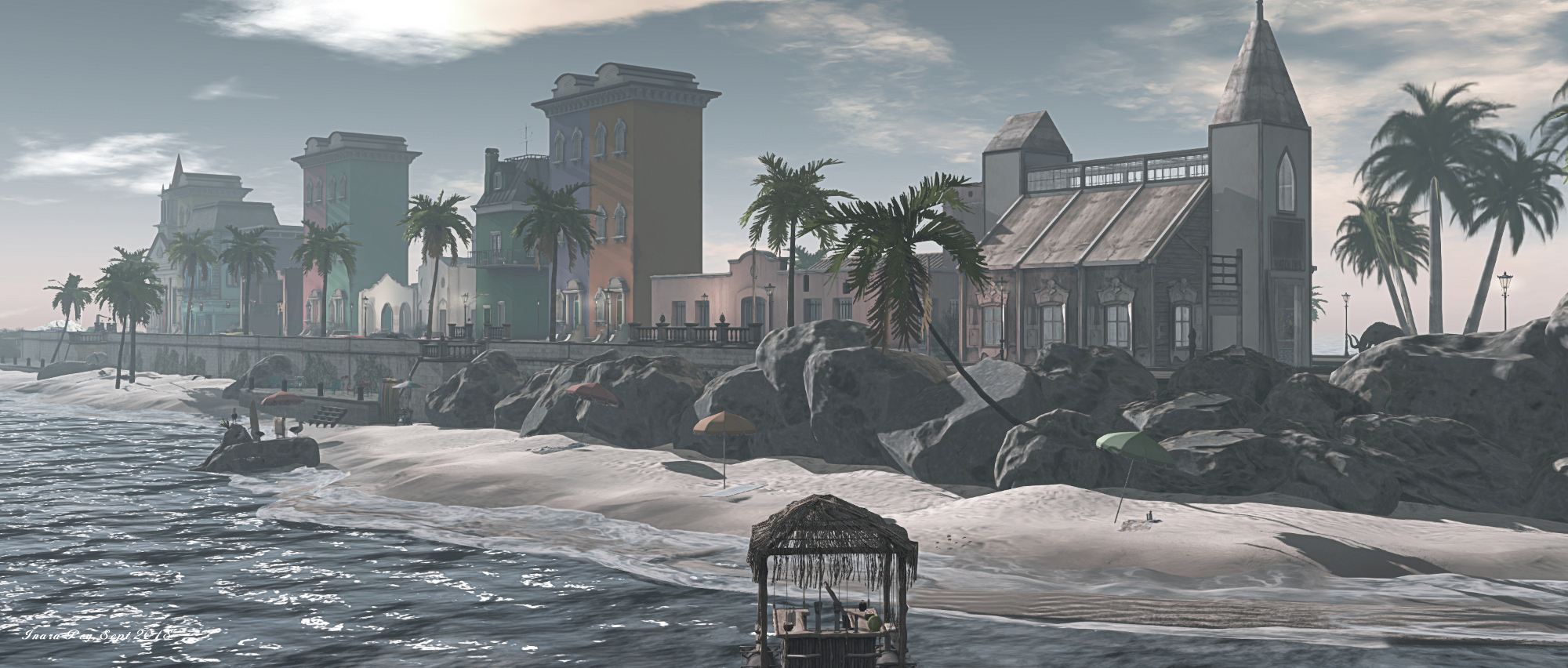
We came across Little Havana as a result of an e-mail suggestion*. Occupying a Homestead region, it is a joint design between Sofie Janic, Fred Hamilton (frecoi), Alexa Maravilla (Spunknbrains) and Lotus Mastroianni. It’s an easy to visit region, offering a seafront location looking out over a sandy beach to where waves suitable for surfers are rolling in on the tide.

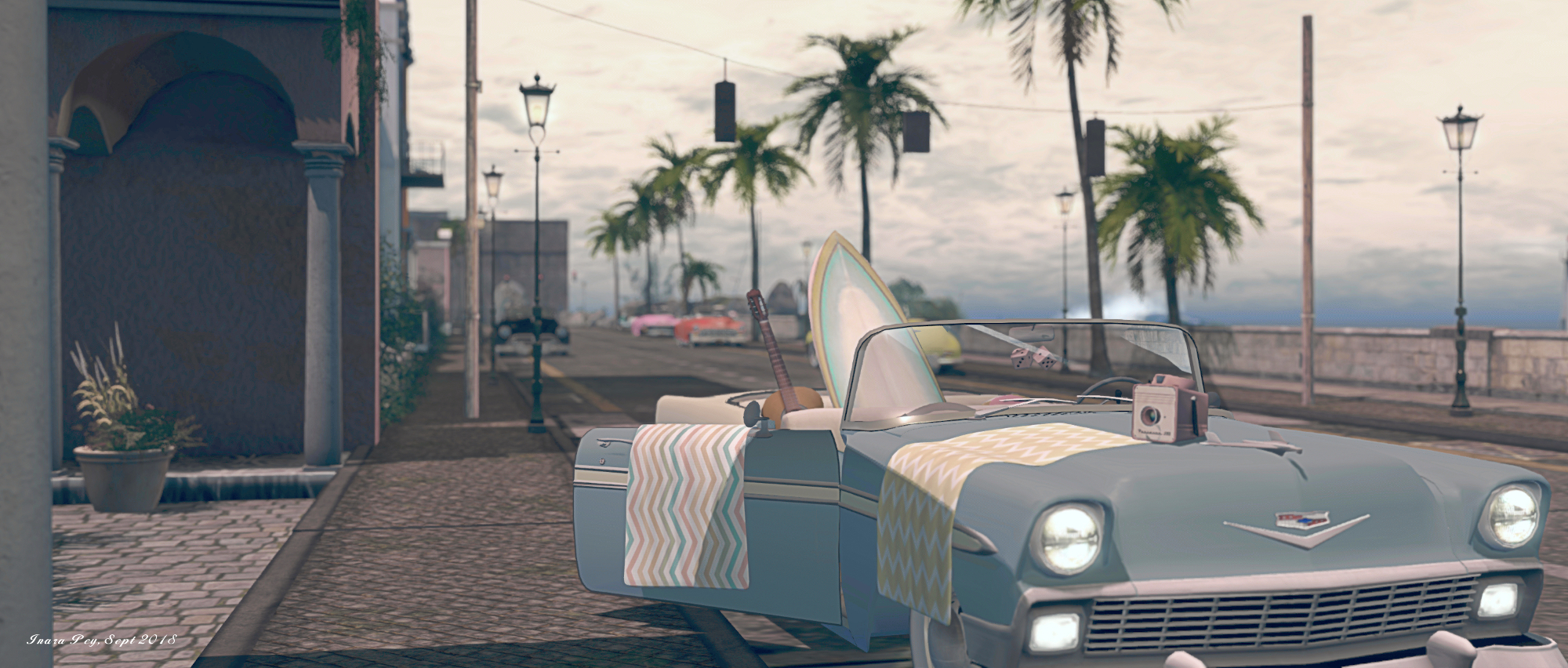
As the name suggests, the region takes its inspiration from Cuba. However, rather than trying to recreate anything specific from Havana – such as one of its more famous buildings of monuments, the team responsible for the design have opted to present a setting mindful of the images often seen in photos and postcards of Havana: wide streets, gaily painted buildings with something of a run-down air about them, little churches and, of course, the giant gas guzzlers, equally brightly painted and obviously lavished with care as befitting behemoths that have a design lifespan reaching back to the 1950s.
Little Havana; Inara Pey, September 2018, on FlickrLittle Havana

The seafront boulevard offers the best vista of the houses, buildings and cars, the street lighting offering opportunities for tourist-like night-time photography for those looking for an alternative to daylight photographs.

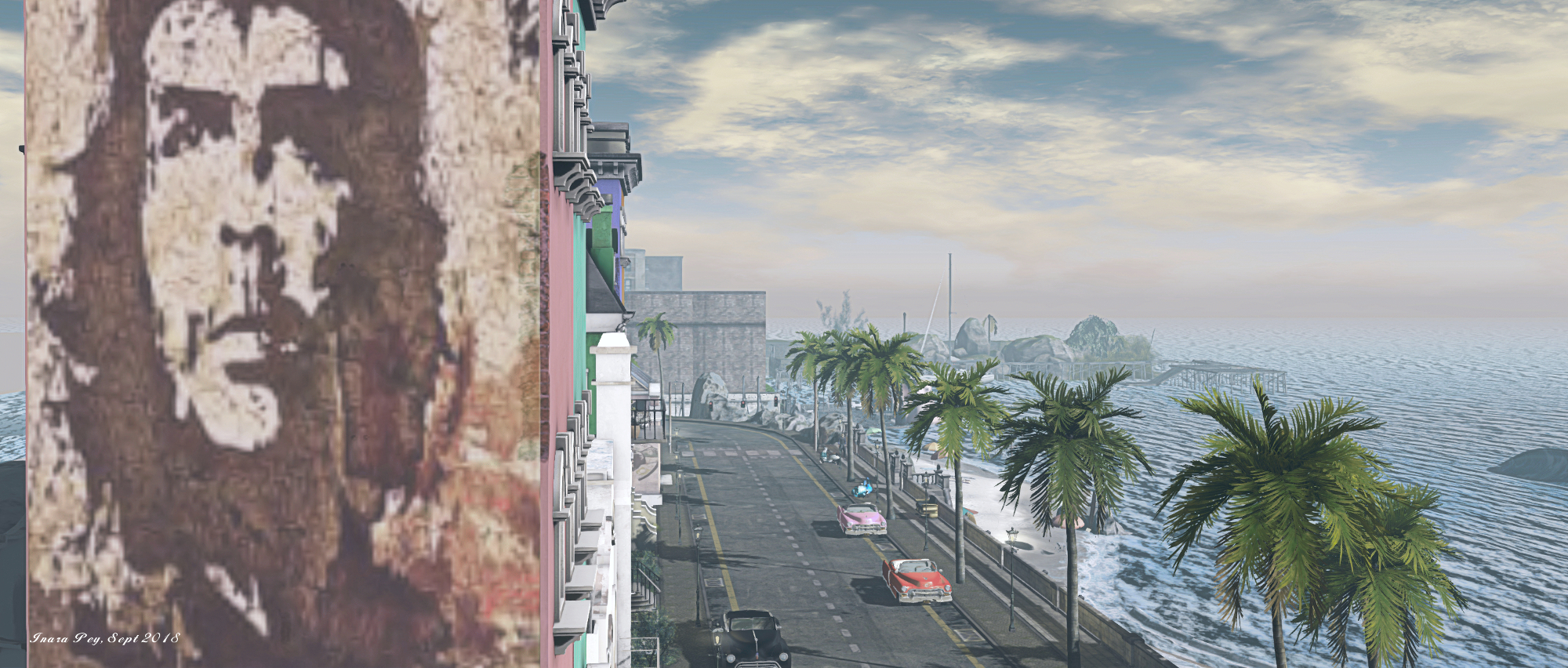
With the exception of the church alongside the landing point, which appears to be  a small gallery displaying images by Lotus Mastroianni, none of the buildings are furnished. Some do, however, carry hallmarks of el revolución cubana on their flanks. The heroic visage of Argentinian Marxist revolutionary Ernesto “Che” Guevara, arguably, and alongside Fidel Castro, a major architect of Fulgencio Basista’s overthrow and the remodelling of Cuba post-revolution, stares stoically outward from the side of one of the taller buildings, for example.
Little Havana; Inara Pey, September 2018, on FlickrLittle Havana

The northern end of the beach front road ends, quirkily enough, in an odd little helicopter landing pad, complete with a D-Labs helicopter that looks like it has been put together using bodywork from a car. When encountered, it is both unexpected and yet strangely suited to the setting.

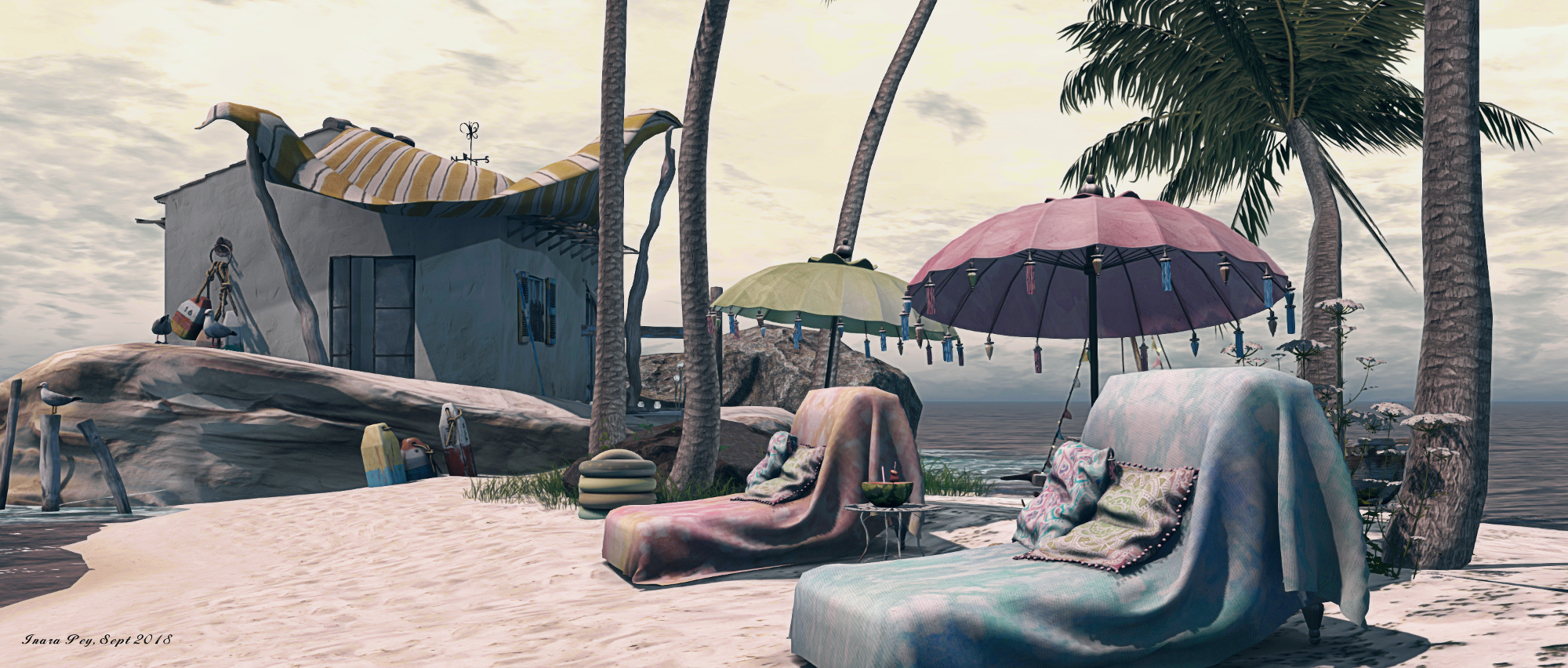
A short distance across the water, north and west of this, sits a little sandy island given over to swimming, sunbathing and generally relaxing, a bar offering an excuse to swim over and stay a while.
Little Havana; Inara Pey, September 2018, on FlickrLittle Havana

The roads on the region also run along the east side of the buildings, where can be found more paintings typical of Cuba on walls, including one of Fidel Castro himself in all his bearded glory. This faces a recording studio sitting on another little island, this one reached via a wooden bridge. With an indoor pool and outdoor sun deck, it suggests a place of easy-going creation of Cuban music.

Ideally suited to photography, particularly avatar-centric images, Little Havana is connected via bridge at its south-western extreme to Voodoo In My Blood, the neighbouring full region. This features a design largely brought together by Megan Prumier, working with Sofi and Fred.
Little Havana; Inara Pey, September 2018, on FlickrVoodoo In My Blood

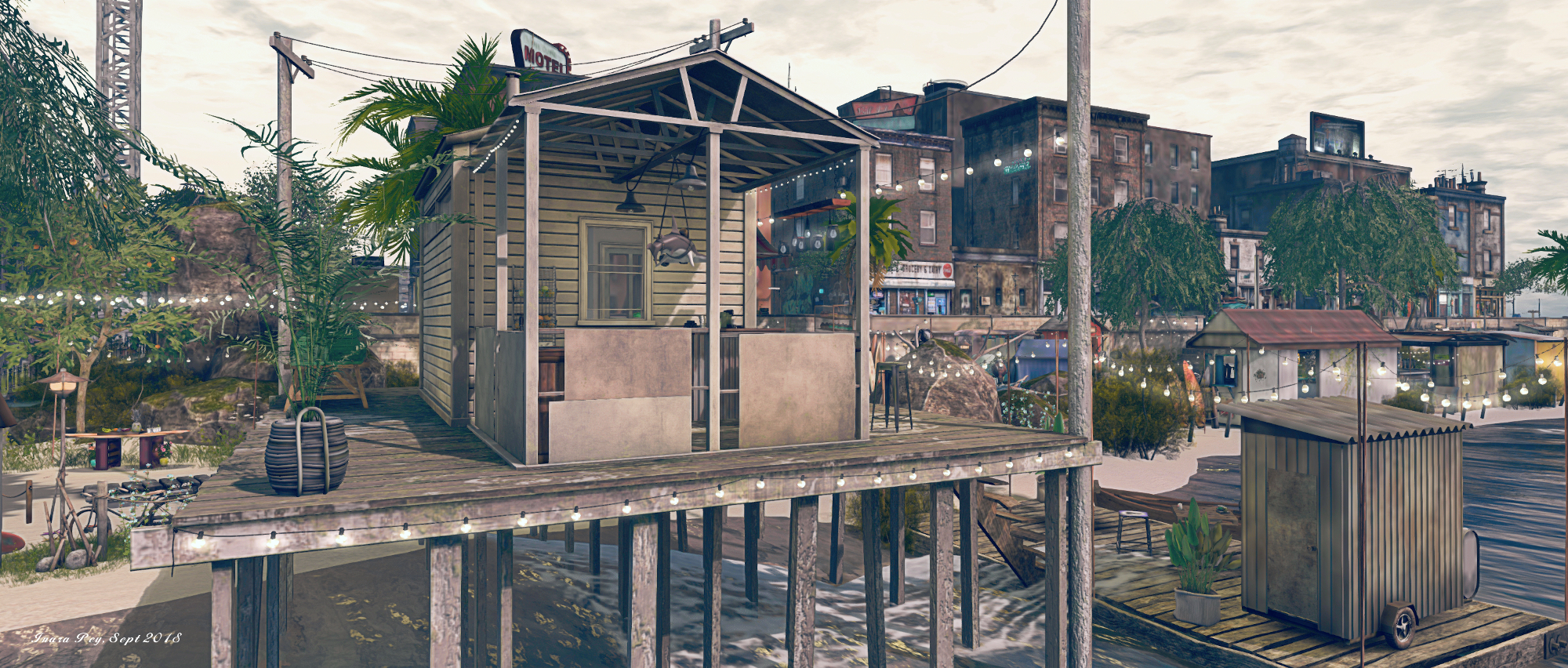
This is distinctly more run-down America in terms of tone, but equally as engaging visually. A good portion of the region is given over to commercial activities centred on but not limited to the Voodoo main store itself. However, explore southward beyond this, along the narrow, grungy alleys standing between the shells of ageing buildings, and you come to an open beach front setting. Tired it may well, but it is also packed with detail.

Running east-to-west across the southern side of the region, this beach opens out on its western side to become the sandy location of an ageing seaside fun fair. Whether the rides still work is up to you to find out, but the function here seems to have shifted over time: a music stage has been built, and the tents pitched on the white sand suggest there’s recently been a festival of some kind here.
Little Havana; Inara Pey, September 2018, on FlickrVoodoo In My Blood

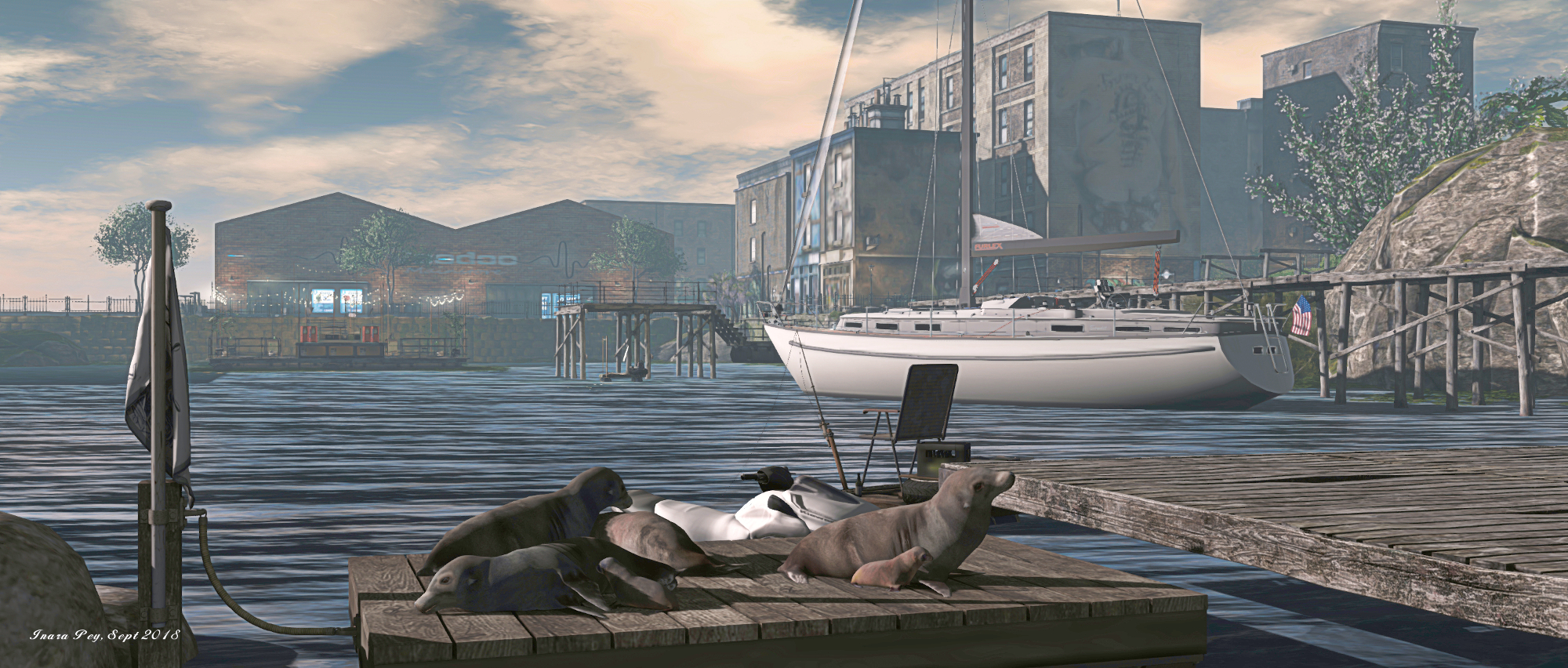
A set of trimmed hedges and paved paths sit above these tents, presenting a little formal place to take a stroll. On their north side the look towards a finger of rock pointing out to sea and reached via wooden board walks. Seals have claimed this rocky ribbon as their home, and lie resting on wooden piers – although one seems intent on receiving scooter lessons! The piers are also where boats might put in, as evidenced by the pristine yacht moored close by, the affluence it exudes contrasting with the aged look of the rest of the region.

Both Little Havana and Voodoo Blood are finished with local soundscapes – such as music blaring from a car radio as you wander the streets of the former, or the sounds of the seaside when exploring the southern seafront of the latter. This means that having local sounds enable while exploring is an absolute must.

Little Havana; Inara Pey, September 2018, on FlickrVoodoo In My Blood

Taken individually or together, Little Havana and Voodoo Blood make for interesting destinations for Second Life travel bloggers, explorers and photographers. Both had been designed to exude atmosphere and catch the eye, and both are very much worth taking the time to explore.

Those requiring rezzing rights in either region can obtain them by joining the respective groups, and each region has its own Flickr group for those wishing to share their images – see the About Land information within each region for the links.

Little Havana; Inara Pey, September 2018, on FlickrVoodoo In My Blood

SLurl Details

* I’m not offering a name, as the e-mail appears to have originated from a personal account, rather than one linked to an avatar name. If I have this wrong, the sender can ping me with an OK, and I’ll add their name for due credit. Otherwise thank you for the hat tip.

Second Life: switches to Stella Connect for support feedback

Whirly Fizzle tapped me about a recent change to the support ticket system she recently noticed.

Previously, when a support ticket was closed by the originator or by the Lab, a pop-up feedback box would be displayed. Well, no more, as Whirly Fizzle noted to me via IM:

I just had a ticket closed, and I got an e-mail from something called secondlife-at-stellaconnect.net. I thought it was a scam at first!”

– Whirly Fizzle

However, she checked with Alexa Linden, who confirmed the e-mails to be genuine.

Stella Connect is actually platform geared towards improving support staff motivation, increasing the quality of support services and provides a means to help train and develop support staff skills – and it is now being used by the Lab to help in their Second Life support operations. The most user visible element within the system is a  new approach to obtaining feedback on support cases, as exemplified by the e-mail Whirly received.

With Stella Connect, when a support ticket is closed, the originator of the ticket receives – as noted – an e-mail via secondlife-at-stellaconnect.net. Within this e-mail is a link the user is asked to use. This takes them to a web page that:

  • Displays information on the Second Life support team member who assisted them
  • Allows them to rate the support team member’s performance on a star rating where 1 star is a rating of “poor”, and 5 a rating of “excellent”.
  • Provide text feedback on why they have given their rating.
A sample of the new feedback form users will see when responding to an e-mail from secondlife-at-stellaconnect.net after their support ticket has been closed. Image via Whirly Fizzle.

In addition, and depending on the star rating given, the user will be asked to do one of the following:

  • If they have given a high star rating, they will be asked if they wish to recommend a reward for the support team member providing the assistance (below, left).
  • If they have given a lower star rating, they will be asked to indicate specific areas where they feel the support experience could be improved (below, right).
If a user gives a high star rating to a support team member, they are additionally asked if they would like to have the team member rewarded for their efforts (l). If a low star rating is given, the user will be asked to indicate where the support experience could be improved (r). Images via Whirly Fizzle.

The rewards system is an interesting way of both motivating support staff to provide a positive experience for users, and to help engage users in the entire support process. Alongside of providing information on the support team member who assisted them, the rewards option can help personalise the entire process where the user has had a particularly positive experience.

While discussing this approach, Keira Linden, who supervises the Land Team,  informed me the exact details of the rewards are still being finalised, and, over time, may well depend on how popular they are with both support staff and with users (e.g. which of the available options do users tend to select).

We’re still working out the rewards system, but I kinda like giving my folks that go the extra mile to make someone happy an actual reward. The lunch thing will probably happen, but it’s pretty new still. We’ll get feedback from the support folks as well as take a look at what options are popular from the resident side. We’re able to do a lot of customisation there on the rewards.

– Keira Linden, Second Life Land Team Supervisor

Beyond this, all of the feedback generated  – positive or otherwise – is directed back into managing support operations. This both allows overall customer satisfaction to the be assessed, and also helps in highlighting weaknesses within support activities / responses with may need addressing. Additionally, the data generated by the system could, if required, be made available to other customer experience teams to help further improve interactions with users, and so on.

So, if you do have support tickets filed with Linden Lab, and you find yourself receiving an e-mail from secondlife-at-stellaconnect.net, you can be assured it’s not spam or a scam – it’s a genuine Second Life related e-mail, and one intended to help the Lab’s Second Life support team assess and improve the support service they are giving to users – so do please take the time to respond to it.

With thanks to Whirly Fizzle and Keira Linden

Rainbow Painters in Second Life

Rainbow Painters

Rainbow Painters is an art gallery curated by Timo Dumpling and Patience Dumpling (patience Roxley). Described as “an art gallery for the new artist in SL … a place to show off your skill at no cost to you”, it is in fact open to artists “old” and “new”, with an open invitation for them to contact the curators about displaying their images within the gallery.

Located on a quarter region, the gallery shares its space with an open-air games area (table games and 10-pin bowling) and dance / events space. Within the gallery building, artists are offered a modest amount of wall space in which to display their art – but which is more than enough for visitors to gain an appreciation of their work. There do not appear to be any restrictions on the nature of the art, so long is it is in keeping with the SL Terms of Service / Community Standards, and meets the region’s maturity rating.

Rainbow Painters

At the time of our visit, the list of artists included Jaime Poutine, BittsyBoo, Mistero HifengRage Darkstone, JolieElle Parfort, Xirana Oximoxi, Siobhán Muintir (Qorell),  Fuyuko Amano (Wintergeist) and Callum Writer, to name but a handful of those displaying their work.

The range of art is as broad as the list of artists, featuring images captured both in-world and original art uploaded to Second Life. In what I take to be a respect for the gallery’s title, many of the in-world images offered had been processed to give the impression of being painted, while the uploaded art covered photography through a variety of painting styles. One of these, by an artist from Sri lanka (and provided by Asmita Duranjaya) particularly caught my eye for it modern take on traditional stylised paintings I’ve seen first-hand when visiting that country.

Rainbow Painters

Second Life landscapes  – my preferred form of SL art – were much on display during our visit, but I confess to being particularly drawn to Siobhán Muintir’s display, which featured three avatar studies quite powerful in their depth and presentation (two are shown above), displayed with an image again processed to appear as if painted, and which offers a further captivating view of the model, but in a broader setting.

3D artists need not feel left out, either. The gallery provides space for small displays of 3D art. Mistero Hifeng, for example had a sculpture displayed alongside his 2D art, while Asmita Duranjaya and Faith Maxwell were both displaying their 3D sculptures.

Rainbow Painters

All told, an interesting venue offering space to artists old and new – and a chance for visitors to discover the work of people they might not yet have encountered in SL.

SLurl Details


The Singer and the Songwriter in Second Life

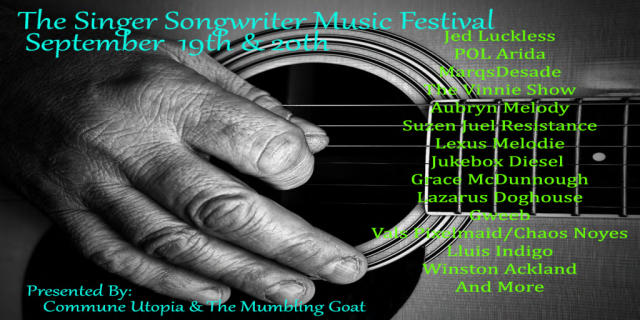
The Singer and the Songwriter: September 19th and 20th, 2018

Wednesday, September 19th and Thursday, September 20th, 2018, Commune Utopia and The Mumbling Goat, will host The Singer and the Songwriter Music Festival.

Featuring musician/songwriters from across Second Life presenting a mix of live music throughout the two days, the event kicks-off take at The Mumbling Goat, starting at 15:00 SLT on September 19th. It will then continue through Thursday, September 20th at both Commune Utopia and The Mumbling Goat.

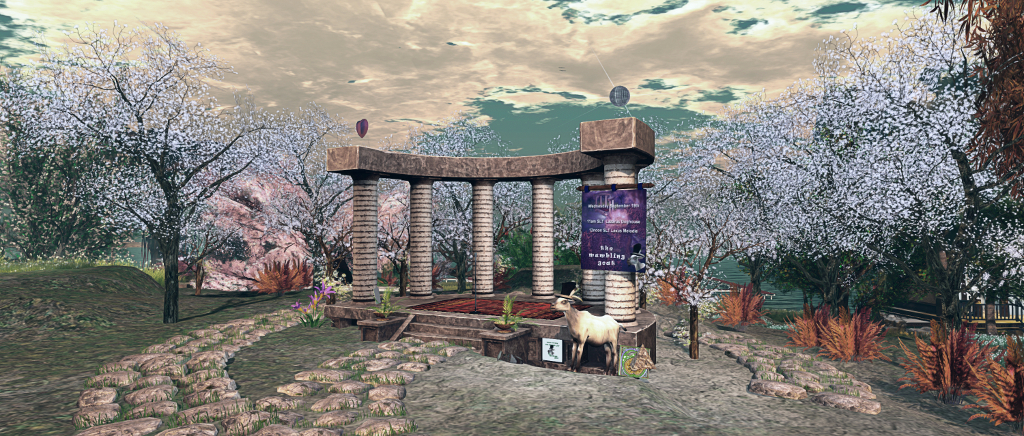
The Singer and the Songwriter: The Mumbling Goat

Event Schedule

At the time of writing, the schedule for the event read as follows:

Wednesday, September 19th

At The Mumbling Goat.

  • 15:00-16:00: Jukebox Diesel
  • 16:00-17:00: Whirli Placebo
  • 17:00-18:00: Raspberry Rearwin
  • 18:00-19:00: Suzen Juel
  • 19:00-20:00: Wishing Lane & Chaos Noyes
  • 20:00-21:00: Chaos Noyes
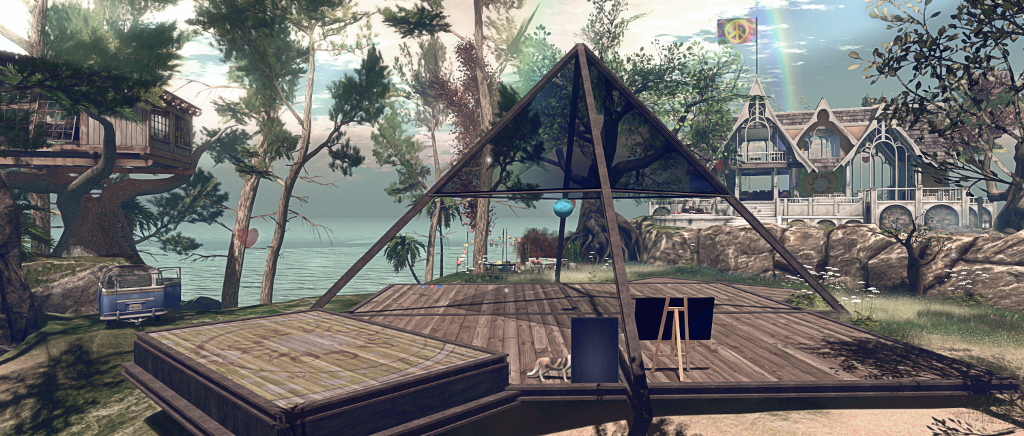
The Singer and the Songwriter: Commune Utopia

Thursday, September 20th

At Commune Utopia

  • 08:00-09:00: Vinnie (Acoustic Rhapsody)
  • 09:00-10:00: Lexus Melodie
  • 10:00-11:00: Pol Arida
  • 11:00-12:00 noon: TBA
  • 12:00 noon – 13:00: Winston Aukland
  • 13:00-15:00: Lluis Indigo

At The Mumbling Goat.

  • 15:00-16:00: Aubryn Melody
  • 16:00-17:00: Marqs DeSade
  • 17:00:18:00: Lazarus Doghouse
  • 18:00-20:00: Jed Luckless

To find out more and to keep abreast of the event, be sure to check Through Owl’s Eyes, the blog of Owl Dragonash.

With thanks to Owl for the heads-up.

2018 SL UG updates #38/2: Governance User Group

The first of the renewed GTeam meetings, chaired by Kristen Linden (the robotic avatar on the left) – September 18th, 2018

The Governance Team held the first of its renewed User Group meetings on Tuesday, September 18th, 2018. These meeting will be held twice a month, and are designed to provide a forum for the discussion and education of issues involving Governance.  They are chaired by the current GTeam supervisor, Kristen Linden and are open to the public. Details on dates, times and location can be found on the Governance User Group wiki page.

Governance Team

  • Around five people are in the Governance Team, and are all Lab employees – Governance work is not outsourced.
  • The Team is responsible for dealing with Abuse Reports, in-world abuse, forum reports, Marketplace reports, etc.
    • The team is not responsible for issues with accounts being compromised, account subscription delinquency, fraud, etc. These matters should be reported via Support, and not through the Abuse Report system, so they can be passed directly to the Lab’s fraud team.
  • On average Governance deal with over 1,000 Abuse Reports per week, while the rate of reporting can reach 400-500 reports filed per day.

Abuse Reports

Please refer to the following resources for details information on filing Abuse Reports:

There is also a knowledge base article on how to deal with a range of abuse / harassment issues without necessarily the need to raise an AR.

A number of issues related to raising abuse reports – AR categories, how to fill-out a report, use of snapshots, chat logs, video, what is and isn’t “allowed”, etc., came up during the meeting. These are covered in the documents above, and not repeated here. Rather, I’ve chosen to focus on the more esoteric aspects of abuse reports and AR handling by the GTeam as discussed in the meeting.

  • All ARs that can be investigated are investigated. However:
    • How far the investigation goes largely depends on whether the AR is filed against something Governance is empowered to investigate, and how much meaningful information is supplied in it.
    • The Governance Team intentionally does not report back on the outcome of their investigations for a number of reasons (e.g. privacy). Just because the outcome might not be visible to the reporter / match their expectations when filing an AR, does not mean the report was ignored.
  • Reports are handled on a combination of age / priority. Those reports that tend to get the highest priority are griefing, certain types of harassment, age play, threats of actual violence outside of SL.
    • Those who feel a threat being made against them personally (not their avatar) are additionally advised to contact their local authorities if they have reason to believe the threat is genuine.
  • The volume of reports received about an incident makes no difference to the priority with which it is dealt with or the action that might be taken. So mass reporting of an incident by friends and friends of fiends TP’d into a location specifically to file a report is not a good idea.
  • Banning isn’t the only action taken. Depending on the nature of the abusive action, people may receive a warning, a short-term account suspension (days) or a temporary ban (weeks).
    • Generally, the process is warning, escalating through to a 2-week ban if offences continue, then ban.
    • Offences can be cumulative if persistent / depending on their nature. However, if there are extended periods between offences (e.g. multiple months / years) they are unlikely to be dealt with on a cumulative basis.
    • Major offences (e.g. age play, etc.), will generally go to an immediate ban.

Q&A Element

  • What to do about persistent griefers using alt accounts: continue to AR them (e.g. under harassment), if you are positively able to link an alt to another account, provide details of how (what’s said – via text chat transcript, for example) and indicate the name of the other account.
    • IP bans are not seen as a solution for a number of reasons (e.g. many ISPs around the world assign dynamic IP addresses to their users, hence there is a risk an IP ban could result in an innocent party being blocked from SL).
  • Avatar “Permission Stealing” VWR-13228. This is a long-standing issue which is not easy to resolve, as the object usurping an avatar’s permission (movement, camera, etc), is being worn by another, and the usual revoke permissions options in the viewer cannot be applied to other avatar attachments.
  • Incident Blotter: (for those unfamiliar with it) at one time the Lab used to produce an “Incident Blotter”, a dealing significant abuse issues and their general outcome (not specific details on those involved) – see a 2010 sample here. This was discontinued several years ago, and unlikely to be reintroduced.
  • Retaliatory ARs: people filing an AR in response to discovering they have been AR’d (e.g. because the original reports has IM’d them with “You have been AR’d” or something) can be a thing. The Governance team is aware of this, and does take time to check if a report might be retaliatory, rather than genuine.
  • Vigilantism: The GTeam is aware of a number vigilante groups in SL who may use mass abuse reports either in an attempt to secure action or as a means of retaliation, and they do keep an eye on them.
  • Marketplace flagging: the GTeam handles these, and the volume received means it can take time to get through them. People are rarely disciplined for flagging items, unless it can be clearly shown they are doing so maliciously.
  • Could a generic notification be sent to a reporter when an AR is actioned: a complaint with the AR system is that those filing a report don’t get to hear whether or not it has been actioned. However, the current tool set isn’t geared to sending out even the most generic notification that an AR has been actioned (e.g. “Your Abuse Report of [date] has been actioned”), and it’s not clear if this could be changed.
  • Contacting GTeam members in-world: general contact for advice and / or with questions is encouraged. However, contact to try to circumvent the AR system or to make a “verbal” AR report is strongly discouraged.
    • Generally when in-world, the GTeam is actively dealing with ARs, or reviewing them while their avatars are parked, ready to go.

Next Meeting

Subject to confirmation on the Governance User Group wiki page, the next meeting should be on Tuesday, October 2nd, 2018. However, the location may change.