Hounds, lamps, murder, wishes and road trips

Seanchai Library

It’s time to highlight another week of storytelling in Voice by the staff and volunteers at the Seanchai Library. As always, all times SLT, and events are held at the Library’s home at Holly Kai Park, unless otherwise indicated.

Sunday, September 9th:

13:30: Tea-time at Baker Street

The third full-length novel written about Sherlock Holmes, The Hound of the Baskervilles is likely to be the one Holmesian story which – at least in outline – known to most, whether or not they have actually read any of Holmes’ adventures.

But how many of us know the story as it was originally written? Over the decades it has been adapted for film and television more than 20 times, starting as early as 1914/15 with the 4-part series, Der Hund von Baskerville, and continuing on through to Paul McGuigan’s The Hounds of Baskerville, featured in the BBC’s brilliant Sherlock series.

All of these adaptations have offered their own take on the tale. Some – such as McGuigan’s, have simply taken the title of the story and used it to weave a unique tale of their own; others have stayed true to the basics of the story whilst also adding their own twists and turns quite outside of Conan Doyle’s plot in order to keep their offering fresh and exciting to an audience.

So why not join Cale, David, Corwyn and Kayden as they read from the 1902 original, and discover just how Sir Arthur Conan Doyle unfolded this apparently supernatural tale of giant hounds and murder, and the pivotal role played by John Watson himself?

18:00: Magicland Storytime – Aladdin and His Magic Lamp

With Caledonia Skytower at the Golden Horseshoe.

Monday, September 10th 19:00: Murder is Bliss

Gyro Muggins reads the first volume in the Jasper Stone series by Ellen Anthony.

In the year 2179, police lieutenant Jasper Stone finds himself called upon to solve the high profile murder of Elizabeth West. The case appears to revolve around a valuable house  – and the leading suspect is West’s disabled son.

But then the son is murdered – and the evidence points towards West’s grand-daughter, Jewell. Only she appears to have a rock-solid alibi for West’s murder. So is there more than one crime, or will Jewell be the next victim?

The more he investigates, the more Stone finds himself entangled in a complicated web of motives and a situation involving not just murder, but drug smuggling and blackmail. And the more he investigates, the more he might just be protecting the woman behind it all.

Tuesday, September 11th 28th 19:00: Wishtree

Trees can’t tell jokes, but they can certainly tell stories. . . .

Red is an oak tree who is many rings old. Red is the neighbourhood “wishtree”—people write their wishes on pieces of cloth and tie them to Red’s branches. Along with her crow friend Bongo and other animals who seek refuge in Red’s hollows, this “wishtree” watches over the neighbourhood.

You might say Red has seen it all. Until a new family moves in. Not everyone is welcoming, and Red’s experiences as a wishtree are more important than ever.

A contemporary tale for the times we are witnessing, told with sensitivity and humour. The protagonist (and in may ways the victim of prejudice as unsought as that received by the family in question) may well be a tree, but she has a lesson to teach all of us about tolerance and understanding and a need to heal.

Join Faerie Maven-Pralou as she reads Newbery Award winner Katherine Applegate’s 2017 story.

Wednesday, September 12th, 19:00: Roll It! An Original Tale

With Ktadhn Vesuvino.

Time is a fixed resource. Mass requires work. The wheel is a lever that can move time around. “Roll It!” is an exploration of idea, process and implications, 20 years of experience collected, distilled and condensed into an hour.”

Thursday, September 13th, 19:00: Don’t Make Me Pull Over!

In the days before cheap air travel, families in America didn’t so much take vacations as survive them. Between home and destination lay hundreds – perhaps thousands of miles of road, and dozens of annoyances.

During his childhood, Richard Ratay experienced all of them; from being crowded into the back seat with noogie-happy older brothers, to picking out a souvenir only to find that a better one might have been had at the next attraction, to dealing with a dad who didn’t believe in bathroom breaks.

Now, decades later, Ratay offers a paean to what was lost, showing how family togetherness in America was eventually sacrificed to electronic distractions and the urge to “get there now.” Through his words he paints large what once made Great American Family Road Trip so great, from twenty-foot “land yachts” to oasis-like Holiday Inn “Holidomes” and Smokey-spotting Fuzzbusters to the thrill of finding a “good buddy” on the CB radio …


Please check with the Seanchai Library’s blog for updates and for additions or changes to the week’s schedule.

The current charity is Feed a Smile.

Space Sunday: taking an elevator into space

An artist’s concept of a “carrier” – the “elevator car” of a space elevator – climbing the elevator cable. Credit: unknown

The space elevator is perhaps one of the most intriguing ideas for reaching space. It was first conceived as a thought experiment in 1895 by the grandfather of astronautics, Konstantin Tsiolkovsky. In it, he considered the building of a massive tower reaching up to geostationary orbit at 35,756 km (23,000 mi) above the surface of the Earth, and which at the top would have sufficient horizontal velocity to launch vehicles into orbit. The vehicles themselves would be carried aloft by elevators like the ones climbing the Eiffel Tower.

Tsoilkovsky knew the construction of such a tower would be next to impossible, there simply were no materials capable of withstanding the compressional pressures exerted the mass of such a tower as it was built upwards – nor are there today. However, in 1960, another Russian,  Yuri N. Artsutanov suggested that rather than building the elevator up from the ground, it could be built both down and out from geostationary orbit, using tension along the cable from its lower end and through the “counterweight” of the outward extent of its length to maintain is tautness and balance. Referring to the design as a “heavenly funicular”, Artsutanov estimated it would be capable of delivering up to 12,000 tonnes of payload to geostationary orbit per day.

An artist’s impression of a solar-powered car ascending the “Sky Hook”. Credit: unknown

Six years later, working entirely independently of Artsutanov, four American oceanographers – John Isaacs, Hugh Bradner, George Bachus and Allyn Vine (after whom the deep-ocean research submersible Alvin was named) – published their idea for a “sky hook” that essentially used the same approach: build a cable both “down” and “out” from a geostationary starting point. Their idea became the inspiration for Arthur C. Clarke’s 1979 novel The Fountains of Paradise, which did much to promote the idea of space elevators in the public mind.

Since then, the idea has received many re-visits, and has also given birth to a number of experiments and ideas for the use of tensile cables  – referred to as “tethers” for doing things like “lowering” experiments into the upper atmosphere for research (such ideas being tested during the space shuttle era) and for creating “artificial gravity” in spinning space vehicles travelling to Mars. A space elevator even appeared in Kim Stanley Robinson’s Mars trilogy as the means to get from orbit down to the surface of the planet. Today, the space elevator is the subject of study by the International Space Elevator Consortium (ISEC), which holds annual conferences on the subject and supports research programmes into space elevator concepts.

The appeal of space elevators  – if they can be built – is that they could deliver huge amounts of payload and manpower to orbit around Earth for a relatively low-cost when compared to using traditional rocket launches. And deliver them not just to geostationary orbit, but to other points above the surface of Earth, referred to as “way stations”.

For example, a “way-station” at around 420-450 km (262-281 mi) altitude would impart a horizontal velocity for vehicles “launched” from it to keep them in a low Earth orbit. similarly, a way station placed above the geostationary orbit point, at say 57,000 km (36,625 mi) would impart enough horizontal velocity to a vehicle “launched” from it that it could escape Earth on a flight to Mars.

The space elevator concept, show an ocean anchor point, and the various “way stations” along its length, capable of supporting operations a low Earth orbit (LEO), geostationary orbit (GEO) and high earth orbit (HEO) altitudes, the latter of which could support missions to Mars and further out into the solar system. Credit: ISEC

But before this can happen, there are some significant issues to overcome. The “simplest” of these is that of finding a suitable anchor point on Earth.

To work at geostationary orbit, the primary station on an elevator would have to be positioned over the equator. The problem here is, an awful lot of the equator is ocean (78.7%), making the construction of such an anchor-point at best difficult. While the remainder of the equatorial region is over land, it brings with it the overheads of political haggling and leveraging to gain an anchor-point.

In The Fountains of Paradise, Arthur C. Clarke solved this problem by conveniently moving Sri Lanka (which he called by its ancient Greek name of Taprobane (Tap-ro-ban-EE) 1,000 km (625 mi) south of its current position to straddle the equator. Unfortunately, we can’t do that in the physical world.

The more significant issues, however, are exactly how to build the elevator tether and how to gradually and safely lower it through the denser part of Earth’s atmosphere, and without its “downward” mass simply ripping it apart before it can be anchored.

The most promising material for the tether construction is carbon nanotubes (CNTs). These are artificially “grown” structures with a number of unusual properties, one of which it their sheer strength: up to 10 times that of an equivalent steel cable, which comes at a fraction of a cable’s mass. CNTs have been known about for around 20 years and are seen as having a range of potential applications: construction, electronics, optics, nanotechnology, etc. However, there is one slight issue with their use in large-scale projects. So far, no-one has successfully “grown” a nanotube longer than 1.5 metres.

Even so, experimental cables have been lifted to altitudes of around 1 km (0.6 mi) using weather balloons and had scale “carriers” run up and down them to test how an elevator tether and its payload would react to the influence of wind and weather. Now, researchers at the Shizuoka University Faculty of Engineering are taking the practical research a step further, by deploying an experimental “space elevator” in space.

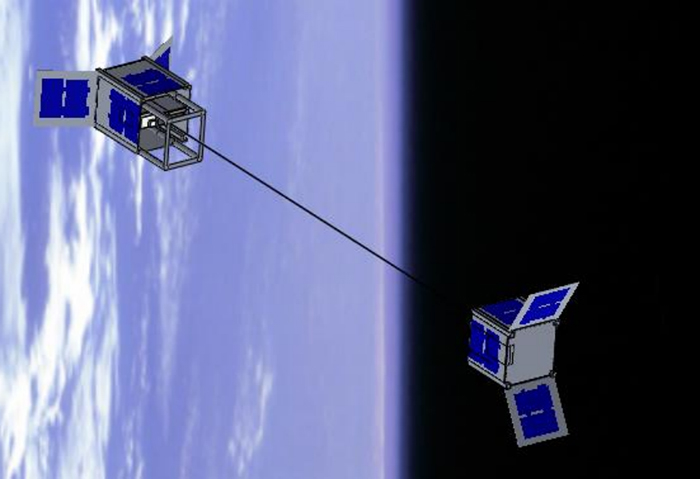
On Monday, September 7th, 2018, the  Kounotori-7 H-II Transfer Vehicle (HTV) resupply vehicle is due to be launched to the International Space Station (ISS). As a part of the six tonnes of supplies the vehicle will be carrying will be two small “cubesats” – satellites that are each just 10 cm (4 inches) on a side.

Computer model of the cubesats and their (not to scale) tether deployed in Earth orbit. Credit: Shizuoka University

These will be deployed in space, connected by a 10 metre (33 ft) tether. Once the tether is under stable tension, a little electrically powered “car” will traverse it, marking the first time a vehicle has travelled along a tether in space. The test is intended to see how a space elevator tether might react to payloads moving along it in whilst in the “vacuum” of space, together with the stresses placed on it and its “anchor points”, etc.

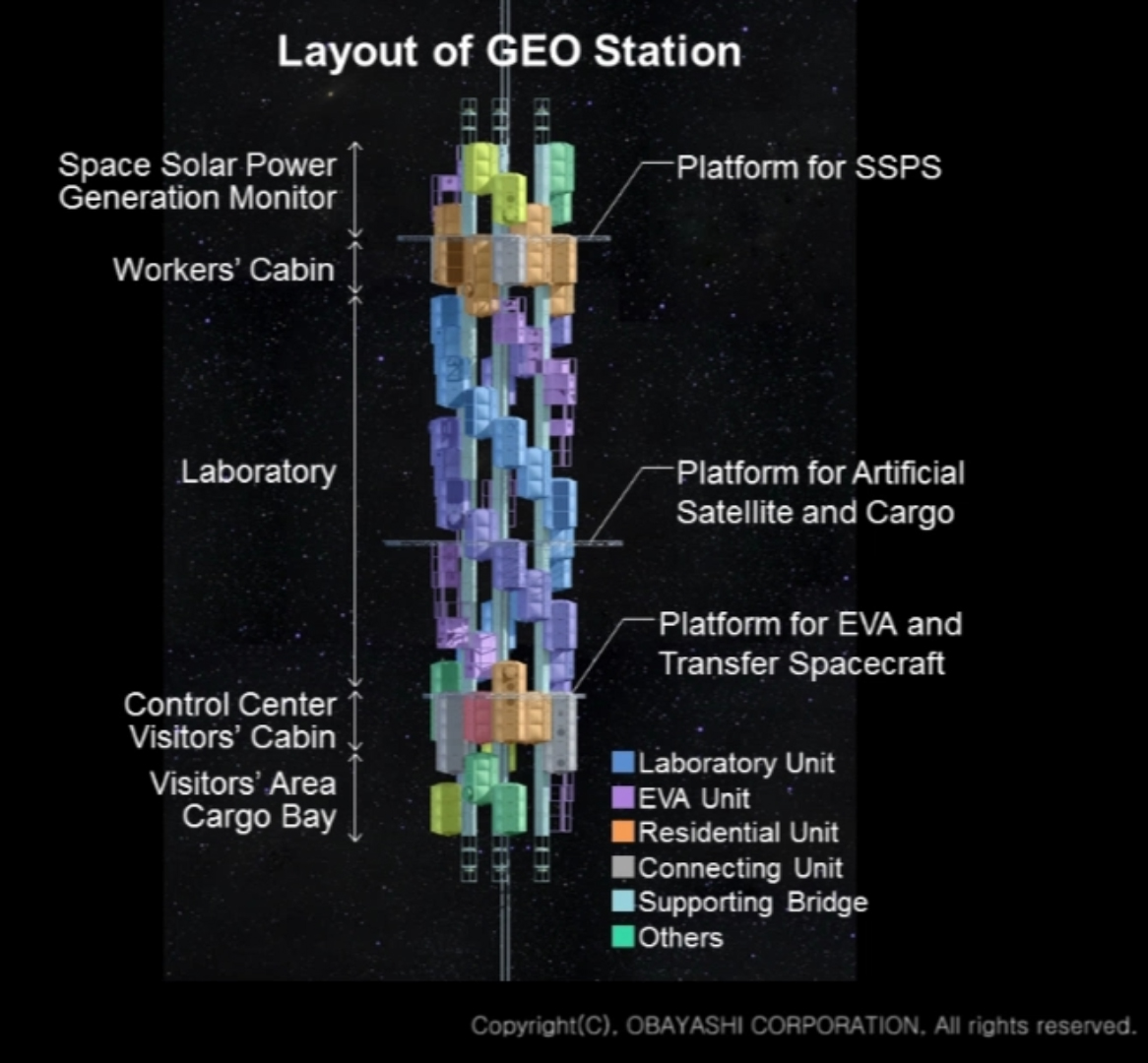
It’s a small step along the way to establishing a space elevator, but the test will be watched with interest by Japan’s massive construction firm, Obayashi Corporation. In 2012, they announced they would have the world’s first space elevator operating by 2050. They are actively sponsoring research into CNT development, and believe the issues of growing long strands of CNTs and “knitting” them together into a tether will have been resolved by 2030.

Obaysahi Corporation’s design for their GEO station on the space elevator, which the company says will use “inflatable” modules to reduce mass. Credit: Obayashi Corp.

Continue reading “Space Sunday: taking an elevator into space”

Within a Lost Unicorn Forest in Second Life

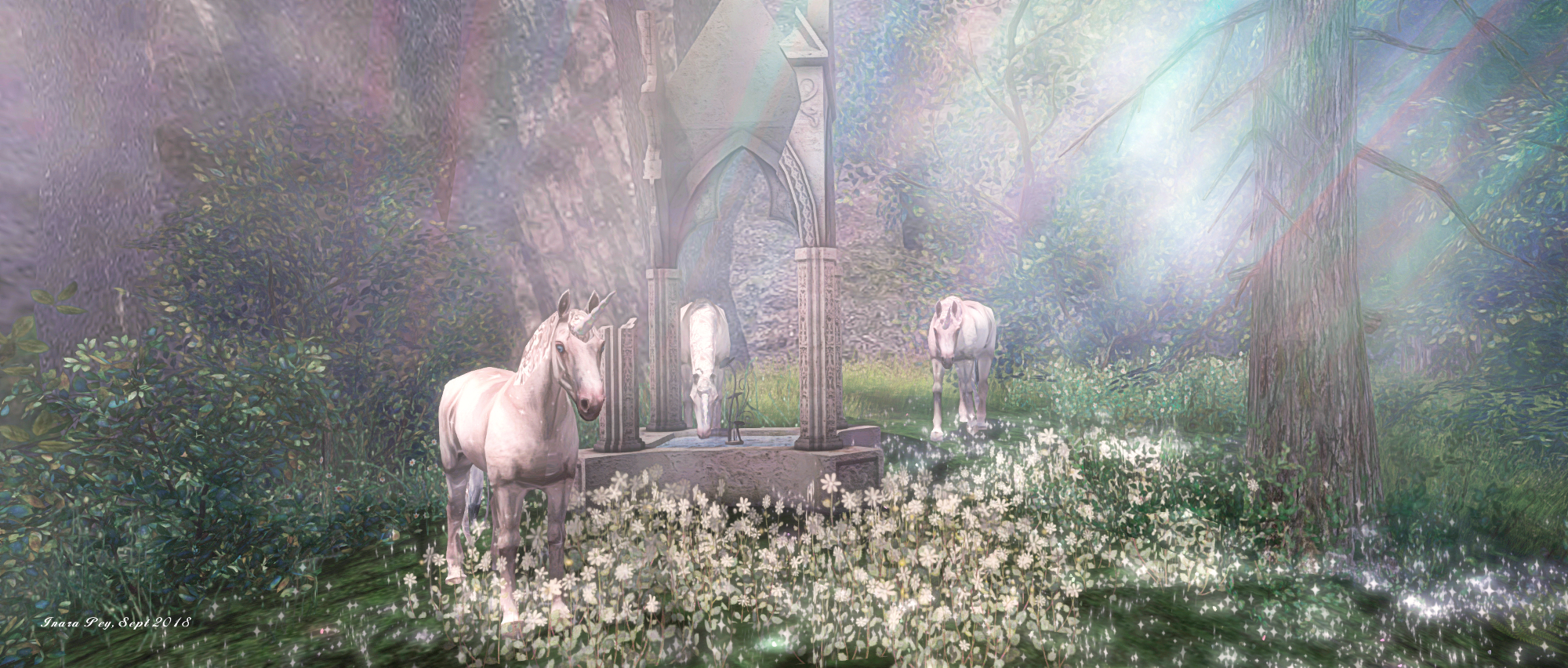
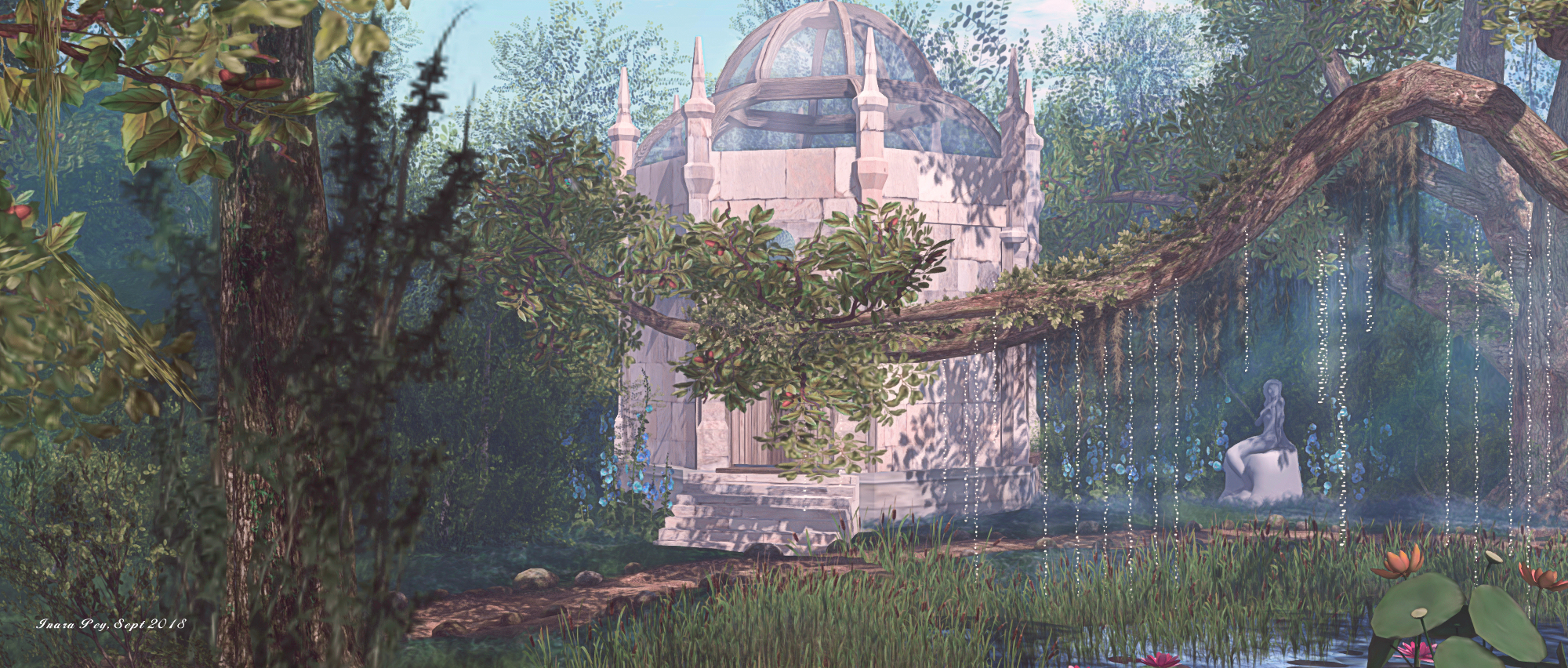
Lost Unicorn Forest Sanctuary; Inara Pey, September 2018, August 2018, on FlickrLost Unicorn Forest Sanctuary – click any image for full size

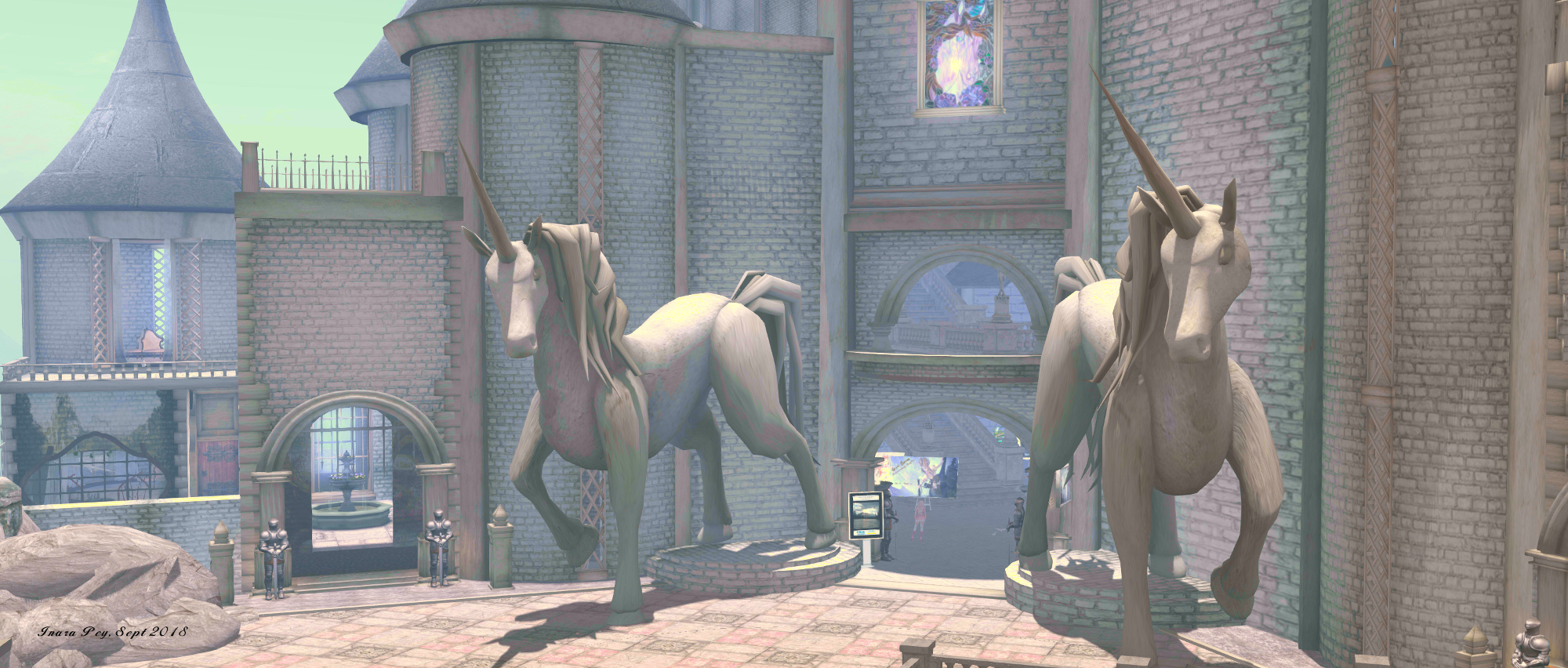
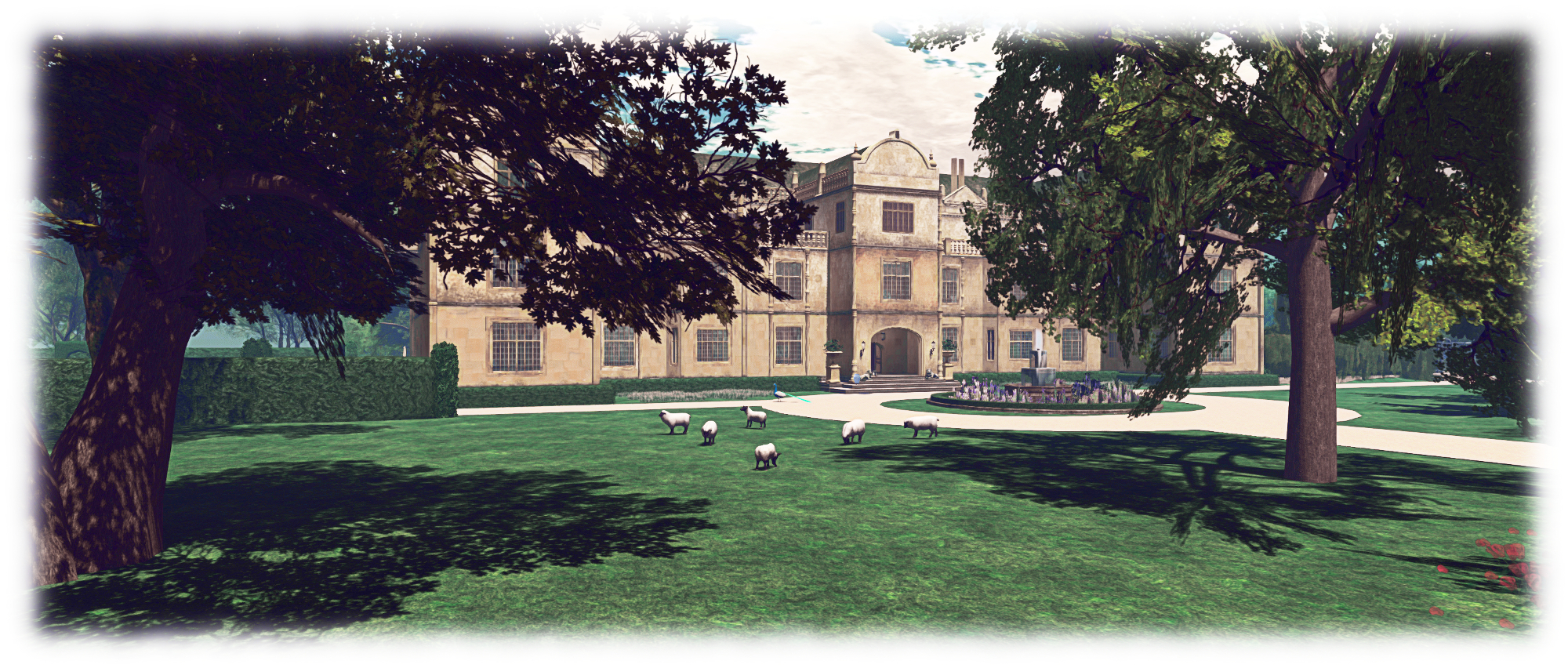
Lost Unicorn Forest Sanctuary is the full region component of a trio of regions we were recently pointed towards by Milo Collas. Designed by Nessa Zamora (Noralie78), it is themed after an elven fantasy setting, routed somewhat in Tolkien, but with enough departures to make it clear this is not in any way a Middle Earth clone. It is, however, one of the most visually impressive and  – when taken with its two neighbouring regions, Faerie Tale and Storybook Forest – creatively intriguing settings we’ve recently visited in Second Life.

Such is the scope of all three, that I’m devoting a couple of posts to them, with this one focusing in Lost Unicorn Forest Sanctuary and Faerie Tale. I’ll look at Storybrook with a follow-up article in the near future.

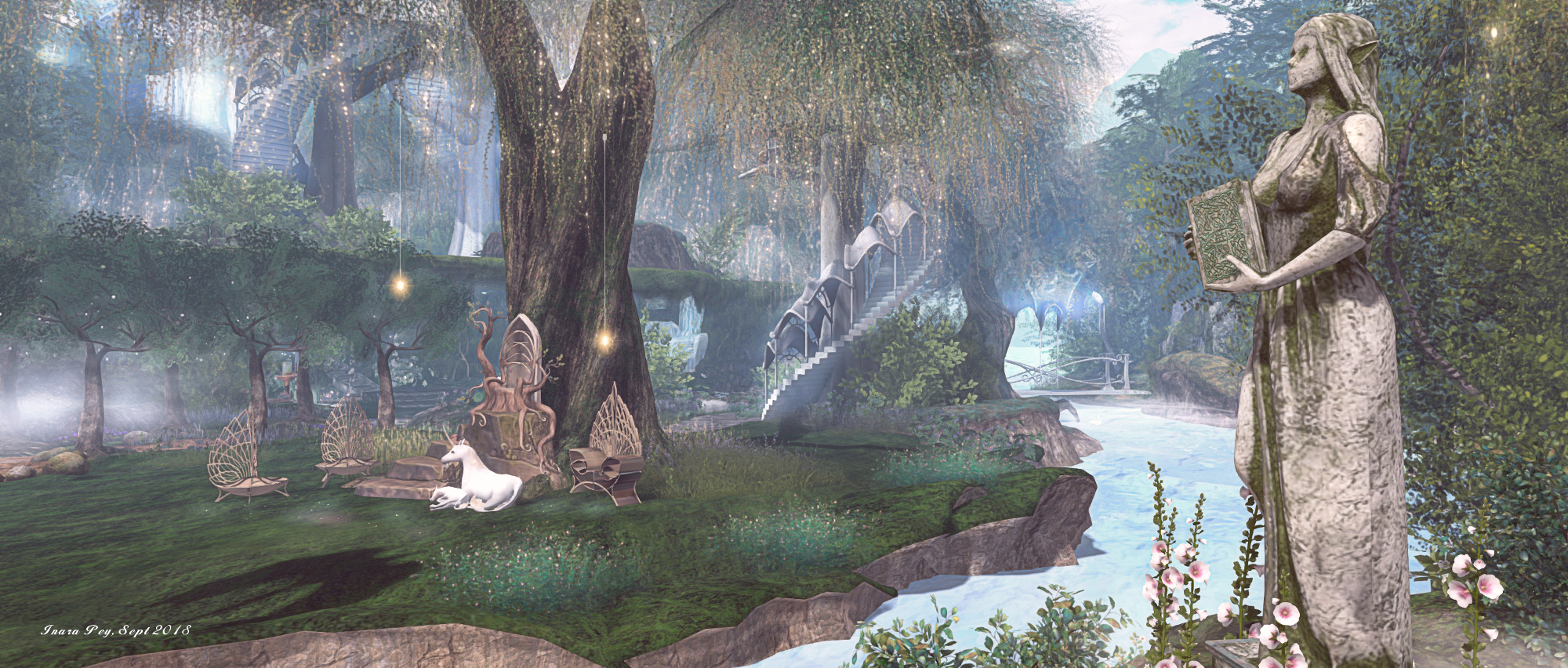
Lost Unicorn Forest Sanctuary; Inara Pey, September 2018, August 2018, on FlickrLost Unicorn Forest Sanctuary

A journey begins towards the north-east of Lost Unicorn, within a stone tower. Beyond it, an entire world awaits visitors. Distinctly elven in design as noted, it feels somewhat Sindarin in nature: rich woodlands with tall trees that support the flets of elven tree-houses.

A more direct Tolkien symbol faces south-east: the great Argonath, the Pillars of the Kings. Carved in the likenesses of Isildur and Anárion in Tolkien’s mythology, they stood on either side of the River Anduin, guarding the northern borders of the realm of Gondor. Here, the great figures stand either side of a river much narrower than the great Anduin, and which winds its way inland, one of three that cut the region into several landmasses, each connected to the next by bridges that invite visitors to explore them all.

Lost Unicorn Forest Sanctuary; Inara Pey, September 2018, August 2018, on FlickrLost Unicorn Forest Sanctuary

Across the landscape unicorns roam, keeping watch whilst resting under the eaves of trees or in the shafts of sunlight rotating through them. Within the water, mermaids swim And which may trap you in the water if you’re not careful – just look for the whirlpool, and great sea beasts raise their heads from the coastal seas.

Throughout this landscape, coloured by plants and the changing colour of leaves overhead, paths and trails wind their way. The more obvious lead to the tree-houses, others point the way to secret glades and places hidden among trees and hills,  awaiting the chance to delight the eye. Some of these – such as the entrance to the crystal cavern – again carry hints of Tolkien (the gate into Moria). Others draw on other realms of fantasy, such as faery gardens.

Lost Unicorn Forest Sanctuary; Inara Pey, September 2018, August 2018, on FlickrLost Unicorn Forest Sanctuary

Not all of these places are necessarily easy to find, so there are teleport points also waiting to be found offering a short route through the region. For those who prefer other means of travel, a flying horse rezzer can be found close to the landing point.

However, I strongly recommend taking the time to walk along trails and climb steps lest you miss things along the way. This is certainly the best way to reach the great council house to the north-west. Located above falls that tumble into a slender pool below, this can only be reached on foot by climbing up into the flets of the elven tree-houses. Watched over by dragons circling overhead, it is a place of rest and serenity, a kind of inverse Imladris, sitting above the lands, rather than hidden in a valley below them.

Lost Unicorn Forest Sanctuary; Inara Pey, September 2018, August 2018, on FlickrLost Unicorn Forest Sanctuary

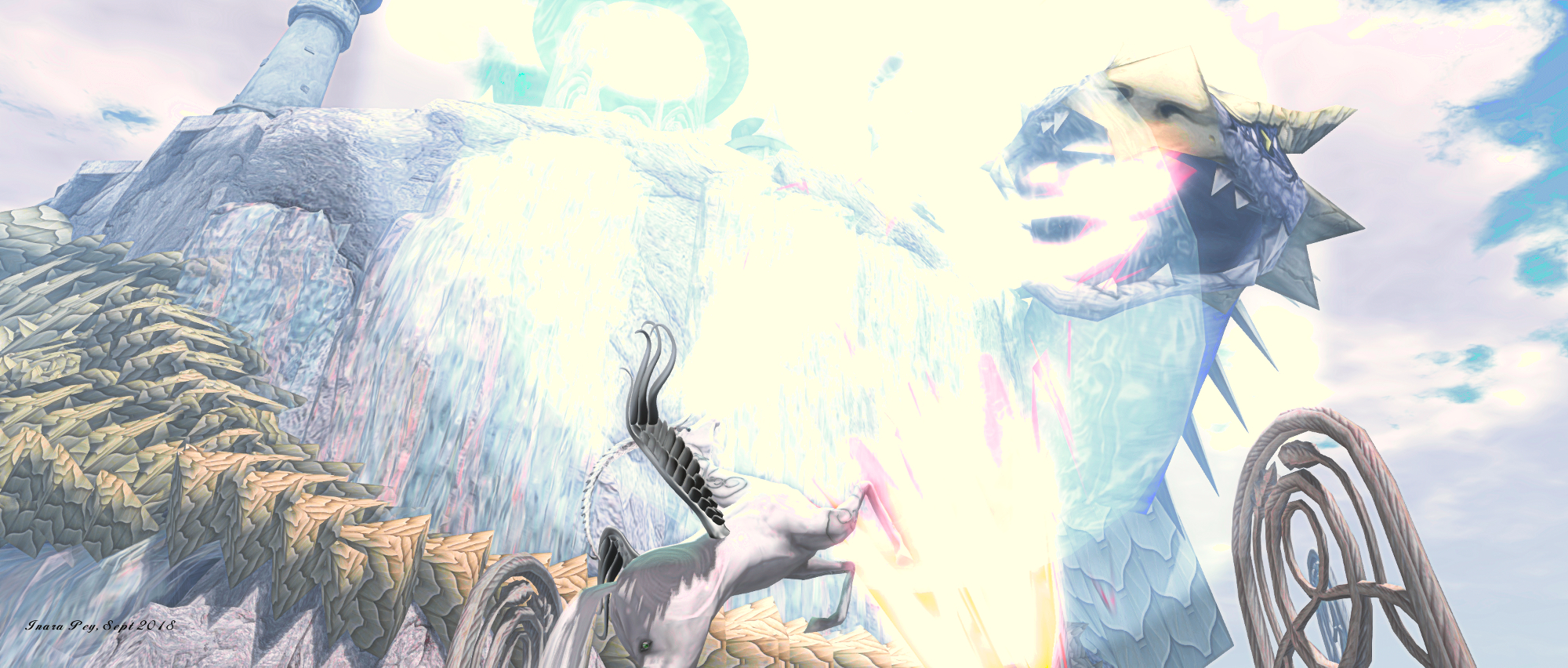
Nor is this all; close by the landing point tower, at the end of a short path, a rowing boat can be found. Sit in this, and you’ll be transported across the waters to Faerie Tale, one of the neighbouring regions, and home to the Lost Unicorn Gallery. Here you’ll be delivered to a wooden wharf within a great cavern, with signs inviting you to ascend by stair, platform and bridge – although for those who prefer there is a bubble car rezzer or  – for part of the way up – a rope climb. At the top of the climb is the gallery: a fairytale castle sitting on a great finger of rock around which a great dragon is coiled, apparently at war with a powerful unicorn.

This is a magnificent setting, designed by Jennifer May Carlucci (JenniferMay Carlucci). An entire story unto itself, time should be spent camming around it and appreciating it. The halls of the castle form an exhibition space for art. Climbing through the different levels of the castle are displays by Iruki Levee, Aleriah, Ursula Floresby, Pretty Rexen (prettyparkin Rexen), Freyja (Freyja Merryman), Natalie (Natalie Montagne), Luka Henusaki and Efinyn Jinx. Together they provide a wonderfully mixed exhibition of landscape and avatar studies.

Lost Unicorn Forest Sanctuary; Inara Pey, September 2018, August 2018, on FlickrLost Unicorn Forest Sanctuary

However, the gallery isn’t purely about displaying art, it also serves to support First Book, an organisation dedicated to providing access to new books for children in need, and which since 1992 has distributed more than 100 million books and educational resources to programs and schools serving children from low-income families throughout the United States and Canada. A portion of all donations made to the Lost Unicorn Gallery go directly to First Book.

Should you opt to make your way back to Lost Unicorn, there is a path running south that will take visitors by bridge and tower to Storybook Forest – but that is a journey for another blog post.

Lost Unicorn Forest Sanctuary; Inara Pey, September 2018, August 2018, on FlickrLost Unicorn Forest Sanctuary

For now I’ll leave you with thoughts of visiting Lost Unicorn and, should you enjoy it as much as we did, I hope you’ll consider a donation towards the upkeep of the regions – and perhaps in support of First Book.

SLurl Details

Making Strides Against Breast Cancer 2018: the full season

via Making Strides Against Breast Cancer Across Second Life

Some 1.7 million women – and men – were diagnosed with breast cancer in 2012, the most recent year for which detailed statistics are available. It is currently believed that the figure remains around the 1.6 million mark world-wide, which equates to around 270,000 new cases of invasive breast cancer per year in the United States and around 55,000 in the UK alone.

Making Strides Against Breast Cancer is a signature event by the American Cancer Society to raise awareness of, and funds to counter / treat breast cancer, and it is marked in Second Life very October with the Making Strides Against Breast Cancer (MSABC) Across Second Life event.

For 2018, MSABC Across Second Life will be holding an expanded season of events through October, a couple of which I’ve previously blogged about, and on which ACS and the MSABC team issued more information on Friday, September 7th, 2018.

In all five events are planned for the month, offering a broad range of options by which Second Life users can donate money that will expressly go into the work involved in treating and researching breast cancer and its causes. Full details of the events can be found on the MSABC Across Second Life website, and I’ve summarised the key points below.

Photos For A Cure

  • Dates: now through until Sunday, September 30th, 2018.
  • Theme: The Rat Pack
  • Sponsor: SKYY Games

Photographers across Second Life are invited to share their artistic talents by submitting a photo that they feel best reflects the Photos For A Cure theme to the MSABC Across Second Life Flickr group.  A prize pool of L$22,500  is available for the photos judged as best reflecting the theme. For contest rules and details, visit the Photos For A Cure on the Making Strides website.

Out-Shop Breast Cancer

  • Dates: Monday, October 1st through Wednesday October 31st, 2018.
  • SLurl: all across the grid – HUD based.

Get your shopping HUD at the American Cancer Society Island, then visit the variety of stores who have committed to Making Strides Against Breast Cancer. The more you buy, the greater the funds raised for MSABC.

Out-Shop Breast Cancer and Parade of Homes

Parade of Homes

  • Dates: Monday, October 1st through Wednesday October 31st, 2018.
  • SLurl: all across the grid – HUD based.

Collect a Parade of Homes HUD from the American Cancer Society Island and use it to hop to the participating designs and discover your dream home for Second Life. This is a perfect opportunity to discover some of the great home designers in Second Life, get your new home, and fight breast cancer – all at the same time.

The parade of homes will conclude with a special live auction for a L$90,000 dream home, donated by Slash Hansome, owner of AXL pro – check the MSABC website for details in October!

Making Strides Against Breast Cancer Walk-A-Thon

  • Date:  Saturday, October 20th, 2018.
  • Registration opens: Saturday, September 15th, 2018 (walkers); Sunday, September 16th, 2018 (sponsors).
  • SLurl: check the MSABC Across SL website.

Get your walking shoes ready and join other walkers at the 2018 Strides Walk track. The Walk-a-Thon will take place between 10:00 to 18:00, with walkers invited to join in throughout for as long as they can. Music will be provided throughout the event, and there will likely be an after-walk party.

Walkers will be provided with tools to track the number of laps they complete around the track, allowing them to collect pledges from their supporters. Awards will be presented for Top fund-raiser, most laps completed, most sponsors (pledges), and Overall Top Walker.

Registrations, once open, will be available through the MSABC Across SL website.

Breast Cancer Gala

The annual gala event will celebrate breast cancer patients, survivors, and pay homage to loved ones that are no longer with us. This is a chance to meet new people,  reconnect with old friends, and share stories with others about your personal connection to breast cancer. This is a formal attire event with special live performances. Donations are encouraged throughout the event.

Meet the Challenge

In 2017, the Making Strides campaign raised over US $10,000 for the American Cancer Society. For 2018, the MSABC team would like to beat that total – so why not be a part of the efforts by taking part in one or more of these events throughout October?

About Making Strides Against Breast Cancer

Making Strides Against Breast Cancer or MSABC is the largest network of breast cancer awareness events in the United States, uniting more than 300 communities across the country. Every breast cancer walk run during the MSABC’s season is seen as an incredible and inspiring opportunity to honour those who have battled breast cancer, raise awareness on how the risk of breast cancer can be reduced, and to raise money to help the American Cancer Society fight the disease with research, information, services and access to mammograms for women who need them.

High Fidelity sets new local concurrency record

via High Fidelity

Yesterday I gave slightly late (my bad, it slipped my mind!) notice of the September 7th 2018 High Fidelity avatar concurrency load test.

The aim of these events is to enough as many people as possible to sign-up / join-in with an event held in a single contiguous space within High Fidelity (no instancing or sharding) and see how the system stands up to the load. The programme is part of what High Fidelity refer to getting “one billion in VR”, and it was hoped that the September 7th event would break the company’s previous record of 256 avatars, set during the August load test.

As it turned out, the record wasn’t just broken – it was shattered.

From 256 to 262 – before the September 7th 2018 load test had officially started

People had been encouraged to register and turn up ahead of the official start of the event at 13:30 PDT on September 7th, and a few minutes before the official kick-off, High Fidelity were able to announce the August record had been superseded with 262 avatars in The Spot.

That wasn’t all, by the end of the event, some 356 avatars were in the event region, raising the August record by 100 – not bad for a Friday afternoon when large swathes of the USA are liable to be at work, and many in places like Europe might be out and about at the start of their weekends.

Goal achieved; time to level up at the next event!

Must of those attending had a good time; however, the event wasn’t all plain sailing.

Some people reported arriving and being unable to see any avatars at all.  Philip Rosedale acknowledged the problem was at High Fidelity’s end of things, and they are working to address the issue.

Oopsie to be fixed!

The One Billion in VR road tests are a monthly event with High Fidelity, and gift card / HFC rewards on offer to those attending. To help boost numbers, events from October onwards will be held on the first Saturday of the month.

This means the next load test will be on Saturday, October 6th, 2018 at 11:00 PDT, and those wishing to participate  can find the details and register via Eventbrite.

2018 SL UG updates #36/2: TPV Developer meeting

Bellefleurs; Inara Pey, August 2018, on FlickrBellefleursblog post

The following notes are taken from the TPV Developer meeting held on Friday, September 7th, 2018. A video of the meeting is embedded below, my thanks as always to North for recording and providing it.

This is another short TPV Developer meeting, with a lengthy discussion (roughly from 7:00 to 13:15) on the Estate Access Management project viewer, the majority of which is covered by my overview of that viewer, and so not repeated here. There are also some extended silences on the video.

SL Viewer

[0:58-7:00]

The Rakomelo Maintenance RC viewer updated to version 5.1.9.519298 on September 5th.  The remaining viewer pipelines remain as:

  • Current Release version 5.1.8.518593, dated August 14, promoted August 20. Formerly the SL Voice RC viewer – No Change.
  • Release channel cohorts (please see my notes on manually installing RC viewer versions if you wish to install any release candidate(s) yourself):
    • Animesh RC viewer, version 6.0.0.518949, August 24.
    • Love Me Render RC viewer, version 5.1.8.518751, released on August 20.
    • BugSplat RC viewer, version 5.1.8.518305, August 7. This viewer is functionally identical to the current release viewer, but uses BugSplat for crash reporting, rather than the Lab’s own Breakpad based crash reporting tools.
  • Project viewers:
  • Linux Spur viewer, version 5.0.9.329906, dated November 17, 2017 and promoted to release status 29 November – offered pending a Linux version of the Alex Ivy viewer code.
  • Obsolete platform viewer, version 3.7.28.300847, May 8, 2015 – provided for users on Windows XP and OS X versions below 10.7. This viewer will remain available for as long as reasonable, but will not be updated with new features or bug fixes.

Assorted Notes on the Viewer Pipeline

  • The Bugsplat RC viewer is still awaiting a further update (to bring it to parity with the release viewer), and this update will include some Mac improvements.
  • A second viewer with further round of rendering updates will be following on the heels of the current Love Me Render RC viewer.
  • EAM Project Viewer:
    • The next update to the EAM viewer may see it promoted to release candidate status.
    • This update will include the ability to set time-based bans on individuals (i.e. banning someone for a period of time, after which they are automatically unbanned).
  • The snapshot viewer is still awaiting internal resources at the Lab to be able to resume working on it.
  • Both the Bakes on Mesh and Environment Enhancement Projects continue to await the AIS update (see below for more).
    • The Bakes on Mesh project also requires both a simulator update (as does EEP) and an update to the Bake Service. These  will take place some time after the AIS update has been deployed,
    • [7:51-8:49] As a sidebar to the Bakes on Mesh and EEP work, it was found that the existing viewer code did not handle inventory assets types very well if it could not recognise them. This has now been corrected with one of the updates in the Rakomelo RC viewer, so viewers with this code, but which do not have the BOM and EEP code should handle the new asset types delivered by the simulator / CDN for these projects a lot more gracefully than has previously been the case with adding new asset types.
  • [6:16-7:00] The Animesh is now down to a small number of must-fix bugs before it can roll to release status; additional bugs have been tiraged and flagged as “fix later”. As noted in my most recent CCUG update, there will be a behavioural change to add a scale limit to the existing translation limit such that Animesh objects can’t become too large or too arbitrarily placed.

AIS Update

[4:00-4:34] As noted above, the AIS (Advanced Inventory System) update contains changes to support both the Bakes on Mesh project and the EEP project. However, it is primarily aimed at running the inventory services on a newer version of their operating system (the Lab is currently engaged in updating the operating system used across their servers, as noted by Simon Linden at the week #36 Simulator User Group meeting). This OS update is also one of the foundational requirements need to start moving more of the SL services to a cloud based infrastructure in the future.

The AIS update has now cleared the Lab’s QA testing, and is expected to be grid-wide in the next week or so.

ARCTan and Viewer Texture Caching

[13:30-14:40] ARCTan and the viewer texture caching updates have been on hold, the former because of the effort being put into the rendering updates in the Love Me Render RC viewer (and presumably its follow-up viewer) and the EEP project. Both ARCTan and the viewer texture caching project are expected to resume “real soon nowTM“.

In Brief

  • A reminder that the SL Voice .EXE in the current release viewer (5.1.8.518593) is incompatible with earlier versions of the viewer, and cannot be used with them.
  • There is also a report that viewer 5.1.8.518593 can disconnect voice when teleporting a lot more frequently that previous releases. This is to be the subject of the bug report.
  • A reminder that the fixes for ensuring off-line Group messages and Friend requests are correctly delivered at log-in by the new HTTP capability can be found in the Rakomelo RC viewer.
  • [21:27-22:10] There is still no confirmed date as to when the inventory UDP messaging will be turned off at the simulator end. All inventory messaging switched from UDP to HTTP earlier in 2018, and it had previously been indicated the UDP support would be switched off on the server end in late summer / autumn 2018.  This is in part due to the discovery the messaging system is being used by some “other things”, and this need to stop before UDP messaging can be disabled.