Sansar profile 3: a broader perspective?

(courtesy of Linden Lab)

The third Sansar preview – and the second in a week – almost slipped by me, as I’ve been otherwise engaged in numerous things. And that would have been a shame had I missed it, as it offers a perspective on Sansar from none other than Maxwell Graf.

I’m bound to be biased here, as I’ve known Max for a long time – almost back as far as my earliest days in SL (he joined between my first and current stints in-world). However, he is worth listening to, because he knows his eggs. Max is behind one of the most well-respected content brands in SL: Rustica, he’s designed regions, work on Blue Mars and Cloud Party, has a finger on the pulse of High Fidelity and has been in Sansar from the initial phases of the current Creator Preview.
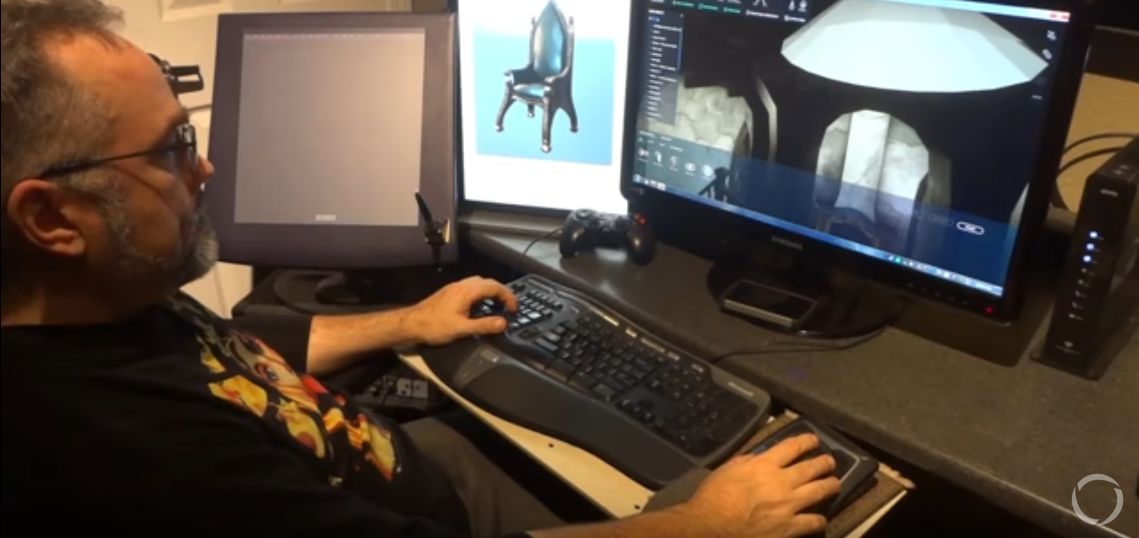
Maxwell Graf working in Sansar via keyboard and trackball

For this piece – running to one minute and 46 seconds, Max has a lot to say – and wisely, Drax lets him get on and say it uninterrupted.  Of course, there are descriptions of the experiences Max has been building – one of which, unsurprisingly, is very Rustica. However, what is interesting is not what he’s building, but what he has been observing about Sansar.

One of the major critiques (from SL users) towards Sansar is the lack of contiguous space – even though, as I’ve pointed out, an experience can be four kilometres on a side (the equivalent of 16 SL regions on a side). That still may not be as big as a Mainland continent in Second Life, but Max puts it better perspective when it comes to something like period role-play (a popular pursuit in SL):

The really interesting thing about something that is on that scale is that from a role-play perspective, it does not have to be confined to a small village any more. You can exist on each side of the mountains and never even see each other because it takes three hours to walks across.
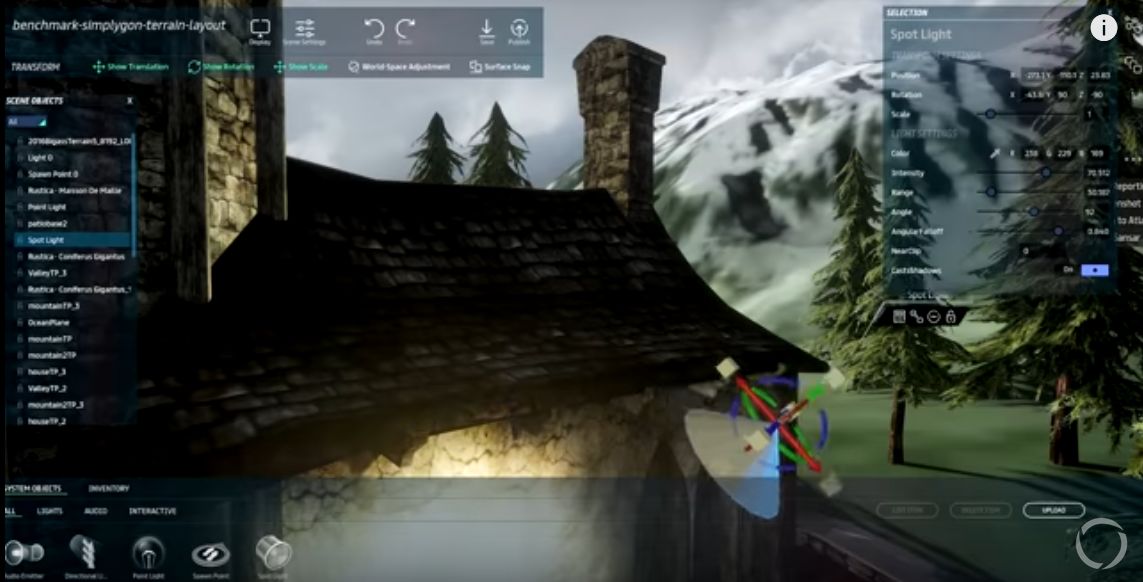
Rustica in Sansar’s Edit mode

When couched like that, in an environment where flying could be disallowed, teleporting strictly controlled, etc., the span of role-play and role-play encounters could be far more involved than anything witnessed in Second Life – if and when Sansar has built up a mass of interested users. It also raises the potential for very real-time training and simulation uses for the platform.

Max also touches  – admittedly lightly – on what is bound to be something of a struggle for balance on the part of Sansar content creators: pitching their goods and services at a price which reflects the effort put into creating / building them, and which users are willing to pay. In some respects, this is where Sansar could be initially hamstrung if its initial core user demographic is drawn from Second Life users, who will likely have certain expectations on the cost of goods and items because of their time in SL.
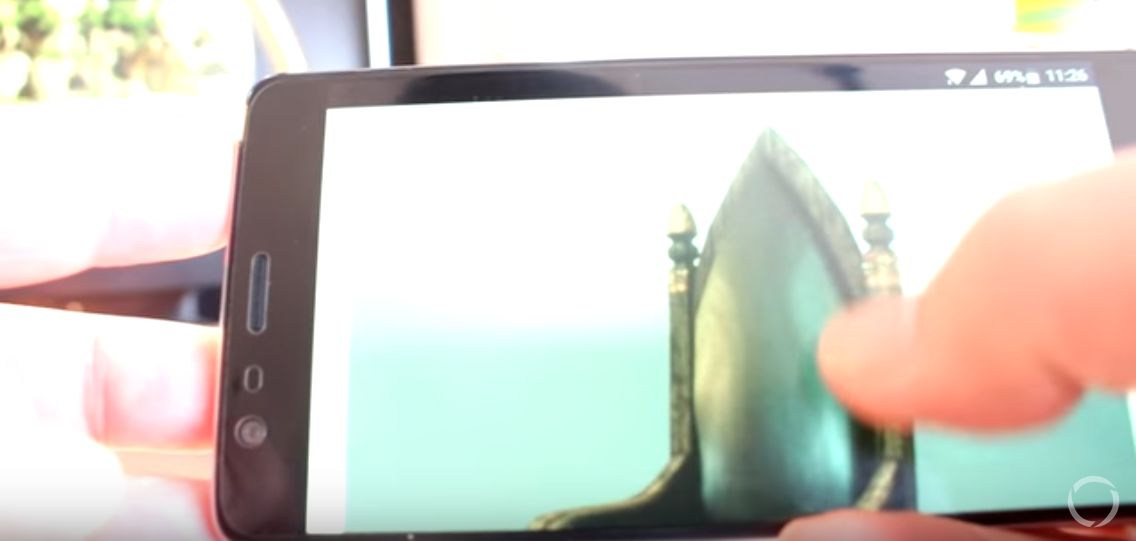
Browsing the Sansar marketplace via smartphone

However, it is in his comments around Sansar’s potential for public reach which are perhaps the most interesting, coupled with the manner in which he is using Sansar:

What Sansar is going to offer the public is an opportunity to get an understand of what an open virtual platform really is about. And that’s going to make a difference, because from here on out, we’re going to be looking at the beginnings of what will become a true metaverse.

Just how likely this is going to be is open to question; will people really see VR and virtual spaces as important to their social engagement, for example. But the important element here is that Sansar’s potential success has been judged on the basis of its lean towards VR, and the fact that (thus far) VR hasn’t really grabbed what could be called a broad market; however; as Max demonstrates in this video is that Sansar can be practically used and enjoyed sans VR paraphernalia.

This is important because, like it or not broader-based user catchment and retention is going to be an issue for Sansar as much as it has been for Second Life, if for no other reason that many of the platform capabilities are going to take time to mature. If it is seen purely as being “all about the VR”, then that catchment is liable to be considerably narrowed, simply because people aren’t buying into VR in a big way as it stands right now (although as the hardware and costs improve, this could well change). Therefore, emphasising the wider potential for the platform to operate without all the expense of HMDs, etc., could boost the level of interest among “the public” (UI allowing). It’s just a pity this point is somewhat undermined by the (somewhat jarring) interjection of HMD use into Max’s narrative.

That said, this is still a further interesting video in a maturing series, and another step along the way to giving further insights into the platform as we move ever closer to Sansar’s public opening.
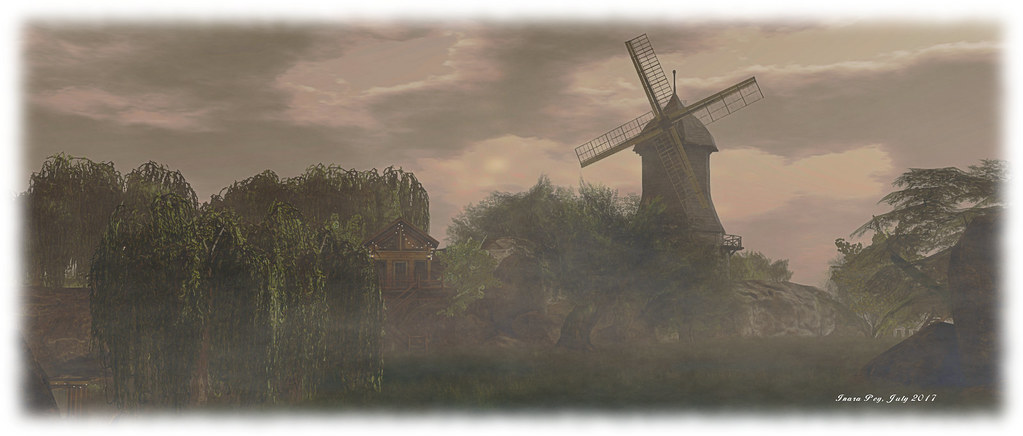

SL project updates 28/1: server, viewer, misc

Gale Storm Retreat, Aphrodisia Isle; Inara Pey, June 2017, on Flickr Gale Storm Retreatblog post

Server Deployments Week #28

This week’s deployment notice was thrown into disarray due to an 11th hour hitch in deployment plans.

Main (SLS) Channel

The planned deployment to the Main (SLS) channel did not go ahead on Tuesday, July 11th, which would have seen it receive the new server operating system update, which had been on test on the Magnum and Cake RC over the last couple of months. Instead the channel remains on simulator version #17.06.12.327066, originally deployed on June 20th. As the channel was restarted in week #27 there was also not rolling restart.

Commenting on the pulled deployment at the Simulator User Group meeting on Tuesday, July 11th, Simon Linden said:

[It] got cancelled due to finding a last-minute bug. We’re scrambling to get that fixed and hopefully back in the RC servers tomorrow. It was [an issue] with other back-end services … it wasn’t managing connections the same way as before and thus they were getting overloaded.

When asked if it was a little ambitious deploying a major update directly from one RC to the Main channel without expanding it through the remaining RCs first, he said, “It’s a tough call, actually … how cautious to go in increasing releases like that. At some point it’s just best to get it out and see what happens. We have spent a bunch of time trying to decide the best route. That release has been frustrating how long it’s taken to uncover some problems, so more exposure is better, I think.”

RC Channels

There will be no deployment to either the BlueSteel or LeTigre RCs on Wednesday, July 12th. They will remain on simulator version #17.06.23.327344. This contains internal fixes, and an update to the week #25 deployment (#17.06.19.327206). As there was no deployment to these channels in week #27, they should receive a rolling restart.

The Magnum RC will receive an update to the operating system upgrade package on Wednesday, July 12th. Simulator version #17.07.11.327548 should contain a fix for the issue Simon noted above.

SL Viewer

No changes to the SL viewer pipelines, which remain as follows:

  • Current Release version 5.0.6.326593, dated May 26th, promoted June 20 – formerly the AssetHTTP RC viewer – overview
  • Release channel cohorts:
    • Project Alex Ivy 64-bit viewer version 5.1.0.507006 dated on June 30th
    • Maintenance RC viewer version 5.0.7.327250 dated on June 22nd
    • Voice RC viewer, version 5.0.7.327253 dated June 23rd
  • Project viewers:
  • Obsolete platform viewer version 3.7.28.300847 dated May 8th, 2015 – provided for users on Windows XP and OS X versions below 10.7.

Other Items

Simon Linden: 10 years in Second Life

Simon Reaches Ten

Simon Linden celebrated his the tenth anniversary of his rezday on Tuesday, July 11th. If he held a party, I wasn’t invited 😦  (joking!).

On a more serious note, a repeated Happy Rezday to Simon, who said of the occasion, “I wanted to give a big thanks to everyone for making this a really awesome fun place to work. I’m hoping for many more … or early retirement! :).”

Environment Enhancement Project (EEP)

Rider Linden hasn’t been able to progress the new Windlight environment enhancement due to a combination of working on other things and being on vacation.

Feature Request: llGetObjectDetails() constant OBJECT_CREATION_KEY

This feature request – BUG-100487 – formed the backbone of the Simulator UG meeting on Tuesday, July 11th. It comes of the back of a multiple feature request (BUG-9666), although the other two items requested in that JIRA are seen as potential abuse vectors, and unlikely to be adopted.

The ability to have an non-changeable object creation key could have significant benefits, as outlined in the JIRA. Currently, the JIRA has been accepted by the Lab – meaning the idea is of interest to them, but does not necessarily mean it will be implemented.

Linden Lab: Terms of Service updates and new policies

On Tuesday, July 11th, Linden Lab issued an updated Terms of Service, which is due to come into effect on July 31st, 2017. As is the Lab’s usual practice, anyone logging-in to one of the Lab’s services for the first time after the new Terms have come into force will be required to accept them. As such, a read through is advisable beforehand.

The summary of the changes indicate them to be:

  • A restructuring of the Terms to include terms and conditions that apply to all Linden Lab products, with separate product-specific references (such as Linden Dollar and LindeX for SL) now contained within product-specific policies. The new Second Life Terms and Conditions contains all the Second Life-specific references that were previously in the Terms of Service.
  • Reference to the Lab’s wholly owned subsidiaries, Tilia Inc. and Tilia Branch UK Ltd., have been added. These companies will be handling payment services on our behalf under certain circumstances. I first wrote (albeit somewhat speculatively) about Tilia Inc in November 2015.
  • Minor text revisions to clarify that Linden Lab has discretion to undertake certain account actions.
  • An updated the arbitration provision in accordance with applicable law.

In addition to the updated ToS there is a new Intellectual Property Infringement Notification Policy, which I have not had the opportunity to digest, and a new Content Guidelines document; both of which also take effect from July 31st.

The first of these bullet points sees the most extensive changes to the ToS, with the removal off sections formerly specific to SL, and the removal of references related to the Second Life (e.g. “inworld”) to more generic terms. These are all clearly part-and-parcel of adopting the ToS to encompass Sansar, and some of the amendments make for interesting reading – such as the definition of terms.

While the blog post refers to “the Second Life Terms and Conditions”, there is no actual link to such a document at present. There is a link to the Community Standards – which are still specific to Second Life. However, it is unclear if this is what is meant by “the Second Life Terms and Conditions” – and if so, they have not as yet been updated to reflect elements of the ToS specific to SL – such as the operation of “bots” or to Skill Gaming / for profit games of chance, Linden Dollars, the LindeX, etc. Nor are the ancillary policies to Second Life listed (e.g. the Machinima policy, Mainland Policy, etc.).

Excluding the changes specific to Second Life (i.e. removal of references and clauses). The most extensive changes to the ToS can be found in the following sections:

  • 1.1 – updates to defined terms
  • 2.2 – licences granted, specifically the section on “Linden Content”
  • 3 Eligibility To Use the Service
  • 4.3 – payment service providers (including Tilia Branch in the UK)
  • 7 – Infringement Notifications – now dealt with via the Intellectual Property Infringement Notification Policy
  • 9.6 – Unsolicited Ideas and Materials Prohibited; No Confidential or Special Relationship with Linden Lab
  • 10.2 – Exceptions to Requirement to Arbitrate (dispute resolution).

I’ve not had time to do more than run through a rough comparison between this updated ToS and the current version (last archived via the Wayback machine in April), so my apologies if I’ve missed anything.


Ash Falls in Second Life

Ash Falls, Picture Perfect; Inara Pey, July 2017, on Flickr Ash Falls – click any image for full size

Updated, September 4th: As per the comment below, Ash Falls now requires the payment of a group joining fee in order to access the region.

Ash Falls is a homestead region build by Leaf and Birdy Moone, and it is an absolute delight to visit. Softly lit by the last rays of a lowering Sun, setting slowly to the south, such is the sheer beauty of the region it deserves to be seen both under its natural windlight (Bryn Oh’s Mayfly) and something a with a little more daylight.

A v-shaped island facing the south-east, cradles a broad, flat beach within its rocky, wooded arms. But this is not the familiar sandy beach so often seen throughout Second Life; it is a cinder beach, the sand dark and course, suggestive of having been created over the ages from the aftermath of many volcanic eruptions. Behind it to the north and east, the rugged backbone of the island offers paths and tracks to be followed, shaded cuddle nooks to be found  – and more besides.

Ash Falls, Picture Perfect; Inara Pey, July 2017, on Flickr Ash Falls

The landing point sits at the end of the northern arm of the island’s rocky V, a stone terrace of some age, with walls partially bracketing it on two sides. A short walk from here in the evening’s light, are wrought iron gates offering access to a broader terrace, complete with parasolled seating, quiet water features and a splashing fountain.

A grassy avenue points the way eastwards, lit by tall lamps and bordered by thick bushes. A set of wooden steps just to the right at the start of this path presents a way down to the beach, while the end of the trail is marked by a wooden platform overlooking a deep, square quarry, long disused and now semi-flooded. Water drops free and clear from falls to one side of this square basin, while lanterns drift and turn on  eddies of air, floating over another platform built over the waters of the quarry.

Ash Falls, Picture Perfect; Inara Pey, July 2017, on Flickr Ash Falls

A coffee-house sits at the edge of the small inlet cutting into the beach, straddling sand and the gentle wash of the tide. It offers seating inside and out, and is watched over by cuddle spots further up the beach towards the rocky uplands. Head east along the beach, and you’ll pass a narrow opening cut through the rocks providing access to the old quarry. Not far from this is a slope leading up to an old shack and barn, perhaps once associated with the quarry, but now evidently a home to someone. Follow a grass path between tall fir trees from here, and you’ll discover another snuggle spot and steps leading down to a little cove caught in a very localised rain storm!

Further around the beach, east of the slope leading to the old shack, are wooden steps offering the way up to another path. This runs up between a line of rock on one side and a high-banked slope on the other to where a much grander house sits upon the eastern headland. Both this house and the shack are open to the public to explore, and a further trail curls away from the area in front of the house, leading the way to a cosy outdoor theatre, surrounded by trees and bushes.

Ash Falls is a beautifully scenic setting, perfect for photography, exploration, and simply wandering  / sitting. It’s perfect for a getaway, and ideal for resting the mind.

SLurl Details

  • Ash Falls (Picture Perfect, rated: Moderate)

Space Sunday: imaging a star and x-rays from a planet

The M-2 red super giant Betelgeuse, 650 light-years from Earth, as seen by the Atacama Large Millimetre Array (ALMA). Credit: ALMA / ESO / NRAO

Some call it Betelgeuse others call it Beetlejuice. It is the second brightest star in the constellation of Orion and officially designated Alpha Orionis, the ninth brightest star in the night skies over Earth.

A red super giant of spectral type M1-2, Betelgeuse is around 12 times the mass of our own Sun, and is one of the largest and most luminous stars visible to the naked eye. It is also destined to be – in cosmic terms –  very short-lived. At just eight million years of age, it is already approaching the end of its life and will likely go supernova some time in the next few thousand years.

But it is the star’s sheer size which makes it stunning: it’s an estimated 2.6 AU in diameter. To put this in perspective, were it to be dropped into our solar system to replace the Sun, it would extend out towards the orbit of Jupiter.  Such is its size, it is one of the few stars we can observe via telescope large enough to be resolved as anything more than a point of light.

This was brought home at the end of June 2017, when the Atacama Large Millimetre Array (ALMA) captured the star in a series of images taken at the sub-millimetre wavelength range. The images reveal the star’s chromosphere looking somewhat asymmetrical, the result of the star  generating a massive bow-shock as it moves through the interstellar medium. In short, as Betelgeuse travels through the gas clouds at a rate of around 30 kilometres per second, it own equivalent of the solar wind (much denser than anything the Sun generates) which is thrown off of the star at 17 kilometres / second, slams into this gas in the direction of travel at47 km/ sec, generating a massive shock wave about 3 light-years across in front of the star, which curls around it, influencing its chromosphere.

The bow shock preceding Betelgeuse, as seen by the Japanese Akari orbital observatory. Credit: JAXA/Akari

When Betelgeuse goes supernova, it will be in a blink of an eye – although we’ll only know about it 650 years after it has actually happened. When it does so, it will create an unmistakable light in the night sky – and this bow shock of matter will play a role in the supernova process, as it reacts to the sudden influx of matter slamming into it from the exploding star at a large fraction of the speed of light.

As violent as it will be, the Betelgeuse supernova will not threaten life on Earth, as it’s beyond the “harmful” range. And in case you think that’s a bit of a reach, scientists have shown that the Earth has in fact been influenced by supernovae in the past. This evidence comes from the presence of Iron 60 in the deep oceans, an isotope formed within stars, and which has an exceptionally short half-life: 2.6 million years – so the fact we can detect it suggests it originated in other stars that went supernova.

In fact, for the last 5-10 million years, the solar system has been travelling through a region of space called the “local bubble”, an expanding region of gases some 300 light years across, created by a series of supernova explosions which occurred over a relatively short period  of time about 20 million years ago. Within this bubble, the magnetic field is weak and disordered, which could greatly magnify the impact a large supernova occurring within 100 light years from Earth could have on life here.

At the upper end of this distance, research suggests a supernova could lead to climate changes similar to those which caused a rise in glaciation seen in the Pleistocene period, 2.5 million years ago. At the nearer end of this distance – say, 25-30 light years – a supernova could actually be an extinction level event for much of life here due to the radiation levels striking the Earth, altering the climate, impacting the Earth’s biomass, and giving raise to increases in cancers.

The stars of the IK Pegasi system compared to our own Sun (r). IK Pegasi is the large white star on the left, and IK Pegasi B – a potential supernova progenitor – is the white dot below and between the other two stars. Credit: R.J. Hall

Fortunately, the nearest known star to us which is likely to go supernova is IK Pegasi B, a massive white dwarf star which forms part of the binary star system IK Pegasi in the constellation of Pegasus, and 150 light years away. As a massive white dwarf, IK Pegasi is no longer generating energy through nuclear fusion. However, when its companion star, IK Pegasi A, a main sequence star slightly larger than our own Sun and itself a variable star, reaches the latter stages of its life, it will swell up to a red giant, allowing IK Pegasi B to star accrete matter from it, causing it to swell to as much a 1.4 solar masses – at which point it will explode as a supernova.

China’s Launch Failures

China’s space efforts have been in the news for the wrong reasons of late. In mid-June a Long March 3B rocket – the workhorse of the Chinese fleet – designed to carry a communications satellite to geostationary transfer orbit was declared a “partial failure” when the rocket’s upper stage failed, initially leaving the satellite stranded in a much lower orbit. Since then, mission controller have been using satellite’s manoeuvring motors gradually nudge it up to an operational orbit, although this will drastically shorten its active lifespan.

A slight fuzzy TV image of the Long March 5 launch on July 2nd, 2017. The vehicle suffered “an anomaly” shortly after lift-off and eventually crashed into the Pacific Ocean. Credit: CCTV

Then, on July 2nd, 2017, the second launch of China’s powerful Long March 5, capable of launching 8.4 tonnes of payload to the Moon or placing 25 tonnes in low Earth orbit, suffered a major failure shortly after clearing the launch pad at 11:23 GMT. This booster is key to China’s longer-term ambitions in space, as it is crucial to the development of their own space station, as well as vital for a number of deep space missions.

Continue reading “Space Sunday: imaging a star and x-rays from a planet”

Holmes returns, an early Christmas and African adventures in Second Life

Seanchai Library, Holly Kai Park

It’s time to kick-off another week of storytelling in Voice by the staff and volunteers at the Seanchai Library. As always, all times SLT, and events are held at the Library’s home at Holly Kai Park, unless otherwise indicated.

Sunday, July 9th

13:30: Tea-Time at Baker Street

Tea-time at Baker Street returns with the opening of The Casebook of Sherlock Holmes, the final set of twelve Sherlock Holmes short stories first published in the Strand Magazine between October 1921 and April 1927.

This week: The Adventure of the Illustrious Client.

The year is 1902, and Sir James Damery visits Holmes and Watson on behalf of his mysterious and illustrious client. The latter never actually directly revealed to the reader, although it might well be the king himself.

Damery’s client is concerned about the relationship between Violet de Merville, daughter of General de Merville, and Baron Adelbert Gruner, from Austria. Gruner is viewed as a rogue and a sadist and – in Damery’s and Holmes’ opinion – a murderer.

Despite the matter of his last wife’s mysterious death and his reputation, Violet de Merville will not be dissuaded from her determination to marry Gruner. So secure is the latter in his position that he is unfazed by a visit from Holmes – indeed, he warns the latter that a French agent who once confronted him with similar accusations finished-up a cripple for life after receiving a beating from thugs shortly afterwards; a veiled threat if ever there was one.

So, lacking obvious proof, how do Holmes and Watson prevent Violet de Merville from marrying Gruner and possibly facing the same future as the Baron’s last wife?

Find out more by joining Cale, Kayden and Corwyn.

18:00: The Wind in the Willows

Meet little Mole, wilful Ratty, Badger the perennial bachelor, and petulant Toad. Over one hundred years since their first appearance in 1908, they’ve become emblematic archetypes of eccentricity, folly, and friendship. And their misadventures – in gypsy caravans, stolen sports cars, and their Wild Wood-continue to capture readers’ imaginations and warm their hearts long after they grow up.

Begun as a series of letters from Kenneth Grahame to his son, The Wind in the Willows is a timeless tale of animal cunning and human camaraderie – although some in current times unkindly see it as a kind of allegory for the privileged ne’er-do-well upper class (in the form of Toad) with the aid of the middle class (Badger, rat and Mole) to keep the proletariat (weasels and stoats) in their place.

I suggest you join Caledonia Skytower for Magicland Storytime, and go with Mr. Grahame’s intention with the tales – as a ripping yarn for young hearts and minds.

Monday, July 10th 19:00: A Boy Ten Feet Tall

Originally published in 1961 under the title Sammy Going South, and then later Find the Boy, W.H. Canaway’s novel is often referred to a “The Huckleberry Finn of Africa.” It became the basis for a 1963 British film Sammy Going South, starring Edward G. Robinson, which was released in the United States as A Boy Ten Feet Tall – hence the revised title for the book.

Born in the Suez region of Egypt, where he is orphaned, Sammy learns he has an aunt living in Durban, South Africa, and is determined to travel south to be with her.

Already distrustful of adults – he was told immunisation shots he was given at a young age would not hurt, when of course they did – Sammy sets out on foot uncertain of how he will complete the journey, but determined that he will. Along the way his distrust of adults is reinforced thanks to encounters with those who seek to profit from him and due to his witnessing the cruelty humans can inflict upon one another.

But also along the way there are those who do seek nothing more than to help him. One of these is a poacher and diamond trader – the kind of person you’d believe only to willing to take advantage of a young boy alone in the world. But it is compassion that rules this man’s heart (played in the film by Edward G. Robinson), and he takes the boy under his wing, helping him to heal from his emotional wounds …

Tuesday, July 11th 19:00: In the Words of Stephen Vincent Benet

Short stories with Corwyn Allen.

Wednesday, July 12th 19:00: The Girl Who Drank the Moon

Caledonia Skytower reads Kelly Barnhill’s 2017 Newbery Medal winner.

Every year, the people of the Protectorate leave a baby as an offering to the witch who lives in the forest. They hope this sacrifice will keep her from terrorizing their town. But the witch in the forest, Xan, is kind and gentle. She shares her home with a wise Swamp Monster named Glerk and a Perfectly Tiny Dragon, Fyrian.

Xan rescues the abandoned children and deliver them to welcoming families on the other side of the forest, nourishing the babies with starlight on the journey.

One year, Xan accidentally feeds a baby moonlight instead of starlight, filling the ordinary child with extraordinary magic. Xan decides she must raise this enmagicked girl, whom she calls Luna, as her own.

To keep young Luna safe from her own unwieldy power, Xan locks her magic deep inside her. When Luna approaches her thirteenth birthday, her magic begins to emerge on schedule–but Xan is far away. Meanwhile, a young man from the Protectorate is determined to free his people by killing the witch. Soon, it is up to Luna to protect those who have protected her–even if it means the end of the loving, safe world she’s always known.

Also presented in Kitely (hop://grid.kitely.com:8002/Seanchai/108/609/1528).

Thursday, July 13th

19:00: Christmas In July

With Shandon Loring.

21:00: Seanchai Late Night

Caledonia continues the Christmas in July theme with several quirky Christmas tales including The Polar Express and Red Ranger Came Calling.

Both of these sessions also presented in Kitely (hop://grid.kitely.com:8002/Seanchai/108/609/1528).


Please check with the Seanchai Library’s blog for updates and for additions or changes to the week’s schedule.

The featured charity for May through July is Alex’s Lemonade Stand Foundation, raising awareness of childhood cancer causes and funds for research into new treatments and cures.