Space Sunday: eyeball worlds, stellar cannonballs, water and rockets

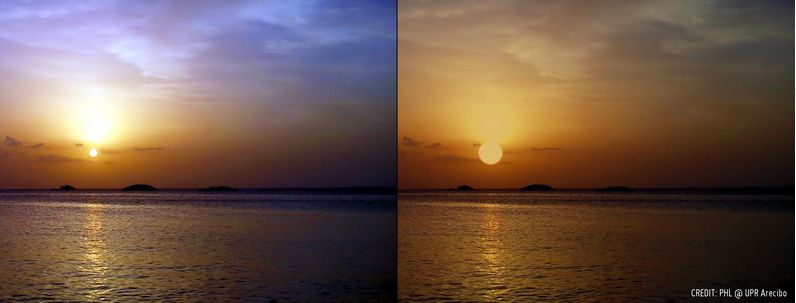
A comparison of sunsets on Earth (l) and simulated on a watery Proxima-b, 4.25 light years away (r). While the parent star, Proxima Centauri, is a lot smaller than our Sun, it would appear much larger in the planet's sky due to the planet being a mere 7 million km from the star
A comparison of sunsets on Earth (l) and simulated on a watery Proxima b as it orbits Proxima Cantauri (r). While the latter is approximately one-seventh the diameter of our Sun, it appears much larger in Proxima-b’s sky, because the planet is just 7.5 million miles from its sun. Credit: PHL Arecibo

In August 2016, I wrote about the discovery of a Earth-size planet orbiting the Sun’s nearest stellar neighbour, Proxima Centauri, a “mere” 4.25 light years away.

The planet, Proxima b, has a mass roughly 1.3 times that of Earth and orbits its dwarf star parent once every 11.2 terrestrial days at a distance of just 7.5 million km (4.7 million miles). It is of particular interest to astronomers because it lies within Proxima Centauri’s habitable zone – the region around a star where it is neither too hot nor too cold for liquid water to exist on the surface of a planet, and where conditions might be conducive for life to arise.

The Earth-sized Proxima-B and its parent star
The Earth-sized Proxima b and its parent star. Credit: AFP

Which is not to say life does exist on the planet. Proxima Centauri is a red dwarf star, just 1.5 times bigger than Jupiter, and stars of that size are subject to massive stellar flares which could easily strip away a planet’s atmosphere, or at least leave it awash in ultra-violet radiation, which is not entirely agreeable for life to arise. What’s more, the planet is liable to be tidally locked with Proxima Centauri, leaving one side baked in perpetual daylight and the other in a frozen night. None of this makes it terribly amenable for life gaining a toe hold.

One of the big questions concerning the planet is how much liquid water it may have. Normally this can be determined by using the planet’s size and mass, and working from there. But while we have an estimate of Proixma b’s mass, there is no definite measurement of its size. Normally, this is done by measuring how much light a planet blocks out, from Earth’s perspective, when it pass in front of its host star. So far, this hasn’t been possible with Proxima b.

In the video above, by the Planetary Habitability Laboratory, Arecibo, the star and orbit are to scale, but the planet was enlarged (x30) for visibility. The planet is represented here as a mostly desert-like, tidally-locked world with shallow oceans and a strong atmospheric circulation allowing heat exchange between the light and dark hemispheres.

Instead, a team at France’s CNRS research institute has been working on simulations based on the “best guess” estimates gathered from the data which is available on Proxima-B, and their findings are intriguing.  This data suggests the planet could be between 0.94 and 1.4 times the size of Earth, depending on  its internal structure.

At the lower end of this scale (planetary radius = 5,990 km / 3,743.75 mi), the CNRS simulations indicate that the planet likely comprises a metallic core surrounded by a rocky mantle, with 0.05% of that mass accounted for by liquid water. While this might not sound a lot, it is worth pointing out that Earth, with a radius of 6,371 km / 3,982 mi has just 0.02% of its mass made up of liquid water. At the upper end of the scale (planetary radius = 8,000-9,000 km / 5,000 – 5,600 mi), the planet likely has a rocky centre surrounded by an ocean up to 200 km (125 mi) deep.

Any significant amount of free water on the planet could mean that the atmosphere is being renewed against loss from solar activity. However, the fact that the planet may well be tidally locked could mean that there is a strong atmospheric circulation between the “dark” and “light” sides of the planet due to the temperature differential between the two, giving rise to massive, hurricane-like storms. A further aspect of tidal locking is that if there is a significant amount of liquid water on the planet, it will have long-since frozen out into ice on the dark side.
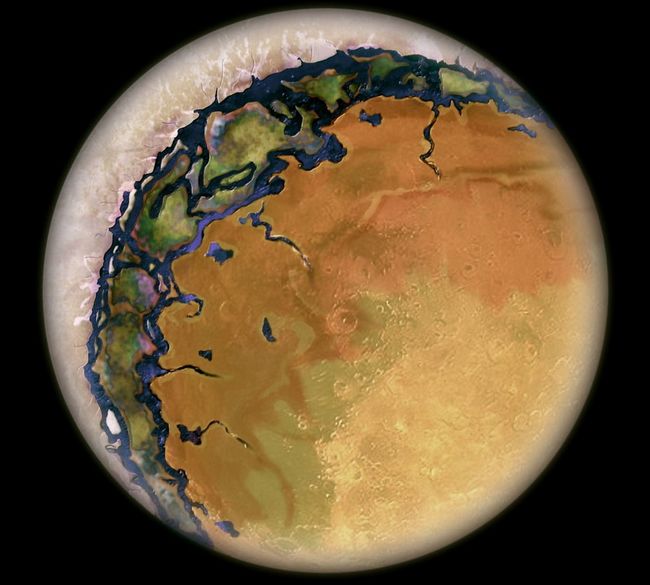
Could Proxima-b be an "eyeball" world, staring at its parent star?
Could Proxima-b be an “eyeball” world, staring at its parent star? Credit: Beau, Rare Earth Wiki

This in turn leaves us with the equally intriguing possibility that Proxima-b is a potential “eyeball” world “staring” at its parent star.

“Eyeball” worlds are thought to be  tidally locked planets where the hemisphere facing the parent sun is thought to be baked dry under the unrelenting light of their sun, forming a “pupil”. Around this, close to the the day / night terminator, is an iris-like temperate region of land and water which extends back to the terminator between the day and night sides of the planet, where the water is frozen out into ice, forming the “white” of the “eye”.

None of these most recent findings point to Proxima-b being potentially habitable, and again, it’s worth remembering that even with water and warmth, Proxima b isn’t the most amiable environment in which life might gain a toe-hold. But what they do suggest is that even without life scurrying or swimming about on / in them, exoplanets could be remarkably exotic places, even by our own solar system’s standards.

New Shepard: One Step Closer to Tourist Flights

Blue Origin, the private space company launched by Amazon founder Jeff Bezos achieved another milestone on the road to starting their sub-orbital flights into space for tourists.

On Wednesday, October 5th the company launched another test flight of its New Shephard system of capsule unit and “propulsion module” in order to test the launch abort system of the capsule unit during flight. This system is designed to safely separate the New Shepherd crew capsule from the rocket booster in the event of an anomaly during flight, protecting a future crew and passengers.

The test saw the booster and capsule climb to 4,893 metres (16,053 ft) where, 45 seconds into the flight, the “full-envelope escape system” activated, separating the capsule from the booster, allowing its escape motors on the capsule to fire, accelerating it away from the booster at 400 mph in a 2-second burn. The capsule continued to rise to 7,092 metres (23,269 ft), before it started its decent, the parachute landing system deploying and bringing it to a safe touch-down.

It had been expected that the 70,000 pounds of off-axis thrust delivered by the capsule’s motors would seriously deflect the booster from its flight track and result in its complete loss. However, in a move that surprised many watching, the booster continued upwards to an altitude of 93,713 metres (307,458 ft) where, some 7.5 minutes into its flight, it  re-ignited its motor to execute a controlled vertical descent back to the launch pad and a safe landing.

If all goes according to plan, Blue Origin plans to launch its first passengers on a sub-orbital hop in which they get to enjoy around four minutes of weightlessness, in 2018. The price of tickets has yet to be confirmed. However, competitors Virgin Galactic and XCOR Aersopace are looking to charge US $250,000 and $150,000 respectively, when they commence operations.

Continue reading “Space Sunday: eyeball worlds, stellar cannonballs, water and rockets”
The Chamber Society’s artistic expression in Second Life

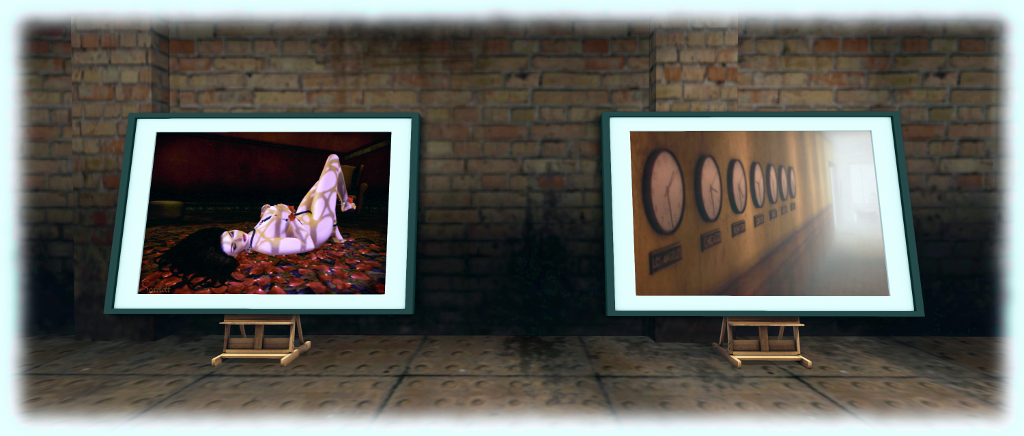
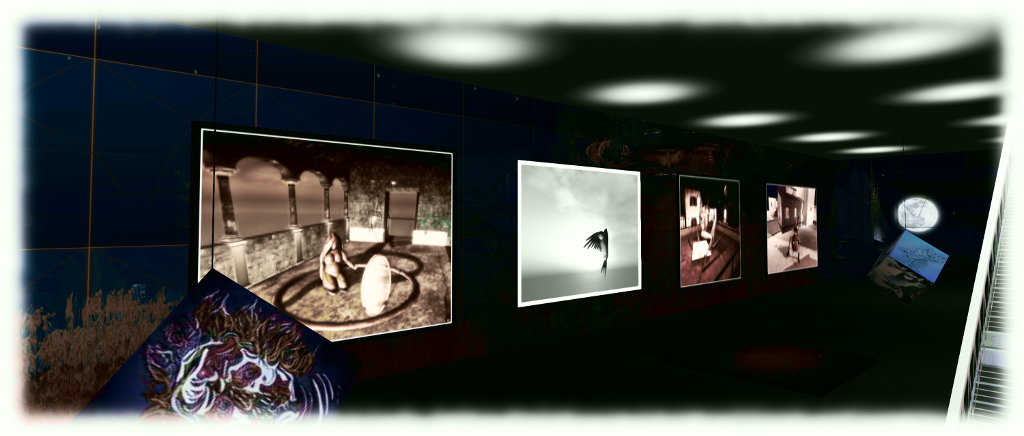
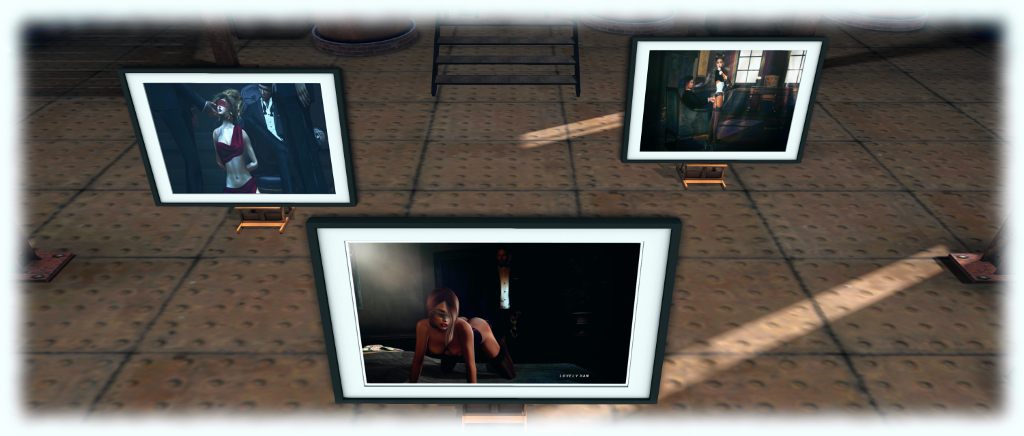
The Chamber Society 4th Annual Photography Competition: the three main prize winers - Dathúil Gallery
The Chamber Society 4th Annual Photography Competition: the three main prize winners – Dathúil Gallery

Now open at Dathúil Gallery, curated by Max Butoh and Lυcy (LucyDiam0nd), is a display of selected entries from the 4th annual The Chamber Society Photography competition.

Unlike the usual monthly exhibitions at the gallery, which focus on a single artist, the October 2016 exhibition features individual works from the “top twenty” entrants from this year’s edition of the competition, which challenges members of the Chamber Society –  a private member’s club – to explore the club’s home region (which is also home to Dathúil Gallery) and capture images reflective of the club’s theme, for submission in the competition.

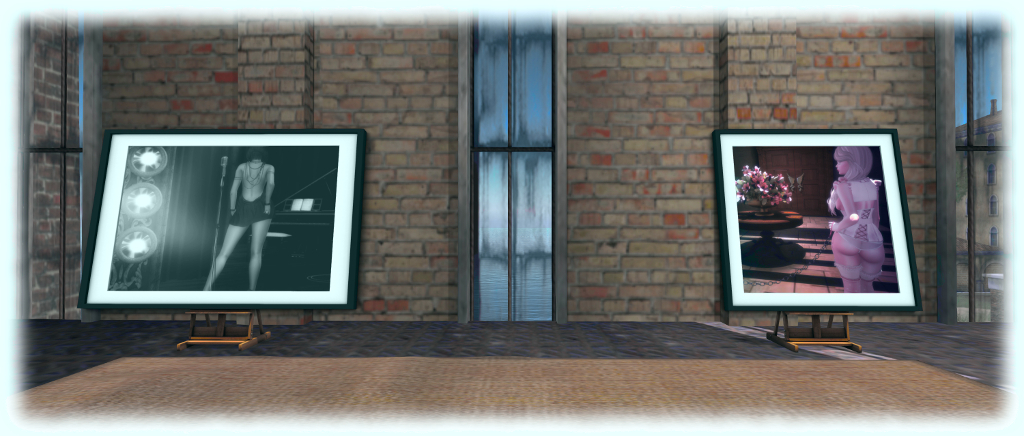
he Chamber Society 4th Annual Photography Competition - Dathúil Gallery
he Chamber Society 4th Annual Photography Competition – Dathúil Gallery

The aim of the club is “to create a deep and erotic atmosphere for role-play and erotic chat for members. We focus on politeness and manners with a twist. Our members expect intelligent, lively conversation and imagination along with beautiful and detailed surroundings.” Membership requires adherence to a dress code, an understood code of conduct, and observation of the society’s rules.

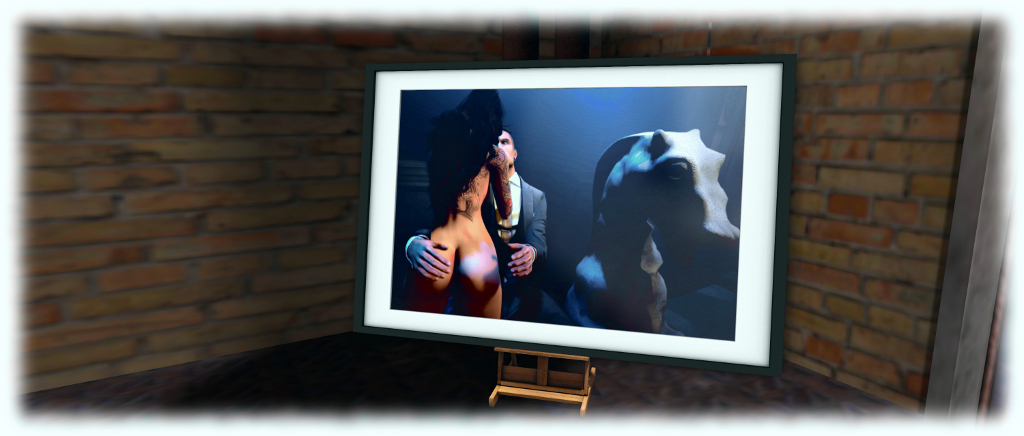
As one might imagine, given the erotic overtures within [the Chamber], the images on display within the gallery  are of a similarly erotic nature, with many among them perhaps NSFW – which doesn’t make them any the less artistic. In fact, the range of styles and approaches seen in the images displayed at this annual event make it an intriguing and eye-catching exhibition.

he Chamber Society 4th Annual Photography Competition - Dathúil Gallery
he Chamber Society 4th Annual Photography Competition – Dathúil Gallery

A prize purse totalling a generous L$42,000 was on offer this year, with L$12,000 going to LoVeLy (lovelyxan), L$8,000 to Annjalyk Storm (annjalykh2o) and L$5,000 to Ravi Schou, all of whom have their pieces displayed on the ground floor of the gallery facing the main entrance (and seen in the banner image for this article). The remaining 17 selected pieces are arranged around the walls of the gallery on the ground and mezzanine levels, the members responsible for them each having received L$1,000.

“This is not exactly a regular exhibit,” Lucy said as she accompanied me while I previewed the exhibition ahead of the opening. “But it’s a very special one; during the whole month of September you see people running around all over the region, rezzing props and poses which Max loves!”

he Chamber Society 4th Annual Photography Competition - Dathúil Gallery
he Chamber Society 4th Annual Photography Competition – Dathúil Gallery

“In events like this it’s kinda more about the development throughout the month than the show itself, because of the goals of the whole thing,” Lucy continued, her enthusiasm for both the lead-up to the exhibition and the exhibition itself, obvious. “With the regular shows, it’s just the one artist, and a focus on the gallery. With this, it’s our members letting go creatively, which is a lot of fun for everyone!”

The exhibit runs through until the end of October 2016, and as is always the case with exhibitions at Dathúil, I have no hesitation in recommending it.

SLurl Details

A-haunting we will go with Seanchai Library

It’s time to kick-off a week of story-telling in voice, brought to our virtual lives by the staff and volunteers at the Seanchai Library. As always, all times SLT, and events are held at the Library’s Second Life home at Bradley University, unless otherwise indicated.

Sunday, October 9th

13:30: Tea Time at Baker Street

Tea-time at Baker Street continues at its special lodgings – 221B Baker Street at the University of Washington iSchool in Second Life. This week, taking a break from the canon of “official” stories,  Caledonia Skytower, Corwyn Allen and John Morland present a series of short pieces and parodies gently poking fun at Holmes and Watson.

18:00: Magicland Storytime

Caledonia Skytower asks, “Dare to be Scared?” as she reads selected tales by the late Robert D. San Souci, from his collection of that name, and from Haunted Houses.

Monday October 10th, 19:00: A Spectre is Haunting Texas

spectreGyro Muggins reads Fritz Leiber’s 1969 novel telling of a world in which Texas had secretly run the United States from 1845 through until the Third World War, after which the former state conquered the entire North American continent.

Of it was never given out to the general public in the states, who never had no brains or guts nohow & flustered easy, that this assumption of leadership was annexation–but it was always known to the Speaker of the House & the senators who counted in Washington that secretest treaty Texas was boss…With the coming of the 3rd World War & the atomization of Washington, New York, San Francisco & so forth, secrecy became unnecessary.

Now, Scully Christopher Crockett La Cruz an actor, fortune seeker and adventurer from the isolated orbital technocratic democracies of Circumluna & the Bubbles Congeries, has arrived in what he believes to be Canada. He’s come to reclaim family mining interests, but finds Canada is now N. Texas, ruled over by primitive, backslapping, bigger than life anti-intellectual “good ol’ boys” convinced of their own moral superiority.

Tuesday October 11th, 19:00: More Madness and Other Tales

S.E. Schlosser is the author of the popular “Spooky Series”, illustrated by Paul G. Hoffman,  focusing on spooky tales and lore from around the United States. Join Trolley Trollop as she delves into a rich vein of tales to suit the season.

Wednesday October 12th, 19:00: Haunts and Ghosts

Shandon Loring reads from his personal haunted library!

Thursday, October 13th,

19:00 Stephen King’s The Rainy Season

A young husband and wife on summer vacation rent a house in a small town called Willow in the US state of Maine, only to be warned repeatedly (if vaguely) to leave by the local inhabitants. They do not comply and, having purchased groceries, return to the house. They never learn the price for prosperity the citizens of Willow must pay – but you can, if you join Shandon Loring in Second Life or Kitely (Check Kitely event announcements for specific grid location).

21:00 Seanchai Late Night

More spooky tales with Shandon Loring.


Please check with the Seanchai Library SL’s blog for updates and for additions or changes to the week’s schedule.

The featured charity for September-October is Alex’s Lemonade Stand Foundation (ALSF), a childhood cancer foundation dedicated to raising funds for research into new treatments and cures for all children battling cancer.

Additional Links

2016 SL project updates 40 (2): TPVD meeting, Bento

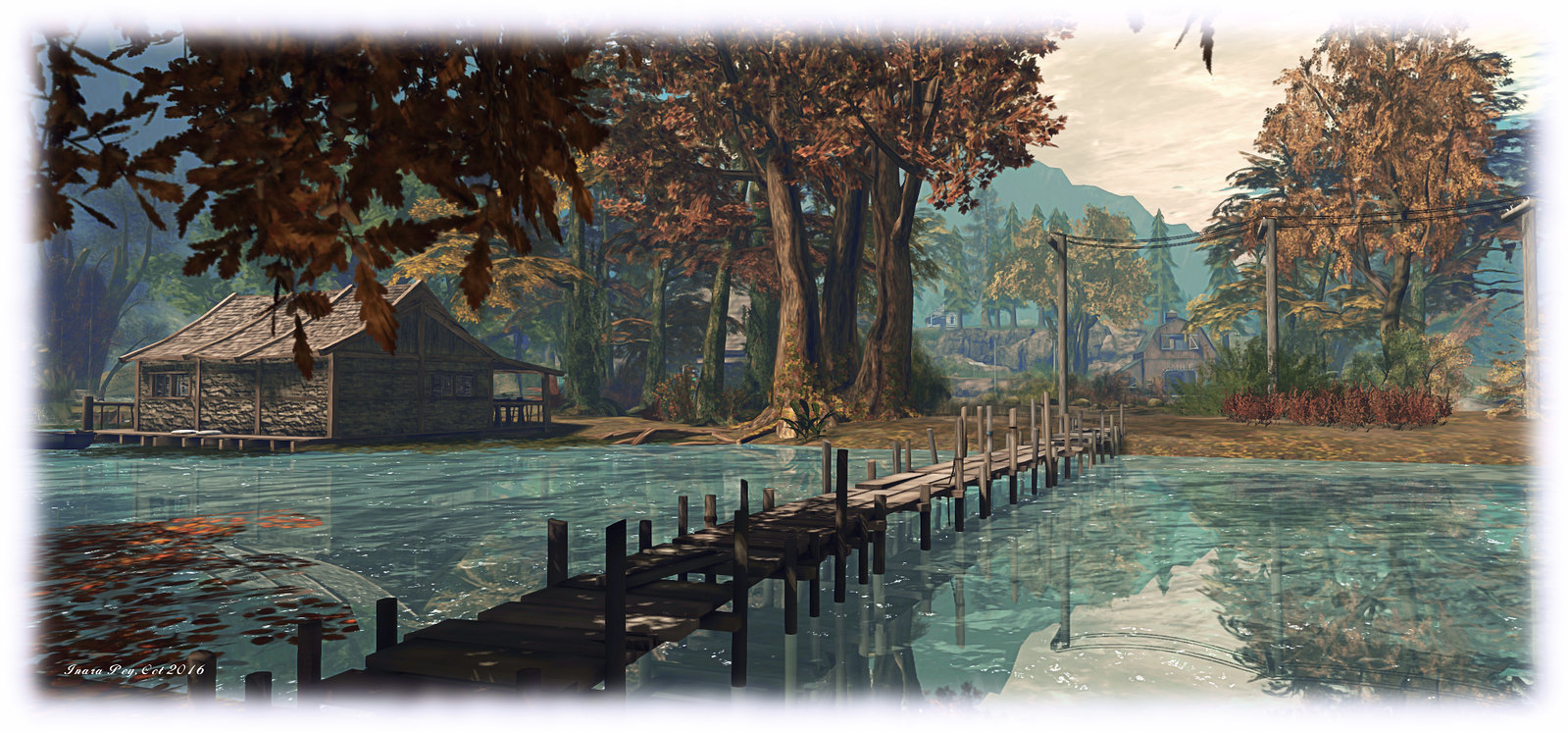
It All Starts With a Smile; Inara Pey, October 2016, on Flickr It All Starts With A Smileblog post

The majority of the notes in this update are taken from the TPV Developer meeting held on Friday, October 7th. The video of that meeting is embedded at the end of this update, and references to it are indicated through the use of time stamps in the paragraphs below. My thanks as always to North for recording and providing it.

This is not intended to be a transcript of the entire meeting, which featured discussions of some situations specific to individual region rather than SL as a whole. However, key discussion points have hopefully been highlighted.

Server Deployment – Recap

As always, please refer to the server deployment thread for updates or changes.

  • Tuesday, October 4th saw the Main (SLS) channel updated with the server maintenance package previously  deployed to the three RC channels, which includes a fix for BUG-40565, introduced as a result of the deployment of the week #38 server maintenance package.
  • There was no planned deployment / restart for the three RC channels, although there should be a new RC package available for week #41 (commencing Monday, October 10th).

SL Viewer Updates

From 00:05 in the video.

The VLC Media Plug-in RC viewer updated to version 4.1.1.320331 on Thursday, October 6th, intended to fix a number of outstanding bugs, including setting the volume slider to maximum, causing the voice sound to cut out completely. This view has been performing well, with a low crash rate, so if this trend continues with the latest update it may well finally make it to release status in week #41 (commencing Monday, October 10th).

The Project Bento RC viewer updated to version 5.0.0.320160 on Friday, October 7th (see below for more).

Project Bento

There was no Project Bento user group meeting during the week, due to a timing conflict with the Lab’s internal monthly meeting. The next Bento meeting will be on Thursday, October 13th, at 13:00 at the Hippotropolis camp fire circle.

In the meantime, as noted above, there was a new Bento RC update, which includes the following additions and fixes:

  • Adds a scale locking feature to mesh upload
  • Optimisations should improve the frame rate in mesh-intensive regions
  • Probable fix for an intermittent crash.

The scale locking feature adds a check box which, if checked will lock joints against scale changes, and thus the sliders affecting the joint will no longer influence it. Leaving the box unchecked for the joint will allow scale changes. This might be useful for those wishing to produce (non-human?) avatars where it might be preferable to have certain parts of the body locked from slider-driven changes to prevent distortions / conflicts arising, without necessarily locking in the entire mesh against slider changes (e.g. the face could be “frozen” to prevent distortion, but body height or tail length, etc).

In addition to their brief Bento Hands preview first seen in July, Vista Animations have now produced a more details preview, with the beta version of the hands (with free update to the release version) available on the Marketplace for L$999.

64-bit Viewer and Viewer Build Process

[03:19] Work on the 64-bit viewers is temporarily paused as the Lab shifts over to their improved viewer build process, which will come into effect with the 64-bit builds.

The updated process involves changes to almost everything in the build pipeline other than the compilers. However the work is progressing well, and the Lab anticipates running builds using the new libraries from week #41, and the library repositories are already public for TPVs to examine and use.

In particular, the Autobuild environment has been updated to support platform-specific switches within the build scripts via a new option in the autobuild_source_environment command. The varsfile is a file containing template variable assignments to be modified based on the build type, so that all builds(library and viewer) use the same compilation and option switches. The variables file used by Linden Lab to build the viewer and its libraries is in the viewer-build-variables repository. TPVs are free to us this, or adopt / continue to use their own.

As noted, given the extent of the work, the Lab is avoiding updating Visual Studio and Xcode. Instead, they will be updated as a follow-on project once the current work is completed.

Snapshot 360

[08:49] The Lab is working on a new viewer capability – the ability to take 360-degree panoramic snapshots using the snapshot floater. I’ve covered this in a separate article, with key audio extracts.

Experience Force Sit

Rider Linden is continuing to work on this new capability (see my article here) which will allow for the scripted seating of avatars engaged in experiences (Project Espeon). In particular, the latest Maintenance RC allows avatars to use the stand button to stand (Server Beta Meeting, Thursday, 6th October).

Nessuno and Kicca in Second Life

The White Gallery
The White Gallery

Tucked away in a corner of a region called Battlestar and rising from calm waters are two galleries of modern, open design. They are the respective homes for art by Nessuno Myoo and Kicca Igaly.

The White Gallery is  a glass-sided C-shape building rising three levels above the water. It is home to Nessuno’s 2D and 3D art, and includes a rooftop auditorium for presentations – although I’m not sure how active this is; the last event shown on the screen dates back to 2012.

The White Gallery
The White Gallery

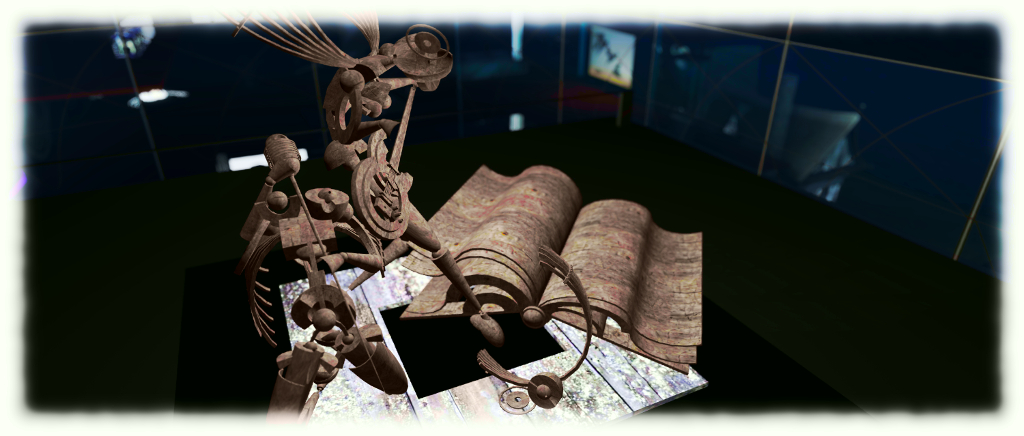
Between the auditorium and the water, however, there is much to see; Nessuno’s sculptures are highly stylised in form, captivating the eye and drawing the observer into their narrative with ease. Some offer a twist of humour, others a sharp observation, all are evocative. His 2D art is equally attention-grabbing and can be sharply observational (iGirl). When visiting, do keep an eye out for the cubes displaying his art from the physical world.

Across the water, Kicca’s Art Gallery also rises three to three levels above the water as a C-shaped building. It is slightly offset to Nessuno’s gallery as they face one another, with the three levels connected by a central spiral ramp. Kicca makes similar use of the space to display her 2D and 3D art, including pieces from the physical world.

Kicca Igaly's Gallery
Kicca Igaly’s Gallery

Kicca’s 3D work can also be stylised in looks, but also carries sentiment and narrative which draw the observer into each piece. Her 2D art, static and animated, offers excellent pieces for home display. Such is the diversity of pieces displayed, it is easy to find oneself drawn back to particular pieces – I freely confess to being attracted to her physical world art on display on the upper level of the gallery (three of which are imaged below).

Like the artists themselves, the two galleries complement one another and offer an overlapping display of fine 3D and 2D art. Almost all of the pieces on display at both are for sale if you are collector, and if you have enjoyed Nessuno’s and Kicca’s work and installations on display elsewhere in Second Life, but haven’t previously visited their galleries, then this is a destination very much worth adding to your itinerary.

Kicca Igaly's Gallery
Kicca Igaly’s Gallery

SLurl Details

Lab: 360 panoramic image capture coming to the viewer – soon!

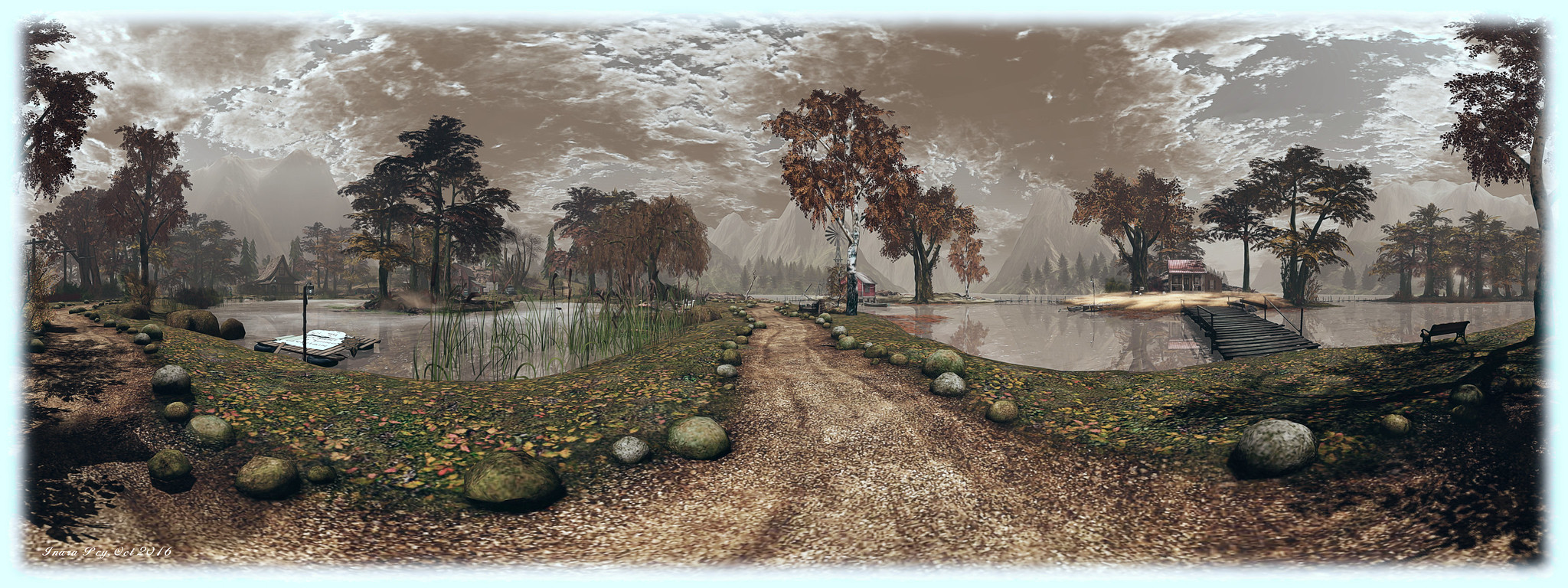
It All Starts With a Smile; Inara Pey, October 2016, on Flickr The ability to take 360-degree panoramic shots is to be integrated into the viewer, with access via the snapshot floater (Image location: It All Starts With A Smile  – blog post – static image produced with the Illiastra Panoramic Camera HUD) – click the image to see it in 360-degree format

Just as I was working on an article about  the Illiastra Panoramic Camera and producing static / interactive 360-degree images of Second Life, I attended the Third Party Viewer Development meeting on Friday, October 7th. During that meeting, Troy Linden announced that the Lab are working on incorporating the capability to generate 360-degree snapshots directly into the viewer.

The new capability is to be called 360 Snapshot, and will be integrated into the snapshot floater (alongside of additional snapshot improvements contributed by TPV developer NiranV Dean – although these sit outside of the 360-degree feature).

In essence, the snapshot floater will act as a 360-degree camera rig, allowing you to position your avatar almost anywhere in-world and capture a full 360-degree image, stitched together by back-end processing by the Lab. The image will then be shareable via the SL Share feature, and should be available for download to your local drive.

The work is far enough advanced such that a test viewer (not a project viewer) will be appearing sometime quite soon, with the Lab being keen to get it capability out into the hands of users to try. However, the important thing to note is that it will be a test version – it will not be a final, polished solution right out of the gate. The idea is to give users an indication of things like picture quality, approach taken, etc., and allow the Lab to examine exactly how much additional functionality they need to consider / include in the capability.

Initially, the stitching element will be absent; users will have to take care of that themselves after saving the image set to their local drive. There are also some potentially significant issues the Lab want to look at in detail through the use of the test viewer.

In particular there is the question of how the capability will interact with the simulator Interest List: will items effectively behind your avatar’s field of view update correctly in order to be properly imaged by the system? If not, the Lab will need to look in to how things might be adjusted. The idea here is that by carrying out such tests publicly, the Lab can work with interested users and photographers to identify potential limitations and problem areas in the approach, and so hopefully address them.

In commenting on the project, Oz acknowledged that there are HUD systems available which have been inspirational, and much of the driver behind this capability is the desire to give users a simple “point and shoot” interface.

There is no indication yet on limitations which might be placed on the system, such as image resolution, etc. Hence again why the capability will be appearing in a test viewer when it emerges, rather than a project viewer. The Lab also isn’t committing to any kind of time scales for this work, other than the test viewer is liable to appear reasonably soon; or how long the project will take to reach a release status once a test viewer does appear. The focus is on a step-by-step development of the capability.

Note: the audio clips here are extracts of salient points from the discussion on the 360 Snapshot capability. To hear the full discussion of the capability, please listen to the video of the Third Party Viewer Meeting video, starting at the 08:49 point.