HTC: Vive pre-orders open Feb 29; company split denied

The HTC Vive Pre (image: HTC)

Following the end of the 2016 Consumer Electronics Show (CES) earlier in January, HTC announced that their Vive VR system will be available for pre-order from February 29th, with shipping to commence in April.

The Vive demonstrated at CES was the “2nd generation” Vive Pre, which boasted significant improvements over the first development unit in terms of headset sized, general ergonomics, fit, comfort and capabilities. In particular the unit boasts a front-mounted pass through camera, (which HTC has sometimes referred to as the “chaperone system”), and a correction tool to present a clearer view of the VR environment on the headset screens.

The Vive Pre features a central, front mounted pass through camera system (image: HTC)

The pass through camera allows the user to see an overlay of the room around them projected into their virtual view. This fades in if they approach a physical object (e.g. a wall or desk, etc.), or can be manually triggered via the hand controllers. While some have critiqued it as “breaking” the VR experience, others have seen it as a useful means for a Vive user to re-orient themselves within their physical space.

Mura correction” (“mura” being a Japanese term meaning “unevenness” or “lack of uniformity”) removes the inconsistent brightness levels between one pixel and the next on earlier Vive headsets, giving rise to what HTC called a “linen like quality” to VR scenes. The result is a far more uniform and cleaner image, as shown in the exaggerated image below, courtesy of Road to VR.

"Mura correction" improves the VR image seen on the Vive's headset lenses, as illutrated by this exaggerated representation, courtesy of Road to VR - click to enlarge
“Mura correction” improves the VR image seen on the Vive’s headset lenses, as illustrated by this exaggerated representation, courtesy of Road to VR – click to enlarge

The pre-order price for the Vive has yet to be confirmed, but it is anticipated it will be somewhat more that the Oculus Rift. Even allowing for the  fact the price will include hand controllers and room sensors, this leaves HTC with a potentially awkward situation.

While the US $599 (+ tax and shipping) for the Rift took many by surprise, the take-up among early adopters has been positive; so much so that orders are now being backdated to July 2016. That’s good for Oculus VR – but it also means HTC could find the market for early adopters considerably smaller given so many have pre-ordered the Rift; and if the Vive does come in at a significantly higher price, they could find those who have held by from placing an order with Oculus VR to see what HTC do offer, swinging back towards it in favour of the Vive. Nor do the problems necessarily end there.

As I recently noted, tethered VR systems could face an uphill battle in trying to reach a more general market among the populace at large when compared to the cheaper, more accessible opportunities available through mobile VR.

Nvidia plan a "GeForce GTX VR Ready" logo for computer systems capable of meeting tethered VR requirements, and will be offering Nvidia has set out specific minimum requirements that must be met in order for consumer PCs to be able to cope with virtual reality graphics
Nvidia will offer a “GeForce GTX VR Ready” label for consumer PCs capable of meeting tethered VR requirements, and is working on a new range of GPUs specifically to meet the needs of VR (image: Nvidia)

While the latter may limited in capability and scope in comparison to tethered rigs, they are far more affordable and accessible, dampening any interest people have in paying for the tethered rig and the necessary hardware on which to run it. Particularly given that Nvidia estimate less than 1% of computers in household use will be capable of running tethered VR systems. Thus, HTC could find themselves right out in the cold if the Vive is significantly more expensive that the Rift among the wider public who might have a system capable of supporting VR headsets and are willing to give it a go as units hit retail outlets.

HTC was also the subject of intense, if brief, speculation on Sunday, January 18th and Monday, January 19th 2016. It started when the Chinese language Commercial Times, Taiwan’s largest financial newspaper ran a story claiming HTC’s Chairwoman, Cher Wang, was considering spinning-off the fledgling VR business into a separate company.

HTC Chairwoman Cher Wang: enthusiastic about VR, but not planning to split it into a separate entity.

The report was picked-up through other news outlets, and gained widespread reporting in the VR media, and saw HTC’s share price rise by 5.23%. However, on Monday, January 19th, the company issued a statement to investors, labelling the media claims as incorrect, and stating the company has no plans to split the VR business into a separate entity.
SL project updates 16 3/1: Server updates and Bento examples

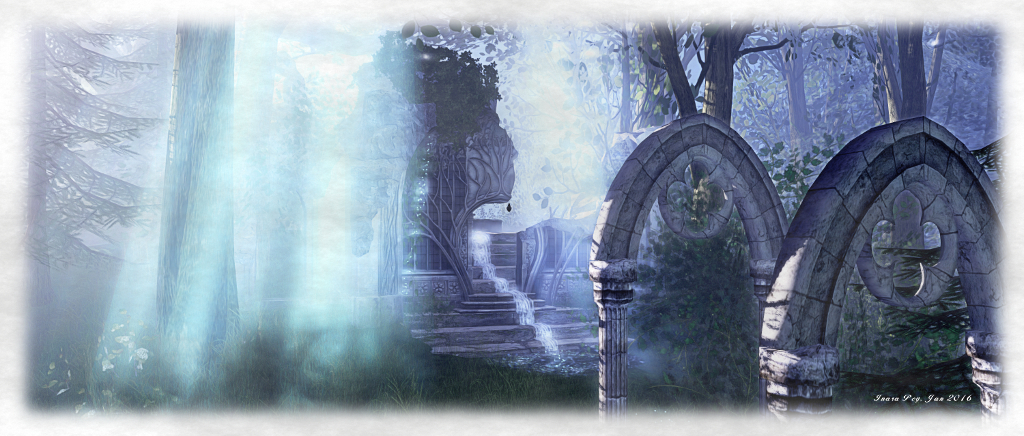
Telrunya - Forest of Dreams; Inara Pey, January 2016, on Flickr Telrunya – Forest of Dreams (Flickr) – blog post

Server Deployments

As always, check the server deployment thread for any updates.

On Tuesday, January 19th, the Main (SLS) channel received the server update package previously deployed to the three RC channel. This comprises:

  • Feature Request: llGetObjectDetails() constant OBJECT_TOTAL_INVENTORY_COUNT – when targeting an object, OBJECT_TOTAL_INVENTORY_COUNT will return the total of all inventory types in each link of the linkset. See BUG-10575 for further details
  • Feature Request: llGetObjectDetails() constant OBJECT_PRIM_COUNT – provides a means to get a worn attachment’s prim count (rather than just returning 0).  See BUG-10646 for further details.
  • Simulator crash fixes.

On Wednesday, January 20th, the three RC channels should be updated with a new server maintenance package. However, at the time of writing, it looked questionable if the deployment would go ahead. On  Tuesday, January 19th, Simon Linden informed the Simulator User Group meeting attendees that there was a problem on the latest deployment image for update which caused it to refuse to start, and was under investigation.

If the deployment does go ahead, it will comprise a simulator crash fix and a further feature request: llGetObjectDetails() functionality to get the parent_id of any task in the region (OBJECT_REZZER_KEY). This returns the parent_id of any task in the region:

  • If the object came from an object rezzer it returns the ID of the parent object
  • If it was rezzed by an avatar, it returns the agent ID of the avatar.

It will only return details for those objects rezzed in-world after the code has been implemented. Objects already in-world prior to deployment will be ignored (NULL_KEY is returned).

Project Bento

no major news here, other than initial filming for The Drax Files World Makers special on Bento took place on Tuesday, January 19th, 2016. There will be a further round of filming on Wednesday, January 20th. If you are an animator  / content creator who has something you’d like to demonstrate and possibly have filmed for the episode, please contact Draxtor Despres in-world ASAP.

In the meantime, a short piece I stitched together at the filming session, showing an avatar rigged to use the Bento finger extensions compared to a avatar without the rigging; a centaur and a part of bat wings (both by Aki Shichiroji)  utilising the Bento bones.

Finger animation in the video by Abramelin Wolfe. Elephant in the splash image by Medhue Simoni.

Stepping through the Gates of Memories in Second Life

Gates of Memories; Inara Pey, January 2016, on Flickr Gates of Memories (Flickr) – click any image for full size

Gates of Memories is a place where we are reminded that we don’t remember days,
we remember moments. Wandering through the region, designed by photographer shelly70, it is easy to understand why she feels this is the case: the region is filled with moments in time, each of which creates an impression waiting to be captured by eye and camera to become a memory to which we can return again and again.

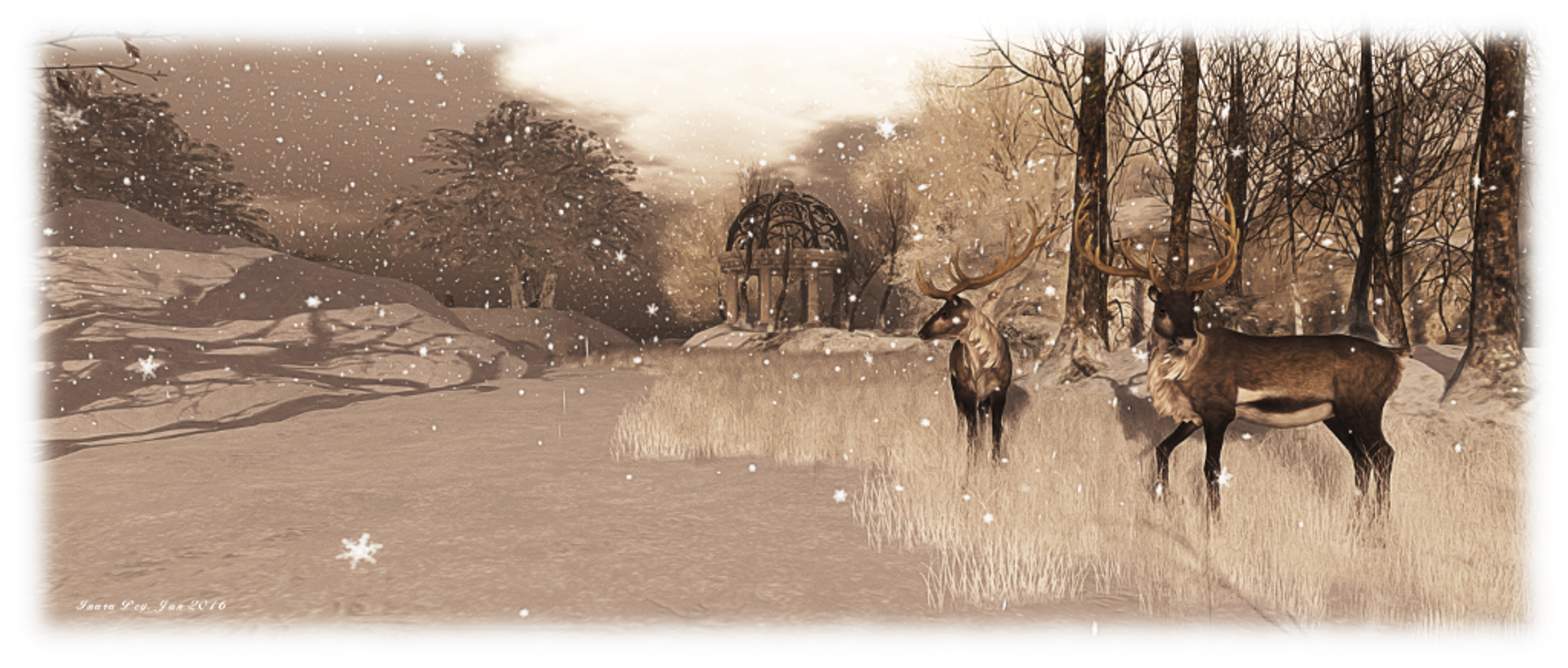
Caught in the depths of winter, the snowbound region presents a rural setting where the rolling ground is blanketed in white and trees denuded of their leaves stretch frosted, gnarled fingers and arms towards a cloud heavy sky from which more snow swirls and falls.

Gates of Memories; Inara Pey, January 2016, on Flickr Gates of Memories (Flickr)

Close to the landing point and just through a gated arch, sits a quaint cottage, garden hidden beneath the snow, tall lamp-posts lighting the way to the front door. Paper lanterns. the air inside heated by tiny fires burning in cradles slung below them, turn and dance in the falling snow, their colour contrasting strongly with the otherwise near monochrome setting. A second cottage sits across the region, smoke also curling from its chimney, hinting at warmth inside, the footpath to the front door swept clear of snow in welcome to visitors.

While the surrounding landscape may seem sparse under the lowering sky, there is actually a lot here to be discovered. The open spaces mean that things can be carefully placed so that they can naturally stand apart from one another, allowing the visitor to come upon them in a way that presents each in turn as a moment in time.

Gates of Memories; Inara Pey, January 2016, on Flickr Gates of Memories (Flickr) – click and image for full size

Art is very much central to these moments, particularly the work of Mistero Hifeng (a factor bound to attract me, as I simply adore his work), with pieces large and small to be found right across the region, sometimes standing alone whilst elsewhere forming the focal point for a particular setting – as with the couple standing in the centre of a little skating rink, the ice around them scored and crossed by the passage of skates.

But Mistero’s work isn’t alone in being celebrated here; those exploring the region will also come across figures by Rebeca Bashly (another artist I admire) and Angelica Leiner, as well as quirky characters by Krikket Bkackheart and Raya Jonson, whilst elsewhere a touch of fantasy can be found as unicorns play in the misty snow.

As well as offering moments in time to visitors, Gates of Memories  is itself a moment in time; one beautifully conceived and presented – and certainly one not to be missed.

Gates of Memories; Inara Pey, January 2016, on Flickr Gates of Memories (Flickr) – click and image for full size

SLurl Details

Bananas, trumpets, trailblazers and cacti

Le Cactus
Le Cactus

Maya Paris is a colourful, inventive and imaginative Second Life artist with a wonderfully wacky wit and knowing glint in her eye – as anyone who has visited the likes of Celebrity Blow Your Own Tits off, or Sauce will know only too well.

Now, at the invitation of Eupalinos Ugajin, she’s brought back a celebrated favourite creation:  Le Cactus, and it is every bit as wild and as wacky as ever, offering news delights for those who have not previously paid it a visit, while those who do remember it can revisit an old favourite for a fresh dollop of fun presented in a way that only Maya can master.

Le Cactus
Le Cactus

“[It’s] a celebration of the extraordinary talents of cultural trailblazer Josephine Baker, queen of the trumpet Valaida Snow, the lampshade-hatted dancers of the Casino de Paris and the offbeat irony of Jacques Dutronc,” Maya says of the installation, located high above LEA21. “Throw a banana on your head, dance on a cactus and tickle a tentacle. Everything’s interactive, so click away!”

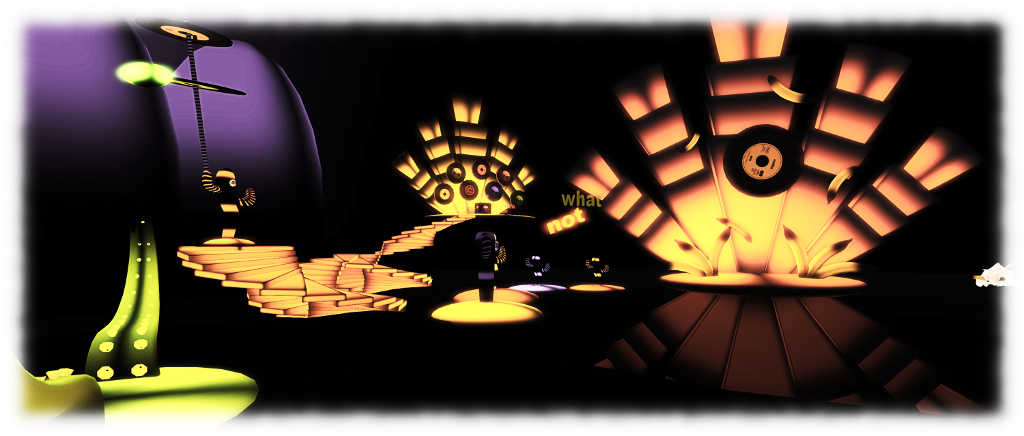
And everything is interactive. At the landing point there are seven vinyl records, each of which will give you a costume to don; beneath them sits a box offering a HUD and the helpfully entitled “Le Cactus: What to do here” note card.

Le Cactus - Josephine!
Le Cactus – Josephine!

The outfits are as imaginative and a colourful as the setting (which has a delightful Art Deco look and feel to it), and you can wear them with your avatar either completely masked, or with body clothed and visible. I went for fully hidden for most of the outfits, but showed myself whilst wearing the Valaida and Josephine outfits (see right, flapping away).

The HUD provides links to YouTube and short films about both women and a playback of Jacques Dutronc singing Les Cactus.

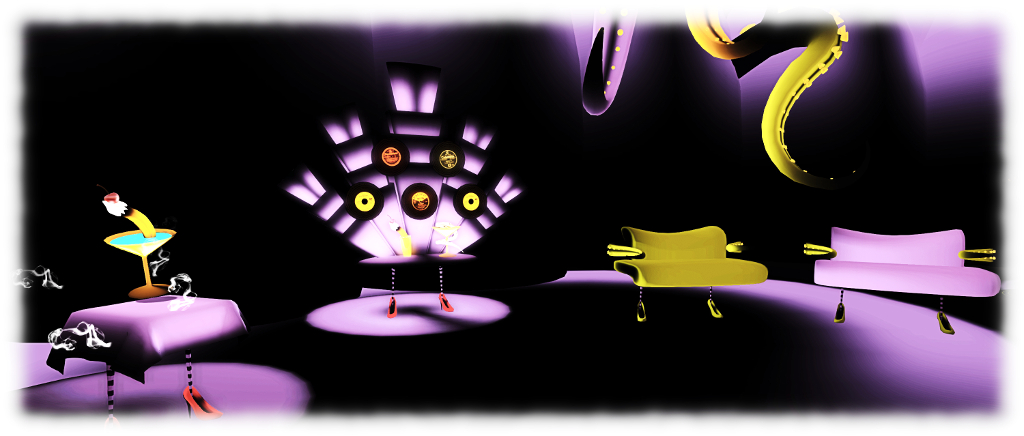
From here it’s off down the stairs to click, dance, spin, swap outfits – all to the early jazz of Radio Dismuke, if you have the audio stream on (and you should). Then, when you’ve had enough, drop into one of the bar-side sofas, or claim your drinks and refresh yourself.

Like any bar, the atmosphere at Le Cactus increases in leaps and bounds the more there are enjoying the place, so grab your friends, mash-up the outfits, stick and banana on your head and have fun.

When you’ve done with your visit to Le Cactus, don’t forget to drop-in at group level, where other things will be going on. Eupa revealed a little of Life on Jupiter to me, which is currently under construction and promises to be every bit as offbeat as le Cactus, and joined me at the bar for a time, suitably attired for dancing, but opting to wear a model of Skylab as floating headgear, rather than the suggested banana.

SLurl Details

Project Bento: Drax Files filming party reminder

Project Bento extends the avatar skeleton, adding a significant set of bones (e.g. 30 for the face, 30 for the hands (both of which can be seen inaction in the image above of an avatar by Matrice Laville), plus bones for wings, tails, additional limbs and ears / antennae
Project Bento extends the avatar skeleton, adding a significant set of bones for better avatar animation (human and non-human), including facial expression and jointed fingers (image: Matrice Laville)

Project Bento is the Lab-led project, working in collaboration with Second Life content creators, to enhance the SL avatar skeleton with over 90 new bones. The intention is to enable creators to accommodate features like subtle facial expressions, articulating fingers, smoothly flapping wings, waving tails, and much more that was previously impossible or required complex workarounds.

During the project, Draxtor Despres and I were invited along to the (initially closed) project development meetings, starting in June 2015, to witness the collaborative effort between the Lab and content creators, and document things once the project entered public knowledge.

Now, as a part of this work, Drax and the Lab are working on a special edition of The Drax Files World Makers series, which takes a look behind-the-scenes from the project, featuring interviews with Lab staff and moles engaged in the project, together with content creators who helping with the development and improvement of the project.

Etheria Parrott demonstrates how the new Bento bones can animate the head of a bunny avatar

To help with video, and as Linden Lab recently blogged, there were be two special filming sessions taking place on Aditi, the beta grid, to which those actively working on content utilising the Bento skeleton extensions are invited.

The two sessions, with dates and times, are described thus in the official blog post:

On January 19th at NOON SLT, there will be an open casting call for anyone who has built something with Bento to come show off their work. Selected creators may be filmed and/or interviewed to be featured in an upcoming episode of the Drax Files. You will need to login to Aditi in order to access the location (secondlife://Aditi/secondlife/Bento%20Island/128/128/23).

In addition to the open casting call, creators are encouraged to contact Draxtor Despres in-world with information about what they’re making. Video, screen-shots, descriptions – the more information the better, and the sooner you can share that – the better as well. Chosen creations and their creators will be contacted with information for a private filming on  January 20th, 2016, with Draxtor and Torley Linden.

Aki Shichiroji demonstrates her centaur avatar, which uses the new wing bones to animate the rear legs

Nor is the invitation limited to those directly involved in the  project: machinima makers are also encouraged to log-in to Aditi and enjoy an opportunity to film some of the creations which are currently being developed as a result of Project Bento.

Note that access to Bento Island may not occur prior to the start of the filming event (the official blog post quotes the island will be open from “January 10th”; however, given the post wasn’t published until January 14th and I’ve been unable to access the region when logged into Aditi, I believe this is a typo, and should read “January 19th”).  Also, if you haven’t logged-in to Aditi before (or in a good while), you are advised to do so well beforehand. Instructions on how to this, for those who need them, can be found on the SL wiki page.

In the meantime, Drax had produced a little teaser to help whet appetites, and I’ll see you over on Aditi on the 19th, and you can keep abreast of Project Bento through the project updates in these pages, which will also include more on the background to the project.

2016 viewer release summaries: week 2

Updates for the week ending Sunday, January 17th

This summary is published every Monday, and is a list of SL viewer / client releases (official and TPV) made during the previous week. When reading it, please note:

  • It is based on my Current Viewer Releases Page, a list of all Second Life viewers and clients that are in popular use (and of which I am aware), and which are recognised as adhering to the TPV Policy. This page includes comprehensive links to download pages, blog notes, release notes, etc., as well as links to any / all reviews of specific viewers / clients made within this blog
  • By its nature, this summary presented here will always be in arrears, please refer to the Current Viewer Release Page for more up-to-date information.

Official LL Viewers

  • Current Release version: 4.0.1.310054, January 15 – formerly the Maintenance RC viewer download page, release notes
  • Release channel cohorts (See my notes on manually installing RC viewer versions if you wish to install any release candidate(s) yourself):
    • HTTP updates and Vivox RC viewer version 4.0.1.309943 released on January 14 – combines the Project Azumarill RC and Vivox Voice RC updates into a single viewer  (download and release notes)
  • Project viewers:
    • No updates.

LL Viewer Resources

Third-party Viewers

V4-style

  • UKanDo updated to version 4.0.1.28170 on January 16th – core updates: merge with the SL 4.0.1 Maintenance release viewer (release notes)

V1-style

  • Cool VL Viewer updated as follows: Stable version to 1.26.16.8 and Experimental branch to 1.26.17.6, both on January 16th, 2016 (release notes).

Mobile / Other Clients

  • No updates.

Additional TPV Resources

Related Links