It’s Up to U in Second Life

Up to U; Inara Pey, July 2015, on FlickrUp to U, July 2015 (Flickr) – click any image for full size

Ricco Saenz recently posted that while Roche as we know it may be gone, the region remains, but under new ownership. Ricco’s post offers considerable food for thought on aspects of the region’s new look, which prompted me to go take a look for myself.

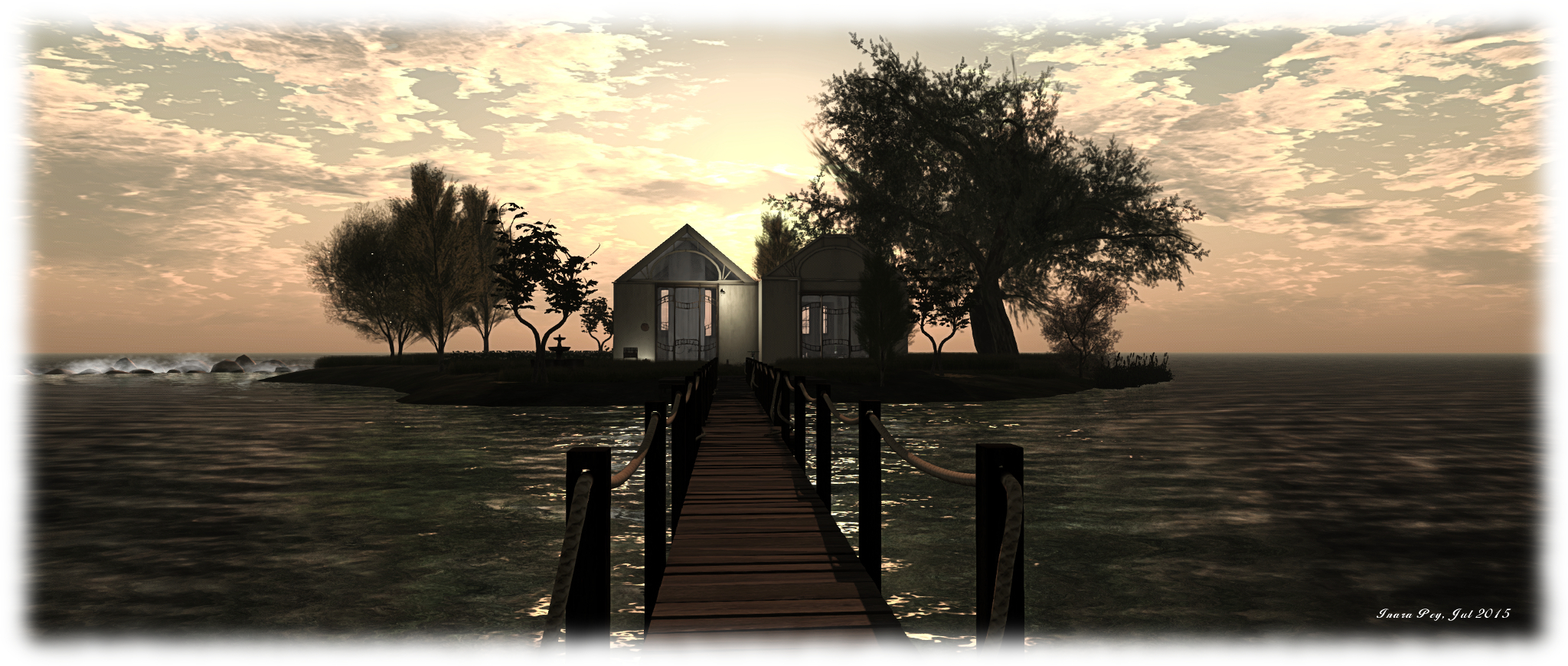
Roche is now held by ๑๑Ŧﻨσ๑๑ (Fio Bravin), who has given it the name Up To U. The make-over appears to be a shared activity between Fio and ありえす (ArieS Magic), and it sees the region split into two islands connected by a lone wooden bridge, while further out on the water sit a couple smaller islands, one of which has a lighthouse located on it.

Up to U; Inara Pey, July 2015, on FlickrUp to U, July 2015 (Flickr)

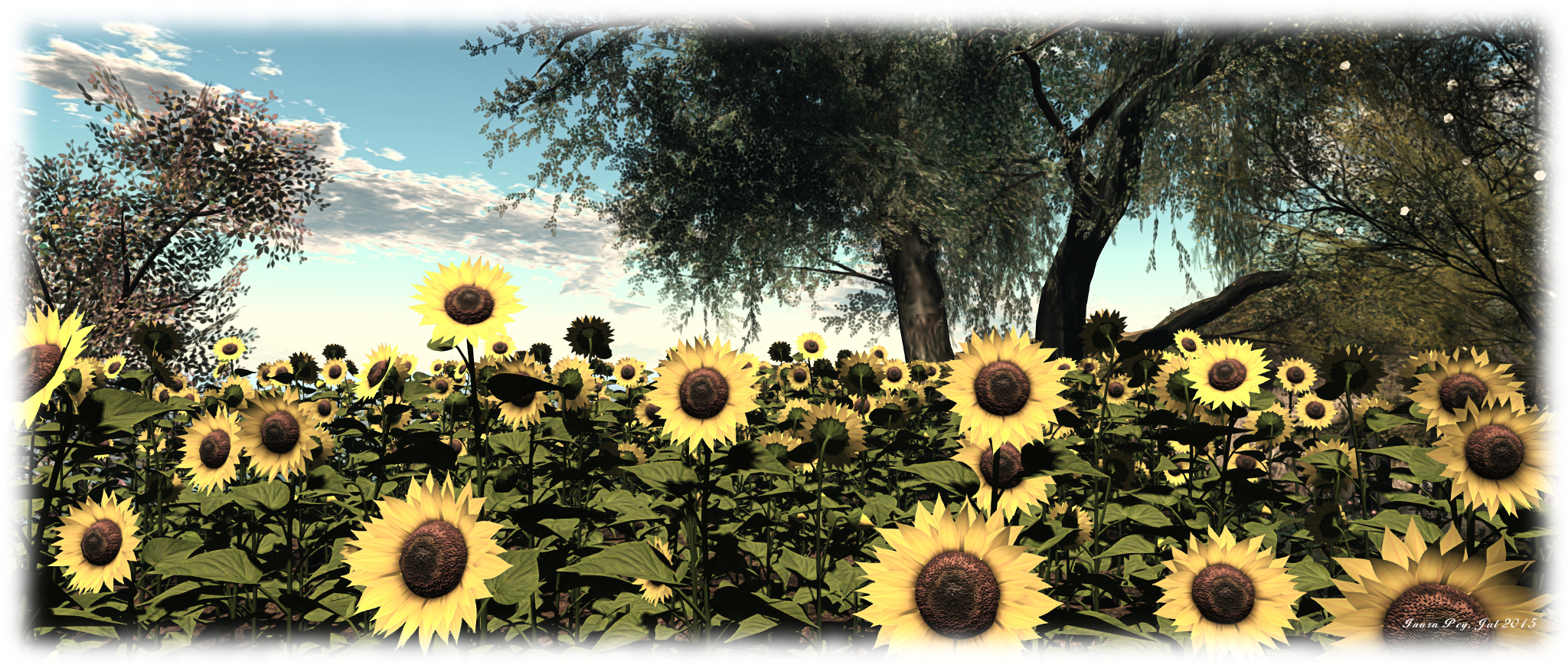
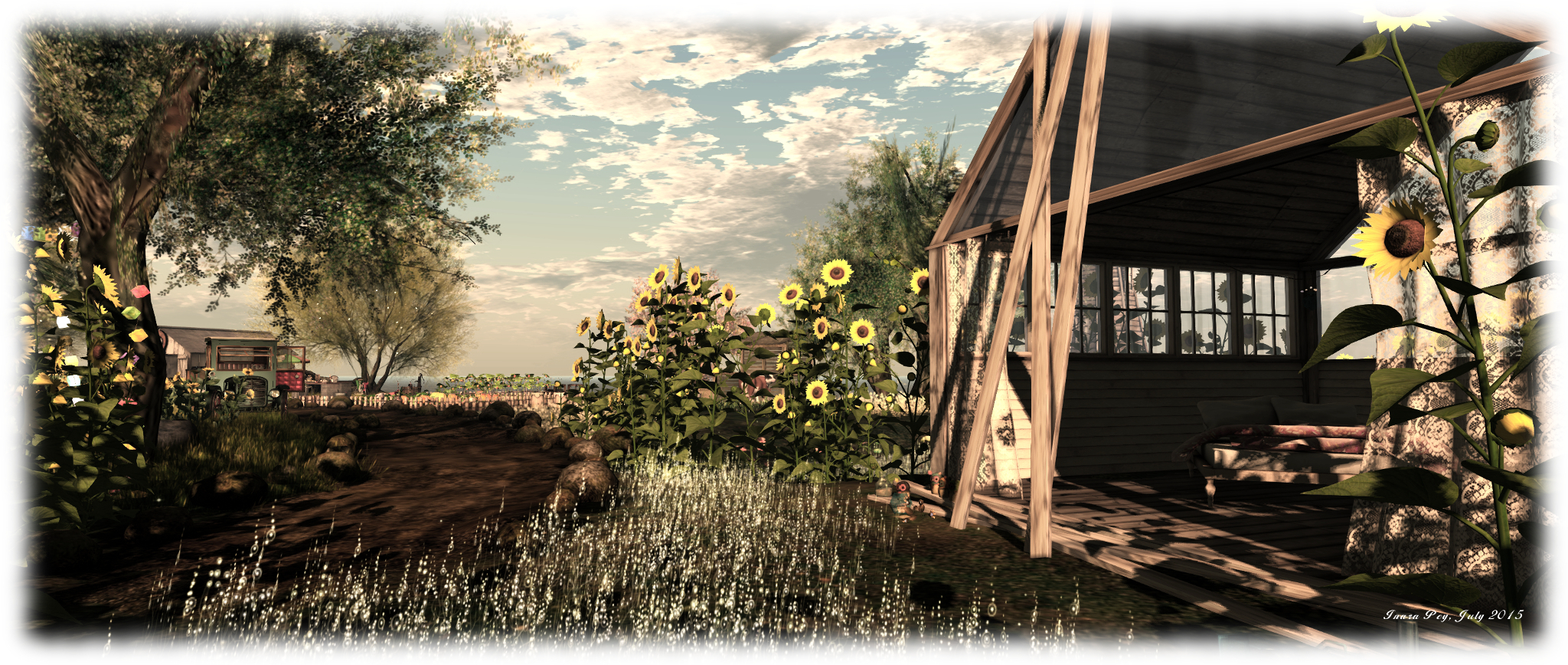
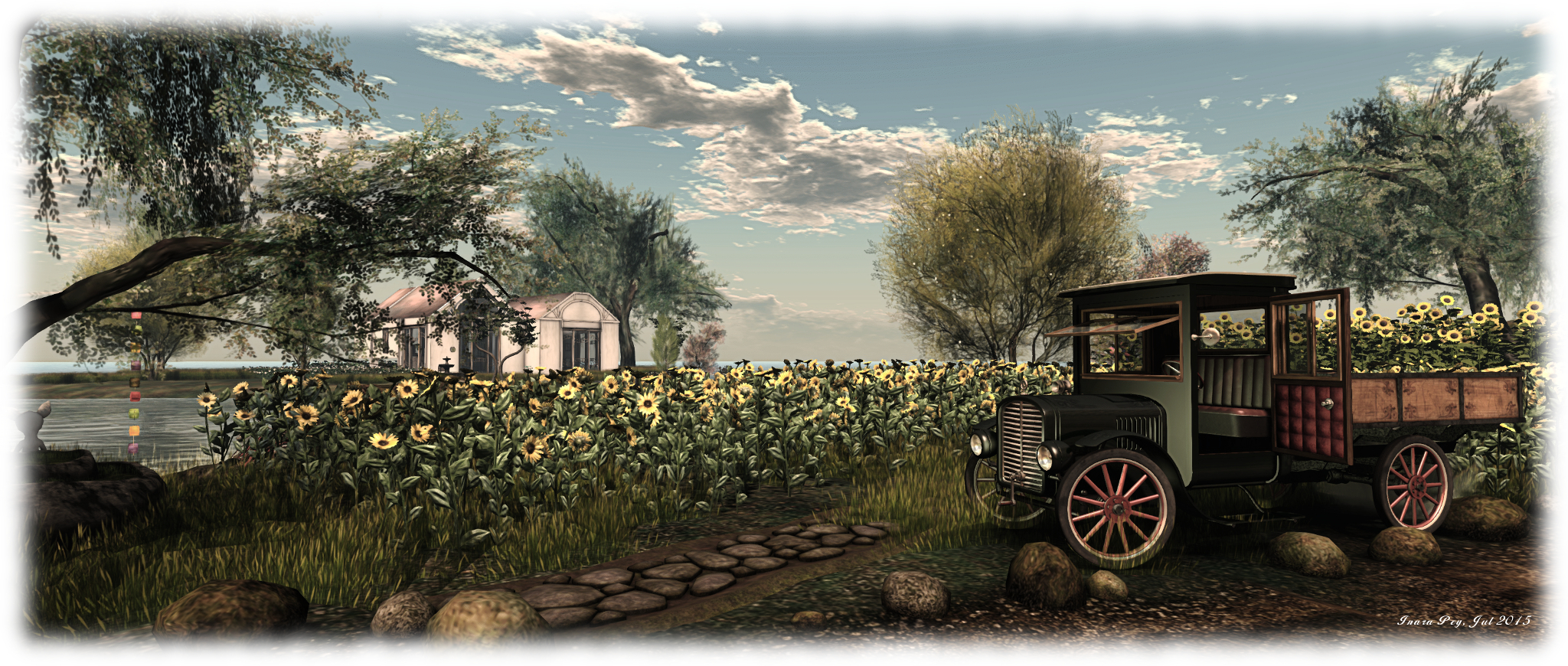
The larger of the two islands is awash with sunflowers neatly planted as if being cultivated. A dirt track curves across part of the island, passing a working barn and between the neat rows of sunflowers to arrive at a small summer-house still under construction, itself surround by a ring of the tall, yellow flowers. The entire scene is suggestive of country living, but there’s more.

Alongside the track sits a small area set-up for a barbecue, offering plenty to refresh the weary traveller. Nearby is a vegetable patch in the process of becoming a playground for rabbits and foxes. Further afield, things become a little more whimsical: alongside the barn float a trio ethereal blue leaves, inviting visitors to repose upon them and forget the world. Not too much further away, and in part hidden by the long grass and a fallen log, sits one of the little scenes which had Ricco turning his thoughts very eloquently to the subject of  anthropomorphism.

Up to U; Inara Pey, July 2015, on FlickrUp to U, July 2015 (Flickr)

Across the water and the wooden bridge, the smaller of the two islands is the setting for a whitewashed house surrounded by white flowers and long grass. I’ve no idea if it is open to the public or a pied-a-terre for Fio and ArieS when visiting the region, so I didn’t intrude inside; although a quick peep through the windows suggested it is a place where cats rule!

Taking over a region which has been so well-known and so well-loved for so long is no easy task. No matter how things are made over, there is always a risk that those who visit and who remember the “old” look are going to be haunted by ghosts of the past.

Up to U; Inara Pey, July 2015, on FlickrUp to U, July 2015 (Flickr)

Perhaps Up to U, as a name, reflects this, and is intended to offer the visitor with a simple choice when exploring the region: to see it with new eyes or with old. If so, I’ll opt for the former; Up to U brings a fresh and very different look to Roche, one that has its own charm and attractiveness, offering plenty of opportunities of those who want to take photos or want to sit and ponder or chat – and even those who fancy a little whimsy to stir their thinking!

SLurl Details

A Bloom-ing Evolution

Artist Evolution
Artist Evolution – Renaissance Gallery

“When I started in Second Life, I’d never worked in digital art, and photography for me in either world was a mystery.  When a friend mentioned I might enjoy this activity in Second Life, I laughed at him.  I am the person with the shaky, blurry picture in RL photos, even with an automatic zoom. Slowly and tentatively I started trying to be artistic with pictures, which were of course initially hideous.  I became obsessed with the effort.”

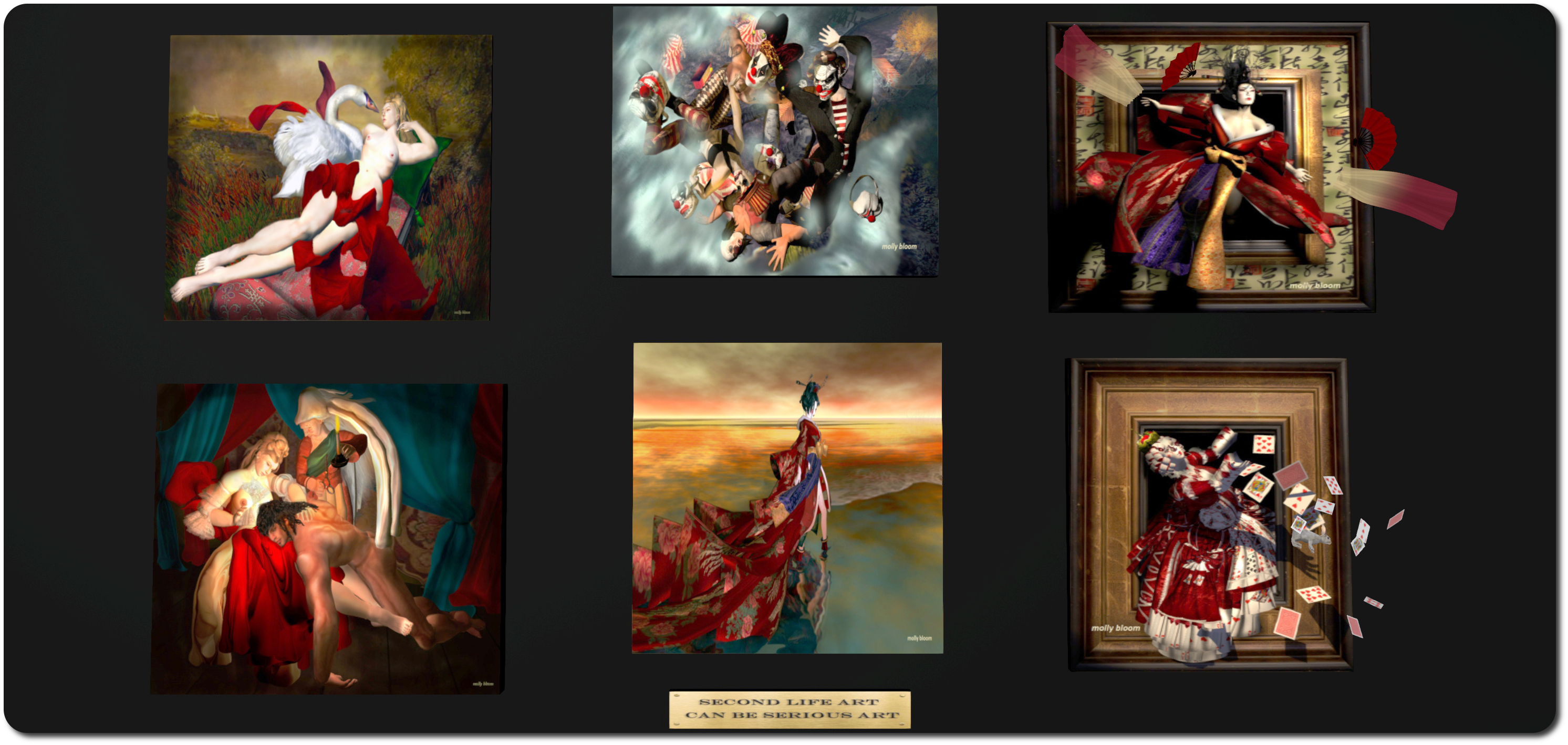
So open the introductory notes Molly Bloom has provided for the latest exhibition of her work, which opens at the Renaissance Gallery, curated by JolieElle Parfort, which officially opens on Monday, July 27th.

Artist Evolution
Artist Evolution – Renaissance Gallery

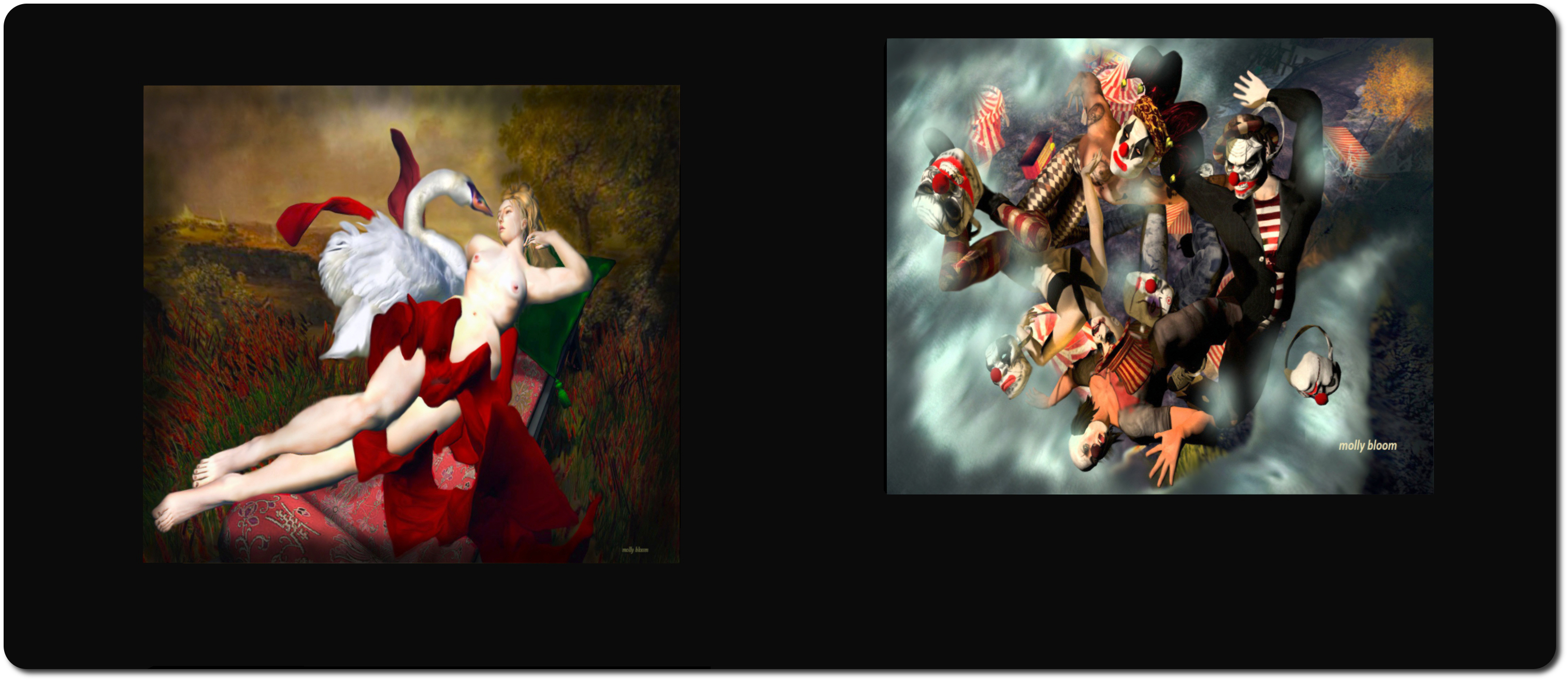
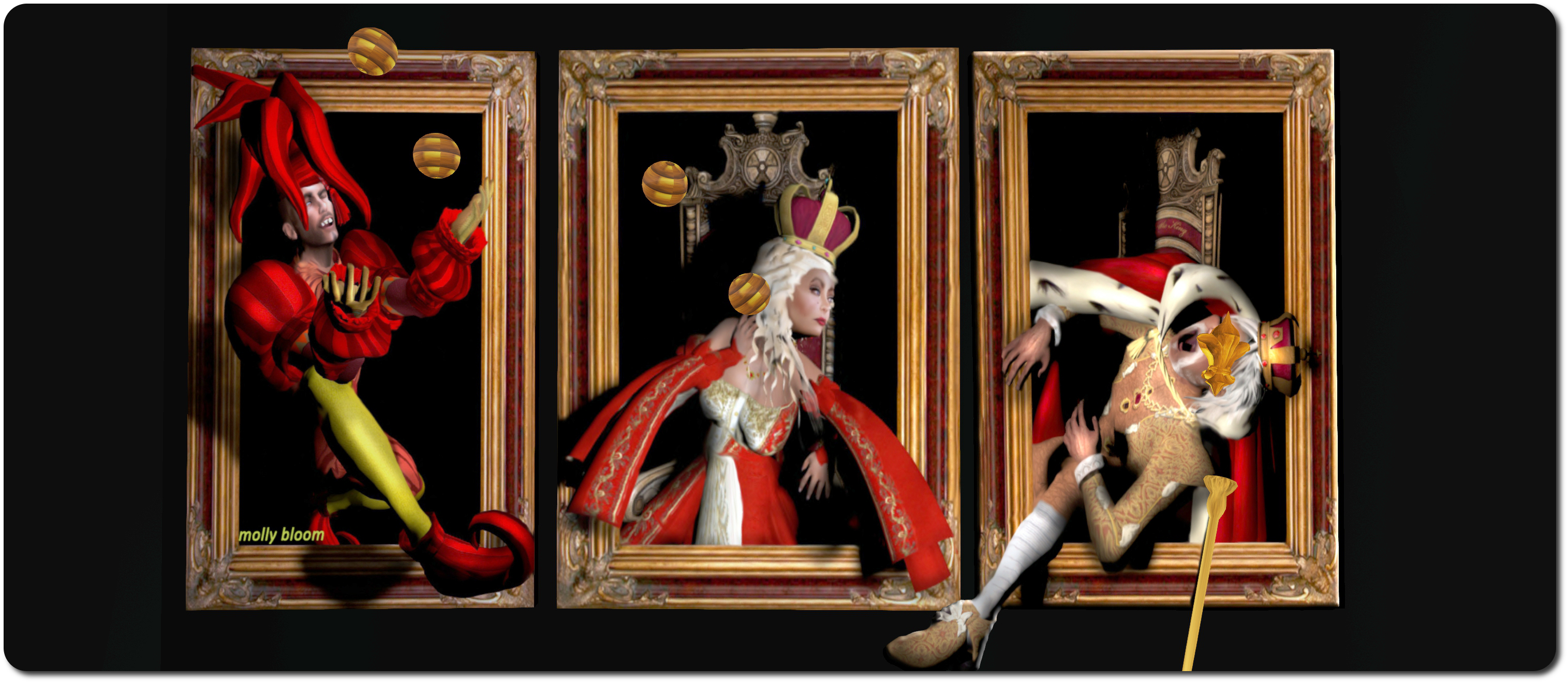
Entitled Artist Evolution,  the exhibit offers an examination of Molly’s SL art as it has evolved together with her mastery of the many composite elements that go into her work. As such it is a fascinating piece, not only for those who – like me – enjoy Molly’s work immensely, but for anyone interested in how an artist develops their eye, style, skill and artistry.

The pieces on display present the visitor with something of a historical look at Molly’s work as it has evolved, from her first “flat” snapshot (seen on the left wall as one enters the gallery), and progressing through her learning to build sets and make poses, discovering the power of lighting and lighting tools, to the influence of physical world art on her digital work as a result of her studies as an art history student.

Artist Evolution
Artist Evolution – Renaissance Gallery

“[I] have always been fascinated with Chiaroscuro, or the use of strong contrasts of dark and light.  Artists Raphael, Caravaggio, Rubens and a host of others from the 15th Century are known for this technique,” Molly says.  “My first very serious work was a reproduction of this lighting technique set in a classical style [shown in the headline image for this review, and in more detail directly above, left] … That lighting technique became my signature.  From there I started playing with adding 3D elements to my work …”

…And thus we come to Molly’s stunning 3D art pieces which have so delighted audiences in Second Life wherever they’ve been displayed, and which I’ve previously covered in the pages of this blog when reviewing exhibitions such as Brain-Gasm, Rock’n’Roll, and Depth Perception.

Artist Evolution
Artist Evolution – Renaissance Gallery

The evolution of style and content is clear through the pieces displayed. But more than that, this exhibit also reveals more about the artist herself; through the works displayed here, we also catch a sight of her drive, her determination to master new techniques, to expand her own abilities and her range of creative expression. There’s a joy in art to be witnessed here that underlines the fact that this is both an insightful and delightful exhibition; one not to be missed.

SLurl Details

2015 viewer release summaries: week 30

Updates for the week ending: Sunday, July 26th, 2015

This summary is published every Monday, and is a list of SL viewer / client releases (official and TPV) made during the previous week. When reading it, please note:

  • It is based on my Current Viewer Releases Page, a list of all Second Life viewers and clients that are in popular use (and of which I am aware), and which are recognised as adhering to the TPV Policy. This page includes comprehensive links to download pages, blog notes, release notes, etc., as well as links to any / all reviews of specific viewers / clients made within this blog
  • By its nature, this summary presented here will always be in arrears, please refer to the Current Viewer Release Page for more up-to-date information.

Official LL Viewers

  • Current Release version: Current Release version: 3.8.1.303130 – no change
  • Release channel cohorts (See my notes on manually installing RC viewer versions if you wish to install any release candidate(s) yourself):
    • No updates
  • Project viewers:
    • No updates.

LL Viewer Resources

Third-party Viewers

V3-style

  • Black Dragon updated to version 2.4.4 on July 22nd and then to version 2.4.4.1 on July 23rd – core updates: incorporation of the Viewer-Managed Marketplace functionality – change logs

V1-style

  • Cool VL Viewer Stable branch updated to version 1.26.14.1 and the Experimental branch updated to 1.26.15.0, both on July 25th – release notes

Mobile / Other Clients

  • No updates.

Additional TPV Resources

Related Links

Space update: Pluto, Mars, and Earth’s big cousin

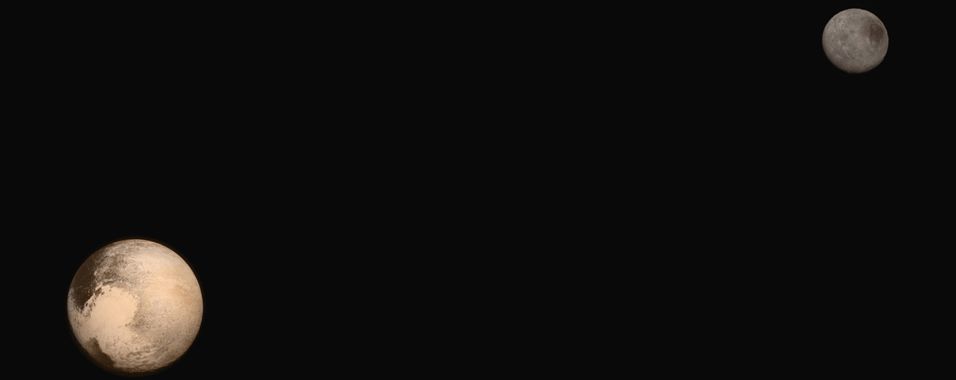
A composite image of Pluto an Charon, show to scale with one another and in true colour, as they were images by New Horizons on July 15th, 2015 (image courtesy of  NASA/ APL / JHU)
A composite image of Pluto and Charon, show to scale with one another and in true colour, as they were imaged by New Horizons on July 14th, 2015

New Horizons is continuing outbound from the Pluto-Charon system, its primary mission  complete. A new phase of the mission has now begun: returning all the data gathered safely to Earth; a process that is going to take an estimated 16 months to complete. Even so, and as indicated in my last report, what has already been received has been enough to turn much of planetary science on its head.

During a mission briefing on July 24th, 2015, Alan Stern, the New Horizons principal investigator and members of the science team provided a further update on the mission, and revealed some of the more stunning images captured by the spacecraft during the close approach phase of the mission. One of the most striking of these was a picture snapped by New Horizons just seven hours after close approach, when it was already 2 million kilometres (1.2 million miles) from Pluto.

The image shows the dark disc of Pluto’s night side (which will not see the light of the Sun for another 20 years), surrounded by a halo of atmosphere, 130 kilometres (80 miles) thick, backlit by the distant Sun. Within the atmosphere sit two bands of thick haze, one around 50 kilometres (30 miles) altitude and the second at around 80 kilometres (50 miles) altitude.

Taken from a distance of 2 million kilometres (1.25 million million) beyond Pluto, this black-and-white LORRI images, captured 24 hours after closest approach, reveals the haze of Pluto's atmosphere as sunlight is filtered through it
Taken from 2 million kilometres (1.25 million miles) beyond Pluto, this black-and-white LORRI images, captured just 7 hours after closest approach, reveals the haze of Pluto’s atmosphere as sunlight is filtered through it

These bands of haze are believed to be the result of ultraviolet sunlight striking the upper reaches of Pluto’s atmosphere, breaking apart the methane gas there, giving rise to more complex hydrocarbon gases such as ethylene and acetylene. These heavier gases then descend into the colder regions of Pluto’s atmosphere, condensing as ice particles, which are seen by New Horizon’s instruments as the bands of haze.

The ice particles are further acted upon by ultraviolet sunlight so that tholins are formed. Tholins are large complex organic aerosols thought to contain some of the chemical precursors of life. These gradually fall out of the atmosphere to mix with hydrocarbons on Pluto’s surface, giving it the distinctive colouring we see in images like those given below.

Pluto by day: this image of Pluto, captured on July 14th, is the clearest true-colour image of the dwarf planet so far returned by New Horizons and shows deails down to 2.2 kilometres across
Pluto by day: this image of Pluto, captured on July 14th, is the clearest true-colour image of the dwarf planet so far returned by New Horizons, and shows details down to 2.2 kilometres across

The July 24th briefing also revealed some of the most detailed images of Pluto’s sunlit side yet published, starting with the true colour image shown above. This shows Pluto in twice the level of detail as the July 13th image published by NASA, revealing surface features as small as two kilometres across (the ultra-high resolution images LORRI has captured will eventually reveal surface features as small as 50 metres across). Featured prominently and unmistakably in the image is Pluto’s light-coloured “heart”, informally named the “Tombaugh Regio” in honour of Pluto’s discoverer, Clyde Tombaugh.

This huge region is divided into two parts, defined by the two “lobes” of the heart. On the left (west side) is the relatively smooth expanse of the “Sputnik Planum”, roughly the size of Texas.The is largely composed of a thick layer of nitrogen, methane and carbon monoxide ice. That it is almost completely without craters suggests it is much younger than the rest of Pluto’s visible surface; but how it formed has yet to be determined.

An increased magnification image of “Tombaugh Regio” and its surroundings. On the left of the “heart” (the western side of the planet) lies the smooth form of “Sputnik Planum”; to the right, is the eastern “lobe” of the “heart”, which shows similar bright material to that found on “Sputnik Planum”, but spread within more chaotic terrain

The right side of the “heart” is also brightly-coloured, indicating the presence of ices similar in nature to those in “Sputnik Planum”, but it also shows a much rougher terrain as well. Further bright, icy material also extends from the “point” of the “heart” into the southern polar regions of Pluto, again mixing with rougher terrain.

While it is not clear what actually gave rise to the icy expanse of “Sputnik Planum”, it is not believed the same mechanism is responsible for the ice in either eastern lobe or which extends southwards from the “heart”. These are believed to be the result of material from “Sputnik Planum” being carried into these areas, where it is gradually “painting over” surface features there.

An enlarged view of the southern area “Sputnik Planum” bordering the Lovecraft-inspired “Cthulhu Region” showing how the chaotic terrain around the “Hillary Montes” and “Norgay Montes” has been invaded by icy deposits, possibly carried into them as snow by wind action, or even the result of glacial activity

Continue reading “Space update: Pluto, Mars, and Earth’s big cousin”

Windlight Magazine: Return to the Beach Photography Contest L$10k prize pool

WindlightTo mark the passing of the summer months, Windlight magazine has launched its first annual Return to the Beach photography competition.

“We are nearing the end of summer and we know that you would want to capture those special beach moments in Second Life”, said John (Johannes1977 Resident) Windlight’s founder and editor, in announcing the competition.

He continued, “select a beach in Second Life. If you are stumped where to find beaches, try the destinations guide: http://secondlife.com/destinations/beaches. Once you choose your beach or beaches, start snapping!”

On offer is a prize pool totalling L$10,000, together with some special extras:

  • 1st Place – L$5,000, 1 double page advertisement and a magazine article, plus a blog article
  • 2nd Place – L$3000, 1 double page advertisement and a blog article
  • 3rd Place – L$2000, 1 double page advertisement.

All entries should be posted in the Windlight Magazine Flickr group, and entrants are allowed 3 submissions total. In addition, the following guidelines should be observed:

  • When posting your photos please use the following naming convention: Windlight Magazine-Beach Photo Contest – SL Name-Photo #1, (or #2 or #3 for additional entries)
  • All photos must:
    • Be your original work, and must not have been posted elsewhere on Flickr or used elsewhere previously
    • Must include the SLurl of the beach where they were taken
  • Nudity is allowed if done in a non pornographic and non sexual way
  • Post-processing using external tools is permitted.
Jodi and I enjoy some beach-side relaxation at Timeless Memories. Where will your entries for the Windlight Magazine photo contest take you?

Please be respectful of region covenants and rules when visiting beaches, estates, or any location in Second Life, and ensure permission is granted for the taking of photographs.

Deadlines and Judging

  • Photos must be uploaded to the Windlight Magazine Flickr group no later than the end of Saturday, August 15th, 2015
  • Judging will be by an invited panel, who will assess entries on the following criteria:  creativity, originality, technique and the incorporation of the location in the photograph.
  • Winners will be announced on Thursday, August 20th, via the Windlight Magazine website and on the Windlight social media channels. All winners will be contacted in Second Life and via Flickr messaging.

So – if you haven’t already done so, it’s time to get down to the beach and start snapping! Good luck to all who enter!

Sherlock Holmes, Atticus Finch and Little Jack Horner, P.I.

It’s time to kick-off another week of fabulous story-telling in voice, brought to our virtual lives by the staff and volunteers at the Seanchai Library. As always, all times SLT, and events are held at the Library’s Second Life home at Bradley University, unless otherwise indicated.

Sunday, July 26th

13:30: Tea-time at Baker Street

Caledonia Skytower, Kaydon Oconnell and Corwyn Allen continue reading The Memoirs of Sherlock Holmes, originally published in 1894, and which brings together twelve (or eleven in US editions of the volume) adventures featuring Holmes and Watson, as originally published in The Strand Magazine. This week: The Adventure of the Crooked Man, first published in 1893.

Crooked ManHolmes pulled a large sheet of tissue-paper out of his pocket and carefully unfolded it upon his knee.

“What do you make of that?” he asked.

The paper was covered with the tracings of the footmarks of some small animal. It had five well-marked footpads, an indication of long nails, and the whole print might be nearly as large as a dessert-spoon.

“It’s a dog,” said I.

“Did you ever hear of a dog running up a curtain? I found distinct traces that this creature had done so.”

“A monkey, then?”

“But it is not the print of a monkey.”

“What can it be, then?”

“Neither dog nor cat nor monkey nor any creature that we are familiar with.

“Then what was the beast?”

“Ah, if I could give it a name it might go a long way towards solving the case.”

And so, in this conversation, occurring late one evening at the domicile of Dr. and Mrs. J. Watson, Sherlock Holmes introduces a further twist in a strange case involving a the violent death of an army officer, seemingly at the hands of his wife, both the body and the unconscious wife having been found in the room in which they had apparently locked themselves.

15:30: Special Performance: The Cold Shot Players

The Cold Shot Players return to Seanchai Library once more for another of their dramatic presentations focused on the delights and drama of classic radio shows. This month, they present Stranger in the House, originally broadcast in the 1940s as a part of The Whistler, an American radio drama series. This will be followed by a light-hearted reproduction of an episode of My Favourite Husband, the radio series from the 1950s which starred Lucille Ball, and which became the basis for what evolved into Ball’s ground-breaking TV sitcom series, I Love Lucy. With sound effects by Sonitus Randt.

18:00 Magicland Storytime – Thomasina

thomasinaJoin Caledonia Skytower at Magicland Park as she concludes reading from Paul Gallico’s 1957 novel (and later a 1963 Walt Disney film starring none other that Patrick McGoohan, alongside Karen Dotrice – who also appeared in Disney’s Mary Poppins and The Gnome Mobile – and Susan Hampshire).

When Thomasina, young Mary’s cat, suffers injury, Mary’s veterinarian father and widower, is typically unsympathetic , and rather than treating the cat, has it put to sleep – earning himself his daughter’s enmity his daughter, who declares him dead to her.

Thomasina, meantime, finds herself in cat heaven, only to be returned to Earth because she has lived only one of her nine lives. Thus begins a series of adventures involving Thomasina, Mary, her father and a local woman regarded as a “witch” by the children, but who has a caring way with animals…

Monday July 27th, 19:00: The Wizard of Karres

Gyro Muggins returns to the universe created by James H. Schmitz and given form through his 1949 novel, The Witches of Karres, as he continues reading the 2004 sequel, The Wizard of Karres, penned by Mercedes Lackey, Eric Flint, and Dave Freer. So why not join Gyro as he once more traces the adventures of Captain Pausert and his companions, Goth and the Leewit, the Witches of Karres.

Tuesday July 28th, Go set a Watchman

WatchmanTrolley Trollop continues to read selected passages from Harper Lee’s newly published Go set a Watchman.

While referred to as a “sequel” to Mockingbird, Lee’s 1960 Pulitzer-prize winning novel, Watchman actually pre-dates it, having been completed in 1957, leading Lee herself to refer to it as Mockingbird’s “parent”.

The story focuses on Scout Finch, the narrator of Mockingbird, who is here seen as an adult and using her given name, as she returns to her father’s home in Maycomb, Alabama, where she re-lives events from her childhood (including those central to the narrative of Mockingbird) as she tries to come to terms with political and personal issues, notably her own feelings about her birthplace and upbringing, and her father’s attitude towards society.

Thus it is that Watchman re-introduces readers to many of Lee’s most famous characters, including Atticus Finch, although readers may find the Atticus of this novel somewhat removed from the “younger” man found within Mockingbird.

Wednesday July 29th: 19:00: The Case of Four and Twenty Black Birds

blackbirdsI sat in my office, nursing a glass of hooch and idly cleaning my automatic. Outside the rain fell steadily, like it seems to do most of the time in our fair city, whatever the tourist board says.

So when the dame walked into my office I was sure my luck had changed for the better. “What are you selling, lady?”

“What would you say to some of the green stuff?” she asked, in a husky voice, getting straight to the point. She opened her purse and flipped out a photograph. Glossy eight by ten. “Do you recognise that man?”

In my business you know who people are. “Yeah.”

“‘He’s dead.”

“I know that too, sweetheart. It’s old news. It was an accident.”

Her gaze went so icy you could have chipped it into cubes and cooled a cocktail with it. “My brother’s death was no accident. I’m Jill Dumpty….”

And so Jack Horner, a noir-esque private eye (if a little short on stature) in Nurseryland, is launched into one of the most perplexing mysteries of his career – who killed Humpty Dumpty? Join Kayden Oconnell and Caledonia Skytower as they read from Neil Gaiman’s brilliantly conceived and written 1984 short story.

Thursday July 30th

18:45: Prologue: Mind Pictures

With Shandon Loring.

19:00: The Girl Who Lived on The Moon by Frank Delaney

Girl MoonHe has been described as “the most eloquent man in the world”. In a career spanning three decades, BBC host and Booker Prize Judge Frank Delaney has interviewed more the 3,500 of the world’s most important writers. He’s also an author in his own right, earning top prizes and best-seller status in a wide variety of formats.

His latest project is collectively called The Storytellers, and presents a series of short stories that follow the tradition of the seanchai: providing a crisp, concise tales of the world, and which also include his own notes on the history and craft of storytelling and the creation of myths.

Shandon Loring continues a journey through The Storytellers, this week reading from The Girl Who lived On the Moon.

She had a magical journey. Riding a moonbeam is like sliding down a very, very smooth mountain – it’s like having a wonderful slide for a long time, except that everything is warm, not hot, but a kind of gentle warmth, that makes one a little sleepy.

And so the girl who lived on the Moon rides to Earth, part of her journey filled with dreams. When she arrives, she grants the human race insights which cause us to wonder if times were different then, when “fish danced the polka on the surface of the sea and the birds said their prayers out loud.”

—–

Please check with the Seanchai Library SL’s blog for updates and for additions or changes to the week’s schedule. The featured charity for June / July is the The Xerces Society, at the forefront of invertebrate protection worldwide, harnessing the knowledge of scientists and the enthusiasm of citizens to implement conservation programmes.

Additional Links