As always, please refer to the forum discussion thread for the latest updates and information.
There was no scheduled deployment to the Main (SLS) channel this week.
On Wednesday 24th September, all three RC channel received a further update to the Experience Tool maintenance release deployed in week 38, which includes:
llUpdateKeyValue() now correctly creates a key if it did not previously exist
Objects using experience permissions and llAttachToAvatar() are no longer automatically detached when leaving an area where the Experience is allowed.
SL Viewer
The promised viewer using the new GPU benchmark system appeared as a project viewer on Thursday September 25th. Version 3.7.17.294710, includes MAINT-3131, which is simply described as “Death to the GPU Table”, which pretty much sums the viewer up!
Rather than using the GPU table as a means of determining default graphics level for a graphics card, the viewer measures the memory bandwidth of the card, and sets the default based on that (plus a couple of other parameters. The release notes add, “Initial settings on shiny powerful hardware should now let that hardware shine. Initial settings on low-end machines should not degrade performance from current experience.”
CDN and Regions
The Snack RC is currently being used for CDN testing on Agni. As noted in my week 38 updates, Denby, Hippo Hollow, Hippotropolis and Testsylvania Sandbox were initially placed on the RC, and they have since been joined by Brasil Rio, Brocade, Fluffy, Freedom City, Rocket City and Whippersnapper.
Group Ban Trivia
OK, so not exactly an update, but Baker Linden indicates that some 4500 group bans have occurred since the arrival of the group ban list functionality in the official viewer (and a number of TPVs). Will be interesting to hear how that number increases once Firestorm includes the capability.
Virtual Ability has announced the speakers and schedule for the 4th International Disability Rights Affirmation Conference (IDRAC), which will take place in Second Life on October 3rd and 4th, 2014 under the title of “Technically, we’re accessible… right?” Exploring True Inclusion in the Digital World.
The conference will take place at the Sojourner Auditorium on Virtual Ability Island, with the first presentation taking place at 05:30 SLT on Friday October 3rd. Speaking at the event will be:
Babar Shahzad Chaudary. a Doctoral Researcher for Mobile Computing/Embedded Systems at University of Oulu, Finland
Catherine Easton, who will be speaking on access to the Internet and human rights
David Sloan, who will present From Checklist Accessibility to Accessible User Experiences
Dr. Edmund F. LoPresti, an adjunct faculty in the Department of Rehabilitation Science and Technology at the University of Pittsburgh, who will be speaking on Assistive Technology for Computer Access
Gregg Vanderheiden, who will be discussing AutoPersonalization in Real and Second Life
Laura Hall, who will be presenting Fun for Everyone: Assistive Technology for Video Gaming
Gunela Astbrink, an ICT policy advisor and researcher
Brian Kelly, presenting Web accessibility is not (primarily) about conformance with web accessibility standards
Tim Creagan, Sr. Accessibility Specialist at U.S. Access Board
Anthony Giannoumis, presenting A Revaluation of the Cultural Dimension of disability policy in the EU: the impact of digitization and web accessibility
blondieCART, iSkye Silverweb, and Gentle Heron from Virtual Ability, presenting Hear With Your Eyes – How It’s Done
Joel Foner, presenting Wait, what was that? Using inclusion to create a huge win for everyone, not just those who ‘need it’
Tom Boellstorff, presenting Bytes and Pixels: The Social Impact of Digital Inclusion.
The open-air Sojourner Auditorium, Virtual Ability Island, location for the 2014 ISRAC conference, to be hosted by Virtual Ability Inc
Full details of the two-day programme, which will include social activities as well as the main speaker programme, can be found on the Virtual Ability blog. Attendance for the event is open to all, and Virtual Ability extend a warm invitation to anyone wishing to attend.
In April, I followed the Lab’s lead in reporting on a new Massive Open Online Course (MOOC) designed to help Spanish-speaking educators in the use of Second Life as a starting point in their interaction with emerging and innovative environments that can be used for education.
Professor Max Ugaz, UMSP
Since that time, and as the Lab again reports, the course has been improved and updated, and a new session is set to start on Monday September 29th. The course has been developed by the Universidad de San Martín de Porres (USMP), located in Santa Anita, Lima, Perú, under by the university’s Project DirectorofVirtual Worlds, Professor MaxUgaz. The course will comprise three week-long modules with a total of 17 lessons and an average workload of around 5 or 6 hours per week.Details on the course, together with a registration form for interested parties, are available the university’s website, which includes an introductory video for the course (in Spanish). The course will take place at one of the USMP’s teaching areas in Second Life, commencing on Monday September 29th, as noted. As my own Spanish is poor to non-existent, I’ve taken the liberty or reproducing the Spanish portion of the Lab’s blog post below:
l Proyecto en Mundos Virtuales de la Universidad de San Martín de Porres de Perú, inicia este 29 de setiembre la segunda edición del curso en la modalidad MOOC (Curso Masivo Abierto En línea) titulado “Introducción a Second Life para Educadores 2da. Ed.”. El curso es gratuito y está diseñado para capacitar a educadores y público en general de habla hispana en el uso del mundo virtual Second Life, a fin de ofrecer conocimiento que permita desempeñarse en este entorno y aprovechar su potencial, especialmente en el ámbito educativo.
Si tú o alguien que tú conoces pueden beneficiarse de un curso como éste, pueden acceder al vídeo de introducción y registrarse en la página web. Inicio: 29 de Set.
Además se puede visitar la sede del curso dentro del mundo virtual desde nuestra Guía de Destinos.
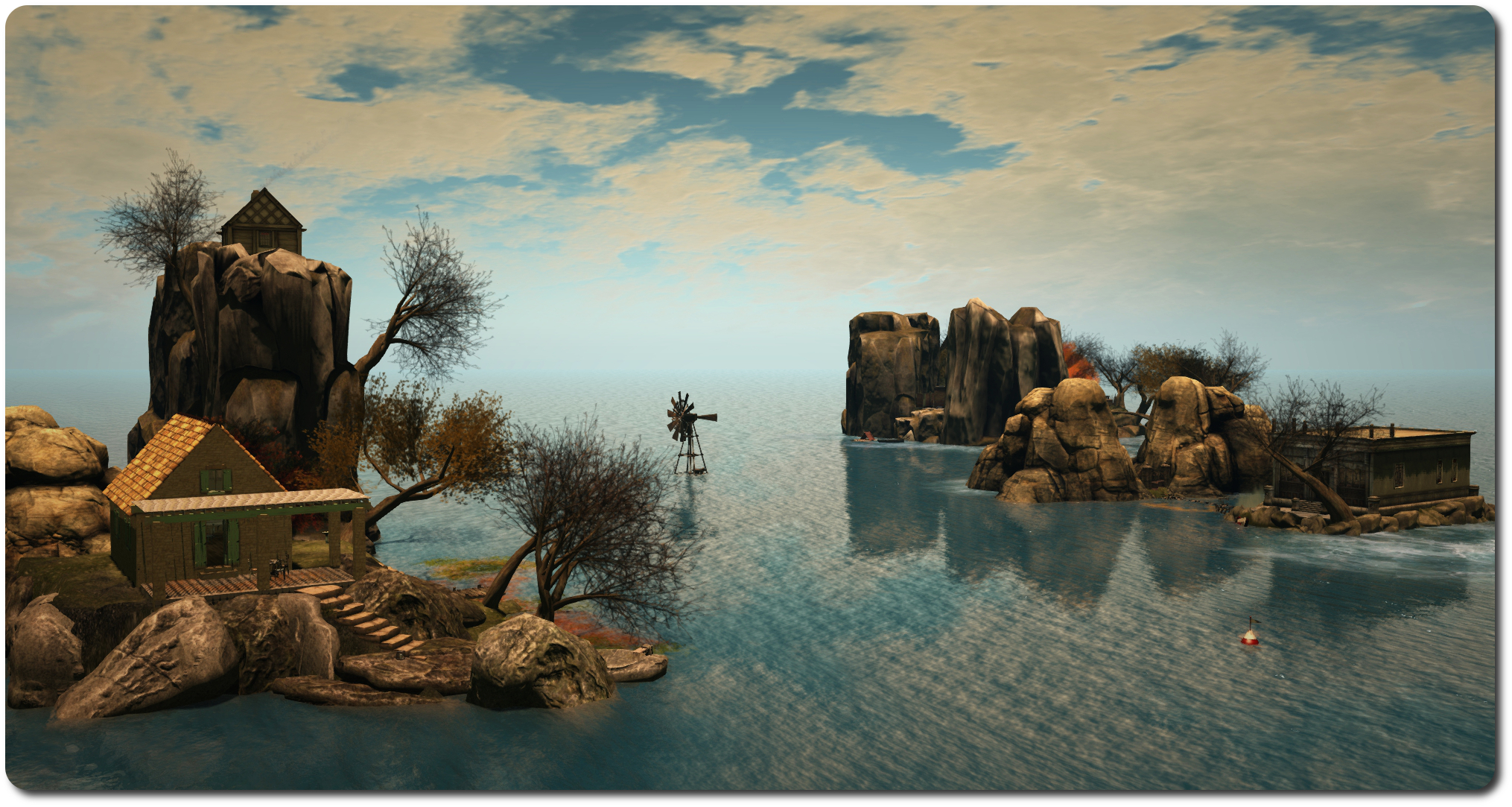
Square Pegs in Round Holes is a fairly new region to open its doors to the public, offering “a place to explore and while away time”. A homestead region (Kashmir Dreams), it is the work of Rwah Resident, whom some may know through her stunning photographic blog and Flickr stream. It is a sheer delight to explore, comprising a set of low-lying islands, most connected by a series of stone bridges, and a trio of tall needles of rock, also connected to one another by stone spans. A broad channel of water separates the two.
The build offers two suggested windlight settings, Bryn Oh’s Immersiva Grey Dust, which offers a darkly atmospheric look and feel to the region, or Bree’s appleblossom for a brighter, more sunny aspect to the day. However, the fact is that the design lends itself to a wide range of windlights and is somewhere in which SL photographers are likely going to want to experiment with a wide range of lighting options and settings – as I found myself doing.
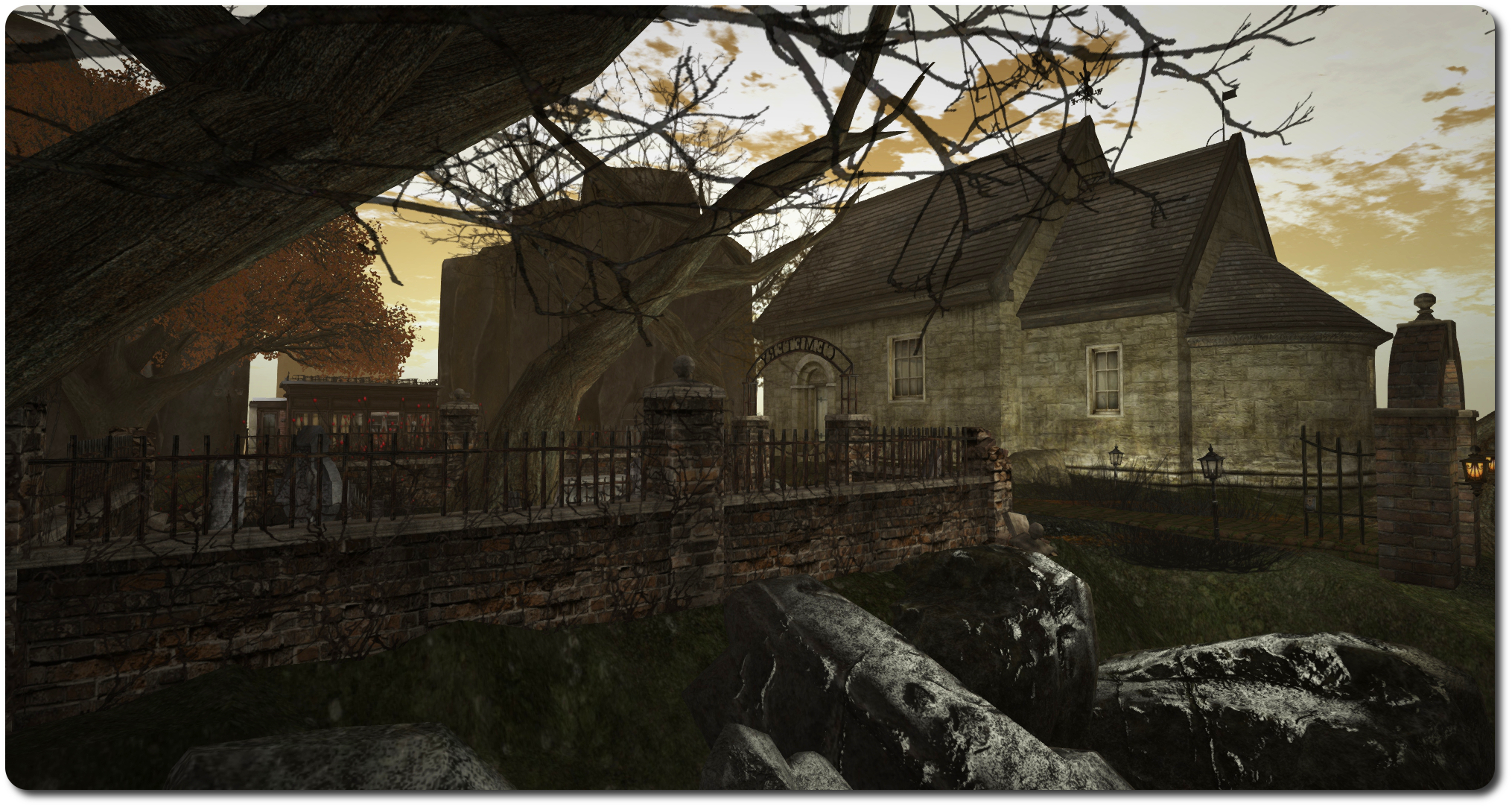
The landing point is located on the largest of the low-lying islands, where a welcoming note card is offered. Here one will find an old church and cemetery, that latter apparently last used in 1931. The church has passed beyond its original purpose, and among other things, now provides information on the artists who have some of their work on display within the region, presents opportunities to join the region’s group and / or find out more about the region, and offers a corner to sit and chill with friends. I do recommend a visit inside.
Beyond the church sits a small café, again offering a place to meet, sit and chat, with seating areas inside, out the back and down on the water below. The bridges allow the visitor to island-hop across a couple of small rocky outcrops standing above the waves to reach the second largest of the islands, which offers a sandy beach backed by rugged outcrops of grey rock. A gap through the latter will lead the way to the region’s art gallery.
To reach the tall needles of rock across the region, one can either fly or use one of the Seven Emporium Time Traveller teleport system trunks which can be found at each of the major locations around the region. There is a low-lying promontory beneath the last of the needles, which, together with the final small island right off to one side of the region, is probably best reached by either flying or via the row-boat available from down below the café on the main island. Both the promontory and the little island offer further places to sit and relax – the former complete with coffee and cakes!
“As some might know I have a love for buildings, houses etc., in Second Life,” Rwah says of the her reasons for creating Square Pegs in Round Holes. “My first ever build was the coastal loft from {what next}. My second build the NY apartment by Apple Fall and my third a build by Scarlet Creative. An addiction was born.
“Since I only lived on a sky platform with a minimum amount of prims most of the times, builds were rezzed, admired, drooled over and derezzed again.” Square Pegs in Round Holes gives her the opportunity to do more, and to share her eclectic collection of buildings with others – which is why she warns that the region is liable to be an ever-changing collection of buildings. However, and as she also makes clear, all are welcome to explore and photograph – but are asked to respect the rules.
I generally keep an eye on the Lab’s corporate website, but confess that things have been such that over the last month, other things have been keeping me occupied so I’ve been a little lax in my checks; however, the Lab have refreshed the Leadership section of the company’s About Page. I’m not sure precisely when this happened, but it appears to have been some time towards the end of August 2014, or early September.
The updated Leadership section of the page sees an expanded management team list complete with photos for all of those on it, rather than the mix of photos and the “creation” images previously found against individual bios.
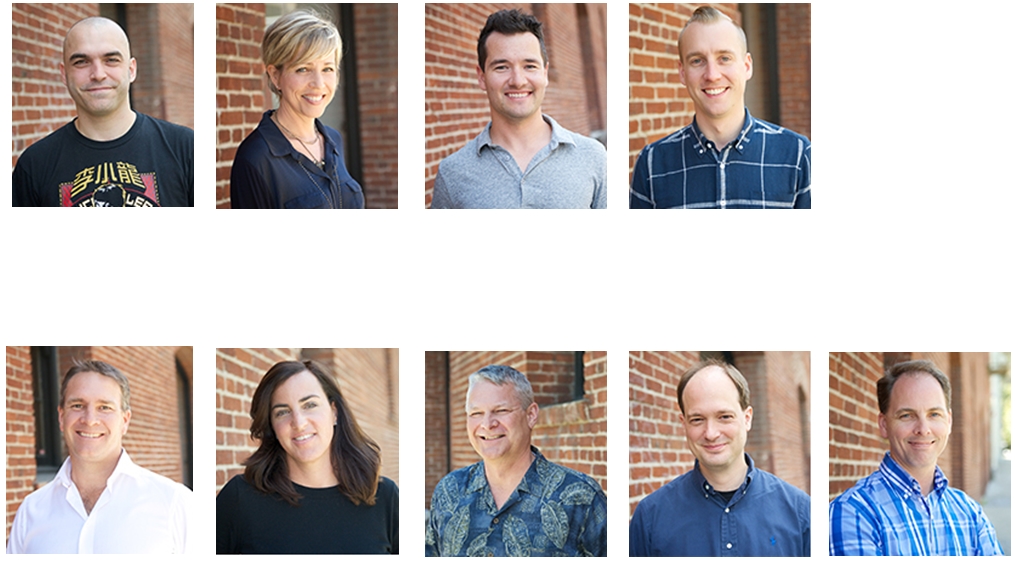
New to the page (but not necessarily to the Lab) are photos and bios for Rob Anderberg, Senior Director of Development, Pam Beyazit, Senior Director of HR, Scott Reismanis, Director of Digital, and Peter Gray, Director, Global Communications.
LL’s management team: LL’s management team: Rob Anderberg, Pam Beyazit, Scott Reismanis (of Desura fame) and Peter Gray (tow row) join Ebbe Altberg, Kelly Conway, Don Laabs (Danger Linden), Landon McDowell (Landon Linden) and Jeff Petersen (Bagman Linden) (bottom row) on the Lab’s corporate website management page
They all join the familiar line-up of Ebbe Altberg, Kelly Conway, Don Laabs, Landon McDowell and Jeff Petersen.
Gone from the management list is John Laurence, VP of Product, although his LinkedIn bio still records him as working at the Lab (and he was still listed as a member of the management team in August 2014). if he has in fact recently left the Lab, he succeeds Lee Senderov, formerly the Lab’s VP of Marketing, as the most recent departure from the Lab’s management team; Ms Sederov having moved on from the Lab around April 2014 to join Shopular as the Head of Marketing there.
The list of board members remains unchanged since Will Wright’s departure towards the start of 2014.
These updates both reflect changes to the Lab’s management structure and a gradual re-tuning of the corporate website itself, which also saw the removal of the Beta Sign-up option from the menu bar at the top of each page some time around the end of August, and which had previously seen the tag-line “Makers of Shared Creative Spaces” replaced by “Build Worlds With Us” some time in July or August 2014.
A final potential point of interest on the corporate site lies in the Careers Page, which has a list of ongoing career opportunities most likely linked to the Lab’s planned staff expansion to help in the development of their next generation platform. The point of interest is that two of the current positions – for a Senor Software Engineer and a Senior Software Engineer, Avatar – are referred to as being located in Cambridge, Massachusetts, rather than at the Lab’s Boston office, as one might expect. Does this signify that some of the work on the new platform is being carried out somewhat separately from the Lab’s core activities on the East Coast? Time may tell.
In May of 2014, Landon Linden, aka Landon McDowell, the Lab’s VP of Operations and Platform Engineering, wrote a blog post on the reasons why a series of issues combined to make Second Life especially uncomfortable for many.
At the time, and as many bloggers and commentators – myself included – noted, the post came as a refreshing breath of fresh air after so long without meat-and-veg communications from the Lab in terms of what is going on with the platform and why things can go wrong.
Now Landon is back explaining how the Lab’s Ops team responds to issues within their services, the communications tools they use – and why the tools are so effective.
An Inside Look at How The Ops Team Collaborates is once again an interesting and informative piece, delving into not only the technical aspects of how the Lab respond to problems within their services, but which also encompasses the very human aspects of the dealing with issues – handling emotions when tensions are high, opening the window for those not directly involved in matter to keep an eye on what is happening so that they can also make better informed decisions on their own actions, and more.
Landon McDowell, the Lab’s VP of Operations and Platform Engineering and his alter-ego, Landon Linden
The core of the Lab’s approach to incident communications is the use of text chat (specifically IRC) rather than any reliance on crash team meetings, the telephone and so on. Those who deal with the Lab on a technical level won’t be surprised at the use of IRC – it is a fairly strong channel of communication for the Lab in a number of areas; but what makes this post particularly interesting is the manner in which the use of IRC is presented and used: as a central incident and problem management tool for active issues; as a means of ensuring people can quickly get up-to-speed with both what has happened in a situation, and what has been determined / done in trying to deal with it; as a means of providing post-mortem information; and as a tool for helping train new hires.
These benefits start with what is seen as the sheer speed of communication chat allows, as Landon notes:
The speed of text communication is much faster. The average adult can read about twice as fast as they can listen. This effect is amplified with chat comms being multiplexed, meaning multiple speakers can talk intelligibly at the same time. With practice, a participant can even quickly understand multiple conversations interleaved in the same channel. The power of this cannot be overstated.
In a room or on a conference call, there can only be one speaker at a time. During an outage when tensions are high this kind of order can be difficult to maintain. People naturally want to blurt out what they are seeing. There are methods of dealing with this, such as leader-designating speakers or “conch shell” type protocols. In practice though, what often prevails is what one of my vendors calls the “Mountain View Protocol,” where the loudest speaker is the one who’s heard.
In text, responders are able to hop out of a conversation, focus on some investigation or action, hop back in, and quickly catch up due to the presence of scroll back. In verbal comms, responders check-out to do some work and lose track of the conversation resulting in a lot of repeating.
He also notes that not everyone is involved in a situation right from the start. Issues get escalated as they evolve, additional support may be called-in, or the net widened in the search for underlying causes, requiring additional teams to be involved, or the impact of an incident spreads. Chat and the idea of “reading scrollback” as the Lab calls it, allows people to come on-stream for a given situation and fully au fait with what has occurred and what is happening in a manner not always possible through voice communications and briefings, and without breaking the ongoing flow of communications and thinking on the issue.
The multiplexing capabilities of chat also mean that individuals can disengage from the main conversation, have private exchanges which, while pertinent to the issue, might otherwise derail the core conversation or even be silenced in something like a teleconference – and those engaged in such exchanges can still keep abreast of the central conversations.
For an environment like the Lab, where operations and personnel are distributed (data centres and offices located in different states / on different coasts, not everyone working from an office environment, etc.), chat has proven a powerful tool, although one that may take time getting to grips with, as Landon notes about his first exposure, saying:
I … just sat there staring at the screen wondering what the hell had just happened, wondering what the hell I had gotten myself into. I thought I was a seasoned pro, but I had never ever seen an incident response go that smoothly or quickly. Panic started to set in. I was out of my league.
However, the benefits in using it far outweigh any need for a degree of gear shifting required by ops staff in learning to use the approach. As Landon states in closing his comments, “when it works it is a wondrous thing to behold, a ballet in a war zone, beautiful, terrifying, and glorious.”
This is another great insight into what happens inside the Lab, and as such, the post makes very worthwhile reading, whether or not you have a background in Ops support.
 The Trace, April 2014 (Flickr) – blog post






 Inara Pey: Living in a Modemworld