The Seanchai Library will be presenting another round of stories and readings in Voice this coming week, which will see the continuation of two of their serialisations, together with a lot of other goodies.
As always, all times SLT, and unless otherwise stated, events will be held on the Seanchai Library’s home on Imagination Island.
Sunday November 25th
16:00 – Community Virtual Library FUNdraiser
Put on your cute burlesque outfits and get ready to have fun! We’ll have the poles out for dancing as Gina treats us to fun tunes. This is a fundraiser for CVL, so be sure to tuck a few lindens in your pocket – you never know if you might need to ‘encourage’ someone to dance by donating to the cause.
Plus…Derry and Bear will have some of their images up for sale – all proceeds going to CVL!
Dancing 16:00-17:00 SLT; art sale 16:00-midnight.
18:00 – Peter Pan, Part 5
Illustration from “Peter and Wendy” by James Matthew Barrie, Published 1911 by C. Scribner’s Sons, New York
Caledonia Skytower presents the fifth (of 6) readings of novelist and playwright J. M. Barrie’s most famous work.
While Peter Pan first appeared in another of Barrie’s works, The Little White Bird, written for adults in 1902, it was in the 1904 stage play, Peter Pan, or The Boy Who Wouldn’t Grow Up in which he first came to widespread public attention. The play was later expanded upon by Barrie to form the 1911 novel, Peter and Wendy, which later became Peter Pan and Wendy and, eventually, simply Peter Pan.
Both the stage play and the novel tell the story of Peter Pan, a mischievous little boy who can fly, and his adventures on the island of Neverland with Wendy Darling and her brothers, the fairy Tinker Bell, the Lost Boys, the Indian princess Tiger Lily, and the pirate Captain Hook.
Caledonia will be reading this installment at Magiclands, commencing at 18:00 SLT.
Monday 26th November, 19:00
Caledonia Skytower starts the first part of a reading of All Seated on the Ground, Connie Willis’ 2007 science-fiction novella and winner of the 2008 Hugo Award for Best Novella.
The story follows Meg, a newspaper columnist who has joined a commission studying aliens that have landed on the Denver University campus. The aliens glare at everyone, and allow themselves to be led to various locations, but the commission has no idea how to communicate with them. Following an incident at a local mall during the Christmas shopping season, Meg and a school choir director team up to try to decipher the aliens’ actions before they leave Earth.
Tuesday 27th November, 19:00
Mr. R. Crap Mariner, wit, writer and all-round raconteur visits the Seanchai Library for some of his 100-word stories.
Wednesday 28th November, 19:00
Caledonia Skytower returns to Imagination Island for the final part of Peter Pan.
Thursday 29th November, 19:00
As we approach December and the run-up to Christmas, Shandon Loring hitches a ride on a sleigh drawn by a team of rangifer tarandus to Imagination Island to bring us the first part of The Santa Clause, a “novelisation” of the Leo Benvenuti / Steve Rudnick screenplay from the 1994 film starring Tim Allen.
I love visiting castles. We have a rich heritage (reflecting a bloody history) of castles in the UK, of which the most common variety beloved of picture postcards and Hollywood directors are the great Norman Castles.
I particularly enjoy visiting Northumberland in the North-east of England, as there are some famous examples of castles there: Warkworth, Ford and Etal, Norham (one of my all-time favourite ruins), Dunstanburgh, Chillingham, Bamburgh, Langley, Lindesfarne – and of course Alnwick. Some are in ruins, such as the aforementioned Norham or Dunstanburgh out on the coast; others are still in use today – notably Alnwick, which has perhaps most famously been used to represent parts of Hogwarts, together with Chillingham, Langley (today a glorious luxury hotel), and Bamburgh (which makes for a stunning backdrop to the beach which it overlooks and has agin been the subject of many a film and TV production, even if inside it is something of a let-down).
This being the case, I thought it time I visited the castle ruins at Frisch.
Frisch
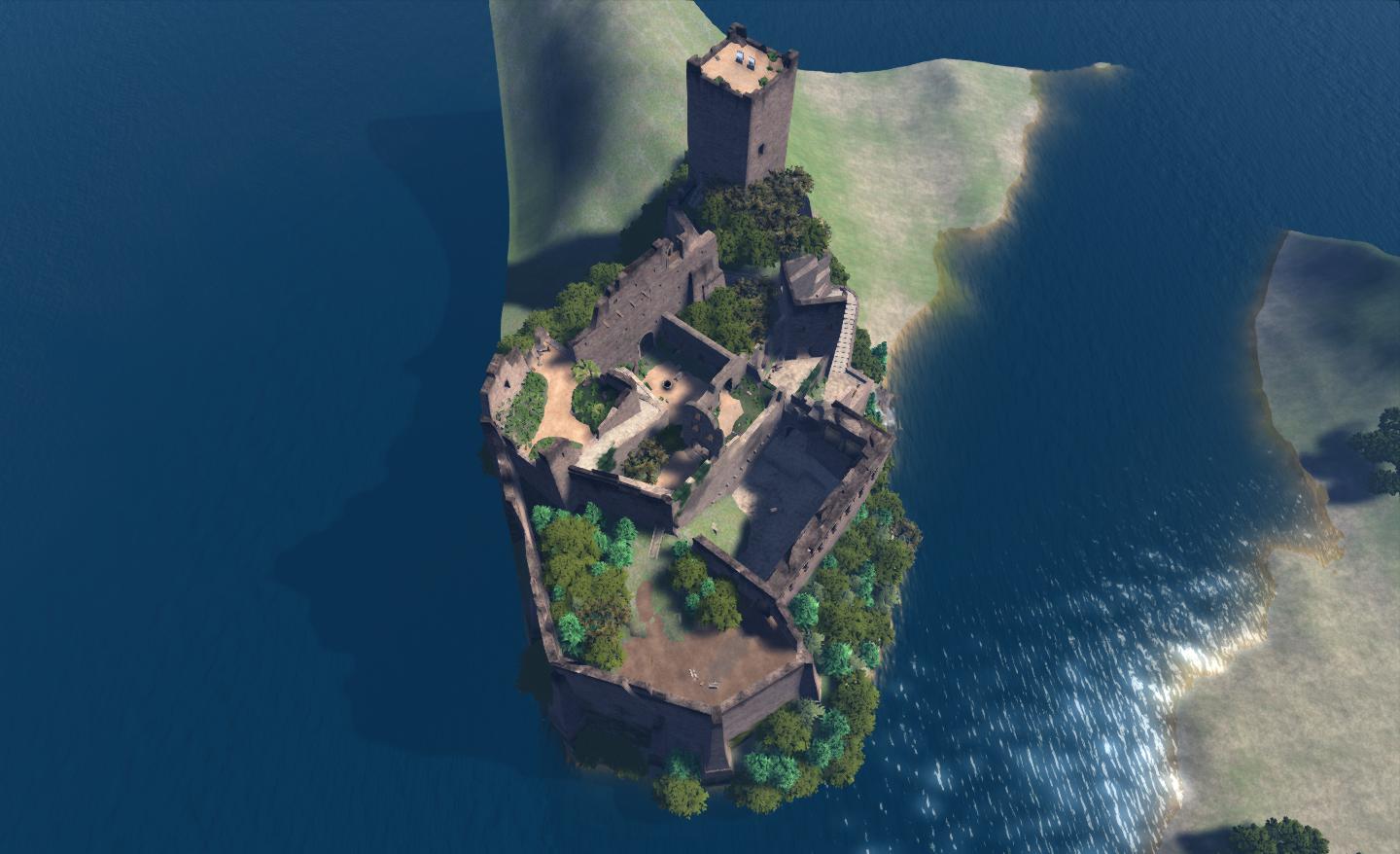
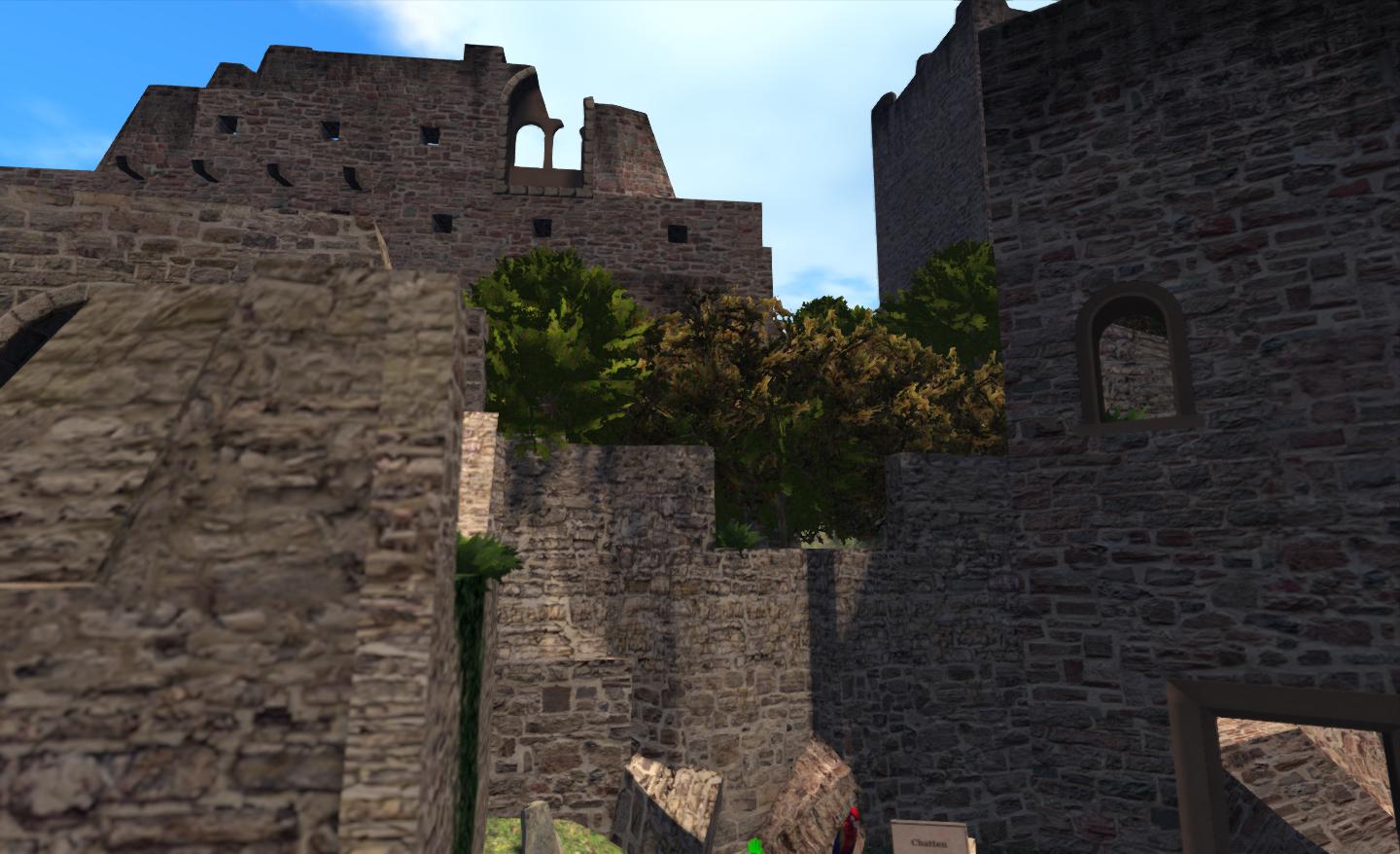
Described as a “German castle ruin” in the Destination Guide, Frisch offers-up a Norman-style set of ruins which are suggestive of a castle which saw much use over time, with some modernisation to reflect the needs of successive generations, prior to finally falling into abandonment, disrepair and collapse.
Frisch
Fisch is interesting as it is owned by Governor Linden and it is actually an old orentation spot for new users, which has itself fallen into disuse – although evidence of its purpose can still be found; there are information givers, a few signs, including one with a LM to Help Island and one with LMs for the old Welcome Areas – not that I recommend you try the latter!
Frisch
The castle build itself looks old in the SL sense of the word, but offers a lot of potential for the machinimatographer and photographer wanting an interesting and “historical” back-drop – although judicious use of Draw Distance is advised (or your viewer’s derenderer, if it has such a beast); there are a couple of eyesores which can stray into view if you’re not careful.
Frisch
The castle is easy to explore, and a pleasant way to spend an hour; there are paths to follow through the ruins, and the surroundings (eyesore excepted) provide some prime vantage points from which to take-in the ruins themselves.
This isn’t a state-of-the art build, to be sure, but it is one celebrating the power of the humble prim. It’s also a quiet place to visit and just wander around. There are no windlight presets, and the lie of the land and style of the build mean that both are open to a range of interpretations – something which again makes the ruins an ideal candidate for SL photographers.
Frisch
All-in-all Frisch and the castle offer an interesting visit; don’t expect to do much her other than wander, relax and enjoy. This may not be a historical representation of any single castle, but there is some history here.Why not go pay it a visit when you have a few spare moments?
Saturday November 24th saw the next release of Exodus hit the download page, and Ash Qin from the team was kind enough to give me the nod – I confess, I’d lost track of the nightly builds and so have fallen well behind with the viewer’s on-going development – and access to the beta release of the build.
Exodus 12.11.24.1 is based on the Linden 3.4.2 code base, so it includes the majority of the most recent updates from the Lab, including the new Group Services code for managing and editing groups with more than 10K members, and a host of other Linden goodness.
Installation
The Windows installer weighs-in at a touch over 34MB in size and contains absolutely no surprises during the install process – as one would expect. As per usual, I did a completely clean install, which brought me to my first surprise: on start-up Exodus displayed the Steam-related “Create Account” prompt.
No, Exodus isn’t going to Steam.
This doesn’t mean Exodus is heading for Steam a-la the official viewer, just that the Steam code is now part and parcel of the SL beta viewer code, and the Exodus team didn’t see any reason not to merge it into their code, given it is only ever something established users are ever going to see once after a fresh install (and possibly not at all if they don’t perform a clean install or the team moves to an updater system – which is something they are considering).
Pathfinding
This release brings with it pathfinding, which the team had originally hoped to release a lot sooner. This includes not only the build tools associated with pathfinding (Linksets and Characters floaters, attributes in the Build and Object Profile floaters, etc.), but also includes the Navmesh visualisation code, as Exodus becomes the latest viewer to sign-up to the Havok sub-licence agreement with Linden Lab.
An impressive image of Deshima, showing the navmesh visualisation in Exodus
This means that anyone who has been using Exodus to access OpenSim grids via –loginuri will no longer be able to do so when using this release. Similarly, the optional grid selector which can be displayed on the login splash screen only lists Agni (the main grid) and Aditi (the beta grid).
The move to the Havok sub-licence also means that with this release, Exodus moves to the official mesh upload code from LL, rather than using the HACD code which has been in common use within TPVs.
Group Services
Large groups will load and can be edited with this release of Exodus
As mentioned above, Exodus gains the large group management and editing code from Linden Lab with this release, allowing groups with 10K or more members to load in the Group floater and which allow group owners and officers to edit and manage very large groups.
Again, just as a point of reference for those unfamiliar with the new code changes: these do not relate to group chat or anything related to improving group chat. That is an entirely separate project within Linden Lab (and one which may not be being actively progressed while other work is being undertaken). This is purely about using HTTP protocols (rather than the old UDP) to bring more stability to the downloading, viewing and editing of very large groups.
Viewer Updates
Alongside the updates and fixes from LL, Exodus 12.11.24.1 gets a number of updates all of its own:
The Flickr option on the Snapshot floater now includes an option to include the parcel name / SLurl in the description
You can now Paste as Link’ and Copy as Link using the right-click or CTRL-SHIFT-V and CTRL-SHIFT-C using Exodus’ built in “pastebin” functionality
A Copy as Link button added to the About Second Life Viewer floater, allowing the information in the floater to be viewed via the web
A Copy Key option added to the avatar right-click context menu, allowing for easy copying of the Avatar Key.
Two new options for Exodus: the include location option for Flickr uploads on the Snapshot floater, and Copy as Link on the About Second Life Viewer
Fixes and Changes
Exodus 12.11.24.1 also includes a number of fixes and changes from the team:
MOTD should work now on OS X
Added copy key to gear menu for avatar inspection panels
Colouring of certain elements
BMP cursors on Linux
Higher compression of LZMA packages on Linux
Curl on OS X no longer defaults to trying to use IPv6 in Curl (related to MOTD issue).
Performance and Feedback
Performance-wise Exodus 12.11.24.1 again gives very similar results on my usual review system (see the panel on the right sidebar of this page) as recent viewer releases I’ve taken a look at in the last month:
Deferred off:
Ground: 28-29 fps
370 metres: 36-38 fps
2875 metres: 43-45 fps
Deferred on + lighting set to Sun/Moon + Projectors; ambient occlusion off:
Ground: 9 fps
370 metres:15 fps
2875 metres: 18 fps
Like like Catznip R7 and the recent Firestorm beta, these figures dropped only very slightly (just 1 fps on average) if I also activated ambient occlusion in deferred; again marking the fact that for me, things seem to have improved recently over the start of the year.
Compared to other recently releases, this one from Exodus is relatively small and compact – which doesn’t lessen its overall impact; once again it places Exodus back among the leaders of the V3-based TPV pack. There are still a couple of things I’d like to see, one of them being my usual request of TPVs in general: the ability to left / right range the toolbar buttons at the bottom (or top for those that use that space) of the screen. Only one does it so far, and it is really handly having the option.
Nevertheless, nothing should be taken away from the Exodus team, offering as they do a pleasing and worthwhile update.
Week 47 marks Thanksgiving in the USA so as reported last time, there have been no server-side deployments for the Release Candidate or main channels, and no rolling restarts. This is liable to continue into week 48 (week commencing Monday 26th November), as there is unlikely to be any deployment to the main channel. There will, however, be deployments to the RC channels, details TBA.
HTTP Updates – Texture Fetching
After indicating that there would be no viewer releases during week 47 in the run-up to Thanksgiving, the Lab rolled out the first of the 3.4.3 beta releases – 3.4.3267135 – on November 20th. The major change to this is the inclusion of the first phase of Monty Linden’s new HTTP-based texture fetch capability, designed to significantly improve texture rezzing within the viewer. As the release notes state:
A new scheme for performing HTTP operations is introduced with this release. It is intended to reduce crashes and stalls while performing HTTP operations and generally enable performance and reliability improvements in the future. In this release, it is being used by the viewer’s texture retrieval code. Our expectation is that it will provide consistent and predictable downloading of textures. As well as the usual problem reporting, we’re also interested in confirmation of improvements where this release improves your experience.
The HTTP texture fetching code is now available in the latest SL beta viewer (3.4.3.367135)
The code for these improvements has already started appearing in some TPVs, and will doubtless be available across all flavours of the viewer in the near future.
Observable improvements in rezzing times have been reported by those who have used the project viewer releases of this code, so it should yield benefits for those using the beta. Monty Linden, who is handling this project is apparently now working on further improvements to the server-side of the equation, which should see additional improvements in the future.
Also pushed out during the week was a new version of the development viewer – 3.4.3.267201.
It is currently not clear when the renewed roll-out od beta and development viewers will result in updates appearing with the production version of the viewer, I believe that this may be additionally delayed while other requirements are put in place related to the Steam link-up (the code for the Steam link-up already having been merged into the beta viewer).
Volumetric Pathfinding
Also during the Tuesday Simulator meeting on November 20th, the question of volumetric pathfinding came up, and how pathfinding might be extended into the air, to allow birds, etc., and under Linden water. There are a range of issues with doing this – perhaps the biggest being the actual demand. There is also the matter of keeping birds and the like from crashing into buildings and skyborne objects, or in keeping fish in the water.
During the meeting, Baker Linden passed a question on the subject to Falcon Linden and indicated that Falcon felt, “It’d be about 3 months of work to get volumetric pathfinding — and that still wouldn’t handle dynamic avoidance (which is the hard part). Theoretically, it’s not that hard — it’s having to rework some Havok systems to work with intermediate data.”
This doesn’t mean that the work is about to be undertaken in any way whatsoever – just that were LL to consider it, getting the basics going for volumetric pathfinding going would take around three months. However, even then, unless the issue of dynamic hazard avoidance, it is unlikely this is something we’ll be seeing in SL for a while yet.
Server-side Object Rezzing Performance
Baker Linden indicated that he has started looking at server-side object rezzing. This work isn’t connected to Andrew Linden’s Interest list work, which is related to which assets the simulator should be loading ready for rezzing, but is rather focused on reducing the server-side lag which is induced when an object physically rezzes in a region. As Baker explained during the meeting, “If you get a really complex object, with many large meshes, or large LLSD files, it takes a while to rez into the world. I’m trying to reduce that.”
There are no timescales associated with the work, although it is expected that it will include avatar attachments as well as in-world objects have less of a performance / fps hit on the region when rezzing complex items, particularly in Baker can get the parsing of large object files to work asynchronously, which currently does not occur. Whether this will translate to visible viewer-side improvements is debatable.
SL Issues
Homestead Performance / Memory Issues
There have been growing reports of region performance issues occurring across the grid. These primarily appear to be impacting Homestead regions – although it can be encountered on full regions as well.
Essentially the problem manifests itself (for most users) when they find they are unable to rez objects in-world and / or as attachments, while raw prims created in-world may rez, but are reported as turning phantom on creation. The issue appears to be large and abnormal memory usage by the region’s physics system, although the precise causes as to why it is occurring are currently unknown.
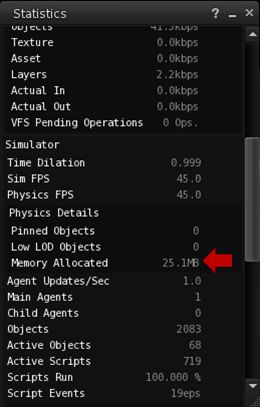
Physics memory use can be monitored via the Statistics floater (CTRL-SHIFT-1)
Regions are allocated a fixed amount of memory that can use. In the case of a full simulator, this is about 1GB, while Homesteads are allocated around 250MB. Generally, physics memory usage for a region – even a busy one – is around 40-80MB. However, on affected Homestead regions, the physics memory use is reaching or exceeding 200MB.
When the physics memory for a simulator gets abnormally high (close to or on 90% of the allowed maximum) internal region safeguards kick-in and prevent object rezzing in an attempt to limit further calls of the region’s memory and keep it alive. This is the behaviour people are witnessing in their regions. The safeguards themselves are designed to help prevent regions from becoming unstable during griefing attacks. However, the problems people are experiencing appear to be entirely unrelated to any form of griefing, and are thus causing a certain amount of head-scratching at Linden Lab.
Reed Linden, in responding to a support request from Motor Loon, provides clear guidelines on what to do if you have a Homestead and experience these issues. It is thought that the most likely culprit for the problem is an unidentified memory leak, but this has yet to be confirmed. Reeds comments regarding particle systems are fascinating. Particles tend to be more viewer-intensive than server, and as many commented at the Simulator User Group meeting on Tuesday 20th November, it would take something bizarre to be going on for particles to be impacting region performance; however, at least one region affected by the issue appears to have a large number of particle emitters in operation.
A further interesting twist came at the meeting itself, when a pathfinding snake and a number of pathfinding characters were rezzed, and the region suffered a severe performance hit (sharp FPS drop experienced by all attendees, sharp increase in both physics memory use and time taken to ping the region) which appeared to be linked with the snake (which was set to follow its creator around) re-calculating its path to both follow its creator and avoid other avatars / objects. However, when the snake was re-rezzed a short time later, no similar issue was noticed, with the region using around 116MB physics memory, with no other outward performance issues.
I the meantime, and as the Linden dev team continue to investigate the issue, if you experience this kind of problem, please ensure you raise a support ticket, supplying as much information as possible, including region name / simulator version (from HELP > ABOUT (either Second Life or the name of your viewer), the time the problem occurred, how it manifested and, if possible, information from the Statistics bar: memory used, FPS and physics performance details, etc.
There was a time when the words “Torley Linden” and “Second Life” were synonymous with one another. His was frequently the first Linden name and voice users would encounter on entering SL, where his weekly TuTORial and Tip of the Week videos were a much-loved and enjoyed Thursday event through the old (and vibrant) Second Life website.
Says it all, doesn’t it?
While Torley has popped up in a couple of videos recently, his infectious enthusiasm, boundless love of Second Life and seemingly inexhaustible energy have been much in absence for well over a year now. It was thinking about this last night that brought me around to thinking about Torley island, always a much a mark of Torley’s personality as Torley himself, and a place I’ve not visited in at least three years – so I resolved to go and take a look today.
Torley Island: always open to the public
Torley is rare among the Lindens in that he still maintains a sizeable physical presence in SL even when absent it himself in the form of his island region, which is always open to the public, and frequently changing to reflect a whole range of influences on Torley himself.
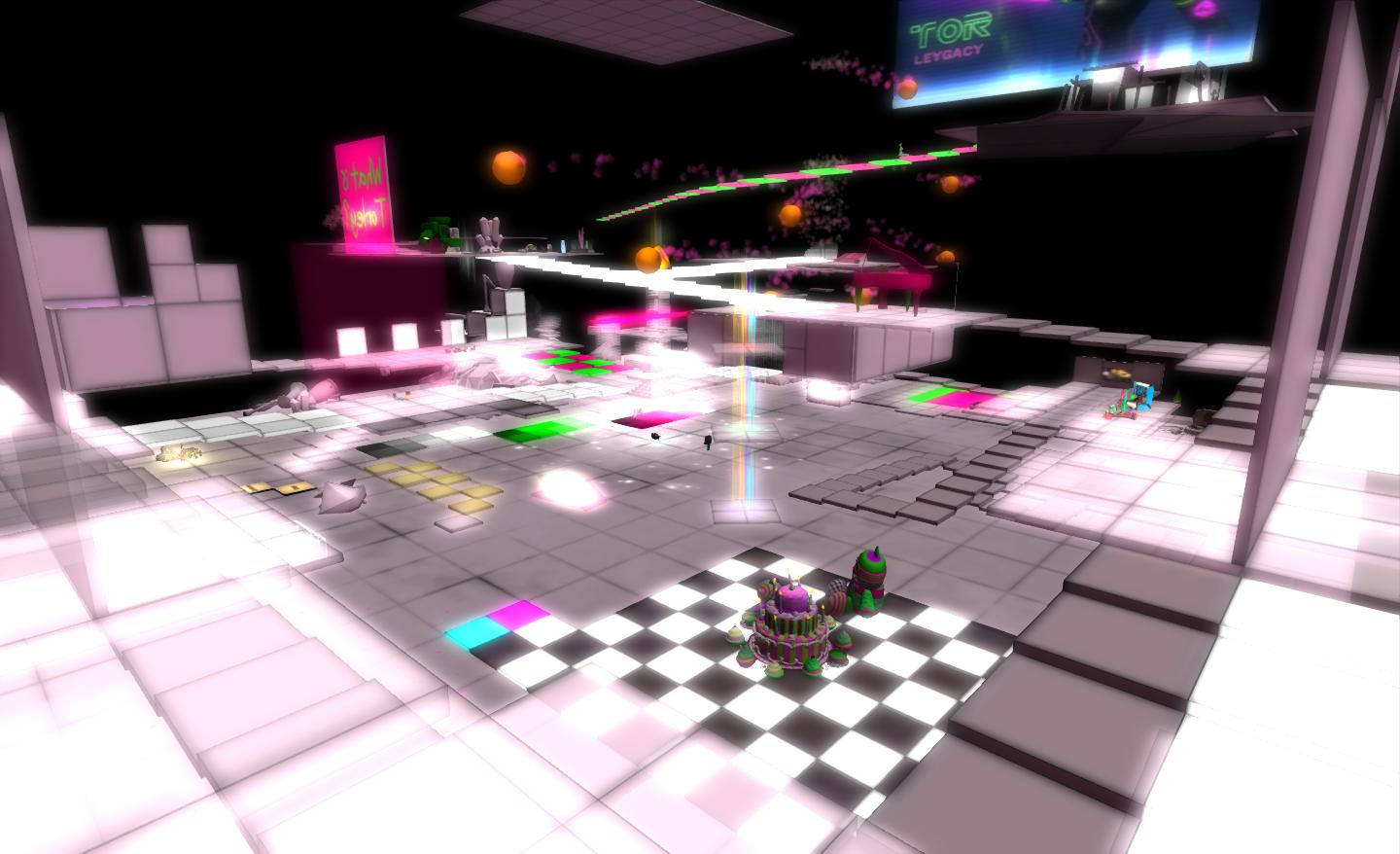
The last time I visited, the island was an island, surrounded by water and with hills, rivers, trees and vivid colours – not just green and pink, but yellow and blue and red and orange and purple and … well, you get the point. Vivid and vivacious. Today, all that has gone, replaces by a decidedly “futuristic / sci-fi” approach which, while still undeniably “Torley”, seems to carry a strong subtext with it.
Torley Island
All the colours and vibrancy are still there, together with everything which is quintessentially Torley: the curios, the impish humour, the sense of fun. But – to me at least – it all seems somewhat subdued; perhaps it is just the impenetrable blackness surrounding the region which darkened my mood, although it does also seem to also cast a shadow across the region itself. There are also elements here which seem to at first poke gentle fun at the world at large and in keeping with the island’s subtitle of OMG! Cyberspace! Digital Frontier! – but which again seem to perhaps carry a deeper message.
Tickling Disney’s ribs – or hidden message?
Which is not to say the build is all doom and gloom – there is a lot to see and do and hear here. Torley is an accomplished musician and an immersionist, so having sound and media enable during a visit is a must. Down on the lowest level, where you arrive, there are bumper cars to be had – so visiting with friends can be fun. These appear to have guns mounted on one side of them (watermelon guns? :)), although if they are weapons, I totally failed to get mine to work – disabled? There are human-voiced musical instruments to poke out, and all manner of things large and small to see – and dodge.
Torley island
Nevertheless, I have to say that throughout my roaming and pushing and prodding, I did find my visit a little somber. Torley’s infectious enthusiasm has been gone from videos and website for well over a year now, as mentioned above. It is hard to understand why; his ability to engage and inspire was already one of the great strengths Linden Lab had at their disposal. His videos were never anything less than a boon for people struggling to get to grips with SL and were perhaps a contributing factor in getting people to “stick” with Second Life and explore its capabilities and possibilities. Silencing him – assuming it was the result of a corporate decision – seems wholly counter-productive.
….”Torley is missed”
Even as subdued as it feels, a visit to Torley’s island, particularly for those of us who have been around a while, cannot help but raise a smile and roll back the memories. Bringing back his tuTORial and Tip of the Week videos may not bring hordes of people flooding in to Second Life – but given proper placement and promotion, they could do much to encourage people coming into SL to persevere in their efforts to get to grips with the viewer and everything else, and help people reach their “Eureka!” moments a lot sooner.
In short, they could help us all once again Amplify our Awesome.
I paid a visit to Roche today. I did this in part because I’ve been meaning to go since seeing it in Honour McMillan’s brilliant blog (probably the finest photo journal for SL explorations and thought-provoking musing on life, the metaverse and everything that there is), and partly because I’m trying to get to the bottom of a viewer issue plaguing me.
Roche
Over the last couple of months I’ve been encountering some issues when taking snapshots which see either the snapshot floater itself refuse to save images to my hard drive and / or which cause a sudden and huge memory bloat with the viewer which eventually brings it to a juddering halt. The issues don’t occur all the time, and appear to only affect my main account.
Roche
They mainly make themselves felt when I’m visiting multi-region estates, the mainland or regions with sim extenders, and only occur when I’m operating in deferred mode with shadows active. I’ve tried everything to get around the issue – an example of which is the last image in yesterday’s post, which took no fewer than four attempts for me to capture to disk due to the viewer refusing to save, then suddenly deciding it would after all. I’ve tried with draw distance turned right down, I’ve tried after clearing cache, with and without attachments, and so on and so forth. Nothing seems to make a difference. I’m reduced to picking a few choice words at random then either resorting to a screen capture tool or relogging.
Roche – “Winter is coming”
The problem isn’t down to a single viewer, either. For a time I was blaming Firestorm – and my apologies to the Firestorm team for quite possibly single-handedly raising their crash rates in October. However, Both Zen and the last few releases of the SL Beta viewer (both with and without tcmalloc disabled) have yielded the same results (I’ve not got around to trying with others). The other oddity is that the same problems doesn’t occur when I’m on individual private regions (or those with surrounding regions hidden), and I can still upload snaps to my profile feed long after the floater has given up trying to save to my hard drive.
Roche
Nor does it appear to be hardware-related; while I quickly encounter problems with my main account, my Crash Test Alt (CTA) doesn’t encounter the same issues; so much so that I’ve been using it somewhat more frequently of late to get out and about to take snaps rather than facing an inevitable faff around or resorting to using a screen capture tool to grab some images.
All-in-all the problems have me a little puzzled.
Roche, on the other hand, doesn’t have me puzzled – it has me captivated. A Homestead region, it is the personification of beauty through simplicity, offering the lens artist a wonderful series of opportunities for film and stills which are quite unique.
Roche
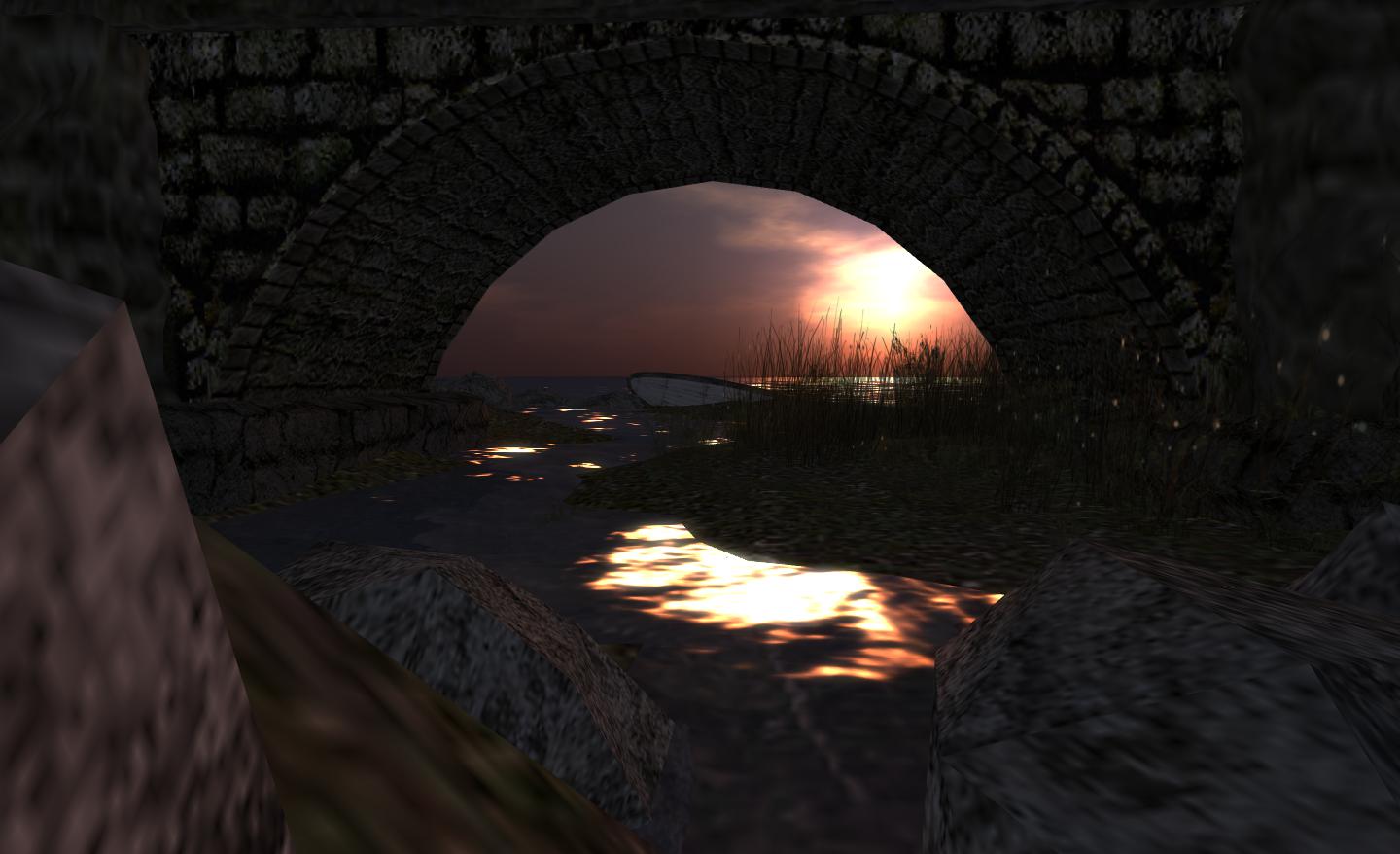
This is a place which invites you co come and play, to fiddle with windlight and other settings to your heart’s content and see what you can produce. It is both backdrop and focal point; canvas and artwork, offering many opportunities for creative expression. It’s also a place deserving of careful exploration, because the attention to detail here is equally wonderful; my favourite part of the region is actually so hidden as to be easily missed – the short stretch of railway line which hugs a part of the shoreline; it simply invites the imagination to create a raft of narratives to go with it.
Roche
I love regions like this and Scribbled Hearts on Water Reserve or Blackcloud Oh’s Black Kite, simply because of the way that they do call to the artist within each of us and offer a page on which our imaginations can write a tale or two. This may have been my first visit to Roche – but I seriously doubt it will be my last.

 Caledonia Skytower starts the first part of a reading of All Seated on the Ground, Connie Willis’ 2007 science-fiction novella and winner of the 2008 Hugo Award for Best Novella.












 Inara Pey: Living in a Modemworld