One cannot actually blame LL for wanting to leak information on what was at the time being called “Second Life 2.0” or “Viewer 2009”; we users are notoriously hard (if not impossible at times) to please, so why wouldn’t they want to create a buzz and whet appetites? Sadly, all this particular attempt did was leave one with the impression LL were saying, “Psst! Want to see something really cool we’ve been doing which isn’t going to be the viewer?”
Can We Have Feedback (Not That We’ll be Changing Much)?
LL originally launched Viewer 2.0 as a “beta” and encouraged feedback of sorts – although Tom Hale made it clear pretty much off the bat that the beta was WWSIWWG – what we saw was what we were getting. Admittedly, some of the feedback wasn’t that helpful; LL hadn’t invested in both Big Spaceship and 80/20 Studios just to continue with the V1 UI, for example, so demanding they do so was hardly going to fall on receptive ears.
But among the wilder demands there were genuine requests which could have been acted upon – such as improving the aforementioned sidebar and split camera controls, as well as other obvious issues – all of which appeared to be ignored, just as they had been, according to some, during the closed beta of the viewer which involved users.
While it is true that users such as Hitomi Tiponi, Alexandrea Fride and Avi Arrow stepped up to the plate and provided both skin options and re-worked the viewer’s XML files to present a more usable UI, and Kirsten’s Viewer implemented many improvements to it early on, the apparent lack of interest on LL’s part regarding user feedback during the month-long open beta probably did little to help bolster Viewer 2.0’s popularity among users.
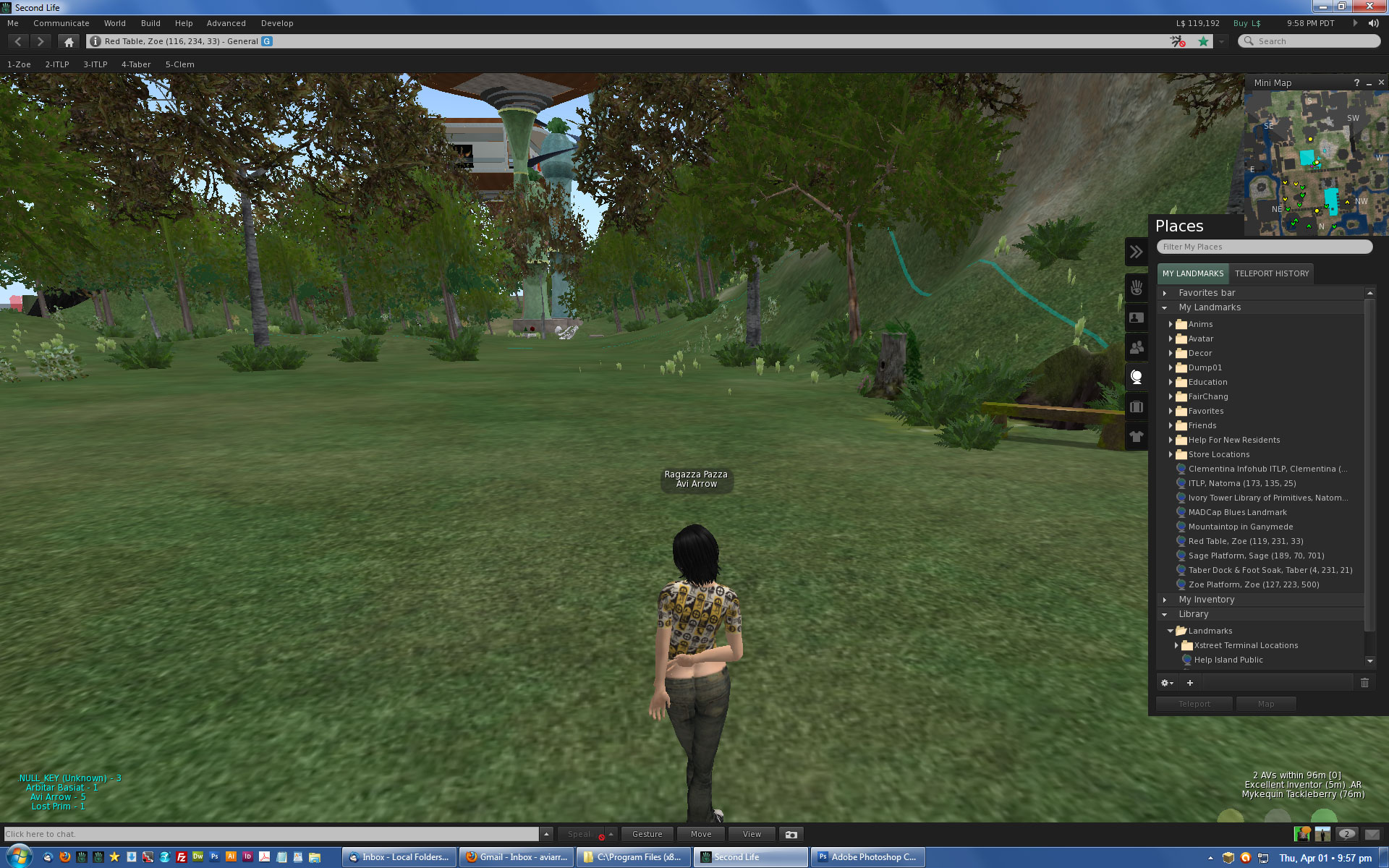
It is unclear why so much feedback – particularly during the closed beta – went unheeded. In the end, it wasn’t until May 2010, two months after Tom Hale had bullishly announced Viewer 2.0 was “live”, that issues started to be addressed. Even then, it’s fair to say that the viewer didn’t reach a potential to have more widespread appeal until around October 2010, with the release of Viewer 2.2. In between there were other iterations, but frankly, the damage was done. Such was the negative word-of-mouth about Viewer 2, people simply weren’t willing to even look at it; it became a pariah to many, and that perception has, one might argue, persisted right through to Viewer 3.x today.
The Trust Factor
Another element which perhaps factored in to users’ response to Viewer 2.0 is that of trust.
Viewer 2.0 was launched at a time of growing divide between users and LL. Mistrust was very evident among users as a result of matters such as the OpenSpace / Homestead situation and also from the manner in which LL approached the Adult Policy change. Trust was also at the heart of upsets over the way in which Linden Lab started making changes to Search. This caused considerable angst and upset, much of it justified, which LL gave every appearance of either ignoring or of dragging their heels in sorting out.
This period was also marked by the company appearing to take a left turn in its relationship with its users, leaving many feeling both alienated and as if they were not the kind of people LL wanted as customers; something not helped by forum comments from Lab staff stating the viewer was more about “new users” rather than being aimed at existing users. Thus, it is possible that the negative response to Viewer 2.0 was additionally fuelled by a rising reluctance among users to trust LL in the same way as perhaps they once had.
Muscle Memory
However, things aren’t entirely one-sided. There are many users who refused (and still refuse) to make the jump away from V1 not for any technical reasons (although they do view their reasons as such). As with most things we routinely use, the SL viewer encourages the development of muscle memory. We simply adapt to doing things a certain way – no matter how unnatural they may originally seem. This doesn’t happen overnight – or even in a couple of hours. It takes time, and that is something some are unwilling to give. The result is they decry the new UI as “unusable” before they’ve given it much more than a tenth of the time they probably devoted to wrestling to do things the way the V1 UI forced them into doing.
Note the emphasis: forced. Prior to V2 and V3 appearing, we simply had no choice in how we got to grips with the viewer; we either battled to get to grips with the V1 UI or we quit. In fact, it’s interesting to note that until Viewer 2.x came out, the Viewer 1.x UI was perhaps the most reviled element of SL. It wasn’t (and isn’t) actually any better than the V2 or V3 UIs. People have simply become instinctively used to working within its constraints, no matter how convoluted those constraints may be. Thus, there is a case to say that some of the apathy towards V3 is down to as much a subjective response as much as it is (if not more so) than any objective response.
The Situation Today
Today we have Viewer 3.x – which cannot by any stretch of the imagination be looked upon in the same way as Viewer 2.0. It has a very flexible UI and offers much than makes using the viewer a lot easier than earlier iterations. It’s not perfect, but it is a lot better than we’ve seen in the past. Yet it remains far less popular among users than the TPVs which are based on the same code and offer comparable performance. Why is that?
Probably because several of the underpinning reasons mentioned above remain; some people don’t want to expend time and effort retraining themselves in the use of a viewer; others still feel disillusioned with Linden Lab, and that they are not the customers the Lab wants, which may leave them predisposed not to use anything offered by the Lab. However, when all is said and done, the largest single factor as to why Viewer 3.x is not as widely used as its TPV equivalents brings us full circle: features and capabilities.
Unless and until the official viewer, be it Viewer 3.x or something else, can match the range of additional UI options offered through the various TPVs – extra build tools, radar, client AO, Flickr upload options, combat functionality, RLV and RLV/a, and so on – it is going to continue to struggle to find a majority audience.

 Inara Pey: Living in a Modemworld
Excellent take on the whole “Official vs. TPV” thing. I personally took my knocks on the official during the topsy-turvy time and it was certainly rough-going. I am now a lot more comfortable with the newer UI design than I could be with the old 1.x or any TPV UI (hence my mention in a previous comment about not acting on a passing thought to actually try Firestorm).
I see it this way: the official viewer is every bit as awesome a view as any third-party viewer. The differences among the various iterations of viewer are what give us all choice and we each will use what we are each most comfortable with.
For me, it’s the current official viewer. For my neighbor it may well be Firestorm. And I think in the end: that’s the wonderful conclusion to the whole question: choice and freedom to use what works best for you.
LikeLike
Absolutely agree.
I move rather fluidly between viewers – including the SL Beta and Dev releases (Beta is my LL viewer of choice). I think it is only to SL’s benefit that there is so much choice.
LikeLike
The LL viewer has always seemed to me to be primarily the result of decisions by a committee of Lindens with limited in world experience. What they think we *should want* vs. our actual needs and desires. TPVs are far more sensitive to user input, or they are the project of a few dedicated residents meeting their own needs.
There is a recent change from the Lab however, they are adopting innovation from the TPVs once they are shown to work and to be popular. This may be the best we can hope for. I doubt the Lindens will ever be representative of the residents.
LikeLike
Viewer 2.0 was actually largely outsourced.
The first company involved in the development of a “new” viewer was Big spaceship. Viewer 2.0 was largely the work of 80/20 Studios, who make some interesting claims about the success of the redesign.
Users were involved in a closed beta of Viewer 2.0 (and under NDA, although details leaked after the fact), but as mentioned in the article, little attention was paid to feedback, according to those that spoke about it afterwards. It may well have been the fact that the design had been outsourced to UI design “experts” which left LL unwilling to fiddle with much initially.
Hmmm.. point-of-fact, I really should have mentioned Big Spaceship and 80/20 in the article itself…
The uptake of TPV features is a fair one and one I’ve somewhat unfairly dropped in re-working the article (as I did make mention of LL’s adoption of Vaalith Jinn’s local textures capability and Kitty’s spell check). Apologies to LL on that!
LikeLike
I agree with you, Inara. I agree across the board and I’m still angry (2 years later) that the Lab’s best shot at fixing the V2 debacle is V3, which doesn’t have a V1 alternative interface.
For a long time, several people assured me that LL couldn’t add an alternatvie V1 interface to V2 code. They asserted that it wasn’t possible to create an alternate/selectable interface for the V2/3 codebase. It still makes me bristle because one of the hats I wore in RL was interface developer for a product with a large user base. Firestorm proved a selectible/alternative interface can be implemented on top of the V2/3 codebase, and beyond doubt.
It’s funny how I still become so irritated when this subject comes up.
LikeLike
Very thorough article, thanks Inara!
It was already during the Emerald time that the official viewer (1.23 at that point), lost the top spot on the list of most popular SL viewers. Viewer 2 further sped up the fall of it’s popularity. So now we’re at the point where roughly 70% of SL users prefer to use one of the TPVs.
I think that you correctly identified the key problem for Linden Lab: their internal culture has turned user-hostile at some point, around the time M Linden was named the CEO. Their own personnel decisions have greatly contributed to this situation. Many Lindens that came from the SL community or were closely connected to it were let go, and a new bunch got hired that didn’t really have an interest in spending much time in world, or really had an understanding what SL was about.
Unless this root problem is addressed, I don’t think we’ll see much improvement in other areas. You have to be in touch with the community to be able to properly determine what are the top wishes, major concerns, etc. Unfortunately Linden Lab seems to going further in the wrong direction. They have limited communications to the bare minimum. The new JIRA policy that just got published is beyond their usual incompetence level. I’m really shocked to see to what level of counter-productive policies they are able to sink to.
Without major changes to the management and key personnel I don’t see Linden Lab doing well for its investors any time soon.
LikeLike
I’m in full agreement with you vis-a-vis communications. I’m not sure that a change in management will solve things. As I said at the time of Mark Kingdon’s departure, and have said since – overall direction the company is moving in seems to have been determined by the board.
The moves, I’d say, came before Kingdon was hired – although he was most certainly hired to implement them. There has been no real change since Rod Humble took over, other than he’s perhaps been able to steer the company – at least in part – towards more of a middle ground in terms of its general direction (although not in terms of users’ comfort levels with the company). It’s still far from perfect, and the lack of engagement / open communication is still frustrating (and unlikely to change, as I’m not sure that Mr. Humble actually sees it as a problem.
LikeLike
1 of the reasons why you dont use the Default Linden viewer. Its pretty simple. Lots of functionality is missing. as example the vector copy in edit tools. still not have seen it. And so there are some more things that are missing. Besides the speed where good. And now LL made the Secondlife Linden labs V3 viewer pretty useless by removeing the –loginuri. SO the still stack mistake on mistake.
LikeLike
The “toasties/chiklets” still remains a problem today, when they put it in the bottom bar it was at least somewhat noticeable – Being in the upper right-hand corner makes no sense, and only some V3 viewers have the ability to move it around (I think). The V1’s IM-received visual impact is also greater while not being intrusive, rather than floating somewhere near a corner.
The only way I can see the V1 UI feeling “constrained” or someone being “forced” to adapt, is because the buttons have words rather than having a picture for what is otherwise similar functionality? The differences between V1 and V3 UI is becoming increasingly narrow, yet you praise V3 when it’s literally just a stage away evolvement from V1. The small changes that could make V3 act and more or less look like V1 altogether is staggeringly small at this point, yet it keeps people divided for no reason. If I was a bettin’ girl, I’d bet that you could win over at least half of the V1-users by changing things like:
The V1 search floater – Separate tabs initially saves time when searching and more visually impacting, the V1 inventory floater looks better and more streamlined, yet has parallel functionality (I think) to V3. The bottom bar buttons have parallel functionalities as well, and they’re mostly in the same order with the same names. One stand-out is “People” vs. “Radar” though, that’s a poor word switch. Similar is the “Avatar” menu, which consist mostly of non-avatar-related options and parallels closer to a…Miscellanious File menu. The V1 chat history floater is better, and so is the chat bar, at least for roleplayers/cyber-ers and chatters – Which do make up a large amount of most-visited sims (according to NewWorldNotes) last month – Around 15 or so out of the first 25.
I’d drop V1 in a heart beat if V3 improved the few things I listed above, and I know many others would as well. They’d also be way more accepting of the TPV’s, because those offer great additional uses, but run into the same issue as V3 does in regards to UI.
Though I still question the “combat functionality”. I think it was Exodus that touted that, but…pretty much can’t find any combat enhancements beyond having little floating arrows on your HUD. Maybe I’m missing something there…
One thing I wholly disagree on though, is Torley being allowed to make skins. I dunno if Torley made Dazzle, but they sure loved using it a lot, so I kinda question their colour-scheme choices.
LikeLike
Most of your remarks demonstrate my comment on muscle memory / familiarity :). With respect, the items you list make “no sense” to you. It’s a subjective observation, rather than being all-encompassing issues with the viewer, and I could pretty much use some of them to demonstrate why I feel V1 is annoying to me.
Toasties / chicklets; make no sense to you, but make perfect sense to me. The difference: you’re used to look down to the lower left corner and the chat console (or having the conversations floater open and watching for tabs), I’m used to looking to the top right. I also find them more convenient as they are persistent, rather than fading from the console (and being easily missed) or requiring me to have the conversations floater open at all time to catch incoming IMs. I can instantly see when a new IM has arrived when a new icon pops-up, and I can immediately see when someone has added to an on-going conversation as the little balloon appears on their icon.
You find “People” a poor word switch. To me, it describes exactly what it does: tells me who in online, who is nearby, etc., – just like “radar”. Certainly, the floater name doesn’t interfere with any functional capability.
As to Me / Avatar, much the same critique could be levelled at TPVs where Advanced is often used as a dumping-ground of accessing additional options or they have a dedicated additional menu which may as well be called miscellaneous – sometime they have both and bounce between them when added options. Again, it comes down to how we personally adapt.
Inventory-wise, I don’t find the V1 floater and more or less visually appealing than the V3. If anything, I’m disappointed that in V3 we’re still stuck with the same limited functionality within the inventory window as we had with V1.
So it’s subjective. Nothing I’ve said here in response to your comments actually prevents me getting to grips with a V1 viewer if I’m so minded, and none of them could be referred to as functional flaws within the viewer.
That you use them a personal barrier to making a switch does, with respect, speak more about your own intractability than is does about any “failing” in the viewer. BUT – at the end of the day, the choice of which viewer you opt to use is up to you, whether the reasons are objective, subjective or a mixture of the two. And the bottom line is that at least we now have that choice, and thanks to the likes of Henri and Siana + the Singularity team, that choice remains alive.
Turning to my “forced” and “constrained” comments, think you might have missed the point. Prior to 2010, we were forced to get to grips with V1s idiosyncratic operation because there was nothing else. We were constrained as there was no ability for those of us far more familiar with using context menus (which are, as noted, far more natural and intuitive to use, hence why the majority of applications use them) to use them, we had to adopt to the pie menu (and frequently re-learn it whenever we moved to another viewer flavour). People couldn’t set their buttons to display the options they most frequently use or remove those they never use. Starting with Viewer 2.4, we started seeing these capabilities emerging in the viewer, and with V3.x, we now have a very flexible UI that is far more intuitive than V1, simply because it gives us the freedom to set a lot of it up as we want to use it. That’s again why Firestorm is so very popular – the options it includes puts a lot of power at the users’ finger tips.
LikeLike
Longtime reader, first time commenting.
I have a little different perspective on the idea of muscle memory here. Viewer 1 and 2 have a lot of little differences that are more or less arbitrary — the uploading submenu, for example, arguably makes sense under either V1’s “file” menu or V2’s “build” menu; IM notifications could sensibly be in any corner; the radar could be thought of as a “people” function or as a device of its own on the button bar; icons (once you learn what they are) aren’t too different from words. None of the ways of looking at these things (or a million other things) are fundamentally right or wrong.
But, I got used to V1’s choices of where to put things and what to call functions over a period of four years. The locations and names of commands are etched into my brain, and I can play the V1 interface like an instrument. So when the V2 viewer came down, one of the most frustrating things for me was that it seemed like every arbitrary decision made in V1’s viewer had been made in an equally arbitrary and opposite way in V2’s. All of my hard-earned intuition and memory was now useless, and even simple tasks were a struggle. V2’s interface seemed to be just a vexing rearrangement of furniture.
If V2 had, at the same time, added a lot of useful functionality, maybe it would have felt worthwhile to learn the new layout. But at the time, the situation was the complete opposite. Compared to Emerald / Phoenix, the vanilla V2 viewer was slower and far less capable, and had several elements (referred to in the OP) that were not just arbitrarily different but plainly wrong, like the intrusive sidebar, or the slower and less reliable search (to this day I feel V1’s search gives much better and faster results). I don’t think it’s surprising that a lot of people, including me, didn’t feel like taking a lot of time to retrain their muscle memory for a tool they didn’t want in the first place, that worked worse than the old tool, and that seemed to have been designed specifically to stymie those used to an older way of doing things — a tool that could have been designed in a way that retained all those old arbitrary decisions if LL had felt like it.
LikeLike
Hi Ariel!
Actually I think your comments underline my view as expressed in the article – although you do it more succinctly :). Your ease-of-use of V1 is born out of muscle memory, and yes, initially, V2 offered nothing by way of an advantage to encourage use, and exhibited poor design choices that greatly diminished its potential take-up among users.
It’s the reason I stayed away from V2 entirely and opted (initially) to use Kirsten’s Viewer, and then to swap to Firestorm (I loved Kirsten’s, but could not get later versions of the S20 to run at reasonable rates on my hardware).
The muscle memory aspect really kick-in with V3; this is far removed from V2, yet some do cite relatively minor issues (the names of menus and floaters, the placement of menu options) as examples of poor UI design, when in reality it is more to do with staying within a comfort zone of doing things in a certain way, finding things in a certain place, because muscle memory and familiarity are easier to work with rather than change.
LikeLike
My remarks have less to do with muscle memory then you keep implying. Muscle memory has so very little to do with what I’m saying that I’m starting to think you’re talking from your muscle memory now more than I am.
I dunno what can make one comfortable with having to look in the upper right hand corner to see if they have a message, rather than a pop-up tab next to where you type?
The little icon popping up is a good thing, but not at the sake of the toasties. Most games tend to have the chatbar and chat scroller by the bottom, where you type, right? So yes, I’m comfortable with the IM tab being there…Like most people who play video games. Persistence does the opposite, because people notice button movement/changes quicker (especially when it’s in a relevant area) than they would a mild colour change off on the exact opposite side of where the chatbar is – This is where your muscle memory favouritism is showing. The icons have a little advantage that they can show individual converations, but it’s not a big deal – You’re going to open up the window either way anyways. I dunno why you’d have the floater always open, you do realize that we’re talking about the “IM Received” tab? That helps you “catch incoming IM’s”, that’s literally it’s only point of existence.
“People” IS a poor word switch and you admit indirectly. If it’s just like “radar”, then why not keep calling it Radar? Most people playing video games would know what a Radar is, or at least get the jist of what it might do versus what a “people” button might do. “Radar” would definitely only lead to a radar. I don’t believe I said it interfered with functionality…So yeah.
Personal adaptation has nothing to do with the “Avatar” menu. It literally has around 3 menu choices OUT OF SEVENTEEN regarding the Avatar(on FireStorm). That makes no sense at all and has nothing to do with muscle memory and is definitely not contextually relevant. Should we rename the “Advanced” menu “Photography” just because the options for turning on High Quality & Silent Snapshots are there? That’s pretty much what happened.
I don’t believe I stated these flaws as functional flaws, I actually stated that V1 and V3 function very similarly. As well, it’s as much a personal barrier as it is a call for better and more logical choices with the V3 viewer.
It’s not as-a-whole poor UI design, just bits and pieces of it are not optimal, regardless of how comfortable it might be to me. I stated quite emphatically that V1 and V3 defaults are very similar UI’s.
LikeLike
Re: toasties / chiklets – you assume everyone has the communications tab open to seen incoming IMs. We don’t. That’s the beauty of V3. No need. Especially useful when there a gaps of a minute or more in IM conversations as people are doing other things at the same time. So yes, muscle memory, as it’s a retraining the eye to look top right, rather than bottom left (for the chat console).
People is a poor word in your opinion. Radar is a TPV term and was never an LL term. End of day, my point was the label makes no difference to the usability of the UI in difference to your claims that it does. The latter is an example of your inability to adjust, rather than a fault with the UI. The Me/Avatar menu – again, much the same critique can be levelled at V1. Again, it’s subjective. At the end of the day, the label makes no difference in using the menu or acclimatising to it.
LikeLike
I didn’t assume anyone had the communications tab open to see incoming IM’s, you said:
“requiring me to have the conversations floater open at all times to catch incoming IMs.”
…Which is factually incorrect, and has been for years with almost every iteration of SL. That’s what the “IM Received” tab has been for this whole time.
Training the eye to move into a logically abnormal place is not good design. Take a look at the Facebook chat widget, it’s fundamentally what people need – FB is not exactly the king of design overall, but bare with me, because it demonstrates my point.
The current FB Chat hides when you want it to, pops up when you ask it to (and can be docked as well), and when you message a friend, the individual chat widget is right next to the main chat widget. If you ‘hide’ your friends’ conversation, or another pops up – It pops up right next to the chat widget to alert you. Not floating off on the other side of the screen.
Regarding the “People” button, it is a poor word choice. My point was *never* critical of the functionality, but again, the word swap. It has nothing to do with my “inability” to adjust, **despite my repeated statements that V3 is very similar to V1 UI-wise in almost every regard**. The “Me/avatar” menu suggestion has nothing to do with the functionality or usability of the menu. It’s a poor word choice, that’s it. “Avatar” is an incorrect word to use. It’s a menu that has very little to do with the Avatar. For Firestorm:
Account
Merchant Box
Buy L$
Preferences
Toolbar buttons
Profile
Picks
***Appearance***
Snapshot
Inventory
***Move Controls***
***Movement***
Camera Controls
***Avatar Health*** (another weird phrase to use)
Tip Tracker
Upload
Exit
Lots of misc. account, preference, and profile choices. Not many Avatar ones. Again, nothing to do with functionality or usability, but merely pointing out that it makes no sense. I miscounted originally though, I meant FOUR out of SEVENTEEN, not three. That’s still not even 25% accurate.
LikeLike
The sidebar might have worked well, but it wasn’t done right. There’s a fundamental problem with every SL viewer I have ever seen. It has to render a big graphics window, and then blanks off chunks of it with information/control windows. But they can’t not-render the hidden areas. So your poor, hard-working, graphics card as to bustle away at rendering every pixel, every frame, even when you cannot see it.
That maybe made more sense a decade ago when wide-screen monitors were rare.
Now even the cheapest laptops have that wide-screen display, and serious graphics software takes advantage of that to use a semi-fixed sidebar. You can change the width, but it doesn’t suddenly make an excursion across part of the main window. Done right, you don’t have to render anything behind the sidebar. Less work for the graphics processor, higher frame-rate, everybody wins.
It doesn’t stop you overlaying windows too. But which is better? Adjusting an overlay building window to fill the side of the screen, but still an overlay that goes semi-transparent every time the focus moves away, or having exactly the same info and controls as a proper sidebar?
What we saw was a sort of software bloat, not in terms of lines of code or memory consumption, but some of the same unthinking inefficiency.
LikeLike
Th inefficiency is still there, as evidenced by the fps drop one hits on opening the Preference panel.
The irony with the sidebar is that by the time LL opted to remove it, several TPVs had re-worked it into less of an intrusive beast and actually got some thing that was intuitive and easy to use in terms of muscle memory – hence the upset when then did remove it. From my own experience, I loathed the sidebar when it first appeared, and it was a major cause of my staying away from official viewer releases other than looking at them on launch. Yet, on my preferred TPV of the time (Kirsten’s then Firestorm), I absolutely adored the sidebar for its convenience, simply because both of these viewers had attempted to “integrate” the sidebar into viewer use.
Even today, I still miss the sidebar; even with the persistence built-into the floaters, the functionality isn’t the same and I miss the ability to effective switch between sidebar views rather than throwing open multiple floaters, which I’m forced to do under V3. But c’est la vie; the decision has been made and I’ve had to adapt.
LikeLike
I made the hard choice of sticking with the mainLL viewer when it went 2.0 while my friends held back on 1.0. It was not easy, it was bad, but since then they’ve gone 3.0 with the custom tabs and cleaned up lots of pointless space. I find i cant use Phoenix Firestorm simply because im to used to LLviewer 3. Another reason i stuck with LL’s viewer is because i like to mess about with each new feature that comes out.
The fragmentation that’s come from 80/20 Group’s poor redesign has caused massive grief for LL as well as Second Life users, and i doubt the fact that LL’s official viewer now is pretty dam good to use wont persuade some users to take time to use it. We get set in our ways 🙂
LikeLike
Agreed. V3 is and entirely different animal to V2 – but for many, it was tarred from the outset by the same brush. I’m actually not fussed over which viewer anyone uses. As commented above, I routinely use V3 Beta (and Dev) without issue. My primary viewer remains Firestorm for 2 reasons: the first is I can align my toolbar buttons to the right (or left, if I wanted) at the bottom of the screen (and could, if I used them, aligned any buttons on the side of my screen to the top or bottom). This frees up even more screen real-estate for me, and allows me to position a couple of custom HUDs I’ve made out of the way at the bottom left of the screen. The second is, as of quite recently, Phototools.
LikeLike
I think Wolf’s comment of “The Firestorm crew do a good job, and you can find these guys in-world. They’re people who take the trouble to use their Avatars” speaks volumes. A lot of us felt, when the Official V2 Viewer came out, that it was quite clear that the developers who wrote it had never even been in Second Life apart from perhaps some testing. And it is equally clear that the Firestorm developers are actively involved in living in SL as evidenced by how Firestorm looks and feels. And, as you say, TPVs have always been more innovative. Sadly the current TPV Policy has all but stamped out the ability for TPVs to continue to be innovative, other than in UI design and ease of use.
LikeLike
Just a couple of things I’d point out (being devil’s advocate for a bit :)).
We honestly have no idea how much time LL staff spend in-world. Just because their LL avatars may rarely be seen in-world doesn’t mean the people behind them aren’t. That’s what alts are for; and it is fair to say that there are some at LL who do use alts to get around, and they use them for the same reason most people use them: to avoid being identified.
As to the TPV Policy changes – a lot of people point to them and cite them as “stifling” TPV innovation, yet the evidence to support this is scant. Prior to the Policy change, the vast majority of differences between TPVs and the official viewer were in the UI, so there was actually little impact in this regard.
LikeLike
I don’t disagree. But what I meant was that the complete pile of pants that was the UI of v2 could only have been produced by people who had spent no significant amount of time inworld. I think you said it was outsourced? That would further strengthen that theory.
LikeLike
It was outsourced to 80/20 studio. Prior to them, Big Spaceship were involved.
LikeLike
Funny, i fly yesterday, again, for more then 200 sims!
Using all time Ultra graphics settings, shadows, tone mapping , 252 draw distance and voice enabled!
Crossed all the Blake sea, Nautilius, parts of Corsica and Satori!
Was with my love on the same viewer with some hardware and same viewer settings!
(intel 7 quad, 12 giga ddr3 ram, win 7 ultimate 64b, Nvidia gtx580/460 with the 30.140 drivers, forced hardware to use 16AA and 16AF!)
So when some asks me why i use Niran’s over any other, thats what i have to show them!
A true in world experience that shows that none, even LL viewer, is as good as it to really br able to enjpy Sl rather then be on the same spot chating!
LikeLike
/me scratches her head.
I think if I had that hardware set-up, I’d be having a pretty glorious SL visual experience regardless of the viewer I’m using…
LikeLike
I’d just like to try to clarify why I wrote “why don’t we feel safe with the Linden Viewer?”
Safety is not the same as trust. We can, after all, say we trust the Lindens to make a complete hash of communication. Trust is a matter of predictability and expectation. Anyone who has worked with animals will know that. A half-tonne cow can hurt you badly, but you watch for the warning signs of a sudden movement. You can trust what you see, but the cow isn’t safe.
The safety comes partly from ourselves. Reliable messages, ones we can trust, are useless when things go wrong and the warning messages don’t appear. The whole chiclets and toast basis of the Viewer 2 signal system was one of those half-baked ideas that left us unsafe because the warning were so easy to miss.
And I really don’t recommend half-baked toast
LikeLike
I think you and I are saying the same thing :).
I prefer to use “trust” simply because viewer 2.0 was a series of half-baked ideas that did run contrary to the trust we had in Viewer 1 to be able to do the things we wanted, see what we needed to see and enjoy what we were used to doing. Viewer 2.0 didn’t instil that level of trust. That was compounded by the shifting relationship with LL which had taken place over the last couple of years. It also meant that as LL strove to improve Viewer 2, and eventually came out with the far superior viewer 3, many still didn’t trust LL enough to actually use their offerings, quite aside from the entire matter of TPVs offering more options, etc.
LikeLike