Space Sunday: Mars roundup

via Associated Press

NASA’s INterior Exploration using Seismic Investigations, Geodesy and Heat Transport (InSight) lander, launched in March 2018, is due to land on Mars on November 26th, 2018. Managed by NASA’s Jet Propulsion Laboratory, the mission is intended to study the internal structure of the planet, and in doing so it could bring new understanding of the Solar System’s terrestrial planets — Mercury, Venus, Earth, Mars and the Moon.

The lander is based on the design used for NASA’s Mars Phoenix lander, which successfully arrived on Mars in 2008, using circular solar arrays to generate power for its systems and instruments. As with the Phoenix Lander, InSight is designed to operate for a Martian year once on the surface of Mars, with an initial primary mission period of 90 days.

As a static lander, InSight will use a range of instruments to study the deep interior of Mars. Two of the principle instruments in this investigation are the Seismic Experiment for Interior Structure (SEIS) and HP3, the Heat Flow and Physical Properties Package, both of which will be placed in direct contact with the surface of Mars after touch-down.

An artist’s impression of InSight on Mars, showing the SEIS package deployed. Credit: NASA / JPL

Developed by the French Space Agency (CNES), with the participation of the Institut de Physique du Globe de Paris (IPGP), the Swiss Federal Institute of Technology (ETH), the Max Planck Institute for Solar System Research (MPS), Imperial College, Institut supérieur de l’aéronautique et de l’espace (ISAE) and JPL, SEIS is a sensitive instrument designed to do the work of an entire network of seismographs here on Earth.

It will measure seismic waves from marsquakes and meteorite strikes as they move through the planet. The speed of those waves changes depending on the material they’re travelling through, helping scientists deduce what the planet’s interior is made of. Seismic waves come in a surprising number of flavours; some vibrate across a planet’s surface, while others ricochet off its centre and they also move at different speeds. Seismologists can use each type as a tool to triangulate where and when a seismic event has happened.

Such is the sensitivity of SEIS, it can sit in one place and listen to the entire planet and detect vibrations smaller than the width of a hydrogen atom. It will be the first seismometer to be directly placed on the surface of Mars, where it will be thousands of times more accurate than seismometers that sat atop the Viking landers.

Artist’s illustration of InSight’s Seismic Experiment for Interior Structure (SEIS) instrument on the Red Planet’s surface. Credit: NASA TV/JPL

Also, because of the instrument’s sensitivity, SEIS will be protected from the local weather by a protective shell and skirt, both of which will stop local wind interfering with the instrument. In addition, it will be supported by a suite of meteorological tools to characterise atmospheric disturbances that might affect its readings.

HP3 has been provided by the German Aerospace Centre (DLR). It is a self-penetrating heat flow probe,  more popularly referred to as a “self-hammering nail” with the nickname of “the mole”. Once deployed on the surface of Mars, it will burrow 5 m (16 ft) below the Martian surface while trailing a tether with embedded heat sensors every 10 cm (3.9 in) to measure how efficiently heat flows through Mars’ core, revealing unique information about the planet’s interior and how it has evolved over time.

The “self-hammering nail” description comes from the spike, or “mole” at the end of the tether. A mechanism within it  will allow it to propel itself into the Martian regolith and down through the rock beneath it.

Diagram of HP3, showing the deployment system, the “mole” and tether. Credit: DLR

Once fully deployed, HP3 will be able to detect heat trapped inside Mars since the planet first formed. That heat shaped the surface with volcanoes, mountain ranges and valleys. It may even have determined where rivers ran early in Mars’ history.

On arrival at Mars, InSight will enter the planet’s atmosphere and land on Elysium Planitia, around 600 km (370 mi) from where the Curiosity rover is operating in Gale Crater. I’ll have more on the mission around the time InSight makes its landing on Mars.

Continue reading “Space Sunday: Mars roundup”

Space Sunday: BepiColombo and giant planets

An Ariane 5 rocket carrying the European-Japanese BepiColombo mission to Mercury rises from the pad at the Guiana Space Centre in Kourou, French Guiana on the 19th October, 2018 (local / 20th October, 2018 GMT). Credit: ESA-CNES-Arianespace

At 01:45 GMT on Saturday, October 19th, 2018, the European / Japanese BepiColumbo mission lifted-off from the European Spaceport in Kourou, French Guiana at the start of a 7-year voyage to Mercury, the innermost planet of the solar system.

Named after Giuseppe “Bepi” Colombo, an Italian scientist, mathematician and engineer, who took a particular interest in Mercury, and first formulated the use of the gravity-assist as a part of an interplanetary mission (Mariner 10, 1973/75).

The mission actually comprises four elements. There are two individual satellites, the Mercury Planetary Orbiter (MPO) and Mio (Mercury Magnetospheric Orbiter, MMO), a propulsion / power unit called the  Mercury Transfer Module (MTM) and a Sun shield designed to protect the more sensitive instruments on Mio.

BepiColombo elements (l to r) Mercury Transfer Module (MTM) with solar panels folded; Mercury Planetary Orbiter (MPO) also with solar panel stowed; sun shield and vehicle interface; Mercury Magnetospheric Orbiter (MMO). Credit; ESA

Built by the European Space Agency, MPO weighs 1,150 kg (2,540 lb), and carries a payload of 11 instruments, comprising cameras, spectrometers (IR, UV, X-ray, γ-ray, neutron), a radiometer, a laser altimeter, a magnetometer, particle analysers, a Ka-band transponder, and an accelerometer. It also carries the smaller Mio, and will supply it with power until such time as the two separate once in orbit around Mercury.

Mio, built primarily in Japan, masses of 285 kg (628 lb) and carries five groups of science instruments with a total mass of 45 kg (99 lb). This is a spin-stabilised platform, meaning that prior to detaching from MPO, it will be set spinning at 15 rpm so it can remain stable as it operates in a polar orbit around Mercury.

The overall goal of the mission is to carry out the most comprehensive study of Mercury to date, examining its magnetic field, magnetosphere, interior structure and surface, with a primary mission period of one year. In addition, during the flight, BepiColombo will make the most precise measurements of the orbits of the Earth and Mercury around the Sun made to date as a part of further investigations of Einstein’s theory of general relativity.

As noted above, it will take BepiColombo seven years to reach Mercury. This is because of a couple of reasons. The first is, contrary to what logic might suggest, getting closer to the Sun is actually harder than moving away from it when starting from Earth. The is because a vehicle departing Earth does so with a “sideways” motion relative to the Sun of around 67,000 mph (107,000 km/h), the speed the Earth is orbit the Sun, and this has to be overcome. At the same time, speed has to be managed so that the vehicle can also approach Mercury at a slow enough velocity to allow it to brake its way into orbit.

To achieve both of these goals, the MTM on BepiColombo is equipped with the most powerful ion propulsion system yet flown in space. This is capable for maintaining a low rate of thrust over exceptionally long periods – much long that could be achieved by rocket motors and for far less fuel, given the ion system is electrically powered, using two 14 metre (46 ft) long solar panels to generate the power. The motor will be used to help slow BepiColombo in its flight, acting as a long-slow-burning brake. However, the ion motors aren’t sufficient to get the mission to Mercury; more is required.

Computer composite rendering of the stacked BepiColombo spacecraft making a flyby of Mercury with the ion propulsion system of the MTM firing. Credits: Spacecraft: ESA/ATG medialab; Mercury: NASA/JPL

This “more” take the form of using no fewer than nine planetary fly-bys. The first of these will happen in April 2020, when BepiColumbo, now in an extended orbit around the Sun, will encounter Earth once more. This will bend the vehicle’s flight path inwards towards the Sun which will swing it past Venus in October of that year, the first of two Venus fly-bys. The second of these will occur in August 2021, and will bend BepiColombo’s orbit further in towards Mercury, which it will reach at the start of October 2021.

But things don’t end there. While planetary fly-bys serve to bend a space vehicle’s trajectory, allowing it to “hop” from planet to planet, it also increases the vehicle’s velocity. Even with the long periods of braking possible using the ion motors, BepiColombo will be travelling too fast to achieve orbit around Mercury at that first encounter. Instead, the spacecraft will be placed in a solar orbit that periodically intercepts Mercury in is orbit, and over a series of five such encounters between June 2022 and January 2025, BepiColombo will use Mercury’s gravity in conjunction with its ion engines to slow itself down to around the threshold at which it can make orbit.

BepiColombo’s flight to Mercury, via Phoenix7777

This will occur in December 2025, as the vehicle makes its seventh approach to Mercury. However, with a mass of around 4 tonnes combined, the vehicle will still have too much inertia for the ion motors to bring it into orbit. Instead, the MTM will be jettisoned, and the smaller, lighter MMO will use its own high-thrust conventional motor systems to brake itself into an initial orbit around Mercury. At the same time, Mio will be separated, so it can enter a more distant orbit around the planet.

Continue reading “Space Sunday: BepiColombo and giant planets”

Space Sunday: of Soyuz aborts and telescopes

Cosmonaut Alexey Ovchinin (l) and astronaut Nick Hague (r) prior to their flight aboard Soyuz MS-10 – a flight that was a lot shorter and a little more exciting than either man anticipated. Credit: Roscosmos

On Thursday, October 11th, 2018, the Soyuz MS-10 spacecraft carrying two crew – American astronaut Nick Hague and Russian cosmonaut Alexey Ovchinin to the International Space Station (ISS) suffered a core second stage failure, triggering an emergency launch abort. Both Hague and Ovchinin survived the ordeal – although the way some of the media were reporting things, one might have thought they were hoping otherwise.

Soyuz utilises a R7 booster family of launch vehicle. This comprises a single-engined core element (confusingly called the 2nd stage, surrounded by 4 liquid-fuelled strap-on boosters referred to as the first stage. Each of these also has a single motor with, like the core stage, four combustion chambers. At launch, all five elements are fired, with the four strap-on boosters running for around 2 minutes. Then, with their fuel expended, they are jettisoned.

The view from the ground as Soyuz MS-10 starts its flight, October 11th, 2018. Credit: NASA TV

It is at this point – 2 minutes into the vehicle’s ascent from the Baikonaur Cosmodrome, Kazakhstan, that things went awry,  and gave observers watching from the ground the first indication of trouble – telemetry being relaid to mission control in Star City, near Moscow give little indication of a problem, causing commentators there to keep to their prepared scripts even as the drama unfolded.

Due to the way they fall clear of the core stage, the four strap-on boosters perform a controlled tumble with their exhaust plumes still visible. Seen from the ground, this forms distinctive and almost symmetrical pattern around the core stage called the “Korolev Cross” in honour of the father of modern Soviet / Russian space flight, Sergei Korolev, who also designed the original R7 rockets.

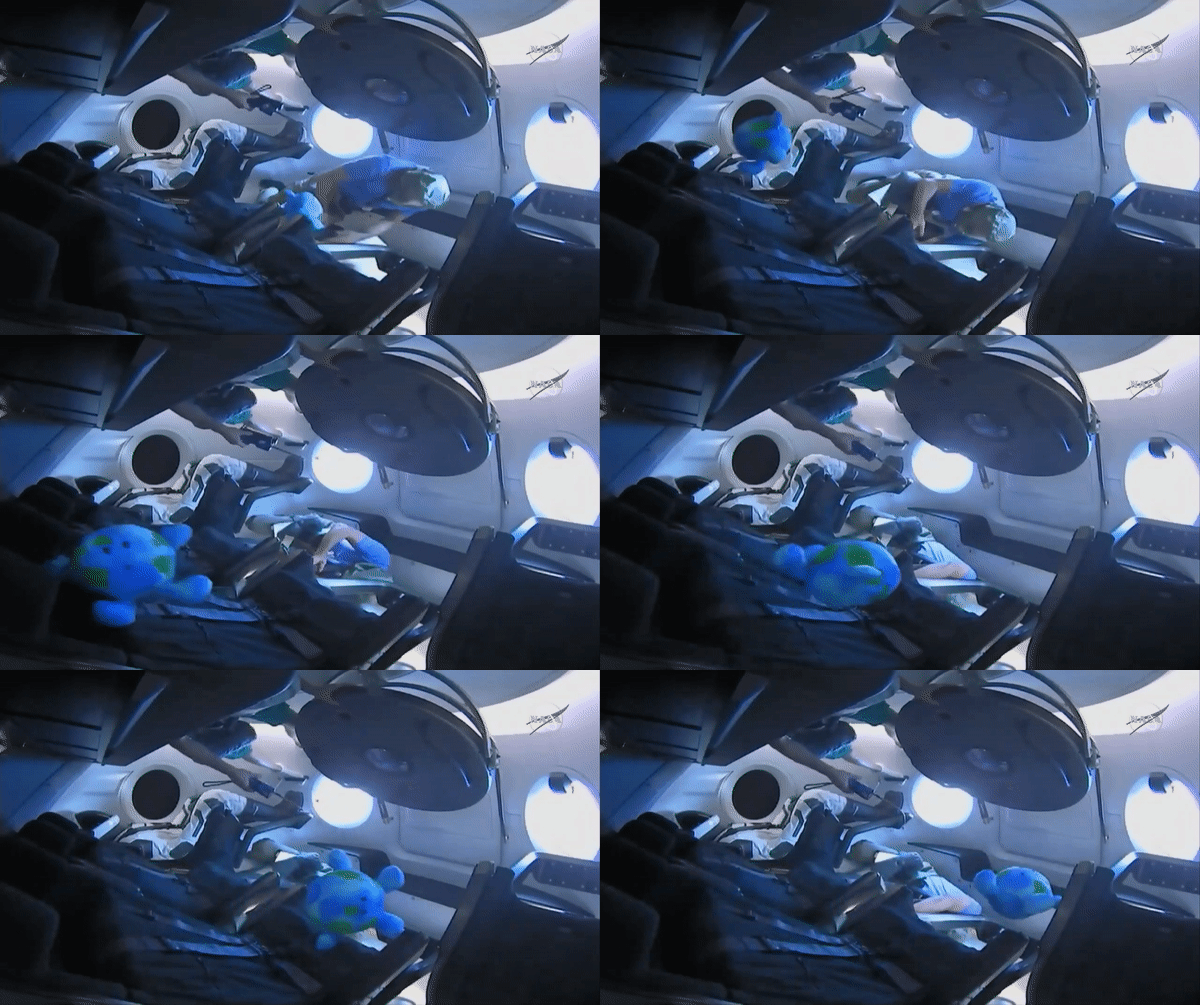
On this occasion, however, following separation, a decidedly asymmetrical Korolev Cross briefly formed, before the sky around the rocket became spotted with debris as if something had broken up.  At the same time, video of the cabin in the Soyuz vehicle’s decent module, where the crew sit during both ascent to orbit and their return to earth, showed Ovchinin  and Hague suddenly experiencing a brief period of weightlessness, almost as if thrust from the vehicle’s second stage had ceased, before they were pushed back into their seats and the plush toy suspended in front of the camera (used as a very rough-and ready G-force indicator) suggested a rapid acceleration.

This sudden acceleration was the result of the launch escape system kicking-in, separating the payload shroud containing the upper two modules of the Soyuz from the failing rocket. The manoeuvre recorded a 6.7 G acceleration right when the crew would have been expecting a 1.5G climb up to orbit as a result of jettisoning the spent strap-on boosters.

Once clear of the rocket, the fairing deployed a set of aerodynamic breaking flaps, slowing it to allow the Soyuz descent module to detach. The normal parachute and retro rockets where then used to bring the capsule back to Earth and execute a safe landing.

The distinctive “Korolev Cross” of booster separation see with R7 launches (l), and how it looked with Soyuz MS-10 (r). The first visual indications from the ground that something had gone wrong. Credits: NASA TV

Precisely what caused the failure has yet to be determined. As well as recovering the two crew safely and returning them to Baikonour unharmed, teams have also been busy recovering parts of the failure rocket, and Roscosmos believe they’ll be in a position to use the parts so far recovered together with telemetry from the vehicle’s ascent to provide a preliminary report on the failure within a week.

In the meantime, space experts have been examining video footage of the launch, and it would appear some form of malfunction during the separation of one of the four strap-on boosters may have caused it to actually collide with the core rocket. In his analysis of the flight, Scott Manley points to both the asymmetrical pattern of debris from the booster separation and what appears to be a radical slewing in the exhaust plume of the core stage as evidence there was some form of collision.

A remarkable shot of Soyuz MS-10 captured by ESA astronaut Alexander Gerst from the ISS. Credit: A. Gerst / ESA / NASA

Some confusion also exists over what actually happened during the abort sequence. Like Apollo crewed rockets, Soyuz has a tower-like escape system at its top. In an emergency, rockets mounted in the tower fire, pulling the crew module clear with a brief acceleration of about 14 G. As the reported acceleration with MS-10 was less than this, there was speculation the escape system hadn’t been used.

However, the Russian escape system, called the Sistema Avariynogo Spaseniya (SAS), unlike American systems, has two sets of motors: those in the tower, and a set of lower-thrust motors mounted directly on the payload fairing, and capable of around 7 G acceleration – the reported speed of the Soyuz on separation. It’s theorised it was these motors that pulled the Soyuz clear, the vehicle not having reached a velocity warranting the use of the tower rockets in order to pull the Soyuz clear.

Left: the Soyuz escape system (SAS) and how it works. The system uses two sets of motors which can be used together or independently of one another to pull the upper section of the payload fairing and the Soyuz clear of a malfunctioning rocket. The Soyuz descent module can then jettison, using its parachute and landing motors to return to Earth. Right: The SAS motor tower (boxed) with four rockets, and the second set of 4 RDG rockets mounted on the payload fairing (ringed). Credits: assorted.

Continue reading “Space Sunday: of Soyuz aborts and telescopes”

Space Sunday: exomoons, dwarf planets and spaceflight plans

Artist’s impression of the exoplanet Kepler-1625b, transiting the star, with the candidate exomoon in tow. Credit: Dan Durda

A pair of Columbia University astronomers using NASA’s Hubble Space Telescope and Kepler Space Telescope have assembled compelling evidence for the existence of a Neptune-size moon orbiting a gas-giant planet 8,000 light-years away. If their findings are correct, it will be the first moon found orbiting a planet beyond our solar system.

The planet, Kepler 1625b, is between 5.9 and 11.67 times the size of Jupiter. It orbits a G-class main sequence star with around 8% more mass than our own in the constellation of Cygnus, every 287.4 days. The planet has been known about for some time, but whilst re-examining the data gathered by the Kepler space observatory that led to its discovery, Alex Teachey and David Kipping from the University of Columbia noticed anomalies in the way the planet dimmed the star’s light as it transited between the star and Kepler – anomalies that in ordinary circumstances should not have been there, but which were enough to get the astronomers 40 hours observing time using the Hubble Space Telescope.

Able to study the star with four times greater precision than Kepler, HST was used to observe Kepler 1625 both before and during one of the planet’s 19.5 hour transits across the star. In doing so, it recorded not only the anticipated dip in the star’s brightness, but also a second dimming along the same orbital path, starting some 3.5 hours after the first had started. The Hubble data also revealed that Kepler 1625b started its transit across the star 1.25 hours earlier than it should have.

When put together, the most likely explanation for both the “premature” transit and the extra dimming of light from Kepler 1625 is that a vary large, somewhat distance moon is orbiting the Jupiter-like Kepler 1625b. The presence of such a body in orbit would set a common barycentre (centre of gravity) between the planet and the moon that would cause the planet to “wobble” from its predicted location in its orbit, leading to variations in the start times for transits. Similarly, the presence of a large moon orbiting it would cause the additional dimming in the star’s brightness during a transit.

Diagram of the sequence of HST photometric observations. The purple object represents the planet Kepler 1625b, and the smaller green object is that exomoon, showing how the latter transits the star about 3.5 hours after the planet. Credit: NASA / ESA / D. Kipping (Columbia University), and A. Field (STScI)

Before the exomoon’s existence can be confirmed, further observations by Hubble are required. However, the preliminary data gathered suggests it could be around 1.5 percent the mass of its parent star – which is a very close mass-ratio between the Earth and its moon. However, given both the massive planet and its moon appear to both be gaseous in nature, should the moon’s existence be confirmed, it raises intriguing questions as to how it was formed.

In the case of solid satellites like the Moon, their creation is likely due to a collision between Earth and another planetary body that left debris that coalesced into the Moon. Such a path of formation for a gaseous body, however, is exceptionally unlikely: anything impacting with Kepler 1625b, for example, would likely be absorbed into it, rather than throwing off matter to form a separate orbiting body.

One of the most intriguing theories for the moon’s possible existence is that it may have started life as a separate planet orbiting Kepler 1625, but over time it came under the gravitational influence of the massive Kepler 1625b, and over time was drawn into orbit around it. If this should prove to be the case, it could have interesting implications for future exoplanets and the moons that may be found orbiting them.

NASA Delays Commercial Crew Launches and Tensions with Russia Increase

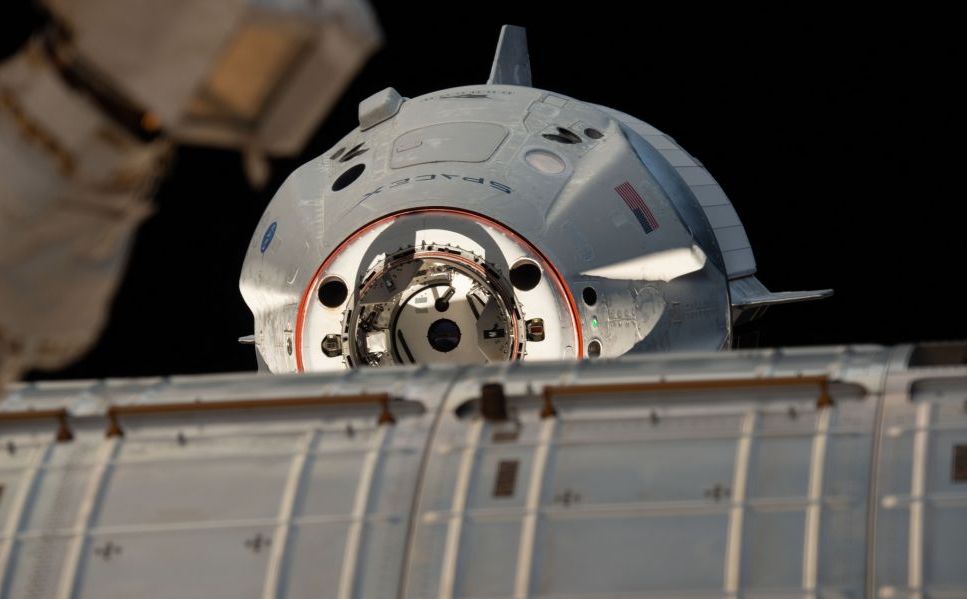
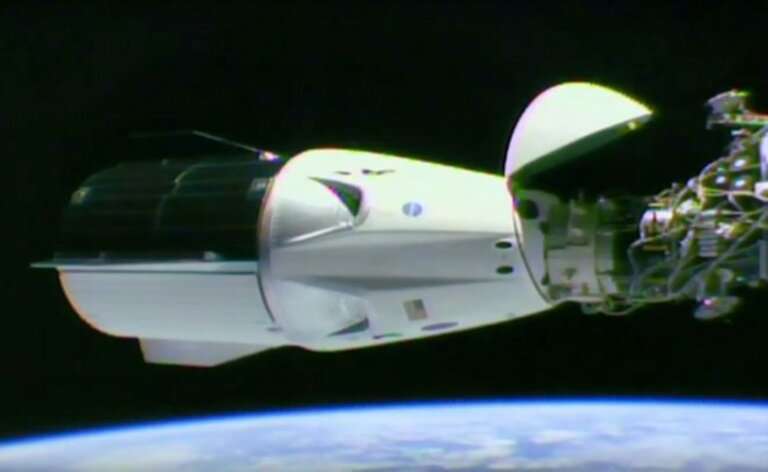
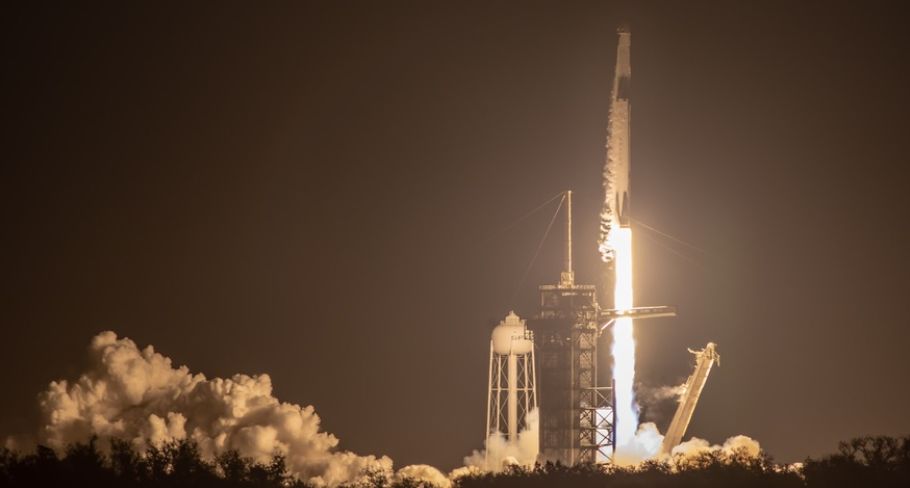
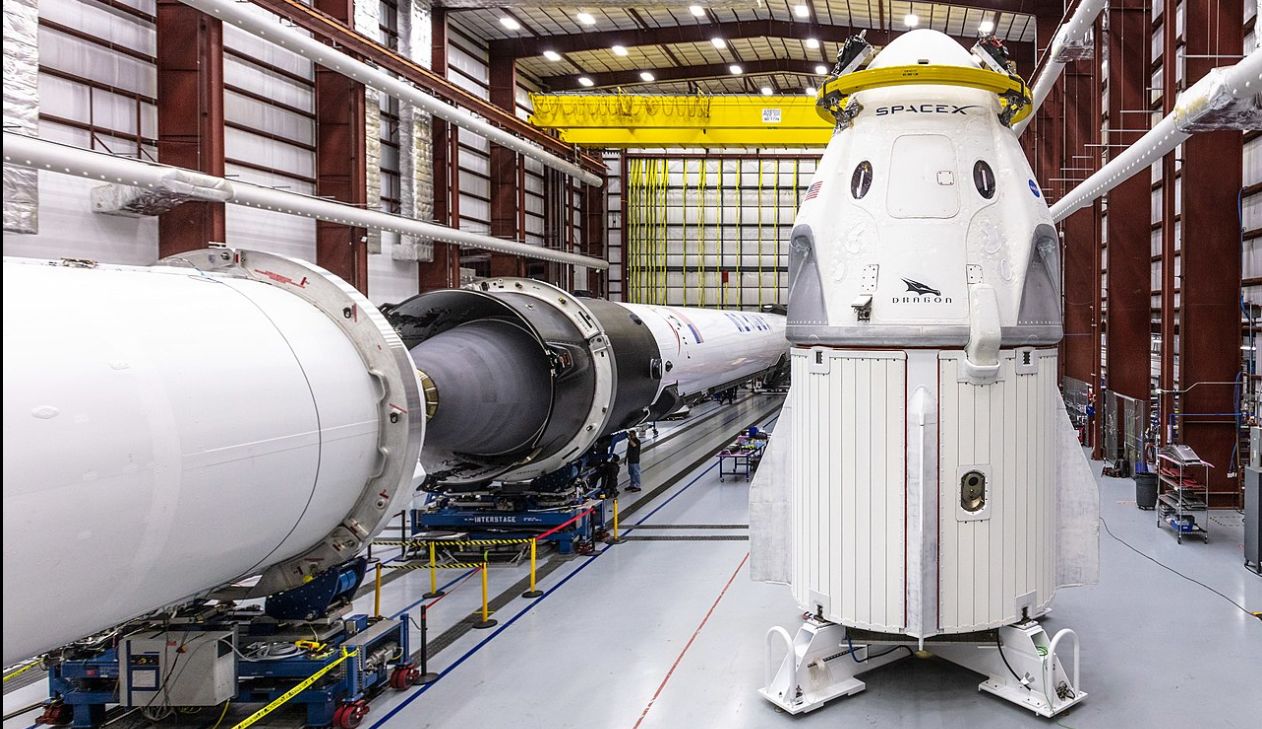
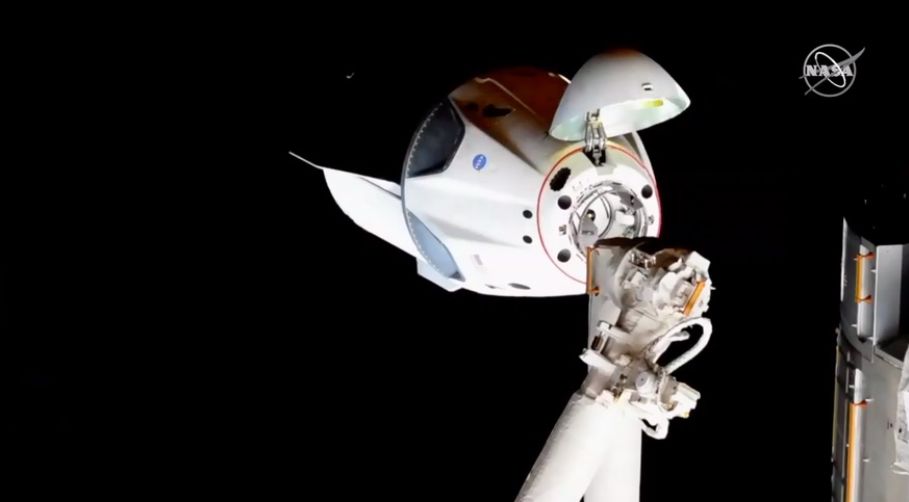
NASA has confirmed that the first uncrewed test flights of the SpaceX Crew Dragon and Boeing CST 100 Starliner commercial crew transports intended to fly astronauts to the International Space Station (ISS) have been delayed.

SpaceX Crew Dragon (l) and the Boeing CST-100 Starliner: initial flights delayed. Credit: SpaceX / Boeing

Under the original schedule, the uncrewed flight test for Crew Dragon had been scheduled for November 2018 and would have been followed by a 2-week crewed flight with NASA astronauts Bob Behnken and Doug Hurley in April 2019.  Under the new schedule, these flights will now  occur in January and June 2019 respectively.

Similarly, the first uncrewed flight for the CST-100 Starliner is now planned for March 2019 with the crewed test previously scheduled for mid-2019 now set for August 2019.

If SpaceX and Boeing maintain the new schedule, NASA believe the first operational commercial crew mission could take place in August 2019 – which would suggest a Crew Dragon would be the vehicle used, given the CST-100 would just have completed its crewed test flight, requiring some post-mission analysis. The second operational will then follow in December 2019. Both of these dates straddle the end to the US government’s extended contract to use seats on Russia’s Soyuz vehicle to send US astronauts to and from the ISS.

While unrelated, the news of the delays came as US / Russia tensions concerning the hole found in a Soyuz capsule became strained once more.

As I’ve previously noted (see here and here), at the end of August a slow leak was detected in a Soyuz MS-08 docked at the ISS. Initially, it was thought the hole causing the leak was the result of debris puncturing the Soyuz hull. However, it emerged the hole appears to have been drilled. Core thinking around it was that a mistake had been made during the vehicle’s fabrication or in preparing it for flight at the Baikonur cosmodrome, and then hastily covered up. In either case, it is believed a substance unfit for purpose was used in the repair, which gradually degraded in space prior to failing completely, causing the pressure loss.

Continue reading “Space Sunday: exomoons, dwarf planets and spaceflight plans”

Space Sunday: roadmaps, space stations, rovers and storms

A dramatic illustration from the latest NASA report on reaching the Moon and Mars with human space flights. Credit: NASA

On September 28th, 2018, NASA issued its latest report on how it hopes to return humans to the Moon and then travel onwards to Mars. Entitled the National Space Exploration Campaign Report, it’s a bit of a curate’s egg of things; just 21 pages in length, it offers a lot of aspiration, not always with underlying detail; avoids hard decisions while offering open-ended time lines; presents time lines as a road map,  but avoids mention of precisely how to reach the destination(s) or the cost of the journey(s).

In all, the report lays out three broad aims:  expanding low Earth orbit activities to include commercial operators, operating their own orbital facilities – and possibly the International Space Station; moving outwards to lunar orbit and from there to the surface of the Moon; then moving onwards to Mars. All are painted with very broad brush strokes and leave much unsaid.

LOP-G is now seen as a “foundational gateway” system for reaching both the Moon and Mars – click for full size, if required. Credit: NASA

The lunar aspects of the report, for example, cover the incremental development of the Lunar Orbital Platform-Gateway (LOP-G) and how it could theoretically help develop capabilities that can be used in vehicles intended to carry humans to Mars. It also outlines how NASA can build towards human operations on the Moon through an incremental development of automated capabilities that both increase our understanding of the Moon, the resources it offers, etc., to a point where the first crew-carrying lander vehicle could be ready “in the late 2020s”. But when it comes to detailed ideas for the architecture of a human presence on the Moon, things are left vague.

In terms of Earth orbit operations, the report points to NASA transitioning away from operating the International Space Station to leasing facilities from the private sector; but precisely how these commercial orbital platforms are to be built is unclear, other than referencing the US $150 million of NASA’s that will be used to encourage commercial development of such platforms from 2019. $150 million is a very small amount when you consider the $100 billion construction cost of the ISS; without some very clear-cut, real-time ROI being evidenced for the private sector, it’s hard to see the ISS being supported by multiple commercial platforms of equatable capabilities in just six years.

NASA’s “swoosh” chart outlining the agency’s plans for lunar exploration, and a common element is recent presentations and a part of the new report. Credit: NASA

To be fair, some of the lack of detail within the report is understandable on a number of levels. In 1989, for example, NASA produced the Space Exploration Initiative (SEI), a report outlining how it would take humans to Earth orbit, thence to the Moon and thence to Mars. The report offered a massive vision: 30 years of development and exploration lading up to humans landing on Mars – as a suitable price tag to go with it: US $430 billion. That’s the kind of figure that would have had Congress dropping the report into the bottom of a very deep draw (possibly in a locked filing cabinet stuck in a disused lavatory with a sign on the door saying Beware of the Leopard, somewhere in the basement of Capitol Hill, if I might re-purpose a quote).

There’s also the fact that it’s hard to get any politico to sign up to something that has end results they’re unlikely to be in office long enough to see. This was certainly the case with SEI, and it was something John F. Kennedy understood when he set NASA the goal of “landing a man on the Moon and returning him safely to the Earth” within a decade. Thus, it is perhaps understandable why this report doesn’t stray that far beyond 2024, preferring to leave matters after that date pretty much as “TBD”.

However, in the course of the last few years, NASA has been repeatedly criticised by the US Congress for refusing to present  specifics when outlining its intentions. In this respect, the pendulum seems to have swung too far: from a gung-ho attitude of “gives us the money and we’ll deliver – although it could take longer than you’ll be around” evidenced with SEI, to an almost timid, “We’d like to do this, but we’ll sort out how later, so you don’t have to worry about the price”, which is perhaps as equally as dangerous when trying to set out where you’d like to go and how you’d like to get there.

The View from an Asteroid

In my previous Space Sunday update, I covered the arrival of two small Japanese landers on the surface of asteroid 162173 Ryugu. Since then, both of these little vehicles have been returning images and data as they sit on the asteroid’s surface and / or hop around it.

While the rovers – MINERVA-II1 A and B – have both revealed the surface of Ryugu to be rocky, the images are still stunning, especially those stitched together to form a time-lapse video showing the Sun passing across the sky above rover 1 B as the asteroid tumbles along its orbit.

The rovers are two of four vehicles that will be delivered to the surface of Ryugu by Japan’s Hayabusha 2 satellite, currently orbiting the asteroid. Together the rovers and orbiter will probe and study Ryugu in detail, with the orbiter also gathering samples from both the surface and sub-surface, which it will return to Earth for analysis at the end of 2020.

Continue reading “Space Sunday: roadmaps, space stations, rovers and storms”

Space Sunday: Moon trips, Mr Spock’s “home” and roving an asteroid

The updated BFR / BFS combination, as revealed on September 17th, 2018. Credit: SpaceX

On Monday, September 17th, SpaceX CEO, Elon Musk, provided an update on the company’s massive Big Falcon Rocket (BFR) and Big Falcon Ship (BFS –  previously referred to simply as “the ship” or “the spaceship”), and revealed the first fare-paying passenger who will supposedly fly around the Moon aboard a BFS some time in the 2020s.

BFR has been in development since 2012/13. Designed to be fully reusable, it was initially referred to as the Mars Colonial Transport (MCT) – reflecting the company’s intention to use it to send humans to Mars. In 2016, SpaceX revealed the first formal design for the vehicle, which had been renamed the Interplanetary Transport System (ITS) to reflect the fact it could fulfil a number of roles. At that time, the vehicle  – comprising a first stage booster and upper stage starship – was to be a 12 metre (39 ft) diameter, 122 m (400 ft) tall monster. By 2017, it had been renamed the BFR (for “Big Falcon Rocket”), and redesigned to be 9 m (29.5 ft) in diameter and 106 m (347 ft) tall.

With the 2018 presentation, Musk revealed further design changes to the system, most notably with the upper stage spaceship, the BFS, some of which give it very retro rocket ship look.

 
Left: The evolution of the BFR from 2016 (as the ITS) to 2018; renderings via the Everyday Astronaut. Right: an animated comparison between the 2017 BFS and the 3-finned 2018 variant (from an idea by Overlook Horizon).

In particular, the BFS now sports three large fins at its rear end. All three are intended to be landing legs – the BFS being designed to land vertically – with two of them actuated to move up and down as flight control surfaces during atmospheric decent. These are matched by two forward actuated canards, also designed to provide aerodynamic control during a descent through an atmosphere.

Two less obvious changes are an increase forward payload section and the design of the nose area of the vehicle, which includes a much larger forward “canopy” design than previous iterations, and an update to the BFS’s motors. Originally designed to be powered by 7 of the new SpaceX Raptor engine optimised for vacuum operations, the BFS will now initially be powered by seven of the same Raptor motors that will be used on the vehicle’s first stage (which uses a total of 31), optimised for thrust in an atmosphere.

The redesigned BFS includes new fore and aft actuated control surfaces for atmospheric entry, and an enlarged crew / cargo space. Credit: SpaceX

Elements of the first BFR system have been under construction for the last 12-18 months. These include one of the fuel tanks, and the initial hull rings, and Musk claims that the company hope to have the first BFS prototype ready for initial “hopper flights” – lifting itself off the ground under thrust and then landing again – by the end of 2019. SpaceX then plan to run high altitude testing of BFS in 2020, together with initial flights of the core stage as well.

Overall, the goal is to have the first BFR / BFS combination ready for orbital flight tests in 2021, building towards the flight around the Moon, which the company has earmarked for 2023.

The first completed cylinder section of the prototype BFR. just visible to the left is a part of one of the tanks that will eventually go inside the vehicle. Credit: SpaceX via The Independent

This is an incredibly ambitious time frame, one most unlikely to be achieved. SpaceX would appear to have some significant engineering challenges to overcome. For example, by combining the landing legs with control surfaces, how are they going to ensure the craft can land sufficiently gently on another surface without damaging the mechanisms designed to move the fins, which will be required when the vehicle returns to earth.

While there was always a risk that landing struts (as were originally going to be used with BFS) might suffer damage as a result of a “hard” landing on the Moon or Mars, integrating landing systems into surfaces vital to the vehicle’s (and a crew’s)  safe return to Earth as planned by SpaceX, would appear to add further complexity to the vehicle – or call for contingencies to be able to transfer a returning crew to another vehicle on their return to Earth orbit should one of systems use to actuate the fins suffer damage when landing on the Moon or Mars.

Another view of BFS showing the seven Raptor engines and the additional cargo bays at the rear of the vehicle. This configuration assumes the Raptor engines are the same as those used on the core stage, although the new design means BFS can be equipped with vacuum optimised motors, with larger exhaust bells (with the removal of the ring of cargo bays) to offer better performance in space. Credit: SpaceX

Another of the questions from where is BFR is likely to be launched. When initially revealed with a 12-metre diameter, it required a purpose-built launch facility. But with the core now reduced to a 9 metre diameter, BFR could in theory be launched from the SpaceX facilities at Launch Complex 39A, Kennedy Space Centre (KSC), Florida.

More particularly is the entire question of whether or not such a behemoth is really commercially viable. Payloads are getting progressively smaller, lighter and more capable;  SpaceX itself is transitioning its Flacon 9 flights to a mix of dedicated launches and “transporter” (more usually called “rideshare”) launch, combining several customers into one launch, thus lowering the cost per customer.

That’s fine for a vehicle with an all-up semi-useable payload capacity of around 15-16 tonnes, it only takes perhaps a third of that capacity to reach the point where the launch is revenue-earning and the lead time for customers seeing their satellites in space is relatively short. But multiply that out to the scale of Starship, ad the lead-time in getting sufficient customers to fill the a vehicle even one-third full in order to lift income sufficiently over launch costs (assuming the new vehicle is as low-cost as Falcon 9) could be a real problem.

In discussing plans, Musk revealed a final decision on BFR launch facilities has yet to be made, and hinted it might even initially fly from a floating platform. This was an idea first put forward in one of the company’s promotional videos for the system, suggesting it could fly up to 100 people between New York City harbour and Shanghai harbour in 40 minutes. This, simply put, will not happen – because the idea doesn’t work either economically or practically.

Continue reading “Space Sunday: Moon trips, Mr Spock’s “home” and roving an asteroid”