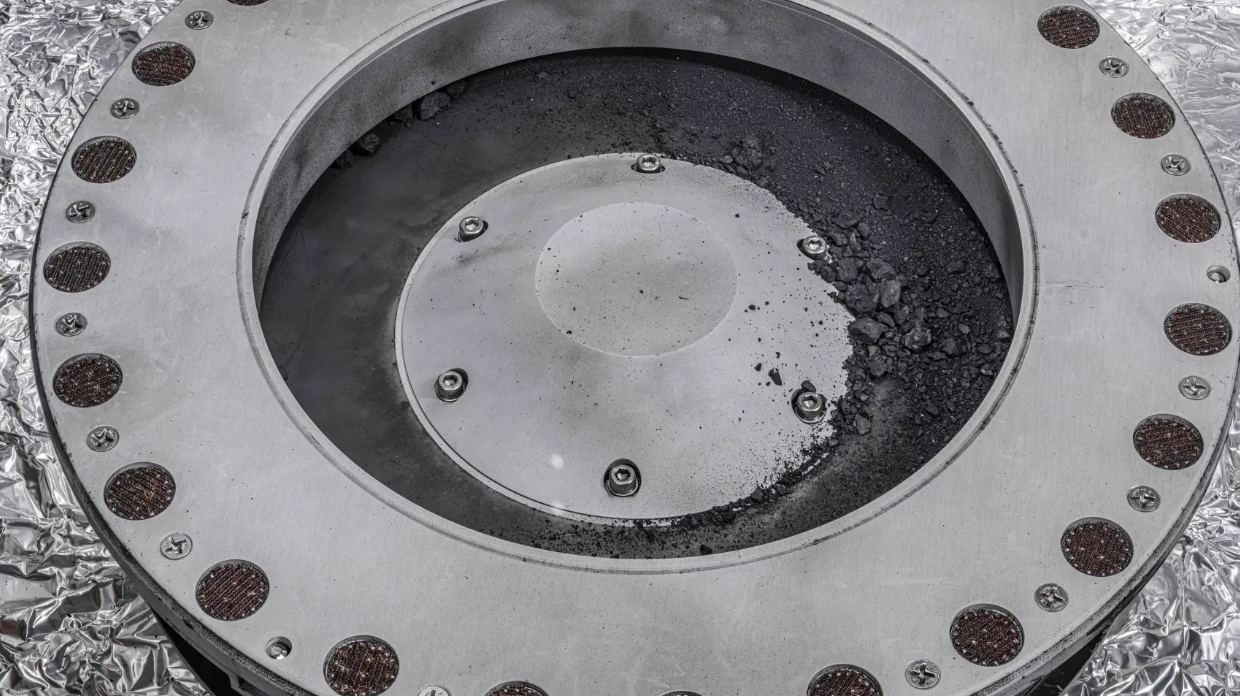
The outside of the sample container from OSIRIS-REx showing material from asteroid 101955 Bennu scattered outside of the container proper, testament to the amounts contained within. Credit: NASA / Erika Blumenfeld & Joseph Aebersold
On October 11th, 2023, NASA revealed details of their first look at samples returned from asteroid 101955 Bennu, returned to Earth on September 24th by the OSIRIS-REx mission.
As I reported in Space Sunday: the return of OSIRIS-REx, the sample return capsule carried with it up to 250 grams of material from the carbonaceous asteroid – a lot more than had been anticipated, thanks to Bennu proving to be so brittle the sample mechanism smashed through its outer surface, clogging itself with material, rather than lightly “tapping, grabbing and departing”.
The sample container now open (left), with more materials coating the inner surfaces (right). This material was used in the initial analysis of the sample. Credit: NASA
Following its recovery after landing in Utah, the capsule and containing the sample gathering head from the spacecraft was transferred to Johnson Space Centre and the Astromaterials Research and Exploration Science (ARES) centre (as I reported here), where for the last couple of weeks the sample container has been accessed and its contents subject to initial analysis.
It has still not been confirmed how much material has been obtained from Bennu; the opening of the sample canister revealed a fair amount of material was trapped between the lid of the canister and the membrane protecting the main bulk of the sample. This was painstakingly collected and formed the materials used for the initial analysis of the sample dust.
This initial analysis as revealed that – as expected, given it is a carbonaceous asteroid – the sample has within it evidence of both carbon and water, with the latter have a similar isotopic levels similar to those of Earth’s oceans. This was expected as it has long been the theory – supported by the examination of other asteroid samples returned to Earth by Japan’s Hayabusha and Hayabusha-2 missions – that C(arbonaceous)-type asteroids were responsible for bringing water and carbon to Earth early in its history.
Mari Montoya (left) and Curtis Calva at NASA’s Astromaterials Research and Exploration Science (ARES) centre carefully collect all the overspill from the OSIRIS-REx sample container, carefully clearing it all so it can be used in the initial analysis of the material returned from 101955 Bennu. Credit: NASA
Which is not to say that the samples do not offer a lot to learn; there is much that scientists do not know for certain about the Earth’s earliest history and its formation; much of what we do know is basis on hypotheses and scientific assumptions. The study of samples like those from Bennu samples could therefore allow many of those hypotheses to to more fully tested and the knowledge we lack or assume to be correct properly framed and understood.
Following extraction, the material from inside the sample container will be distributed to research centres in museums and universities around the world to enable a more extensive and as broad-ranging spectrum of independent analysis as possible over the coming months / years.
Psyche Launched
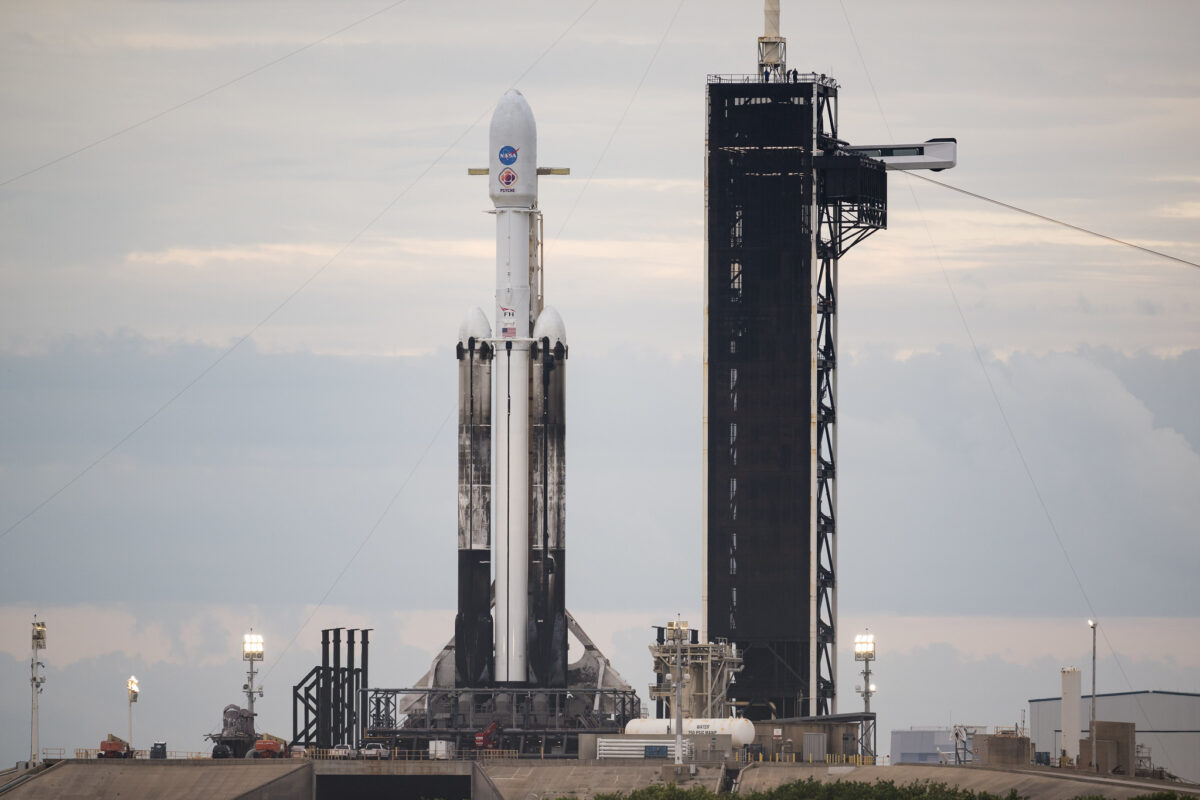
Following on from my previous Space Sunday article, and after being delayed almost 24 hours due to inclement weather, NASA’s mission to asteroid 16 Psyche got underway at 14:19 UTC on October 19th, 2023 when a Falcon Heavy lifted-off from Pad 39A at Kennedy Space Centre, Florida.
The SpaceX Falcon Heavy which launched the spacecraft Pysche at the start of its mission at Pad-39A, Kennedy Space Centre. Note the sooty exteriors of the side boosters, marking the fact both were about to make their fourth ascent each from a launch pad. Credit: NASA
After a flawless launch the rocket – comprising a core Falcon 9 booster with two additional first stages of the same rocket acting as strap-on boosters – rose into a cloudy sky over Florida. Just over two minutes into the flight, the side boosters separated to complete a “burn back” manoeuvre allowing them to return to Florida to land at Cape Canaveral Space Force Base adjacent to Kennedy Space Centre a few seconds apart, the landings marking the 4th successful flight for both units.
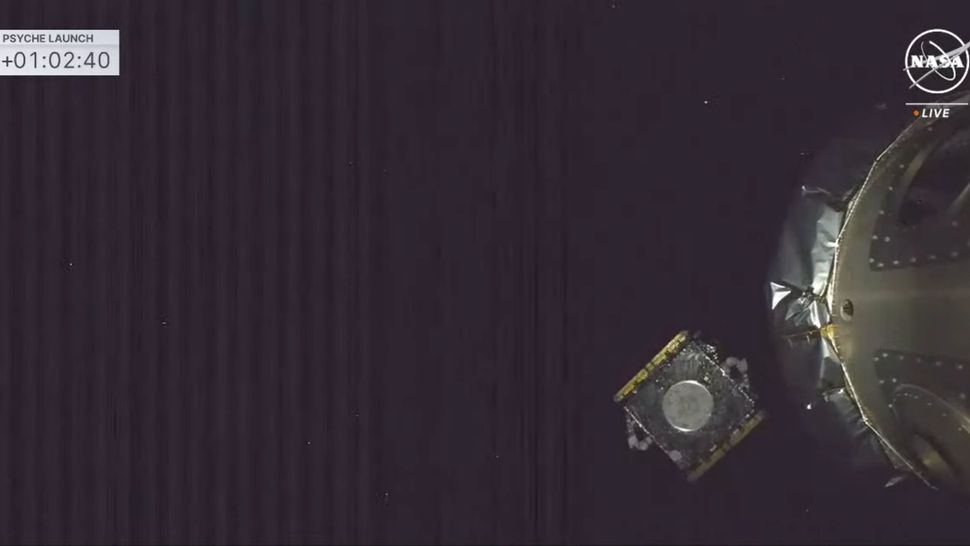
The spacecraft separated from the upper stage of the booster around an hour after launch, having been delivered to an extended orbit around Earth. There then followed a further 30 minute period of silence as the vehicle powered-up and oriented its communications system to call home with its first batch of data, indicating all was well and establishing a firm link with mission control.
The next 100 days will see the spacecraft comprehensively checked-out in terms of its flight systems – notably the four Hall-effect SPT-140 ion thrusters. This will be used serially throughout the flight to propel the vehicle to its rendezvous with 16 Pysche and enable it to slow down for an orbital rendezvous.
This checkout will be completed over the next week or so, and prior the vehicle being ordered to use the thrusters to start pushing itself away from Earth and into a heliocentric orbit around the Sun to reach Mays in 2026. Once there, it will use the planet’s gravity to help swing itself onto an intercept with 16 Psyche, where it will arrive in the latter part of 2029 to commence its science operations over an initial 21-month period.
A view from the forward end of the Falcon Heavy upper stage showing the departing Psyche spacecraft, the 24-metre span of its solar arrays still stowed. Credit: SpaceX / NASA TV
As I noted last time around, the journey to Mars will see NASA carry out a test of their Deep Space Optical Communications (DSOC) laser communications system, which could greatly increase the data rate and bandwidth of communications used with deep-space missions. The first test for DSOC should come in about three weeks from launch, when the vehicle will be 7.5 million kilometres from Earth. They will then be periodically repeated and extended as the spacecraft reaches a distance of to 2.5 AU from Earth.
The launch marked the eighth for what is now the world’s second most powerful launch vehicle currently regarded as operational (the most powerful title having been taken by NASA’s Space Launch System), and the 4th for 2023. However, it was particularly noteworthy for SpaceX, as it marks the first time NASA has used the rocket, and several concessions had to be made in order for this to go ahead.
The booster is also set to become a mainstay for several major NASA missions over the next few years. These comprise the launch of the 2.8 tonne GOES-U weather satellite and Europa Clipper mission to the Jovian system (both in 2024), the Nancy Grace Roman Space Telescope in 2026/7 and – perhaps critically for NASA’s human spaceflight operations, the joint launch of the first two sections of the Lunar Gateway Station in the form of the Power and Propulsion Element (PPE) and the Habitat And Logistics Outpost (HALO), a launch currently targeted for November 2025.
In this, and in difference to the hype and questionable capabilities of the SpaceX Starship / Super Heavy system, Falcon Heavy is proving itself as reliable a launch vehicle as the rocket from which it has been formed.
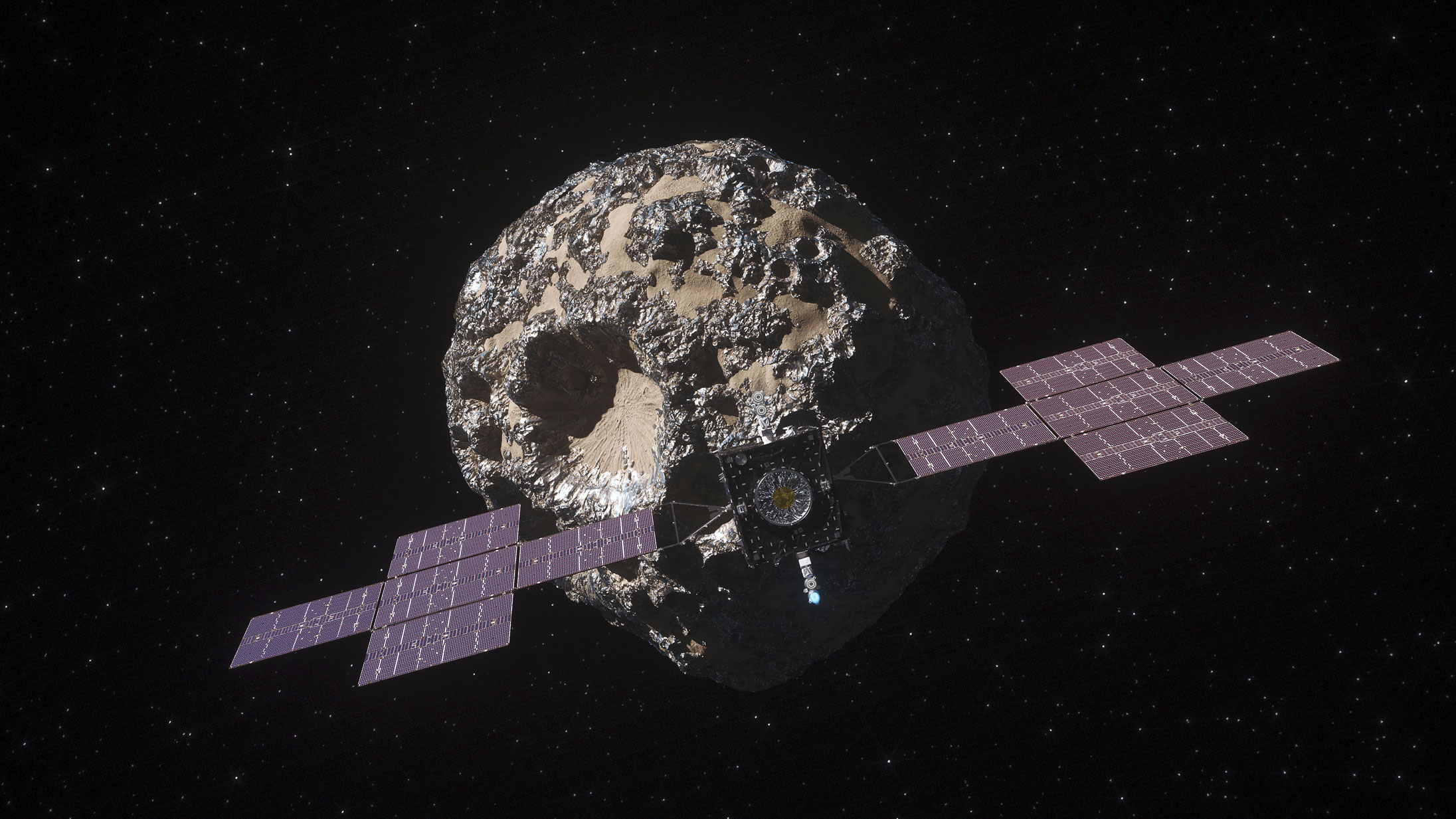
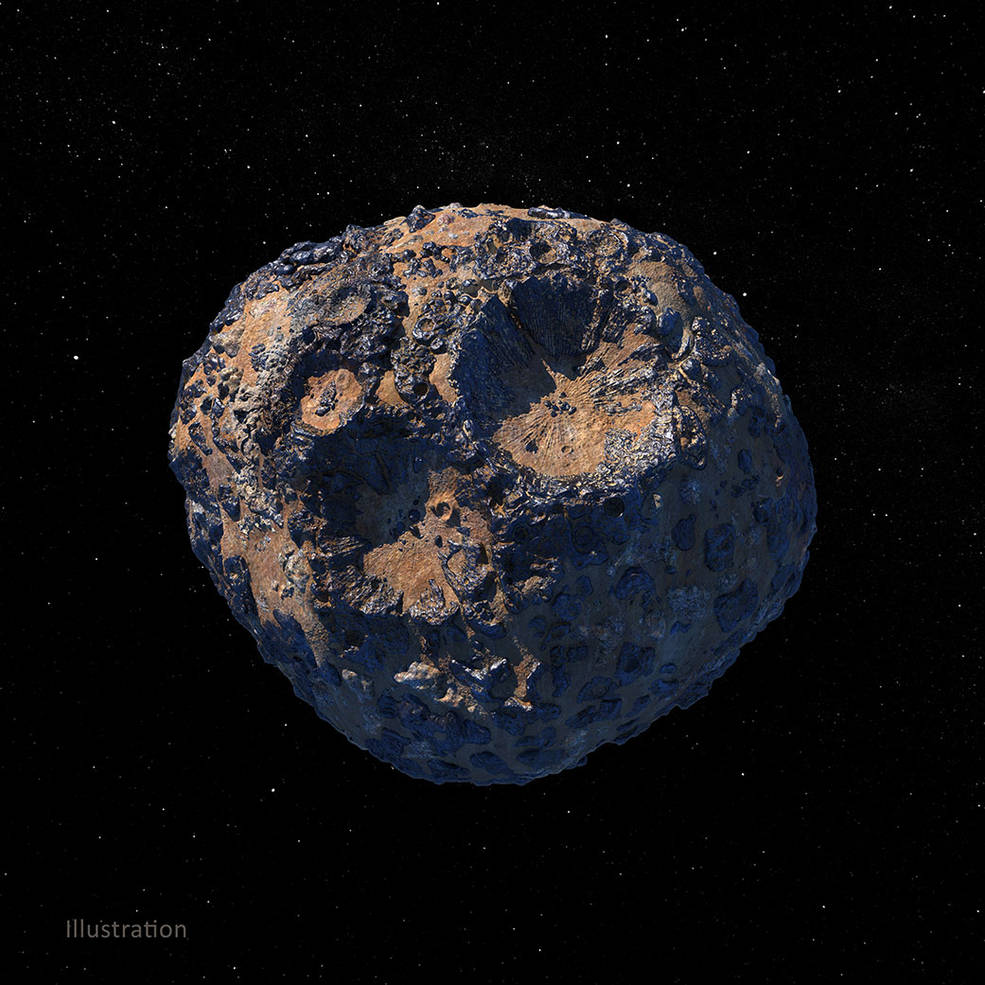
An artist’s impression of the Psyche mission spacecraft observing and mapping the asteroid 16 Psyche. Credit: NASA
Asteroids have been something of a focus for Space Sunday of late, and they’re going to be again this week. Or at least, one is: 16 Psyche, as this is the target for a NASA mission which, if all goes according to plan, will launch from Kennedy Space Centre on October 12th, 2023.
16 Psyche was discovered by the Italian astronomer Annibale de Gasparis on 17th March 1852, and is named for the ancient Greek goddess of the soul. It has a shape consistent with that of a Jacobi ellipsoid, and measures some 278 km x 238 km x 171 km as it orbits the Sun between Mars and Jupiter once every 4.9 years at an average distance of 437 million km (2.92 AU). It is also the 16th minor planet to be found in the solar system by order of discovery (hence the 16 in its name).
What 16 Psyche might look like. Credit NASA
But what makes 16 Psyche a subject for detailed study is the fact that it is the largest and most massive M-class asteroid – a class of asteroids which appear to contain higher concentrations of metal phases (e.g. iron-nickel) than others within the asteroid belt – yet discovered in the solar system. So massive in fact, that it was long theorised that it was the exposed core of a protoplanet. These are bodies thought to have been created during the early history of the solar system from the collision and coalescing of planetismals, and which may have gone on to play a role in the formation of the inner planets of the solar system (in fact, for a time in the early 20th century, the coalescing of planetismals into protoplanets and protoplanets into planets was thought to be the process by which all planets were created, an idea long since proven incorrect; planetary formation is far more complex than things bumping into one another and gluing themselves together).
Thus, it is also possible that whilst a protoplanet, 16 Psyche evolved along lines which had nothing to do with planetary formation; thus, studying it might either help in our understanding of planetary formation and / or enable us to more fully understand the unique processes at work within these tiny (in terms to their relationship with planets) bodies, and the mechanisms which ultimate gave rise to their form and nature. Most intriguingly, a mission to 16 Psyche might even point to a different story as to how objects in the solar system formed.
What we do know about 16 Psyche’s surface details, based on observations via the European Southern Observatory’s Very Large Telescope in the Atacama Desert, Chile. Credit: ESO
Hence the upcoming NASA mission and spacecraft which bear the asteroid’s name. First proposed in February 2015 by Arizona State University, the idea was awarded a US $13 million grant under the agency’s ongoing Discovery Programme to allow the basic concept to be fully evaluated and the initial design for the spacecraft determined. As a result of this, the mission was officially adopted into the Discovery Programme at the start of 2017 with a budget capped at $1 billion.
At that time, the mission was targeting a later 2023 launch date; but such was the confidence in the vehicle’s development cycle that this was revised to a July 2022 launch opportunity. This would allow for a much faster mission, drastically reducing the transit time to 16 Psyche, allowing the spacecraft to reach it in 2026, rather than 2029 as would be the case with a 2023 launch. Unfortunately, COVID-19 intervened to delay the construction and testing of the spacecraft, forcing NASA to push the launch date back to October 5th, 2023. Then in September 2023, this was delayed a further week to allow time for adjustments made to the operational parameters for the spacecraft’s cold gas thrusters (used to orient the craft when manoeuvring) to be properly checked and verified.
Psyche (as in the spacecraft) will commence its journey atop a SpaceX Falcon Heavy rocket due to lift off from Pad 39A, Kennedy Space Centre, Florida at 14:16 UTC on October 12th. Once the craft has separated from the Falcon Heavy’s upper stage, it will deploy its massive solar arrays – a span totalling 25 metres and 7.3 metres across at its widest. Capable of generating 21 kilowatts of electricity whilst in the vicinity of Earth (which will decrease over distance to between 2.3-2.4 kilowatts when the spacecraft is orbiting 16 Psyche), these panels will not only provide electrical power to Psyche’s instruments, but will also power the vehicle’s primary propulsion system.
A US SPT-140 Hall-effect thruster being tested at NASA’s Jet Propulsion Laboratory. Credit: NASA/Caltech
This comes in the form of four Hall-effect SPT-140 thrusters which will be used individually rather than collectively during the cruise stages of the mission, to both propel the spacecraft to its destination and slow it for orbital insertion around 16 Psyche. Each thruster uses some of the electricity generated by the solar panels to generate an electromagnetic field, which is in turn used to direct and accelerate a stream of inert xenon gas ions, expelling it as an exhaust mass to propel the craft.
The force of this exhaust is not huge – it’s about equal to that felt when holding an AA battery on the palm of the hand – but the key thing is, it can do so for weeks, and with a tiny amount of fuel, allowing for a constant acceleration, reducing the transit time to the asteroid compared to conventional meaning of transit (i.e. using momentum imparted by the launch vehicle coupled with multiple planetary flybys) and at a fraction of the propellent load (1 tonne or 10%) that would be required if conventional chemical motors were to be used.
Even so, the journey to 16 Psyche will still the 2.6 tonne spacecraft take 5 years 10 months. The first part will be a 2-year, 7-month outward spiral around the Sun so the spacecraft can perform a flyby of Mars in May 2026. This will allow it to both accelerate and swing itself onto a trajectory which crosses that of 16 Psyche in 2029, allowing the vehicle to slow itself into an initial orbit around the asteroid in August of that year.
During the initial part of the outward cruise, the spacecraft will be used to demonstration a potential new deep space communications technology – DSOC (“dee-sock”), the Deep Space Optical Communications system. This is a laser-based system which, if it works as planned, will increase communications performance and efficiency between Earth and a spacecraft in deep space by between 10 and 100 times, simply because of the removal of signal attenuation compared to radio signals and the greater bandwidth / throughput rates lasers can provide. DSOC will initially be tested through the first 12 months of the mission and, subject to results, the demonstration may be extended into the second year of the vehicle’s cruise phase, allowing the capability to be tested over distances of up to 2.5 AU.
On arrival at 16 Psyche, the spacecraft will enter the first of five orbital regimes (one if which it will use twice) in order to thoroughly map and study the asteroid. In particular, these will attempt to probe any magnetic field the asteroid might have (the presence of such a field would greatly lend itself to the idea the asteroid is in fact the core or partial core of a protoplanet). They will also enable the craft to completely map the surface of 16 Psyche and determine its surface composition and properties.
Orbit
Duration
Inclination
Period
Duration
Mission
A
92 days
90º
32.8 hours
700 km
Magnetic field characterization and preliminary mapping
B(1)
92 days
90º
11.6 hours
303 km
Topography and magnetic field characterization
D
100 days
160º
3.6 hours
75 km
Determining the chemical composition of the surface
C
100 days
90º
7.2 hours
190 km
Gravity investigations and Magnetic field observations
B(2)
100 days
90º
11.6 hours
303 km
Topography and magnetic field characterization
Psyche orbital operations at 16 Psyche, 2029-2031. Credit: NASA
Given the nature of the spacecraft and allowing for its overall condition towards the end of the primary mission, it is possible that the Psyche mission could be extended beyond this initial 21-month period.
The launch of the Psyche mission will be broadcast by NASA TV, and can be watched via the link / preview below.
October 2023 Annular Eclipse
On Saturday, October 14th, 2023, nearly one billion people across the United States and the northern countries of South America will be able to watch an annular eclipse of the Sun (or at least a partial eclipse) – as the Moon crosses the Sun’s face as seen from Earth the last solar eclipse for 2023.
Annular solar eclipse seen from Chiayi in southern Taiwan on June 21st, 2020. Credit: Alberto Buzzola
An annular eclipse difference from a total eclipse in that the Sun is never completely hidden by the Moon. In the case of October 14th, this will be because the Moon will be 4.5 days past apogee (the point where it is farthest from Earth, and so the tip of its umbral shadow cone misses Earth by around 19,200 kilometres, so the disk of the Moon will appear too small to completely cover the Sun; around 48% of the Sun’s diameter remains visible all around the Moon’s disk, creating what can sometime be a spectacular “ring of fire”.
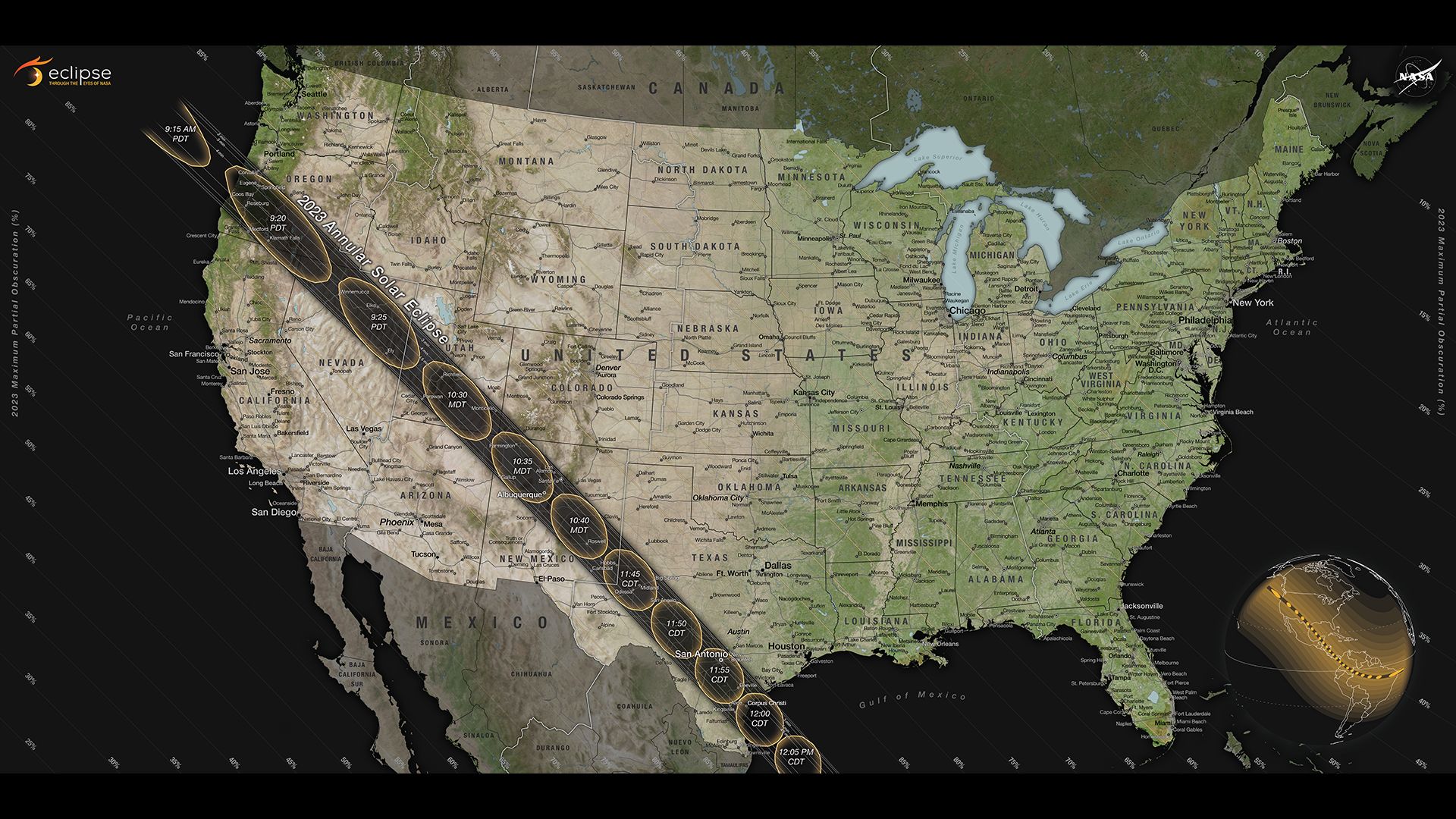
Those able to see an annular eclipse in the United States are located along a line commencing in Oregon and passing directly through Nevada, Utah, New Mexico and Texas whilst touch the northeast of California and Arizona and the southwest of Colorado. In South America, the line of the eclipse passes through Mexico Nicaragua, Columbia and northernmost Brazil and touches on Costa Rica, Panama and Venezuela. Further afield, people will see a partial eclipse.
Track and times of the October 2023 annular eclipse across the United States (track across South America shown inset). Credit: NASA Scientific Visualization Studio
However, for those wishing to track the event, NASA’s 2023 Eclipse Explorer offers an interactive map detailing when and where the eclipse will be visible, including the path and duration of annularity (the areas from which the ‘ring of fire’ can be seen), allowing users to dive into the eclipse viewing experience like never before. Both the Time And Date and Virtual Telescope will be livestreaming the eclipse around the globe, as will Slooh via their You Tube Channel.
Of course, if you live along the line of the eclipse, you can always view it live. If you opt to do so (assuming the whether is clear), then remember: never look directly at the Sun either and especially through a telescope or binoculars or camera – don’t even use ordinary sunglasses. To view the eclipse safely you must use solar filters at all times on any optical equipment you are using to observe the Sun and / or wear solar eclipse glasses, regardless of whether your location will experience a partial solar eclipse or an annular solar eclipse. Serious eye damage and even blindness can result if you do not otherwise.
Also, don’t expect things to go really dark in the manner of a total eclipse or to be able to witness the Sun’s corona: that ring of the Sun’s disk peeping around the Moon may be small, but it is still bright enough to prevent that. But it will still be a spectacular event to see, and enthusiasts will go to whatever section of the eclipse track is most easily accessible for them in order to witness it.
On October 1st, 1958 the National Aeronautics and Space Administration officially commenced operations, just two months after then-President Dwight D. Eisenhower signed the US National Aeronautics and Space Act into law.
NASA’s birth essentially arose out of what would become known as the “Sputnik crisis”. In October 1957 Russia launched Sputnik 1, the world’s first artificial satellite. Worse, just a month later, they launched Sputnik 2, which not only carried a living animal into orbit (the dog Laika, doomed to expire in orbit as the technology did not exist for the craft to re-enter the atmosphere and land safely), it demonstrated Russia had a launch system vehicle could be used relatively rapidly. This put US space launch efforts – activities largely split between the three branches of the military – into something of a tailspin, with the realisation that any civilian / science space programme could not be reliant on competing military programmes.
To this end, it was decided to place military space development under the auspices of a new agency within the US Department of Defense: the Advanced Research Projects Agency (ARPA – now the Defence Advanced Research Projects Agency, or DARPA), which was also charged with managing all aspects of emerging technologies research as they related to military use. Meanwhile, civilian space research would be placed in the hands of a new agency, with the National Advisory Committee for Aeronautics (NACA) charged with coming up with a structure for that organisation.
A replica of Sputnik-3 on display at the U. S. S. R. Industrial Exhibition, 1958, held in Moscow. The 4-metre long, 1.3 tonne spacecraft was 100 times the mass of its American counterpart, Explorer-1, and its launch and that of the earlier Sputnik-1 and Sputnik0–2 missions did much to speed the creation of NASA. Credit: Pathé News
Further haste was given to the need to determine the best direction of the US civilian space programme in May 1958, when Russia launched Sputnik-3 to mark the International Geophysical Year. Massing 1.3 tonnes, or 100 times that of the US satellite launched 3 months earlier with the same goal, Sputnik-3 demonstrated Russia had a payload to orbit capability well beyond anything within the United States, and a technical capability to fly large suites of science instruments on a single vehicle (12 instruments in the case of Sptnik-3).
In being instructed to study options for a new civilian space agency, the NACA was uniquely placed. Founded in 1915, it had (at that time) been at the forefront of aviation development in the United States for more than forty years, and following the end of the Second World War, it had become increasingly involved in aerospace research. For example, NACA was responsible for the initial design concept of what would become the X-15 hypersonic aircraft after developing and flying a number of supersonic craft during the early 1950s, and worked with the US Air Force to develop the vehicle from 1954 through until the establishment of NASA in October 1958.
A 1952 photograph of the NACA High Speed Test Force at Edwards Air Force Base during flights of the Douglas D-558-2 Skyrocket, the first aircraft to exceed Mach 2.0 (November 1953). Credit: Armstrong Photo Gallery.
After due consideration, NACA submitted a report and after reading it, James Killian, the then-chair of the Science Advisory Committee realised that NACA was not only well-placed to recommend what form the new space agency should take, it was ideally placed to become the foundation of the new organisation, informing Eisenhower via a memorandum the to Eisenhower stating the new agency should be formed out of a “strengthened and re-designated NACA, a going Federal research agency with 7,500 employees and $300 million worth of facilities” and which could expand its role “with a minimum of delay”. His suggestion was accepted and incorporated into the National Aeronautics and Space Act.
As a result of the decision to transition NACA into NASA, the new agency was able to hit the ground running, gaining three major research centres – Langley Aeronautical Laboratory, Ames Aeronautical Laboratory, and Lewis Flight Propulsion Laboratory, and the NACA budget and staff. In the months immediately following NASA’s establishment, those elements of the US Army and US Navy trying to build and operate orbital rocket systems were transitioned over to the new agency (including the US Army team utilising Wernher von Braun and other former German rocket engineers), together with the California Institute of Technology’s Jet Propulsion Laboratory, which has become world-famous as the developmental and mission operations centre for the majority of NASA’s robotic deep space missions.
As a part of its very first research activities, NASA took over the hypersonic X-15 programme mentioned above, overseeing all 199 flights of that craft along with the US Air Force. At that time NASA came into existence, the NACA and the USAF had been collaborating on the idea of extending the X-15 into an orbit-capable vehicle to be launched vehicle a family of modified missiles, thus allowing the US to gain valuable insight into the design requirements and operating nature of space-capable aircraft, which were even at that time being seen as the future of manned spaceflight.
Conceptual illustrations of the X-15B orbital vehicle with various launch options, and (r) the X-20 Dyna-Soar. Credit: Mark Wade
In particular, the USAF was keen to gather data to help with a concept for a multi-role “space glider” which would evolved into the X-20 Dyna-Soar project of the early 1960s (although this was ultimately cancelled in 1963). However, NASA’s new leadership preferred a more cautious approach to putting men in space, determining primates should be flown first and recovered for post-flight study. Therefore, the X-15B concept, with its need for a skilled pilot at the controls, was rules out in favour of the less capable but easier to fly Mercury capsule. Thus was NASA’s manned spaceflight programme born.
Today, whilst still a relatively small organisation in terms of manpower when it comes of federal agencies (the Federal Aviation Administration, for example, numbers 48,000 employees to NASA’s 18,000), and with a modest budget (less than US $26 billion from the US mandatory federal budget of US $4.1 trillion – which admittedly and conversely is still around 4.5 times more than the FAA’s), NASA is an incredibly diverse and far-reaching organisation.
NASA’s rarely-noted administration headquarters at 300 E Street SW, Washington DC. Credit: NASA (1997)
Not only does it manage all of America’s civilian space activities through ten major research and operations centres across the United States (as well as numerous smaller facilities and centres), it continues to carry out wide-ranging aeronautical research and development in what is a continuance of the cutting-edge work started by the NACA more than 100 years ago.
In addition, NASA is involved in R&D and operations across many disciplines and areas of research, including communications; vehicle and transportation safety; environmental monitoring (climate and weather in partnership with the National Oceanic and Atmospheric Administration (NOAA); pollution control, environmental management, global land use, deforestation monitoring, agricultural monitoring, etc (much in partnership with the US Geological Survey, or USGS); research into alterative and sustainable energy systems; nuclear research; multiple avenues of general science research as they pertain to the planet and to healthcare; and in promoting education, science, mathematics and the harnessing of technology through a range of STEM initiatives in the US and around the world.
So, happy anniversary NASA. You may be at retirement age in human terms – but here’s to many more!
Updates
OSIRIS-REx Samples
Previously on Space Sunday (as they say on TV shows) NASA’s ORISIS-REx mission returned to Earth samples captured from 101955 Bennu, a carbonaceous near-Earth asteroid. As we left that story, the sealed capsule containing the estimated 250 grams of material was pending a transfer to NASA’s Johnson Space Centre (JSC), Texas.
The first glove box unit at the ARES facility, JSC, purpose-built to handle the disassembly of the ORISIS-REx sample return capsule so that the samples of asteroid Bennu it contains can be removed for examination and analysis. Credit: NASA / Robert Markowitz
That transfer occurred on Tuesday, September 26th, 2023, with the sample capsule being airlifted from the US Army’s Dugway Proving Ground in Utah, some 31 kilometres from where it landed, to Ellington Field Joint Reserve Base near Houston, Texas. From here the special transpiration container with the capsule inside was move by road to the Astromaterials Research and Exploration Science (ARES) centre at JSC.
ARES is home to the world’s largest collection of “astromaterials” (samples returned from space), and is usually the first US centre to examine such samples brought to Earth by US space missions. As such, it is the ideal permanent home for the OSIRIS-REx samples, and will be the centre that carries out an initial sample analysis and then divvy it up for distribution to research centres around the world and to museums.
How it should have gone – the OSIRIS-REx TAGSAM “touch-and-go” mechanism recovering samples from the surface of asteroid 101955 Bennu in 2020. As it turned out, the asteroid’s surface was so brittle, the sample head and arm smashed through it to a depth of around 50cm.
The OSIRIS-REx Sample Return Capsule (SRC) in the landing zone at UTTR, September 24th, 2023. Credit: NASA TV
On September 8th, 2016 at 23:05 UTC, an Atlas V 411 rocket lifted-off from Space Launch Complex (SLC) 41, Cape Canaveral Air Force Station (now Space Force Station). Launched by United Launch Alliance (ULA), the rocket carried aloft NASA’s Origins, Spectral Interpretation, Resource Identification, Security, Regolith Explorer (OSIRIS-REx), an ambitious mission to study a carbonaceous near-Earth asteroid and obtain as large a sample of material as possible for a return to Earth.
More recently, on September 24th, 2023, the mission achieved its goal, returning an estimated 250 grams of material – four times the minimum amount scientists hoped to obtain at the start of the mission – from the 500m diameter asteroid 101955 Bennu. It is not the first mission to return a sample of material from an asteroid; Japan holds that record with its Hayabusa and Hayabusa-2 missions. The first rendezvoused with asteroid 25143 Itokawa in 2005, the second with asteroid 162173 Ryugu in 2018; however, given both these missions returns a total sample cache of under 6 grams, OSIRIS-REx is the most successful to date.
A ULA Atlas 5 launches OSIRIS-REx on its way to a rendezvous with asteroid Bennu
Over the intervening seven years since its launch and return, OSIRIS-REx completed a round-trip journey of some 6.4 billion kilometres. Along the way it performed a fly-by of Earth some 12 months after launch, allowing it to enter an orbit around the Sun from which it could intercept Bennu. This passage around the Sun allowed OSIRIS-REx to past through the Earth-Sun Lagrange L4 position, where it performed a search for a class of near-Earth objects known as Earth-Trojan asteroids. Whilst no previously unknown asteroids were located during the 11-day survey in February 2018, the exercise yielded valuable data on vehicle manoeuvring for the kind of precise imaging required on reaching Bennu.
As it approached OSIRIS-REx Bennu in late 2018, OSIRIS-REx was able to observe Jupiter, adding to his science mission, prior to entering an initial orbit at the start of December 2018. It then spent most of the month generally characterising the asteroid, detecting hydrated minerals in the form of clay across the asteroid’s surface, suggesting it was once a part of a larger object rich with frozen water, offering a further pointer to how life-forming minerals and water may have been carried to Earth and the inner planets.
On December 31st, 2018 OSIRIS REx closed to just 1.75 km above Bennu’s surface, allowing it commence an extensive remote mapping and sensing mission which allowed the science team to identify potential areas which might be suitable for gathering one or more samples. In reaching that altitude, OSIRIS-REx set a new record for the closest distance any spacecraft has orbited a celestial object, beating ESA’s Rosetta mission’s orbit of 7 km around the comet 67P/Churyumov–Gerasimenko.
In all, 14 months were spent carefully surveying Bennu, allowing for potential sample-gathering sites to be identified, with the spacecraft closing to just 1 km above the asteroid, breaking its own record and allowing a final survey of the four preliminary landing sites so a final selection could be made. In the end, a site dubbed “Nightingale”, a fairly open shallow depression on the asteroid’s surface, was selected, and the mission moved to the rehearsal phase.
Image sequence showing the rotation of Bennu, imaged by OSIRIS-REx at a distance of around 80 km. Credit: NASA Goddard
In order to collect samples, OSIRIS-REx had to make physical contact with the asteroid in a “touch and go” (TAG) manoeuvre. This would see the spacecraft deploy a robot arm underneath itself. Called the Touch-And-Go Sample Arm Mechanism or TAGSAM, this spring-loaded arm carried a camera system and, on its end, a sample gathering system. The craft would then use its thrusters to gently push itself down towards Bennu, bringing the sample head into contact with the asteroid’s surface.
At this point, several things would happen in rapid succession: the springs in the arm would absorb the spacecraft’s motion, allowing it to maintain contact for a second or two as a jet of inert nitrogen would be directed at the surface under the sample head in order to blast material up into it while Velcro-like rings on the end of the head would snag dust particles and the like. Then, as the springs in the arm recoiled under the mass of the spacecraft and very gently push it back away from the asteroid, allowing a Mylar cap to close over the sample head, trapping whatever had been captured inside the head. Finally, once the spacecraft was sufficiently clear of the asteroid – 40m or so -, OSIRIS-REx would fire its thrusters an position itself back in orbit a few hundred metres above the asteroid, where the sample gathering operation could be assessed for success and from which, if required, a further attempt made to grab material.
A computer simulation of OSIRIS-REx making contact with asteroid Bennu. Credit: NASA
All of this was obviously quite complex – and due to the the delay in communications between vehicle and Earth, had to be carried out entirely autonomously. Hence the rehearsal phase of the mission. These were carried out in April and August 2020, with the first bringing the craft to within 65 metres of the sample site and the second stopping just 40 metres above it. Both saw the craft go through all phases of the TAG operation, sans actually touching the asteroid, with a small burst from the thrusters substituting from the recoil of the TAGSAM springs to push it away from the asteroid once more. Both rehearsals were flawless and paved the way for the first – and only, as it turned out – sample gathering attempt.
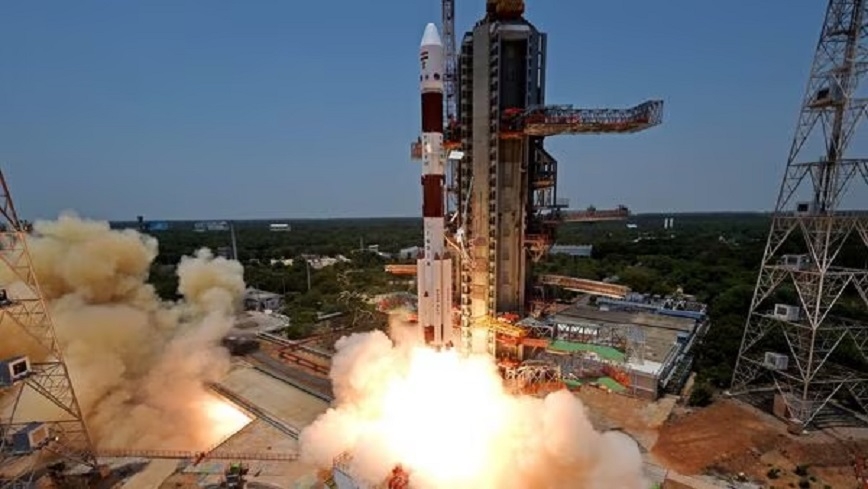
An Indian Polar Satellite Launch Vehicle (PSLV) lifts-off from the Satish Dhawan Space Centre (SDSC) at 06:20 UTC on September 2nd, 2023, marking the start of the Aditya-L1 mission to observe the atmosphere of the Sun and solve some of its mysteries. Credit: ISRO
In my previous update, I noted that the Pragyan rover element of India’s Chandrayaan-3 lunar mission had been put to sleep in preparation for the onset of the long lunar night settling in, the little rover having completed its core mission. Within hours of that report being published, and again, a little ahead of schedule, the Vikram lander was commanded to place itself in hibernation in readiness for some 15 days without sunlight.
Again, the reason for this was simple: the lander had completed its entire primary mission, and controllers hoped that by allowing it time to fully charge its batteries ahead of the onset of the lunar night-time, it will have sufficient power to run its electrical circuits through until the Sun rises over the landing zone on around September 22nd, 2023.
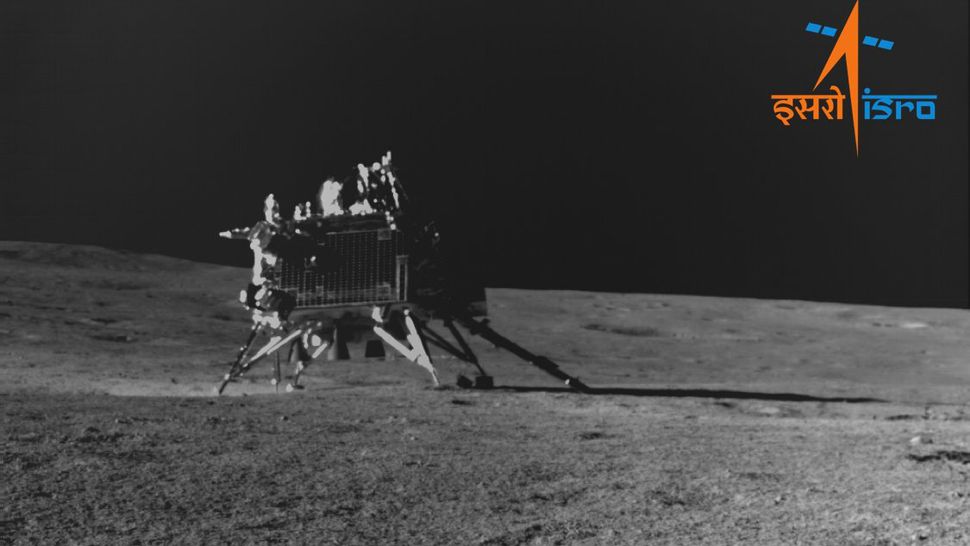
This image of the Vikram lander was captured by the navigation camera on the Pragyan rover during the Chandrayaan 3 mission to the Moon’s South Polar Region. Credit: ISRO
Neither lander nor rover have any direct heating systems with which to keep themselves warm, and so both are reliant on the heat produced by the batteries being sufficient to keep their electrical circuits from freezing in temperatures which may get as low as -120oC, and that the batteries will last long enough so they can be recharged once sunlight does return.
Most impressively, shortly before the command to go into sleep mode was sent, Vikram was commanded to perform a short “hop” on September 2nd, using its landing motor to jump around half a metre, turning itself in the process so its solar array will more directly face the rising Sun.
The mission’s success and catapulted India’s growing space ambitions into the spotlight – the country is well along the road to gaining a human spaceflight capability thanks to the in-development Gaganyaan vehicle, capable of flying up to 3 people to orbit for up to 7 days. Currently, this project is targeting 2024 for two uncrewed test flights for the craft, to be followed by a crewed launch in 2025, which would make India the 4th nation to have an independent humans-to-orbit capability after Russia, the United States and China.
An artist’s impression of India’s Gaganyaan crewed space capsule and service module, due to make its first uncrewed test flight in 2024. Credit: ISRO
Meanwhile, and in terms of science missions, India has already followed Chandrayaan-3’s success with another ambitious mission: that of its first dedicated solar observatory, Aditya-L1 (“Aditya” being the Sanskrit for “Sun”).
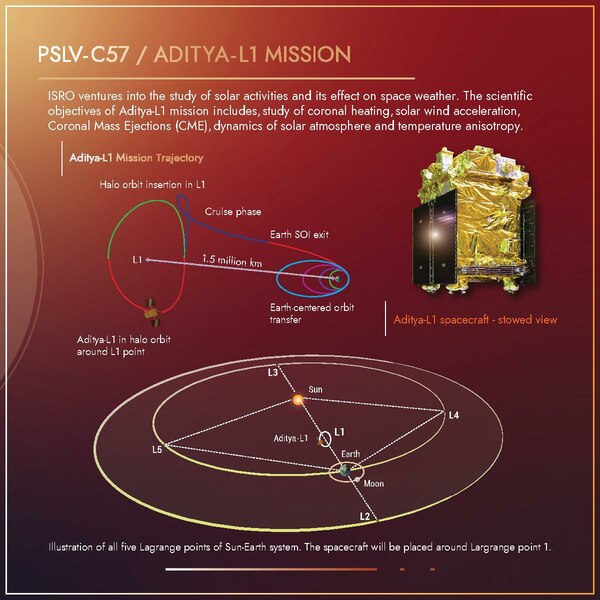
Launched via India’s medium-lift Polar Satellite Launch Vehicle (PSLV) from the Satish Dhawan Space Centre (SDSC), Sriharikota, at 06:20 UTC on September 2nd, the observatory separated from the launch vehicle around 63 minutes into the flight to start a 109-day journey to the Sun-Earth Lagrange L1 position, 1.5 million km from Earth, and lying between Earth and the Sun.
The first part of this comprised a series of polar orbits around the Earth carried out through until September 10th, which increased the vehicle’s apogee to move it further from Earth using minimum propellants. Two more such manoeuvres will take place during mid-September, allowing the observatory to transfer itself across to a halo orbit around the L1 position, which it should reach in early December 2023, and from where it can observe the Sun continuously.
The Sun-Earth Lagrange points and the flight of India’s Aditya-L1. Credit: ISRO
The mission’s primary objectives are:
Observation of the dynamics of the Sun’s chromosphere and corona. In particular, to engage in studies of chromospheric and coronal heating, examine the physics of partially ionised plasma, of coronal mass ejections (CMEs) and their origins, and observe coronal magnetic field and heat transfer mechanisms, and flare exchanges.
Observation of the physical particle environment of its immediate surroundings.
Probe drivers for space weather, and the origin, composition and dynamics of solar wind.
A unique aspect of the telescope will be its ability to obtain near-simultaneous images of the different layers of the solar atmosphere, allowing scientists to observe how energy is channelled through it. This will allow scientists to make determinations about the sequence of processes in multiple layers below the corona that lead to solar eruptions. One of the mysteries of the Sun is that its upper atmosphere has a temperature of 1,000,000ºK, as opposed to just 6,000ºK at the Sun’s surface. As such, it is hoped that this kind of simultaneous observation of multiple layers of the Sun’s atmosphere will reveal a new understanding of solar dynamics and the interplay of solar weather and Earth which had thus far escaped understanding.
Japan Launches XRISM and SLIM
Although 10 days later than originally planned, Japan has launched its XRISM (pronounced “crism”) space observatory and SLIM Moon lander (also called “Sniper”), when a H-2A rocket lifted off from Tanegashima Space Centre at 23:42 UTC, and both craft deployed successfully less than an hours after the launch.
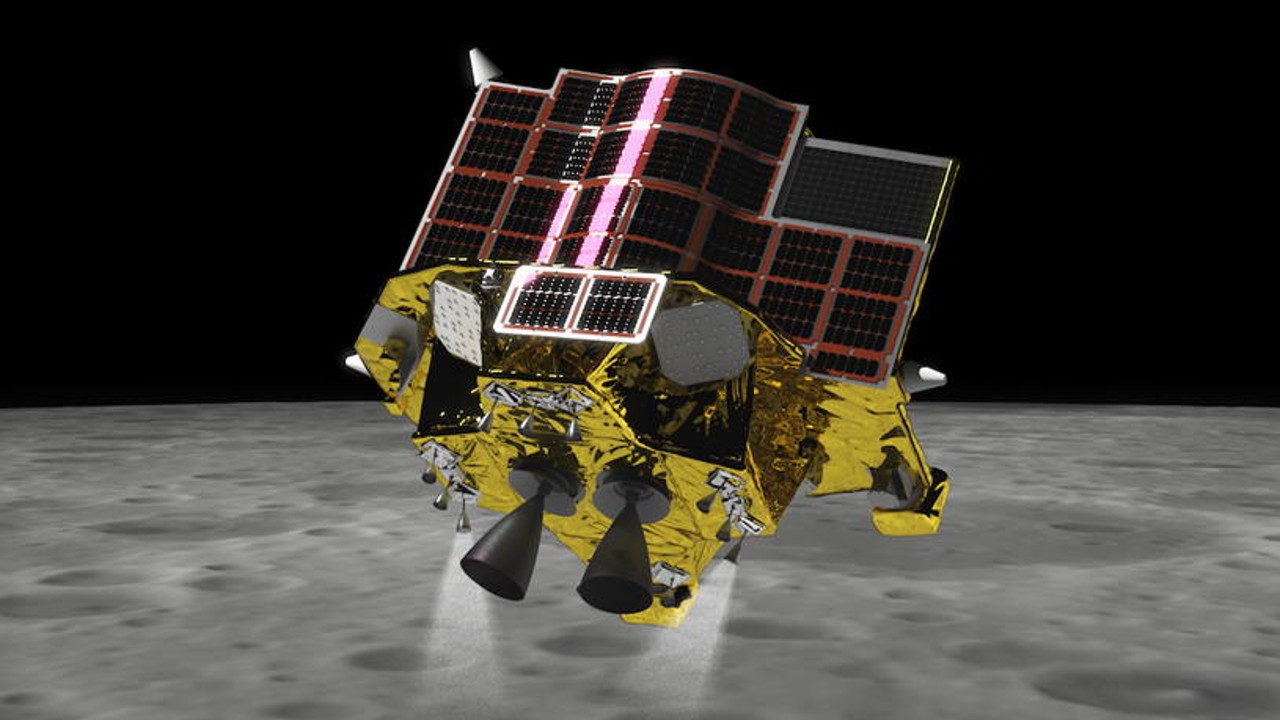
As I’ve previously reported, the Smart Lander for Investigating Moon, massing the 590 kg including its propellants, is Japan’s first attempt to land on the Moon. It is primarily a technology demonstrator, due to land within the relatively young (and small – just 270m across) Shioli impact crater, located just below the Moon’s equator, in 3 to 4 months time. Despite its tiny size, the lander is equipped with a suite of science instruments and will also deploy two palm-sized lunar rovers.
An illustration of SLIM approaching the moon’s surface. Credit: ISAS/JAXA
XRISM – the X-Ray Imaging and Spectroscopy Mission – has a much closer destination than the Moon: an orbit just 550 km above the surface of Earth. Here, over an initial primary mission of 3 years, the 2.3 tonne telescope – defined officially as an “interim” observatory, which should not be taken to mean its role is unimportant – will attempt to provide breakthroughs in the study of structure and formation of the universe, outflows from galaxy nuclei, and dark matter.
A successor to Japan’s Hitomi X-Ray telescope, lost in March 2016, just a month after its launch in February 2016 thanks to an attitude control system failure, XRISM is also an international venture, involving both NASA and the European Space Agency. In particular, it will not only be a science instrument but also a technology demonstrator for ESA’s Advanced Telescope for High Energy Astrophysics (ATHENA) telescope, due to be launched in 2035.
XRISM carries two instruments for studying the soft X-ray energy range, Resolve and Xtend, each with its own telescope. Resolve is an X-ray micro calorimeter developed by NASA’s Goddard Space Flight Centre, whilst Xtend is an X-ray CCD camera. Both will operate in concert with one another, with a combine focal length of 5.6 metres.
NASA’s SLS “Unsustainable”
The US Government Accountability Office (GAO) has issued an audit report in which it notes that NASA’s Space Launch System (SLS), the backbone of the American-led Artemis Project to return humans to the Moon, is at risk of becoming “unsustainable”.
With one successful flight under its belt – Artemis 1 – the project has thus far cost NASA US $11.2 billion since development commenced in 2011 (an amount which covered everything up to and including Artemis 1). A further US $11.2 billion has been requested by the White House to sustain SLS from 2024 through until the end of 2028, to allow NASA to further develop and enhance the system.
The core stage of the Artemis 2 SLS launch vehicle under construction. the US GAO suggests the costs associated with the SLS programme are “unsustainable” unless NASA becomes more transparent in its costings. Credit: NASA
This is somewhat at odds with a 2022 announcement by NASA that it plans to develop a contract with Boeing and Northrop Grumman, the prime contractors for SLS and operating under the name Deep Space Transport, which the agency states will include up to 10 SLS launches while will over time reduce the production costs for those vehicles by up to 50%.
In their report, the GAO points out that the methodologies NASA uses to determine the costs associated with SLS are not easy to define. As, such, while there has been “some progress” in the agreement with Deep Space Transport, there is a real risk SLS costs will spiral, and suggests NASA starts to be more transparent in their SLS estimates and in how it manages expenditure.
NASA does not plan to measure production costs to monitor the affordability of the SLS programme. These ongoing production costs to support the SLS program for Artemis missions are not captured in a cost baseline, which limits transparency and efforts to monitor the program’s long-term affordability.
US GAO Audit, September 2023
In this regard, the GAO notes that while NASA has been forced to acknowledge the overall timeline for Artemis continues to slip for assorted reasons, costs associated with various missions have not been updated to reflect this. As such, whilst NASA has stated the cost of building the SLS vehicles to be used with Artemis 3 and 4, the reality is that the costs for these vehicles are actually increasing. As a result, an despite statements to the contrary by NASA, GAO believes SLS launches are liable to remain at around US $4.1 billion each rather than decreasing over time to around US $2 billion each.
The report is the latest of a string of GAO audits across almost a decade, all of which have critiqued NASA over a lack of proper baselining and transparency with regards to Artemis and SLS. At the time of writing, NASA had yet to respond.
SpaceX Starship Update
The Federal Aviation Authority (FAA) has issued the final version of a report into the failures of the first orbital launch attempt by SpaceX using their massive Starship / Super Heavy vehicle. The report, production of which was led by SpaceX, will not be made public due to “proprietary and export-controlled information”, identified “multiple root causes” for the failure of the Booster 7 / Starship 24 combination – none of which are to be made public either.
In a separate statement, SpaceX pointed to “propellant leaks” within the engine bay resulting in fires which severed connections with the primary computer system being a significant factor on the vehicle loss. Whilst in essence accurate, the statement totally avoids mention of the fact the leaks were most likely due to the force of the Super Heavy’s thrust excavating the unprotected concrete apron directly under the the launch mount, throwing significant amounts of concrete up to a kilometre from the launch site – and almost certainly into the engine bay to cause damage which may have resulted in at least dome of the leaks.
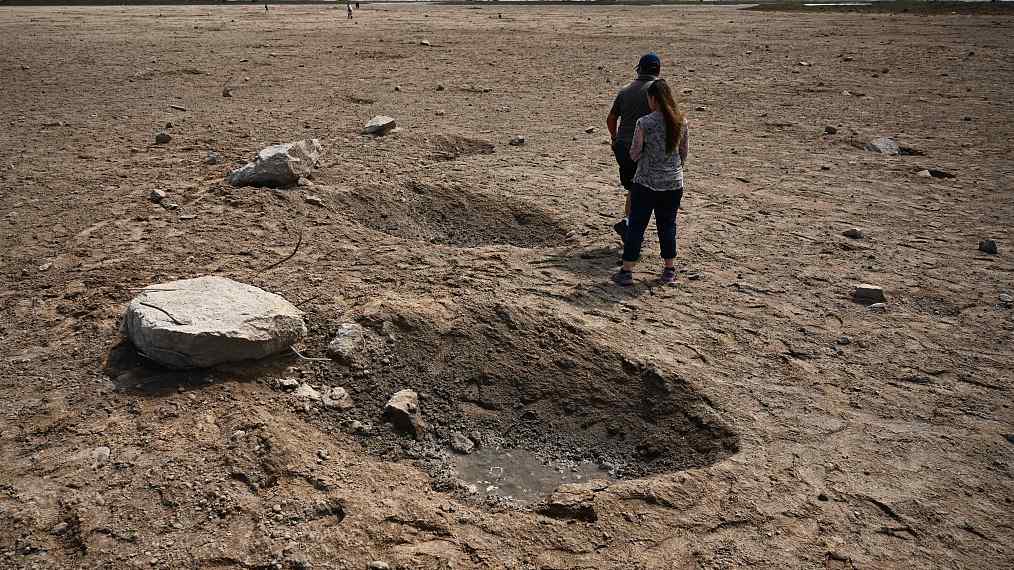
Some of the concrete debris scattered on the beaches of the Boca Chica wildlife reserve following the failed launch attempt of SpaceX Starship 24 / Booter 7, April 20th, 2023. Credit: AP News
As many – myself included – noted, the April 20th flight was on questionable value even before it lifted-off. Since then SpaceX have sought to rectify the most glaring omission from the launch facility – a water deluge / sound suppression system (which has shown promise under a couple of short, partial-power tests, but which has yet to prove itself under the full thrust of a Super Heavy booster, and likely will not do so until the next launch).
In addition, there have been multiple changes to the flight software and systems, together with a wide range of physical updates to the vehicles, some of which pre-dated the April 20th launch attempt and rendered Booster 7 pretty much obsolete. How many of the modifications count towards the 63 “corrective actions” the FAA report states must be made before it will grant SpaceX a license for a further launch attempt, is unclear. Finally, and whilst unrelated to the launch failure, SpaceX have further altered the design to allow for “hot staging”: allowing Starship to ignite some of its engines prior to separation from the Booster, potentially increasing the payload-to-orbit capability.
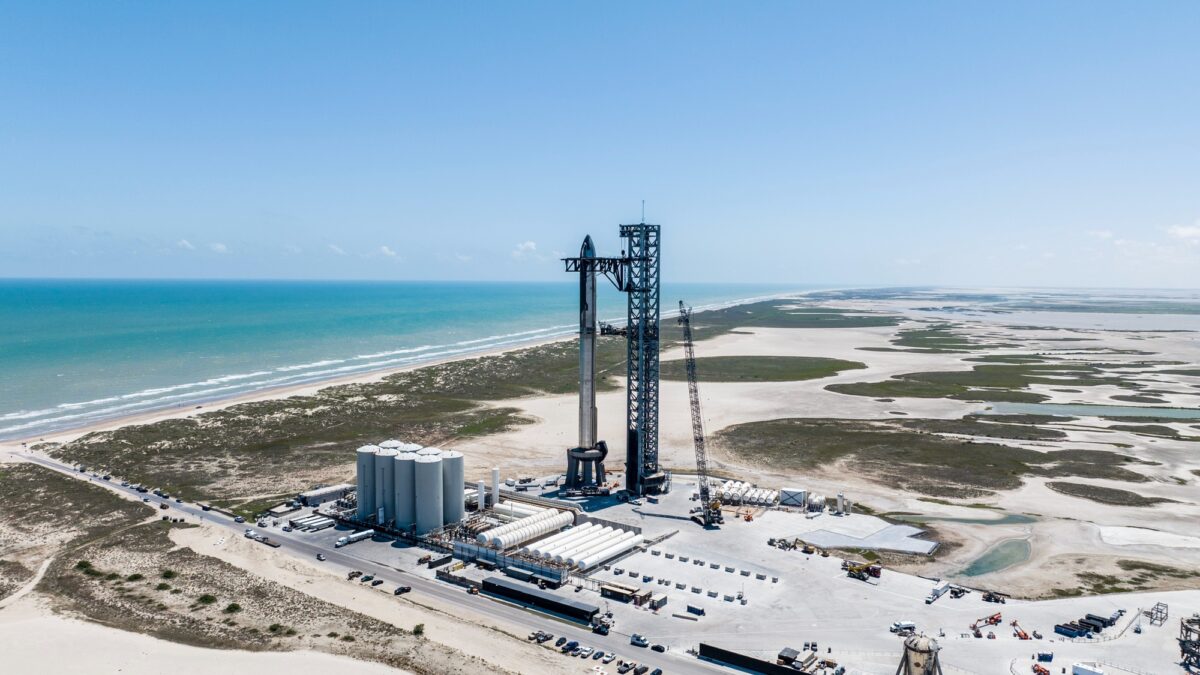
Booster 9 and Starship 25 stacked at the SpaceX orbital launch facility in Boca Chica, Texas. Credit: SpaceX
And if it sounds odd that SpaceX led the investigation into the loss of its own vehicle, it is not. The FAA simply doesn’t have the breadth of expertise to complete such an investigation itself. Instead, it relies on input from a range of agencies as required – such as the National Transportation Safety Board (NTSB), the US Air Force, the US Space Force, NASA, etc., and, in the case of a commercial launch provider – the provider and its contractors, as and where required.
Meanwhile, in a move which has SpaceX fans making assorted proclamations about an imminent further launch, the next vehicles designated to attempt to reach orbit – Booster 9 and Starship 25 – have been “stacked” on the repaired and updated launch mount. However, and in response to comments on such an “imminent” launch from fans (and Musk himself), the FAA has indicated that the original launch license was only for the April 20th launch – so SpaceX must show it has complied with the accident report and apply for a further license before it will be allowed to proceed.
A further twist to this is that the FAA is itself being sued by a number of environmental and other groups over the SpaceX site at Boca Chica. They claim that by allowing SpaceX to largely author the original Programmatic Environment Assessment (PEA) relating to SpaceX’s use of the site, combined with the April 20th failure, the FAA has materially failed to meet its obligations, and should therefore be ordered to carry out a full Environmental Impact Study (EIS) – a process which could take 2-3 years. Depending on when hearing on the case are held, it is possible the groups involved could seek an injunction on launches until the court rules in the matter of the EIS.
A China State Television (CCTV) animation showing Tiangong with the new module and docking adapter (foreground), and the crewed vehicle replacement for the Soyuz-based Shenzhou crew vehicle about to dock at the central hub. Note the Wentian and Mengtian science modules to either side are shown with additional solar arrays extending away from them. Credit: CCTV
With orbital operations well underway, China is considering a further further expansion to its Tiangong space station as well as opening the station to both the nascent Chinese commercial space sector and international participation.
In particular, the latest 5-year plan produced by the China Manned Space Agency (CMSA) and the China Academy of Space Technology (CAST) for the period 2026-2030, appears to confirm statements made in December 2022 and February 2023 that China is considering expanding the station with the addition of a fourth module.
Exactly what form the new module will take has been open to debate for several months, with initial reports suggesting it would be physically and functionally similar to the existing three modules – the Tianhe-1 core module and the Mengtian and Wentian science modules – with a mass of around 21-22 tonnes, and up to 51 cubic metres of internal habitable space.
Drawn from images captured by multiple satellites in orbit, this annotated animation provided by Australia’s HEO Robotics, a company specialising in “non-Earth imaging” (i.e. capturing images of object in space using other satellites) showcases the assembly of the Chinese Space Station from September 2021 through until the arrival of the Shenzhou-14 mission in June 2022. Credit: HEO Robotics
However, more recently, it has been suggested that the additional module would be of an entirely new design, providing as much interior space as Tianhe-1, together with a new 6-way multi-function docking adapter and support scientific payloads being mounted on its exterior.
It now appears China is leaning towards this second option, with Wang Xiang, the director of space station systems at CAST indicating the increased docking capability and internal space will achieve a three-fold design function:
It would allow more vehicles to dock with the station together with more research space and – Wang has suggested – room for space tourists to visit the station as well.
It would allow the station to act as a hub for the testing and development of vehicles and technologies intended to help expand China’s lunar and deep space ambitions.
It could potentially encourage greater international participation in the Chinese space programme as well as encouraging the Chinese commercial space sector.
Two renderings of the proposed expansion to the core Tiangong space station. Left: using a Tianhe-1 / Wengtian/Mengtian-derived module (Green). Right: using a smaller (but roomier) module of a new design (green), equipped with a 6-way docking adapter, which would also enable further modular expansion (yellow). Credit: Wang Xiang, Zhang Qiao, Wang Wei, CAST
With regards to the latter point, Ji Qiming, an assistant director at CMSA has indicated that CMSA will be accepting proposals from the Chinese commercial space sector for vehicles capable of resupplying the station with consumables. Additionally, he indicated that China has repeated its offer to the international community to join with it in research opportunities on the station. This has been offered in two ways: cooperation in research through the provision of experiments, and the direct participation of astronauts to join Chinese tiakonauts in training for, and participating in. flights to and from the station from China.
The move towards greater international cooperation is seen by some as a significant game-changer for the Chinese space programme, further opening the door to build on agreements with a number of European nations, together with Mexico, Japan and Peru and with the UN to fly experiments on Tiangong and an agreement with Italy which includes flying astronauts to the station. In particular, China may be looking to court partnerships with India and Pacific Rim nations such as Australia and New Zealand, both of whom are looking to expand their involvement in space exploration and development.
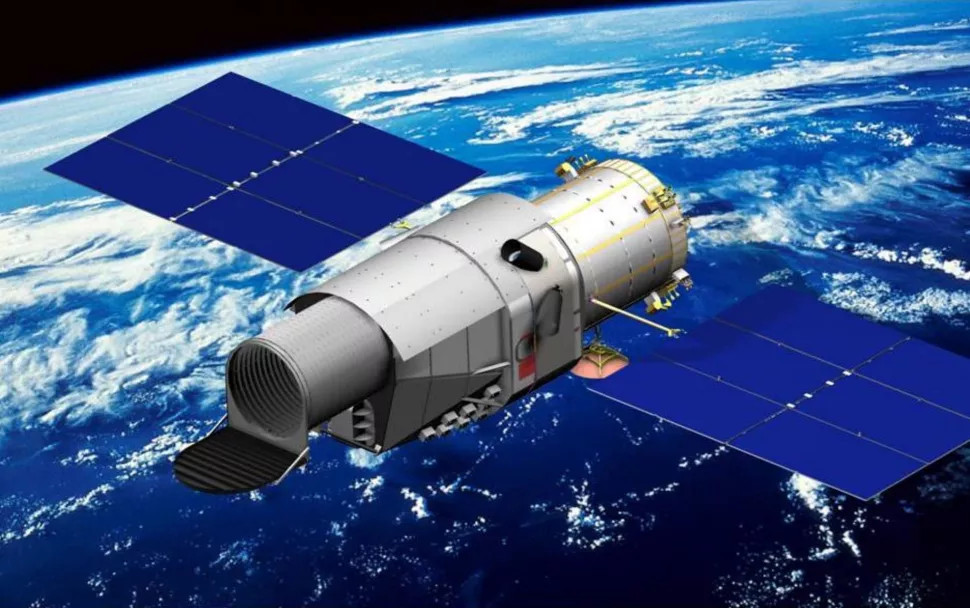
A rendering of the Xuntian Chinese Survey Space Telescope (CSST), due to be launched towards the end of 2024 and operate in cooperation with Tiangong. Credit: Jaimito130805
No launch date for the module has been given, although if it is to be of an entirely new design, it would be unlikely to be ready for launch before the early 2030s.
In the meantime, and as soon as the end of 2024, Tiangong will be indirectly expanded with the launch of the Xuntian Chinese Survey Space Telescope. This is a free-flying observatory which will be placed in a co-orbit with Tiangong, allowing it to operate both independently but also periodically dock with the station for servicing.
NASA’s DSN at Risk of Collapse?
One of the most critical elements of NASA’s infrastructure is, oddly enough, one that tends to be the most taken for granted. It’s not a launch centre or mission control facility or a research centre or astronaut training facility. It’s most obvious elements are three huge communication centres located in California, Australia and Spain. It is known by the simple acronym DSN, meaning Deep Space Network – and without it, NASA would be unable to maintain contact with any of its missions beyond Earth orbit.
More than 50 years old, the core of DSN has been in service since before Apollo. While its primary function is data communications and relay, the DSN also carries out science of its own when capacity allows, in the form of radar and radio astronomy. However, while the intervening years the broader supporting infrastructure for DSN communications between its various centres has been updated, the facilities at the centres – the primary centres have been under increasing strain, whilst at the same time, the budget allocated for both DSN operations and systems development / enhancement – has been steadily decreasing year-on-year. In 2010, for example, the DSN budget was US $250 million. Ten years later, it was down to US $200 million. As a result of this, DSN’s core capabilities have been steadily degrading.
This came to a head during the 25-day Artemis 1 mission in November / December 2022. This required dedicated DSN activity across 1774 hours – 903 hours for tracking the Artemis 1 mission, and the rest in monitoring the 8 cubesats launched as secondary payloads with the mission – the majority of which saw the DSN operating in a “search and rescue” mode, simply monitoring the cubesats in case any of them ran into problems. As a result, NASA science missions such as those operating around Mars or at the outer edge of the solar system or beyond, and so on, were almost completely denied any data communications through the DSN.
NASA’s Deep Space Network facilities near Canberra, Australia. Credit: Ryan Wick
Warnings that the DSN is over-subscribed have been available for some time. As recently as July 2023, NASA’s own Office of Inspector General (OIG) issued a report saying budget reductions mean that the network will remain over-extended throughout the rest of the 2020s and into the 2030s, even if work on updating it is prioritised.
Whilst attempts have been made to ease some of the load – a cloud-based data communications and data handling system was introduced to support the Goldstone, California DSN site, even these have struggled to keep pace with emerging technologies such as cubesats. This was again demonstrated during Artemis 1 when a system designed to handle some of the cubesat data load itself suffered a 33-hour outage, belatedly forcing NASA to realise that over-extending data communication through multiple additional rideshare payloads during a major undertaking such as an Artemis flight perhaps isn’t a good idea.
Even so, the demands of Artemis remains a major concern to those responsible for DSN, because it has the potential to cripple other missions; something which has led to the formation of a committee to outline a 4-point plan to help combat the issue.
When Artemis comes online, everybody else moves out of the way, and it’s an impact to all the science missions We either have to clear everybody off the network or we struggle — and our experience with Artemis 1 was struggling with trying to move everybody around.
– Suzanne Dodd, director of NASA’s interplanetary network directorate
The DSN antennae at NASA Goldstone, California. Credit: NASA/JPL
Some of the recommendations under consideration include implementing a new suite of six 18-metre antennae called LEGS at the DSN Goldstone centre which will be used solely for use by the Artemis programme, and also the implementation of a network of relay satellites in orbit around the Earth and Moon to handle more of the data load required by Artemis.
However, these solutions require a budget expenditure which NASA currently doesn’t have, nor is it likely to receive in the foreseeable future, and time to implement. And even then, programmes like LEGS fall short of the overall data capabilities NASA will require for long-term human operations on the Moon.
We have reached a really critical point with the DSN’s aging infrastructure. This scares us very much. We’ve clearly gotten a five-alarm fire bell.
– Sandra Cauffman, deputy director of NASA’s astrophysics division
Both Cauffman and Dodd are members of the committee responsible for making recommendations like LEGS to NASA, so that the agency can consider options and request funding. However, before even this can be done, the committee can do even this, the recommendations they make must be reviewed and approved by the NASA Advisory Council, which is not scheduled to meet again before November, which means NASA will likely be unable to make any formal requests for increasing DSN’s budget until fiscal year 2025.

















 Inara Pey: Living in a Modemworld