Space Sunday: Message in A bottle – Send Your Name to Europa

An artist’s impression of NASA’s Europa Clipper passing over Europa. Credit: NASA/JPL

NASA has a tradition of inviting people to have their names added to various robot missions – I’ve mentioned some in this column, and have had both my birth name and my avatar name included on various missions, including both the 2012 Mars Science Laboratory mission and Mars 2020, so they are currently trundling around Mars on the Curiosity and Perseverance rovers, for example.

Europa Clipper mission patch

In just under a year from this article’s publication, NASA is set to launch Europa Clipper, a mission to Jupiter with a focus on studying the icy, potentially watery world of Europa, the second innermost of Jupiter’s Galilean moons.

On entering Jupiter’s orbit in April 2030, the mission will use multiple fly-bys of Europa to study its ice crust and probe the mysteries of what lies beneath it so we might better understand what kind of ocean might exist under its protective shell. In addition, the mission will look for places where a future lander mission might safely touch-down for in situ studies of Europa.

As a part of the Europa Clipper mission, and through until the end of 2023, the public have once again been invited to have their names engraved on a microchip and flown to the Jovian system.

This project, which has been appropriately called (given the mission’s links to water) Message in a Bottle, also sees NASA link up with the current US Poet Laureate Ada Limón. Limón has penned a poem highlighting the watery link between Earth and Europa, together with humanity’s insatiable quest for knowledge. Entitled In Praise of Mystery: a Poem for Europa, it is also being flown on the mission.

Water connects Earth and Europa, the two ocean worlds NASA’s Europa Clipper spacecraft travels between on its journey. The existence of a vast ocean on a moon of Jupiter – which the Europa Clipper mission is equipped to decisively confirm and characterize – is what makes Europa such a promising place to better understand the astrobiological potential for habitable worlds beyond Earth.

– NASA Message in a Bottle

To participate in the project and have your name flown out into the depths of our solar system as a part of the Europa Clipper mission, visit the NASA website Message in a Bottle, and enter your name and requested details. Whilst there, you can also learn more about the mission and also take an interactive tour of Europa Clipper itself, discovering its instruments and their purpose along the way.

If you’d like to know just how names get to be flown on these missions, then the video below should reveal all:

US and European Launch Systems Update

2024 is looking to be a busy year as new US and European launch systems are set to finally (and in some cases, finally finally) debut operationally. Here’s a quick summary of some of the key craft.

Boeing’s CST-100 Starliner, this is the craft intended to join with SpaceX’s Crew Dragon in delivering personnel to the International Space Station (ISS) and returning them to US soil, and which had originally been set to start crewed flights to the ISS in 2018. However, the programme has been beset by numerous (and at times embarrassing for Boeing) issues, coupled with COVID-2 related shutdowns, which have repeatedly pushed the flight back.

Currently, the first crewed launch – which is still technically a test flight – is scheduled for April / May 2024, and the latest report issued by NASA and Boeing indicate that the vehicle performing that mission and carry NASA astronauts Butch Wilmore and Suni Williams to the ISS for around an 8-day stay, is now 98% certified as being able to perform the mission.
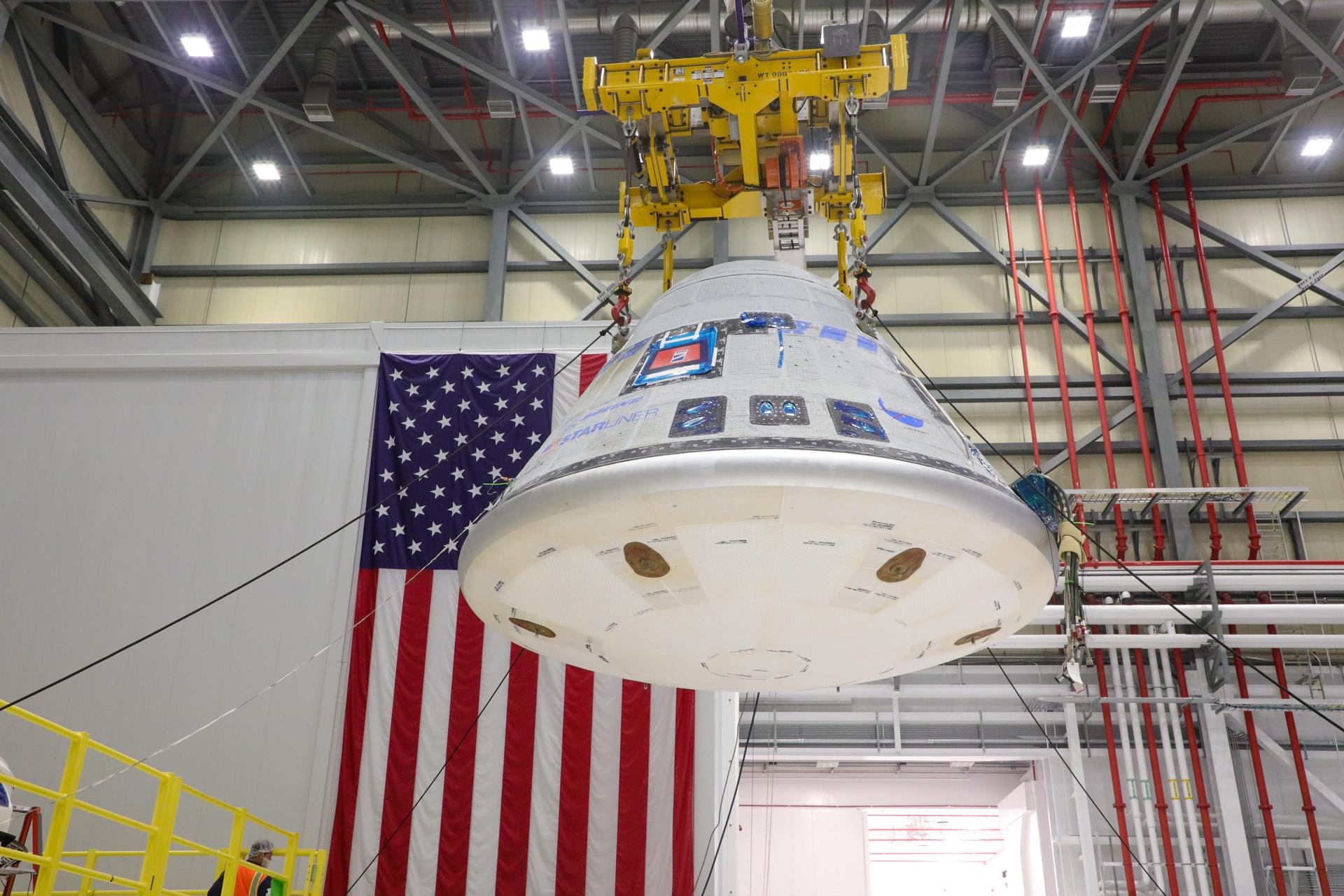
The Boeing CST-100 Starliner crew capsule being prepared for the Crew Flight Test mission. Credit: Boeing/John Grant

When the flight does take place – the exact date will be confirmed in the new year – it will chalk up one or perhaps two historical milestones. It will certainly be first crewed U.S. capsule to make a land-based soft landing, rather than splashing down in the ocean. In addition, it might be the first launch of a US crewed space vehicle from Cape Canaveral rather than the Kennedy Space Centre, since Apollo 7 in 1968.

However, the second of these two honours might yet go to SpaceX and Axiom Space. The former is currently converting their Falcon 9 launch facilities at Canaveral’s SLC-40 pad to support crewed launches. If it certified for such use before April 2024, it will likely be used to launch Axiom Space’s third private mission to the ISS, Ax-3, allowing SpaceX to use the fast-fuelling facilities at Kennedy Space Centre’s Pad 39A for the launch of a robotic mission to the Moon.

Blue Origin’s New Glenn heavy lift launch vehicle remains on target for a maiden flight in November 2024, which will see it not only lift-off for the first time, but then head to Mars carrying NASA’s Escape and Plasma Acceleration and Dynamic Explorers (ESCAPADES) mission, a pair of smallsats that will study the interaction of the solar wind with the magnetosphere of Mars.

A semi-reusable vehicle capable of hauling up to 45 tonnes to low Earth orbit (LEO) or up to 13.6 tonnes to geostationary transfer orbit (GTO), New Glenn’s first stage is designed to be flown up to 25 times, and the system has a planned cadence of 8 launches per year once operations commence – and Blue Origin have an initial batch of contracts to meet this target.
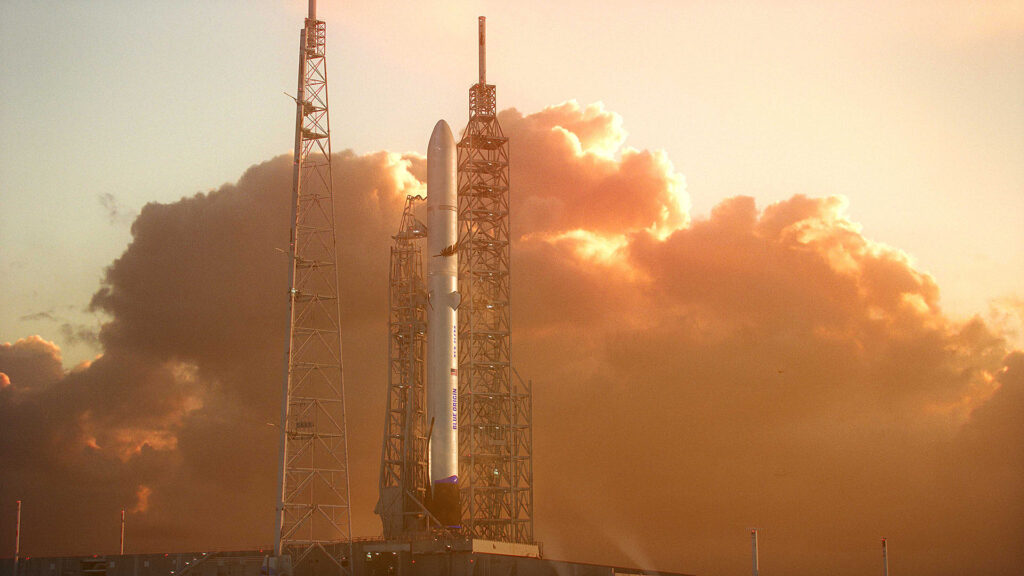
An artist’s impression of a New Glenn rocket on the pad. Credit: Blue Origin

Unlike SpaceX, which has (despite claims to the contrary) relied exclusively on a mix of private investment rounds and both NASA and US DoD contracts for the majority of its development funding, New Glenn has – barring a US $500 million US DoD contract that enables it to met the requirements for flying classified payloads – been funded entirely out of company founder Jeff Bezo’s own pocket (to the tune of US $2.5 billion by the end of 2017 alone).

Dream Chaser Cargo, the lifting body space plane designed by Sierra Space to carry up to 5.5 tonnes of payload and supplies to the ISS has passed its latest milestone towards meeting a first planned launch in April 2024. The first operational vehicle – named Tenacity – has been completed, and construction is underway with the second “100 series” craft, built to the same specification as Tenacity. The Tenacity, meanwhile, is now to be transferred to NASA’s Armstrong Test Facility in Ohio for environmental tests, after which it will likely be transferred to Cape Canaveral Space Force Station where it will be readied for its demonstration flight to the ISS.
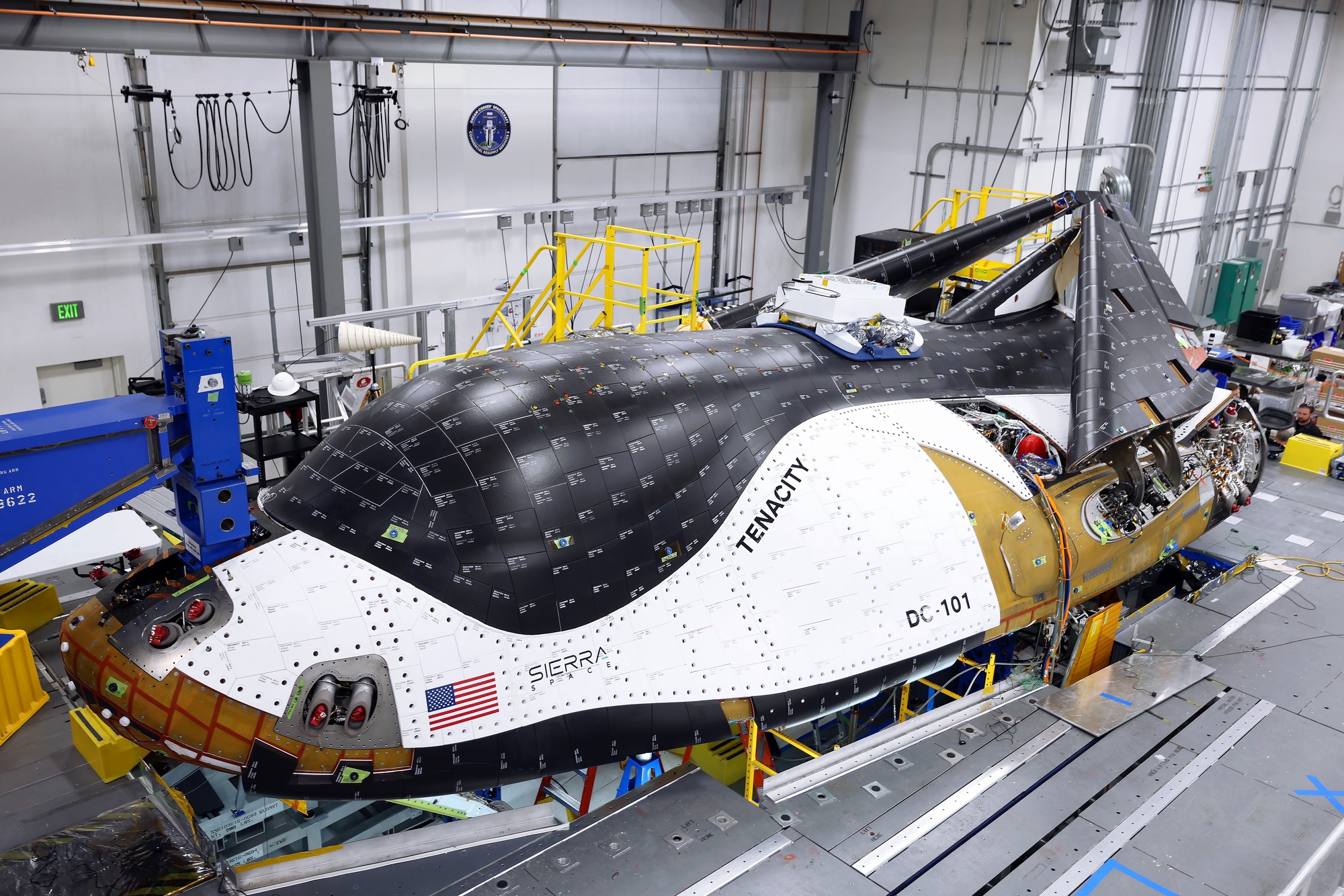
DC-101 Tenacity, the first orbit-capable Dream Chaser vehicle approaching completion, with its wings folded up to fit within a booster payload fairing. Credit: Sierra Space

Sierra Space has itself been in the news this week after laying-off 165 personnel from the project. However, many of the reports failed to mention that the company had “surge hired” contractors over an 8-month period specifically to see Tenacity completed in order to transition company focus to the second vehicle and a “200 series” version of the craft the company indicated in January 2023 it would be developing – although to date, no further information on this vehicle has been supplied.

Some reports on the layoffs also failed to note that the company was also absorbing 150 personnel from parent company Sierra Nevada Corporation (SNC), as projects requiring staff with requisite security clearances transferred from SNC to Sierra Space.

Continue reading “Space Sunday: Message in A bottle – Send Your Name to Europa”

Space Sunday: Starship Integrated flight Test 2

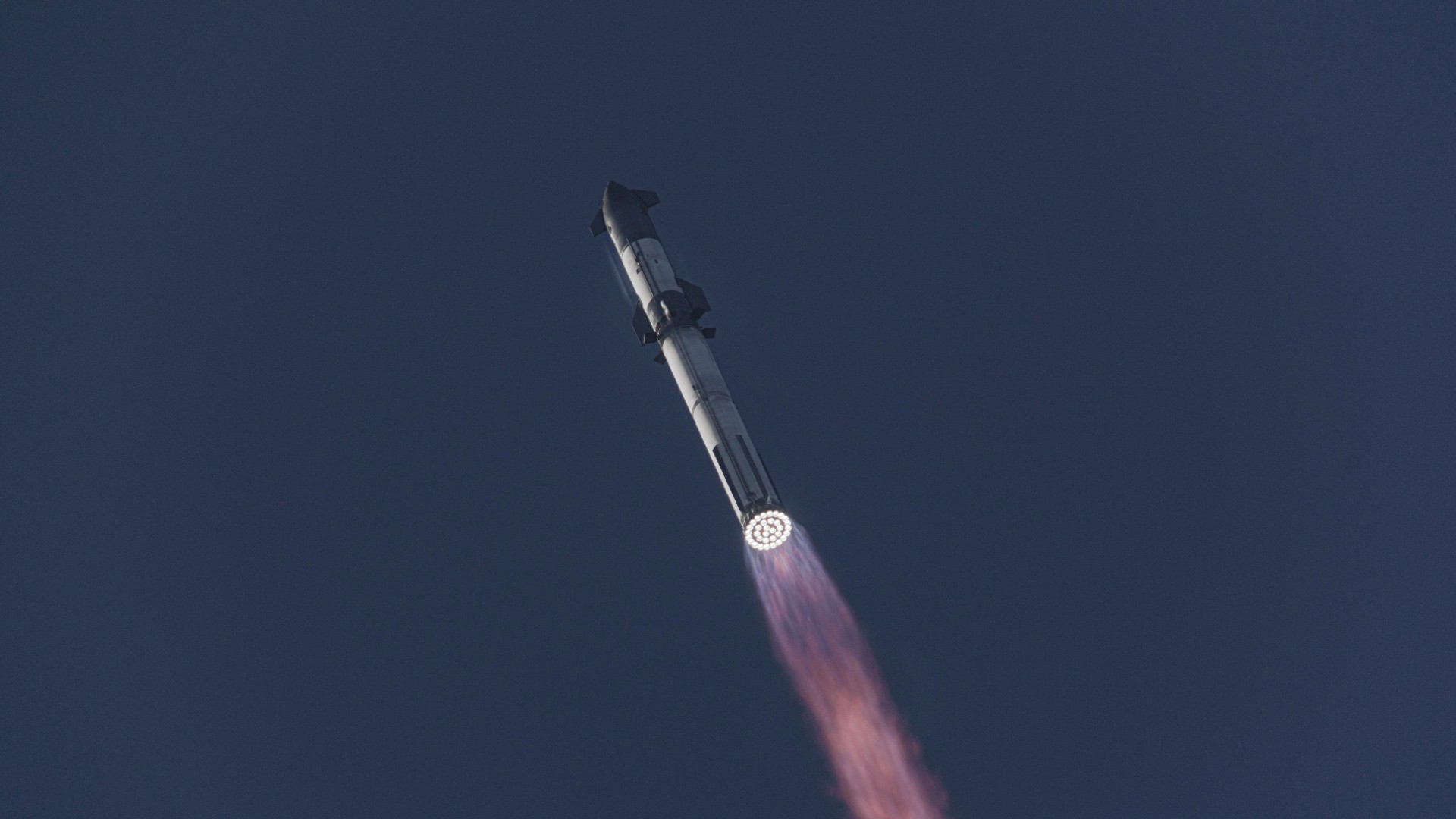
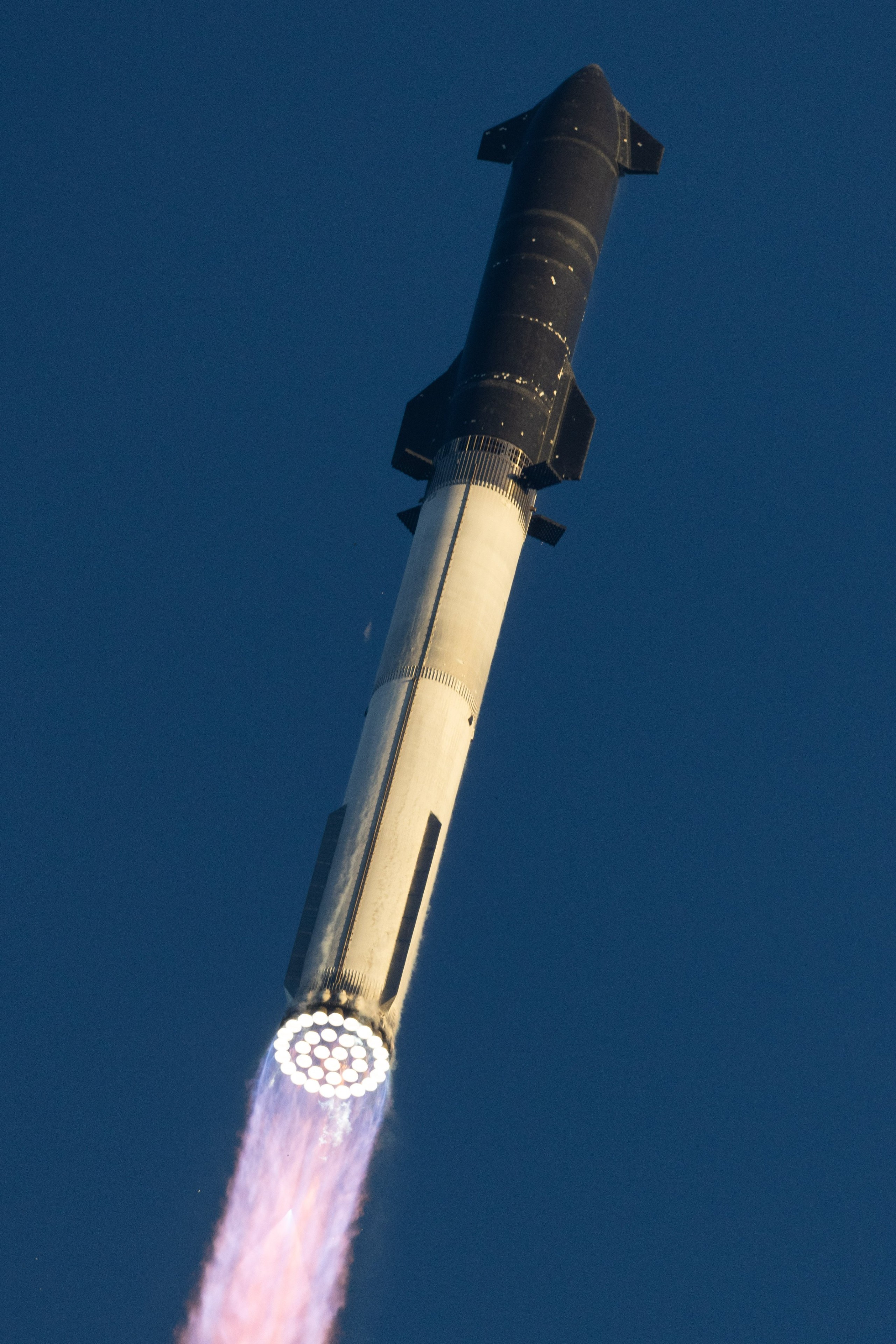
Lift off: 5 seconds after the ignition of its 33 Raptor engines, the SpaceX Integrated Flight Test (IFT-2) of a Starship / Super Heavy gets underway, December 18th, 2023. Credit: SpaceX

Saturday, November 18th, 2023 saw SpaceX attempt the second flight test of the Starship / Super Heavy behemoth out of their Starbase Boca Chica facility near Brownsville, Texas, in what is called the Integrated Flight Test 2 (IFT-2), featuring Booster 9 and Ship 25.

Regulars to the column will likely remember that the first such test of this launch combination on April 20th (and then called Orbital Flight Test 1), didn’t go that well; the launch stack was totally lost four minutes into the ascent, whilst the 31 operating engines on the booster spent the 5+ seconds between ignition and launch excavating the ground under the launch stand (see: Space Sunday: Starship orbital flight test).

The failure of that flight came as no surprise: the vehicle wasn’t fit for purpose (by Elon Musk’s own admission), and the launch infrastructure, as many (myself included) was not fit for purposes as long as it lacked a sound suppression system / water deluge system. In this regard, the April 20th attempt – which was more about boosting Musk’s ego on the so-called “Elon Musk Day” than anything practical – proved us right, the booster’s engines excavating the ground under the launch stand and throwing enough debris into themselves as to cripple the flight before it even left the launch stand.

So, how did the second flight go? Well – spoiler alert – both vehicles were again lost; the booster within the first 3.5 minutes of flight and the Starship around 4.5 minutes later. However, even this allows the flight to be recorded as a qualified success in that it will have yielded a fair amount of usable data and it did potentially succeed in meeting its two critical milestones.

Booter 9 / Ship 25 around a minute into the flight. Credit: Future / Josh Dinner

In all the flight might be summarised as:

  • T -02:00:00 hours: fast sequence propellant loading commenced, pumping around 4,536 tonnes into the tanks of both vehicles, less than the 4,800 tonnes full load required for an orbital flight.
  • T -00:00:05 seconds: the newly-installed and novel sound suppression system below the launch pad starts up, delivering a “cushion” of water under the launch stand in its first active launch test and the first critical milestone for the launch.
  • T-00:00:00: ignition of Booster 9’s 33 Raptor engines.
  • T +00:00:5 (approx 13:02:53 UTC): lift-off.
  • T +00:00:10 the vehicle stack clears the tower.
  • T +00:01:12 at 15km altitude and travelling at 1,500 km /h, the stack passes through Max Q, the period when it is exposed to the maximum dynamic pressure as it punches through the denser atmosphere.
  • T +00:02:40 main engine cut-off (MECO) commences, with the raptors on Booster 9 shutting down sequentially from the outer ring of 20 and progressing inwards to leave just three running.
A series of images showing the sequential shut-down of Booster 9’s engines, progressing from all 33 firing (l) through incremental shut-downs starting with the outer ring of 20 and commencing inwards, to leave just three firing (r). Credit: screen caps via the SpaceX live feed.
  • T + 00:02:48: Ship 25 ignites its engines in a “hot staging” process – second critical milestone for the flight.
  • T +00:02:49: Ship 25 separates from Booster 7, which fires upper and mid-point thrusters to tip itself away from Ship 25’s line of flight, using the thrust from its 3 remaining Raptor motors to increase its separation. Livestream graphic incorrectly shows 12 Raptors on the booster firing.
  • T +00:02:57: Booster 9 uses its small thrusters to flip itself over (so the top of the booster is pointing back towards the launch facility) ready to commence a “boost back” burn. Graphic continues to show incorrect number of engines firing.
  • T + 00:03:11: attempt to re-start the 10 motors of the inner ring to join the core 3 in firing for the “boost back” burn.
  • T +00:03:15: one or two engines flare briefly, following by attitude thrusters firing to correct, or some form of propellant venting.
  • T+00:03:17: further attempt at engine start-up, graphic now shows all 13 inner engines have shut down. Vehicle appears to be venting heavily from one side of the engine skirt.
  • T +00:03:20: one or more engines appear to explode. A fraction of a second late, the midsection explodes and vehicle is destroyed.
  • T +00:07:57: at an altitude between 140 and 148 km, and travelling at 23,350 km/h, Ship 25 appears to suffer an engine anomaly.
  • T +00:08:04: all flight telemetry seizes, showing the vehicle travelling at a flat trajectory at 149 km altitude.
  • T +00:08:08: Ship 25 is destroyed, – although mission control appear to be under the impression engine cut-off (scheduled for 8m 33s into the flight) had occurred prematurely and that the vehicle was still coasting in flight, publicly acknowledging it loss at 11m 23s after launch.
This image, taken within the first 90 seconds of launch, clearly shows the Starship vehicle to have lost numerous tiles from its thermal protection system (the white lines and dots on the black), making its ability to survive re-entry into the atmosphere – if it got that far – unlikely. Credit: SpaceX

Many were quick to hail the test as a huge win for SpaceX; others were equally quick to call it a further failure. The truth actually lies somewhere in between, as I noted earlier.

On the one hand, the flight was a success in that it clearly demonstrated the hot staging concept works, and the new sound suppression system may well protect vehicle and launch facilities at lift-off; the flight was also sufficiently long enough for a lot of data to be gathered.

On the other, the ways in which Booster 9 and Ship 25 were lost indicating there is a lot still to be done. Those claiming this flight to have failed also point to the fact that Ship 25 never got to coast on a sub-orbital hop to re-enter the atmosphere over the Pacific Ocean to splash-down near Hawaii.

However, while this was the supposed primary goal of April’s flight, for IFT-2, it was very much a tertiary objective; one a good distance behind hot staging and proving the sound suppression system. As such to call IFT-2 a failure based on this criteria is not entirely fair.

Of the two cited objectives, it is not unfair to say the jury is still out on the overall effectiveness of the sound suppression system. This is because – at the time of writing – we do not know its overall condition, as SpaceX has not released any post-launch images.

While there are various amateur videos of the launch stand and facilities post-flight, they are shot from a distance where it is impossible to judge the condition of the actual sound suppression system; therefore – and despite claims to the contrary made on their basis – we cannot tell how well it stood up to the blast from Booster 9’s engines.

All that can be positively determine from these videos is that the concrete on the launch stand withstood the blast considerably better than it did in April 2023, which show them to be in very good condition compared to the April 20th attempt, which might be indicative of the effectiveness of the sound suppression system – but that doesn’t mean it survived unscathed itself.

A further point here is that even if images do reveal the system to be relatively undamaged, that does not automatically mean it is fit for purpose; for one thing, this was an atypical launch: the stack was some 360 tonne lighter than it would be fully fuelled and with a payload – which likely reduced the degree of exposure the sound suppression system had to the fury of 33 Raptors operating at maximum thrust. Thus, it’s going to take a few more launches to really find out if the system is up to snuff or not.

Meanwhile, hot staging refers to igniting the motors of one stage of a rocket while it is still attached to a lower stage, rather than separating them first and then igniting the engine. When done right, it imparts an extra kick of velocity into the ascending stage which can be translated into a larger payload capability. Russia has been using hot staging in vehicles like Soyuz for decades, so the idea is not new; however, their rockets are built with it in mind; Super Heavy is effectively being retro-fitted with the capability, so there was a lot riding on this flight.

A diagram of the Soyuz FG variant, showing the hot staging structure between the core stage (called “Stage II” as the Russians refer to the strap-on boosters as “Stage I”) and the vehicle’s Stage III, allowing the motor on Stage III to fire before it separates from the core stage. Credit: as per the image

Continue reading “Space Sunday: Starship Integrated flight Test 2”

Space Sunday: Frank Borman – first to the Moon

Fank Borman during Suiting-up for the Apollo 8 mission, December 1968. Visible but blurred in the background is his crewmate, Jim Lovell. Credit: NASA (via You Tube)

Just a week after the passing of Apollo astronaut Ken Mattingly (see: Space Sunday: Remembering Ken Mattingly), came the news that another pioneering hero of spaceflight, Frank Borman, had passed away at the age of 95.

Born in Gary, Indiana on March 14, 1928 as the only child of Edwin Otto and Marjorie Borman, Frank Frederick Borman II considered Tucson, Arizona to be his home town after his family moved there whilst he was very young in order to ease the numerous sinus and mastoid problems he suffered in the colder, damper environment of Indiana.

By the age of 15 and in the mid-1940s, he was playing football for the high school team and, thanks to local flight instructor Bobbie Kroll, who took a shine to his enthusiasm for aviation, he has his student’s flying certificate and was a member of a local flying club. His aim was to levering his football playing into a scholarship so he might attend an out-of-state university offering a good course in aeronautical engineering.

Unfortunately, this did not work out and with graduation approaching and his family unable to afford to send him to a suitable university, he determined he’s have to enlist in the Army and later use his right to a college tuition under the GI Bill. However, a family friend persuaded local congressman Richard F. Harless to add Borman’s name to a list of nominees he was going to put forward for a slot at the US Military Academy, West Point.

Borman’s official 1950 West Point yearbook photo. Via Wikipedia

Despite having little chance of being offered the slot – his was the fourth and last name on the list, after all – Borman took the entrance exam, and passed. Shortly afterwards, hostilities in the Pacific ended, and astoundingly, those on the list ahead of him opted to forego military service, gifting the slot to him.

Graduating West Point in June 1950, Borman returned home to Tucson on leave prior to commencing his formal basic training. Whilst there, he arranged to meet Susan Bugbee, whom he had dated in high school. She had recently graduated from the University of Pennsylvania with a degree in dental hygiene. Rekindling their relationship, they were married on July 20th, 1950.

Achieving his goal of training as a fighter pilot, Borman attended combat flight school throughout most of 1951, based at Nellis Air Force Base, Nevada. Whilst there, Susan gave birth to their first son, Frederick Pearce Borman, in October of that year. Two months later, Borman found his flying career potentially shattered after he suffered a perforated eardrum whilst on a dive bombing training flight and doctors grounded him indefinitely as a result.

It took him a year to convince his seniors his ear had healed without any danger of further ruptures,  and he was capable of flying. During that time, he was assigned to ground duties at Clark Air Base in Philippines, where Susan gave birth to their second son, Edwin Sloan.

By 1960 and with a Masters degree under his belt – which he obtained in just a year rather than the usual 3 – Borman had been back in the pilot’s seat for eight years, clocking up some impressive experience, all of which resulted in his selection for training USAF Experimental Flight Test School. Graduating from it April 1961, he was immediately selected as one of five Air Force students to attend the first class at the Aerospace Research Pilot School. However, NASA also announced they were seeking nine candidates for their second astronaut intake, so Borman, along with fellow student James McDivitt and instructor Thomas Stafford obtained permission to apply, and all three were formally accepted as a members of the “Next Nine” (Group 2) NASA astronaut candidates in April 1962.

At NASA, Borman became known for his focus and tenacity – and for have something of an ego. He was initially selected to fly with Mercury veteran Virgil “Gus” Grissom on the first long-duration flight of Gemini. However, their pairing as the back-up crew for Gemini 3, the first Gemini Project crewed mission, led to tensions such that when astronaut chief Donald “Deke” Slayton wanted to promote both men to the prime crew slots on the mission after original mission commander Alan Shepard was diagnosed with Ménière’s disease, Grissom stated he would only fly the mission if Borman were replaced as his pilot.

Complying with the request, Slayton replaced Borman with John Young. This scored two goals: it ended the friction between Grissom and Borman and it allowed him to appoint Borman as commander of the long-duration Gemini flight – now designated Gemini 7 – with Jim Lovell as his pilot, the two getting on well together. Plans changed just two months ahead of Gemini 7’s December 1965 launch, when Gemini 6 was cancelled while the crew of Walter Schirra and Thomas Stafford were actually in their capsule preparing for launch.

The reason for this was Gemini 6 has been due to perform rendezvous and docking tests with a uncrewed Agena Target Vehicle launch just ahead of it. However, the Agena had exploded shortly after launch, leaving Gemini 6 without a docking target. However, rather than drop the mission entirely, mission planners decided Gemini 6 – re-designated as Gemini 6A – could launch a few days after Gemini 7, with Schirra and Stafford using it as their rendezvous and docking target.

Borman agreed to this change, but drew the line at any idea of the two craft physically docking; he and Lovell didn’t have the time they’d need to learn the required procedures, even if their vehicle were to be the passive element of any docking. He also mixed the idea that Lovell and Stafford should perform and joint EVA and swap vehicles, pointing out this would require Lovell to wear a Gemini EVA suit for several days, something for which it was not designed. Conceding these points, mission planners settled on the basic rendezvous idea, and Gemini 7 lifted off on December 4th, 1965, with Gemini 6A following on December 15th – three days later than planned.

Gemini 7 with Borman and Lovell aboard, as seen from Gemini 6A, shortly after their initial rendezvous, December 15/16, 1965, when the two craft are approximately 10 metres apart. Credit: NASA

During the intervening period, Borman and Lovell completed all the major aspects of their mission – which were related to matter of crew hygiene, nutrition, fitness, diet, etc., during a lunar mission – and were keen to see Gemini 6A arrive. This it did some 13 hours after launch, with Schirra initially bringing the craft alongside Gemini 7 at a distance of 40 metres before spend the next 4.5 hours performing a series of rendezvous manoeuvres, at times coming as close as 30 cm (1 ft) to Gemini 7 as he practiced docking manoeuvres and assessed flight control precision. After this, he moved Gemini 6A some 16 km away to allow both crews to get some rest without any worry their vehicles might collide.

After just over 24 hours in orbit, Gemini 6A fired its retro-rockets and re-entered the atmosphere, splashing down in the North Atlantic to be recovered by the USS Wasp. Meanwhile Borman and Lovell continued in orbit, becoming concerned as their craft started experiencing a mounting series of niggling issues and malfunctions as it started to reach the limits of its operational endurance. Despite this, both men remained in good spirits, even joking with their recovery crew – their December 18th splashdown was close enough to that of Gemini 6A that the USS Wasp was also assigned to their recovery – that they’d been together so long, the Wasp’s Captain might as well marry them!

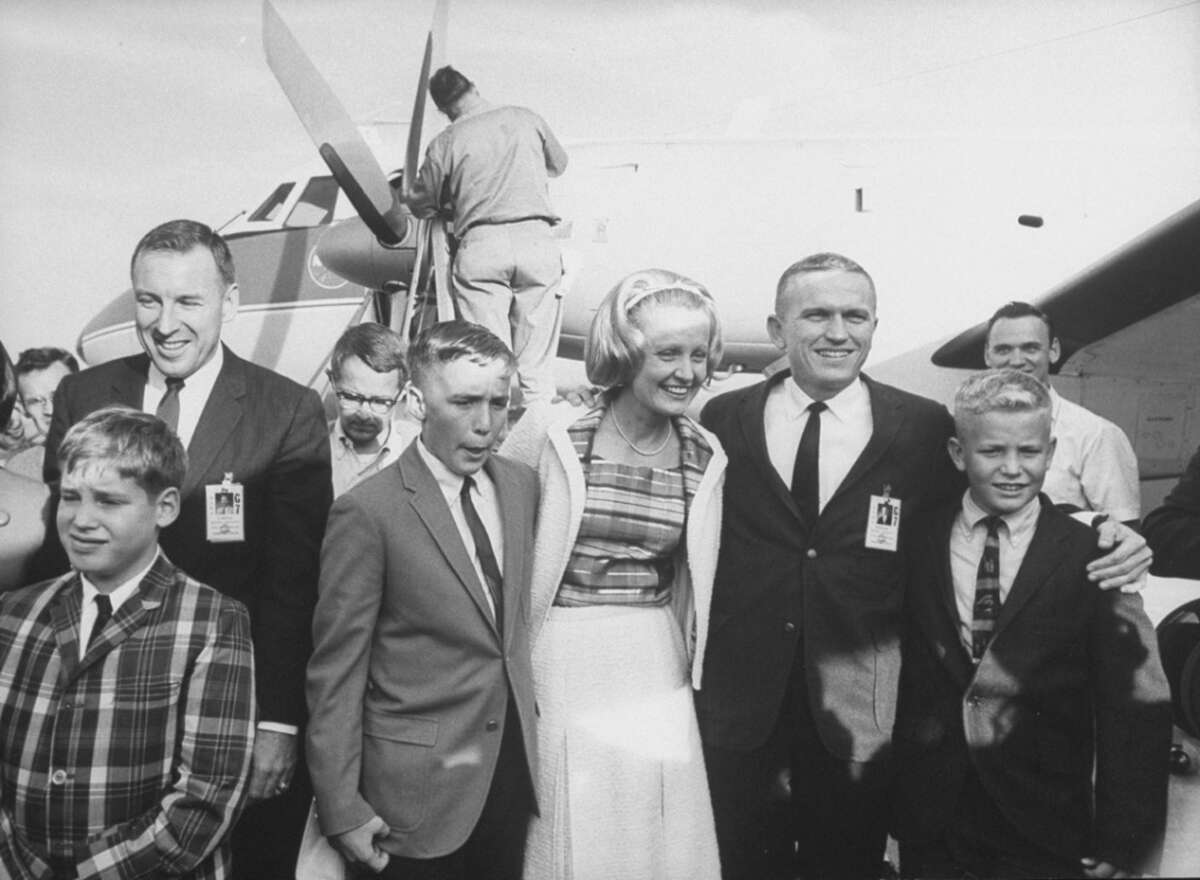
James Lovell (left, with son Jay) and Frank Borman (right, with wife Susan and sons Frederick and Edwin), following the successful flight of Gemini 7

Continue reading “Space Sunday: Frank Borman – first to the Moon”

Space Sunday: remembering Ken Mattingly

As it might have been: a NASA portrait of the original Apollo 13 crew with Ken Mattingly flanked by Jim Lovell, the mission commander (l) and Fred Haise, the Lunar Module pilot (r). Mattingly was later dropped from the mission ahead of launch due to fears of illness. Credit: NASA

On November 3rd 2023, NASA announced that Apollo and shuttle era astronaut Thomas Kenneth “Ken” Mattingly II, had passed away on October 31st, 2023 at the age of 87.

Perhaps best known, courtesy of Ron Howard’s film and his portrayal by Gary Sinise, for the mission he never actually flew, that of Apollo 13, Mattingly did participate in the penultimate Apollo mission to the Moon – Apollo 16 – and also flew two space shuttle missions in the 1980s.

Born on March 17, 1936, in ChicagoIllinois, Mattingly grew up with aviation in his blood, his father being employed by Eastern Airlines, and came to see it as a natural choice of career, opting to study for and achieve a BSc in aeronautical engineering prior to joining the US Navy in 1958 and applying for flight school.

Graduating as an attack aircraft pilot in 1960, Mattingly served first in VA-35 based out of Virginia, with an at-sea rotation aboard the USS Saratoga. Following this he was assigned to the heavy attack / reconnaissance squadron VAH-11 with his rotations split between the USS Franklin D. Roosevelt and Naval Air Station Sanford, Florida. It was whilst at the latter that Mattingly accepted an invitation to share a flight an a fellow aviator in his squadron had been ordered to take in order to gather aerial photographs of the launch of Gemini 3 out of Cape Canaveral in March 1965.

Shortly after this, and having being refused admission into the Navy’s Test Pilot School due to his assignment at VAH-11 finishing after the class of ’65 had commenced, he accepted a slot with the US Air Force Aerospace Research Pilot School. While primarily a USAF school, this also took on pilots from both the Navy and the civilian sector for courses, and in joining, Mattingly found himself training alongside future astronauts “Ed” Mitchell and Karol Bobko whilst receiving instruction under future astronauts Charles Duke and Henry W. “Hank” Hartsfield Jr.

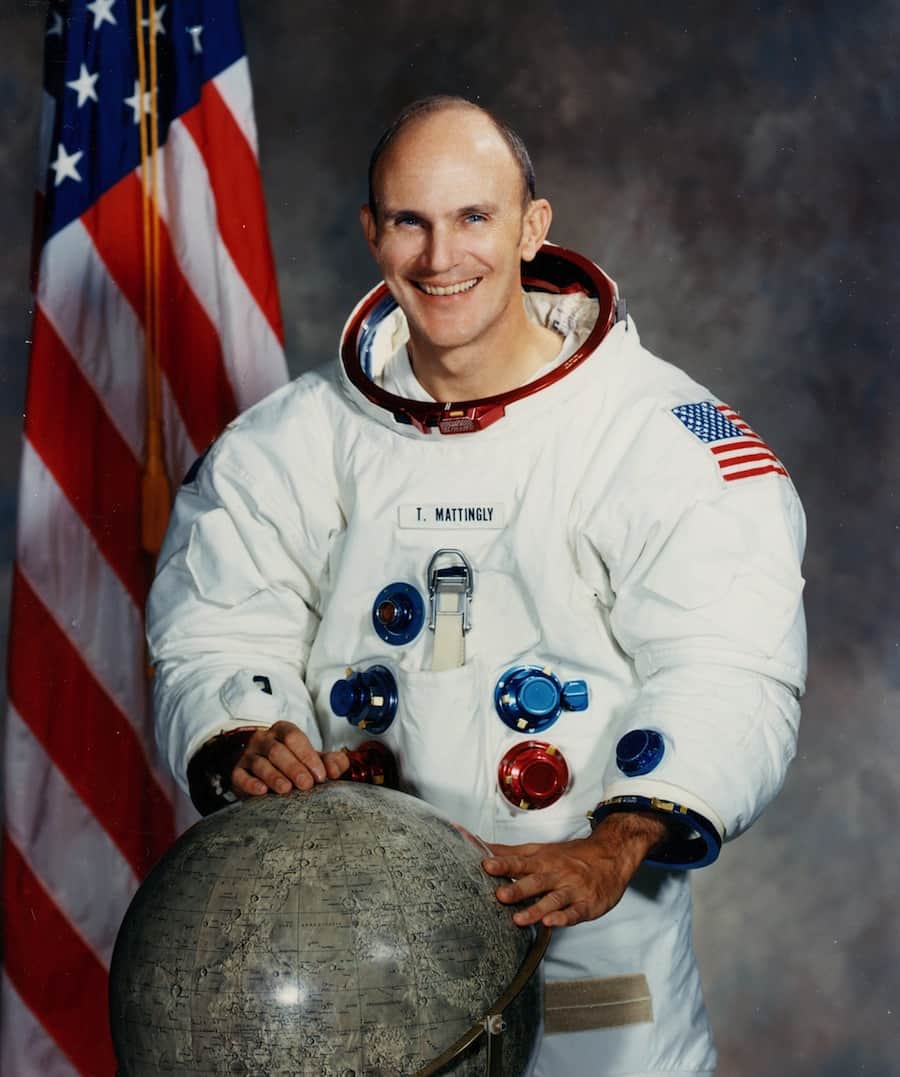
Ken Mattingly posing for an official Apollo 16 photo. Credit: NASA

All of this had an impact on Mattingly, who applied for and was accepted into the NASA Group 5 astronaut intake of 1966. Coincidentally, his final selection interview was chaired by John W. “Jim” Young – one of the crew of the Gemini 3 mission he had watched launch whilst riding the photographic mission – and Michael Collins. It was an event he didn’t feel he’d fared well at, thinking he annoyed Collins and felt “perplexed” by Young’s attitude.

Following initial training, Mattingly was selected as part of the back-up crew for Apollo 8 and served as CapCom (capsule communicator – the individual charged with communicating directly with a crew in space) for that mission. He then worked with Michael Collins during the training cycle for Apollo 11, having being assigned as Collins’ “second” back-up after Bill Anders. As there was a risk that the mission could slip from July 1969 and into August  – and Anders would be leaving NASA during that month – Mattingly was put on the back-up roster and training in case the mission did slip beyond Anders’ departure and Collins was unable to fly for some reason.

That he was assigned the joint back-up position on Apollo 11 also meant Mattingly took over Anders’ spot as Command Module pilot for Apollo 13, continuing the loose partnership started with Jim Lovell (Apollo 13 commander) and Fred Haise (Lunar Module pilot). They formed a particularly good team together, but plans had to change three days ahead of the launch after Mattingly revealed he’s be exposed to someone with rubella. Standard policy called for his back-up for the mission (John “Jack” Swigert) to replace him to avoid any complications caused should he fall ill during the mission.

As a result of this, Mattingly was on the ground following the explosion which crippled Apollo 13’s Service Module. He immediately joined the teams ordered to recover the mission, using his knowledge of various simulations to suggest who could be called upon to provide specific expertise – such as cobbling together an air circulation system between command module and lunar lander.

After the command module had to be completely powered-down in the hope of conserving the battery power it would need in order to successfully re-enter the atmosphere and deploy its parachutes, Mattingly was assigned to the team charged with working out exactly how to re-start the command module’s electrical and guidance systems, given this was part of their design parameters – and to do so with a very limited power budget.

In the film Apollo 13 this saw Mattingly – as played by Gary Sinise largely leading the way in this work and bouncing in and out of the simulator. However, as the real Mattingly was quick to point out after seeing the film, reality was a lot less dramatic, comprising working through reams of documentation and data on the Command Module with a team led by Flight Controller John Aaron, and using the information to slowly and methodically write-up a clear set of procedures to bring the Command Module back to life. Only after this was all done was there any simulator hopping

We said, “Let’s get somebody cold to go run the procedures.” So I think it was [Thomas P.] Stafford, [Joe H.] Engle — I don’t know who was the third person, might have been [Stuart A.] Roosa. But anyhow, they went to the simulator there at JSC and we handed them these big written procedures and said, “Here. We’re going to call these out to you, and we want you to go through, just like Jack will. We’ll read it up to you. See if there are nomenclatures that we have made confusing or whatever. Just wring it out. See if there’s anything in the process that doesn’t work

– Ken Mattingly on developing the restart procedures for the Apollo 13 Command Module

Mattingly, at the CapCom desk in the Apollo Mission Operations Control Room, watches the screens after the successful splashdown and recovery of the Apollo 13 crew, April 17th, 1970. Credit: NASA via Getty Images

That the vetting of the procedures went smoothly and afterwards, Fred Haise on Apollo 13 was able to receive them over the radio and follow them without major hiccup is testament to the speed and care with which Mattingly, Aaron and their team were able to work, bringing together the final vital part of the puzzle together in order to bring the crew home.Mattingly finally got to orbit the Moon in April 1972 as the Command Module pilot for Apollo 16. By another of the quirks of fate which seemed to mark his entire career, his commander for that mission was Jim Young and the Lunar module Pilot was fellow Aerospace Research Pilot School instructor Charles Duke. While the latter went down to the surface of the Moon, Mattingly remained in orbit, performing a battery of experiments – some of which required he complete a EVA during the return leg to Earth in order to collect film and data packages from equipment in the science bay of the Service Module.

Mattingly (l) with Mission Commander Jim Young (c) and Charles Duke (r), in training for Apollo 16. Credit: NASA via Getty Images

Opting to remain with NASA as Apollo’s lunar missions were rapidly wound-down (causing a number of his colleagues to depart the agency to go back to their military careers or the private sector), Mattingly rotated through a number of key positions in managing the development of the space shuttle. This led to his first shuttle mission assignment as commander of STS-4 in 1982.

This was a week-long mission – the final in a series of four so-called “test flights” – timed to end on Independence Day 1982, with the landing at Edwards Air Force Base, California serving as the backdrop for then President Ronald Regan to announce the Space Transportation System was to henceforth be regarded as “operational”. In another twist of fate the man selected to fly with Mattingly as the vehicle’s pilot, was none other the Hank Hartsfield, Mattingly’s other instructor from the Aerospace Research Pilot School and who was now subservient to Mattingly’s overall command (confusingly, and in difference to aviation, the pilot on most NASA missions is not the commander for the mission but rather the “co-pilot”).

Mattingly (second from left after Hartsfield) chats with former US President Ronald Regan on July 4th, 1982 following the fourth – and last – test flight for the shuttle programme, whilst former First Lady Nancy Regan admires the imposing bulk of the shuttle Columbia. Credit: NASA

Mattingly’s last flight to orbit came in January 1985, when he commanded the shuttle Discovery on mission, STS-51-C. This flight is chiefly remembered for two reasons: it was the first shuttle flight to be classified by the US Department of Defense, and it is the shortest shuttle mission on record – just 3 days. However, it also has two haunting links with the loss of the shuttle Challenger on mission STS-51-L just a year later. The first being that 51-C was the first (and tragically last) on-orbit mission for Ellison S. Onizuka, one of those killed during 51-L.

The second was that 51-C revealed the dangers inherent in launching a shuttle during extremely cold weather – if people had been willing to see the signs for what they were. At the time of its launch, Discovery lifted-off in the coldest temperatures recorded for a shuttle flight up to that time: just 12 ºC. Following the recovery of the mission’s solid rocket boosters, it was found that all of the o-rings on both boosters showed signed of charring as a result of exposure to flame – with one of the primary rings entirely burnt through and its secondary badly burnt.

Tests subsequently showed that in low temperatures, this rings – designed to seal the joints between the major segments of the solid rocket boosters – both lose their ability to flex in response to dynamic pressures exerted both from within the boosters as they burn their propellants and from the surround air through which the shuttle system is trying to punch its way, and they become brittle and subject to burn-through. Despite these findings, Challenger was allowed to launch on mission 51-L after it had been exposed to temperatures fifteen degrees lower than those experienced at the launch of STS-51-C – and tragedy followed.

The crew of STS-51-C. Back row (l to right) Gary E. Payton, payload specialist; and mission specialists James F. Buchli, and Ellison L. Onizuka. Kneeling: mission pilot Loren J. Schriver, pilot; and Thomas K. Mattingly, II, commander. Credit: NASA

Continue reading “Space Sunday: remembering Ken Mattingly”

Space Sunday: Jovian Moons, and lunar aspirations

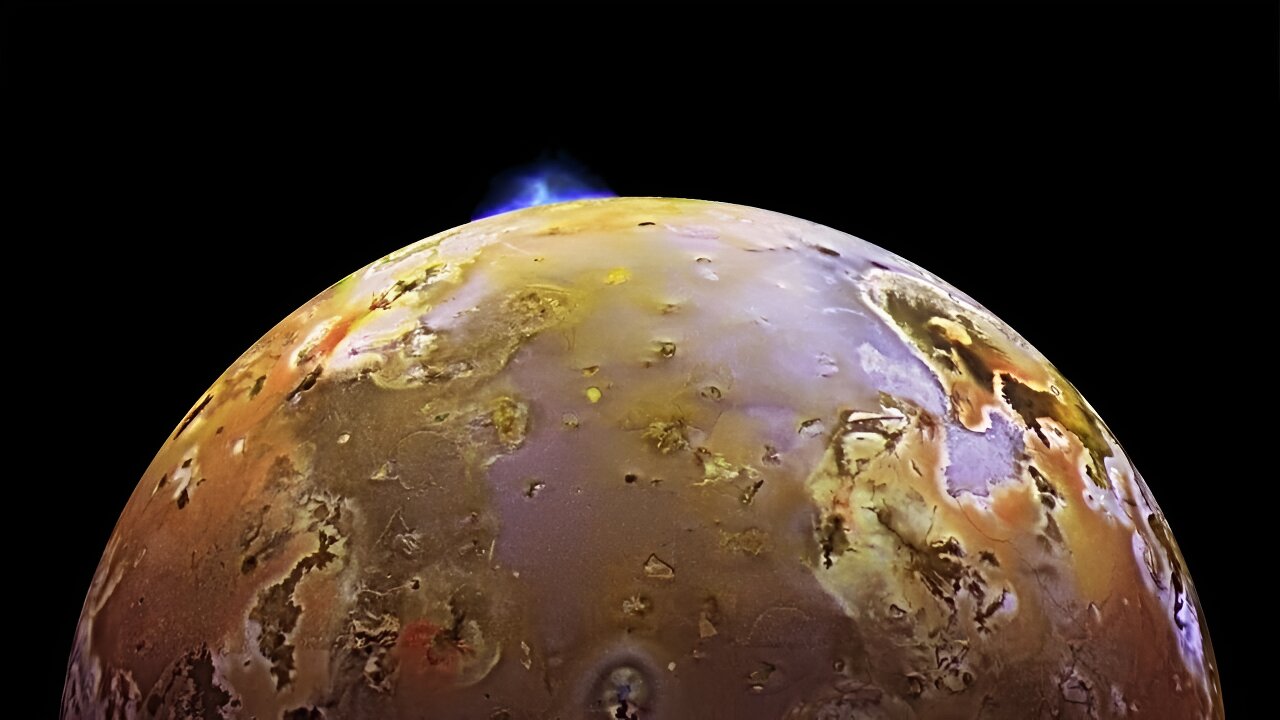
A volcanic eruption on Io, the innermost of Jupiter’s four Galilean moons, as witnessed by NASA’s Galileo spacecraft during the multi-year mission of the same name exploration the system. Credit: NASA

We’re probably all familiar with the concept of some Moons within our solar system  – notably Saturn’s Enceladus, and Jupiter’s Europa, Ganymede and Callisto – potentially being completely encompassed by a liquid water (or at least a slushy) ocean under their surfaces. But how about a moon being almost completely encompassed by an ocean of hot volcanic magma just a few kilometres under its surface?

That’s the proposal contained within a new paper written under the auspices of NASA’s Jet Propulsion Laboratory, and based on an analysis of data obtained by the Jovial Infrared Auroral Mapper (JIRAM) instrument aboard NASA’s Juno mission in reference to Io, the innermost of the four Galilean moons of Jupiter.

Of course, we’ve long known that Io, a moon slightly larger than our own, is the most volcanic place in the solar system. More than 400 active volcanoes have been identified since we first witnessed one erupting in 1979, courtesy of NASA’s by Voyager 1 in 1979, and the Juno mission has imaged no fewer than 266 actively erupting during its periodic fly-bys of Io as it studies Jupiter and its moons. The overall driving force behind these volcanoes is tidal flexing deep within Io’s core and mantle, the results of the moon being in a constant state of flux thanks to the gravitational influences of (most particularly) Jupiter to one side and the three other Galilean satellites on the other.

The comparative sizes of the Moon and Io, together with that of Earth to scale. Credit: full Moon – Gregory H. Revera; true colour image of Io – NASA/JPL; Earth: NASA / Apollo 17

However, there has always been something of a question as to how these volcanoes might – or might not – be related and directly powered. Here on Earth, volcanism usually occurs as a result of decompression melting within the asthenosphere – the upper limits of the mantle directly under the lithosphere/crust comprising solid and partially-melted rock. This gives rise to magma, which is then forced upwards through the lithosphere as localised volcanic eruptions. This was long held to be the case with Io, with scientists believing its volcanoes, like the majority on Earth, were driven by the upwelling of individual magma flows.

But during the Galileo spacecraft’s observations of Io between 1995 and 2003, the data gave tantalising hints that Io’s volcanism could be the result of a somewhat different process, but it has taken the unique capabilities of the Juno spacecraft to confirm this to be the case. By gathering extensive thermal and infrared imaging of Io’s mantle, the JIRAM instrument has been able to put together a comprehensive view of the upper layers of Io’s mantle, revealing that far from being a layer mix of solid and partially melted rock, Io’s asthenospheric region is entirely molten in nature.

In other words, lying just below Io’s lithosphere (roughly 12-40 km thick) is a moon-girdling ocean of magma, some 50 km thick, with a mean temperature of some 1,200ºC, and which powers all of Io’s active volcanoes.

The structure of Io as likely confirmed by data obtained by the JIRAM instrument aboard the Juno spacecraft. Credit: Kelvinsong

This may not sound exciting in the scheme of things, but it further demonstrates the uniqueness and complexity to be found within the Jovian system.

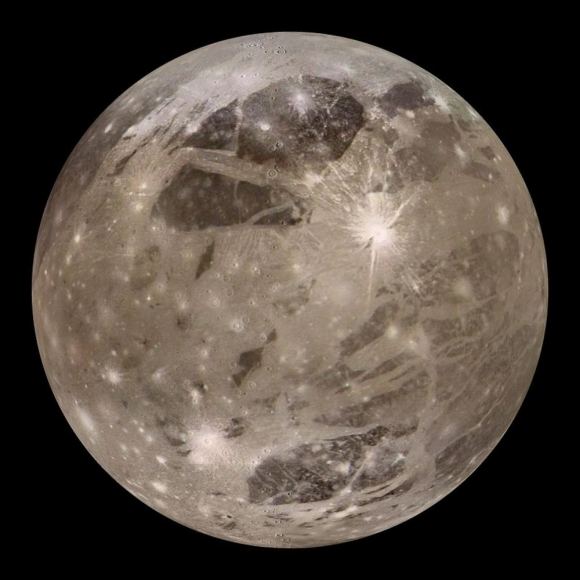
A further example of this can be found with Io’s big brother, Ganymede. The third of the Galilean moons in terms of distance from Jupiter, Ganymede is not only the biggest of the Galilean moons orbiting Jupiter, it is the biggest and most massive natural satellite in the solar system. In fact, if it were orbiting the Sun rather than Jupiter, it would be classified as a planet, being even larger than Mercury.

Ganymede, like its smaller siblings around Jupiter – and the rocky planets of the inner solar system – is a complex place enjoying a complicated relationship with its parent; one which shares near-similarities with Earth’s relationship to the Sun.

Much has long been known about Ganymede as a result of observations made from Earth – such as via the Hubble Space Telescope – and by the various missions which have flown past or orbited Jupiter. These have helped us confirm that Ganymede has a sufficiently warm interior to support a global liquid water ocean beneath its crust, an ocean larger by volume than all of Earth’s combined.

The comparative sizes of the Moon and Io, together with that of Earth to scale. Credit: full Moon – Gregory H. Revera; true colour image of Ganymede – NASA/JPL; Earth: NASA / Apollo 17

We’ve also been able to (largely) confirm the presence of a tenuous atmosphere of oxygen and CO2, which seems to be particularly concentrated around the northern and southern latitudes, likely constrained by the interaction between Ganymede’s weak magnetic field and the far more powerful magnetic field generated by Jupiter – the predominant O2 content of the atmosphere is thought to be the result of water vapour escaping the moon’s interior being spilt by the radiation carried down over the poles by the magnetic field interaction.

It is this interaction between radiation, magnetic fields and the surface of Ganymede which have been part of the focus of a study made of the moon using instruments on the James Webb Space Telescope (JWST), and which was recently published.

Ganymede’s surface is dominated by two types of terrain: bright, icy features with grooves, covering about two-thirds of Ganymede’s surface, and older, well-cratered and darker regions )on places scored by asteroid impacts of the moon’s more “recent” past, which could not be confused with the brighter terrain) . The two terrain types are not differentiated in terms of their location on Ganymede’s surface, they are instead intermingled, with the lighter terrain cutting swathes across the darker terrain.

Ganymede, showing its dominant types of terrain. The dark cratered regions, and the brighter, icy regions with grooved terrain. The white radial lines are the results of impacts with the moon and not directly related to the terrain types. Credit: NOAA

Some of these brighter swathes – notably those around the Polar Regions – carry strong evidence of water ice, which appears to have been exposed by (in the words of the study) “the combination of micro-meteoroid gardening, excavating the ice, and ion irradiation”.

In other words, over the millennia, dust and material has been caught within the interactions between the two magnetic fields, smashing into the moon’s surface to expose the underlying water ice, allowing it to be irradiated by plasma also carried by the inflowing magnetic field, causing some of it to escape as water vapour which has been either further irradiated and broken down (thus giving rise to the accumulation of the tenuous, O2-rich atmosphere near the surface), or re-accreting as easily-identified water ice on the surface rock.

Whilst the two magnetic fields interact around Ganymede’s poles and along the moon’s “trailing edge” as it orbits Jupiter in a very similar manner to the interaction between Earth’s magnetic field and that of the Sun over our own poles, the spectral properties seen along the moon’s ”leading edge” in its orbit suggest that there is a far more complex, and yet to be understood interaction taking place between the magnetic fields of planet and satellite. Solving this mystery might require time – and some assistance in the form of the European Space Agency’s Jupiter Icy Moons Explorer (JUICE) mission launched in April 2023, and due to reach the Jovian system in 2031, where it will likely uncover more surprises about both Ganymede and Europa.

Continue reading “Space Sunday: Jovian Moons, and lunar aspirations”

Space Sunday: 3D printing for space, and asteroids

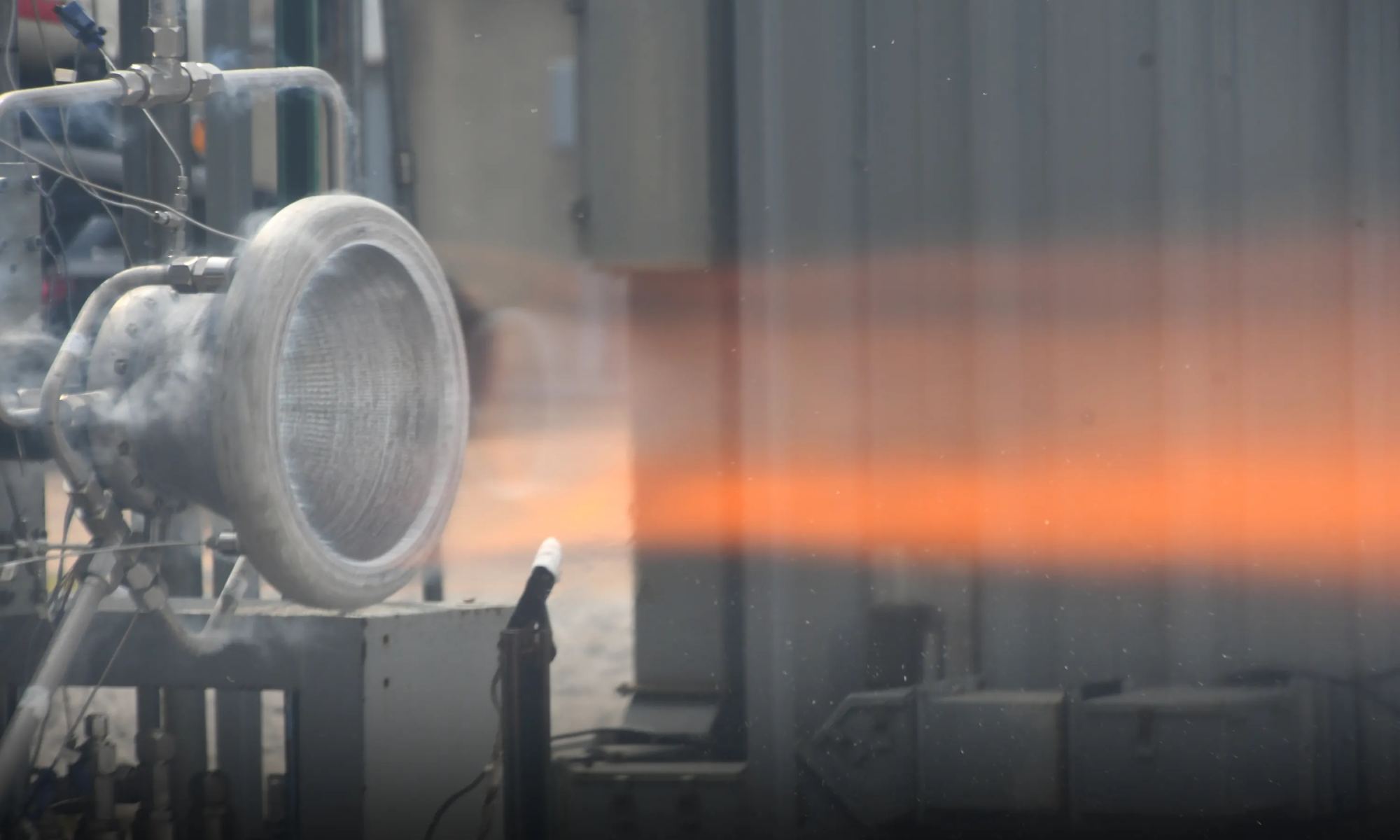
A RAMFIRE rocket engine nozzle performs a hot fire test at NASA’s Marshall Space Centre, demonstrating the viability of 3D printed, aluminium rocket nozzles. Credit: NASA

3D printing may be a relatively new technology, but it is one that is revolutionising may sectors of industry and commerce – and that includes space exploration. I’ve already covered the work of Relatively Space to manufacture and operate the world’s first 3D printed rocket systems in the form of the (now retired after it maiden launch failure) Terran 1, and the highly ambitious, semi-reusable Tarran R. However, NASA has actually been charting the potential for 3D printing in space and on Earth for almost a decade.

As an example of this; the first 3D printing system installed on the ISS arrived in 2014. It was a modest affair primarily designed to research whether or not practical, plastic-based 3D printing could be used in the microgravity of space. As the analysis of the printed parts demonstrated, there were no weaknesses or deficiencies in their construction when compared to identical items produced on Earth using the same process. Thus, the initial project was expanded to encompass the production of usable items – a wrench, plastic brackets, parts of an antenna system, for example – using a variety of industrial-grade plastic filaments.

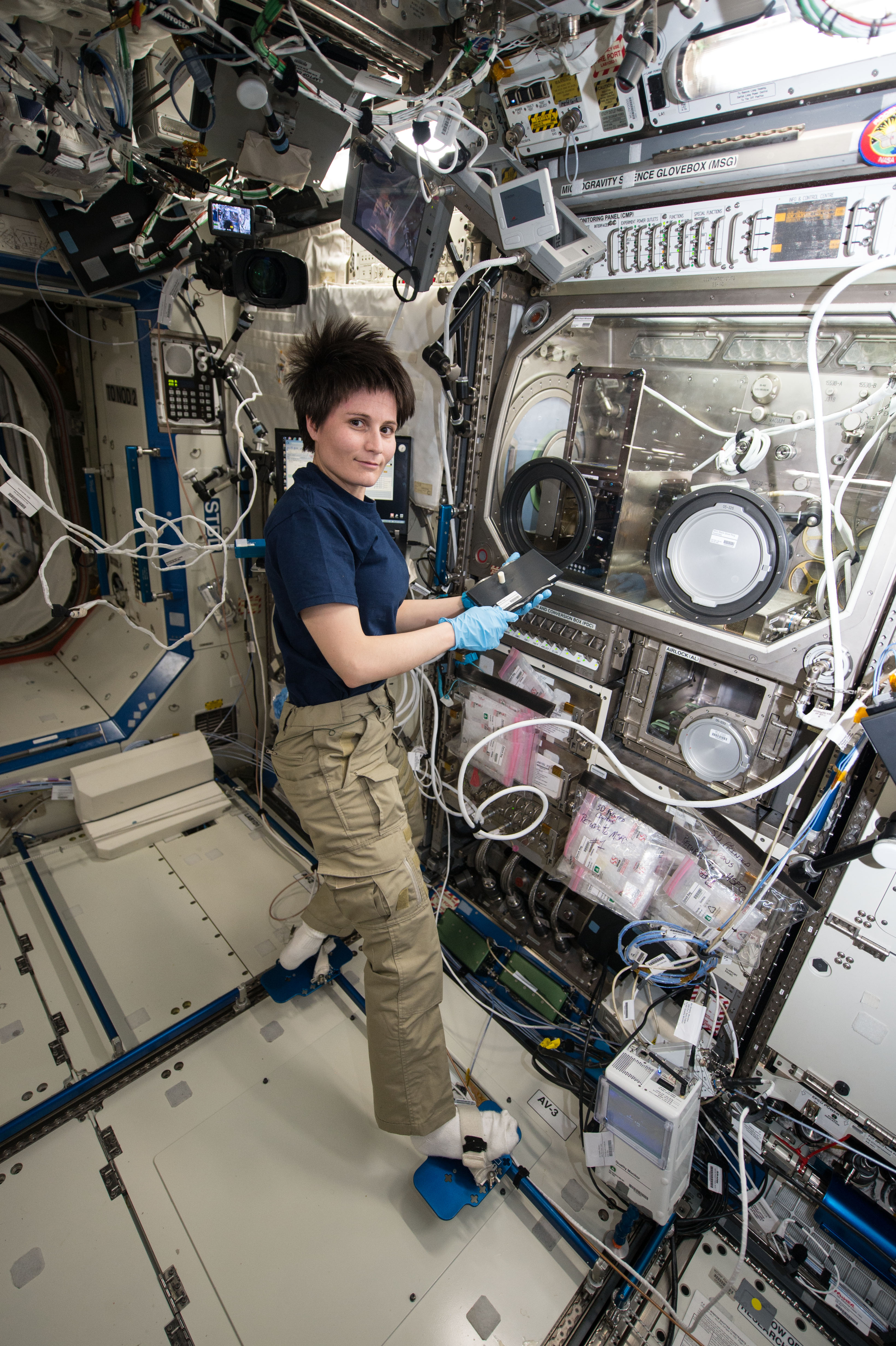
ESA astronaut Samantha Cristoforetti using the 3D Printer aboard the ISS. Credit: NASA

The capability was then enhanced with the arrival of ReFabricator – a system which could take plastics used on the ISS and recycle them into plastic filament for use by the printer, with Recycler later adding the ability to do the same with other “waste” materials on the station.

In 2023, the European Space Agency and Airbus Industries went a stage further with Metal3D, a printer capable of producing metal and alloy parts for use on the ISS. It is part of a broader project to develop in-situ orbital and lunar 3D printing systems capable of manufacturing everything from replacement parts to entire assemblies such as radiation shields, vehicle trusses, etc. ESA plan to use an enhanced Metal3D system to use lunar regolith as its raw material in the production of equipment and components.

Meanwhile, NASA has also been busy on Earth with a range of 3D printing projects and studies, one of which  – RAMFIRE – which earlier in the year had its (quite literal) baptism of fire.

Standing for the Reactive Additive Manufacturing for the Fourth Industrial Revolution,  RAMFIRE is a unique process which combines an entirely new aluminium alloy called 6061-RAM and 3D printing to create rocket nozzles for space vehicles. To understand why it is potentially so revolutionary, three points need to be understood:

  • As a rule, aluminium is a poor choice for rocket engine (and particularly engine nozzle) construction as it has a rather nasty habit of melting when exposed to high temperatures – such as those generated by a rocket engine nozzle.
  • While aluminium can be strengthened to withstand higher temperatures through the use of additives, the additives themselves can make it susceptible to cracking and microfractures if the aluminium has to be wield to itself or other items as is again required in the production of rocket nozzles.
  • At the same time, being able to print an entire engine nozzle as a single unit and in aluminium, has the potential of both greatly simplifying the process of rocket engine production (as the nozzle now comprises a single part, rather than up to 1,000 individual parts as is currently the case, and for the engine to be significantly lighter without any reduction in thrust, allowing for a potentially large payload to be carried.

Using 6061-RAM with a 3D printing process developed in partnership with Colorado-based Elementum 3D, NASA has been able to produce single-piece aluminium rocket nozzles which, by a combination of the additives used in the alloy and a series of special cooling channels printed into the nozzles, both withstand the heat of combustion in their chambers and also passively cool themselves in the process.

Over the summer period, two small-scale RAMFIRE nozzles were put through their paces at NASA’s Marshall Space Centre in a series of hot fire tests, the results of which were published by NASA on October 16th. The nozzles were tested using two cryogenic propellant mixes – liquid oxygen and liquid hydrogen in one batch of tests, and liquid oxygen and liquid methane in the other. It had been anticipated the nozzles would manage a pressure of up to 625 psi in their chambers, and run for a handful of minutes apiece. As it turned out, they functioned above the anticipated pressure without damage and racked up a cumulative burn time of almost 10 minutes.

This level of burn time and pressure is well in excess of the major requirement for such engine nozzles: within cargo transports carrying payloads to the surface of the Moon and landing them safely, bore lifting off again for the return trip to Earth to collect more cargo. However, the technology being developed by NASA and Elementum 3D has the potential to be used in a wide range of space vehicle applications, from propellant tank manufacture through to providing a means to provide very lightweight, thrust-efficient aerospike engines, one of the holy grails of space transportation systems.

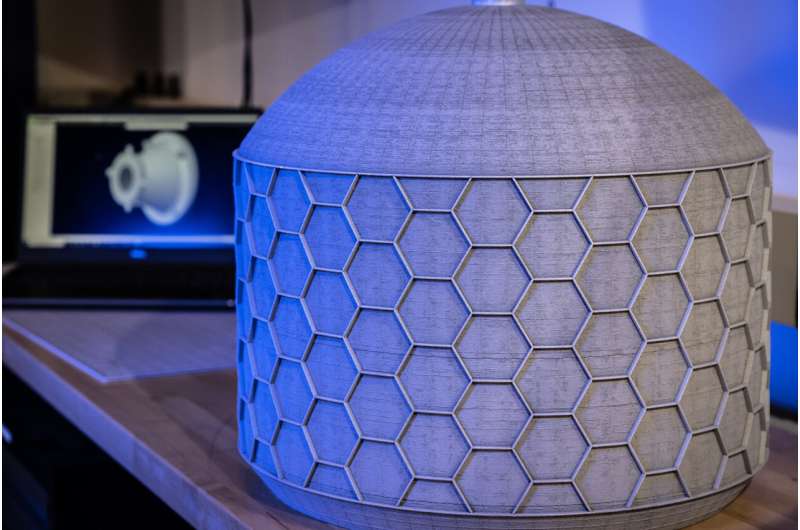
The 6061-RAM2 aluminium and its associated 3D printing process also has the potential to produce other items required by spacecraft. The above is a demonstrator for a single-piece printed propellant tank, complete with the same cooling channels to help keep cryogenic propellants cold. The result is a lightweight single-piece tank structure with primary side walls just 1.5 mm thick.  Credit: NASA

There is still further R&D to go with RAMFIRE, but NASA and Elementum 3D are already looking at licensing 6061-RAM and the printing process to commercial organisations interested in adapting it for use in their space-based efforts  – and possibly further afield in aerospace research sectors.

Continue reading “Space Sunday: 3D printing for space, and asteroids”