In the Press: a virtual world without Parkinson’s

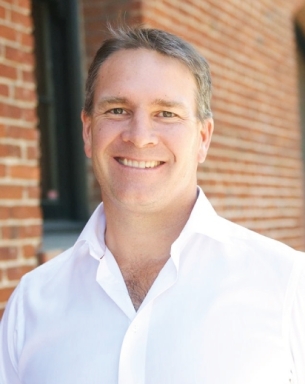
Tom Boellstorff and his digital alter ego, Tom Bukowski (image: Steve Zylius / UCI)

There are probably few Second Life residents who keep an eye on blogs and the more well researched media reports on Second Life who are unaware of Fran Seranade’s story.  Now 88 years old, Fran is a keen Second Life resident, who spends time in-world with her daughter and son, enjoying much of what the platform can offer: dancing, Tai Chi, swimming, horseback riding, walking, exploring. All far removed from the physical world, where she suffers from Parkinson’s Disease, which deeply affects her ability to do many of the things we take for granted: such as simply getting out of a chair and walking to the next room.

Fran’s story, and that of Creations for Parkinson’s and their support of Team Fox, the fund-raising arm of the Michael J. Fox Foundation for Parkinson’s Research (MJFF)  first came to my attention in September 2013, thanks to an excellent article in the San Diego Union-Tribune by Pam Kragen. Fran’s story has also been related by Draxtor Despres in his World Makers video series, as well as being featured in numerous other SL-related blogs.

Fran Swenson (Fran serenade in Second Life), seen with her avatar and friends in Second Life
Fran Swenson (Fran Seranade in Second Life), seen with her avatar and friends in Second Life

It is now also the story used to introduce an article appearing in UCI News, the on-line newsletter of the University of California, Irvine, which explores the work of Tom Boellstorff, a professor of anthropology at the university.

In A (virtual) world without Parkinson’s, Heather Ashbach talks to Tom about his ongoing work with Fran and other Parkinson’s Disease sufferers using Second Life, which is now part of a US $276,900 National Science Foundation study that began in July 2015, and will run through until June 2018, examining how on-line environments affect social interaction and self-understanding as well as physical-world experiences of disability.

Tom's work has also been more broadly covered through The Drax Files World Makers #31, which I covered here
Tom’s work has also been more broadly covered through The Drax Files World Makers episode #31, which I covered here

Tom’s work as an anthropologist studying our digital interactions with ourselves and others has already given rise to two books, Coming of Age in Second Life: An Anthropologist Explores the Virtually Human, and Ethnography and Virtual Worlds: A Handbook of Method. With this study, he hopes to build on the knowledge he’s acquired over the last several yeas of study, and also learn which aspects of on-line social interaction are linked to specific disabilities and how differing platforms and devices are utilised.

“Billions of people now participate in on-line environments – social networking sites like Facebook, games, virtual worlds,” he notes in the article. “Since some early human first picked up a stick to use as a cane, persons with disabilities have been at the forefront of technology innovation, so it’s natural that they would be doing creative things in virtual worlds too.”

His examination of Parkinson’s and the effect Second Life has had on those suffering from it is not limited to Fran; the article specifically touches on the lives of Solas NaGealai, who founded the original Team Fox presence in Second Life (and whose story I covered in August 2014), and architect DB Bailey, and they are two among many Tom has talked to within Second Life.

Second Life has provided Solas wearing one of her own gowns
Second Life has provided Solas NaGealai to continue her love of fashion and design, and provided her with the means to directly support MJFF through Team Fox SL.

Solas was diagnosed with a particular form of Parkinson’s Disease known as Young Onset Parkinson’s Disease (YOPD) – the same form of the disease which struck Michael J. Fox.

When first diagnosed, Solas was a full-time fashion designer. However, as the illness progressed, she was forced to leave that career behind. Fortunately, her discovery of Second Life allowed her a way to re-engage in her passion for design, and she founded her own fashion label at Blue Moon Enterprise.

Prior to his diagnosis, DB Bailey was a noted architect who, among other projects, collaborated on the design of Los Angeles’ Walt Disney Concert Hall. Since the disease has forced him to step back from that career, he’s been able to use Second Life as his creative outlet as an architect and artist.

Tom’s work, which has involved in-world and face-to-face interviews and studies, has also touched upon the possible physical benefits some of those with disabilities report as a result of their use of Second Life. In Fran’s case, for example, she his indicated an improvement in her sense of balance and co-ordination as a result of using the platform. This is something Tom has suggested might be down to what is called “mirror neurons“, with Fran’s brain responding positively to the visual stimulus she receives as a result of her in-world activities. However, examining such potential benefits does not form a part of the current study, primarily because Tom is not a medical doctor; but he is of the opinion that they are worth  future examination.

The psychological and sociological benefits of using platforms like Second Life in matters of healthcare are clear, and have been the subject of many studies. With the promise of more immersive VR experiences and opportunities now on the horizon, a better understanding of how different platforms and mediums assist those with disabilities enjoy a richer, fuller life is liable to be of enormous benefit, and also offers an opportunity for broader public discussion on matters of disability and the use of technology.

As Tom himself notes in closing the interview with Heather Ashbach, “disability is a fascinating category of human experience because anyone can enter it at any moment – we’re all just a car accident away. And even if we avoid it, if we live long enough, age will present us with obstacles that limit our ability to function as we currently do. Studying how people adapt through the use of technology helps advance the public conversation on disability and digital technology.”

Altogether, an excellent read, and one thoroughly recommended.

In the Press: the future of VR with Bloomberg

Emily Chang from Bloomberg Business discusses the future of VR with Ebbe Altberg and AltspaceVR CEO Eric Romo
Emily Chang from Bloomberg Business discusses the future of VR with Ebbe Altberg and AltspaceVR CEO Eric Romo (via Bloomberg Business)

On Monday, December 7th, Linden Lab CEO Ebbe Altberg appeared alongside AltspaceVR’s CEO and founder, Eric Romo  on Bloomberg Business with Emily Chang, to discuss How to Find Realistic Timeline for Virtual Reality. In the interview, which lasts just under 5 minutes, the three discussed the potential of VR including.

The foundation for the interview is a report by TrendForce which proclaims the VR market will be worth around US $70 billion by 2020, with some US $20 billion coming from hardware purchases and US $50 billion from software and applications. It’s the latest in a bullish series of predictions on the future of the technology, many of which have gone unchallenged – and even then, TrendForce believe their prediction is an “understatement”. But how likely is it?

The Trend Force prediction for VR growth (via Bloomberg Business)

US $70 billion represents a tenfold increase in market worth for an industry slated to generate around US $6.7 billion in 2016. However you look at it, that’s a pretty steep growth curve. Both Ebbe and Eric see it as “reasonable”, with the latter citing the idea that a lot of companies which might not be considered as “VR companies” seeing a value proposition in the technology and leveraging it within their business model. In particular, he refers to the expected upsurge in VR as a paradigm shift comparable to that witnessed with the smartphone revolution.

Others are more cautious, as is the case with Oculus VR CEO Brendan Iribe, who is shown commenting:

We definitely believe the mass market … there’s going to be a lot of adopters, early adopters, of VR. but if you’re looking at the kind of smartphone scale, you know, billions of users out there, that’s going to take a long time.

While not nay-saying the potential of VR, other analysts view the TrendForce report as being unhelpful. When approached by Tweak Town, for example, Moor Insights & Strategy’s VR Analyst Anshel Sag, had this to say:

$70 billion by 2020 is more than extremely ambitious, $70 billion assumes that VR is a mature and mainstream market. There is no way that VR will explode into such a mature market within effectively 4 years. While I am extremely optimistic about the future of VR, such projections do nothing but hurt the future of VR by setting unrealistic expectations. There are no players in any part of the market that could turn this industry into a $70 billion industry in 4 years.

During the Bloomberg discussion, there is an acceptance that VR needs to overcome certain technical hurdles to gain more of a mass-market appeal. Certainly, these issues – cost, reliance on high-end supporting technology, etc. – are real, and doubtless will be overcome. But they aren’t the single issue facing VR in terms of its adoption.

Like it or not, VR is actually an isolating experience. Sure, you can in theory see anything, go anywhere, etc., while using it. But you do so at the expense of pretty much cutting you off from the rest of the world around you. It curtails your ability to properly interact with the things around you, to multi-task, etc. For many people and situations, even those seen as potential VR use-cases, that could curb the appeal.

There’s something else as well to be considered when discussing VR and its potential; what might be called the elephant in the room: augmented reality.

While AR is off to a slower start that VR, it is fair to say that it has the potential to reach into many of those markets and use-cases as seen to be ideal for VR, and offer a more attractive option in doing so. Initial AR systems are far more self-contained and portable; those on the horizon promise a wealth of capabilities (up to and including VR). More to the point, they do not isolate users from the world around them, something which could make AR far more practical and appealing for everyday use in the house, at work, on the street, etc.

By the time VR is really in a position to offer low-cost, lightweight systems freed from requiring high-end computing power, it could be facing stiff competition from AR for many of the markets seen as "ideal" for its use
By the time VR is really in a position to offer low-cost, lightweight systems freed from requiring high-end computing power, it could be facing stiff competition from AR for many of the markets seen as “ideal” for its use (image via CastAR)

So, it could be said that AR appears to be a far more natural proposition for widespread adoption and use, becoming a far more natural evolution from (and with) mobile and smartphone technologies. Hence why some put AR’s market worth as being in excess for US $100 billion by 2020.

Which is not to say that VR doesn’t have a place in the future. There are very niche and compelling cases where it will gain momentum. But whether it will ever reach the level of adoption comparable to the smartphone, as is so often cited, is questionable. There is no reason why, that for many of those potentially uses of VR outside of entertainment and gaming, AR might not offer a far better value proposition for take-up when compared to VR, leading to the latter being subsumed by it well before it has the opportunity to reach the scale of growth predicted for it.

You can catch the Bloomberg video by flowing the link towards the top of this piece, or you can catch the audio below.

In the Press: discussing Sansar and Second Life with TNW

Second Life: "almost as diverse as the physical world we live in" - Ebbe Altberg
Second Life: “almost as diverse as the physical world we live in” – Ebbe Altberg

Martin Bryant, Editor-at-Large at The Next Web caught up with Linden Lab’s CEO, Ebbe Altberg, in Dublin at the start of November, where they had both been attending the 2015 Web summit conference.

During a 10-minute audio interview, Mr. Bryant offers a series of questions which, while they may not reveal anything new to those engaged in Second Life or following the unfolding news about “Project Sansar”, nevertheless cover interesting ground and offer food for thought on a number of fronts.

Martin Bryant, Editor-at-large for The Next Web, discusses SL and "Project Sansar" with Ebbe Altberg
Martin Bryant, Editor-at-large for The Next Web

The recording is prefaced with a series of useful bullet points under the title Think Second Life died? It has a higher GDP than some countries, itself is an eye-catching title, which help put some perspective on just what Second Life has actually managed to achieve over 12 years, and sets the stage for the broader discussion.

The interview starts from the position that the media have tended to get Second Life wrong, noting that far from having failed or gone away, it is still operating, still engaged some 900,000 active users every month, just 200,000 a month down from when it hit a peak of around 1.1 million 7+ years ago. Not only do these figures tend to highlight Second Life’s (albeit very niche) ability to attract and hold an audience, they also put oft-repeated claims that people are somehow leaving Second Life en masse into perspective. The outward trickle of active users is there, but it’s hardly a the deluge all too often portrayed. And those who remain are still capable of powering an economy with a GDP of some US $500 million.

From here, the conversations travels by way of the kind of virtual goods on offer inside Second Life to arrive at a question about the “typical” Second Life user, which generates a well-rounded reply.

Well, it’s a huge variety … there’s no typical about it. It’s like asking, “what’s a typical person from Ireland?” There are educators, there are students, there are health professionals, there are patients, there are fashion fashionistas, there’s partiers, gamers, role-players. People just socialise around pretty much anything you can think of. It’s almost as diverse as the physical world we live in.

Further into the conversation, there is a re-emphasis that even with “Project Sansar” coming along, there are no plans on the part of the Lab to discontinue Second Life, with Ebbe again demonstrating a pragmatic view on the amount of investment users of Second Life have made in the platform.

Second Life will continue. We have no plans to shut down Second life or forcibly migrate users from one to the other. So users can ultimate choose where they want to spend their time. And there are probably so users that have spent so much time creating incredible communities around all kinds of interesting subject matter that might just fine it too much effort to do it all over again on a new platform. so they can stay in Second Life, that’s fine.

Obviously, if the vast majority of users in Second Life opt to make a full transition to “Project Sansar”, then it will call into question how long SL can remain a commercially viable platform – but is this likely to happen overnight? Probably not  (which is not to say it won’t, at some point happen) over time). The transition is liable to be gradual, simply because it is going to take “Project Sansar” to grow to a level of sophistication offered by SL: as the Lab has made clear throughout 2015, everything isn’t simply going to be in place when the open alpha commences in early 2016 – that’s why they’re calling it an “alpha”.

An image from the Project Sansar: looking to the future of VR

The more detailed discussion of  “Project Sansar” starts with a reiteration that it is being specifically – but not exclusively – developed to operate with coming plethora of VR HMDs and other devices, and that it will be “consumable” (i.e. accessed via) computers (initially PCs) and mobile devices. It is here that mention is made of something that may have been missed in broader discussions about the new platform: there will be no “one-size-fits all” client / viewer.

Instead, client functionality will be determined by client device capability. If you’re on a PC platform, you’ll have access to the full range of capabilities to both “consume” (that is, access, use and participate in) “Project Sansar” experiences and you’ll have access to the tools to enable the creation of those experiences. If you’re using a mobile device, you’ll be able to “consume” experiences, but not the tools to build them. Which makes sense.

Ebbe Altberg: talking Second Life, "Project Sansar" and virtual currency compliance with TNW's Martin Bryant
Ebbe Altberg: offering a good perspective on LL, SL and “Project Sansar” for TNW readers / listeners

In discussing the likely impact of VR, Ebbe takes the pragmatic view that things aren’t going to happen overnight, just because the first generation of high-end headsets are going to appear in a few months; it’s going to take time for the market to grow, and there is still much more to be sorted out.

This is a view I hold myself, so no argument from me. However, where I do perhaps hold a differing view on things is to just how important avatar based virtual experiences are actually going to be outside of some very niche environments.

Even if VR isn’t overhauled by AR in terms of practical ease-of-use, widespread practical applications, convenience, and appeal, I also cannot help but feel consumer-focused VR might offer such incredible opportunities for immersion, entertainment, training, etc., that it will see the use of avatar focused virtual environments remain somewhat marginalised in terms of acceptance with the greater VR community, just as Second Life has been marginalised with the greater on-line social community.

Continue reading “In the Press: discussing Sansar and Second Life with TNW”

Linden Lab and Tilia Inc. – speculations on the Lab’s new subsidiary

Logos © and ™ Linden Lab and Tilia Inc.

Friend and fellow blogger, Vick Forcella contacted me at the end of October concerning some interesting items related to Linden Lab he’d uncovered in digging around a few places.

The first comes in the form of documents relating to a relatively new Linden Lab subsidiary company, and the second in a partially filed trademark.

The subsidiary company is called Tilia Inc., and at first glance it seems to be completely unrelated to the Lab, being referred to as being involved with ” Packaging Machinery”. However, an examination of the company’s papers will reveal it is registered at 945 Battery Street – the Lab’s headquarters, as a check on Buzzfile confirmed to me.

Tilia Inc appears to be a defunct corporate entity, first registered in 2002, which has been acquired by the Lab. This, and the further registrations of the name across several US states  as a “foreign” entity (meaning the filing is by an existing corporate entity registered in another US state), tended to suggest the Lab might be using the company to leverage certain tax advantages – a common practice among corporations around the world. Further support for this appeared to come from the names of the directors: the Lab’s CFO, Malcolm Dunne, their Legal Counsel, Kelly Conway and, from outside of the Lab, Benjamin Duranske, founder of PayCom Consulting, and LeAnne Hoang, the Lab’s former Chief Compliance and AML Officer.

Companies registered at 945 Battery Street, the Lab's HQ, via Buzzfile. Note Philip Rosedale's "Coffee and Power" sitting in the middle - and its associated industry description!
Companies registered at 945 Battery Street, the Lab’s HQ, via Buzzfile. Note Philip Rosedale’s “Coffee and Power” sitting in the middle – and its associated industry description!

Obviously one way to get more of a clue was to ask the Lab directly. So I did.

Tilia is a subsidiary of Linden Lab, focused on payments and the compliance work associated with operating virtual economies, and it will provide services for both Second Life and Project Sansar.

Peter Gray, Director of Global Communications, Linden Lab

Following my initial enquiry (which is not to say it is related to it), the list of senior personal at Tilia Inc., dramatically increased. The additional appointees  comprise: Bjorn Laurin (Bjorn Linden), Vice President of Product (Blocksworld, Second Life and Sansar), Landon McDowell (Brandon Linden), Vice President of Operations and Platform Engineering, Jeff Peterson (Bagman Linden), Vice President of Engineering, Pam Beyazit, Senior Director of HR, and Peter Gray.

"Tailia" and Tilia Inc appear to be geared to providing virtual currency and related services to both "Project Sansar" and Second Life
Tilia Inc is said by the Lab to be focused on the compliance work associated with operating virtual economies, and will provide services to “Project Sansar” and Second Life

The trademark, USTPO document 86374264, originally filed on August 22nd 2014, relates to the name of “Tilia”, which is described as, “Computer software, namely, electronic financial platform that accommodates multiple types of payment and debit transactions and the transfer of funds to and from others, in an integrated mobile phone, PDA, and web-based environment.” A further document located by Vick pertaining to the trademark application reveals even more information, and makes for interesting reading on its own.

What this all adds up to is still hard to determine. “Tilia” and Tilia Inc., might be totally coincidental; as such what follows might be pure unfounded speculation; then again, a lot of it also seems to hang together. complaince quote

As indicated in June 2015 by Ebbe Altberg, the Lab has been focused on four areas of activity, one of which has been that of compliance (see the quote on the right).

This work appears to have been overseen by LeAnne Hoang, prior to her departure from the Lab in July 2015. More recently, the Lab has also transitioned to a new payment processor for credit and debit card payments, which may be related to this work.

Again the two – the compliance work and the new payment processor – could be entirely unrelated. However, given that “Project Sansar” and SL will both operate virtual economies possibly based on the same virtual currency, it would make sense for the Lab to develop a central transaction and payment system capable of supporting both. Doing so could reduce the complexities of managing two payment / transaction systems (or any least manage any exchange mechanisms between two separate currencies) and in managing updates to match evolving compliance and anti-fraud regulations and requirements. If so, could “Tilia” be the proposed name for this new service? But why run it under a separate entity? Why not simply run it under the “Linden Lab” umbrella? Is it a matter of compliance, as stated be Peter Gray in his response to my initial questions? Perhaps so.

Another option might be that the Lab be considering making the Linden Dollar and all its attendant services a pre-packaged solution / service they can offer to other companies wishing to operate a virtual currency, with Tilia Inc., as the nominal operating company for that service. After all, they have made much of their leadership in matters of virtual economies and compliance, so spinning it out and offering it to others might be a means of generating additional revenue, although admittedly, given the complexities potentially involved, this might be seen as a bit of a stretch.

As a believer in Occam’s Razor, and moving away from idle speculation, I can’t entirely let go of the idea that Tilia Inc., might be wrapped in matters of compliance and potentially a means of leveraging tax advantages.

After all, The Lab have made it clear that “Project Sansar” in particular will rely on generating  the majority of its revenue through the sales of virtual goods and services. So, spinning out the systems and services that make this possible into a subsidiary registered in states with advantageous tax regulations might be a way for the Lab to reduce its tax exposure on those revenues.

The "Project Sansar" log-in screen: said to use

Following Peter Gray’s reply to my original enquiry of a week ago, I have placed follow-up questions with the Lab, but have yet to receive a response. Updates will be forthcoming if a reply is received or should the Lab reveal more themselves.

And why “Tilia”? I would guess it’s to do with the fact that tilia is genus of trees also referred to as linden trees.

My thanks to Vick Forcella for doing much of the digging into Tilia Inc and “Tilia”, for passing the information to me, trusting me to blog about it, and for his patience as I chased down various information myself, sought answers to questions. Thanks also to Johannes1997 Resident for his input on US corporate tax activities.

Lab launches 2015 Halloween Photo contest with L$19K prize pool

secondlifeLinden Lab has entered further into the Halloween mood with a new photo contest, offering a total prize pool of L$19,000.

The competition, launched on Thursday, October 15th, runs through until 17:00 SLT on Thursday, November 12th and challenges residents to take a snapshot of their avatar in a suitable Halloween theme in Second Life.

Competition entries should be posted to the competition page in the Second Life forums, where they will be displayed together, and open to popular vote by other Second Life residents.

The blog post announcing the competition reads in part:

In Second Life, every day is an opportunity to dress up, but come Halloween time, Residents step it up and take it to a whole new level of fun and creativity. If this is your first Halloween in Second Life – or even if it’s your 12th – you are in for something incredible!

All over the grid, regions decorate, put together trick-or-treat style hunts, blast some chilling tunes for your move your avatar bones to, and generally run amok in the undeniable excitement of Halloween. We couldn’t be left out of the spooky shenanigans, so there’s a few official events you won’t want to miss out on.

Entries are limited to one per avatar account and must conform to the Second Life General maturity rating, as defined by the Lab’s Maturity Ratings guidelines. In addition, images must be submitted in a valid .jpg, .jpeg or .gif format(s) no larger than 20Mb and cannot have been submitted previously to any other promotion of any kind, or exhibited or displayed publicly through any means.

The prize pool is made up of the following individual prizes:

  • L$ 10,000 Grand Prize (estimated value at US$40.00)
  • L$ 5,000 First Prize –(estimated value at US$20.00)
  • L$ 3,000 Second Prize (estimated value at $12.00)
  • L$1,000 Third Prize (estimated value at $4.00).

The winners of the competition will be contacted no later that 17:00 SLT on Sunday, December 6th, 2015.

Please refer to the competition rules page for further guidelines / requirements.

P2P: Helping those with disabilities in Second Life

 It’s widely recognised that for many with disabilities, Second Life offers a major source of engagement, support and enjoyment which might otherwise be beyond their reach. As a result, there are a number of charities, organisations and support groups active within Second Life providing a wide range of services and support networks for those with disabilities and / or disabling illnesses.

One such group, of which I’m embarrassed to say I only quite recently became aware, is the  Pixel to Pixel (P2P) Foundation. Founded in 2009 by Jadyn Firehawk (also known within P2P as Pixel Falconer), it offers a unique service to Second Life users who in the physical world are supporting themselves purely through disability benefits.

“Second Life is a lifeline to many people with disabilities,” Jadyn says in discussing P2P’s function. “Some may live in social isolation, so SL keeps them connected with friends. Others may suffer a physical impairment, and SL gives them the virtual experience of full mobility and freedom.

“But there are costs associated with being involved in Second Life, and for those who are reliant solely on disability assistance programme benefits can struggle to meet those costs. So, the P2P Foundation gives direct financial assistance in the form of weekly Linden dollar stipends to people on disability, to help them enjoy their time in-world.”

Pixel to Pixel foundation HQ offering information, fund-raising kits and more
Pixel to Pixel Foundation HQ offering information, fund-raising kits and more

This stipend, L$500 (approx US $2.00) per week, may not sound much, but for someone who is living purely on benefits, it can mean a lot. As one participant states, “two dollars for me means a loaf of bread for a week.” So the stipend can lift the burden of choice, allowing the recipient to put it to use in Second Life – help cover their rent, upload textures, buy goods or clothing in-world, or spend it however they like, without necessarily having to draw on their physical world finances. As well as the stipend programme, P2P will occasionally award discretionary grants to recipient, so that they can start a business or pursue a major creative project in Second Life.

Because P2P operates purely in-world, beneficiaries can reside in any country around the globe, and their disability assistance can be either from their government or from a private disability insurance company. However, in order to be eligible for the P2P programme, applicants and recipients must be able to demonstrate, if asked, that they are on disability benefits. This is done by sending a copy of their disability benefits award letter (or similar document) to Jadyn via regular, physical world mail, with their personal identifying information blacked out and replaced with their avatar name.

The 3LI P2P donation Kiosk is available as a part of the P2P fund-raising kit available from the P2P HQ
The 3 LI P2P donation Kiosk is available as a part of the P2P fund-raising kit available from the P2P HQ

The money used to pay out the stipends comes directly from donations and fund-raising activities. These currently enable the Foundation to support 20 people in Second Life through payouts amounting to L$10,000 a week.  However, as Jadyn notes, there are a further 20 people on the Foundation’s waiting list – and it can take in excess of two years for someone to secure a place in the programme.

“People who are on disability and in Second Life tend to stay, because SL becomes such an important part of their daily lives, meaning that new slots do not often open up,” Jadyn tells me.

Currently, P2P can generally only take on new recipients as a result of others leaving the programme, such as by becoming self-sufficient through their own entrepreneurial activities in SL – hence the discretionary grants programme P2P operates, which can help facilitate this.

One way to increase the number of people the Foundation can support is through greater guaranteed inflow of donations. Anyone can help with this, simply by making a donation of any amount directly to Pixel Falconer, the Foundation’s donations account, or through one of the Foundation’s donation kiosks located throughout Second Life (see the list at the end this article for the current locations).

Businesses, venues and groups can also help with fund-raising by visiting the Foundation’s HQ to obtain a fund-raising kit, and then setting-up kiosks, posters, etc., in their store / on their land. The kiosks not only help with generating funds to run the programme, but also help raise awareness of P2P’s work. Jadyn would also be delighted to hear from any business, venue or group interested in organising and hosting a P2P fund-raiser.

The P2P Foundation gallery features the work of disabled artists, all of which is available to buy, the proceeds of sales going to the Foundation's work
The P2P Foundation gallery features the work of disabled artists, all of which is available to buy. The proceeds of sales going to the artists to help support them directly, although some may opt to share the proceeds with the Foundation

Two of the most effective means of assisting the Foundation is to either become a weekly / monthly donor, or by sponsoring P2P participant.

If you would like to become a weekly / monthly donor, you can do so by making your payments  directly to Pixel Falconer. Or you can also grab a donation kiosk and use it as a visual reminder to donate, rather than relying purely on memory to make payments to Pixel Falconer it might  also encourage your friends to support P2P!).

Should you wish to sponsor a P2P participant, either as an individual or through your business, please contact Jadyn Firehawk directly in-world.

Continue reading “P2P: Helping those with disabilities in Second Life”