The Lindex has been in a state of flux of late, something that has been the subject of discussion and speculation on a number of fronts. Reader Ample Clarity first pointed things out to me earlier last week via IM (I’ve been rather focused on other things of late, so haven’t been watching the broader news as much as I should), and I’ve been dipping in-and-out of conversations and reports on things since then.
The fluctuations started towards the end of 2015, and were perhaps first discussed on the pages of SL Universe. The discussion resumed in April, when further swings were noted, causing additional concern among those looking to cash-out L$ balances, while sparking some of the more widespread discussion.
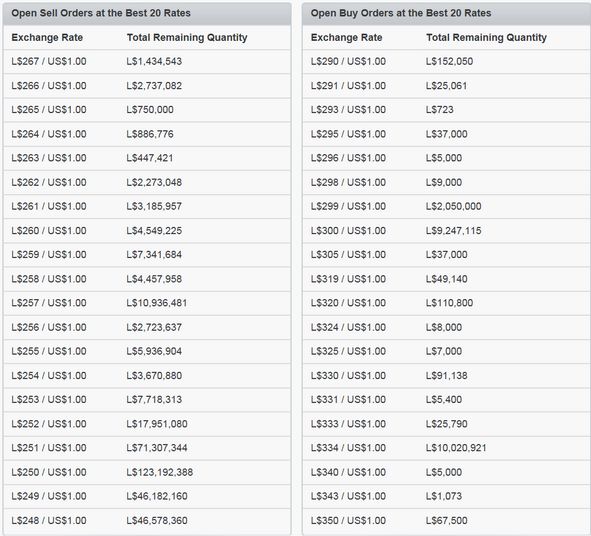
Lindex fluctuations (with thanks to Eku Zhong for the screen capture)
Various theories (and not a few conspiracies) have been put forward to explain what has been happening – although determining precisely what the cause is, is pretty much anyone’s guess. But purely in terms of the more recent fluctuations, New Worlds Notes (NWN) is promoting a theory which might just be plausible: that one (or more) large land estates have been liquidating L$ stocks in order to realise additional US dollar funds to take advantage of the Lab’s grandfathered buy-down offer.
The theory actually comes from Plurker T-Kesserex, who is quoted by NWN as saying:
I think it’s people cashing out to get capital for the $600 dollar sim price reduction … If you own 10 sims you need $6000, so that’s not easy without some cashing out.
At the start of the buy-down offer, Tyche Shepherd, of Grid Survey fame, estimated that around 85% of Homestead regions were already grandfathered, but only around 11% of full-priced regions of all types, leaving enormous potential in the market. During the first month, this figure increased to almost 21%, with the number of grandfathered full-priced regions rising from around 1,039 to 1960, demonstrating a thirst for conversion. Thus, the idea that one or more large estates might be liquidating L$ stocks to cover the cost of further conversions isn’t an unreasonable speculation.
But even if it is a fair assessment of the situation, it doesn’t offer any hint as to what – market forces or otherwise – has been pushing at the Lindex since late 2015. Nor does it offer any comfort to those concerned about cashing out at a reasonable – or at least stable – rate. All that can be said for certain is that, if you have the need for L$ in your account, buying them hasn’t been this attractive in a good while.
On Wednesday, May 4th, the Lab issued an important announcement to Second Life users that as from Wednesday June 15th, 2016, anyone wishing to use the Second Life cashier service to send, receive, or exchange L$, must be using either a web browser or version of the viewer which supports TLS 1.2.
This is because, as I’ve reported several times in these pages (see here and here for background notes), the Lab is updating secure access to their cashier functionality to TLS 1.2, to comply with applicable US regulations.
As the official blog post posts out, the latest updates of most modern browsers should be TLS 1.2 complaint, as is the official SL viewer. All actively maintained Full Third-Party Viewers should also be TLS 1.2 complaint. However…
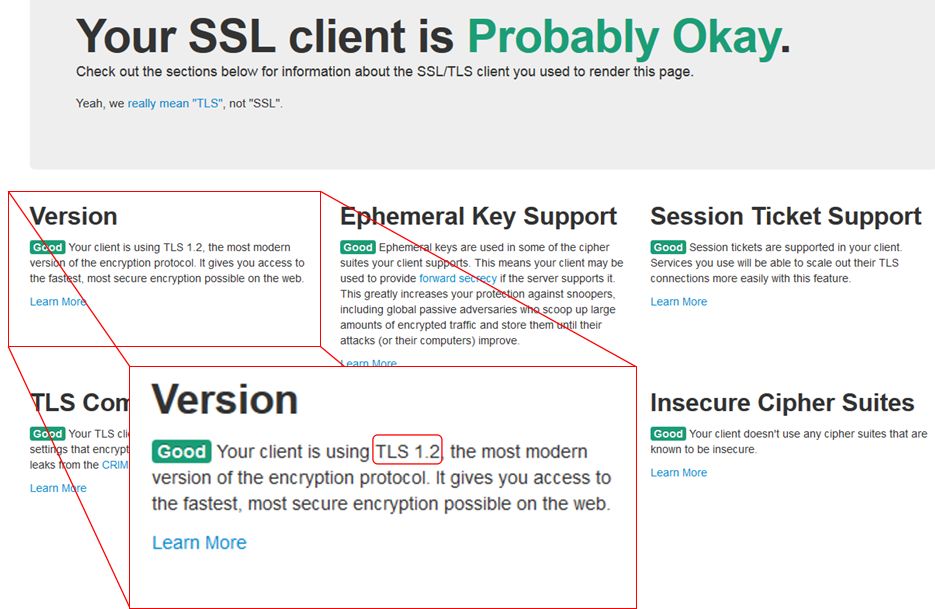
Again, as the official blog post states, the safest way to ensure you are using a compliant browser and viewer is to check for yourself by visiting How’s My SSL? through your web browser and via the internal web browser built-in to the viewer. The Version section in the top left of the web page will indicate whether or not your browser / viewer is using TLS 1.2.
Use How’s My SSL? to confirm whether the versions of the web browser and SL viewer you are using are TLS 1.2 compliant.
If either your web browser and / or current viewer version is not TLS 1.2, you will not be to send, receive, or exchange L$ after Wednesday, June 15th, 2016.
Radheya Jegatheva – #MyFreoStory peoples’ choice winner, thanks to the help of Second Life users
In March 2016, the city of Freemantle in Western Australia launched the #MyFreoStory video competition. The challenge was for budding film-makers to produce a short video, promoting what the city means to them.
Run entirely on-line, the competition was intended ” to showcase the many different aspects of Freo through the eyes of locals, visitors and anyone else with an interest and passion for Freo.”
Films could be entered into one of two categories, adjudicated and People’s Choice. One winner in each category would be awarded Aus $2,250 in cash and a further Aus $1,250 in prize vouchers, with the winning entry in the People’s Choice category being decided on the highest tally of likes and comments received though social media platforms such as Titter (hence the hashtag title of the competition), Facebook, Google+, and so on.
In April, I was one of a number of people friend and colleague Jayjay Zinfanwe contacted concerning his son’s entry in the People’s Choice category of the competition. Having previously witnessed Radheya Jegatheva’s narrative and film-making skills through his excellent Journey, I was immediately intrigued and, having watched the film, more than happy to show my support.
I wasn’t alone. People from Second Life and around the world were liking and praising the video as word spread. Even so, as Jayjay reports, writing in the University of Western Australia’s SL blog, Radheya faced an uphill battle. His entry came just four days before voting closed, and the leading contender for the Peoples’ Choice award,Virtuosity by Harry Jones & Jordan Swindell had been gathering points for some two weeks. Nevertheless, My Journey Through Freo – entirely filmed using an iPhone, I might add – quickly gained traction.
“In the first day [it] had cut the lead by half,” Jayajay comments. “This swift rise by the newcomer was quickly noticed, and the ante was upped by other contenders with varied posts on Twitter, Facebook, Youtube, Google+ and Instagram, among others, and the battle was on.”
Even so, it was a close-run thing between the two top entries, again as Jayjay relates:
A surge of support from Twitter then pushed Virtuosity in front, by a seemingly insurmountable margin one day before the close of voting. Twitter votes seemed to surge by the hundreds with every Twitter post. However, steady support across the following 24 hours a great number of which came from Second Life saw the lead change hands again leading to a tense final 12 hours where it remained close enough to go either way.
In the end, My Journey Through Freo pipped Virtuosity at the post, allowing Radheya to deservedly take #MyFreoStory People’s Choice prize.
In commenting on his son’s winning entry, Jayjay is convinced that it was the input from Second Life residents which gave Radheya the win. More particularly, it is interesting to now that throughout the voting process, Second Life users appeared to demonstrate greater involvement with the film than was perhaps witnessed through other social media channels, providing Radheya with a lot of direct support through comment and feedback.
This has led Jayjay to ponder whether research is warranted into the nature, strength and responsiveness of the various communities built via the various social media channels. It would certainly be interesting to see how effective a medium Second Life is in terms of providing a social platform on which to share news and information.
For now however, I’ll leave the closing words to Radheya himself, while congratulating him on a great little video and a great win. And who said Second Life users don’t have a voice? 🙂
Second Life has again been getting some fair press coverage, both directly and directly, of late. I’ve already written about the platform either being the focus of, or looked at as part of, two interesting articles published in Motherboard. Also during the week, Second Life was written about on this side of the Atlantic, as first reported by Ciaran Laval.
On April 28th the on-line edition of France’s Le Monde carried an article focused on Second Life, written by Morgane Tual. Bearing the delightfully French title Absurde, créatif et débauché : dix ans après, « Second Life » est toujours bien vivant (Absurd, creative and debauched: ten years later, “Second Life” is still alive), it weaves a wonderful introduction to the platform which cannot fail to have those of us immersed in this digital world smiling and / or nodding in agreement.
Morgane Tual: an engaging article on Second Life
This is very much a hands-on, through-the-eyes look at Second Life, good and bad, written with an unabashed honesty and wonderment. Opening with a description of her initial time in Second Life and a (first?) encounter with another resident, Ms. Tual quickly informs her readers where she is and why she is there – and hints that what she has to say might come as a surprise for who might have heard of the platform at some point:
Like me, some haggard and clumsy beginners landed on this strange beach to discover what remains of this game that occupied the headlines there about ten years. I expected to find, a decade later, a deserted world, ageing technology and a few cobwebs in the corners. It was exactly the opposite.
From this set-up we are lead on what is very much a personal voyage of discovery through Second Life. In it we encounter the realities of the platform – good and bad in equal measure, each presented to us as they are encountered.
So it is we share in her wonder as she hops from place-to-place; her confusion (and that of others newcomers) in finding herself unceremoniously dumped at an infohub; the embarrassment that can occur simply as a result of clicking the wrong button, or in awkwardly accepting the help of another. We share in her delight in her discoveries of the music scene and in finding a place were she makes a new friend, Patti, a fellow French woman. From here we join her on a whirlwind tour of Second Life which take her to Hogwarts and thence via Star Wars, 221B Baker Street and a nightclub, to the Petit Trianon, Tatiana Dokuchic’s wonderful build in the Duché de Coeur, and a conversation with Tatiana herself.
Petit Trianon by Tatiana Dokuchic, featured in the Le Monde article by Morgane Tual
Interspersed with this are the assorted facts and figures from the Lab – the 900,000 monthly log-ins, the broad demographic, the economics of the platform, and so on, together with the usual potted history of the platform, all of which paints one of the clearest pictures of Second Life I’ve had the good fortune to read; one with a personal narrative free from the need to fall back on cliché or dogged by mocking observation.
Such is the narrative, we’re drawn directly into Ms. Tual’s experiences, all of which are related without judgement, but often with a real sense of joy and / or wonder. Of course, the sex is also there, but so too is the discovery that contrary to belief, Second life isn’t necessarily “all about the sex”, a point of view Ms. Tual fully embraces.
The breadth of possible engagement in Second Life is touched upon in other ways as well. Through the conversation with Tatiana, readers are introduced to the richness of opportunity for creativity in Second life. Art and entertainment are referred to – the latter supported by the inclusion of some hand-picked videos.
We also witness the tales of others, such as the guy who initially mocked the activities of SL users, regarding them as “losers”, only to himself become engrossed in the platform and all it offers. We are also – movingly – introduced to the way in which Second life bridges the physical / digital divide, very genuinely bringing people together when entire continents might otherwise separate them.
With videos and in-world images, personal tales, a frank narrative, Absurde, créatif et débauché : dix ans après, « Second Life » est toujours bien vivant is one of the most engaging pieces on second Life it has been my pleasure to read. Recommended.
There have been a couple of interesting articles which have appeared in Motherboard over the last couple of days which make interesting reading.
In the first, Men Are Working Out Their Issues By Playing As Their Lovers and Exes in RPGs, published on April 28th, Cecilia D’Anastasio looks at a little researched aspect of avatar use within Second Life and MMORPGs: using their capabilities to create avatars in the likeness of a ex- or current partner or spouse.
Cecilia D’Anastasio: writing on identity in the digital age
I’ve always enjoyed reading Ms. D’Anastasio’s pieces on matter of digital identity, and have previously written about her excellent Avatar IRL, which appeared almost exactly a year ago.
This new article examines a number of ways in which people – notably, but not exclusively, young male gamers – have created representations of current or past Significant Others in the virtual environments they use.
Some of the related stories are pretty innocent. From Second Life, for example, we learn that well-known boat designer Jacqueline Trudeau uses an avatar “minutely resembling” her husband to help promote her designs, even though he seemingly has no interest in either the platform or his wife’s ability to generate an income through it. Similarly, Kevin D. Kramer, a Second Life DJ in his 50s, has designed an avatar modelled on his wife which they both use, candidly admitting it offers him the opportunity to buy gowns, dresses and outfits to surprise her with in ways he cannot easily replicate in the physical world.
However, some are much more disturbing in tone, notably the examples drawn from Skyrim and XCOM-2 where the motivation for creating likenesses of ex-partners be 20-something gamers as a means to exert greater (and not entirely positive) control over them, even to the point of subjugation, or to increase their own self-image as a “protector” of the women formerly in their lives.
The piece is certainly an interesting read, going by way of Nick Yee’s research into matters of gender-bending as covered by his Daedalus Project (you can also learn more about his work on matters of avatar identity here and via Draxtor’s excellent interview with him), and including feedback from Dr. Jamie Banks of Department of Communication Studies, West Virginia University. However, it is not without potential fault.
There is an acknowledged lack of research in why people might create avatars in the likeness of former or current partners; as such, there is perhaps a bias present in the piece, which I did find undermined it in places.
For example, while it is hard to reconcile Dr. Banks’ view of creating avatars in the image of a former partner as a means of coping with the Skrim and XCOM2 examples cited (they are far too calculated in their creation and use), it doesn’t mean the idea doesn’t have merit in other possible cases. Unfortunately, any potential credence it might have is more-or-less directly thrown under the bus in the paragraph of the article following Dr. Banks’ comments.
There are other flaws evident in the writing as well. It is noted, for example, that one of the people who created a female avatar based on his ex-girlfriend has since been banned from an unrelated game. The reason for that ban isn’t specified and could be entirely unrelated to the issues being discussed in the article. Thus, the inclusion of this statement seems to serve no other purpose than to enhance the reader’s negative view they may already have of the individual.
However, given this is an aspect of the use of avatar-driven environments and MMOs that hasn’t really been deeply researched, the article does open the door to discussions on the subject, and may encourage a greater academic study of the issue.
In Why Is Second Life Still a Thing?, which appeared on April 29th, Emanuel Maiberg poses a question I suspect might be asked by a lot of journalists who have perhaps been previously familiar with the platform and are suddenly exposed to it once more.
In asking the question, Mr. Maiberg also does a fair job in answering it as well, and in doing so, takes the reader on a no hold barred tour of the platform, commencing with what has been it’s crucial differentiator over other, “prettier” platforms and games:
A crucial difference between Second Life and MMOs like World of Warcraft is that the latter are mostly fixed worlds. Once in awhile, developer Blizzard will introduce a new continent or reconfigure an existing location, but all players are guests in the world that Blizzard created. Second Life, by contrast, allows users to not only create their own avatars, but also to shape and create the world they’re in, importing their own 3D assets and modifying the world with the Linden Scripting Language.
Emanuel Maiberg – a frank look at Second Life
A potted history of the platform follows, together with an examination of much of what goes on in-world being referenced: art, education, user-generated transactions, and so on, together with the highs and lows the platform has seen. Of course, sex gets a fair mention within the piece; no surprises there, as it does both act as a draw for at least some of those coming into the platform (although equally, they may find their interests moving elsewhere once they are engaged in the platform), and it does contribute fairly to the platform’s economy.
Project Sansar is also touched upon – as is one of the core reasons why the Lab is keen to emphasise it is a platform designed to run alongside, rather than replace, Second Life. The very success of the latter and the level of investment users have within the system mean that displacing them anywhere else is at best exceptionally difficult; no other platform or service as thus far managed to achieve what Second Life invented in terms of environment, capabilities, user numbers and economical viability.
Those of us familiar with Second Life may not find much that is new in Mr. Maiberg’s piece, but that’s beside the point. What he offers is a frank look at the platform, free from bias or agenda but which fairly addresses many of the reasons which have made the platform a success in and of itself.
Overall, both pieces made for interesting reading.
Note: Linden Lab has provided the Better Business Bureau with a breakdown of the permanent ban process, which is available for public viewing.
On Sunday, February 21st, I posted an article concerning SL content creator Teager (Breeder’s Choice and Teegle brands). In it I covered the news that Teager was asking people not to buy from her Marketplace store, on account of her accounts having been banned from Second Life.
Some 24 hours after posting that article – and approaching a week after she first started encountering problems, Teager had her accounted released. As I noted in my update to my original post on the situation, the news first came in a * Breeder’s Choice * group announcement, via Teager’s husband, AgentEightySix in SL:
There is news regarding Teager. She has been unbanned. She’s not home right now, she got the email on her phone, but I’m sure she’ll be on a little later. For everyone who donated at the donation box, thank you. No need to do any more. We’ll take it down tonight, and everything can get back to normal around here.
The following day, Tuesday February 23rd, it was confirmed another creator initially banned under similar circumstances, WarmAnimations Lisa, had also had her ban rescinded. In both cases, warnings were given about the risk of further banishment in the event of a re-offence.
The notifications that their bans had been lifted was also the first time both Teager and WarmAnimations Lisa were actually told why they had been banned: they had used images within one or more Marketplace listings which were deemed to be “not acceptable” – the actual items specified in the listings did not appear to be in question.
While objecting to an image in a listing, even one rated as Adult, may sound odd, it is worth remembering that there are subjects which can still be deemed as offensive or disturbing even among those who have consciously opted to enable the Adult content rating when browsing the Marketplace. This is something content creators should keep in mind when preparing their listings; the Adult rating isn’t necessarily a carte blanche allowance to post absolutely anything.
But that said, for the Lab to immediately respond with an outright ban, as was the case with Teager and WarmAnimations Lisa (and possibly others) without warning nor explanation, is, in five words: excessive and completely heavy-handed.
Even with the best will in the world people make mistakes. They’re not wilfully breaking the policy; they’re not attempting any kind of subversion, they have simply erred. This can happen even when they’ve read all the standards, requirements and policies related to something. As such, there are cases where people should be given – for want of a better term – the benefit of the doubt before a hand starts reaching for the ban hammer.
As it is, Linden Lab can remove any content at any time from both the Marketplace and / or in-world at any time, might it not have been better to go that route first with these situations? That is, remove the content causing the problem; communicate with the affected content creators and explain what has been done, why it has been done, and issue any appropriate warning (if necessary) on the possible consequences of future transgressions.
Such an approach achieves a number of beneficial goals for the Lab:
It allows the offending images to be removed without fuss
It offers a clear explanation of what has been done and why
It allows said content creators to consider any other items they have listed with images which might be considered “not acceptable”, and thus replace said images
It may allow word to spread through the content creation community without undue rancour or drama, so that others with possibly questionable images in their listings might also replace them, removing the need for future actions on the Lab’s part
It demonstrates that Linden Lab recognises that people can, and do, make mistakes, and that most are prepared to accept their error if it is properly explained to them
It demonstrates consideration without removing the explicit understanding that there are policies which must be adhered to, and that repeated violations won’t be tolerated.
Obviously, there are times when it is appropriate / necessary for the ban hammer to be wielded within Second Life. no-one is denying that. But equally, there are times when it should not be seen as the immediate and preferred tool of action when there are other means to initially handle a situation. This is a balance those at the Lab with access to the ban tool seem to have problems in understanding.
Over the past couple of years, the Lab has been investing time and effort in rebuilding users’ confidence in itself on several fronts. If nothing else, an over-reliance on bans as first response to policy transgressions when there are potentially other ways to deal with matters, risks unravelling at least some of that restored confidence.
As it is, when looking specifically at both Teager’s and WarmAnimations Lisa’s situation, it’s very hard not to reach the conclusion they were handled in a manner akin to the image at the top of this article.







 Inara Pey: Living in a Modemworld